Overview of our trip
We’d been talking about a Scandi summer trip for a while, and this year the idea of a “coolcation” really appealed. Sweden offers a different kind of summer: fresh air, temperatures mostly in the low 20s and a different cultural experience. Stockholm was the obvious starting point, but we wanted this trip to be as much about island life as the city itself.
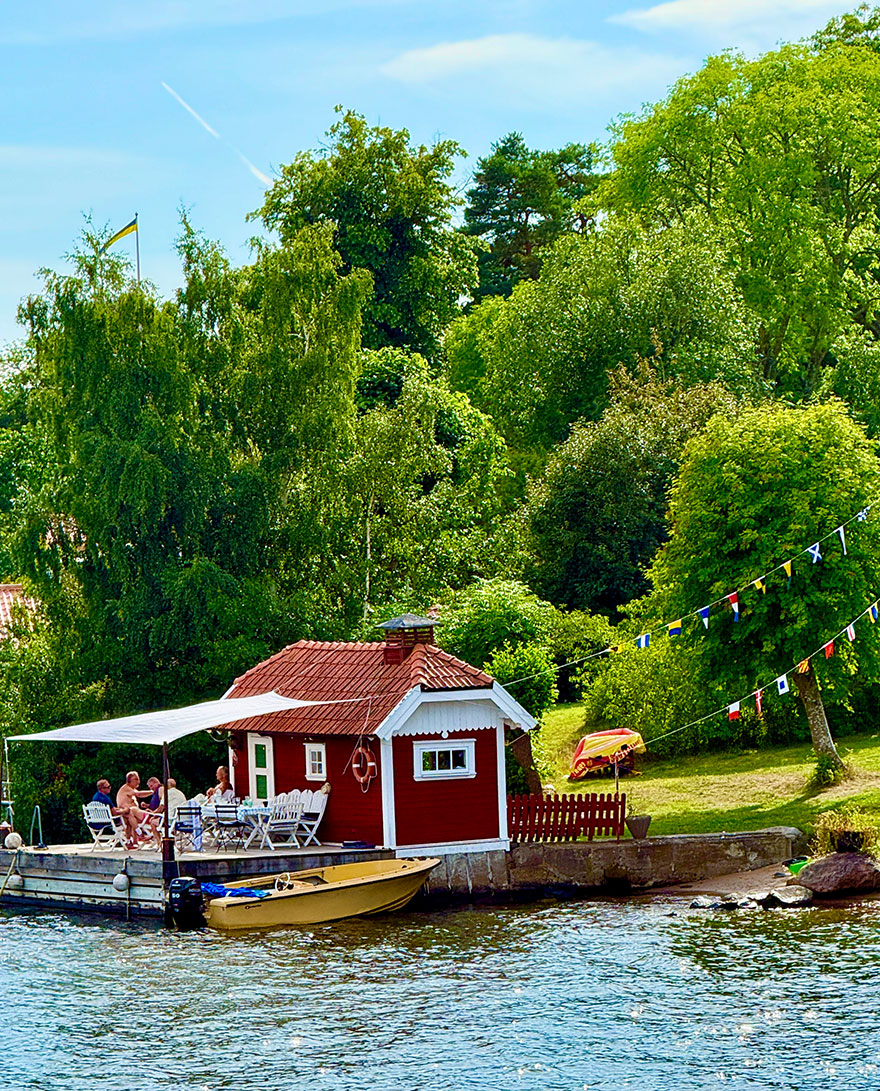
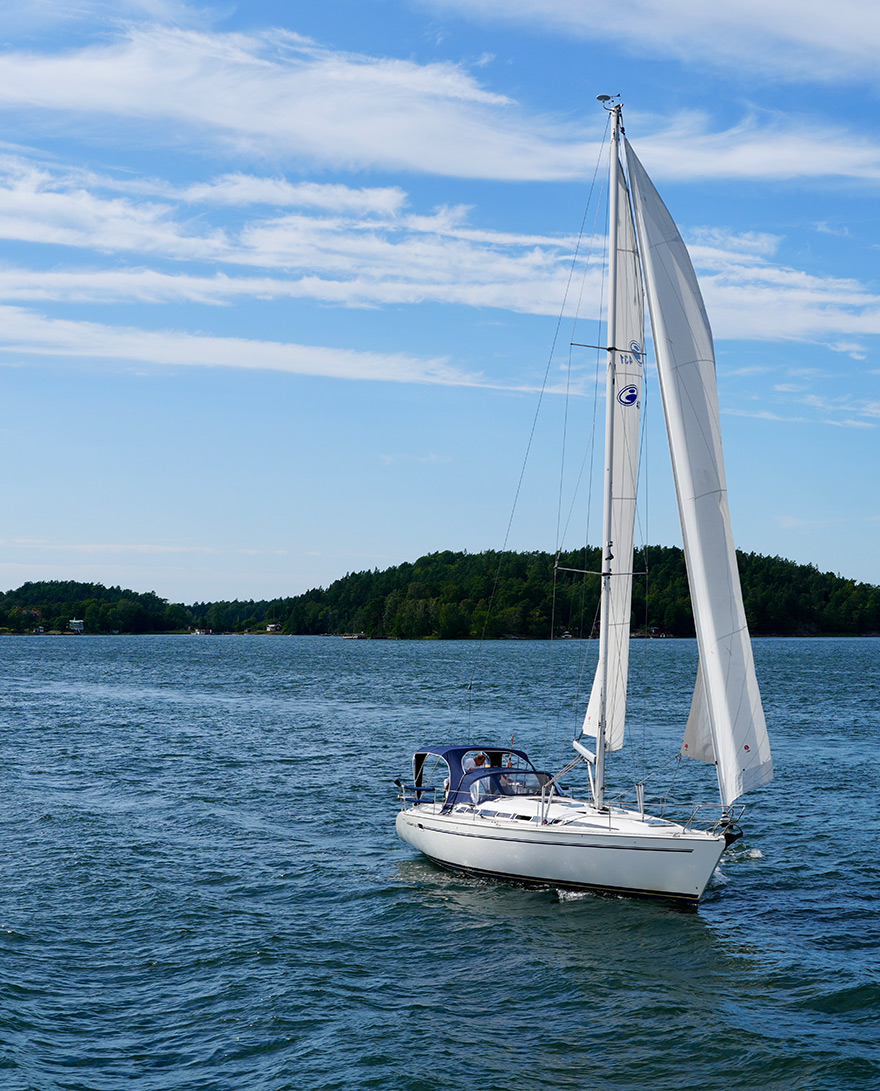
The Stockholm Archipelago was a big part of the attraction. Around 30,000 islands and islets stretch east from the capital into the Baltic, ranging from tiny rocky outcrops covered in pine trees to larger islands with beaches, summer houses and lively little harbours. Getting around by boat is half the fun, passing red wooden cottages, sailing boats and private jetties along the way. We’d already had a first taste of the archipelago on an earlier trip to Stockholm, when we spent a day on Fjäderholmarna, and had always wanted to come back and explore further.
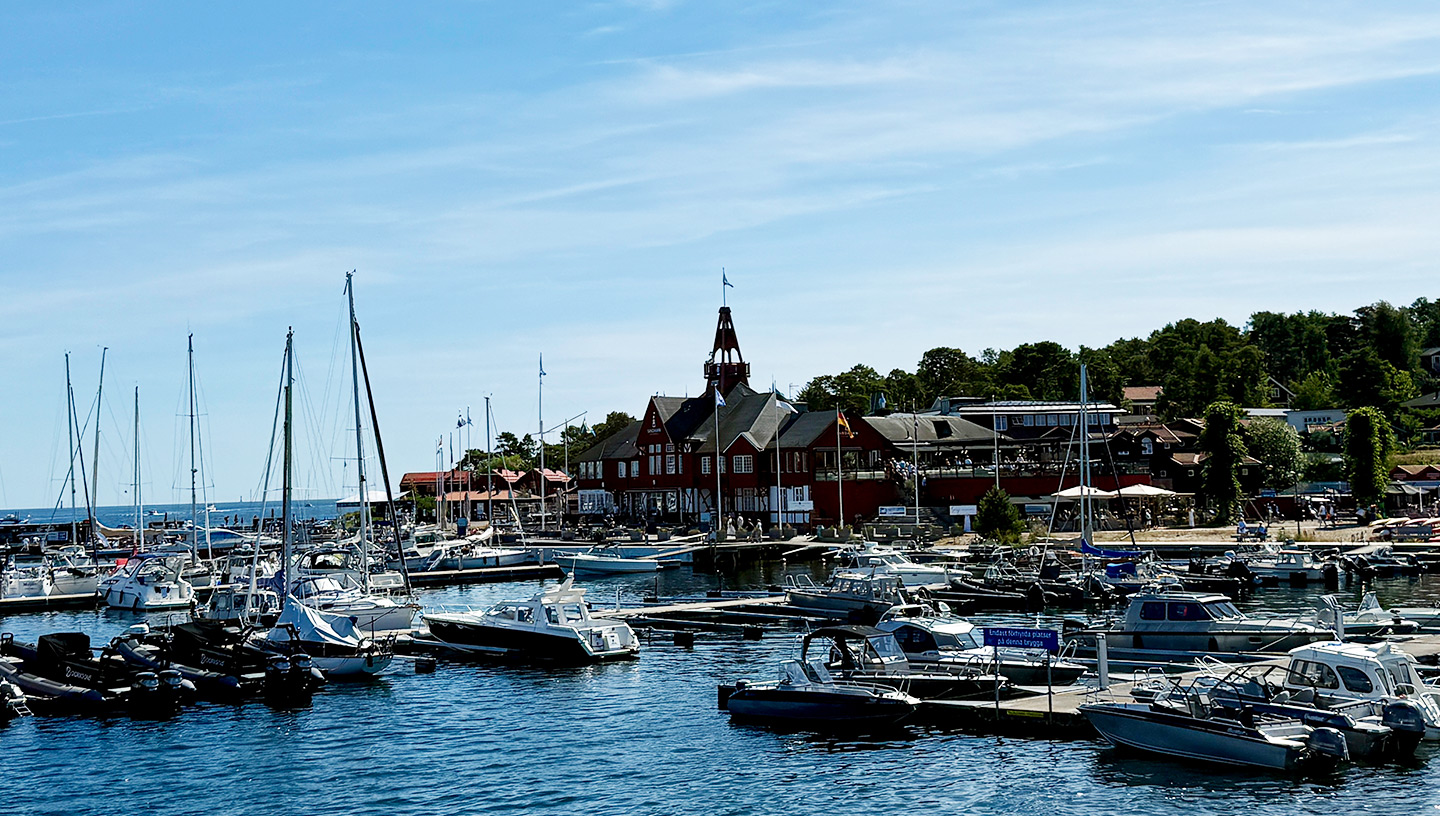
After lots of research, we decided to combine two different islands in the Archipelago with another Swedish island we had read a lot about, Gotland, further south in the Baltic Sea. In the archipelago, we chose Grinda for its quieter, back-to-nature feel and Sandhamn for something livelier, with sailing boats filling the harbour, sandy beaches, boutiques and restaurants
We travelled from Stockholm on the Cinderella boats, first to Grinda and then onwards to Sandhamn, which made the journeys between the islands part of the trip rather than simply a way of getting around.
From Sandhamn, we returned to the Stockholm for a few days and then took the ferry to Gotland; you can also fly there from Stockholm if you are short on time. Gotland gave the trip another completely different dimension, with medieval Visby, huge stretches of countryside, empty beaches, limestone farmhouses, art galleries, ceramics studios and some seriously good restaurants. Put together, Stockholm, the archipelago and Gotland made a brilliant Scandinavian summer trip — stylish and interesting, but also relaxed, outdoorsy and refreshingly cool.
Grinda
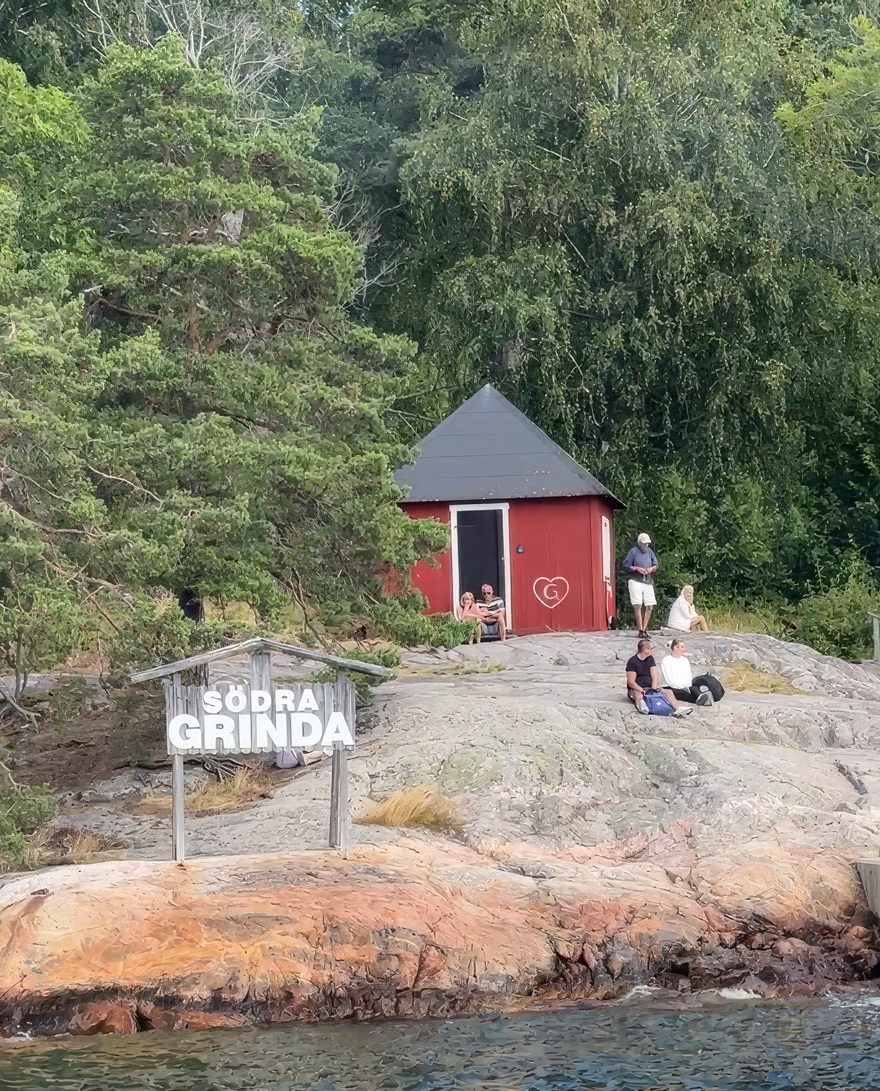
Less than two hours by boat from the Stockholm, Grinda feels a world away. There are no cars, just pine forests, red wooden cottages, rocky swimming spots and quiet walking trails that lead from one beautiful view to the next.
We came for a couple of nights and quickly settled into the island’s slower pace. The journey is part of the experience, with the ferry weaving between tiny islands dotted with colourful houses, boat sheds and sailing boats before arriving at Grinda’s small harbour. From there, everything is on foot, making it the perfect place to switch off for a few days.
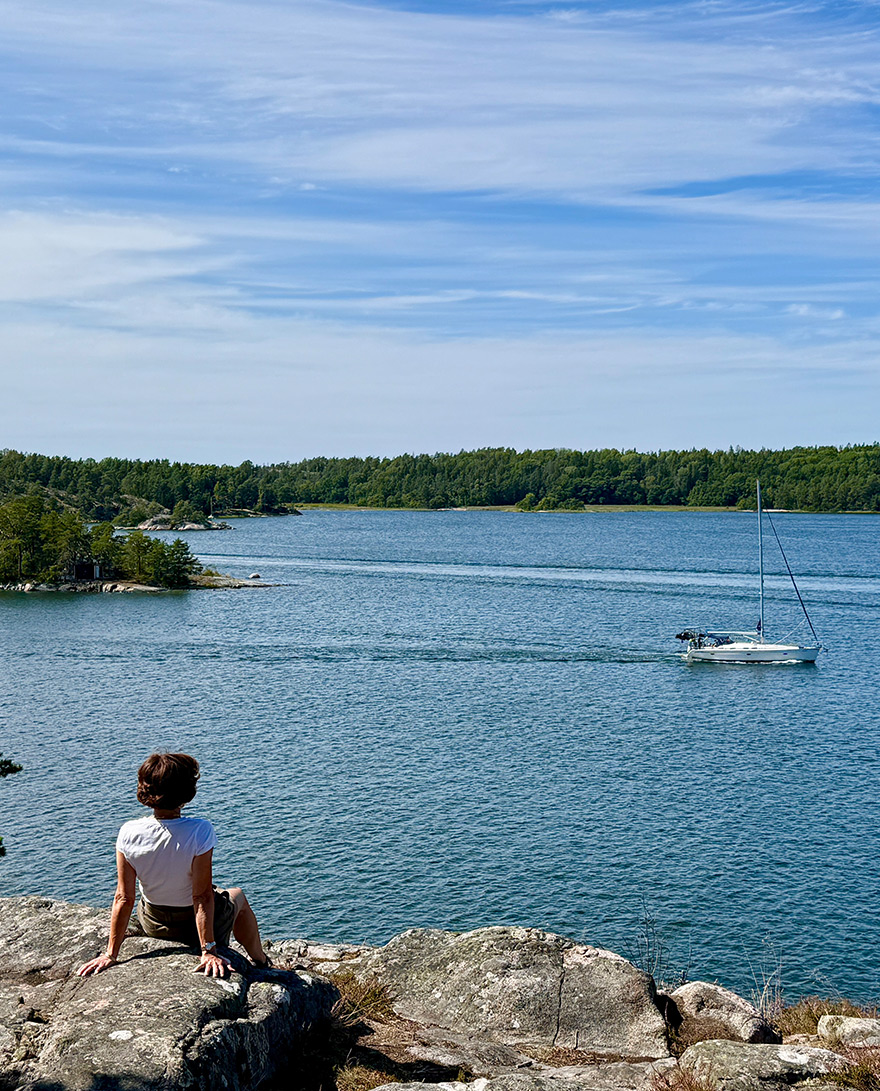
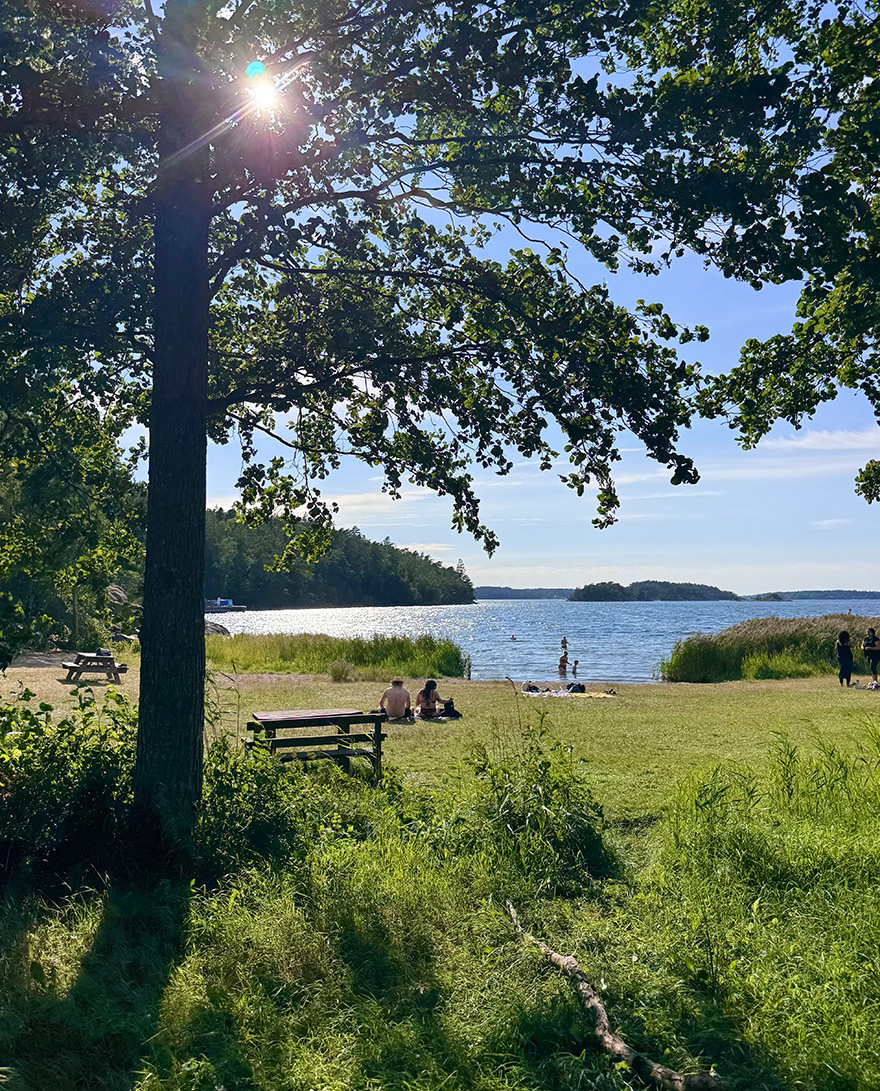
We walked through pine forests, swam in the bracing Baltic Sea, had long lunches by the water and watched boats drift into the harbour.
Stay
Grinda Wärdshus
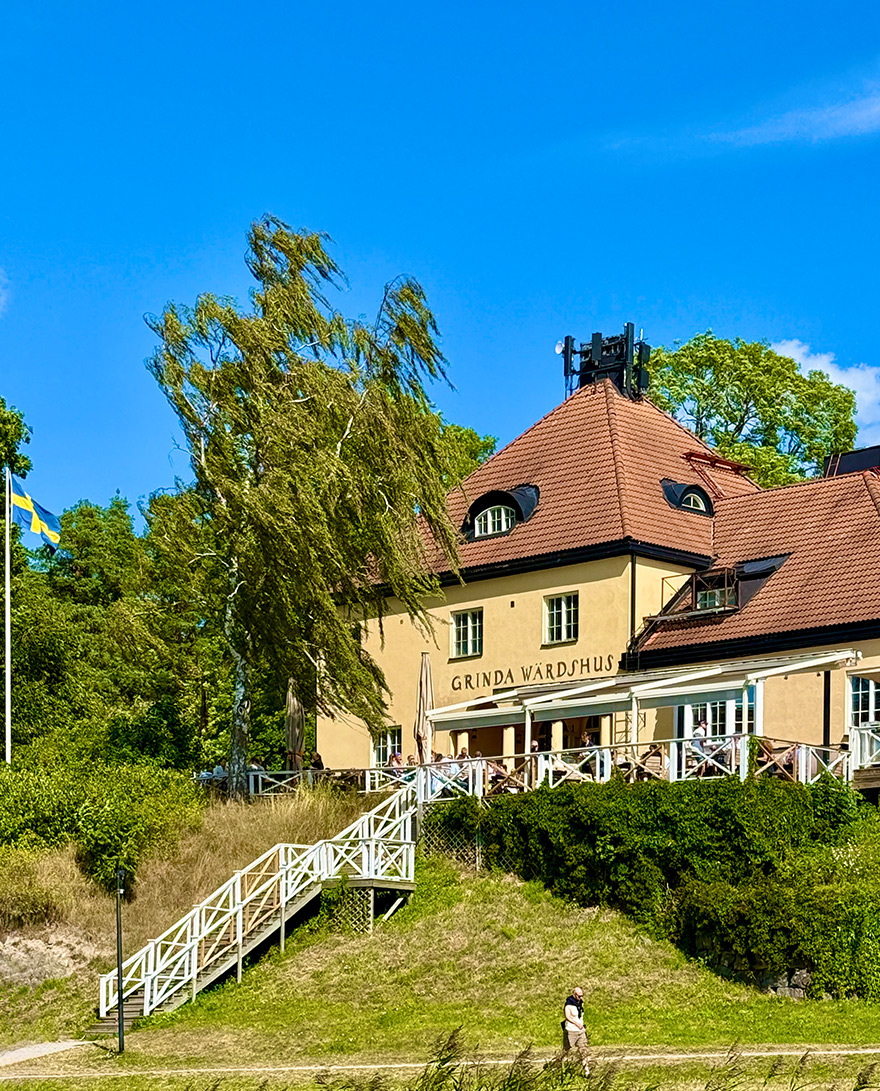
Grinda Wärdshus is the heart of the island and the obvious place to stay if you’re spending a night or two here. The butter-yellow Art Nouveau villa was built in 1906 as the summer residence of Henrik Santesson, the first chairman of the Nobel Foundation. Today it sits among tall pine trees overlooking open meadows and the harbour, feeling wonderfully connected to the landscape around it.
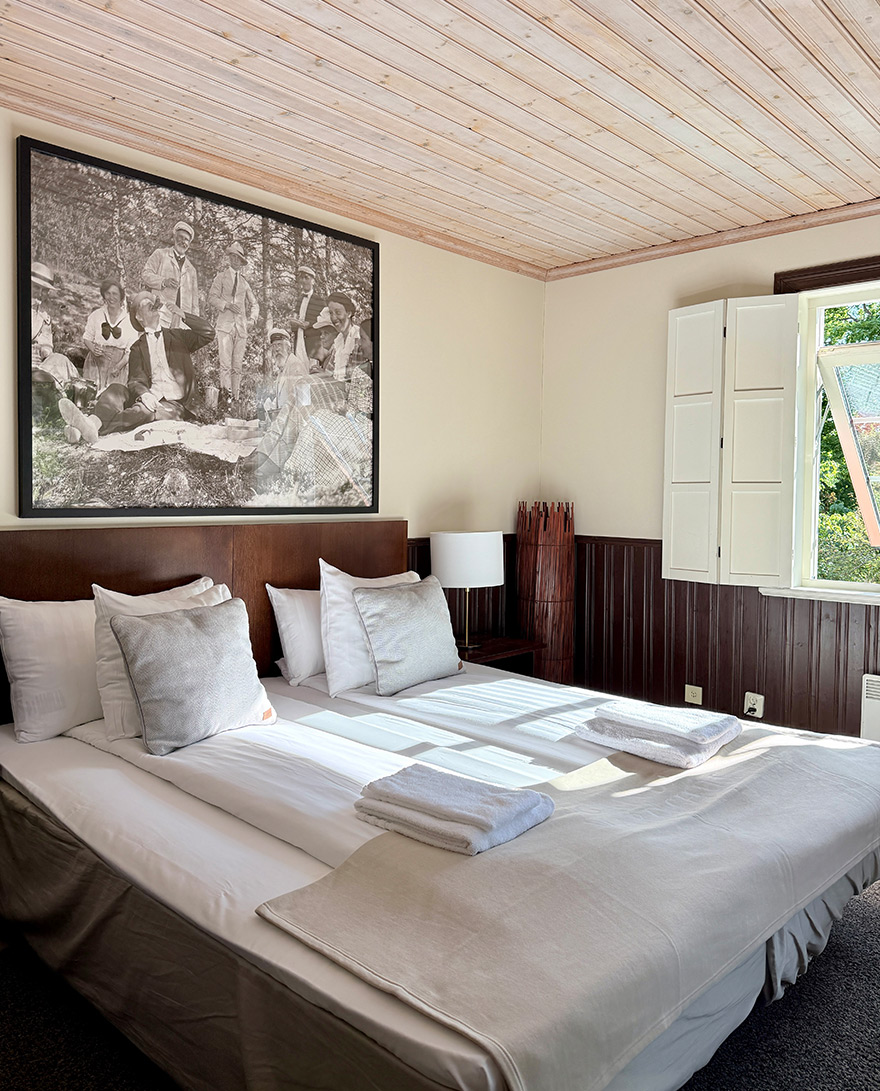
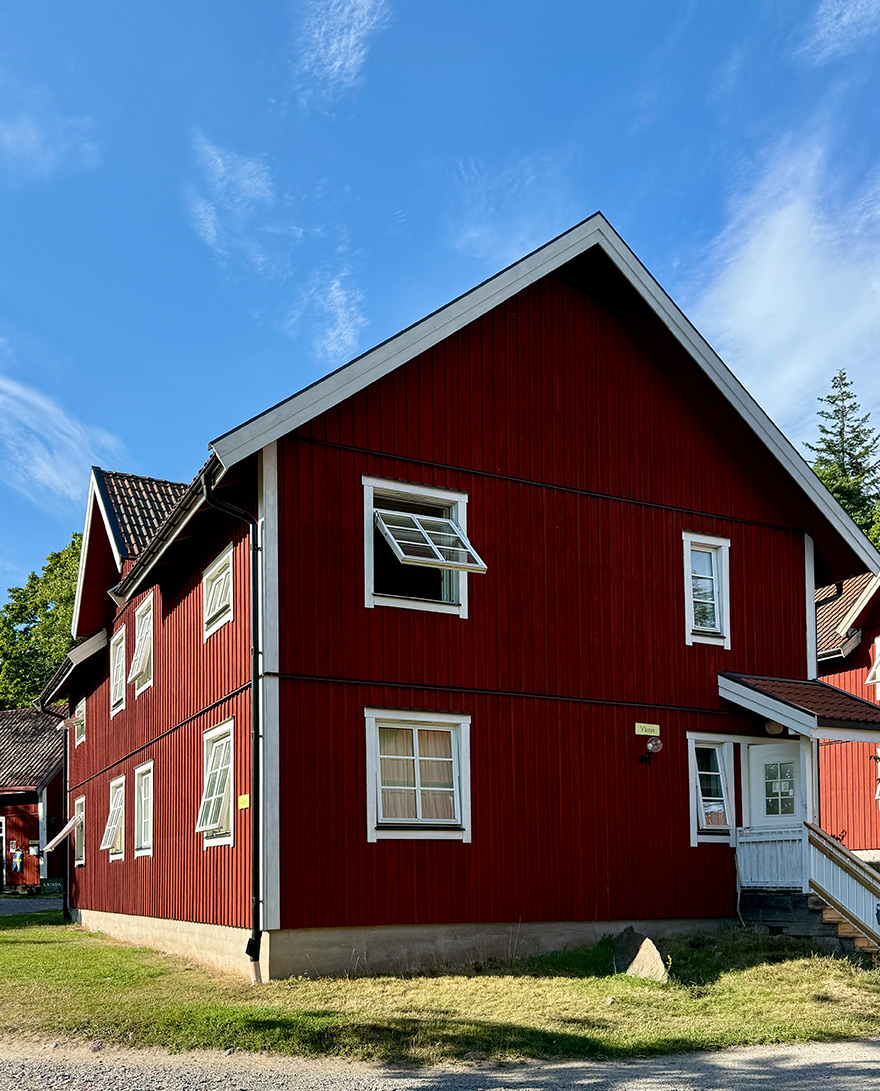
Rather than one hotel building, the accommodation is spread across four traditional archipelago houses, giving the place the feel of a small island village. Rooms are simple, comfortable and in keeping with the surroundings, with painted timber, classic Scandinavian styling and views across the trees or towards the sea.
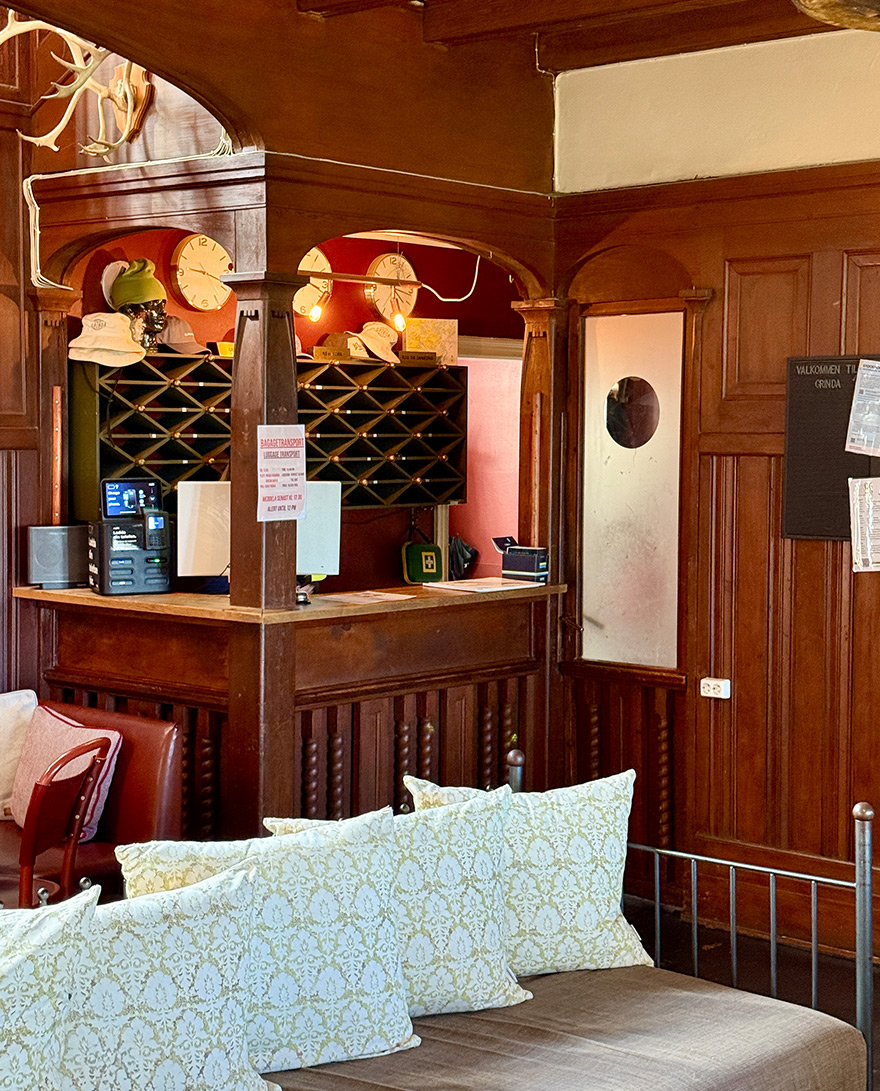
The main house is full of character, with family photographs still decorating the walls and cosy corners to gather after a day’s walking or swimming. In summer the terraces become a social hub for the island.
One practical point worth knowing is that the hotel sits around one kilometre from the ferry jetty. It’s an easy walk along the island path, but we’d recommend travelling light or arranging the luggage transfer offered by the hotel if you’re bringing larger cases! The Wärdshus is also seasonal, so it’s worth checking opening dates before planning your trip.
Do
Walk the island trail
One of the best things about Grinda is simply exploring on foot. We followed a simple loop round the island along the rocky shoreline. Early mornings are especially beautiful, when the island feels almost empty apart from birdsong and the occasional passing boat.
Swim in the Baltic Sea
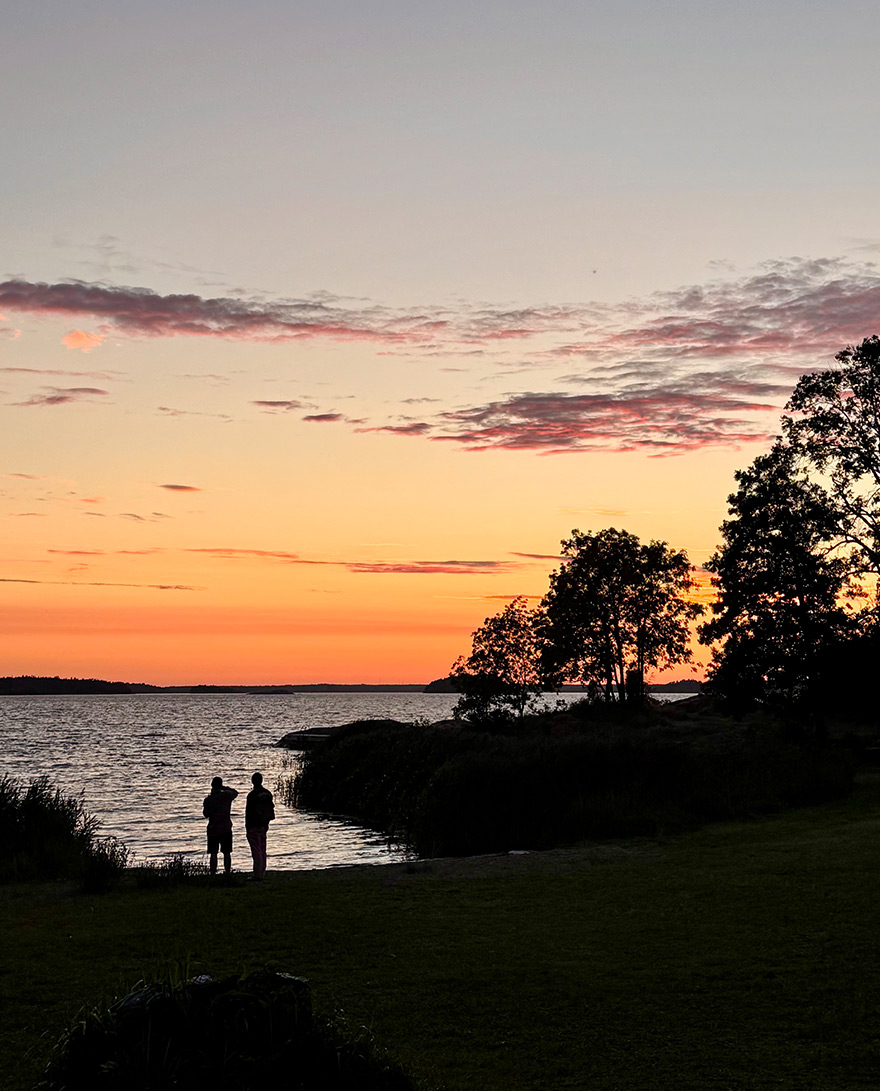
Swimming is part of everyday life on Grinda. Around the island you’ll find smooth granite rocks, small sandy beaches and quiet coves where locals and visitors jump into the refreshing Baltic Sea. The hotel has a sauna right next to the water so you can warm up and then jump in the sea to cool down.
Dine
Grinda Wärdshus Restaurant
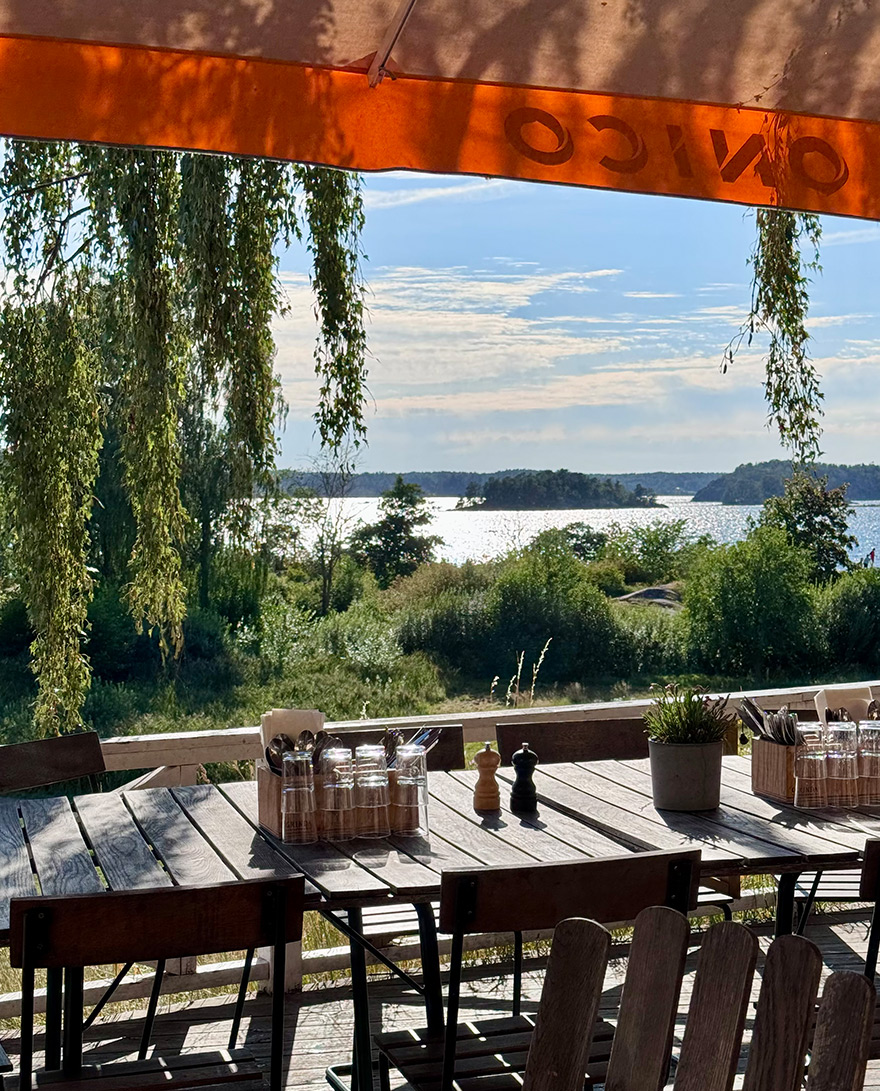
The hotel’s dining room combines traditional Swedish character with views looking out across the harbour and in warmer months the terrace a wonderful spot (below left). The menu changes with the seasons and focuses on classic Swedish cooking using local ingredients from both land and sea with fish featuring heavily. For a little island the food was surprisingly creative and beautifully presented.
Grinda Sea Lodge
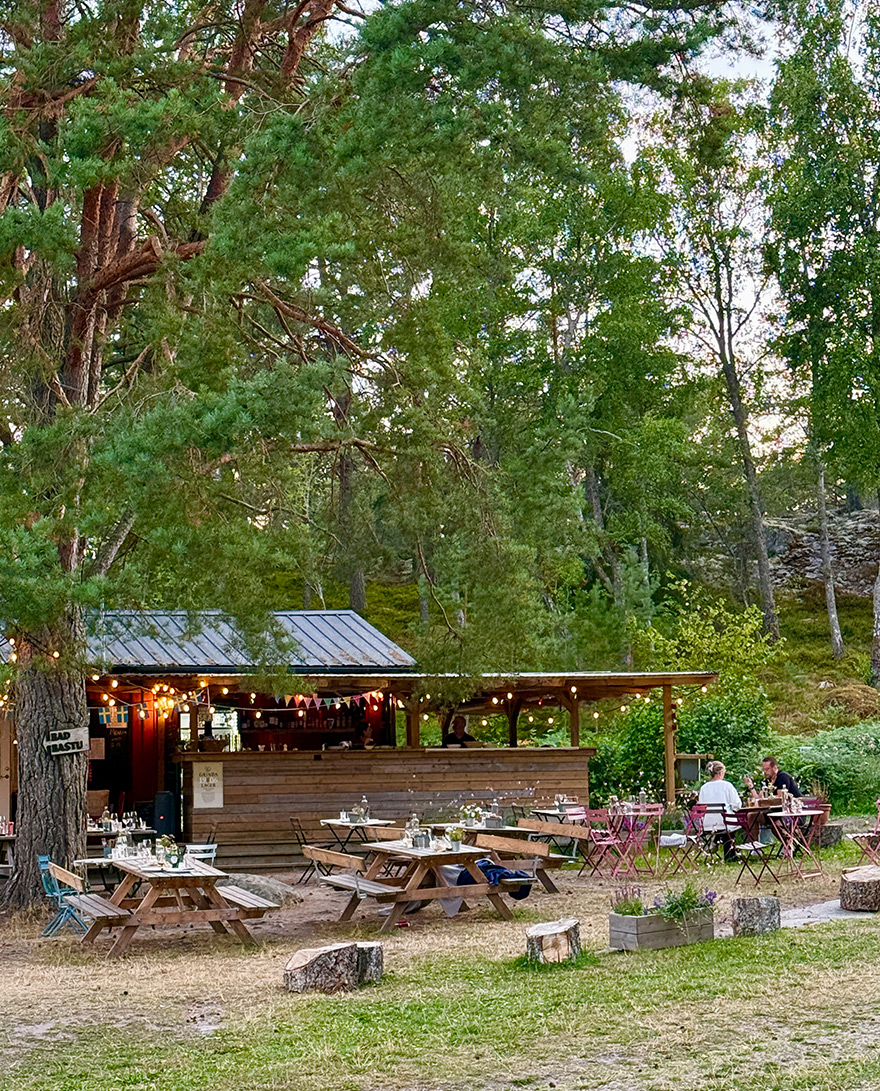
If you’re visiting during one of the lodge’s barbecue evenings, it’s well worth booking. The atmosphere is informal and sociable, with grills fired up as guests gather around long tables overlooking the sea (below right). It’s a simple concept done well: freshly grilled food, cold drinks and beautiful surroundings. It was one of the best barbecues we’ve had, with a great selection of cooked meats, salads and sauces.
Framfickan
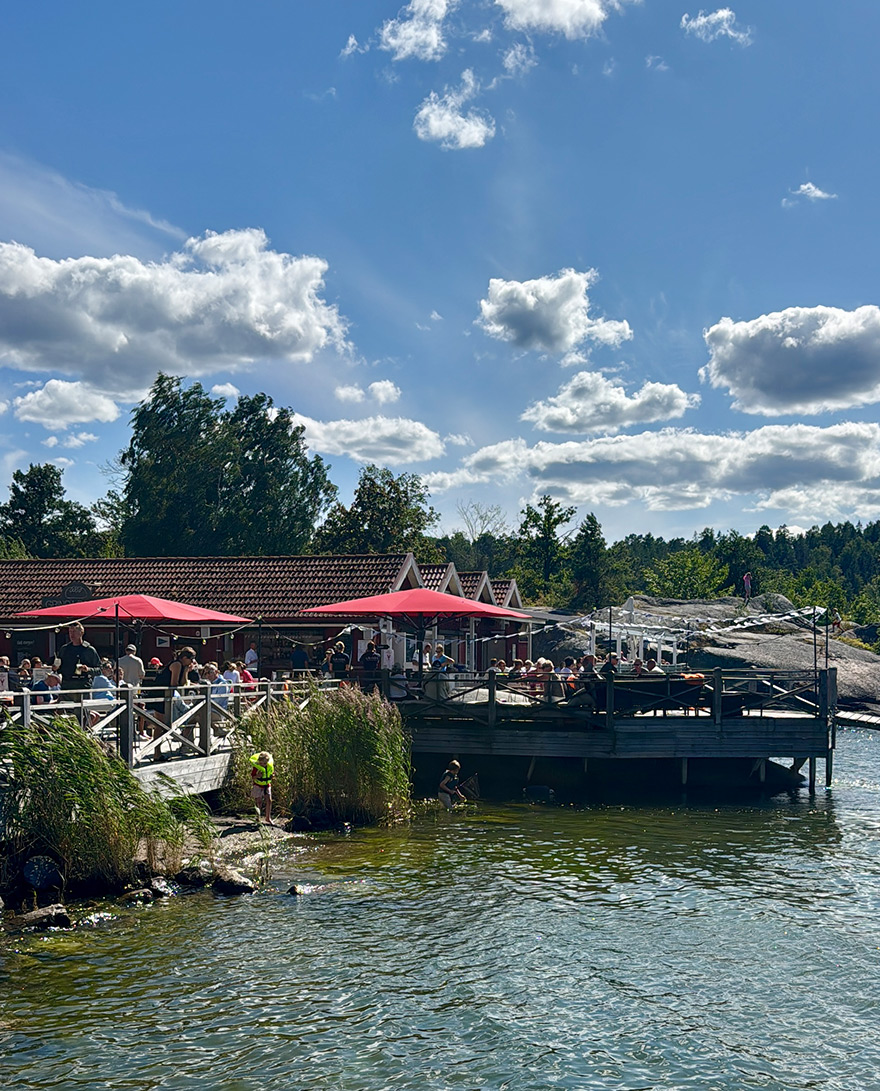
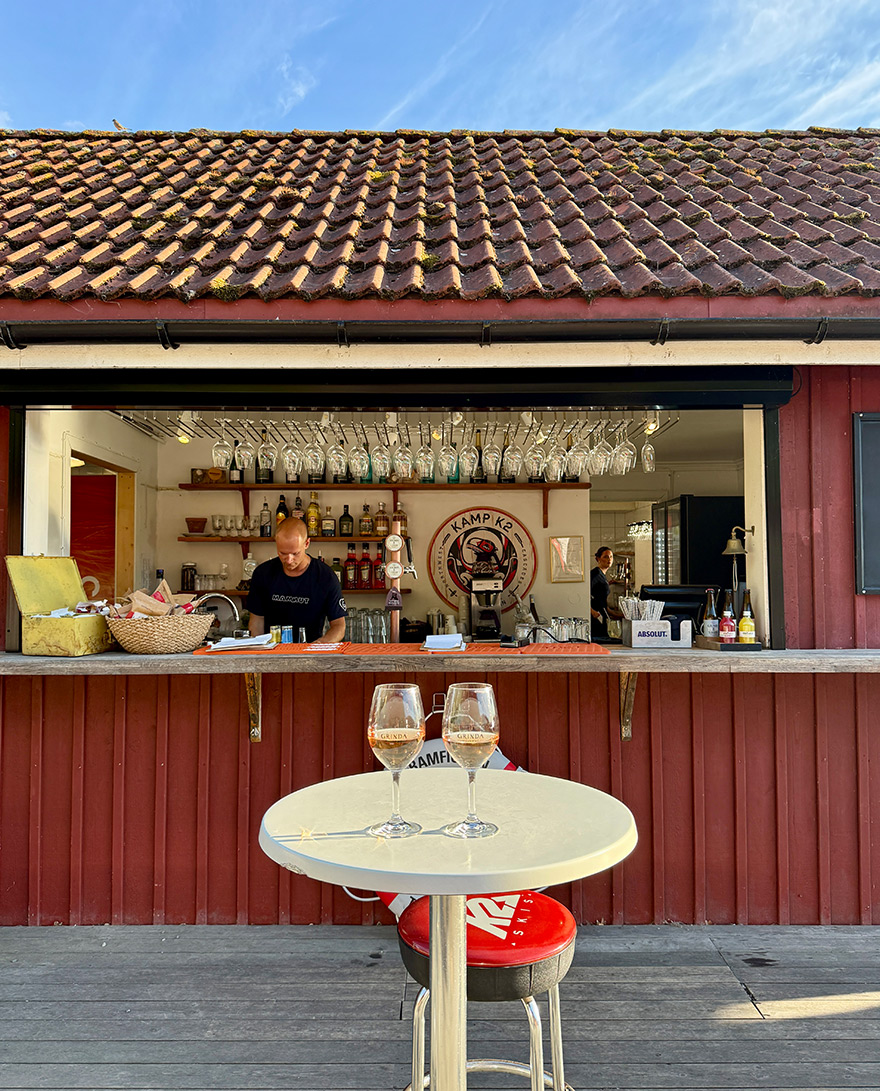
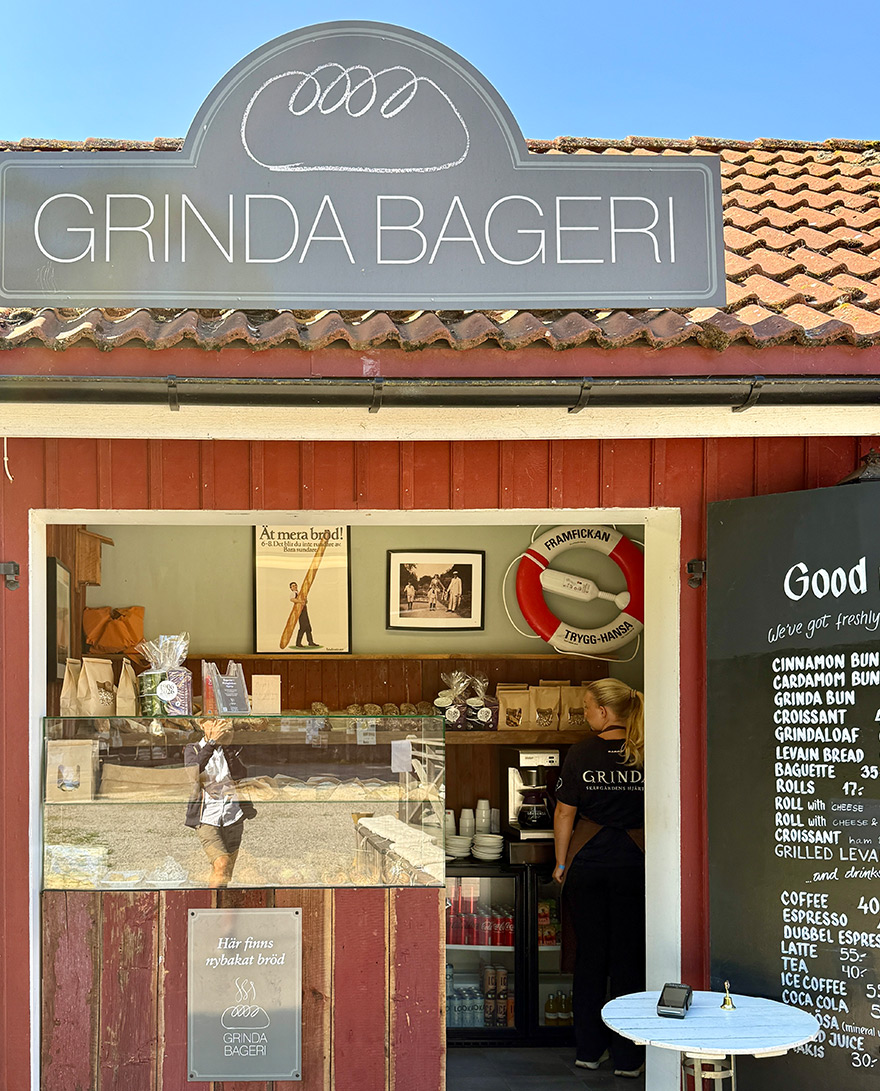
For a more casual meal, Framfickan sits right beside the harbour with a large outdoor deck overlooking the water (below left and middle). It serves seafood, pizzas and salads. On sunny days the terrace quickly fills with visitors making the most of the archipelago views so get there early and be ready to wait a bit to bag a table. You can also order drinks and snacks, with plenty of places to sit and soak up the atmosphere. And there is also a bakery where you pick up a coffee and a cinnamon bun (below right).
Drink
Grinda Wärdshus Bar
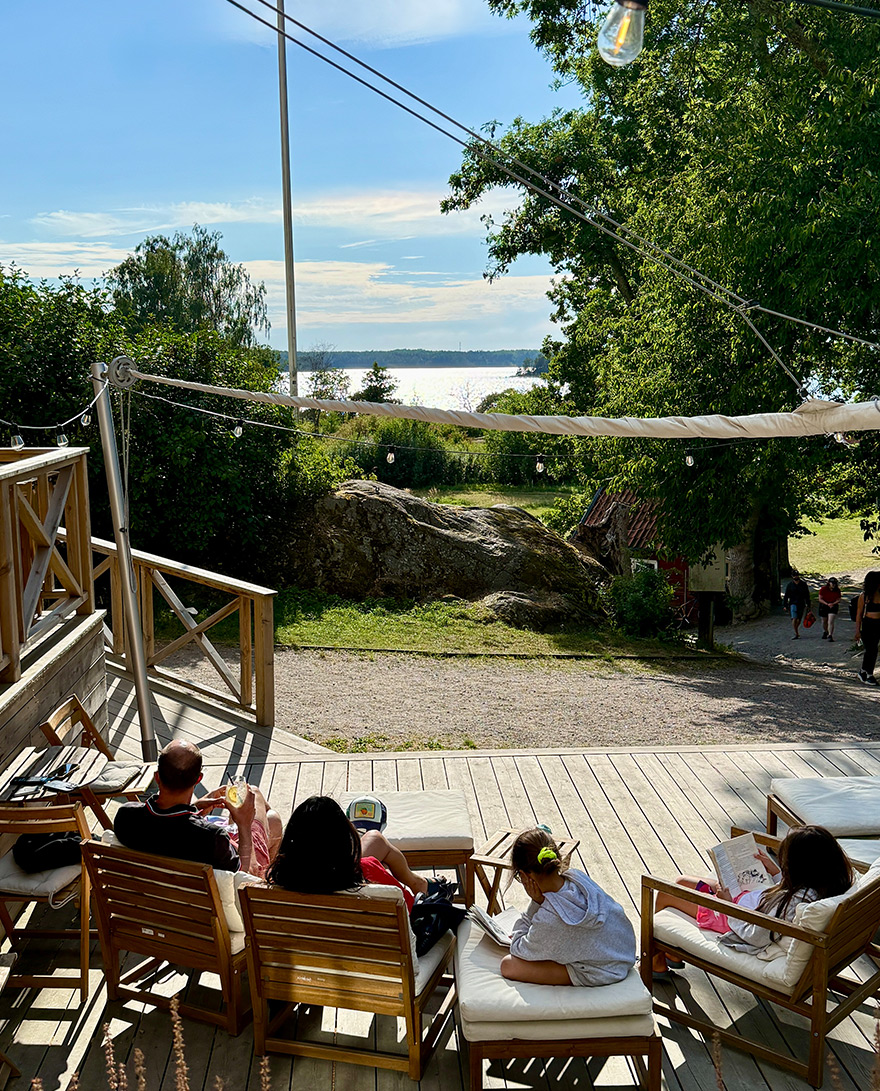
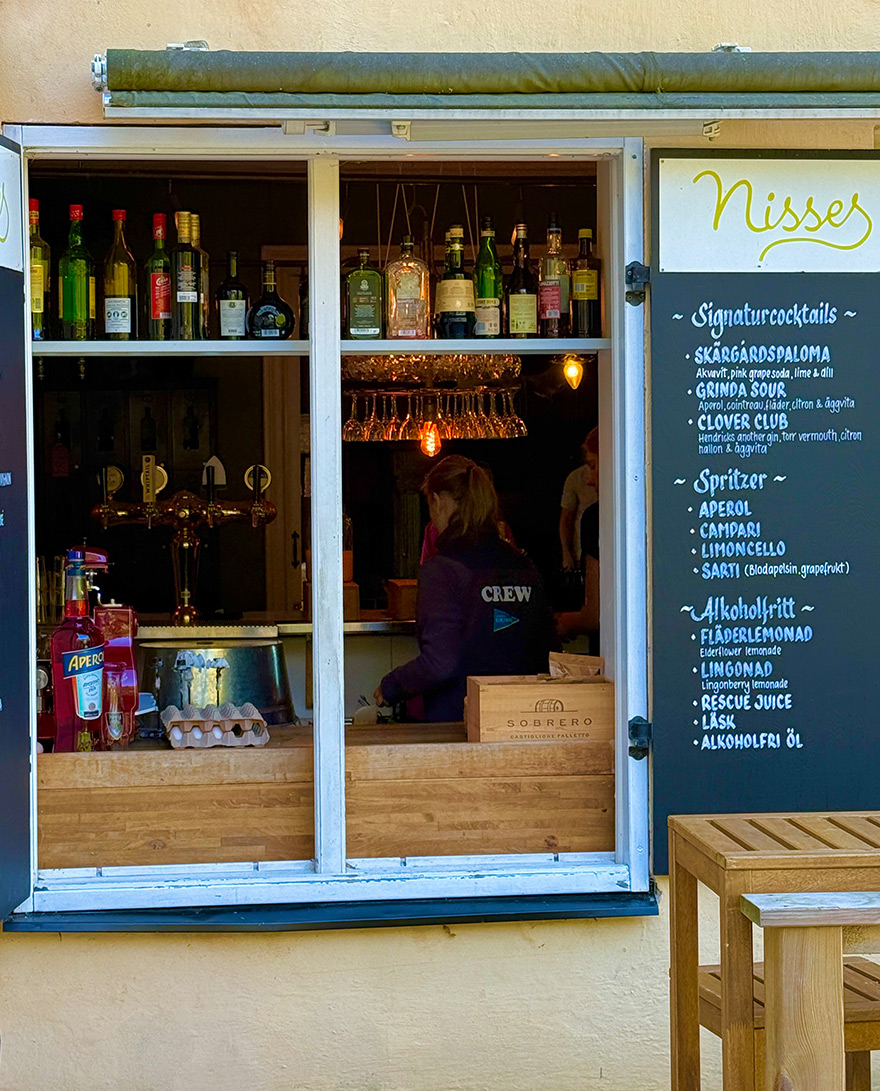
Before dinner, the terrace at the Wärdshus bar is a great spot to chill with a cocktail or a glass of wine overlooking the harbour.
Sandhamn
Sandhamn offers a completely different side of the Stockholm Archipelago. Sitting at the outer edge of the islands where the Baltic opens into the sea, it has a bigger, livelier feel with independent shops and a range of dining options. Often described as the Hamptons of Stockholm, elegant summer houses, sailing culture and beach life combine to create one of the archipelago’s most stylish destinations.
Customs officers settled here in the late 1600s, and the arrival of the Royal Swedish Yacht Club (KSSS) in 1897 transformed Sandhamn into Sweden’s premier sailing destination. This attracted wealthy Stockholm families who built many of the beautiful villas that still line the island today.
Stay
Sandhamn Seglarhotell
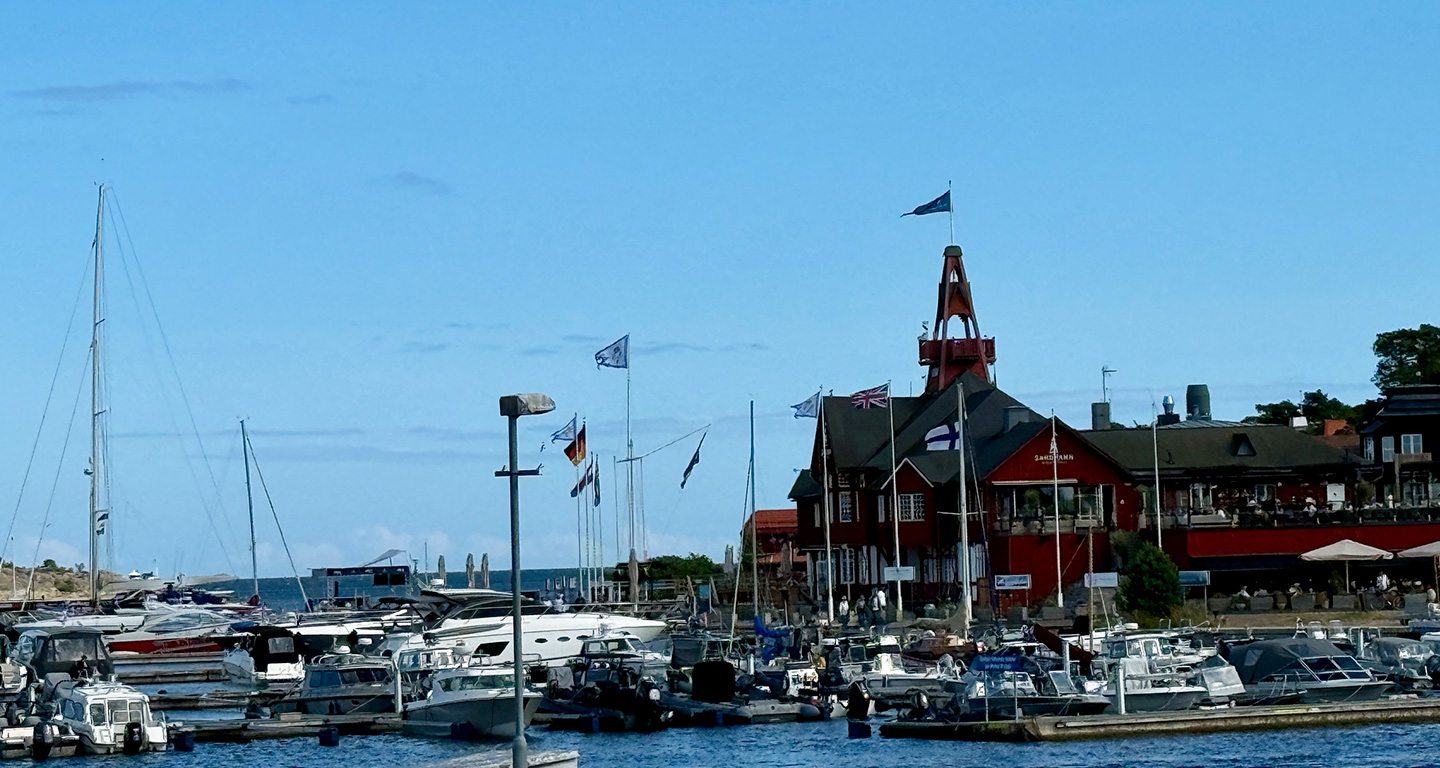
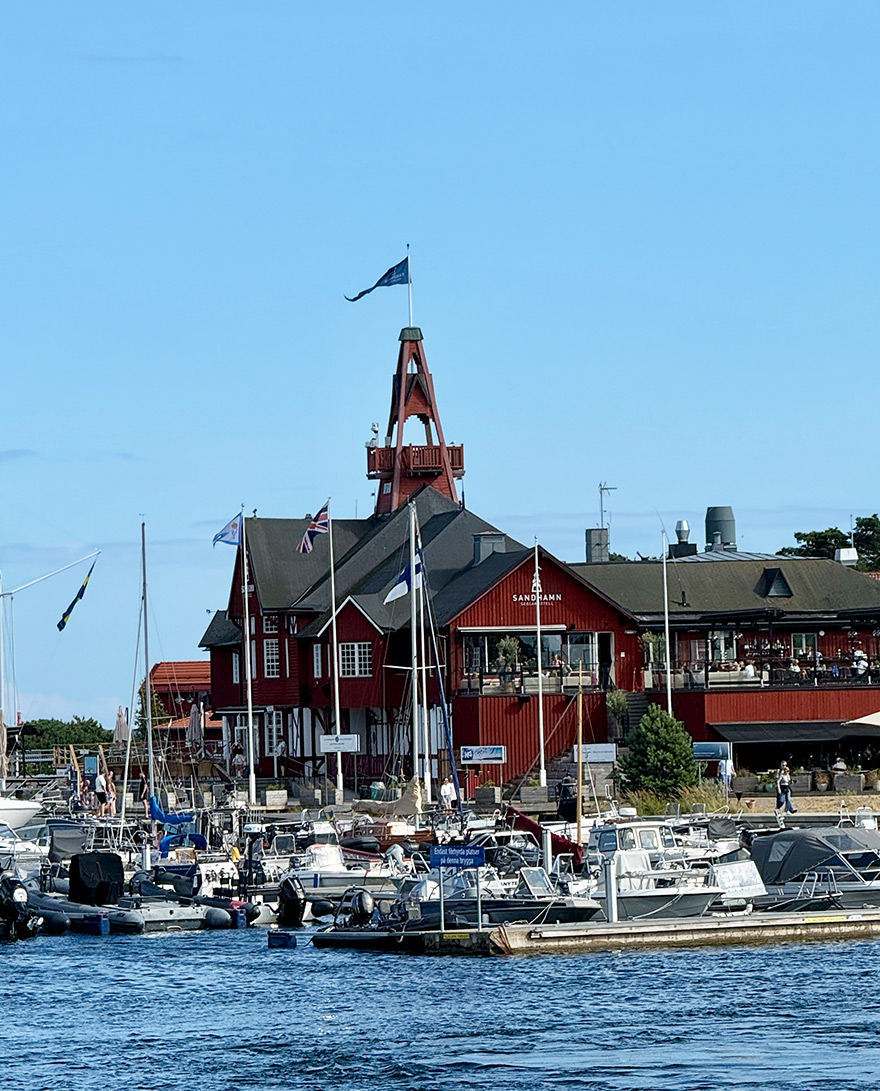
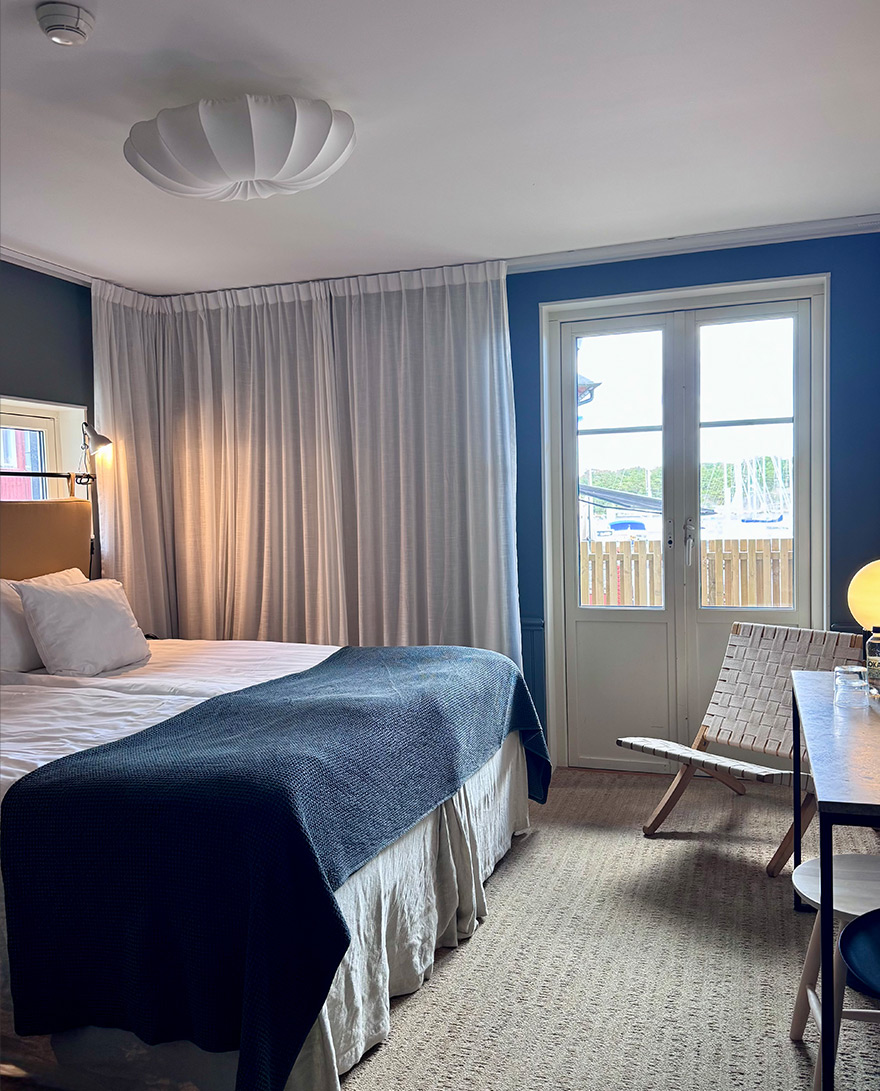
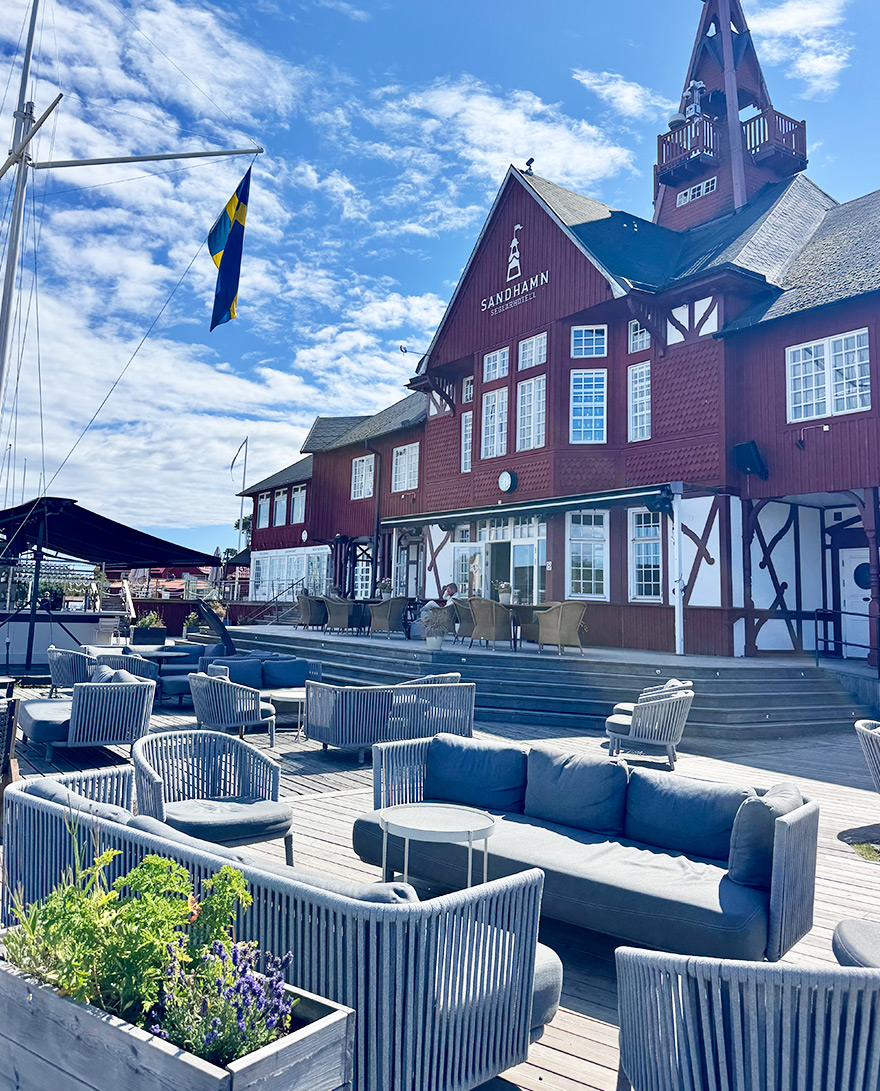
Seglarhotell is the island’s main hotel and the perfect base for exploring Sandhamn. Sitting directly on the harbour opposite the ferry terminal, it places you in the middle of everything while still feeling calm once you step inside. It’s just a few minutes’ walk to the beaches, forest trails, restaurants and shops.
The interiors reflect the island’s sailing heritage with pale timber, soft greys and crisp whites creating a contemporary Scandinavian feel. Our harbour-facing room was simple but comfortable, with understated Scandi design and calming neutral colours. The hotel also has a spa with an indoor pool and saunas, plus a padel court.
Do
Walk around the island
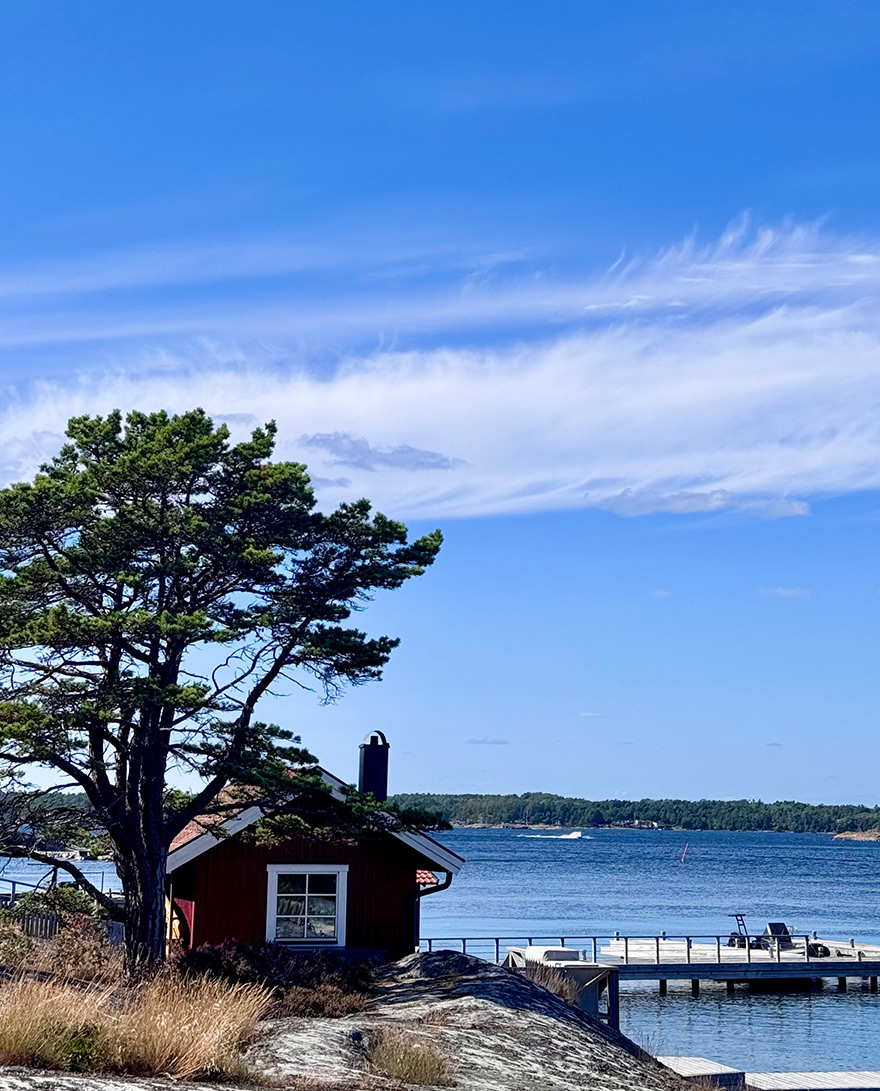
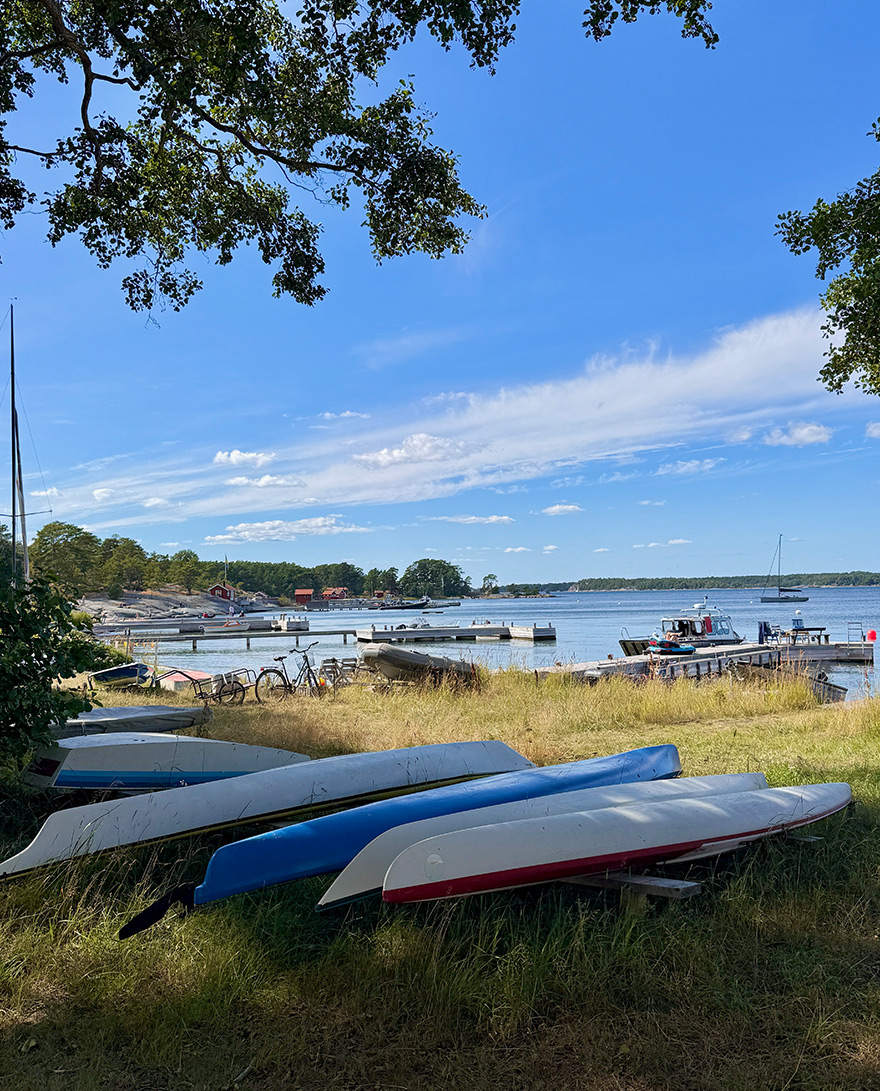
One of the best ways to experience Sandhamn is simply by walking. The Stockholm Archipelago Trail circles much of the island, taking you from the busy harbour into peaceful pine forests before opening onto sweeping sandy beaches and rocky viewpoints looking out across the Baltic Sea. The Stockholm Archipelago Trail website has a great map and guide to this and many other hikes.
Swim at Trouville Beach
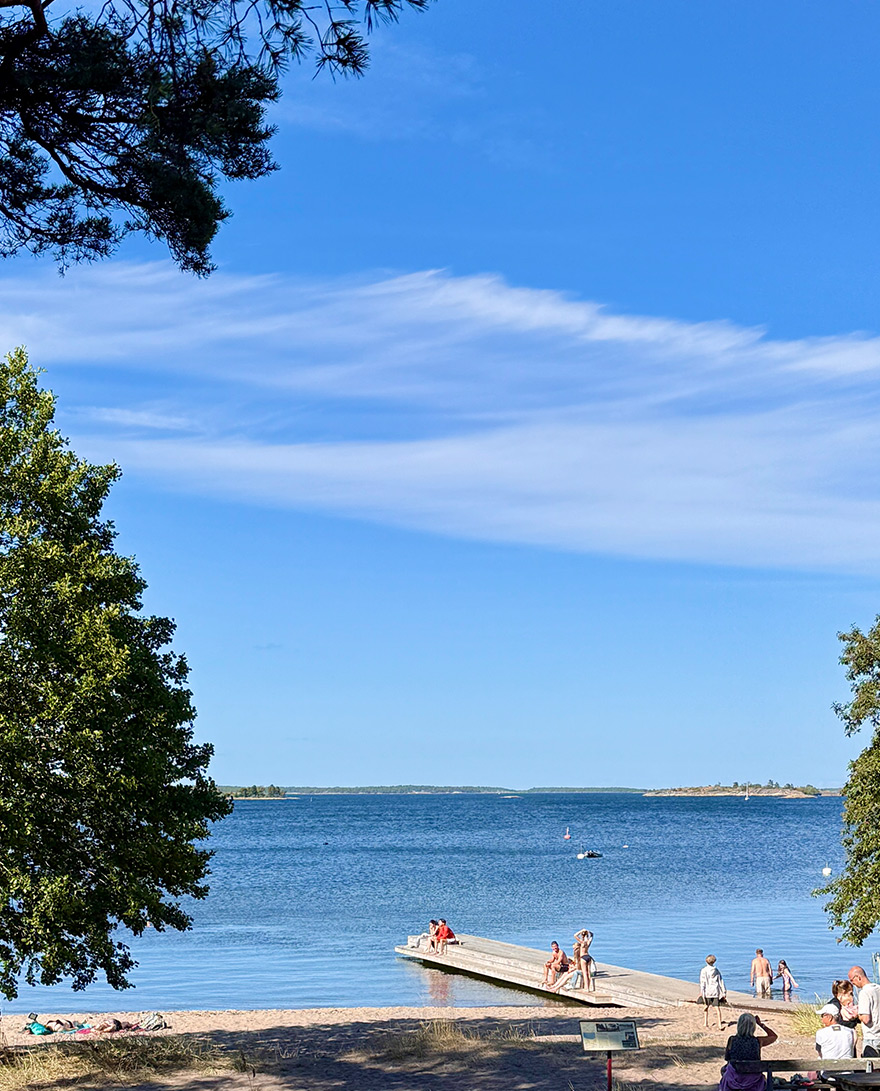
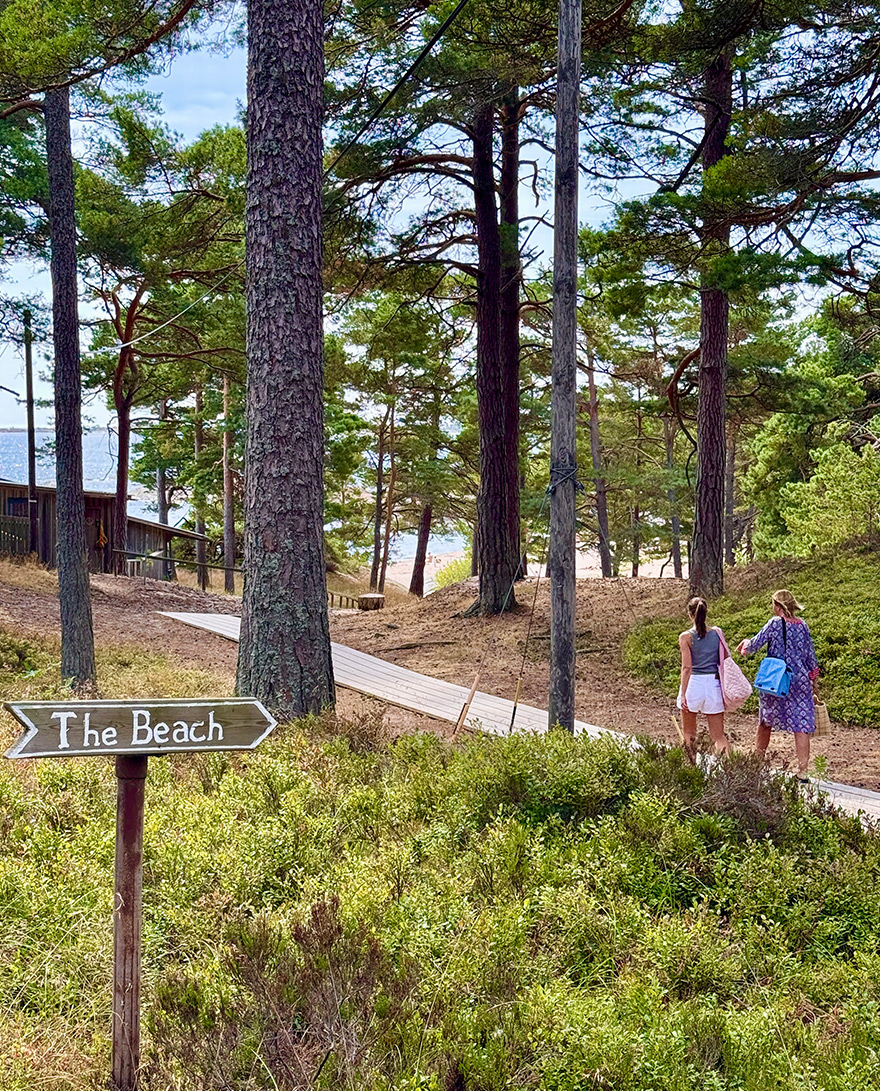
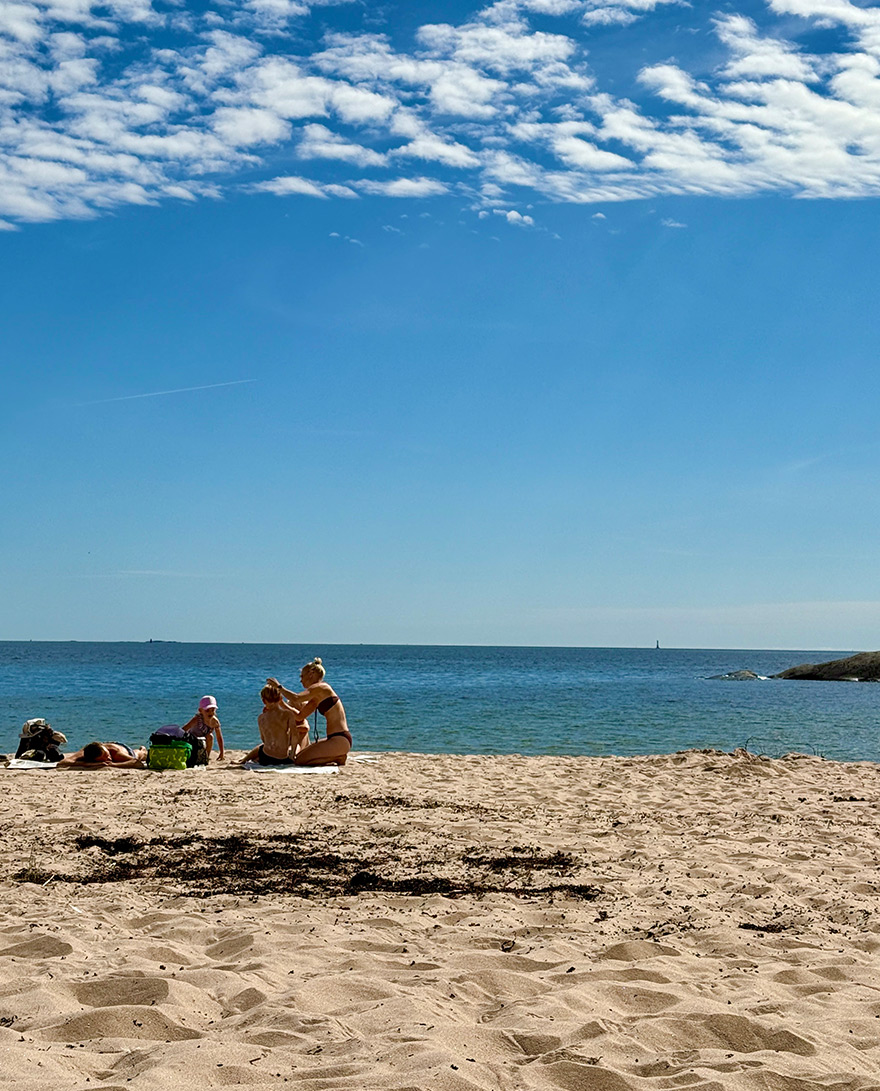
Sandhamn’s beaches are among the best in the Stockholm Archipelago. Trouville Beach, on the eastern side of the island, is a broad stretch of pale sand backed by dunes and pine forest. On warmer days, you’ll find locals picnicking, swimming and relaxing on the sand, while the cooler temperatures of early August made it perfect for long walks followed by a refreshing dip in the sea.
Dine
Seglarhotellet Restaurant
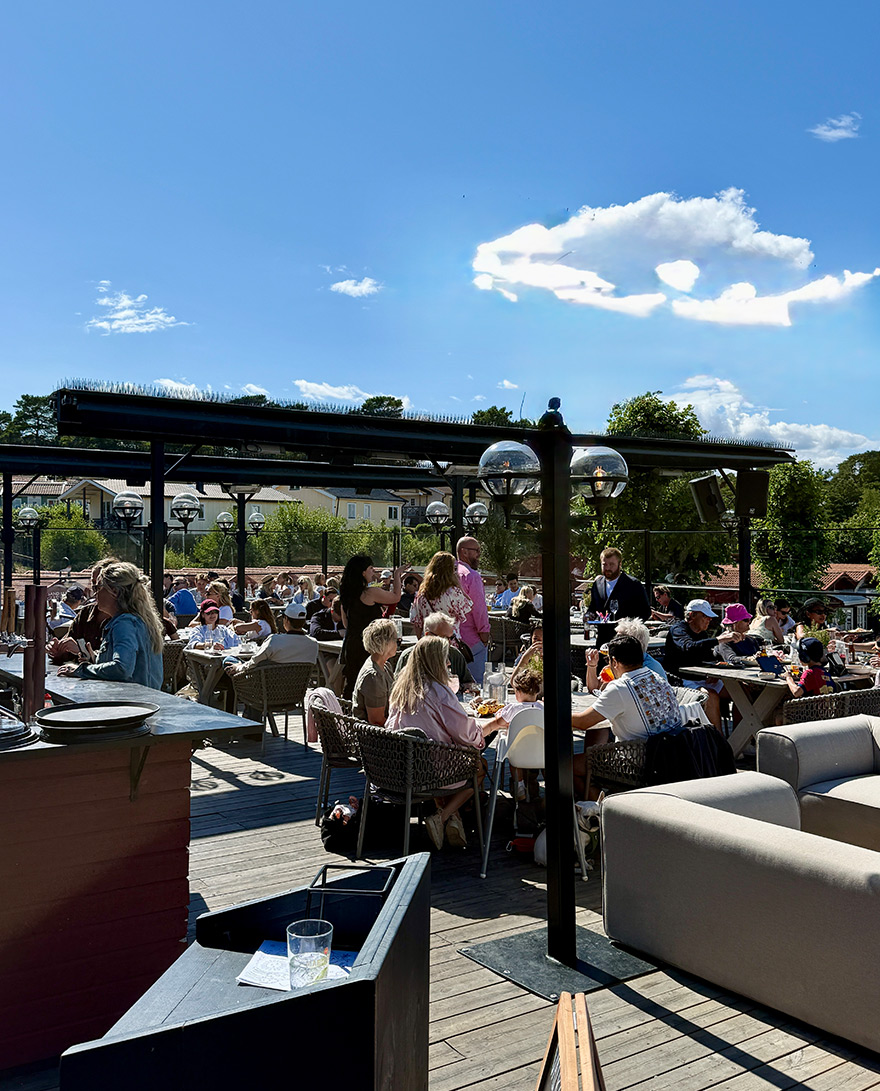
The Seglarhotellet restaurant and terrace give the hotel a lively atmosphere from breakfast through to late evening. During summer there’s a genuine buzz, with yacht crews, Stockholm weekenders and hotel guests all gathering for drinks and dining overlooking the marina.
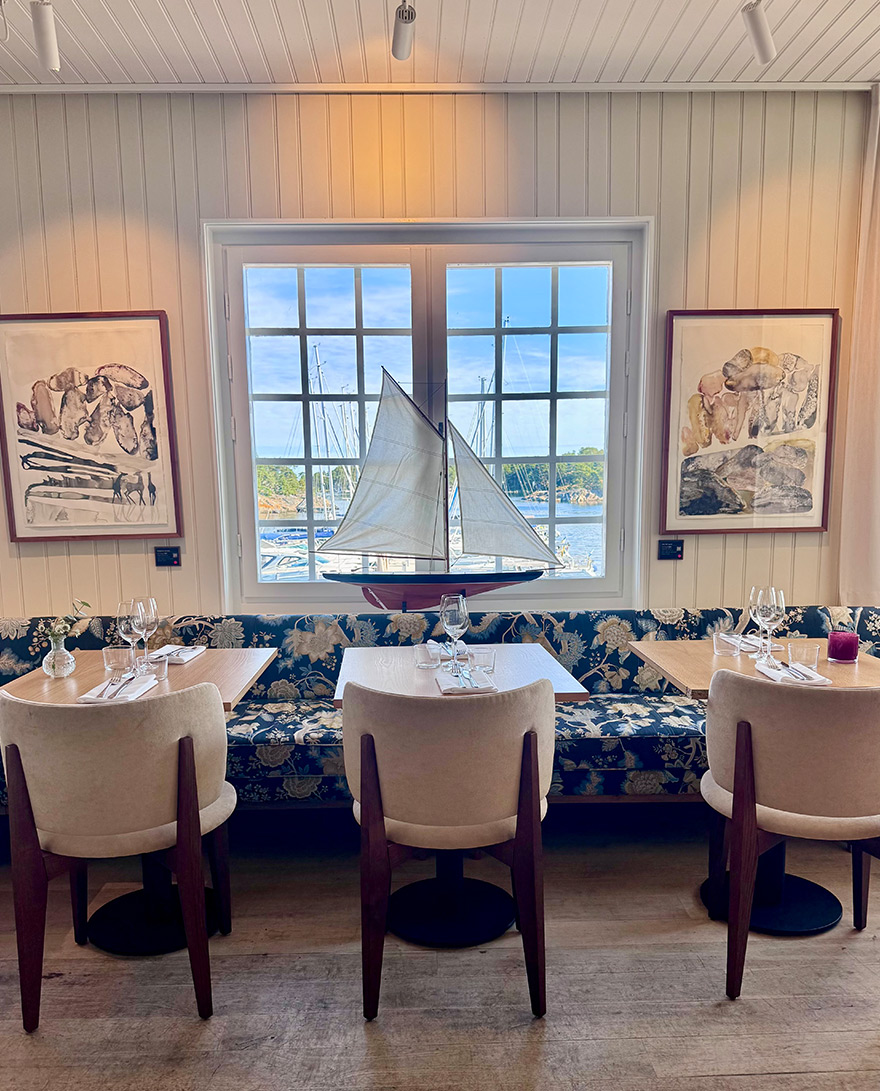
Inside, the restaurant continues the hotel’s clean nautical design with pale woods, soft lighting and understated Scandinavian styling. The menu focuses on modern Nordic cooking using seasonal Swedish ingredients, alongside fresh seafood and grilled dishes.
Sandhamns Värdshus
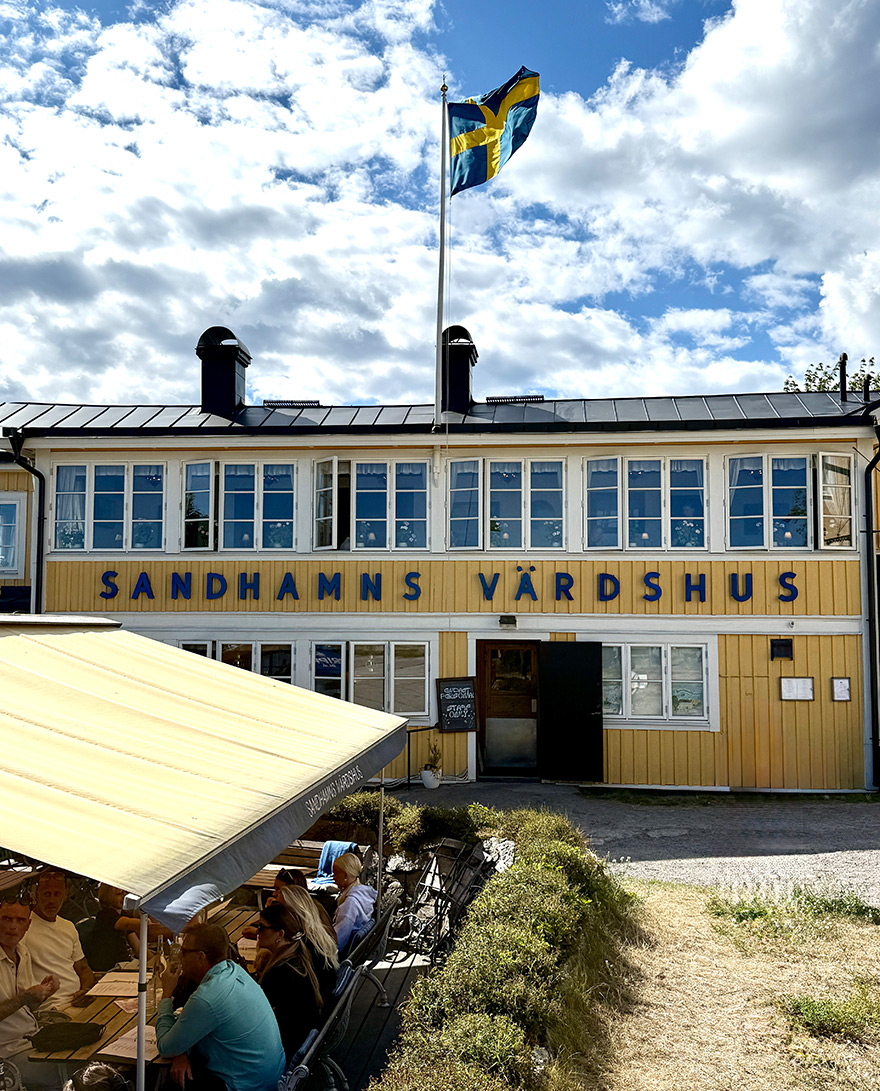
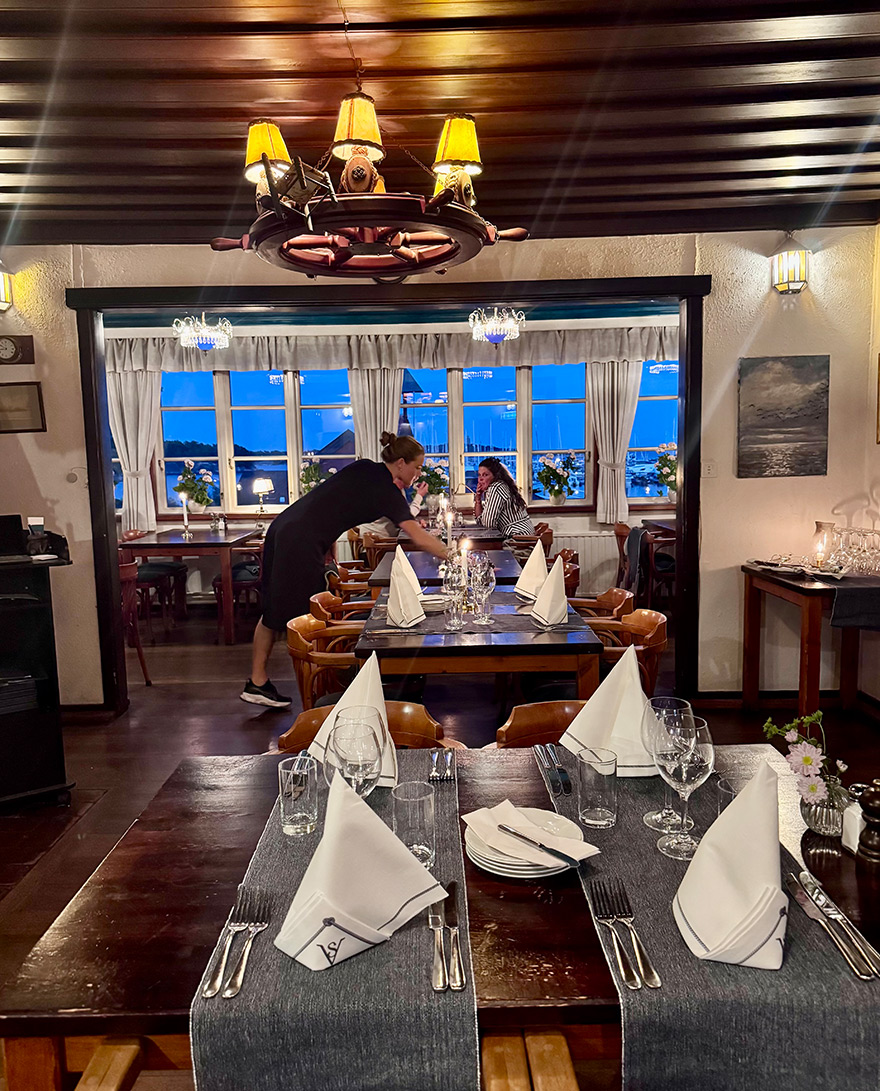
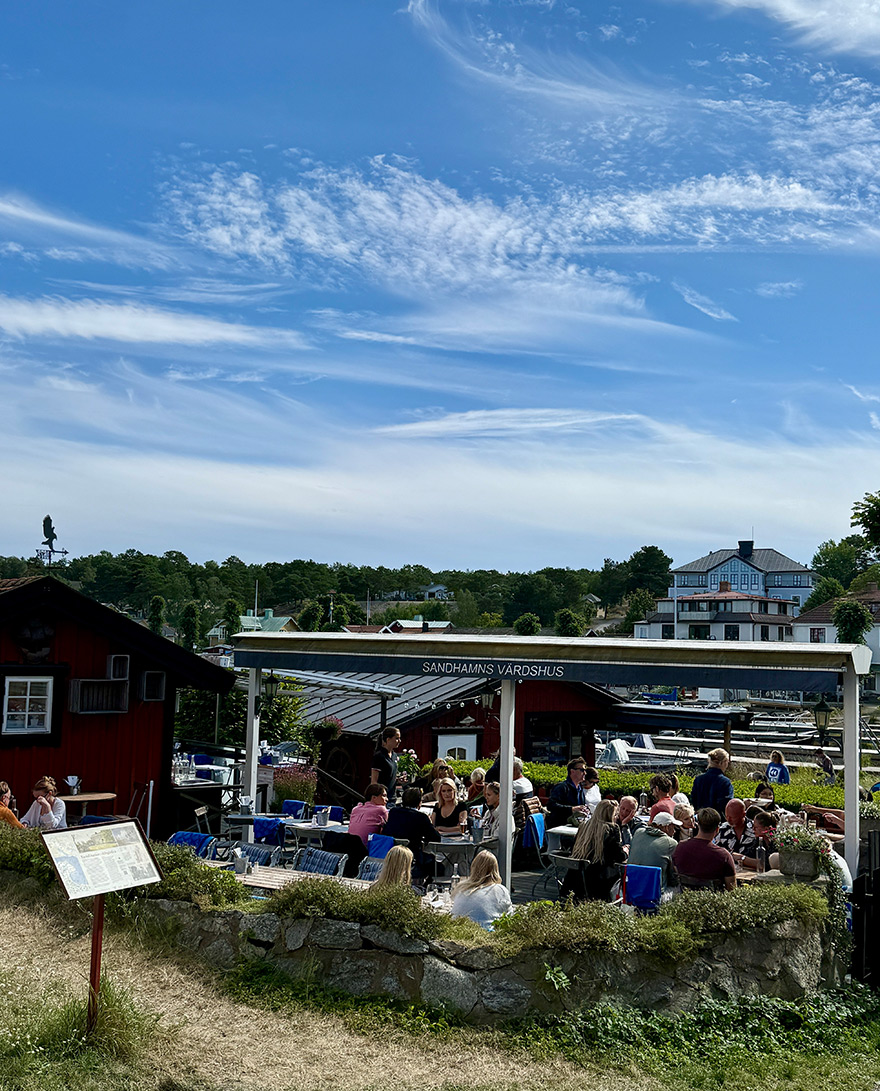
For something with a little more history, Sandhamns Värdshus has been welcoming visitors since 1672. It offers a quieter atmosphere with traditional dining rooms lit by candles and furnished with warm timber interiors. There is also an outdoor terrace during the warmer months. The menu celebrates classic Swedish cooking, with beautifully prepared fish and local ingredients taking centre stage.
Dykarbaren
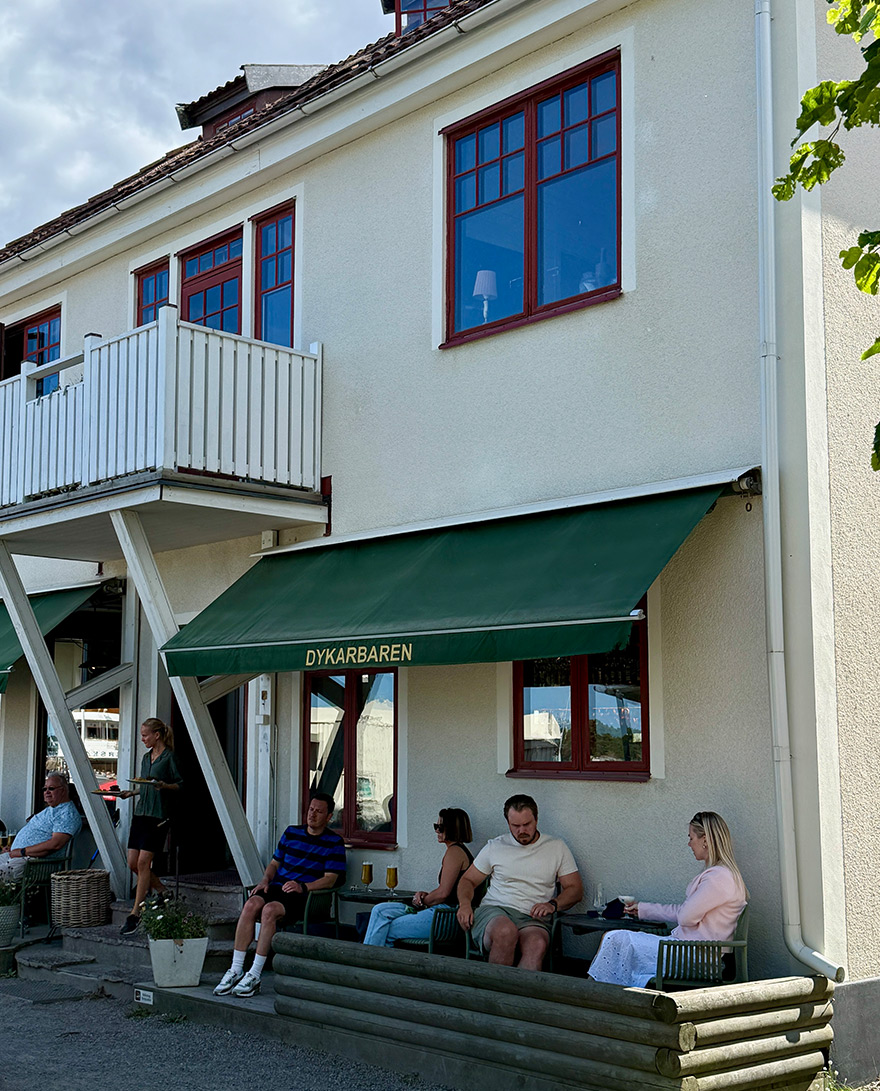
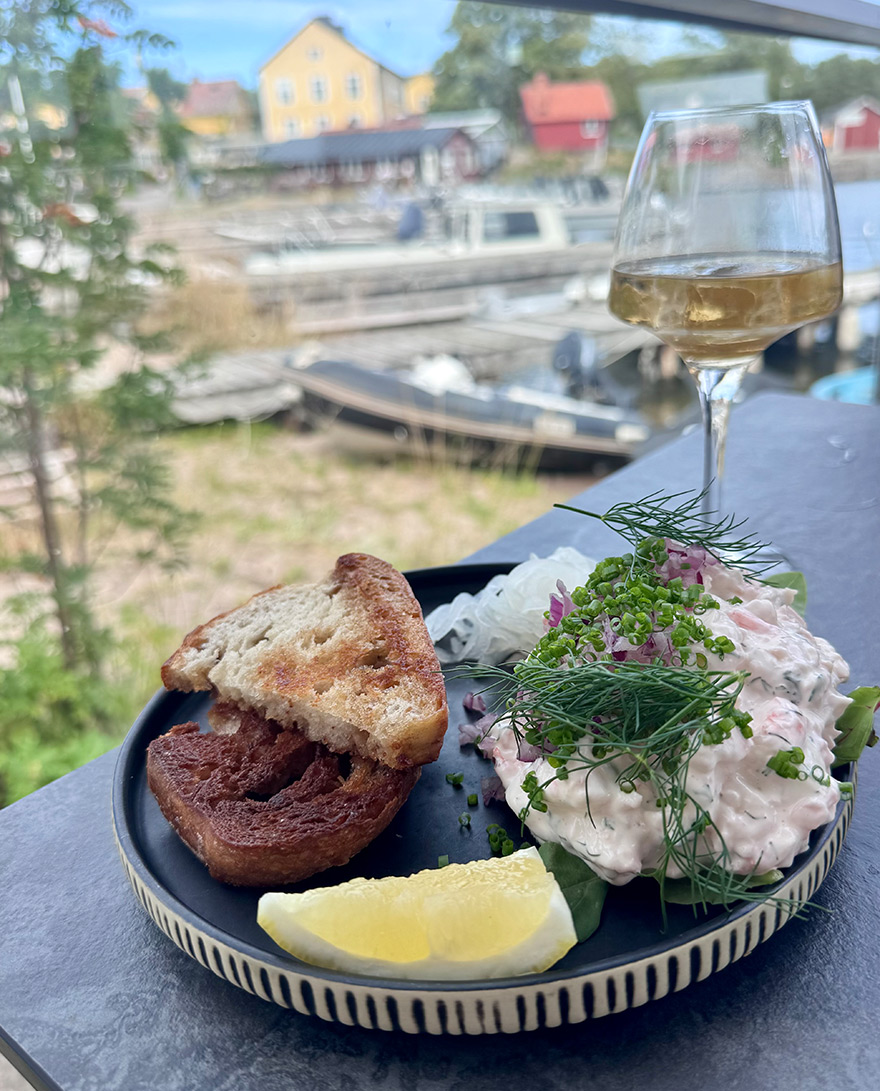
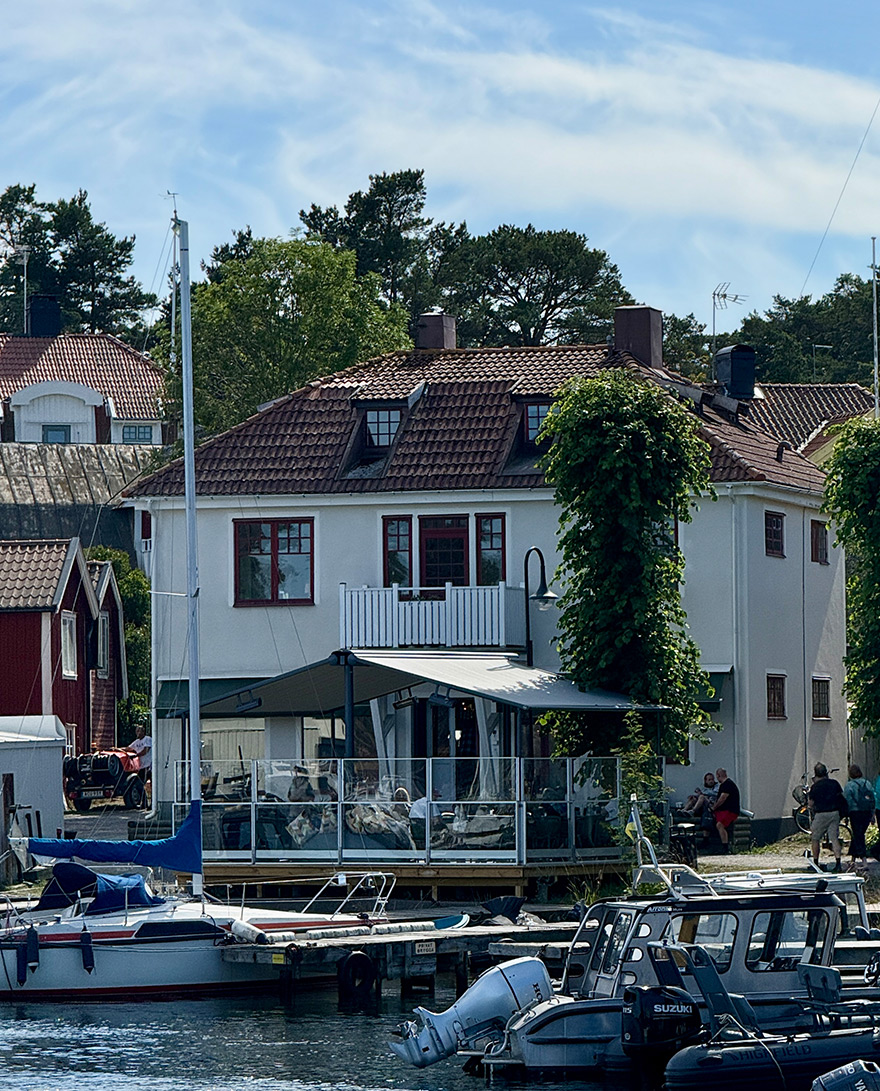
For lunch, Dykarbaren sits right beside the harbour with outdoor tables overlooking the boats. The menu includes the classic Toast Skagen: creamy shrimp/prawn salad mixed with mayonnaise, dill, and lemon, served on bread and traditionally topped with roe. Seafood, burgers and salads are also offered.
Drink
Seglarhotellet Bar
As the afternoon turns into evening, the outdoor lounge and bar in front of the Seglarhotellet hotel is one of the island’s best places for a drink. You can watch the sailing boats return to harbour with a cocktail or glass of wine in hand.
Pentaboden
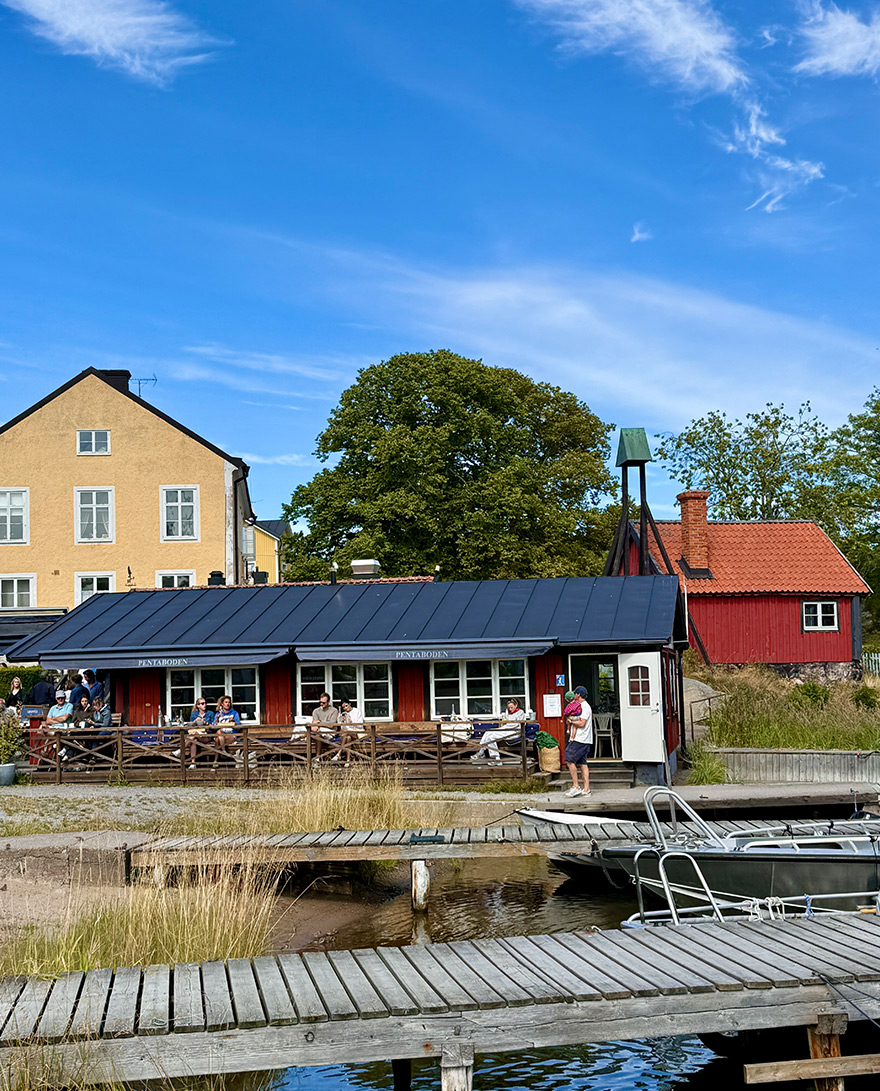
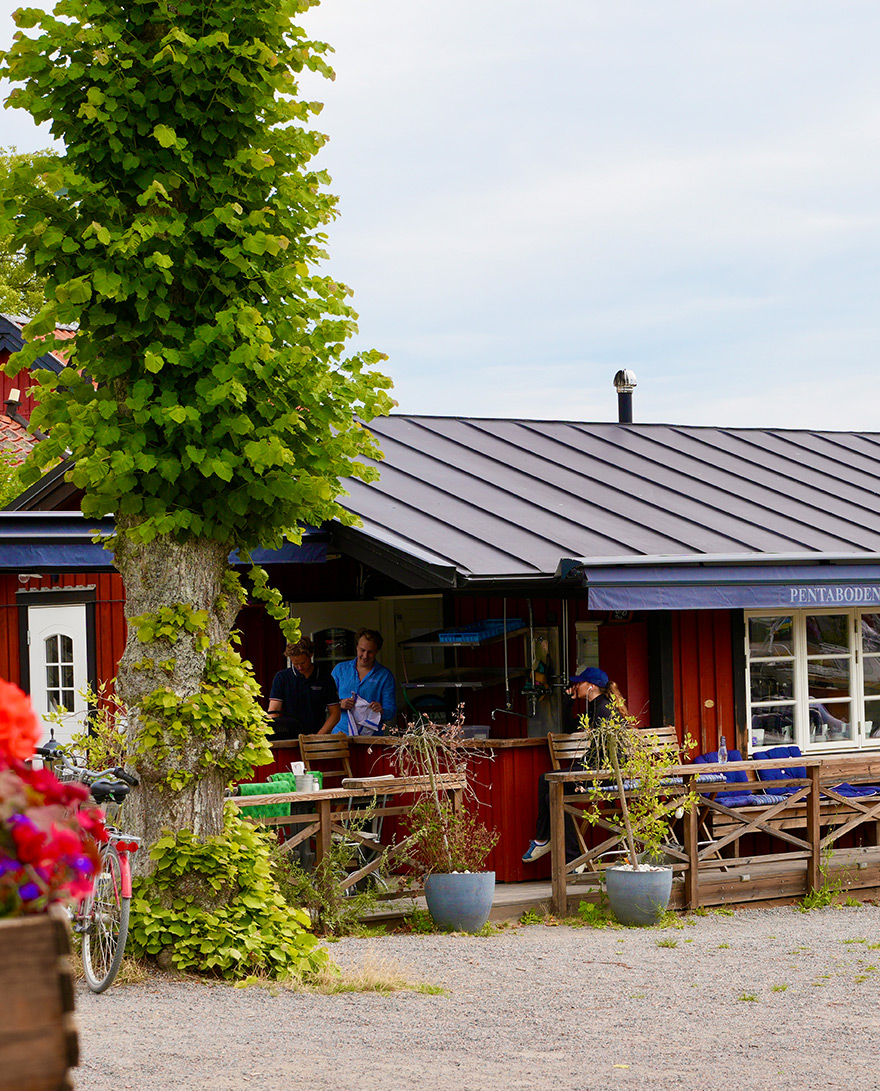
Pentaboden is another lovely option, particularly on warm evenings. The relaxed waterfront setting makes it popular with both locals and visiting sailors, serving uncomplicated food with front-row views across the marina. It’s also a great option for a pre-dinner drink.
Strindberg’s Champagne Club
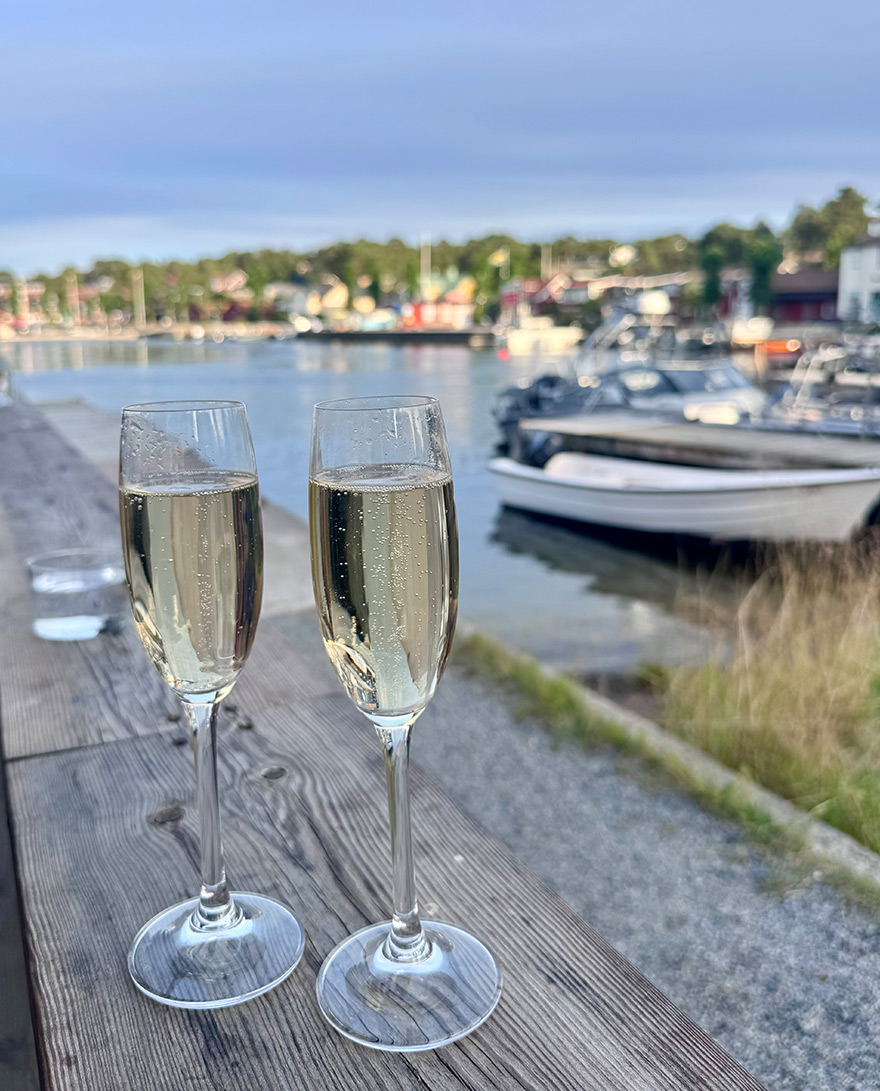
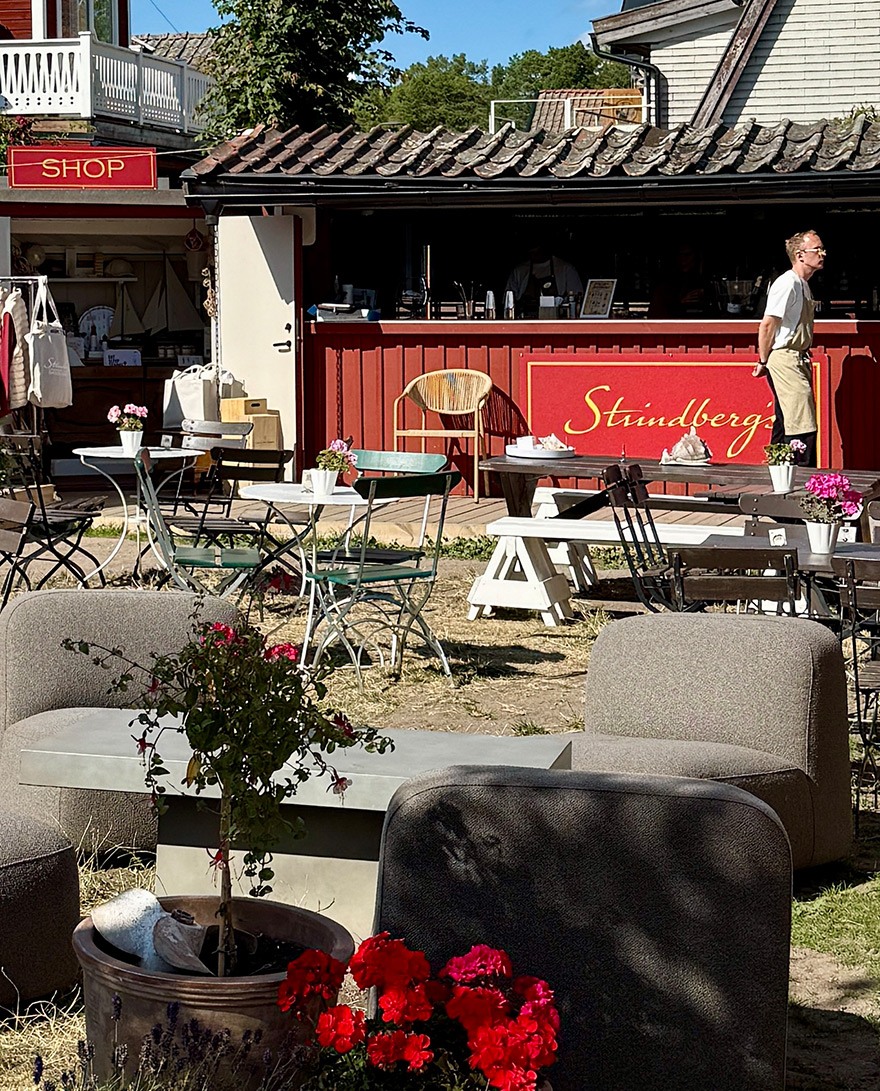
For something a little more celebratory, Strindberg’s Champagne Club offers a sophisticated setting overlooking the harbour. The atmosphere is relaxed but elegant, making it a lovely place to start or finish the evening with a glass of Champagne while watching the last boats arrive for the night.
Shop
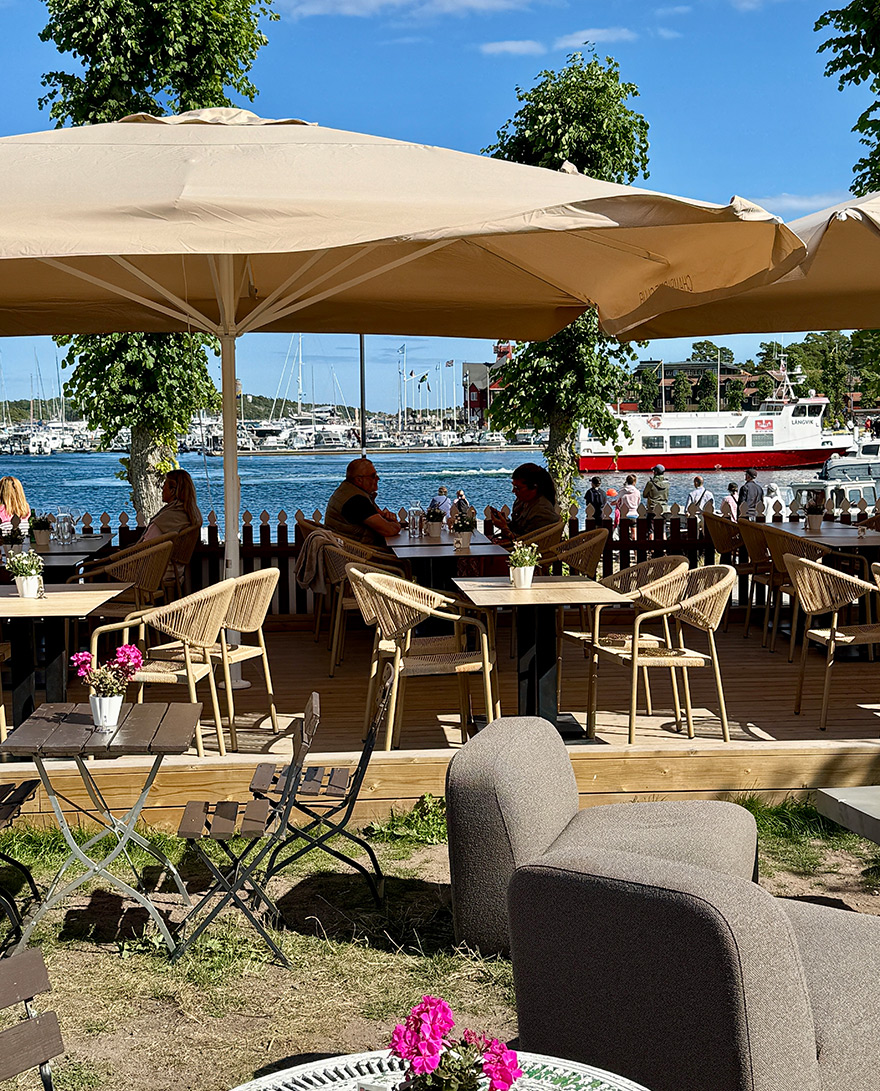
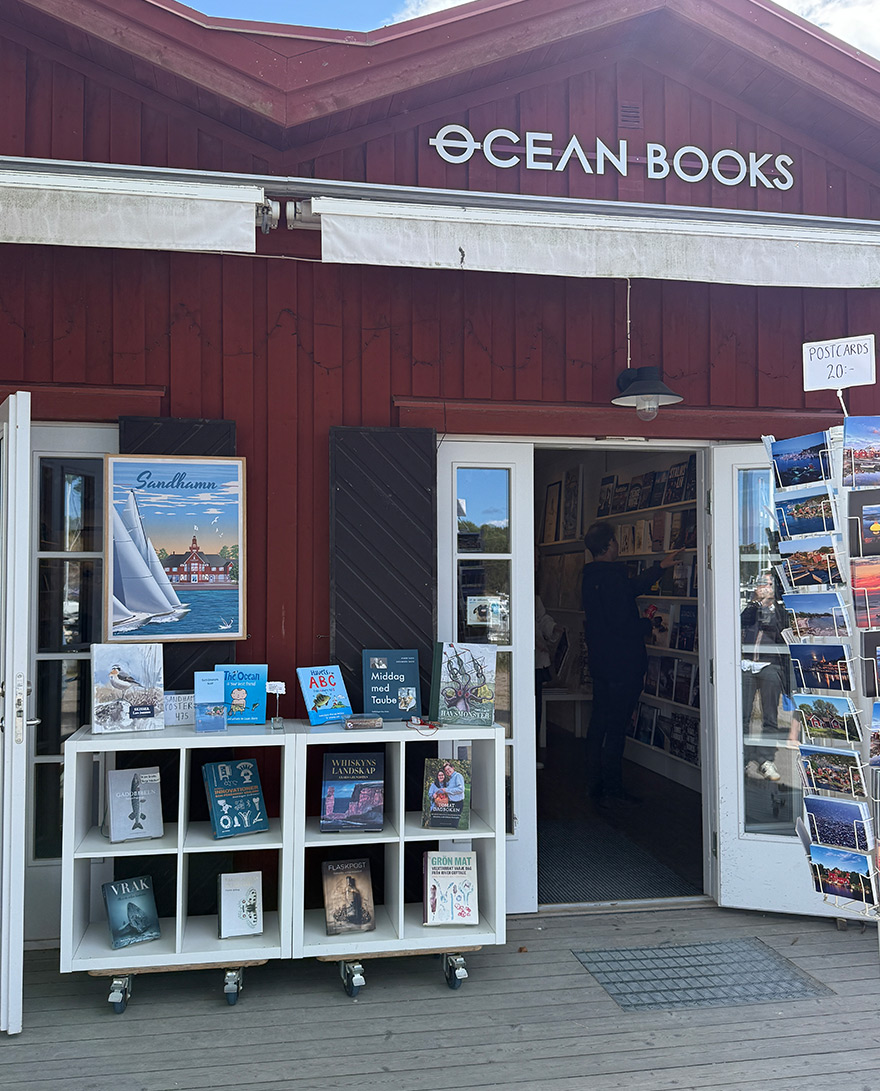
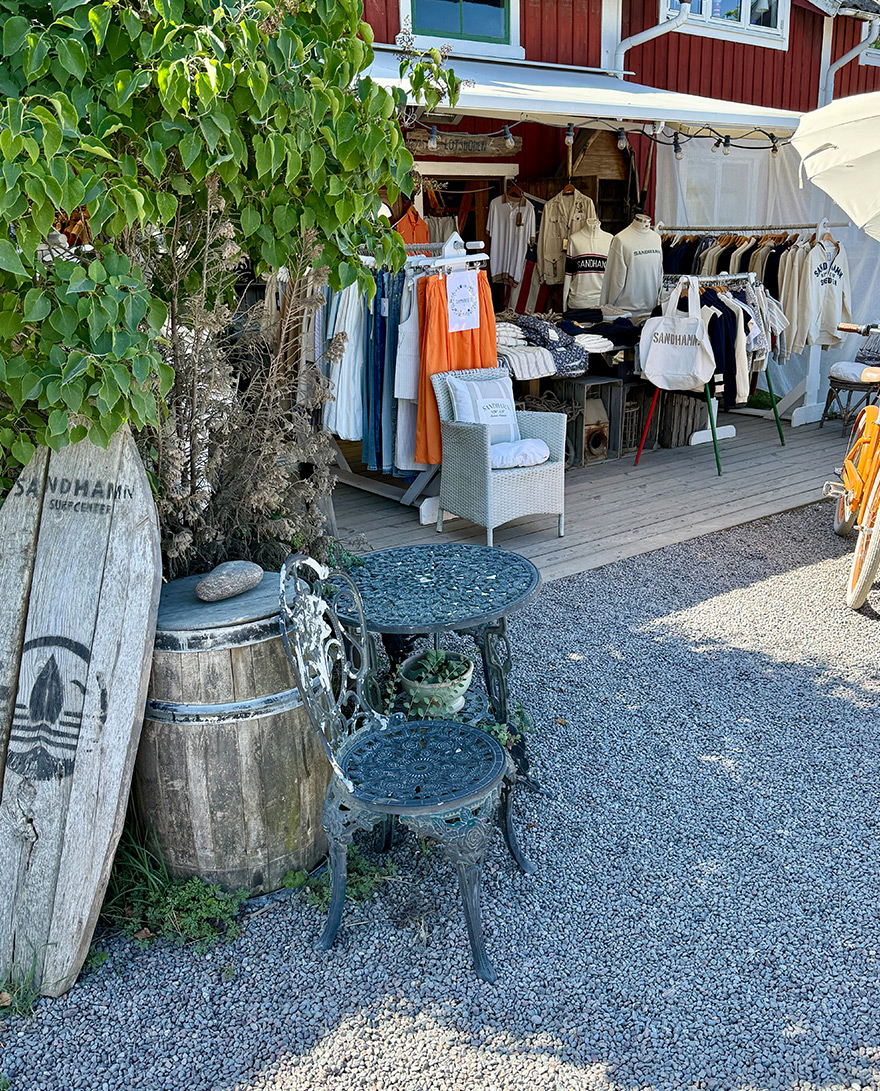
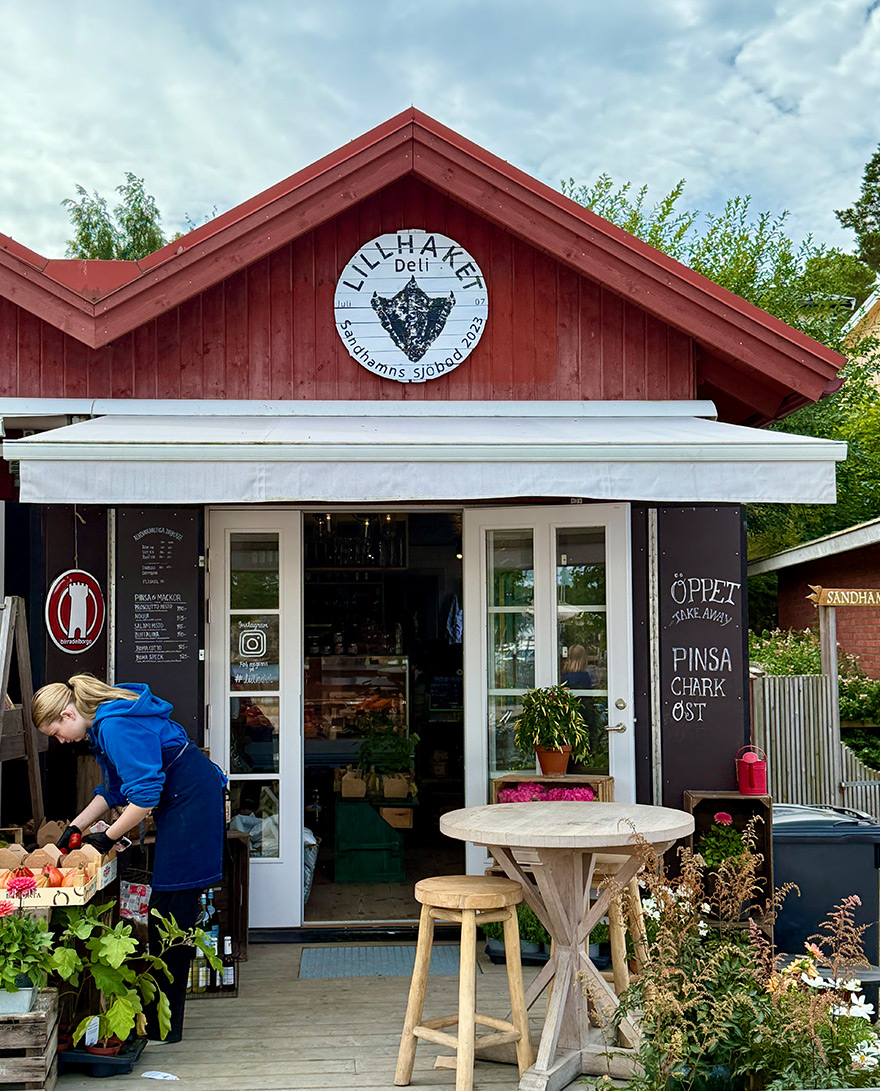
Sandhamn harbour has a nice little row of boutiques and shops running along the waterfront with a mix of relaxed summer fashion, accessories and homeware. The setting is cute, with small wooden shopfronts, boats bobbing in the marina and people wandering past with coffees and ice creams.
Sandhamnsguiderna has stylish sailing clothing and practical outdoor gear inspired by life in the archipelago. Bokförlaget Max Ström is a small independent bookshop with beautifully displayed coffee table books, maps and gifts. Most of the books are in Swedish, but we still enjoyed browsing the photography and design titles! Lotsboden sells a selection of clothing, knitwear and accessories that capture Sandhamn’s casual nautical style. Lillhaket is a lovely little deli where you can pick up provisions for a picnic, and they also do light lunches.
Café & Bakery
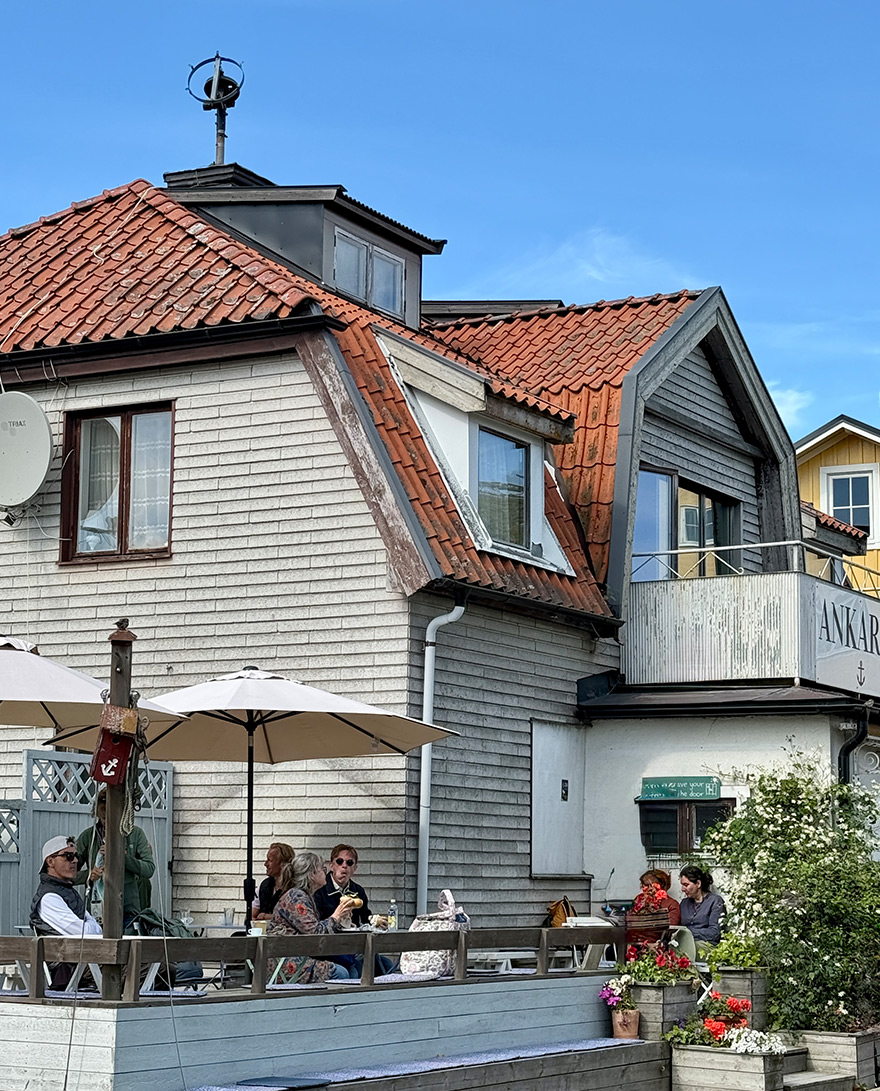
Café Ankaret
Sitting close to the harbour, Café Ankaret has a relaxed atmosphere with outdoor tables that are perfect for watching island life go by (below left). The menu covers coffee, fresh sandwiches, salads and homemade cakes.
Sandhamnsbageriet
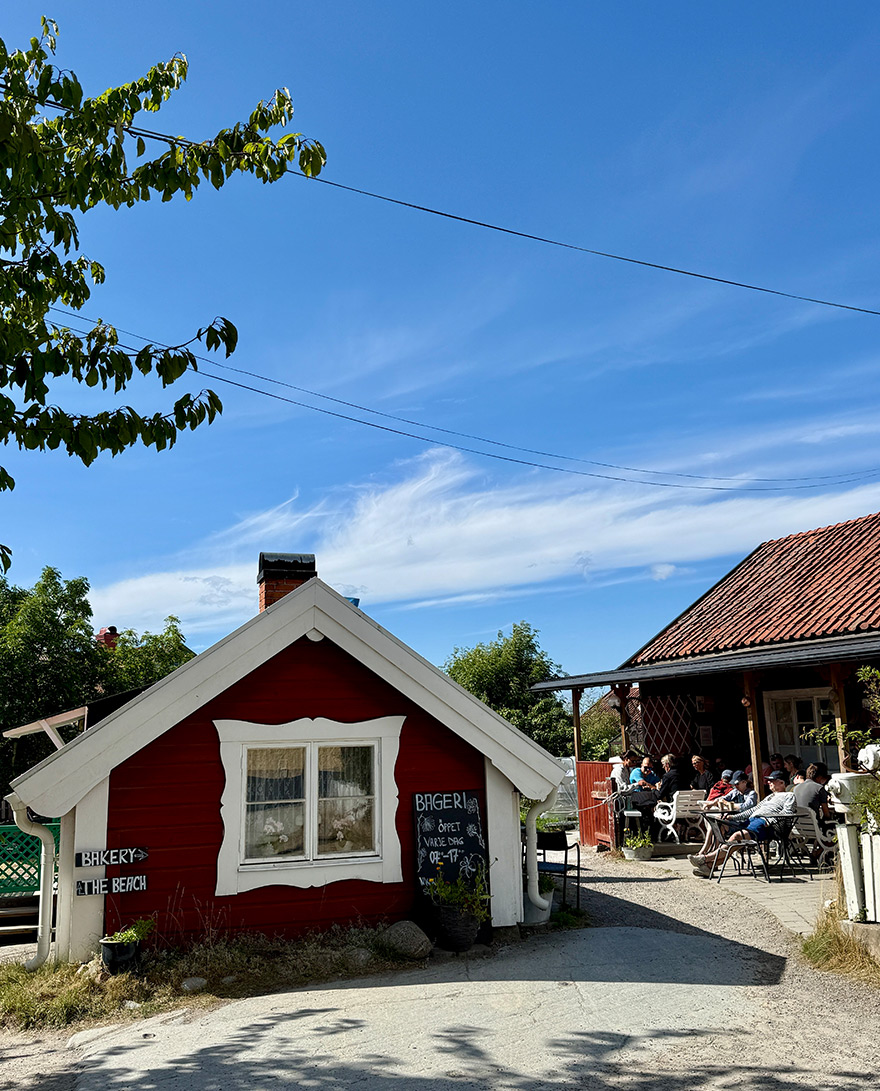
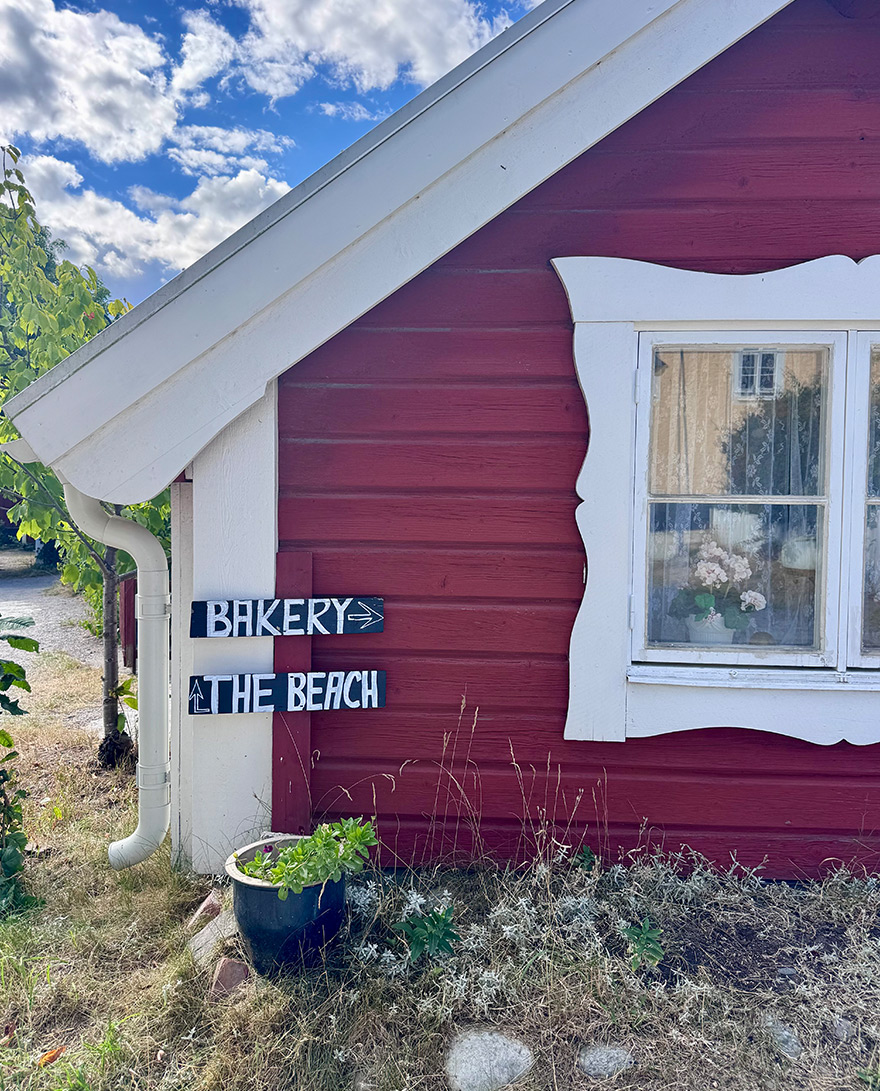
Sandhamnsbageriet is a cute little bakery offering a selection of sourdough loaves, pastries, buns and sandwiches, alongside coffee (below, middle and right). We picked up warm cinnamon buns here before heading off for a walk to the beach!
Fjäderholmarna
A quick boat ride from Stockholm, Fjäderholmarna is a small and perfectly formed island that you can do as an enjoyable half-day trip. Pop into Hantverksboden for handmade ceramics and Swedish homeware. In the Art Village, you can see silversmithing at The Forge and glass blowing at Garage by the Sea.
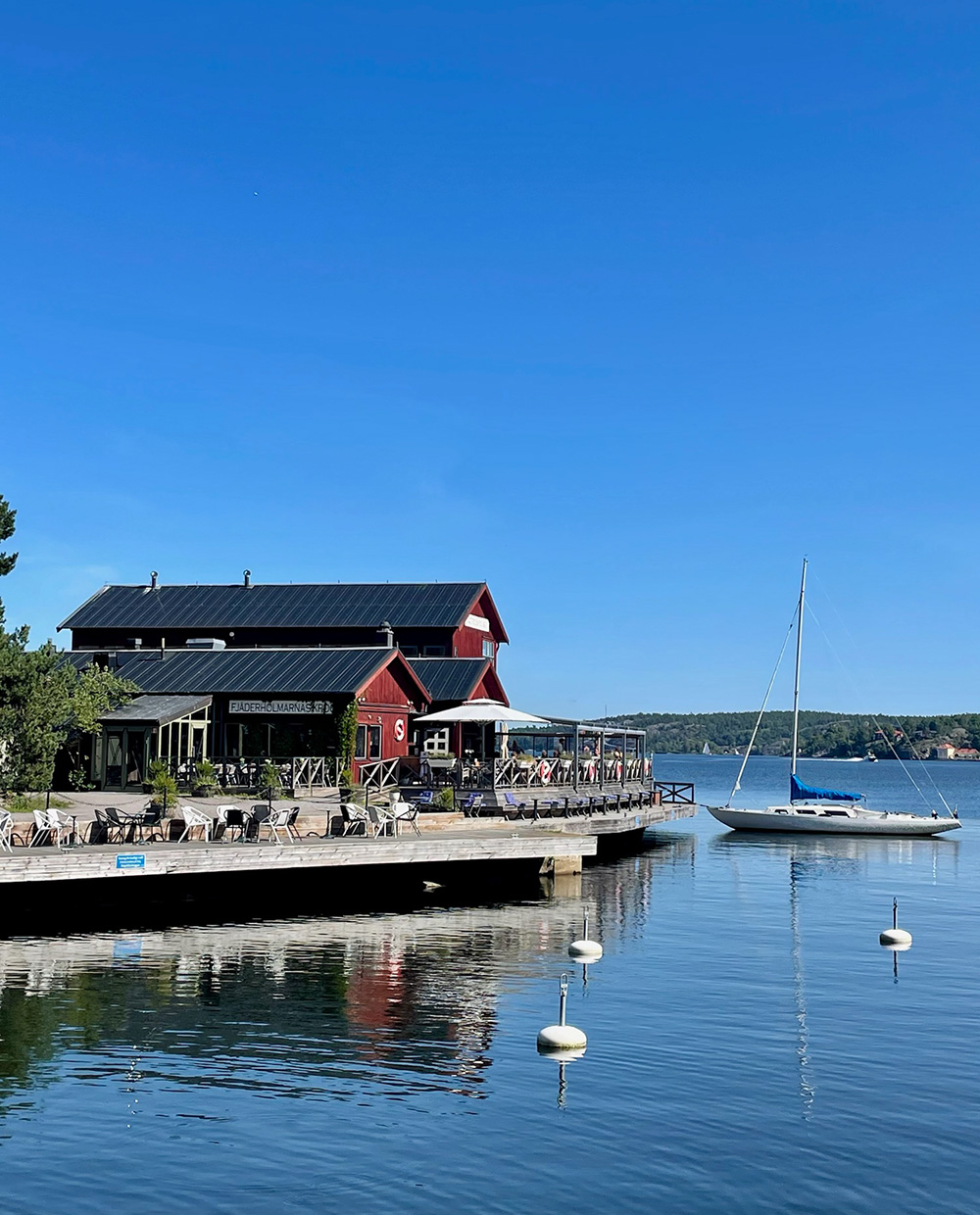
Stop at Röda Villan for a coffee or a light lunch in their garden, which overlooks the water. There are lots of spots to sit and take in the view, and it’s surrounded by pine trees and small beaches. The Harbour Bar at Fjäderholmarnas Krog is a great spot for a drink, with an outdoor deck overlooking the water.
Gotland
Sweden’s largest island sits out in the Baltic Sea and is surprisingly rural once you leave Visby behind. You get there by taking a one hour flight from Stockholm or, as we did, you can take the ferry. There are huge expanses of countryside, deserted beaches, medieval churches appearing above the fields, old limestone farmhouses and roads where you can drive for ages without seeing much traffic at all.
What particularly surprised us was the creative side of the island. Gotland has attracted artists, ceramicists, designers, chefs and younger creatives looking for the sort of space and lifestyle that has become increasingly difficult to find in Stockholm. As you drive around, signs for konst and keramik regularly appear at the roadside, pointing towards studios, galleries and little workshops hidden down country lanes.
Stay
We chose two very different bases on Gotland. We started at a tiny four-bedroom B&B within easy reach of medieval Visby and a range of farm to table restaurants. We then headed right down to the south of the island with mile after mile of farmland and forests for a few nights at one of Sweden’s most interesting new farm stays.
THREE PHEASANTS
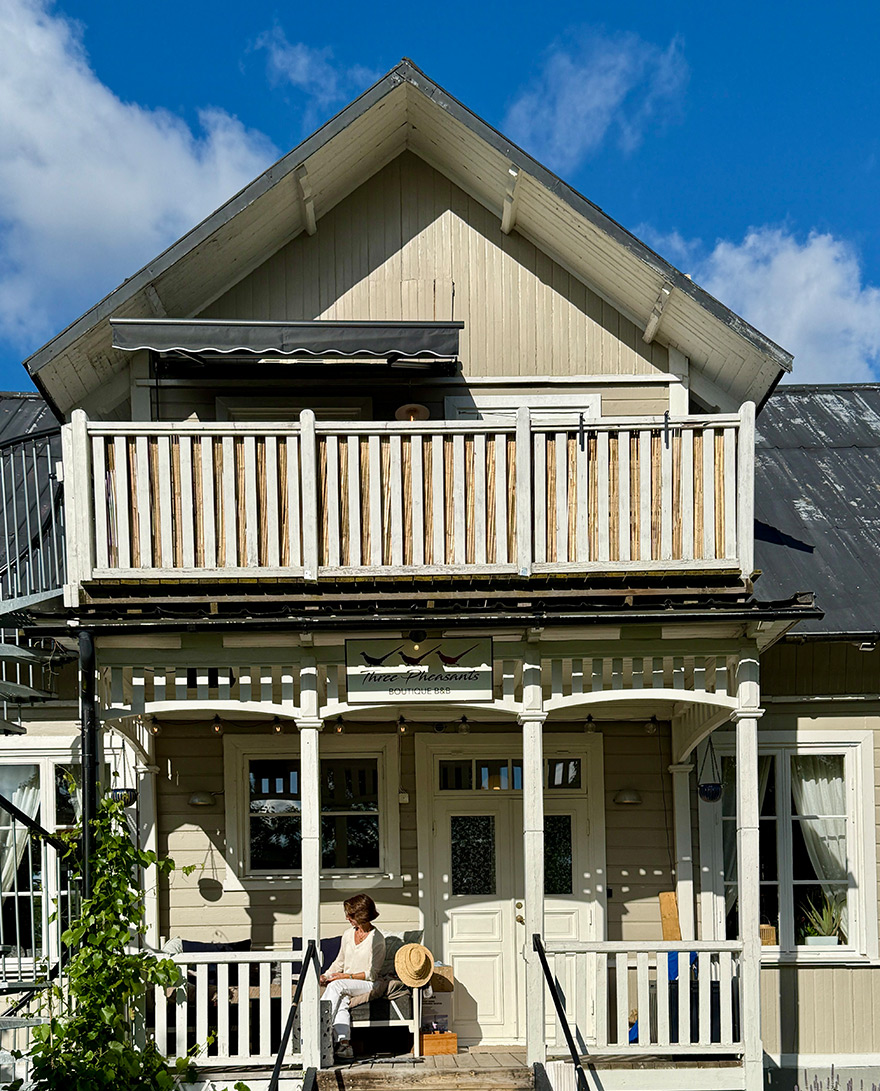
For the first part of our Gotland trip, we stayed at Three Pheasants, a tiny four-bedroom B&B in the countryside around 20 minutes from Visby. Three Pheasants was founded in 2018 by travellers with a shared interest in food, culture and hospitality. Since 2025, it has been run by Monika Gutestam Hustus, who is Swedish, and her American husband, Hunter Hustus.
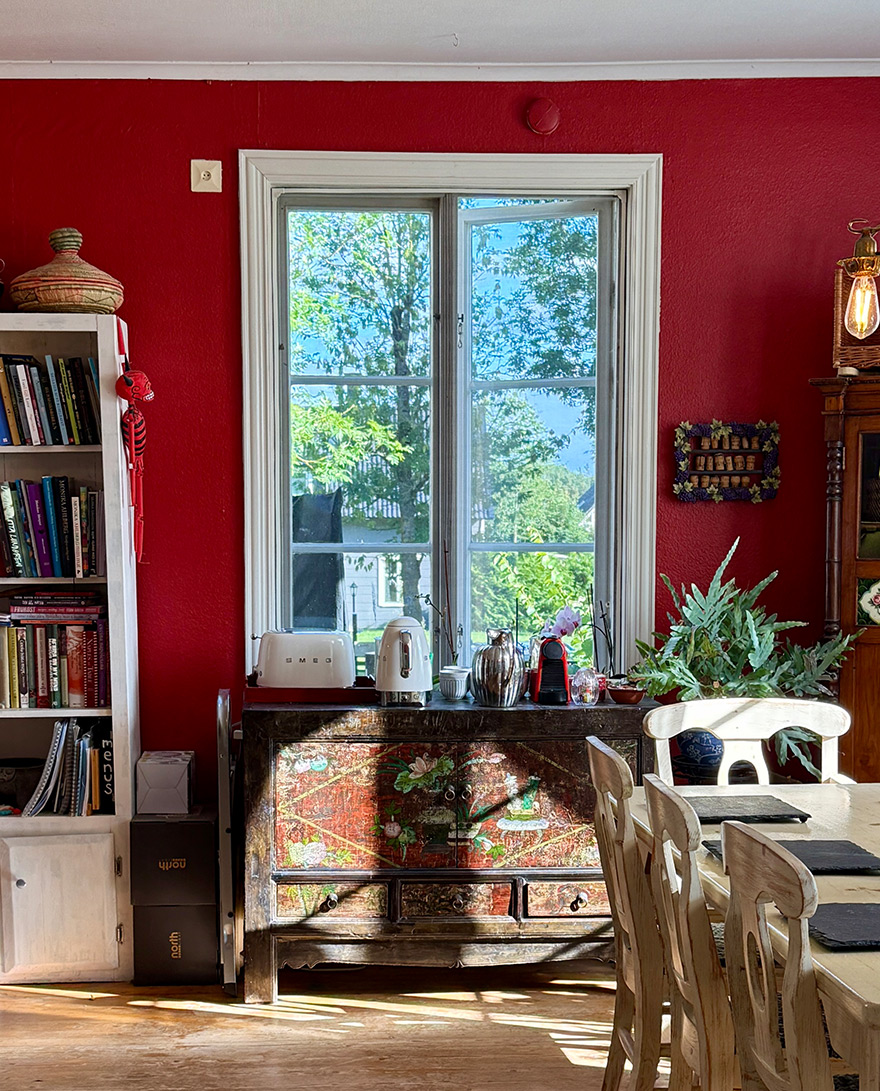
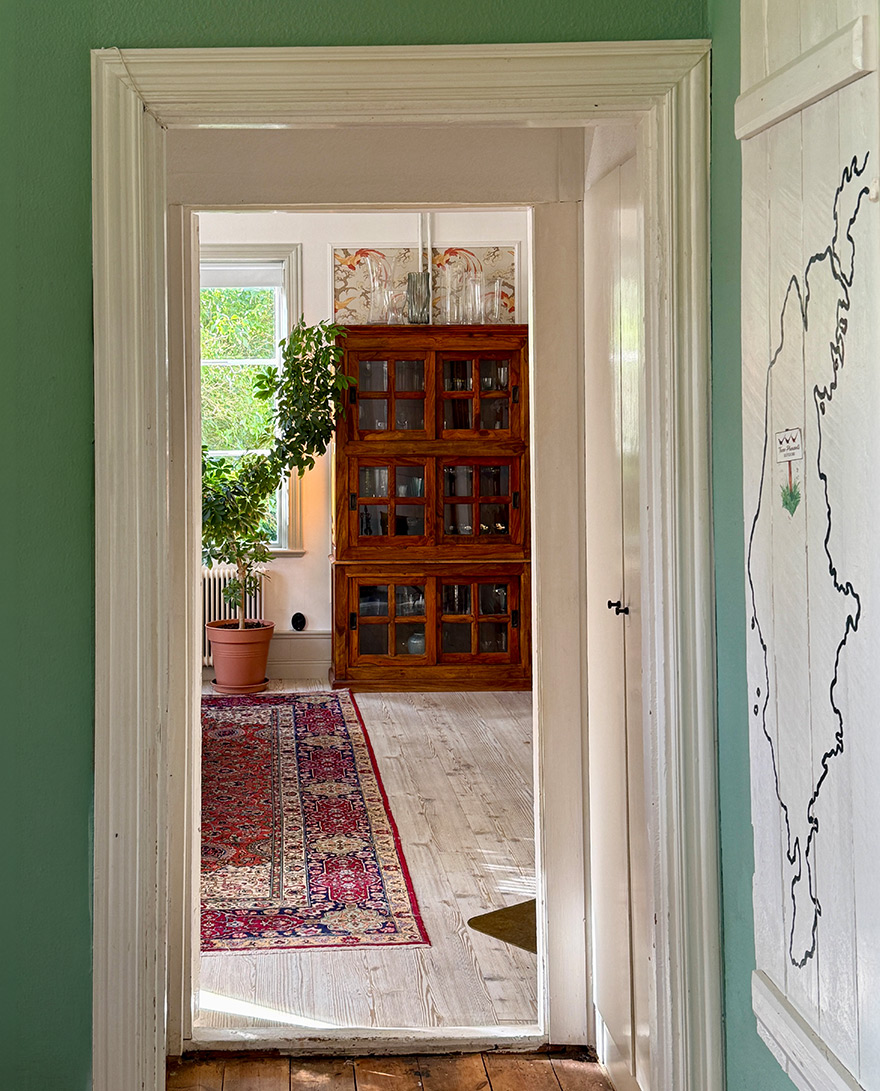
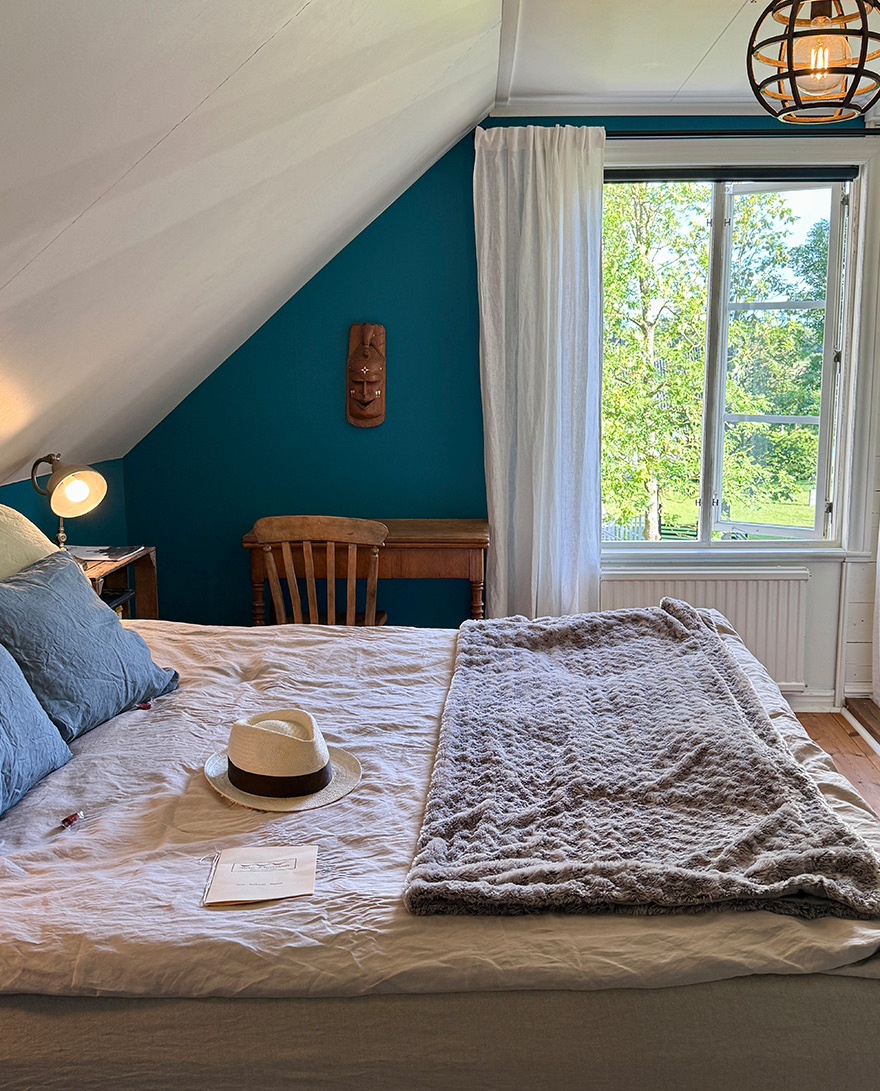
The rooms are comfortable and cosy rather than overtly luxurious, with a relaxed, lived-in quality to the interiors. Breakfast was one of the pleasures of staying here, with freshly baked bread, homemade jams and simple, good food using local flavours and ingredients. It set us up nicely for days driving around the island.
SIBBJÄNS
For the second part of our Gotland trip, we moved south to Sibbjäns, somewhere we had read about in several magazines before we travelled. This boutique farm stay was one of the most interesting and photogenic hotels we stayed in on this or any other trip!
Sibbjäns stretches across c.80 hectares of farmland, grassland and forest. Founders Pontus and Sanna Rönn joined forces with friends and neighbours Jonas Nordlander and Kina Zeidler to transform an abandoned farm into a hotel, restaurant and regenerative working farm. Rainwater is collected for irrigation and the natural swimming pool, sophisticated systems recycle water for toilets and showers, and solar energy helps the push to self-sufficiency. The ambition reminded us of places such as Babylonstoren in South Africa or The Newt in Somerset, where farming, food, landscape and hospitality are all part of the experience.
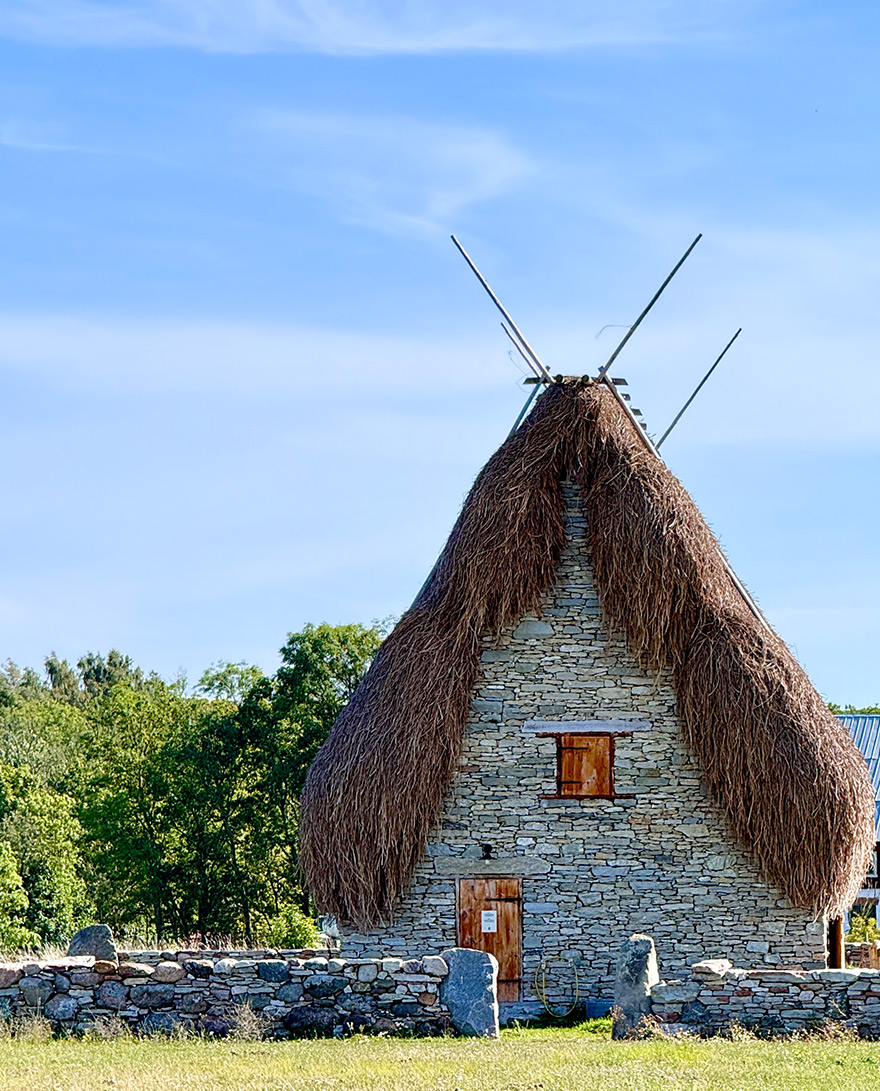
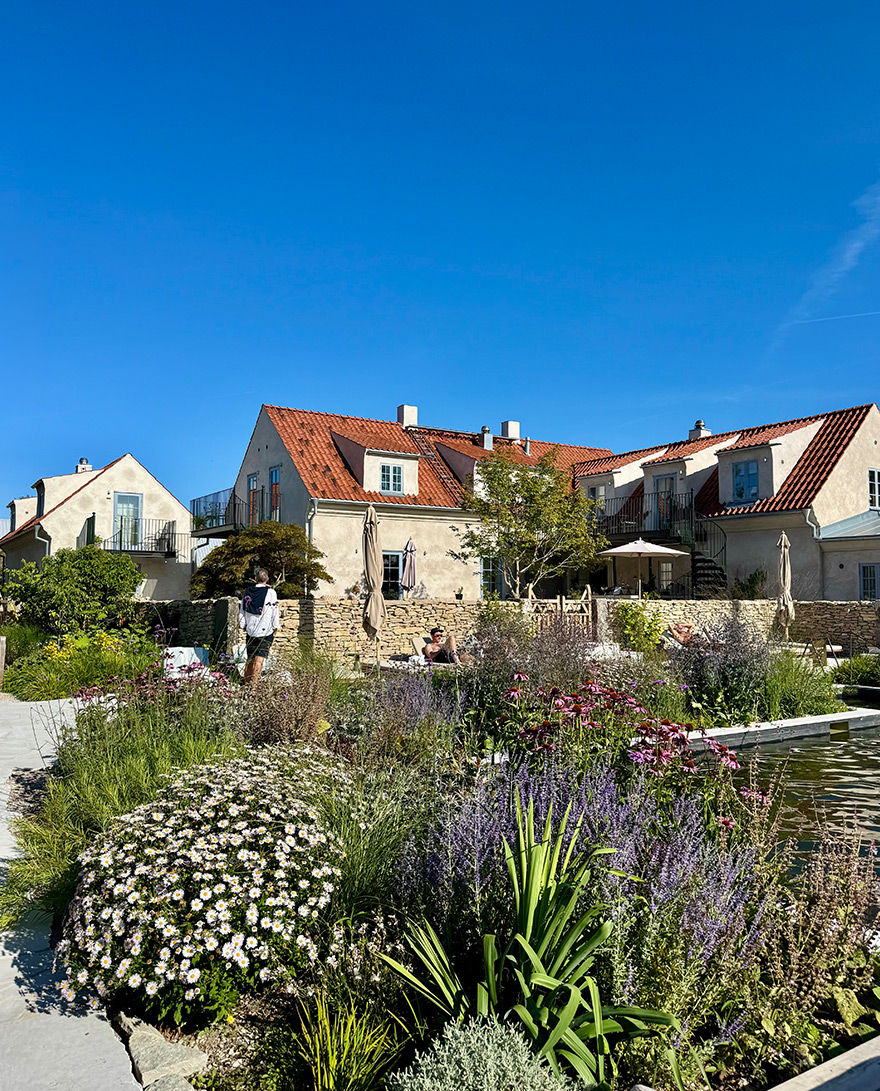
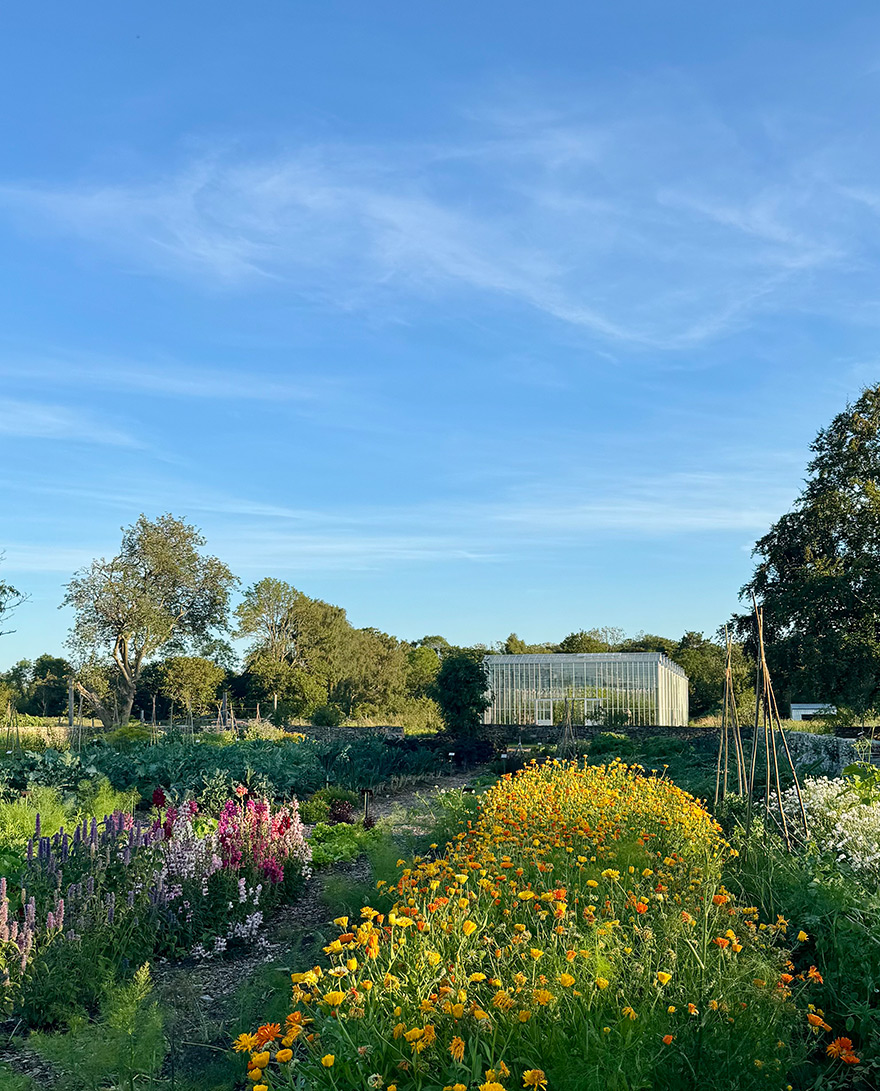
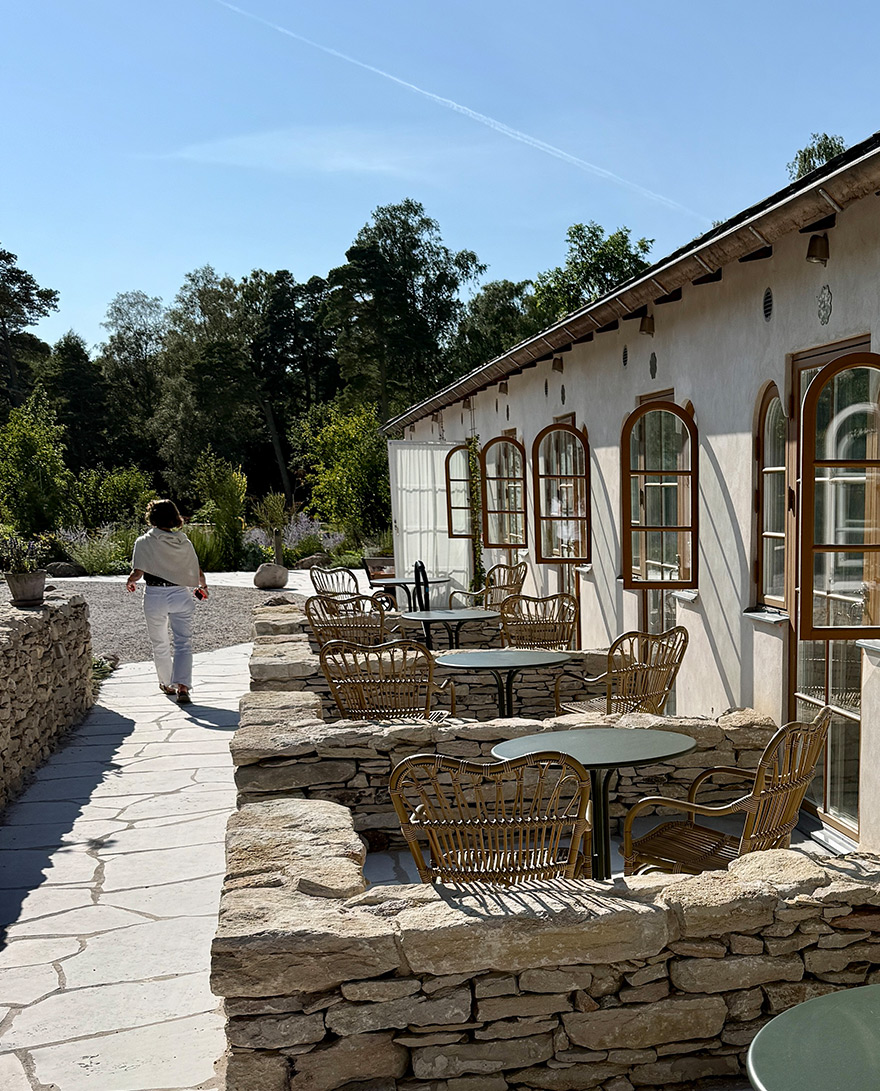
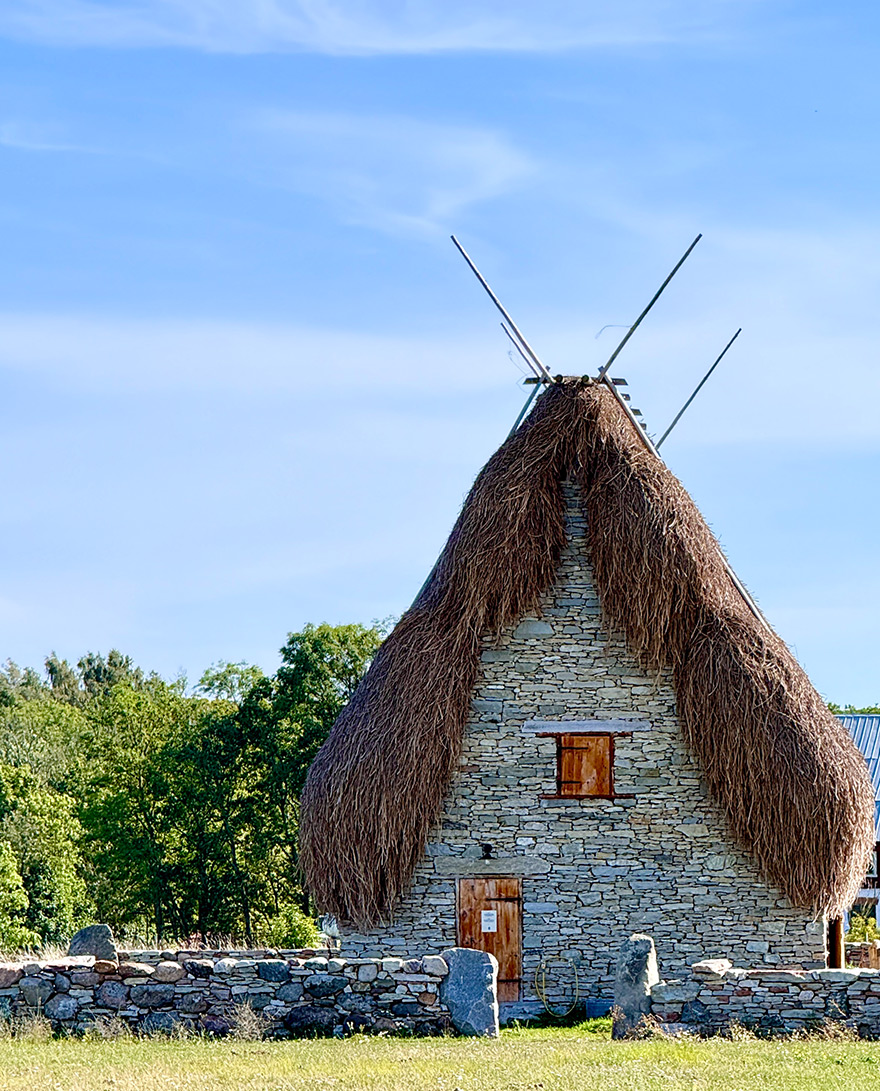
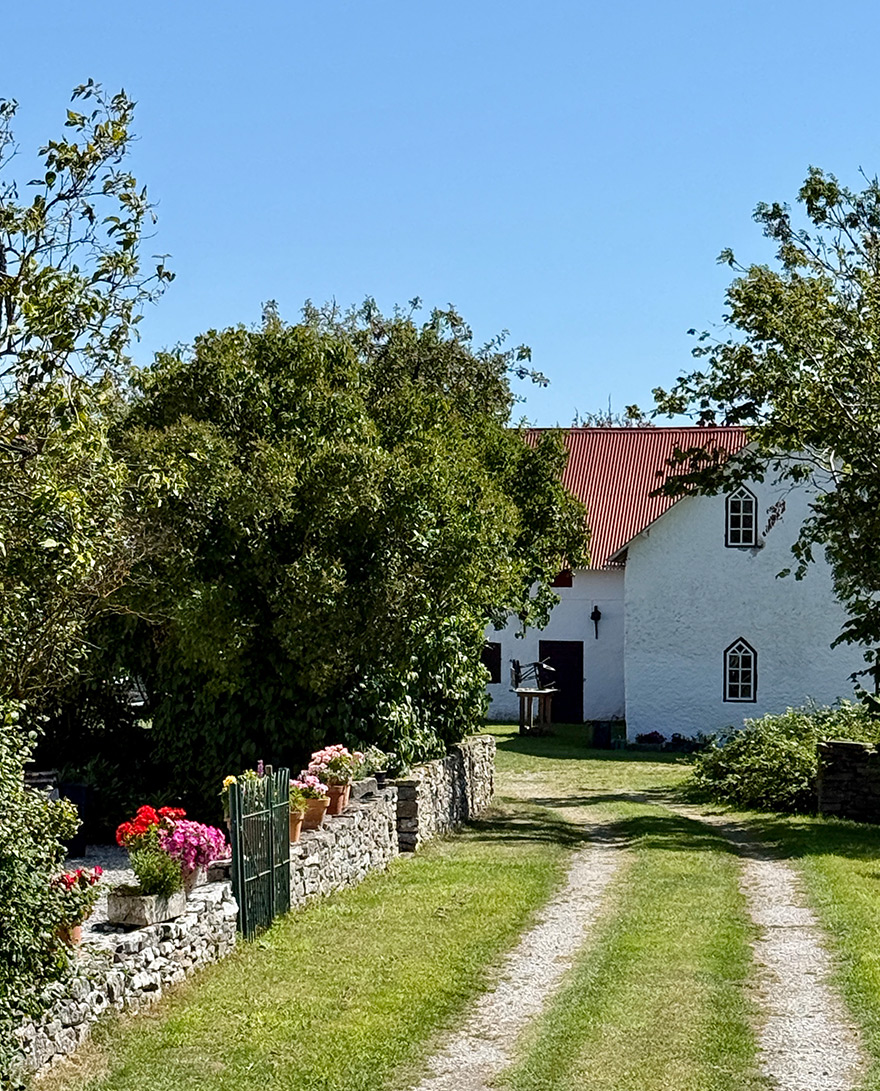
The old stone farm buildings have been restored with local craftspeople using traditional techniques. Paths wind between grasses and patches of white, purple and orange wildflowers, with cornflower-blue doors and window frames adding colour against the limestone and red roofs. There are beautiful details everywhere.
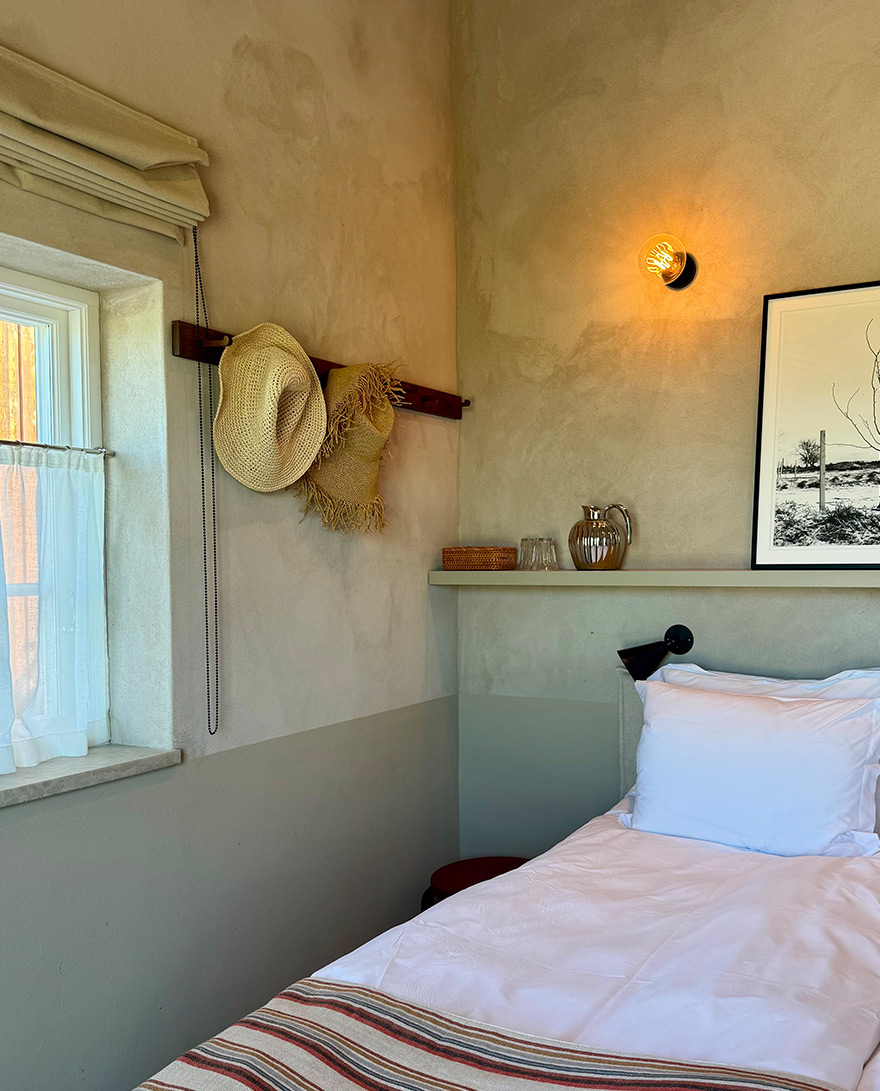
The nine farmhouse rooms occupy the 19th-century main building and are the ones we would choose. Inside are reclaimed oak beams, lime-plastered walls, a calm colour palette and shaggy Gotland sheepskin chairs. The farmhouse also has several shared spaces exclusively for guests: a fully equipped kitchen with jars of biscuits and cakes, a sunny conservatory-style corner for reading or board games and comfortable living and dining rooms.
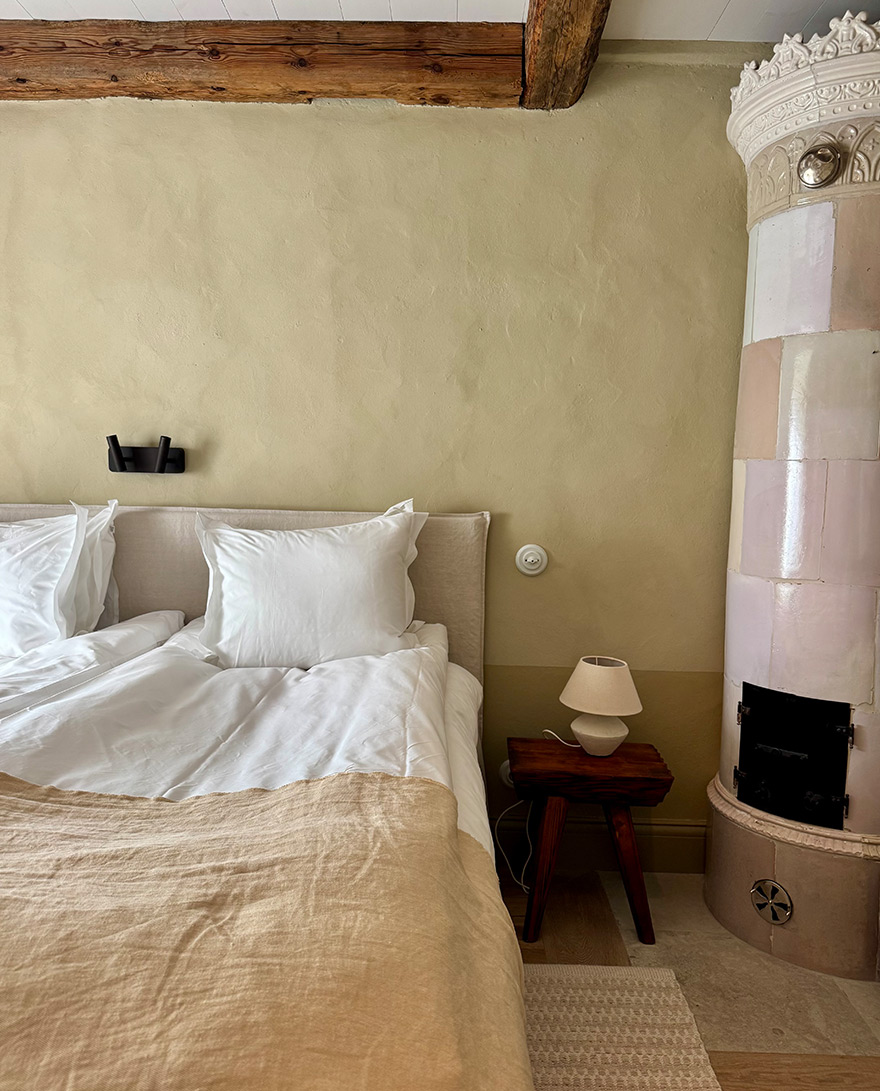
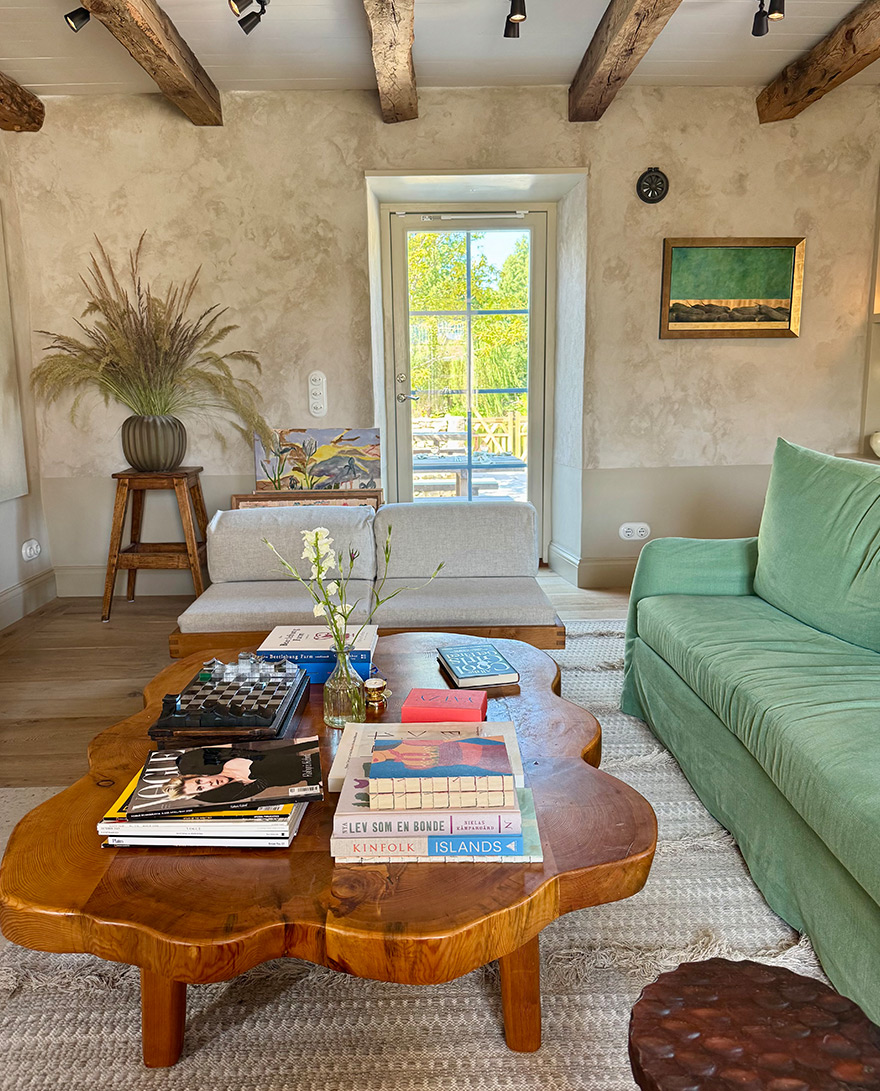
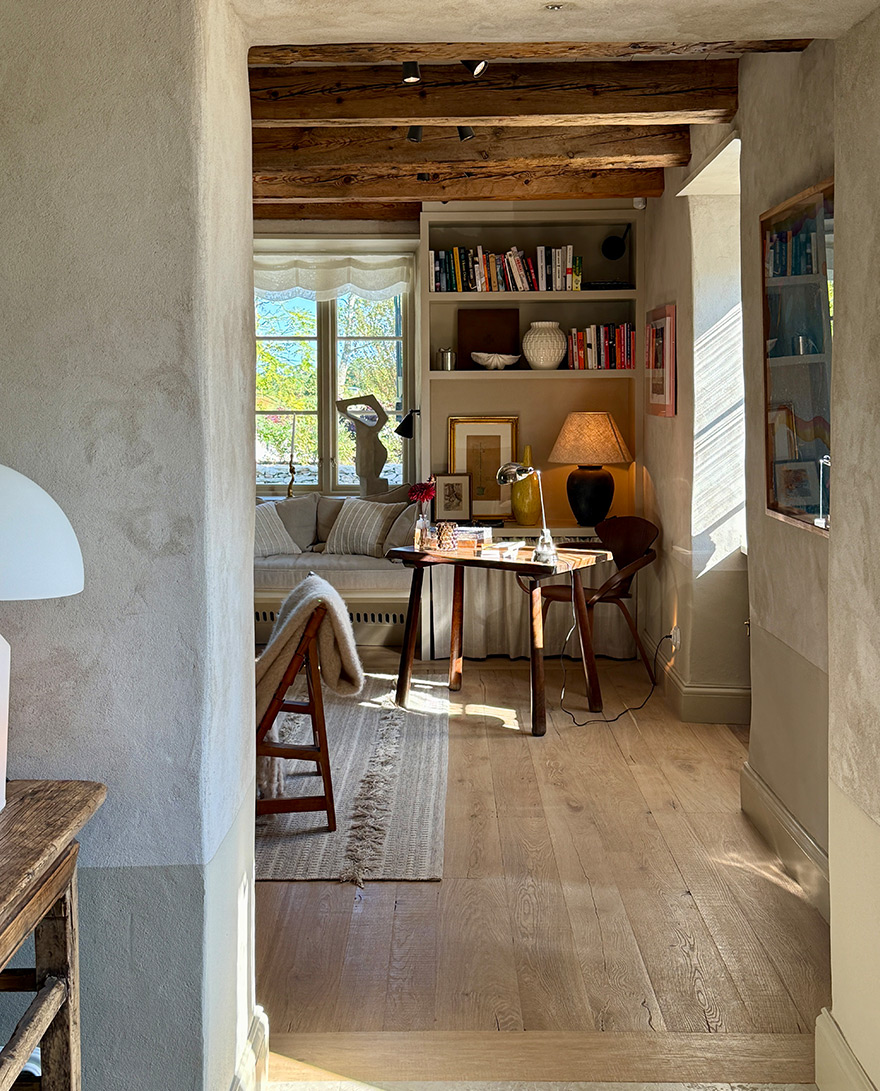
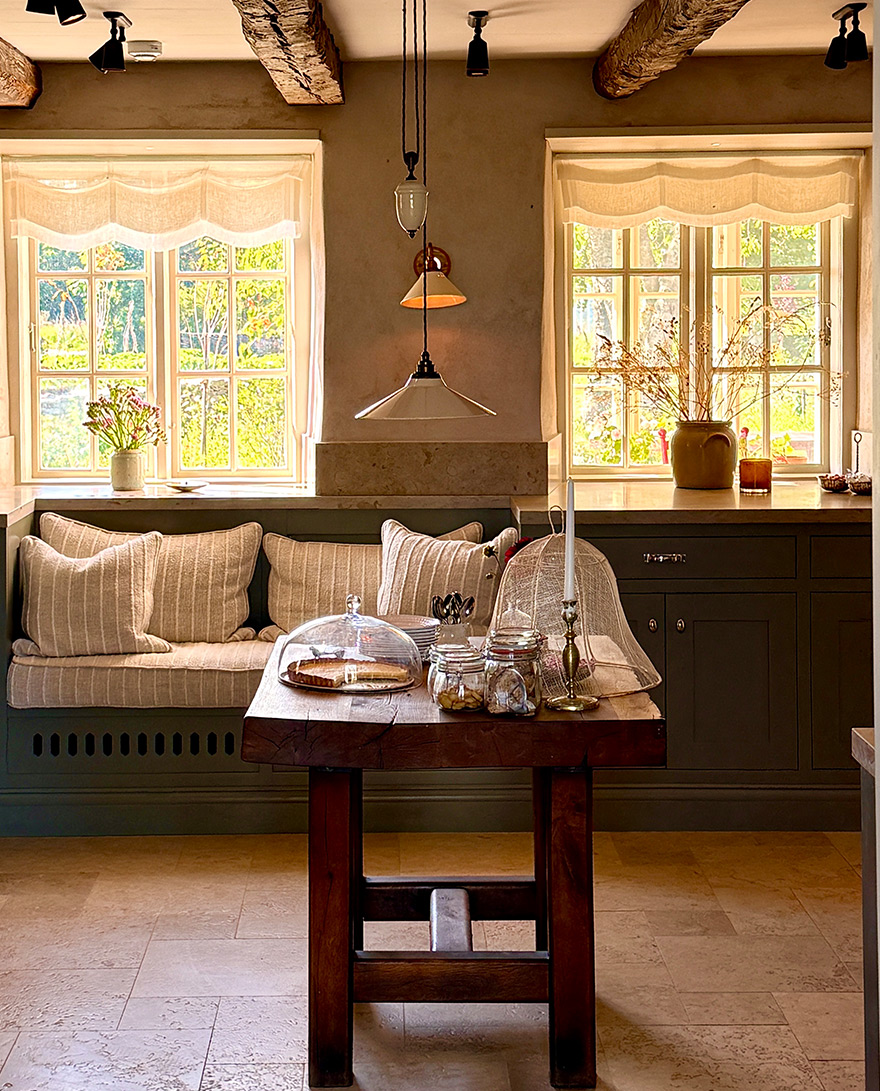
There are also 13 Bunkhouse rooms, originally conceived as accommodation for farm workers. They are smart but much more compact, with limewashed walls, linen curtains and small private patios. One thing that may surprise international visitors is that these rooms use shared bathrooms — apparently rather less unusual in Sweden than it seemed to us!
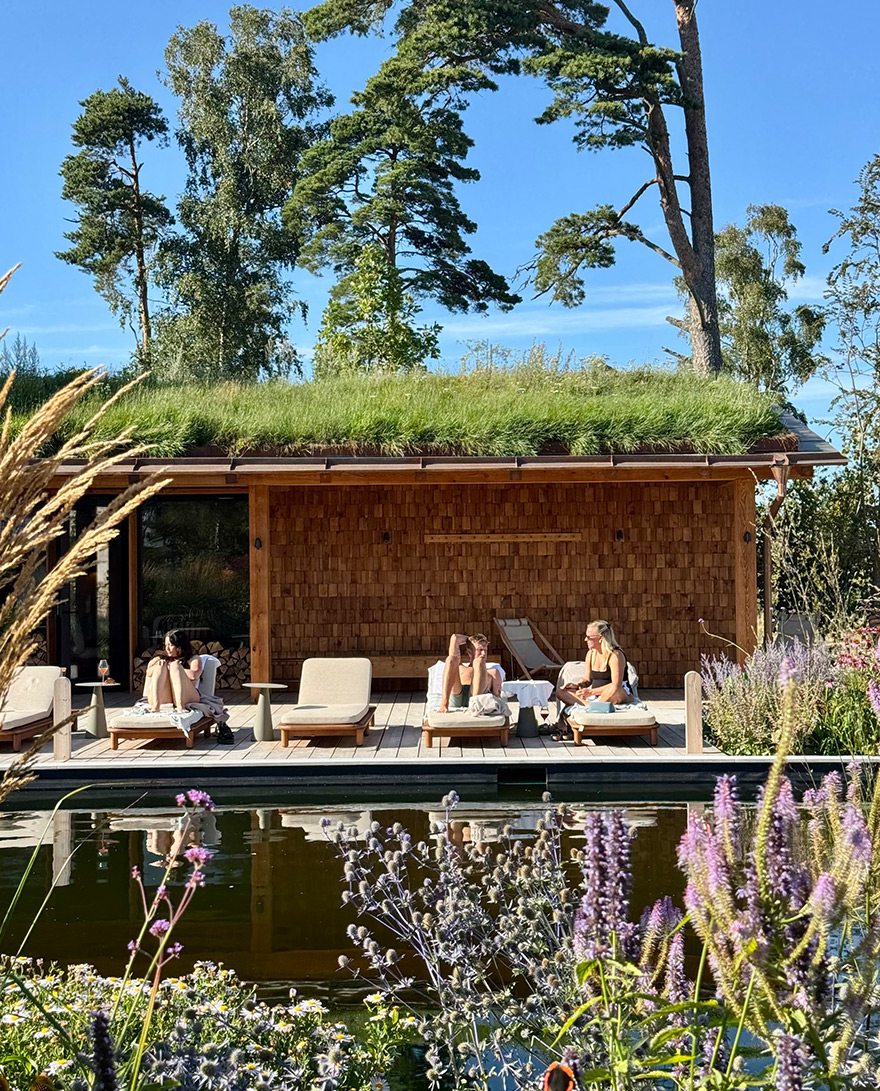
There is a natural swimming pool, fringed with grasses and waterlilies. There are sunbeds around the edge and plenty of other places to chill and hang out. There is also a yoga pavilion, sauna, massage rooms and an outdoor gym.
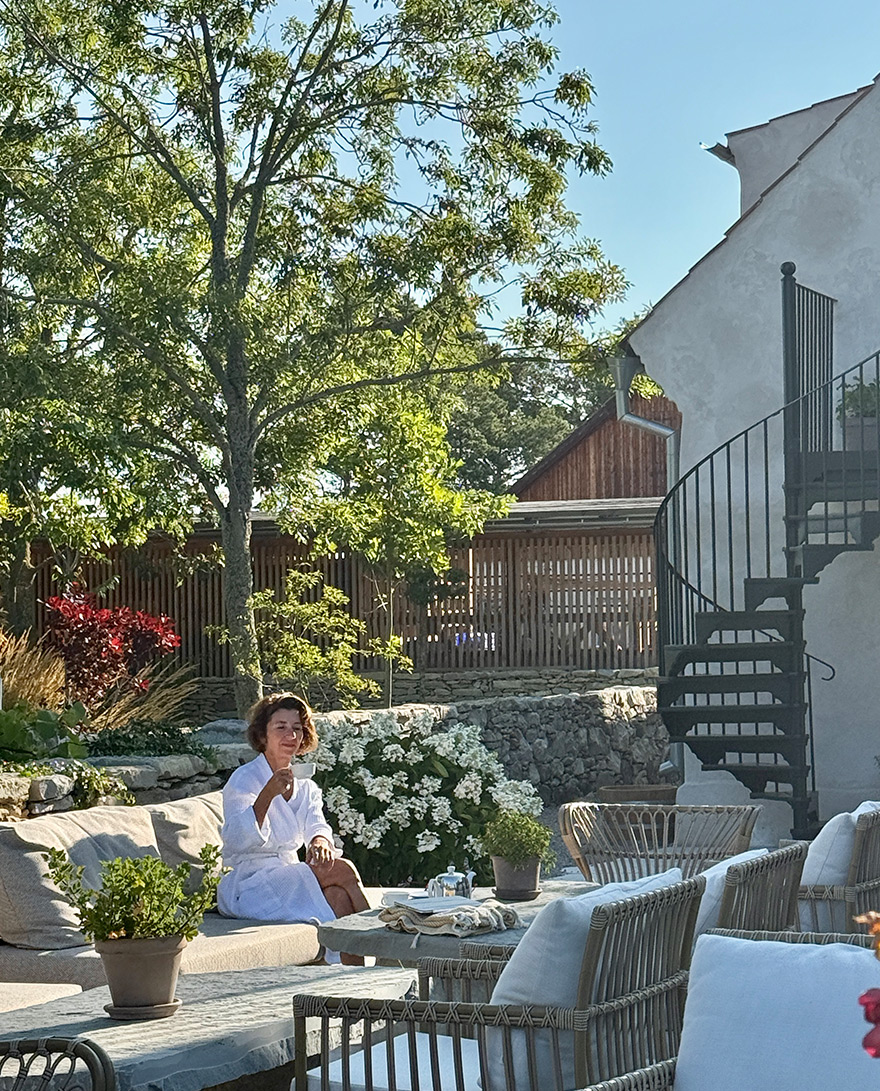
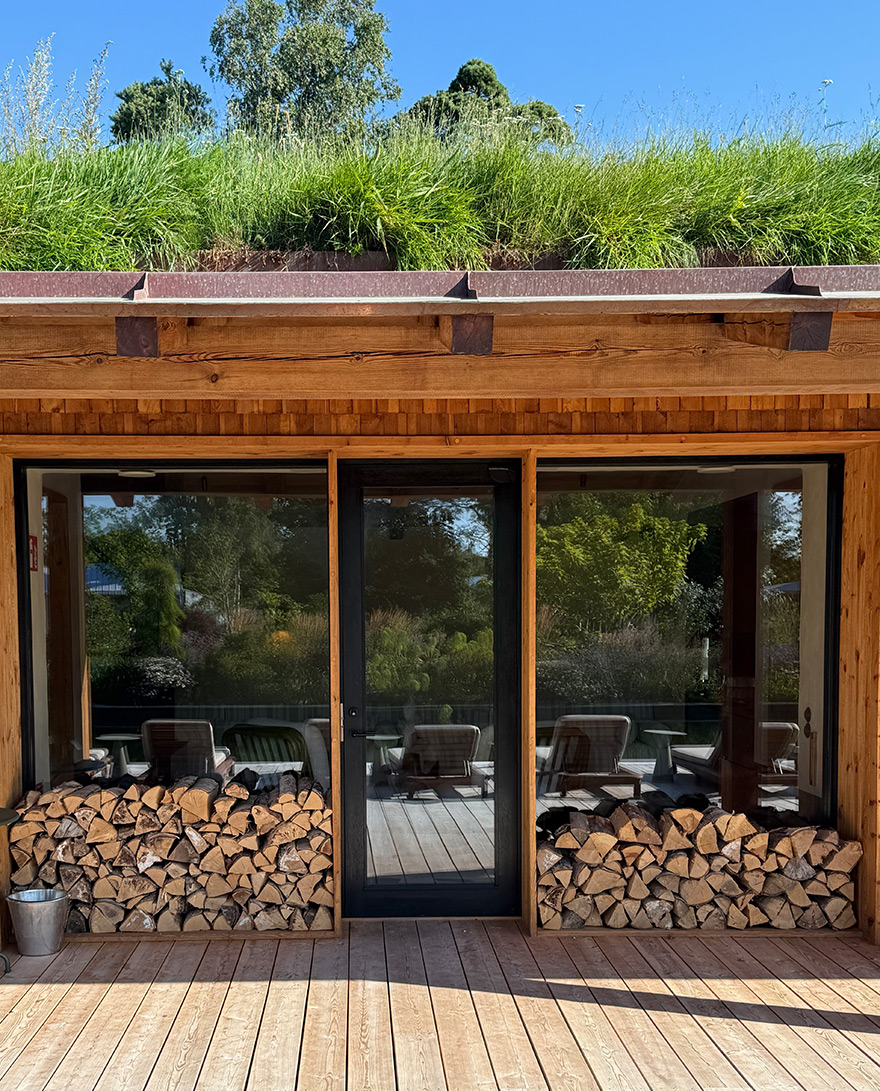
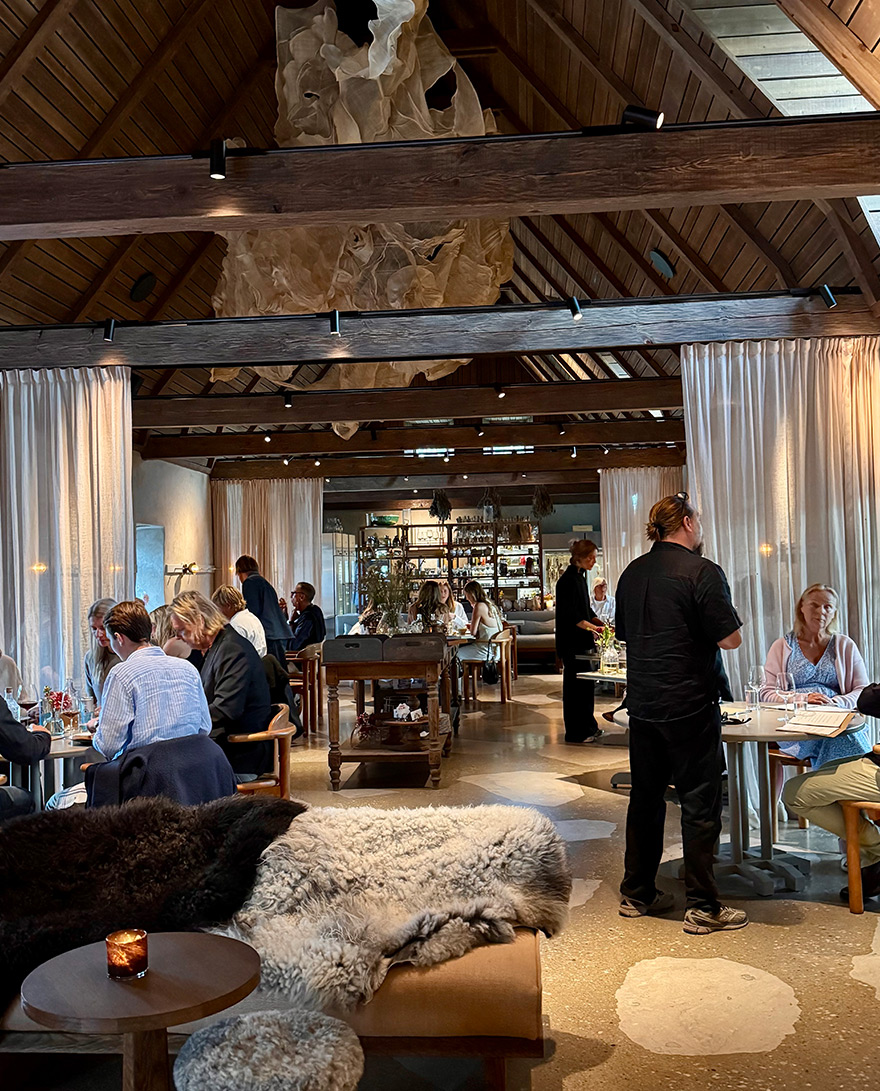
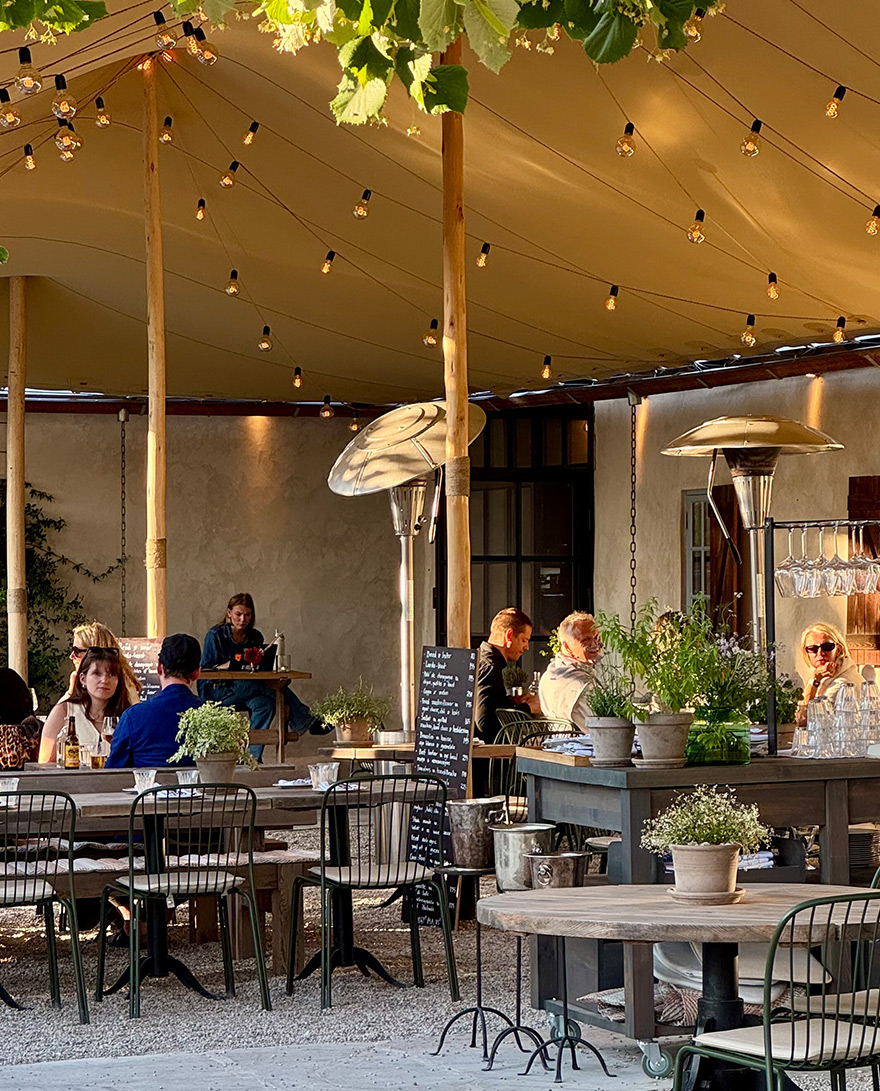
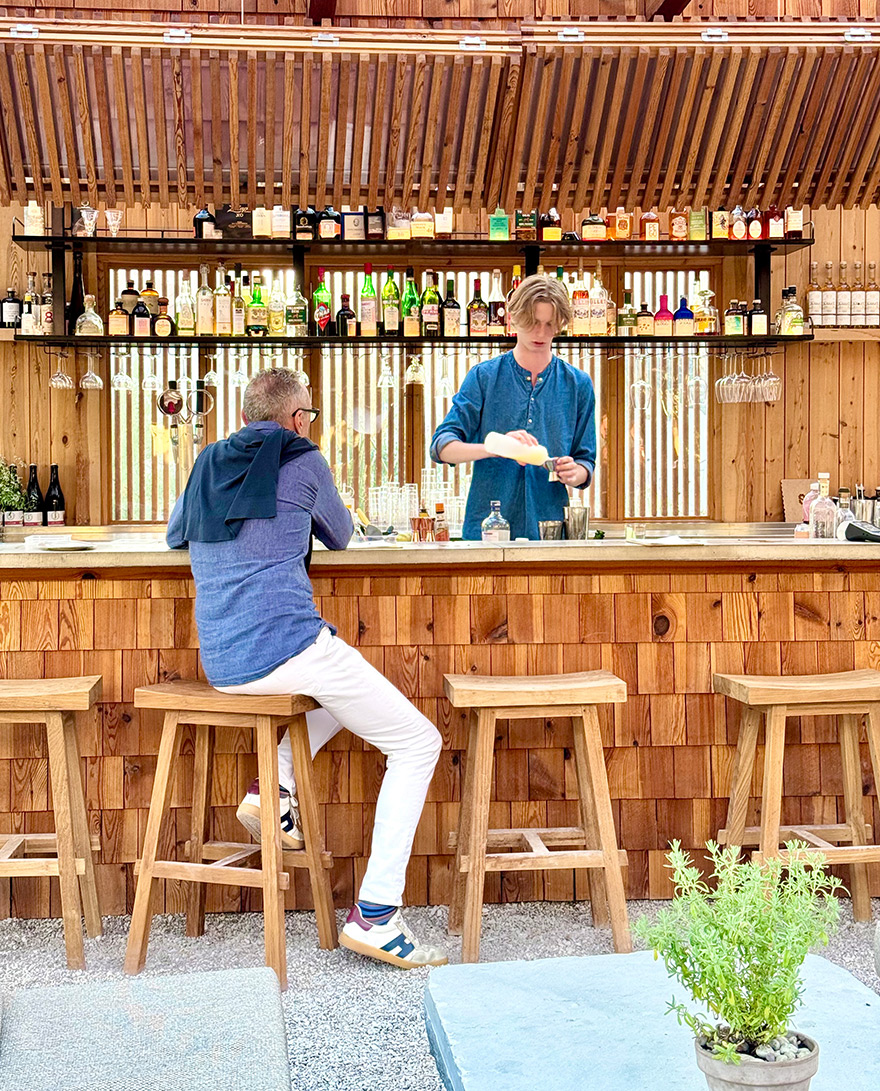
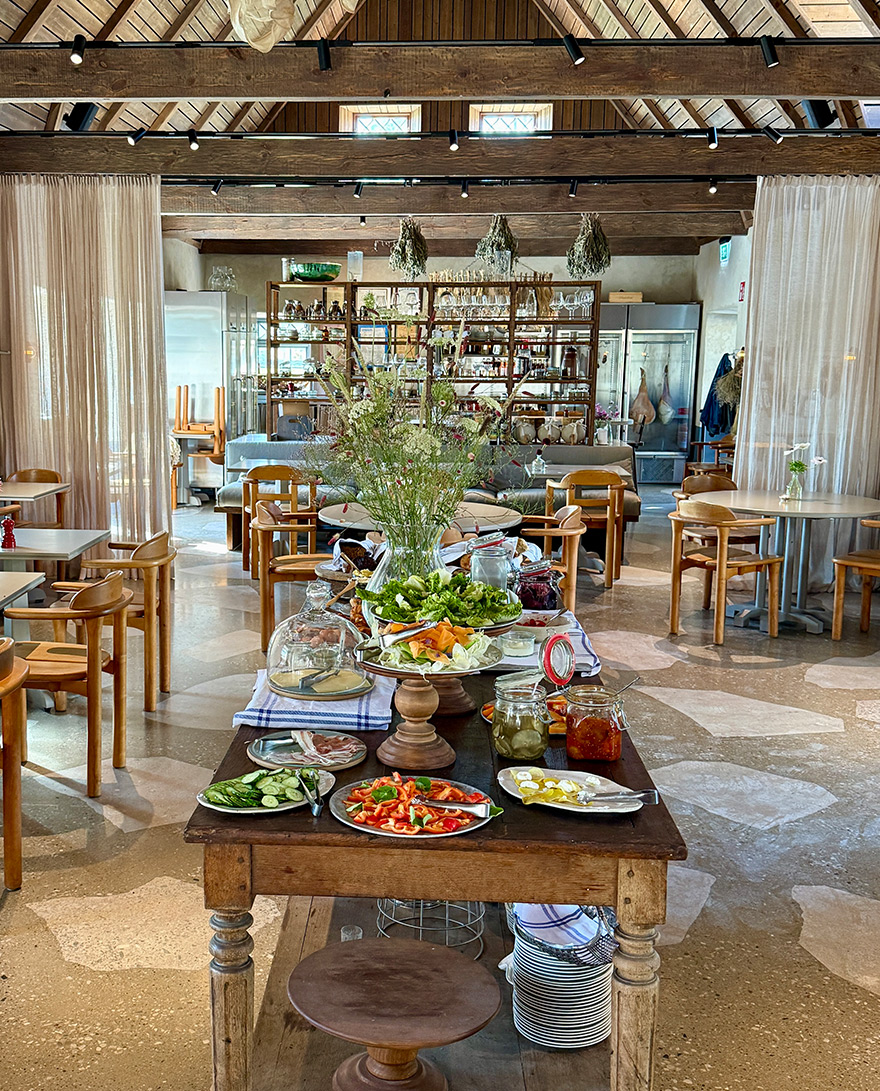
Dining is in a beautiful barn-like room with soaring ceilings, old beams and a large wood burner, or on the pretty terrace, which also has a cool bar. Much of what appears on the plate has travelled only a few metres from the farm, with the 5-course dinner including dishes like tomato salad in a gazpacho-like broth and agnolotti with ricotta and fava beans. It was delicious, beautifully presented, and you really could taste the benefit of ingredients that had been grown on the property. Breakfast was equally good: a generous buffet of cold cuts, crusty bread and yoghurt & granola.
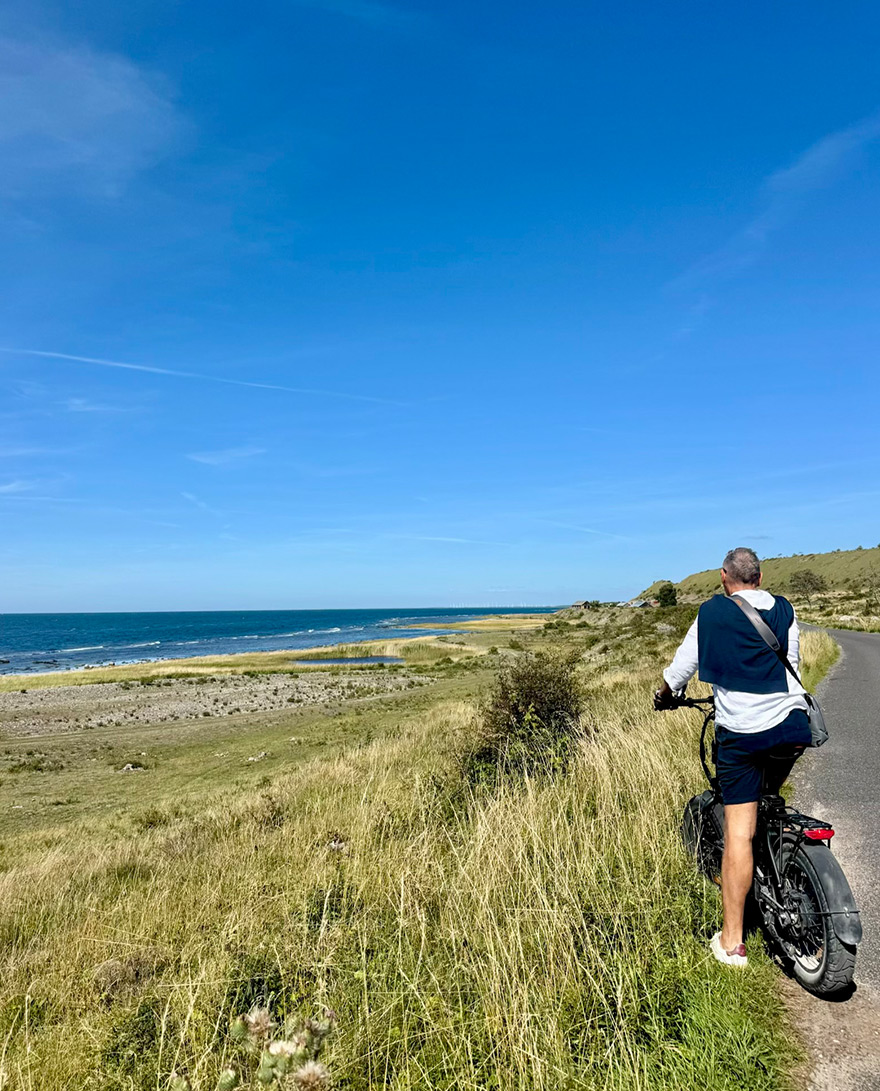
There are e-bikes to borrow too, and several suggested tours. The one we took (Bike to the Southern tip) headed south to the Körsbärsgården art gallery (see Do section), passing dry-stone walls, red farmhouses and windmills. It takes you right down to the southern tip where you can stop at Maistre for lunch or a light bite (see Dine section) and check out the rocky cliffside by the beach. You then come back along the coast and then finish with a (bumpy!) off road section through the forest.
GRÅ GÅSEN
Grå Gåsen in Burgsvik was another hotel we considered, although we didn’t stay this time. It is run by Björn Westerholm and his wife Cecilia, who swapped careers in Stockholm for hotel life on Gotland. The hotel has a stylish but relaxed country feel, and its restaurant is an important part of the experience. It sits in a barn dating from 1750 and changes with the seasons, bringing together hotel guests, locals and people passing through for dinner and drinks. It is one we would certainly look at again if we returned to southern Gotland.
Do
VISIT VISBY
Visby was one of the Baltic’s great Hanseatic trading centres. It has remarkably intact medieval walls, winding cobbled lanes, old merchant houses, ruined churches, rose-covered cottages and more than 200 medieval buildings. Below is a series of sights to see that take you on a tour around the town.
Our visit happened to coincide with Medieval Week, held during the first week of August. Much of Visby seems to join in, with people wandering around in extraordinarily elaborate medieval dress! There is a huge medieval market, and the programme includes performances, displays, tournaments, music and activities throughout the town (below right).
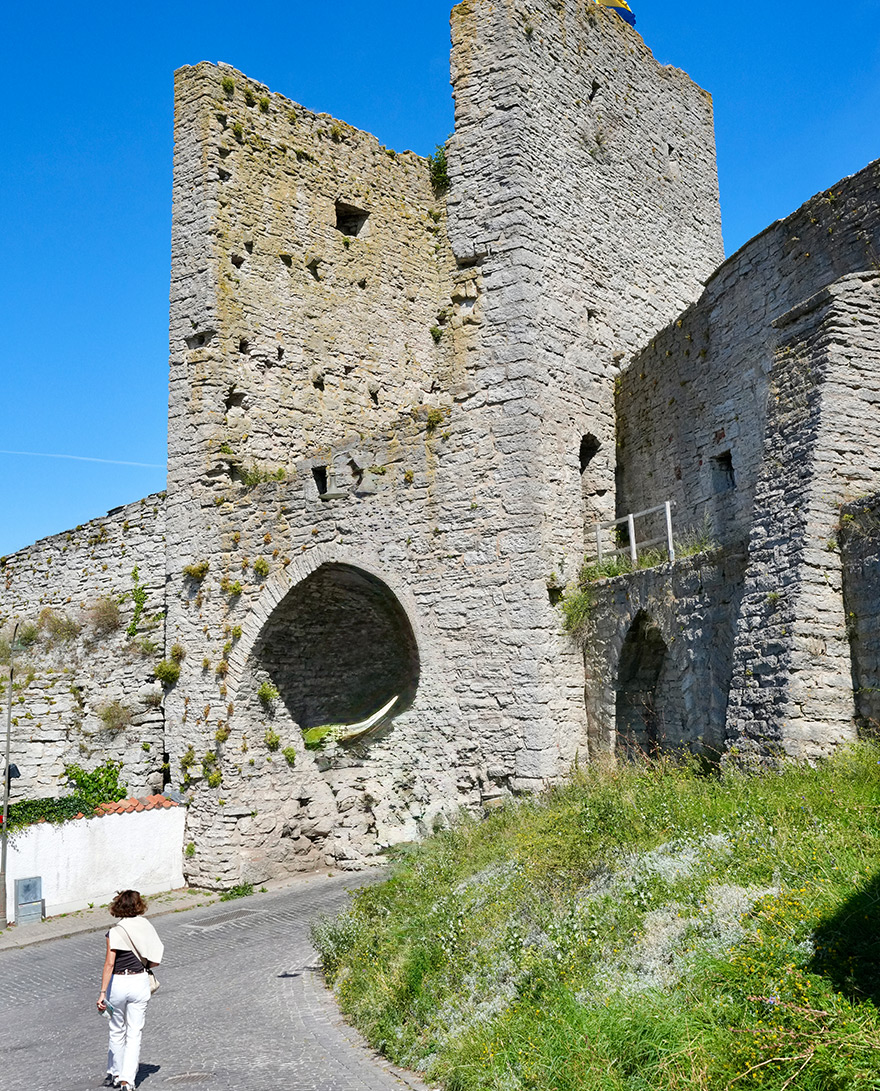

The medieval Visby City Wall stretches for roughly 3.4 kilometres around Visby and is astonishingly complete, with towers, gates and long stretches of limestone fortification still standing. You see sections of it constantly while exploring the town.
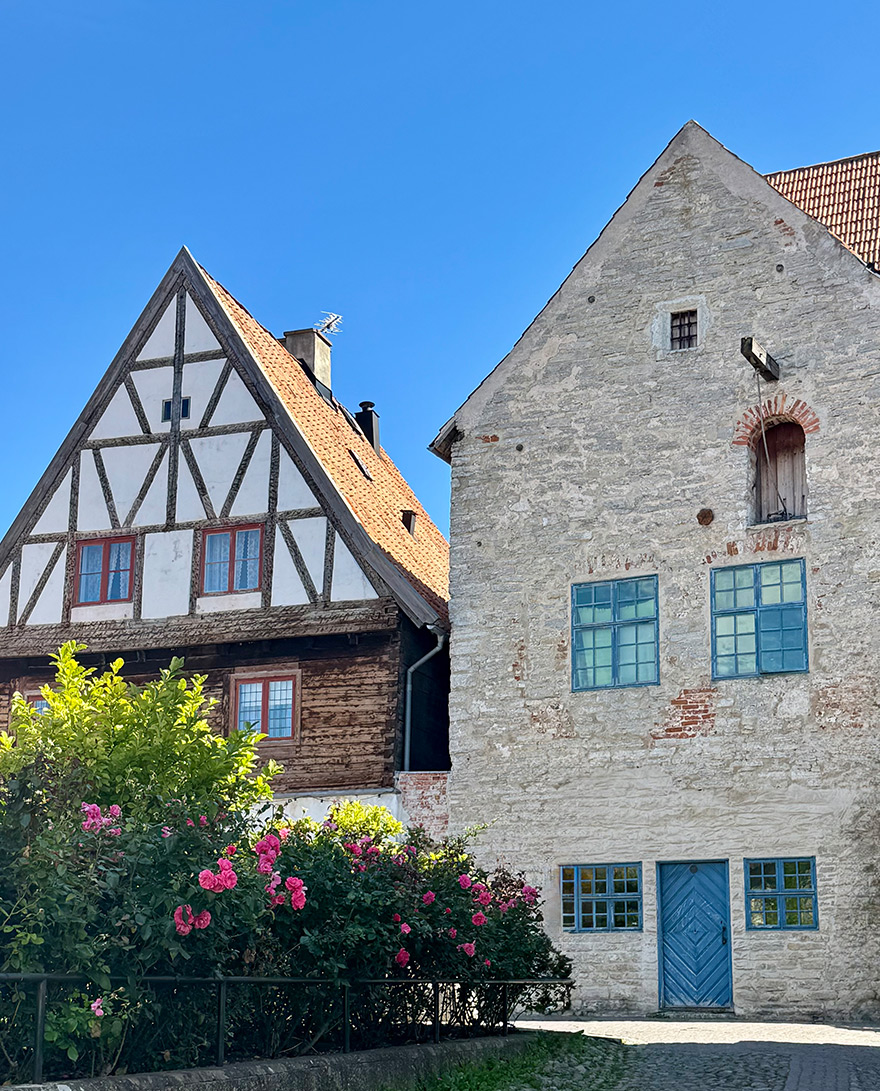
Strandgatan gives us a good sense of medieval Visby, with tall merchant houses rising above narrow doorways and limestone façades. During Visby’s trading heyday, merchants stored valuable goods on different floors here.
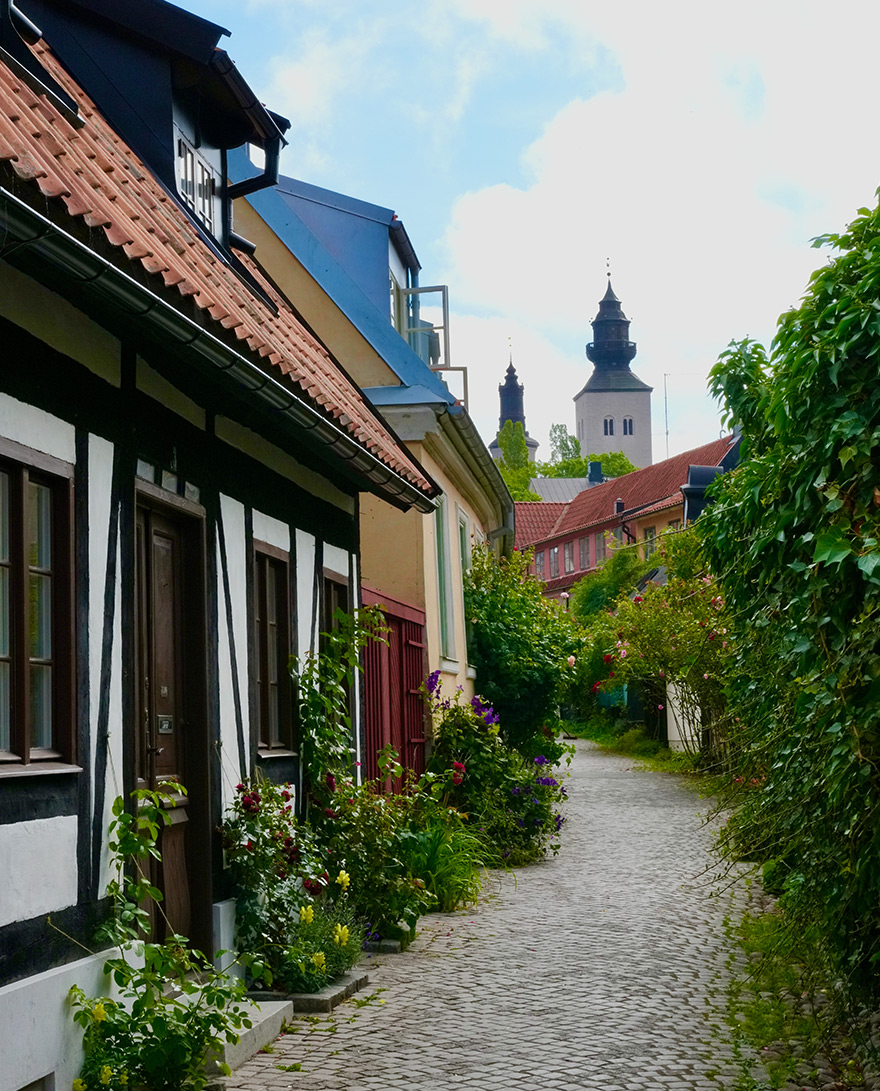
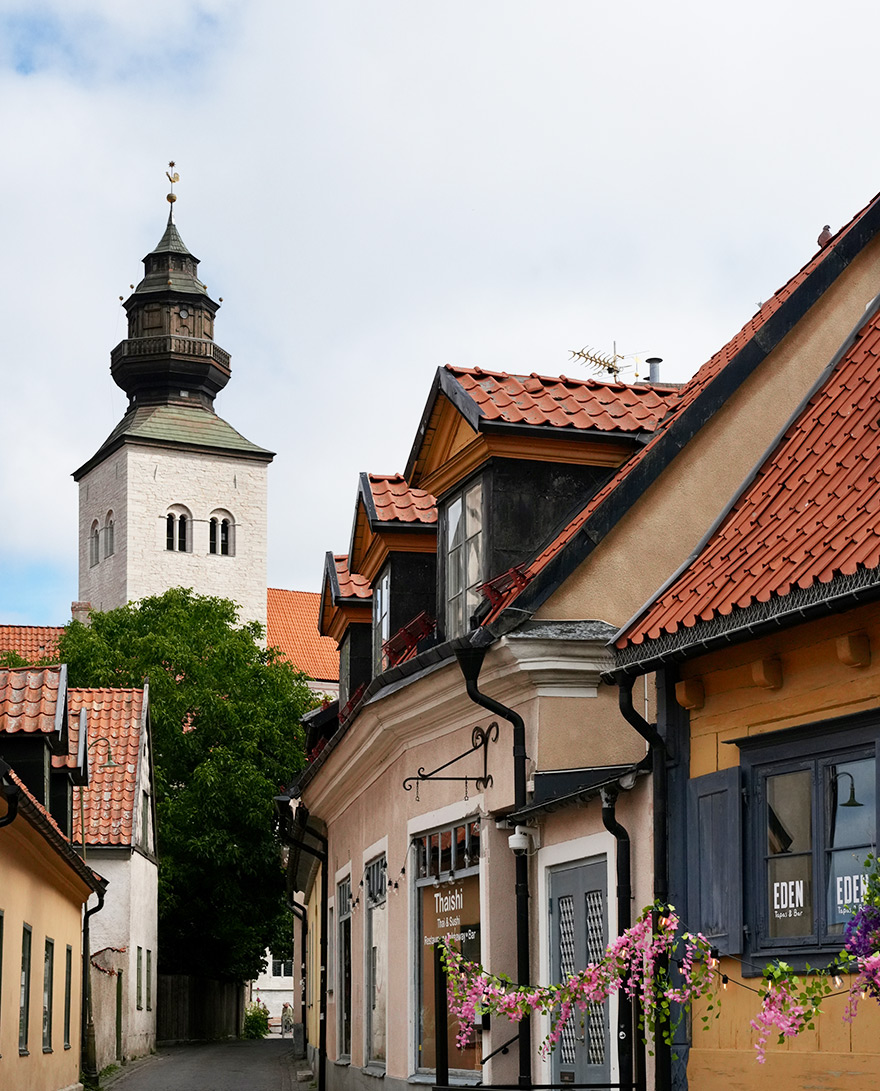
Fiskargränd shows a completely different scale of Visby. Instead of imposing merchant houses, this tiny lane is lined with little cottages, cobbles and roses, with the cathedral towers rising above the roofs in the distance (below right).
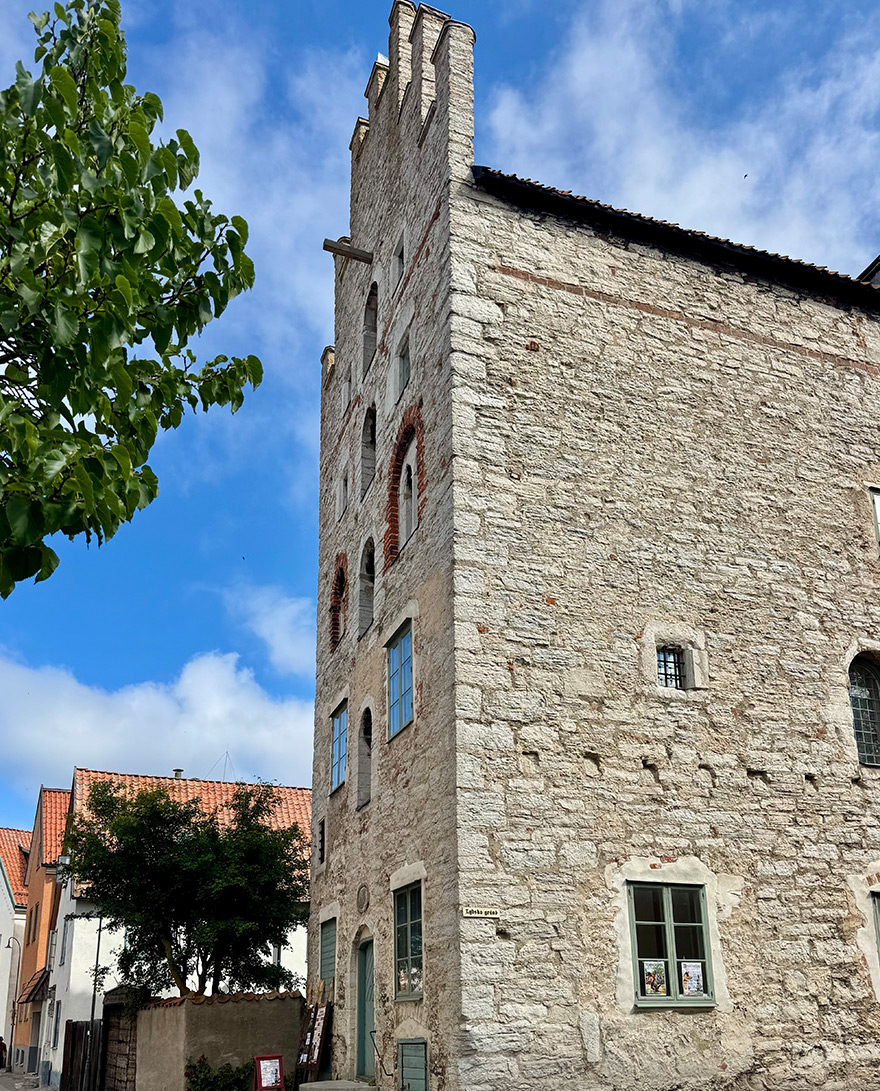
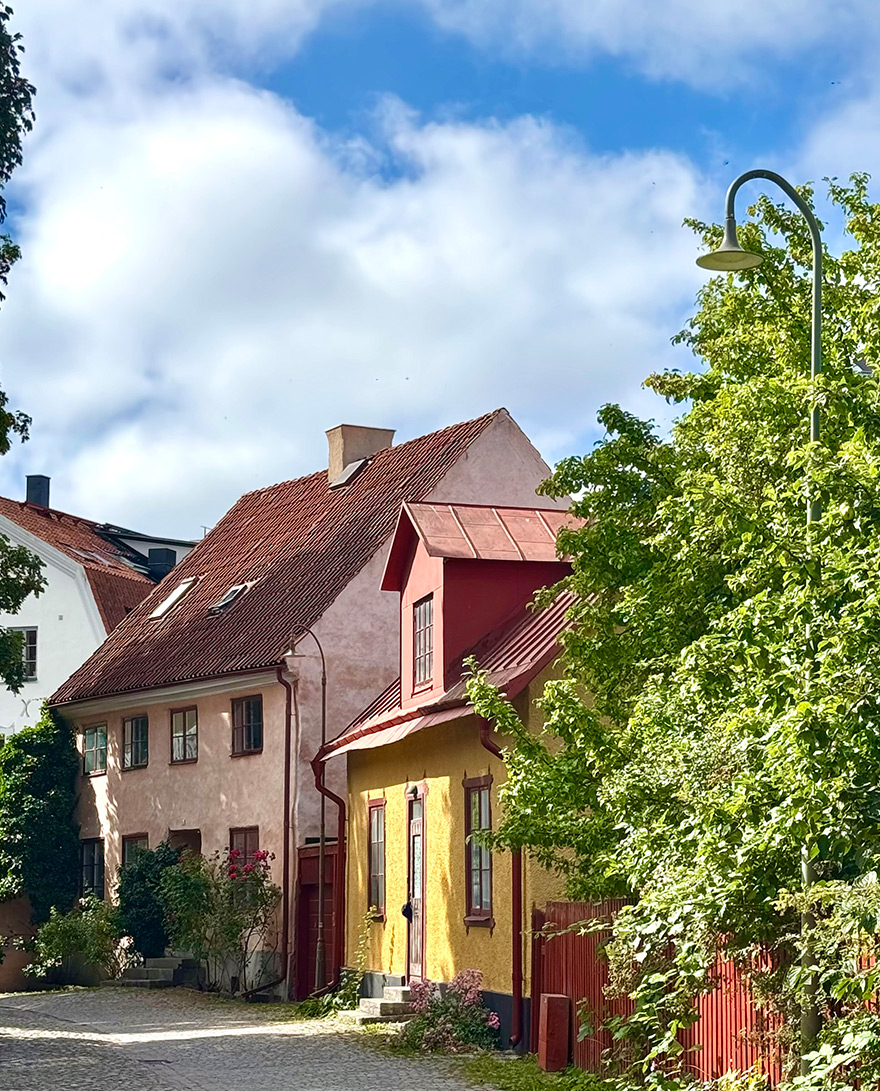
Drotten and S:t Lars: Visby has an extraordinary number of medieval church ruins, but Drotten and S:t Lars are particularly interesting because they stand virtually beside one another. Drotten was built around the 13th century and was probably associated with Visby’s German merchant community. Its name comes from an old Scandinavian word for “the Lord”. Nearby is a statue of Christopher Polhem, the important Swedish inventor and engineer who was born in Visby in 1661. Immediately next door stands S:t Lars.
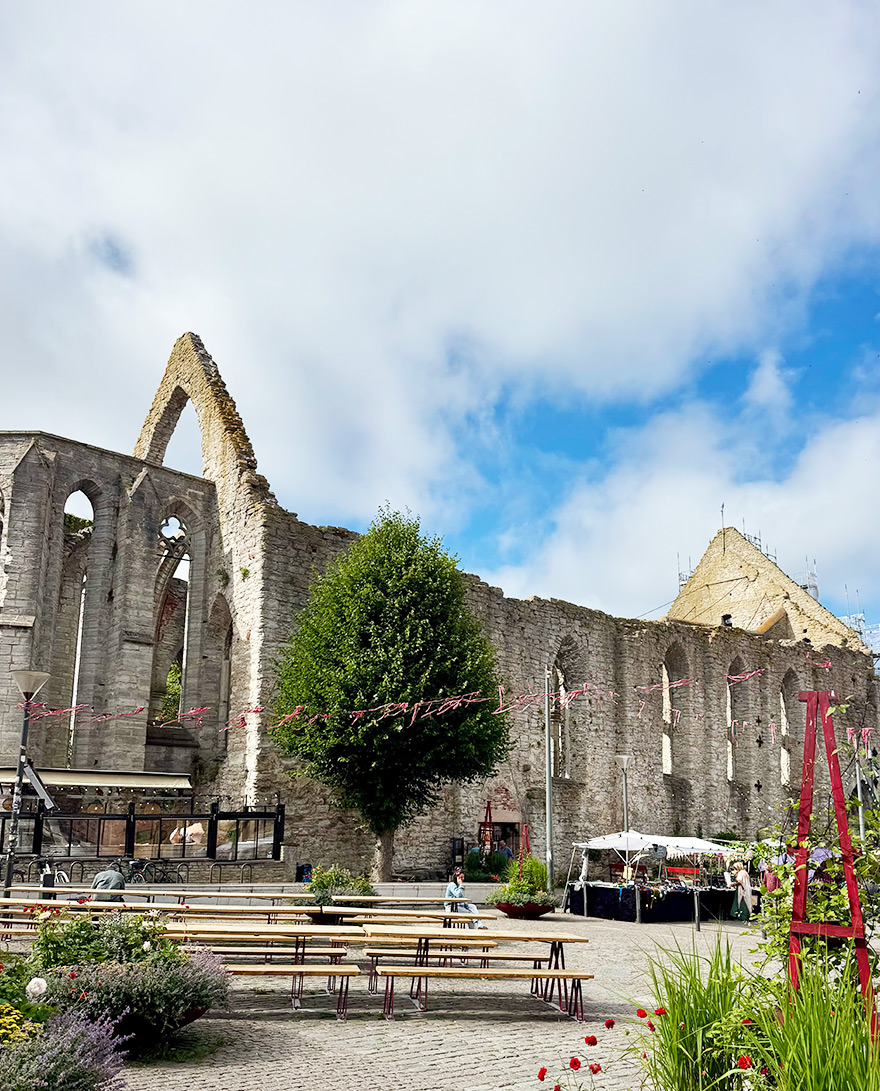
Stora Torget and St Karin: Stora Torget is Visby’s lively main square and a good place to stop for coffee and watch everything going on around you. Restaurants and café tables spill onto the square, while the enormous roofless ruins of St Karin church rise above one side. The scale of St Karin gives some idea of just how wealthy medieval Visby once was. Even as a ruin, it dominates the square and makes this feel very much like the historic heart of the town.
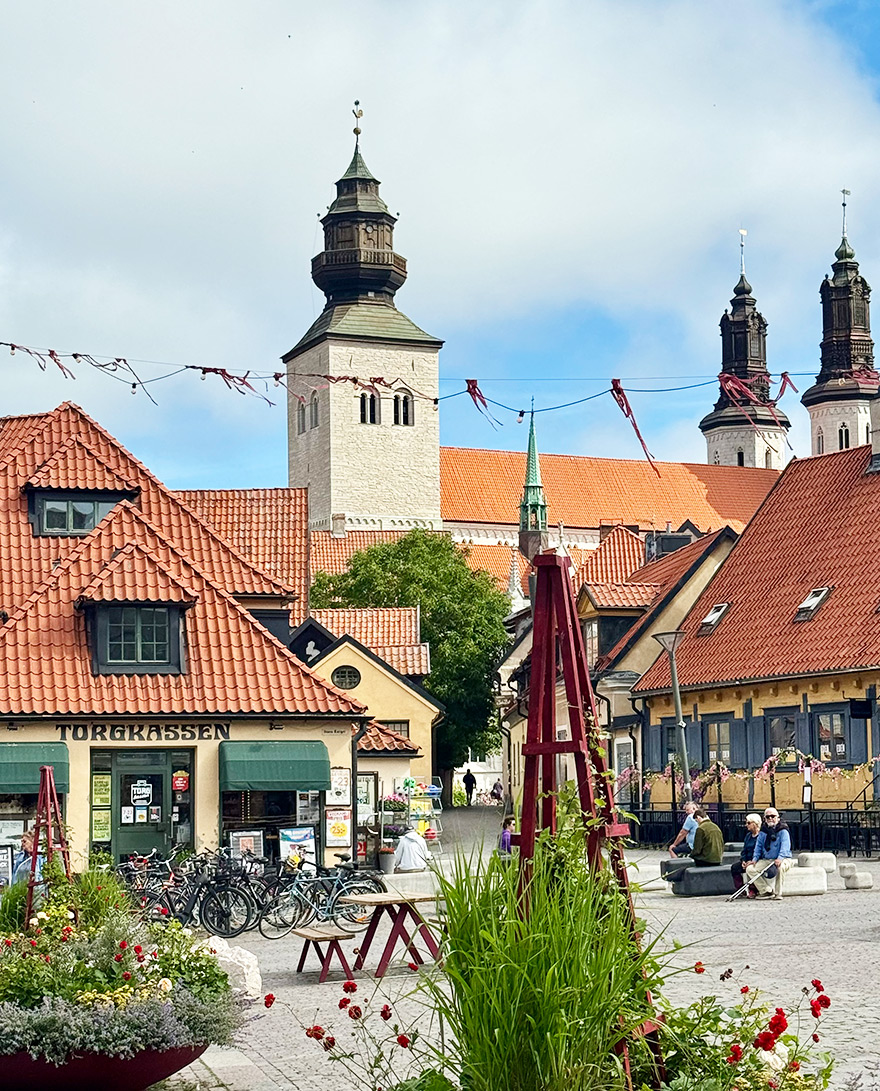
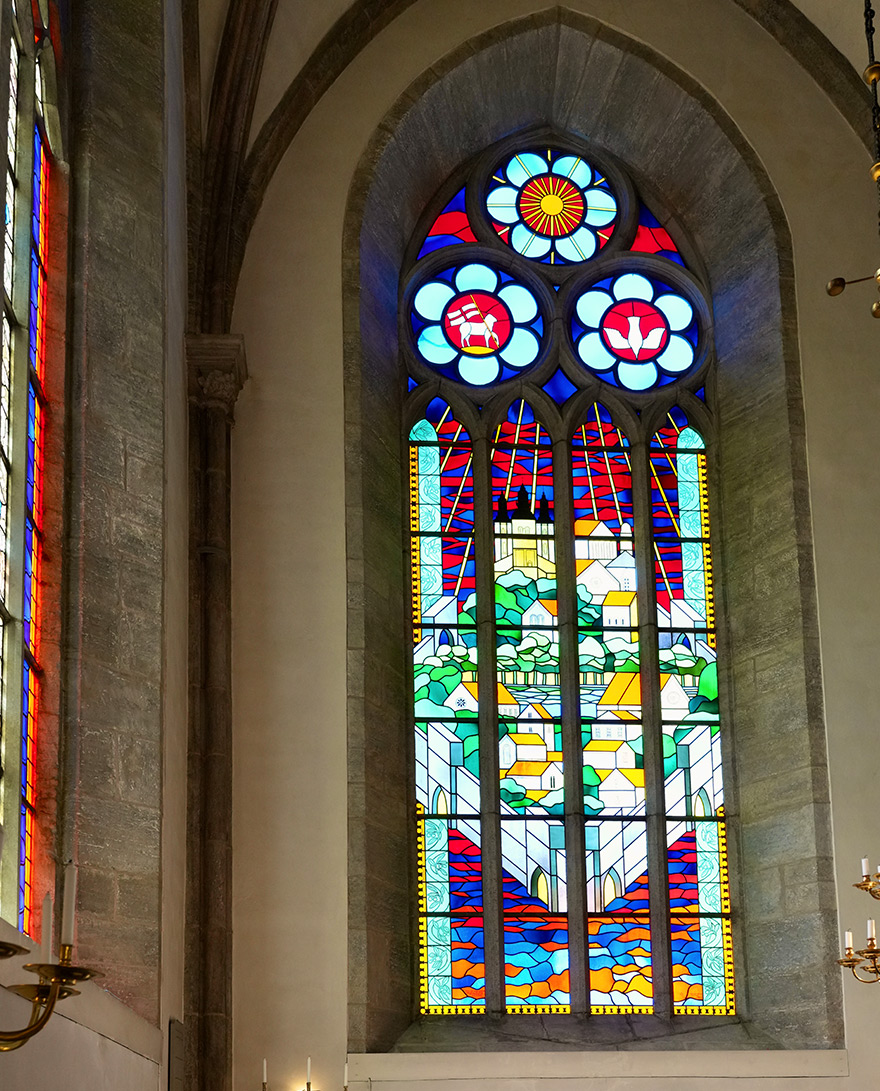
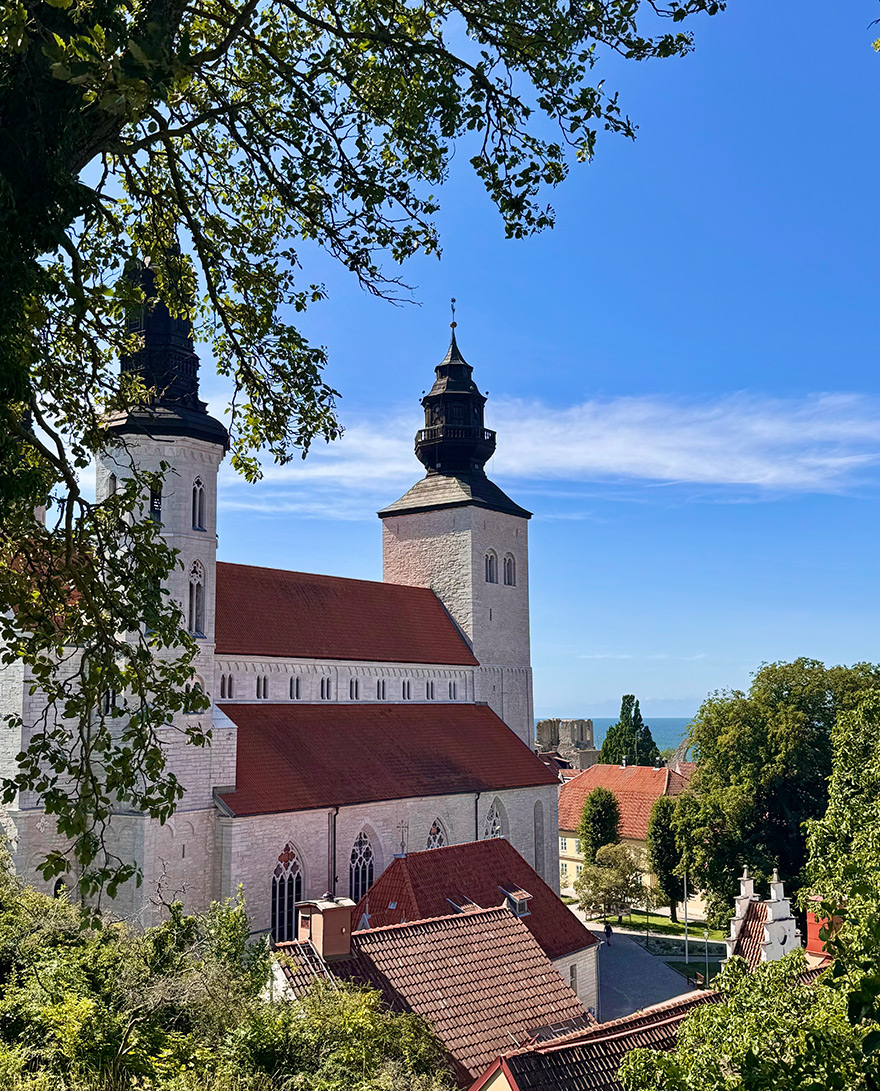
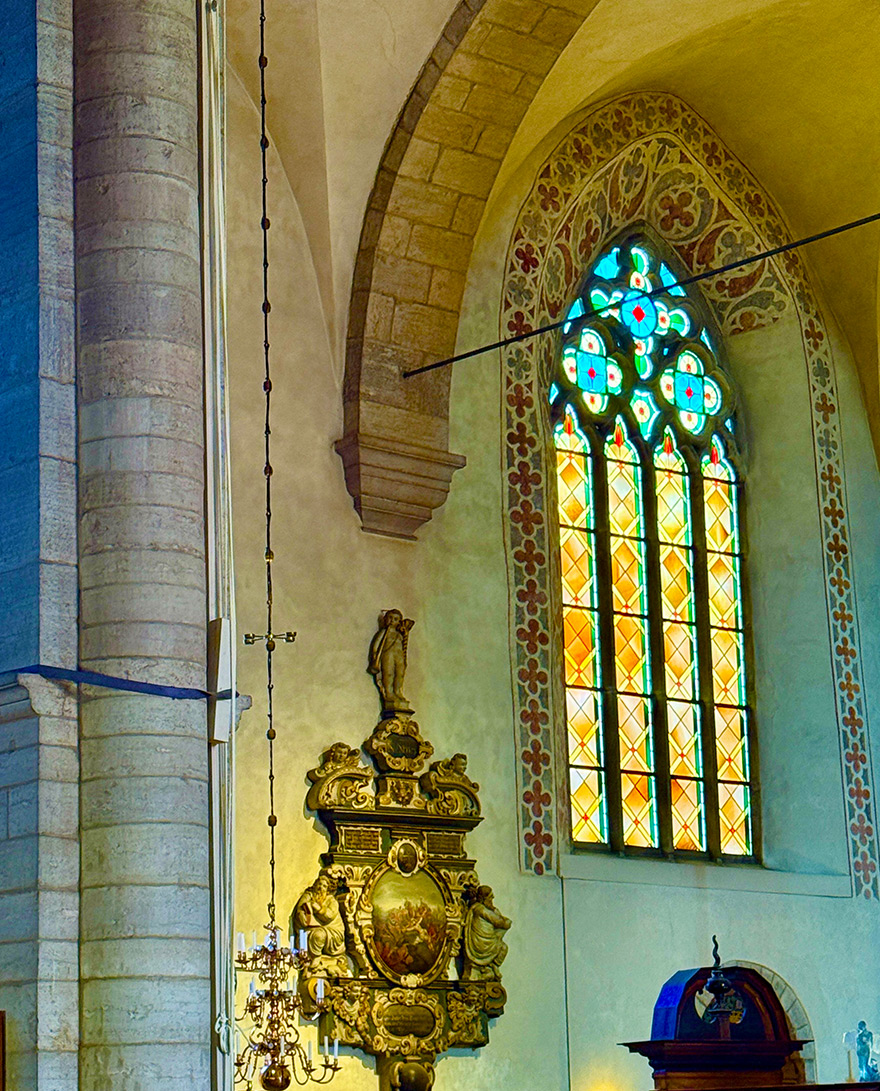
Visby Cathedral and the Upper Lanes: Visby Cathedral is still an active church rather than a ruin and is well worth going inside. It is an impressive building, with particularly beautiful stained-glass windows. Afterwards, carry on through the quieter upper lanes above the cathedral. There are pretty houses, views back across Visby’s rooftops and views of the city wall.
Visby’s Botanical Garden was established in 1855 and covers around 2.5 hectares close to the city wall. Gotland’s relatively mild climate allows a surprising range of plants to grow here, including exotic trees alongside herbs and a large collection of roses.
EKSTA COAST
The Ekstakusten Nature Reserve on the west coast stretches for around four kilometres between the Djupvik area and Hammarudden and has some of Gotland’s best open views across the Baltic towards Stora and Lilla Karlsö. We stopped around the little fishing settlement of Djupvik, where there is a simple kiosk for ice cream and refreshments, with benches facing the sea.
KÖRSBÄRSGÅRDEN
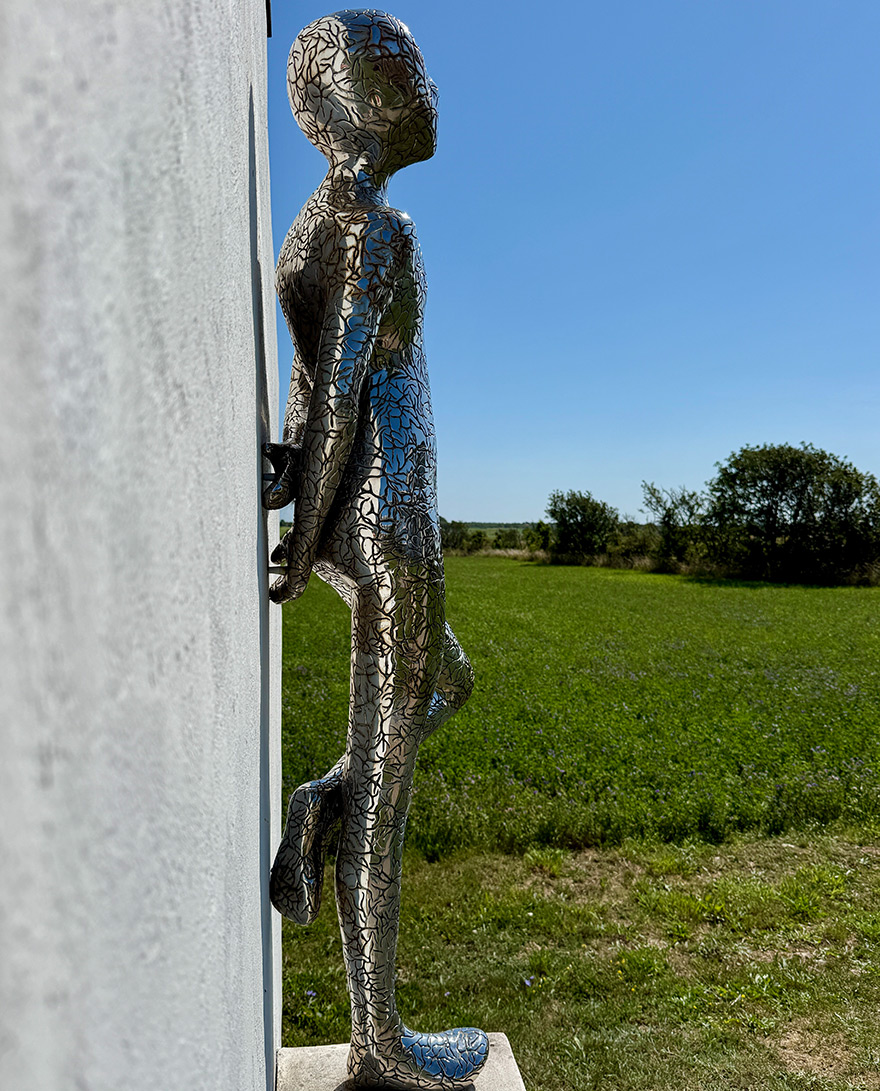
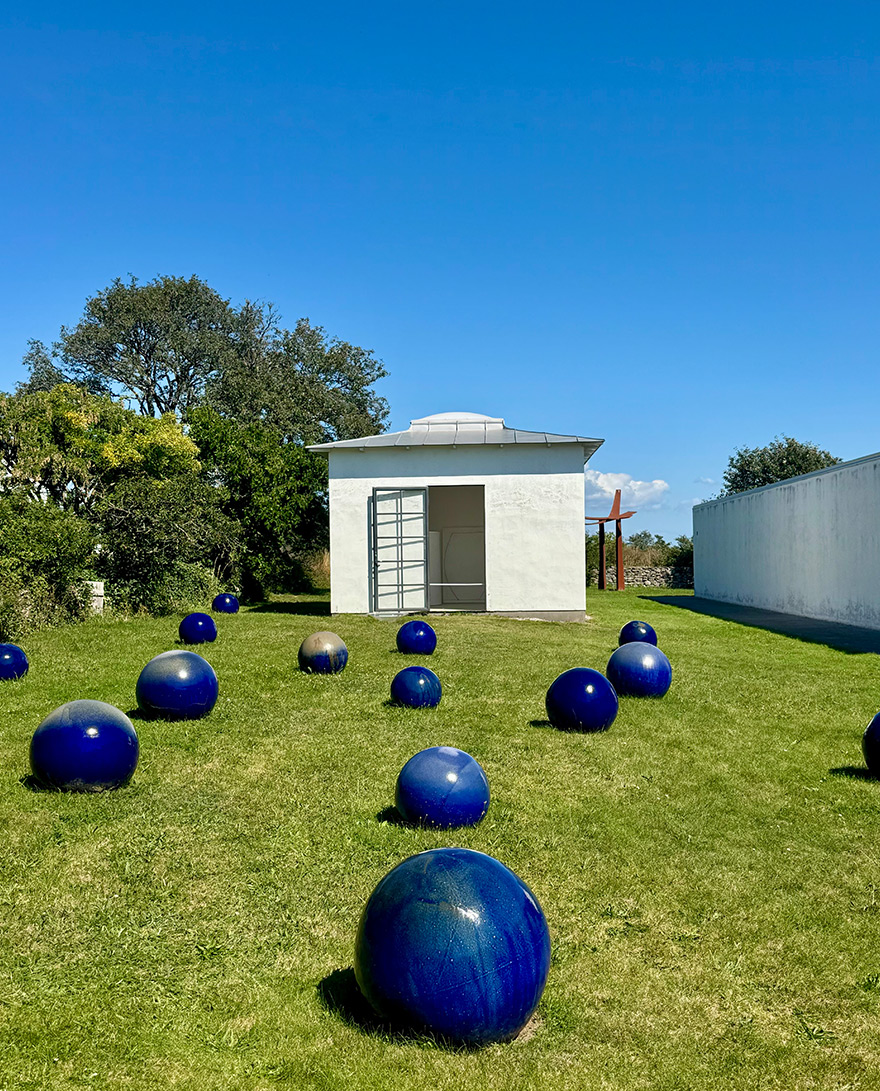
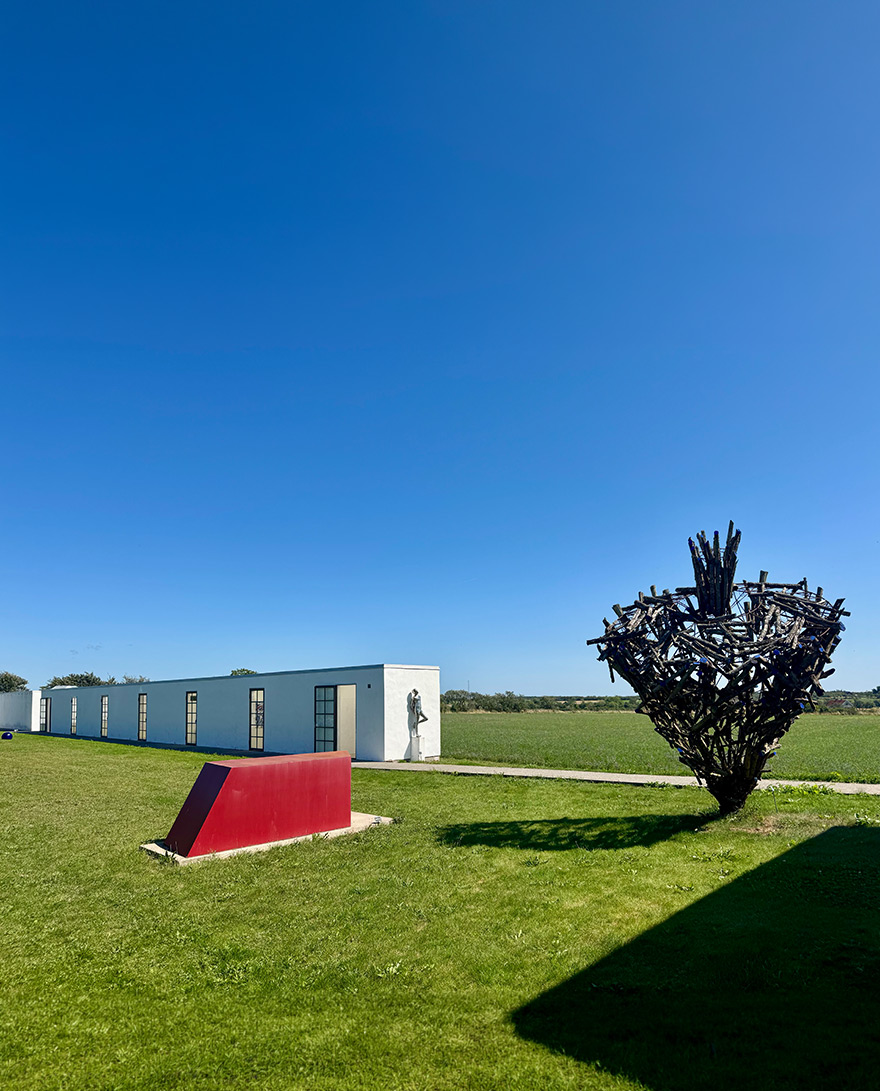
Körsbärsgården is exactly the sort of place that made us appreciate Gotland’s creative side. Down in the south of the island, contemporary artworks and sculptures are scattered through orchards and gardens, alongside modern gallery buildings.
It combines art, architecture and literature rather than operating simply as a conventional gallery, and there is a café as well as books and design objects to browse. It makes a good stop while exploring Sudret, although its season is relatively short, so check opening times before setting out: summer opening generally runs only into August.
HOBURGSGUBBEN
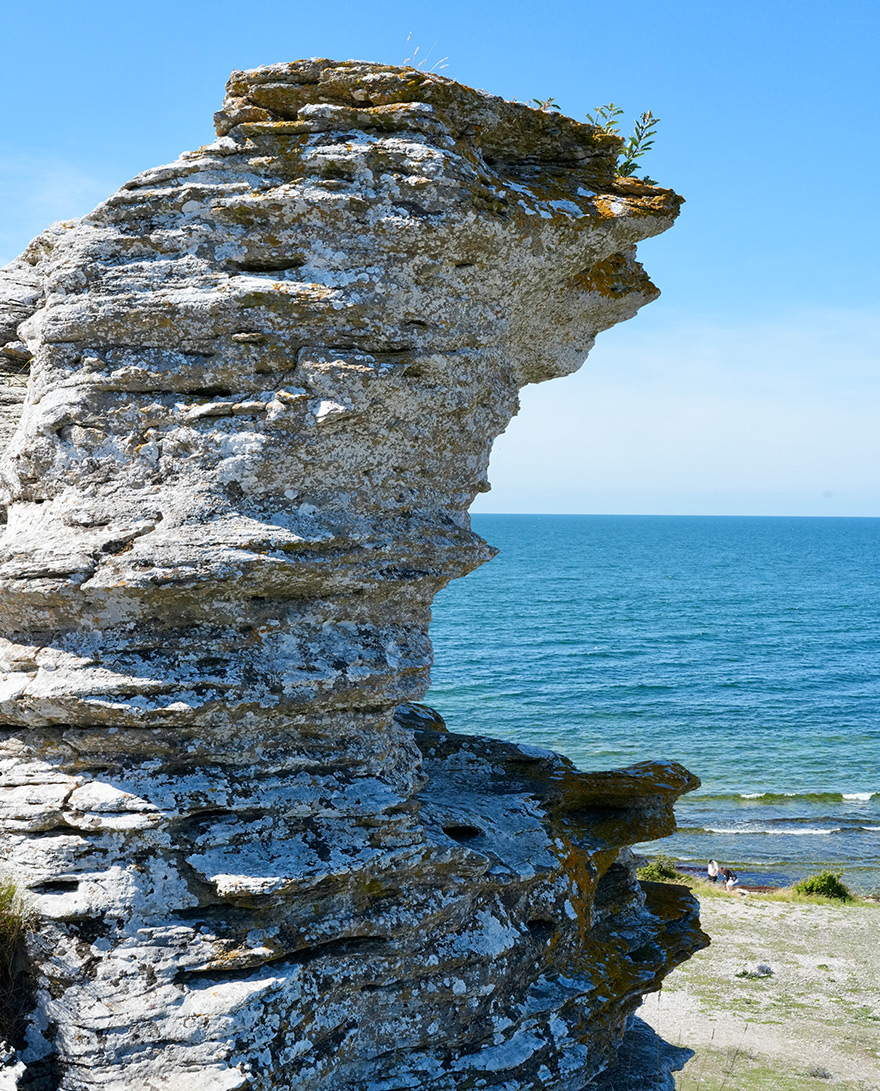
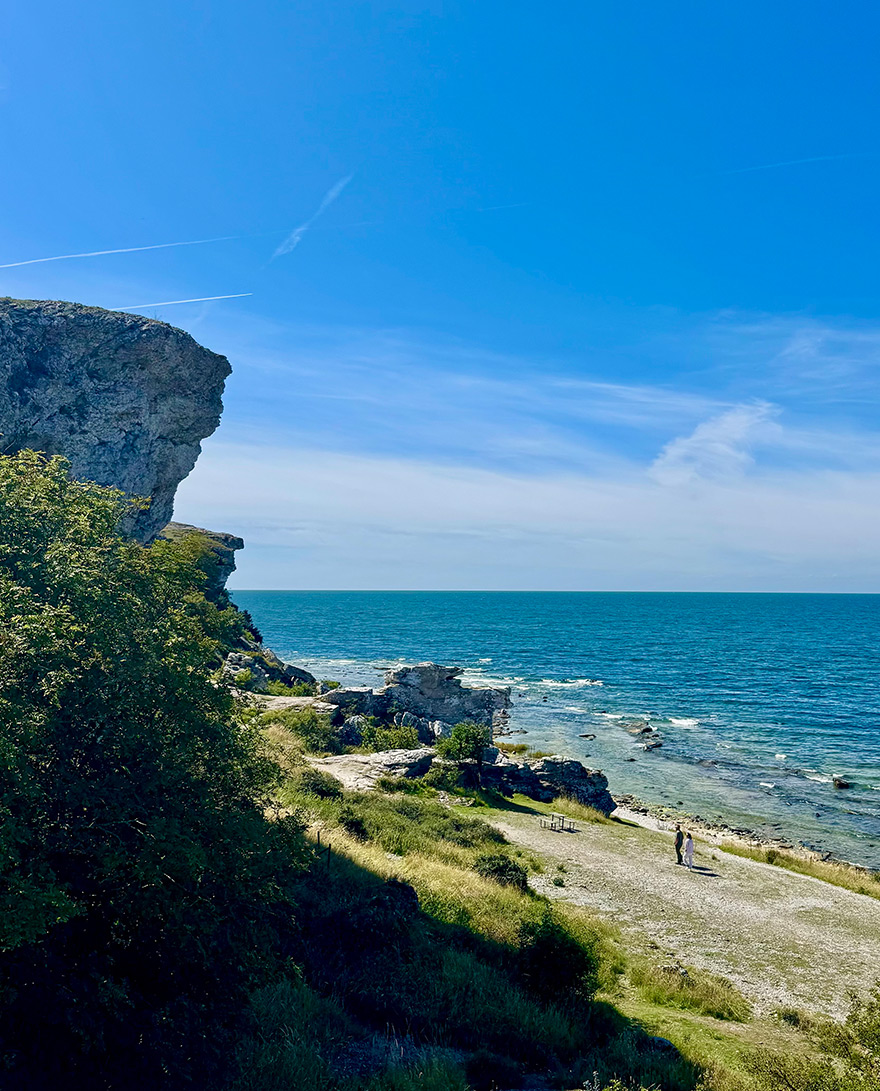
Right at the southern tip of Gotland, the landscape around Hoburgsgubben becomes much rockier and more dramatic, with limestone cliffs dropping towards the Baltic and wide, open views across the sea. The name means “the Old Man of Hoburgen” and refers to a naturally eroded limestone sea stack which, viewed from the right angle, resembles the profile of an old man’s face. It is just beside Majstre restaurant and café (see Dine), so you can combine a walk around the rocks followed by coffee and cake overlooking the sea.
Cafés & Bakeries
SJÄLSÖ BAGERI
Själsö Bageri is a modern craft bakery about 8–10 kilometres north of Visby and makes an easy breakfast or fika stop if you are driving up the coast. Bread and pastries are baked on site using organic flour, and there is seating both inside and out in the garden overlooking the sea.
SANKT HANS CAFÉ
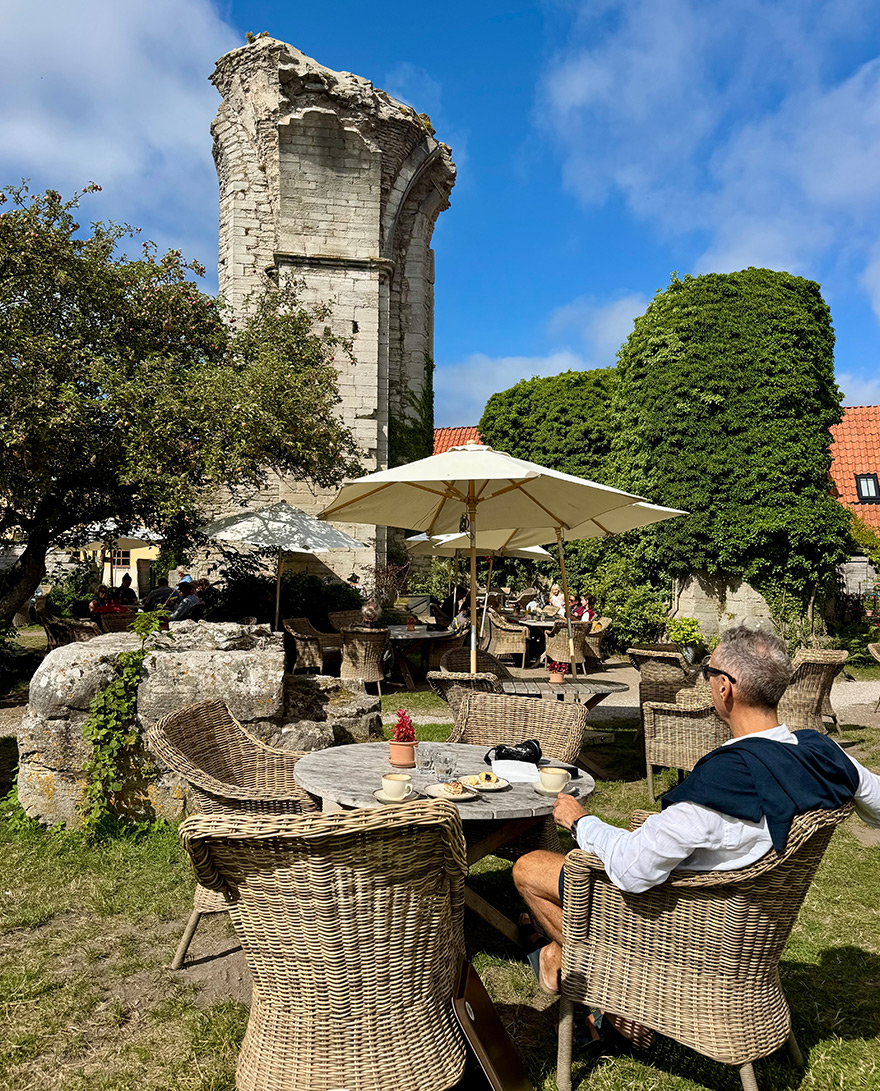
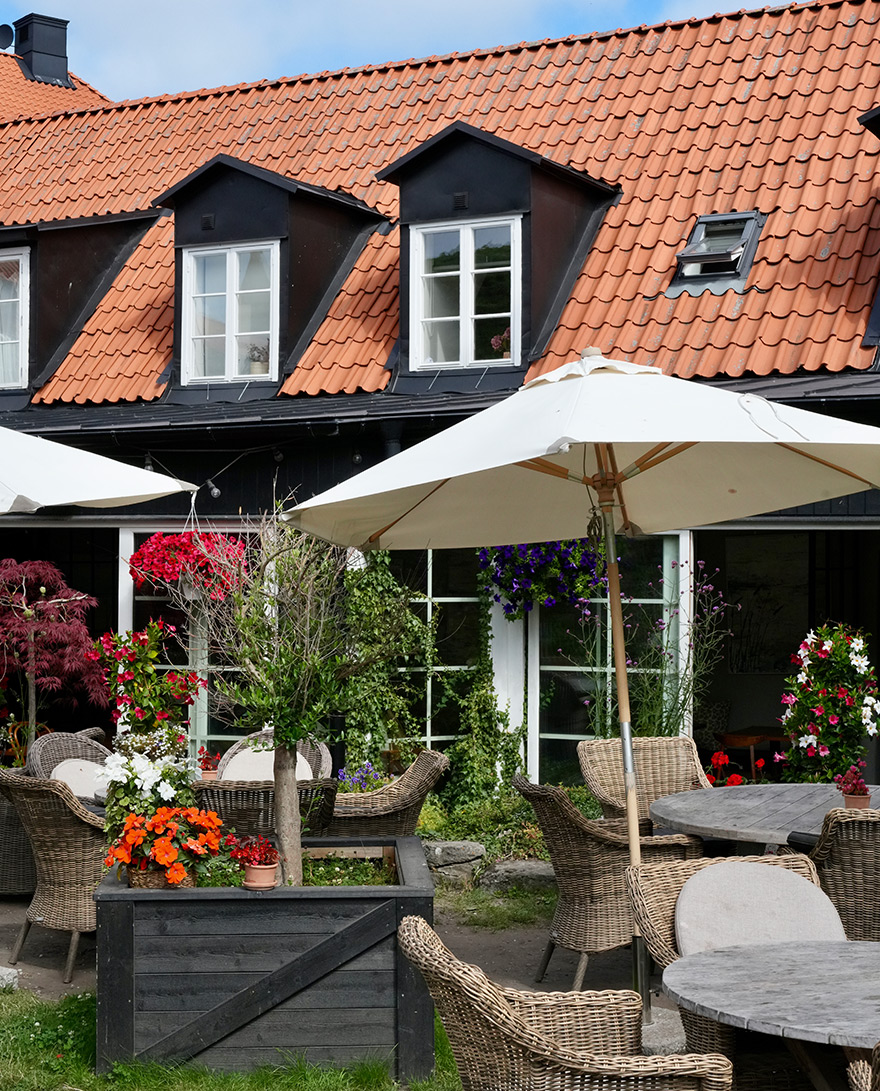
Sankt Hans looks fairly modest from the street, but walk through the yellow building, and you find the reason to come: tables set among the ivy-covered medieval ruins of Sankt Hans and Sankt Per. We stopped for coffee and a cinnamon bun, but it also works for a light lunch, with soups, salads and sandwiches.
Shop
AKANTUS DESIGN & INREDNING
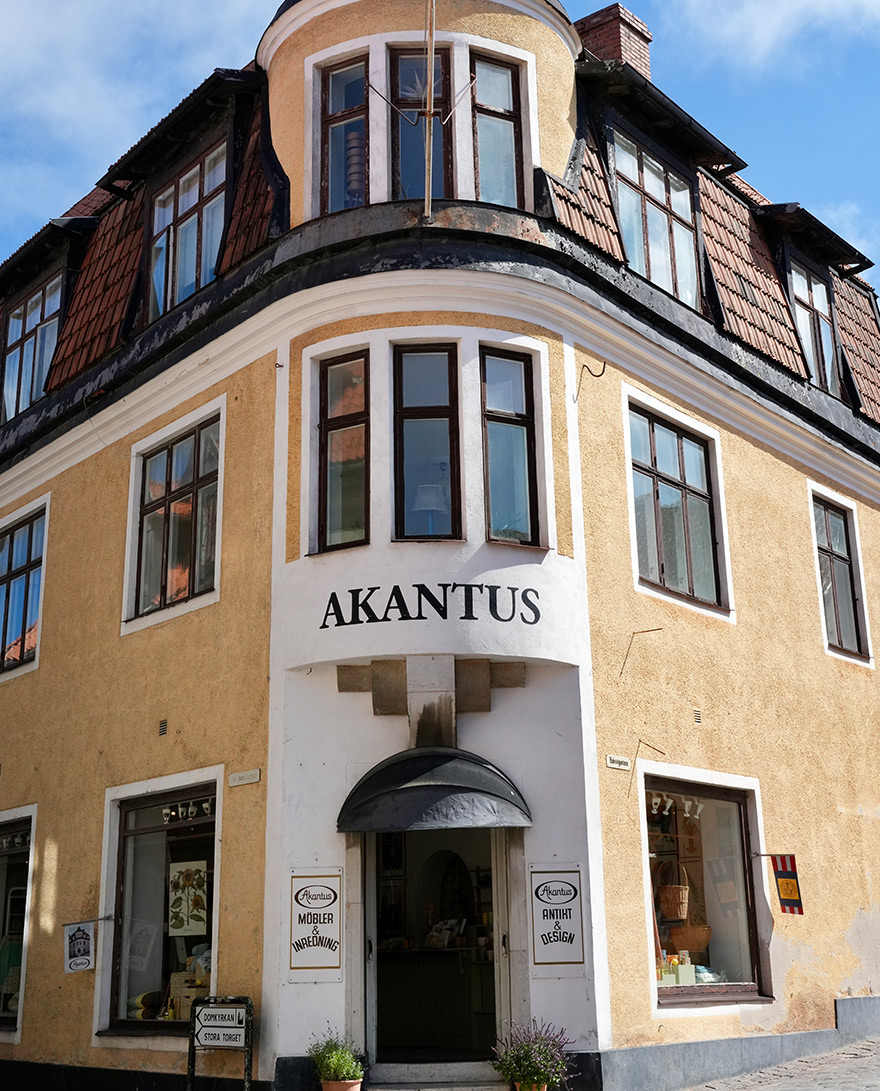
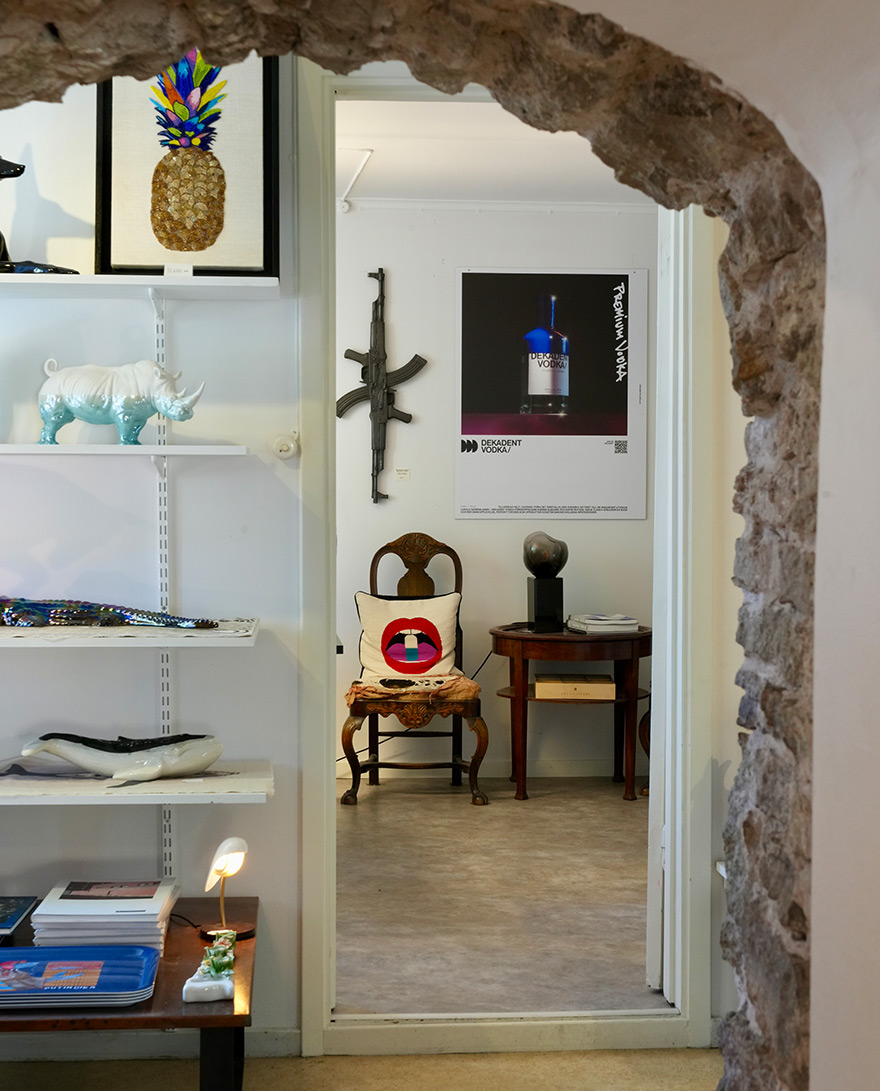
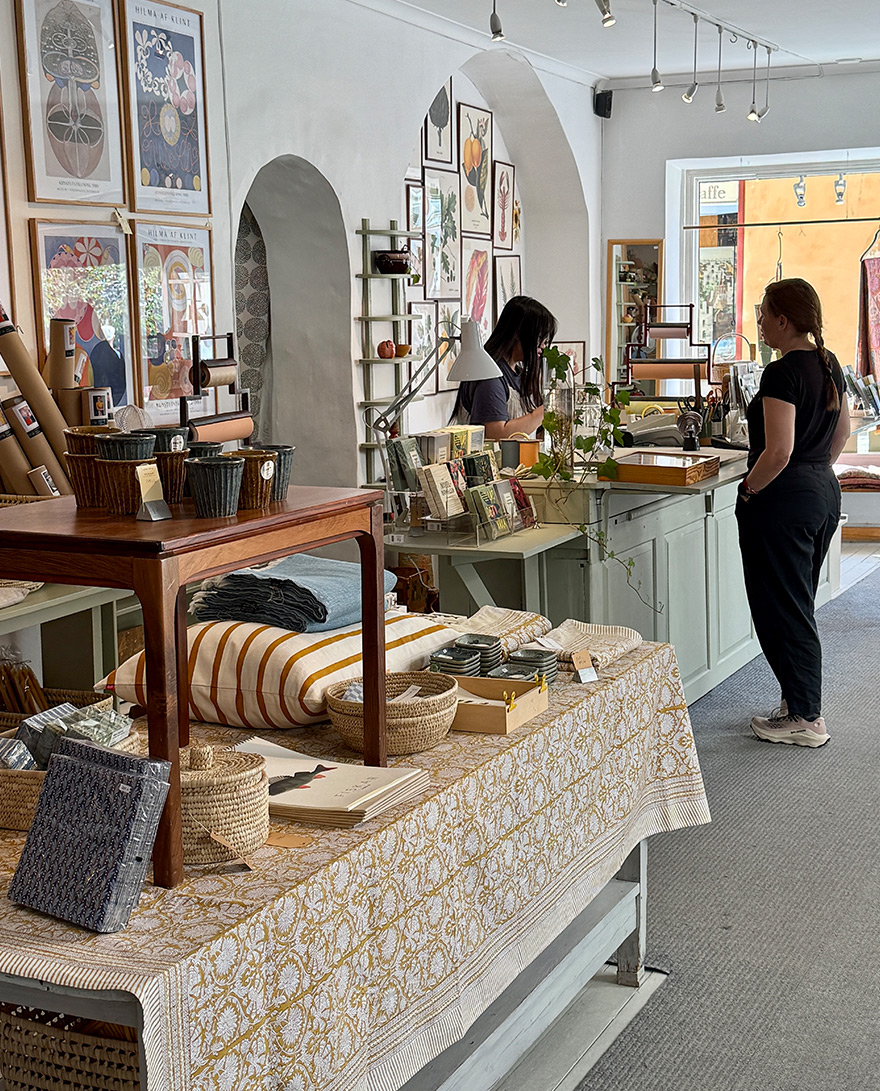
Akantus is an expansive interiors and design store on Hästgatan, one of our favourite streets for independent shopping in Visby. Spread through a series of rooms, it is beautifully put together, with shelves and tables filled with ceramics and glass, alongside lamps, cushions, throws, baskets, decorative objects and carefully chosen antiques. There is a strong Scandinavian feel, mixing simple natural materials and muted colours with more decorative pieces, and plenty to look at as you move from room to room. We particularly liked the textile collection and bought a lovely wool throw by Swedish brand Klippan.
KRÄNKU
Kränku is something of a Gotland institution and has been trading in Visby since 1977. Tea is the speciality, with more than 100 varieties and a number of the shop’s own blends, alongside coffee, tins, ceramics and food from local producers.
FRANCHELLS
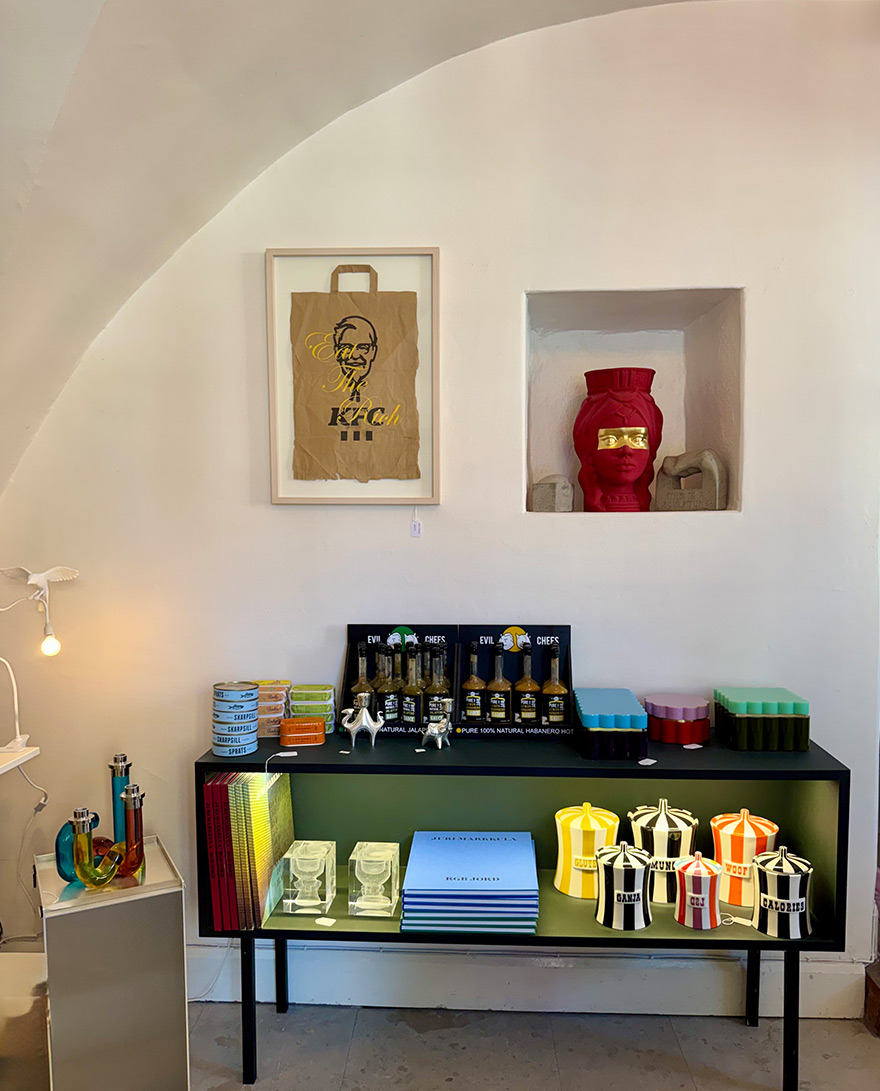
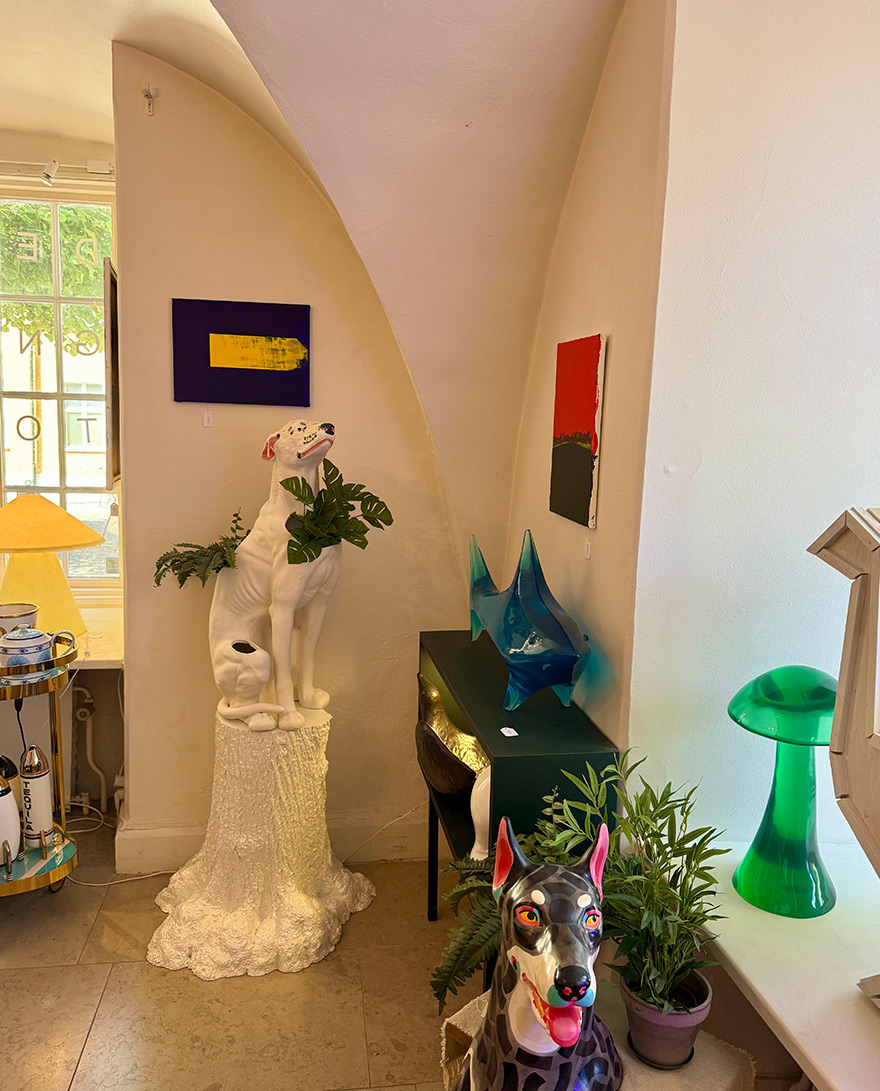
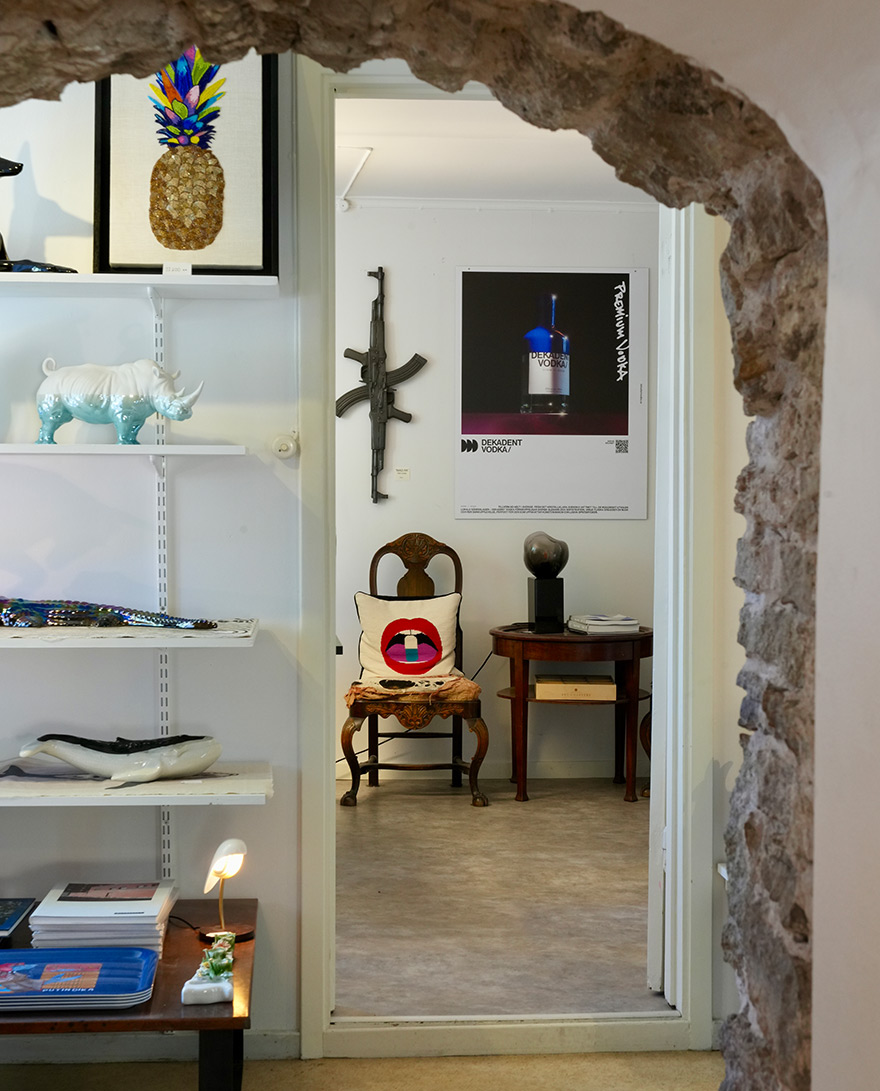
Franchells is one of Visby’s more unusual design shops, hidden inside a wonderful 13th-century medieval building on S:t Hansgatan. Its tagline, “Art, Design & Sardines”, gives you a good idea of the eclectic mix inside! Contemporary art, lighting, colourful decorative objects, unusual clocks and furniture sit alongside Portuguese sardines and other unexpected finds. The shop mixes work by local artists with international designers, including plenty of one-off pieces you are unlikely to find elsewhere on Gotland.
Verkstan – The Social Life
Verkstan is a colourful lifestyle and interiors shop in the heart of Visby, set inside a beautiful old half-timbered building with parts dating back to the 14th century. Created by five female entrepreneurs, it is packed with an eclectic mix of ceramics, glassware, textiles, furniture, clothes and jewellery.
Dine
KRAKAS KROG
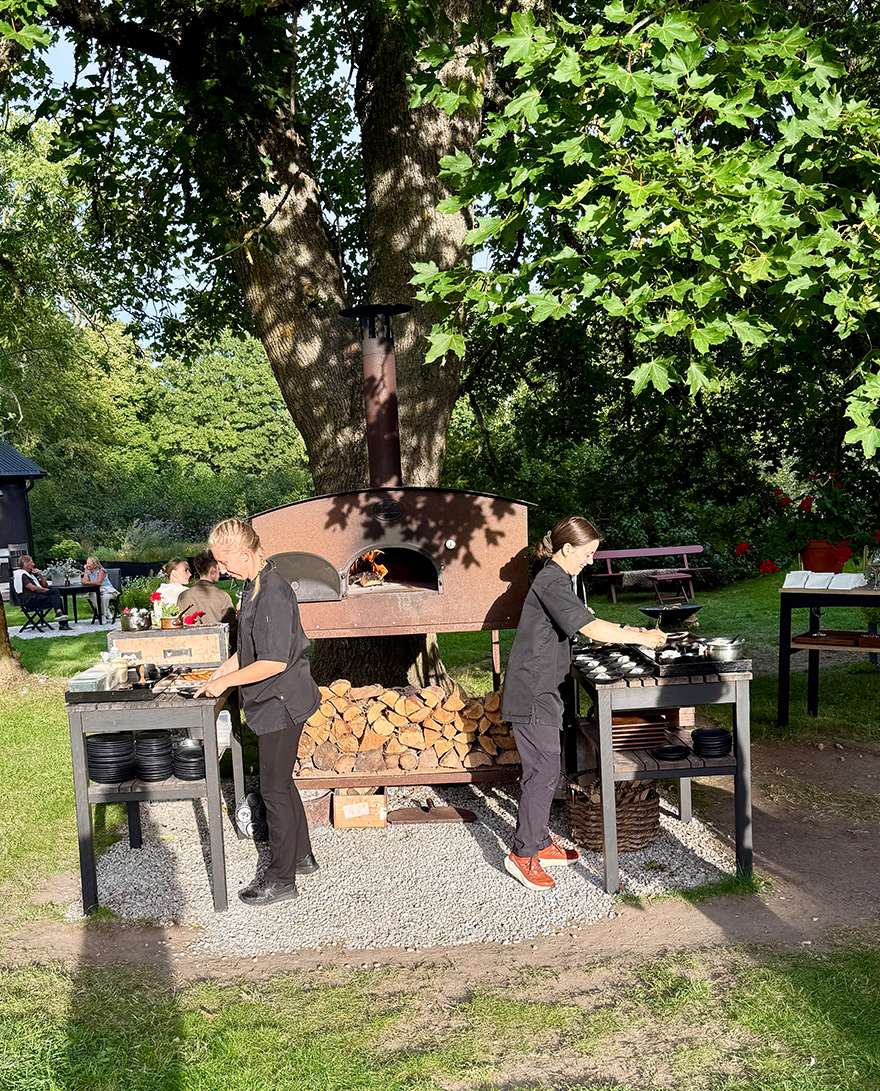
Krakas Krog is a restaurant out in the countryside with a small number of covers that offers an intimate and very special culinary experience. Cooking is rooted in Gotland, using cultivated and wild ingredients from the surrounding area. The menu changes constantly with the seasons, so a sense of discovery is part of the experience.
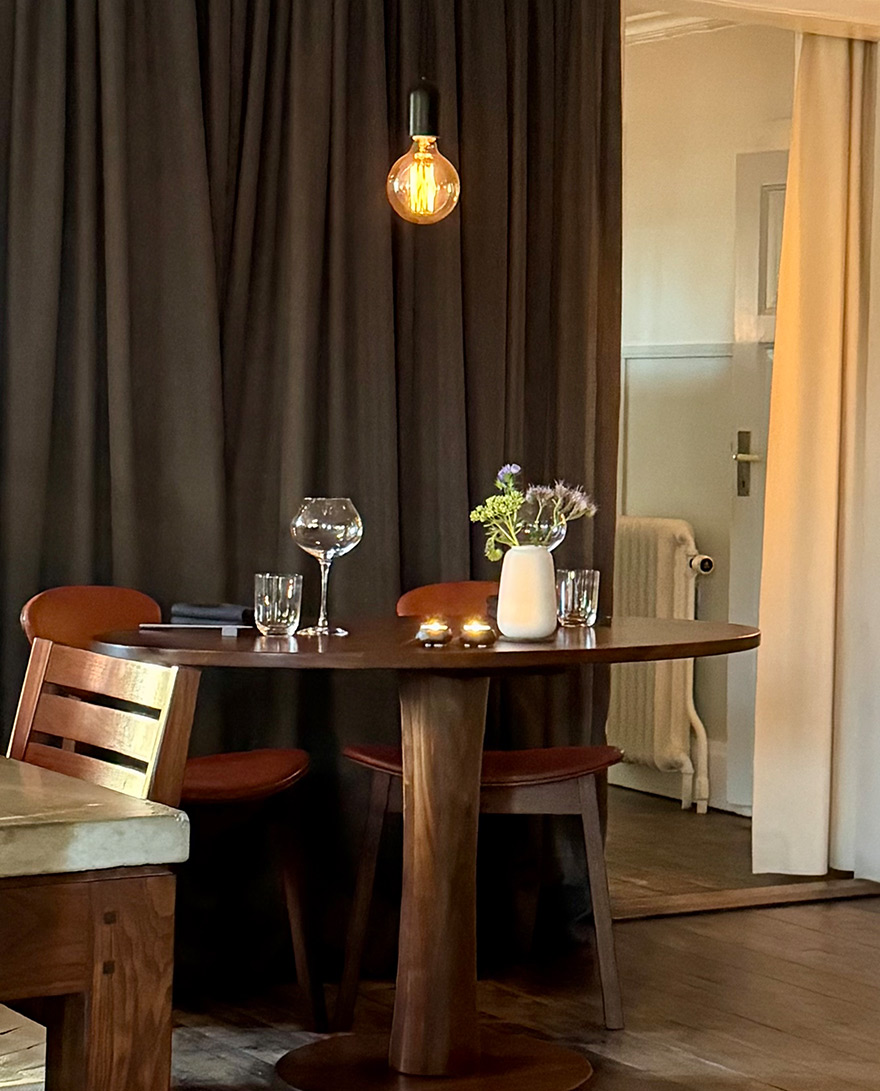
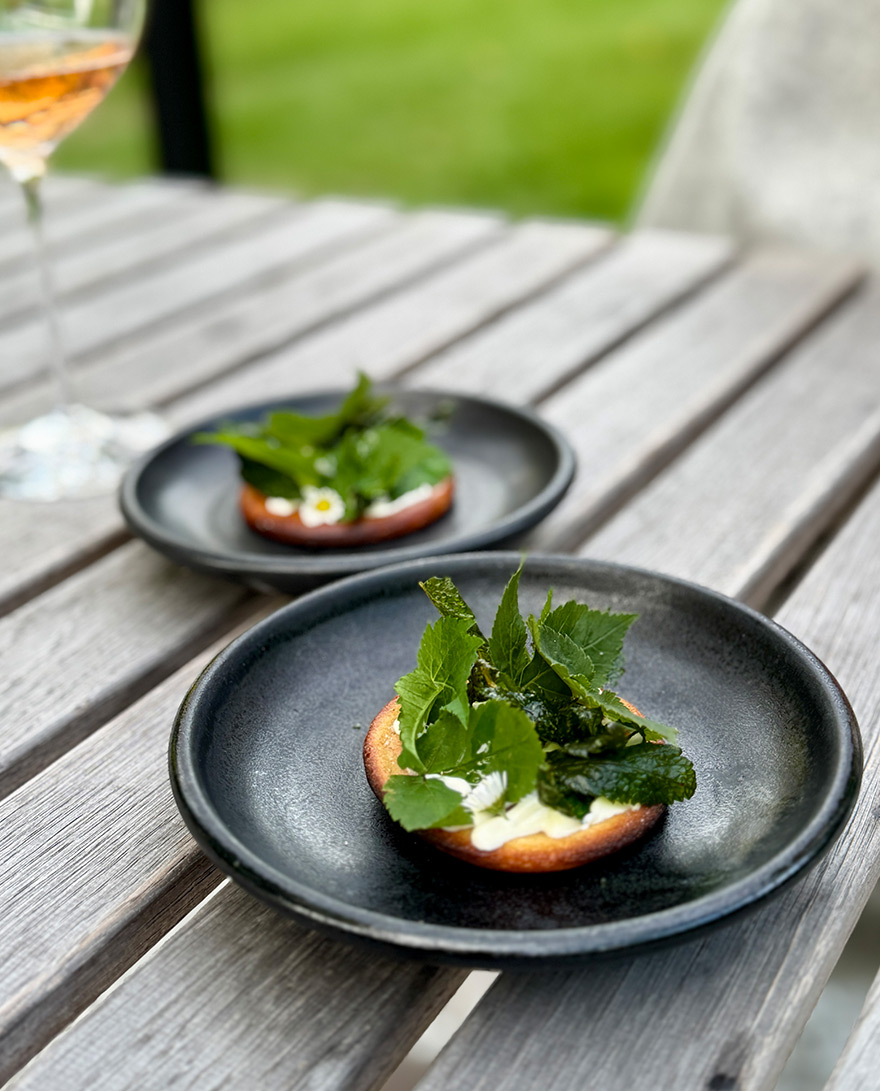
Dinner starts outside in the garden with Champagne and a succession of beautifully presented little snacks, many built around herbs, leaves and vegetables grown or gathered nearby. You then move into the intimate candlelit dining room for the main part of the tasting menu. Seemingly simple ingredients are treated with extraordinary care — different preparations of beetroot with cream and herbs, and a beautiful salad course of leaves, herbs and tiny pink flowers were two of the prettiest. After dinner, you move back into the garden for the final cake with coffee and tea. That movement between garden and dining room made the whole thing feel much more personal than a conventional tasting-menu restaurant.
We also went for the wine flight, which was excellent. The cellar has a particular connection with Burgundy and focuses heavily on small French growers who care about the quality of the land as much as the finished wine. Our evening included both white Chassagne-Montrachet and, more unusually, a red from the appellation.
Reservations are by email only at info@krakas.se, and with so few tables it is worth booking as soon as your Gotland plans are fixed. Also be prepared to splash out: our dinner, including Champagne and the wine flight, came to not far short of £600 for two: definitely a special-occasion meal!
LILLA BJERS
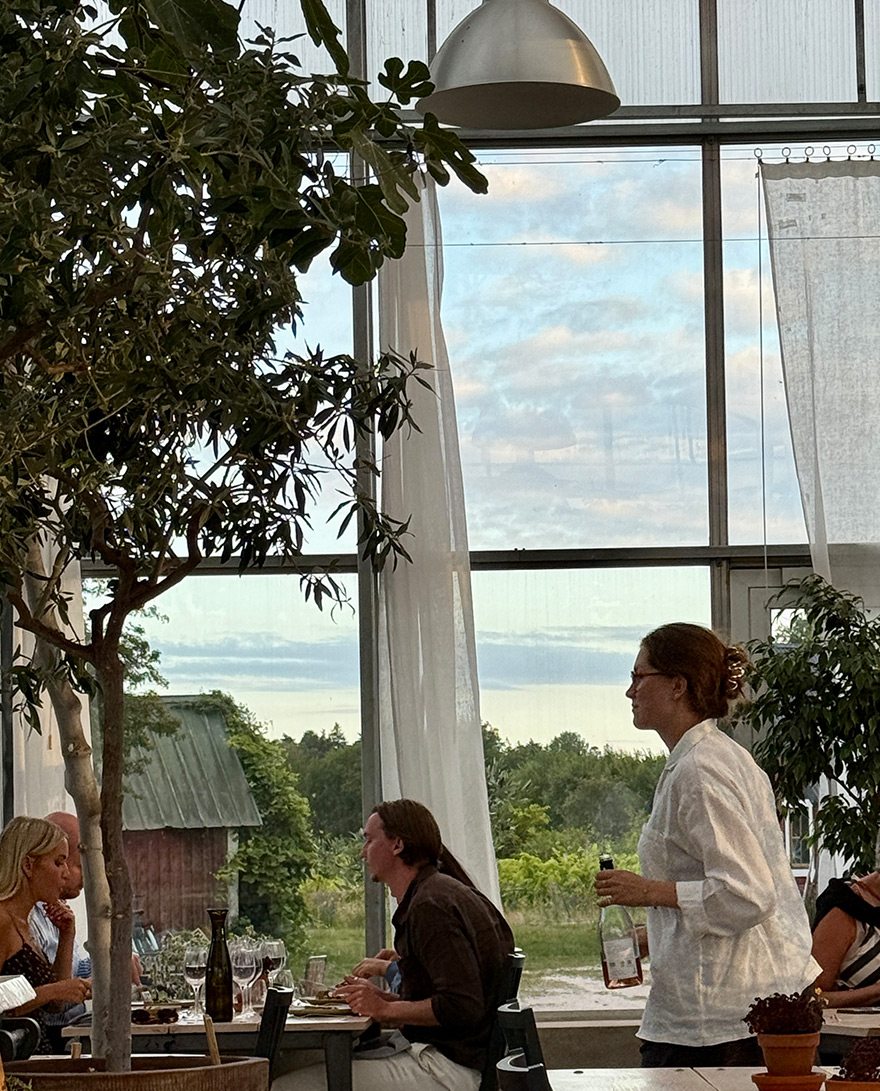
Lilla Bjers is another of Gotland’s destination restaurants, but with a very different character. It sits on its own organic farm just outside Visby, with much of dinner determined by what has been picked from the fields. Lilla Bjers has won awards recognising its “seed-to-plate” approach and organic farming.
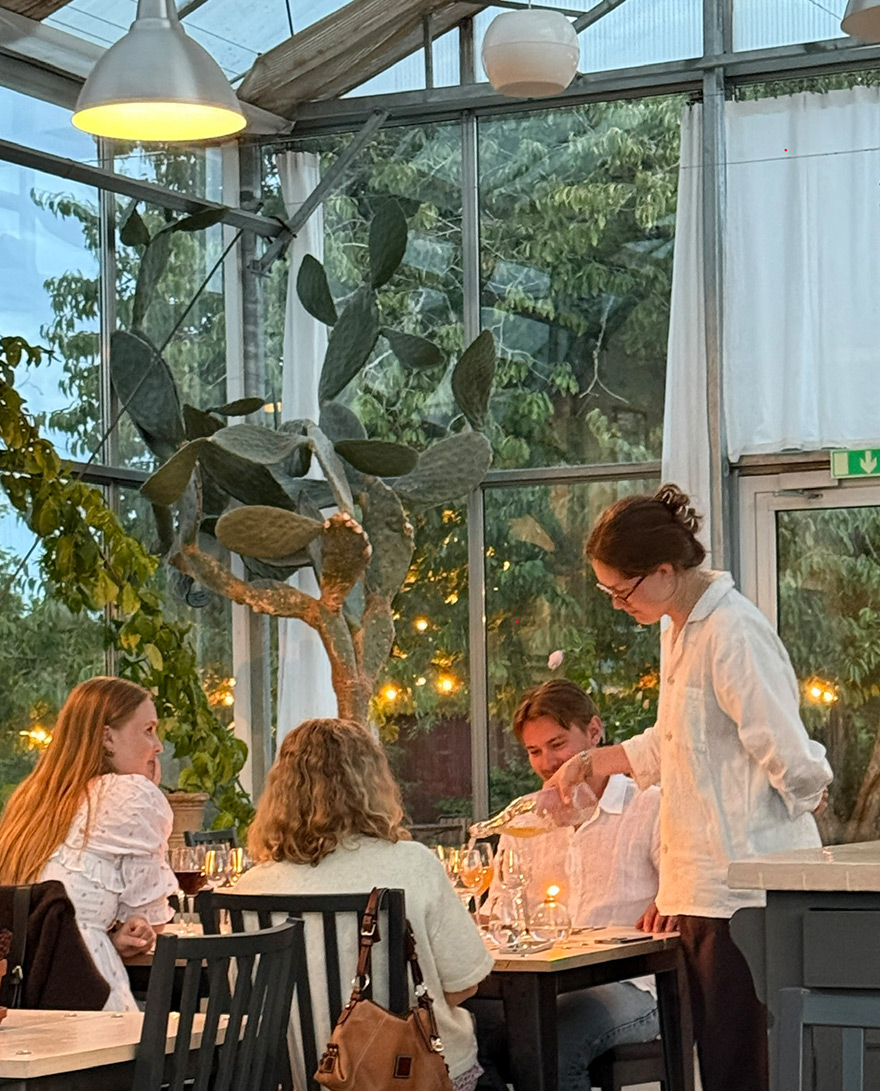
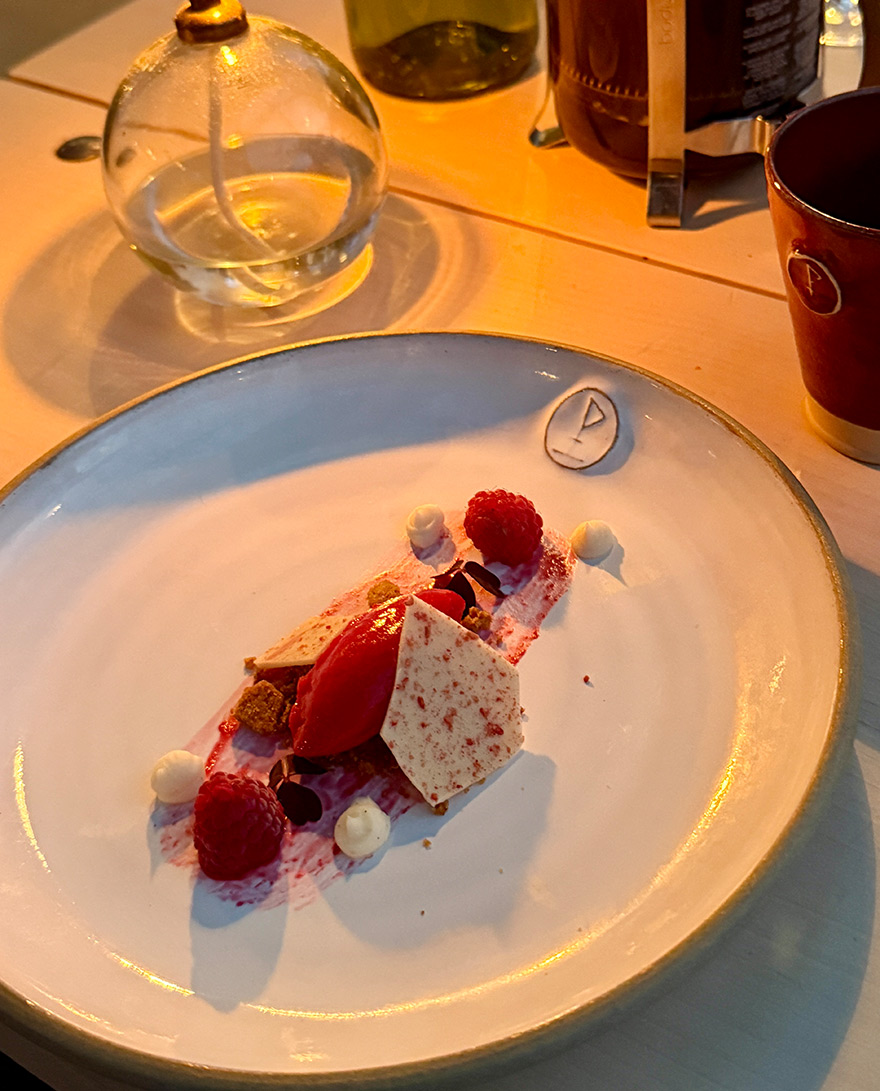
The setting is lovely in summer: a light-filled greenhouse-style restaurant surrounded by plants and the farm itself. The service was another highlight, with enthusiastic, knowledgeable and young staff. At the start of dinner, they brought a basket of freshly picked ingredients to the table, giving us a preview of what would appear later.
The 5 course tasting menu includes everything from beetroot, lentils and other vegetable-led dishes to lamb, risotto and homemade ice creams. The menu changes constantly with the harvest. Everything is beautifully and carefully presented. There is also a choice a wine flight or the narcotic drink pairing that we chose for our evening.
DJUPVIK
Djupvik was supposed to be our west-coast lunch stop. The restaurant occupies a striking contemporary glass building right beside the sea, with meadow and pine trees around it and Stora and Lilla Karlsö appearing on the horizon. It looked exactly our sort of place — modern architecture, an uncluttered interior and that enormous sea view — but unfortunately it was closed for a wedding when we arrived!
MAJSTRE
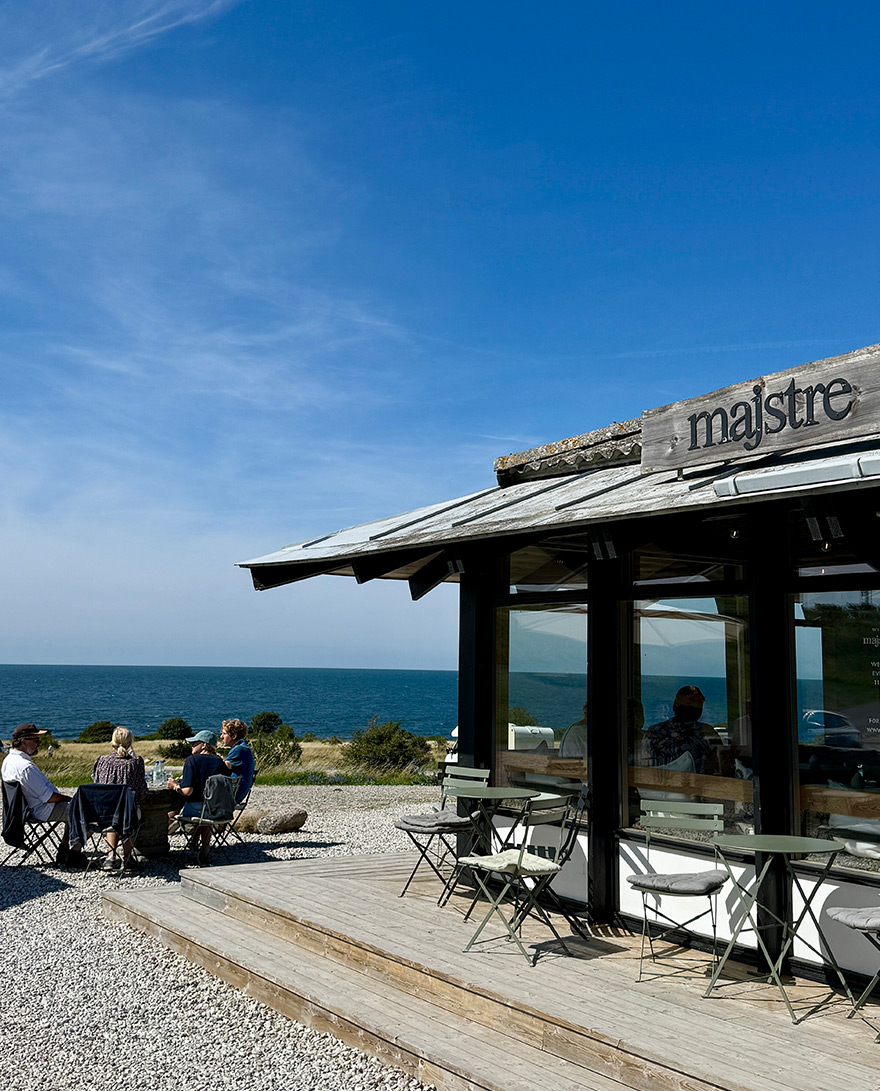
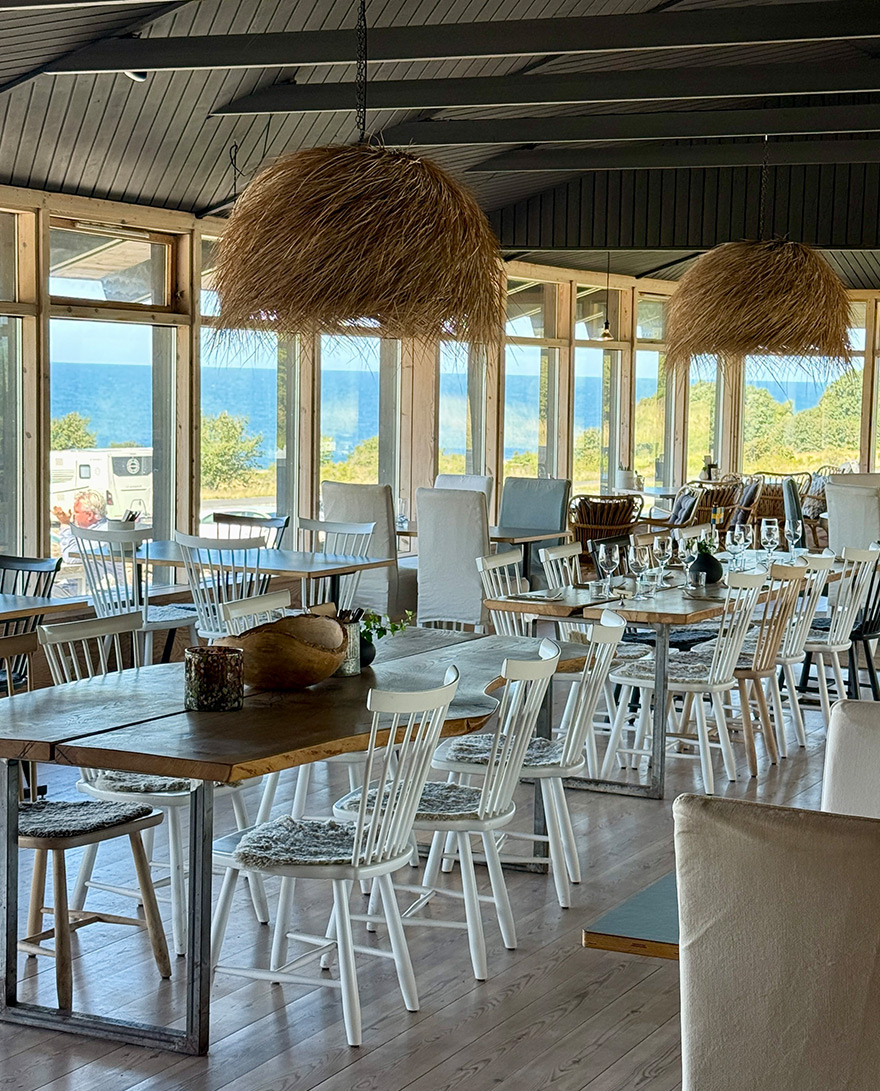
At Gotland’s southernmost tip, Majstre combines a restaurant, bar and café with huge views across the sea and the open landscape around Hoburgen. Majstre uses ingredients from Gotland in its lunch and dinner menus and also has a more casual café for homemade cakes, coffee and locally made ice cream. We stopped at the café rather than having a full meal, but in summer the restaurant also runs popular barbecue evenings. It is a great final stop if you are making a day of exploring the far south.
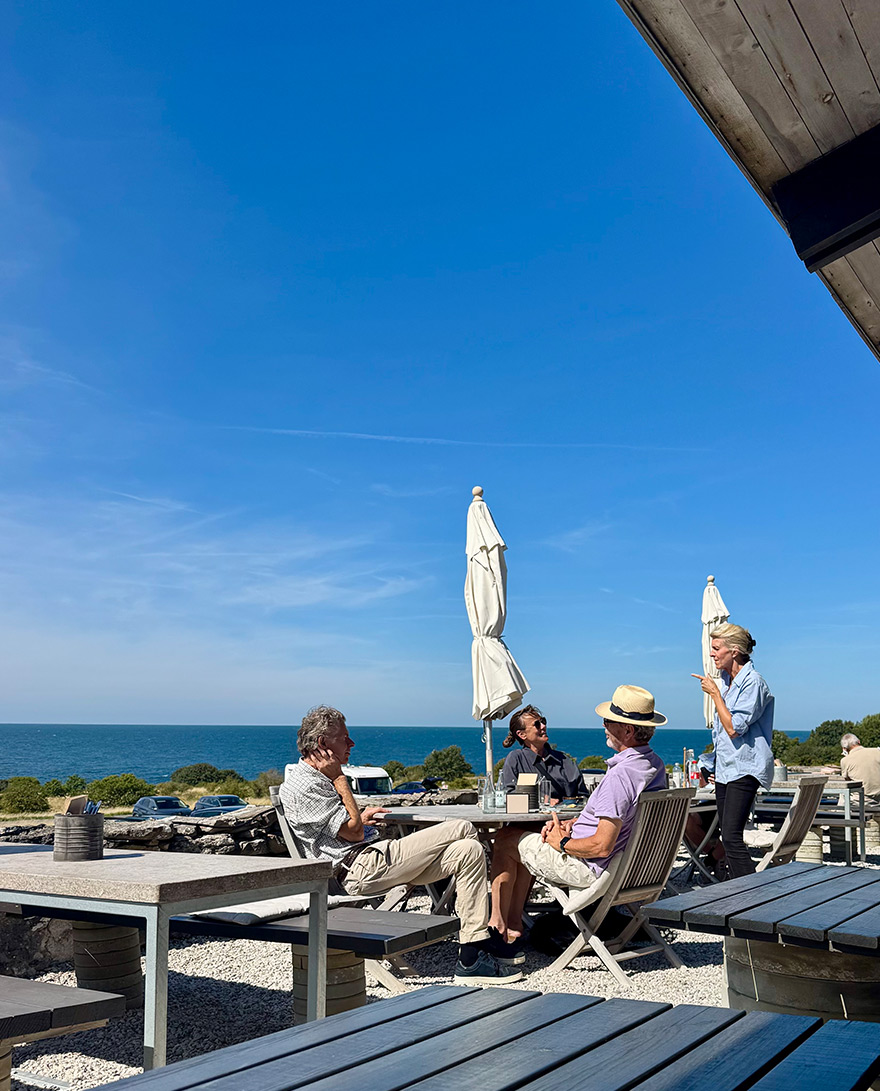
Why visit the Stockholm islands?
The Stockholm islands make a great addition to a Stockholm summer trip, giving you three different sides of Sweden. Grinda offers pine forests, beaches and a slower, back-to-nature feel, while Sandhamn is livelier, with sailing boats filling the harbour, boutiques, cafés and restaurants. The boat journeys are part of the appeal too, passing red wooden cottages, rocky islets and private jetties as you move between islands. Adding Gotland takes the trip in another direction again, with medieval Visby, wide stretches of countryside, empty beaches, limestone farmhouses, art galleries, ceramics studios and some seriously good restaurants. Put together, it is a summer itinerary that feels stylish and varied but also relaxed and outdoorsy.
See our full guide to Stockholm here.