Overview of our trip
The Alentejo is a vast, predominantly rural region of Portugal, stretching south from the Tagus River to the Algarve. It is known for its wide-open countryside, gently rolling plains, vineyards, olive groves, cork-oak forests and peaceful whitewashed villages.
Évora is one of the region’s most beautiful and historically important towns. Located in the central Alentejo, around 130 kilometres east of Lisbon, it has a wonderfully preserved old centre enclosed by medieval walls. Roman ruins, Gothic churches, tiled palaces and cobbled streets sit within an area compact enough to explore comfortably in a day.
We based ourselves at São Lourenço do Barrocal, a beautifully restored farm estate in the north-eastern part of the Alentejo, close to the Spanish border. The hotel is around a 50- minute drive from Évora, so we visited the city for the day, stayed for dinner and then returned to the estate that evening.
When to visit
We visited in June, which felt like an ideal time to explore the Alentejo. The days were warm and sunny without being unbearably hot, the countryside still had plenty of colour. Évora was lively without feeling overwhelmed by summer crowds. July and August can be extremely hot, so late spring or early autumn would also be good options if you plan to spend plenty of time walking.
Stay
SÃO LOURENÇO DO BARROCAL
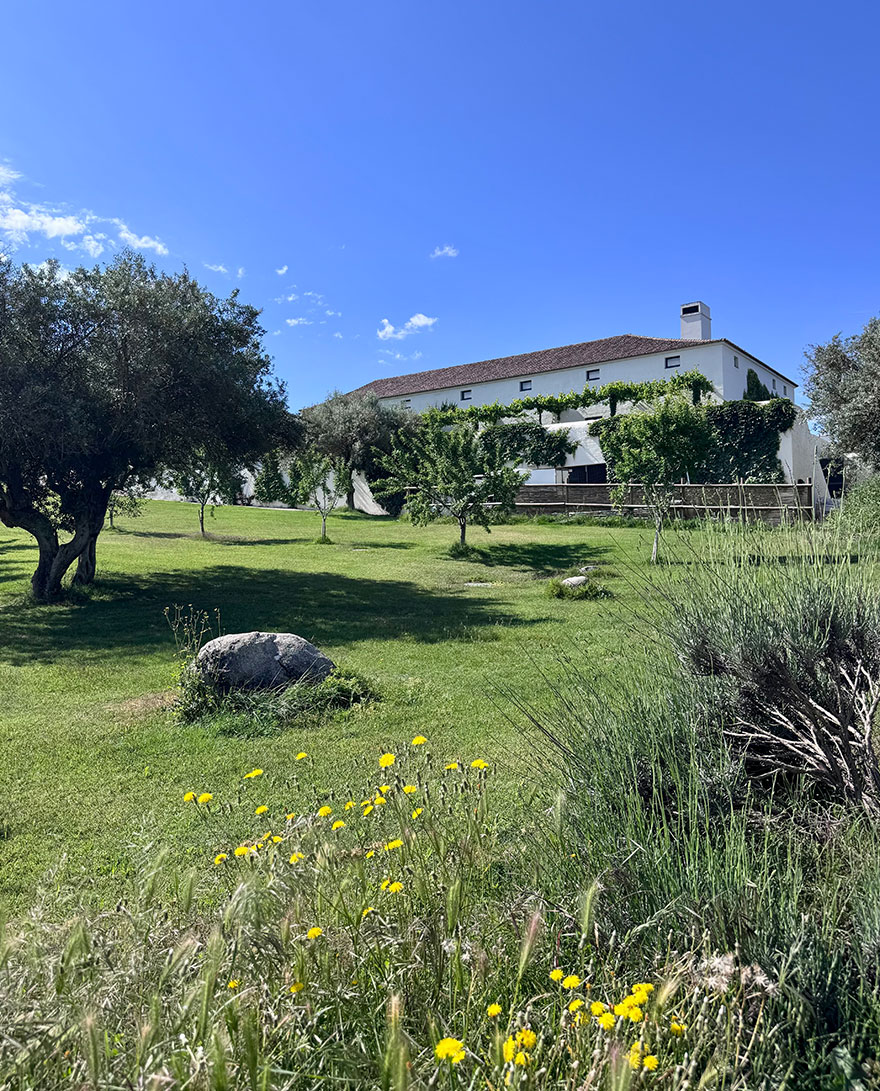
São Lourenço do Barrocal is a beautifully restored farm estate set within 780 hectares of vineyards, ancient olive groves, forests and wildflower meadows. Around 50 minutes drive from Évora, and 90 minutes from Lisbon, it works well as a peaceful country stay combined with either destination. The property has belonged to the same family for more than two centuries and was carefully revived by eighth-generation owner José António Uva, reopening as a hotel in 2016 after a decade-long restoration.
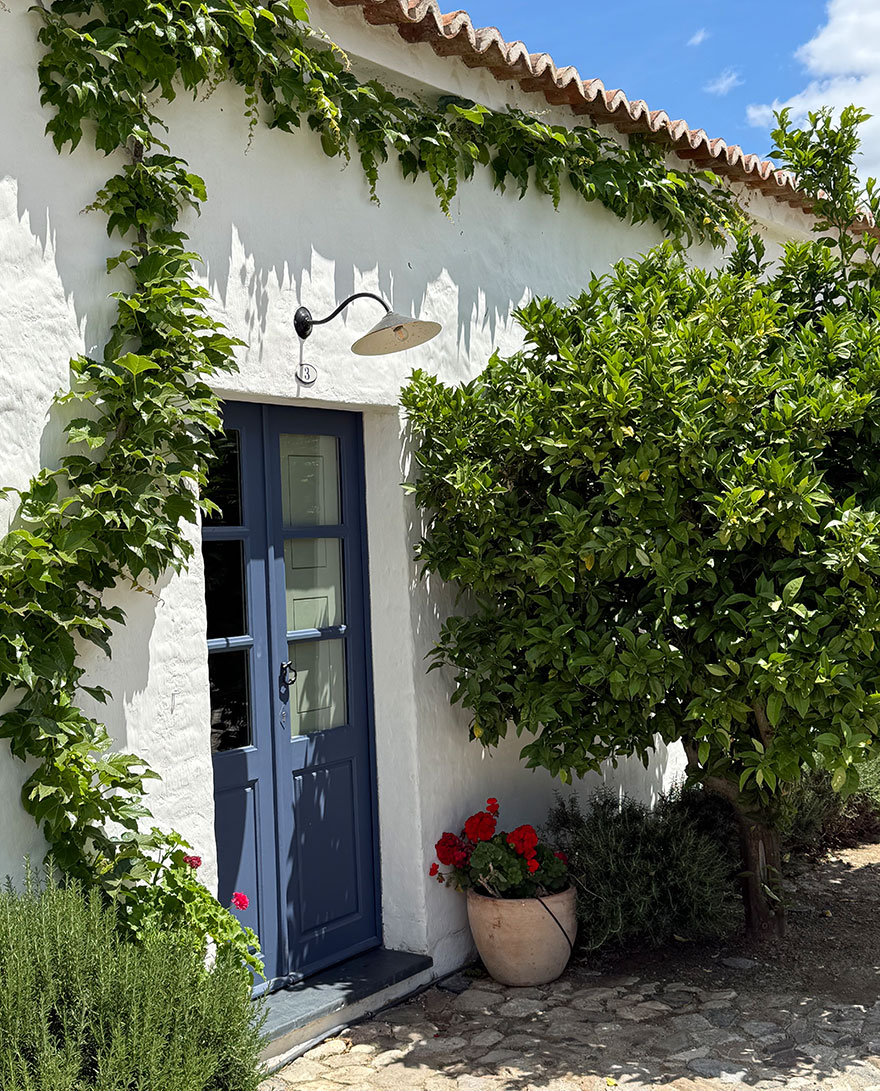
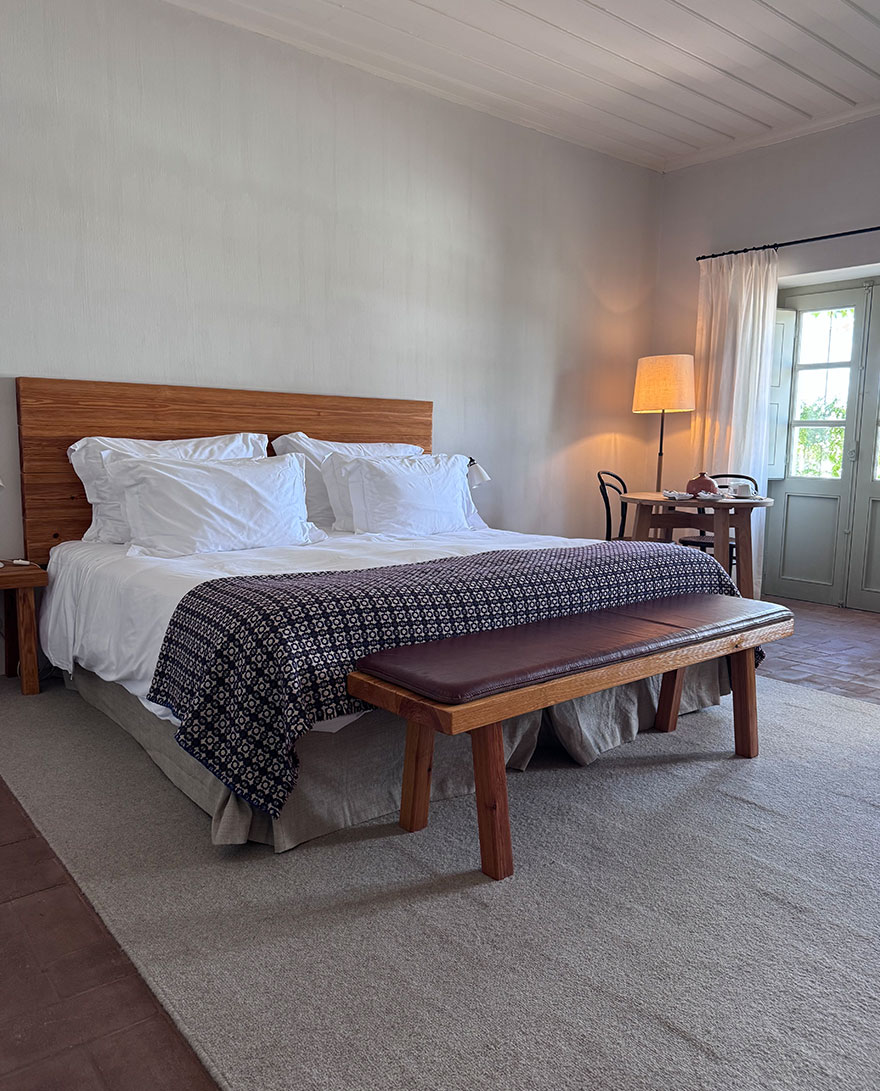
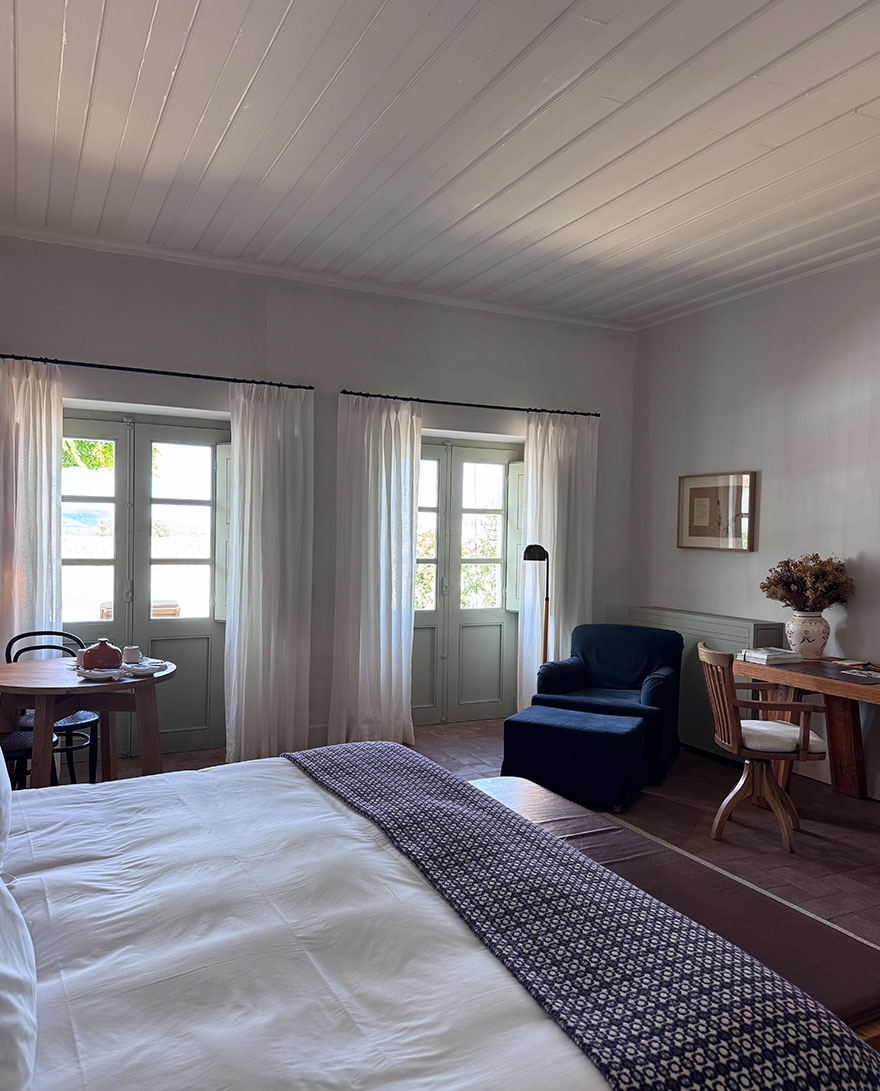
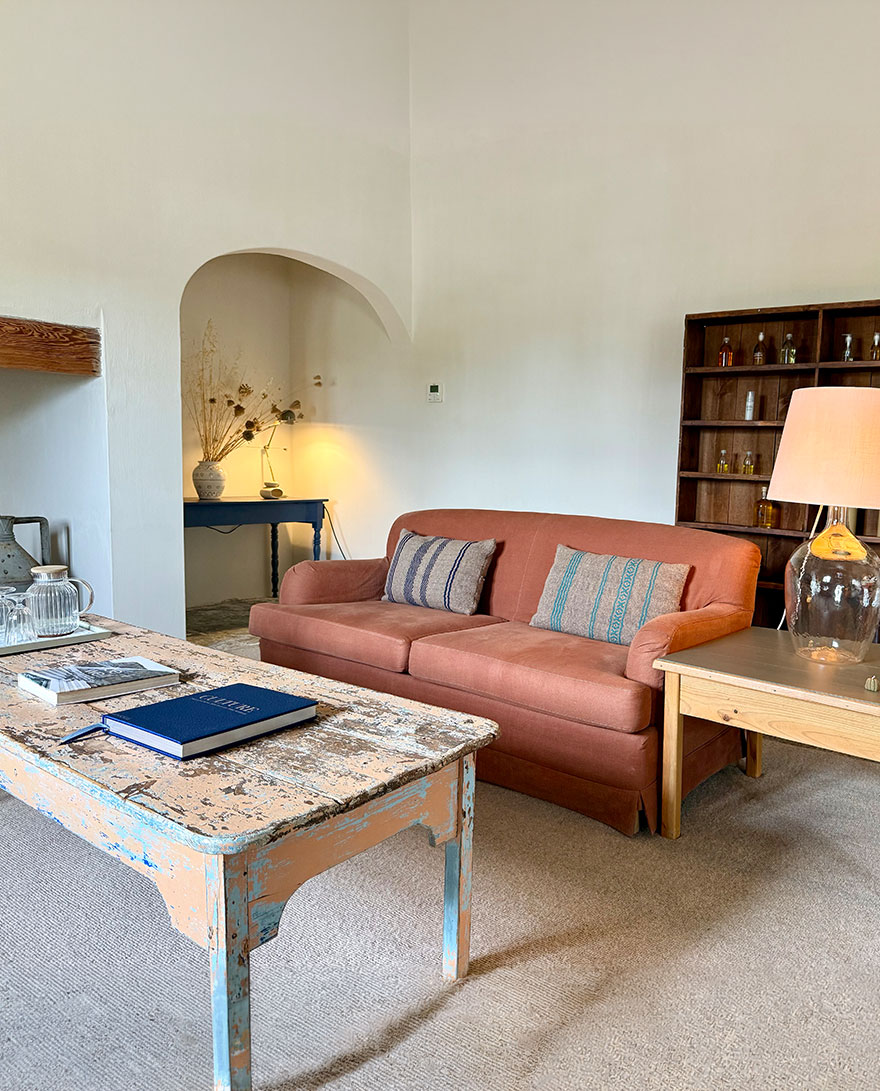
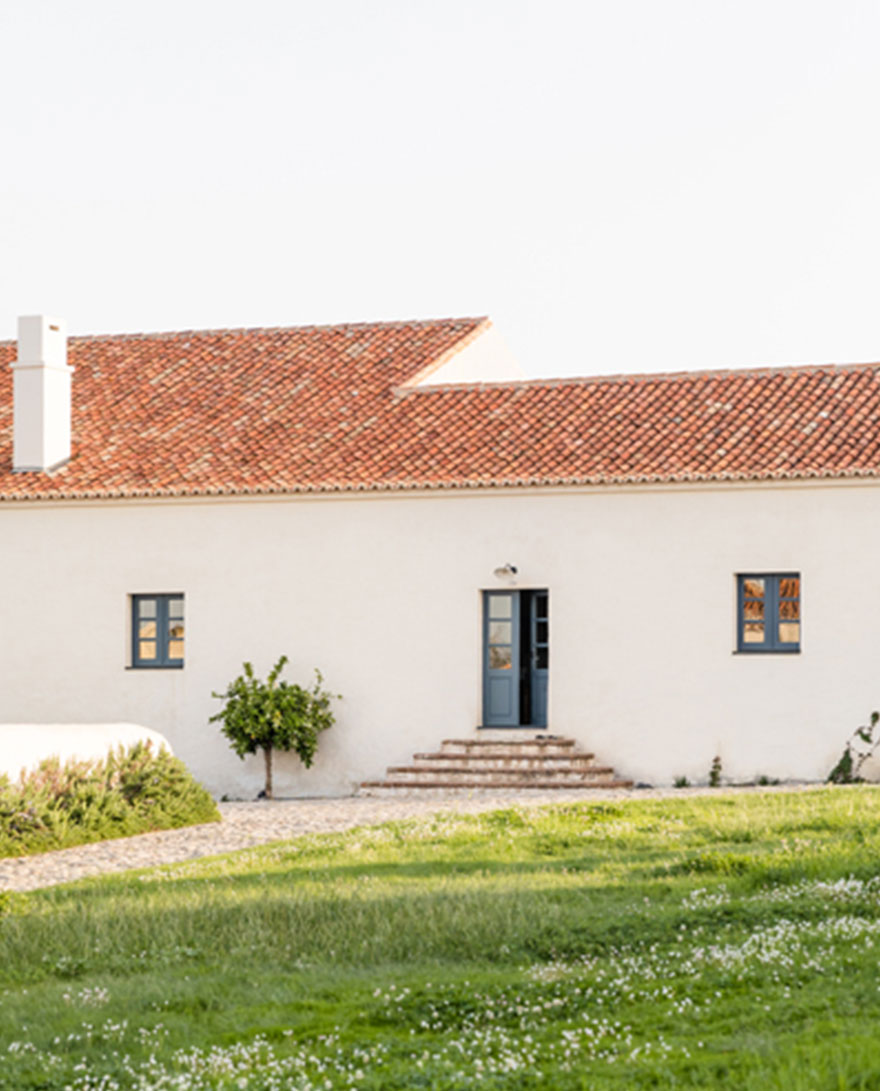
Portuguese architect Eduardo Souto de Moura sensitively updated the estate’s original farm buildings, preserving their low whitewashed walls, terracotta roofs and cobbled courtyards. It feels more like a small Alentejo village than a conventional hotel. Interiors are simple and warm, using stone floors, natural wood, woven fabrics and soft shades of oatmeal and terracotta. Sepia photographs, handwritten recipes, antique tools and family furniture add a sense of history. Service was exceptional: friendly, personal and relaxed, with a young team who seemed genuinely enthusiastic about the estate.
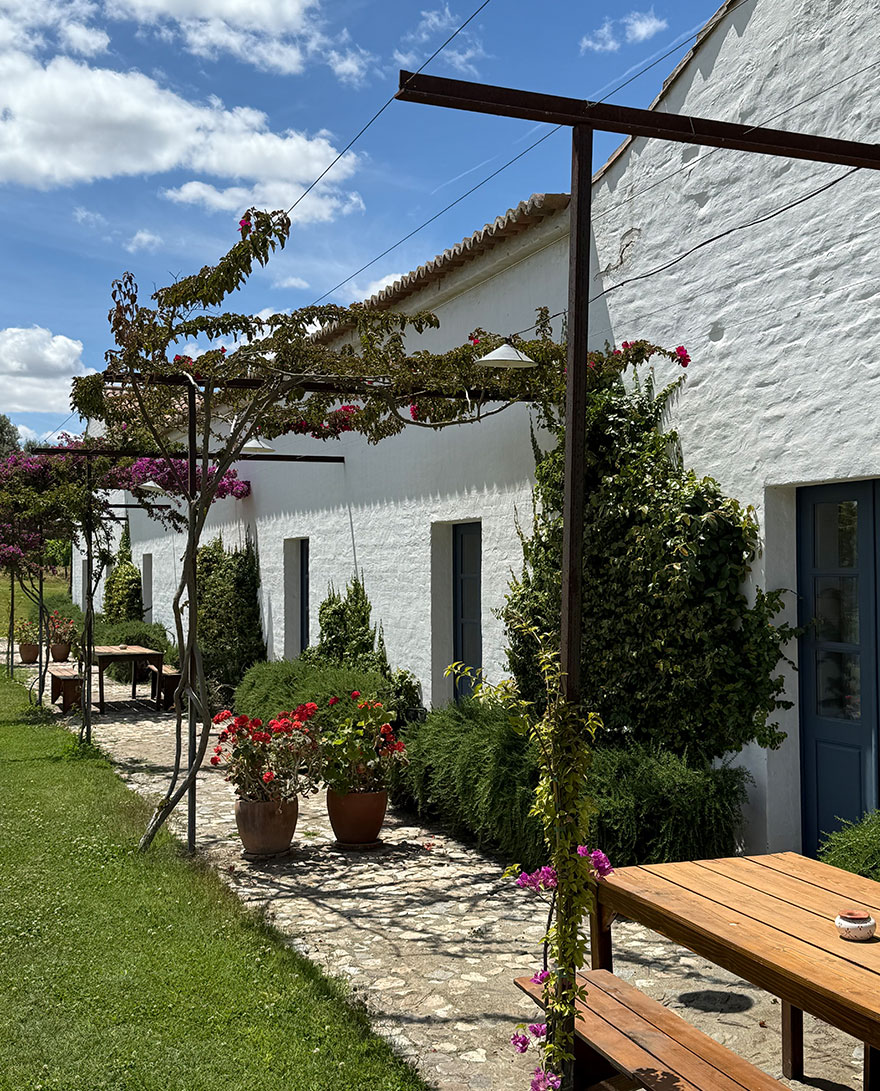
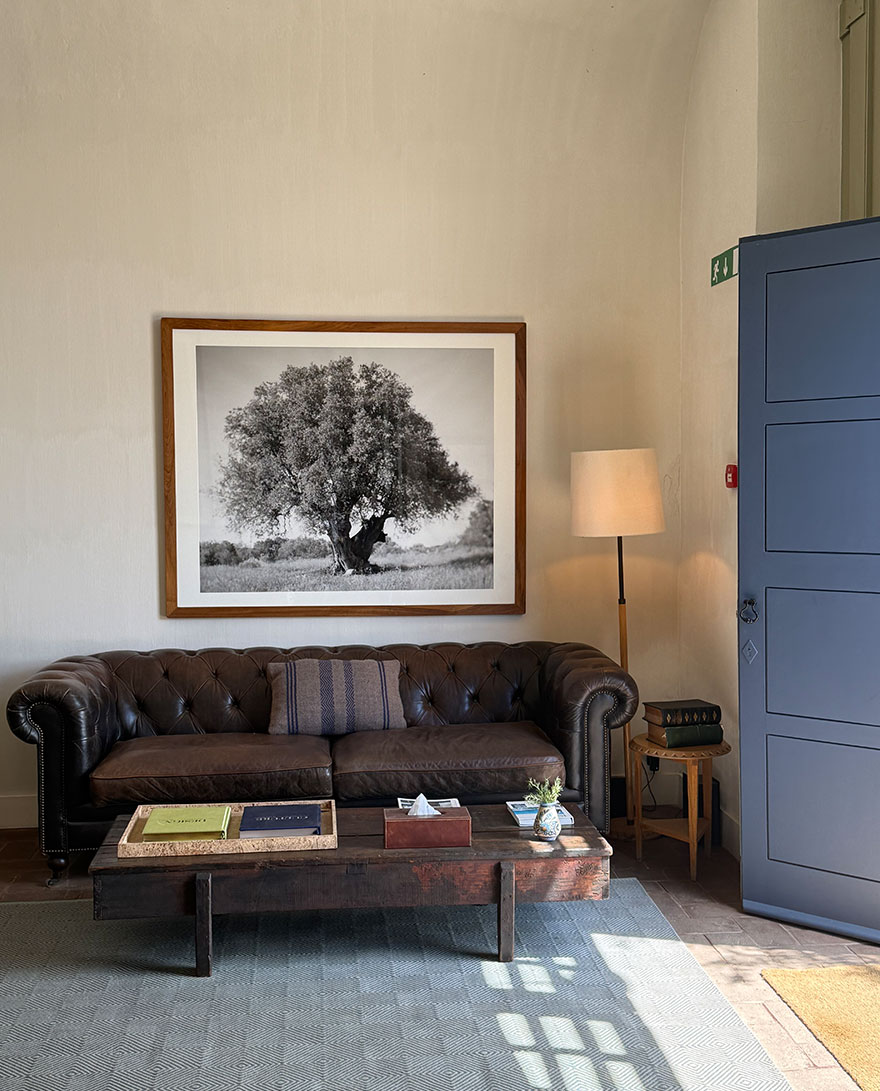
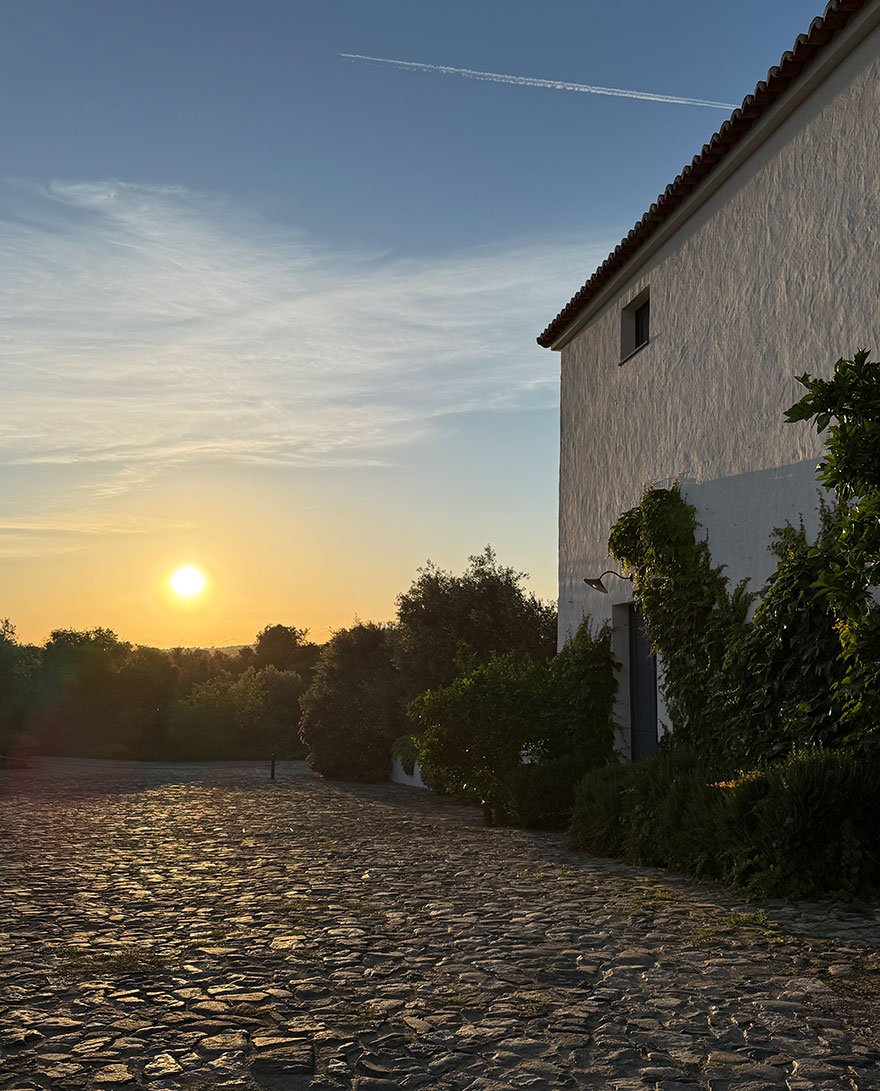
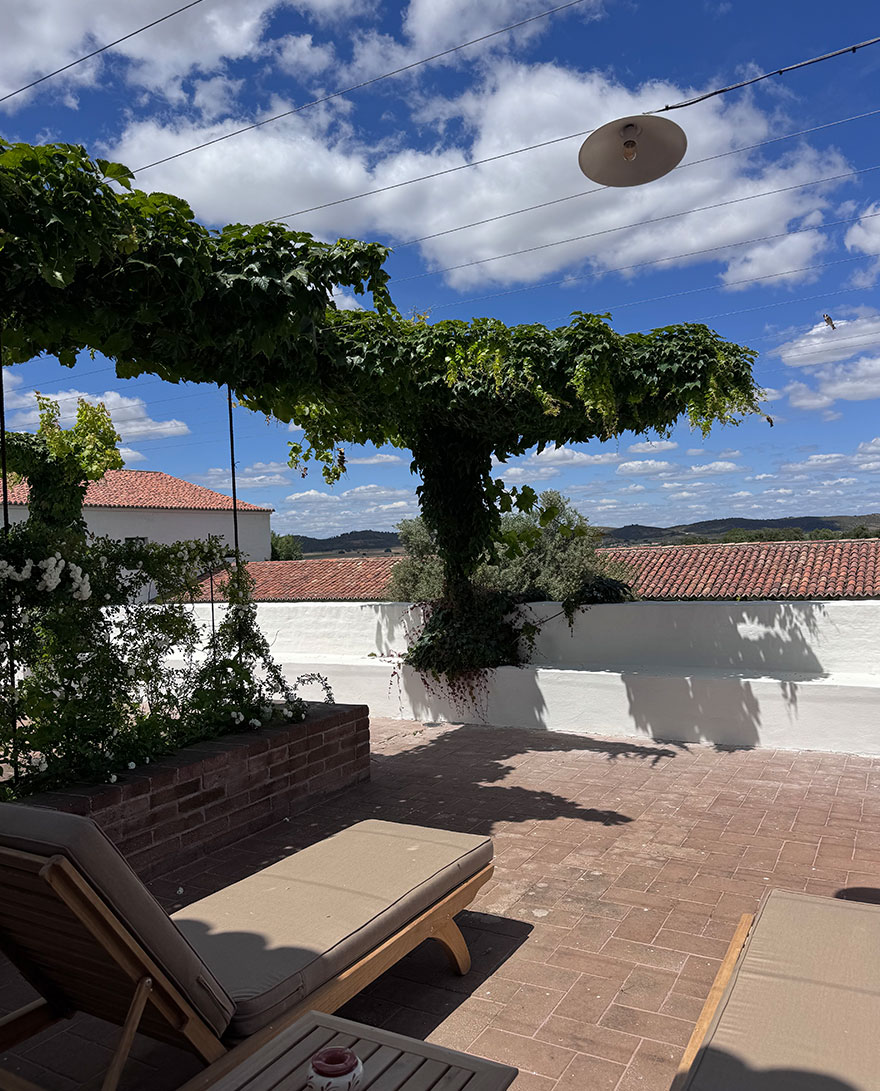
The 22 Farm, Winery and Courtyard rooms are spacious and calming, with handwoven blankets and simple but elegant furniture. We stayed in a Farm Room with its own terrace and sunbeds overlooking the countryside. There are also 16 cottages sleeping four or six, each with a kitchen, dining area and plenty of space, making them a good option for families or longer stays.
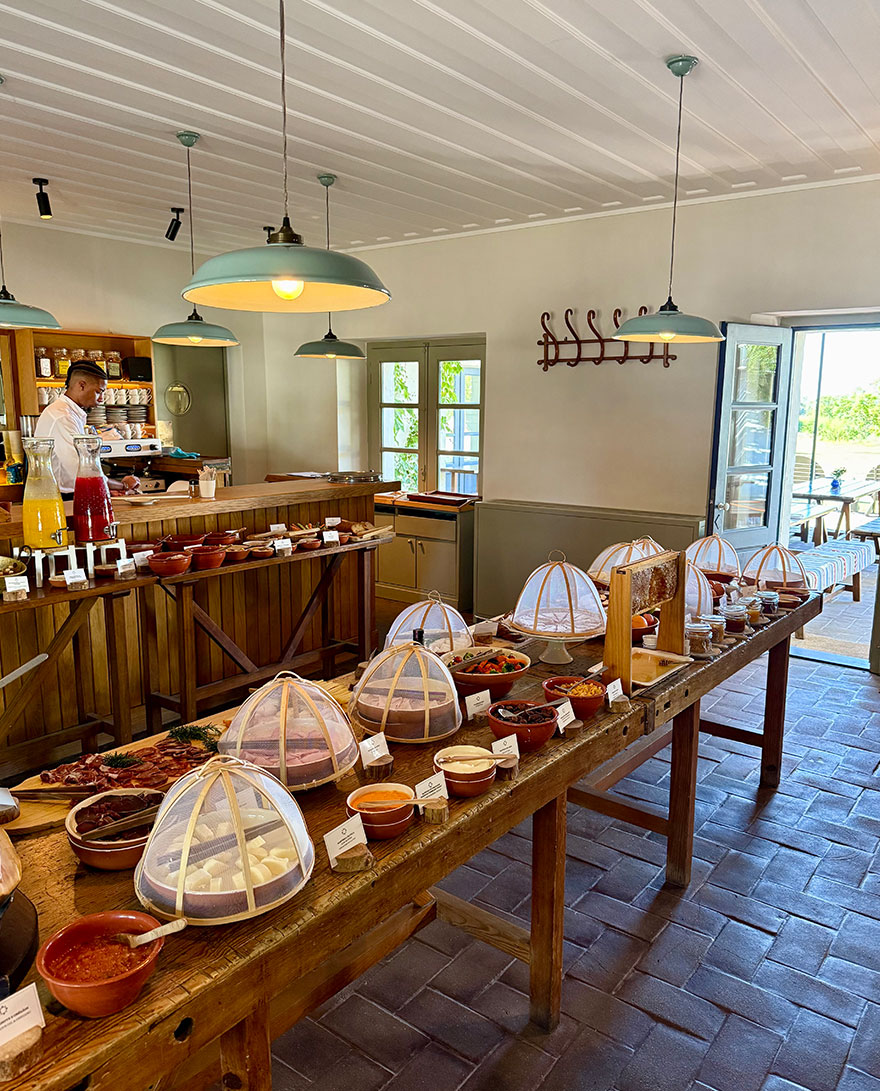
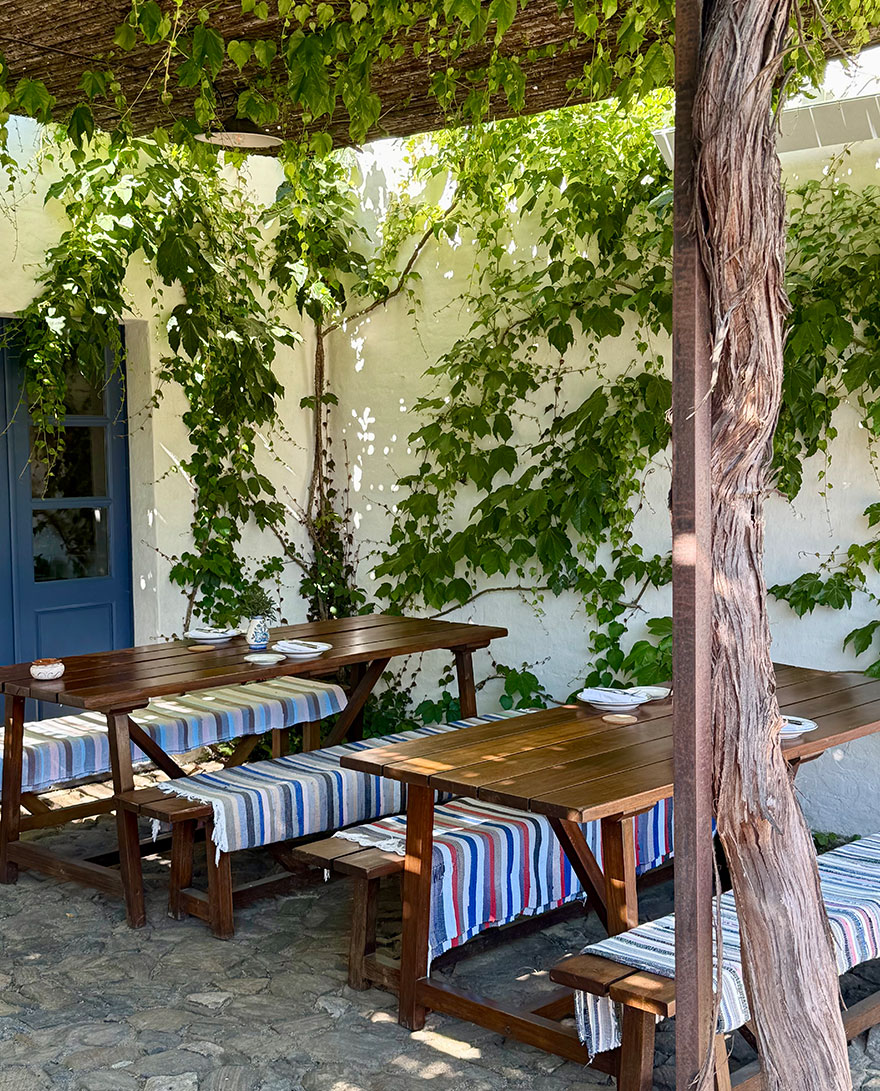
As an organically certified working farm, the estate grows and produces much of what appears on the menus of the different dining options. The main São Lourenço do Barrocal restaurant is set in an old farm building, with terracotta floors, timber furniture, ceramics and family mementos creating a relaxed country feel. Its menu takes traditional Alentejo ingredients and presents them in a fresh, unfussy way. We had dinner here as well as the extensive breakfast buffet, with excellent breads, pastries, fruit plus local cheeses and hams. In summer, meals can also be enjoyed on the garden terrace.
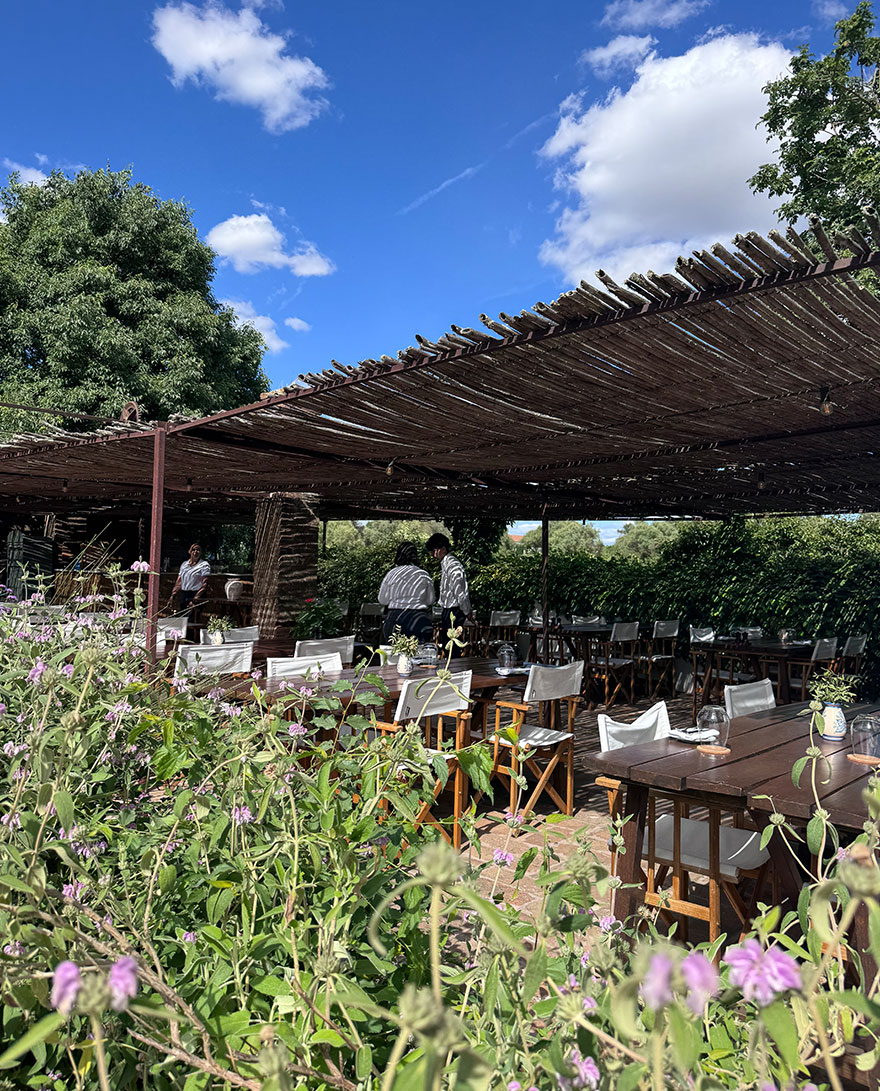
Hortelão is the informal seasonal restaurant beside the pool and kitchen garden. Vegetables are picked nearby and cooked over the grill alongside acorn-fed Alentejo pork and fish from the local lake.
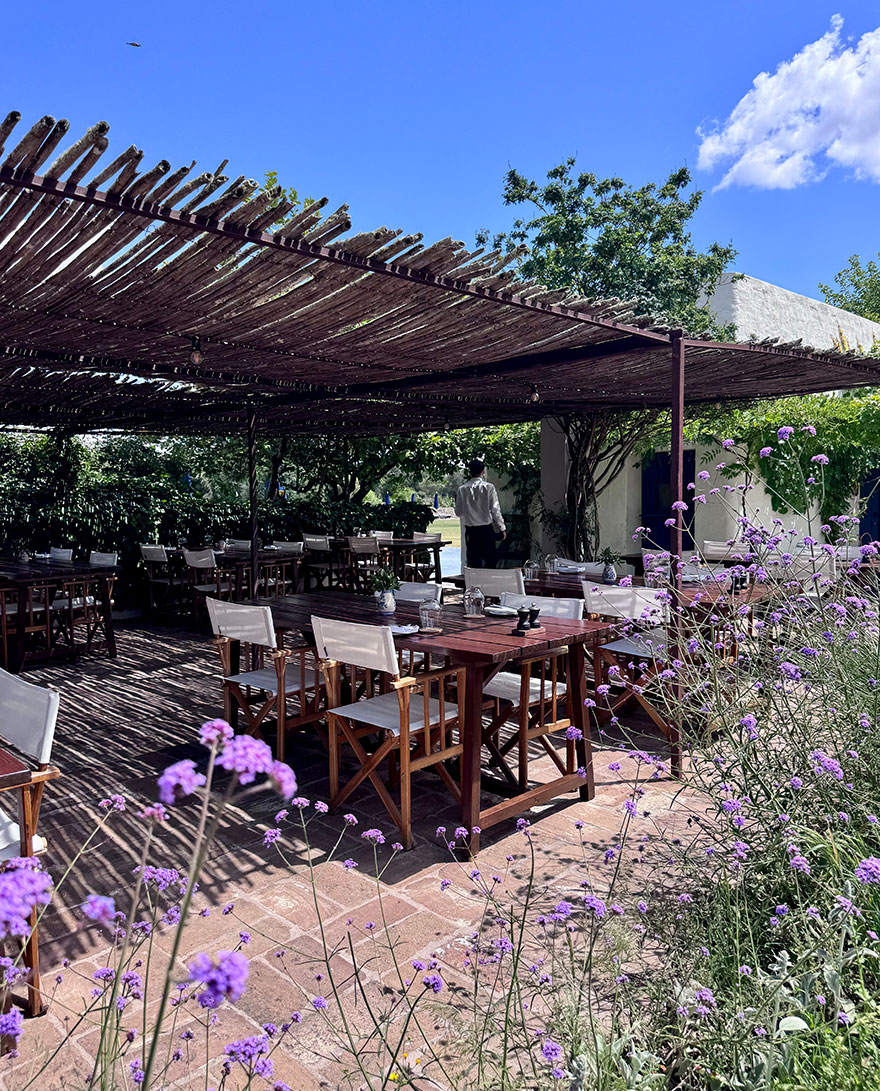
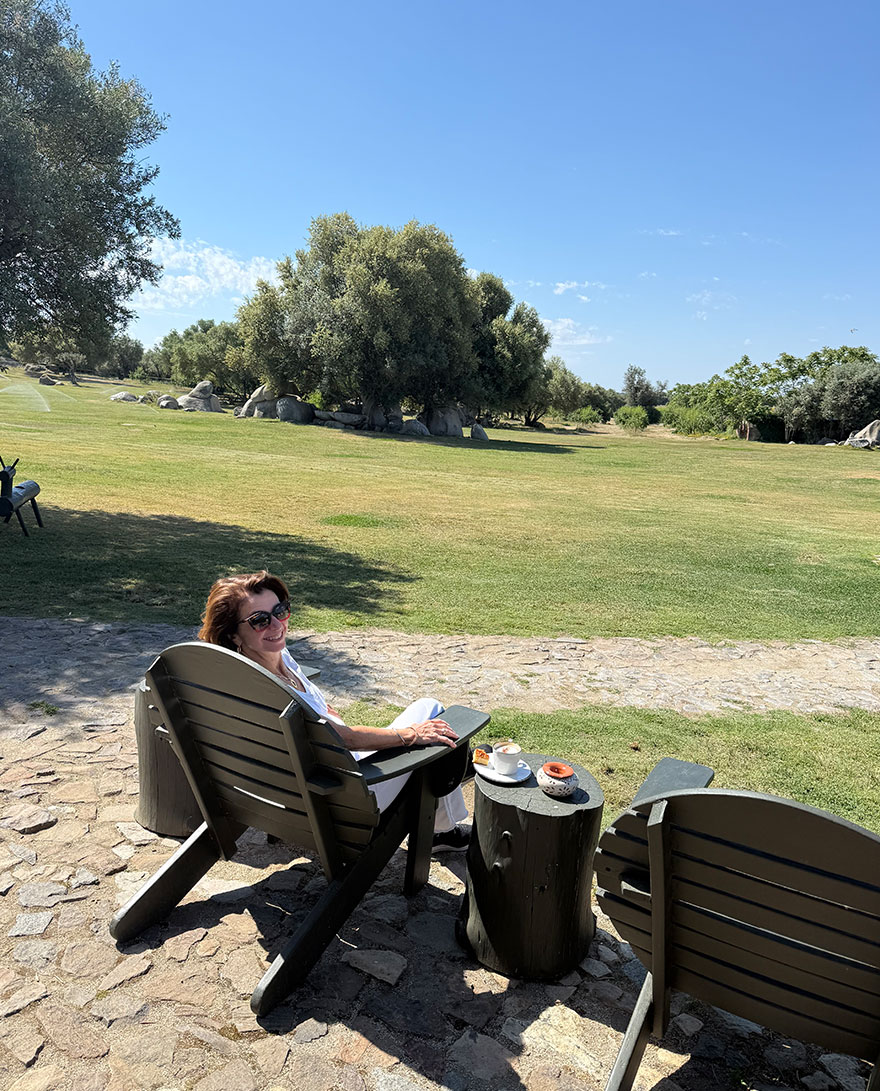
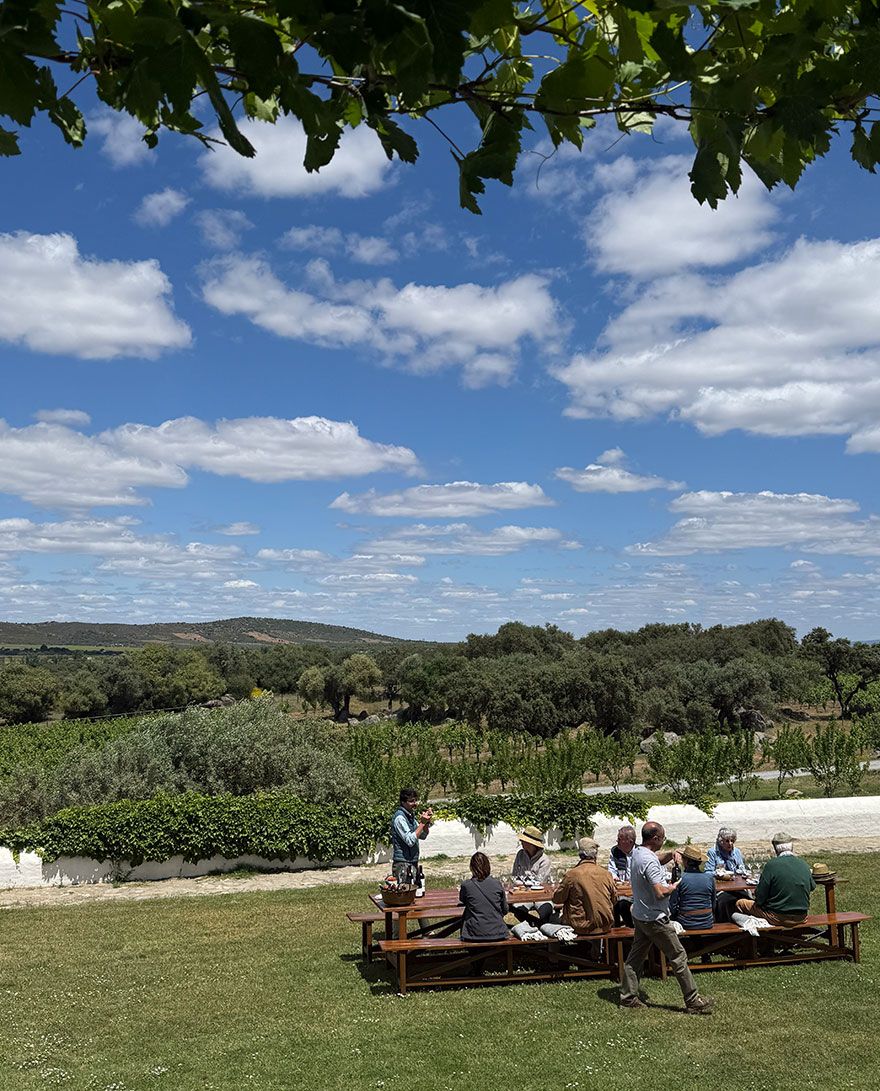
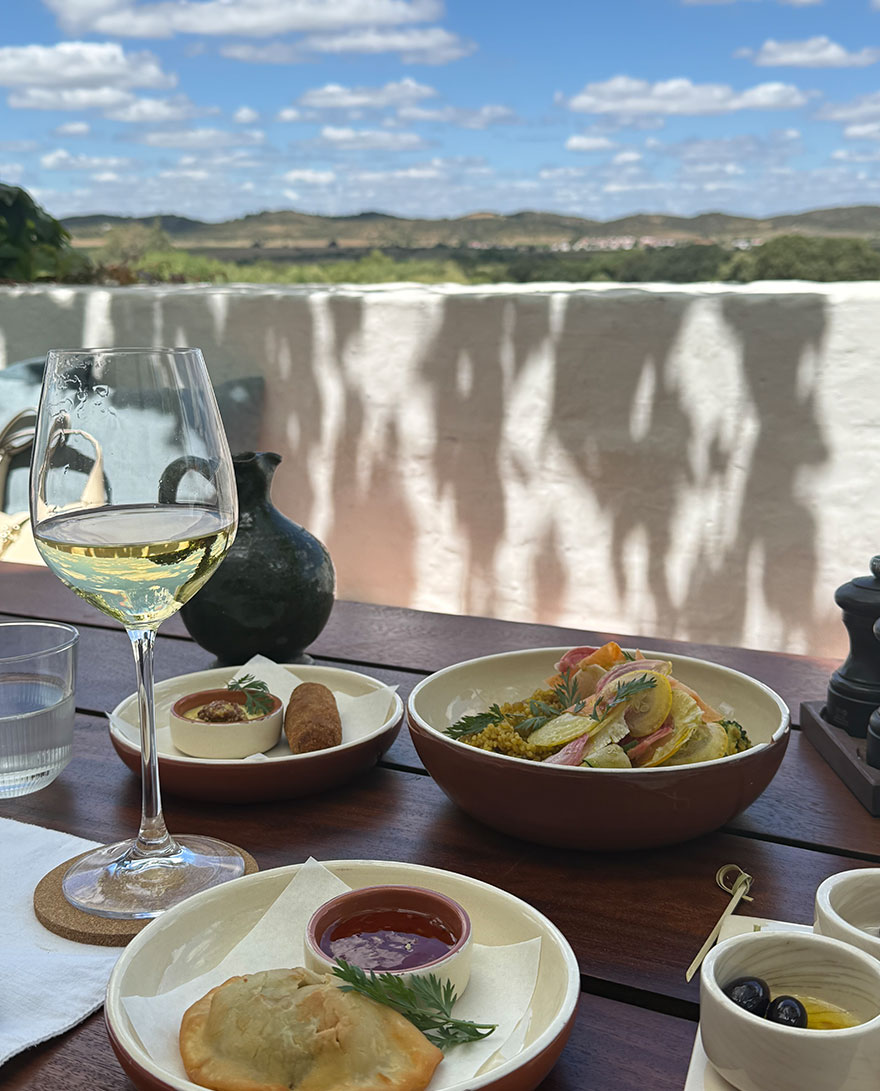
The main bar occupies the estate’s former olive-oil mill, with stone walls, leather chairs and a terrace looking across the fields. It is a lovely place for one of the estate’s wines, an Alentejo-inspired cocktail before dinner or a light lunch. We had a bite on the terrace, enjoying views of a group doing what looked like a fun wine tasting.
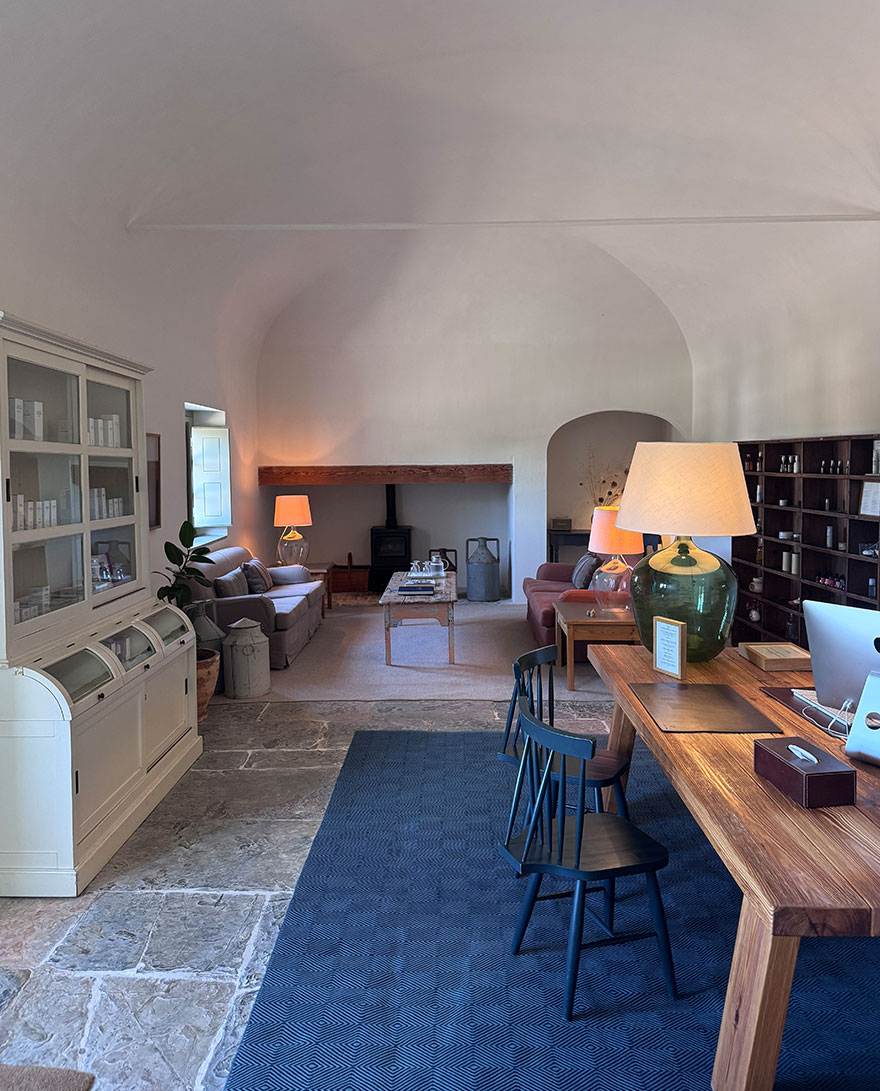
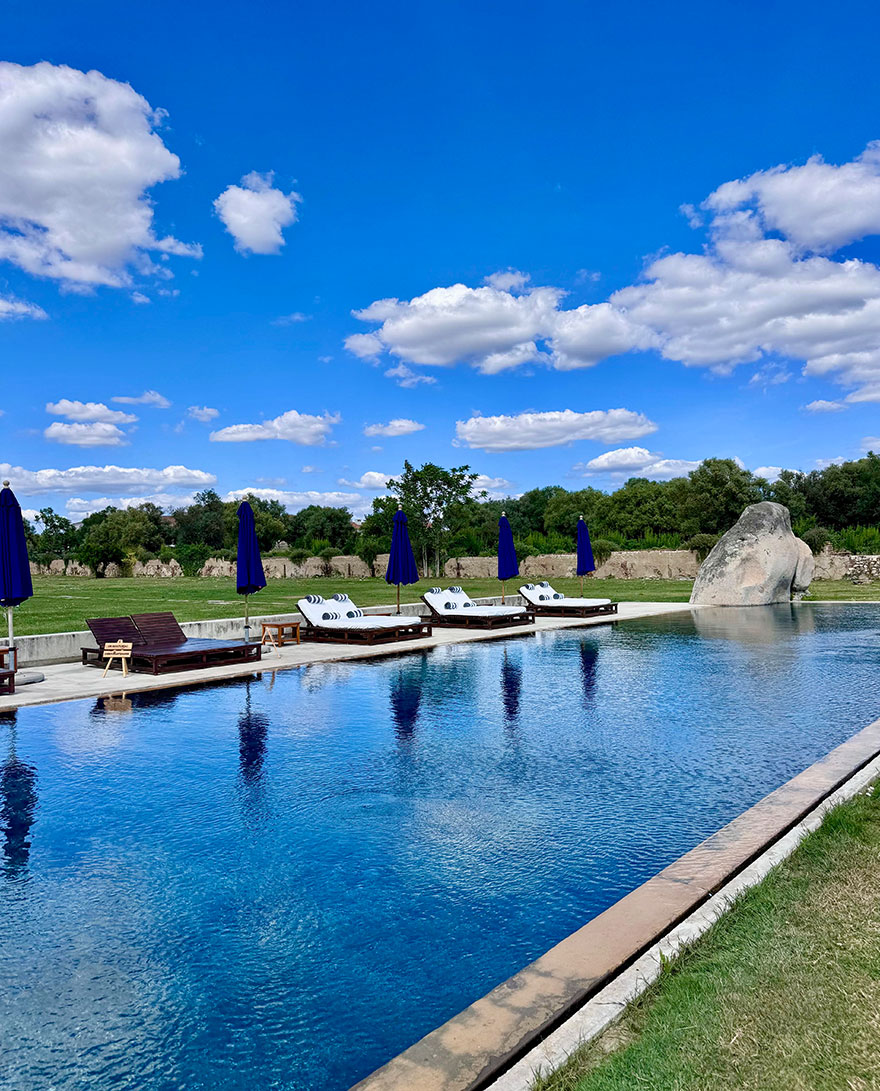
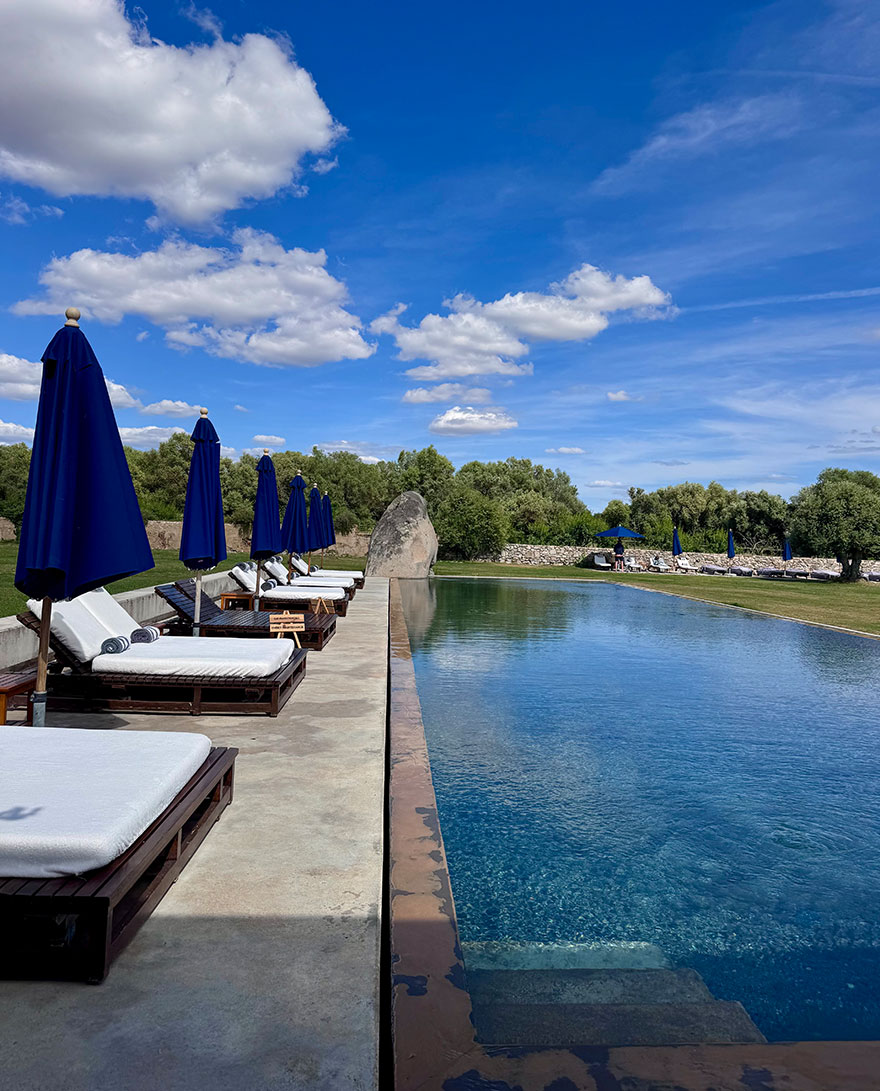
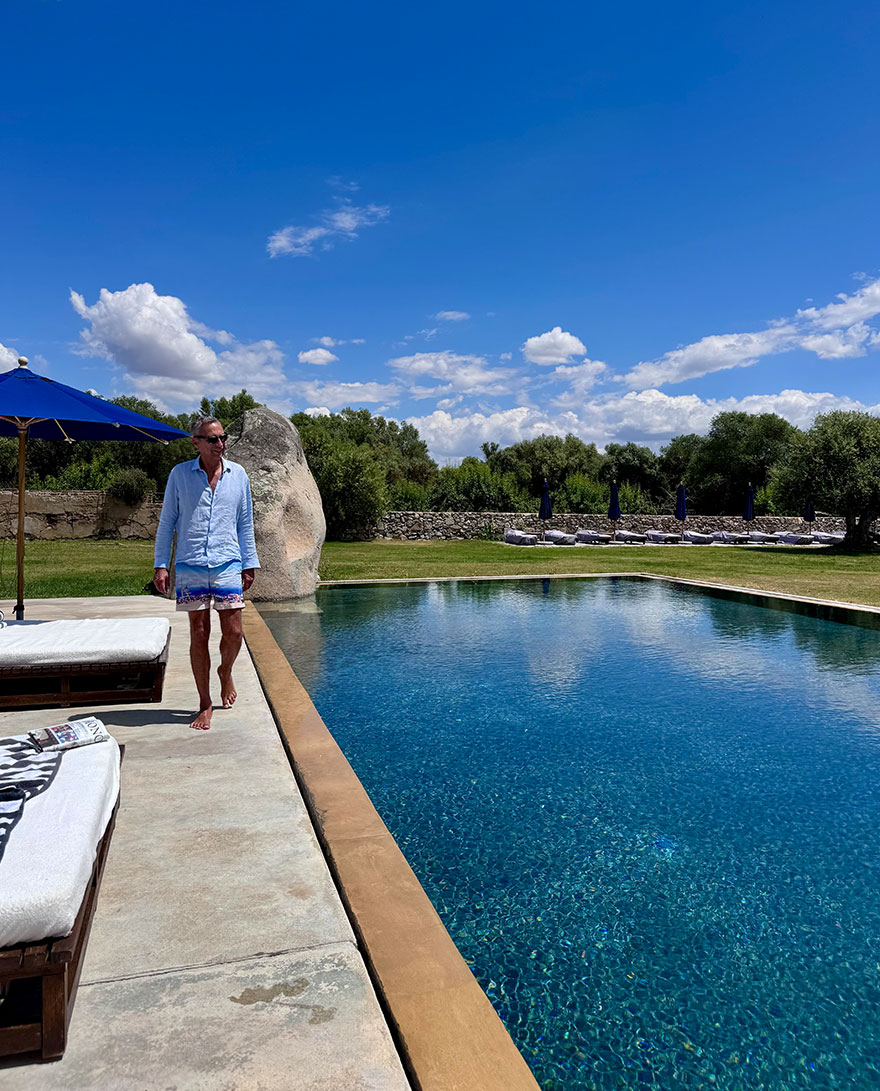
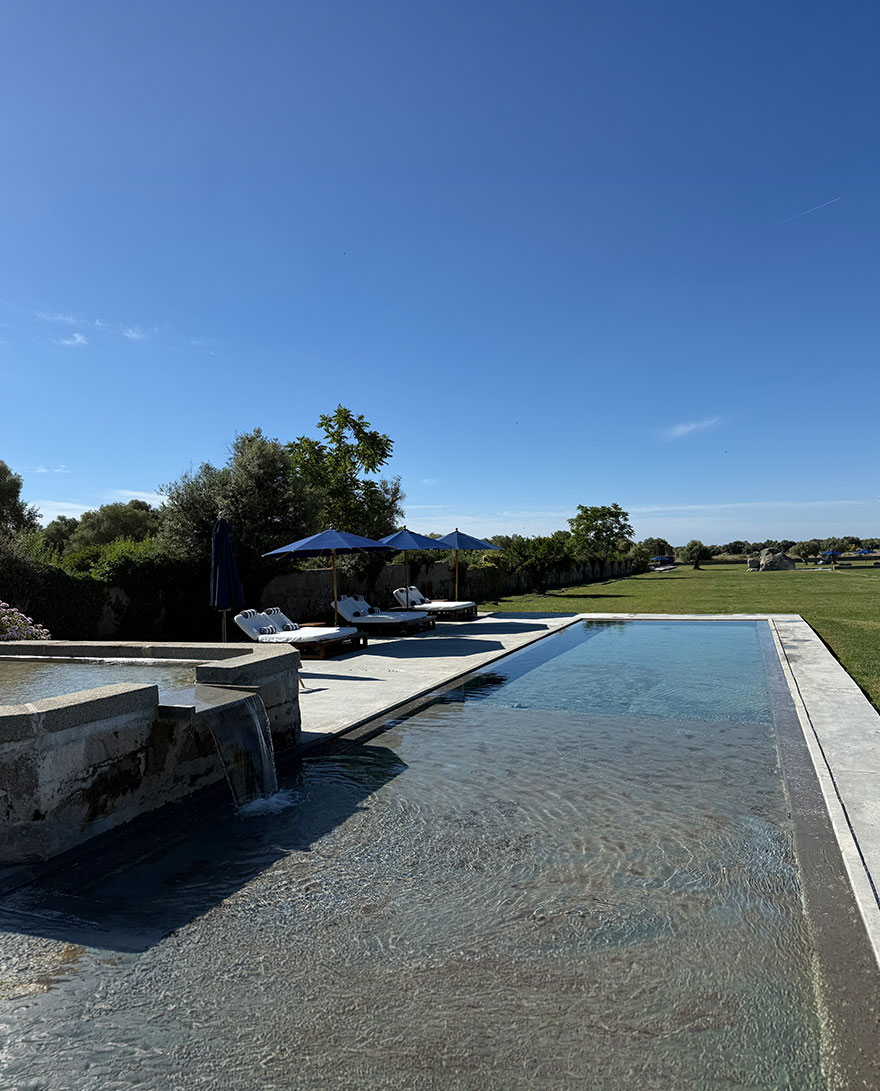
Two outdoor pools sit within the estate’s huge gardens. The larger one is surrounded by lawns, trees and plenty of loungers, with views across the countryside. A second smaller pool offers another peaceful place to swim or read in the shade.
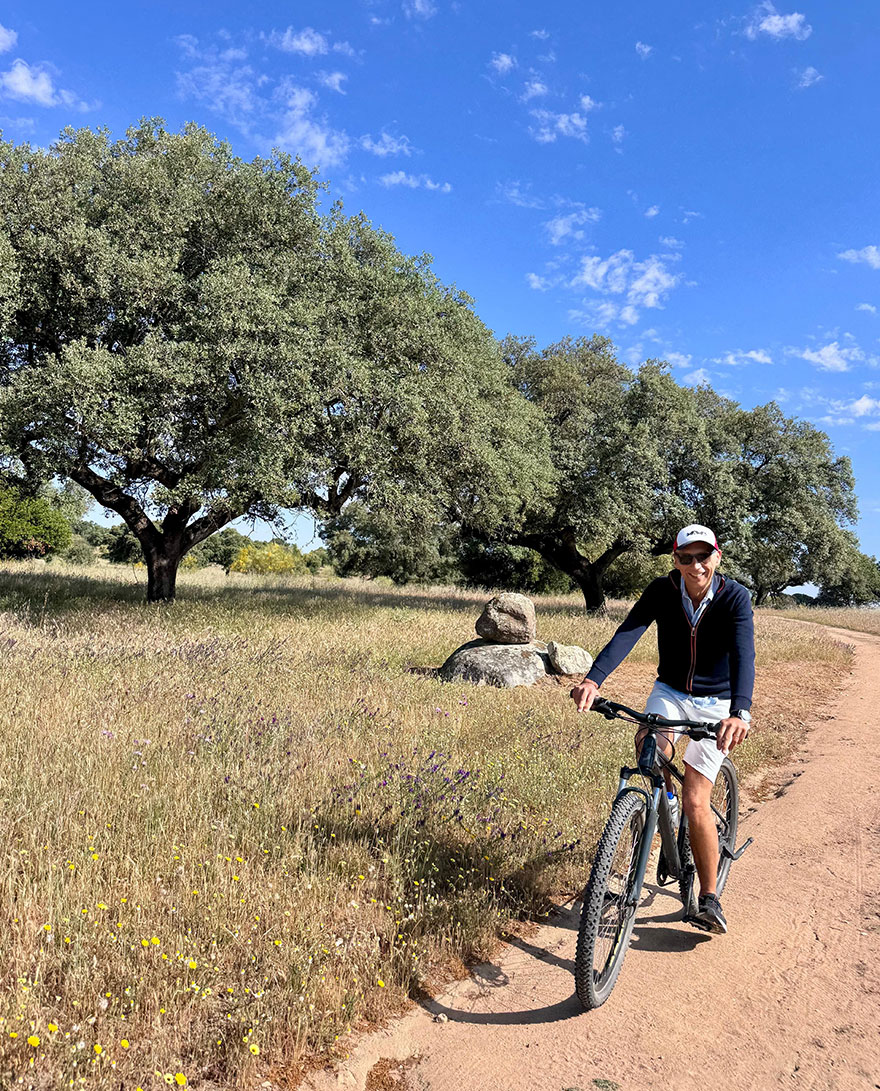
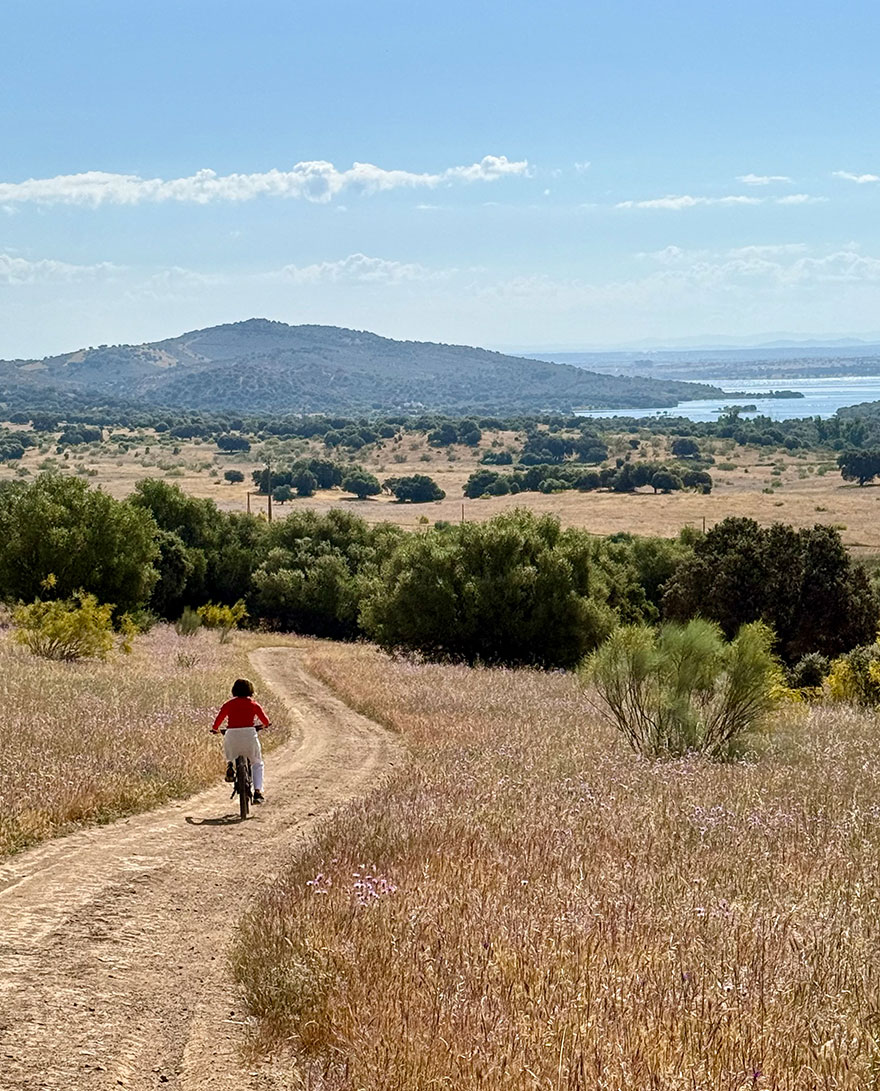
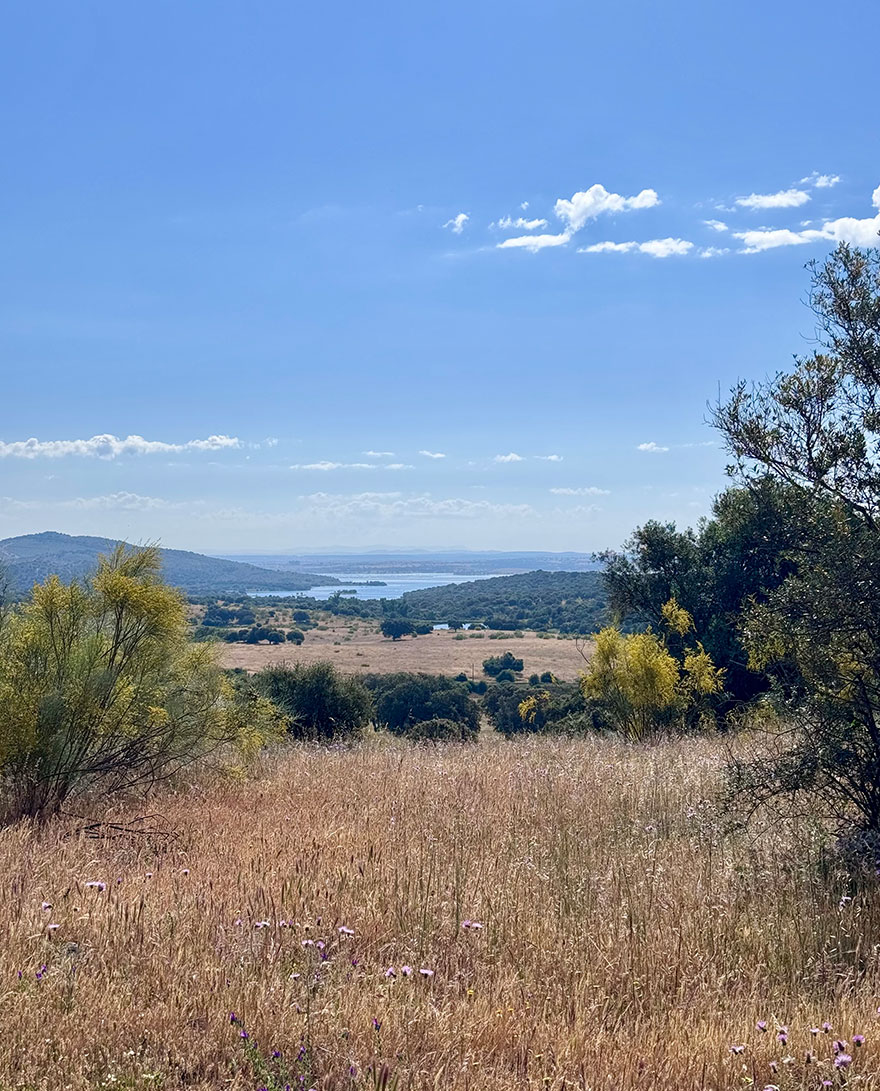
There is plenty to do across the estate, which can be explored on foot, by bicycle or on horseback. We followed a scenic cycling route through the vineyards, olive groves and open countryside. The hotel also organises wine tastings, stargazing, foraging, beekeeping, flower arranging and ceramics workshops.
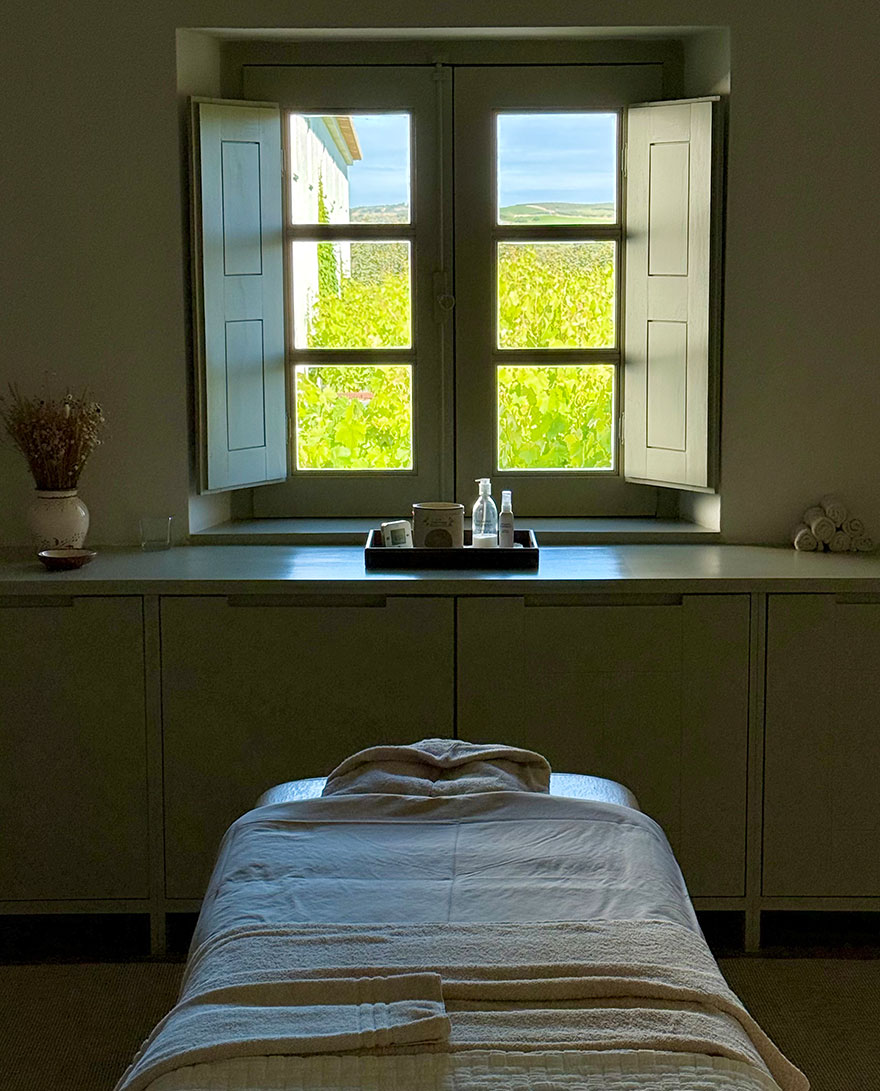
The Susanne Kaufmann spa is housed in another carefully converted farm building, where rustic stone and whitewashed walls create a peaceful setting for treatments. We both had wonderfully relaxing massages here, particularly welcome after exploring the estate by bike.
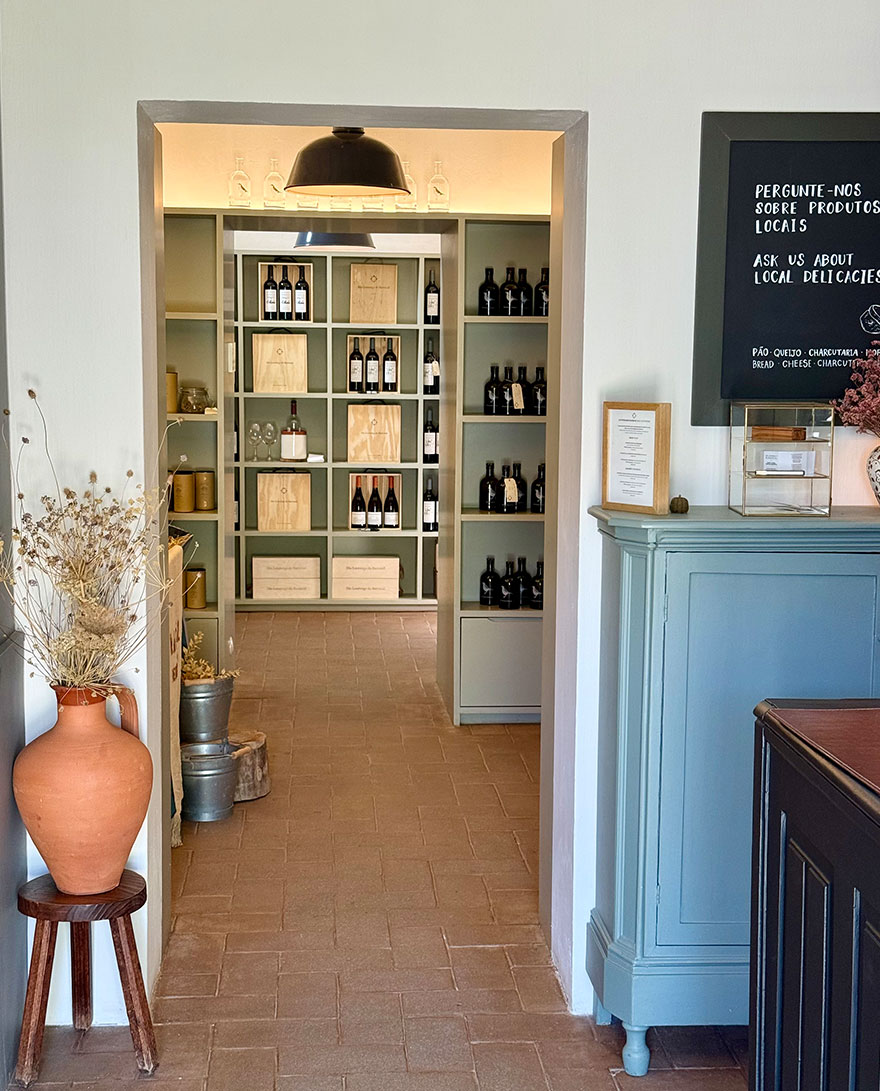
The little shop at São Lourenço do Barrocal is one of those places where it is very easy to leave with more than you planned. It brings together a lovely selection of pieces linked to the estate, from handwoven wool blankets, cushions and bags to ceramics, printed linen, stationery and simple homewares. There are also bottles of the estate’s wine and olive oil, honey and teas.
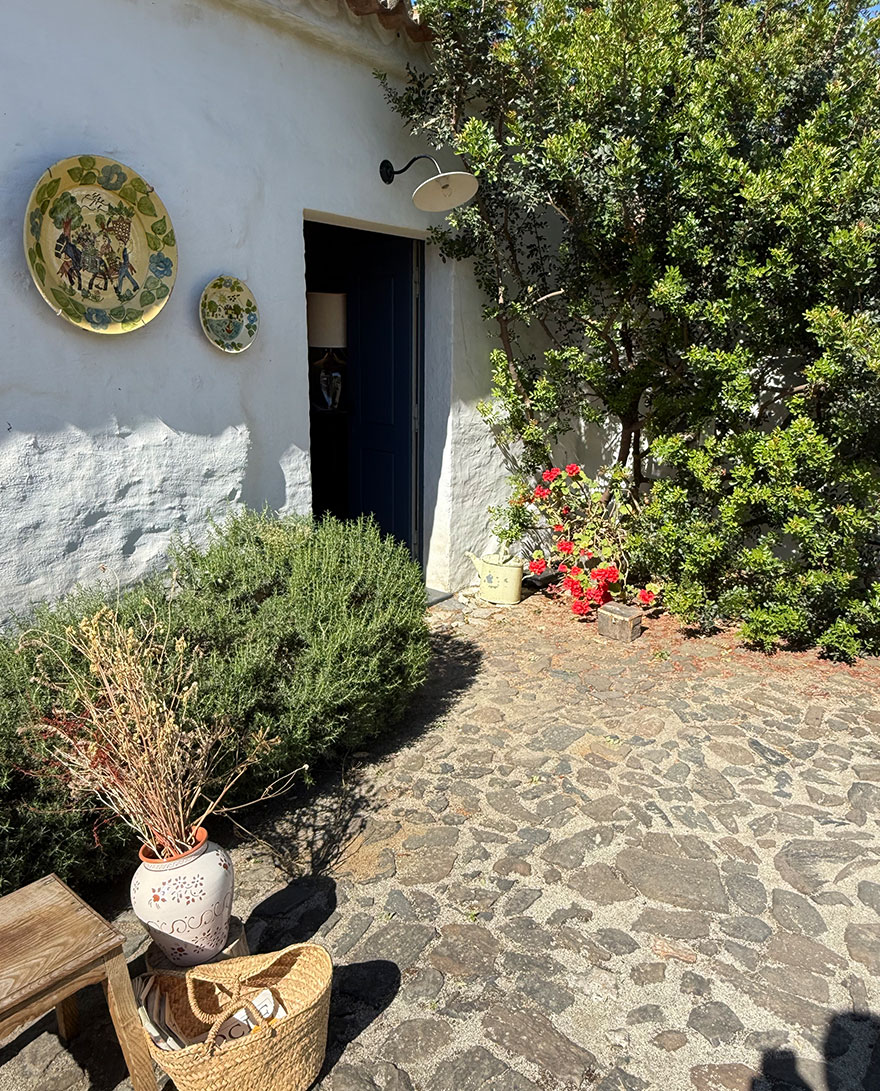
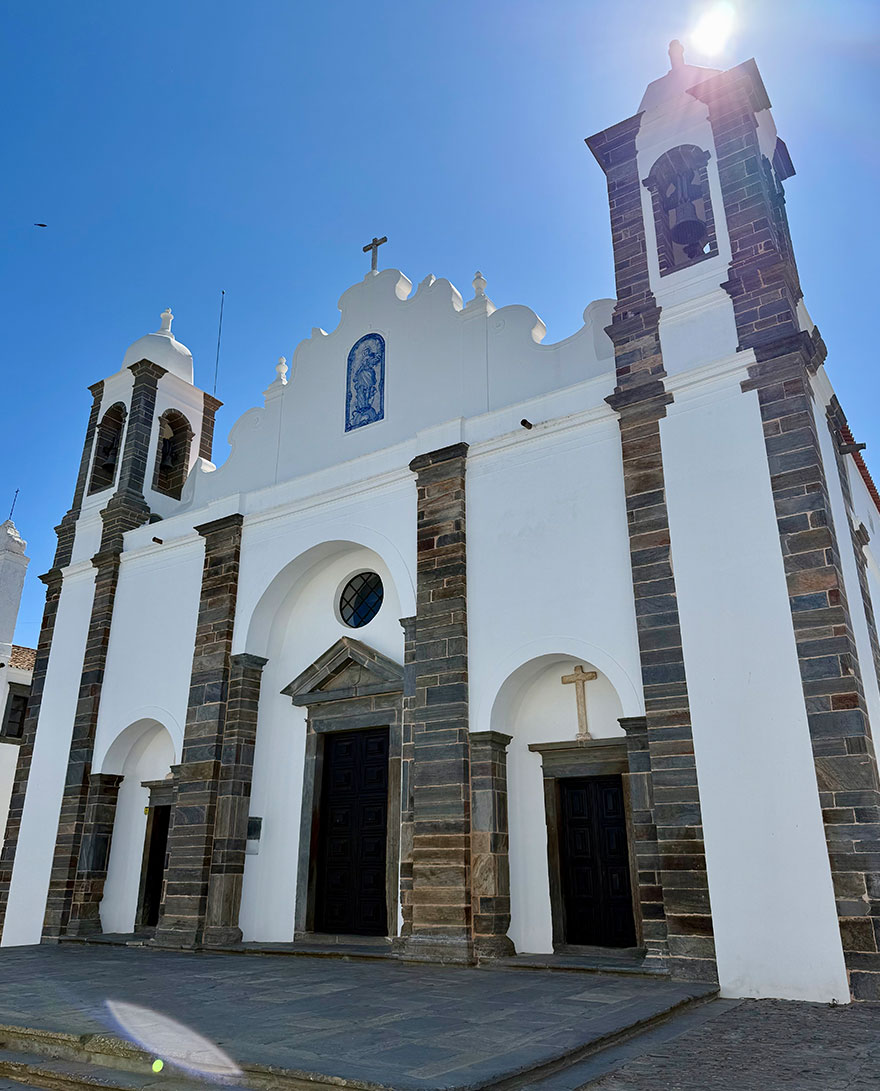
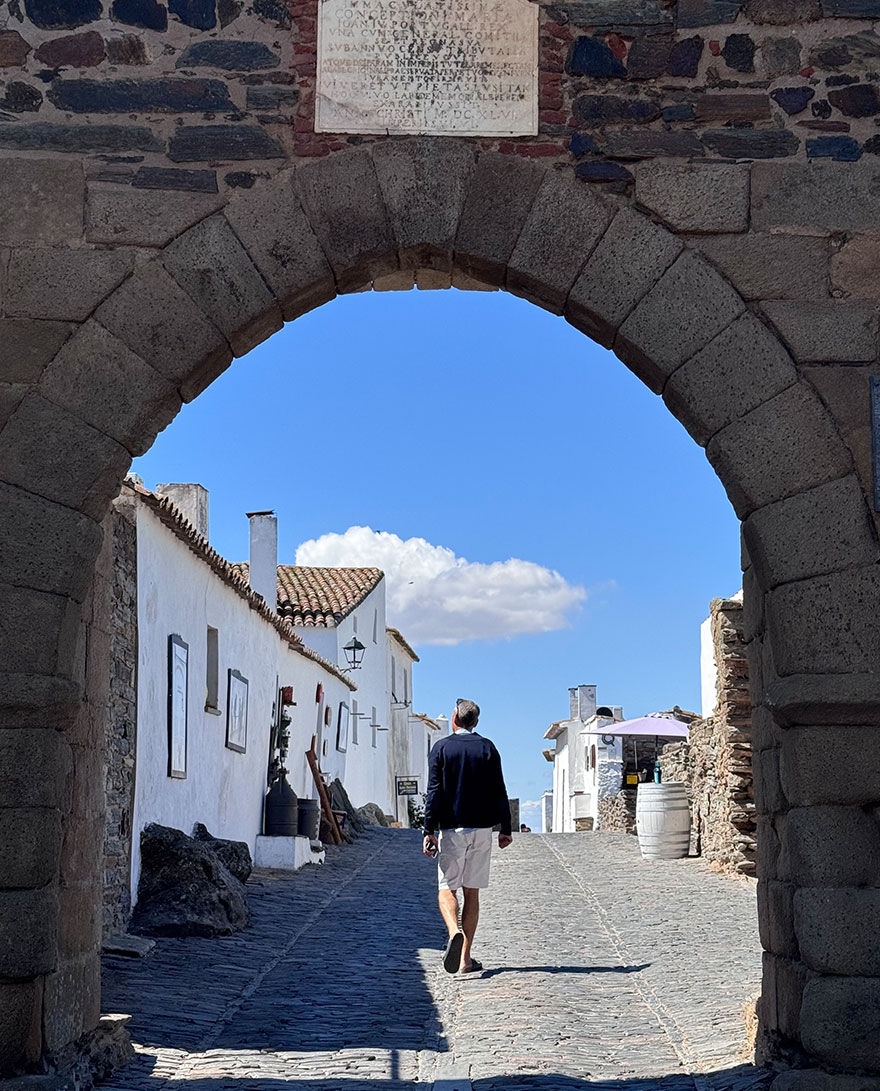
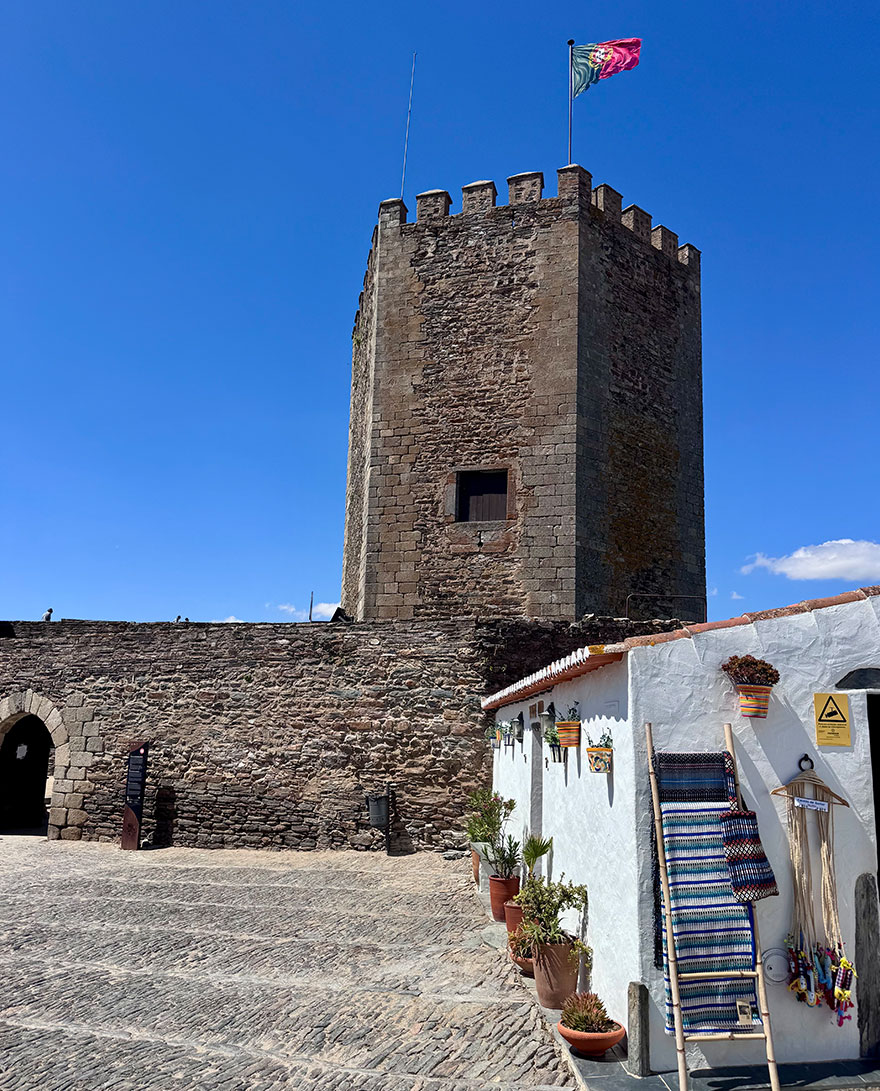
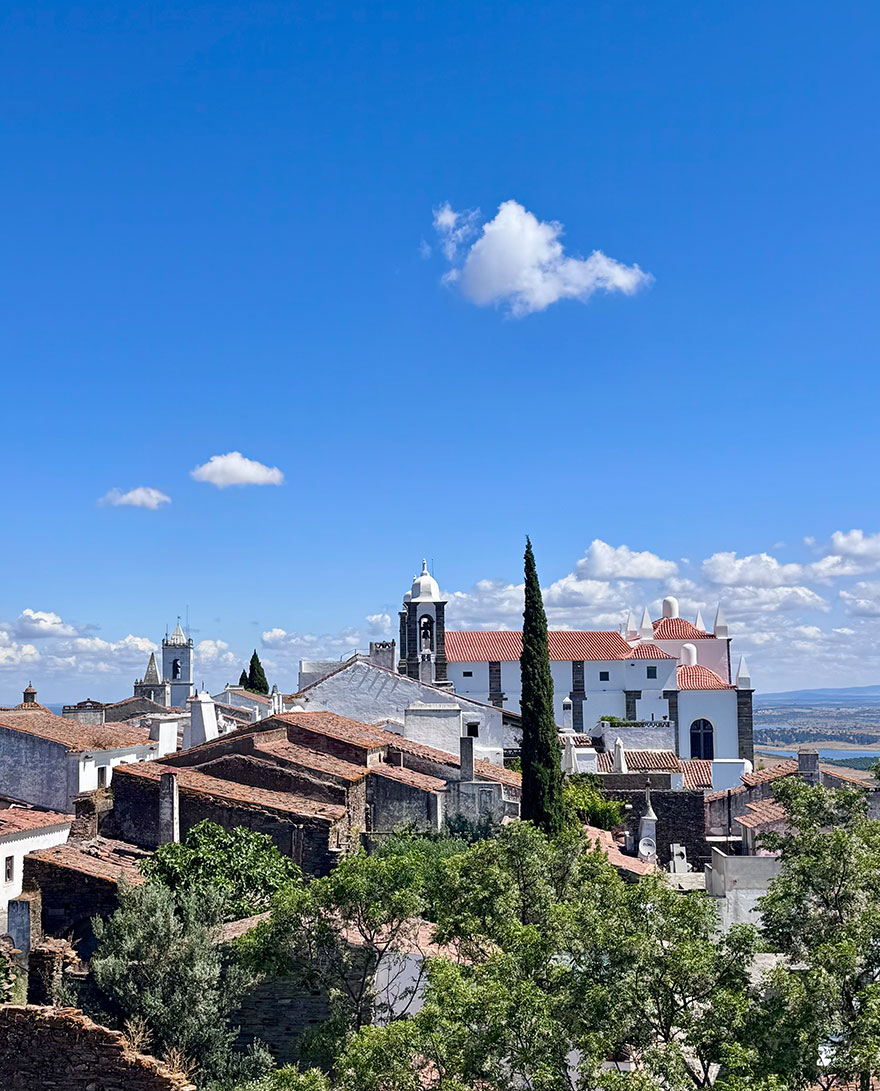
Nearby Monsaraz is well worth visiting while staying at São Lourenço do Barrocal. Set high above the Alentejo plains and enclosed by fortified walls, the village is a maze of bright whitewashed houses with terracotta roofs, flower-filled doorways and tiny winding cobblestone lanes.
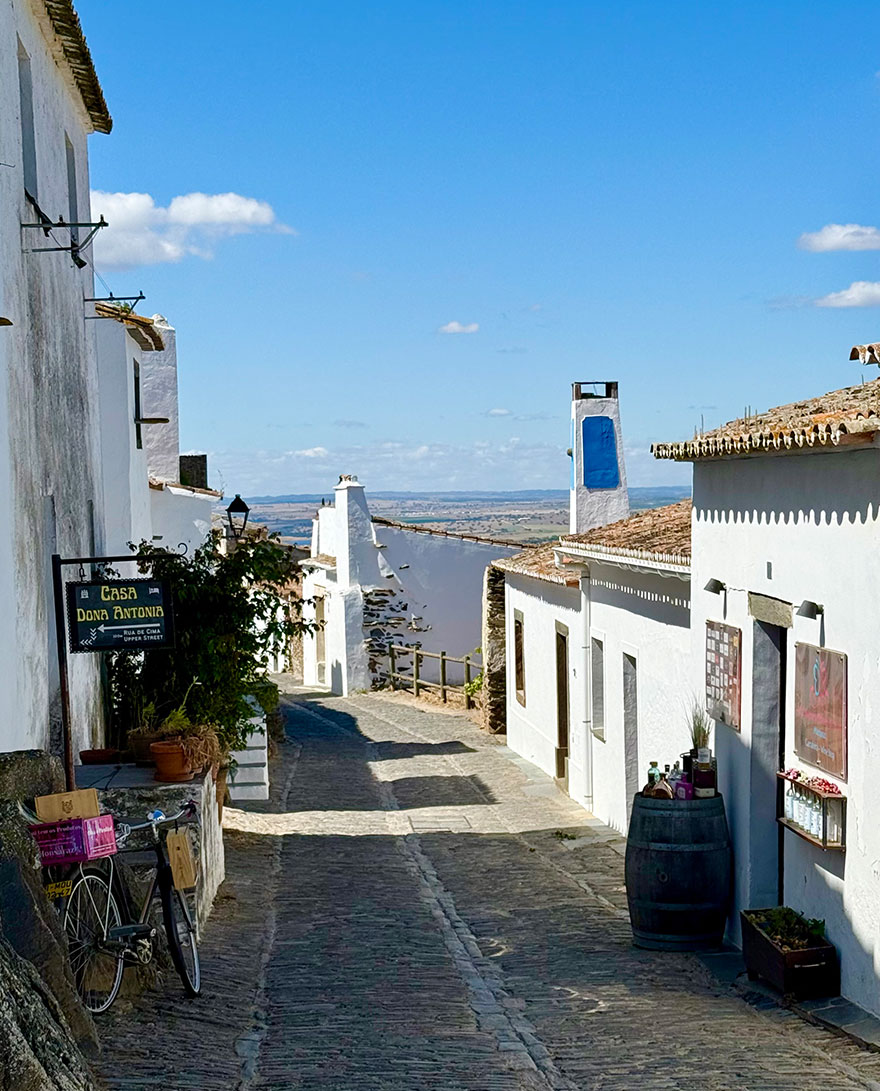
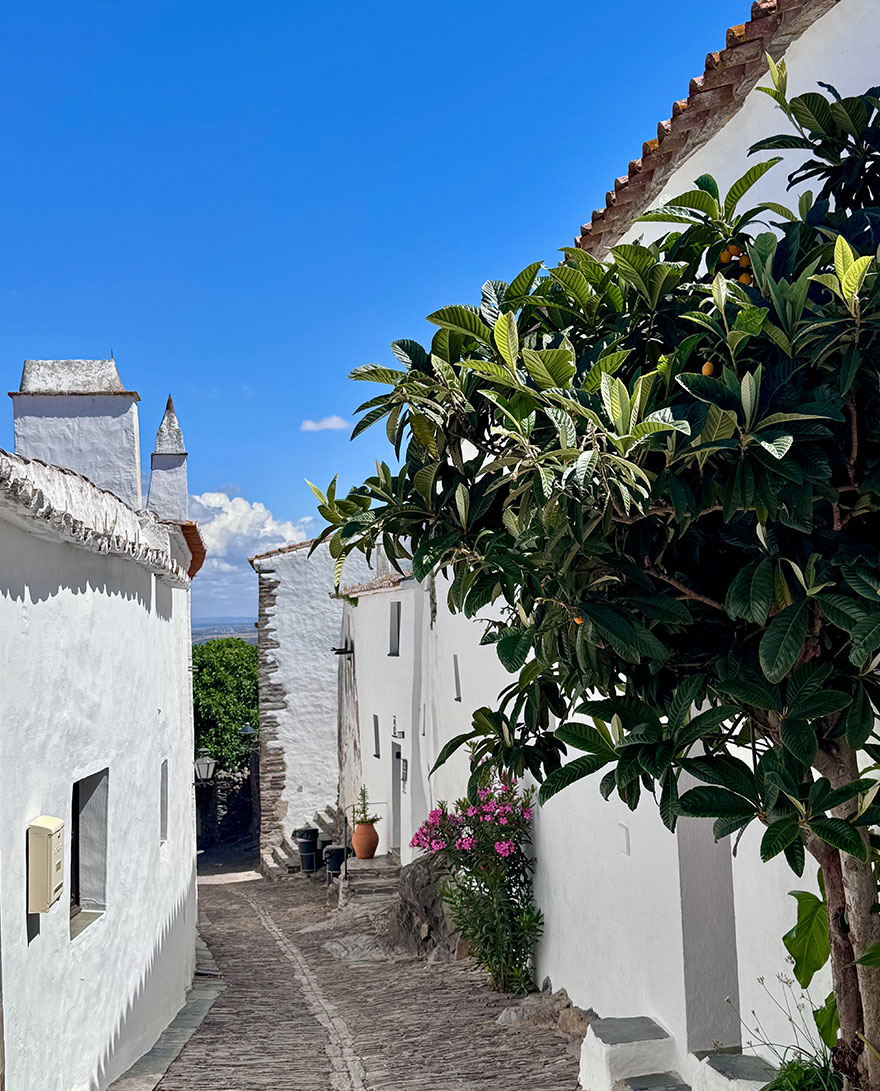
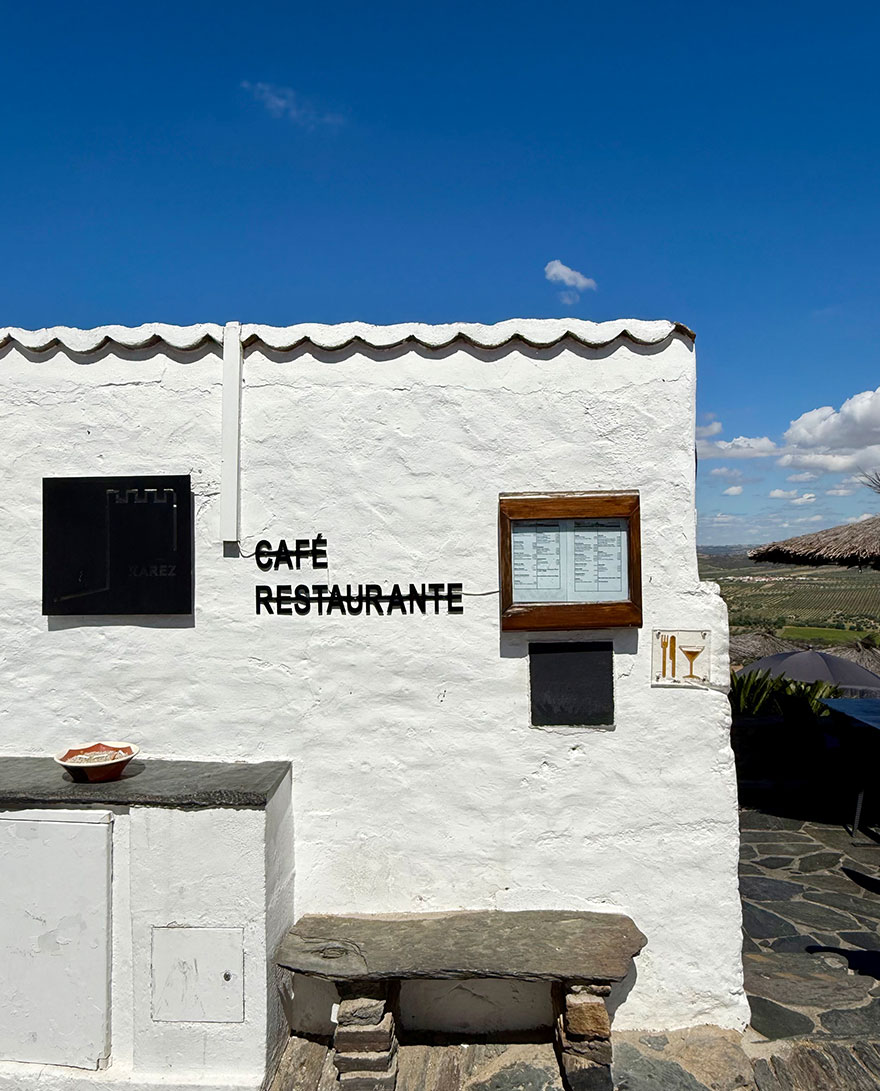
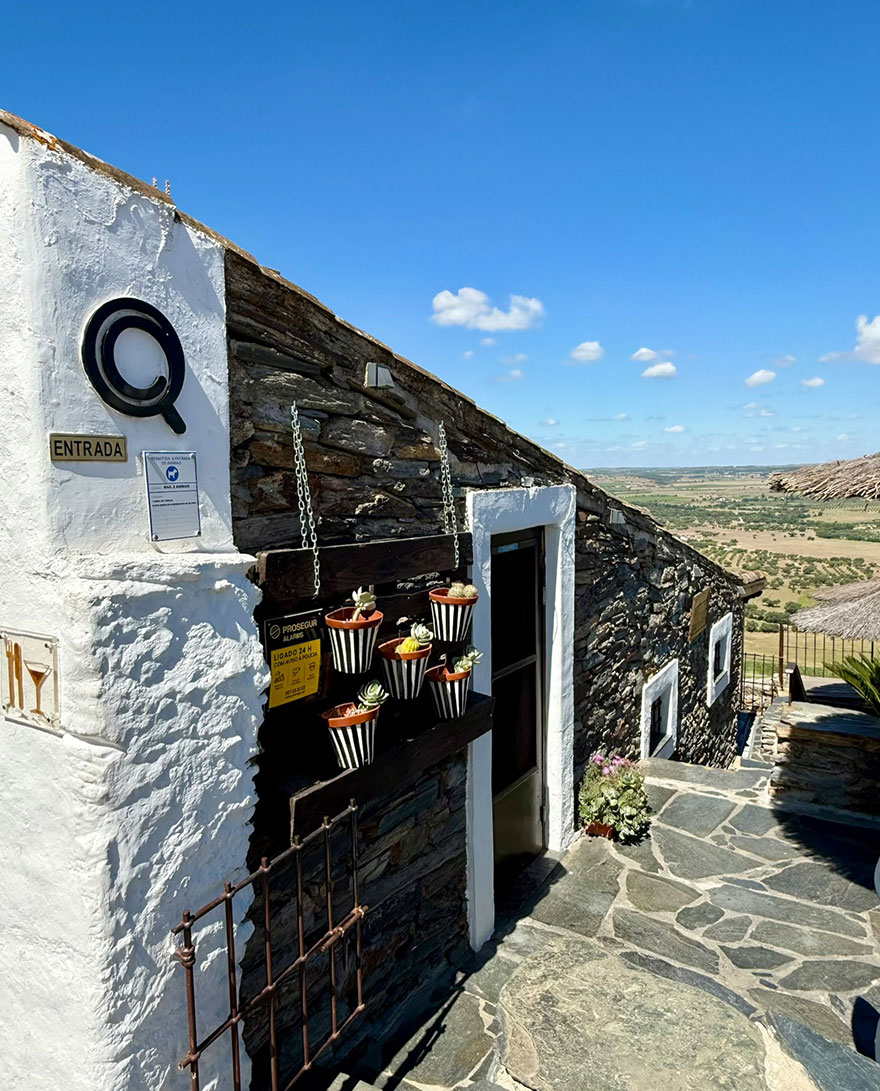
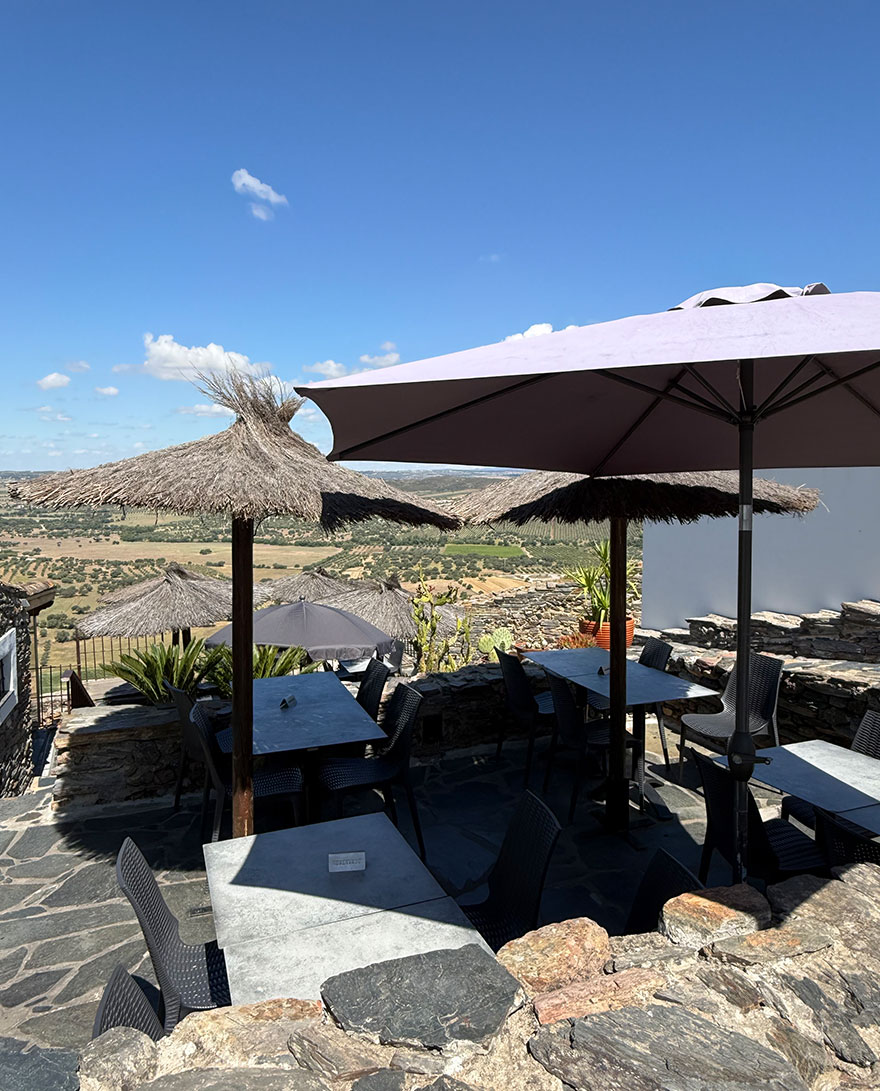
Xarez is a nice spot for coffee or lunch, with a terrace and wide views across the surrounding countryside.
We also liked the little craft shops tucked into old stone buildings around the village. Xaraz Arte is good for lovely ceramics (we brought lots home!), Paula Neves Estúdio Têxtil and Loja Fabricaal Monsaraz for linens and woven pieces, and Casa Tial for local produce and food gifts.
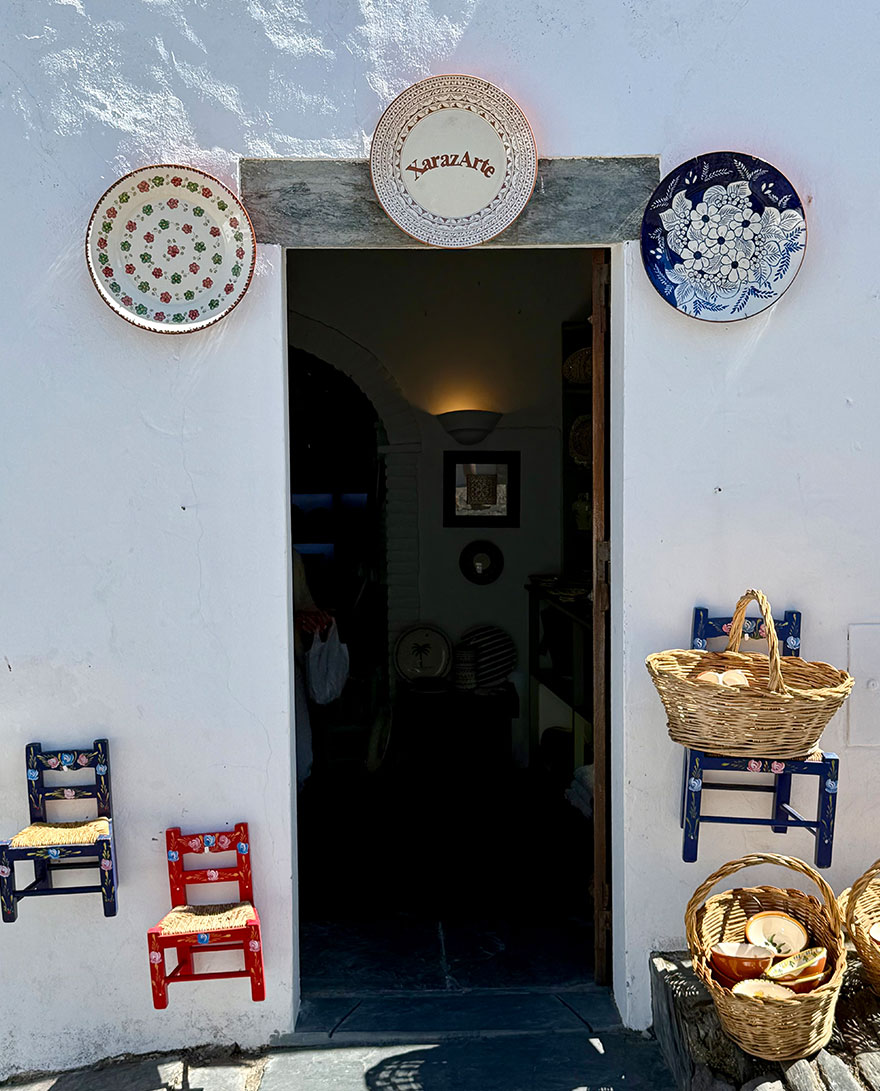
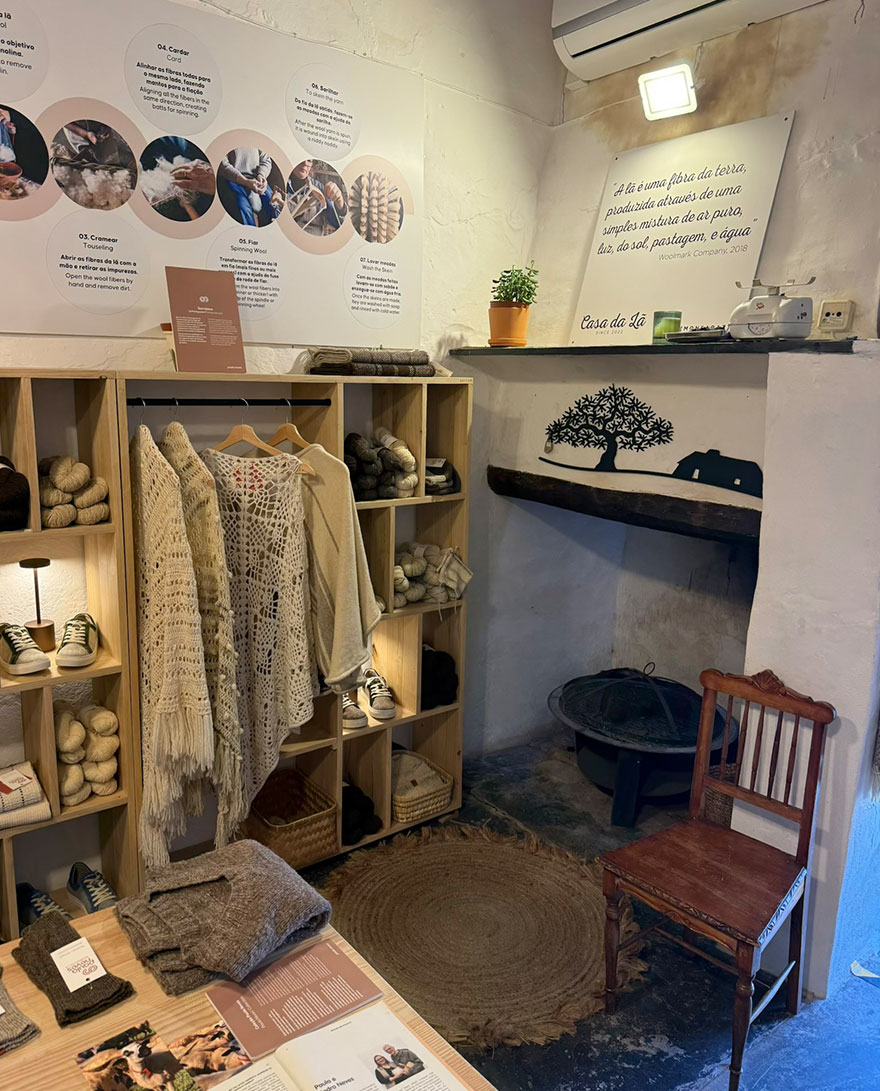
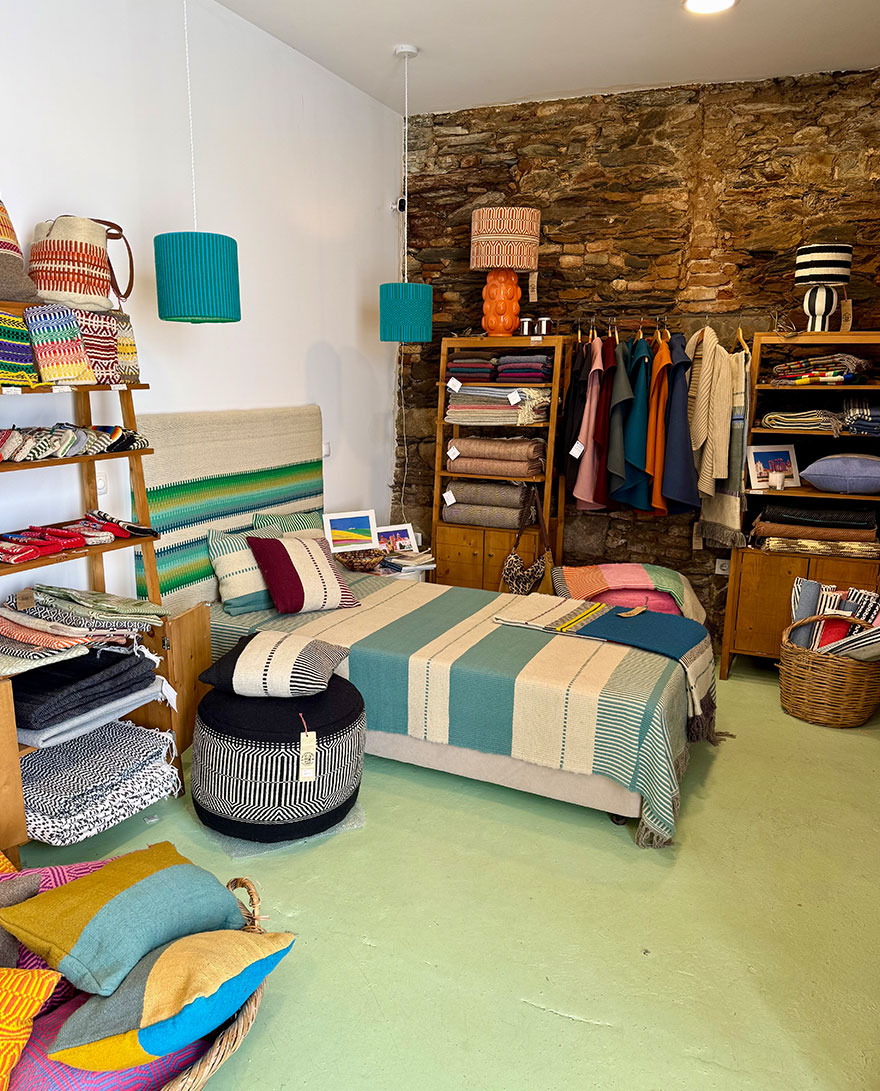
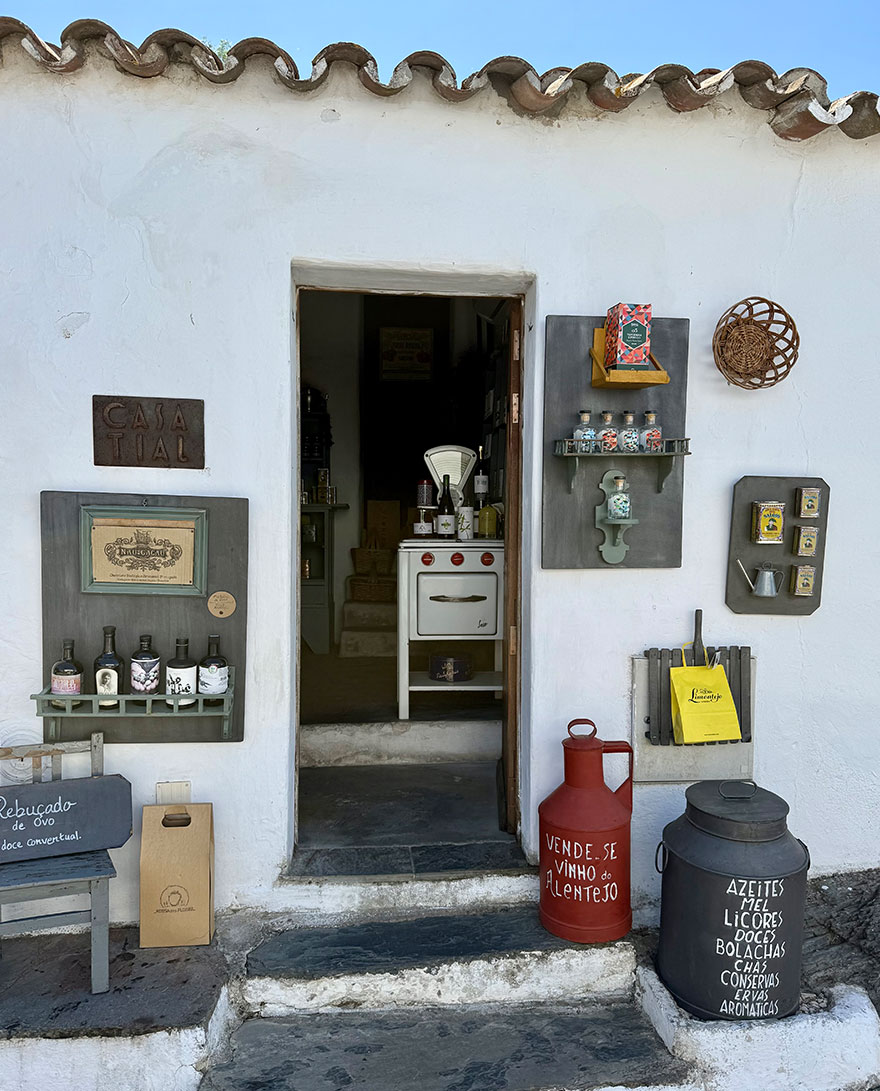
After browsing the lanes, walk up to the castle and along the fortified walls. The views stretch across the town to the Alentejo plains and Alqueva Lake.
THE NOBLE HOUSE
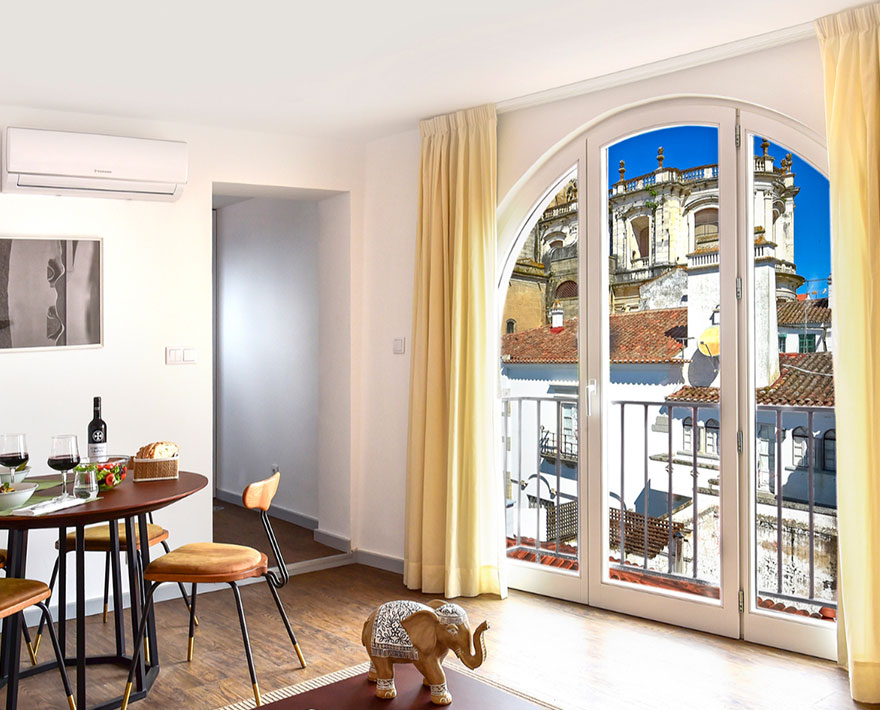
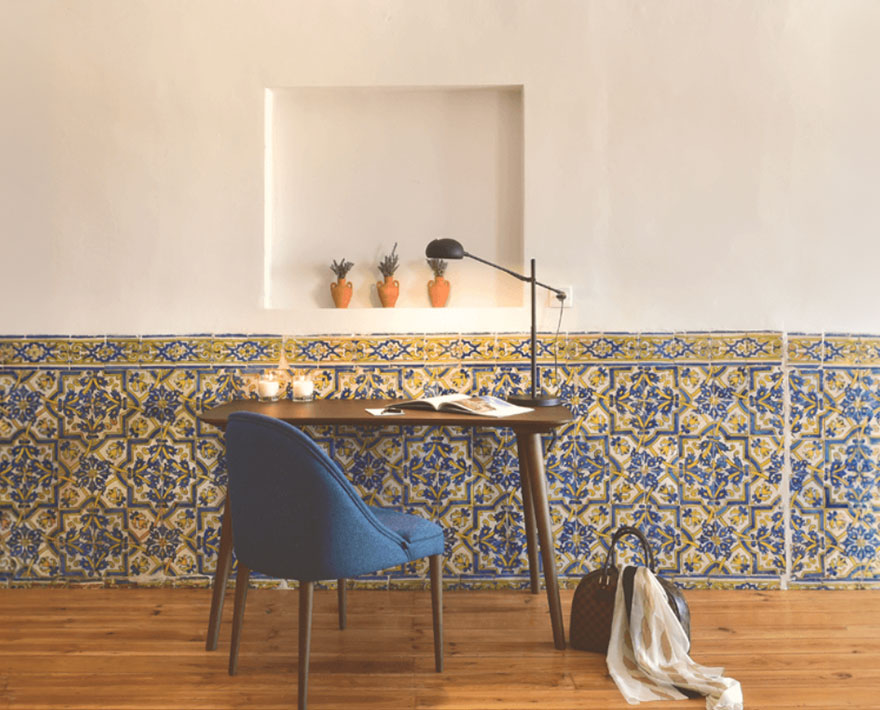
Friends of ours stayed at The Noble House, a small boutique hotel in a wonderfully central position just a couple of minutes’ walk from Évora Cathedral and the Roman Temple. Set in a historic manor house with parts of the old city wall running through it, the hotel combines original features such as vaulted ceilings, old tiles and stonework with a warm, contemporary design. It is also one of the more affordable stylish options in the centre, making it a very good base for exploring Évora on foot.
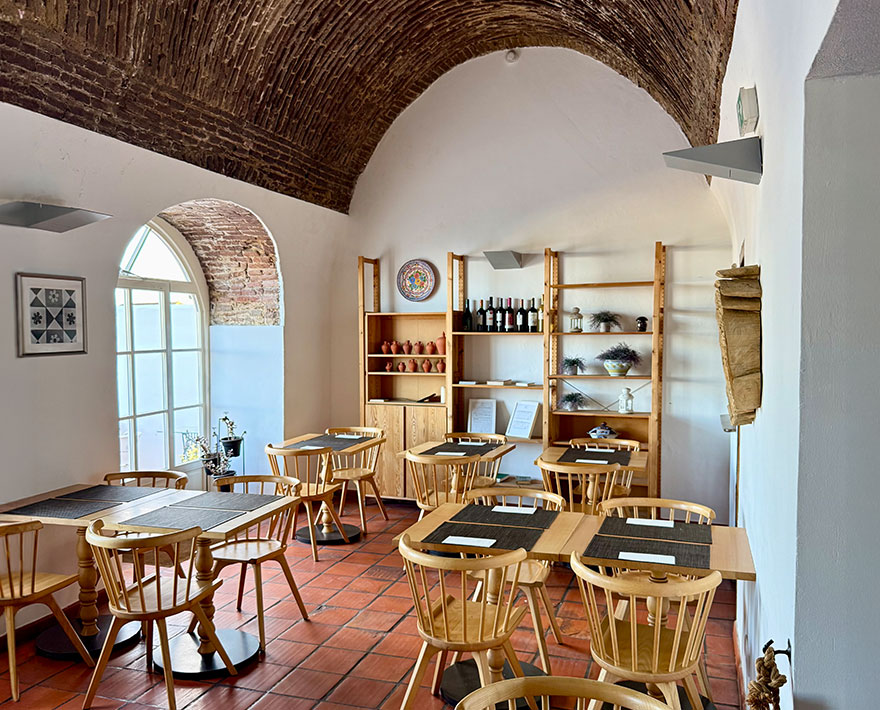
The hotel has just 24 rooms and suites, each slightly different. Some retain historic tiles or open onto private patios, while several suites have views across the city or towards the cathedral towers. Our friends stayed in a suite overlooking the cathedral (below left), which was a real highlight. The Noble Bistrô is set in the former 17th-century kitchen, where the original fireplace, sink and tiled details remain (below right). It serves simple regional dishes and local wines, with a terrace that works particularly well for a relaxed drink or dinner after a day of sightseeing.
Do
Évora has been a UNESCO World Heritage Site since 1986 and is the capital of the Alentejo region. It has all the components of a memorable city break: beautiful architecture, layers of history, excellent regional food and a historic centre that is compact enough to explore on foot.
The city’s history is thought to stretch back to Celtic times. The Romans settled here in the second century BC, leaving behind temples, baths and sections of the city walls. Évora was later occupied by the Moors before becoming an important royal and religious centre during the Portuguese Middle Ages and Renaissance. Palaces, convents and churches were built/ The result is a wonderful mix of Roman, Moorish, Gothic, Manueline and Renaissance architecture that remains today.
Our route through the city went roughly from south to north. We parked in the large car park on the southern side of the old town and began at the Jardim Público.
JARDIM PÚBLICO
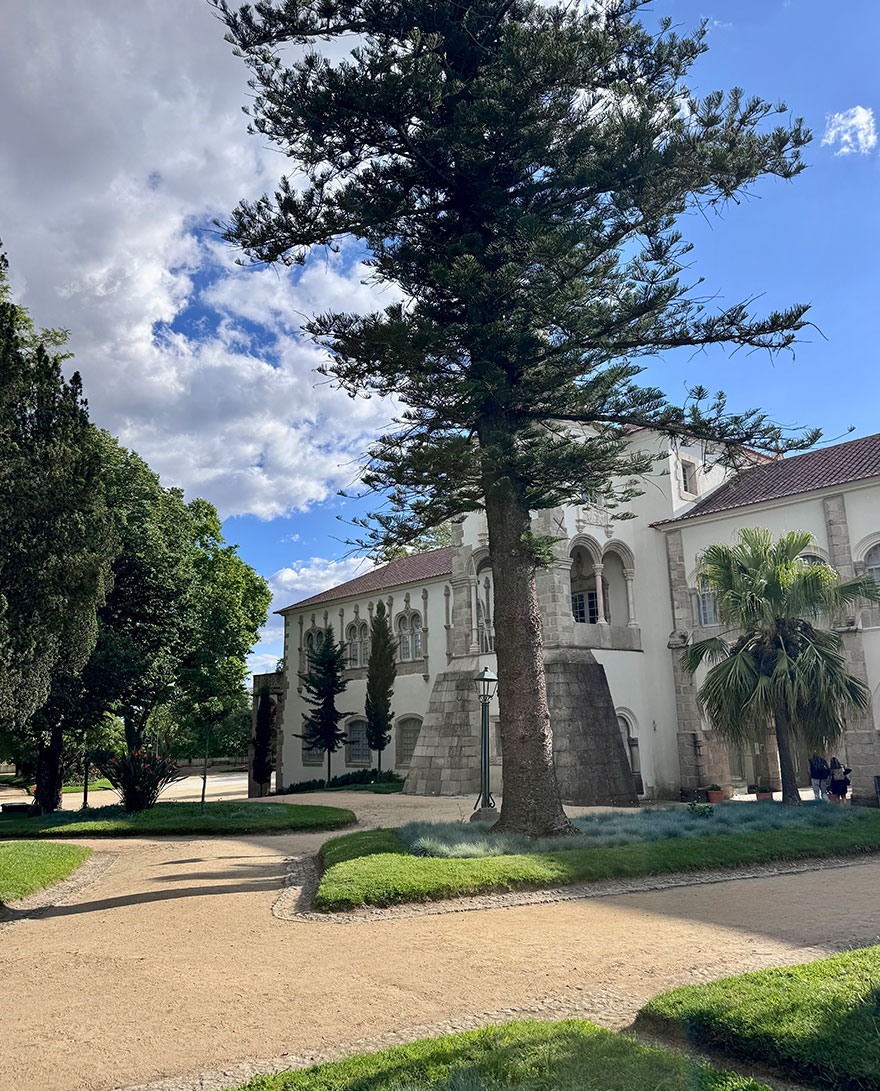
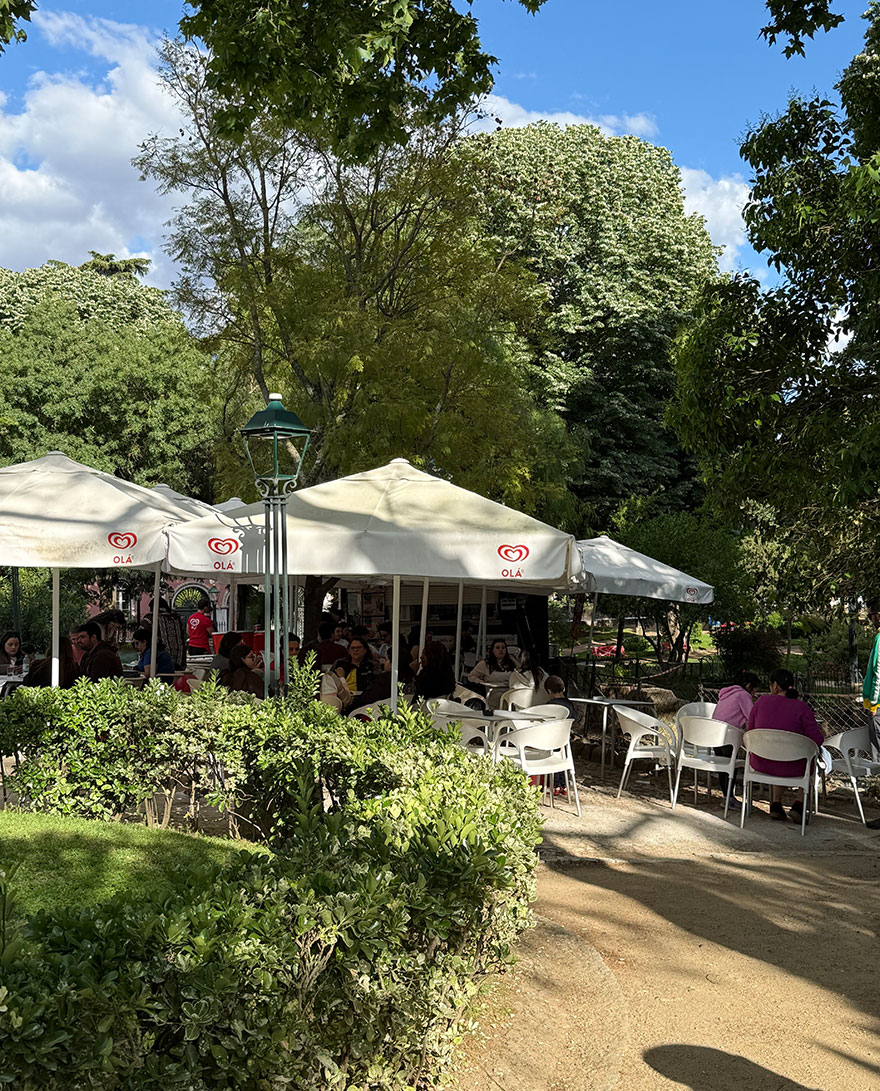
The Jardim Público is a peaceful place to begin a day in Évora. The garden was created in the 19th century by Italian architect José Cinatti, who is said to have based the design on a traditional English landscape garden. Mature trees create plenty of shade, while winding paths lead between lawns, flowerbeds and small architectural features.
CHAPEL OF BONES
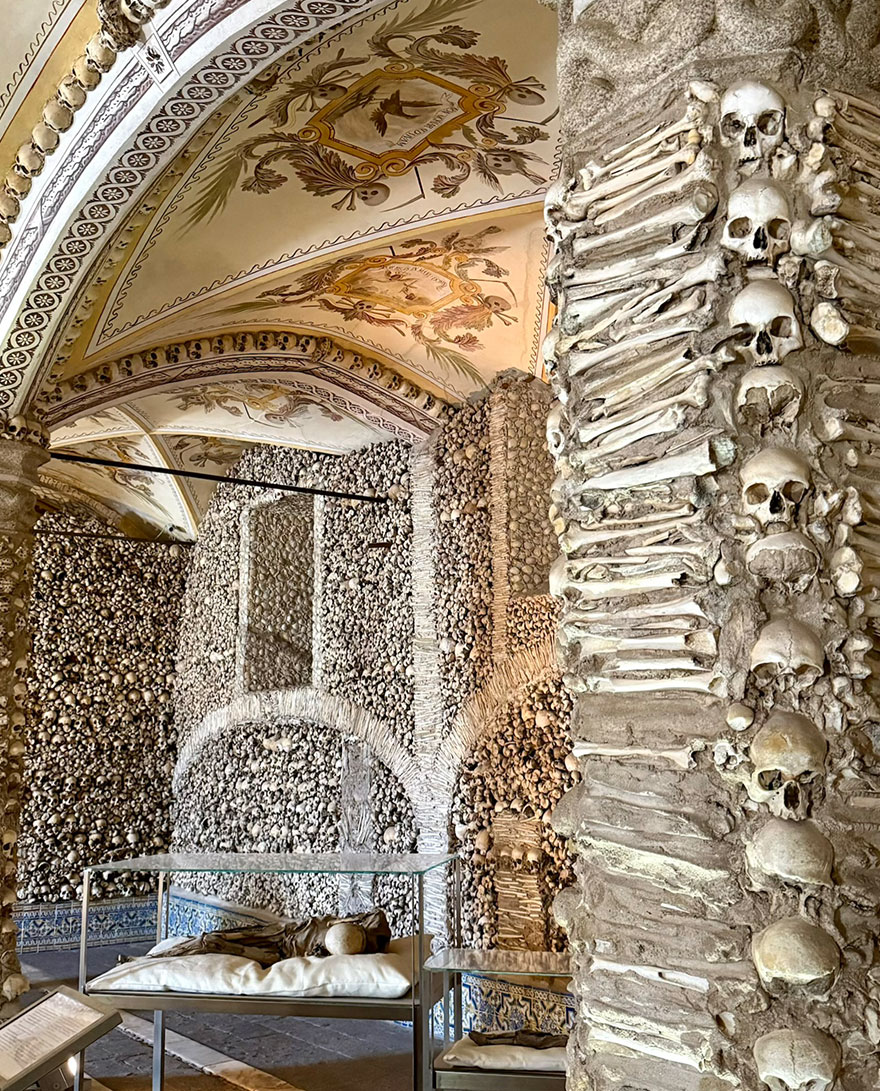
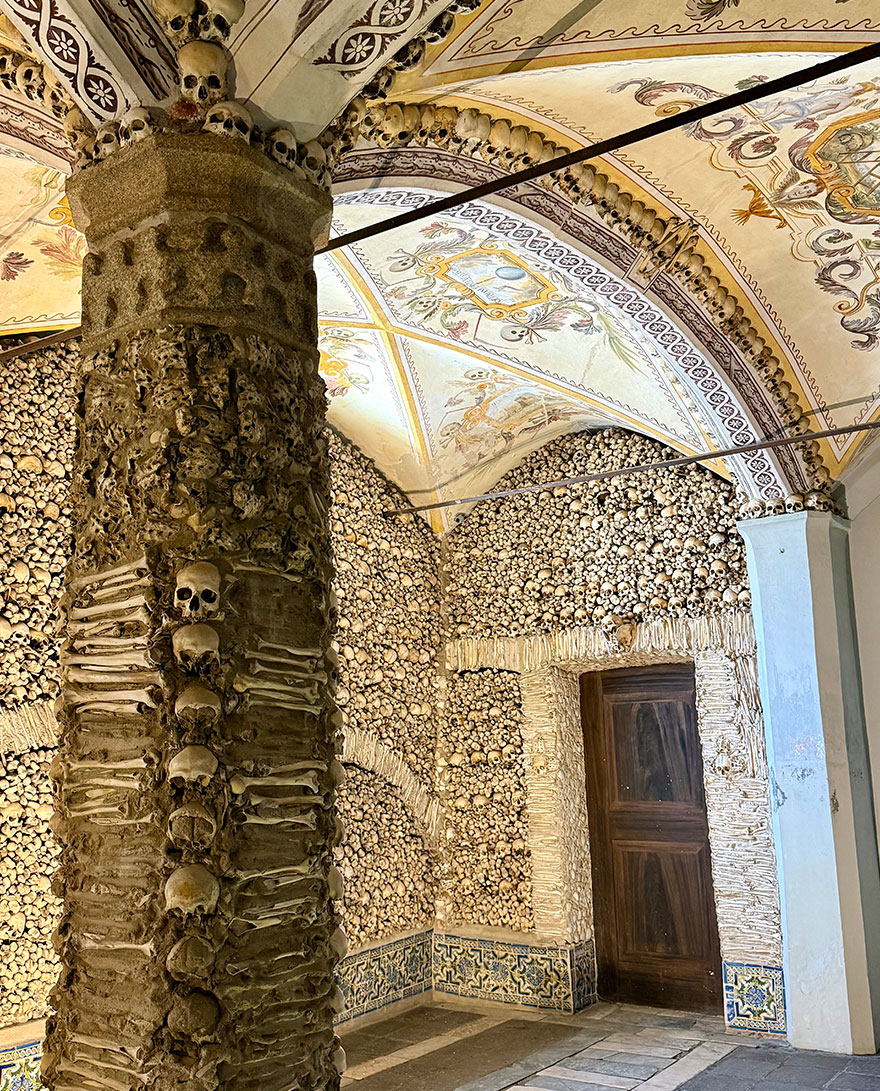
The Chapel of Bones, or Capela dos Ossos, is undoubtedly one of Évora’s most unusual sights. It forms part of the Igreja de São Francisco, a 15th-century church that once belonged to a large Franciscan monastery. The chapel was created by Franciscan monks during the late 16th and early 17th centuries, when bones were moved from overcrowded monastic cemeteries around the city. The walls and columns are now lined from floor to ceiling with the skulls and bones of around 5,000 people, arranged into surprisingly intricate patterns. Above the entrance is the chapel’s famous warning: “We bones that are here await yours.” It is slightly macabre, but also strangely calm and thought-provoking once you step inside!
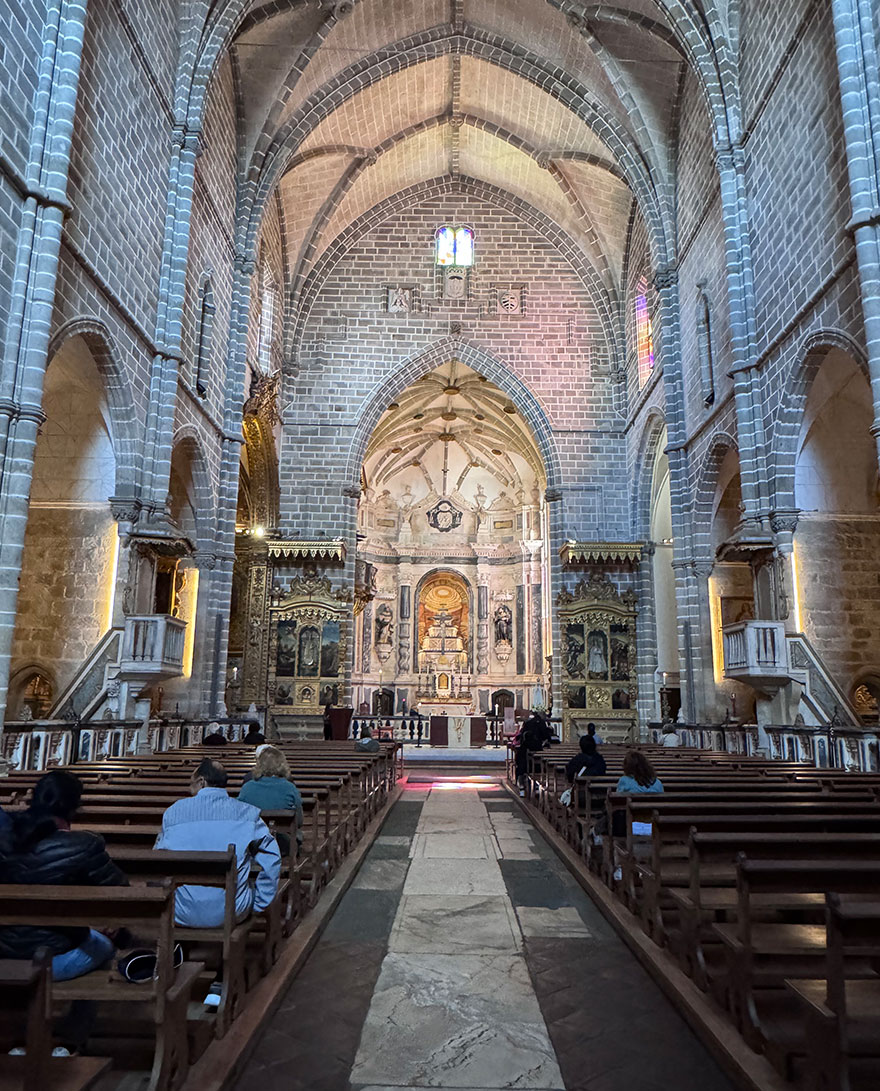
Next to the Chapel of Bones is the Igreja e Mosteiro de São Francisco is one of Évora’s most impressive religious buildings. Built largely between the late 15th and early 16th centuries, it combinines Gothic and Manueline architecture with a striking arched entrance.
PRAÇA DO GIRALDO
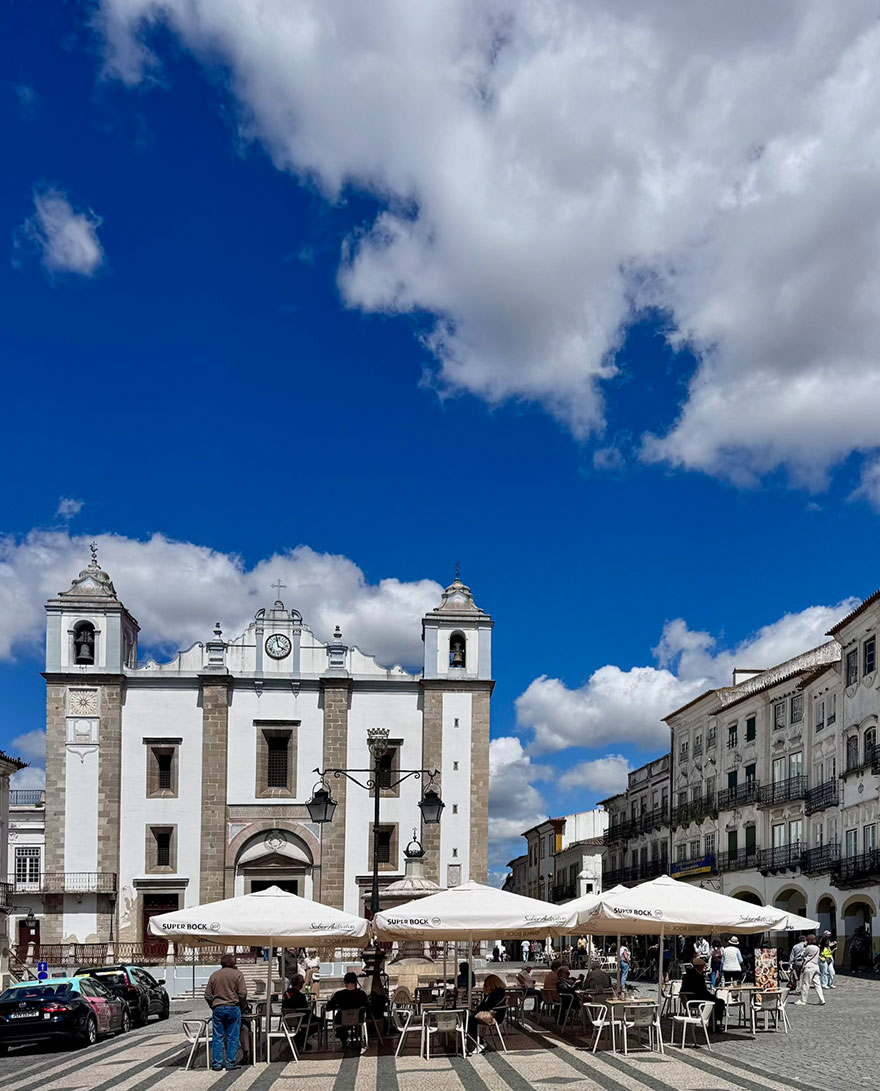
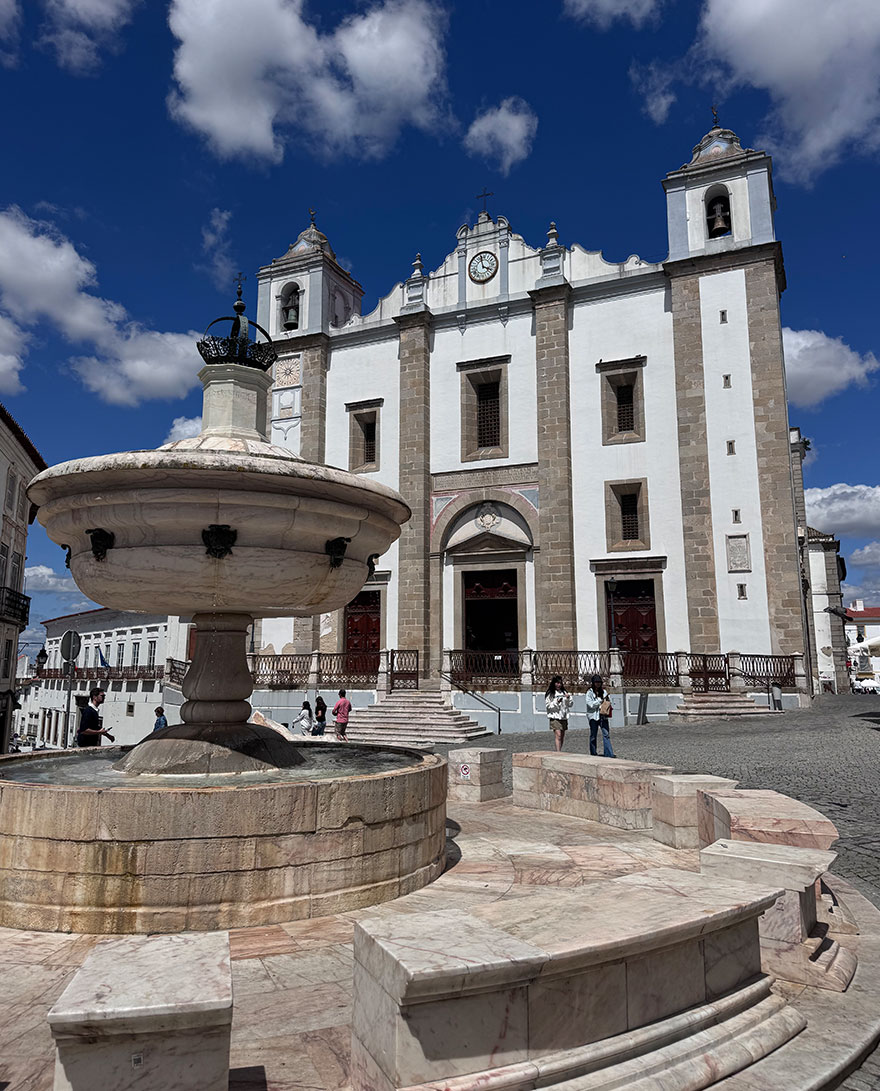
Praça do Giraldo is Évora’s main square and the natural centre of the old town. Elegant arcaded buildings line either side, with cafés spilling out onto the pavements and the Igreja de Santo Antão standing at the northern end. At the centre is a marble fountain with eight spouts, said to represent the eight streets that lead away from the square. It is a good place to pause for a coffee during the day or return for a sunset drink with a side of people-watching.
From the square, Rua 5 de Outubro climbs towards the cathedral and Roman Temple. This is Évora’s main shopping street, lined with stores selling local ceramics, cork products, textiles and food.
PALÁCIO DOS DUQUES DE CADAVAL
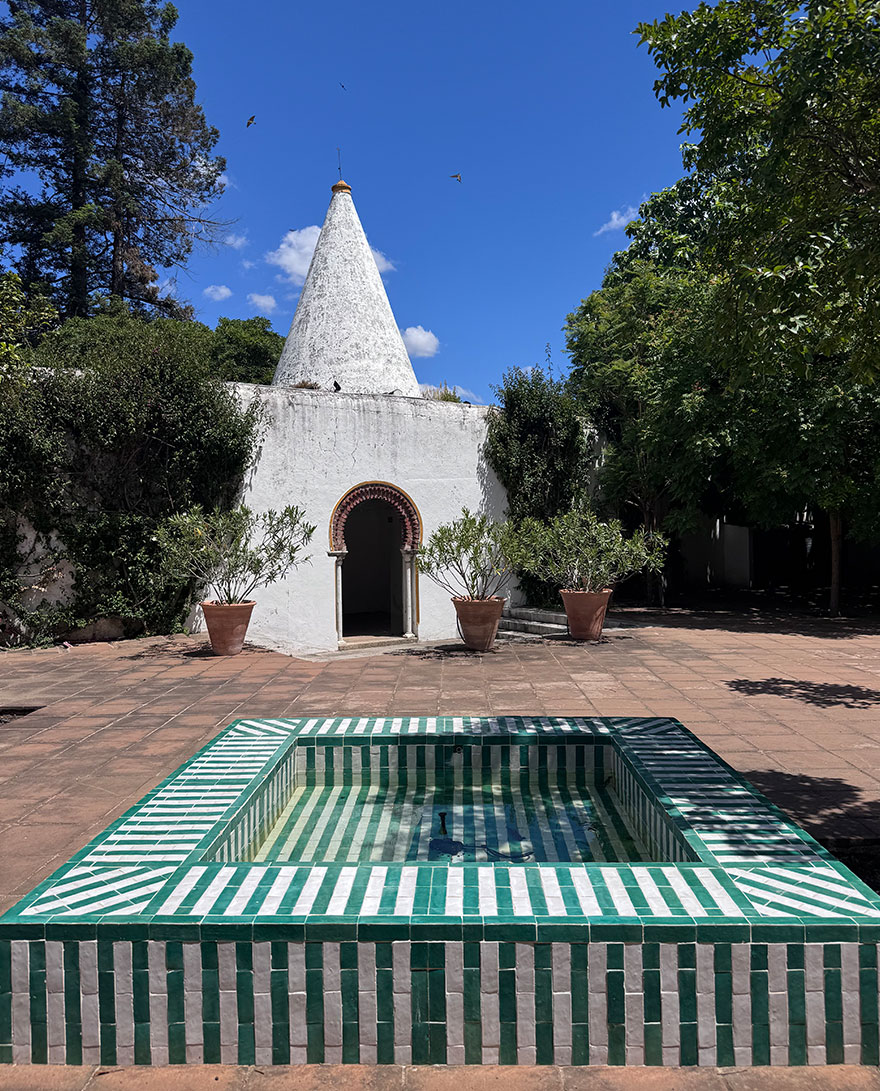
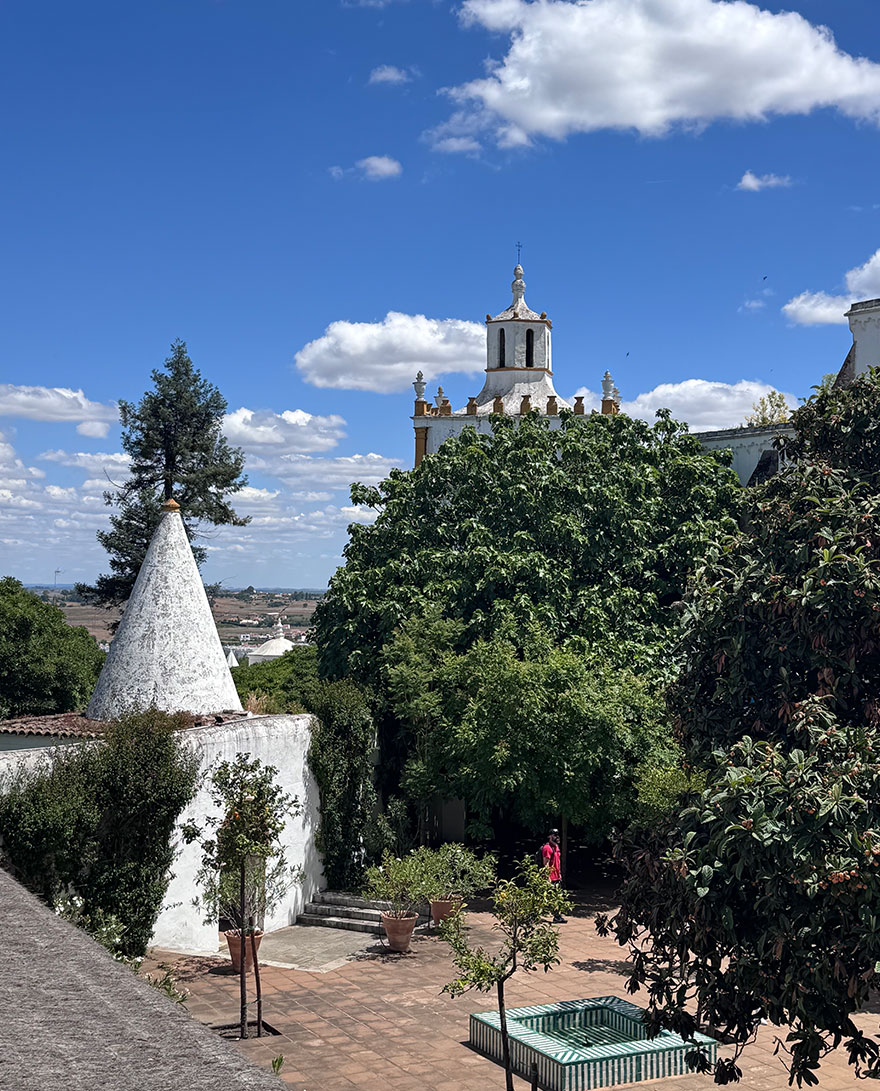
The Palácio dos Duques de Cadaval stands close to the Roman Temple on the site of a former Moorish castle. The palace dates largely from the 14th century and has been associated with the House of Cadaval for generations. It has a pretty courtyard with green tiled fountains (although without water when visited). Inside and upstairs, there is a hard-to-find museum that hosts temporary exhibitions (check the website if you plan to visit)
ROMAN TEMPLE
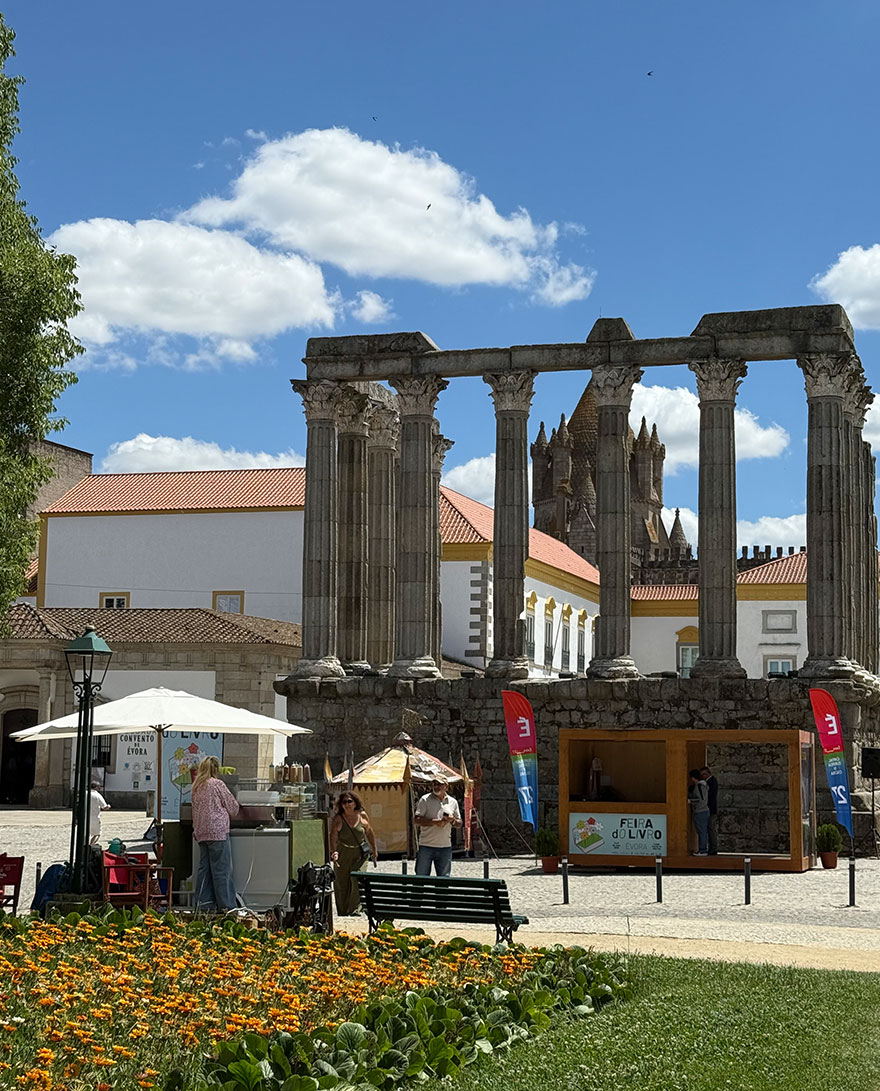
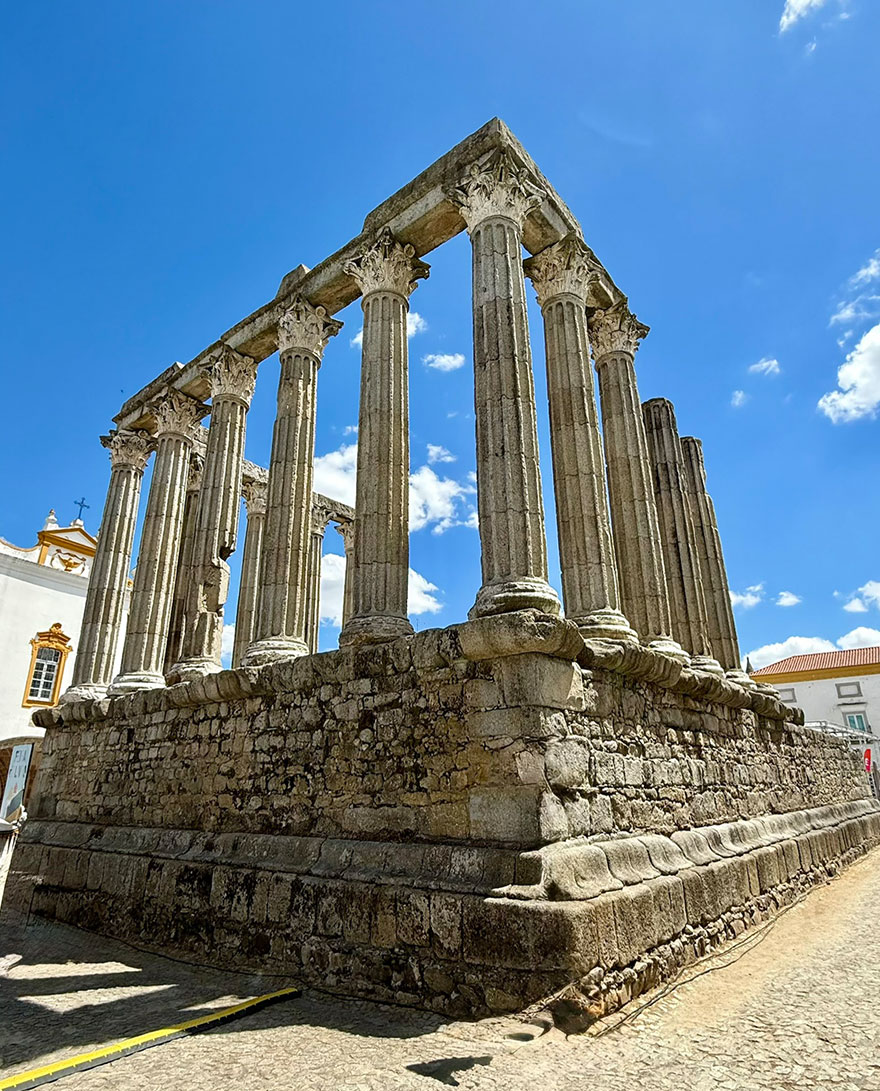
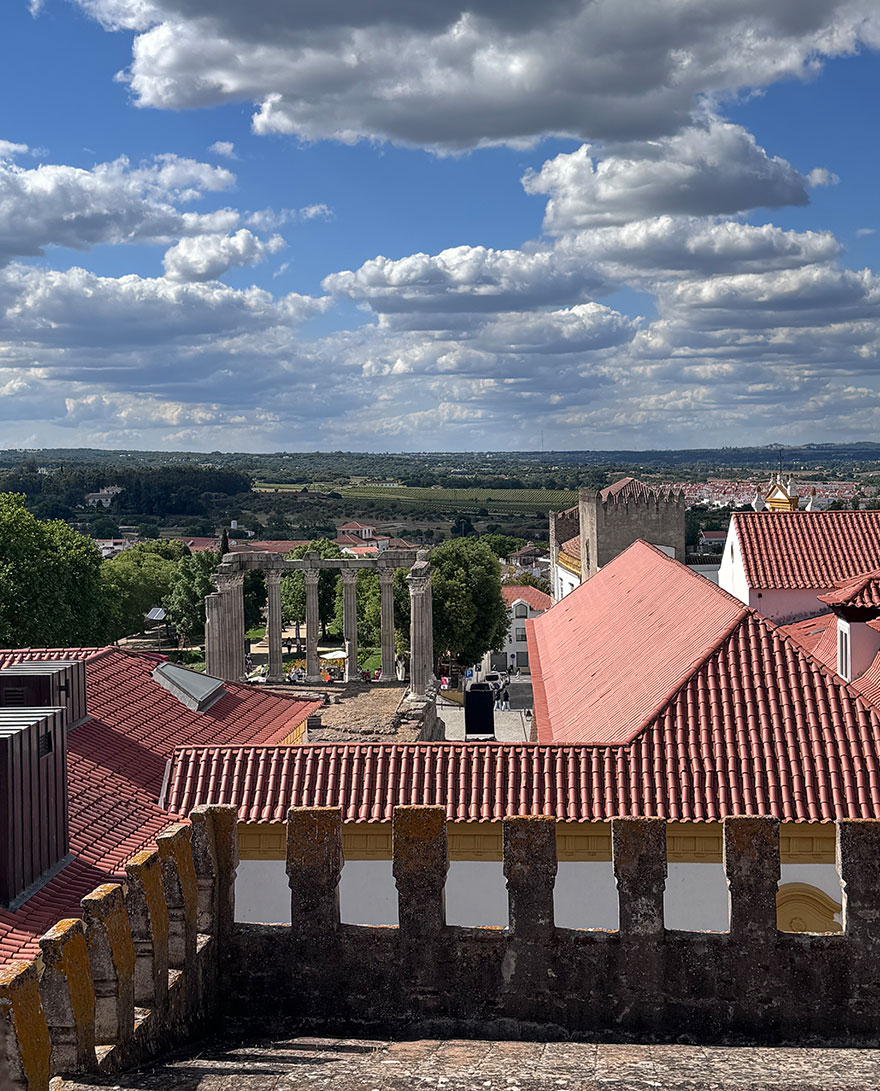
Évora’s Roman Temple, long known as the Temple of Diana, stands prominently on the highest point of the old town in Praça Conde de Vila Flor. Dating from around the first century AD, it is one of the best-preserved Roman structures in Portugal and remains the city’s most recognisable landmark.
JARDIM DIANA
Immediately beside the Roman Temple is Jardim Diana, a small shaded garden overlooking the rooftops of Évora. After several hours of sightseeing, it is a welcome place to sit beneath the trees and take a break. The terrace has broad views over the whitewashed town and the Alentejo countryside beyond the walls. There are benches, a small kiosk and plenty of shade, making it one of the best resting points on a warm day.
IGREJA DE SÃO JOÃO EVANGELISTA
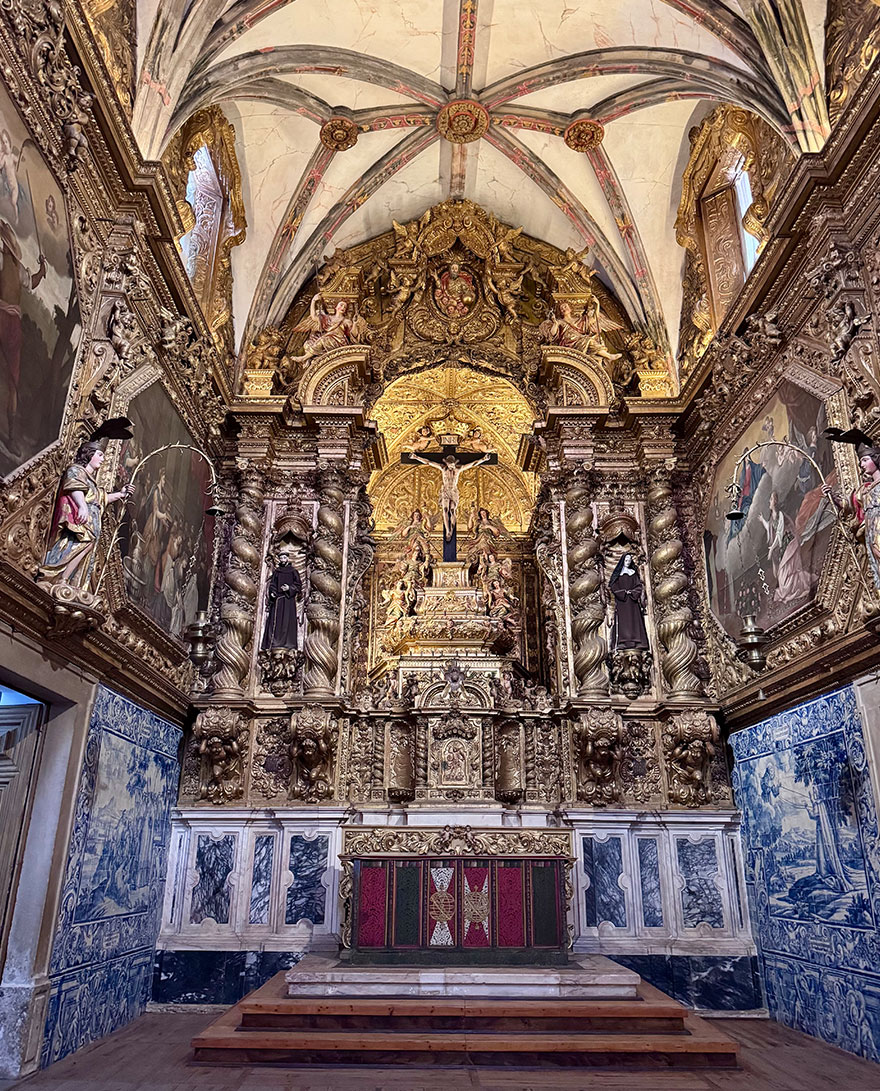
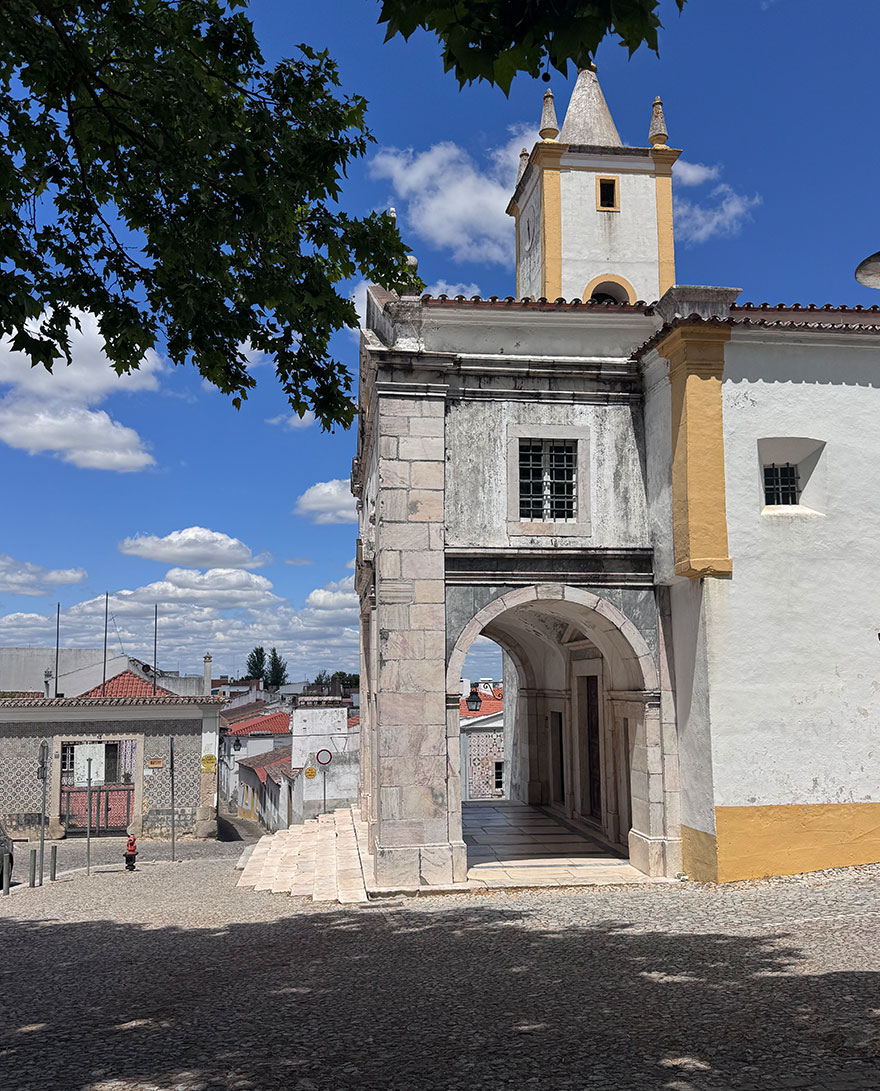
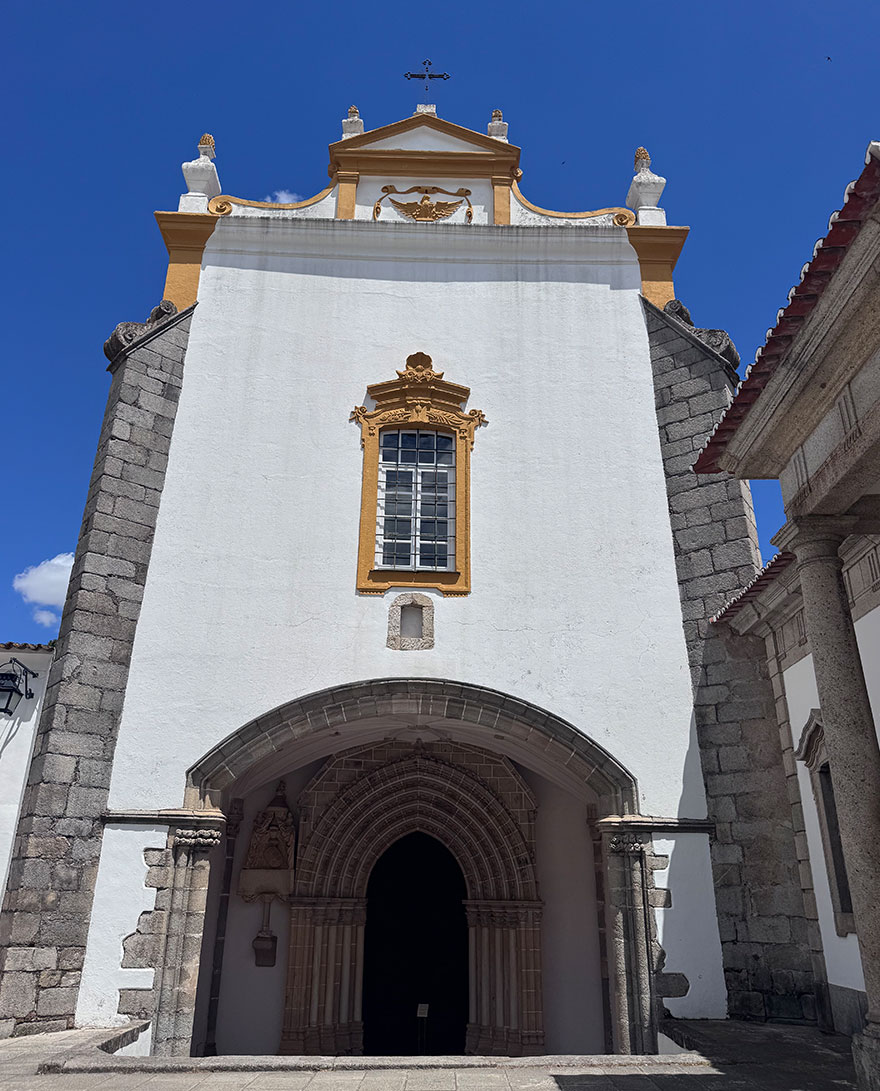
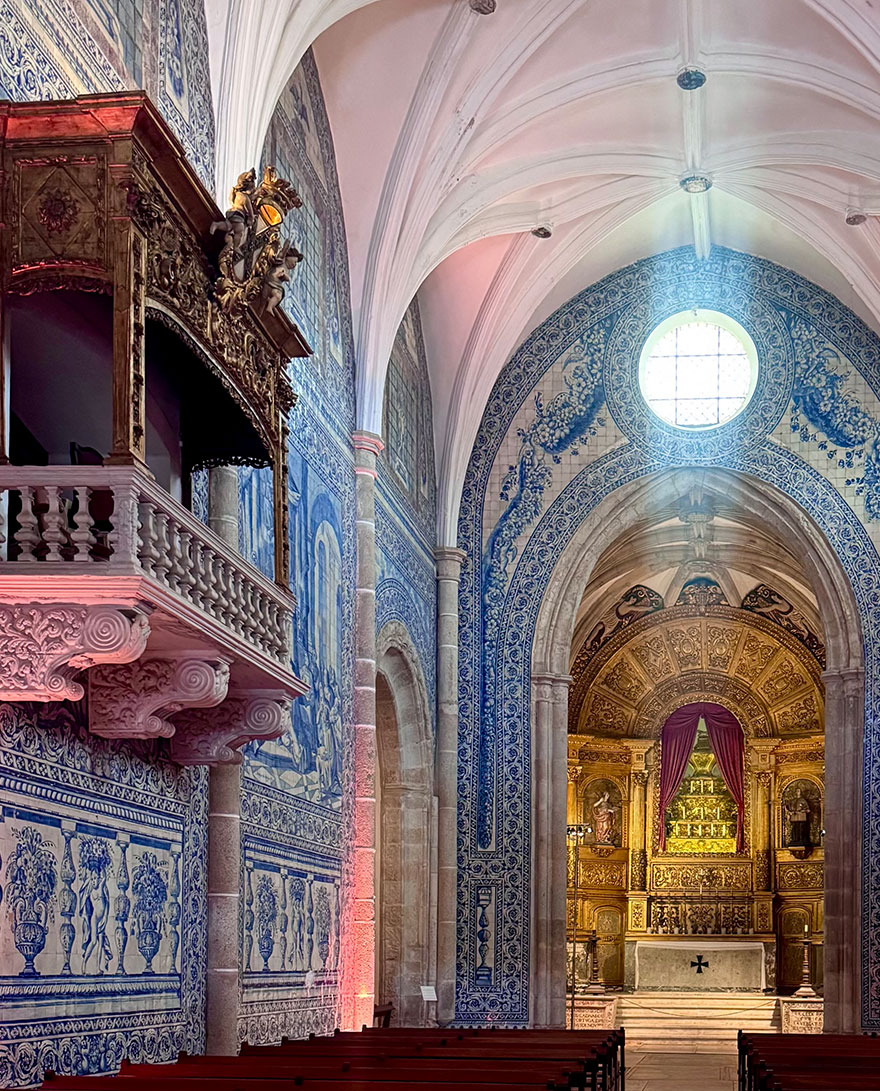
The Igreja de São João Evangelista, stands beside the Cadaval Palace. The interior is covered with an extraordinary collection of blue-and-white azulejo tiles that stretch across the walls and illustrate scenes from the life of São Lourenço Justiniano. Their rich pattern and detail create a striking contrast with the church’s Gothic structure and pale stone columns. The church is small, but it is worth spending time looking closely at the individual panels; it was one of the most beautiful tiled interiors we saw in Évora.
ÉVORA CATHEDRAL
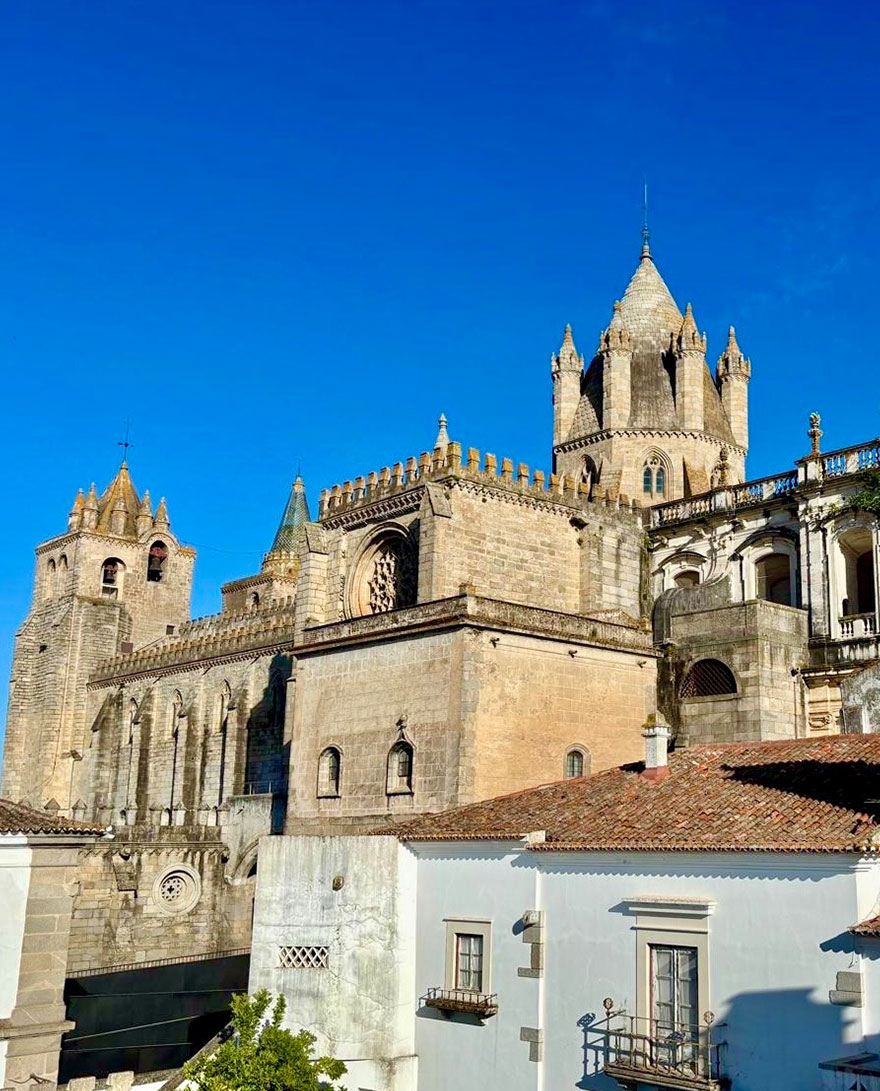
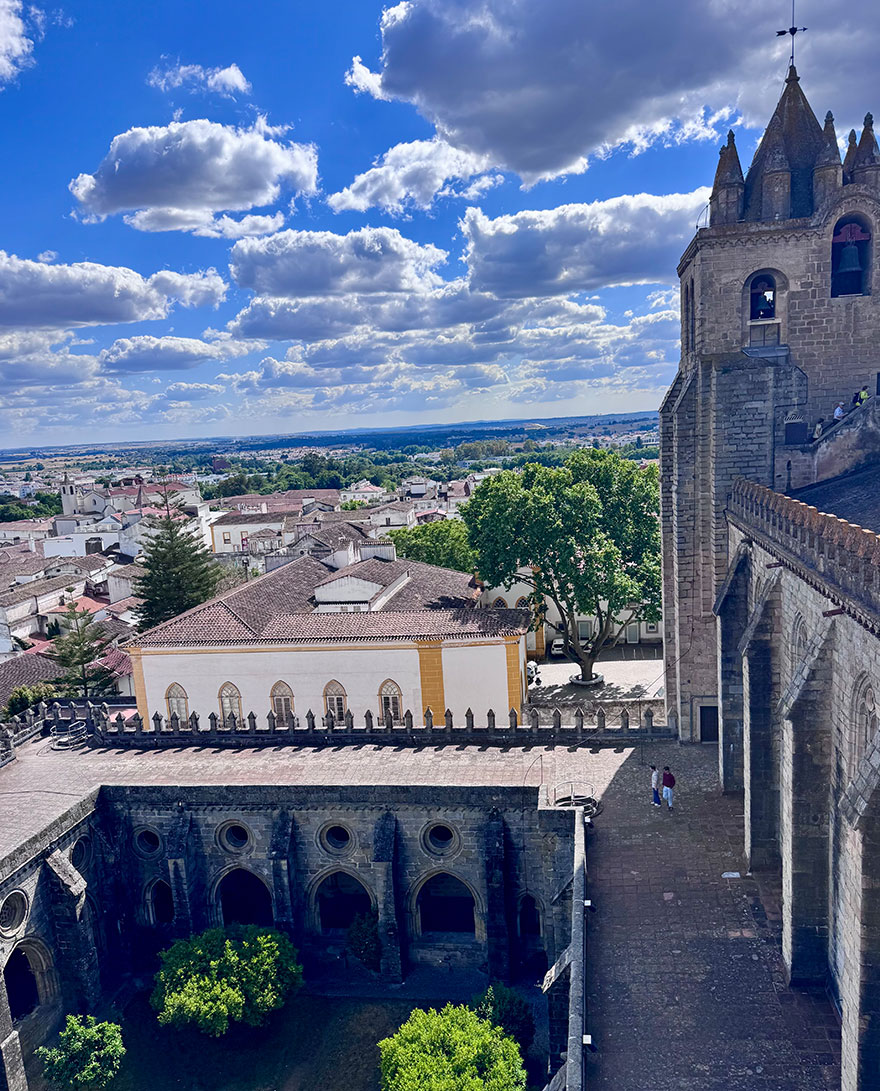
Évora Cathedral is the largest medieval cathedral in Portugal. Built between 1186 and 1250, it combines Romanesque solidity with later Gothic details and dominates the centre of the city. Inside, the scale is impressive but the decoration is relatively restrained. Look out for the 14th-century sculptures of the apostles around the main portal, the Gothic cloisters and the cathedral’s historic organ, one of the oldest in Portugal.
The highlight is the climb to the roof. A series of narrow stone staircases leads to the terraces around the central lantern and towers, where you can walk between sections of the roof. From here, there are wonderful views across Évora’s terracotta rooftops, white churches and the surrounding Alentejo countryside. The stairs require a little effort, but the panorama at the top is well worth it!
COLÉGIO DO ESPÍRITO SANTO
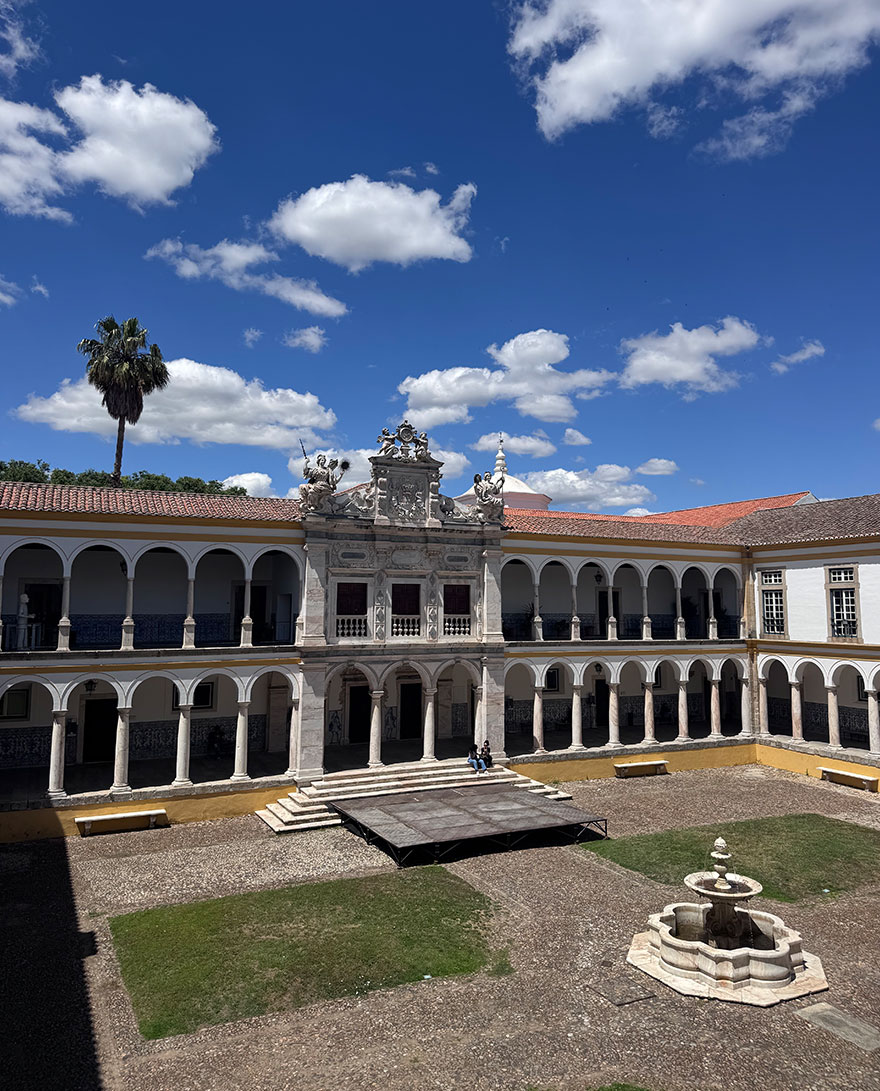
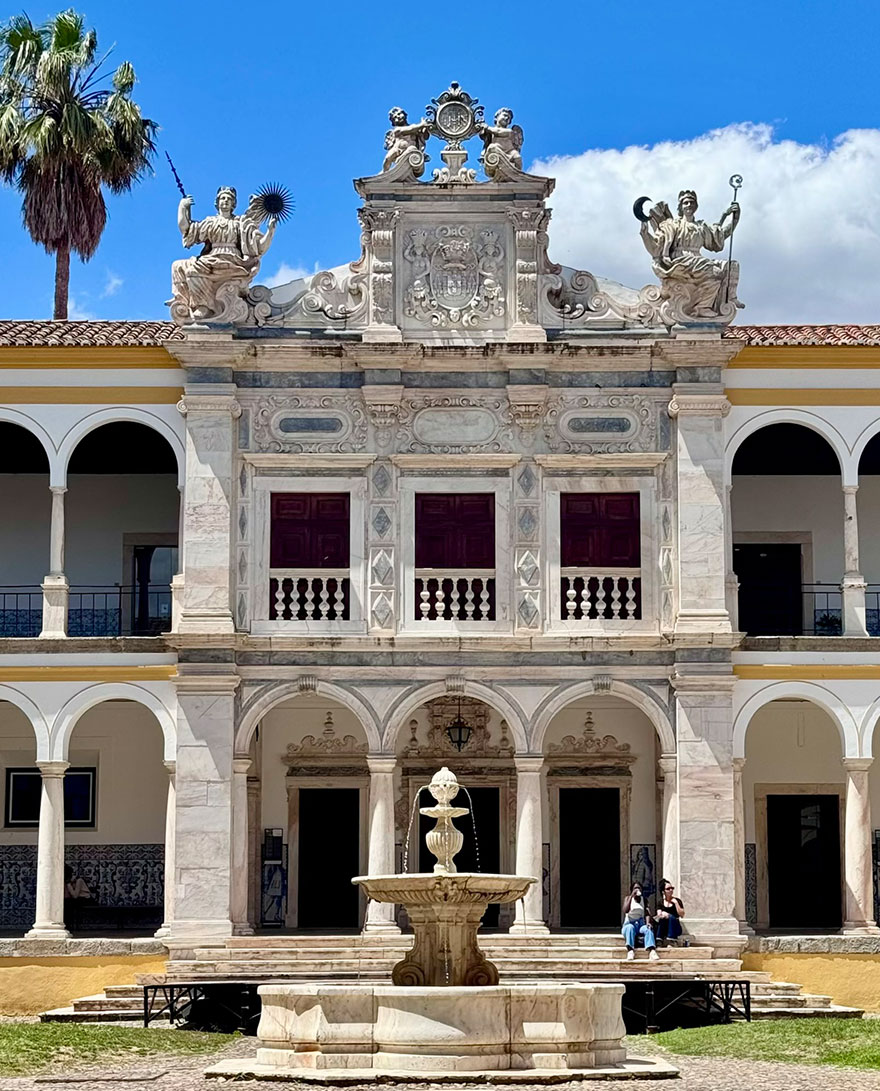
We stumbled across the Colégio do Espírito Santo while walking through the eastern side of the old town. Now part of the University of Évora, it was founded as a Jesuit college in the 16th century and remains one of the city’s most impressive historic buildings.
The main courtyard is surrounded by elegant arcades, white columns and ochre detailing. Beyond it, corridors lead to former classrooms decorated with blue-and-white tile panels illustrating the subjects once taught in each room. It remains a working university, which gives the building a pleasant sense of life rather than making it feel like a formal museum. Students cross the courtyards between lectures while visitors quietly explore the tiled rooms and staircases.
WANDER THE OLD TOWN
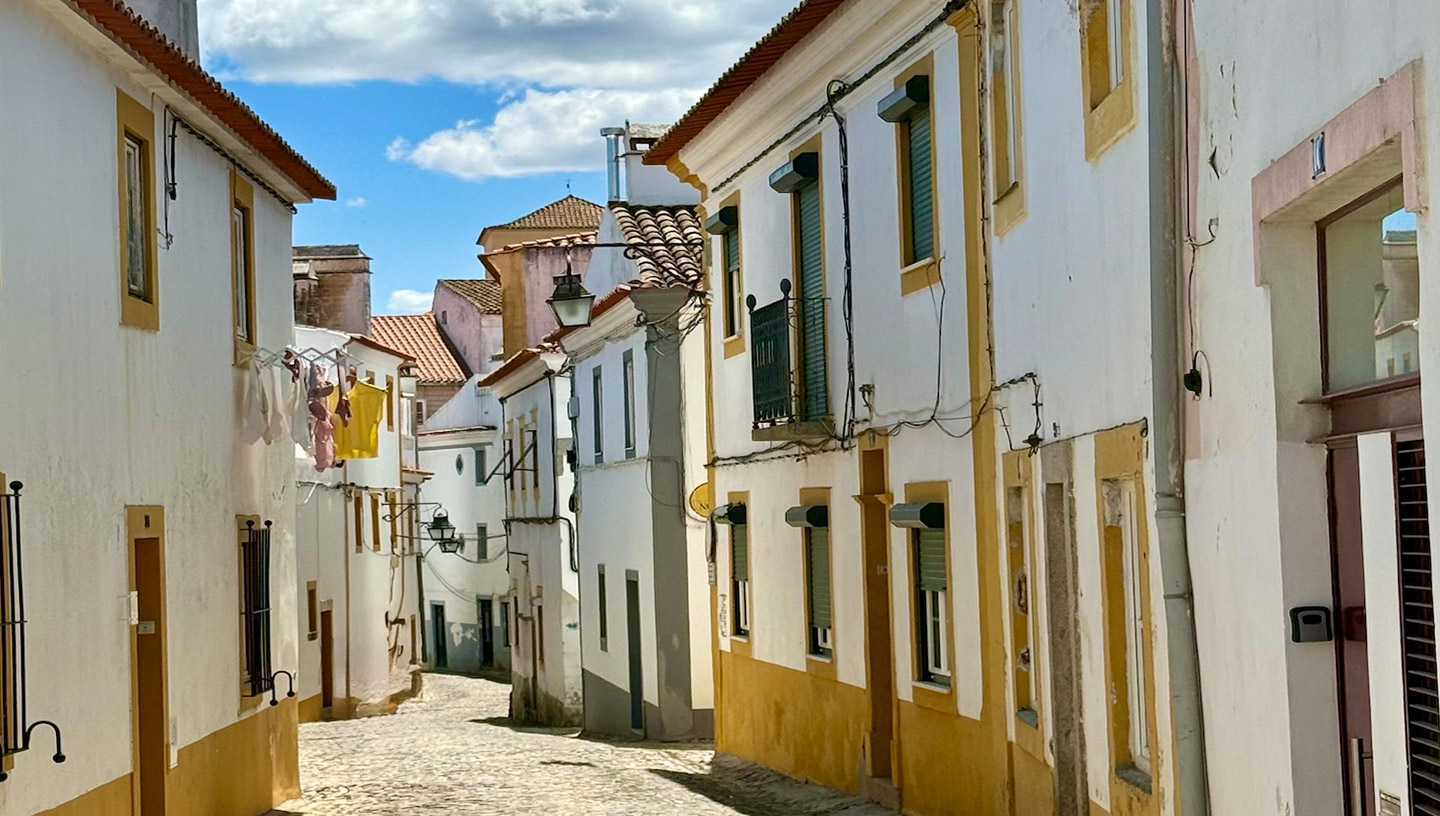
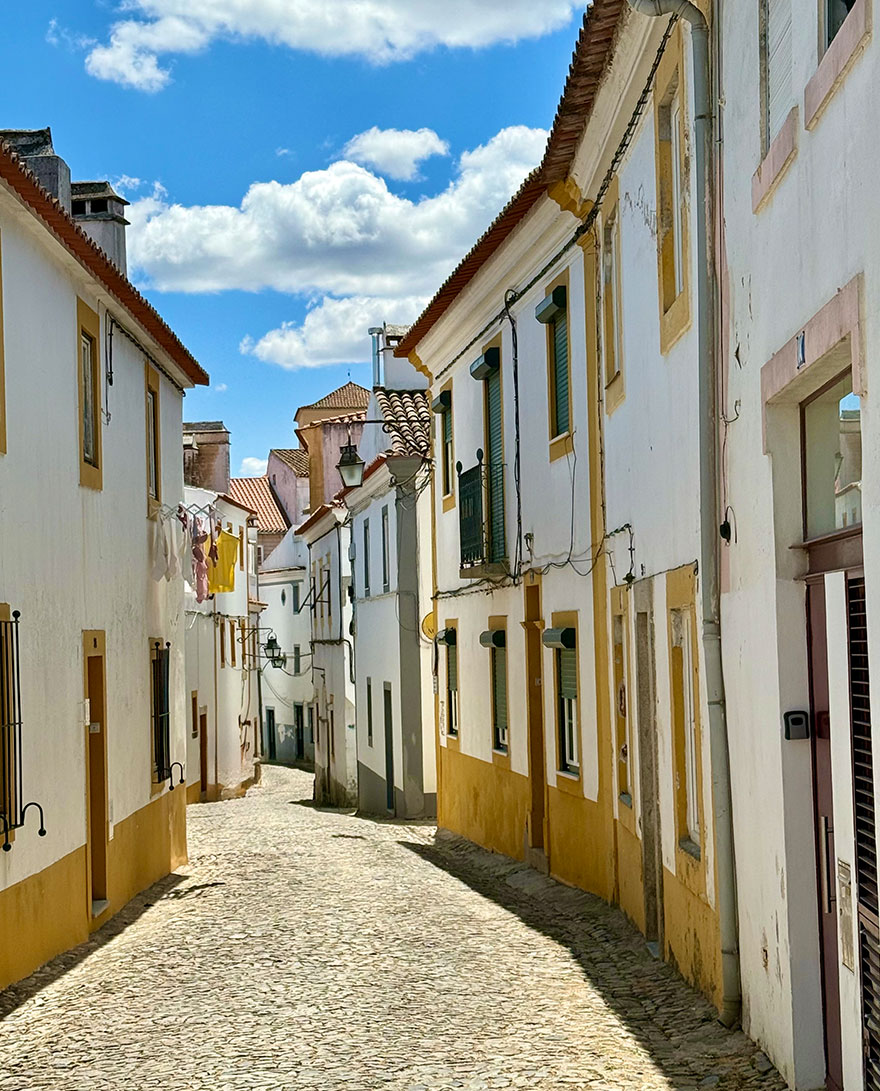
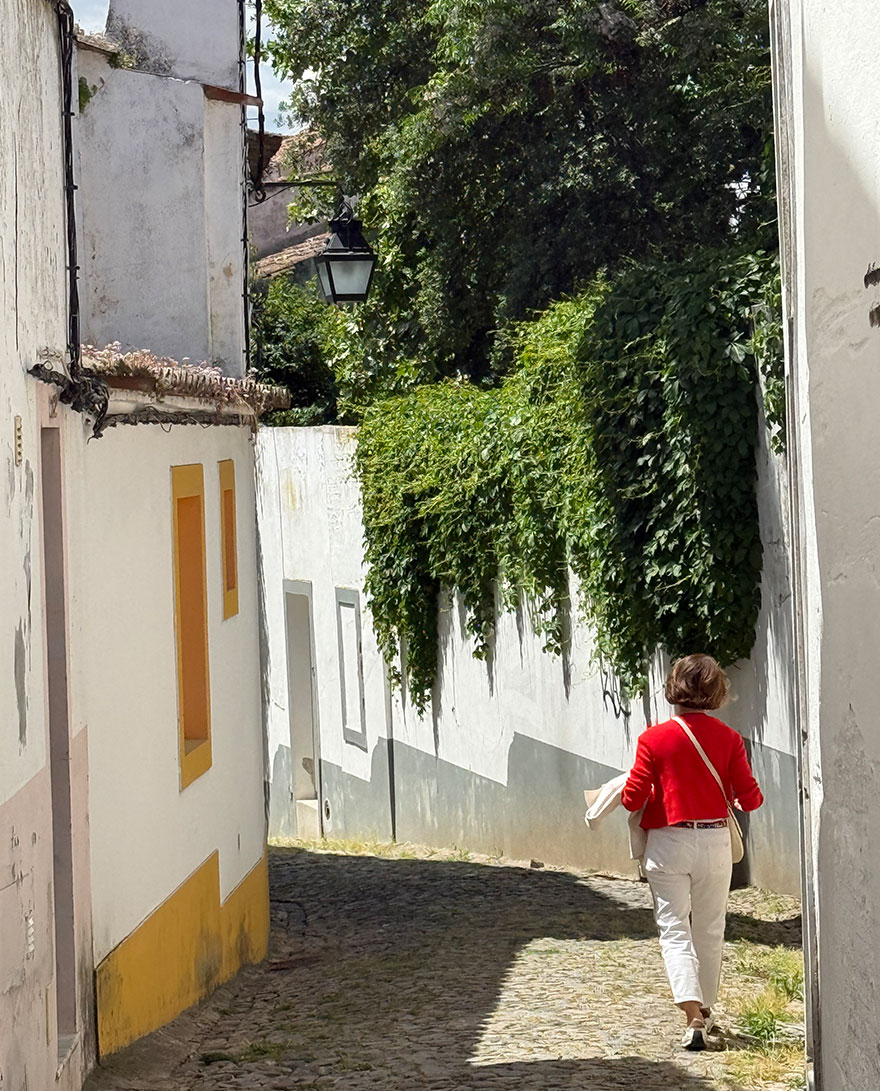
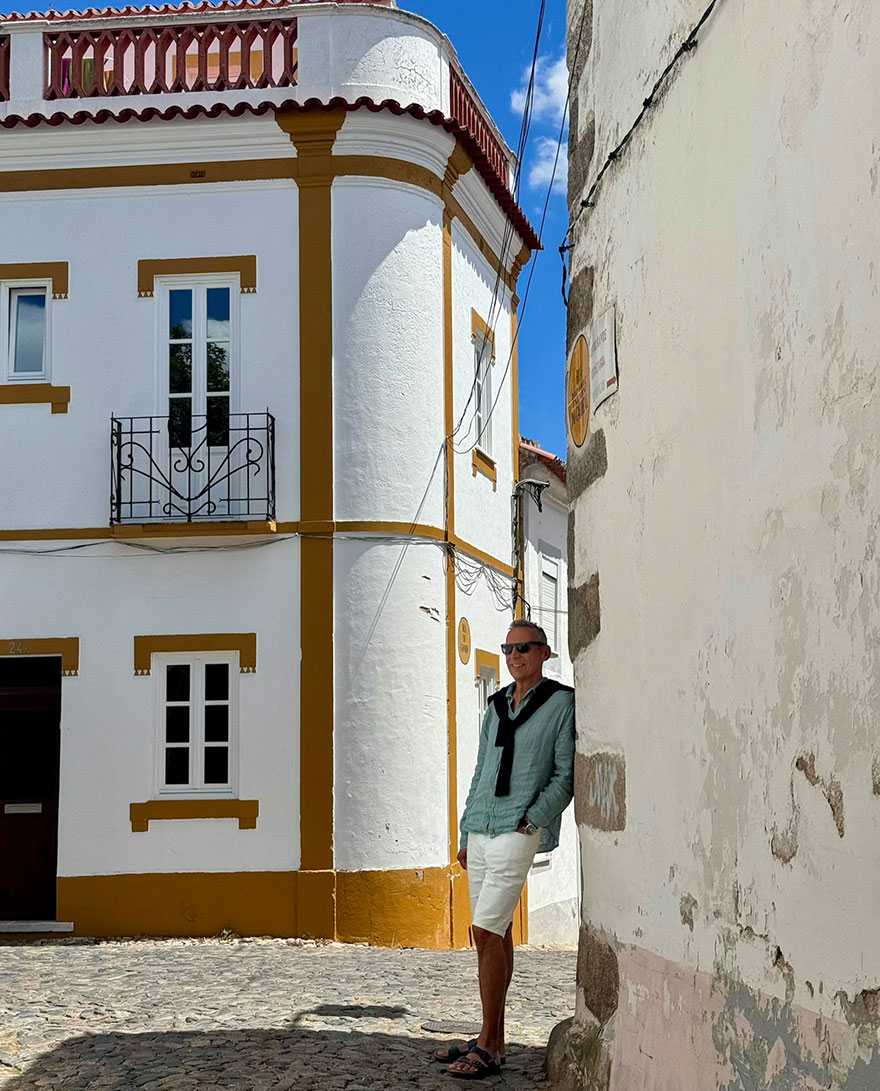
Once we had visited the main sights, we stopped for lunch and then spent time wandering through the quieter old town in north-western part of the town. Within the city walls is a labyrinth of cobbled lanes, whitewashed houses and buildings picked out with the mustard-yellow trim typical of the Alentejo. Washing hangs from balconies, wooden doors open onto little courtyards and tiled façades appear around unexpected corners. Travessa do Roque Pina is one particularly pretty street to head towards, but the pleasure is really in walking without a fixed route.
Shop
RUA CINCO DE OUTUBRO
Rua Cinco de Outubro is Évora’s principal shopping street, climbing from Praça do Giraldo towards the cathedral. Many shops sell the familiar cork handbags, ceramics and wooden souvenirs found throughout Portugal, and some are inevitably rather touristy. There are still worthwhile places to browse, particularly for regional food, handmade ceramics, linen, woven baskets and well-designed cork pieces. Look into the smaller side streets too, where shops tend to feel more individual.
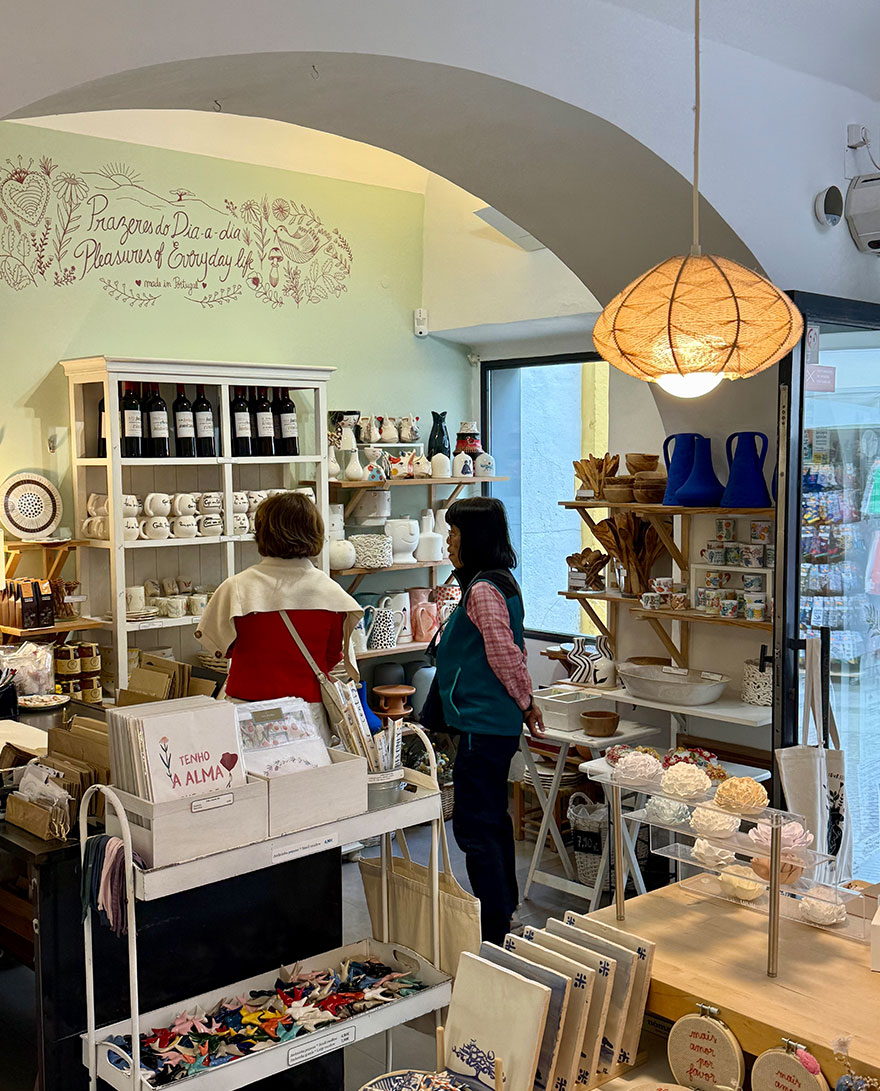
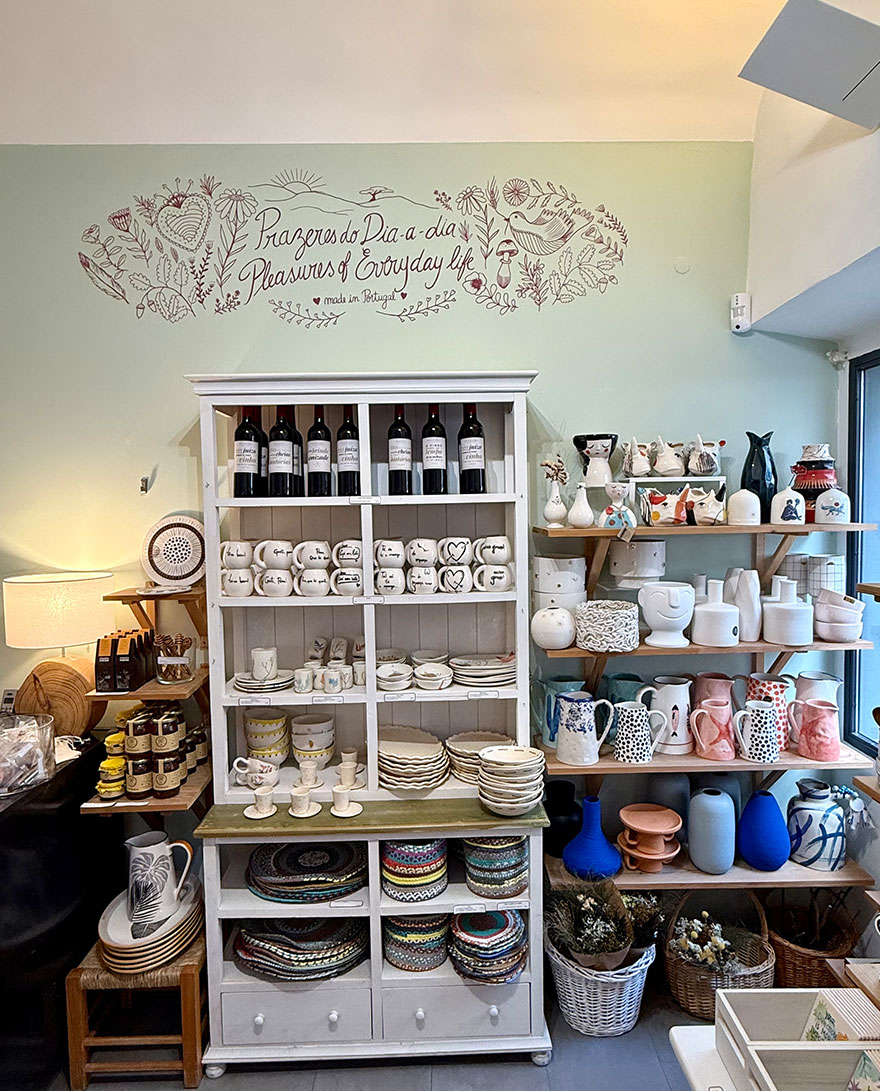
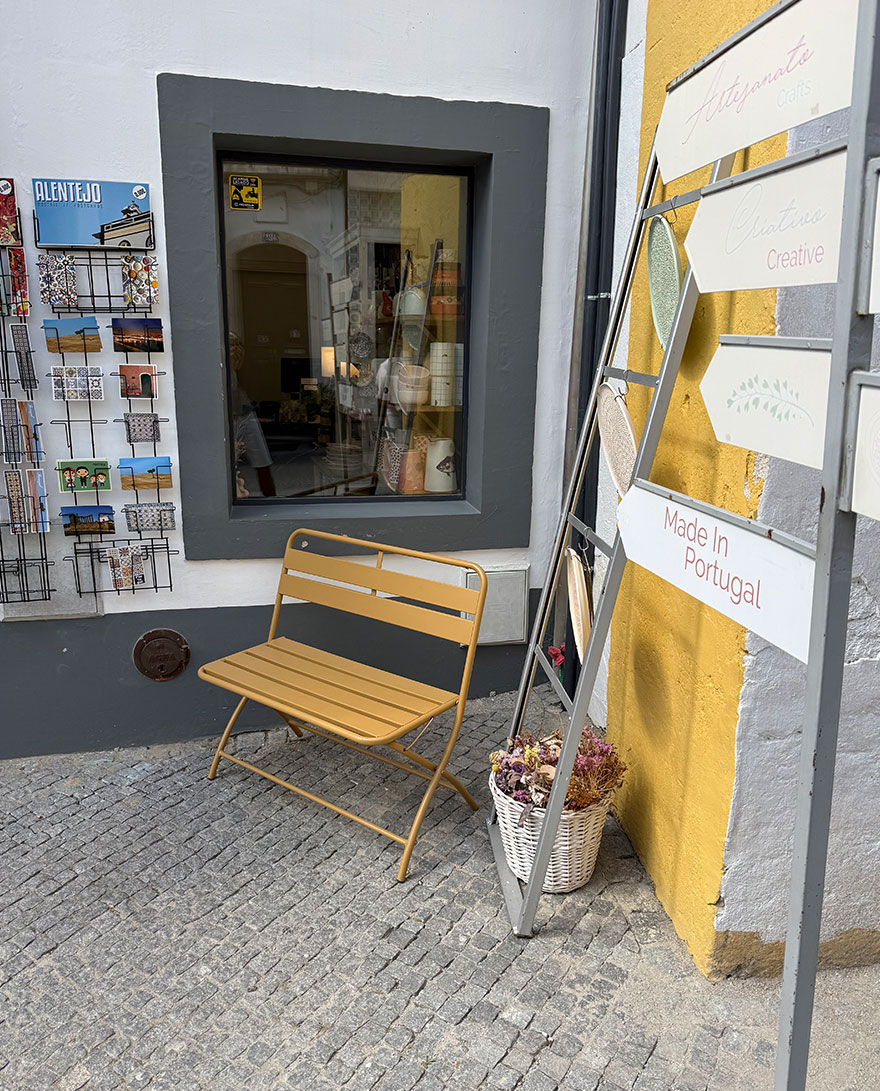
GENTE DA MINHA TERRA
Gente da Minha Terra was one of the shops we particularly liked. It offers a more attractive and carefully selected alternative to the mass-produced souvenirs found elsewhere on the street. Inside is a colourful mixture of Portuguese ceramics, textiles, cork accessories, baskets, gifts and decorative pieces. Many items are made by Portuguese artisans and have a strong connection to the colours and traditional crafts of the Alentejo.
Dine
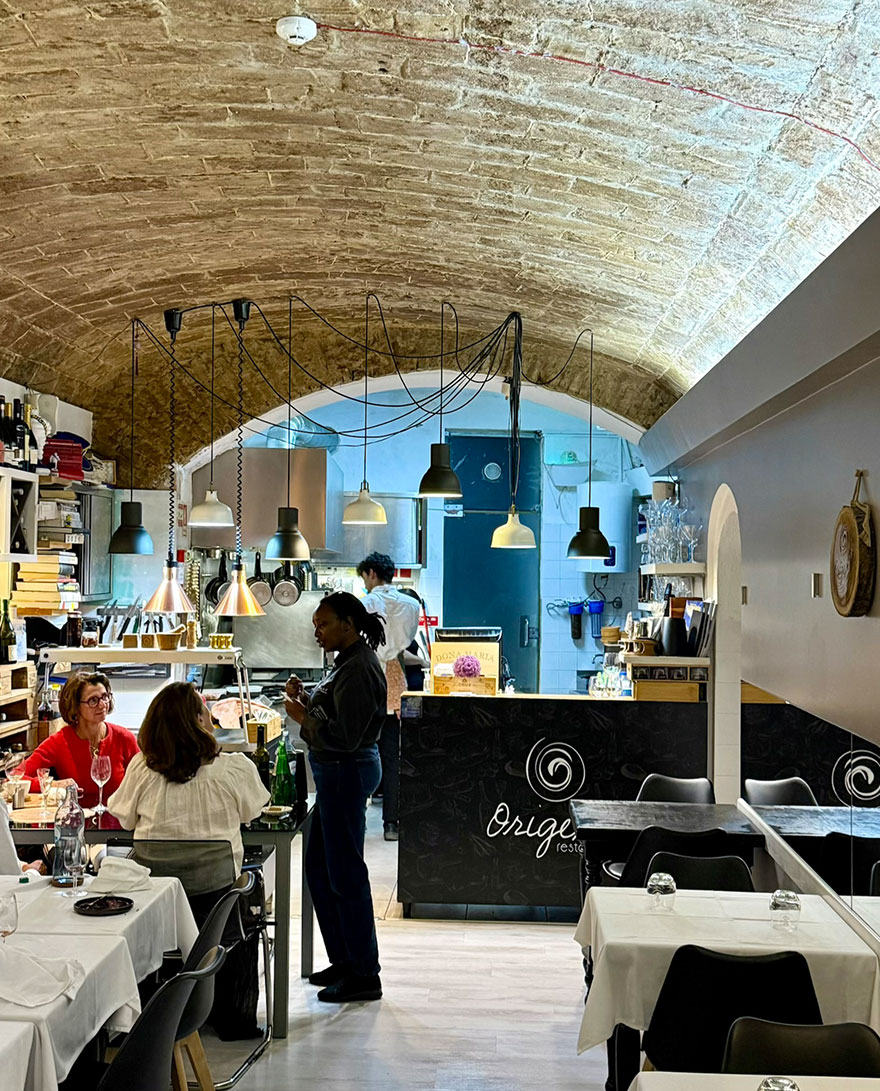
RESTAURANTE ORIGENS
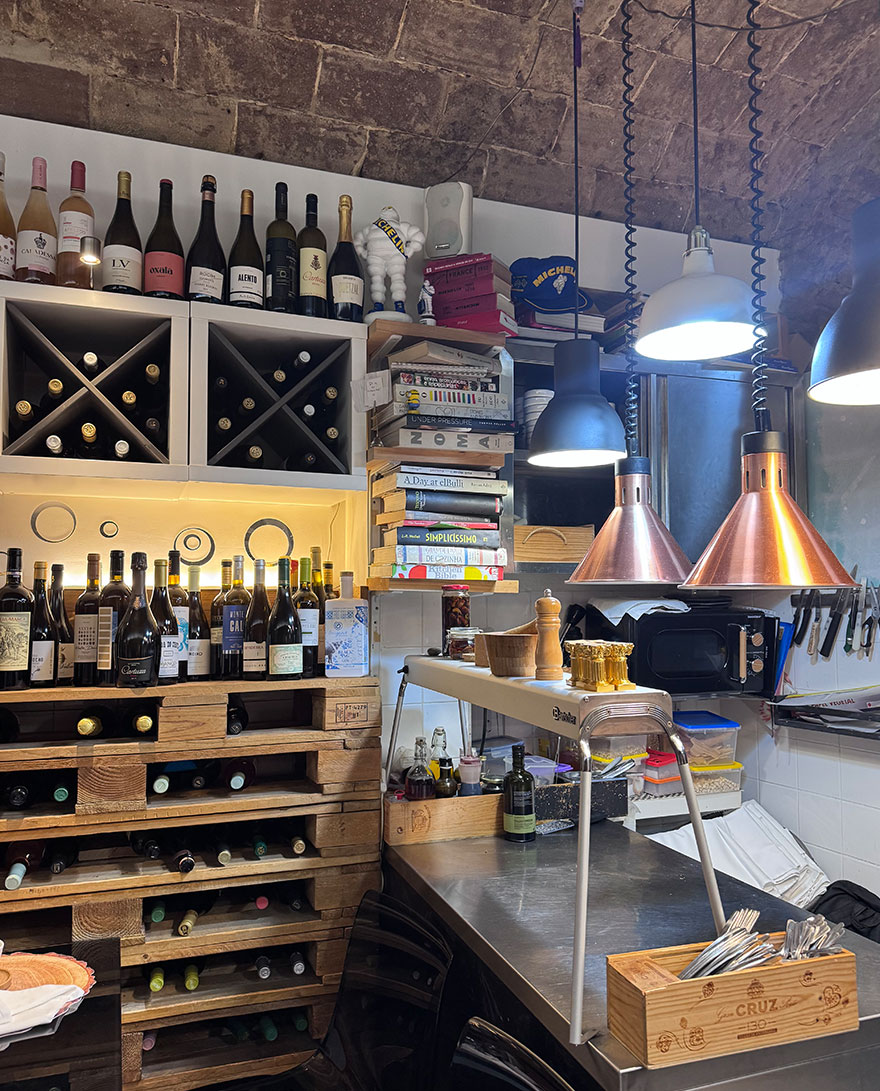
Origens is a small, family-run restaurant tucked into a narrow lane in Évora’s historic centre. Chef Gonçalo Queiroz runs the kitchen while his wife, Eugénia, looks after the dining room and wine. The space is intimate and welcoming, with only around 24 seats, so booking ahead is essential. The restaurant showcases the ingredients and traditional flavours of the Alentejo in a more contemporary style. The presentation is careful and modern, but the food still has a clear connection to the region rather than feeling like it could have been served in any city.
The menu changes with the seasons and is available à la carte or through a choice of tasting menus. Expect local vegetables, regional cheeses, Alentejo pork and other ingredients sourced according to what is available. Michelin describes it as a restaurant with “Alentejo soul”, which feels like an accurate summary.
BOTEQUIM DA MOURARIA
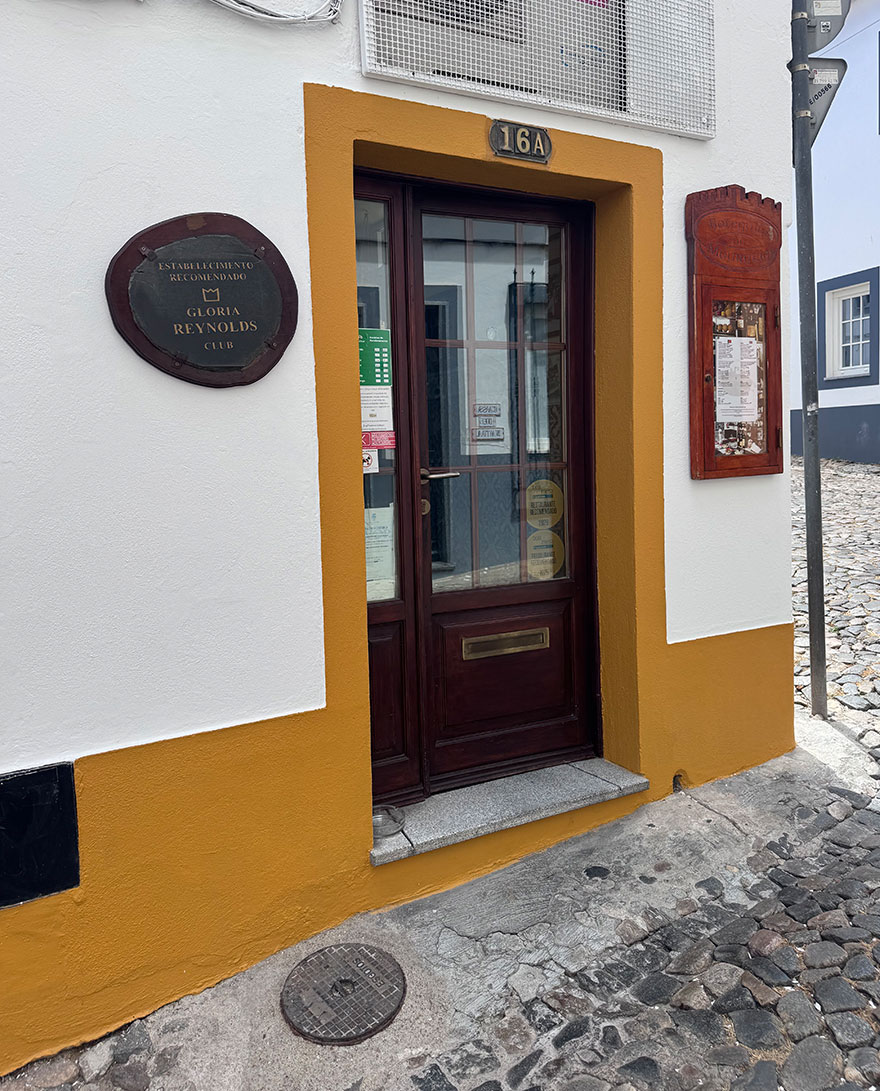
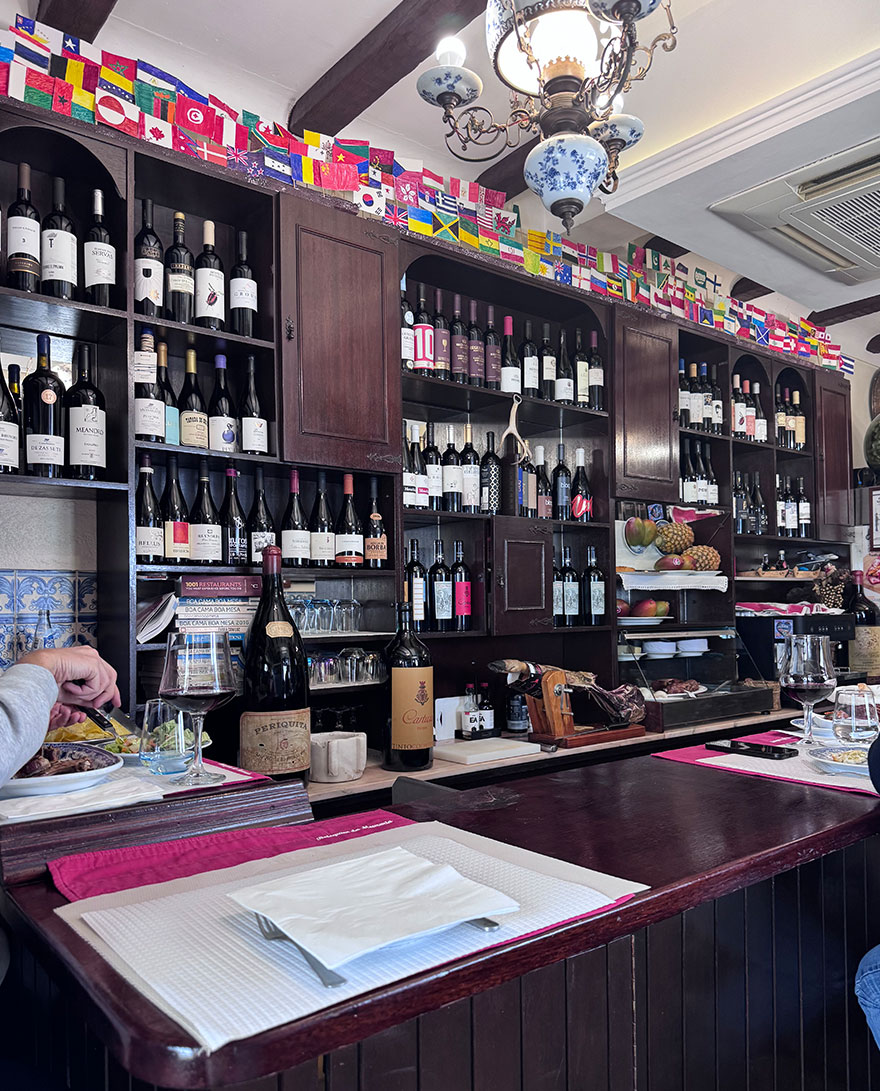
Botequim da Mouraria is one of Évora’s more authentic and characterful places to eat. This neighbourhood bar is tiny, with a long wooden counter and only a handful of stools. The menu is based around generous plates of Portuguese and Alentejo food, including regional cheeses, cured meats, grilled fish, black pork and traditional stews. Portions are hearty, and dishes arrive without unnecessary decoration. Space is limited, so arrive early to find a stool at lunchtime.
Drink
COURELAS DA TORRE BIO GOURMET
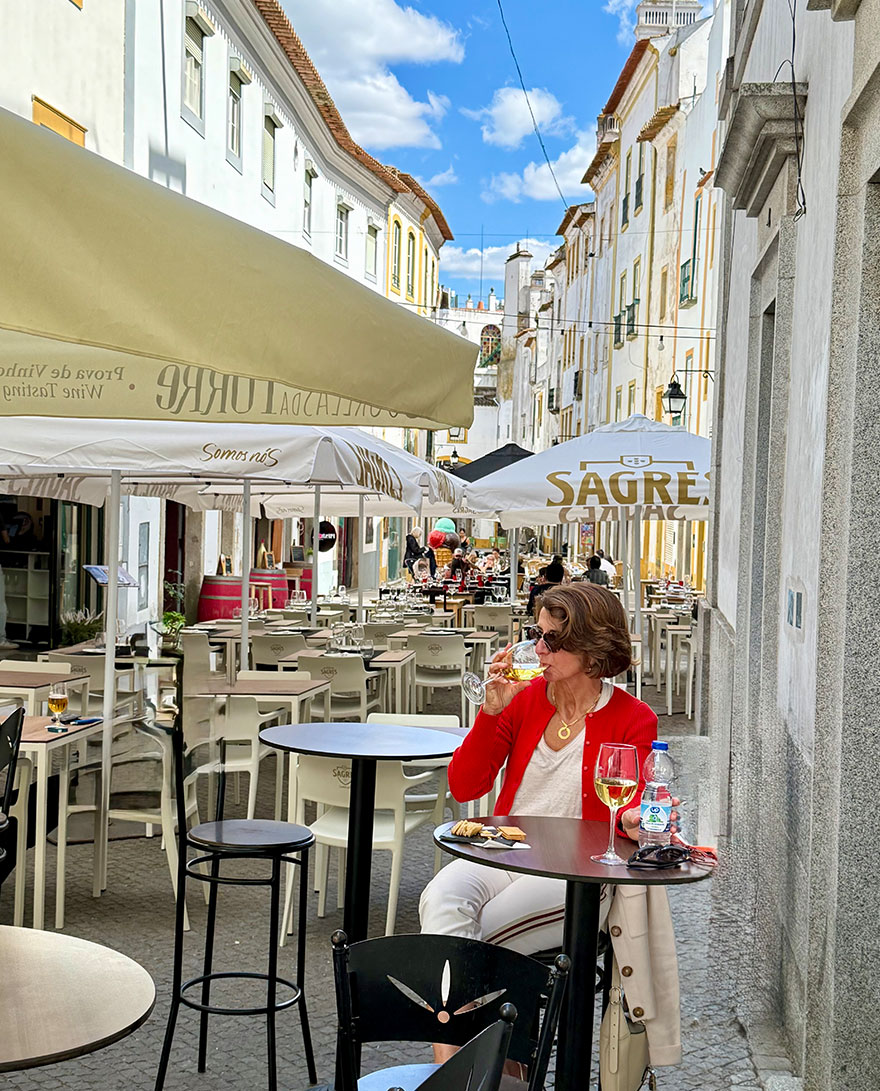
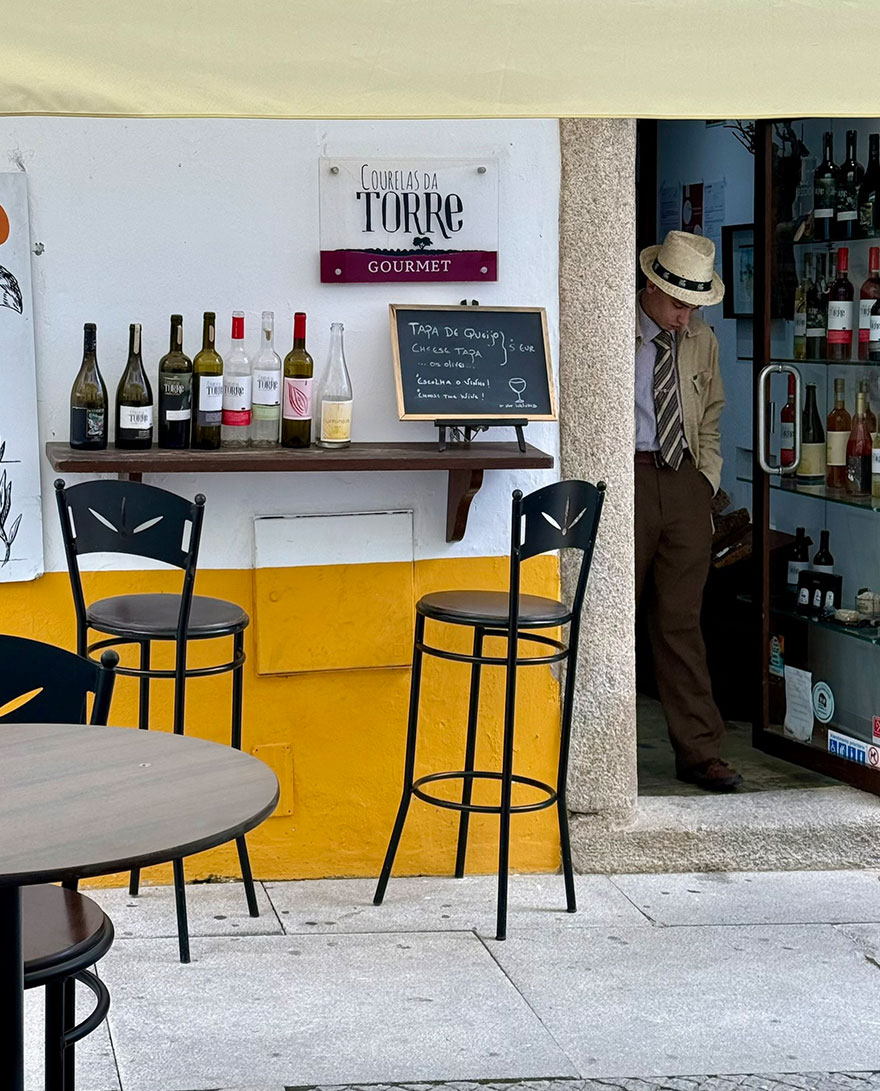
Courelas da Torre Bio Gourmet is a small wine shop and tasting bar run by the family behind the Courelas da Torre organic winery. It sits just off Rua Cinco de Outubro and is an easy place to stop between sightseeing and shopping. Shelves are filled with the family’s organic wines alongside regional olive oils, preserves, spirits and other Alentejo products. There are a few stools and small tables where you can sit and try a glass before deciding what to buy. The atmosphere is informal and friendly, with staff happy to explain the different grapes, vintages and styles.
Coffee & Cake
PASTELARIA CONVENTUAL PÃO DE RALA
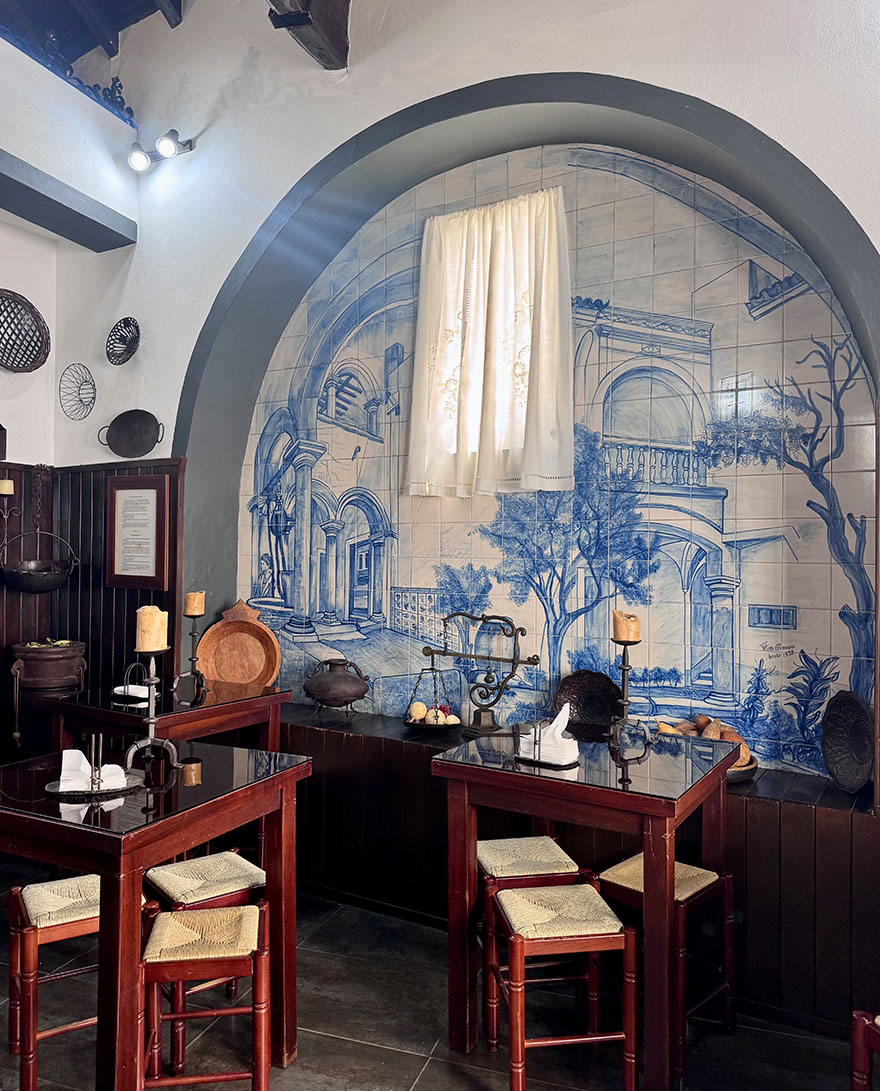
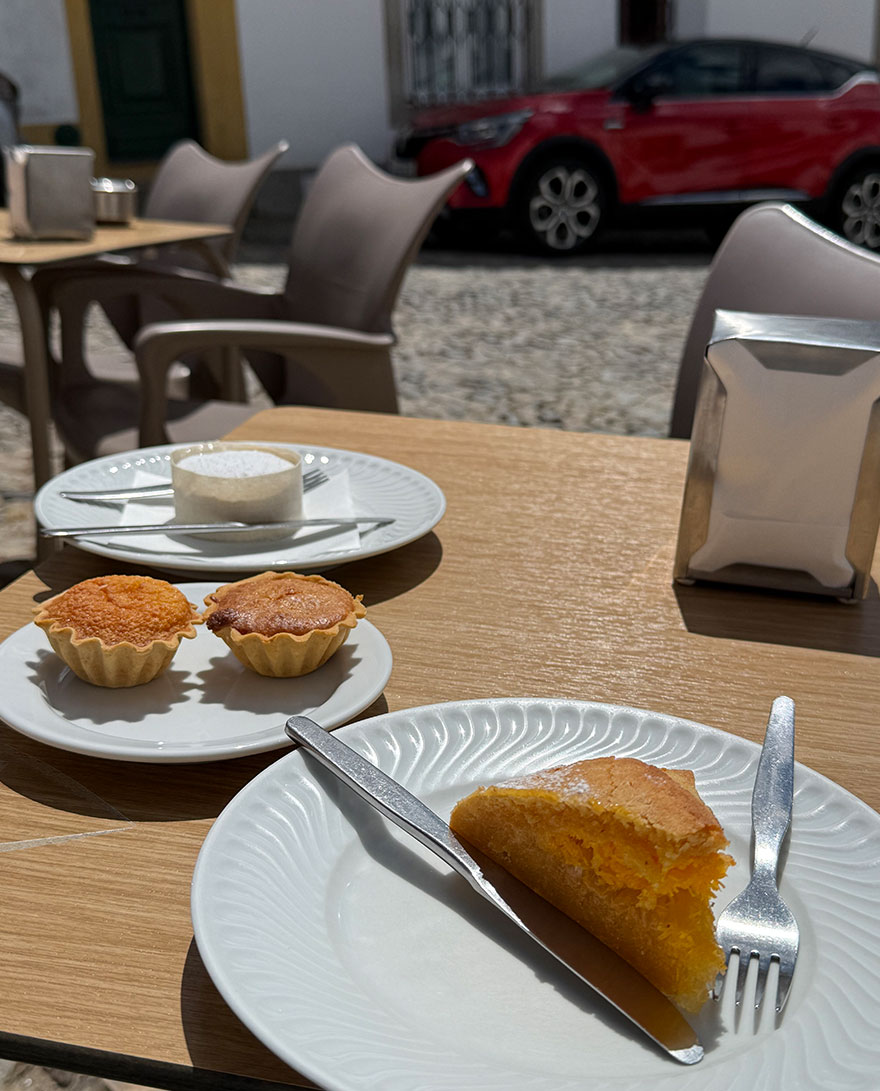
Pastelaria Conventual Pão de Rala is one of Évora’s best-known traditional pastry shops, and somewhere we had read about before our visit. There is a pretty little terrace outside, while the interior is decorated with hand-painted blue-and-white azulejo tiles. Lisbon may have the pastel de nata, but Évora has its own rich collection of “doces conventuais” or “convent sweets”. These were traditionally created in Portuguese convents using egg yolks, sugar, almonds and local cheese. The display counter here is piled high with them, making it rather difficult to choose.
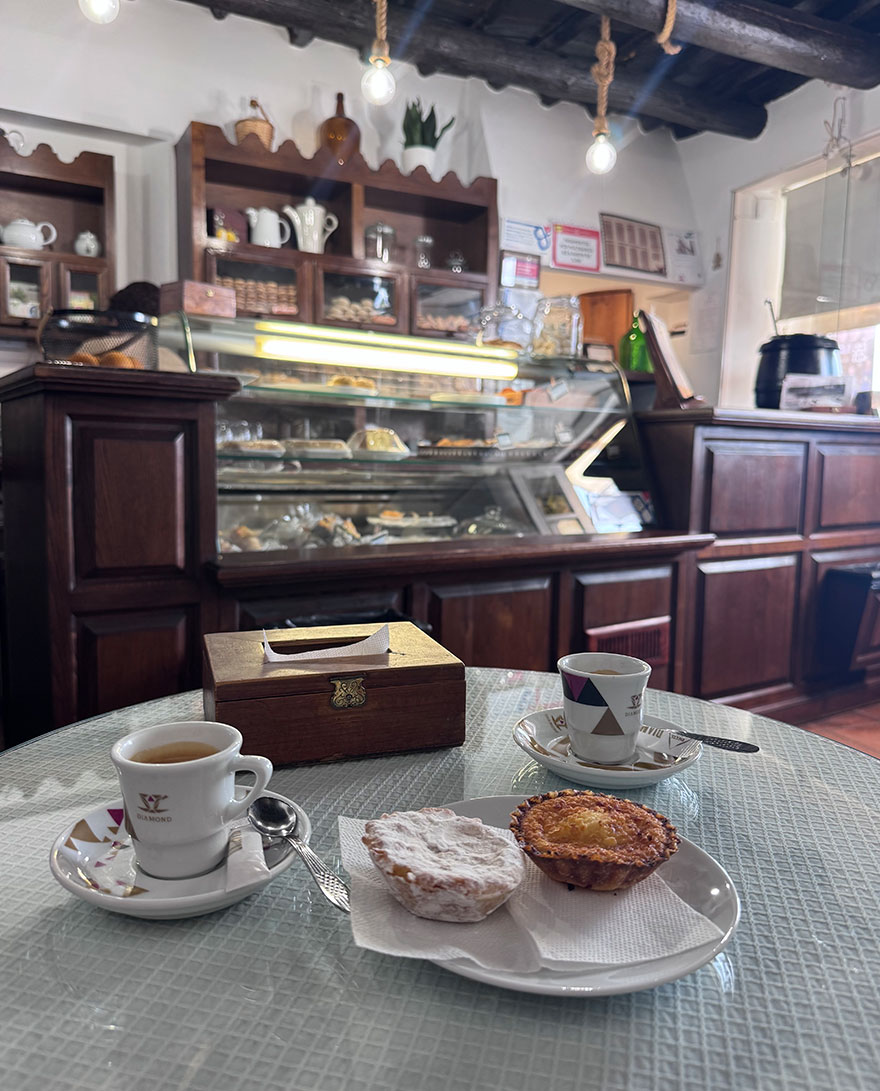
We arrived in time for a mid-morning coffee and tried several local specialities. Queijadas de Évora are small, lightly sweetened cheesecakes, pão de rala is a rich almond-based cake filled with egg-yolk cream and sweet squash preserve, and Sericaia is a light, soufflé-like sponge, traditionally flavoured with cinnamon.
PAU DE CANELA
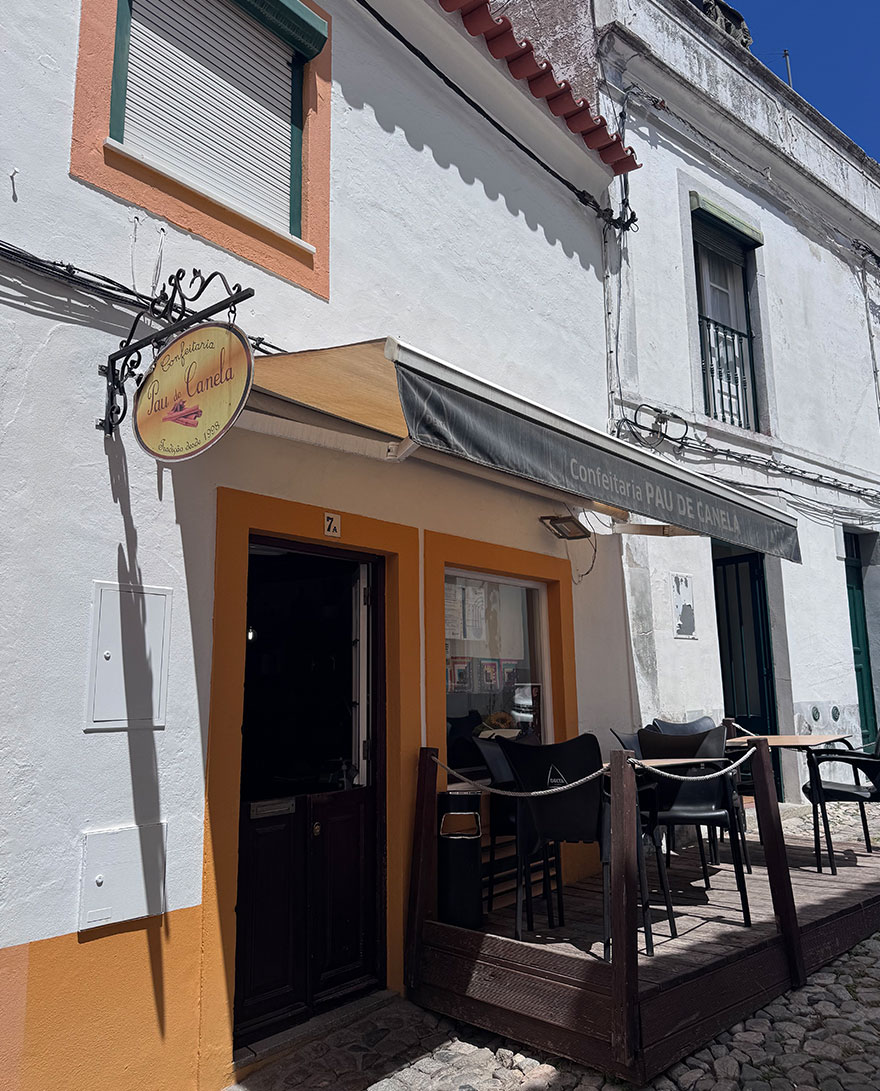
Pau de Canela was a more straightforward and authentic pastelaria that we found while wandering through the old town. It lacks the decorative interiors and reputation of Pão de Rala, but that was part of its appeal. This is the kind of neighbourhood café where locals stop for an espresso at the counter, pick up bread or order a pastry. It is ideal for a quick coffee and cake while exploring the north-western part of Évora.
Ice cream
GELATARIA PEZAGNO
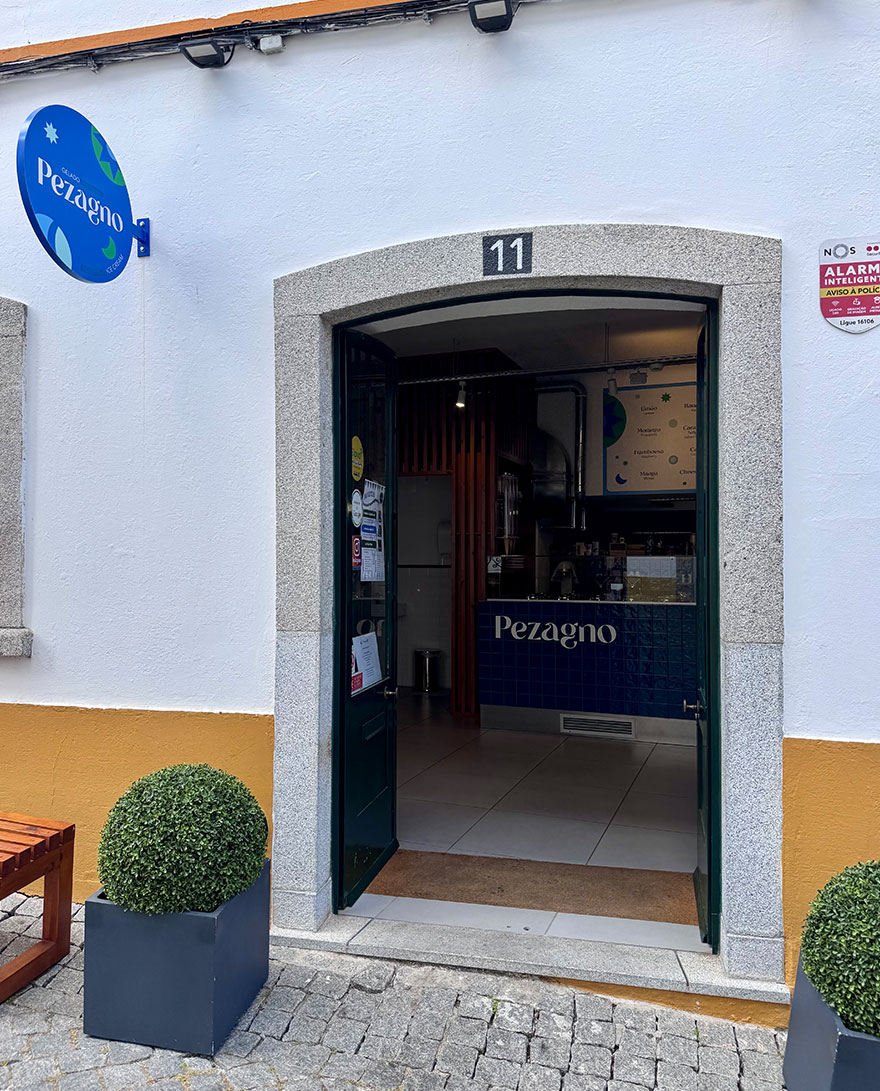
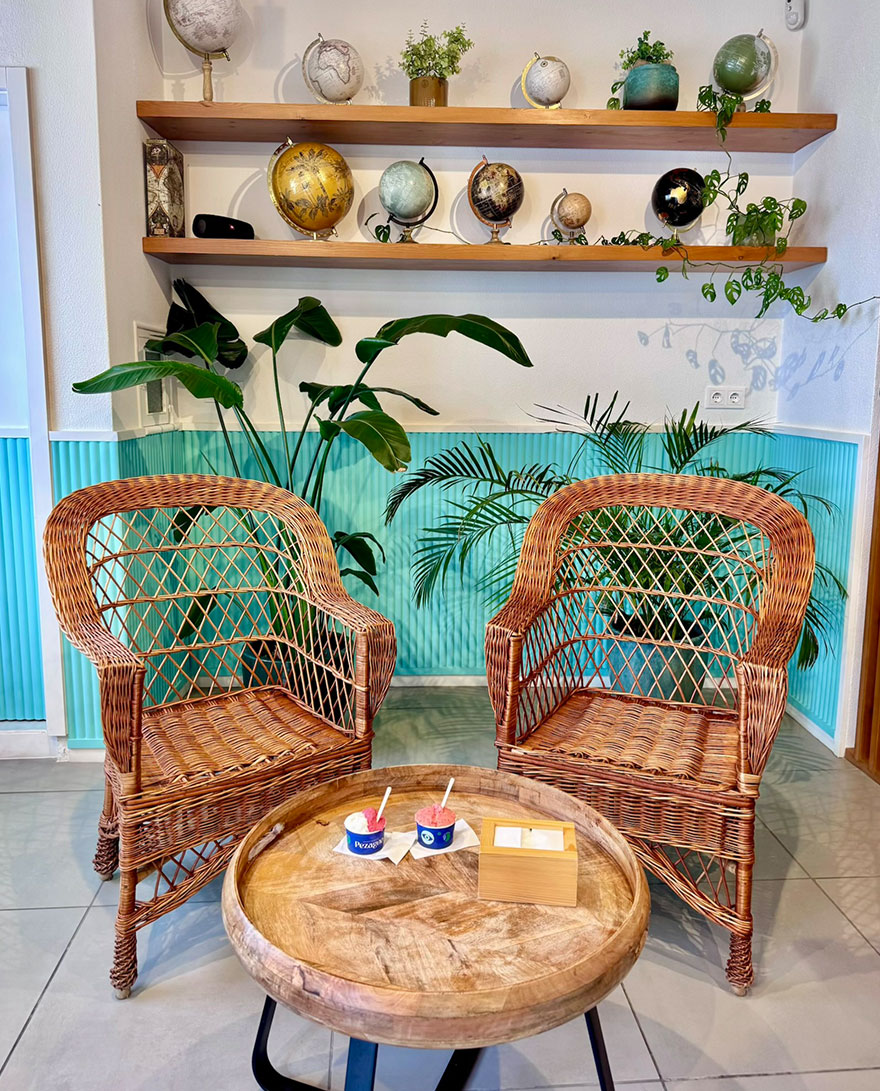
Gelataria Pezagno is a small artisan gelateria in the historic centre, well placed for a cooling stop during a warm afternoon of sightseeing. The counter has a changing selection of fruit sorbets and creamy gelato, with flavours ranging from familiar chocolate and pistachio to options using seasonal Portuguese fruit. The texture is smooth, and the flavours taste fresh.
Why a trip to Évora?
Évora combines an extraordinary concentration of history with the relaxed pace and excellent food of the Alentejo. In a single day, you can move between a Roman temples, a medieval cathedral roof, tiled churches, cobbled streets and a chapel lined with human bones!
It is compact enough to explore on foot but varied enough to keep you busy from morning until dinner. Between the historic sights are traditional pastry shops, wine bars, small independent stores and restaurants that make good use of the produce grown across the surrounding region.
Basing yourselves at São Lourenço do Barrocal adds another side to the trip. You can spend time exploring Évora’s streets and monuments, then return to the calm of the estate for vineyards, long breakfasts, swimming and evenings over Alentejo wine. For us, this was an ideal combination: one of Portugal’s most beautiful historic cities paired with a wonderfully peaceful country hotel.