Overview of our trip
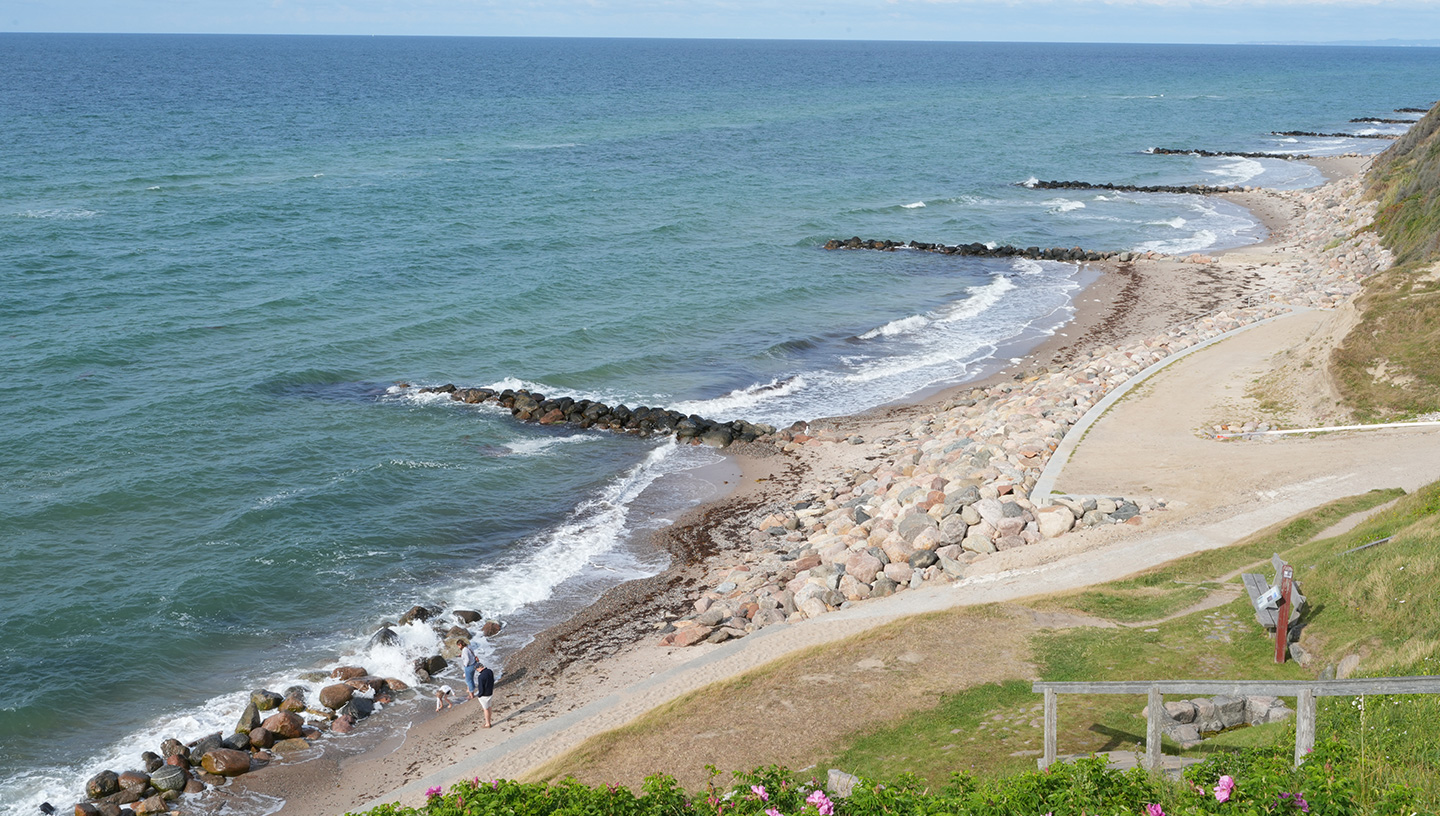
A friend from Copenhagen first told us about the Danish Riviera, the stretch of North Zealand coastline running above the capital. We then read an article about it in Condé Nast Traveller. It sounded like a good option to add as part of our Scandi Summer holiday: small seaside towns with long sandy beaches backed by dunes, pine forests and pretty summer house. It is only around an hour from Copenhagen, so works brilliantly as an add-on to a city break.
It is the Danish Riviera, not the French Riviera: think Cornwall or Brittany rather than the Mediterranean! So, we did have a mix of sun and blue skies along with clouds and a bit of light rain. But somehow the weather suited the landscape: big skies, windswept dunes and pulling on a jumper before walking to the beach.
We concentrated on three towns along the coast. We started in Liseleje in the west, moved east to Tisvildeleje and went further east to visit Hornbæk, where a friend has a summer house. They are only around half an hour apart by car, so you could easily choose one base and explore the others from there. Liseleje felt the smallest and most old-fashioned, Tisvildeleje had the strongest mix of beach, cafés and boutiques, while Hornbæk was bigger and busier.
LISELEJE
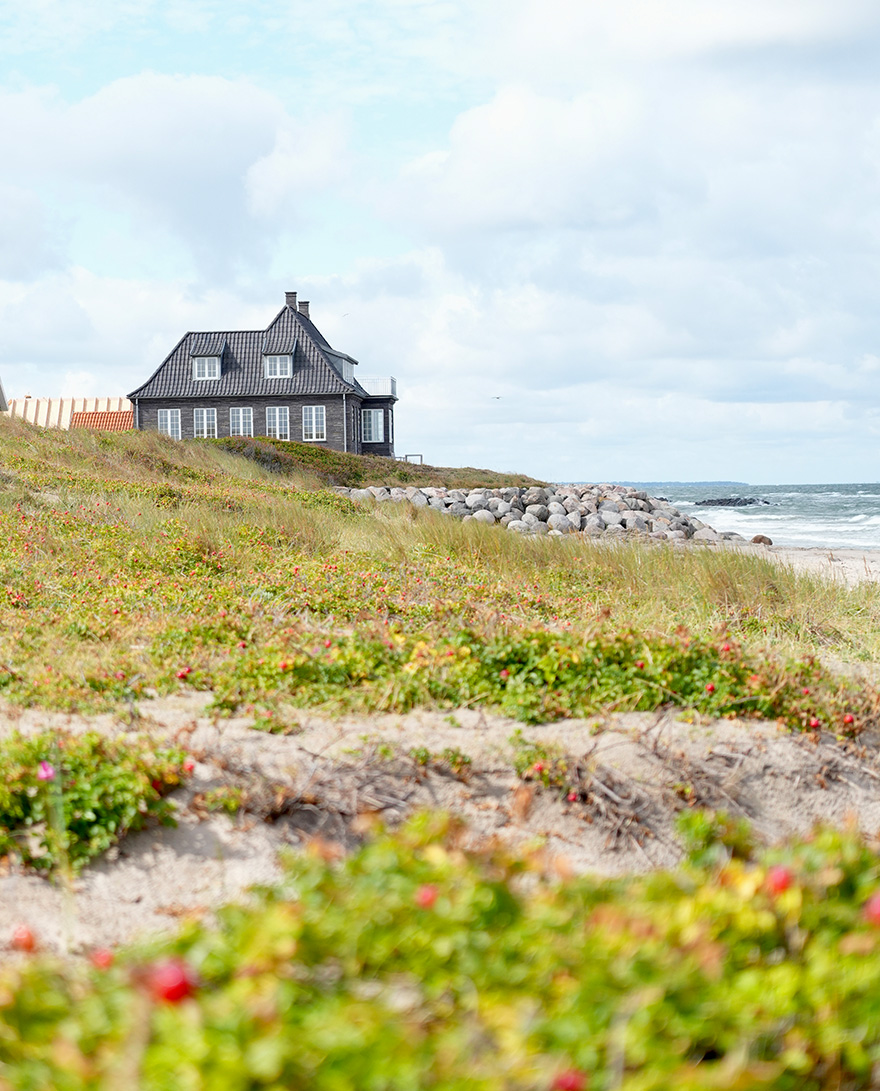
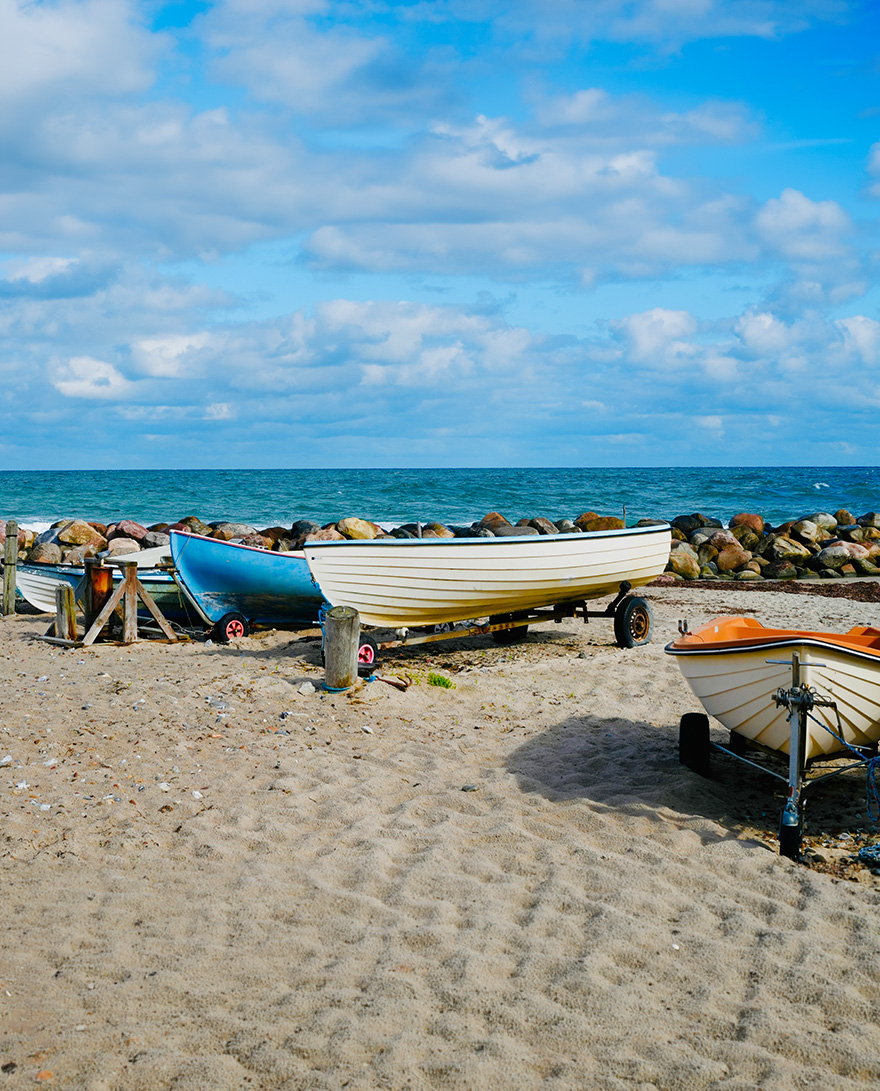
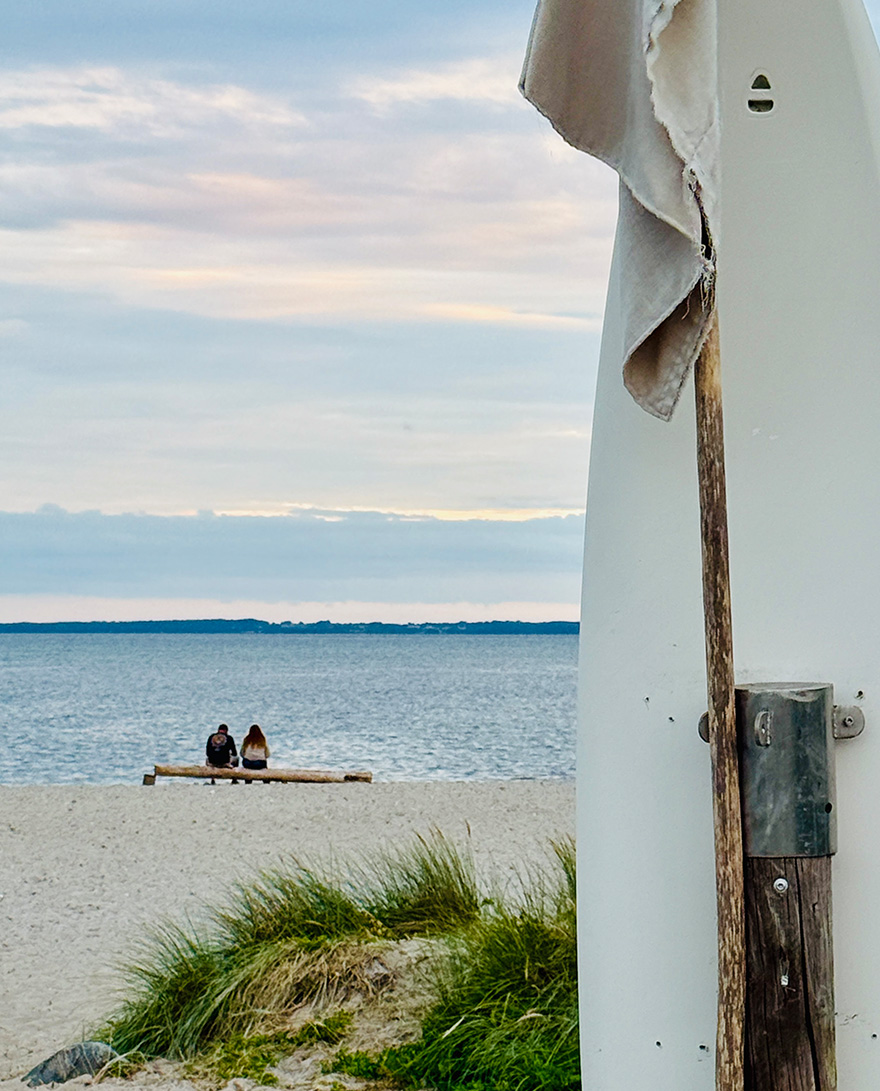
Liseleje has a relaxed, slightly old-school seaside feel. The centre is small, with cafés, a few shops and summer houses spreading out towards a wide sandy beach backed by dunes. Copenhagen families have been coming here for generations, and it still feels more like a traditional Danish holiday town. The beach is the main attraction, with plenty of space to walk, swim or simply sit in the dunes, while the countryside immediately behind the coast adds to the sense of being properly away from the city.
Stay
LISELEJE BADEHOTEL
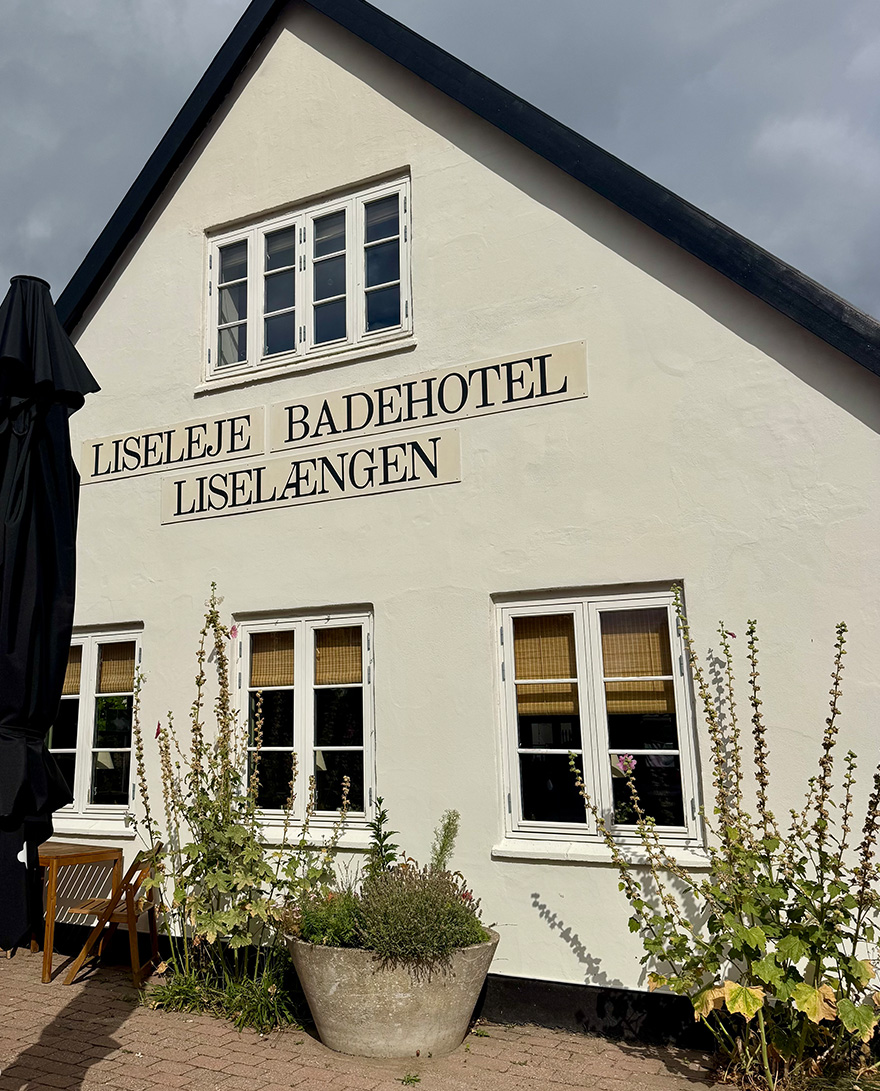
Summer houses are a huge part of Danish coastal life, but another tradition we quickly discovered is the badehotel, or bathing hotel. Liseleje Badehotel was our first stay and the simpler and more affordable of our two hotels. Set in a converted fisherman’s house close to the centre of the village, it has an easy and down-to-earth feel.
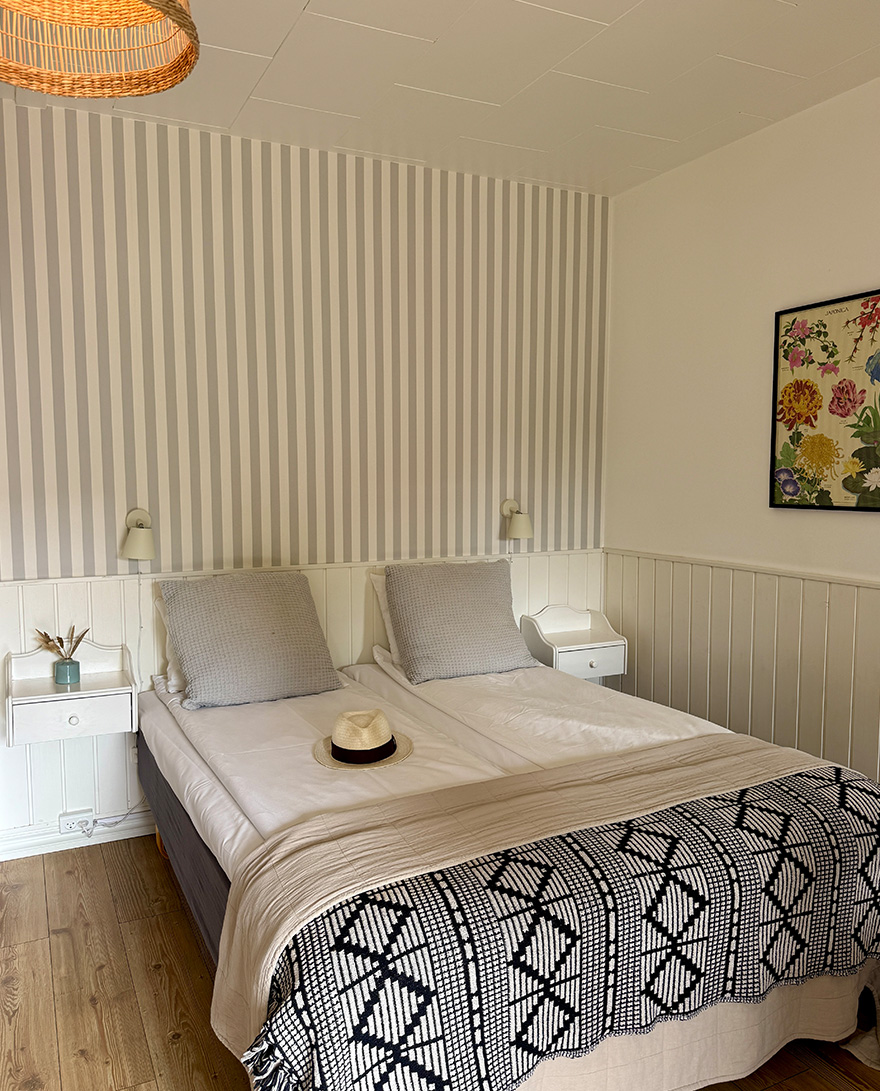
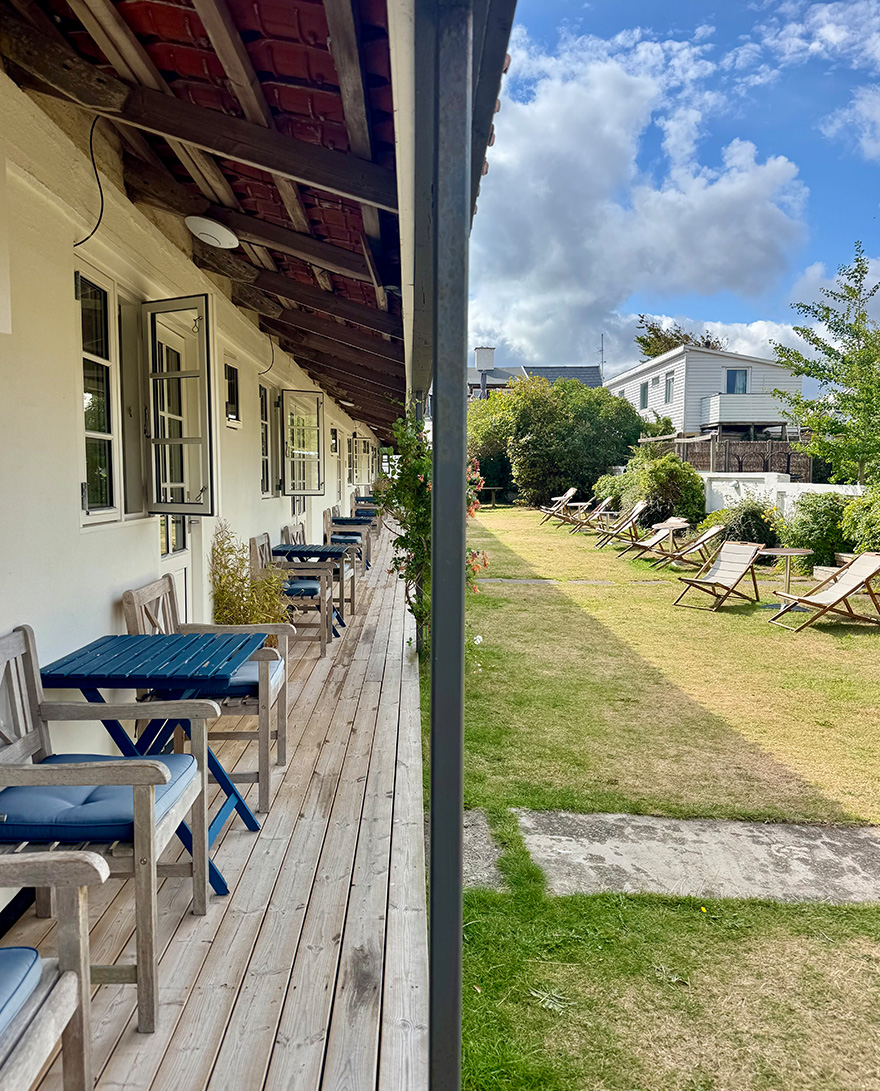
The interiors are classic Danish coastal style: tongue-and-groove panelling, striped wallpaper, pale wood, natural materials and lots of whites and soft neutral colours. Outside there is a shared garden with deckchairs where guests can sit with a book or coffee.
The bedrooms are in a separate single-storey building that has an almost American motel-style layout. We would definitely book a room overlooking the shared garden rather than the side road. The outlook is much prettier, with the rooms opening directly onto a narrow covered deck.
One of the best things here is the location. A path lined with grasses and wildflowers takes you to the dune-backed beach in less than five minutes. Rent a bicycle to explore more of the coastline or head towards the surrounding heath and forest.
Dine
MAMAS & TAPAS
Mamas & Tapas is the restaurant at Liseleje Badehotel and makes a welcome change from the predominantly Nordic food you find elsewhere along the coast. The Spanish connection comes from the couple behind the hotel having previously lived near Málaga. In the evening, the restaurant serves tapas and Mediterranean-style dishes. The dining room faces the village square and, in summer, the hotel spills outside onto the terrace, giving it a sociable holiday atmosphere.
LYNÆS MADBAR & SURFCENTER
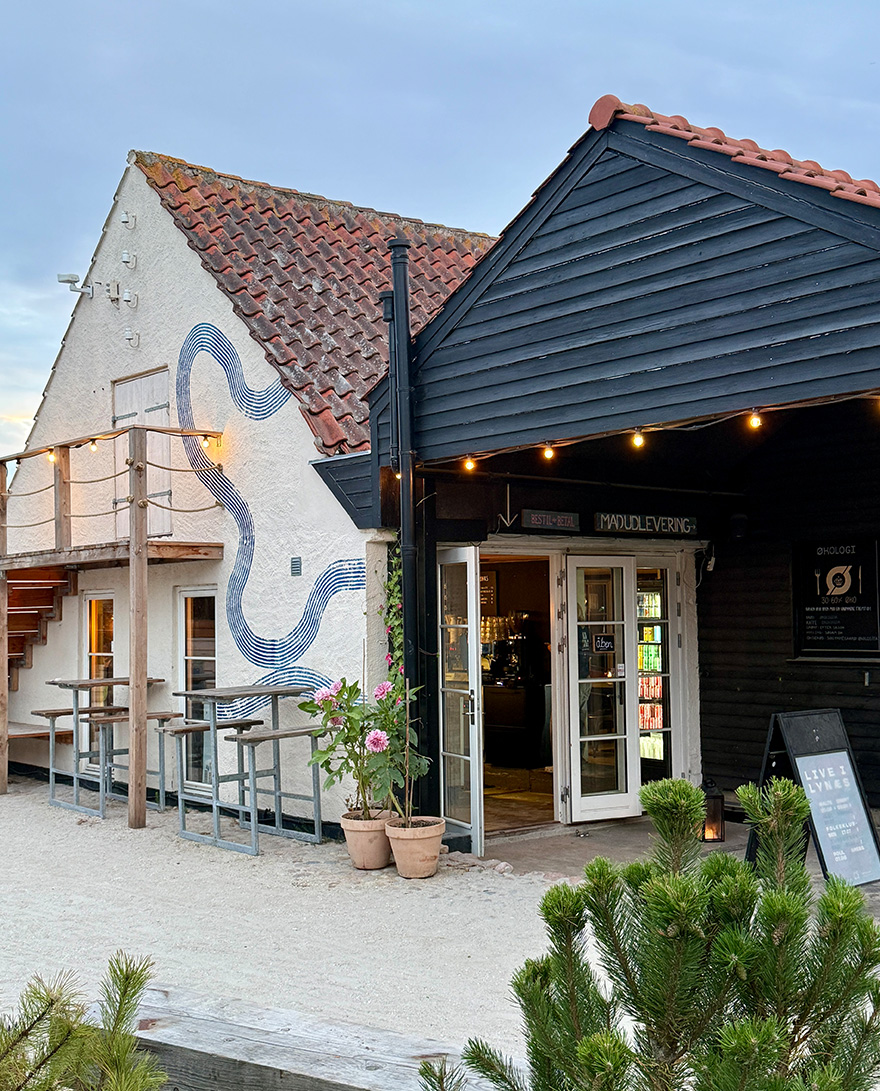
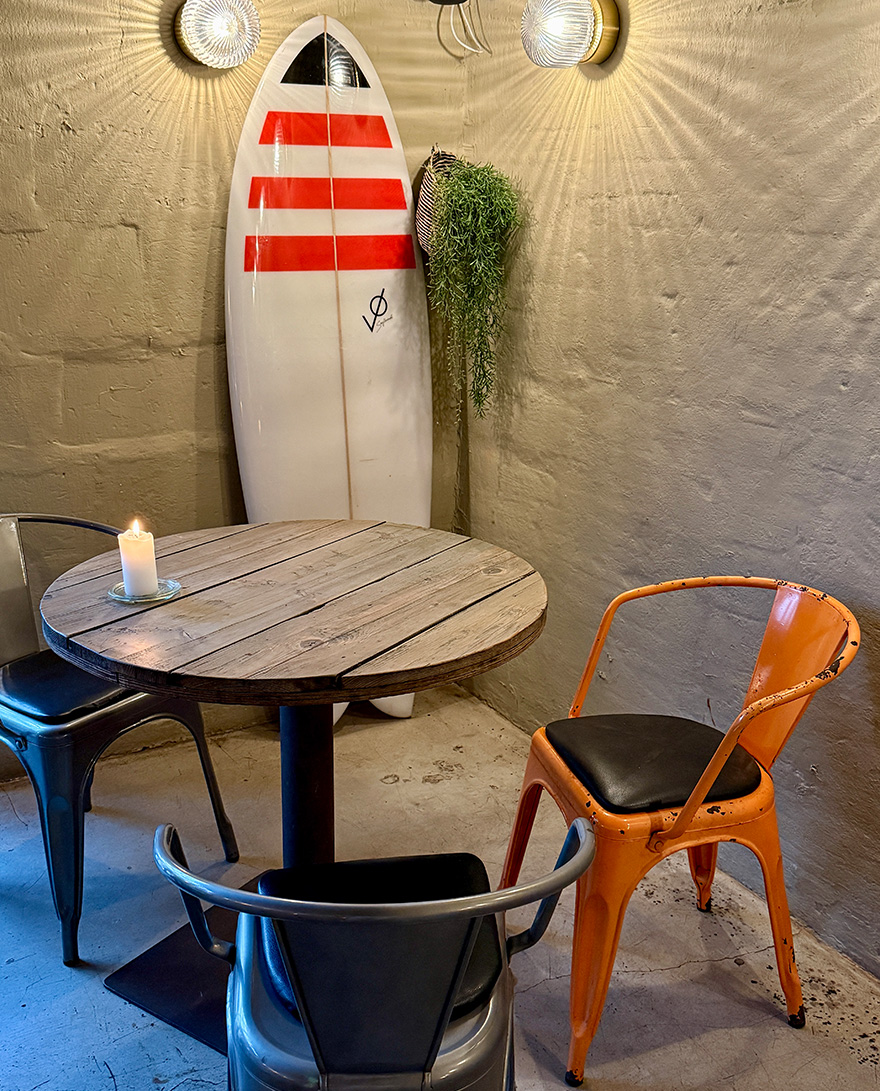
We drove west and south around the coast to Lynæs, where twins Jeppe and Johan Ingversen helped create a much younger, surfier scene around the harbour. Madbaren is the sit-down restaurant at Lynæs Surfcenter, overlooking Lynæs Harbour. The menu focuses on good burgers and pizza. They also have some good craft beers on tap. It is relaxed and informal, with the same surf-centre feel as the rest of the site.
Café
MICHAEL'S
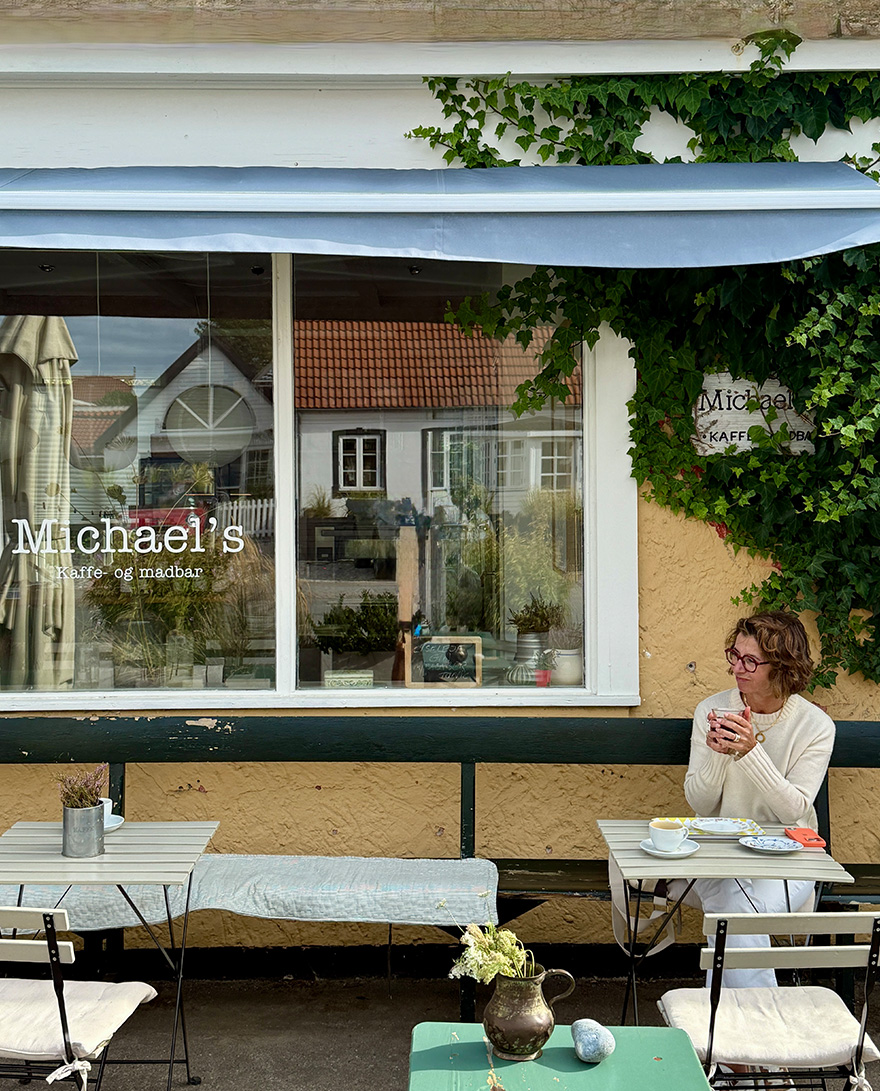
Michael’s is a small coffee and food bar in the centre of Liseleje with a cute little terrace and the sort of easy atmosphere that suits the town feels like a neighbourhood café There is a changing selection of simple food and homemade baking. It feels like a neighbourhood café and is an easy place to stop in the morning for coffee or later for something light.
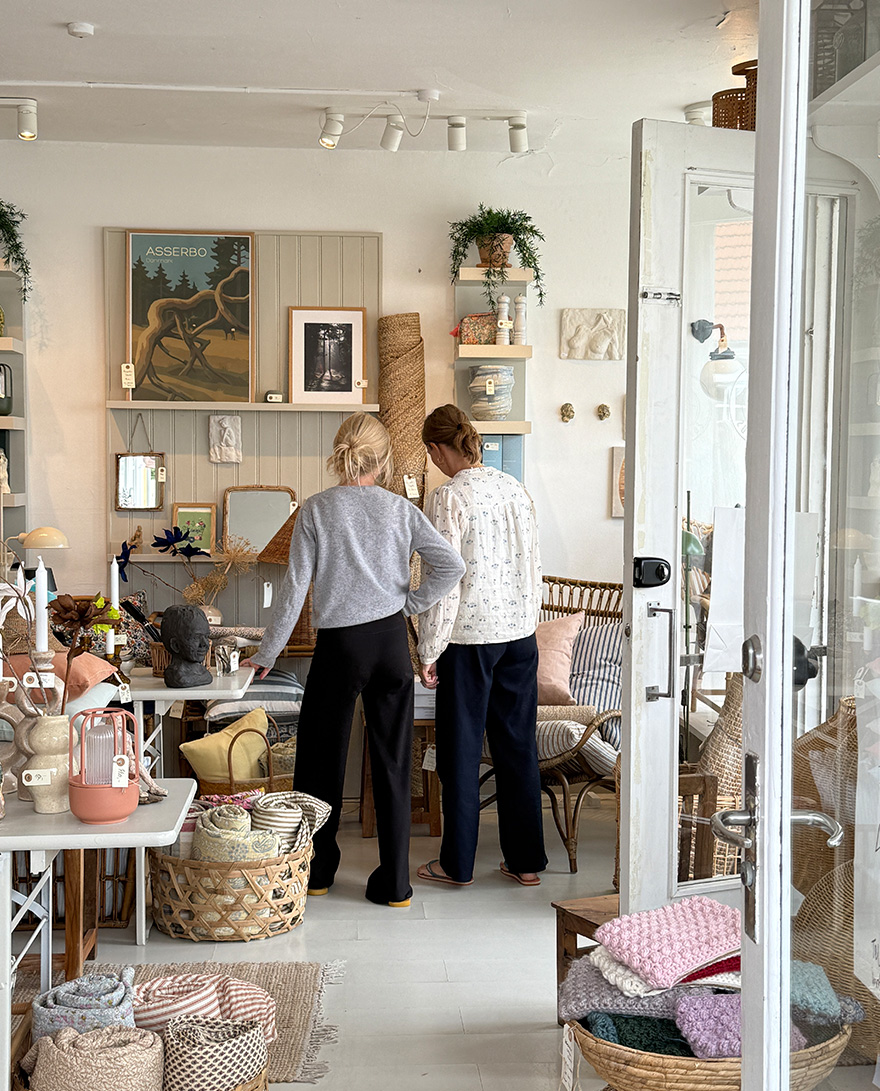
Right next door is Dit Summerhus, a small interior shop (below right). The look is very Danish coastal: simple pieces, natural materials and accessories made for one of the clapboard cottages tucked behind the dunes.
TISVILDELEJE
Creative Copenhageners have been coming to Tisvildeleje for years to spend summer in clapboard cottages and the main street now has a good collection of bakeries, restaurants, ceramics and interior shops. It is sometimes compared with the Hamptons, although to us the understated feel and slightly windswept landscape have much more in common with places such as Île de Ré.
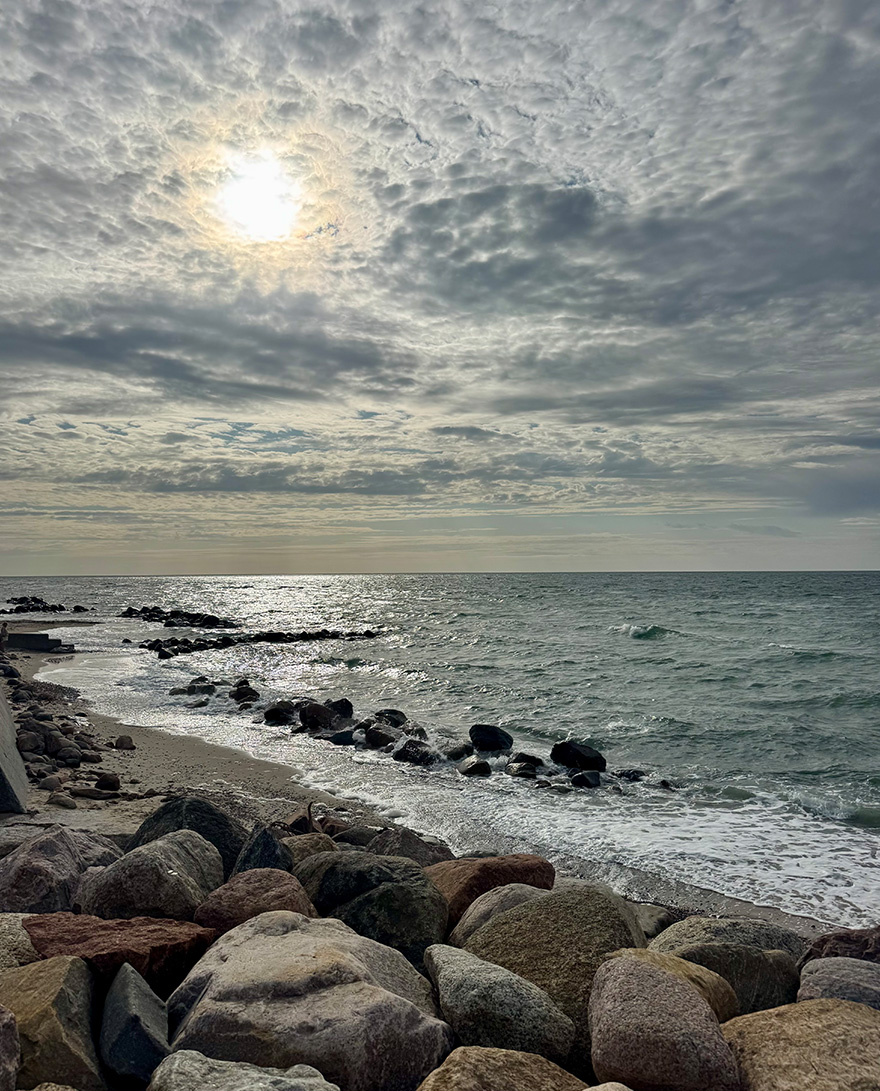
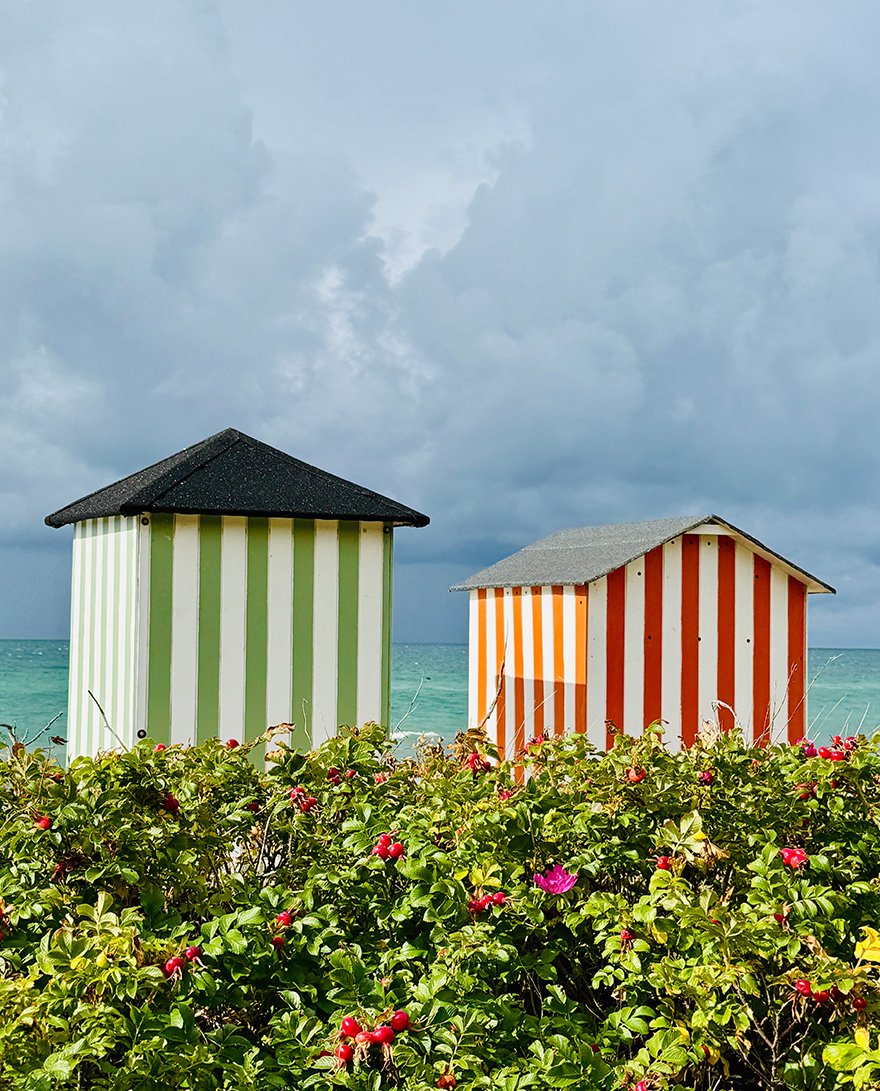
Nature is a big part of the appeal. The wide white-sand beach is backed by dunes and the colourful wooden bathing huts that have become one of the area’s signatures, while the huge Tisvilde Hegn forest starts virtually at the edge of town.
Stay
HELENEKILDE BADEHOTEL
Helenekilde Badehotel began life as a private summer house built in 1896 before becoming a bathing hotel in 1904. The Kølpin family took it over in 2001 and it is now overseen by former ballet dancer Alexander Kølpin, whose hotel group also includes Sanders in Copenhagen. Despite its history and lovely setting, it still manages to feel more like staying in an elegant family seaside house than a formal hotel.
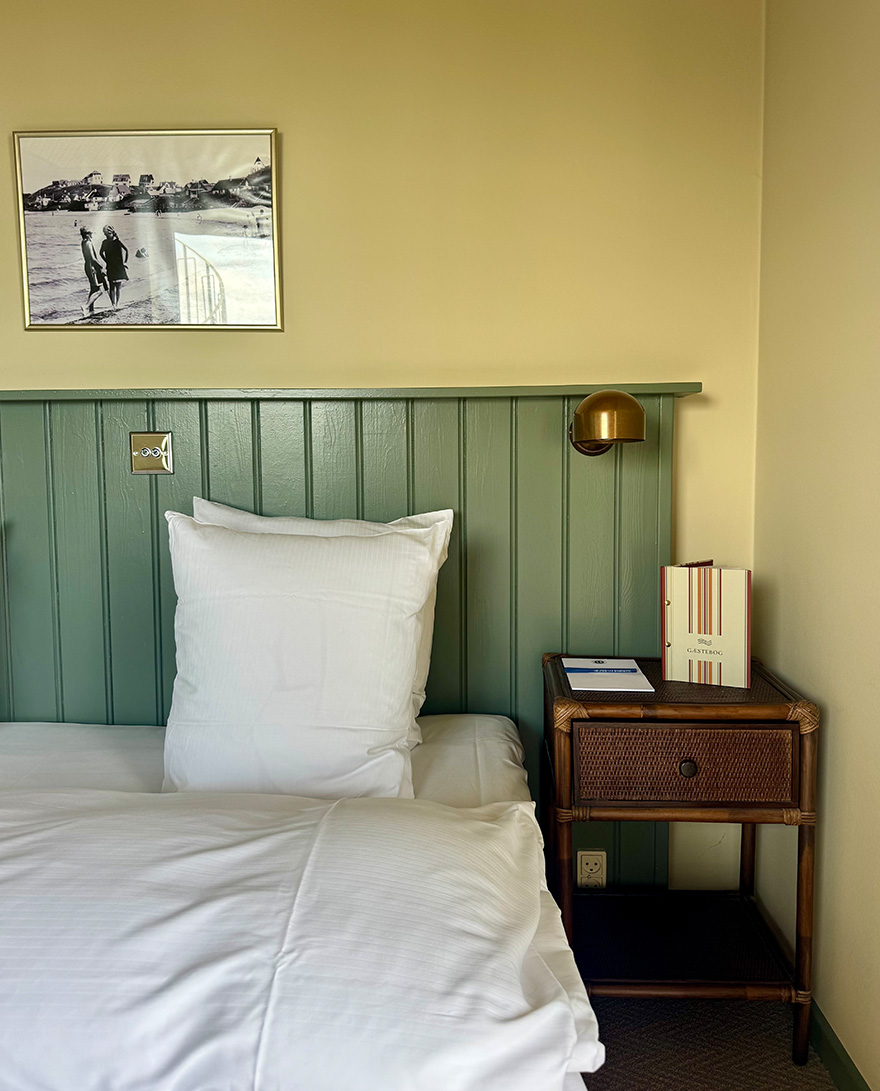
The interiors have a relaxed Scandinavian coastal look. There are rattan pieces, timber, jute and patterned fabrics mixed with references to mid-century Scandinavian design and the occasional more eccentric English or colonial touch. Downstairs, the public rooms are made for lingering: big comfortable sofas, armchairs, books and board games, with numerous places to sit depending on whether you want to chat, read or look out at the water. In the late afternoon, there is a sociable wine hour from 4 to 5pm with a complimentary glass of the family’s wine.
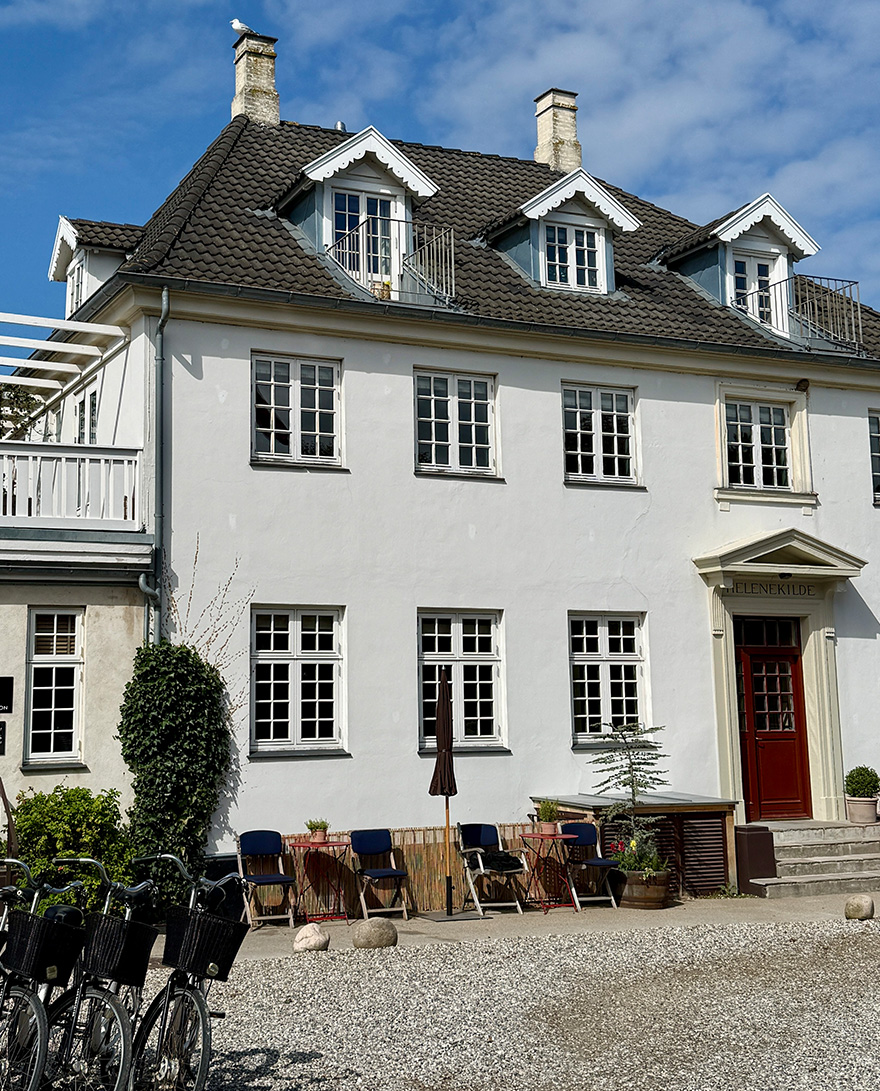
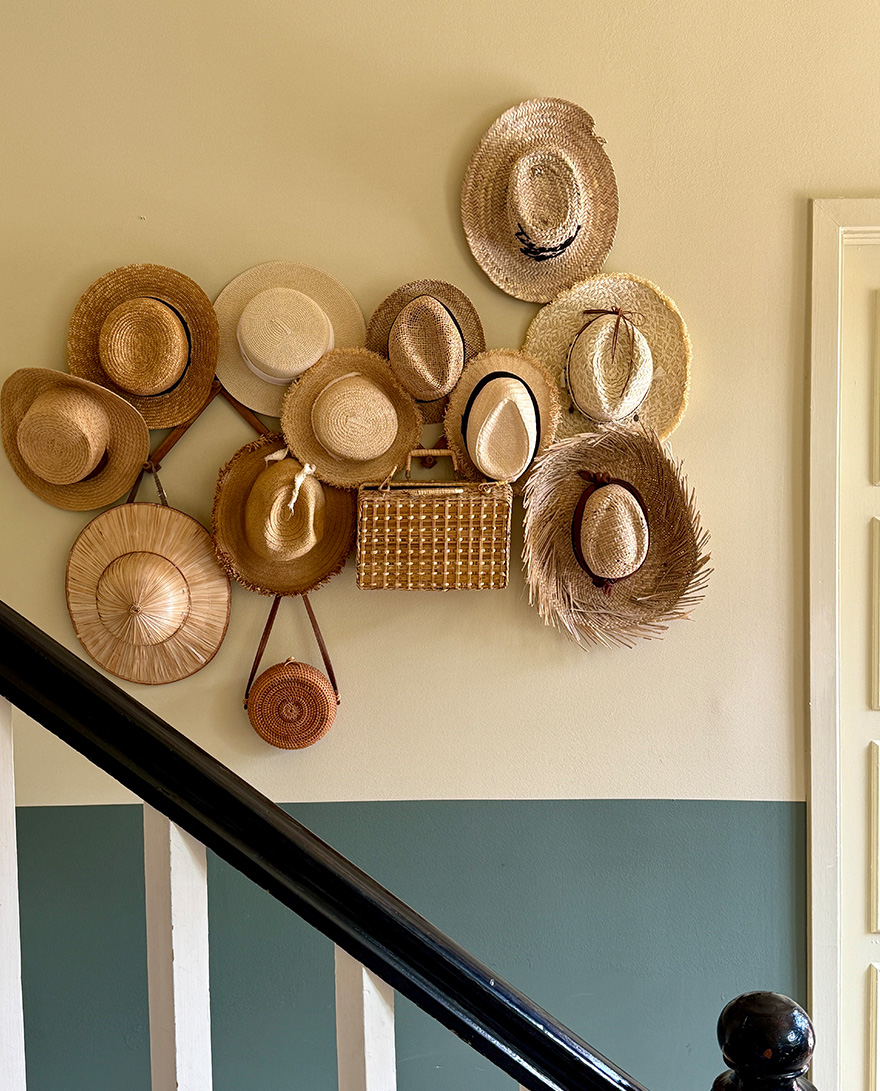
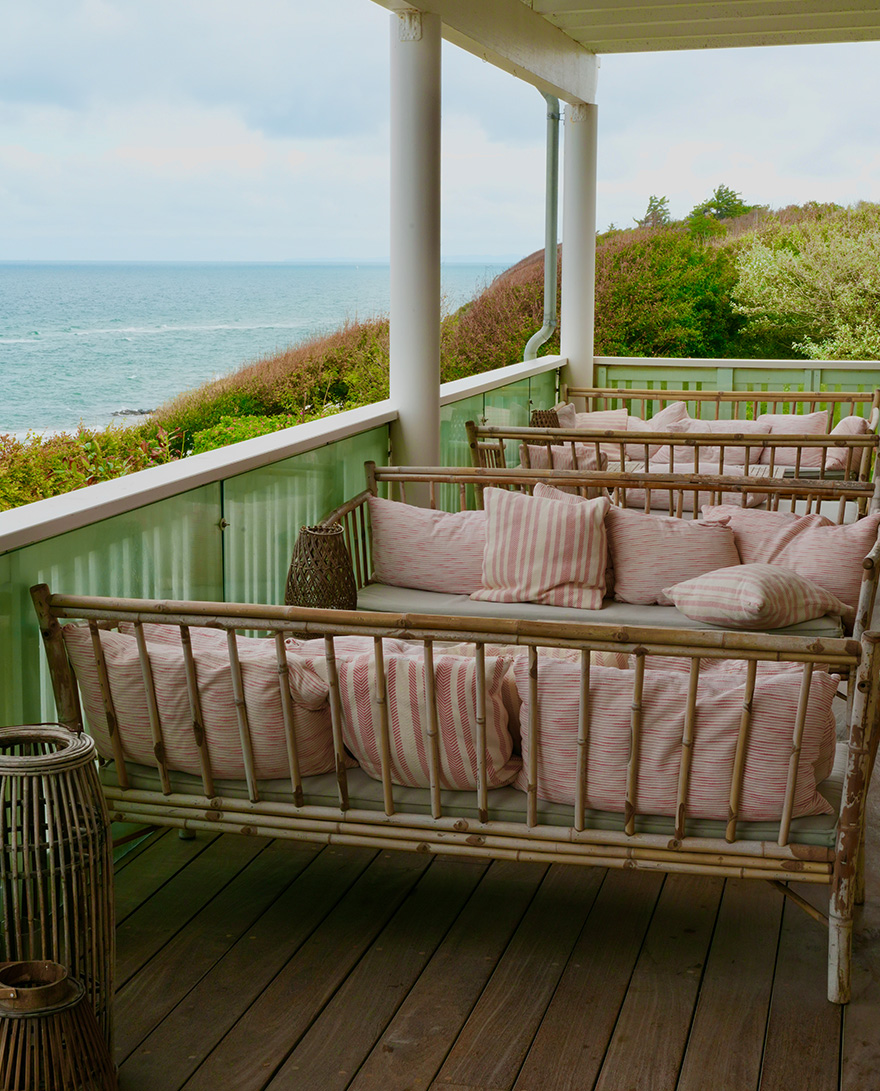

The nicest rooms are in the main house facing the sea. We stayed in top-floor room 7, tucked into a corner with a wraparound terrace and wonderful views. Rooms follow the local summer-house tradition, with rattan furniture, natural flooring and thick linens.
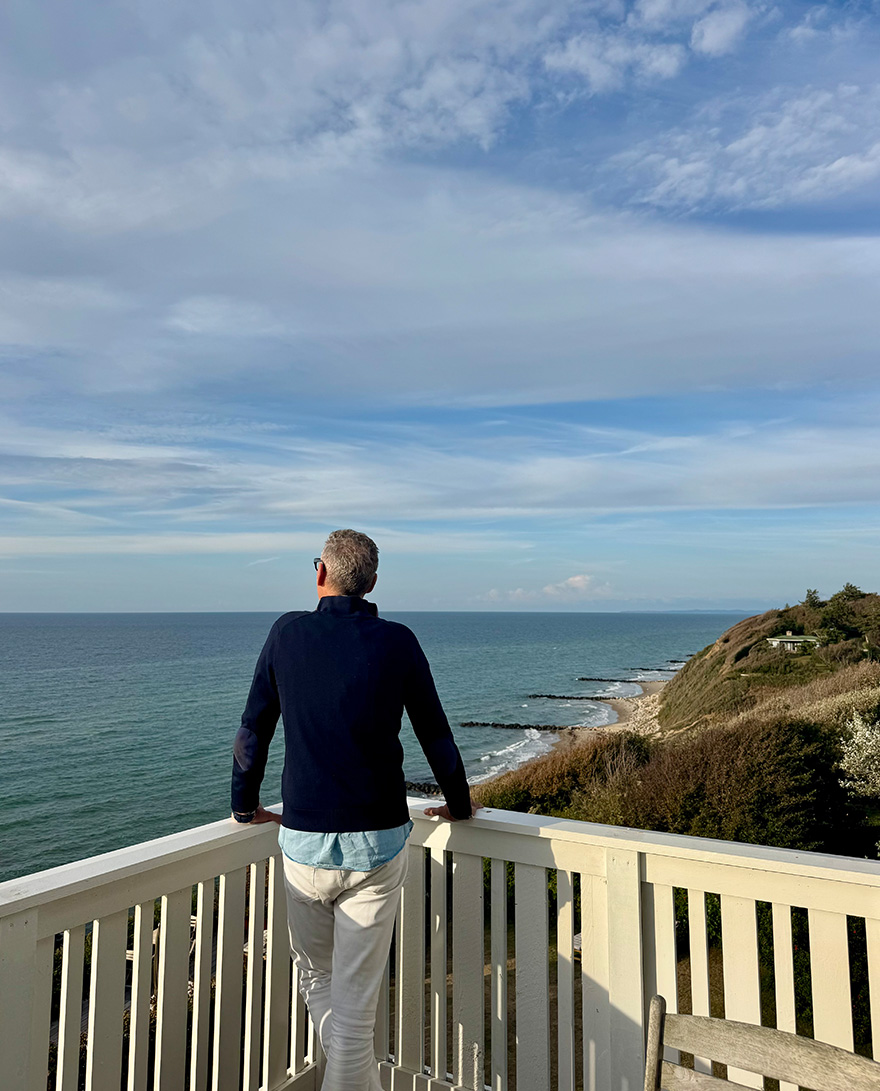
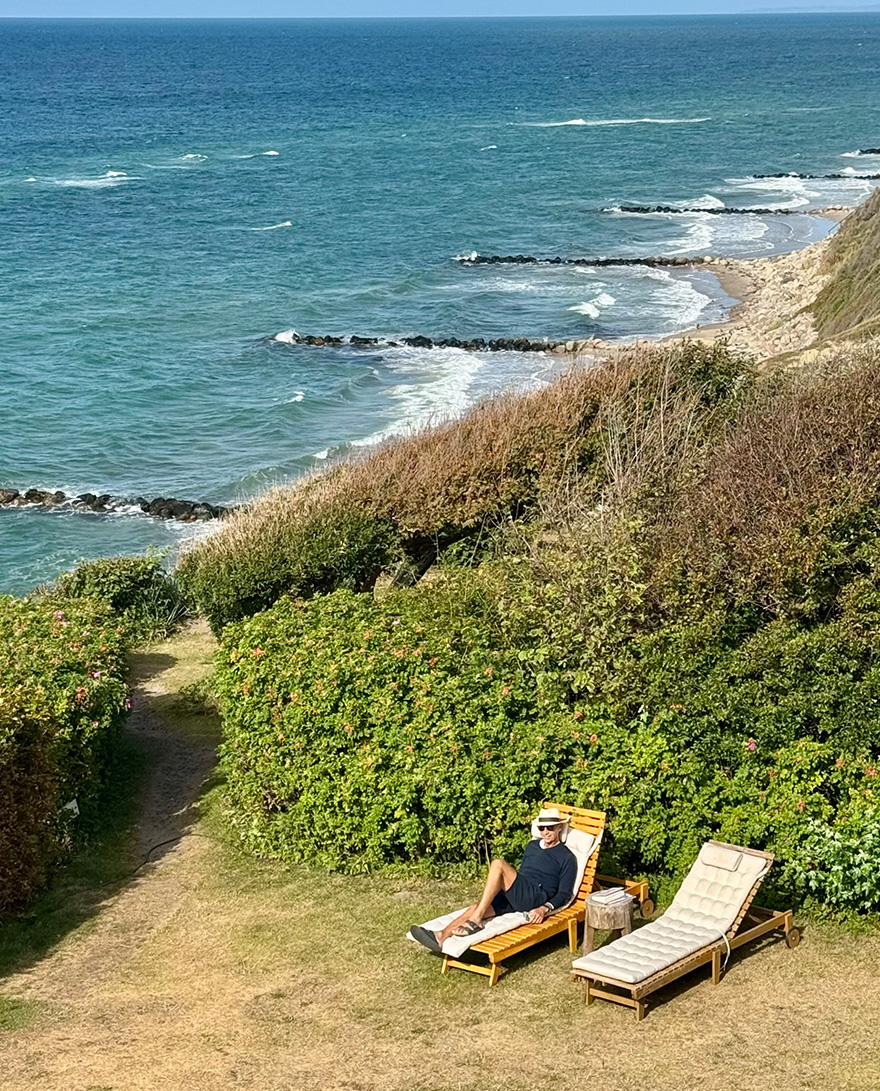
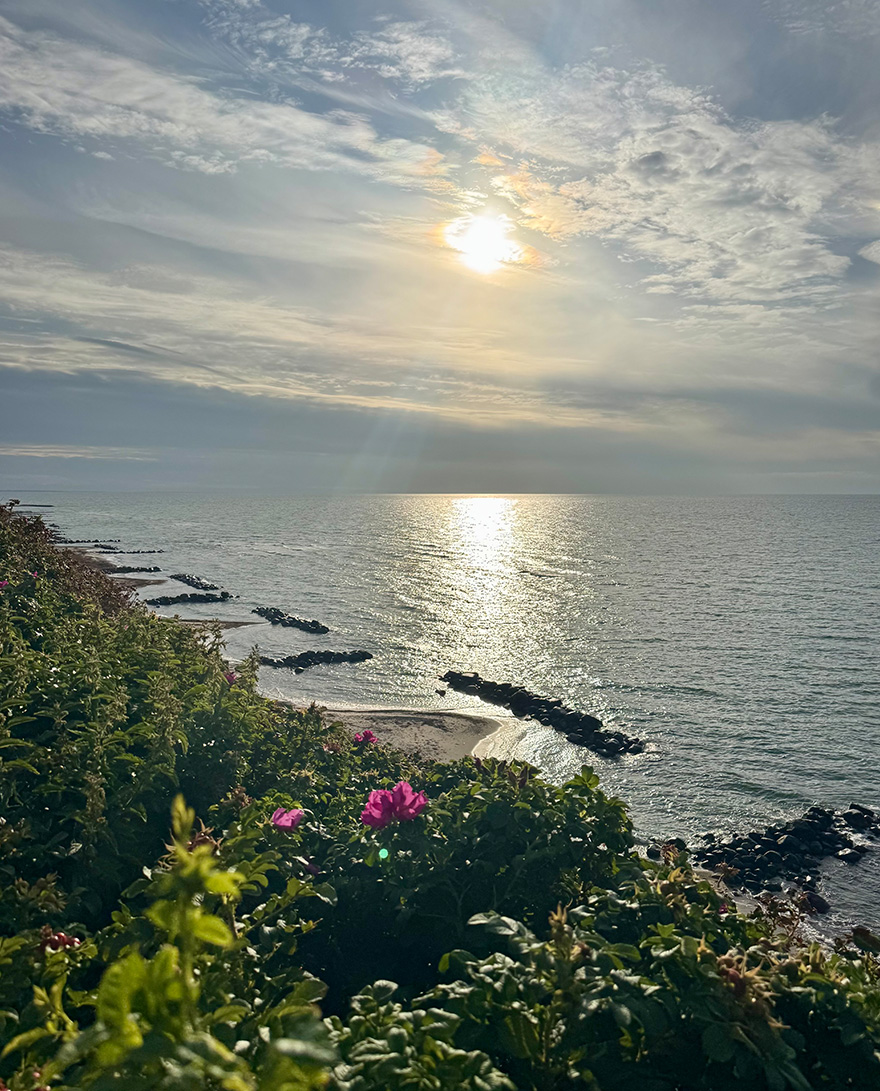
Outside is really where Helenekilde comes into its own. Tables and chairs are spread around the terrace and garden, while a guest-only sun deck looks straight across the sea. From the hotel, you can walk down towards the beach for a swim or follow the coastline into Tisvildeleje. There is also a sauna overlooking the sea, perfect for the very Danish combination of heating yourself up before taking a freezing plunge outside.
Dine
RESTAURANT KILDEN
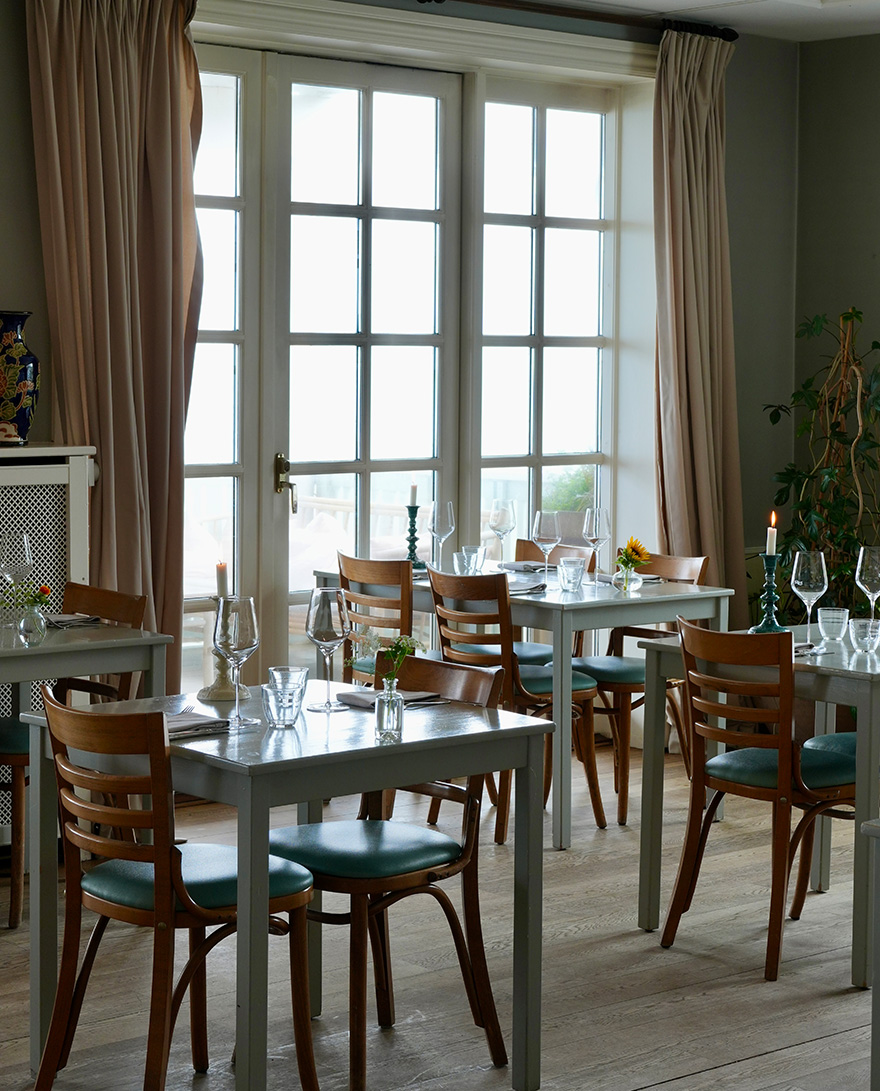
Restaurant Kilden occupies one of the best positions at Helenekilde, with large windows and terraces facing the sea. The food is based around local and seasonal ingredients, with familiar classics treated carefully. Breakfast is a generous spread to linger over before heading out for the day. Before dinner, have a drink either in the bar or outside on the terrace, which is one of the best places in the hotel to watch the sun set.
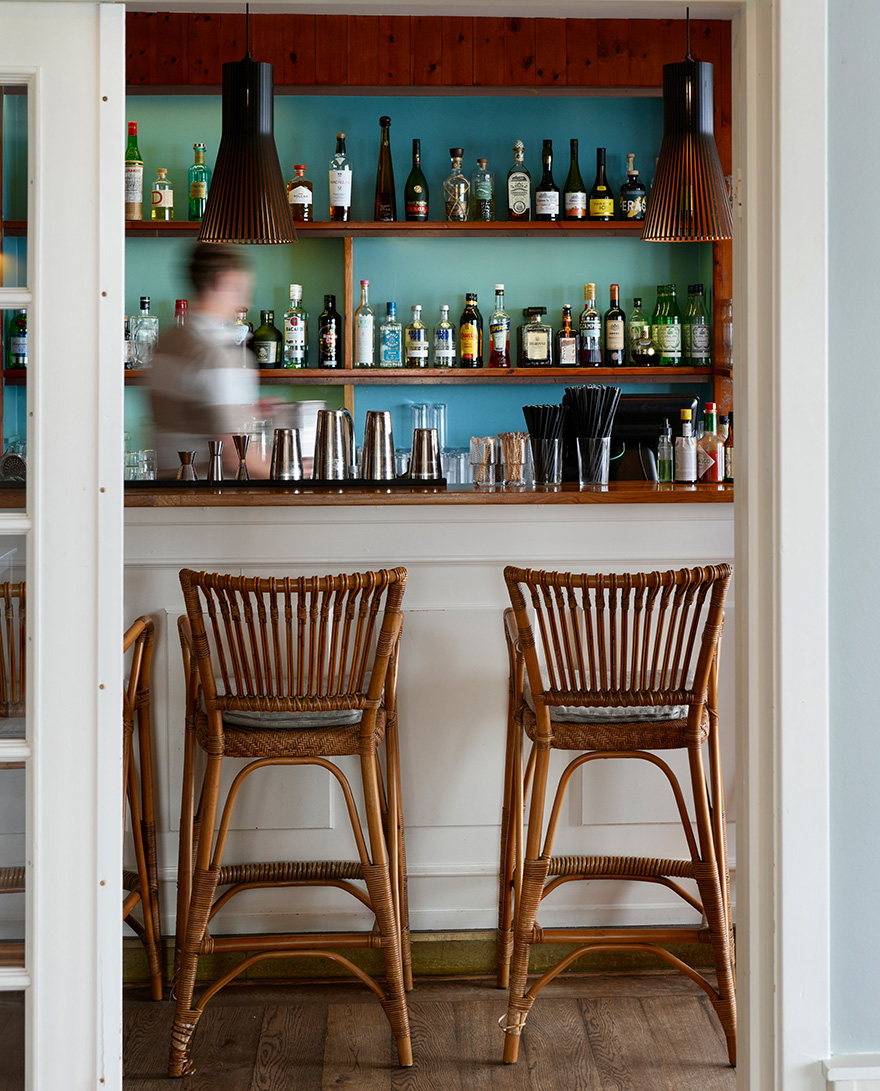
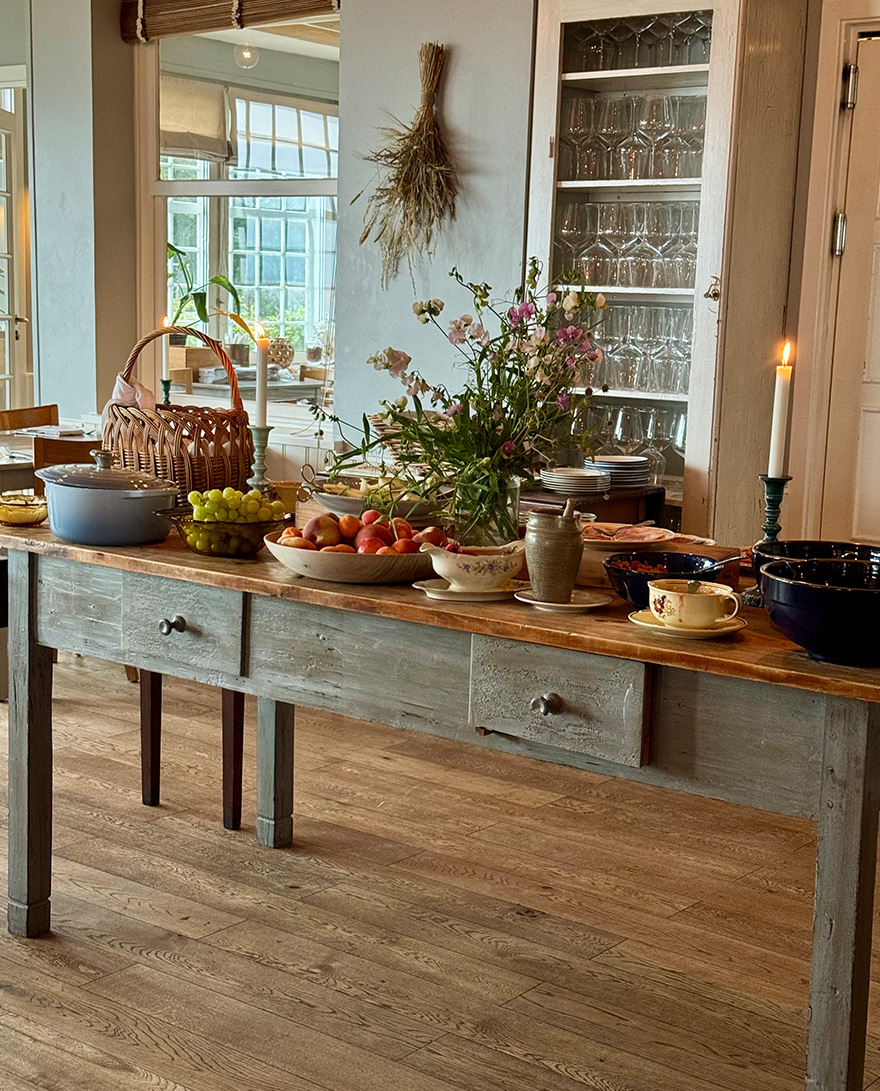
VON EDEL
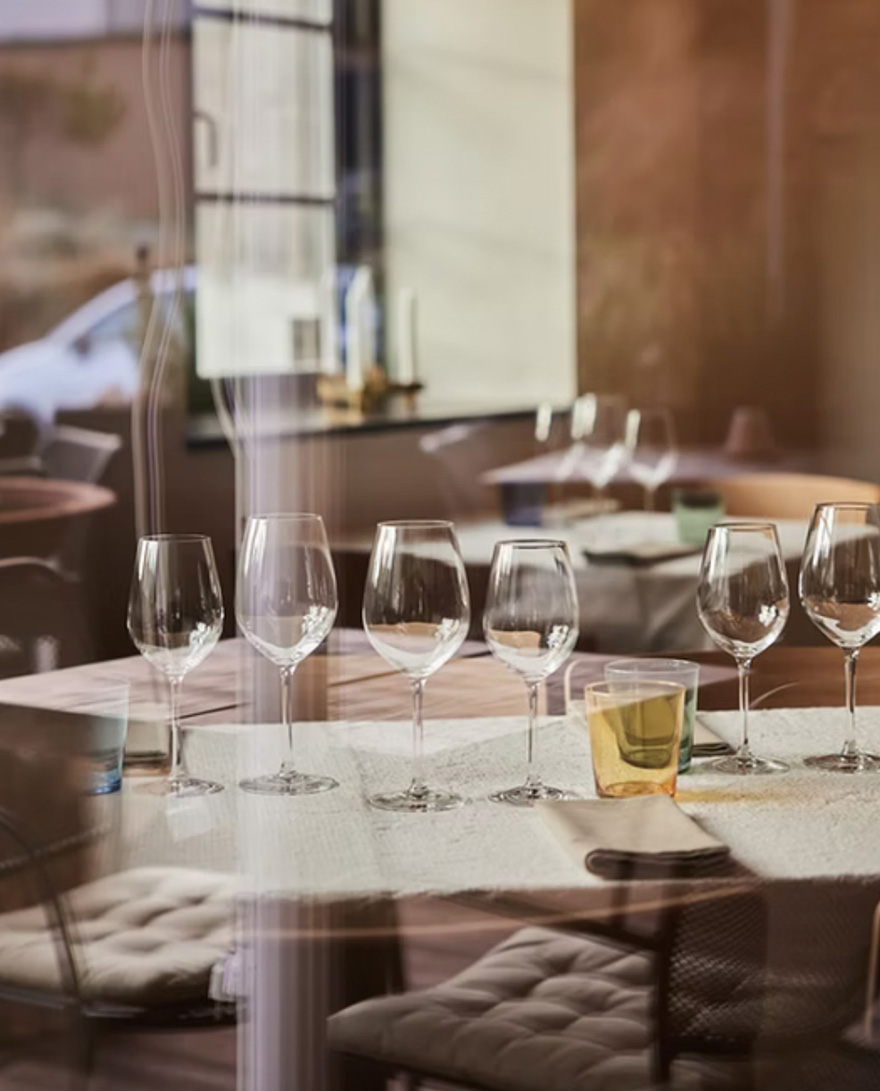
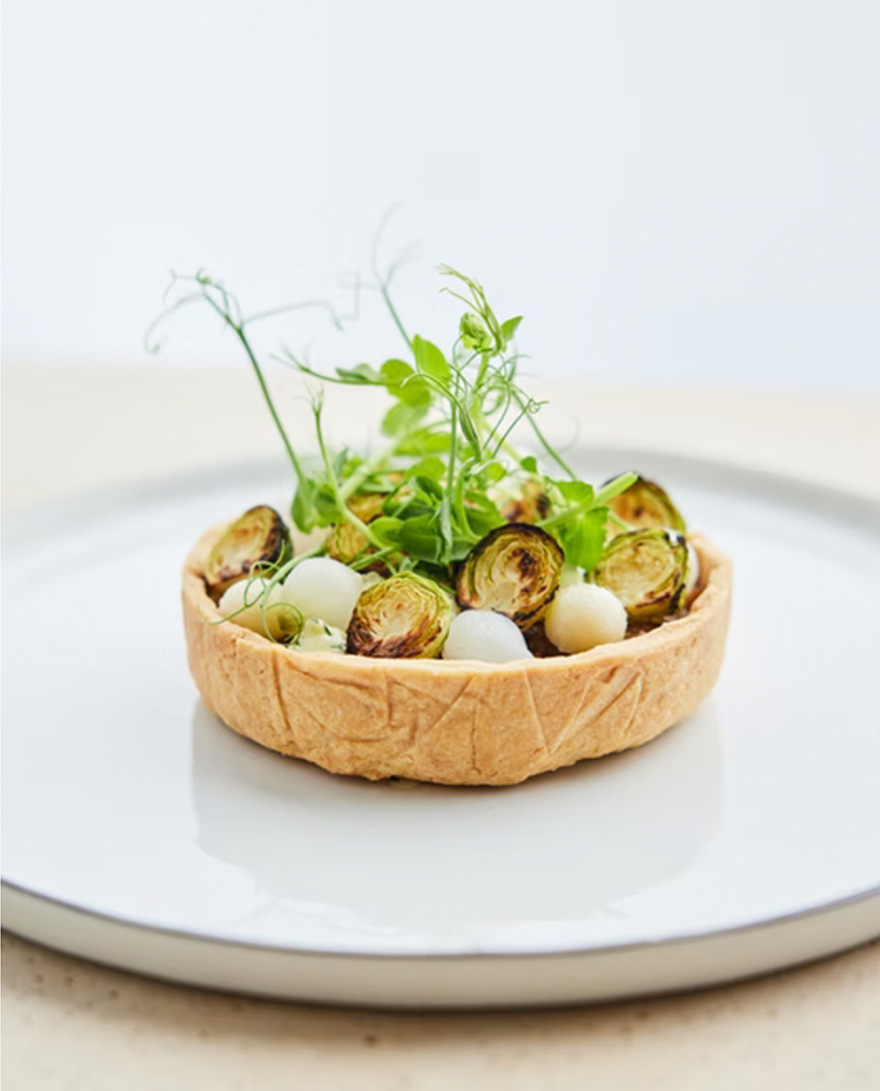
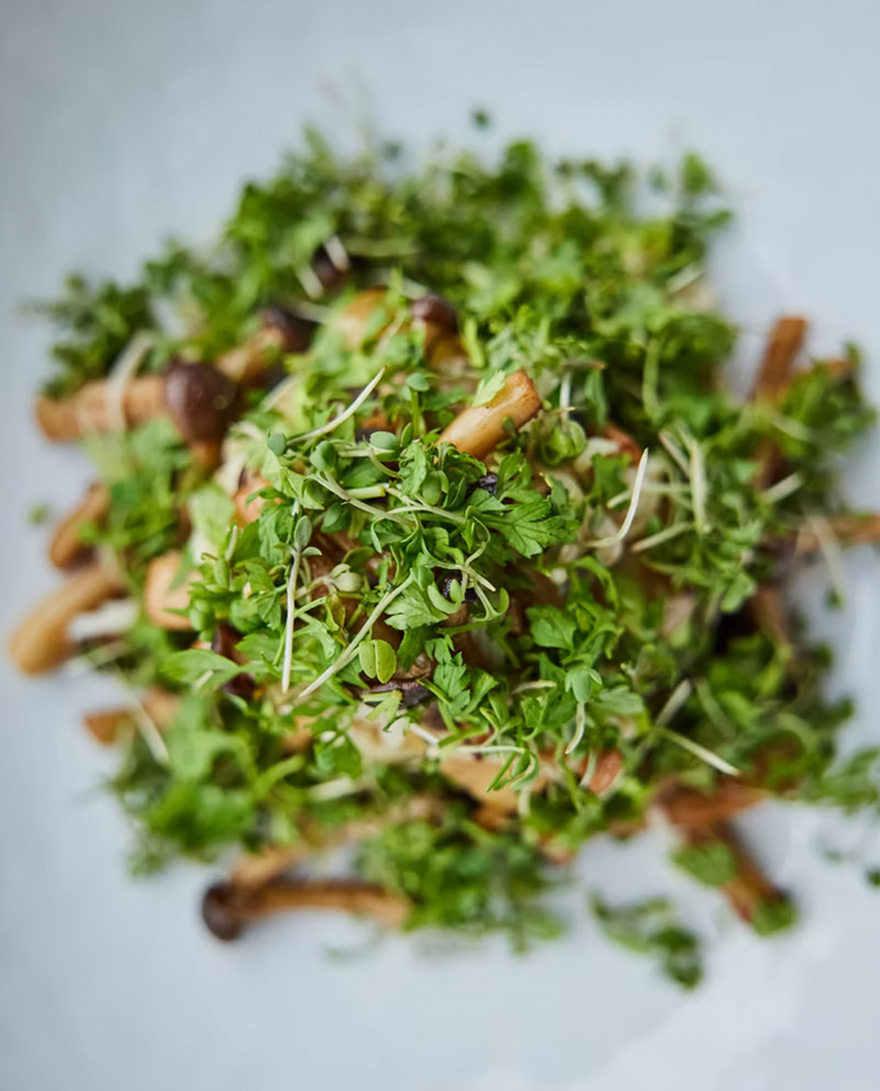
Von Edel was one of the restaurants we were most interested in trying in Tisvildeleje, but unfortunately it was closed on the days we were there. This is the town’s more ambitious fine-dining option. Dishes are mostly smaller and can be combined into four-, six- or nine-course menus. Current examples include raw-marinated scallops with green tomato and leek, ceviche with tiger prawns, tartare with horseradish and tarragon, and hake with potato, mustard seed and hazelnut. It looks polished without being stiff and is firmly on our list for a return visit.
Photos: www.restaurantvonedel.dk
Café
LITTLE CAFÉ
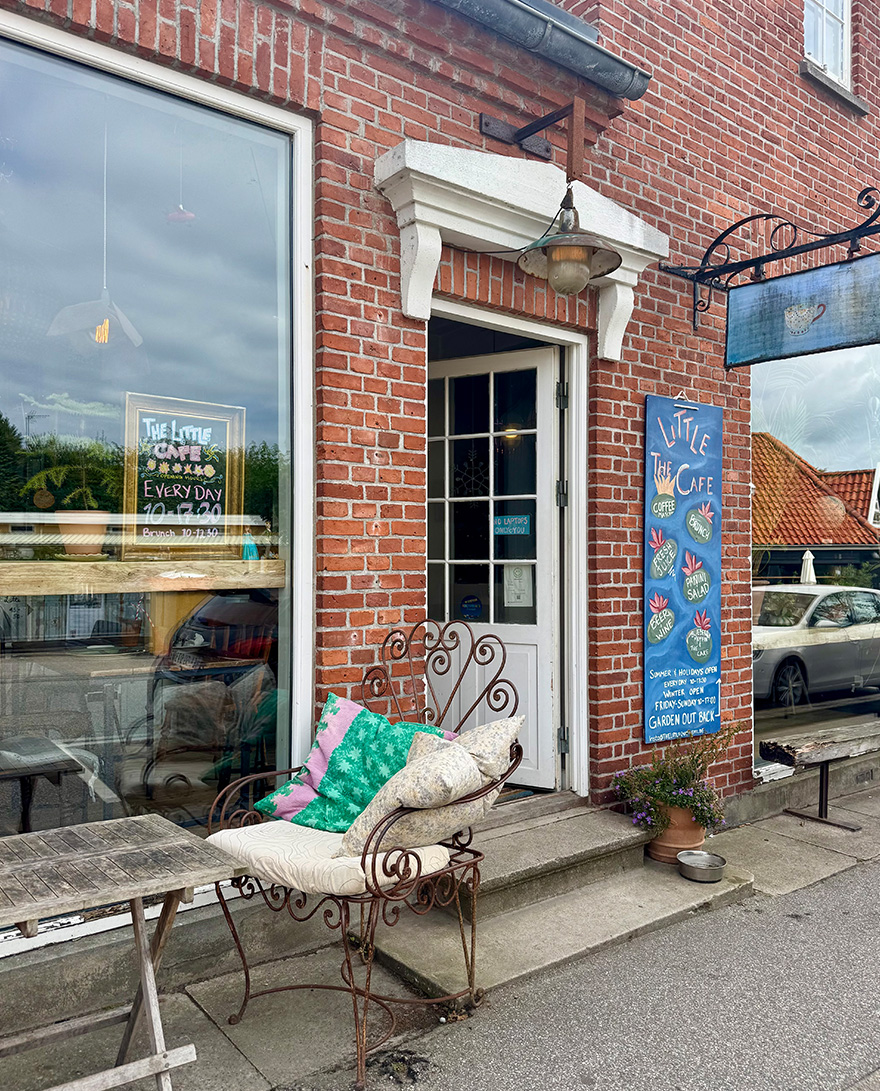
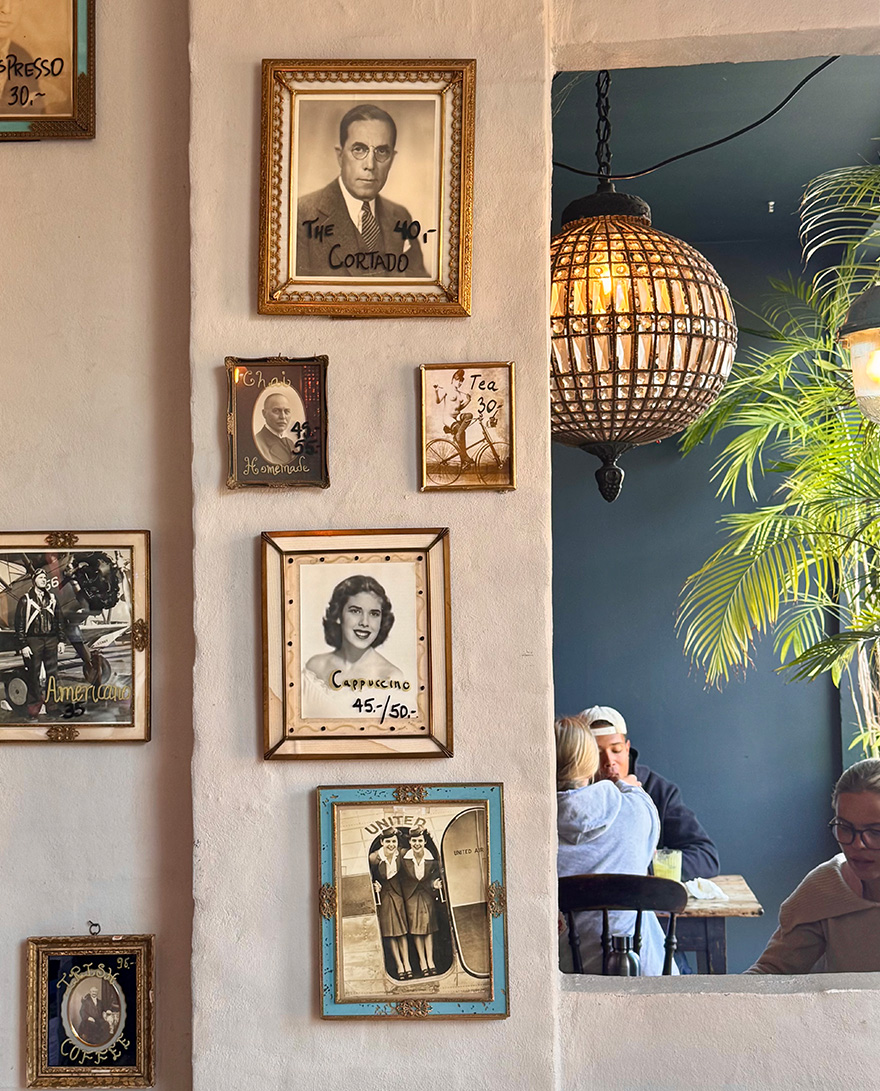
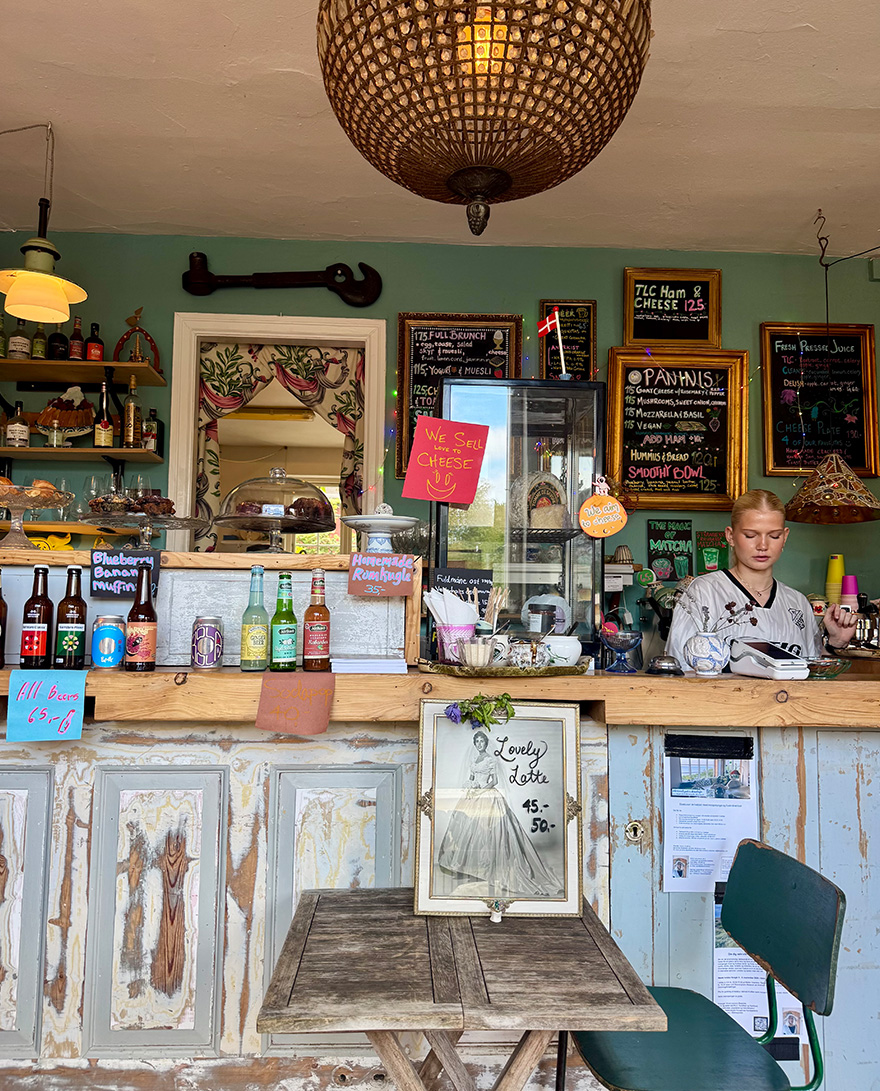
Little Café on Tisvildeleje’s main street is cosy, informal and friendly. It’s a good place for coffee and cake. They also do nice salads and toasted sandwiches at lunch and have a great range of juices and smoothies too.
BAGT
Bagt is a French-inspired bakery with Danish roots, and the Tisvilde branch sits right on the main strip. It sells freshly baked breads and viennoiserie alongside coffee and has a nice little terrace outside.
Shop
Tisvildeleje has a nice little small-shop scene, with several interiors, ceramics and lifestyle boutiques. Atelier i Lejet combines a working ceramics studio with a small interiors store. No17 Limited Shop & Showroom has interiors and decorative pieces that are nicely presented
Do
FREDERIKSBORG CASTLE
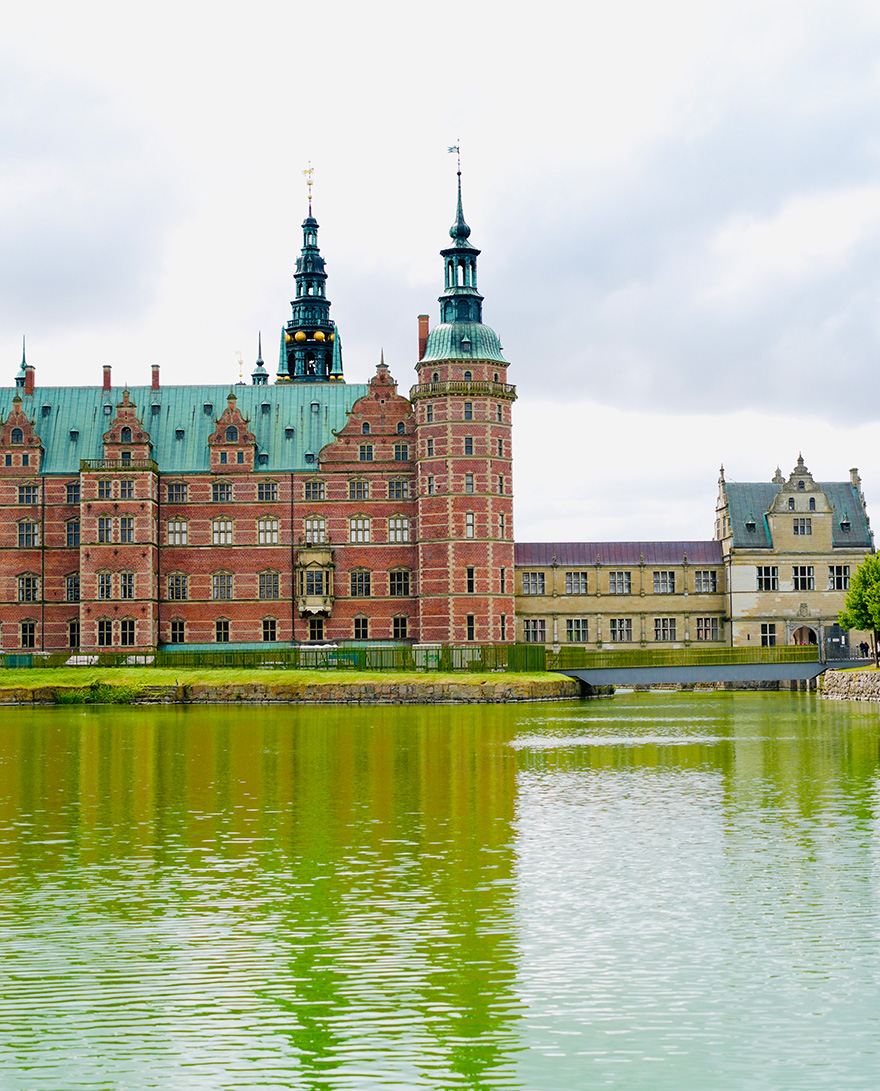
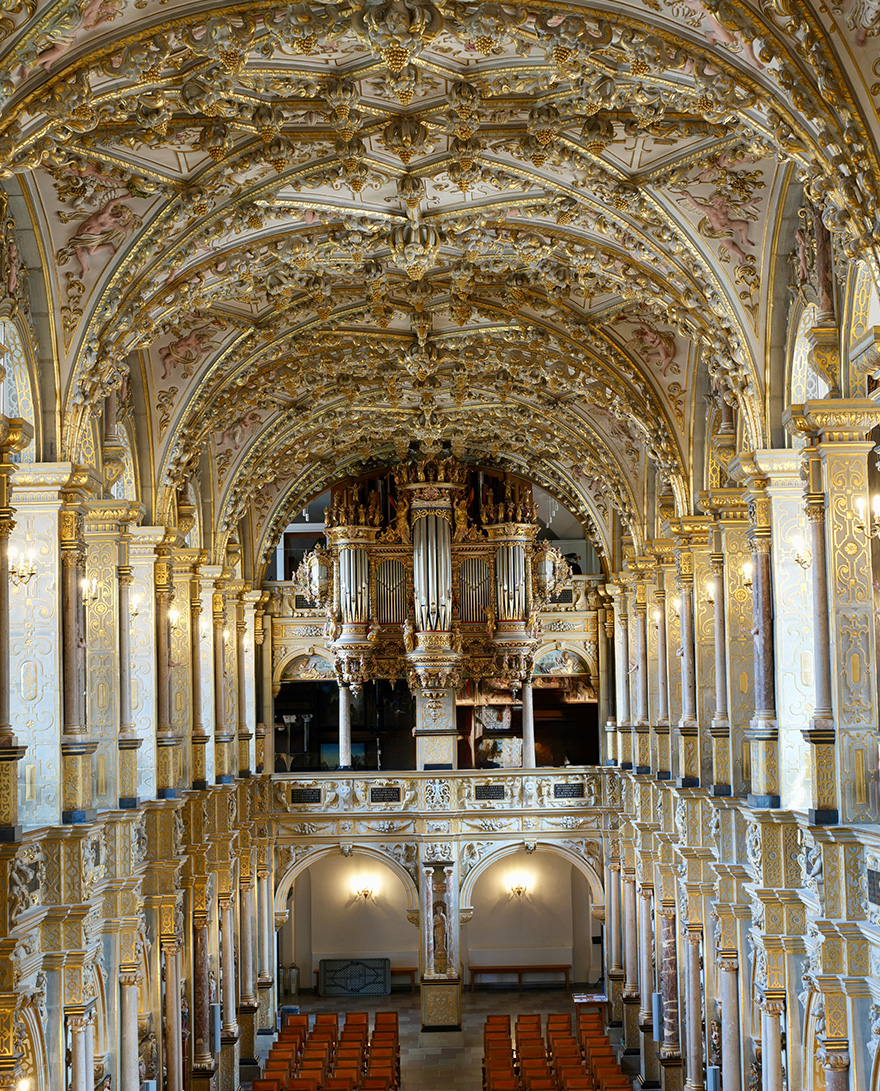
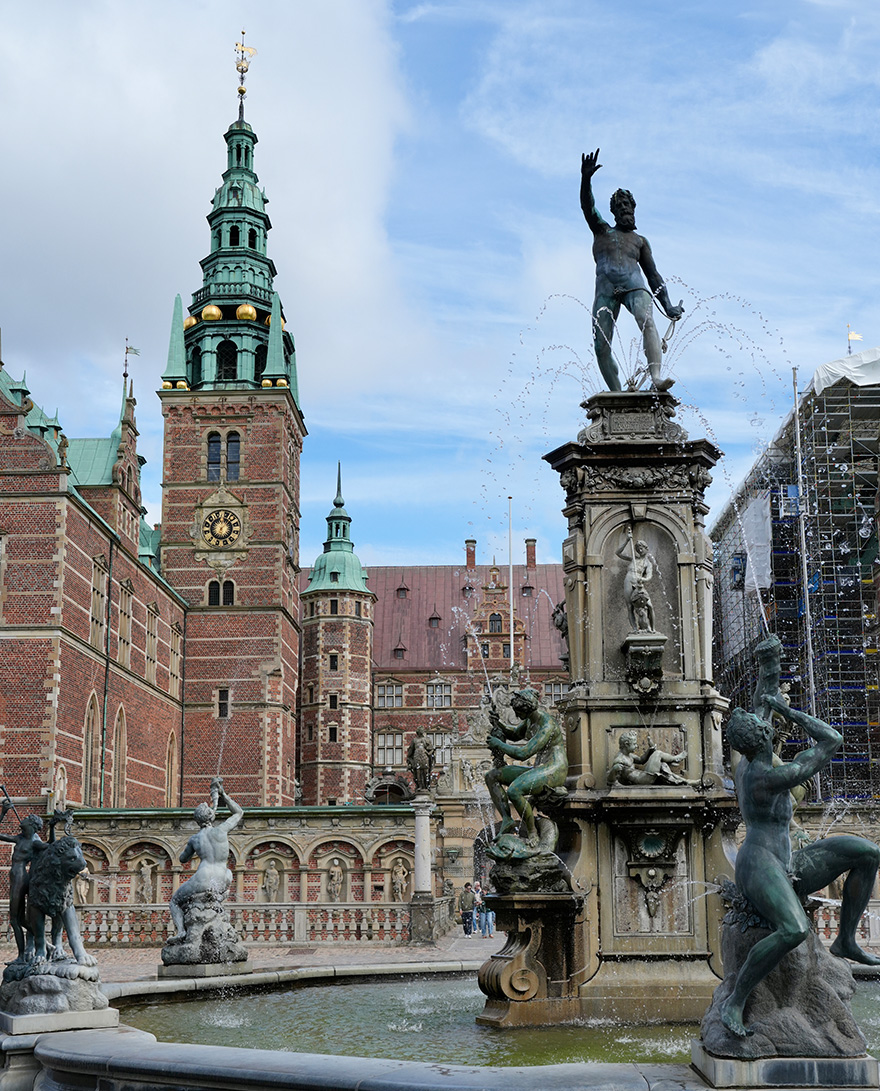
Frederiksborg Castle makes a good contrast to all the beaches and summer houses and is easy to include when driving to or from Copenhagen. Set in Hillerød, the enormous Renaissance castle rises directly from the water. It is filled with grand rooms, portraits, decorative ceilings and centuries of Danish royal history. Beyond the water are the formal Baroque gardens, reconstructed in the 1990s. Beside them, the landscape changes to the more romantic English-style garden. Allow at least a couple of hours, so you have time to walk around the lake and gardens as well as seeing the main rooms.
HORNBAEK STRAND
Hornbæk is bigger than either Liseleje or Tisvildeleje, with more shops and restaurants. We came to visit a friend who has a summer house here, which was a great way to see the town from a more local perspective. Hornbæk Strand itself is a classic North Zealand beach: a long, wide sweep of pale sand with dunes behind.
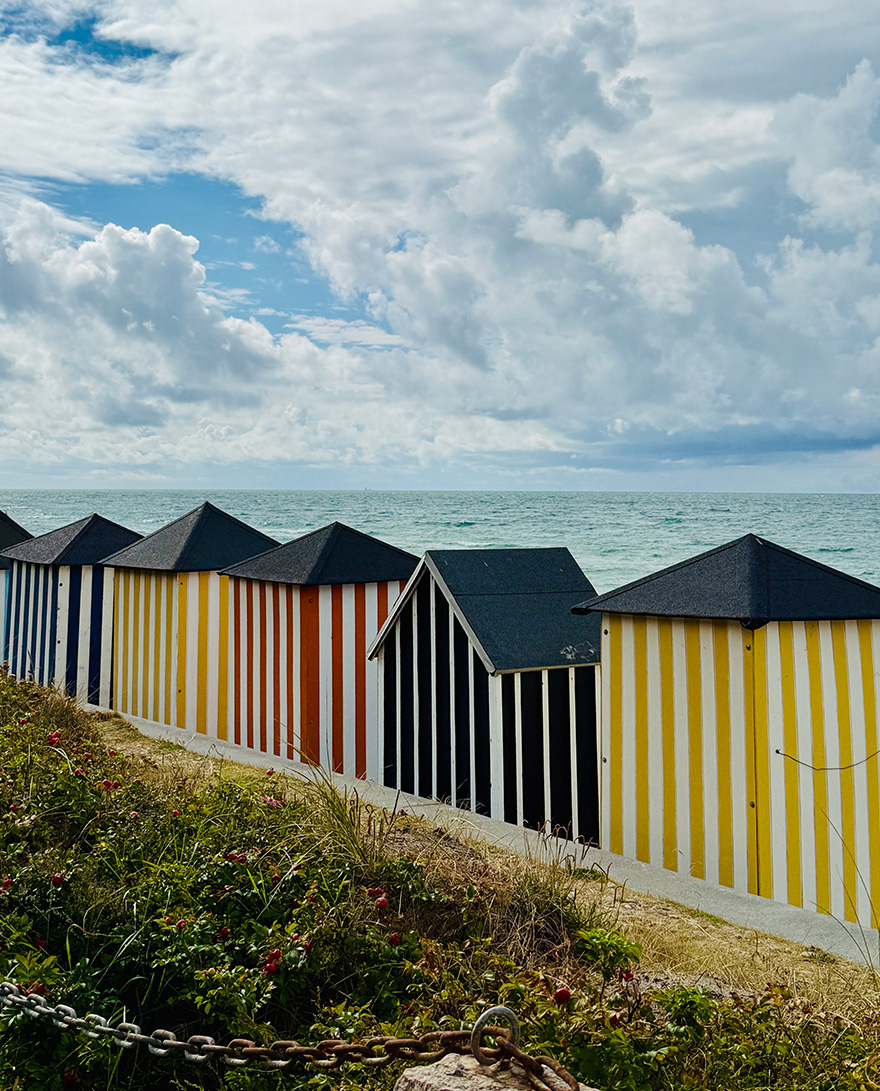
The drive east from Tisvildeleje is worth doing slowly. Around Rågeleje, look out for the slim, striped bathing huts lined up along the shore that are dismantled and removed again at the end of each summer season.
Stay
HORNBAEKHUS
We did not stay at Hornbækhus, but it was recommended by our friend who lives locally, and we would certainly look at it next time. This is less a conventional hotel than a large seaside house and community hub. The handsome red timber building dates from 1904 and contains 36 individually decorated rooms, as well as large shared spaces.
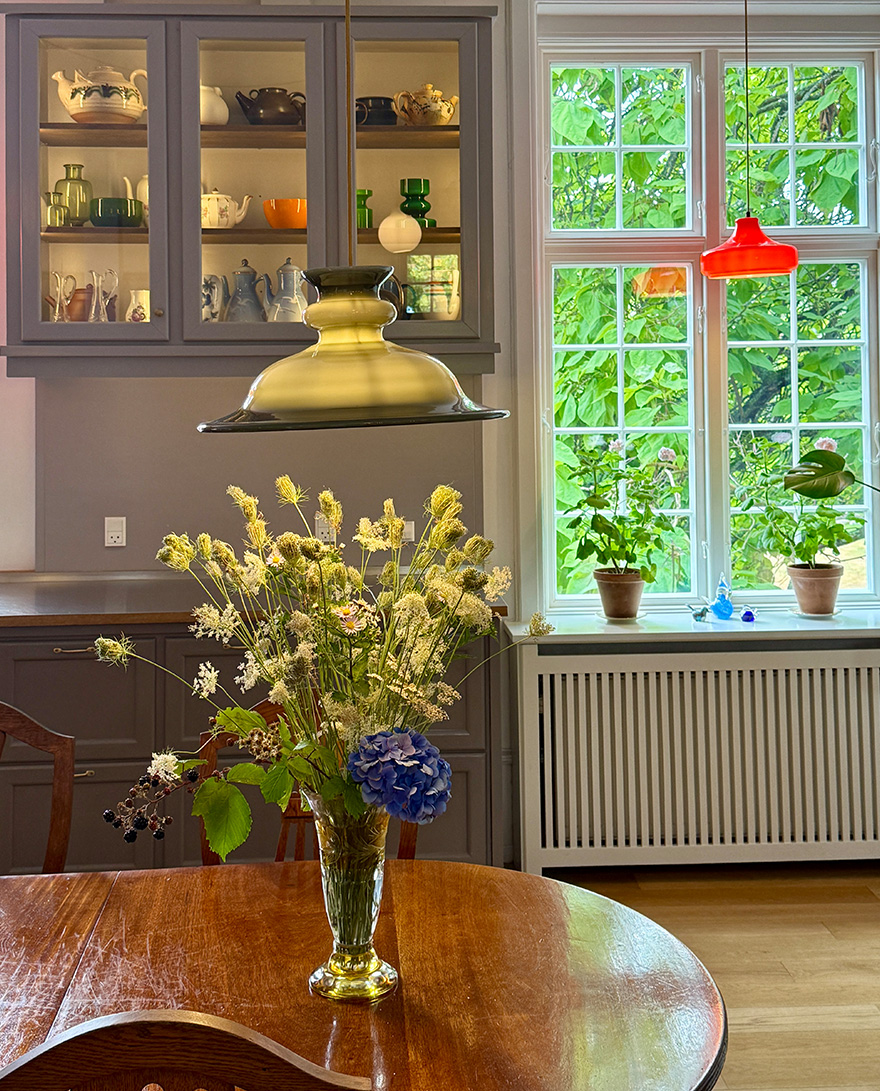
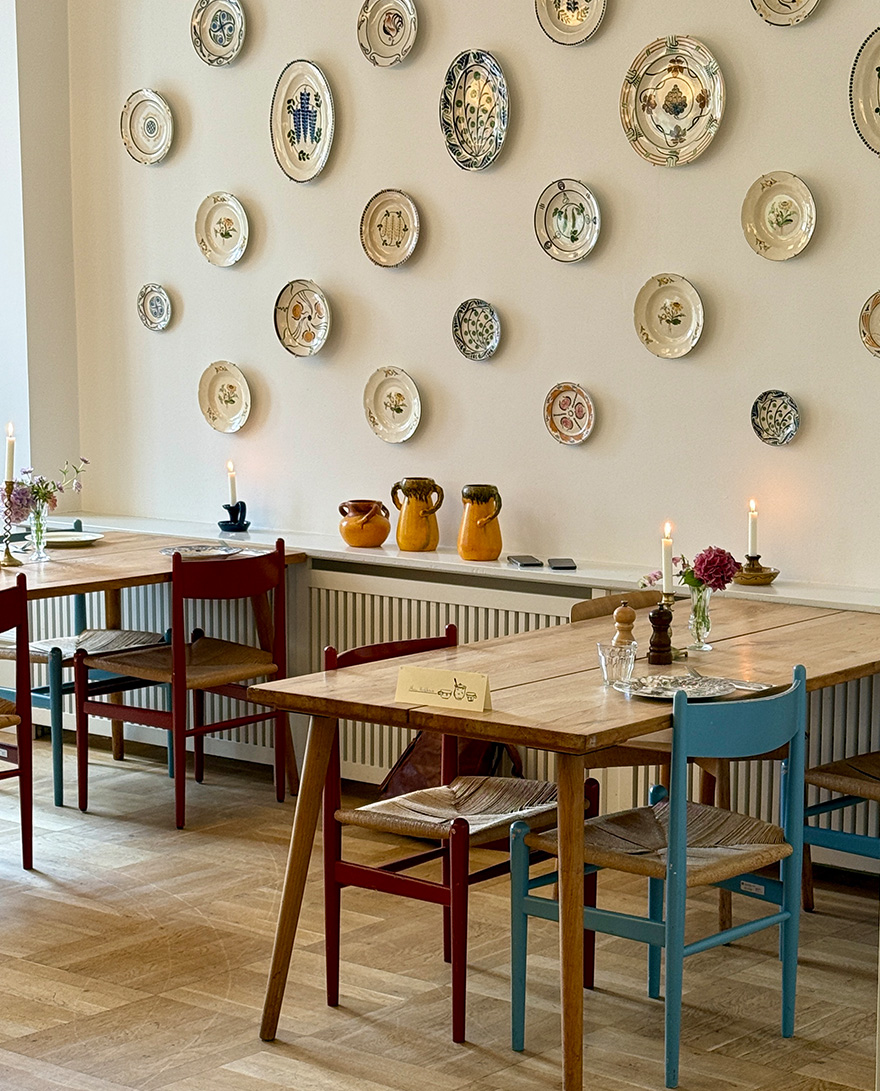
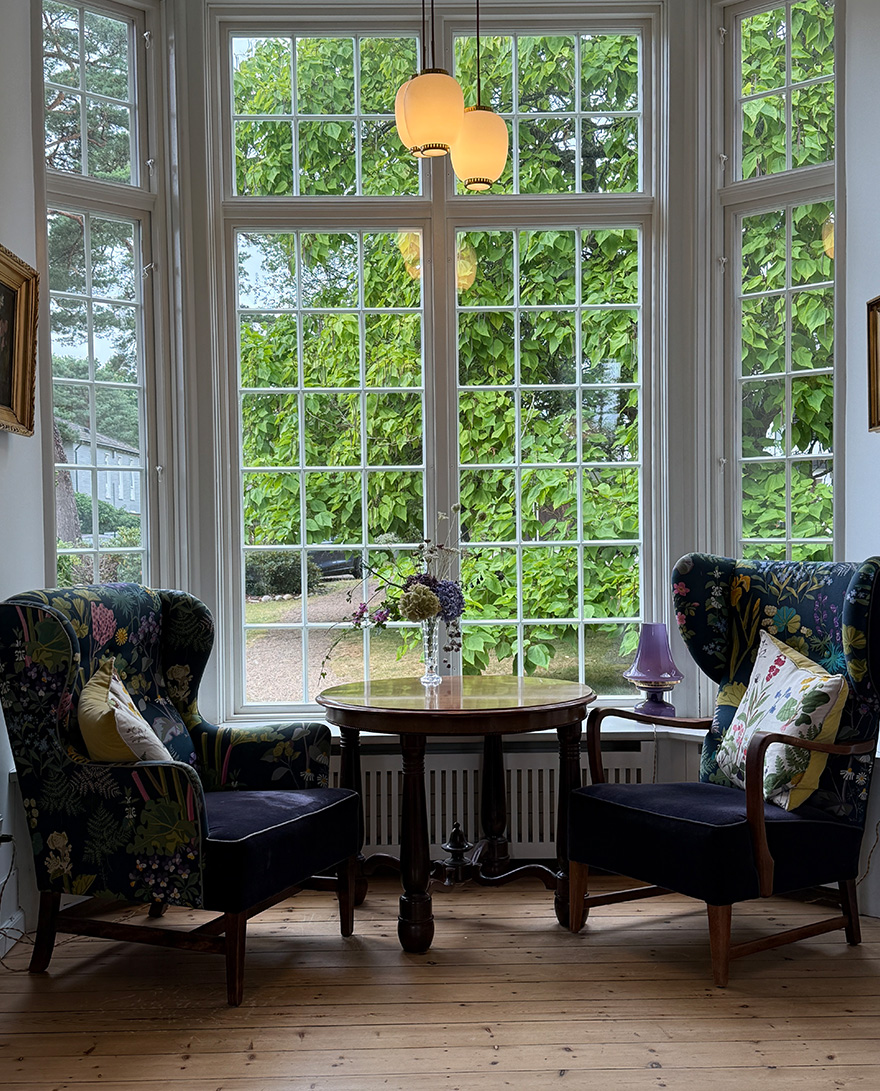
The interiors are much more colourful than the pale Scandinavian stereotype. There are floral wallpapers, patterned armchairs, paintings, plants and pieces of furniture that look collected over time. The overall effect feels cheerful and domestic rather than hotel-like. Rooms in the annex open directly onto the garden.
Community is a big part of the idea. Every evening, guests and locals can join a communal dinner at long tables, while the calendar might also include yoga, running, knitting, singing or other activities. Guests can also use the garden and borrow bicycles.
Shop
Hornbæk is bigger than Tisvildeleje or Liseleje, and there is consequently more to browse. The three shops below are all conveniently close together around Nordre Strandvej.
ROOMS GALORE
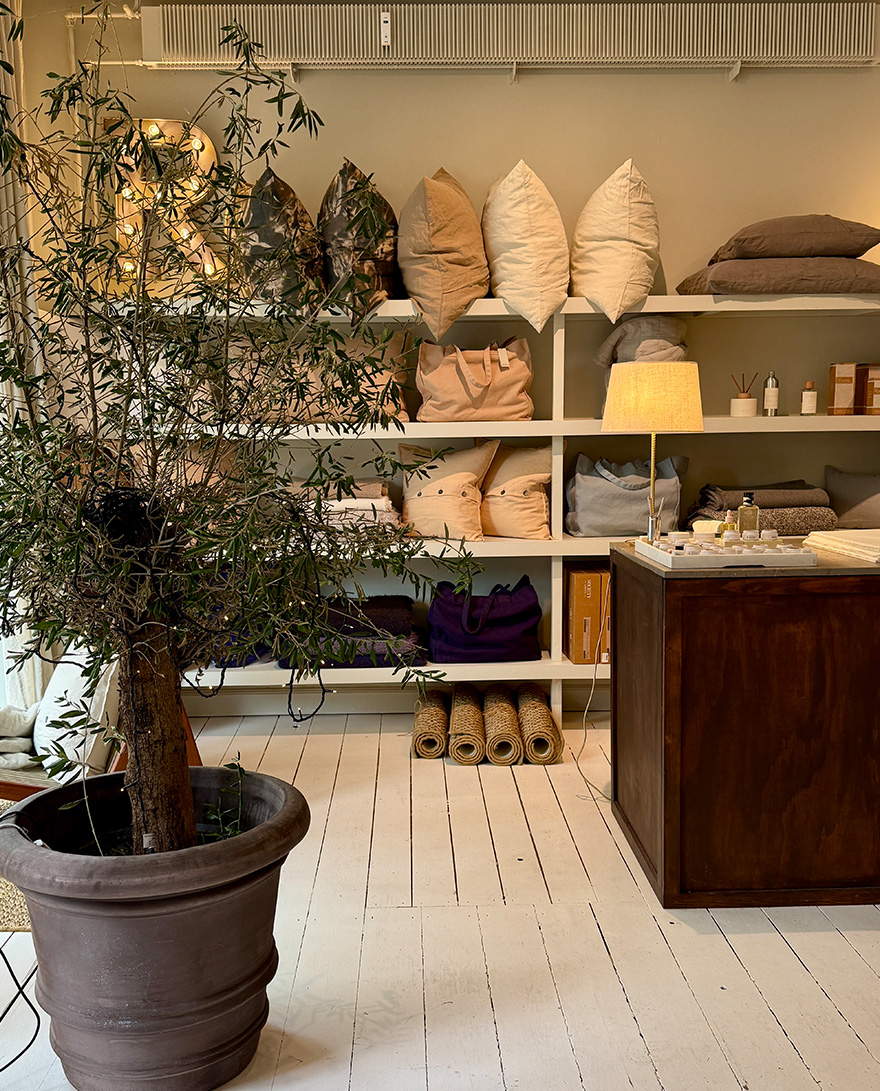
Rooms Galore is a very good interior stop if, like us, you tend to come home from Scandinavia wanting to redecorate! The Hornbæk shop mixes furniture and lighting with fashion, textiles, beauty and smaller interior pieces (below left). The aesthetic is calm and contemporary.
THE TRAVELLING BAND
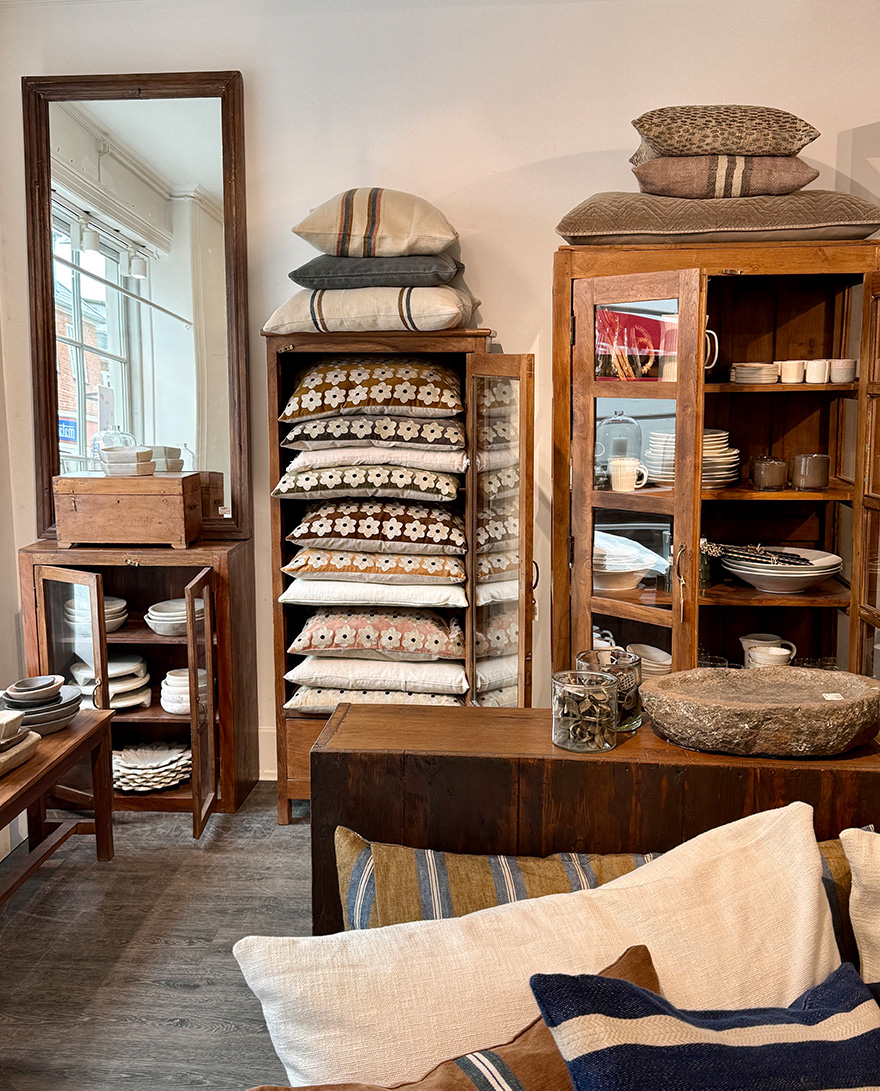
The Travelling Band is just opposite and mixes Scandinavian simplicity with furniture and objects inspired by India and other parts of Asia (below right). A lot of the collection is made up of the company’s own designs, unique pieces and older furniture sourced on travels and then restored or adapted by craftspeople.
GALLERIET HORNBAEK
Galleriet Hornbæk is a contemporary art gallery with a strong focus on modern painting, sculpture and ceramics. The mix is bold and varied rather than traditional, and it is one of the better places on the Danish Riviera to browse serious contemporary art.
Dine
OLIVA
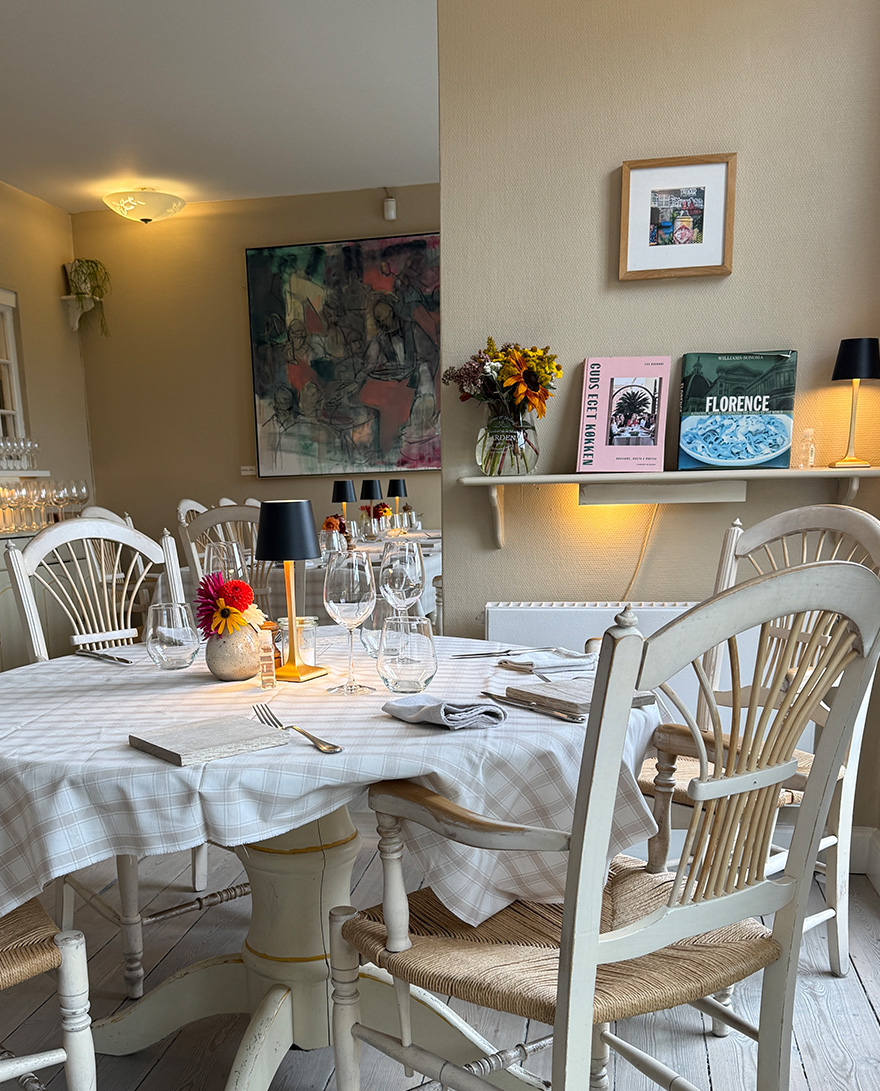
Oliva is a cute, relaxed restaurant and a good option for lunch while exploring Hornbæk. There is an outdoor terrace for the days when the Danish summer is cooperating, while inside, the ambience is cool but casual. The menu goes beyond the predictable fish-and-chips seaside formula, with good salads alongside fish and other light dishes, making it particularly appealing at lunchtime.
Why a trip to the Danish Riviera?
The Danish Riviera works particularly well if you want a different type of summer beach trip that is more of a “coolcation” than a boiling hot Mediterranean holiday. The beaches are beautiful, but what made the area interesting for us was everything around them: pine forests, summer houses, small design shops, good bakeries, relaxed restaurants and the very Danish tradition of historic bathing hotels. Tisvildeleje would be our first choice if we had to pick one base, particularly for the combination of Helenekilde, the beach, forest and Hovedgaden, but the towns are close enough that there is no real need to choose just one.
It is also incredibly easy to combine with Copenhagen. A few days of restaurants, museums and city life followed by a couple of nights on the coast makes a very satisfying summer trip.