


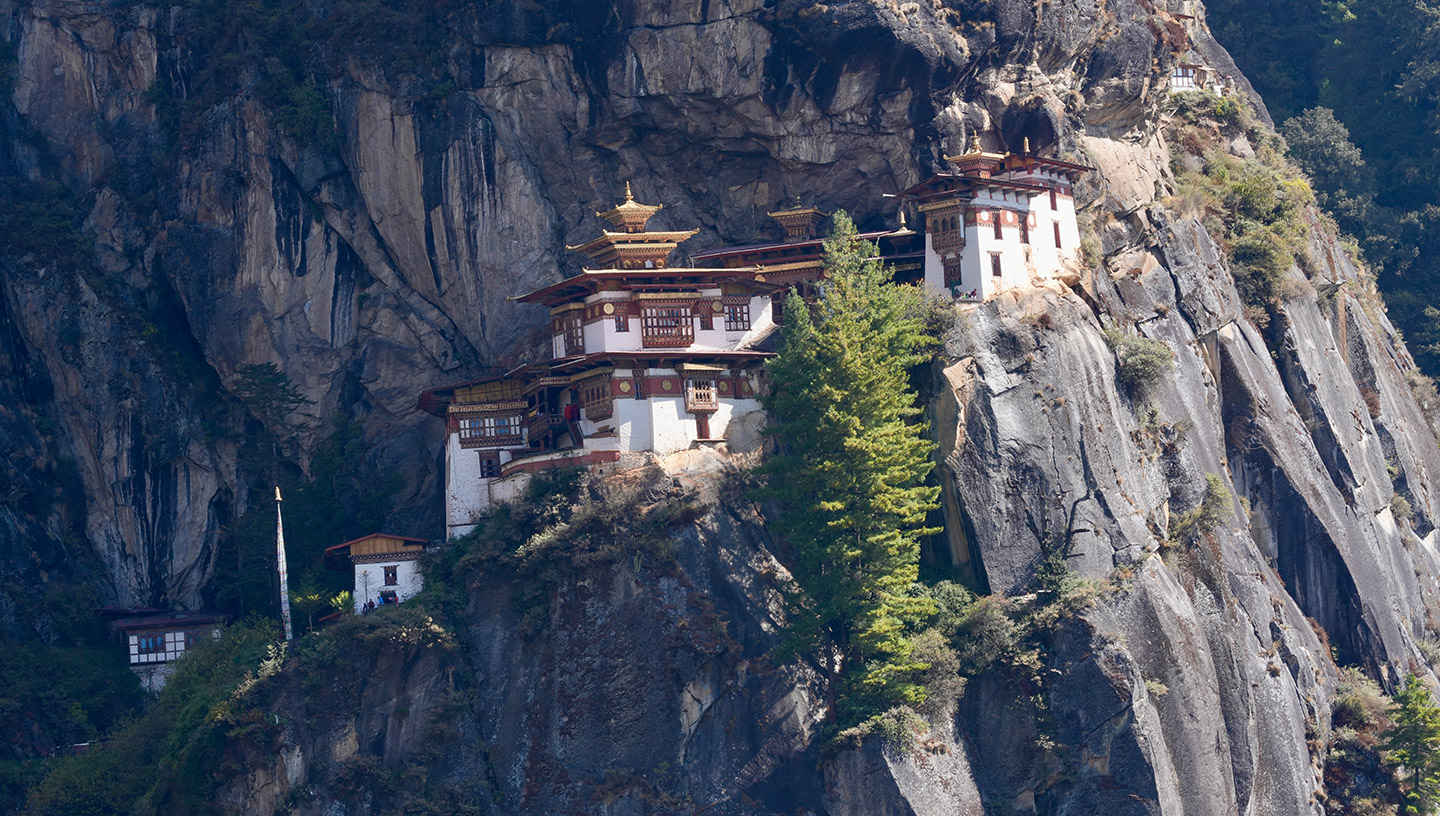
Bhutan is one of the most fascinating and beautiful countries we’ve ever visited. Tucked away in the eastern Himalayas, between India and Tibet, this tiny Buddhist kingdom offers an extraordinary combination of dramatic mountain scenery, ancient monasteries, colourful traditions and wonderfully warm people. It also has an incredible concentration of beautiful luxury lodges. Bhutan is also famous for its philosophy of Gross National Happiness, which places the wellbeing of its people and the protection of its culture and environment at the heart of the country’s development.
Overview of our trip
Our journey through Bhutan took us to four beautiful valleys, each offering very different scenery and experiences. We began in Thimphu, the country’s small and fascinating capital, where we explored impressive Buddhist temples and monasteries. From Thimphu, we travelled through the mountains to Gangtey, in the spectacular Phobjikha Valley, with wide open meadows, traditional farmhouses and forested hills. Our third stop was Punakha, where the scenery changed dramatically as we descended into a warmer, lush green valley, with rice paddies and beautiful rivers. Highlights included hiking to the hilltop Khamsum Yuelley Namgyal Chorten. We finished in Paro, home to Bhutan’s most famous landmark, Tiger’s Nest Monastery. The hike up to this extraordinary sacred site, perched on a sheer cliff high above the valley, was one of the highlights of our entire journey.
When to visit
Choosing when to visit Bhutan is important, particularly if you’re planning to combine hiking with exploring its beautiful valleys and monasteries. The two best periods are generally spring (March to May) and autumn (September to November), when the weather is relatively dry, and the mountain views are often at their clearest.
We visited in November, towards the end of autumn and the beginning of the dry season, which worked out very well. We enjoyed generally sunny days, clear skies and wonderful mountain views, ideal for hiking and sightseeing. Temperatures varied considerably between the valleys, with warm, pleasant weather in Punakha and cooler conditions in higher-altitude Gangtey, particularly in the mornings and evenings. November also coincides with the arrival of the rare black-necked cranes in the Phobjikha Valley, an added attraction.
As with all our curated trips, the hotels and experiences featured here were selected after lots of research, using luxury travel magazines such as Condé Nast Traveller, specialist travel recommendations and advice from people who know the country well.
Day 0: Fly to Delhi overnight, stay one night at The Imperial
Day 1: Connecting flight to Paro, transfer (c.2 hours) to Aman Thimphu (2 nights)
Day 3: Drive to Gangety via Dochu La Pass (c. 5 hours), stay Gangety Lodge (3 nights)
Day 6: Drive to Punakah (c. 2.5 hours), stay &Beyond River Lodge (2 nights)
Day 8: Drive to Paro (c. 4 hours), stay Six Senses Paro (3 nights)
Day 11: Fly to Delhi, stay one night at The Imperial
Day 12: Daytime flight back to London
Thimphu: The Cultural Capital
Thimphu was the first stop on our journey through Bhutan. The capital sits in a beautiful valley at an altitude of around 2,300 metres, surrounded by forested mountains. Thimphu has traditional Bhutanese buildings featuring whitewashed walls, colourful painted woodwork and intricately carved windows. It’s also famously one of the few capitals in the world without traffic lights!
It’s a great place to start a trip to Bhutan, as it has a concentration of cultural sights to visit in a relatively small area. We did all the sites mentioned here with a stay of two nights and one full day, getting a good introduction to Bhutan’s living Buddhist traditions.
Stay & Dine
AMANKORA
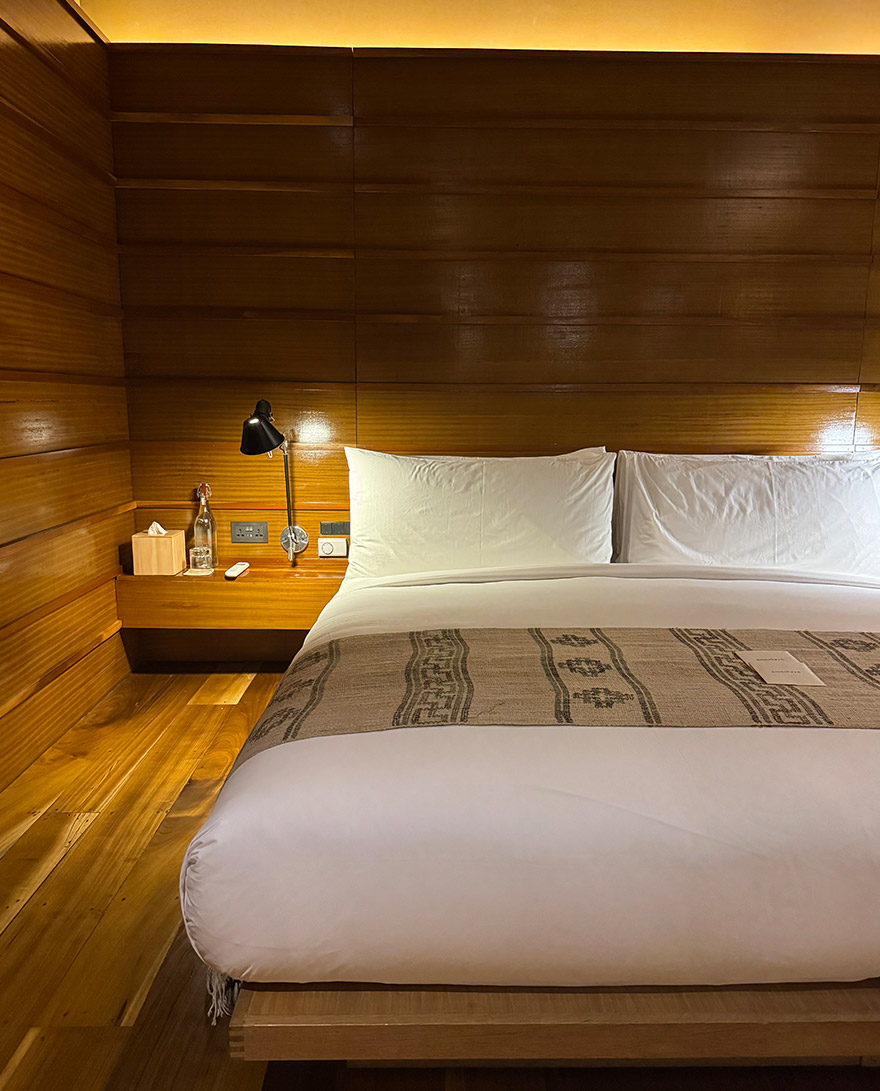
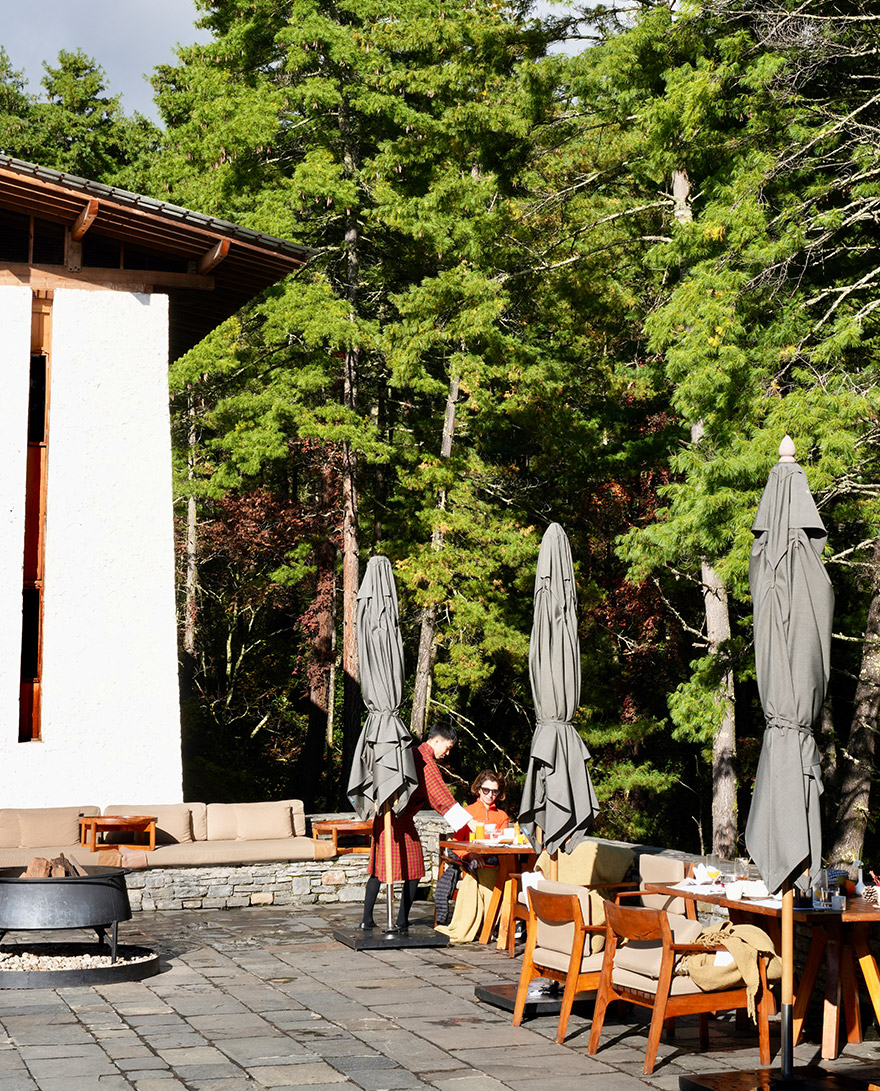
We chose Amankora for our stay in Thimphu, one of five Aman lodges spread across Bhutan’s beautiful valleys. The hotel is tucked away in a peaceful pine forest, just a short drive from the centre of the capital. The setting feels wonderfully secluded, with tall trees surrounding the property and views across the wooded hills. The architecture was designed by the acclaimed architect Kerry Hill, inspired by Bhutan’s traditional dzongs, or fortress-monasteries. The striking whitewashed buildings have high stone walls, dark wooden roofs and large windows, combining traditional Bhutanese design with Aman’s contemporary style.
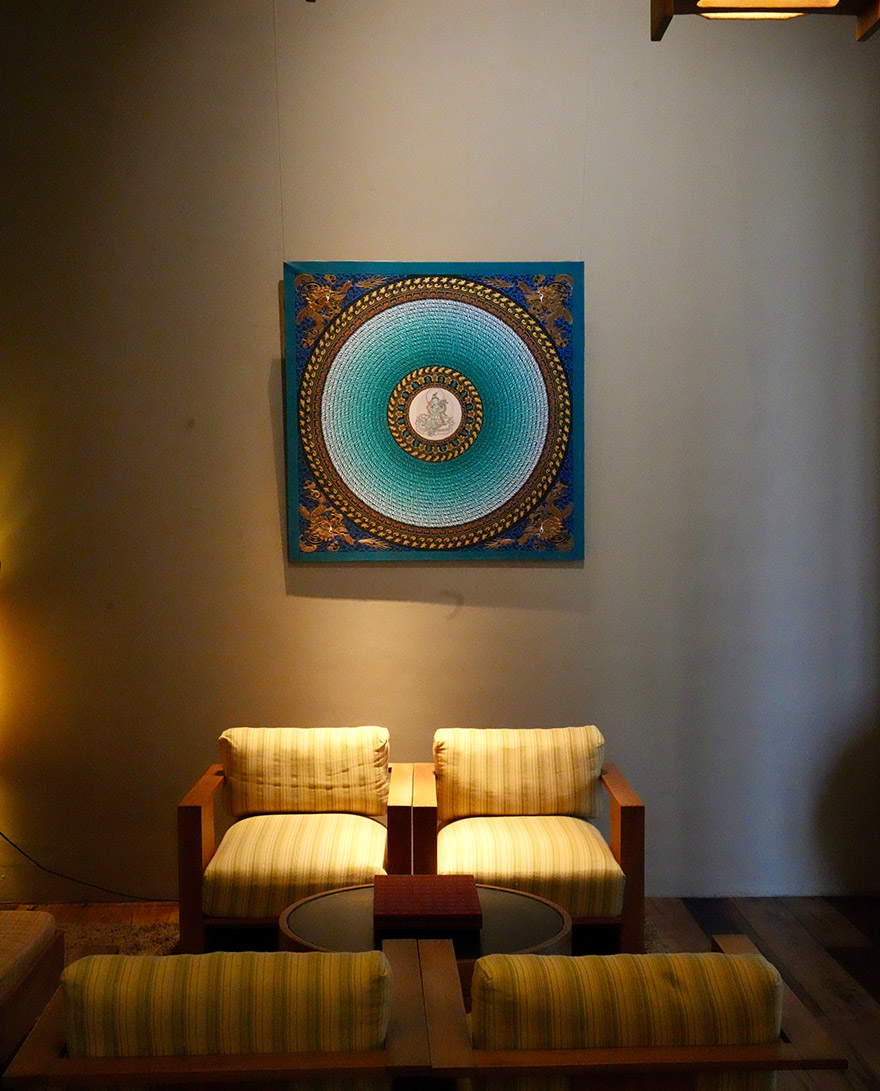
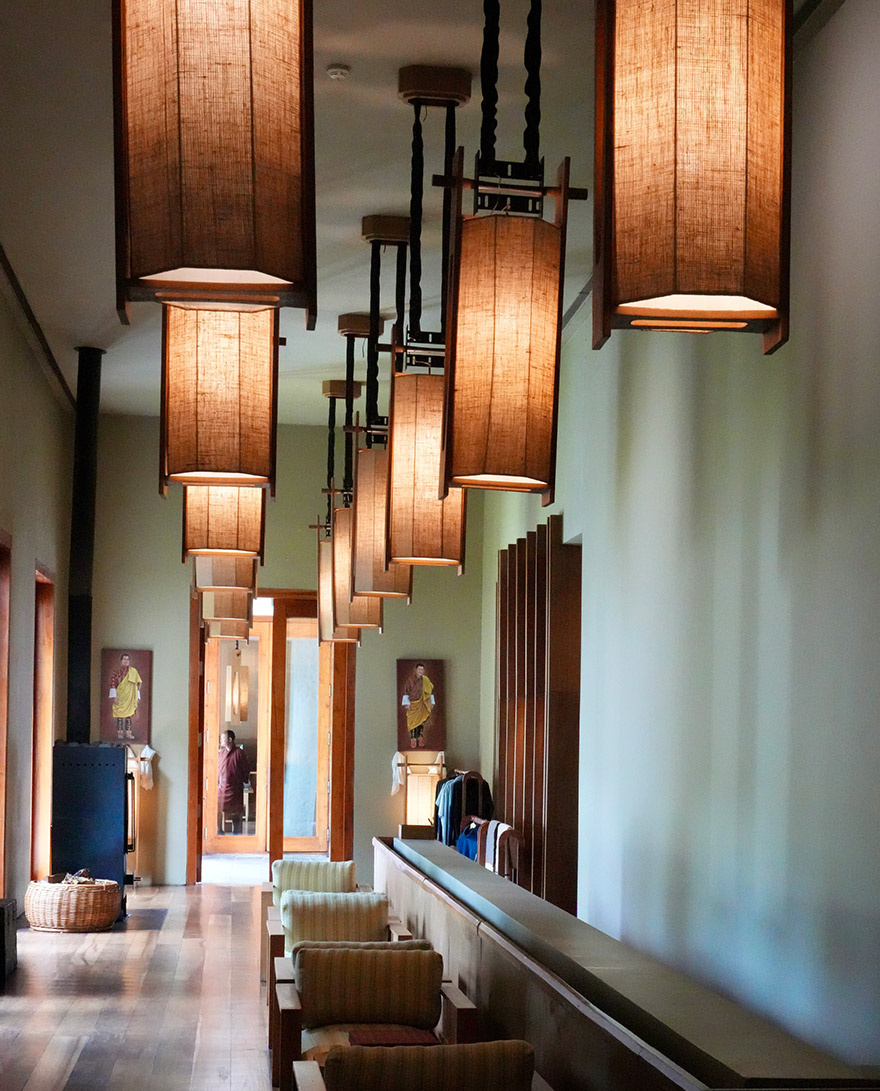
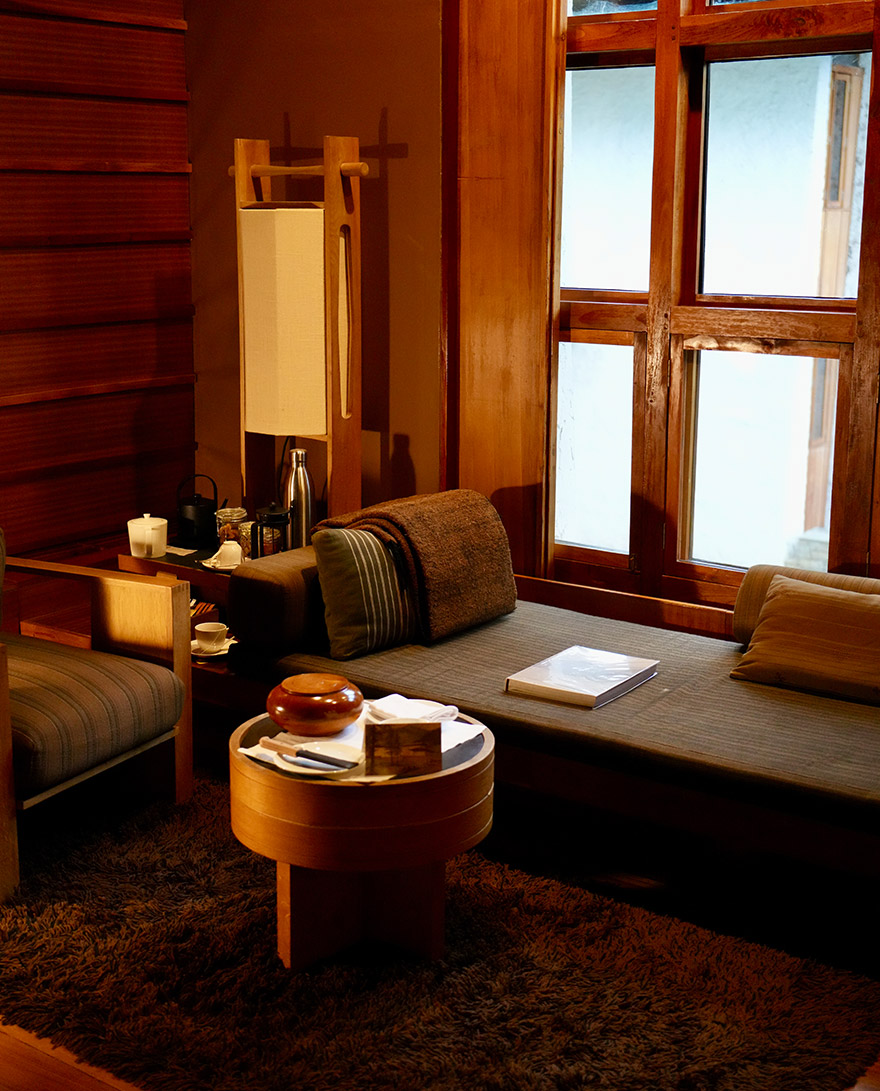
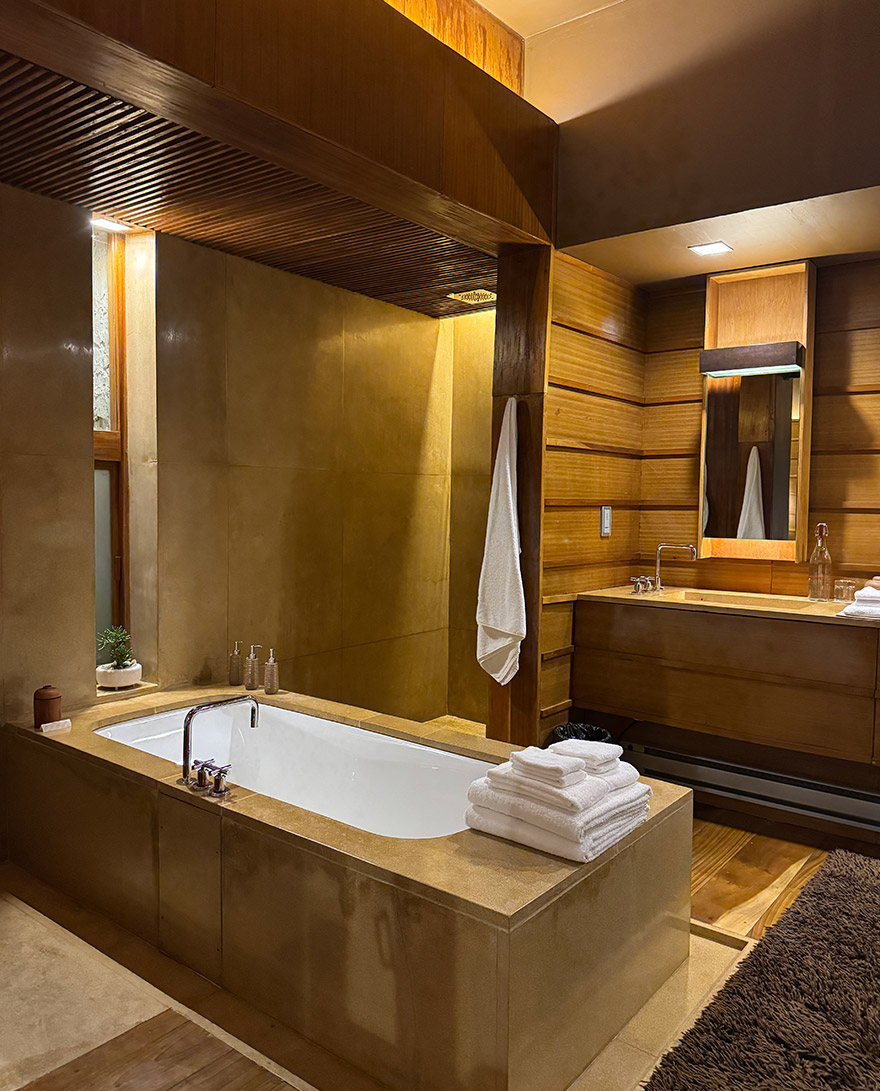
With just 16 suites, the hotel feels intimate and private. The interiors are beautifully understated, with warm timber, natural materials and a palette of earthy colours. Each of the spacious 52-square-metre suites has a king-sized bed, a cosy wood-burning stove and a window seat looking out towards the forest. The bathrooms are particularly lovely, with large terrazzo bathtubs, twin basins and separate showers. Everything is thoughtfully designed, with the clean lines and attention to detail that Aman is famous for.
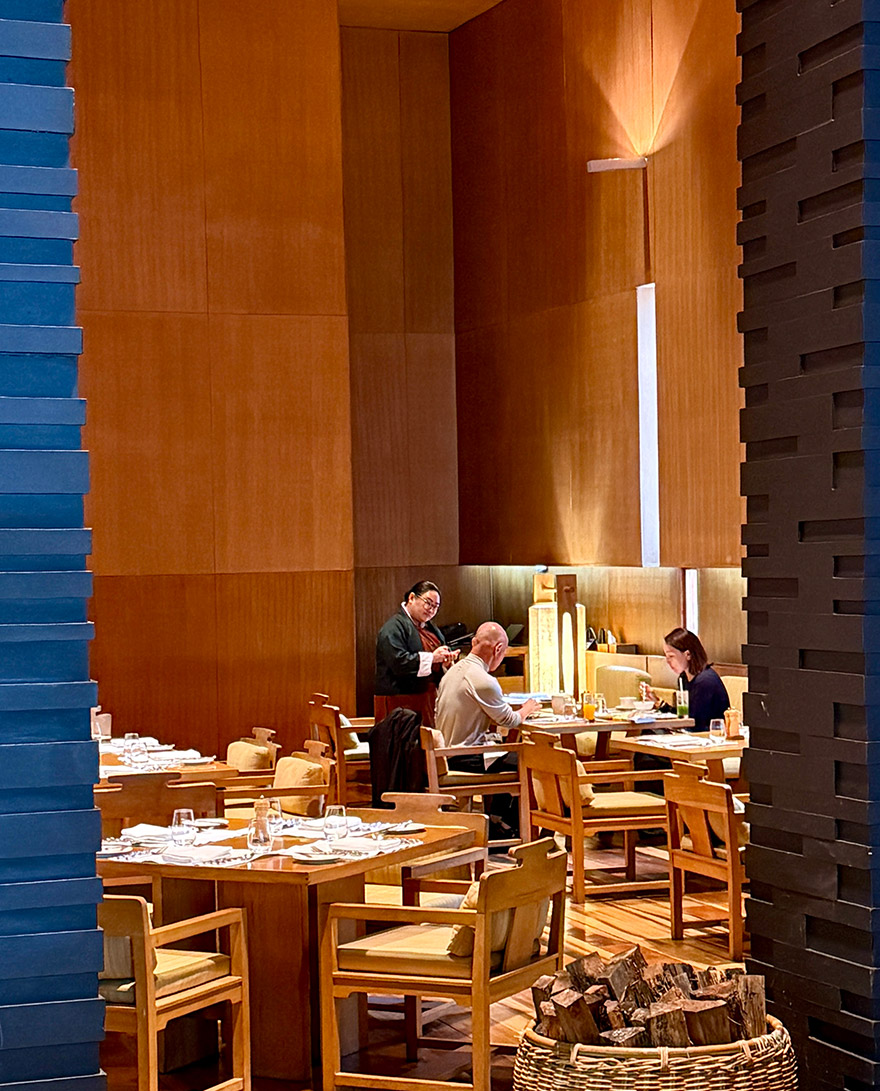
The main lounge and restaurant are equally impressive, with soaring ceilings, wooden panelling and large windows overlooking the surrounding trees. There’s also an outdoor terrace where you can dine in warmer weather, with views of the forest and a small stream. The restaurant serves a mix of Bhutanese specialities, Indian dishes and Western favourites, making it a good place to try local cuisine alongside more familiar options. The hotel also has a small spa with three treatment rooms and a steam room, ideal after a day hiking in the surrounding mountains.
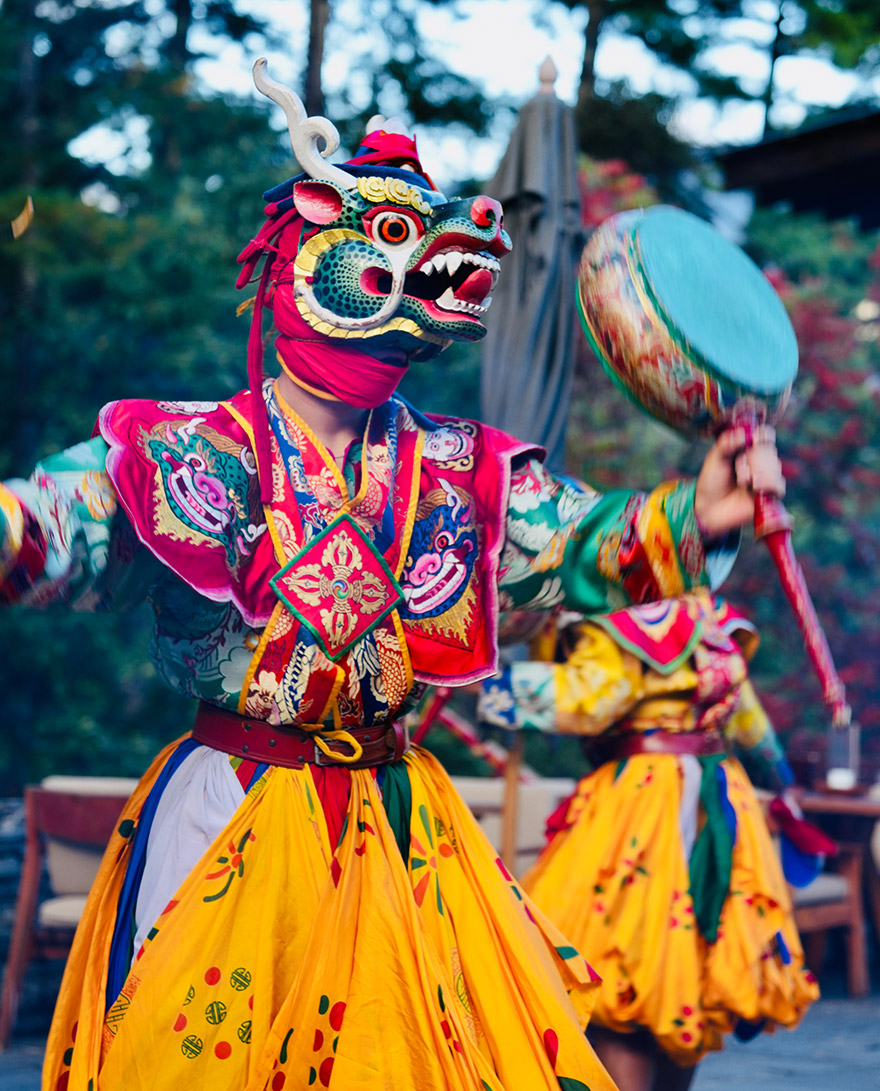
The hotel also arranged a wonderful performance of traditional Bhutanese masked dancing, with dancers wearing elaborate, brightly coloured costumes and animal masks, accompanied by the rhythmic beating of drums.
Do
BUDDHA DORDENMA
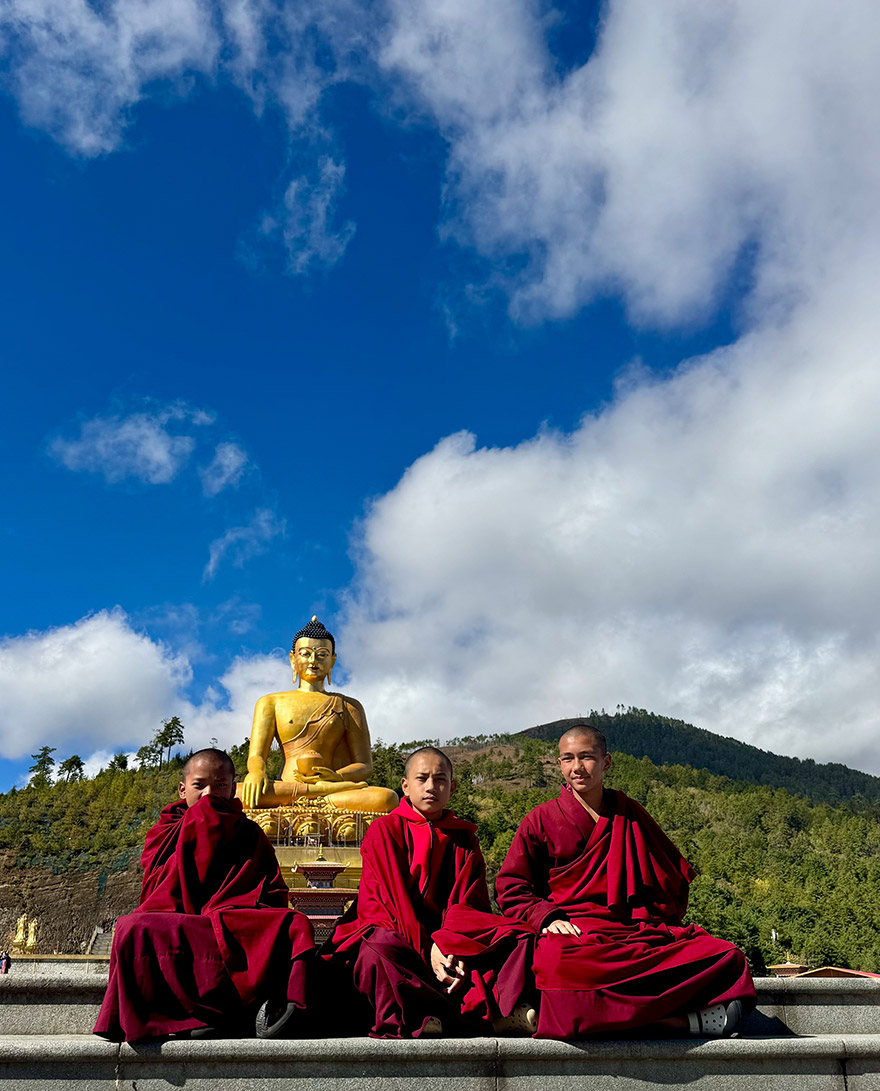
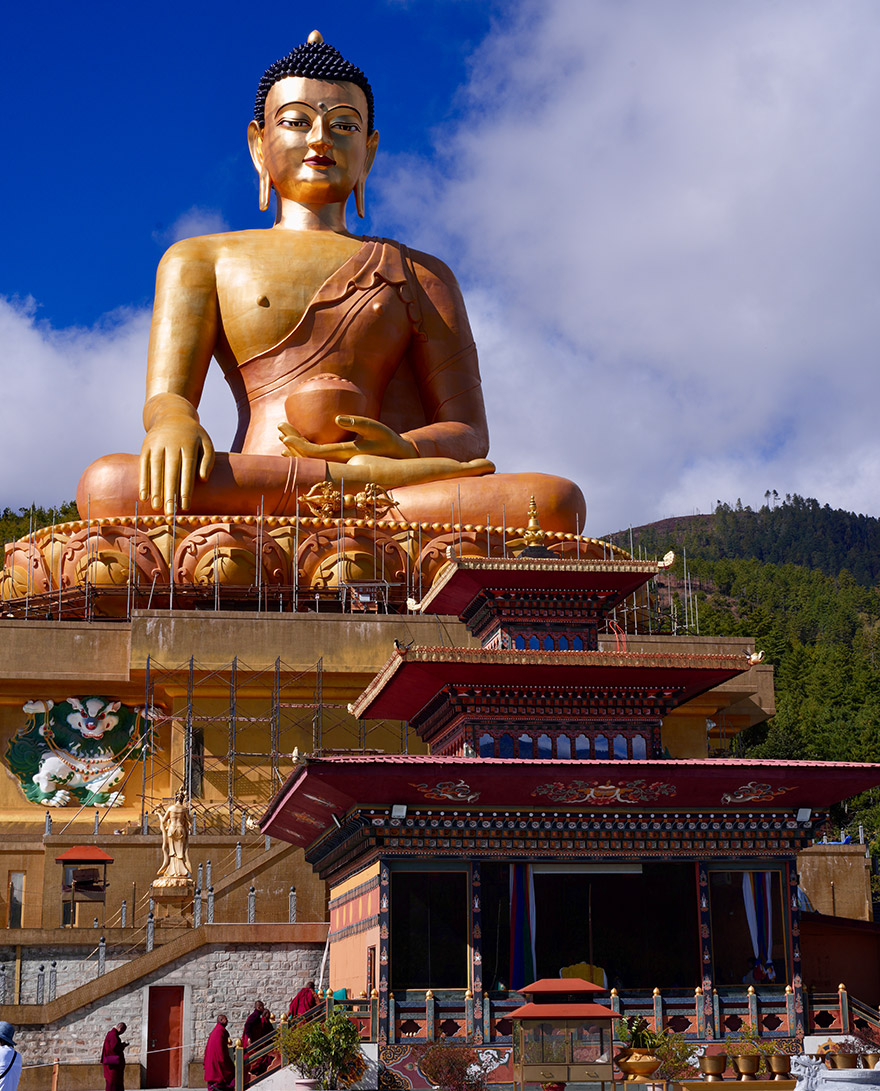
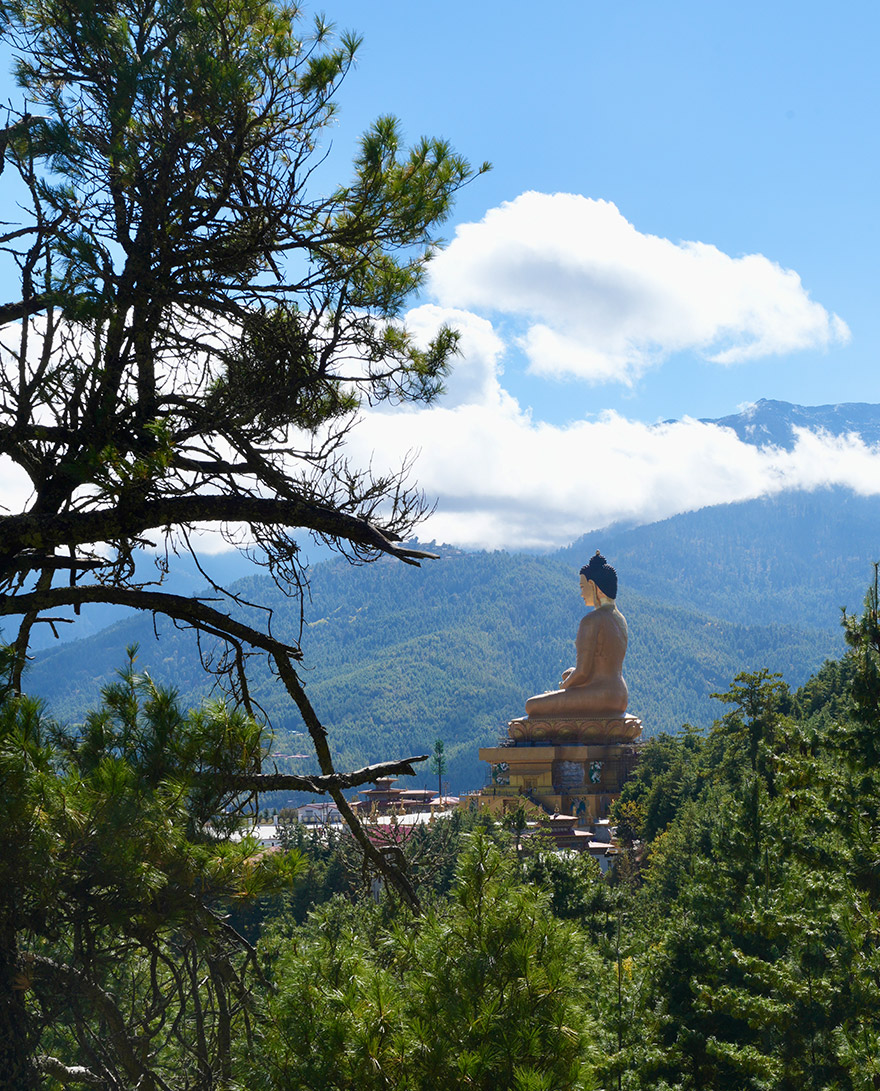
One of Thimphu’s most impressive landmarks is the enormous golden Buddha Dordenma, perched high on a hill overlooking the capital. Standing 52 metres tall, it’s one of the largest seated Buddha statues in the world and can be seen from many parts of the valley. The statue, completed in 2015, is made of bronze and gilded in gold, with a wonderfully serene expression. It represents Shakyamuni Buddha, the historical Buddha who lived around 2,500 years ago and whose teachings form the foundation of Buddhism.
The large terrace surrounding the monument is decorated with smaller statues and offers spectacular panoramic views over Thimphu, the river and the mountains beyond. It’s a great place to begin exploring the city and get a sense of its beautiful setting.
KUENSEL PHODRANG HIKE
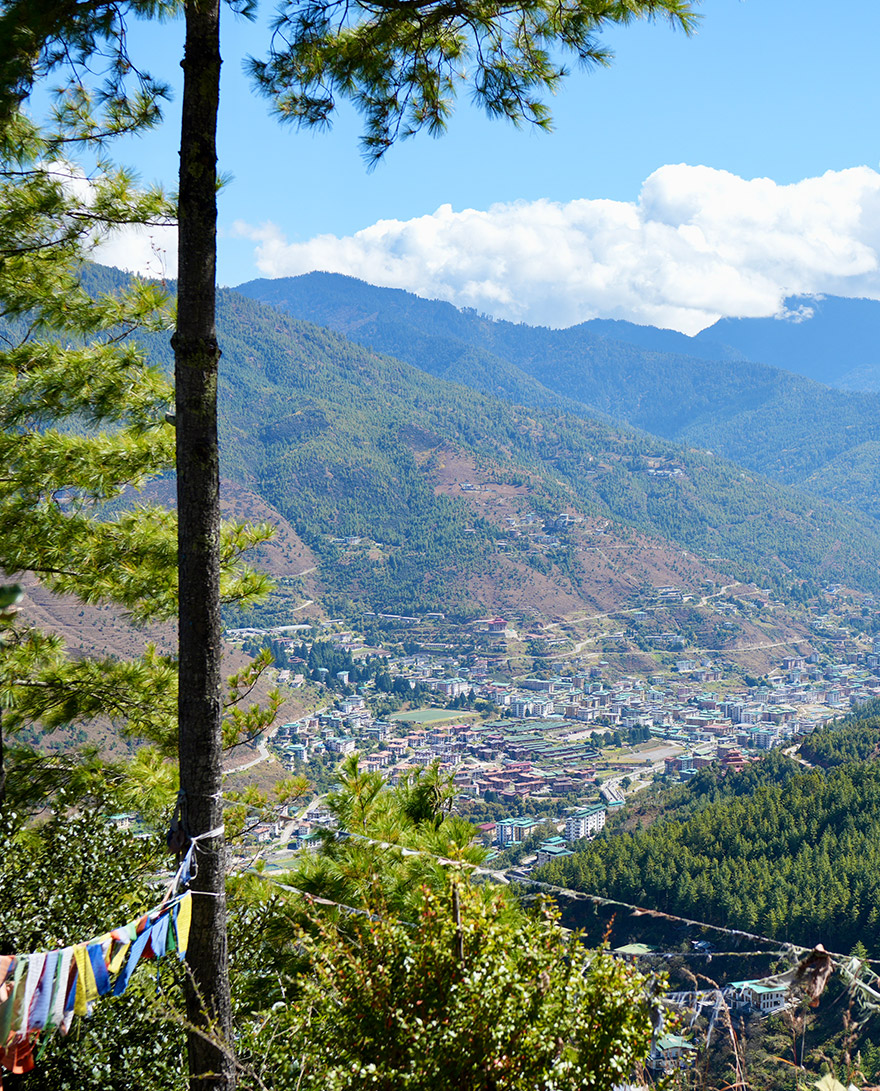
A lovely way to combine some gentle exercise with views of Thimphu is to take the Kuensel Phodrang hike, starting near the Buddha Dordenma and finishing at Changangkha Temple. The trail winds through pine forest, with stretches of oak and rhododendron, and colourful Buddhist prayer flags hanging between the trees. There are several viewpoints along the route where the forest opens up to reveal beautiful views across the valley, with Thimphu’s buildings spread out below and mountains rising on either side. The full walk is around 7km and takes approximately three hours at a leisurely pace.
CHANGANGKHA TEMPLE
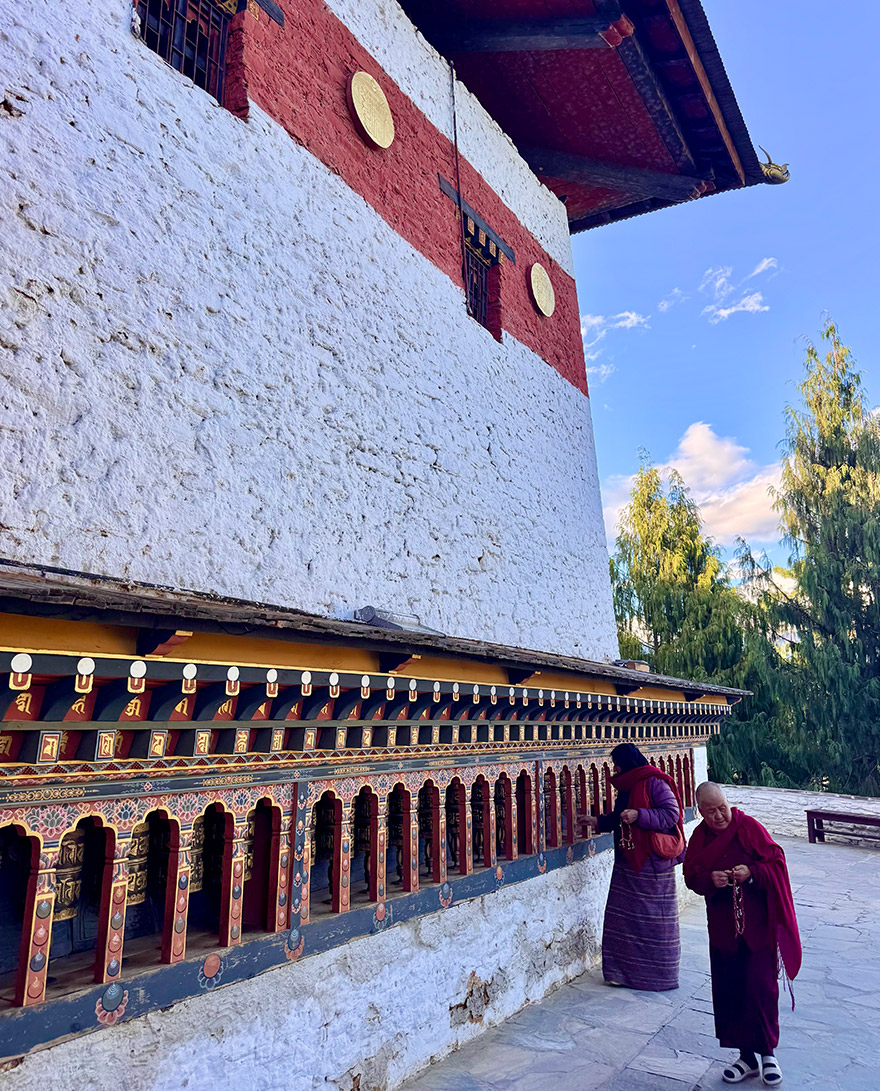
Perched on a ridge overlooking Thimphu, Changangkha Lhakhang is one of the city’s oldest and most important temples, dating back to the 12th century. It was established on a site associated with Lama Phajo Drukgom Zhigpo, a Tibetan Buddhist master who helped establish the Drukpa Kagyu tradition in Bhutan. The temple has the distinctive architecture of a Bhutanese monastery, with whitewashed walls, carved wooden windows and colourful painted details. Inside are beautiful religious wall paintings and sacred Buddhist images, together with religious scriptures traditionally written in gold.
What makes Changangkha particularly interesting is its importance to local families. Parents traditionally bring their newborn babies here to receive blessings and auspicious names associated with a protective Buddhist deity.
NATIONAL MEMORIAL CHORTEN
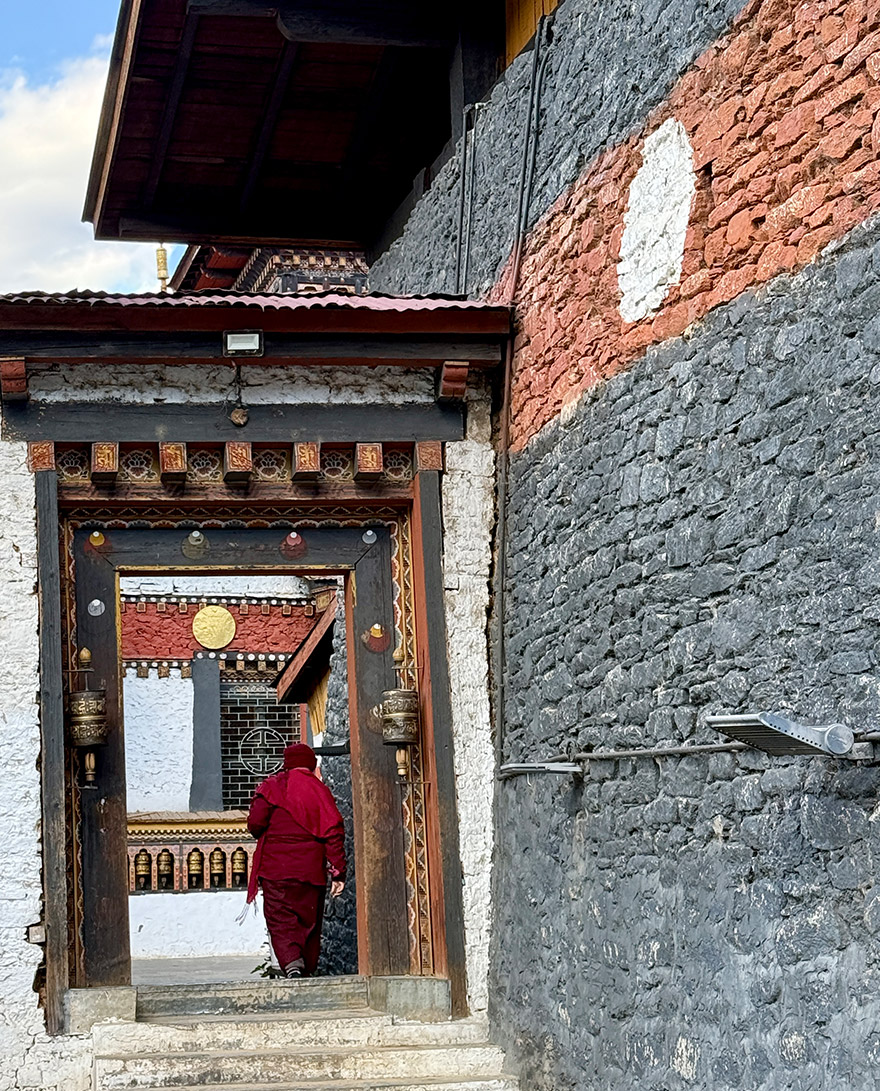
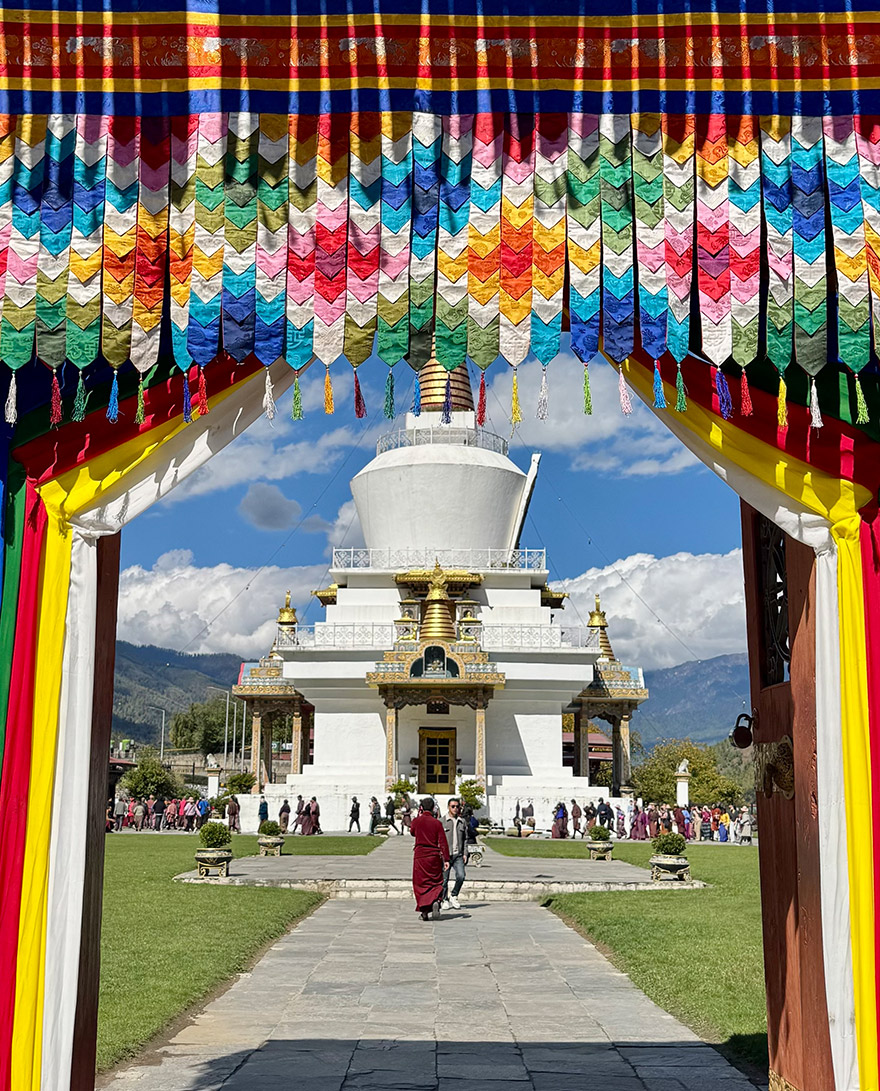
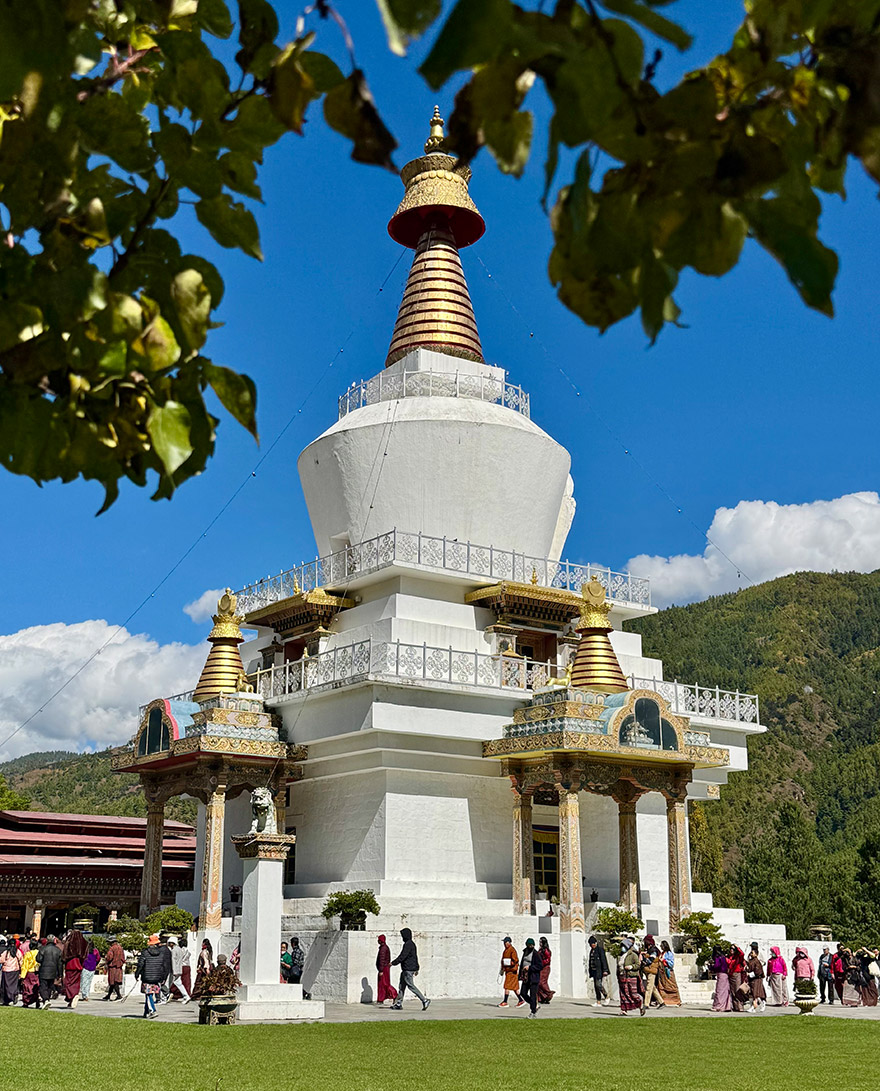
The National Memorial Chorten is one of Thimphu’s most important religious landmarks and a particularly good place to observe everyday Buddhist life. This large white Tibetan-style stupa, topped with a golden spire, was built in 1974 to honour Bhutan’s third King, Jigme Dorji Wangchuck, who is remembered as the father of modern Bhutan for introducing major political, economic and social reforms.
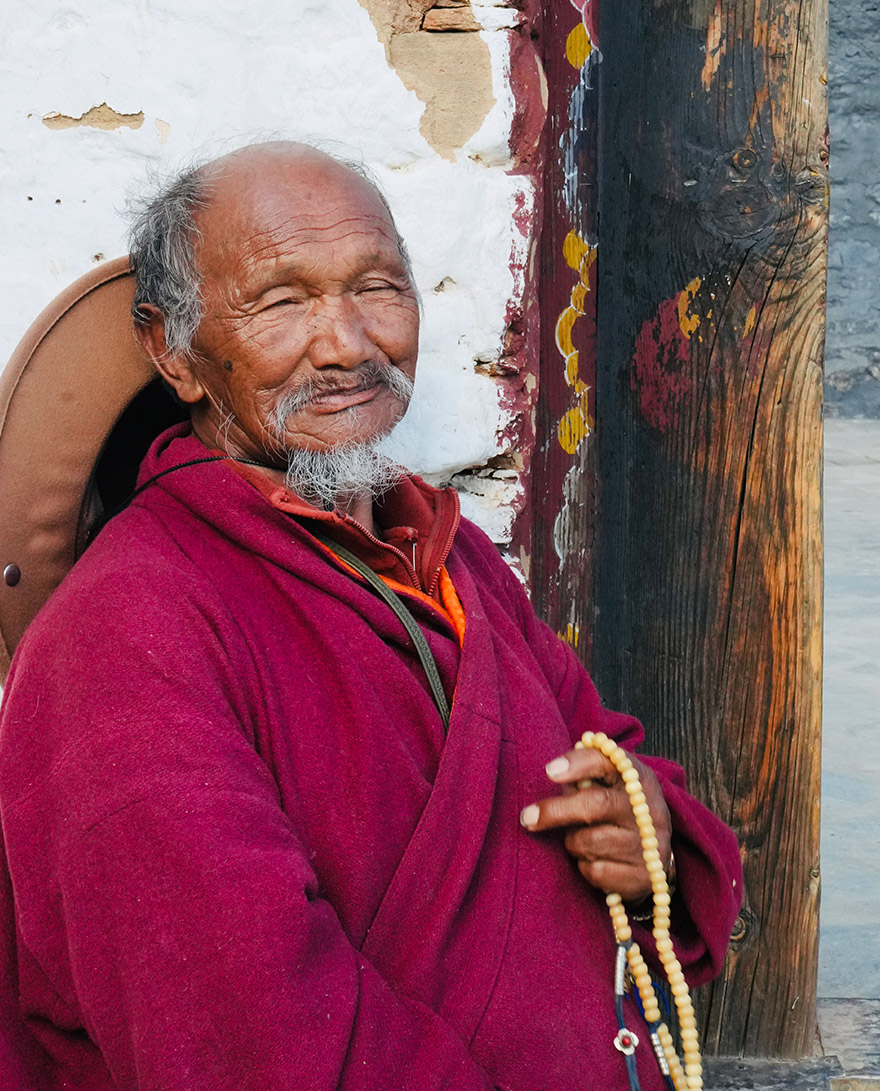
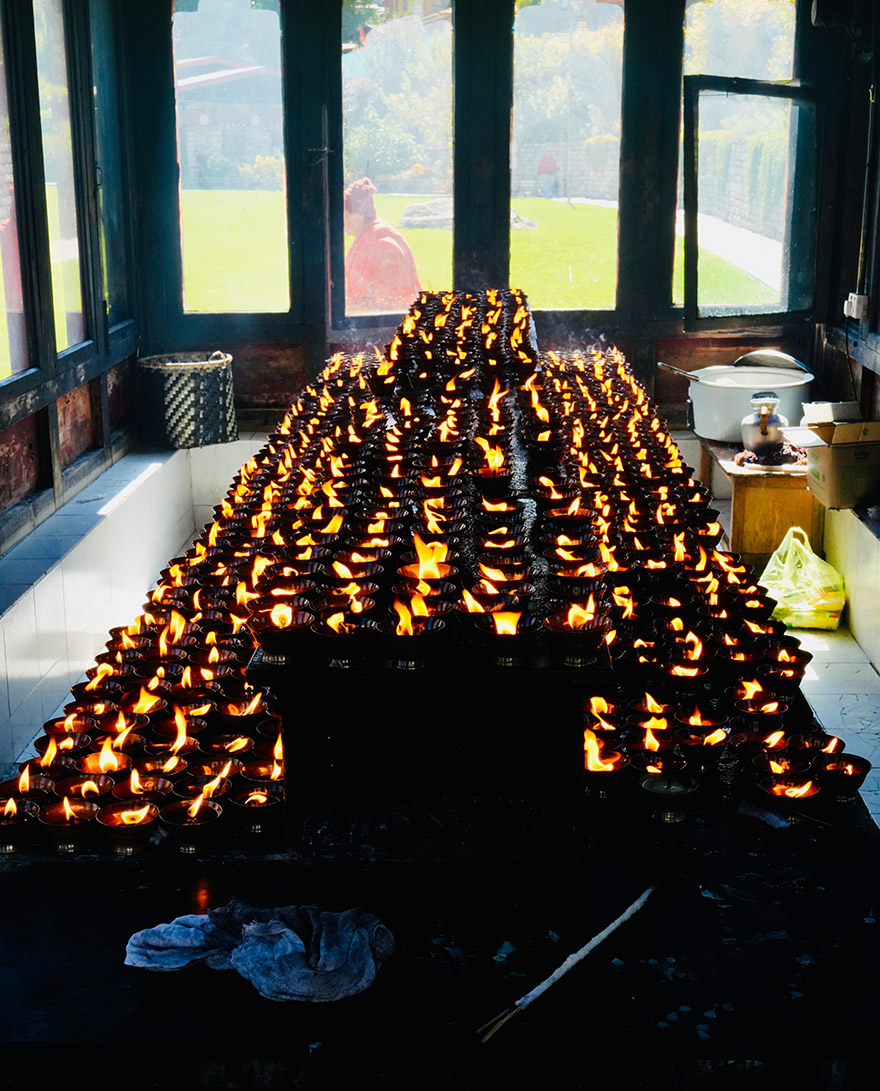
This is very much an active place of worship, attracting a constant stream of local people throughout the day. Elderly Bhutanese gather to pray, turn the large red prayer wheels, light butter lamps and walk clockwise around the chorten, often counting their prayers on strings of Buddhist beads. The white structure is decorated with golden details, whilst the interior contains intricate religious paintings and statues of Buddhist deities associated with Vajrayana Buddhism, the tradition practised in Bhutan.
TASHICHHO DZONG
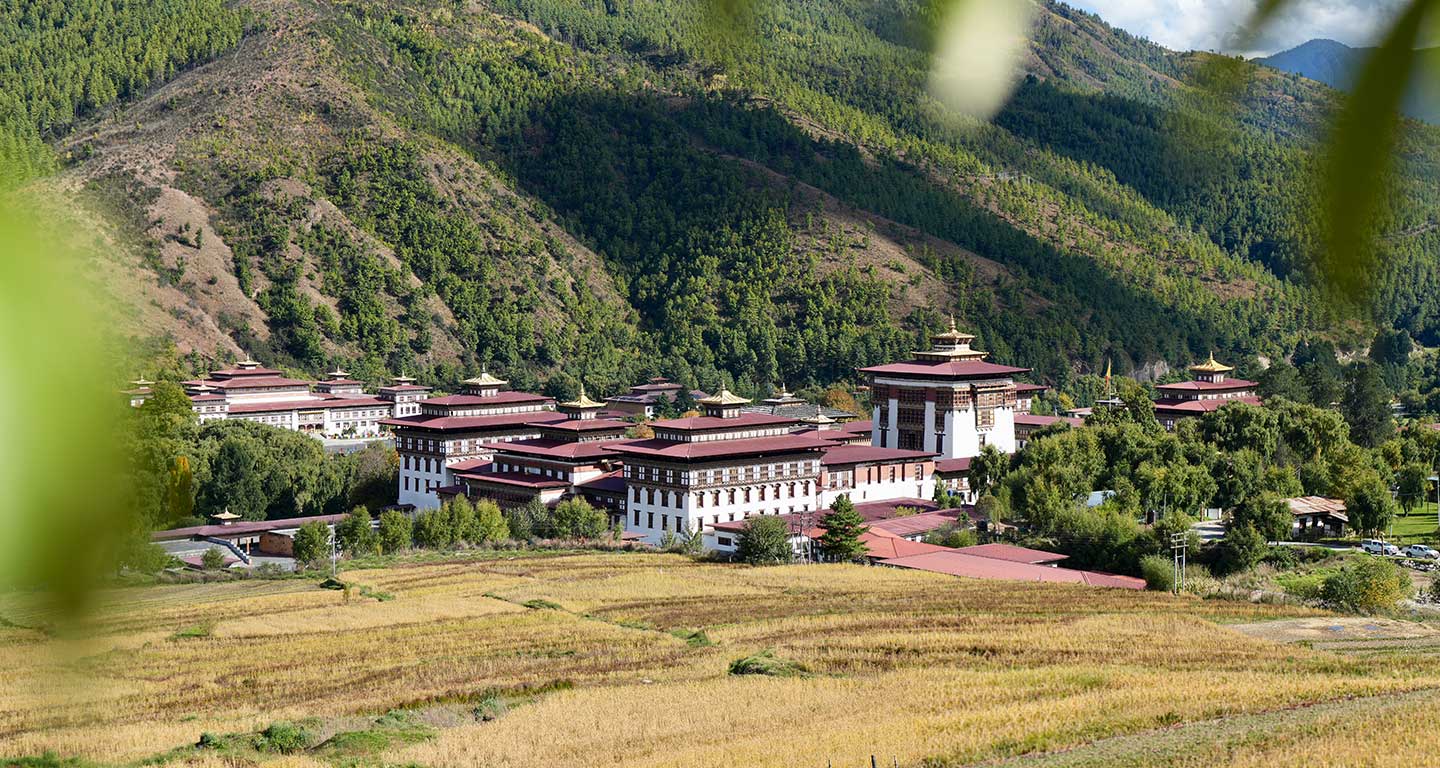
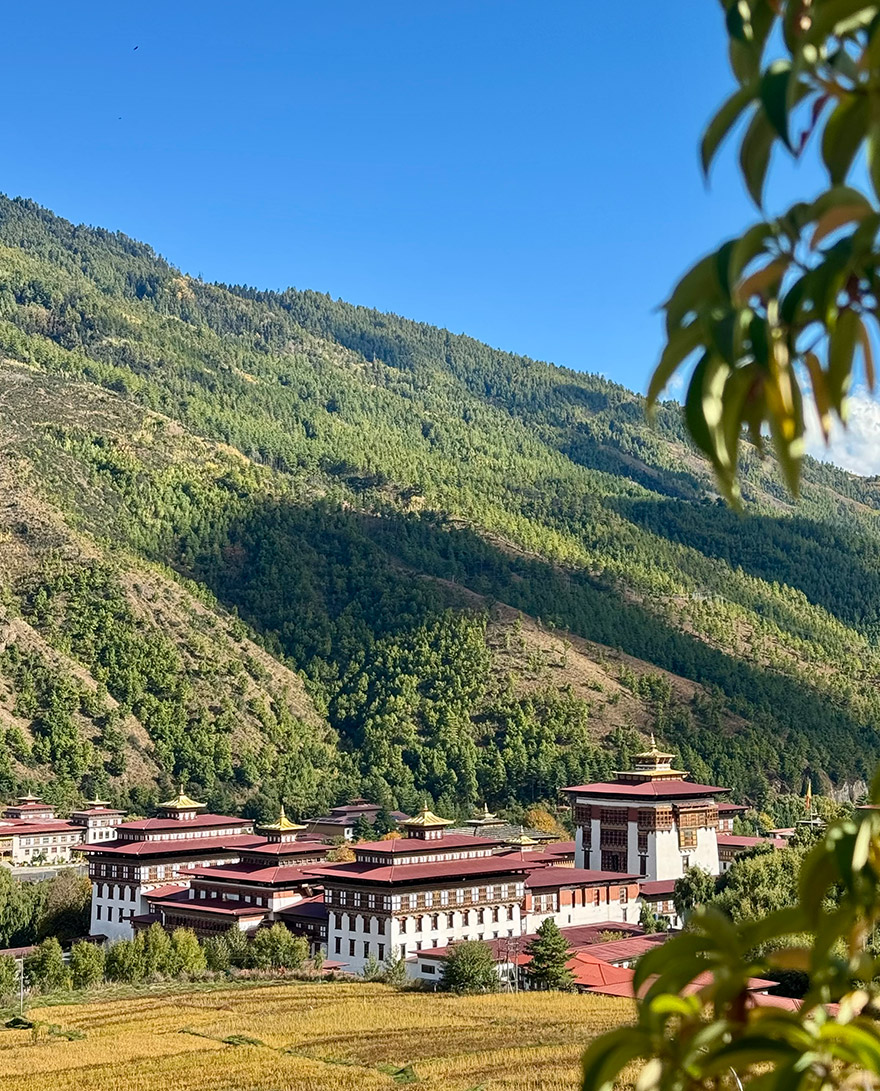
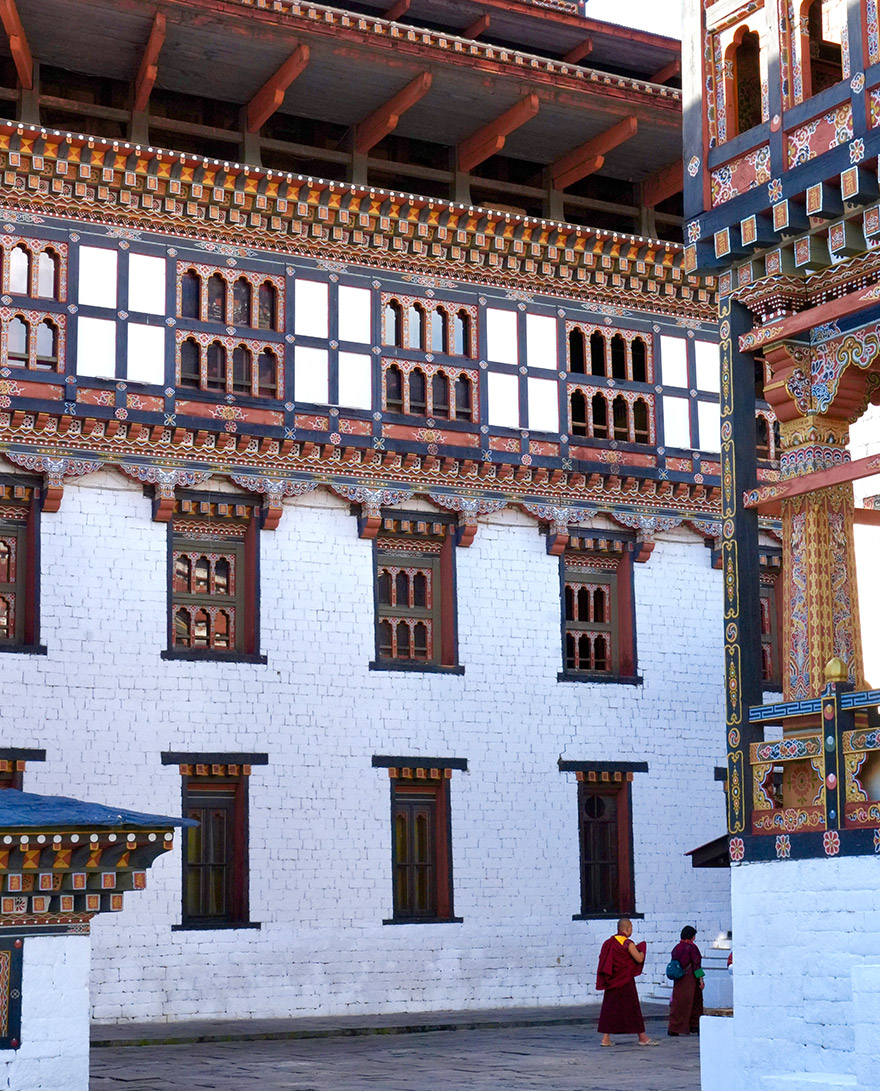
Tashichho Dzong is one of Thimphu’s most magnificent buildings, a huge fortress-monastery standing beside the Wang Chhu River at the northern end of the city. Originally developed in its present location in the 17th century under Zhabdrung Ngawang Namgyal, the religious leader who unified Bhutan, it was extensively rebuilt in the 1960s when Thimphu became the country’s permanent capital. The dzong is an extraordinary example of traditional Bhutanese architecture, with massive whitewashed walls, richly decorated timber windows and tiered roofs topped with golden ornaments. Inside, the large courtyards are surrounded by beautifully painted buildings, with colourful Buddhist motifs and elaborate carved woodwork. It remains the seat of Bhutan’s government, housing the King’s throne room and offices.
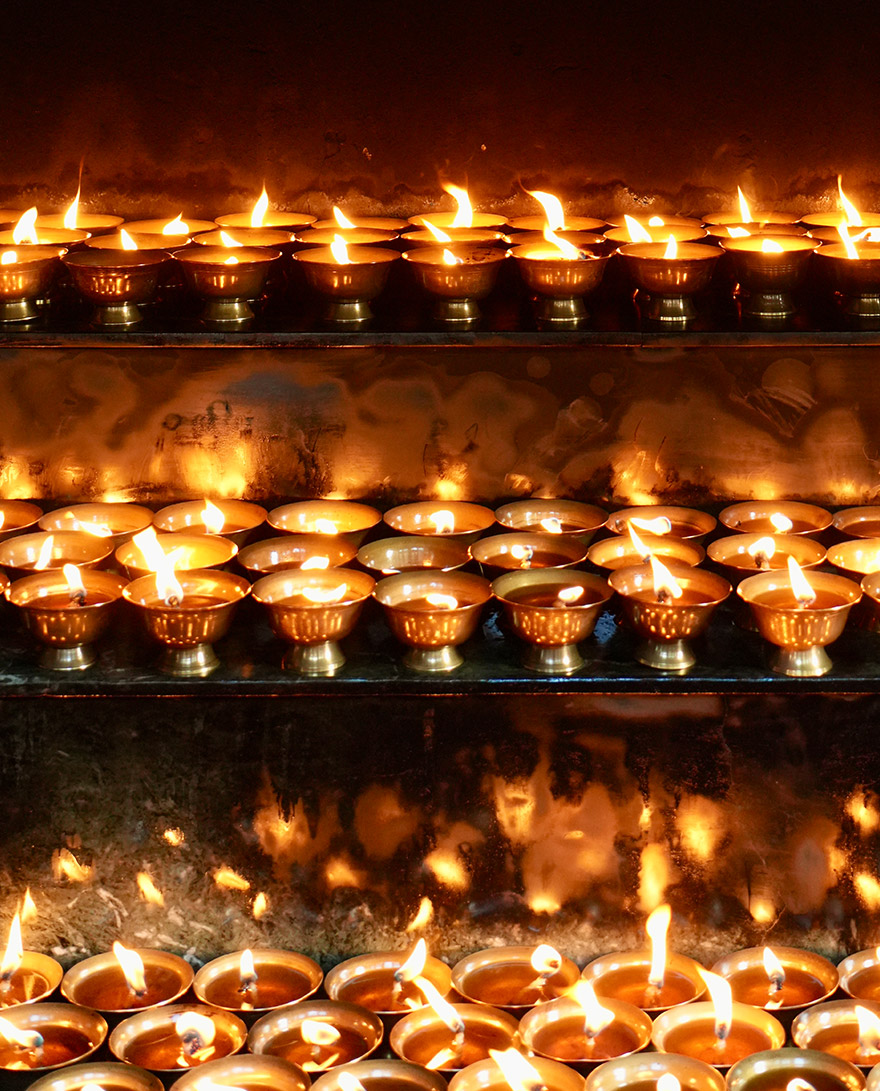
One of the highlights is the magnificent temple within the monastery section of the dzong. The richly decorated interior features colourful paintings, carved wooden pillars and an impressive collection of Buddhist statues. The main figure is Shakyamuni Buddha, surrounded by numerous smaller Buddha statues and images of important Buddhist deities. Another striking feature of Bhutanese temples is the rows of flickering butter lamps. Lighting these lamps is an important Buddhist ritual. Offering a lamp is considered a way of generating merit and expressing prayers for the well-being of others.
Gangtey: the valley of nature
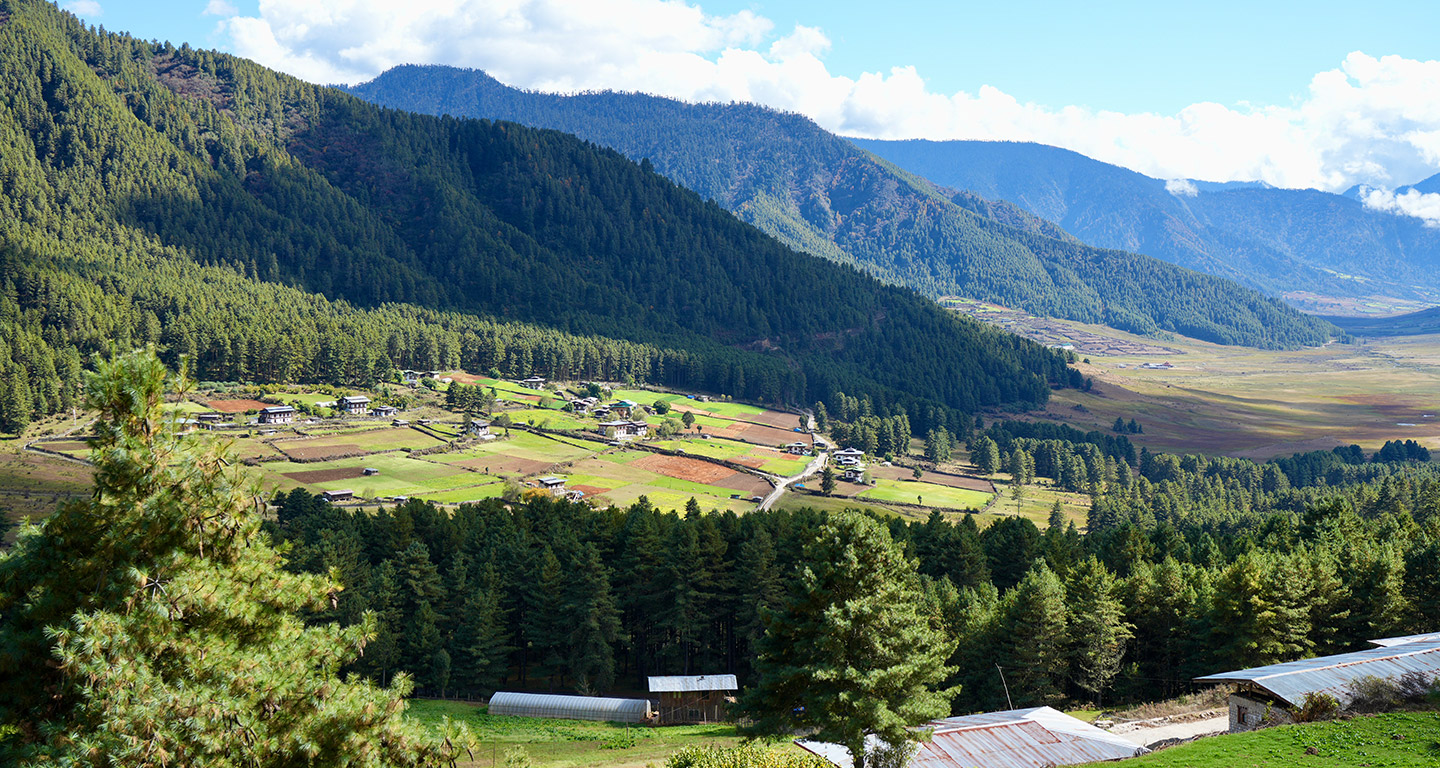
Gangtey was the second stop on our journey through Bhutan, and one of the most beautiful places we visited. Set in the Phobjikha Valley, at around 3,000 metres above sea level, this is a very different landscape from the steep, forested valleys found elsewhere in Bhutan. Here, the mountains open up to reveal a vast, gently sloping valley, with wide green meadows, wetlands, traditional farmhouses and forests covering the surrounding hills. The scenery is spectacular, with a wonderful sense of space and tranquillity.
The valley is also one of Bhutan’s most important conservation areas, famous as the winter home of the rare black-necked cranes that migrate here from the Tibetan Plateau. There are few large buildings or developments, just small farming communities and the beautiful 17th-century Gangtey Monastery perched on a ridge overlooking the valley.
Stay & Dine
GANGTEY LODGE
Gangtey Lodge has one of the most spectacular settings of any hotel we’ve stayed in. Perched on a hillside overlooking the Phobjikha Valley, the views stretch for miles across the green meadows and forested mountains. The hotel is designed in the style of a traditional Bhutanese farmhouse, with whitewashed walls, timber roofs and beautifully carved wooden details. With just 12 suites, it’s an intimate property, with a wonderfully relaxed atmosphere and exceptionally warm, friendly service.
The centrepiece of the hotel is the magnificent lounge and dining room, with its soaring ceilings, exposed wooden beams, two enormous stone fireplaces and a huge wall of glass looking out across the valley. The cooking combines traditional Bhutanese dishes with Indian and Western options, using seasonal produce sourced from local farms and the lodge’s own garden.
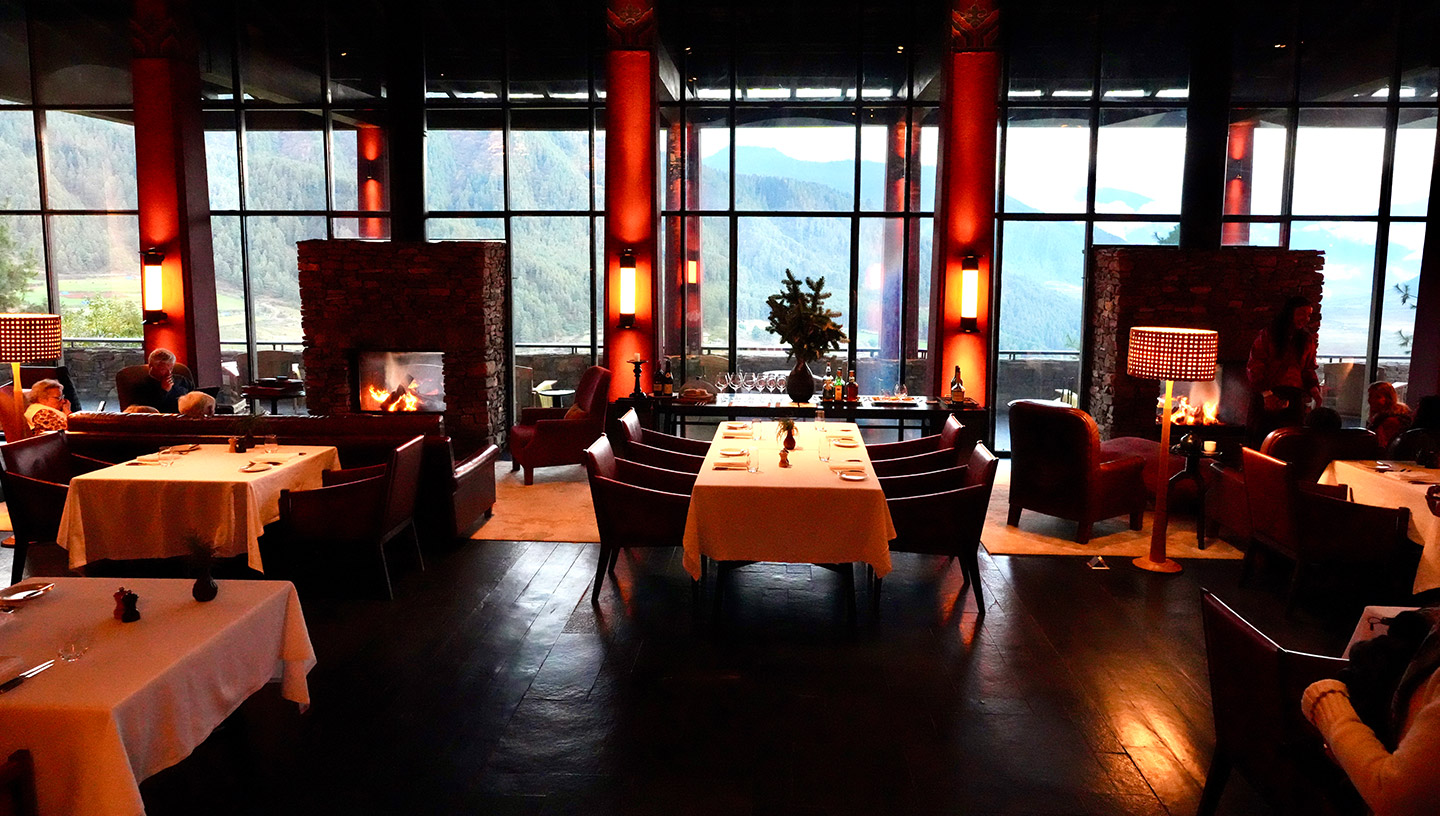
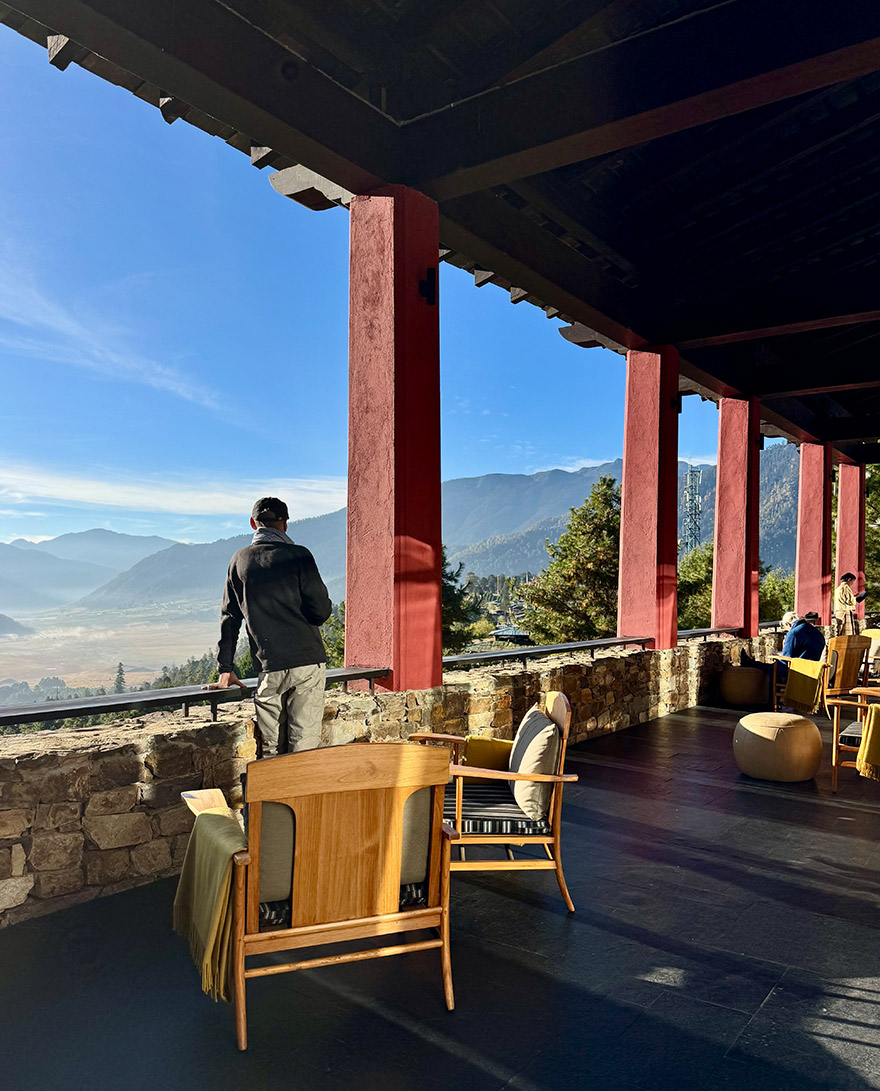
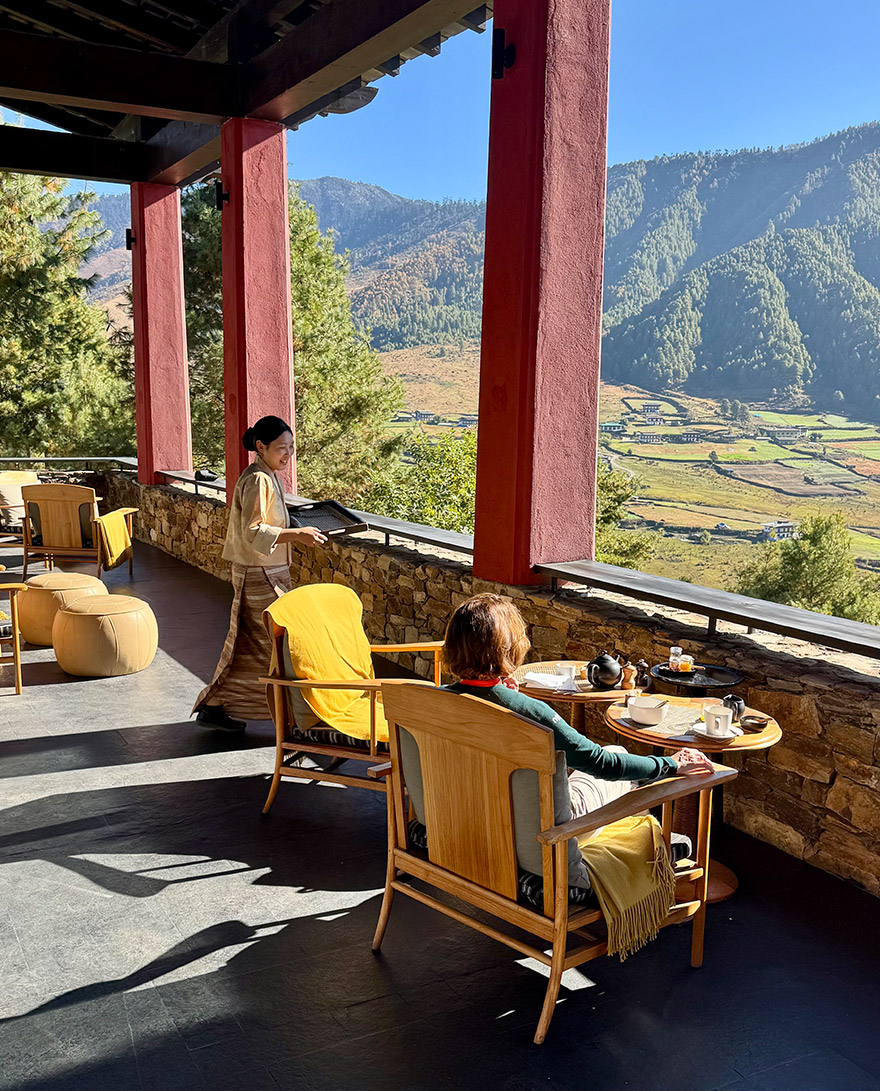
Outside, the large terrace offers even more impressive views, with comfortable seating where you can enjoy a morning coffee or a drink after a day’s hiking.
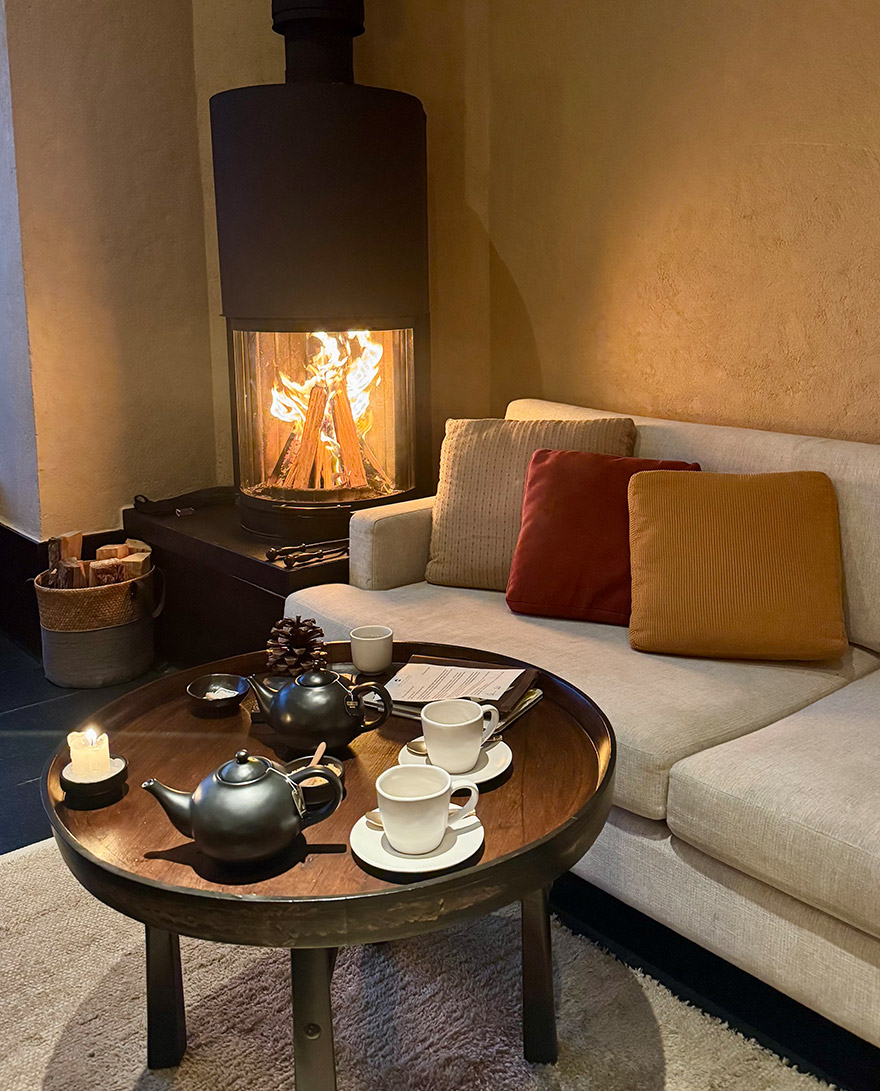
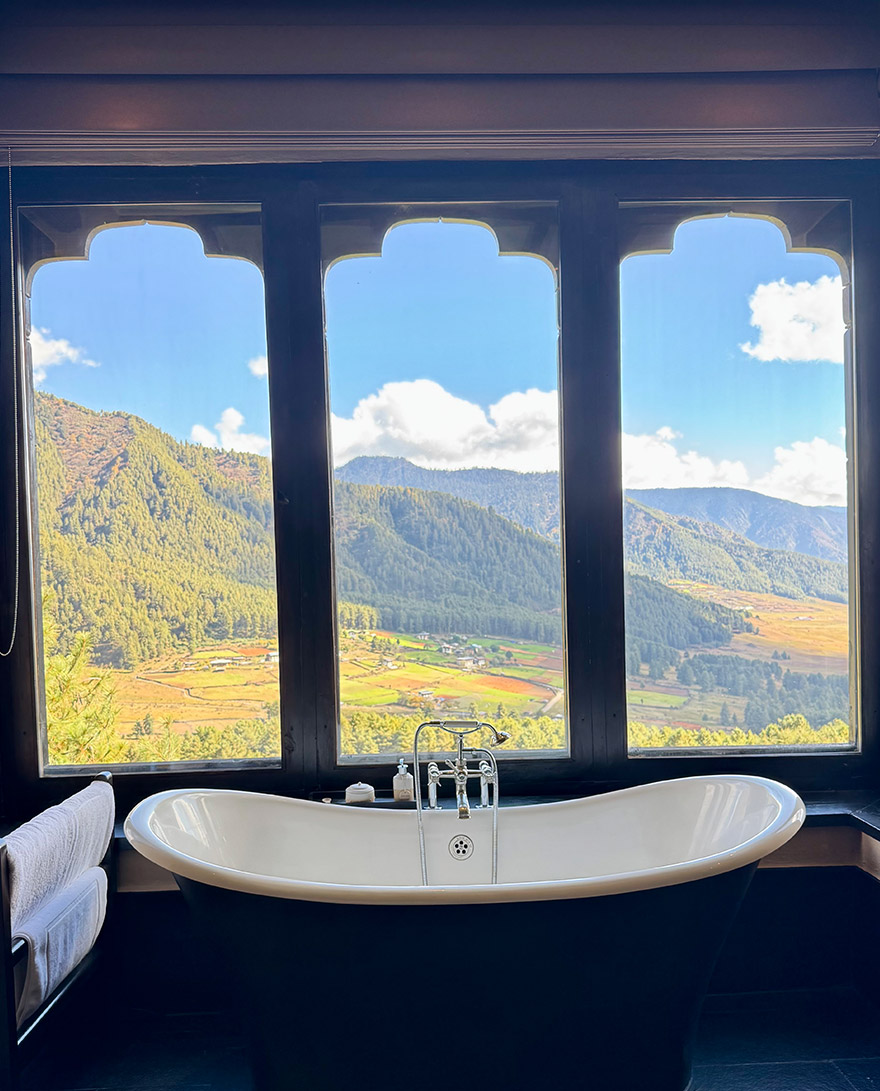
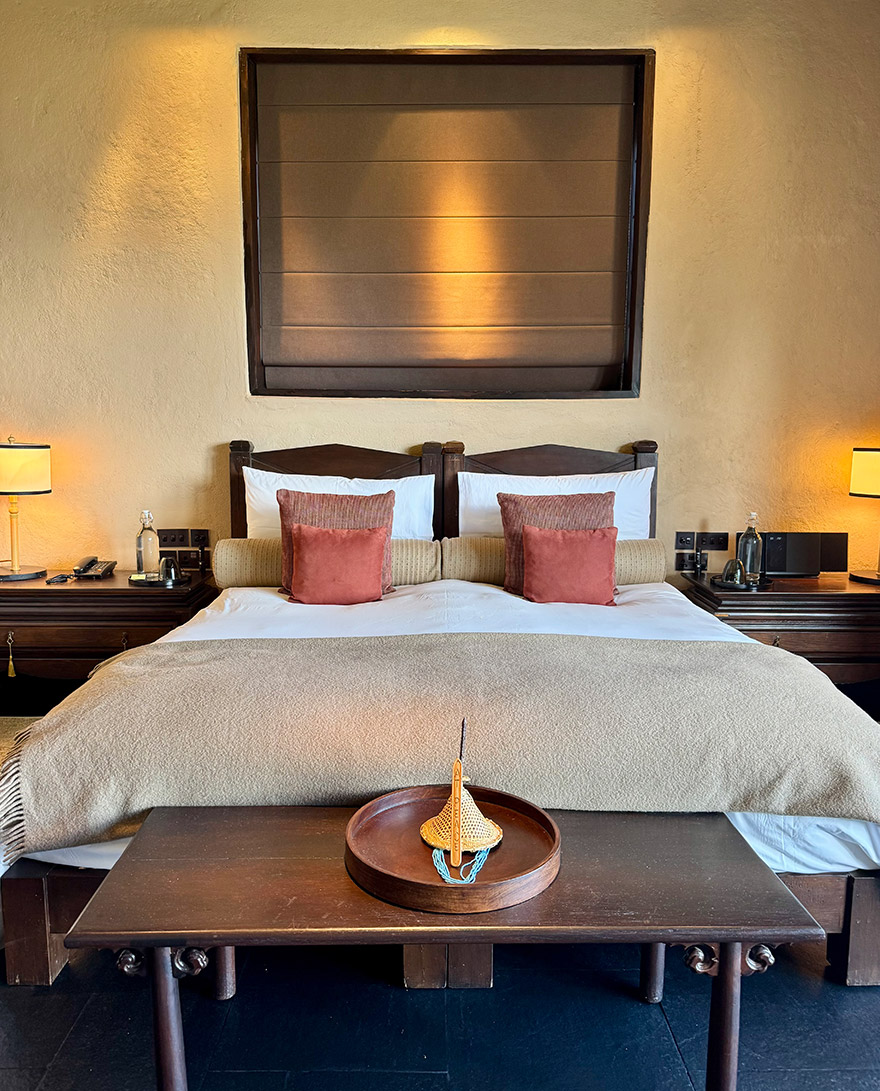
The 12 Farmhouse Suites are equally lovely, combining traditional Bhutanese details with contemporary comfort. The rooms are spacious, with warm wooden furniture, colourful textiles and large windows framing the views. Each has its own wood-burning stove, heated stone floors and a sitting area. One of the nicest features is the beautiful freestanding bathtub positioned right beside the window, so you can enjoy a long soak whilst looking out across the valley!
Do
DOCHULA PASS
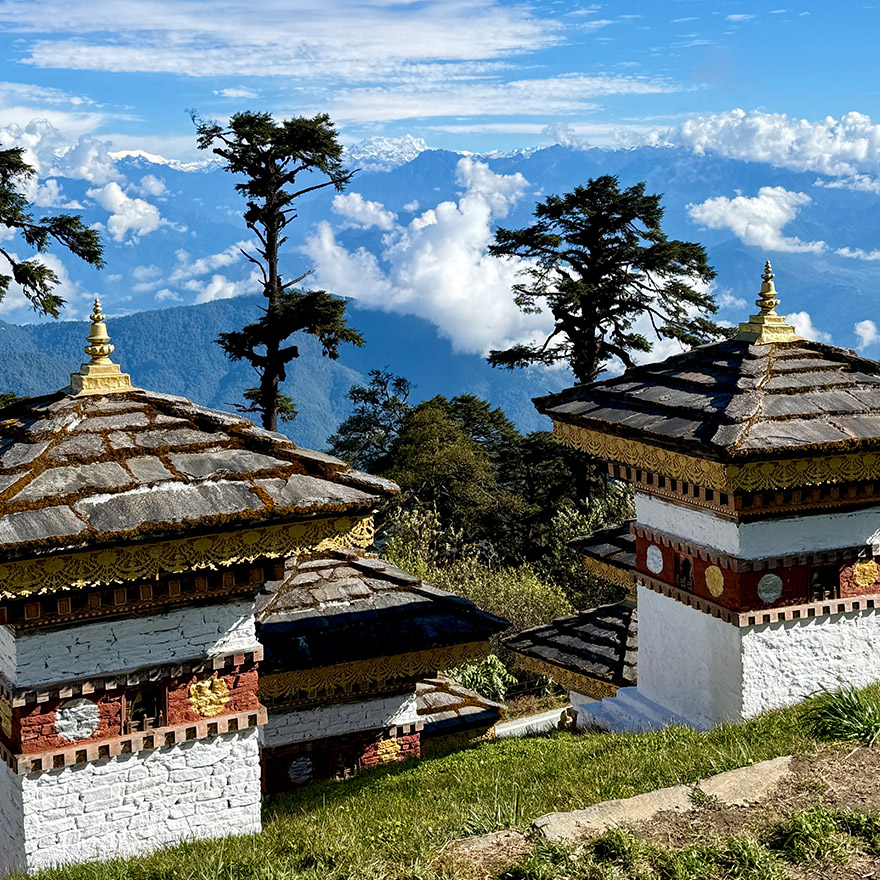
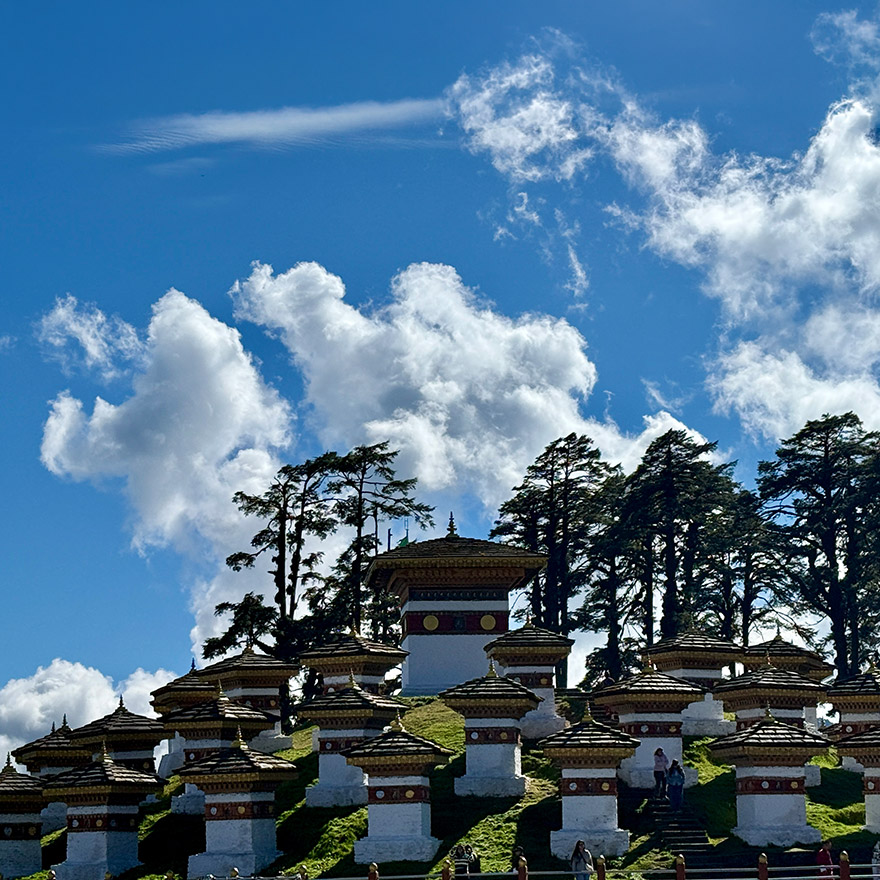
The drive from Thimphu to Gangtey takes you through some spectacular mountain scenery, with one of the highlights being Dochula Pass. At an altitude of 3,100 metres, the pass offers extraordinary panoramic views of the eastern Himalayas on a clear day. The other striking feature of Dochula is the collection of 108 whitewashed Buddhist chortens, or stupas, built in memory of Bhutanese soldiers who died during a military operation in 2003. Arranged in three tiers on a small hilltop, the chortens have richly decorated golden roofs and colourful details, with Buddhist prayer flags fluttering around them.
GANGTEY NATURE TRAIL
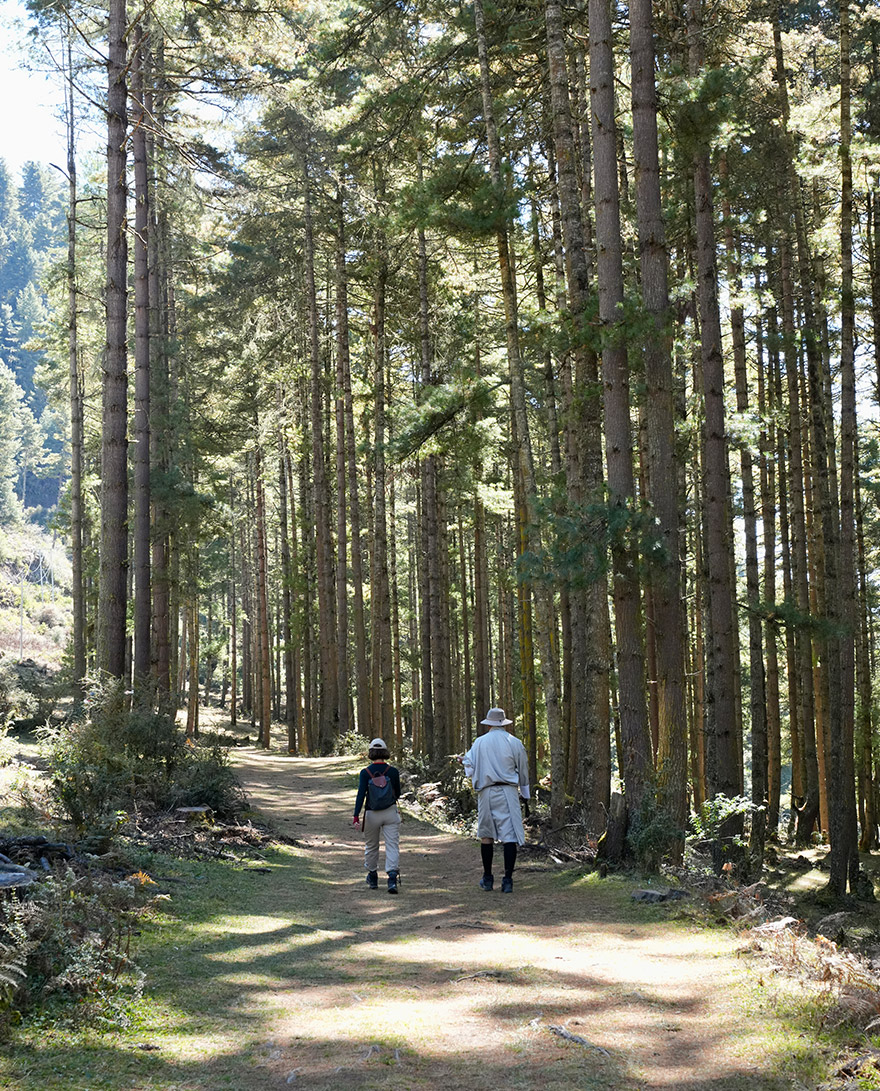
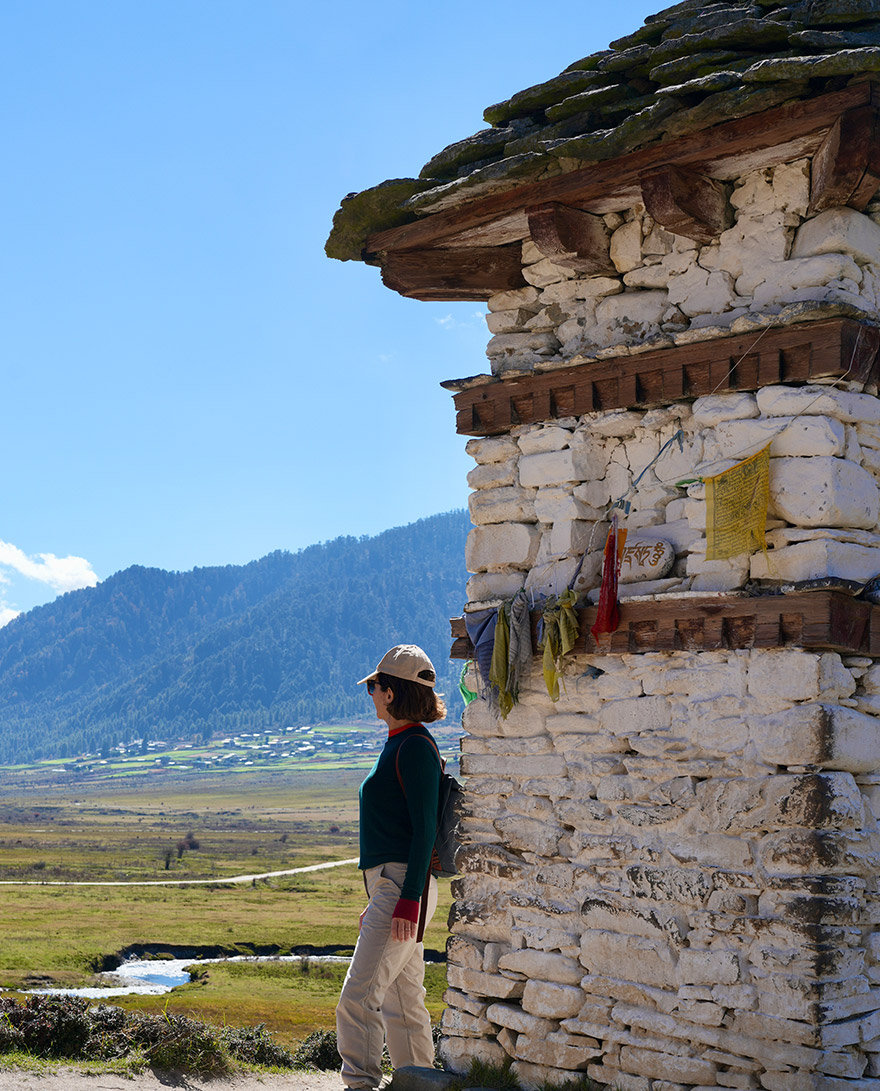
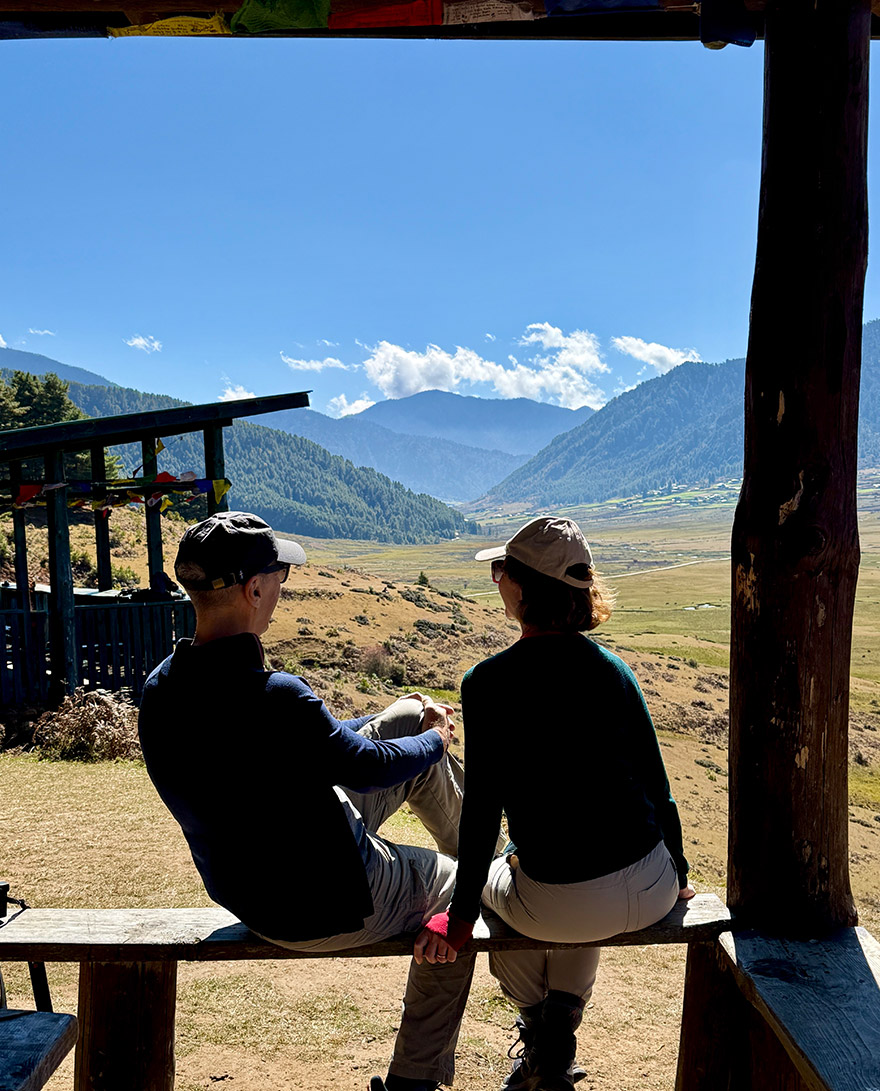
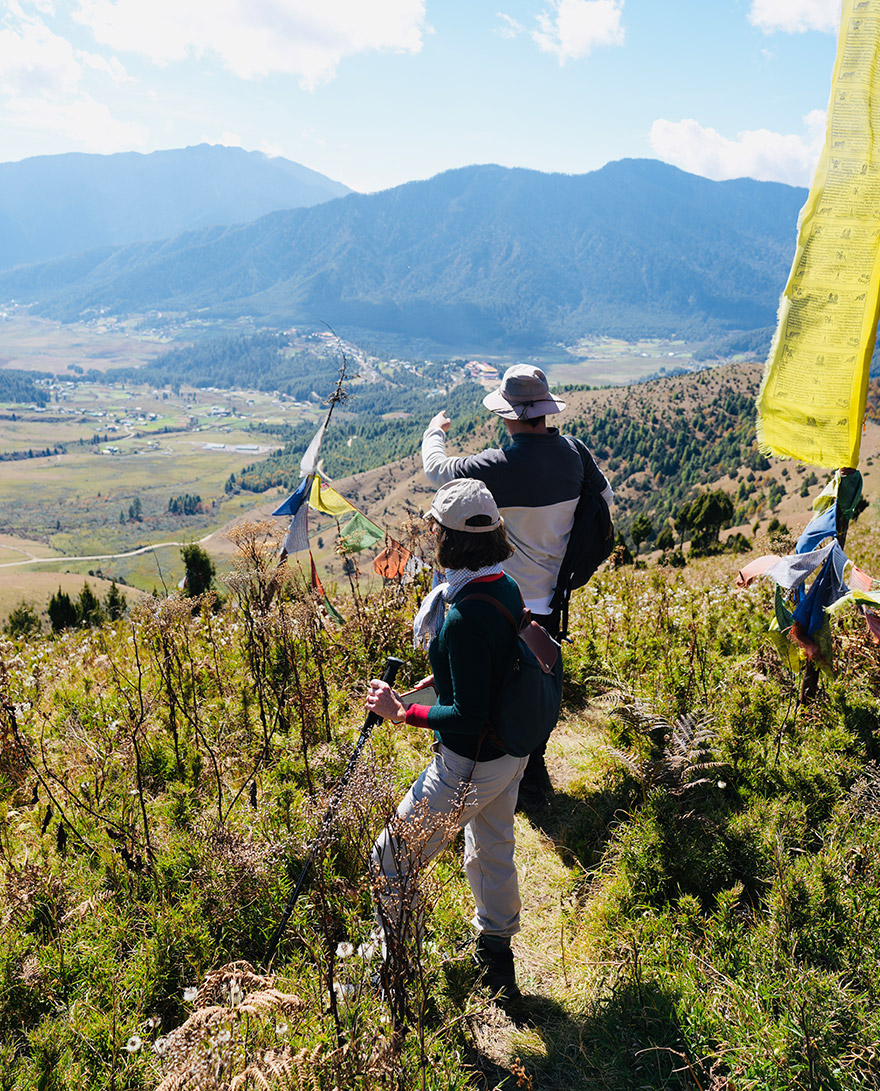
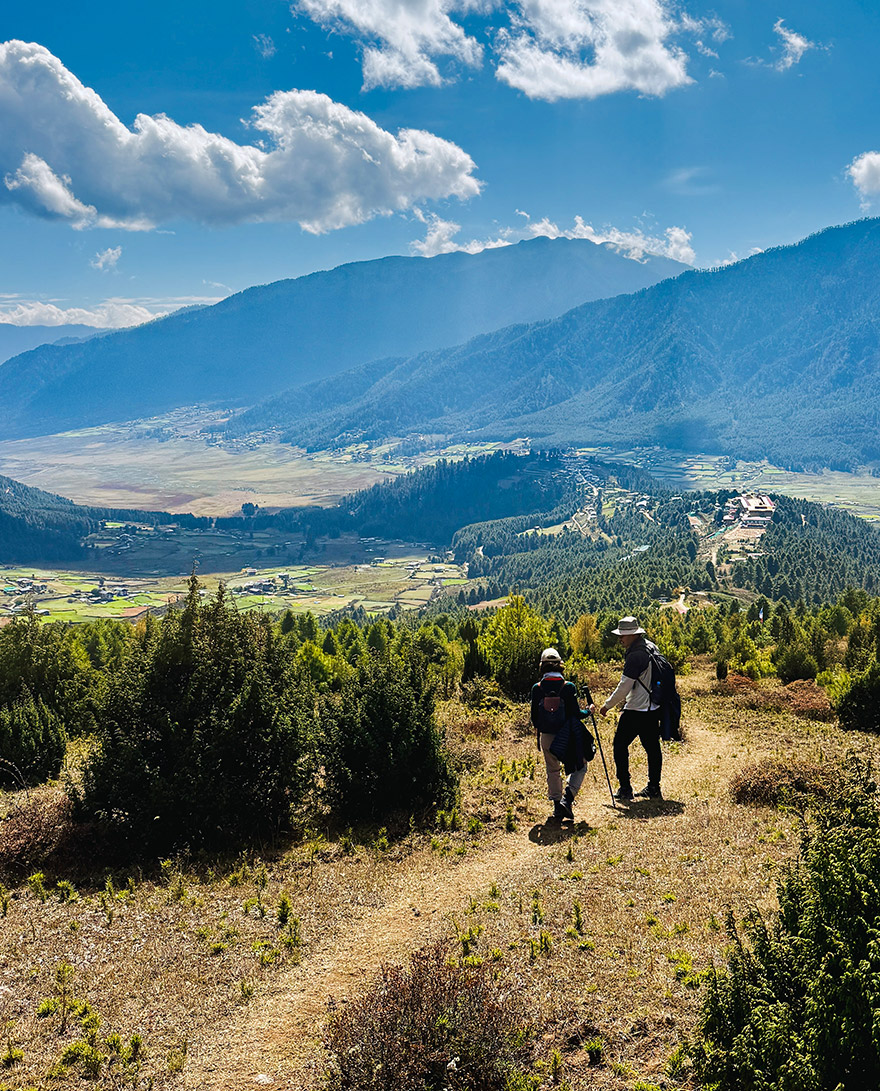
The Gangtey Nature Trail is a lovely way to explore the Phobjikha Valley, following a gentle path through pine forests and open meadows. As the trail continues, the landscape opens up into wide meadows with small streams and the wetlands that provide an important habitat for the black-necked cranes. The surrounding mountains form a beautiful backdrop. The walk is approximately 5.5km and takes around two hours at a leisurely pace, with relatively little climbing.
BLACK-NECKED CRANES
The Phobjikha Valley is famous for its rare black-necked cranes, which migrate from their breeding grounds on the Tibetan Plateau to spend the winter in Bhutan. They arrive from late October onwards. The birds have a special place in Bhutanese culture and are regarded as symbols of peace, longevity and good fortune. The Black-Necked Crane Information Centre has displays explaining their migration and conservation, along with telescopes for watching them without disturbing their habitat.
LONGTEY HIKE
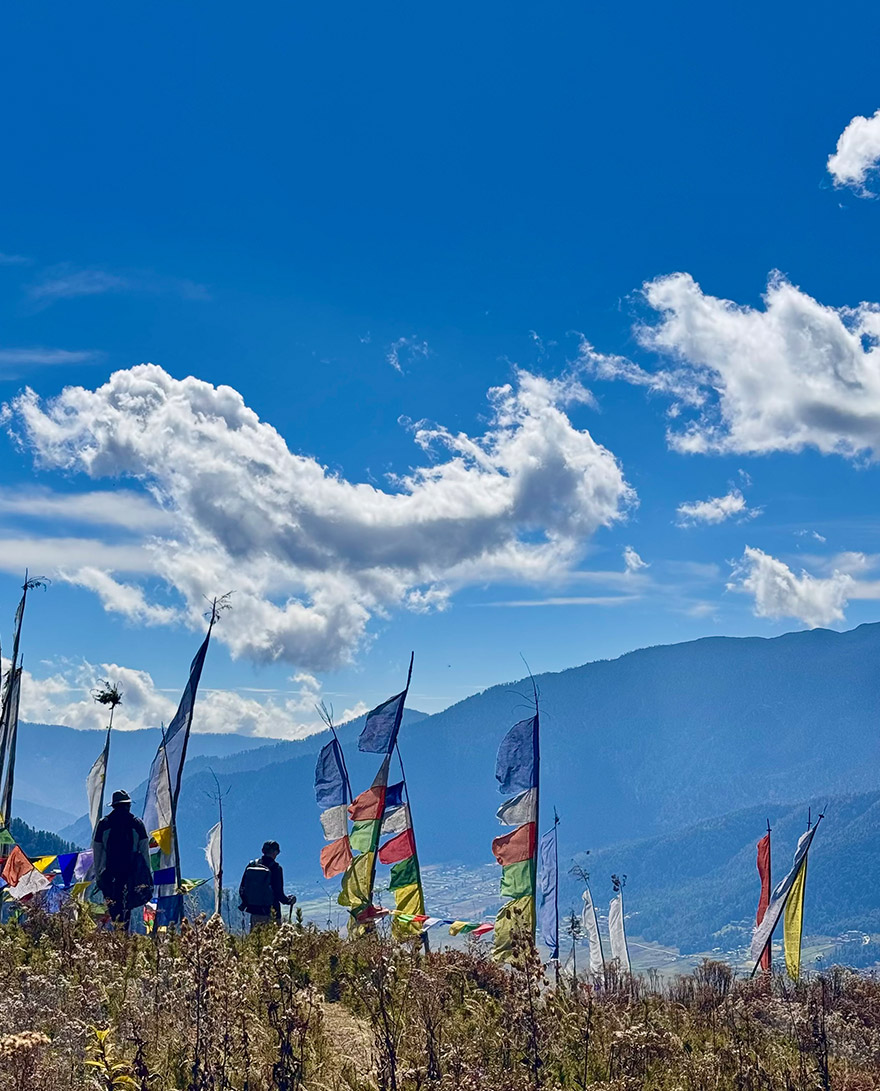
For a more challenging walk, the Longtey Hike is one of the most beautiful in the Gangtey area, taking you high into the mountains above the Phobjikha Valley. The first section passes through open grazing land and bamboo thickets before climbing steadily into a magnificent forest of ancient rhododendron trees. The trail continues uphill through mixed woodland before reaching Gyeche La Pass, at around 3,590 metres. Here, the trees open up to reveal spectacular panoramic views across the entire Phobjikha Valley, with its patchwork of fields, scattered farmhouses and Gangtey Monastery in the distance. The descent takes you through more forest towards the small settlement of Kumbu, with further views over the valley.
GANGTEY GOEMBA
Perched on a ridge overlooking the Phobjikha Valley, Gangtey Goemba is one of Bhutan’s most important Buddhist monasteries and a beautiful example of traditional Bhutanese religious architecture. The monastery was established in 1613 by Pema Thinley, the grandson of the famous Buddhist treasure revealer Pema Lingpa.
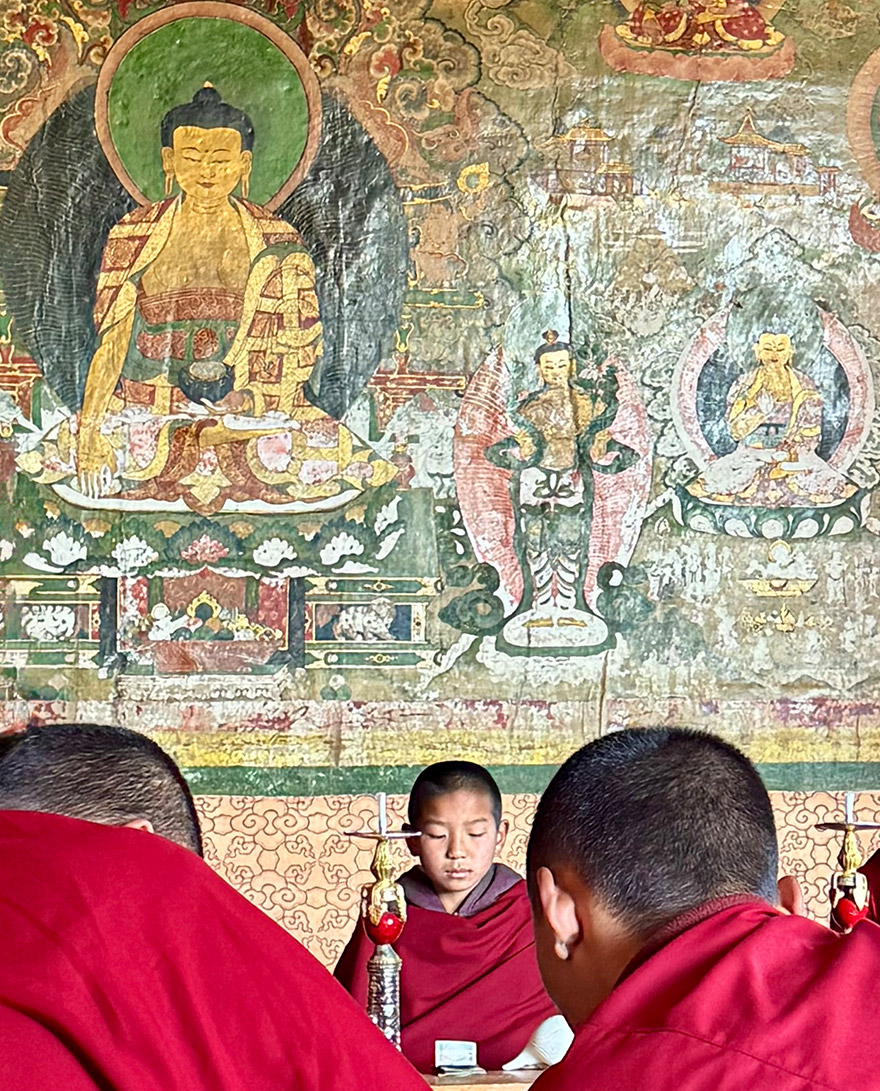
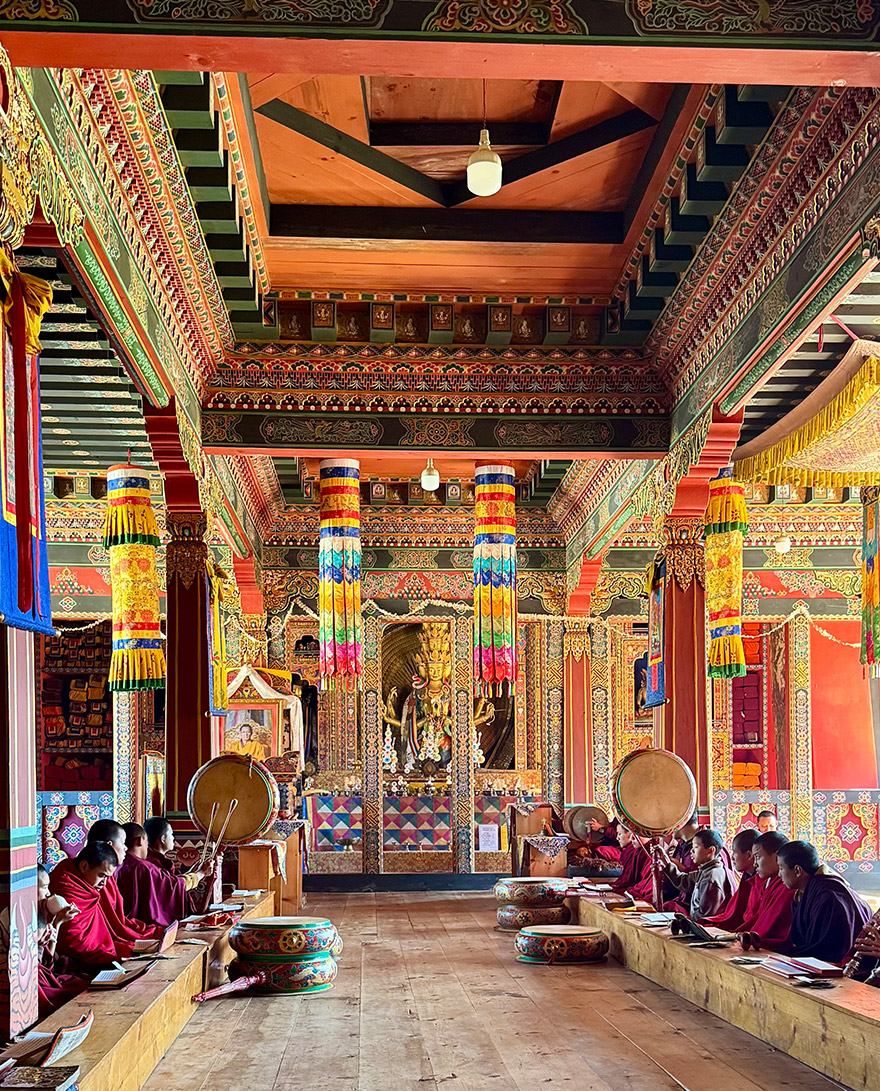
The complex is particularly striking, with whitewashed walls, golden roofs, intricately carved wooden windows and richly painted decorations. Inside the main temple are colourful Buddhist murals, carved wooden pillars and elaborate statues of the Buddha, Guru Rinpoche and other important Buddhist figures.
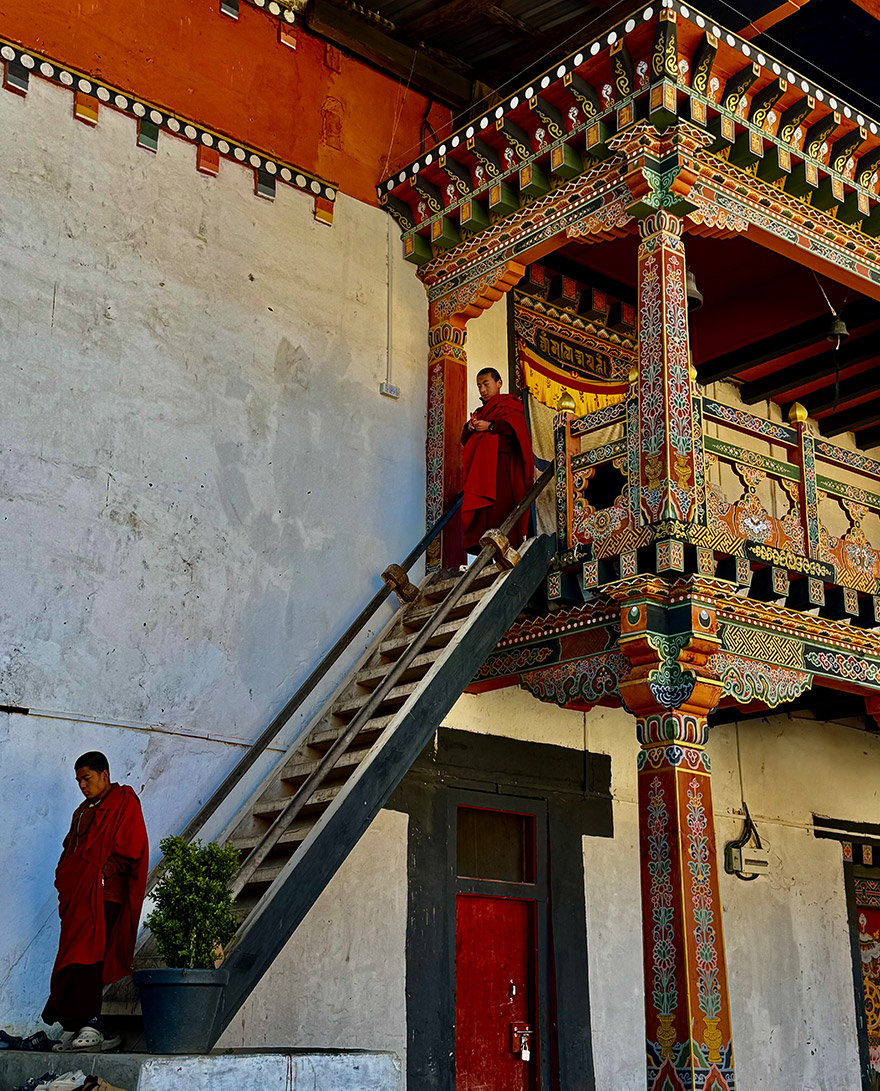
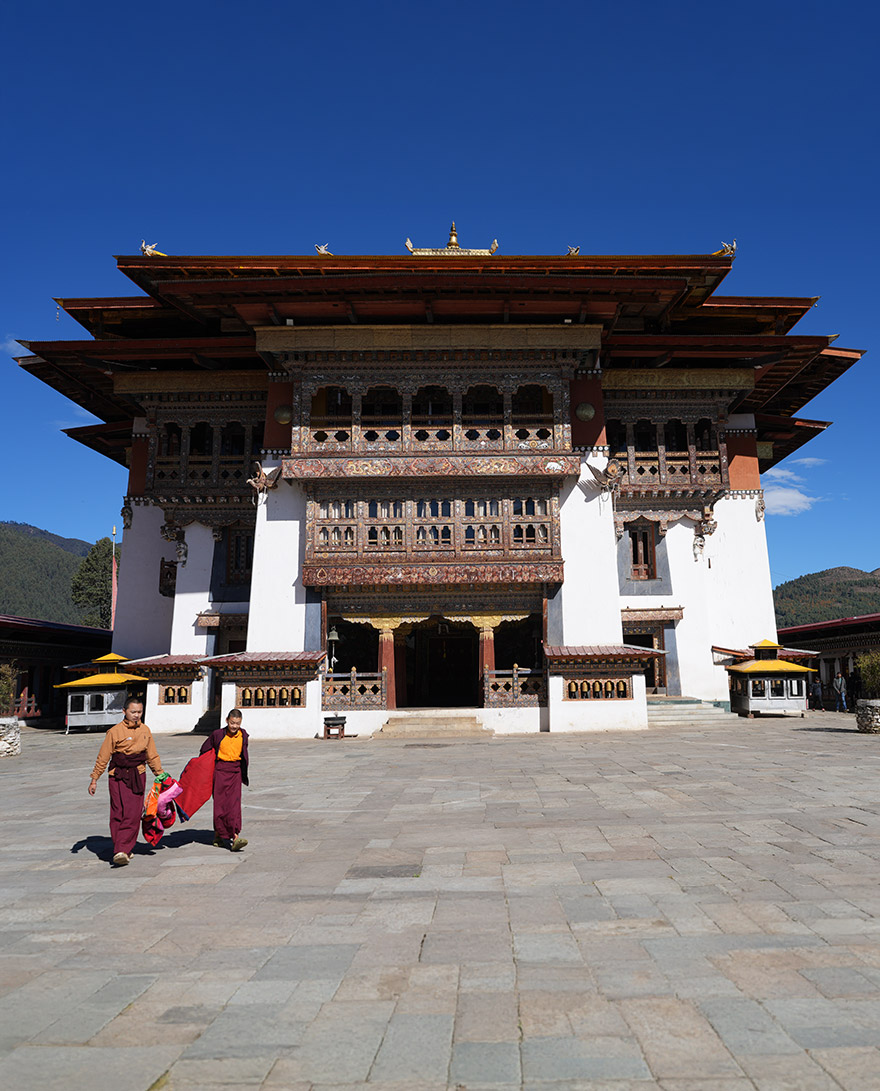
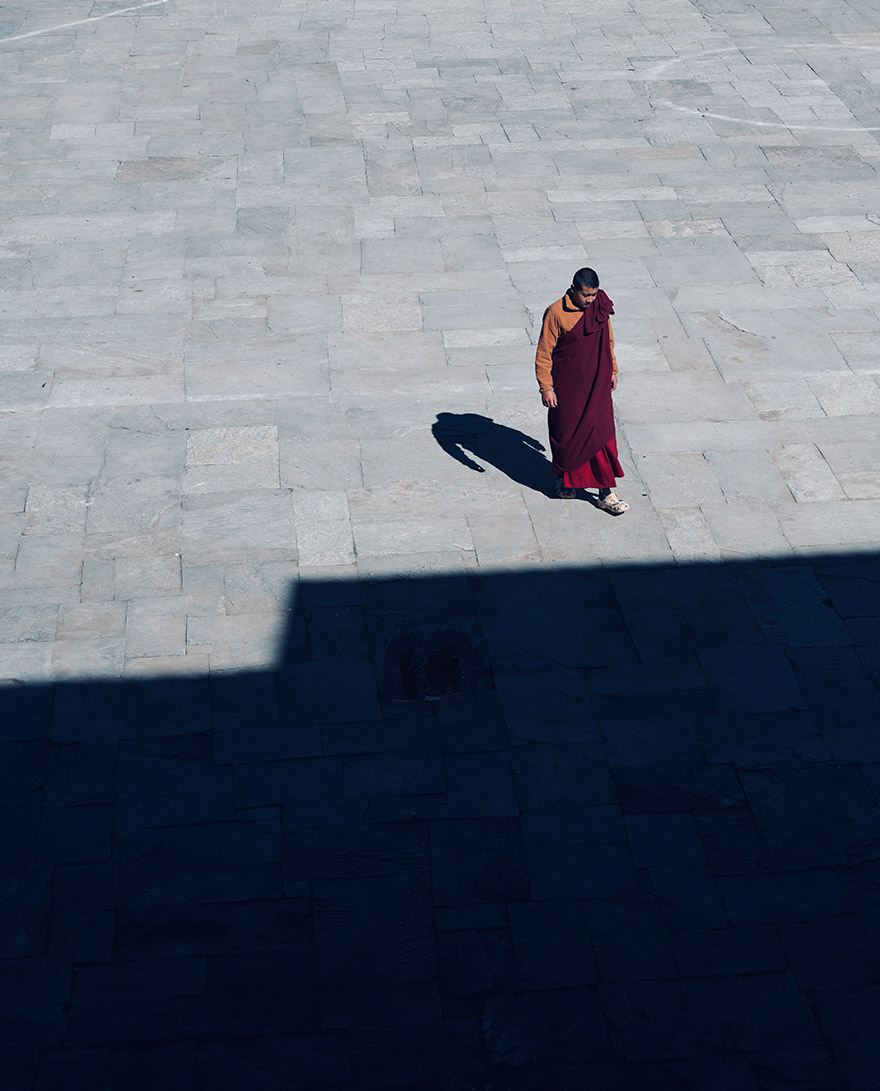
The monastery is still an active religious centre, home to monks who study Buddhist philosophy and perform daily prayers and rituals. One of the most memorable experiences was hearing the monks chanting, accompanied by the deep sounds of traditional horns, drums and cymbals.
Punakha: The Lush River Valley
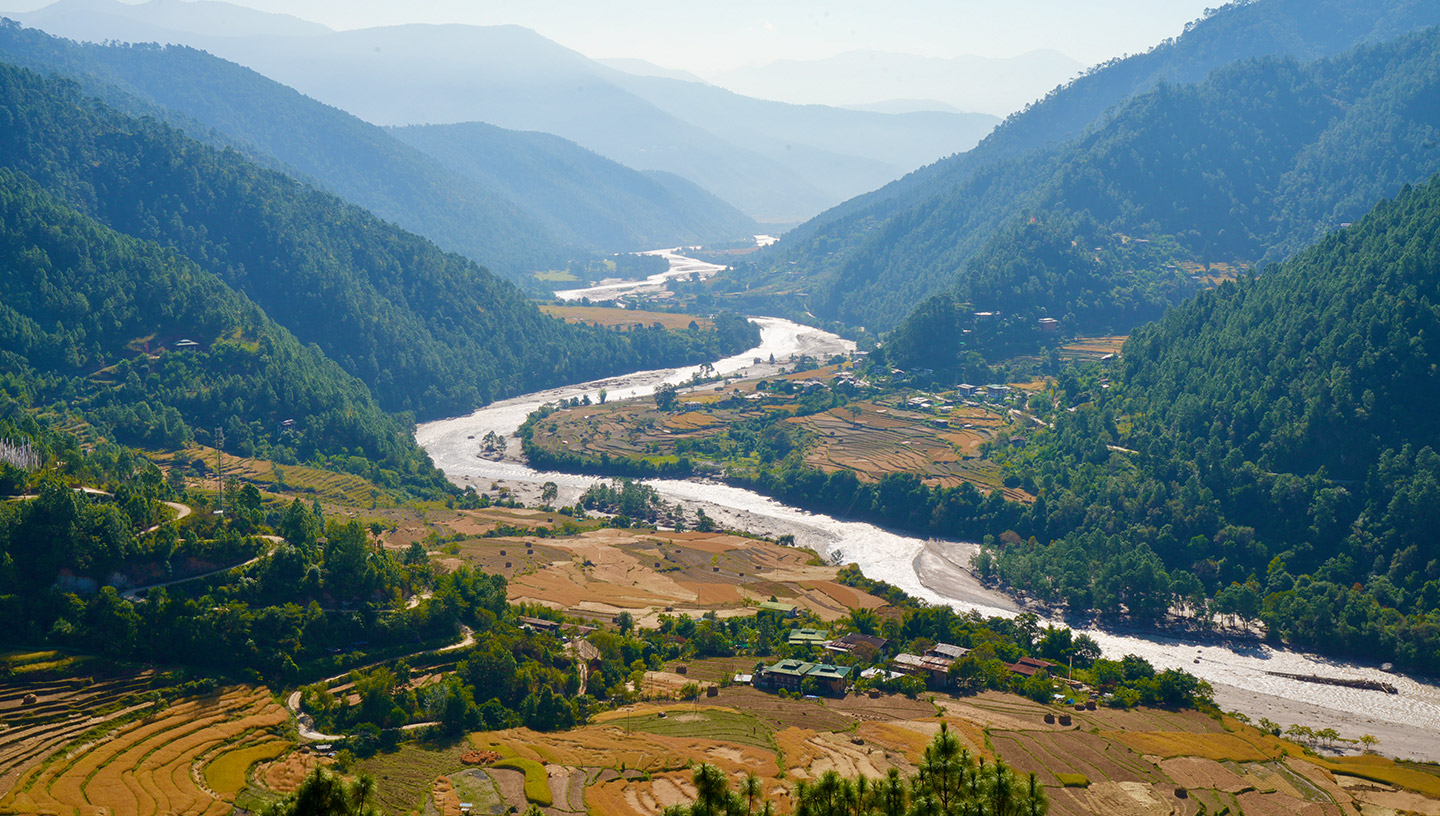
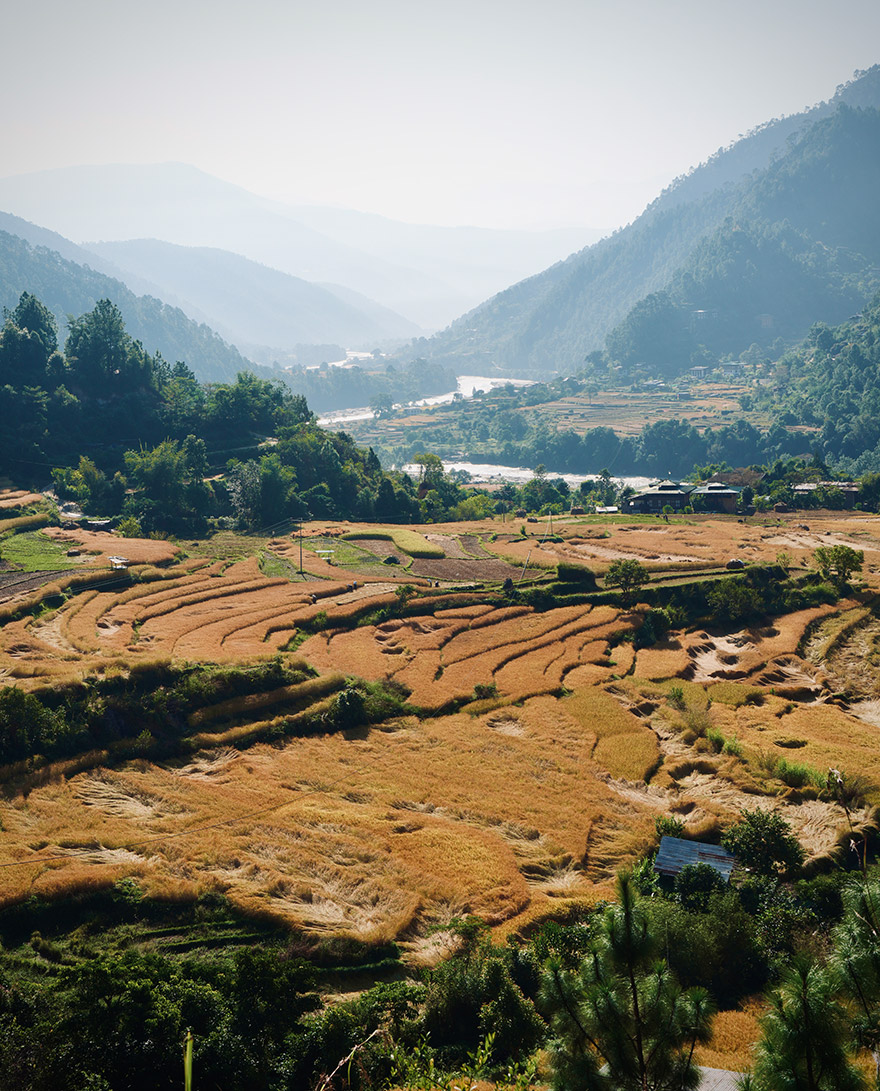
Punakha was the third stop on our journey, and another beautiful destination with a very different landscape. Descending from the high-altitude Phobjikha Valley, the scenery became greener and more tropical, with lush rice paddies, orange trees and traditional farmhouses surrounded by forested mountains. The Mo Chhu and Pho Chhu rivers wind through the valley, coming together at the magnificent Punakha Dzong, one of Bhutan’s most impressive historic buildings.
At around 1,200 metres above sea level, Punakha enjoys a much warmer climate than Thimphu or Gangtey, making it one of Bhutan’s most fertile regions. It was also Bhutan’s capital until 1955 and remains an important religious centre, with beautiful temples, monasteries and hilltop chortens.
Stay & Dine
&BEYOND PUNAKHA RIVER LODGE
&Beyond Punakha River Lodge is located right beside the Mo Chhu River, surrounded by lush green rice paddies and forested mountains. The property occupies a large area of farmland, with beautiful gardens and mountain views in every direction. The architecture draws inspiration from traditional Bhutanese farmhouses, with timber structures and intricately carved wooden details; it’s a wonderful combination of contemporary luxury and local character. But what stood out throughout our stay was the genuinely warm, friendly and efficient service. Everyone seemed genuinely happy to be there, with the sort of attentive but relaxed service that makes a luxury hotel feel special.
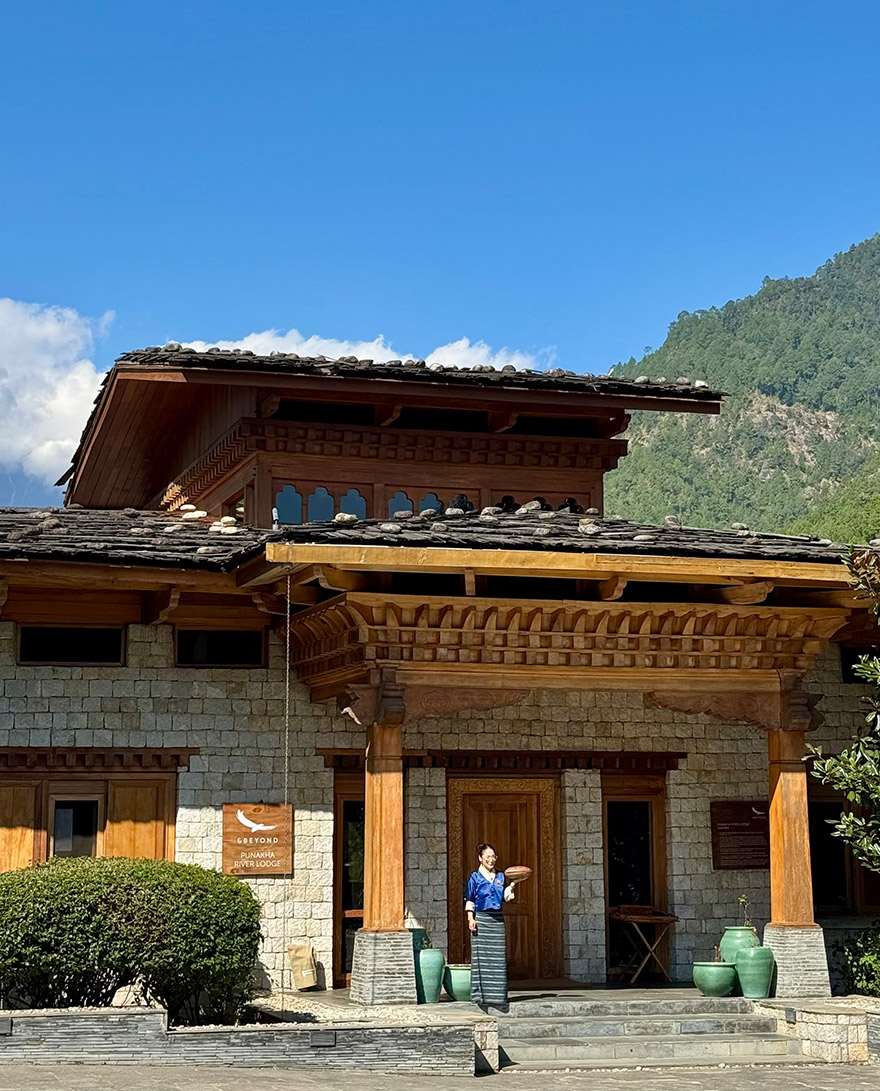
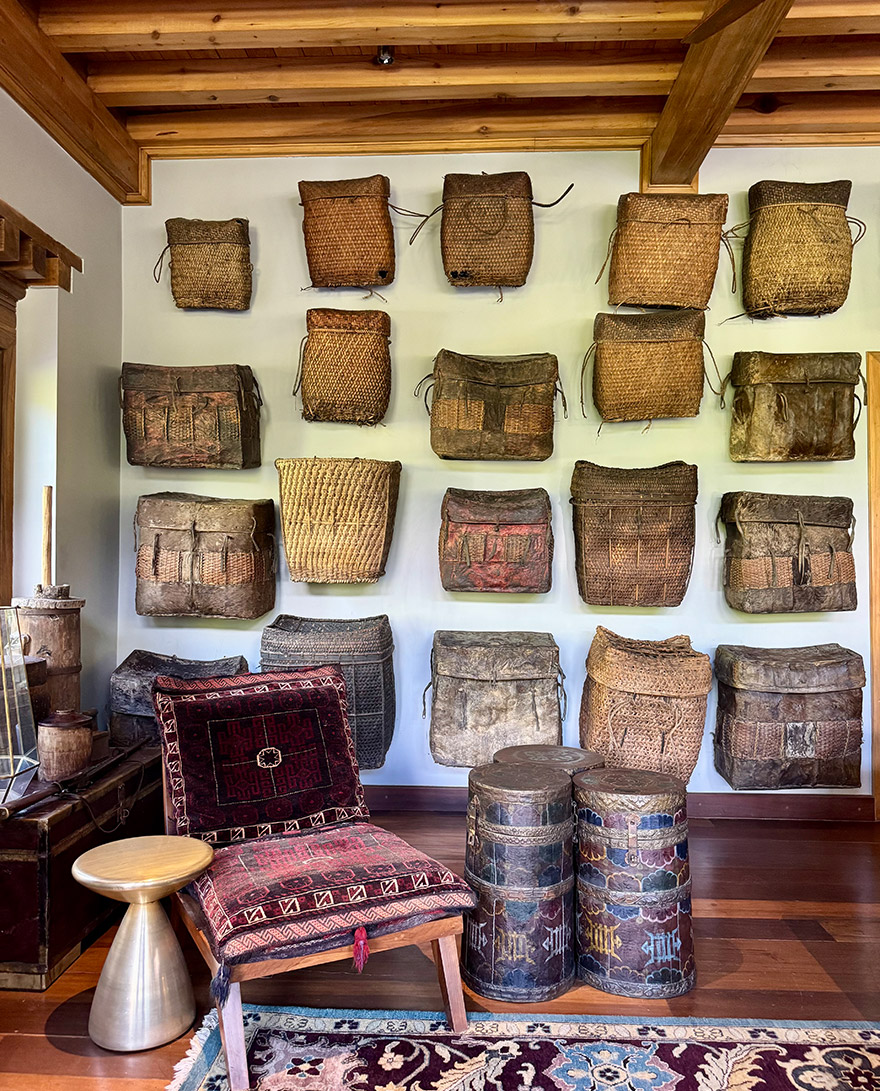
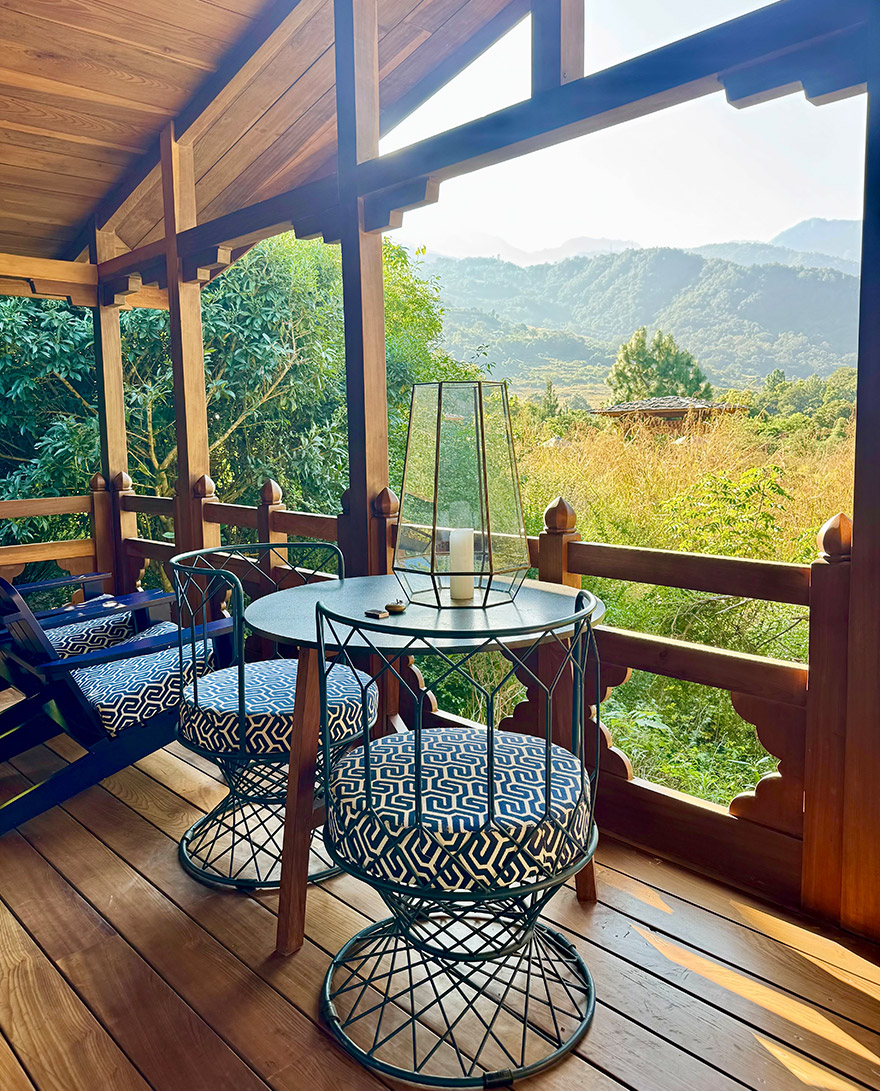
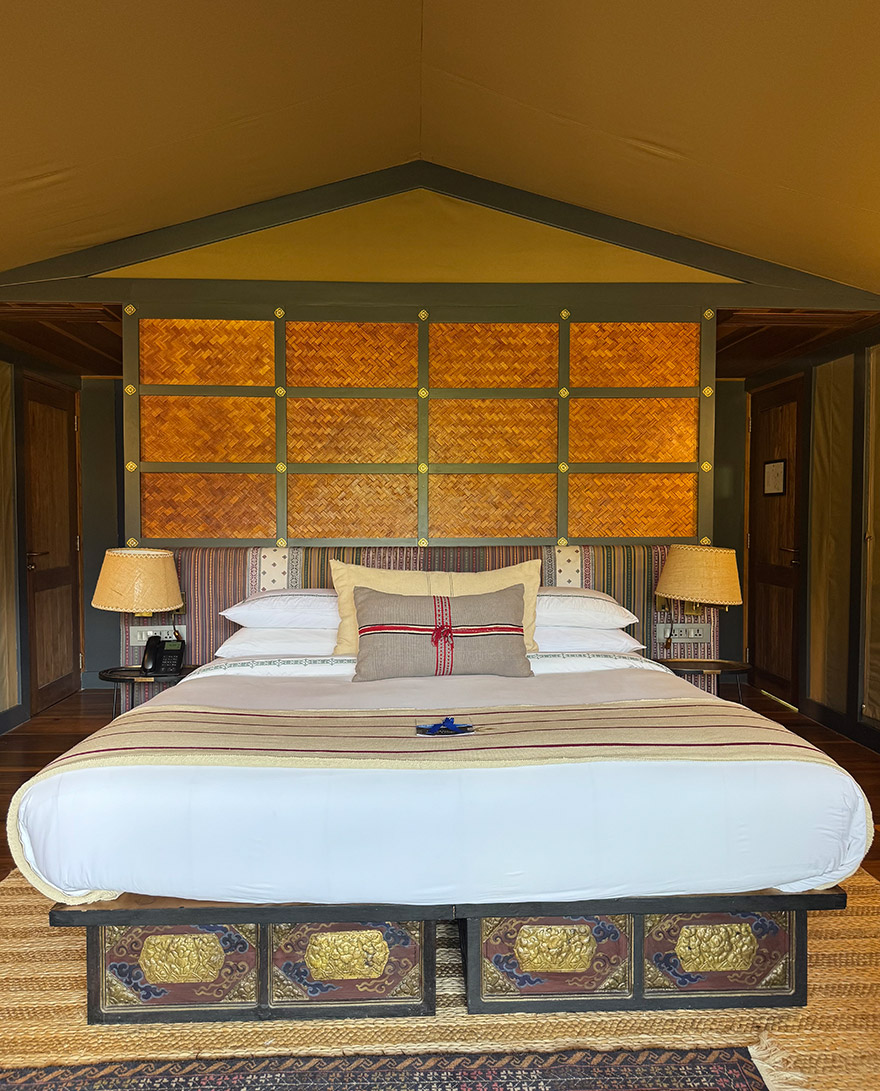
Accommodation is intimate, with just six individual luxury tented suites, plus a one-bedroom River House and a two-bedroom Family Suite. The tented suites combine the adventurous feel of a luxury safari lodge with the comfort of a five-star hotel. Each has a spacious bedroom, private bathroom with indoor and outdoor showers, and a terrace with lovely views towards the mountains. The interiors are beautifully designed, with timber floors, handcrafted furniture, carved wooden details and colourful handwoven Bhutanese textiles. We particularly liked how traditional craftsmanship has been used in a contemporary way.
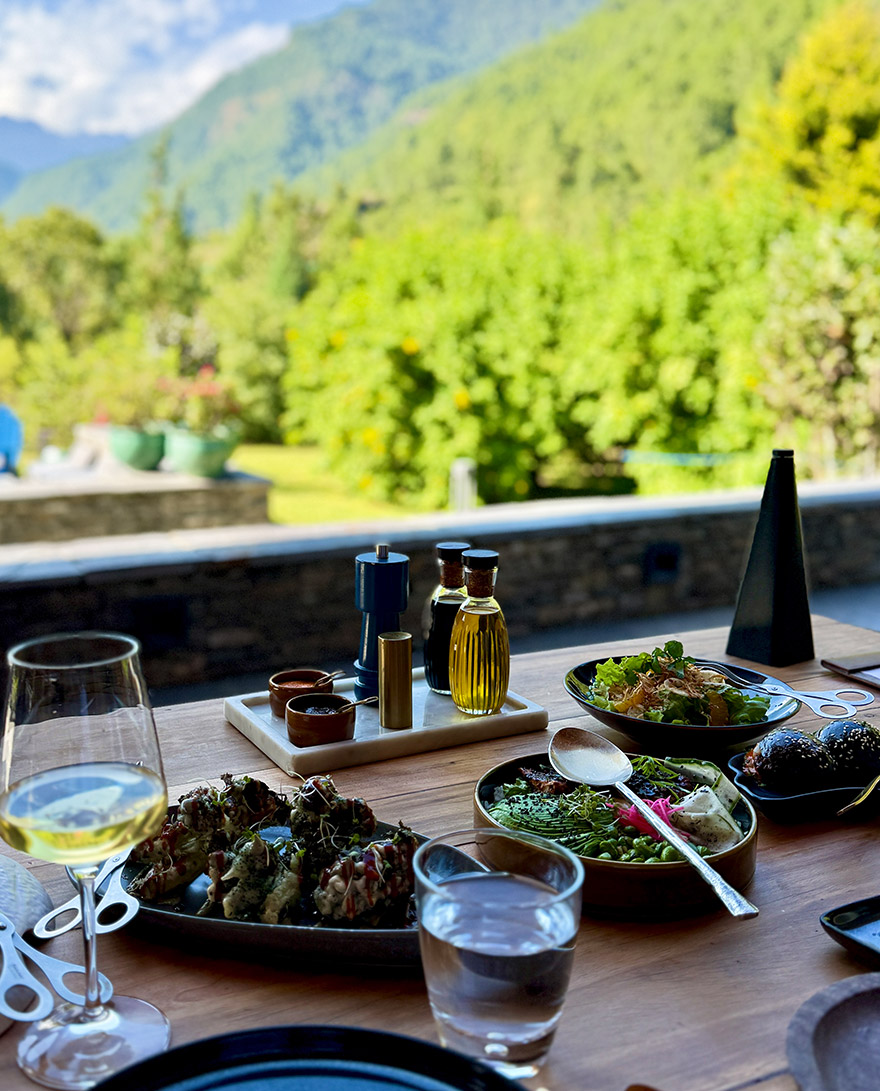
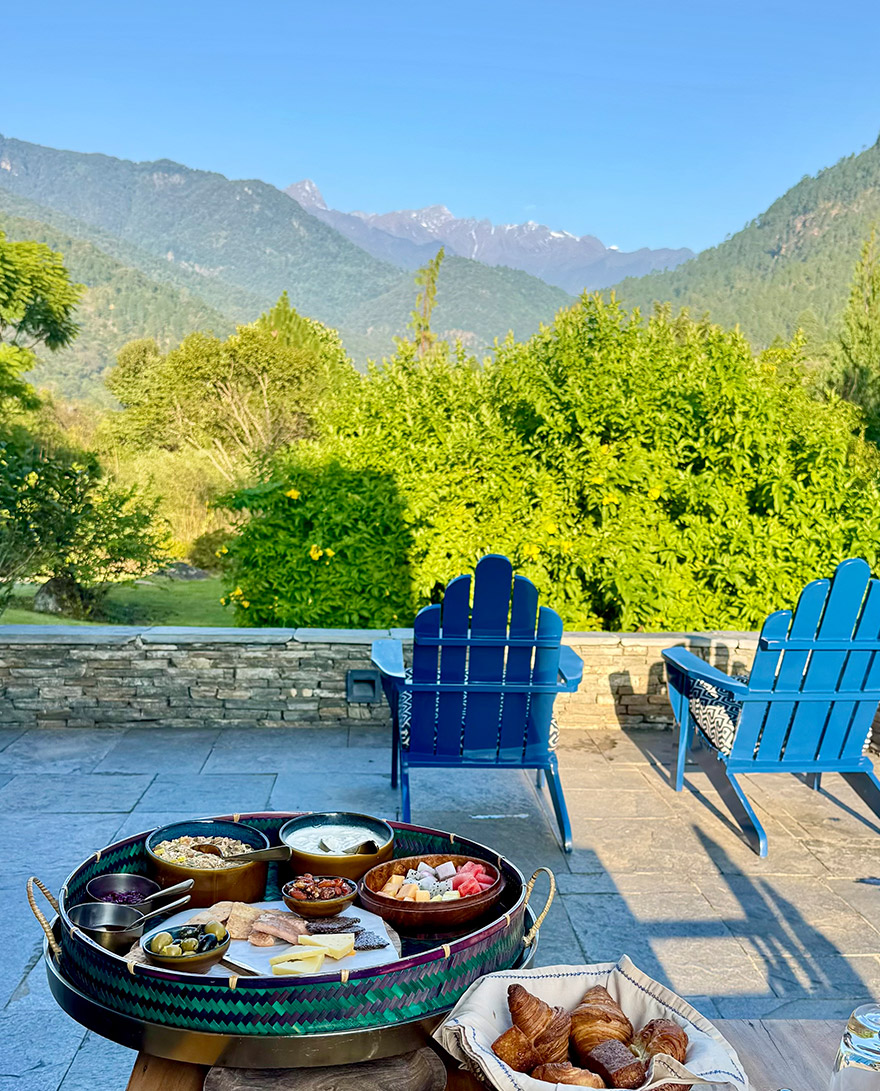
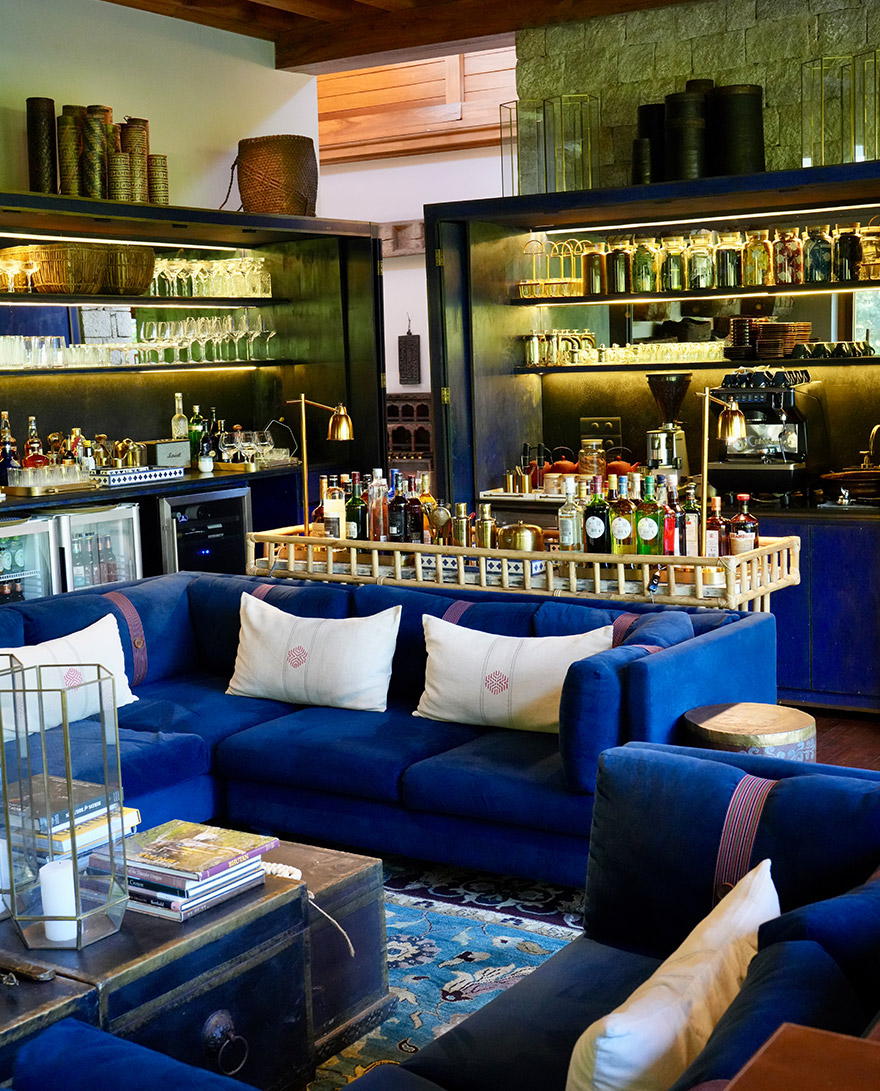
One of the absolute highlights of our stay was the exceptional food. We enjoyed beautifully presented dishes packed with wonderful flavours, with a different menu every day. The cooking combines Bhutanese, Indian and international influences, with fresh local ingredients and creative combinations of flavours and textures. Another wonderful surprise was the pâtisserie. The pastries were absolutely delicious, with the quality and attention to detail you’d be delighted to find in a top Parisian pâtisserie! There is also a bar serving a range of complementary house drinks and wines (below right).
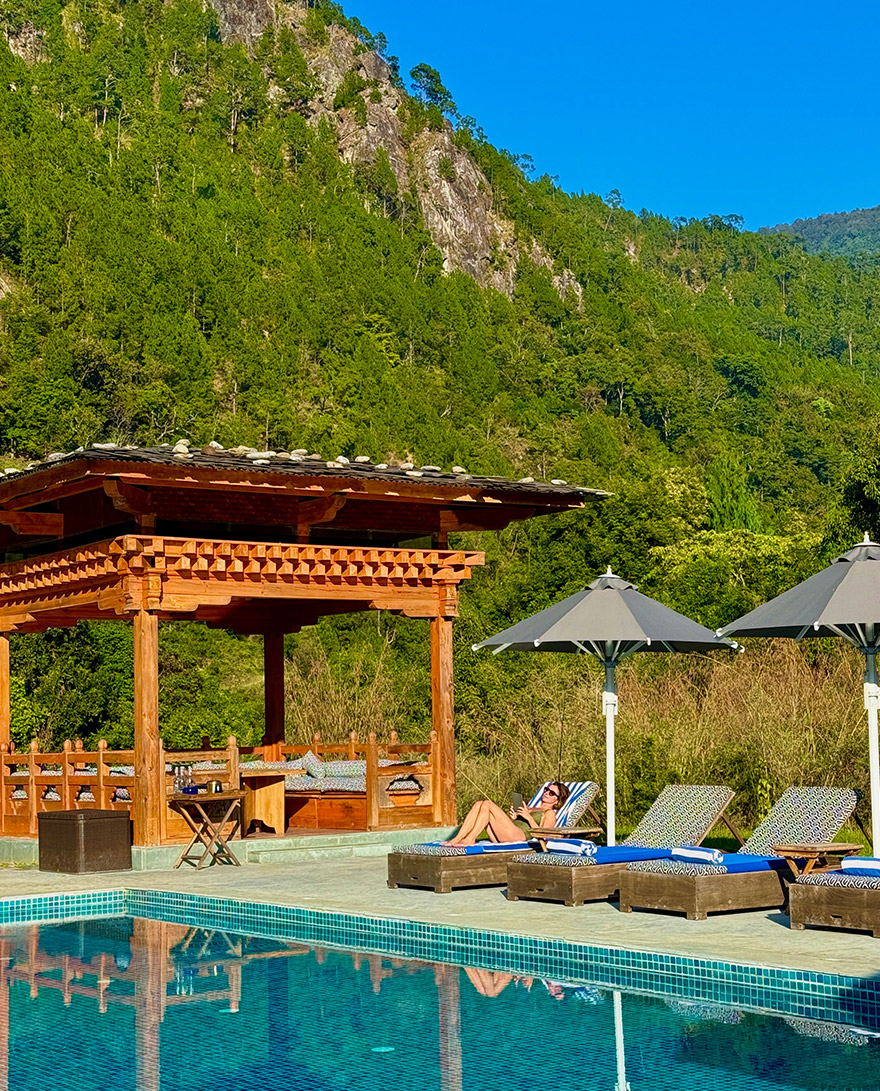
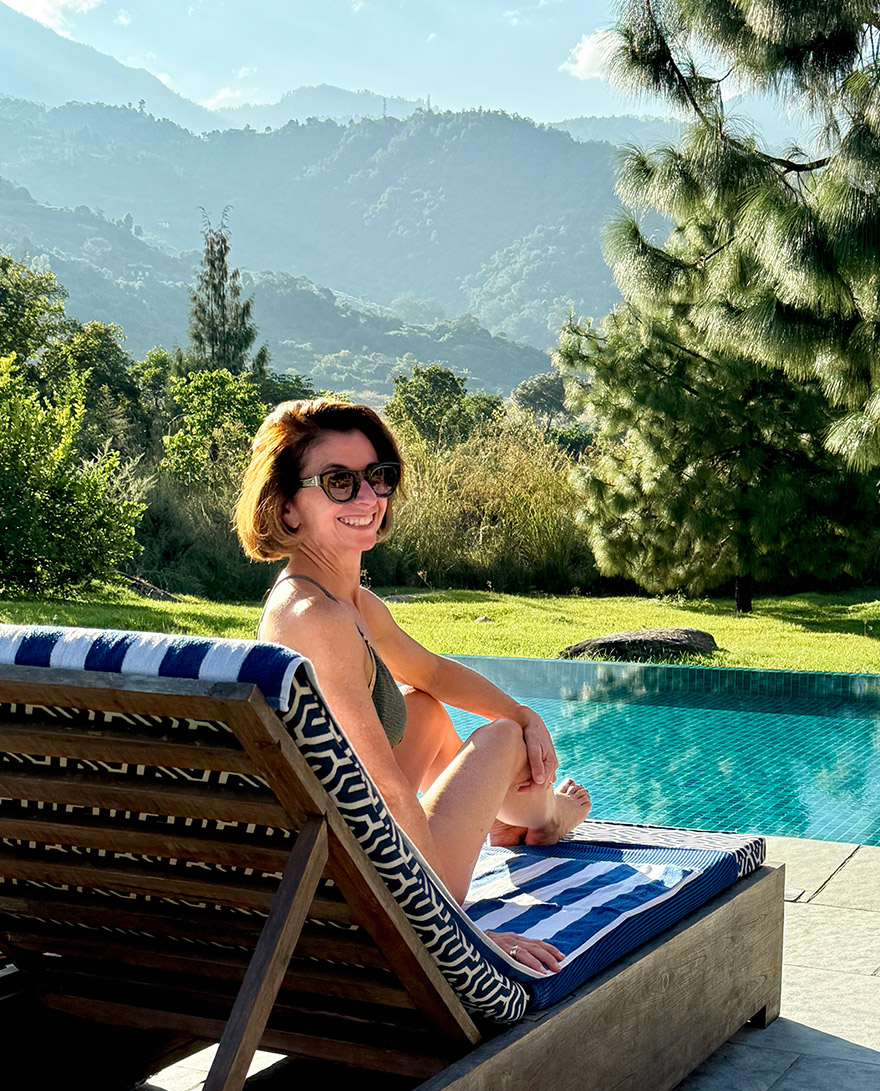
The lodge has a beautiful outdoor swimming pool, surrounded by lawns and lush greenery, with lovely views of the forested mountains. There is also a yoga studio with complimentary classes.
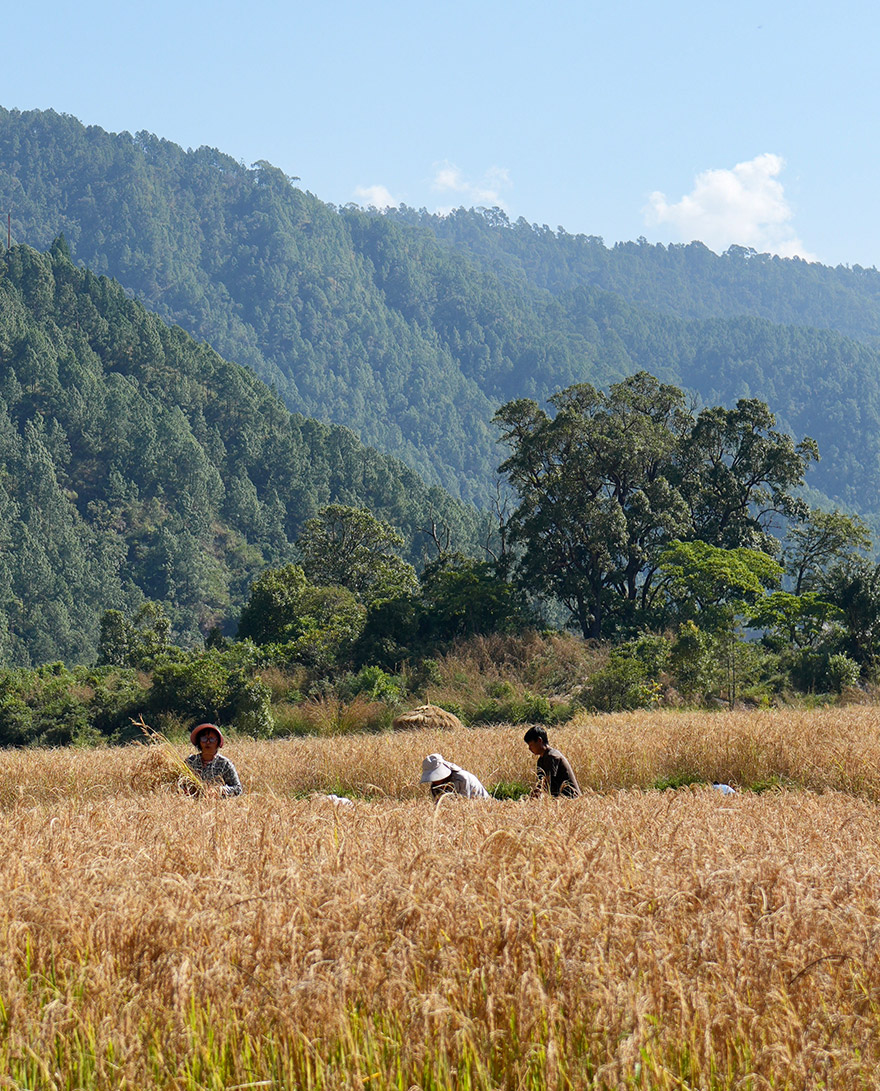
Another aspect we particularly liked was &Beyond’s approach to supporting the local community. Around 70% of the lodge’s land is made available to local farmers, who continue to grow crops on the property. The kitchen then buys fresh produce directly from them, creating a close connection between the lodge and the surrounding farming community.
Do
PUNAKHA DZONG
Punakha Dzong is one of Bhutan’s most magnificent buildings, in a spectacular position where the Mo Chhu and Pho Chhu rivers meet. The enormous fortress-monastery is framed by forested mountains, with whitewashed walls, richly painted wooden windows and golden roofs. Built in 1637 by Zhabdrung Ngawang Namgyal, the religious leader who unified Bhutan, the dzong was the country’s main centre of government until the capital moved to Thimphu in 1955. The dzong remains an important religious centre, serving as the winter residence of Bhutan’s central monastic body.
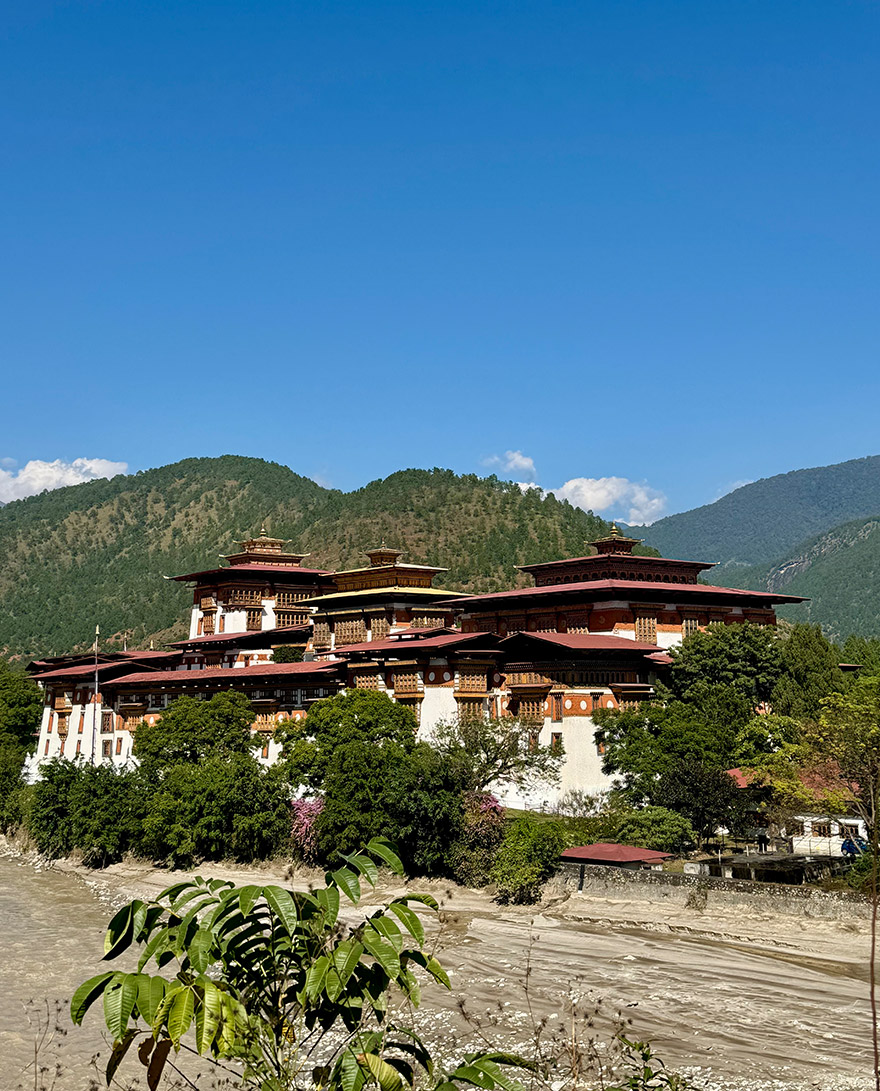
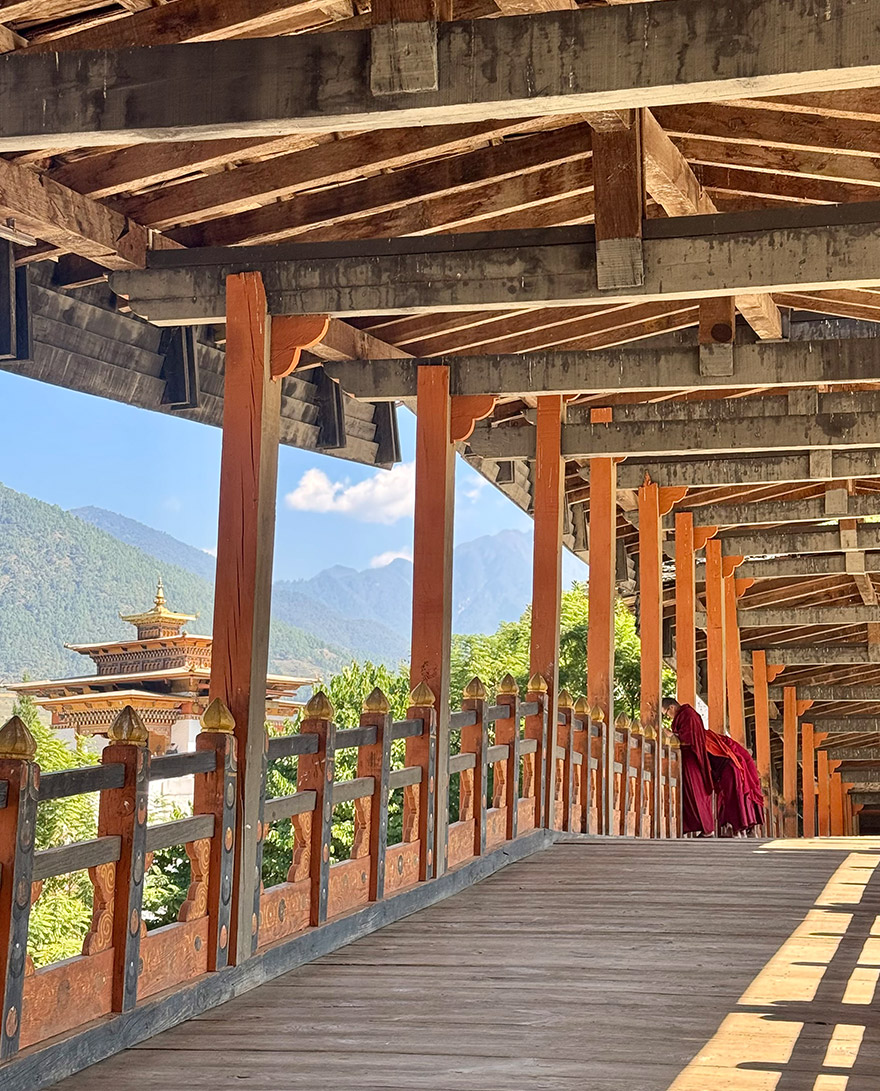
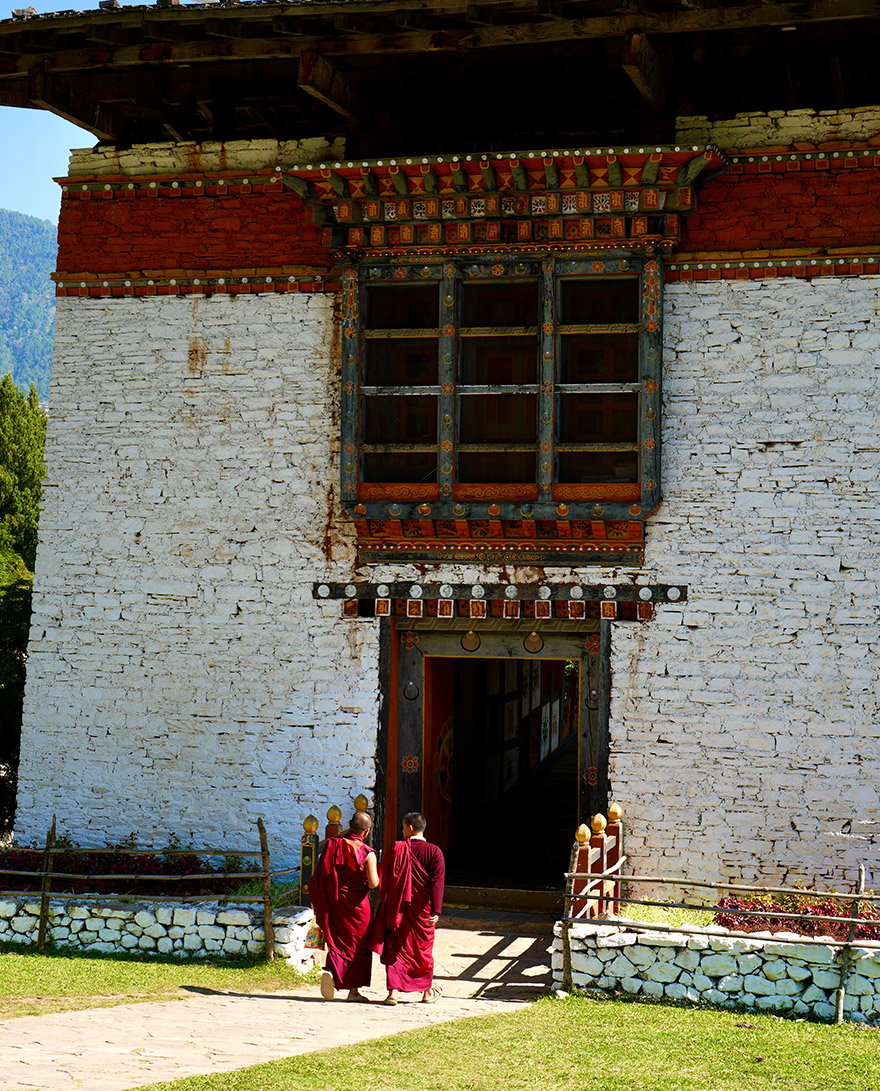
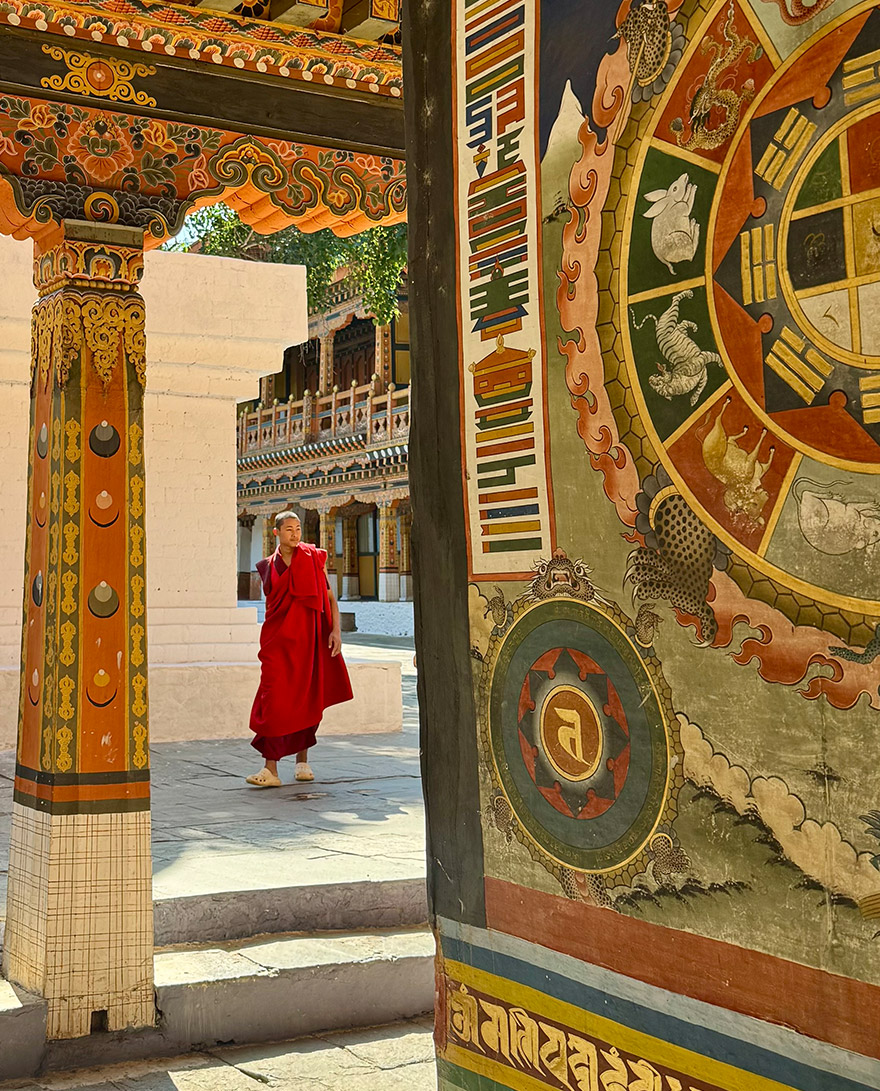
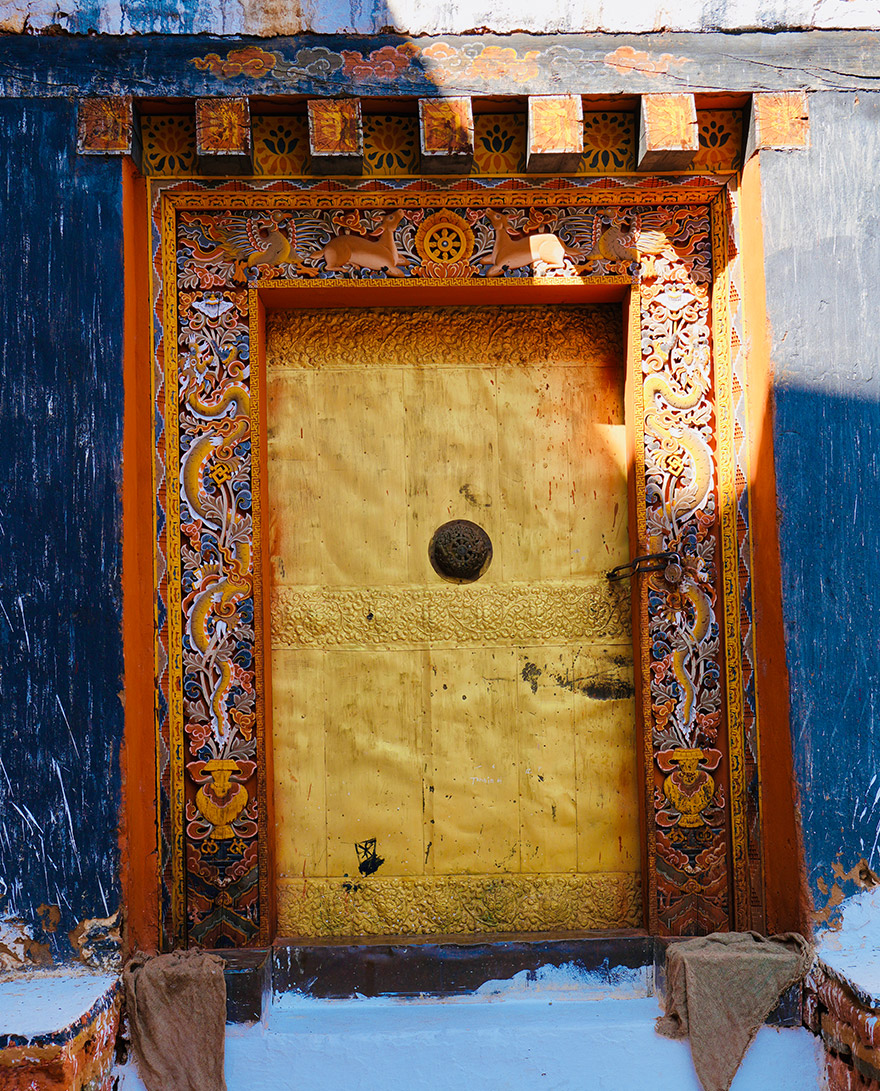
Entering through across imposing bridge, you reach a series of beautiful courtyards, surrounded by traditional buildings decorated with intricate carvings and brightly coloured Buddhist paintings. The impressive main temple has enormous golden statues of the Buddha, Guru Rinpoche and Zhabdrung Ngawang Namgyal, together with elaborate religious paintings and beautifully carved wooden pillars.
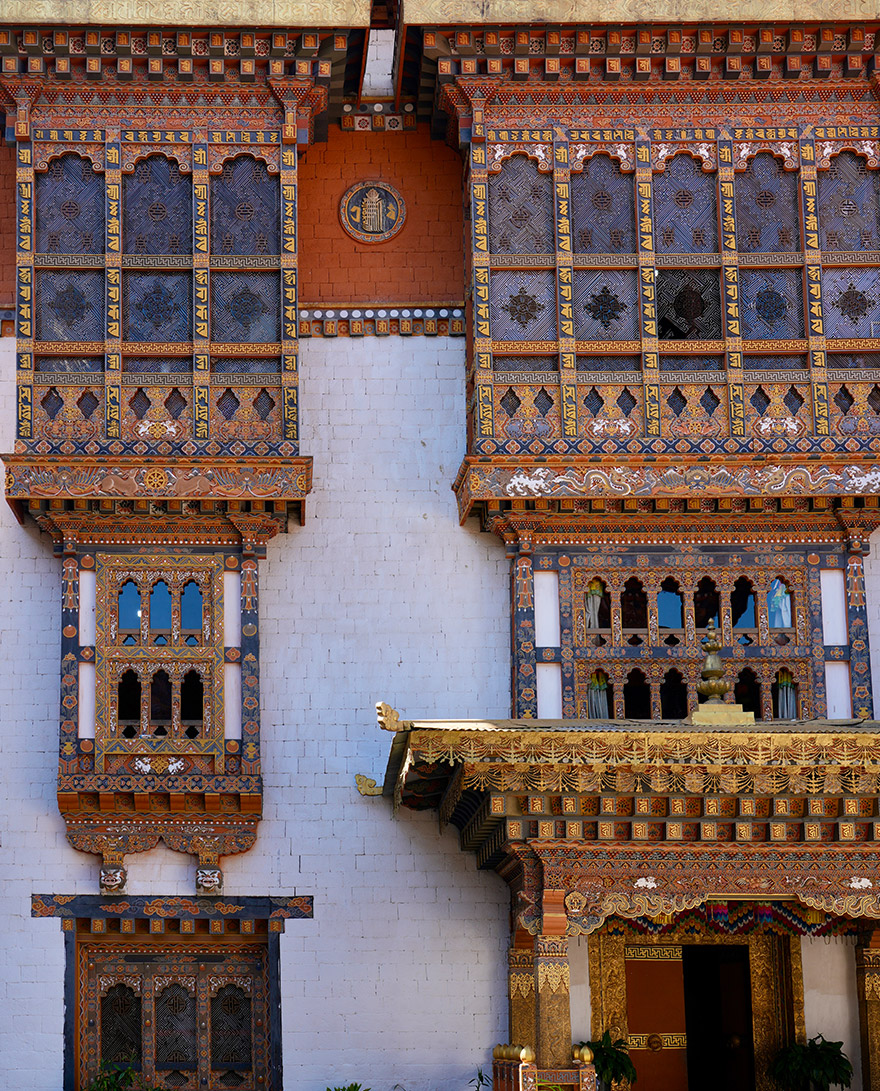
KHAMSUM YUELLEY NAMGYAL CHORTEN HIKE
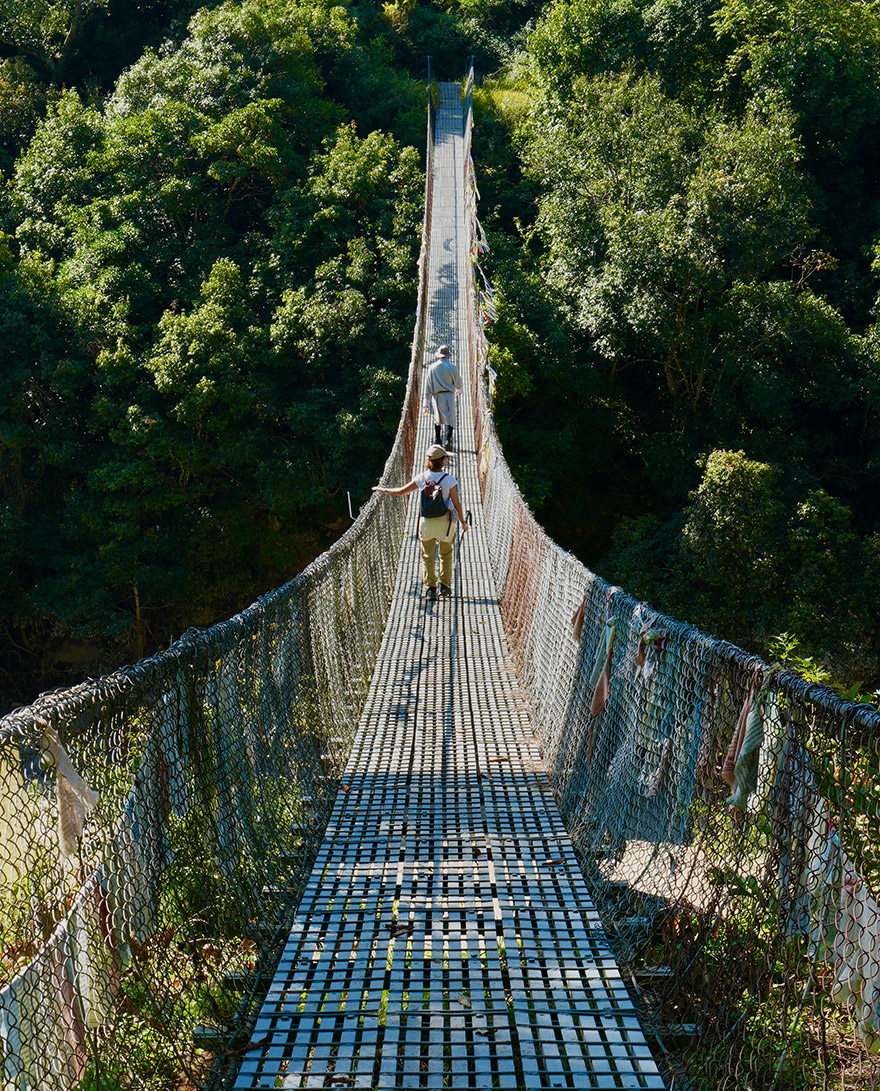
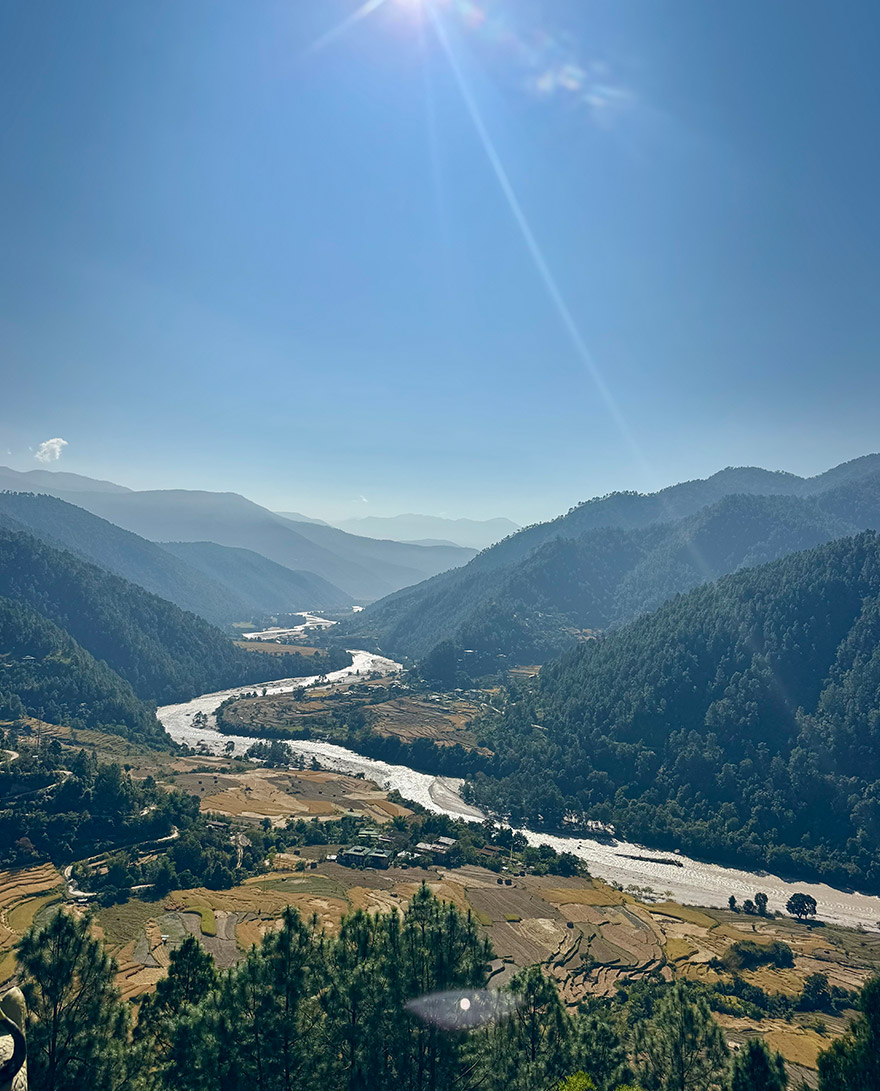
One of the loveliest walks in Punakha is the hike up to Khamsum Yuelley Namgyal Chorten, a beautiful hilltop Buddhist temple overlooking the Mo Chhu River and the surrounding valley. The walk begins with a crossing of a narrow metal suspension bridge over the river, with colourful prayer flags fluttering along the sides.
On the far side, the path passes through lush rice paddies and small farming plots before climbing steadily through a forest of pine trees. The walk uphill takes around 45 minutes, with some steep sections and steps. At the top is the beautiful four-storey chorten, commissioned by Queen Mother Ashi Tshering Yangdon Wangchuck and completed in 2004 to promote peace, harmony and protection for Bhutan and the wider world. The building has a striking white exterior, elaborate painted decorations and a golden roof.
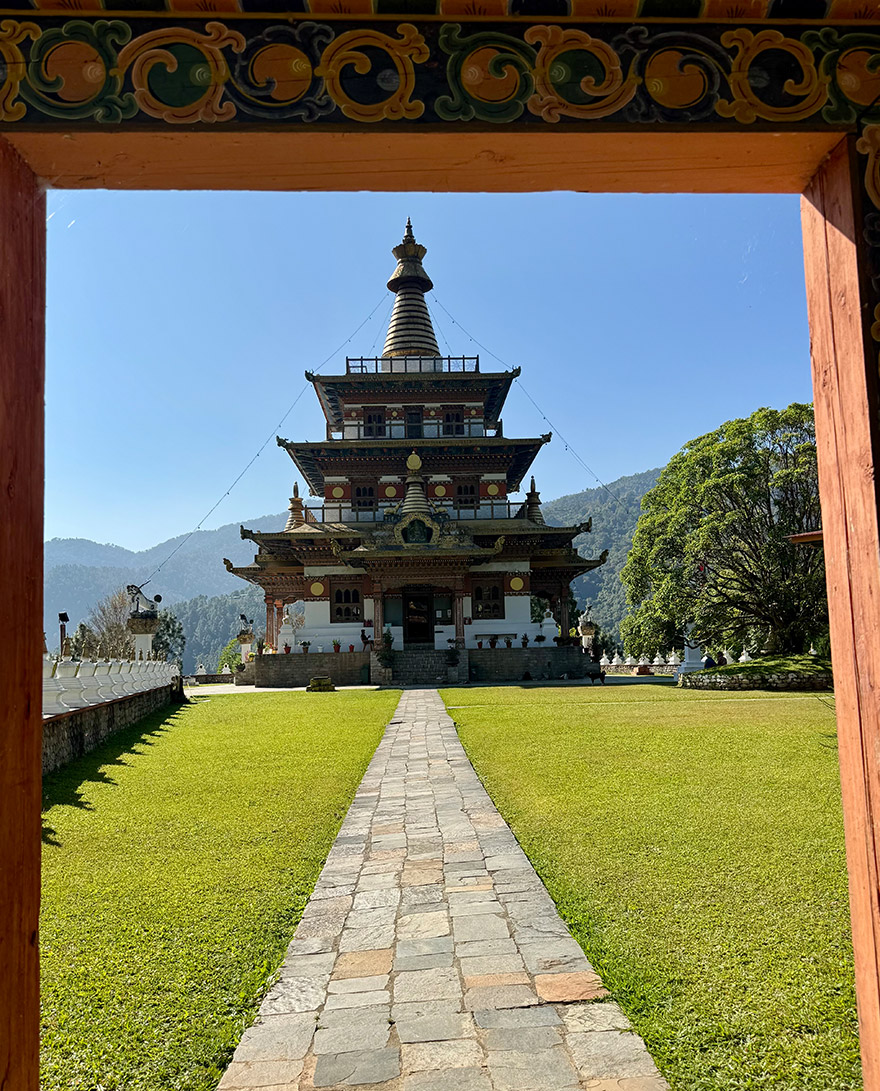
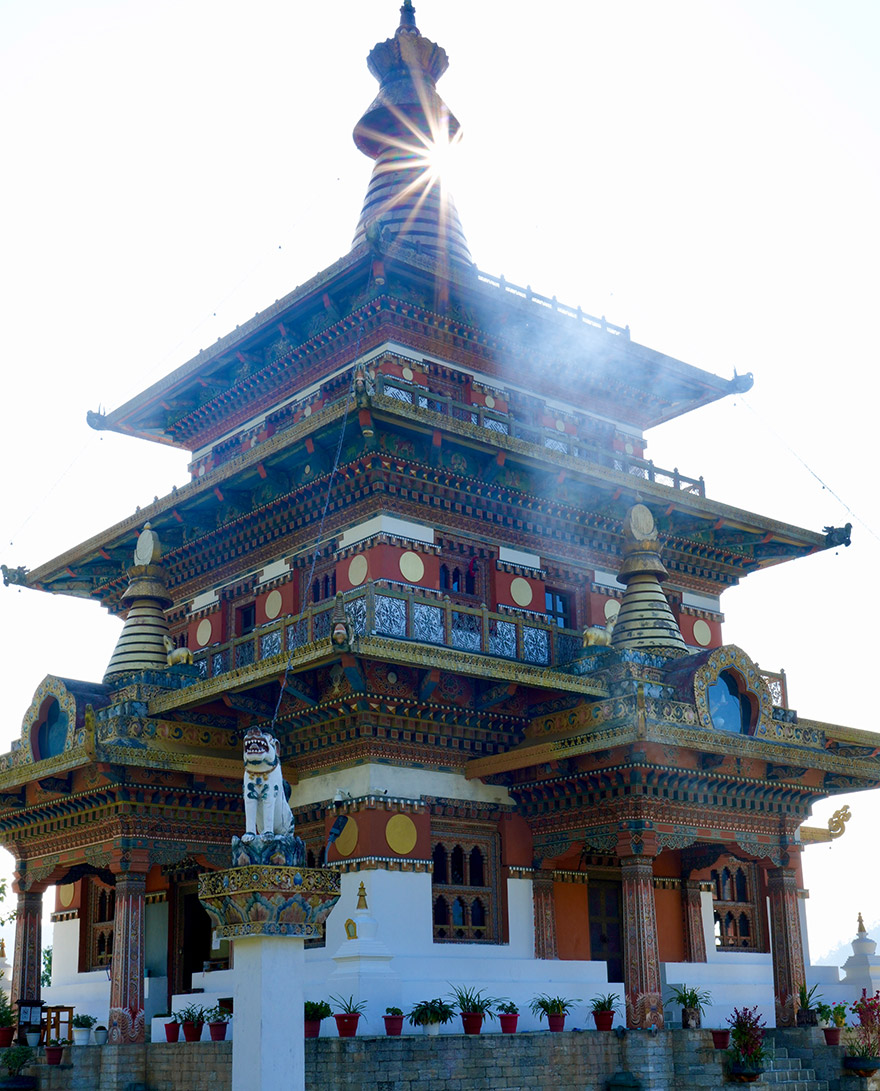
Inside are extraordinary, colourful statues of Buddhist protective deities, including fierce-looking figures representing the power to overcome evil and negative forces. You can climb the narrow internal staircases to the rooftop, where the panoramic views are absolutely spectacular.
CHIMI LHAKHANG
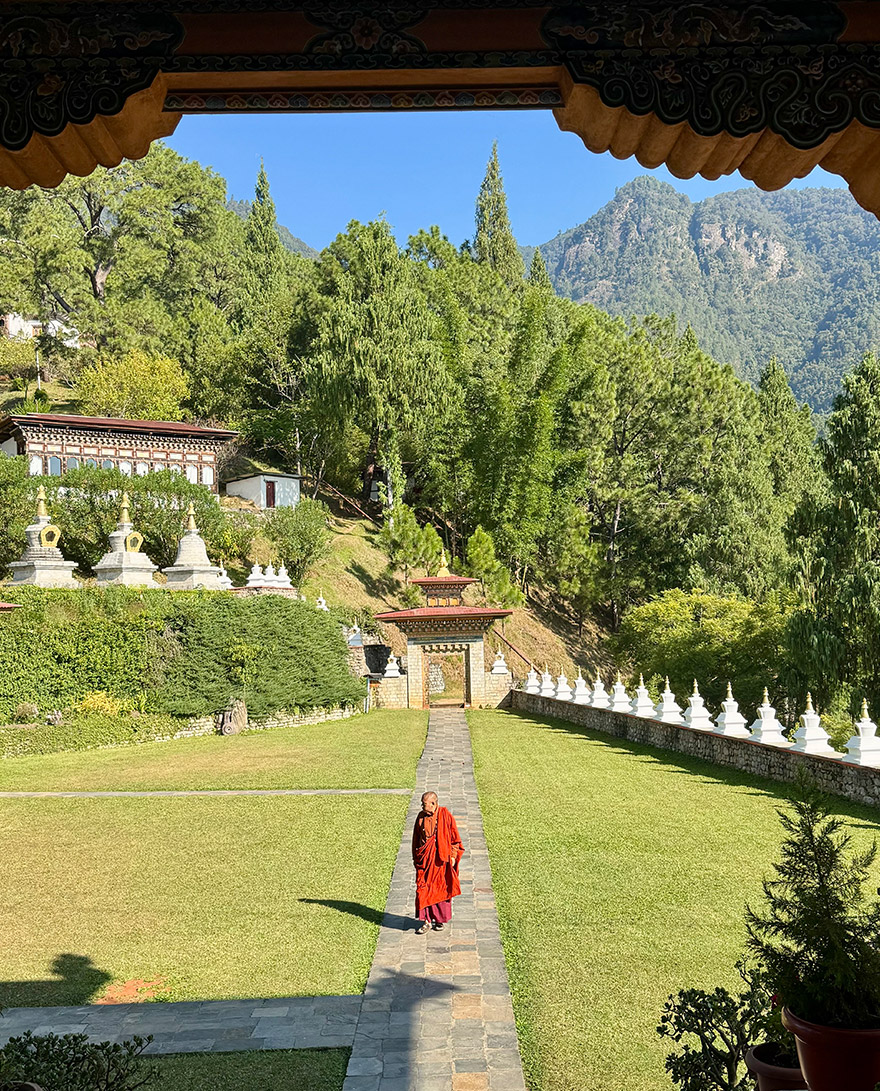
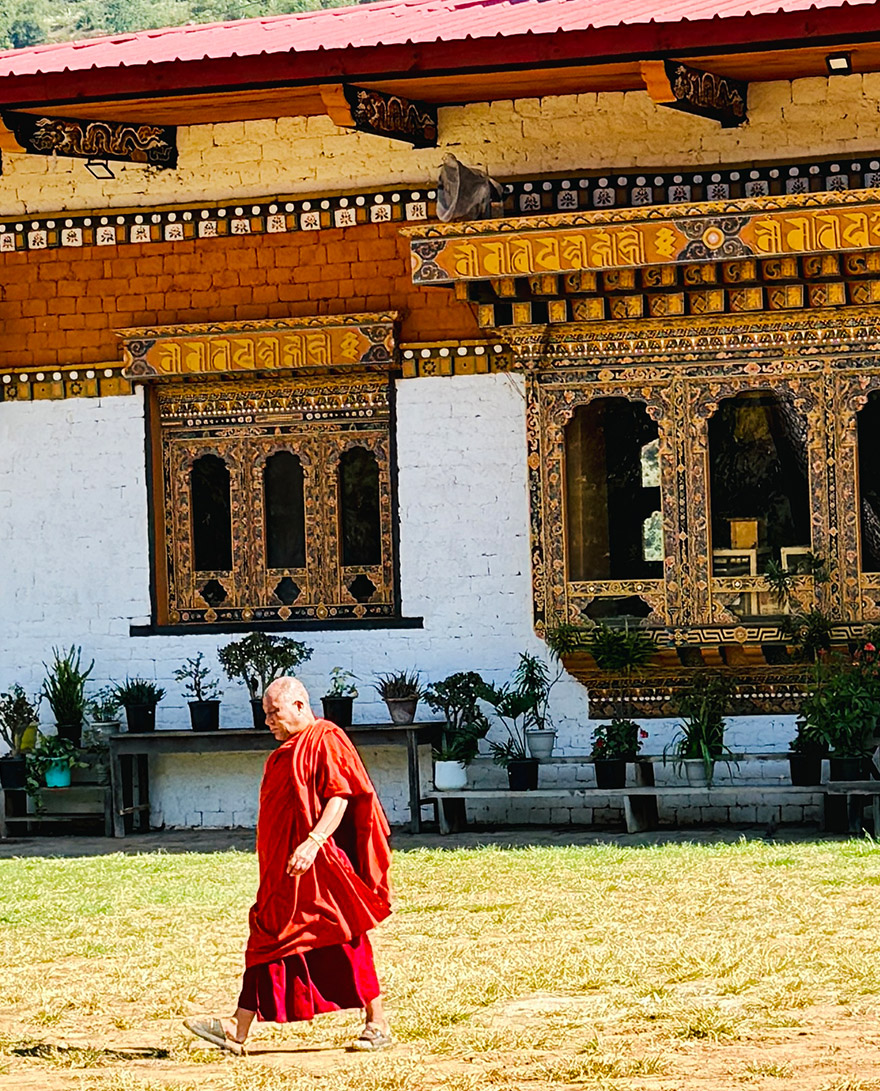
Chimi Lhakhang is one of Bhutan’s most unusual temples, dedicated to the eccentric 15th-century Buddhist saint Drukpa Kunley, better known as the ‘Divine Madman’. A rather unconventional religious figure, Drukpa Kunley was famous for using humour, outrageous behaviour and sexual symbolism to challenge religious conventions and teach Buddhist philosophy. The temple has become particularly famous as a place where couples come to receive blessings for fertility. The temple continues to attract Bhutanese families as well as international visitors hoping to have children.
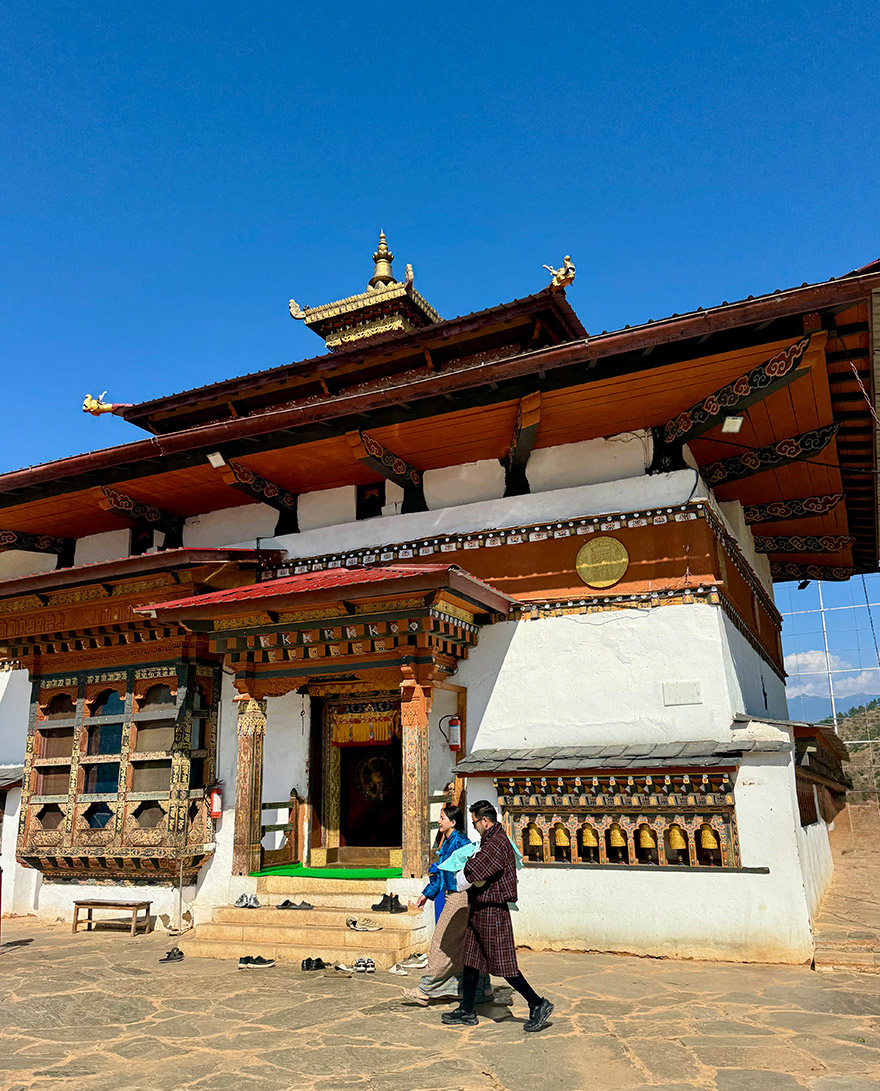
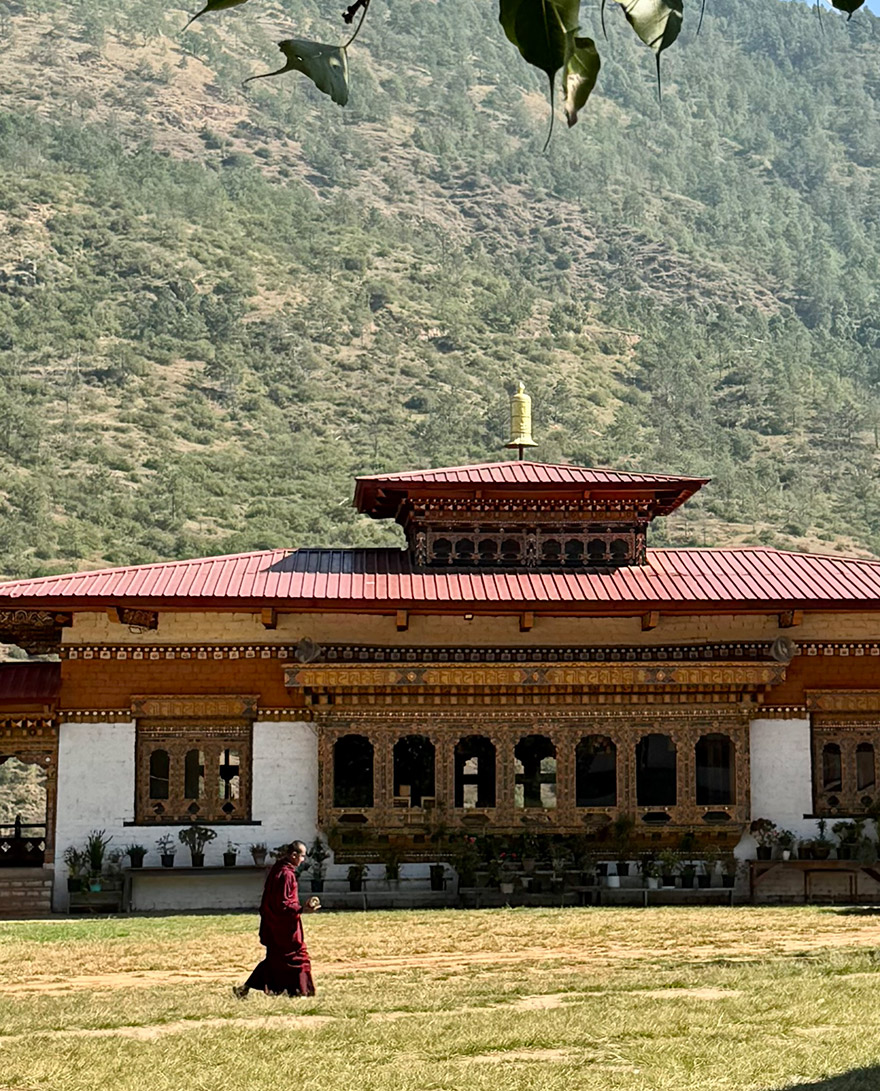
Reaching the temple involves a pleasant walk of around 20 minutes through rice fields and a small village, with traditional farmhouses and lovely views of the surrounding countryside. One of the most surprising sights is the large number of brightly coloured phallic symbols painted on houses and displayed outside shops! These are associated with Drukpa Kunley and are traditionally believed to ward off evil spirits and bring good fortune.
Paro: Mystical Himalayan Mountains
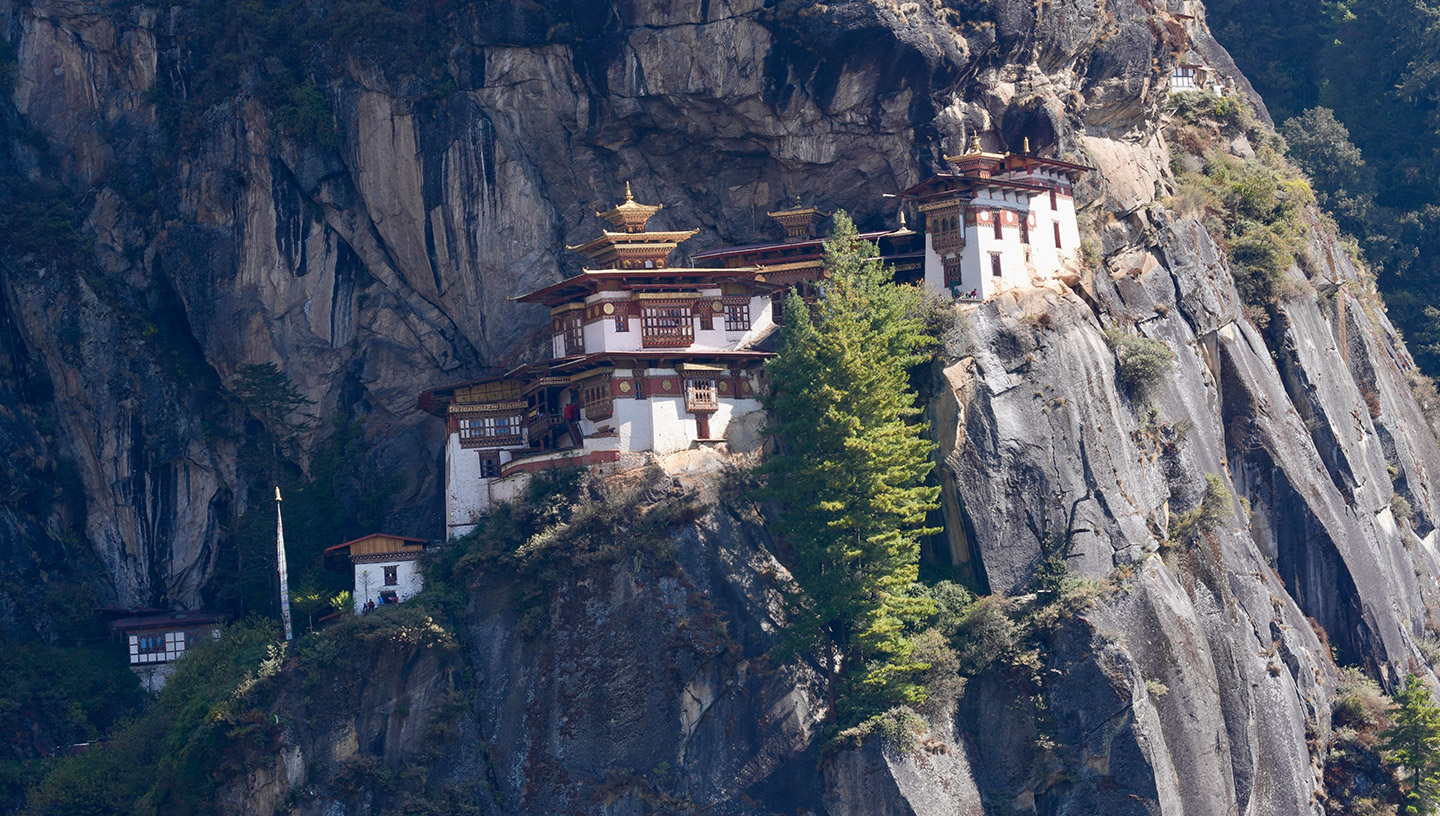
Paro was the fourth and final stop on our journey through Bhutan, and home to the country’s most famous landmark, the extraordinary Tiger’s Nest Monastery. The beautiful valley is surrounded by dramatic forested mountains, with the Paro Chhu River winding between green fields, traditional farmhouses and historic Buddhist temples.
Stay & Dine
SIX SENSES PARO
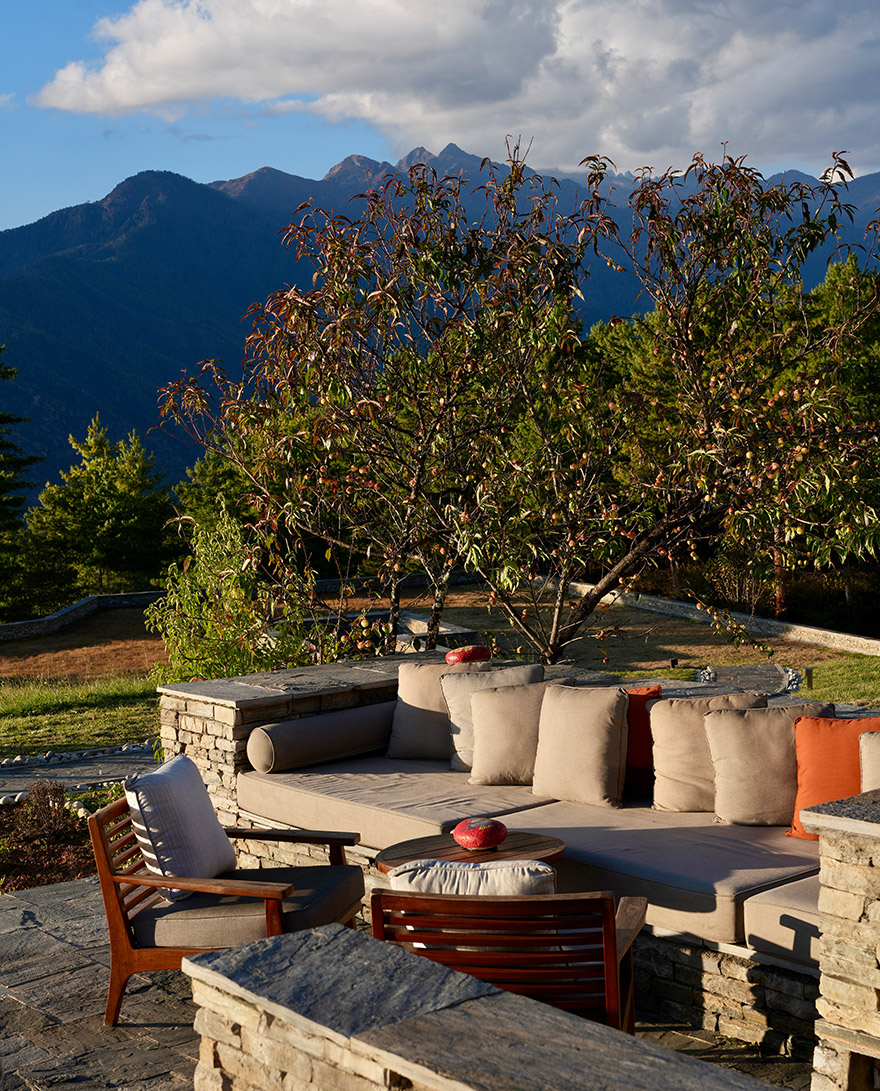
Six Senses Paro has a spectacular location high on a hillside overlooking the Paro Valley, with panoramic views stretching across forested mountains, traditional villages and the distant Himalayan peaks. The hotel is one of five Six Senses lodges in Bhutan and sits on a site surrounded by the ruins of an ancient stone fortress. The buildings feature locally sourced stone, timber and large expanses of glass, making the most of the stunning mountain setting.
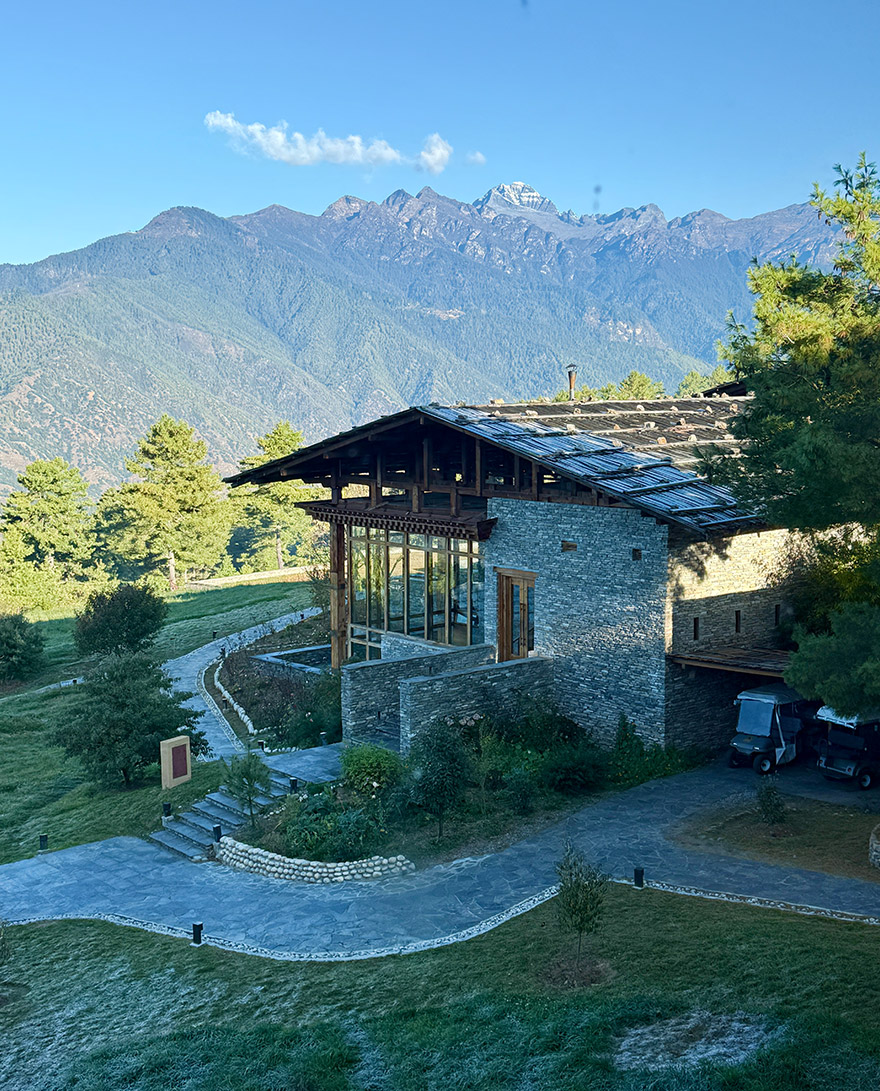
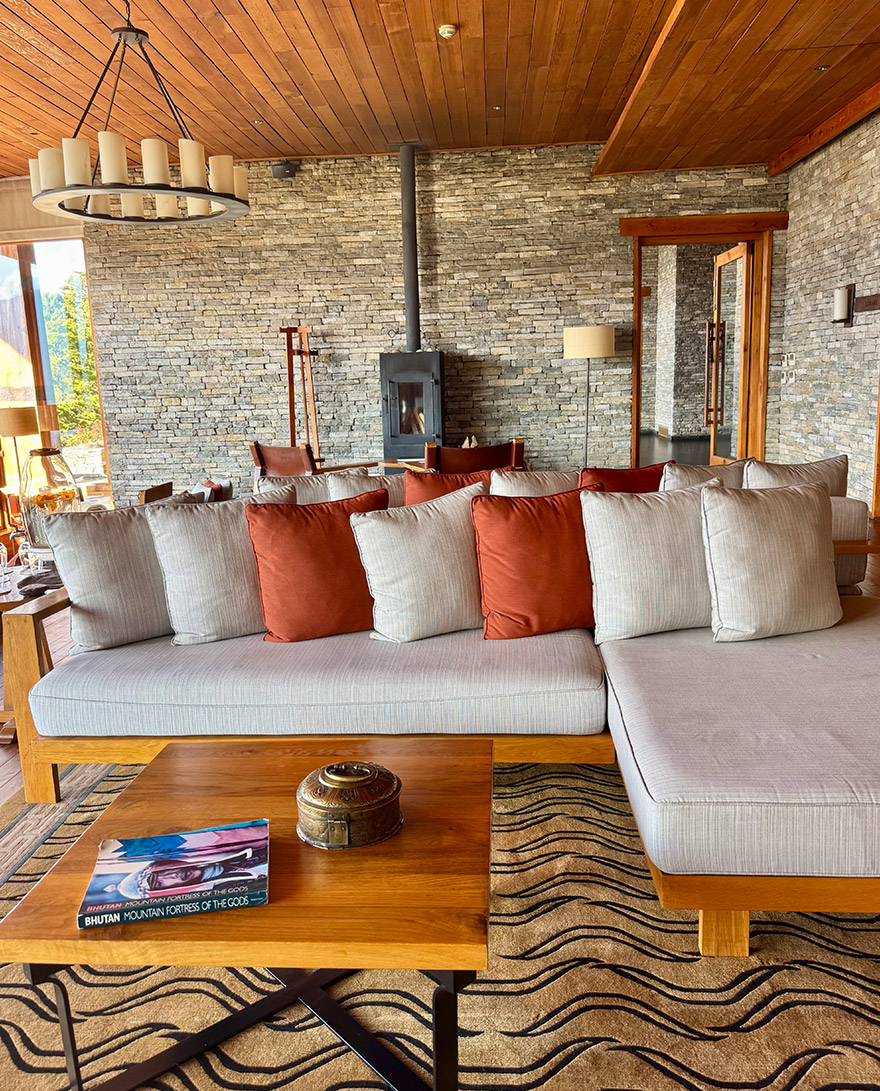
The interiors are contemporary, with natural materials, clean lines and a restrained palette of warm neutral colours. Stone walls, pale timber floors, handcrafted furniture and traditional Bhutanese textiles add character without detracting from the extraordinary views. The main lounge is a particularly impressive space, with high ceilings, comfortable seating and large windows framing the mountains.
Dining takes place in the lodge’s restaurant, which has beautiful views over the valley and a contemporary design inspired by Bhutanese fortress architecture. The menus combine Bhutanese and international dishes, with a focus on fresh, seasonal ingredients, including vegetables and herbs grown in the hotel’s own organic gardens. There’s also a lovely outdoor terrace, where you can take in the scenery.
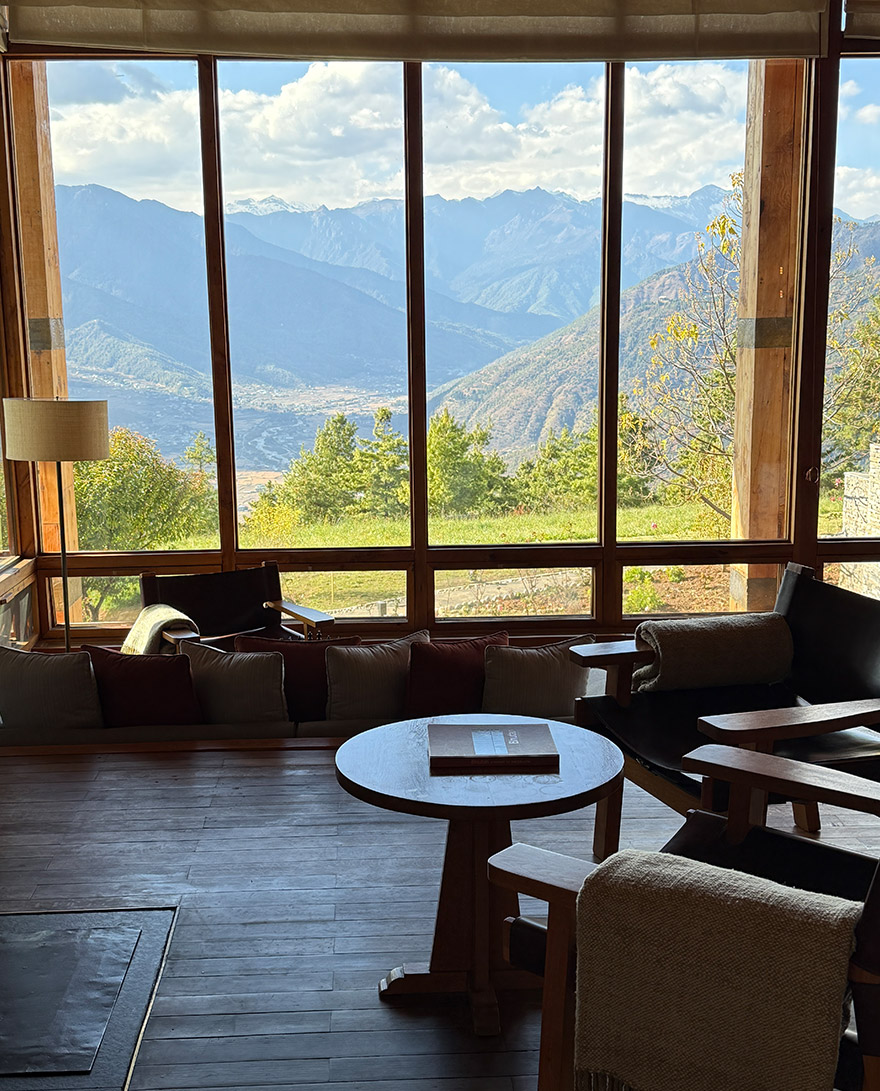
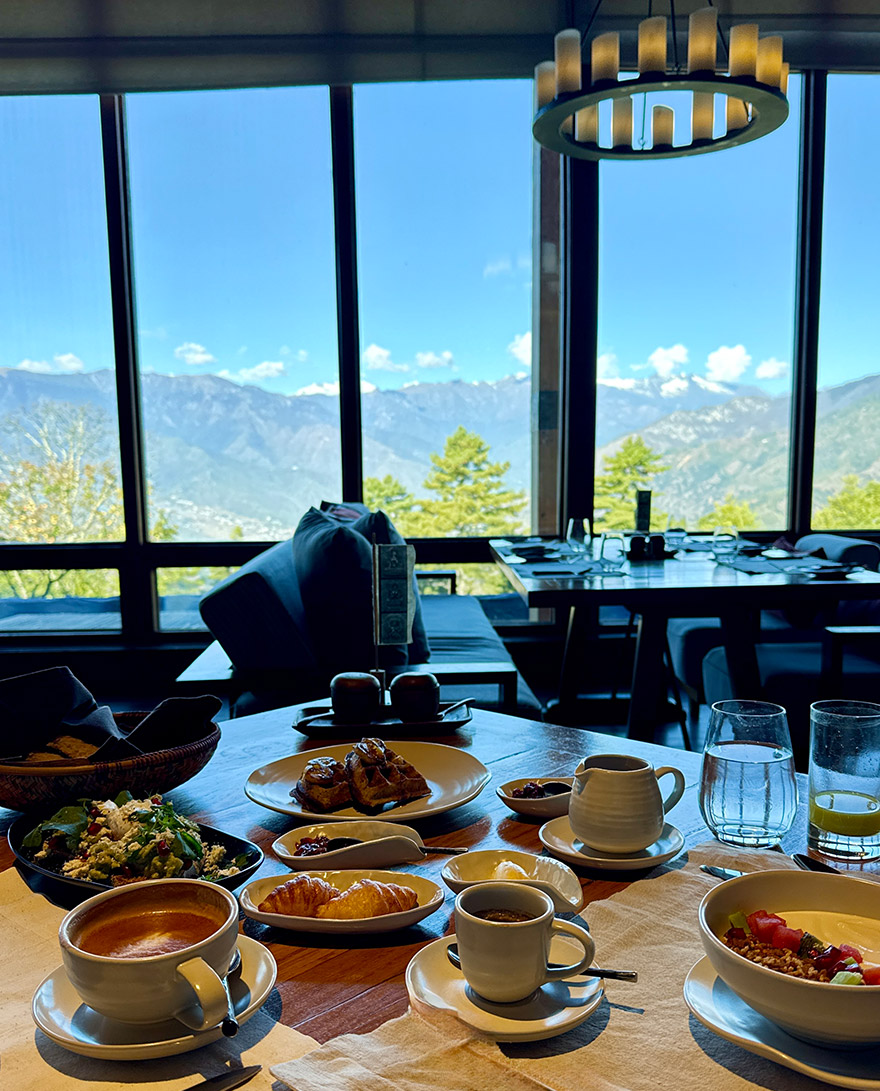
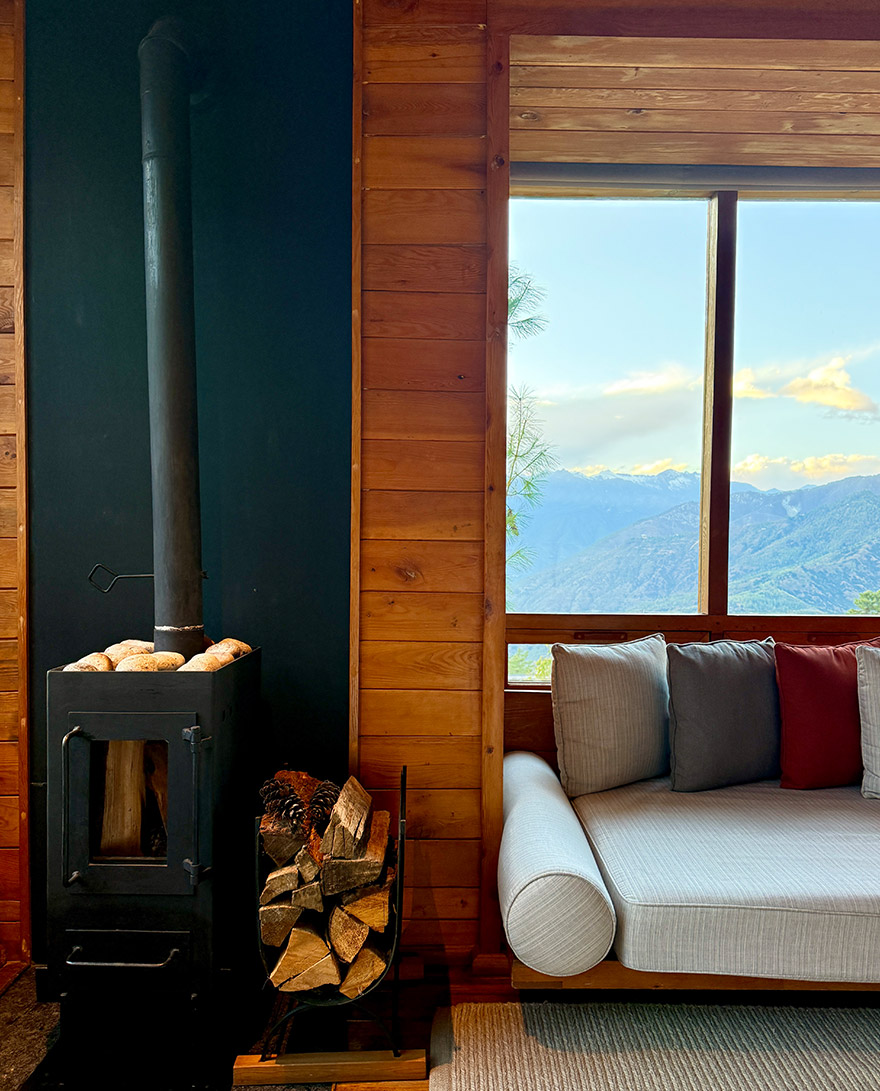
The lodge has just 20 suites and villas, including 16 spacious Lodge Suites, each measuring around 60 square metres. The rooms are designed to make the most of the views, with enormous windows looking out across the valley. The style is contemporary and understated, with pale wooden furniture, Himalayan rugs, traditional Bhutanese wood-burning stoves and comfortable sitting areas.
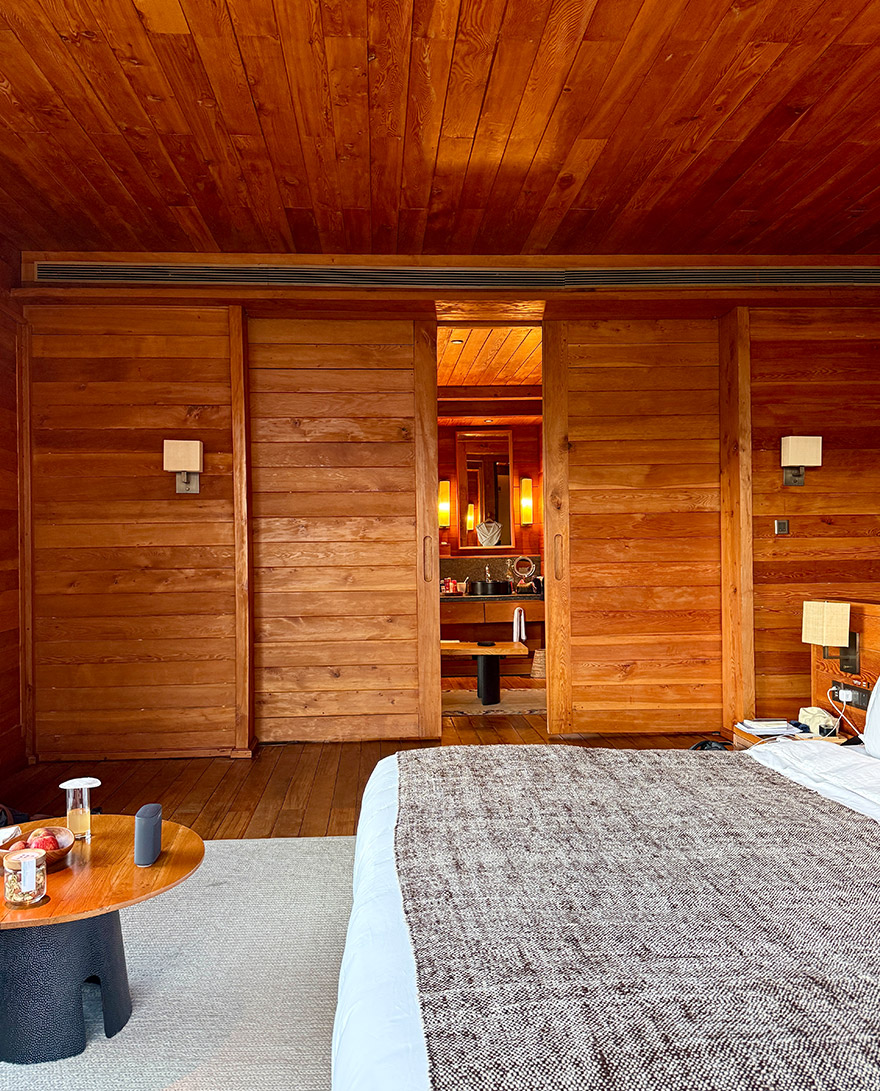
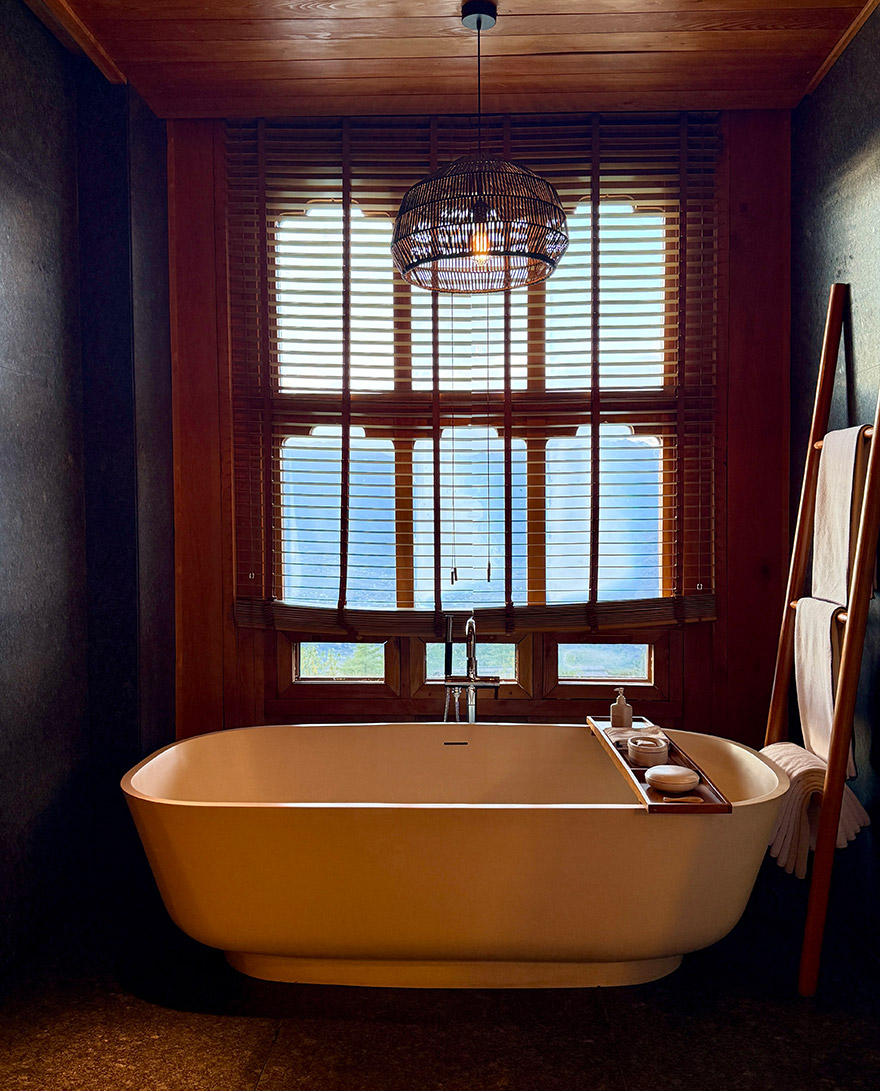
The hotel has an impressive wellness centre, with a beautiful indoor swimming pool, spa treatment rooms, sauna, fitness centre and spaces for yoga and meditation.
Do
TIGER’S NEST MONASTERY – TAKTSANG LHAKHANG
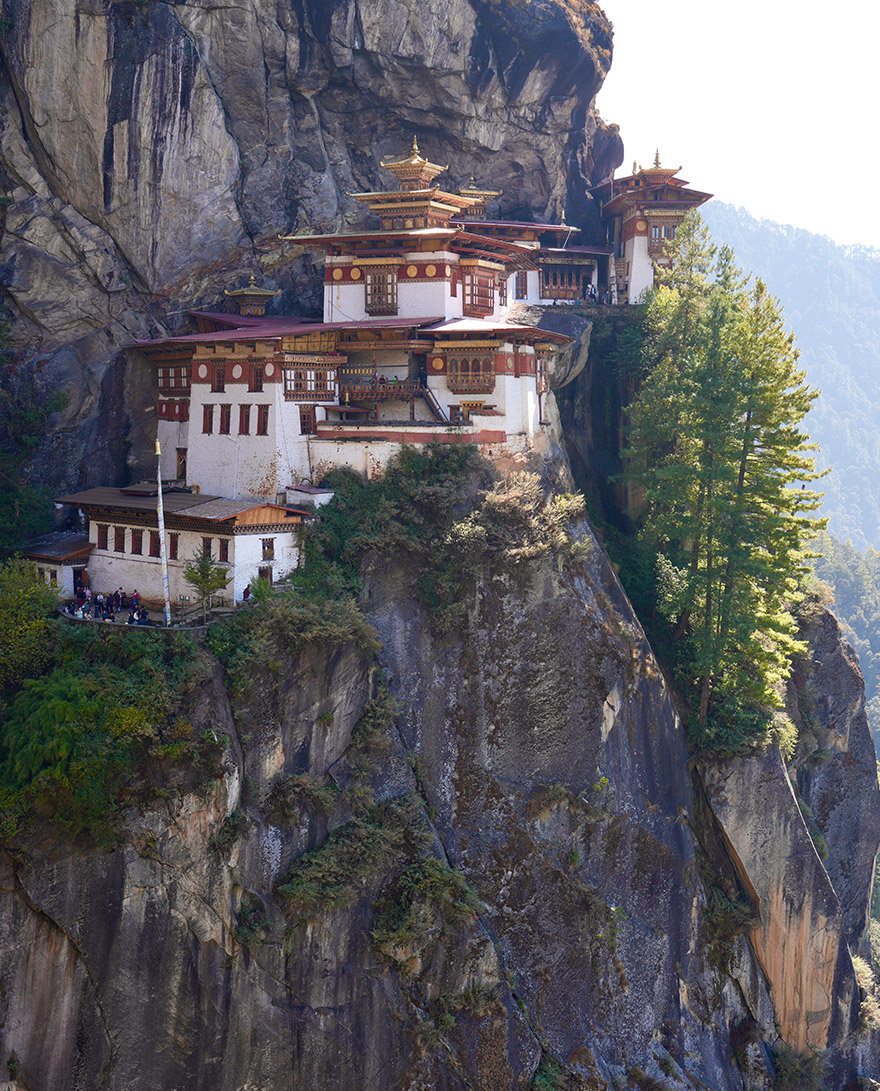
Tiger’s Nest is without doubt Bhutan’s most famous landmark and one of the most extraordinary religious sites we’ve ever visited. The monastery clings to a sheer rock face at an altitude of around 3,120 metres. According to Buddhist tradition, Guru Rinpoche, who introduced Vajrayana Buddhism to Bhutan in the 8th century, flew to this site from Tibet on the back of a tigress. He is believed to have meditated in a cave here, subduing evil spirits and establishing the site as one of Bhutan’s most sacred places.
The hike begins at the foot of the mountain, where colourful prayer wheels and strings of prayer flags mark the start of the trail (below left). Looking up, you can just make out the monastery high above, giving you some idea of the climb ahead! As you gain height, there are occasional glimpses of the monastery through the trees, each one a little closer and more impressive. Around halfway up is a café where you can stop for a drink and admire the first really good views of Tiger’s Nest across the valley.
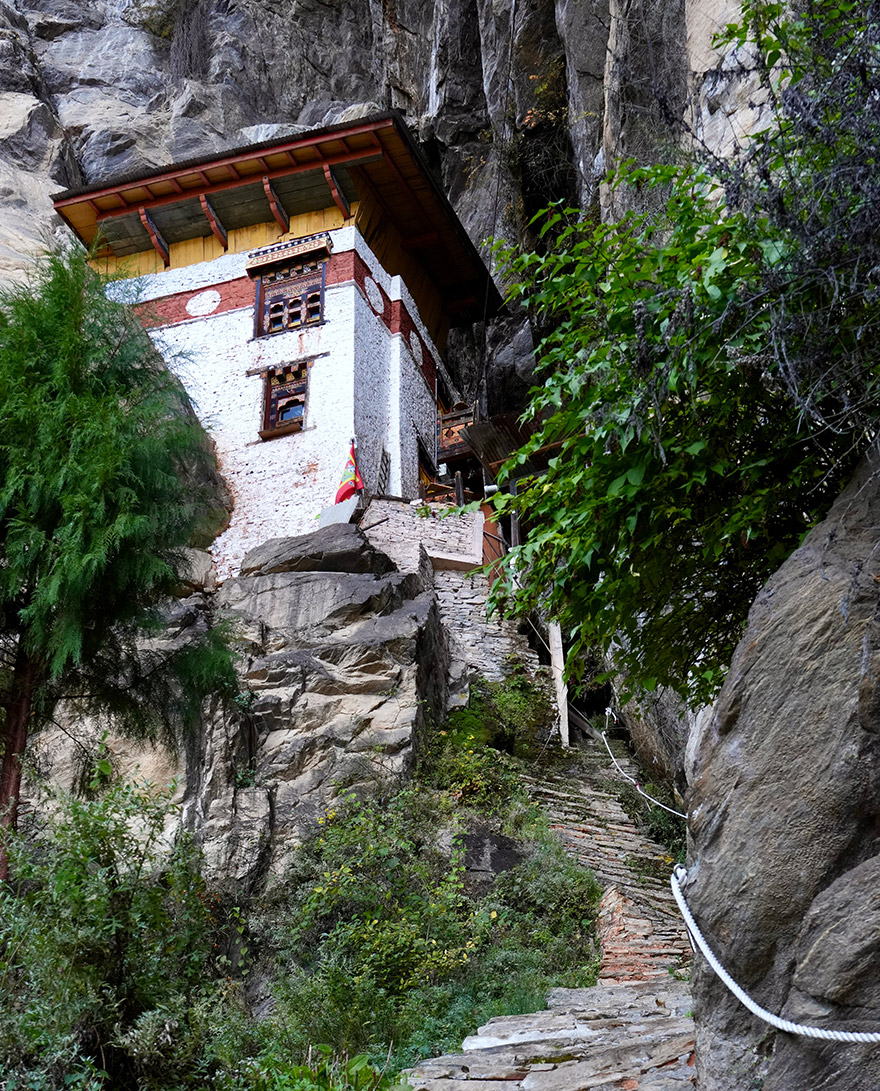
The final approach is spectacular. The trail reaches a viewpoint almost directly opposite the monastery, with an extraordinary view of the white buildings clinging to the dark rock face. From here, a long series of stone steps descends into a narrow gorge, passing a beautiful waterfall and small Buddhist shrines, before climbing back up to the monastery entrance. The setting is dramatic, with sheer cliffs rising above you and the forested valley far below. Look out too for a tiny shrine tucked into the towering cliffs nearby (below right), marking a place associated with Yeshe Tsogyal, Guru Rinpoche’s spiritual consort and an important female figure in Tibetan Buddhism, who is also believed to have meditated in this area.
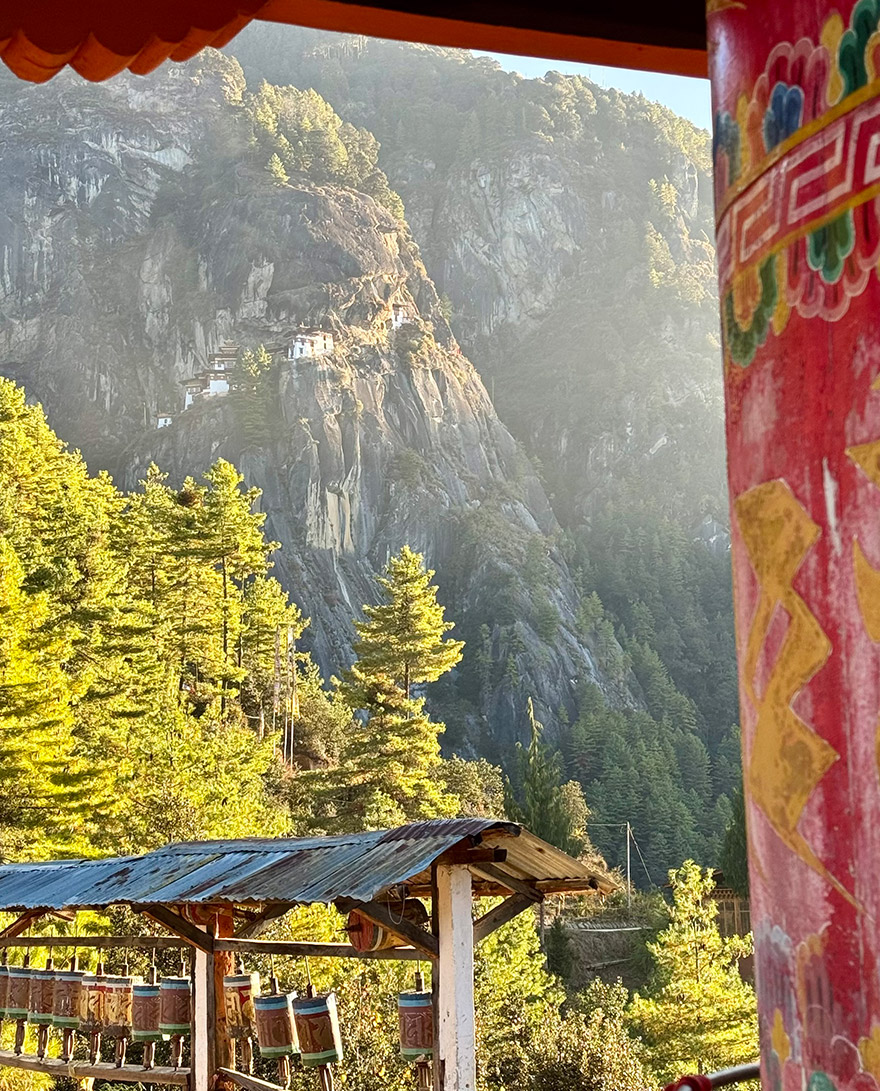
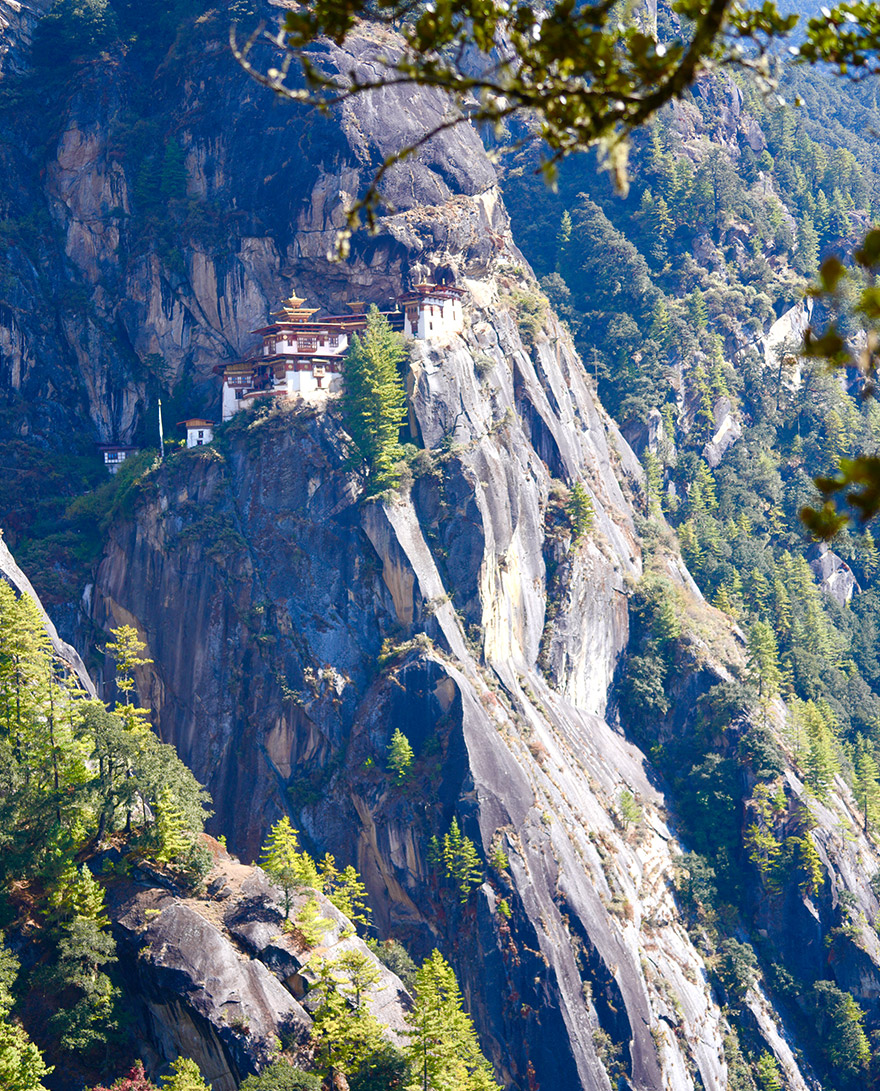
Inside the monastery complex are several small temples connected by narrow passageways and staircases. The interiors contain richly coloured Buddhist paintings, golden statues of Guru Rinpoche and other religious figures, and offerings left by pilgrims.
The hike is moderately challenging, particularly because of the altitude and the steep steps towards the end. Allow around four to six hours for the return journey, including time to explore the monastery. Good walking boots are essential, and it’s worth starting early before the trail becomes busy.
SANGCHHEN DORJI LHUENDRUP LHAKHANG
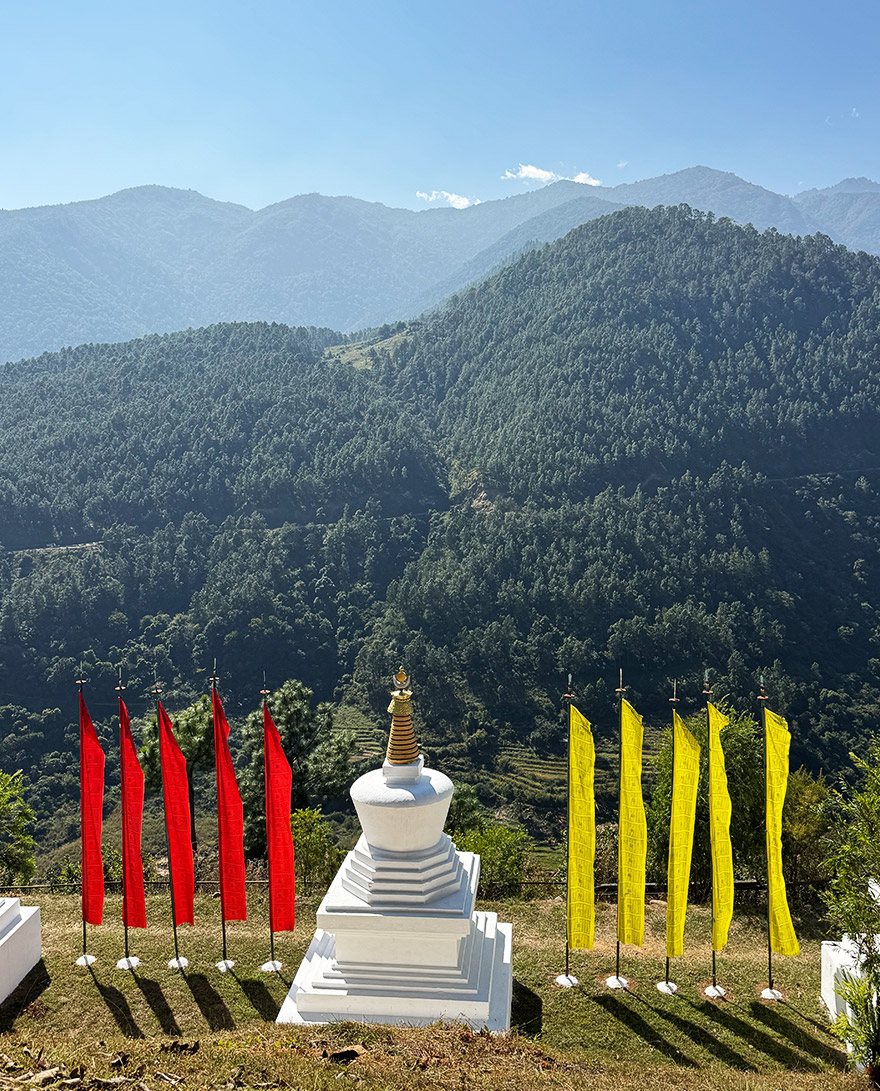
High on a ridge overlooking the Punakha and Wangdue valleys, Sangchhen Dorji Lhuendrup Lhakhang is a beautiful Buddhist nunnery with wonderful panoramic views. The complex is built in traditional Bhutanese style with whitewashed walls, brightly painted wooden details and golden roofs. One of its most striking features is a large white chorten, surrounded by beautifully carved black marble panels depicting important figures from Buddhist history.
The main temple contains an impressive 14-foot bronze statue of Avalokiteshvara, known in Bhutan as Chenrezig, the Buddhist deity representing compassion. The statue has eleven heads and a thousand arms, symbolising the ability to see suffering everywhere and help all those in need. The temple also contains statues of Guru Rinpoche, the Buddha of Longevity and the 21 Taras, female figures associated with compassion and protection.
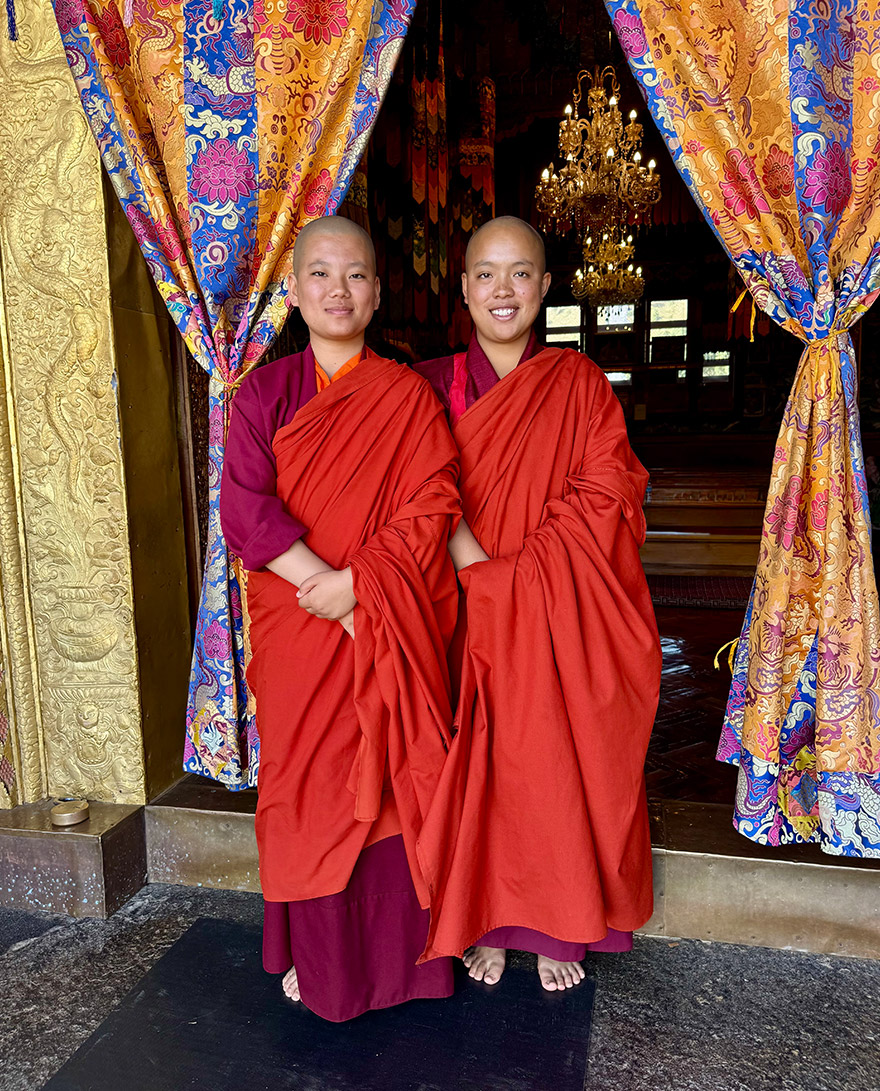
The complex is also home to a Buddhist nunnery, where nuns study religious philosophy and traditional arts including painting, embroidery and sculpture. It’s a peaceful place, with lovely gardens and a more intimate atmosphere than some of Bhutan’s larger monasteries. The elevated setting is particularly beautiful, with views stretching across the green valleys and forested mountains.
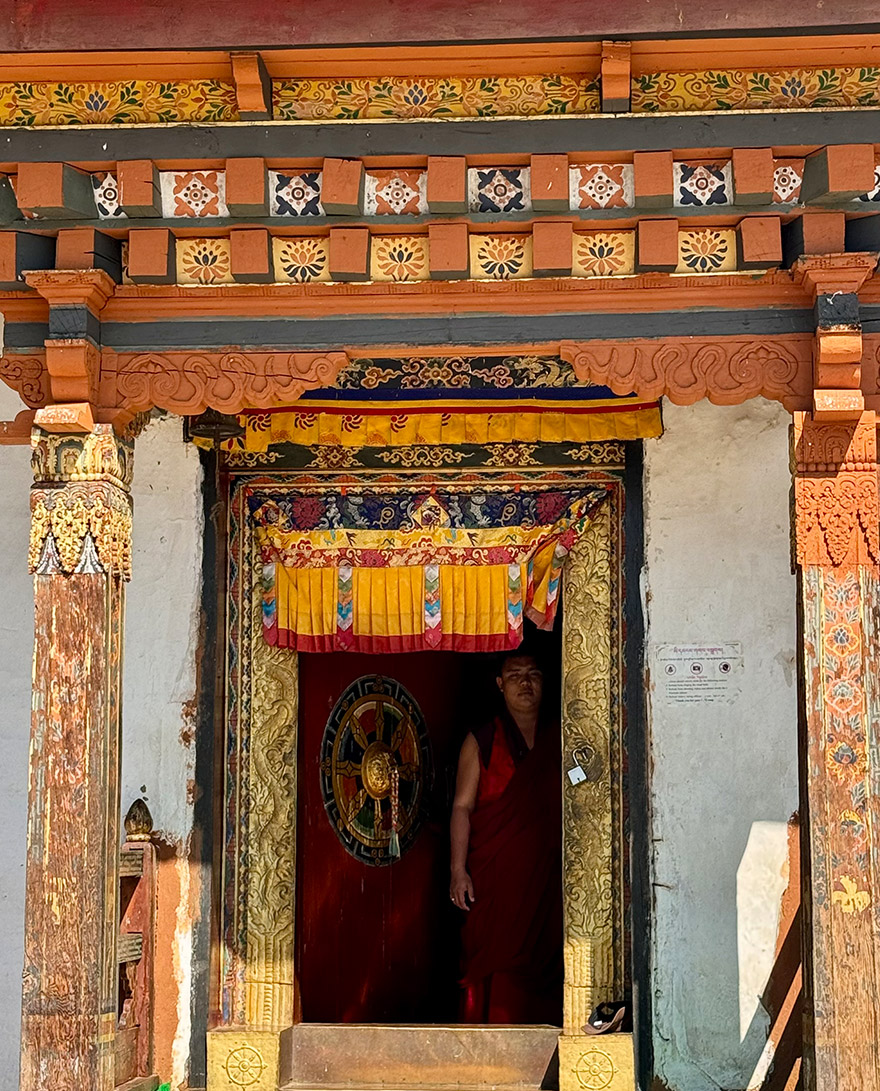
CHELE LA PASS and KILA GOEMBA HIKE
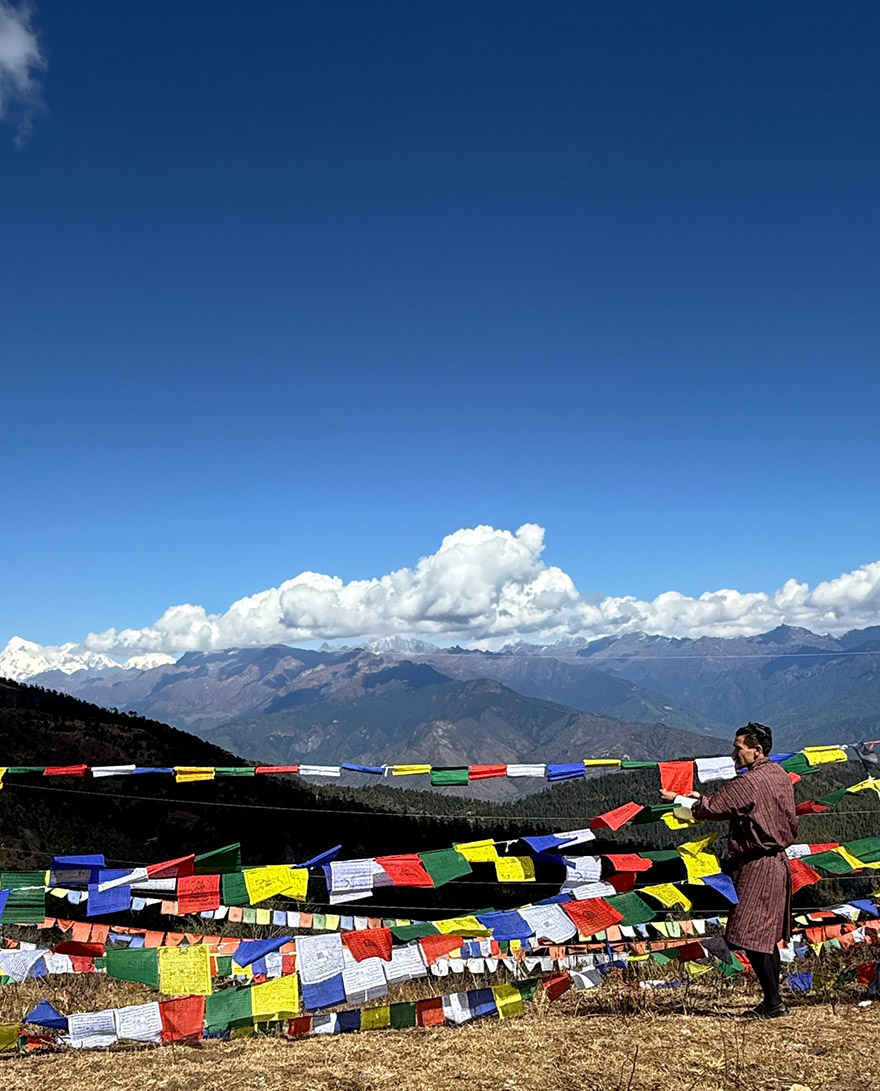
Around an hour and a half from Paro, Chele La Pass is one of the highest passes in the country at an altitude of almost 4,000 metres, connecting the Paro and Haa valleys. As the road climbs, the trees gradually thin out, revealing beautiful mountain scenery and, on a clear day, spectacular views of the snow-covered Himalayan peaks, including the sacred Mount Jomolhari, rising to 7,326 metres. The pass itself is marked by hundreds of colourful Buddhist prayer flags fluttering in the mountain breeze. These flags are an important part of Bhutanese Buddhist tradition, with prayers and mantras printed on the fabric. We had the lovely experience of hoisting our own prayer flag at the pass, a traditional ritual accompanied by prayers and blessings.
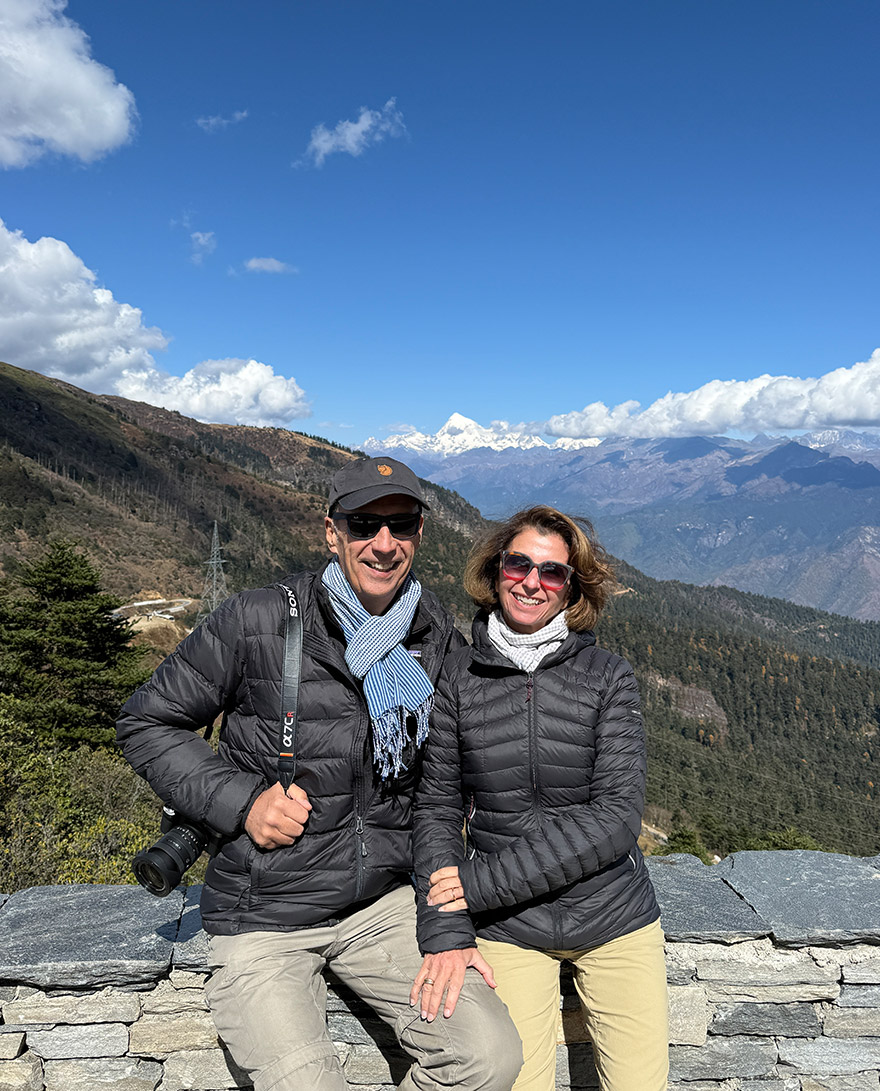
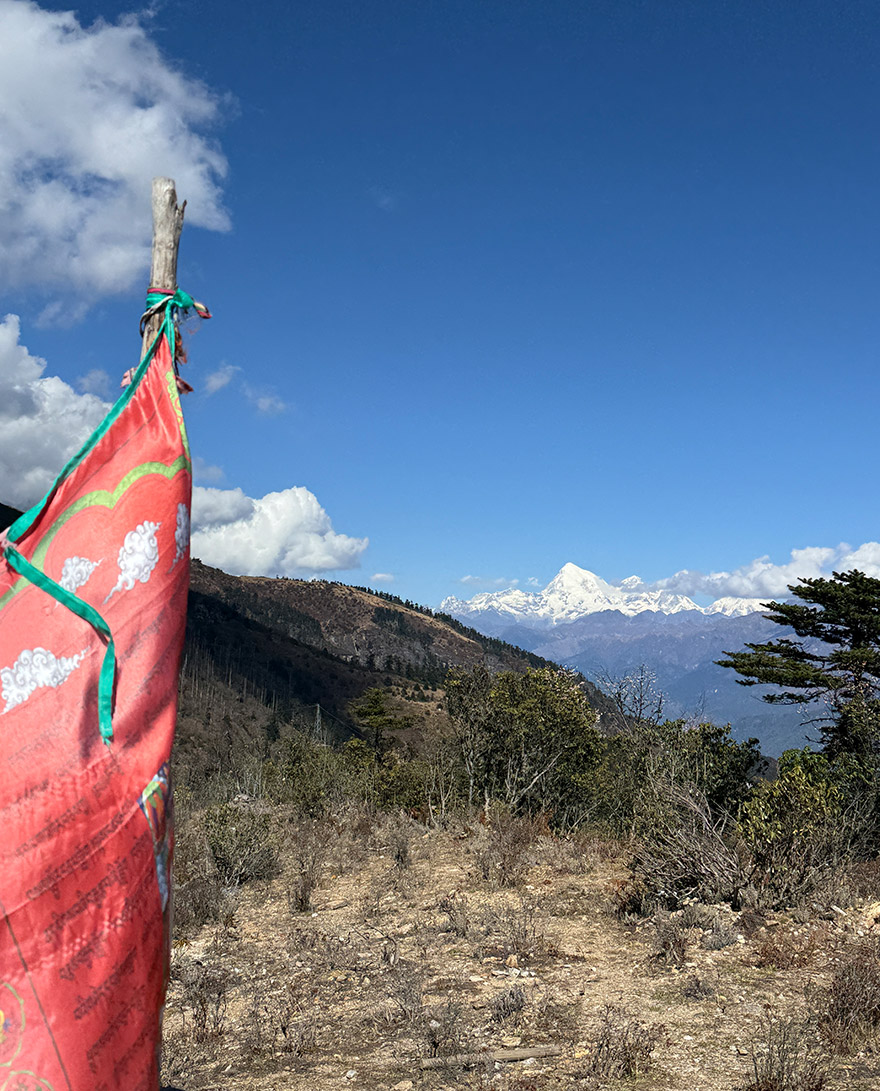
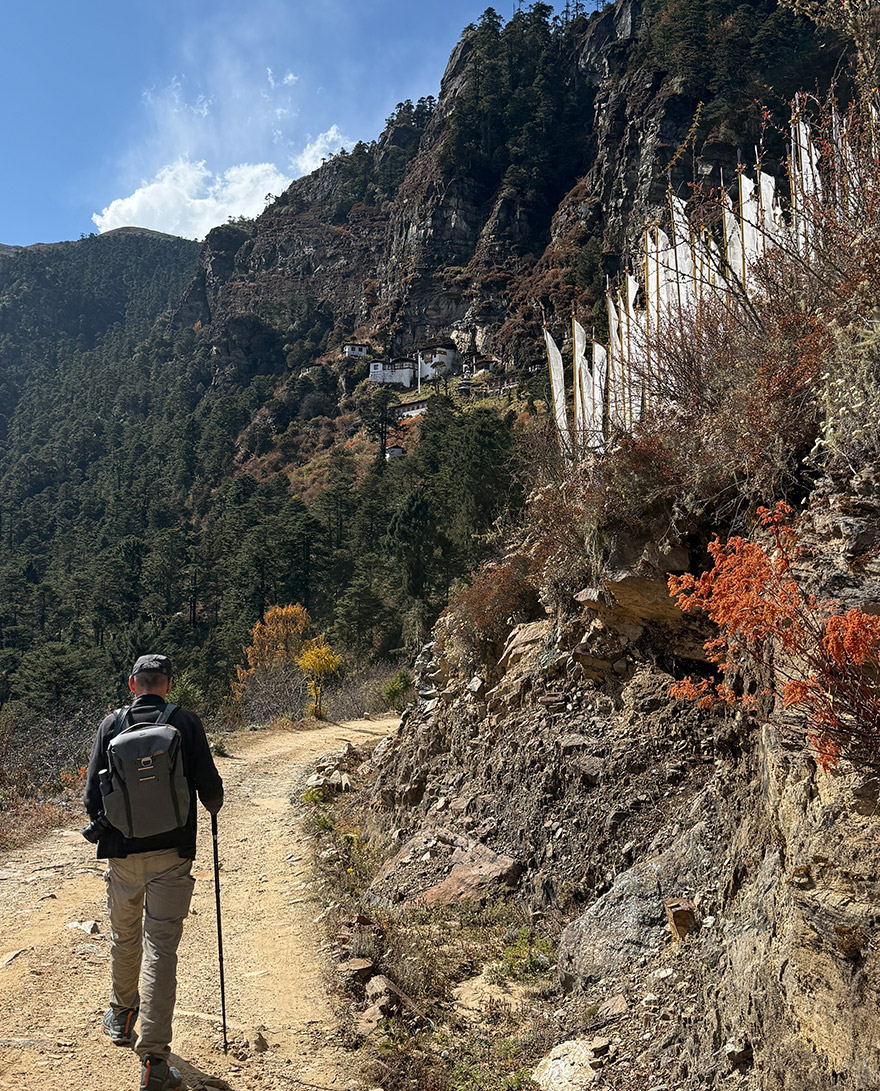
From Chele La Pass, a beautiful hiking trail leads through the mountains to Kila Goemba, one of Bhutan’s oldest Buddhist nunneries. The walk takes you through wonderful high-altitude scenery, with ancient rhododendron trees, fir forests and open stretches offering spectacular views of the surrounding mountains.
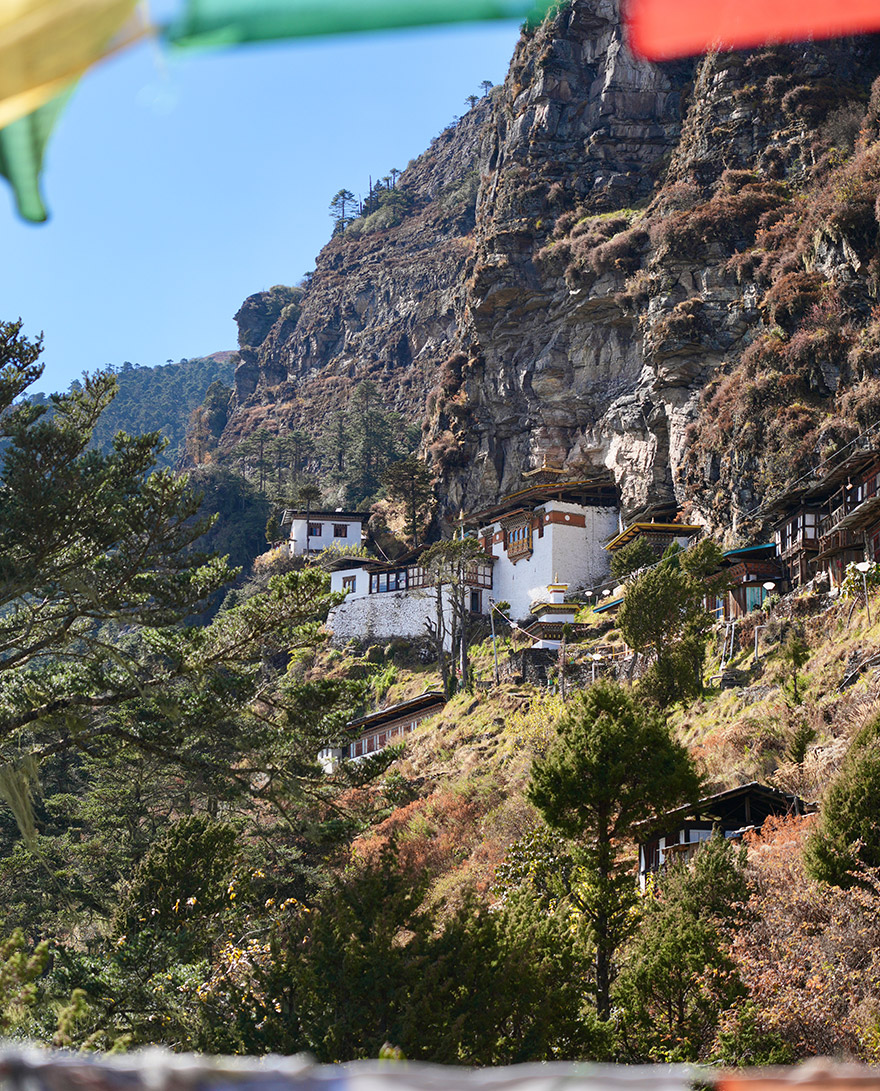
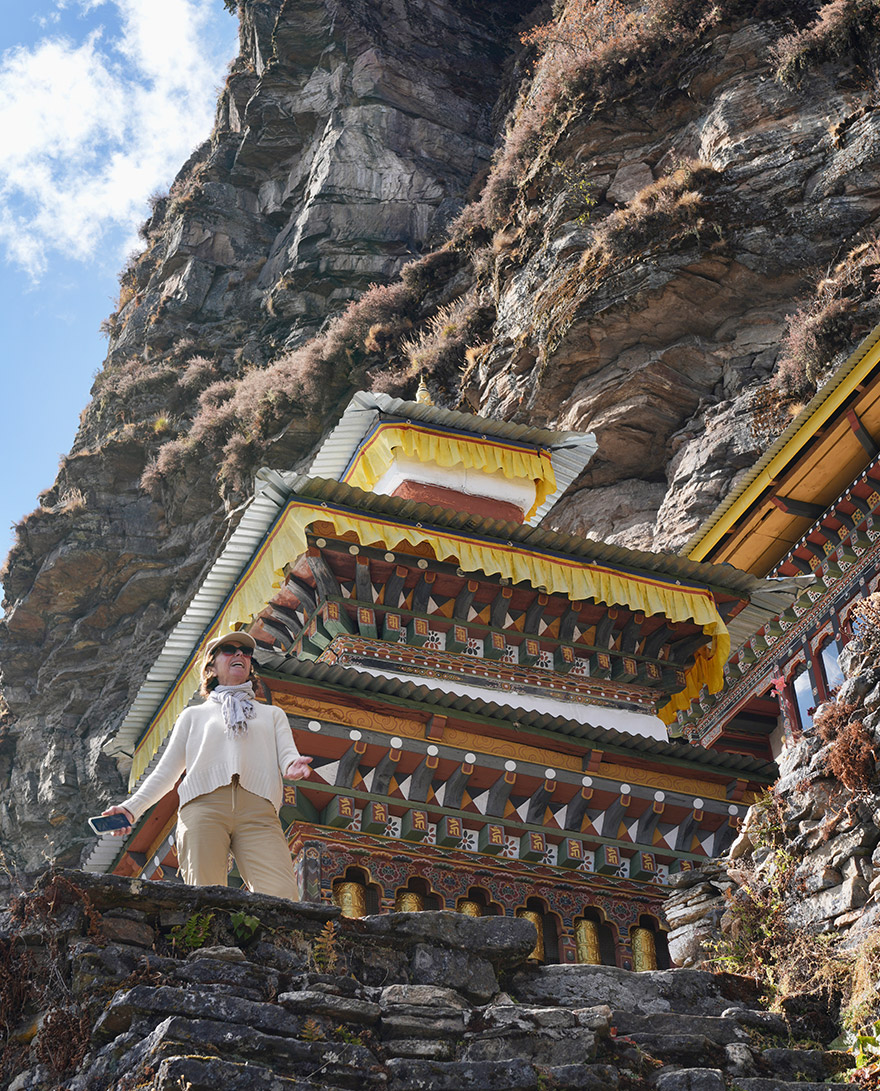
The nunnery itself is extraordinary, built into a steep cliff face at around 3,500 metres above sea level. A collection of small whitewashed buildings with red and golden roofs seems to cling to the rock, surrounded by forest and towering mountains. It’s a peaceful place, far removed from the larger monasteries and tourist sites, and the dramatic setting makes it particularly memorable. The hike can take around two to four hours, depending on the route chosen.
PARO DZONG – RINPUNG DZONG
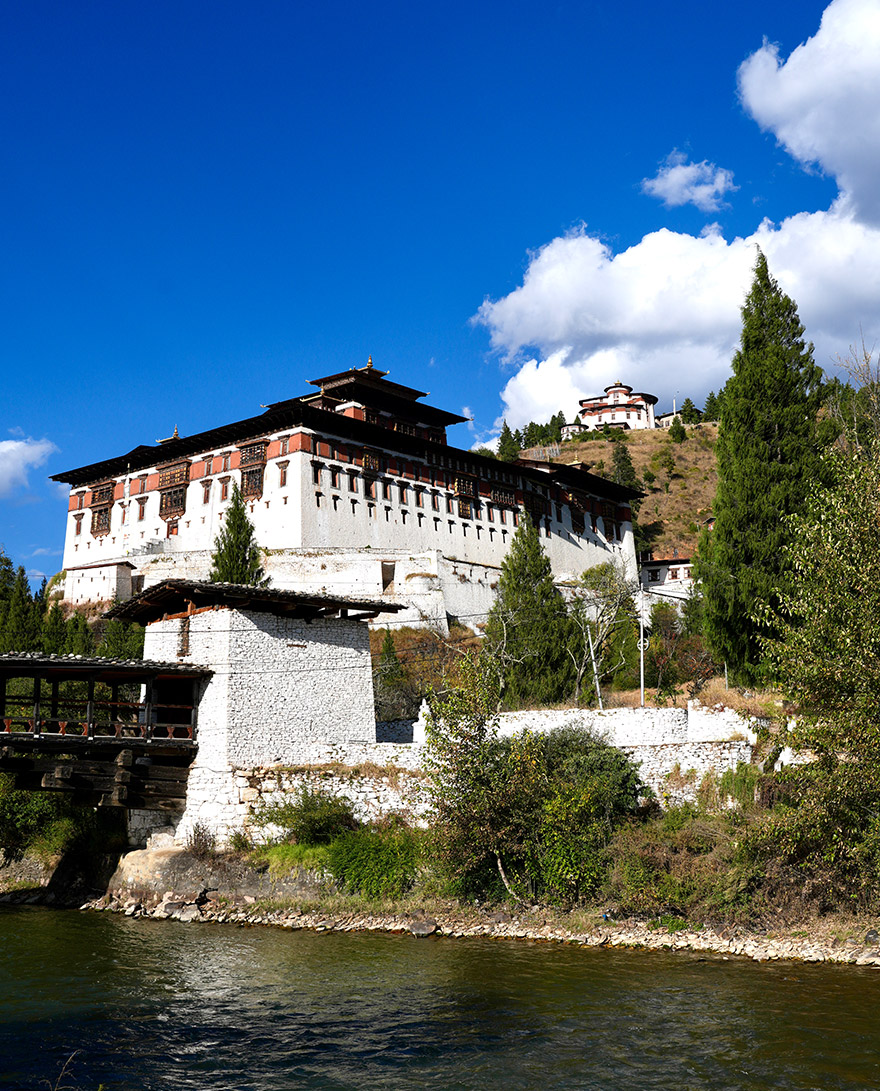
Paro Dzong, officially known as Rinpung Dzong, is another magnificent example of Bhutan’s traditional fortress-monastery architecture. Built in its present form in 1646 under Zhabdrung Ngawang Namgyal, the religious leader who unified Bhutan, the enormous building occupies a commanding position on a hillside overlooking the Paro Chhu River and the surrounding valley. Its massive whitewashed walls, richly carved wooden windows and tiered golden roofs make it one of the most impressive buildings in the region.
Inside, the dzong contains beautiful courtyards surrounded by intricately decorated buildings, with colourful Buddhist paintings, carved timber pillars and traditional Bhutanese architectural details. The main religious areas feature golden statues of Buddhist deities, including Guru Rinpoche and Shakyamuni Buddha, alongside elaborate murals illustrating Buddhist teachings and stories. As with Bhutan’s other dzongs, the complex serves both religious and administrative functions, housing government offices and a community of Buddhist monks.
NATIONAL MUSEUM OF BHUTAN
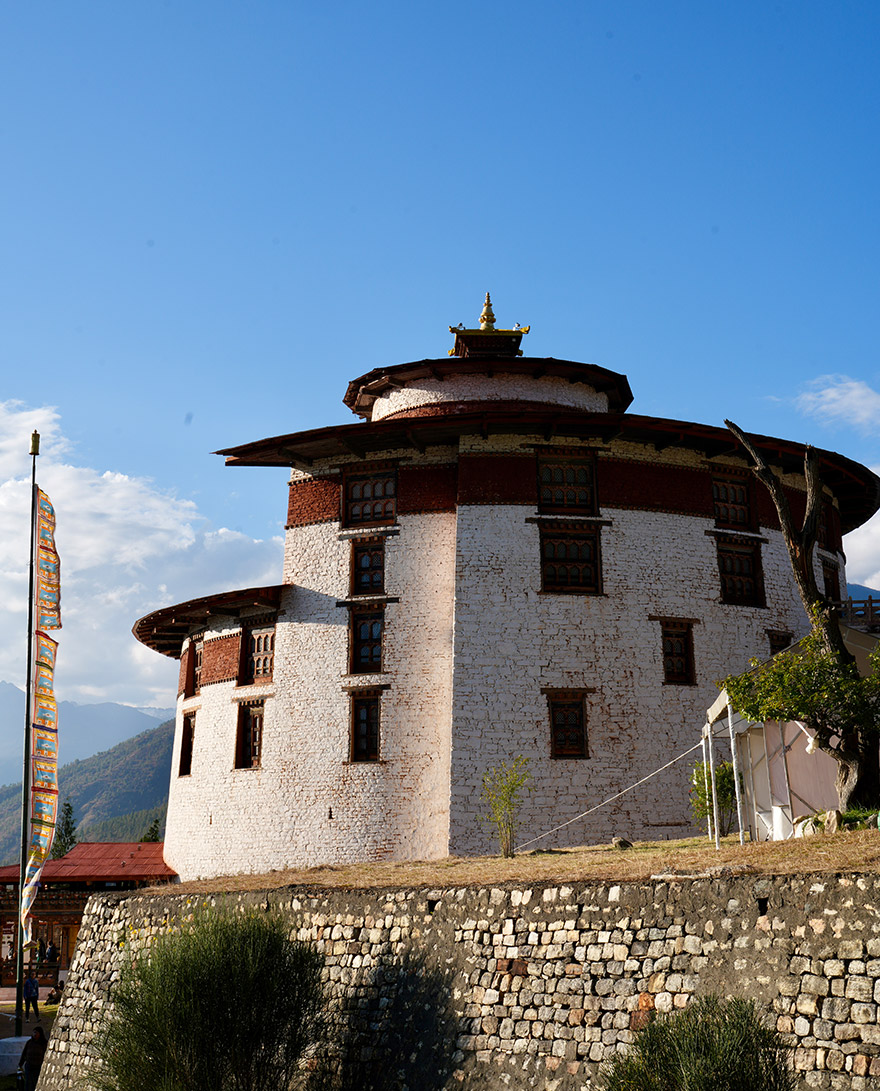
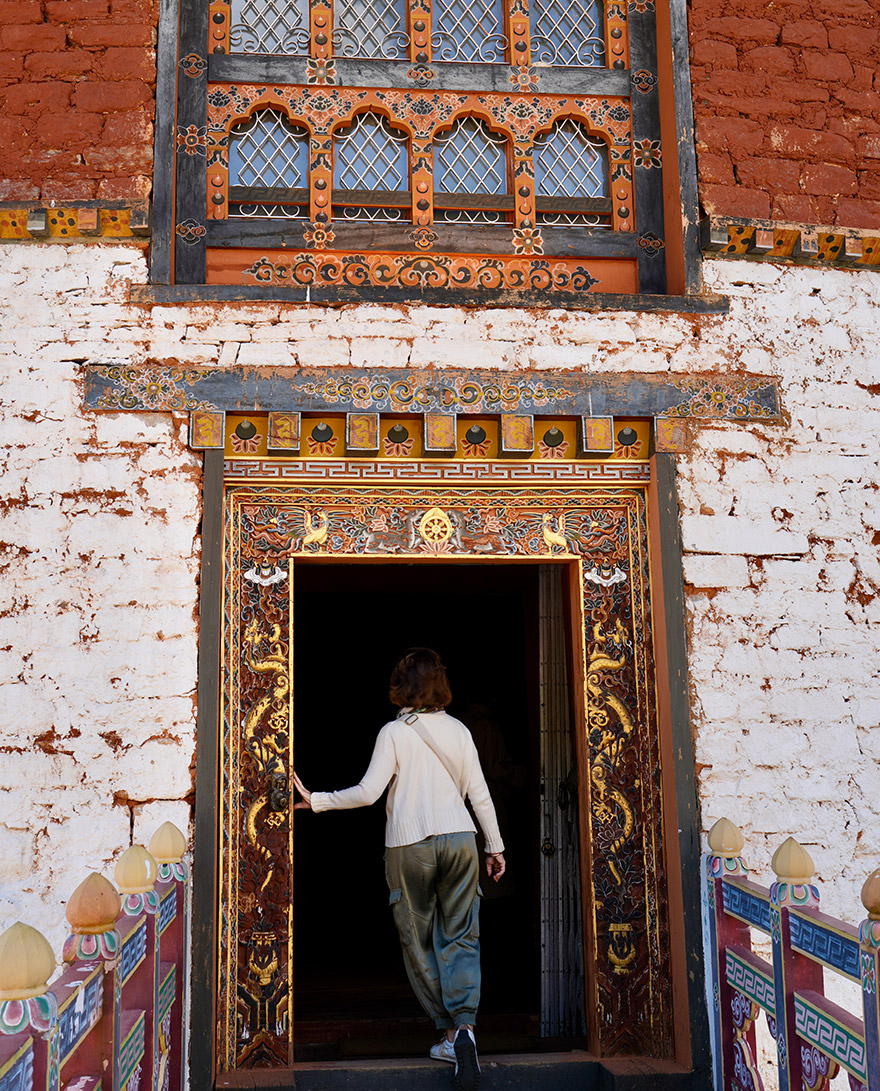
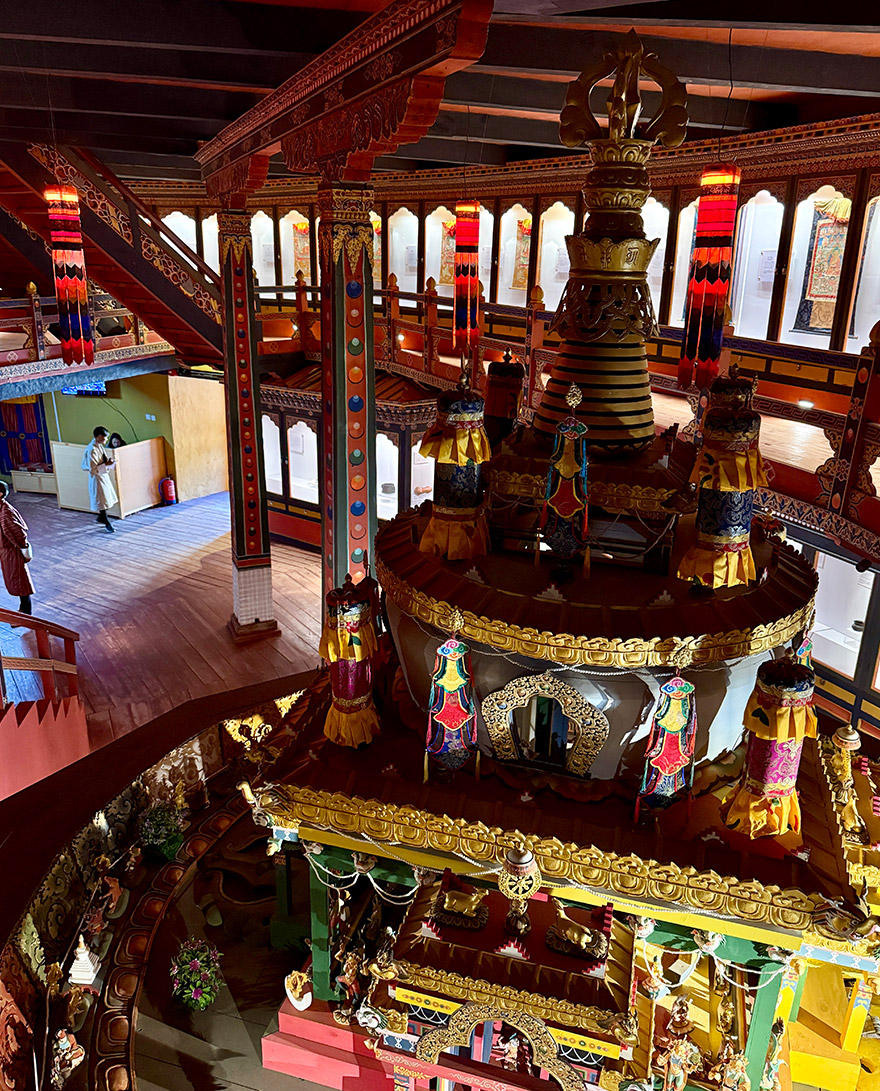
Just above Paro Dzong is the National Museum of Bhutan, housed in a striking circular stone watchtower known as Ta Dzong. Built in 1649 to protect the fortress below from invasion, the building was converted into the country’s National Museum in 1968. Its unusual cylindrical shape and thick stone walls make it quite different from Bhutan’s more familiar fortress-monasteries, with several floors of galleries arranged around the interior.
The museum has a fascinating collection of Bhutanese art, religious objects and historical artefacts, providing a useful introduction to the country’s rich cultural heritage. Displays include beautiful Buddhist thangkas, intricate religious paintings on fabric, traditional bronze statues, ceremonial masks used in religious festivals, weapons, textiles and examples of Bhutanese craftsmanship.
Why visit Bhutan?
A journey through Bhutan is an extraordinary experience, worthy of any travel bucket list! This small Himalayan kingdom offers a wonderful combination of spectacular mountain scenery, beautiful valleys, ancient Buddhist monasteries and fascinating cultural traditions. The hiking is fantastic, from gentle walks through forests and rice paddies to the unforgettable climb to Tiger’s Nest Monastery. What makes Bhutan particularly special is how deeply Buddhism is woven into everyday life, from colourful prayer flags fluttering in the mountains to monks chanting in magnificent temples. Add to this some exceptional luxury lodges, with beautiful design, excellent food and wonderfully warm service, and you have a truly memorable trip that will stay in your memories and your hearts for a very long time.
