When to visit
We visited Tuscany in the Autumn and this was a lovely time for a trip to the region. The countryside is beautiful, there’s a good chance of blue skies and the crowds of the peak summer season have departed.
Overview of our trip
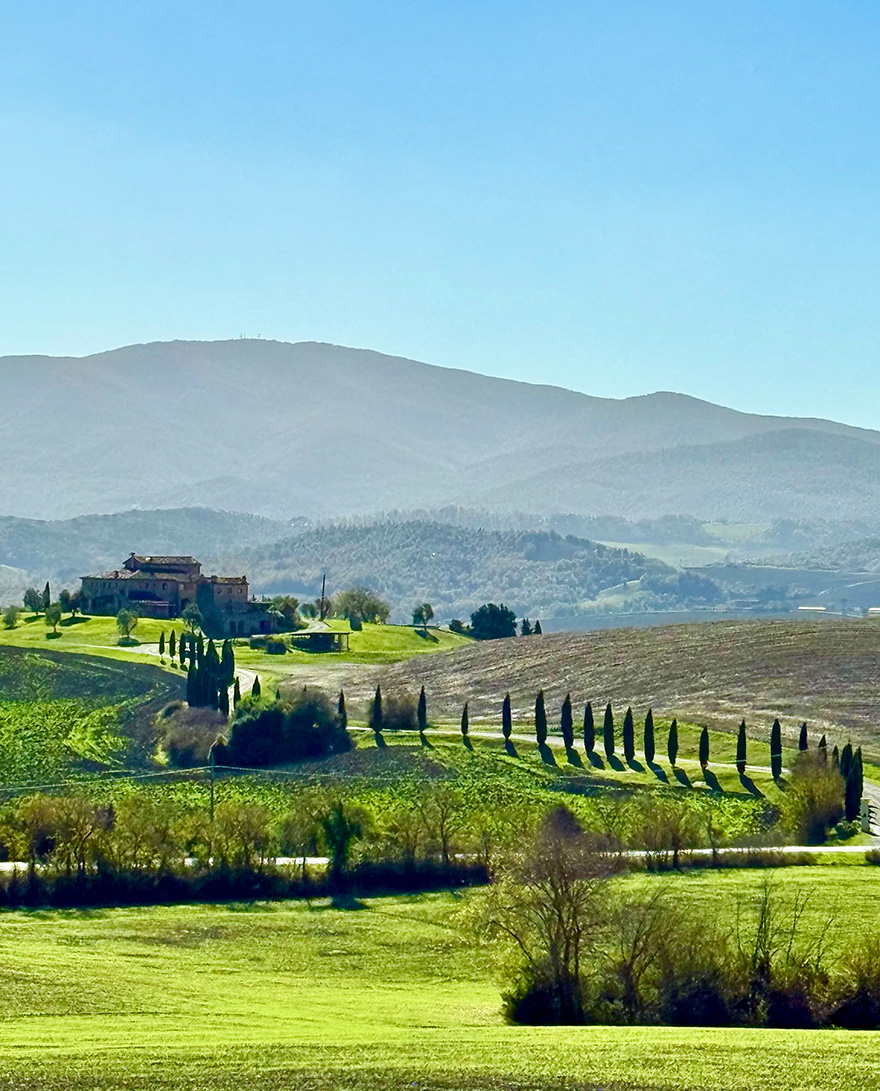
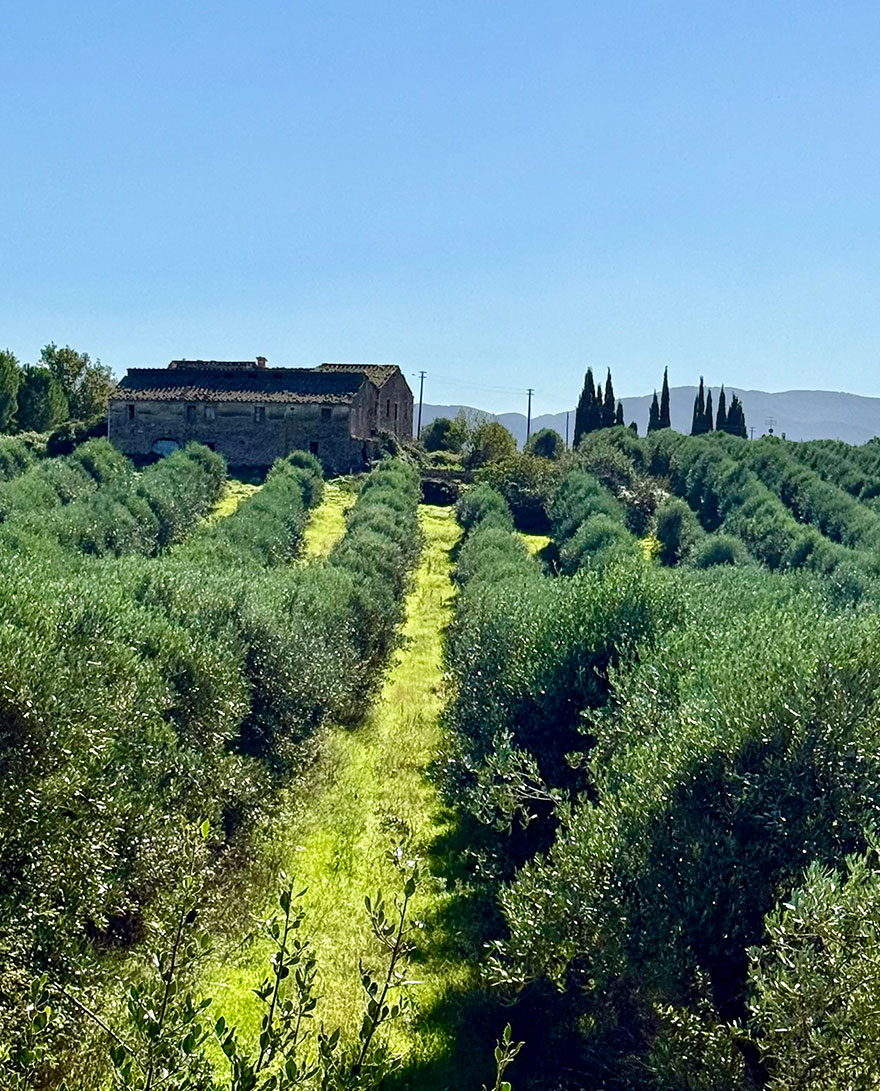
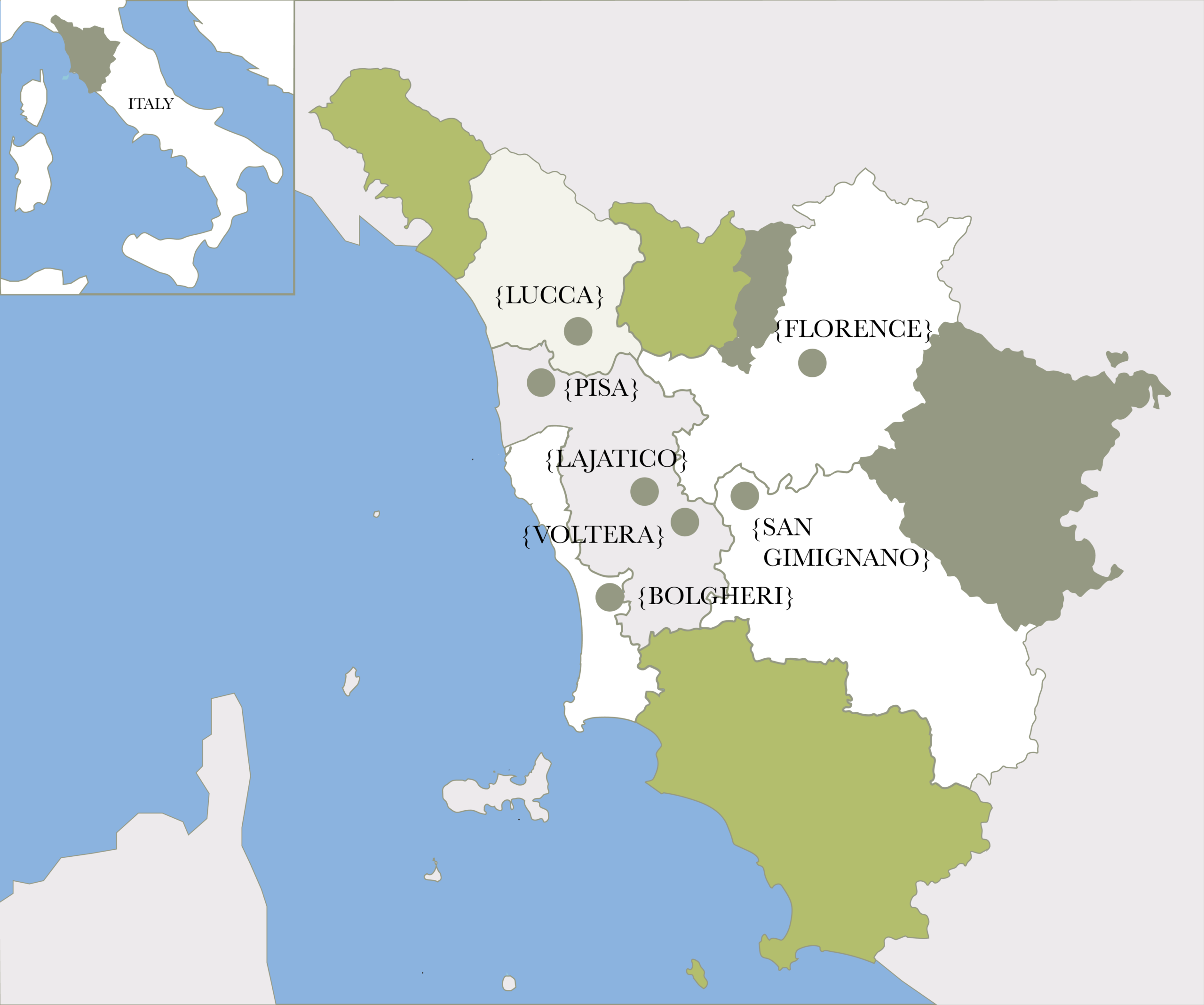
For this trip, we based ourselves in the less visited South West corner of Tuscany, between Lajatico and Peccioli. It’s rural, calm and typically Tuscan. This corner of Tuscany has quiet roads lined with cypress trees taking you through rolling hills dotted with stone farmhouses, olive groves and vineyards.
It’s also a good base for exploring towns and villages, from the more famous like Lucca and San Gimignano to some hidden gems like Bolgheri.
Lajatico & Peccioli
Lajatico is a small medieval hilltop village with a classic Tuscan profile: terracotta rooftops and countryside views in every direction. You can wander the streets, stop for a coffee and spend a quiet hour watching local life tick along.
It’s the hometown of opera singer Andrea Bocelli. Here, he has created the Theatre of Silence, a natural amphitheatre created in the Lajatico hills. The silence in the name refers to the fact that the space stays that way for most of the year, coming to life in July for a few days of music and dance performances.
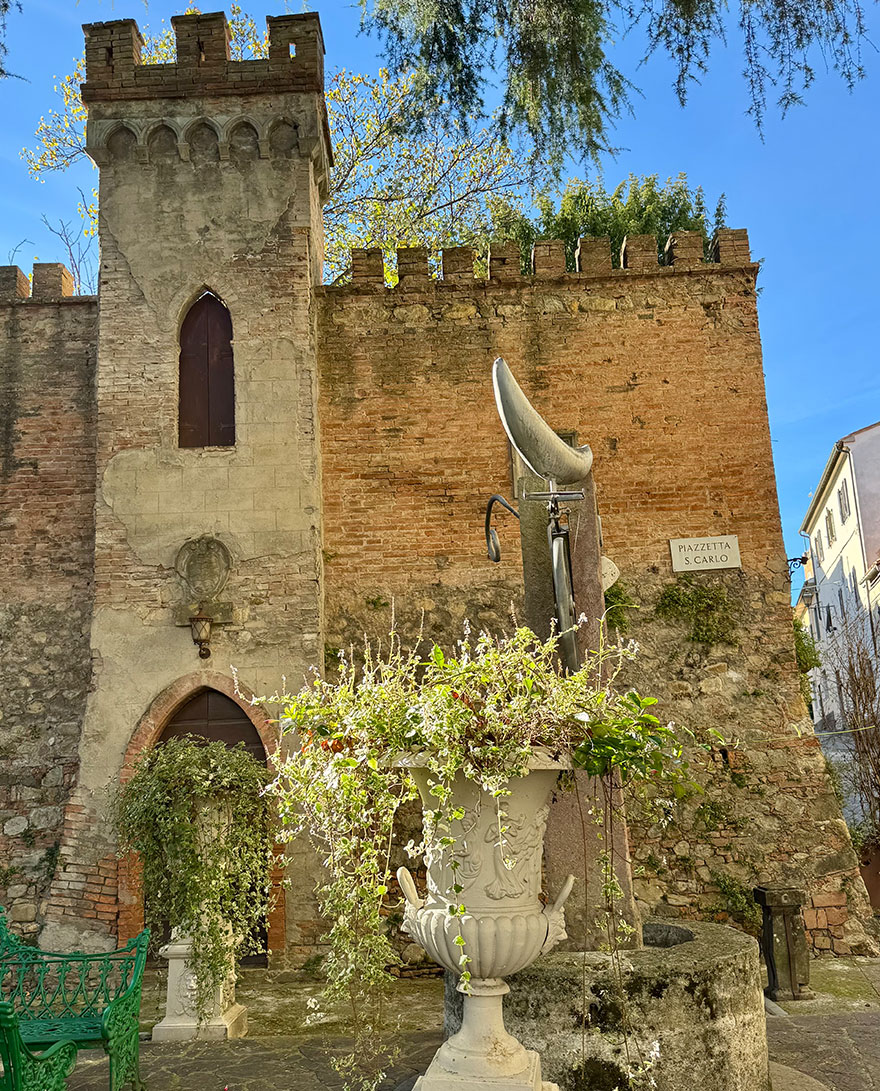
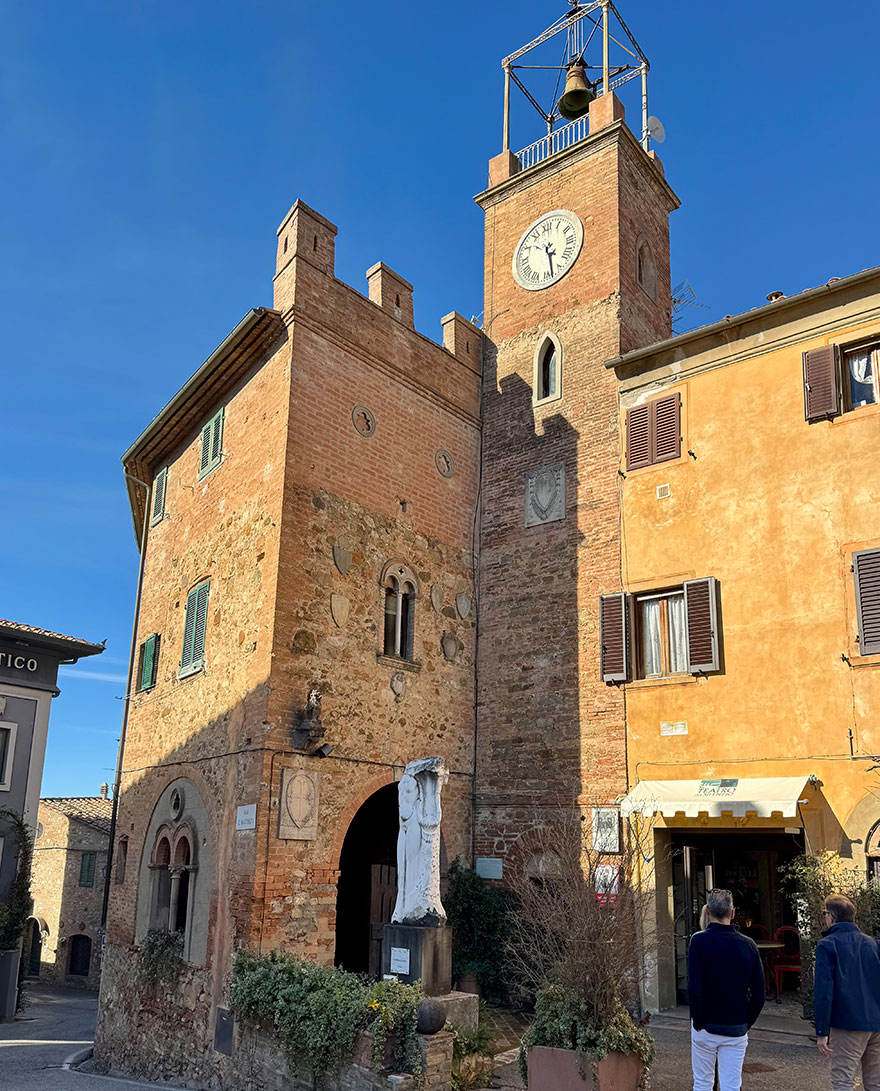
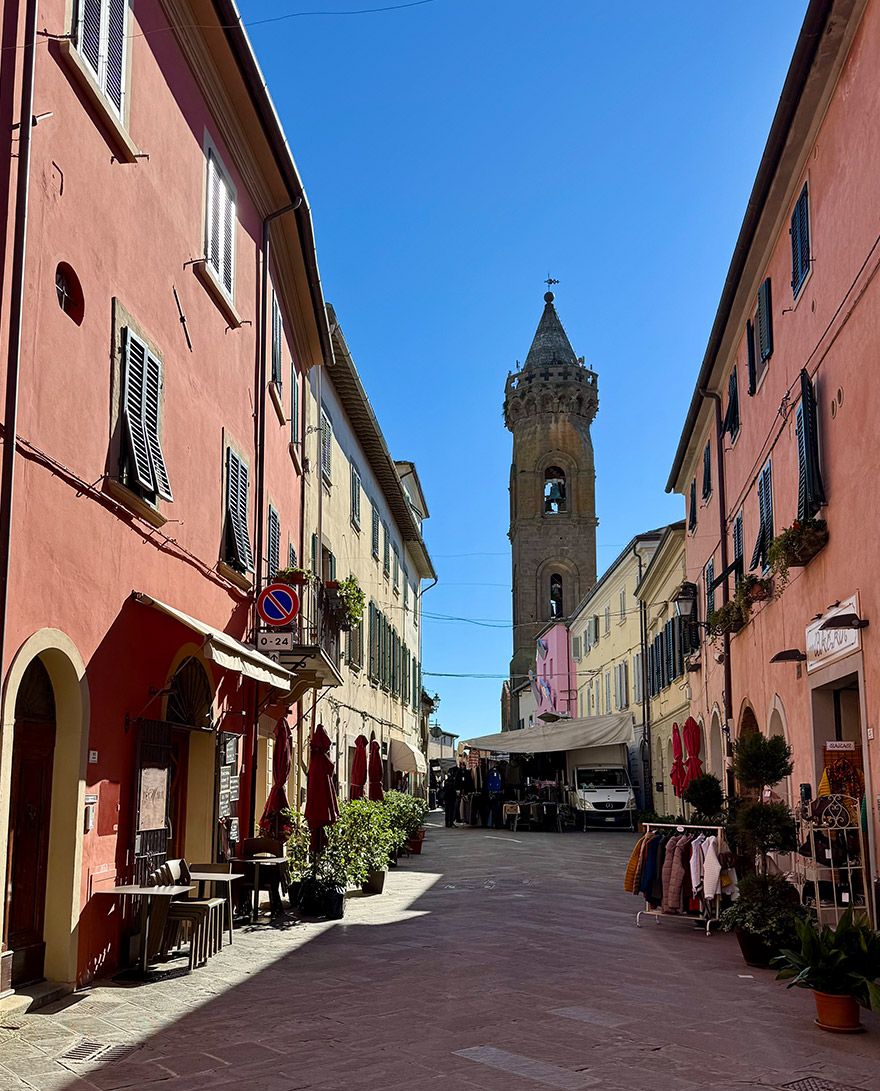
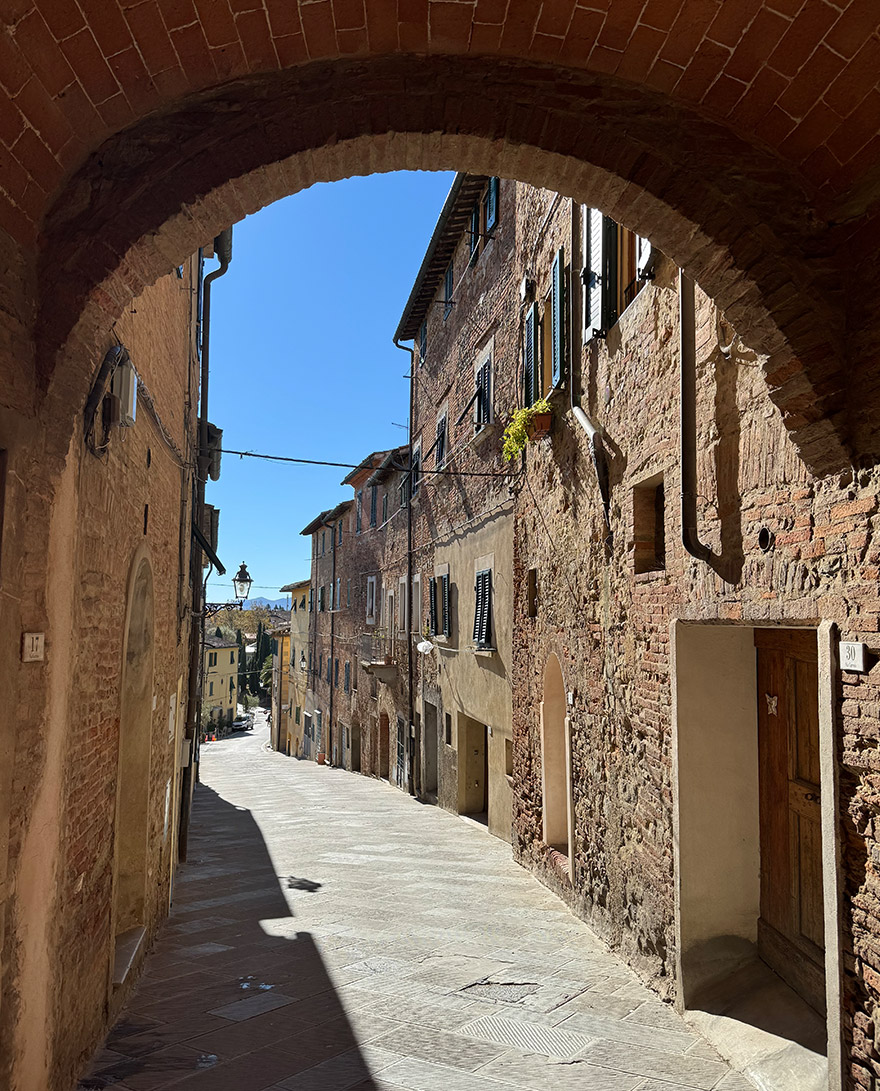
Peccioli is a small town that won the “Village of the Villages” Award in 2024 and was more interesting. We spent a couple of hours wandering the streets. It’s pretty, but it’s also playful, with contemporary art dotted through the streets. Tuesdays is market day.
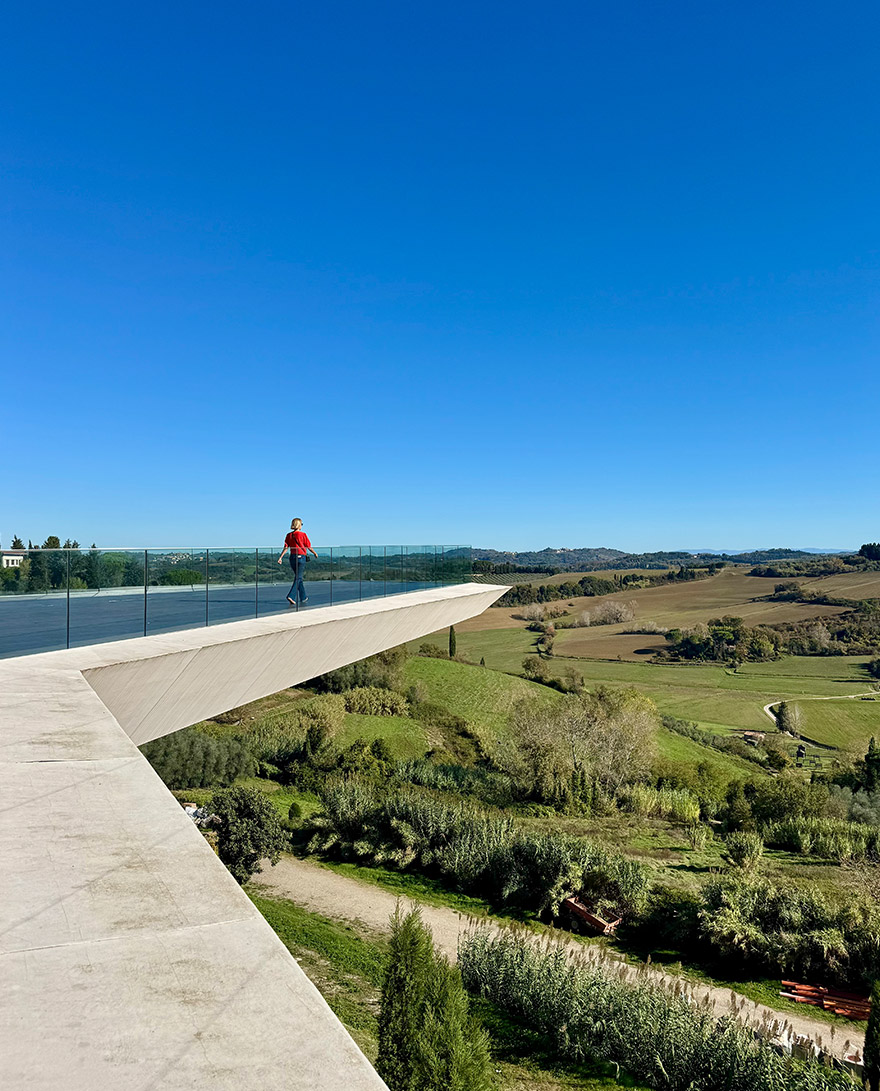
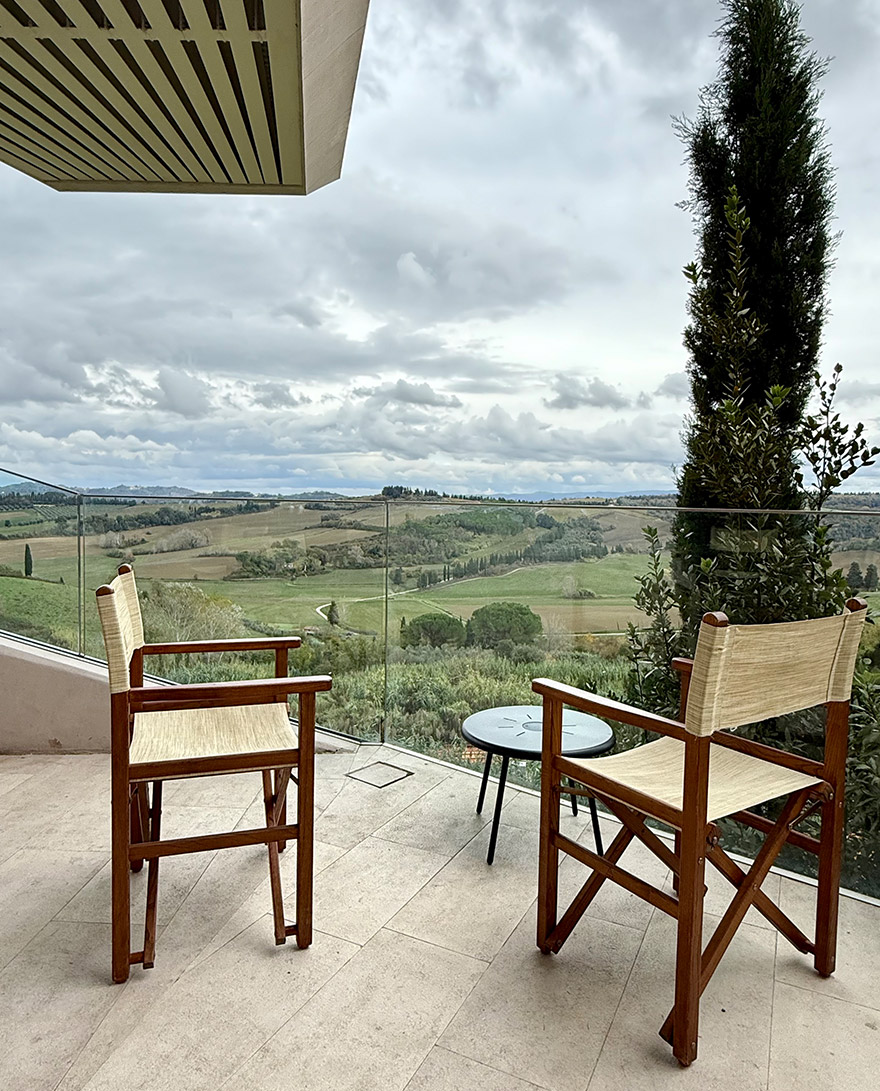
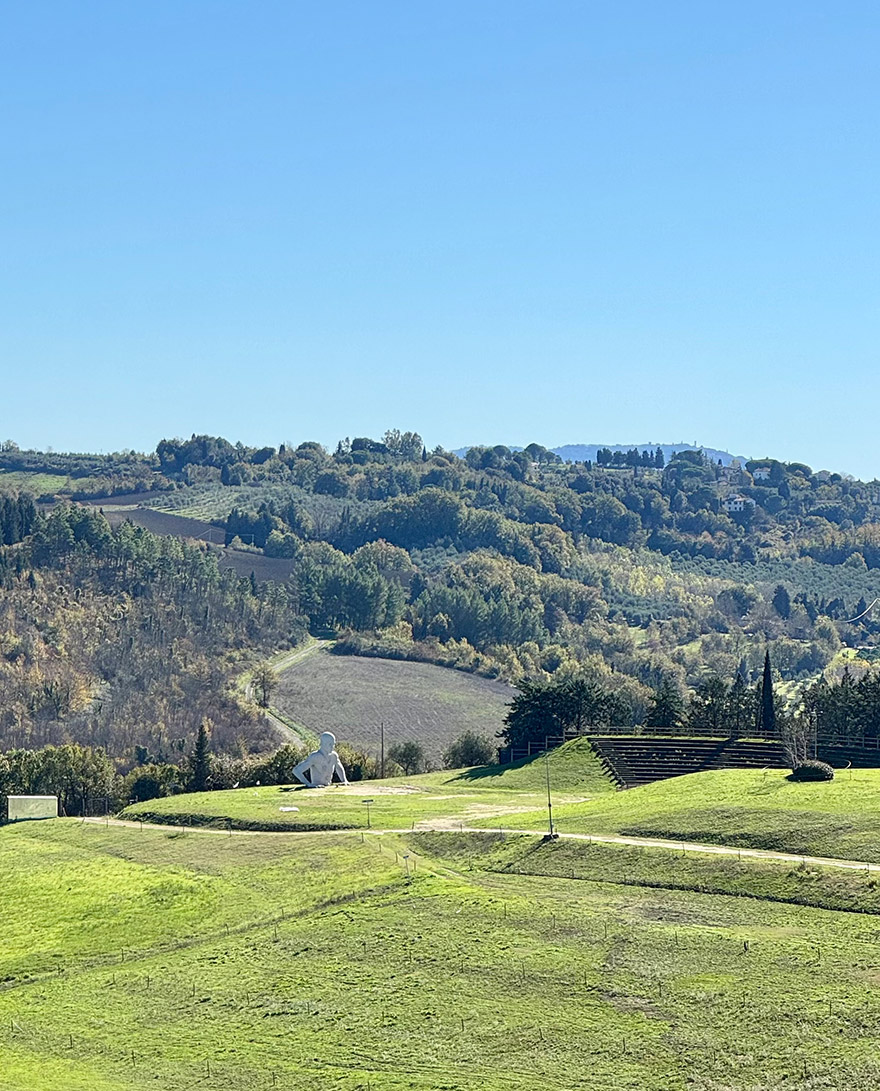
The Terrazza Panoramica di Peccioli is a modern viewing platform that looks like it’s hovering above the countryside. The suspended terrace with wide-open views over the patchwork fields and hills. Nearby, you can see the Giganti di Peccioli—huge human sculptures that look like they’re climbing up from the earth, half-emerging from the landscape. There’s also a café with a little terrace.
Café
BAR LA TERAZZA
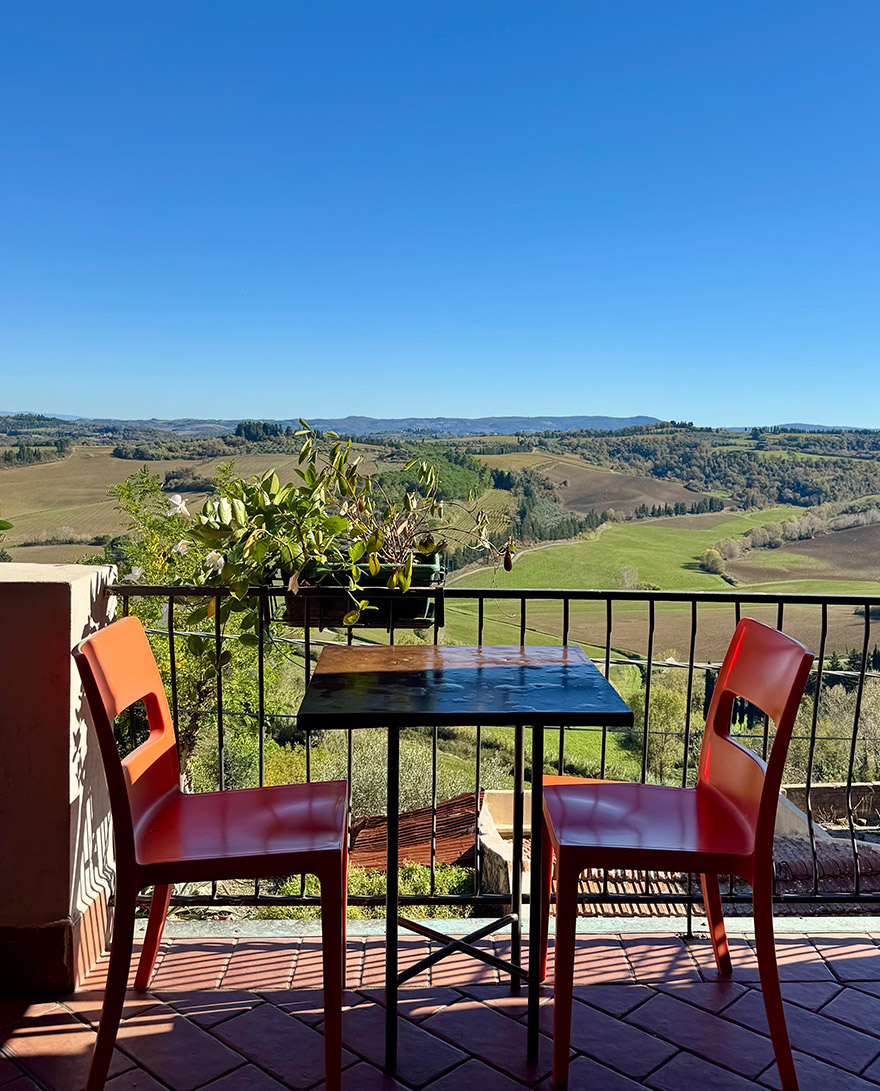
Bar La Terrazza was a good spot for a coffee. It’s a simple, friendly place with a terrace with views that make you stay for longer than planned!
Stay
PODERE LE SENSAIE
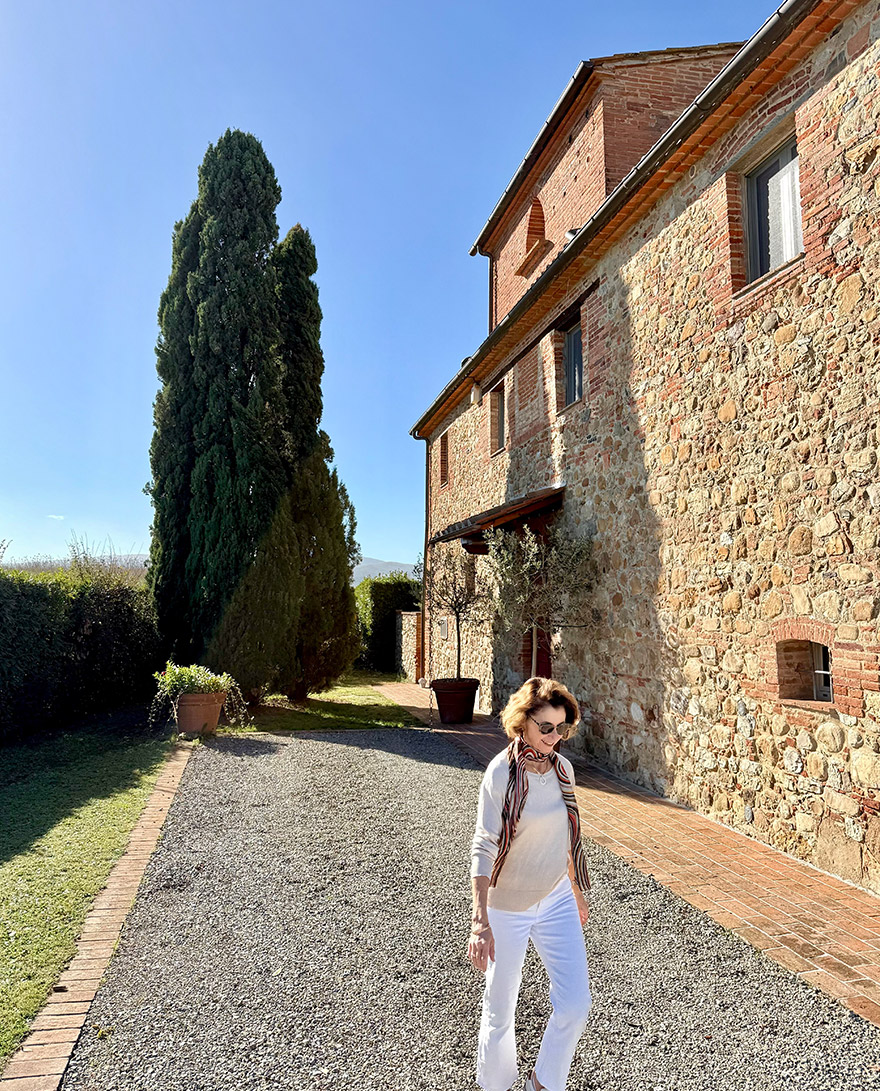
We stayed at Podere Le Sensaie, part of The Hideaways Club. The restored stone farmhouse is set up on a hill with panoramic views over the classic Tuscan rolling hills.
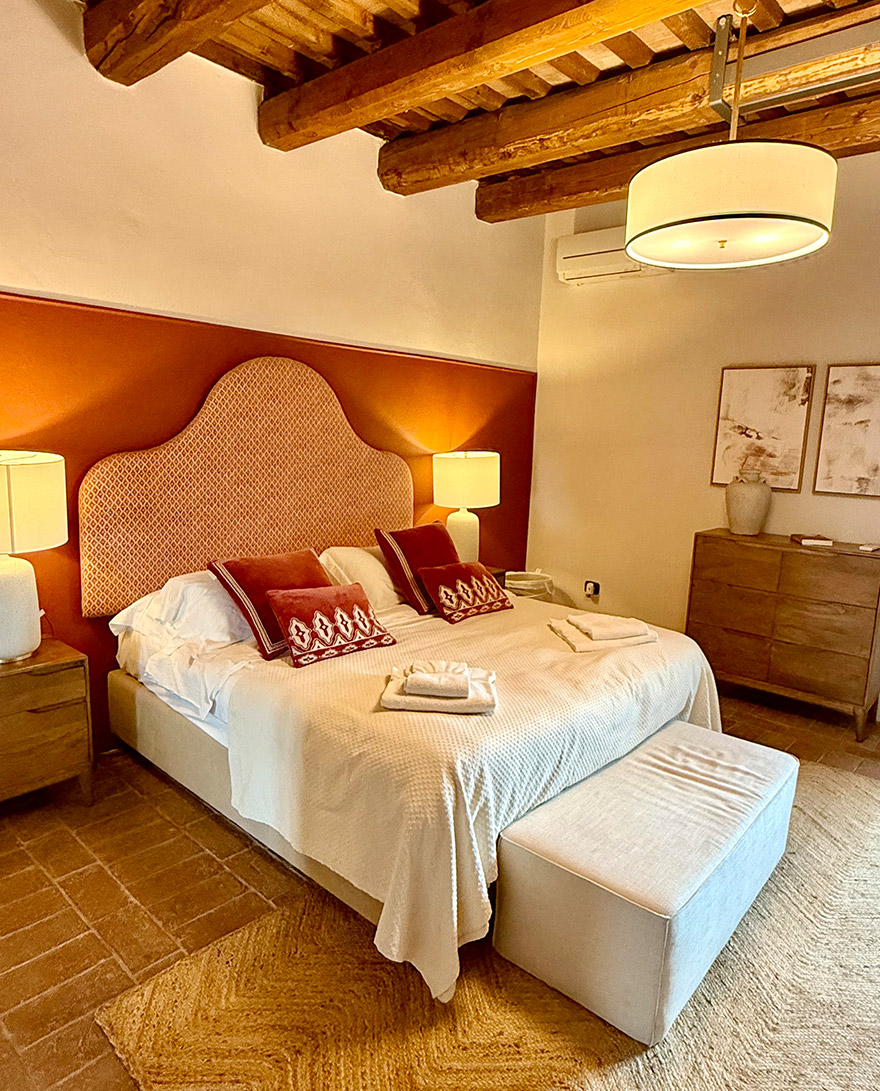
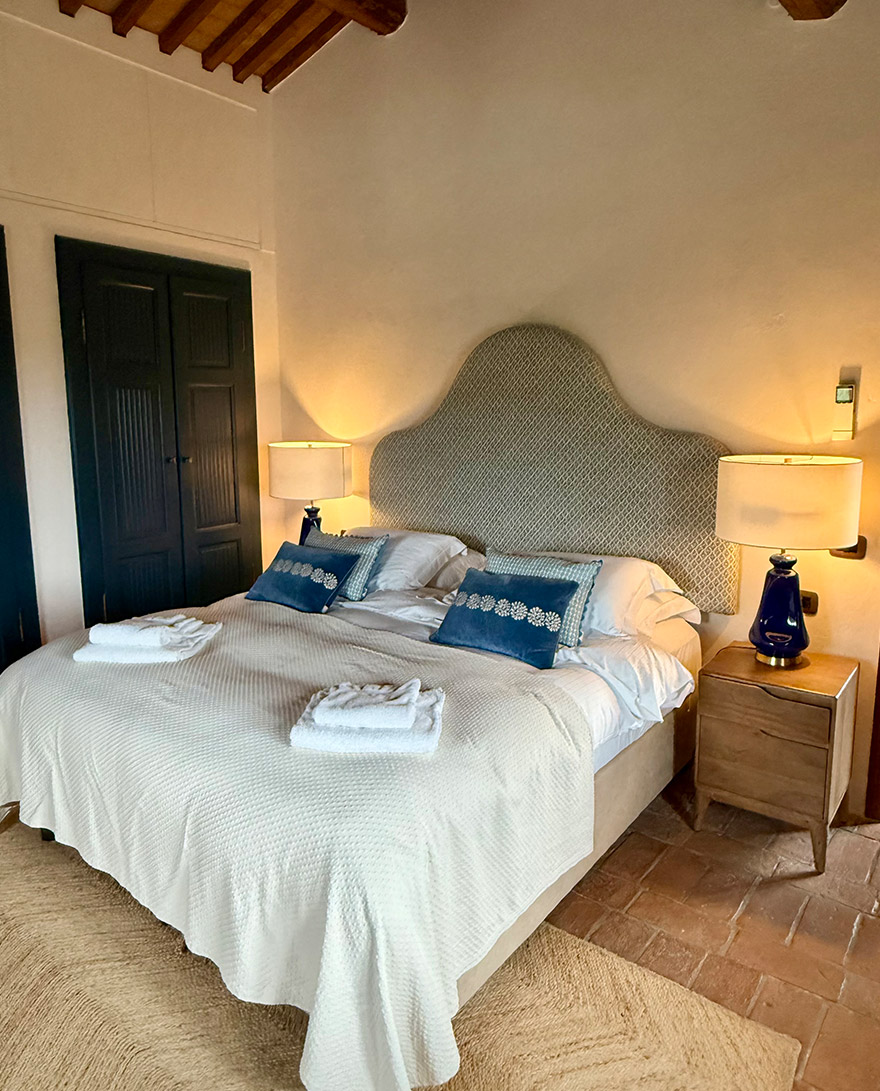
The interiors have warm, calm, earthy tones, with thick walls and terracotta tiles. The lounge had a lovely log fire and comfortable sofas, the perfect setting to chill out with a book and a glass of wine.
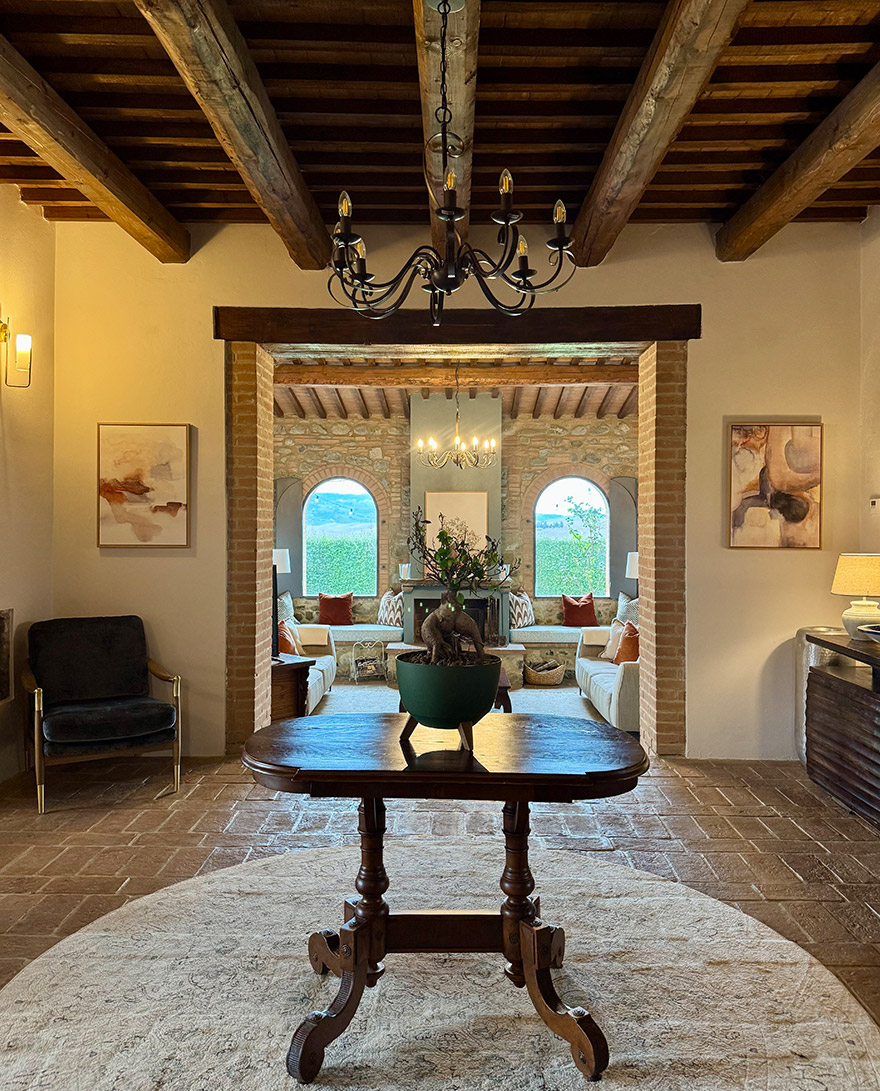
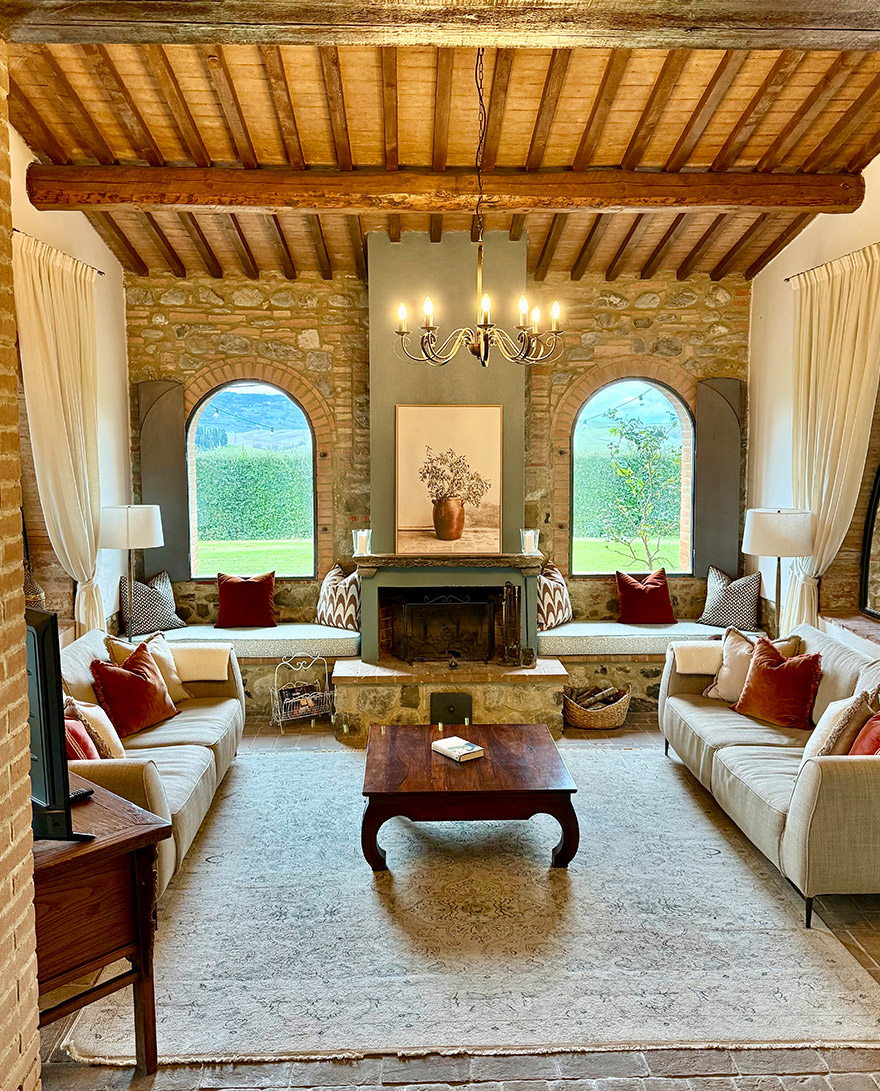
The villa has recently been tastefully redecorated, keeping the Tuscan “bones” but adding contemporary fabrics, colours and artwork.
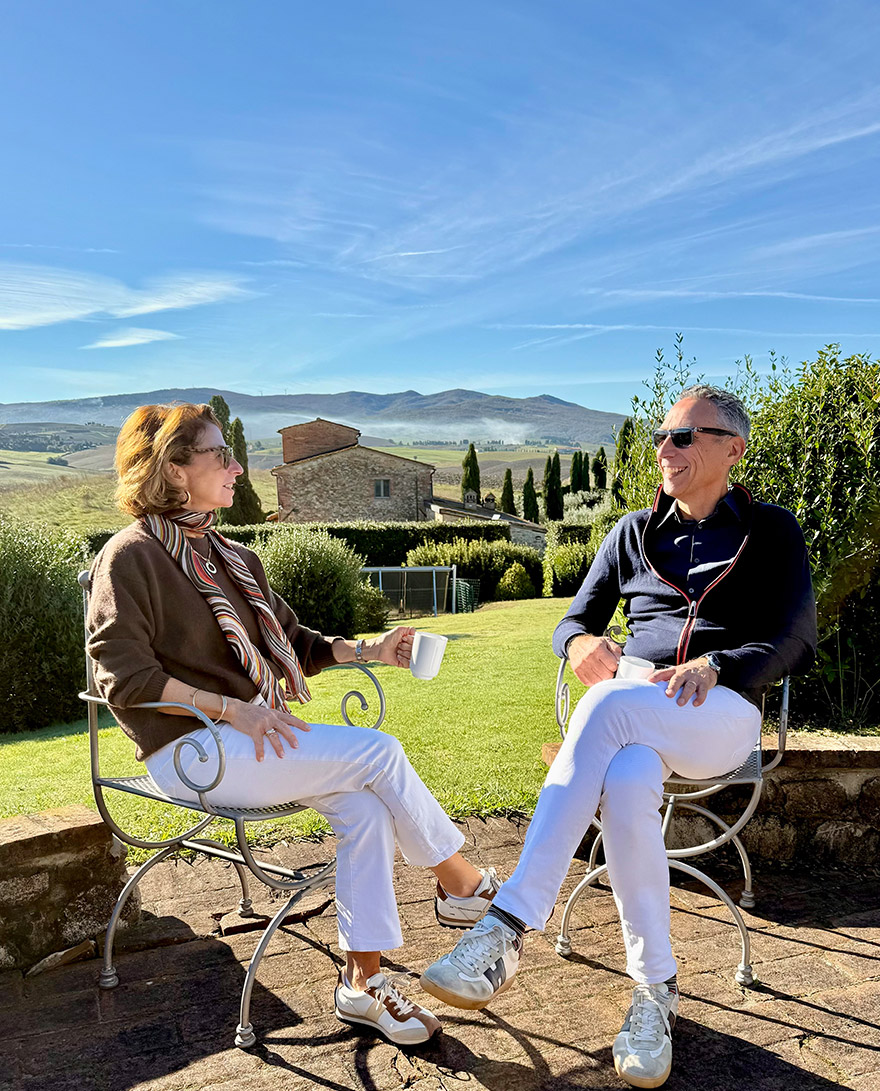
Outside, the gardens are spacious, with our favourite spot up at the gazebo on the hill—perfect for an early morning coffee or/and early evening aperitif!
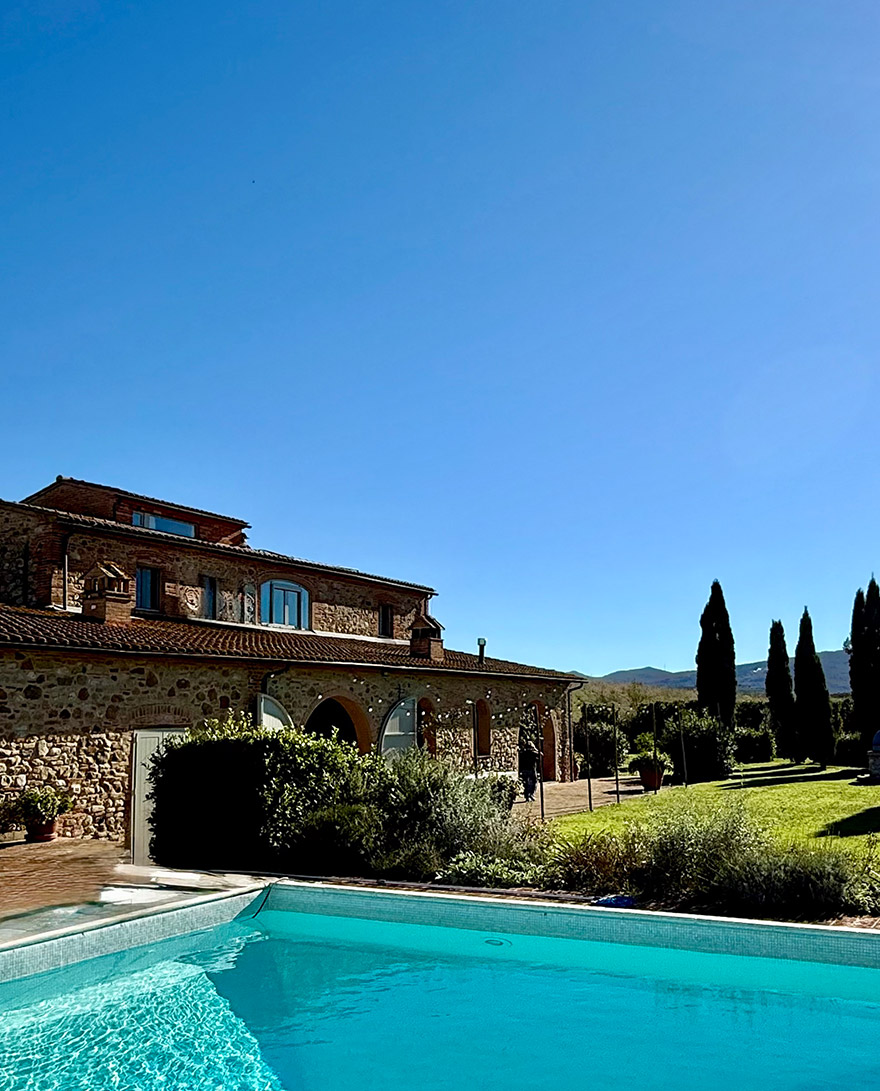
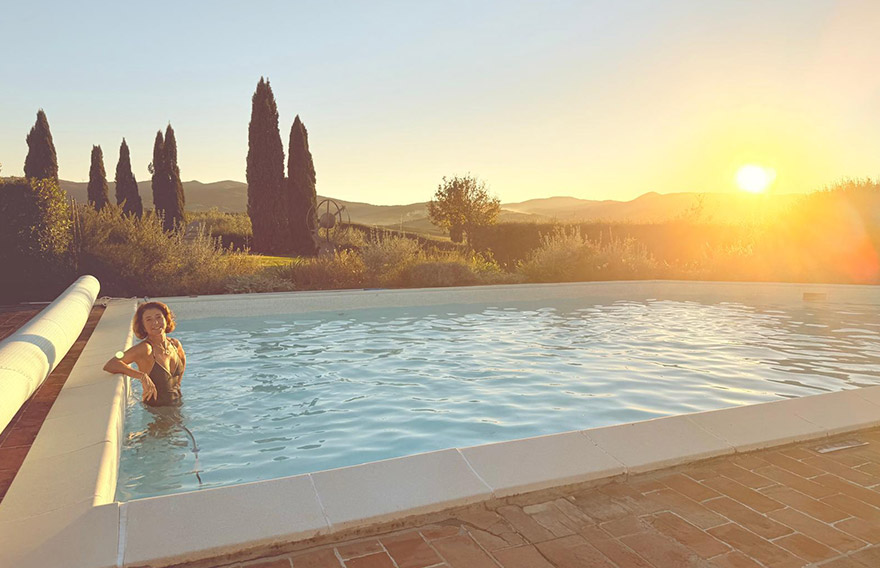
There is a large heated pool that was warm enough to use even in Autumn! The views from the sunbeds by the pool are spectacular.
Dine
ORO
Oro is a surprisingly upscale restaurant to find in a small Tuscan village. The cooking is a gastronomic take on Tuscan classics—simple, local and full of flavour, but with extra finesse in the details. Expect proper homemade pasta, slow-cooked ragù and seasonal vegetables. Closed on Mondays.
LA RIPADORO AGRI RISTORANTE (Rivalto)
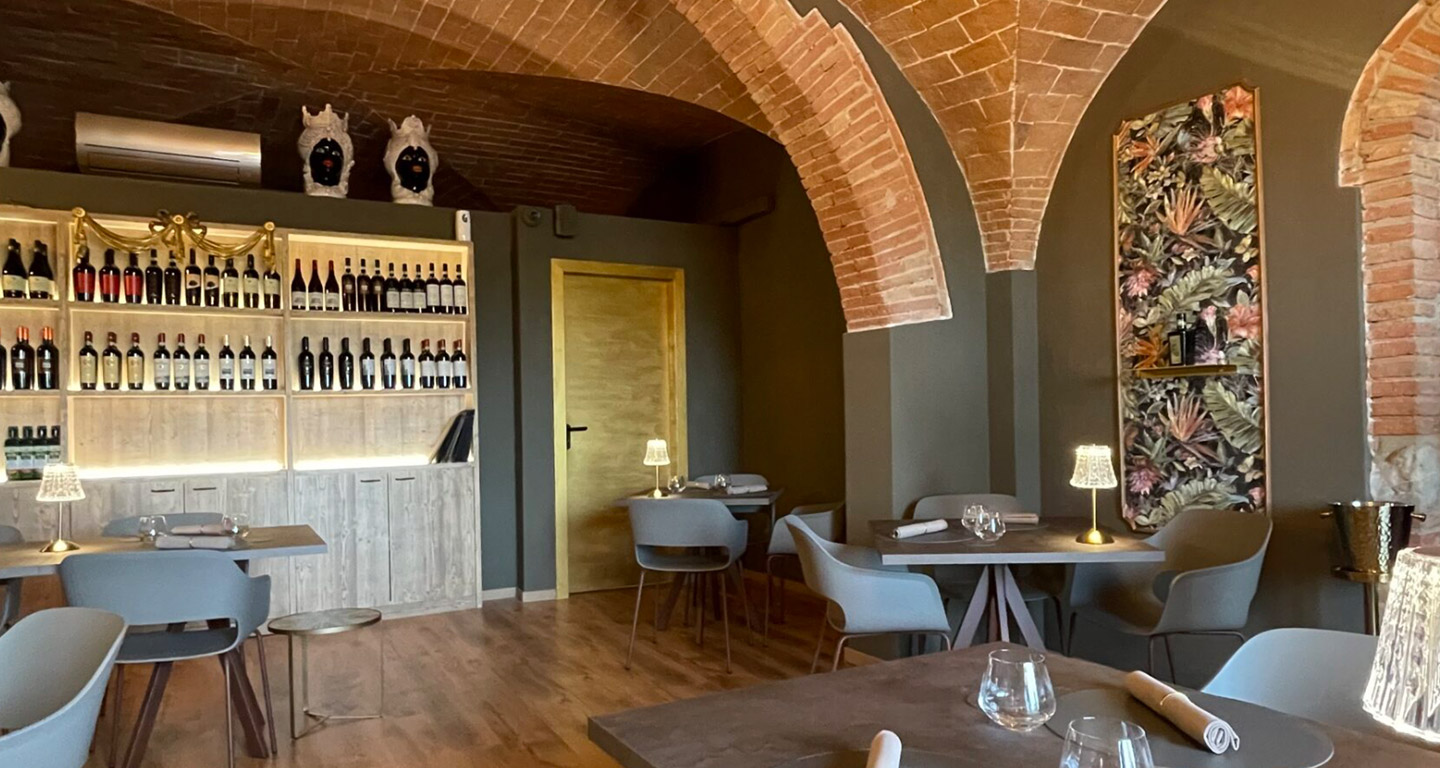
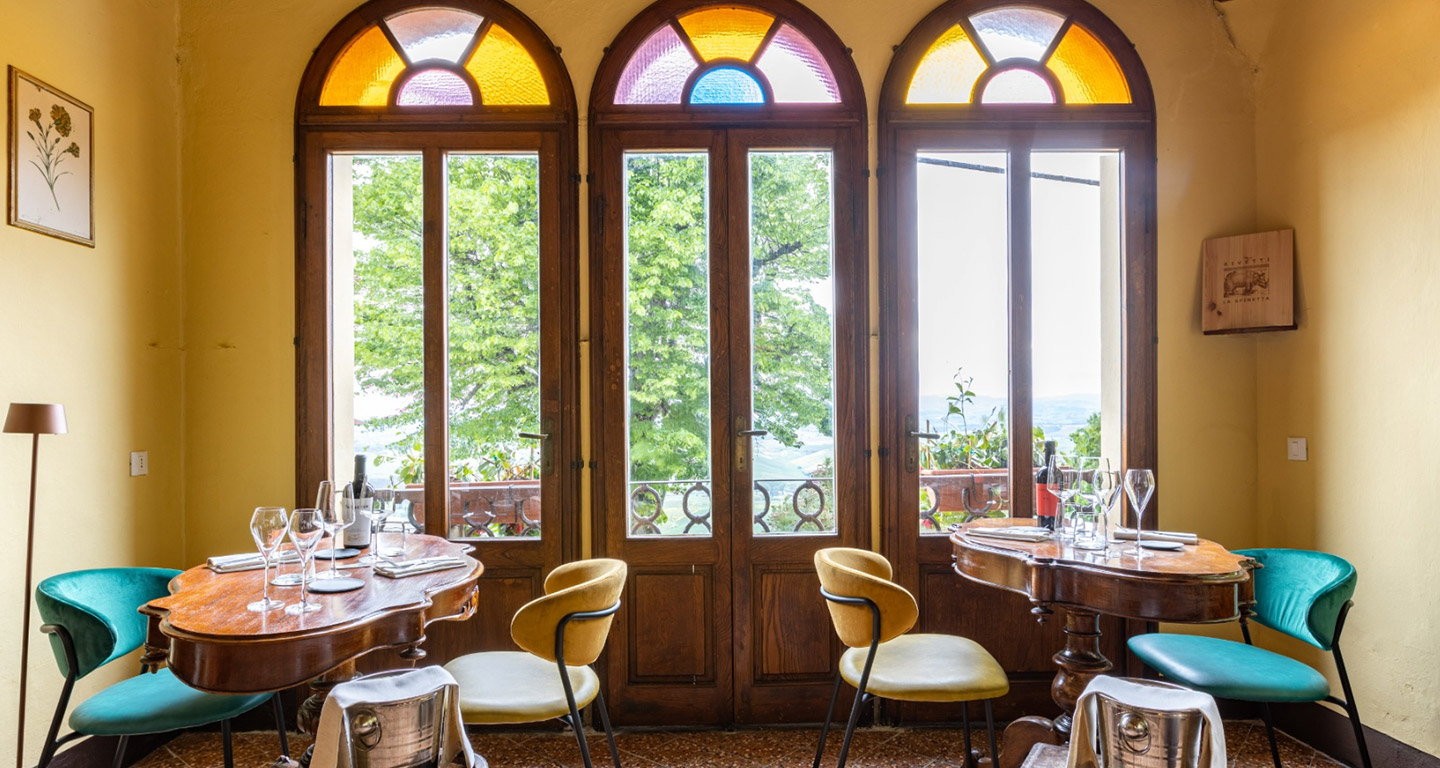
La Ripadoro Agri was our favourite dinner of the stay and the place we’d definitely go back to. It’s set in an agriturismo, with a shabby-chic interior and a dining room full of locals: always the best sign! The menu is creative but still rooted in Tuscan comfort, using produce from the nearby farms and suppliers, reworked it with a bit of imagination. They run pizza evenings with great dough and an impressive range of creative toppings. Check to see which nights this is on. Open Wednesday to Sunday for dinner, and Friday to Sunday for lunch as well.
Lucca
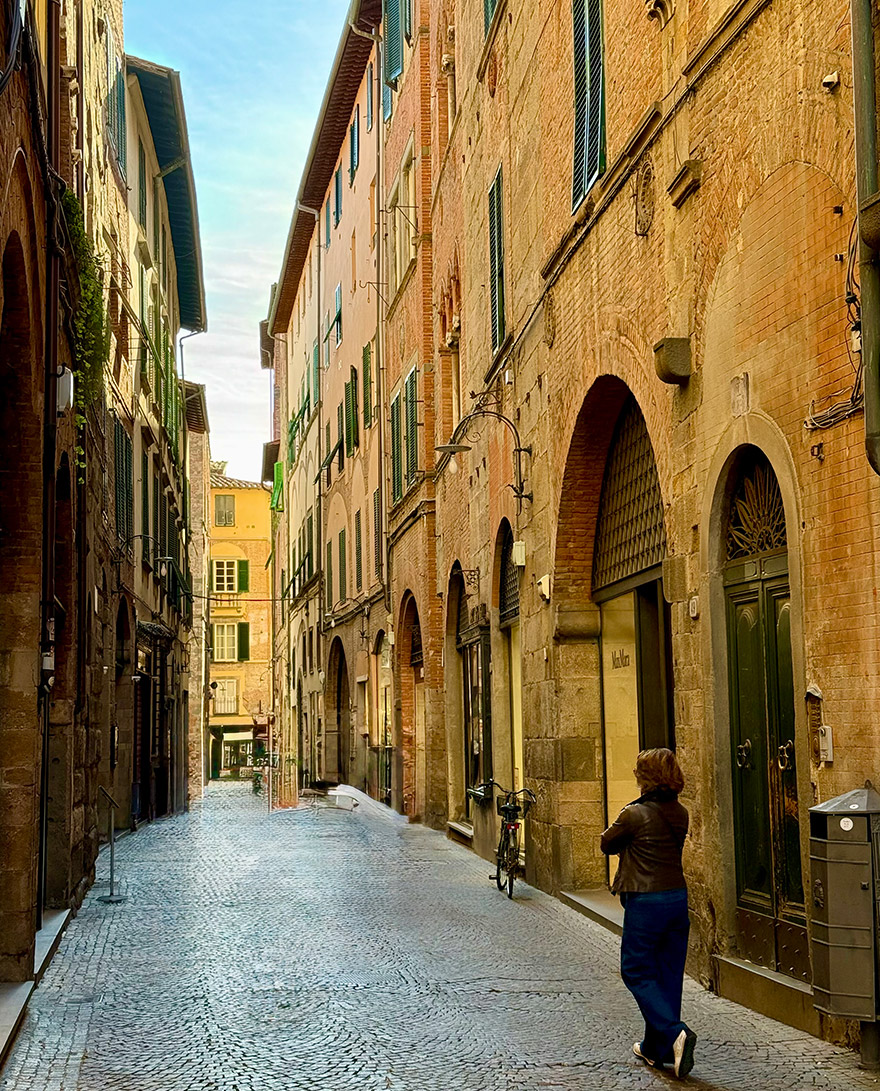
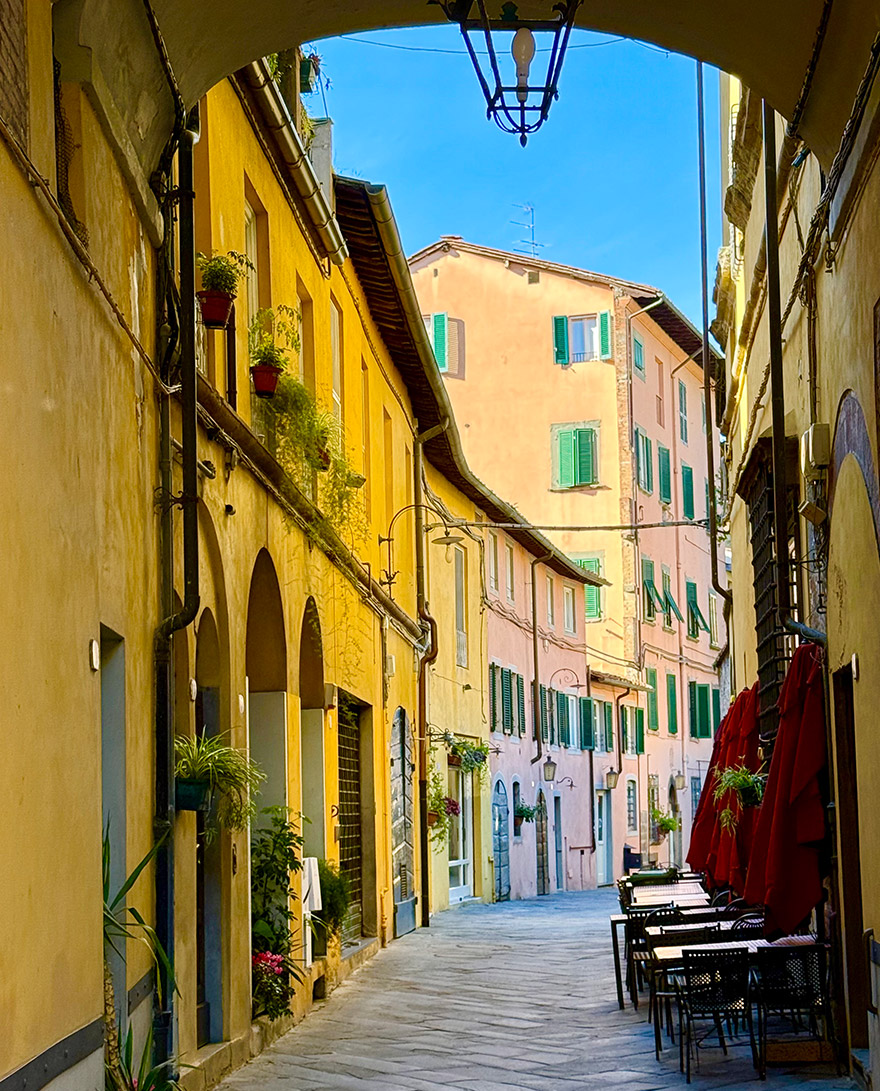
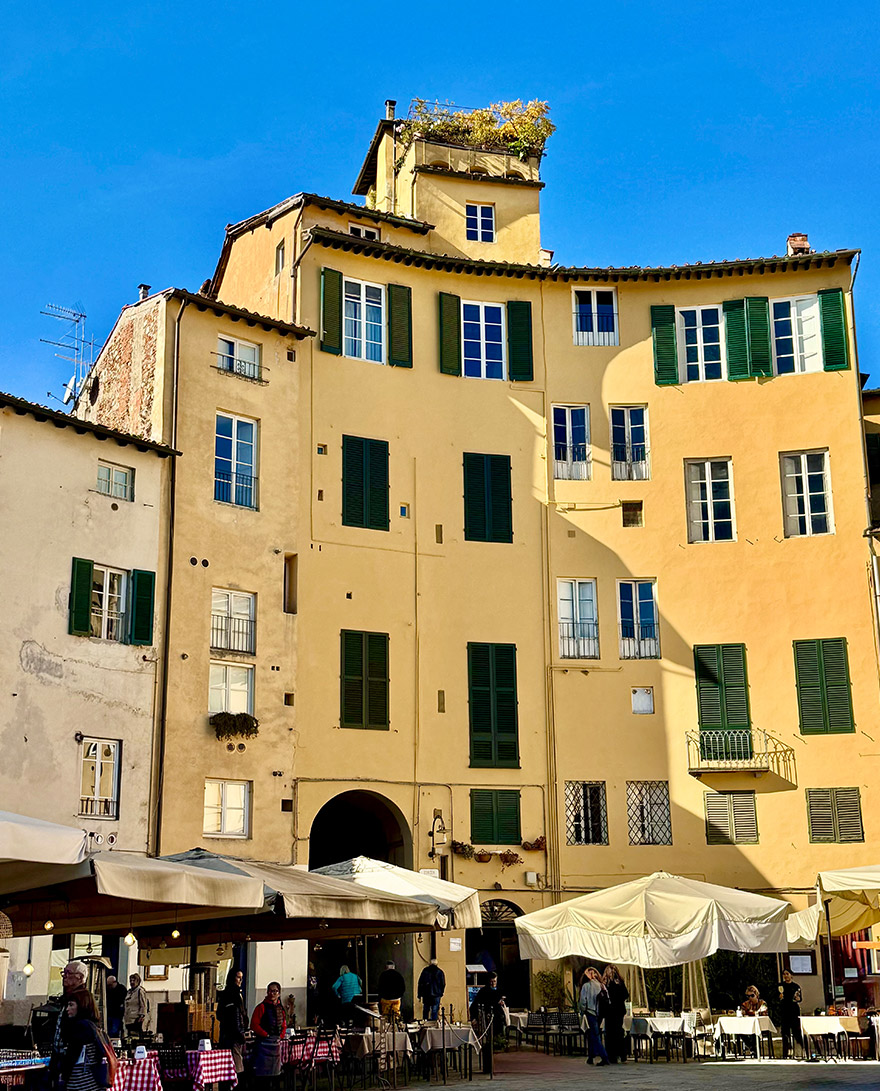
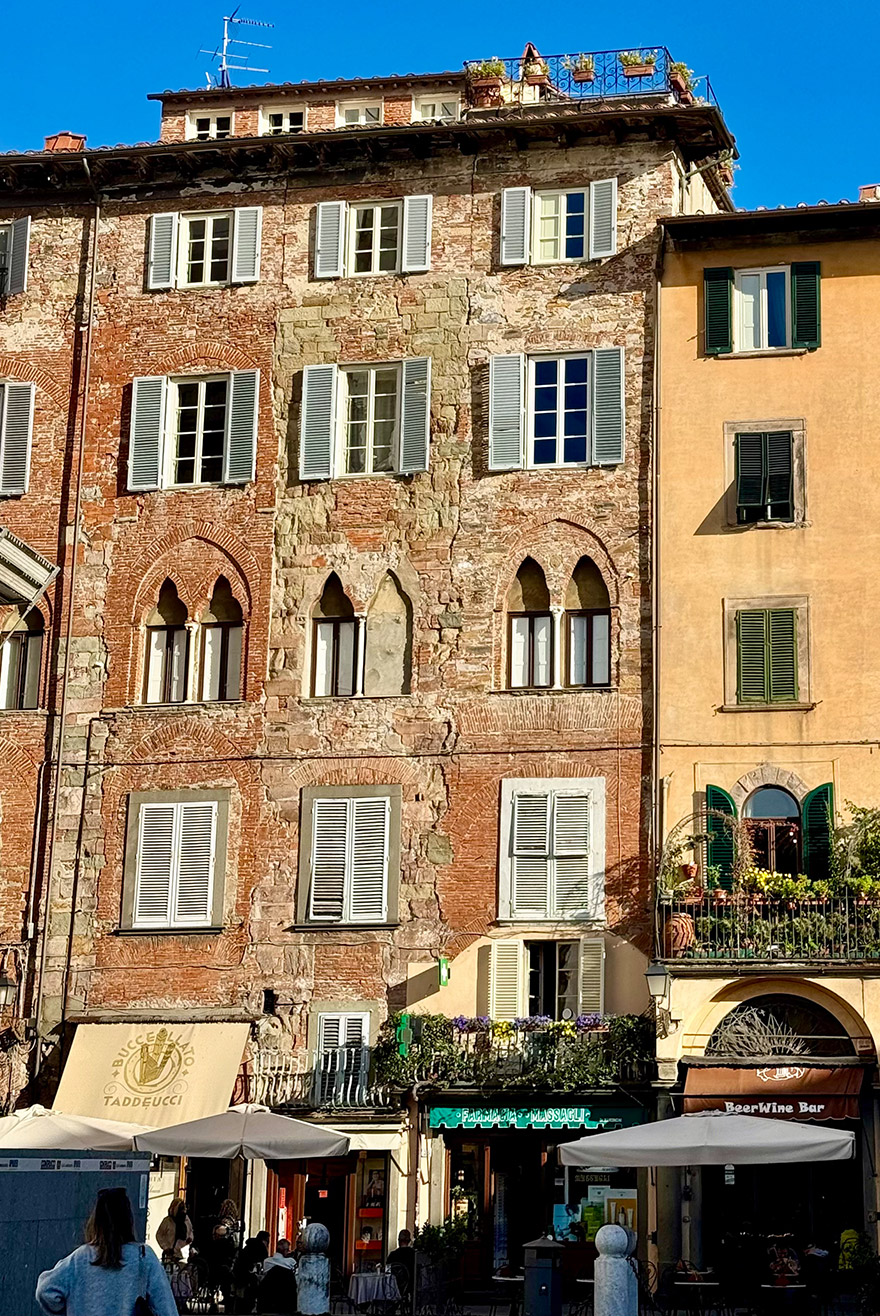
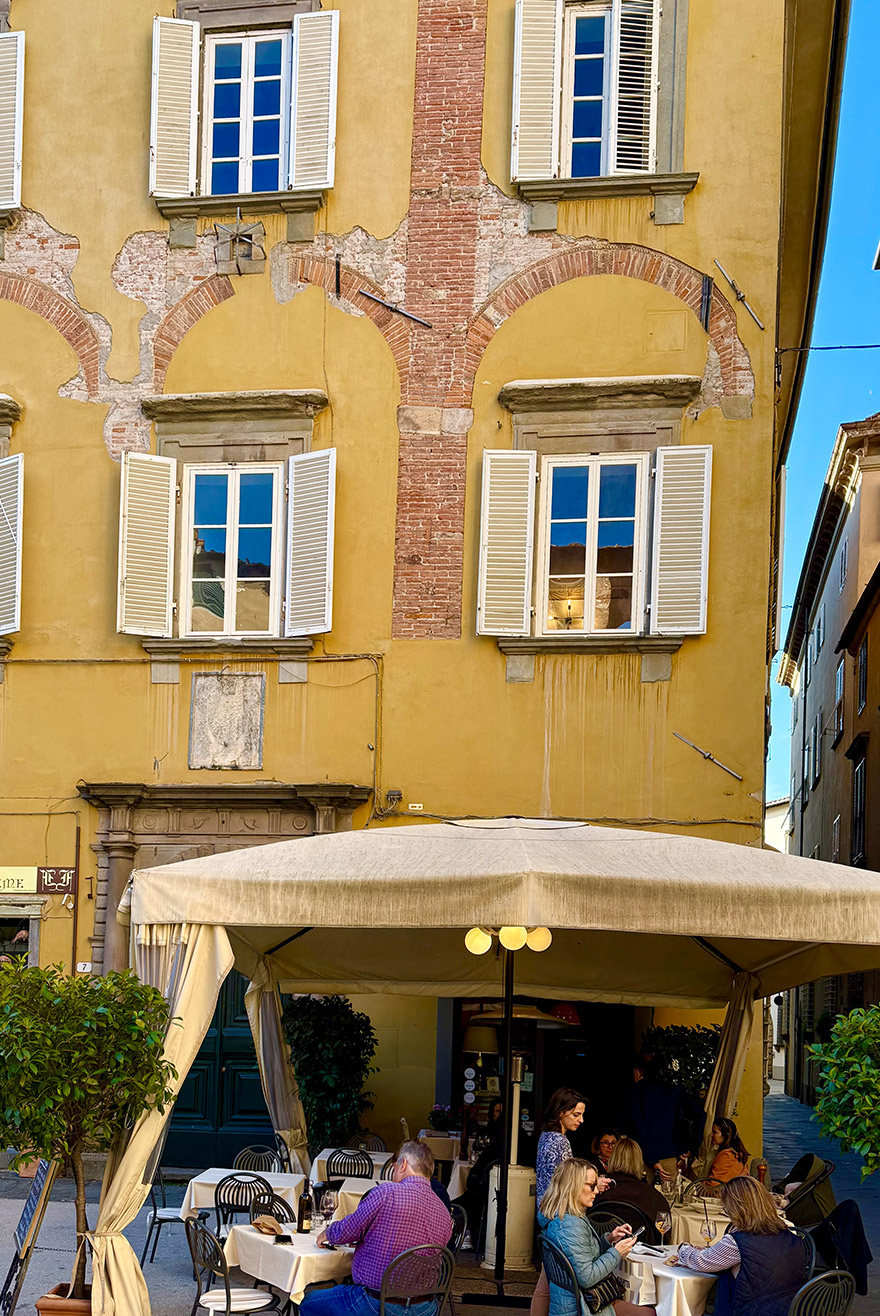
Lucca is one of those Tuscan towns that’s made for wandering, with handsome piazzas and ochre-coloured streets with small shops and cafés tucked behind historic façades.
Do
Climbing the Guinigi Tower gives you panoramic views across the rooftops of Lucca. Its little rooftop “garden” of trees is a fun, slightly surreal sight when you reach the top.
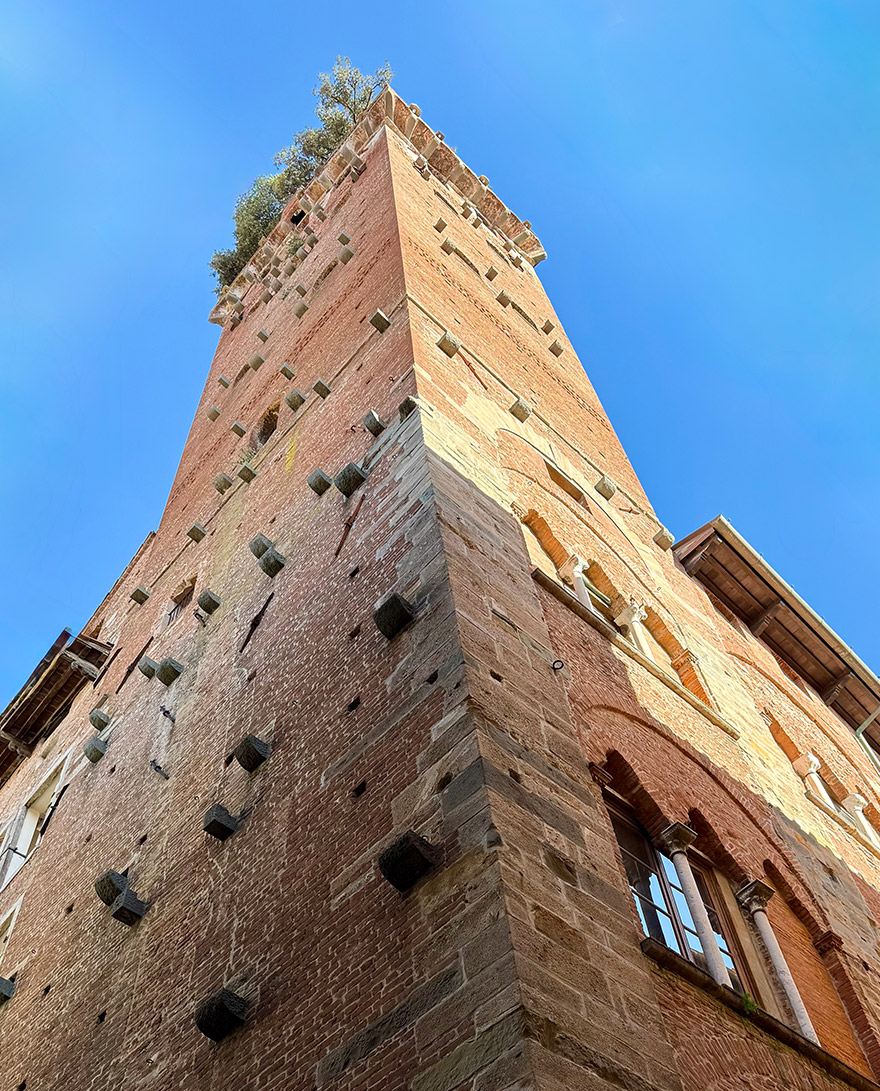
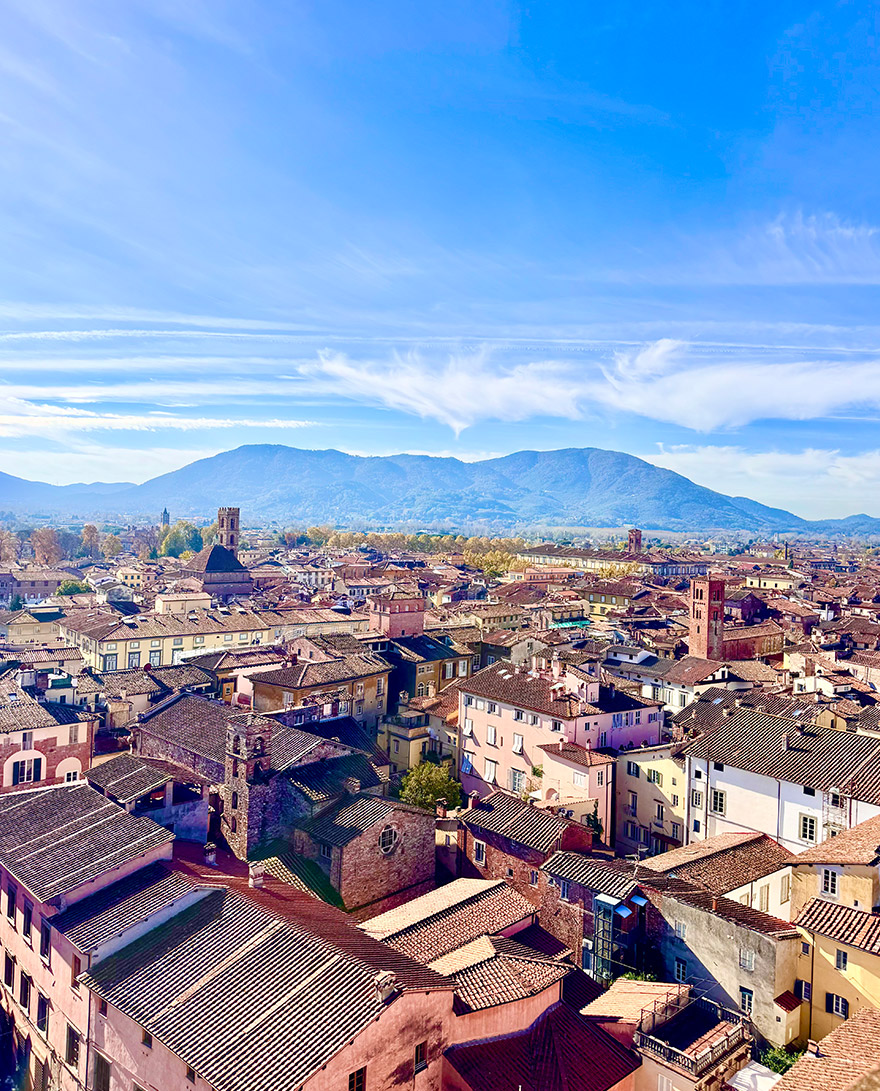
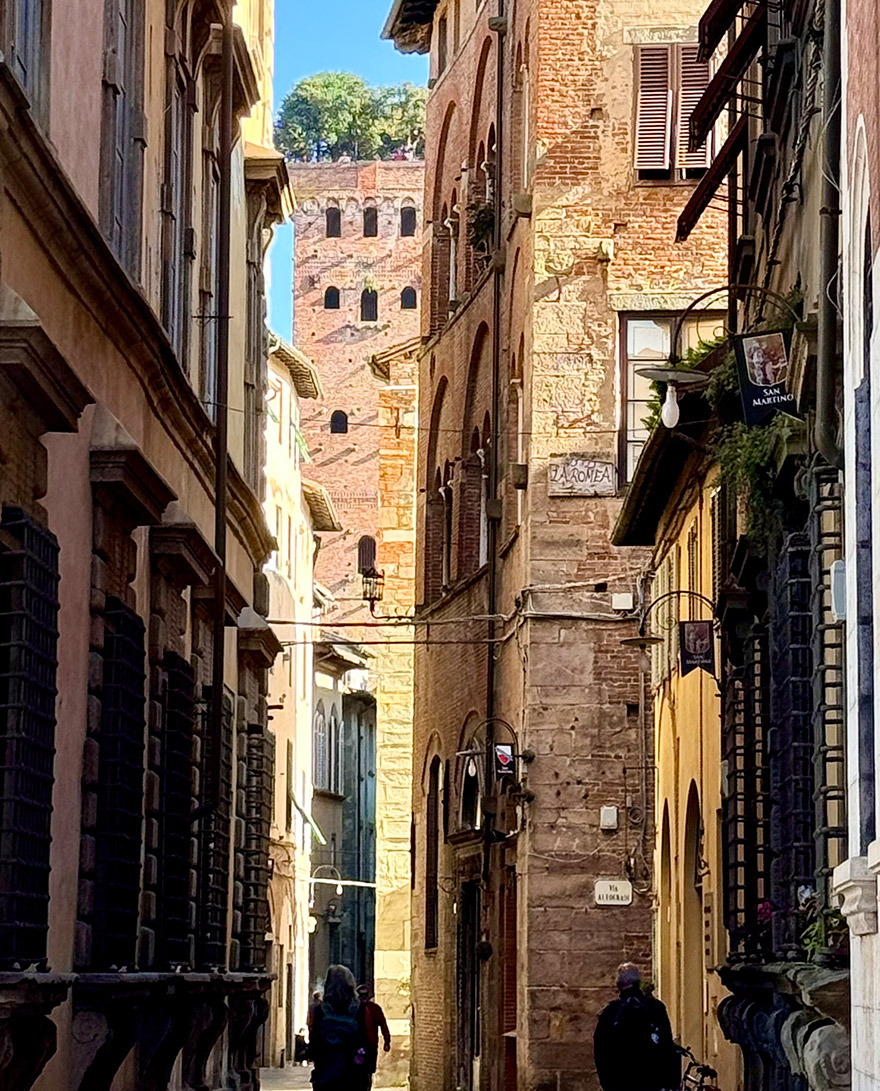
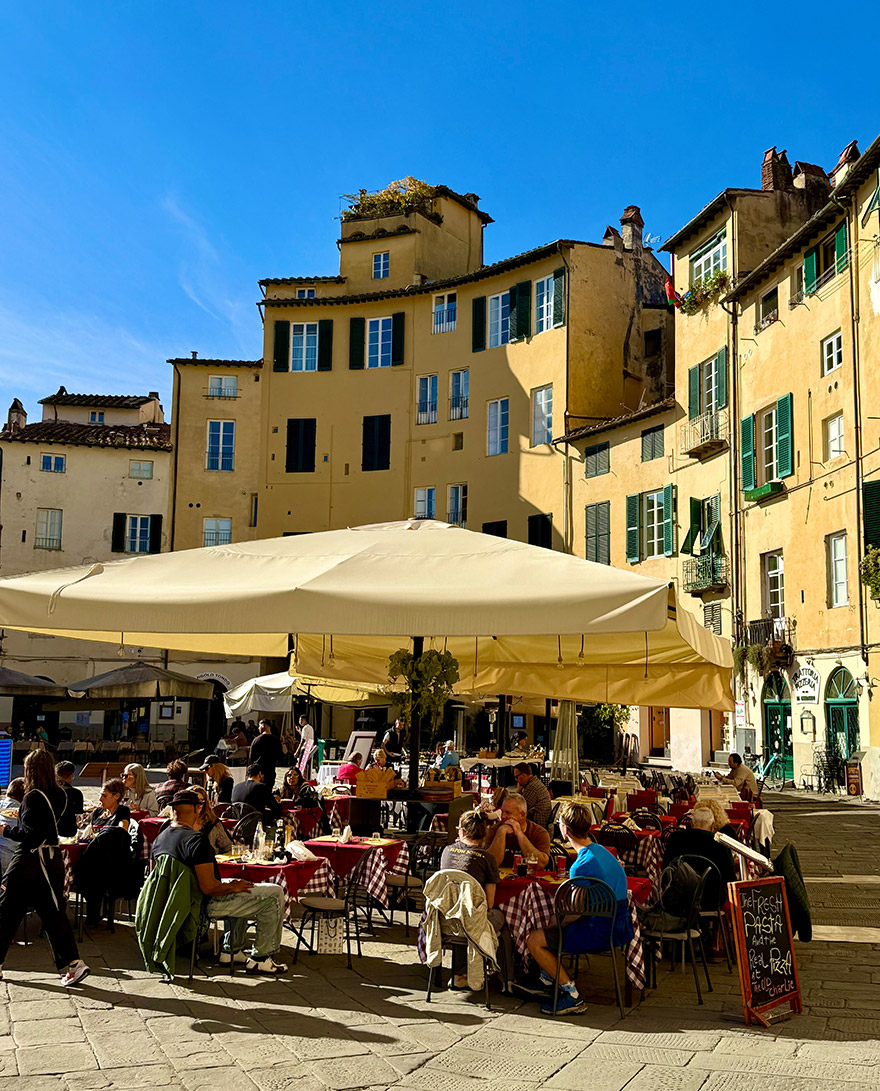
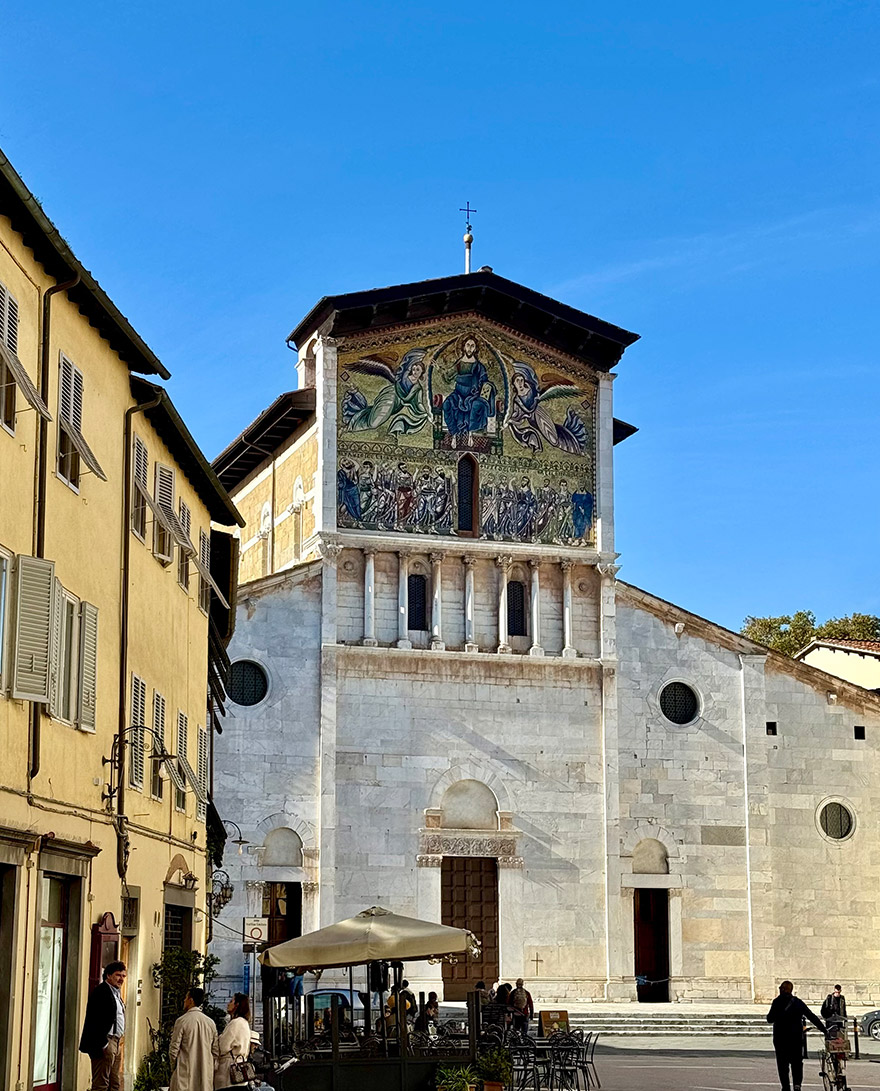
The Piazza dell’Anfiteatro is a good stop for a mid-morning coffee. The famous oval-shaped square follows the footprint of an ancient Roman amphitheatre, now ringed with cafés and colourful buildings. Nearby is the beautiful Basilica di San Frediano (below right).
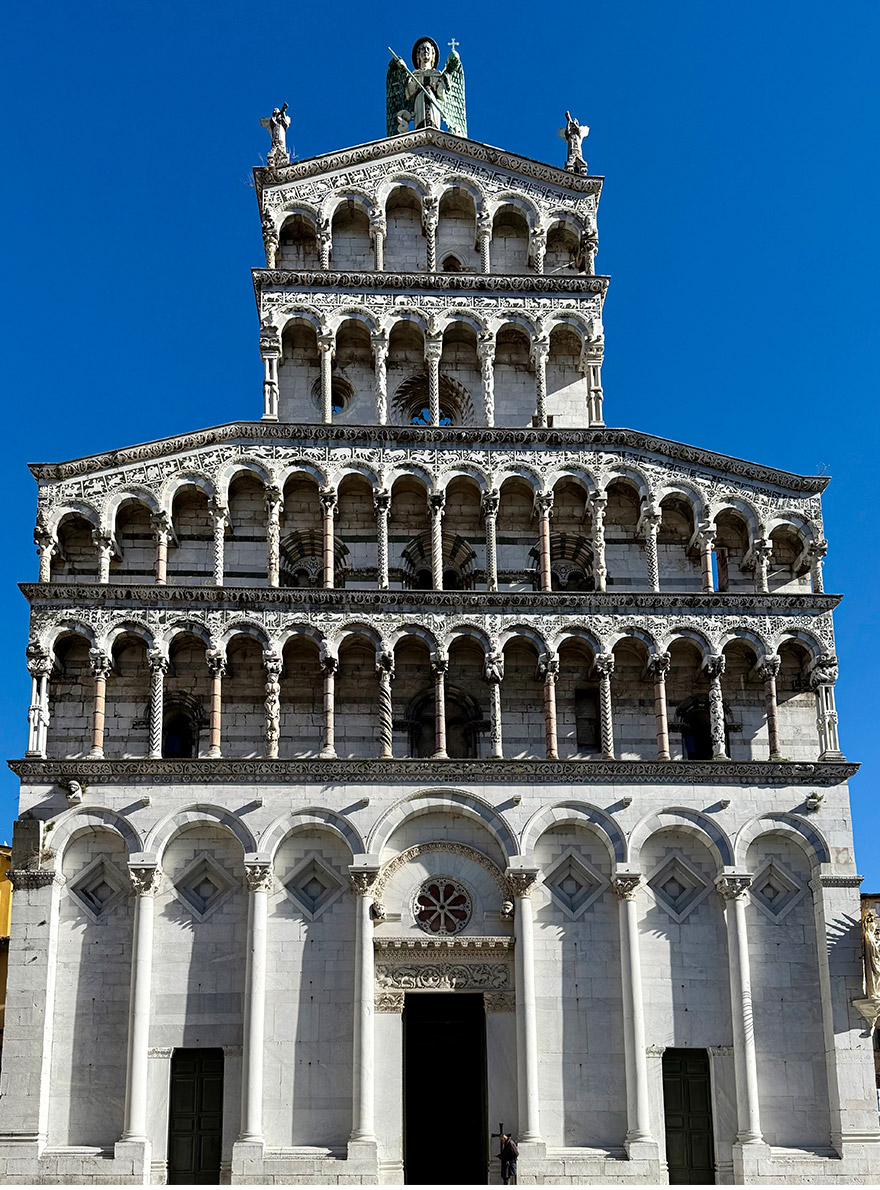
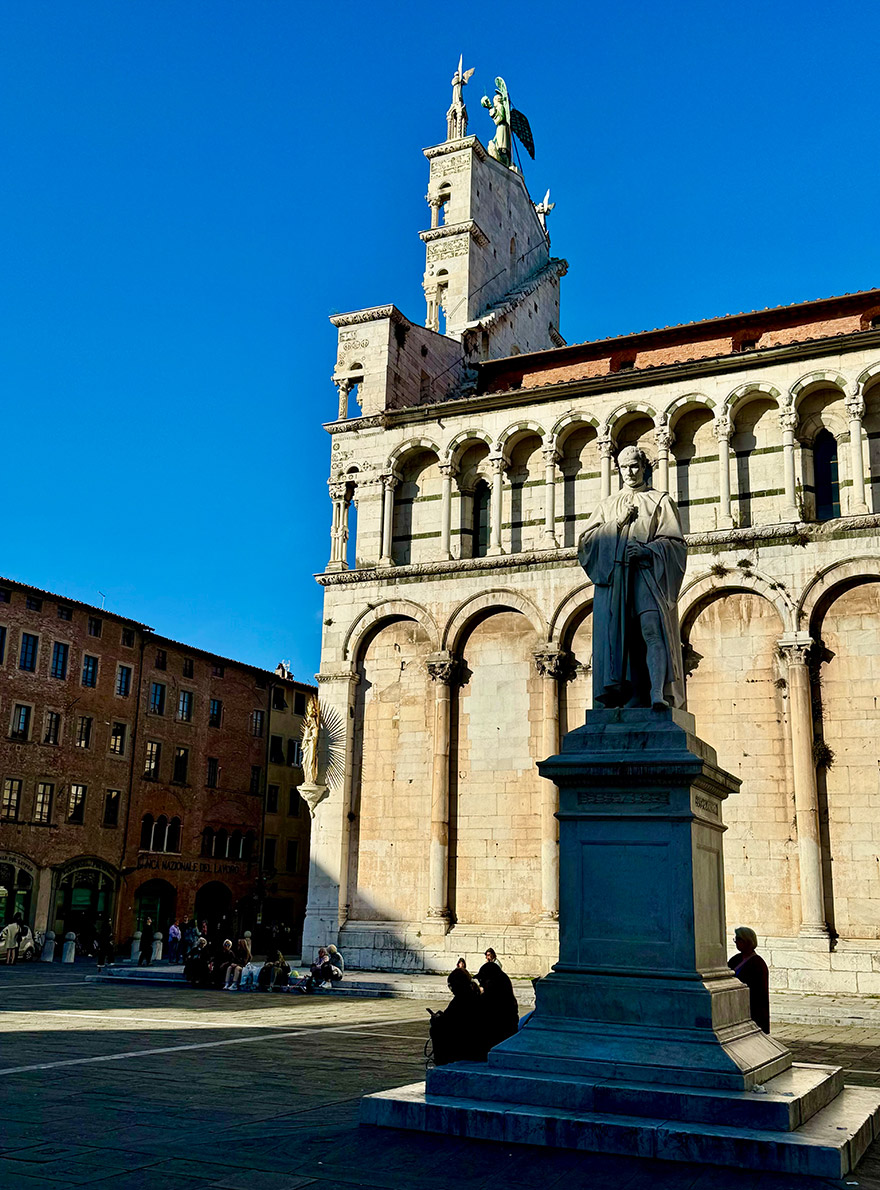
From there, head to Piazza San Michele to admire the ornate façade of Chiesa di San Michele in Foro.
Dine
OSTERIA TOSCANA
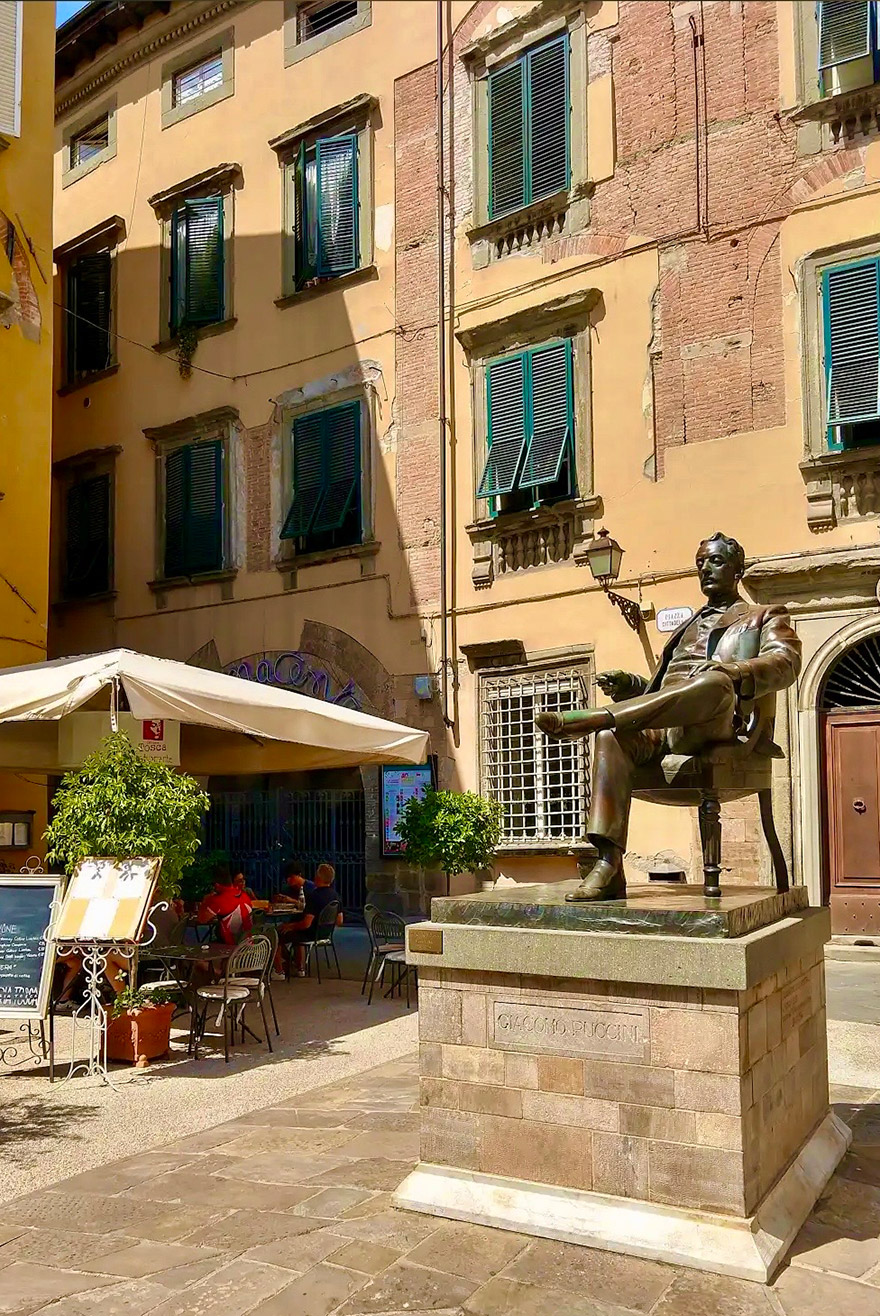
For lunch, we liked Osteria Toscana on Piazza Cittadella, right beside Puccini’s statue. It’s an easy, central spot for a comforting Tuscan lunch with a lively terrace.
Voltera
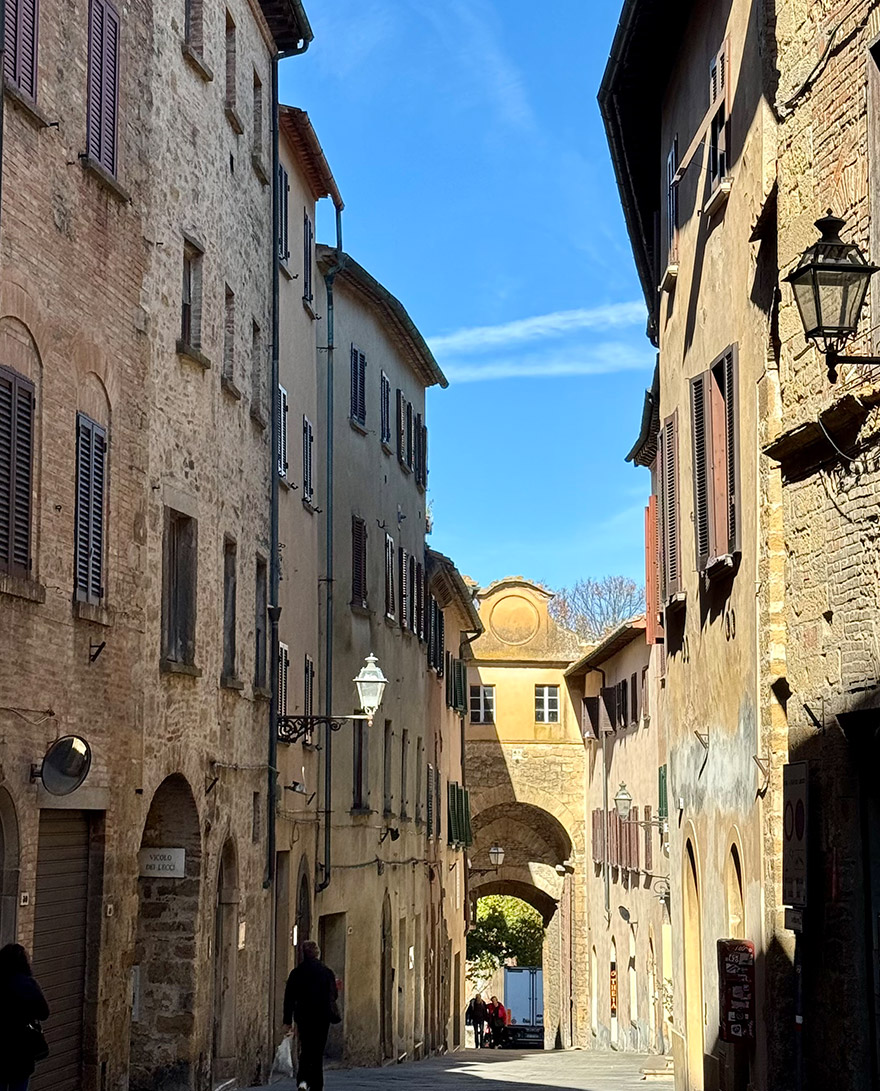
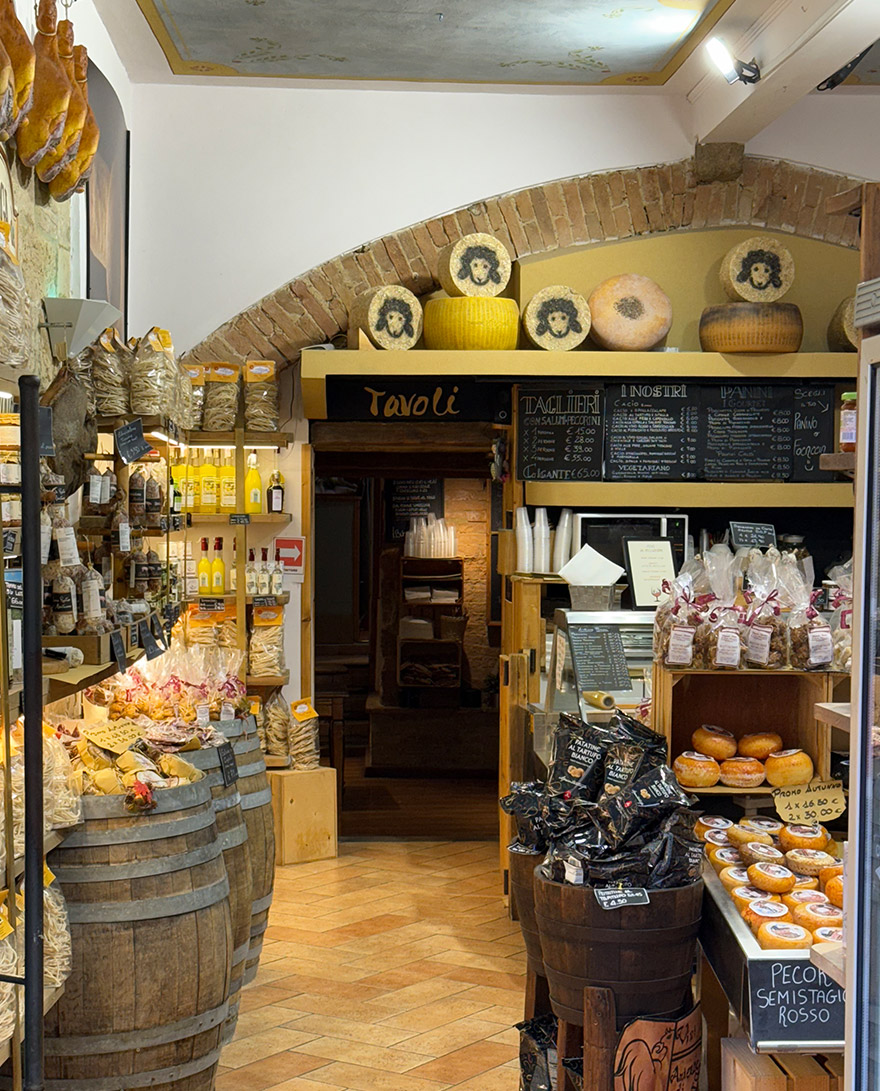
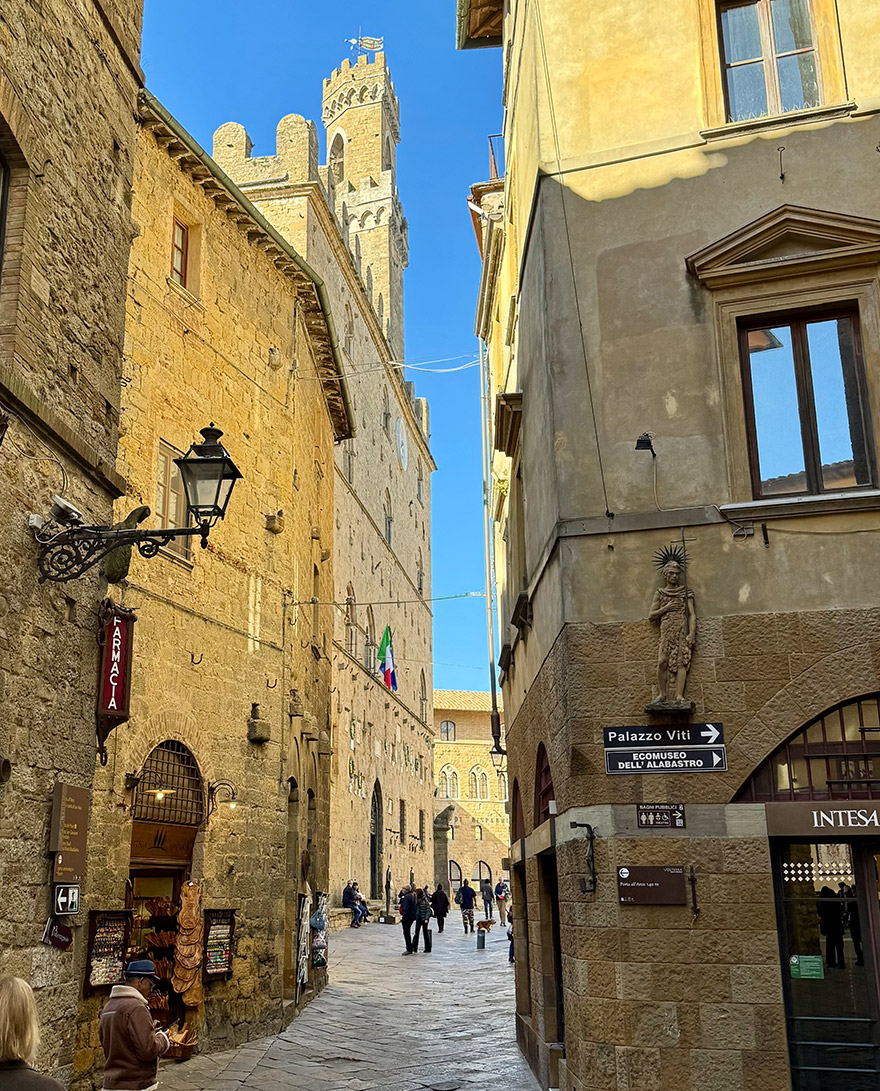
Volterra feels dramatic and “medieval” from the moment you arrive, perched up high with big views of the countryside. We spent a couple of hours wandering the pretty streets of the town, including stopping off at Bottega del Pecorino to stock up on cheese! (below right)
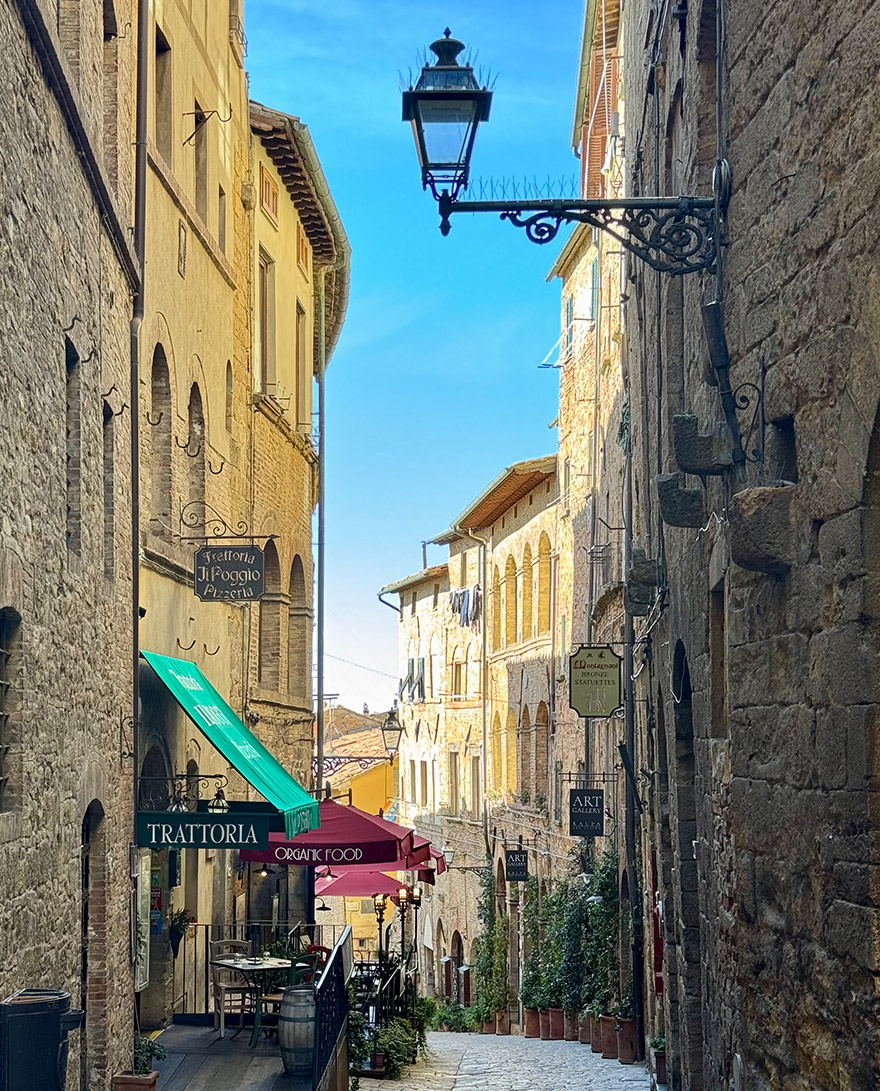
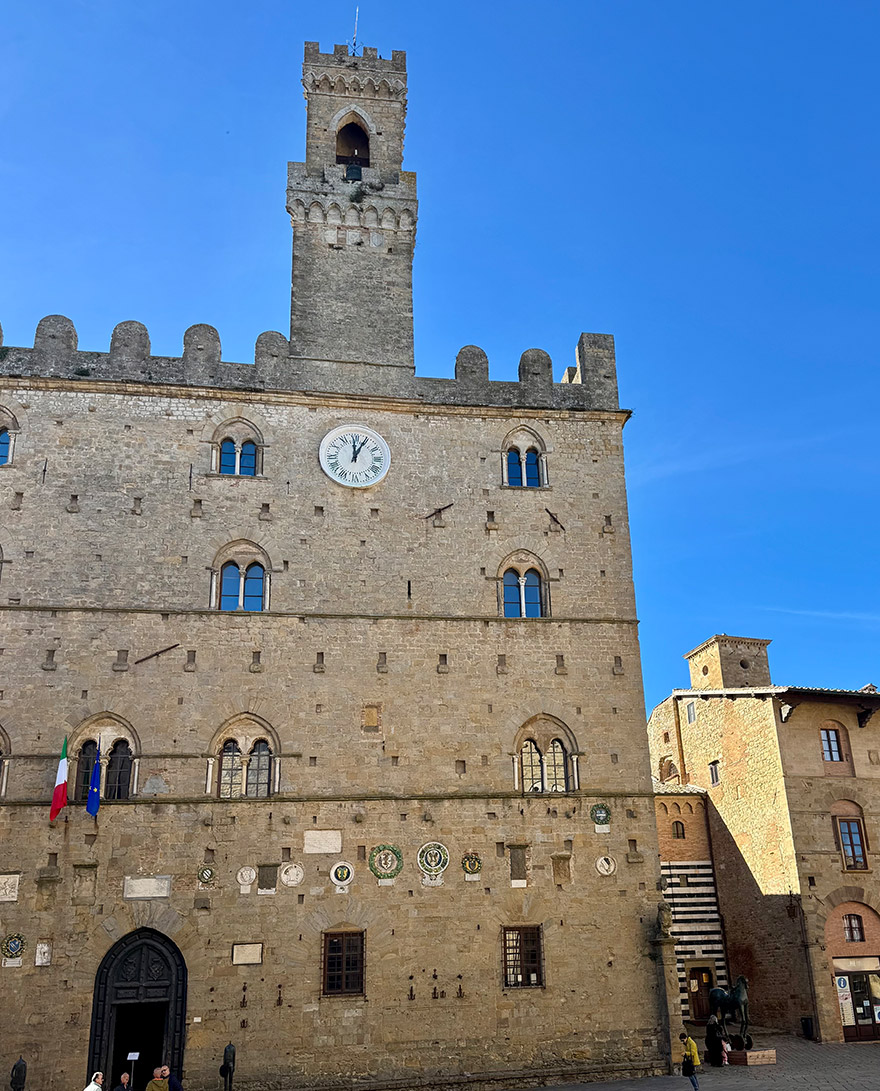
The main sight is Piazza dei Priori, anchored by the Palazzo dei Priori—an imposing 13th-century civic building that still dominates the square and gives the town its serious, historic feel.
Dine
LA VECCHIA LIRA
La Vecchia Lira was a good spot for lunch, a family-run spot right on the town’s most central street. The vibe is classic Tuscan osteria: warm, welcoming and lively without feeling too touristy. The menu focuses on local cooking done well, like the hearty, warming vegetable soup we enjoyed.
ENOTECA DEL DUCCA
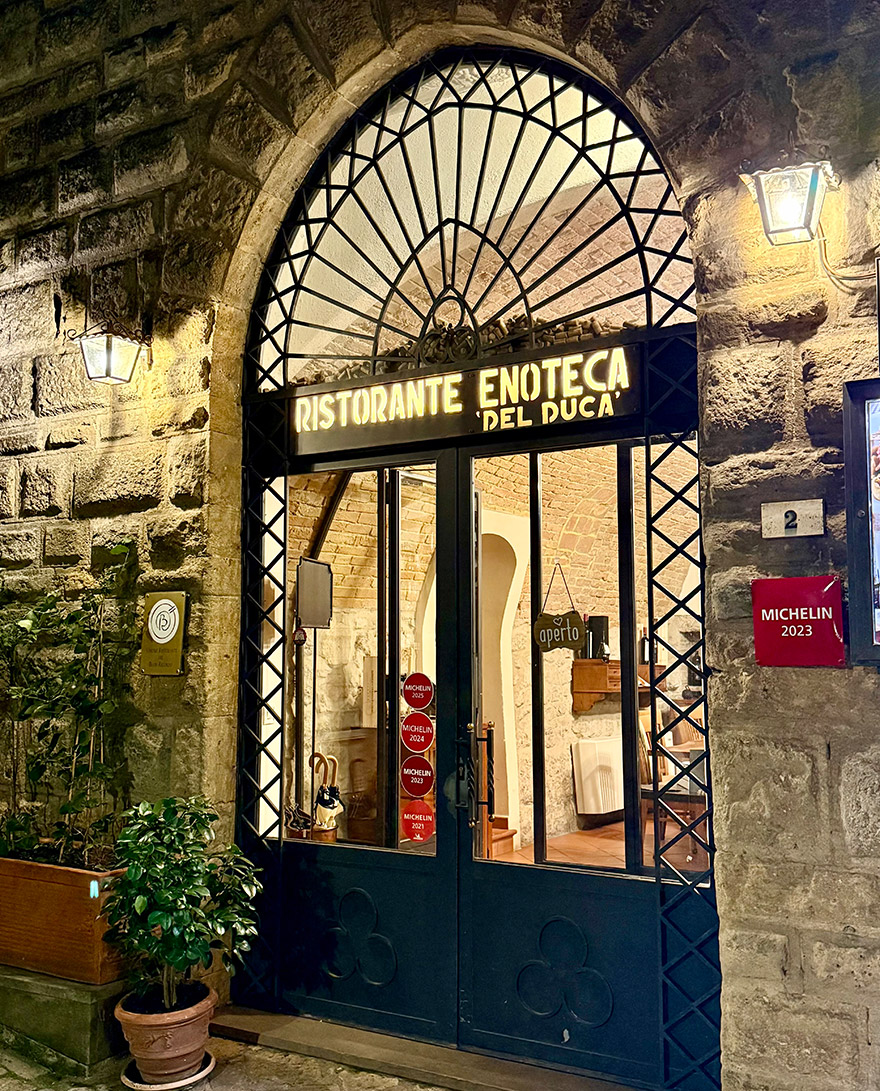
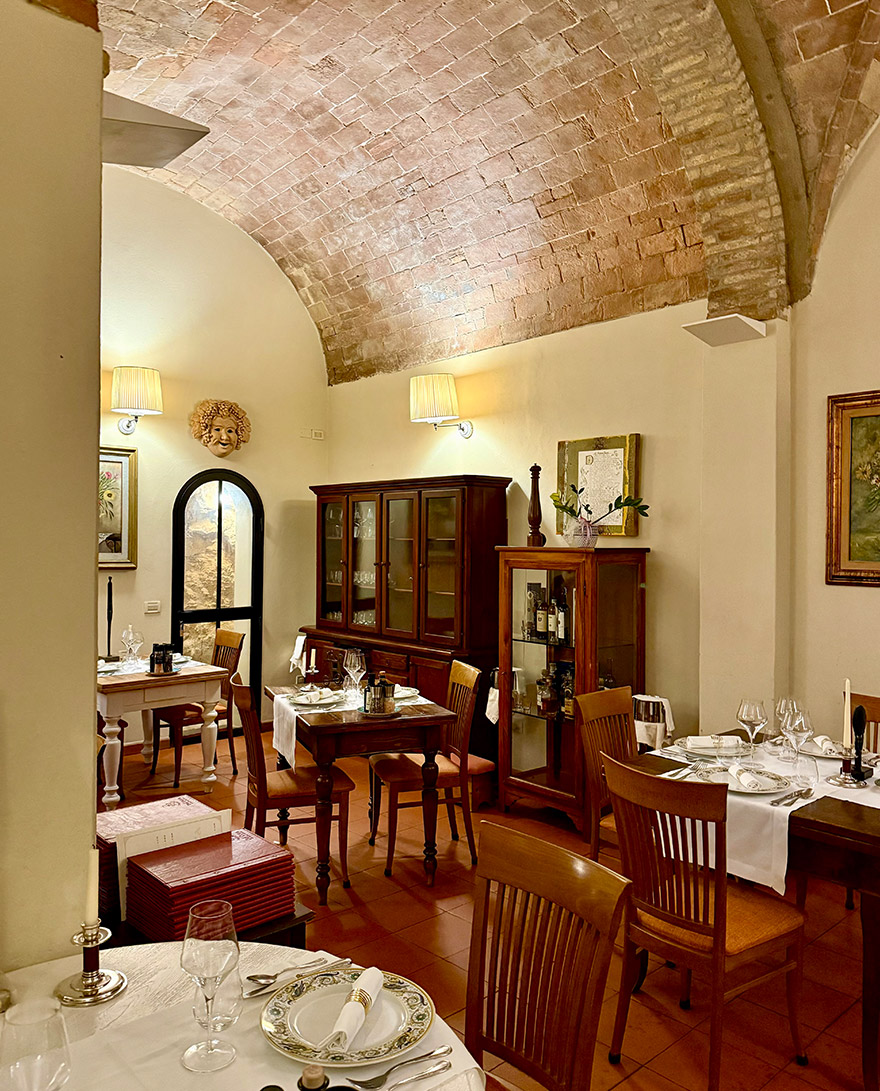
We had a nice dinner in Enoteca del Ducca, a traditional Tuscan restaurant located right behind the castle and the main square. The focus is on classic dishes with a regional touch. The dining room features old stone walls, plus there’s also an attractive outdoor space for summer dining.
Bolgheri
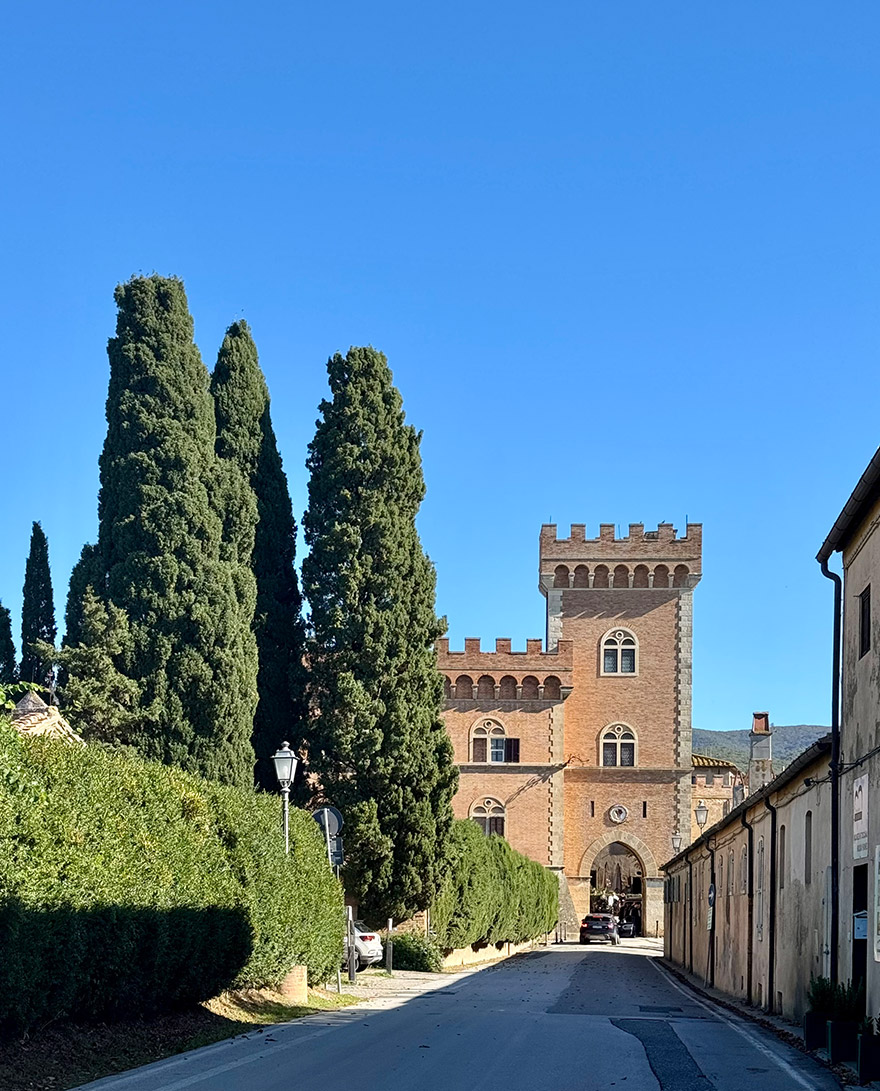
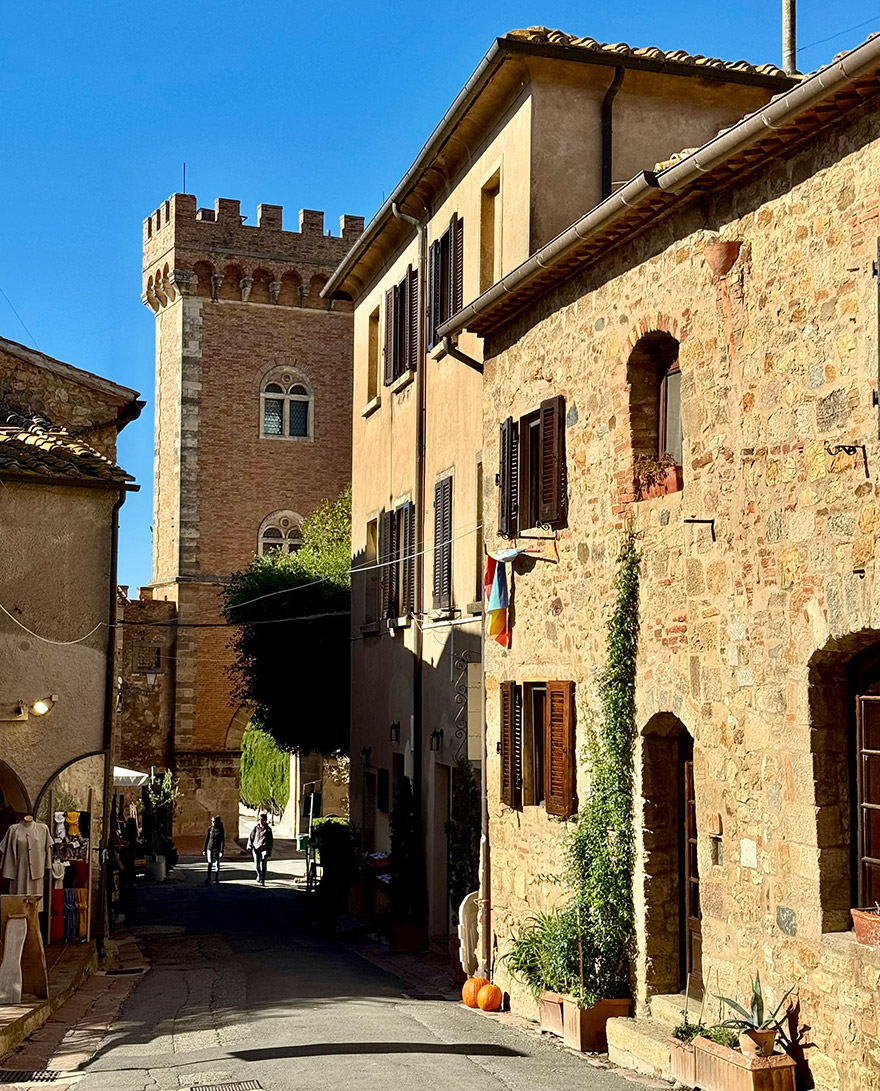
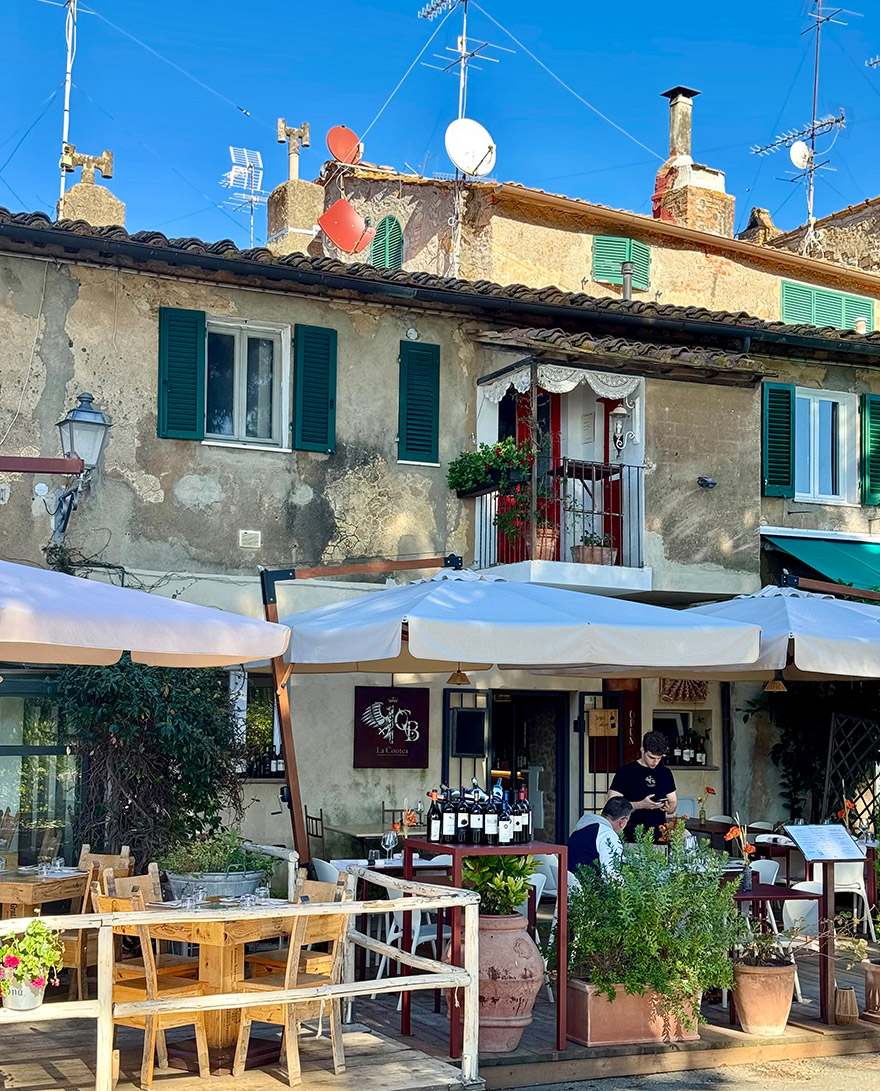
Bolgheri is a small, lesser-known village reached by a 3 km long cypress-lined avenue (below left), with a castle at its entrance. It’s a beautiful little village, with a fortress, several churches, several cafés, restaurants and little boutiques tucked along cute little streets. We didn’t have time to stop for lunch, but La Contea di Bolgheri had a pretty terrace (below right) and excellent Google reviews (4.9*), so worth a look. We just had time for a quick coffee on the terrace of La Bottega Di Elena, a little food shop that also had a café.
Pisa
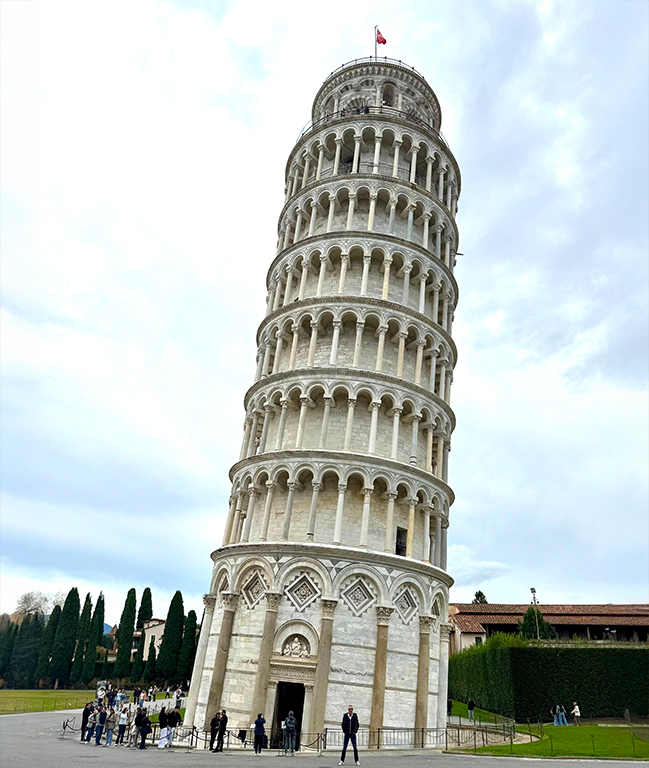
We almost didn’t bother visiting Pisa, worrying that the Leaning Tower was a tourist photo spot and nothing more! In the end, we decided to visit on the way back to Pisa airport, and we found it to be very interesting. The tower itself is impressive in its own right: it really does lean! But what surprised us is how it is only part of a complex of different buildings set on a large lawn.
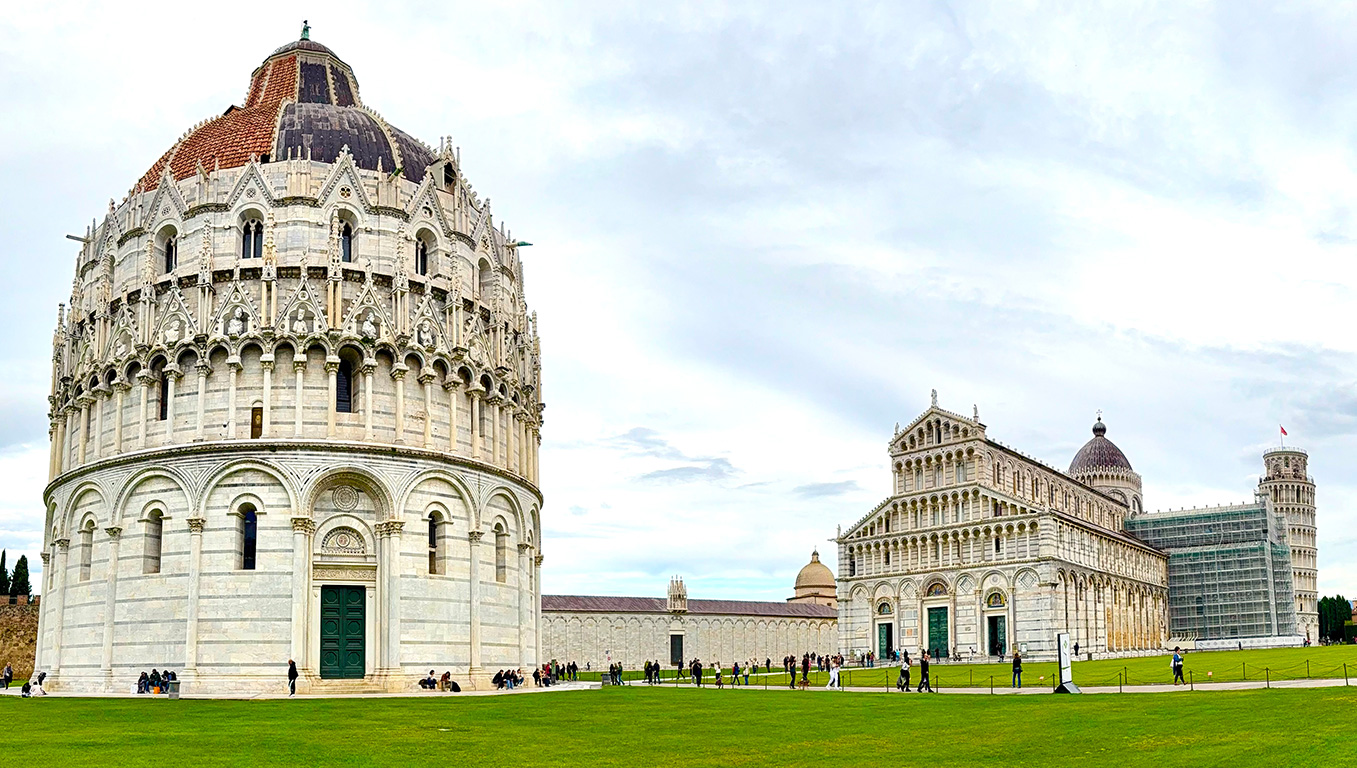
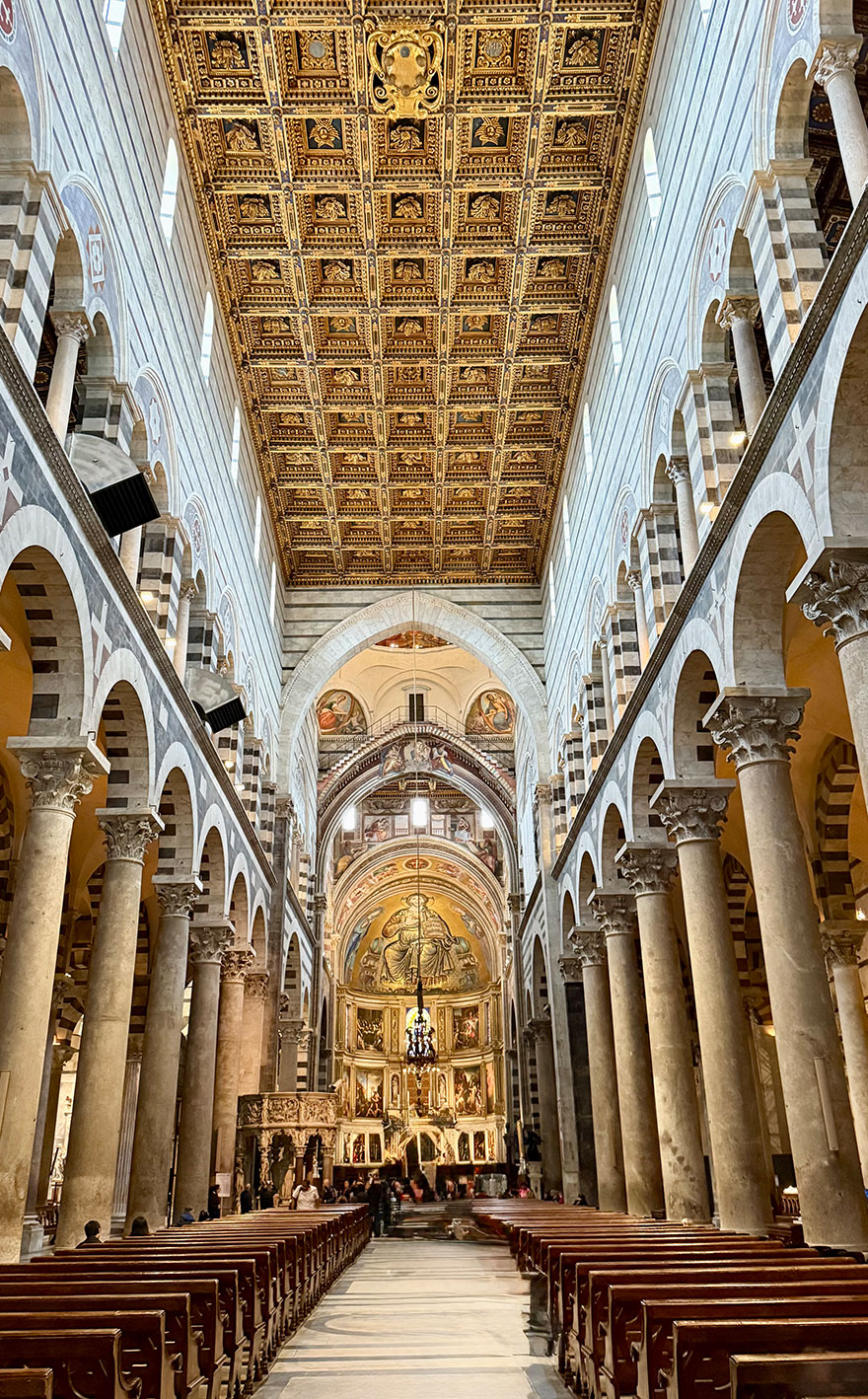
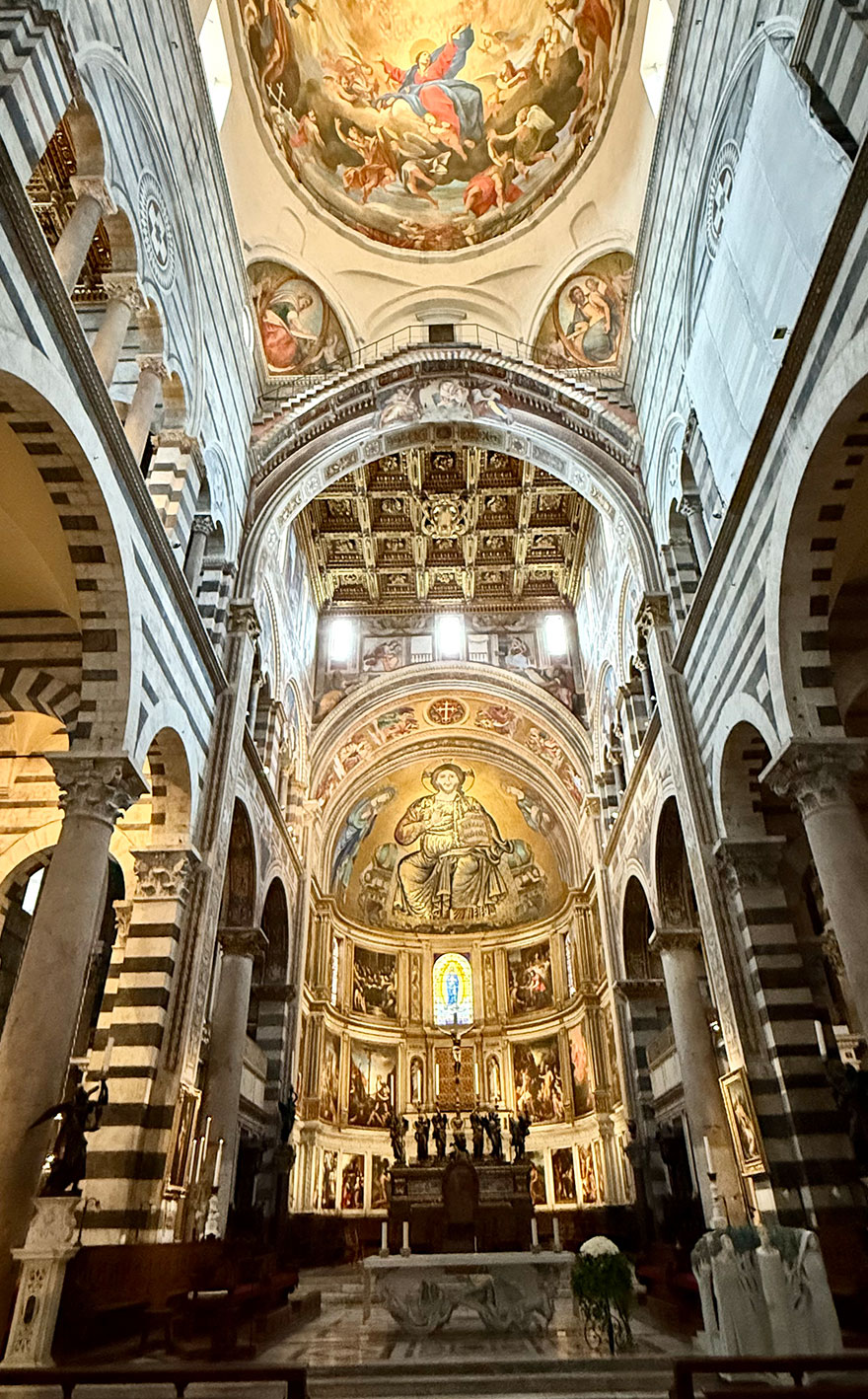
The Cathedral is the heart of the complex. Inside, it’s cool and grand, with striped marble and multiple arches giving it a sense of scale.
Sitting opposite the Cathedral, the Baptistery is a huge circular building with sonorous acoustics and a lighter, quieter atmosphere. (to the left in the photo below).
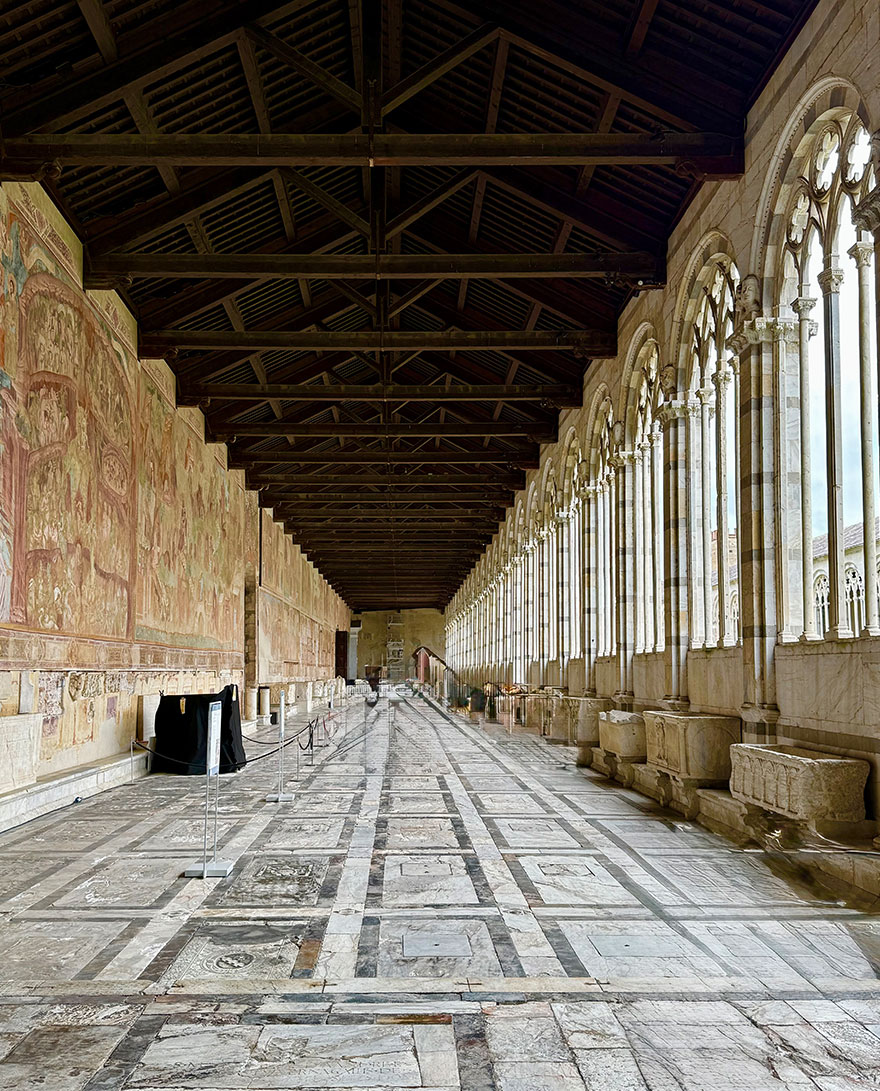
The Camposanto Monumentale (the monumental cemetery cloister) has an impressive central hall and a calm cloister with a central lawn that feels like a peaceful break from the crowds. It was created to gather graves that had been scattered around the Cathedral.
Museo delle Sinopie (Sinopie Museum)
This one is more niche (in a good way): it’s focused on sinopie, the preparatory drawings for frescoes — essentially the “first sketch” that sits beneath the finished work. It’s a fascinating stop if you’re even slightly into painting or process, and it pairs brilliantly with a visit to the Camposanto, where many of the fresco stories belong.
If you have time and want to appreciate the craftsmanship of the complex, the Opera del Duomo Museum pulls together artworks and pieces connected to the Cathedral.
San Gimignano
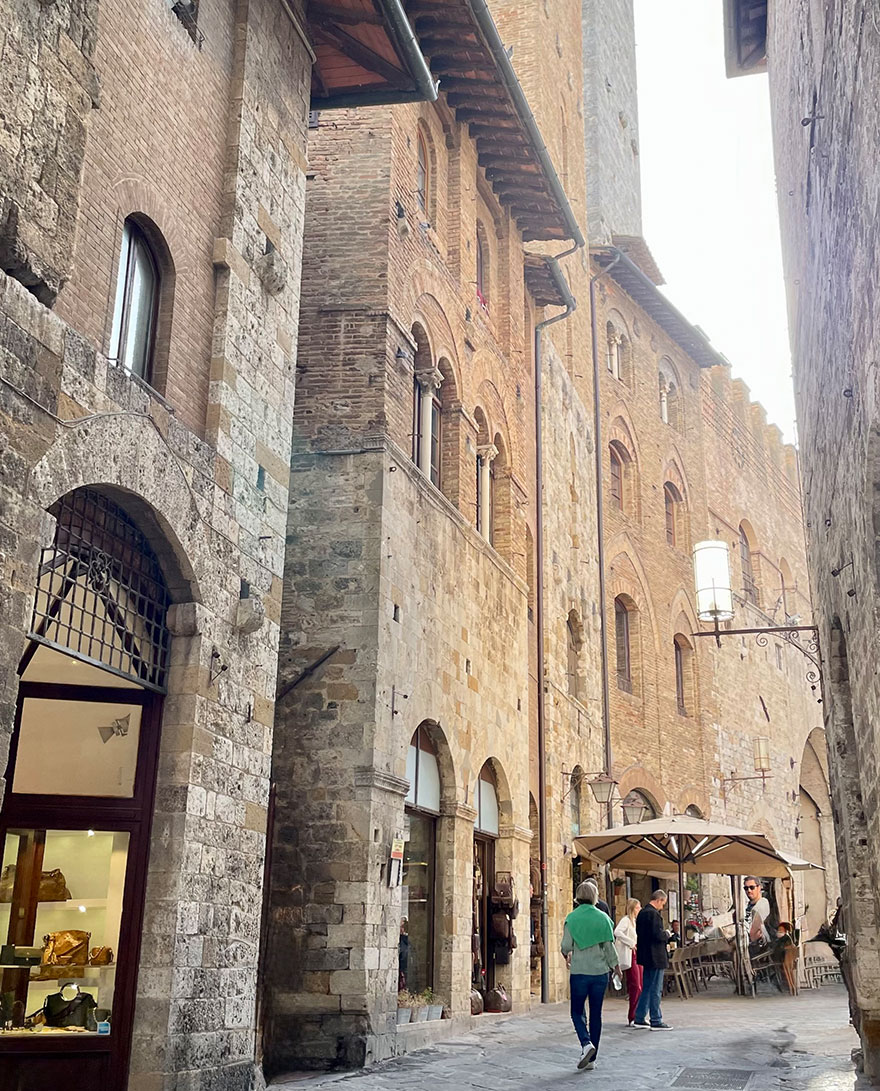
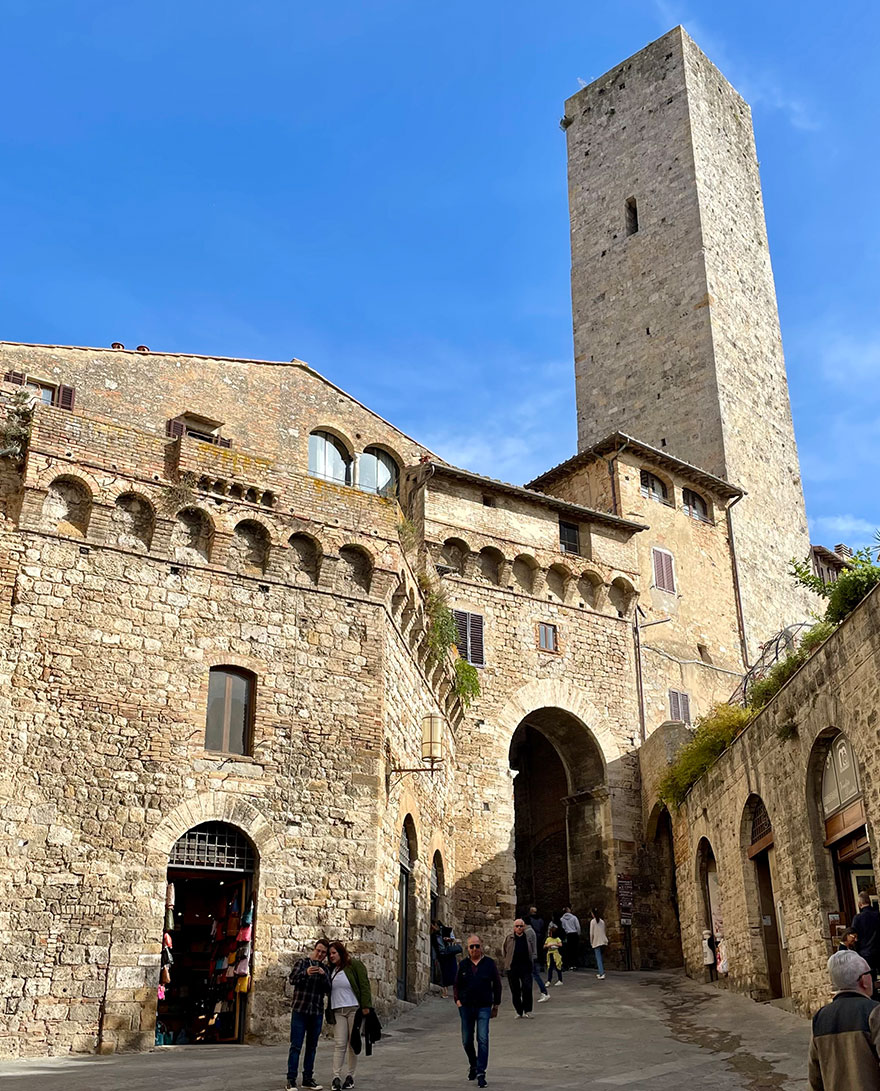
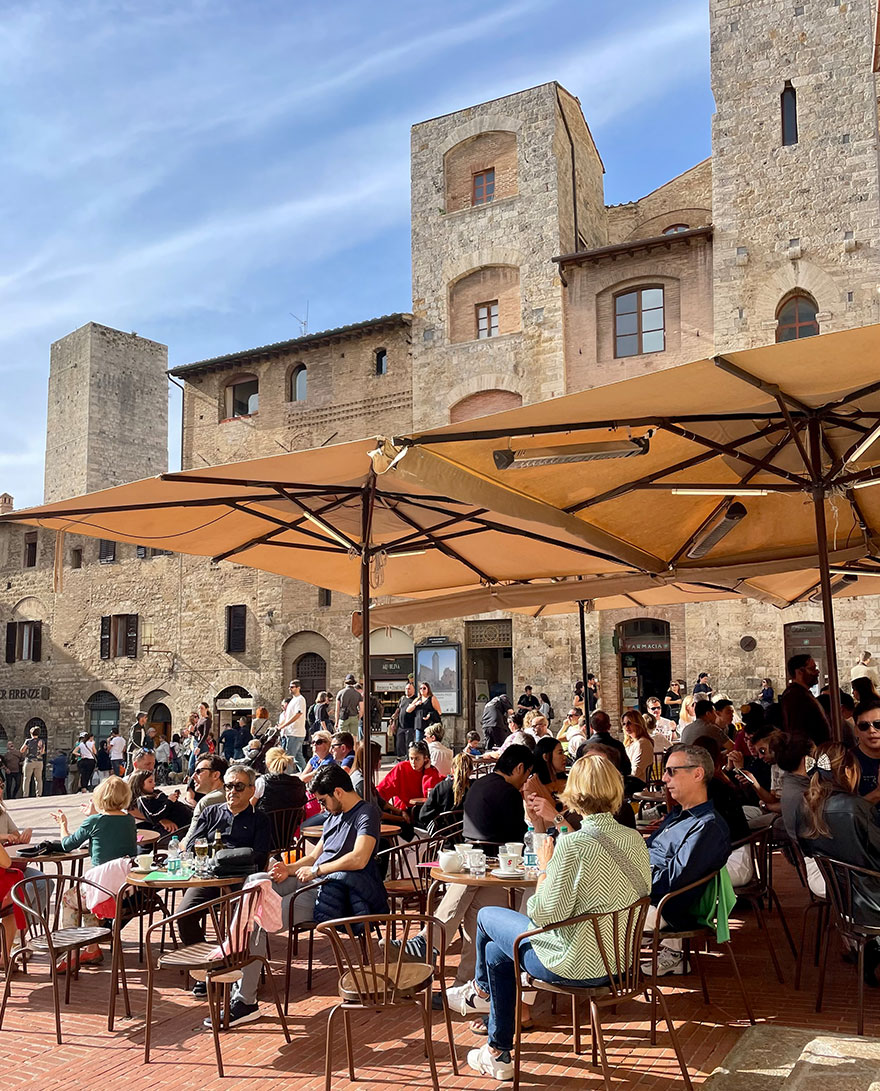
San Gimignano is a small town, but it’s atmospheric with narrow stone lanes and famous medieval towers that pop up above terracotta rooftops. We spent a morning wandering the town before heading to Piazza della Cisterna, the heart of the town. This medieval square is the perfect place for an aperitivo stop and people-watching.
Florence
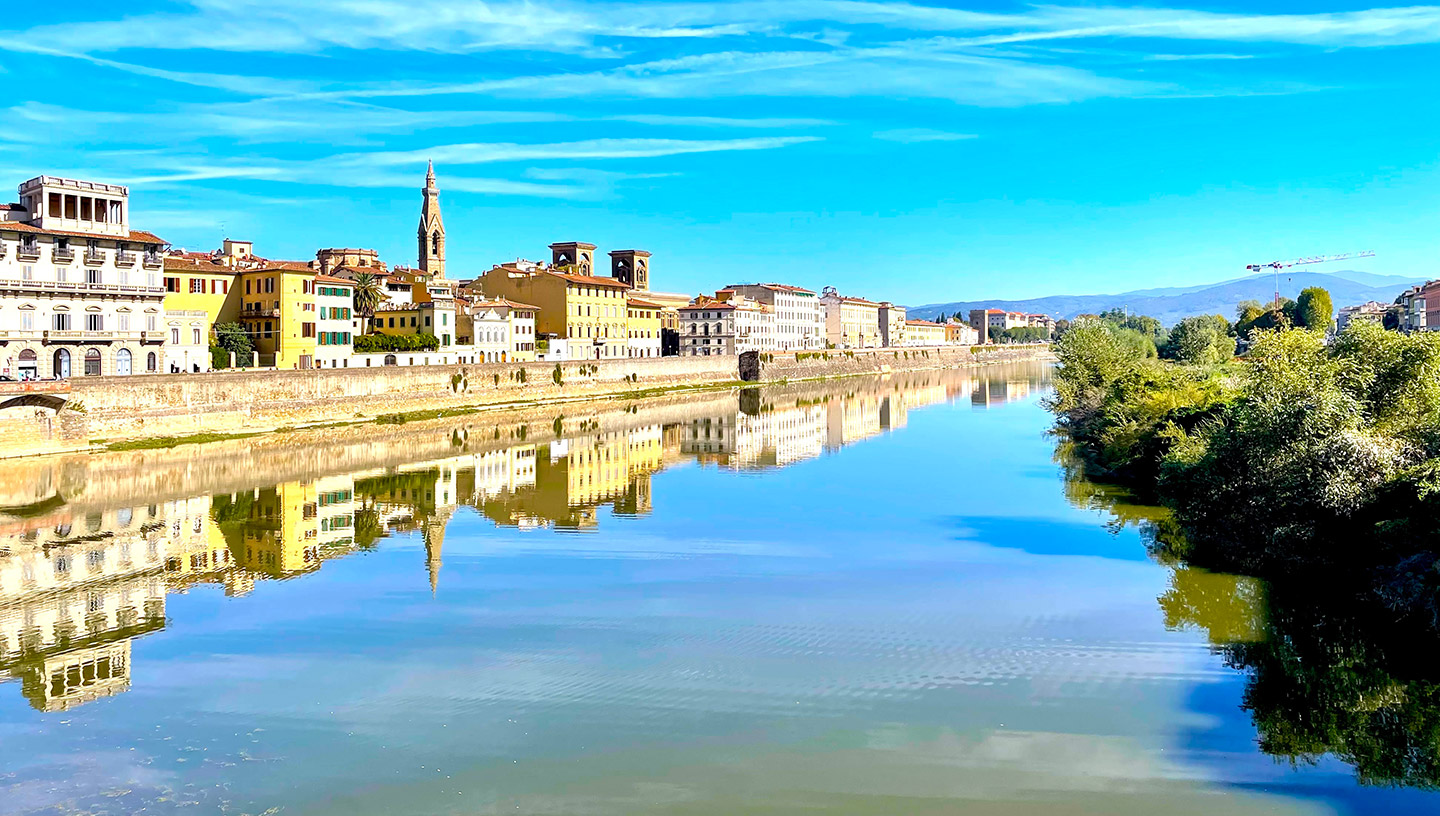
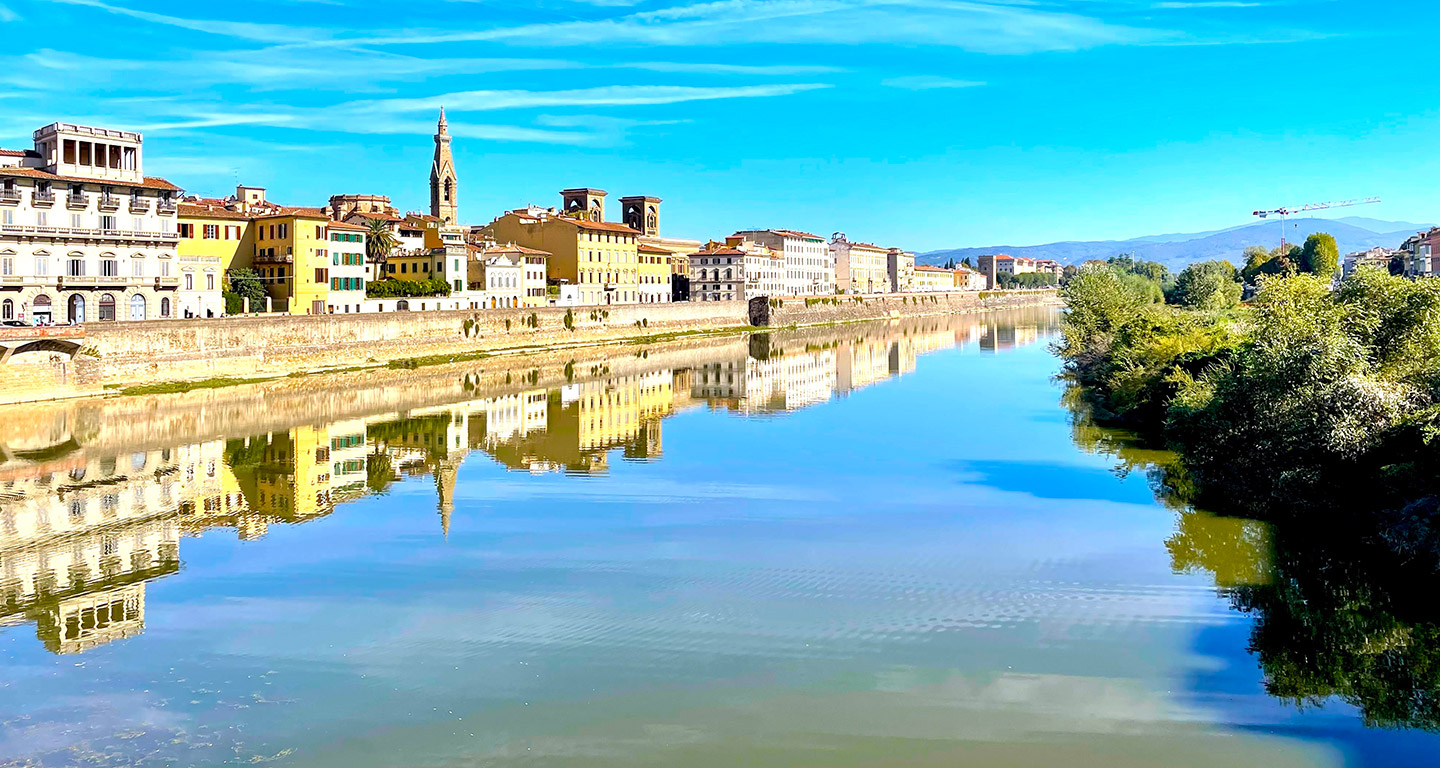
Any trip to Tuscany should ideally include a trip to Florence. It’s full of history and culture, with the Arno River running through it. We did a couple of day trips, but could easily have spent longer there. We didn’t do much dining in the city, so would welcome any top tips!
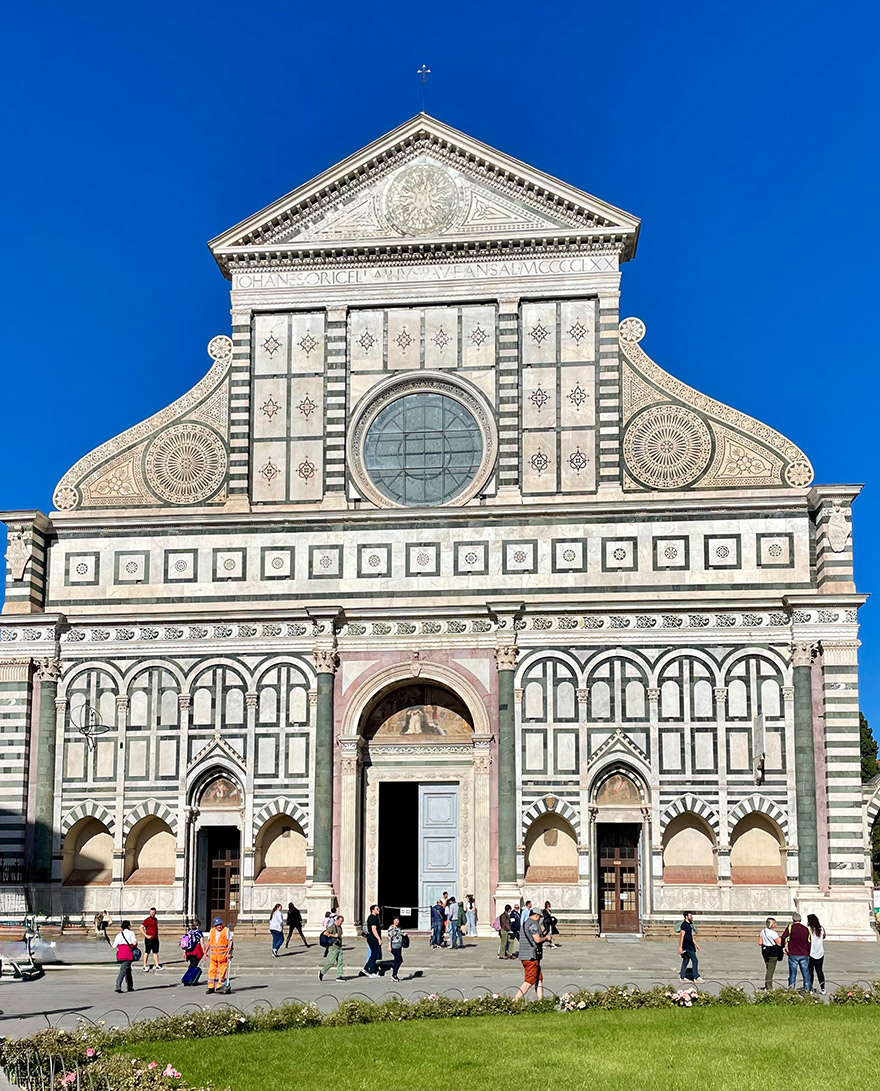
The Basilica of Santa Maria Novella is a good place to start. The façade has unmistakable Florentine patterning (green and white marble, crisp geometry) and inside it feels spacious and cool. You can go in for a quick look or linger and properly take in the art and details across the monumental spaces.
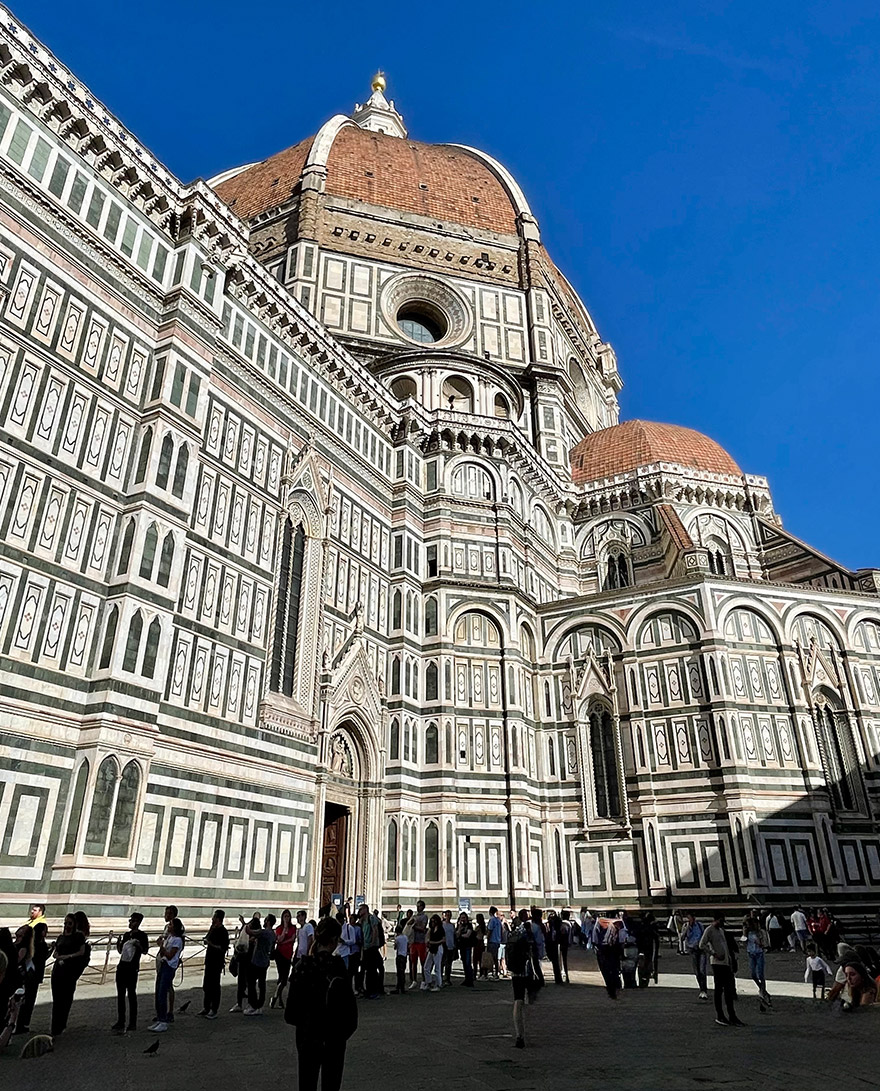
Walk to the Piazza del Duomo to step into the middle of some of Florence’s most iconic architecture. The dome of Cathedral of Santa Maria del Fiore is perhaps the city’s most famous landmark. If you feel energetic, you can climb the 463 steps of the dome, with your reward panoramic views of the city!. Book tickets here.
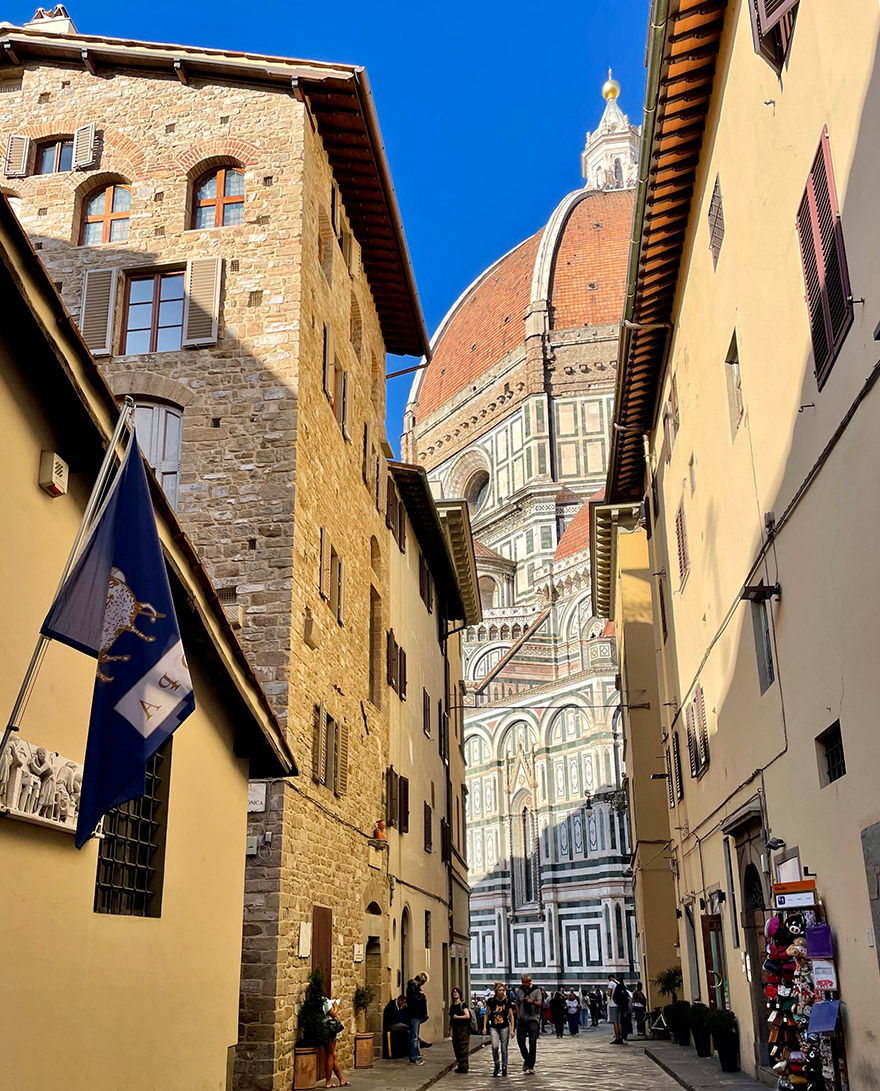
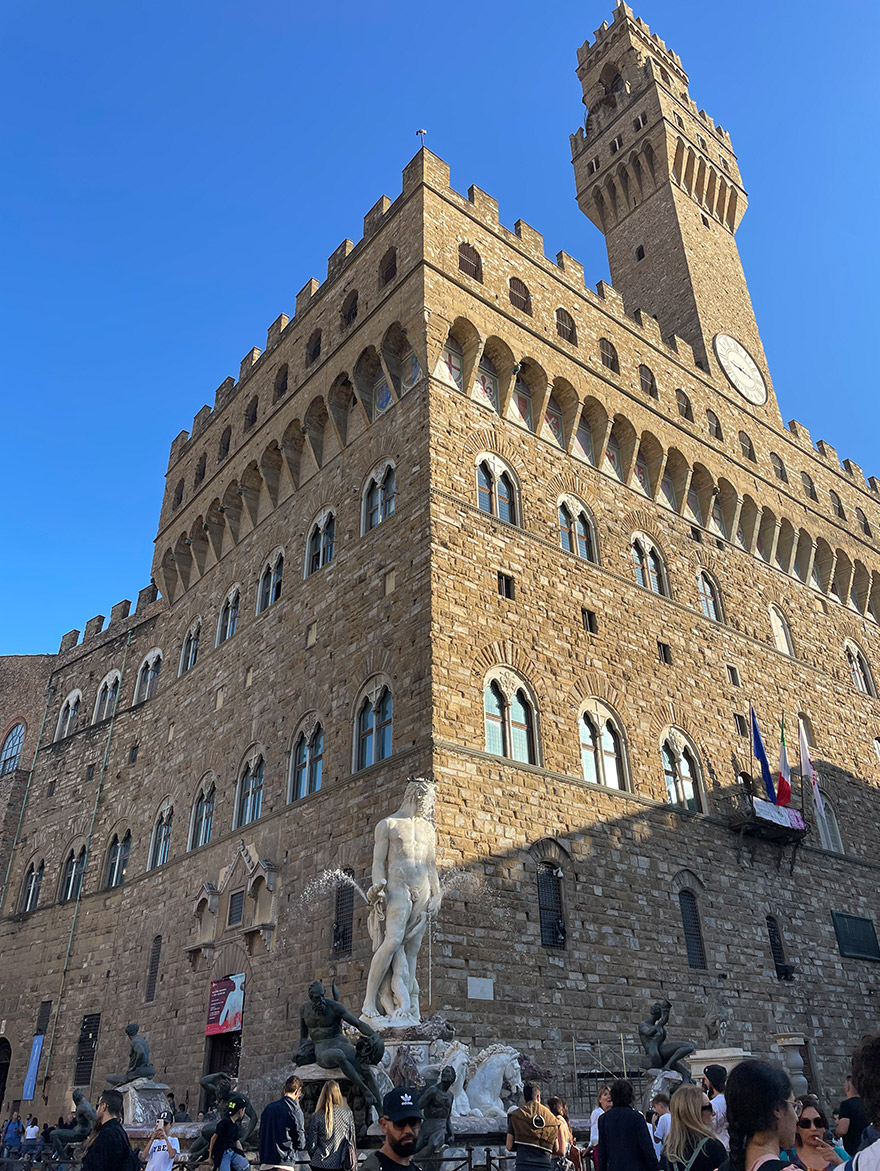
From the Duomo, the walk to Palazzo Vecchio is a perfect Florence stroll: narrow streets, smart shop windows, a little burst of piazza life. The fortress-like building with a tower 94 meters high was built between 1299 and 1314. It was the seat of its government for over seven centuries. There is a museum if you want to learn more about the history. There is also another tower climb with a spectacular view at the top, but this one has only 223 steps! Book tickets for the museum and/or tower here.
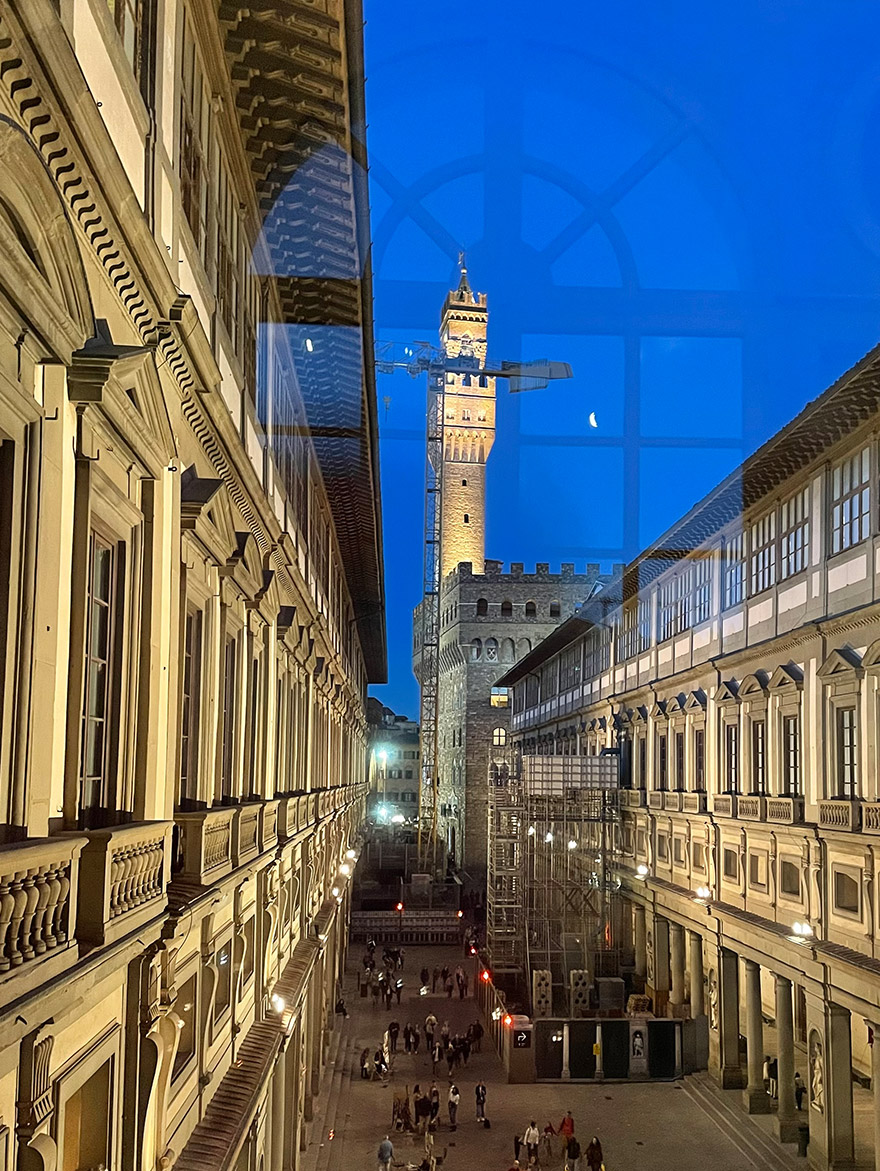
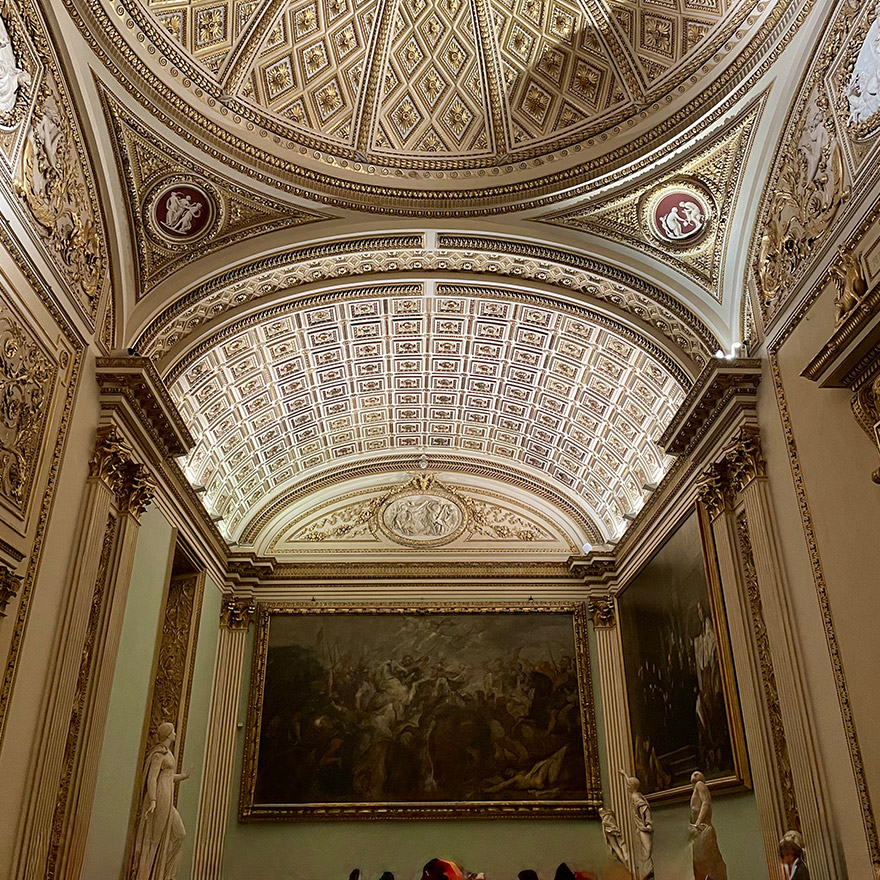
A short walk down towards the Arno river takes you to the world famous Uffizi gallery with masterpieces by Botticelli, Leonardo, Michelangelo and plenty more The setting is as spectacular as the art, with long, elegant corridors, tall windows spilling daylight and views out towards the Arno river. Book a timed slot in advance here as it’s one of Florence’s busiest attractions.
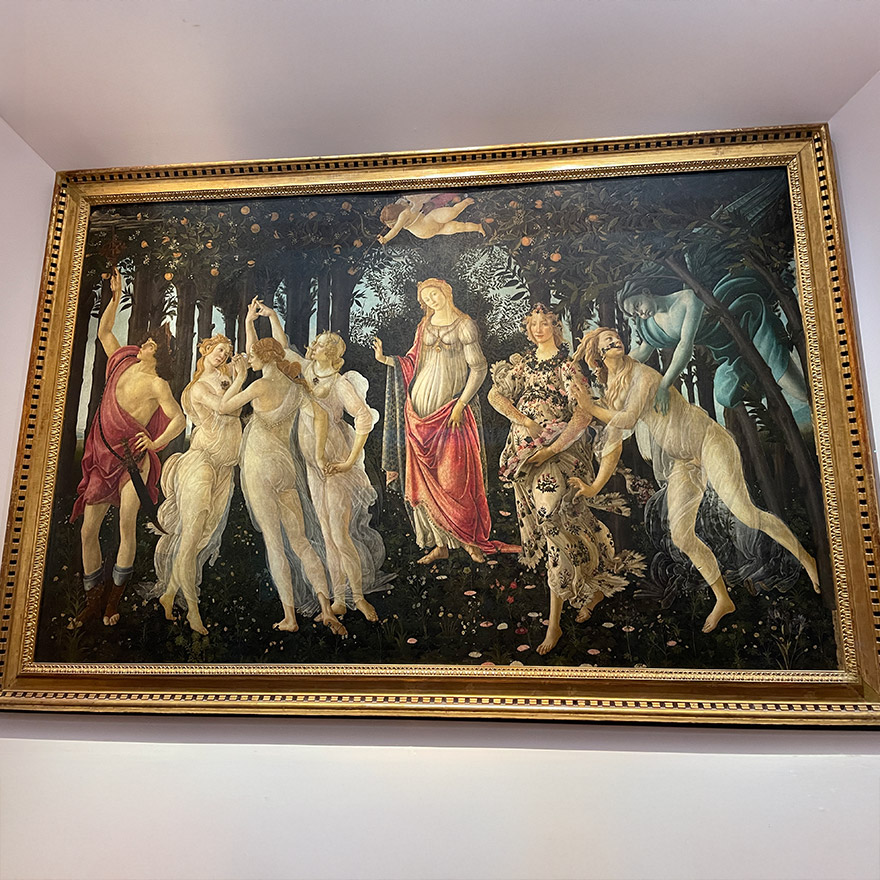
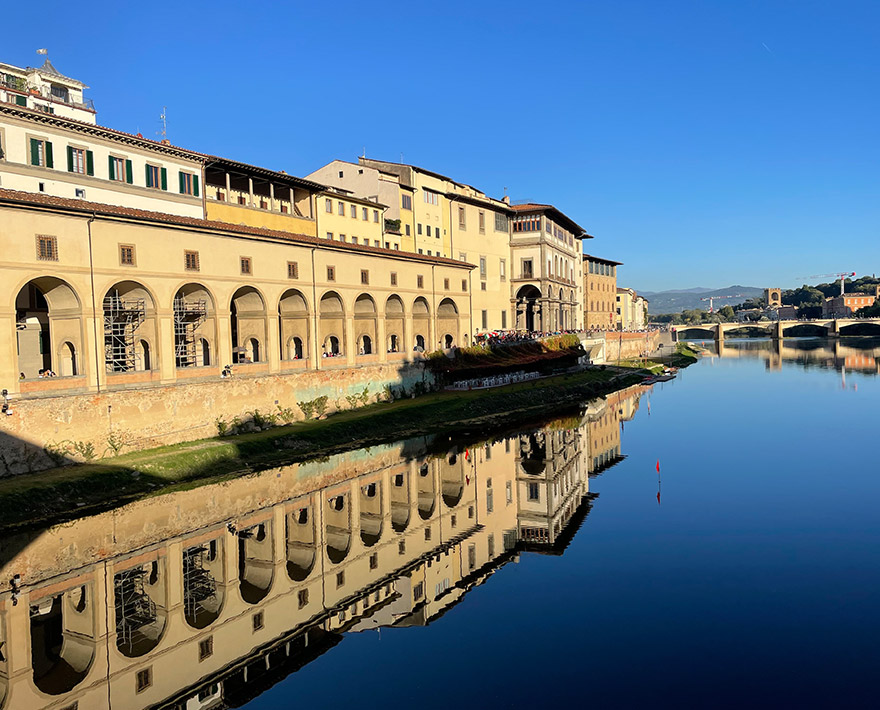
Walk along the Arno River in The Vasari Corridor. (seen below from the opposite side of the river). This 750 metres long covered walkway was built by architect Giorgio Vasari in 1565. The Medici family used it to reach Palazzo Vecchio from Pitti Palace undisturbed and without running risks to their safety. There are specific opening days and timed entry rules, with a meeting point inside the Uffizi’s Room D19. You can buy tickets from the Uffizi website here.
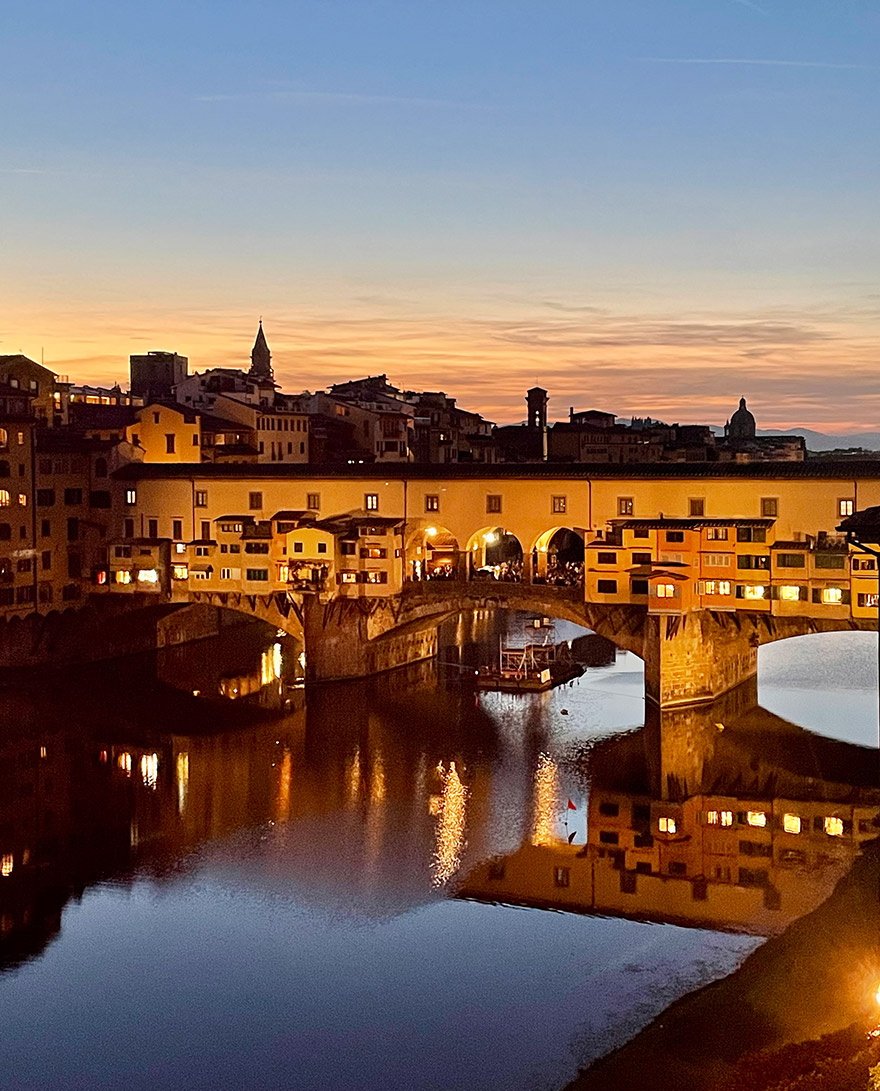
Cross the river using the famous Ponte Vecchio bridge. This picturesque medieval arched river bridge is now lined with jewellery & souvenir shops that make it feel like a little street suspended over the Arno. It’s especially picturesque towards late afternoon when the light warms up the stone and the water.
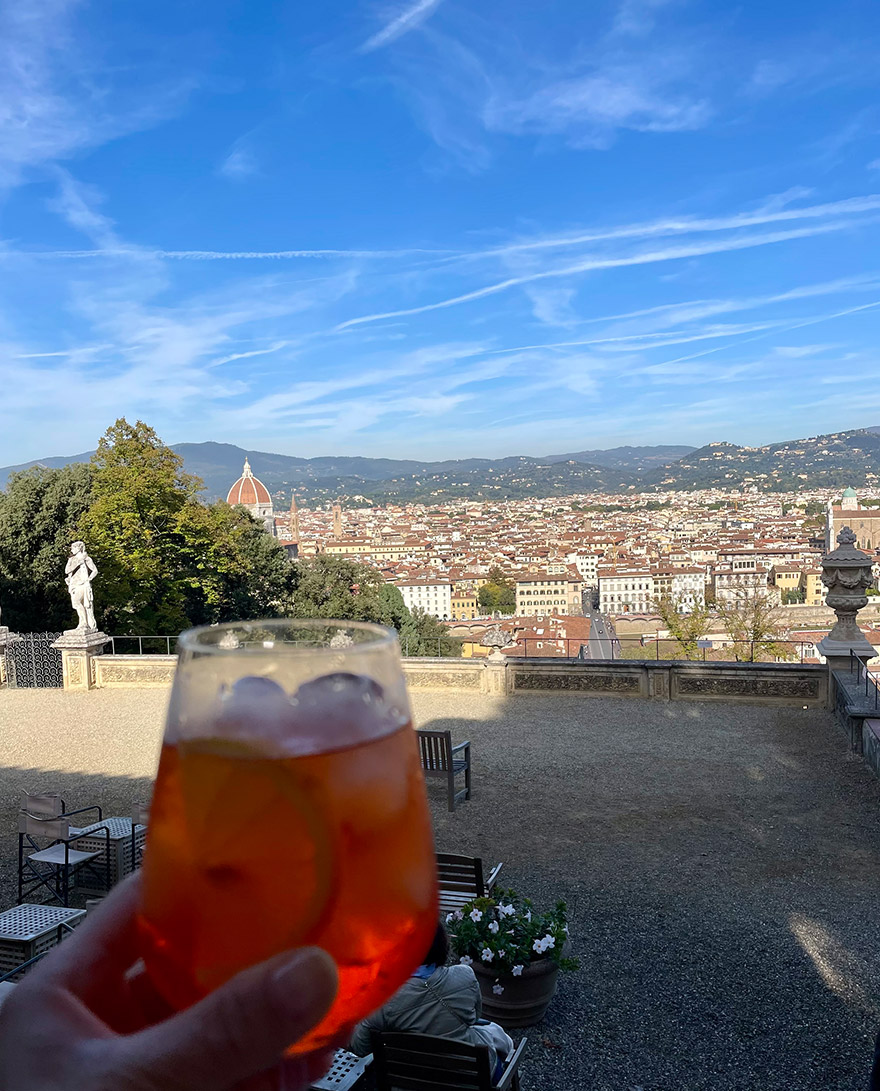
After crossing the bridge, we discovered one of our favourite spots in the city. The beautiful Giardino Bardini was in the 16th and 17th centuries a Florentine Baroque garden with grottoes, statues, fountains and flower gardens. The gardens were bought in 1913 by Stefano Bardini, named the “prince of antique dealers”. He added decorative elements, Baroque statuary, garden furniture of varied provenance, fountains, benches and vases, reflecting his collecting interests.
Climbing up the steps in the gardens takes you to La Loggetta de Villa Bardini, a café-bar with a panoramic terrace. The tables tucked along the balustrade have stunning views of the Florence skyline and are the perfect place for an Aperol spritz! It’s open from March to November.
Why a trip to Tuscany?
A trip to Tuscany is a feast for the eyes, with classic countryside views of rolling hills, cypress-lined roads, vineyards and stone farmhouses. Tuscan towns are made for wandering, with handsome squares, cafés and layers of history everywhere you turn. There’s a mix of rural calm, cultural exploration and lively little places too. And then, of course, there is the food and wine! We enjoyed our evenings out trying out restaurants, but nights at home eating fresh, homemade pasta with a bottle of Barolo were also magical.