Overview of our trip
The inspiration for this trip was our twin daughters’ gap years! They visited Guatemala and Belize and loved both places. We’re delighted to have followed their advice, as this really was one of the most interesting and enjoyable trips we’ve ever done.
In two and a half weeks we managed to see five very different places, with a huge variety of scenery and experiences. We started in the colourful, buzzy former colonial capital of Antigua, which also became the base for our crazy-but-amazing hike up the (dormant!) Acatenango volcano. From there we drove north to the serene setting of Lake Atitlán, then took an internal flight to Flores to explore the Maya ruins of the Petén region. A short drive over the border brought us into Belize, starting in the Mountain Pine Ridge area. We finished a beach stay on Ambergris Caye, reached via a couple of flights and a boat.
Day 1: Fly London to Guatemala City via Madrid, transfer to Antigua (c. 1hr), stay San Rafael Hotel (3 nights)
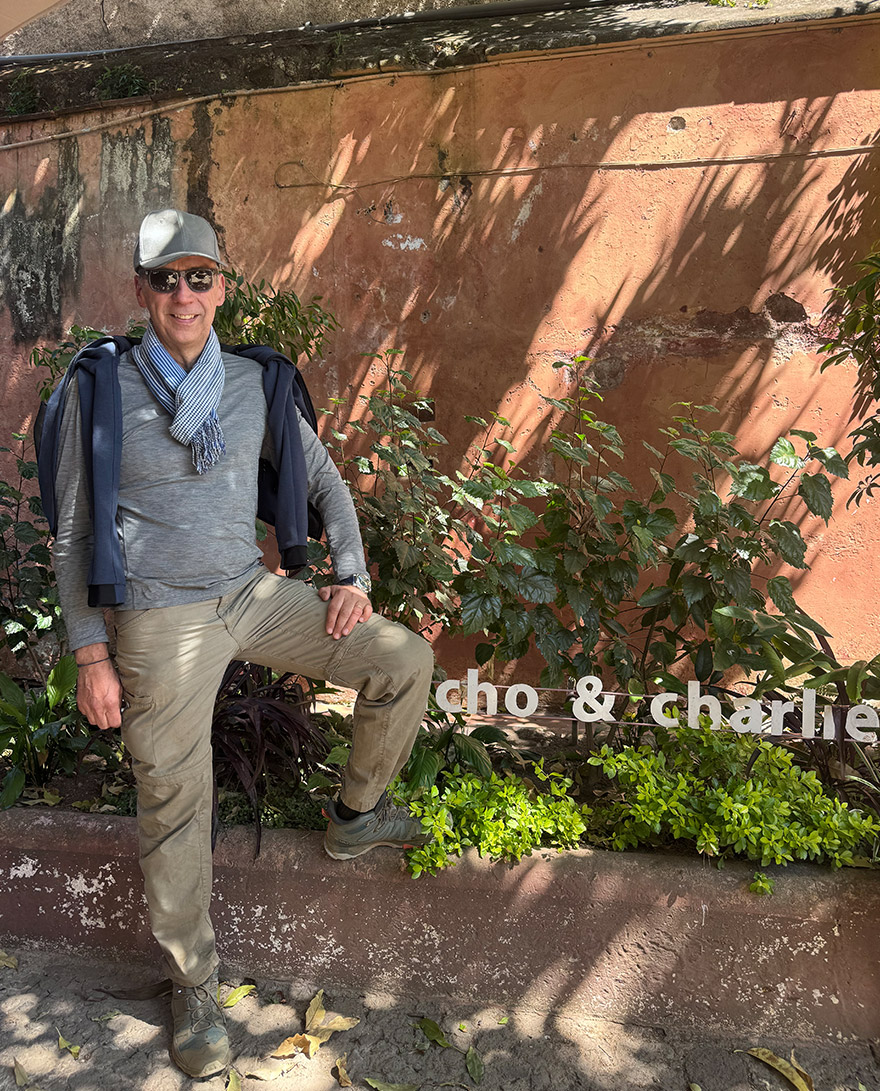
Day 4: Acatenango volcano hike, stay Wincho & Charlie’s cabin! (1 night)
Day 5: Drive (c. 2.5hrs) to Lake Atitlan, stay Casa Palopó (3 nights)
Day 8: Transfer back to Guatemala City and fly to Flores. Short drive, stay La Lancha (3 nights)
Day 11: Drive via Tikal across border to Belize and on to Mountain Pine Forest region, stay Gai River Lodge (3 nights)
Day 14: Drive to Belize City (c. 2hrs) then fly to San Pedro, Ambergris Caye. Boat transfer to Matachica (4 nights)
Day 18/19: transfer to San Pedro, fly to Belize City. Connecting flight to Dallas and then fly overnight back to London
Day 19: arrive home!
Antigua – Guatemala
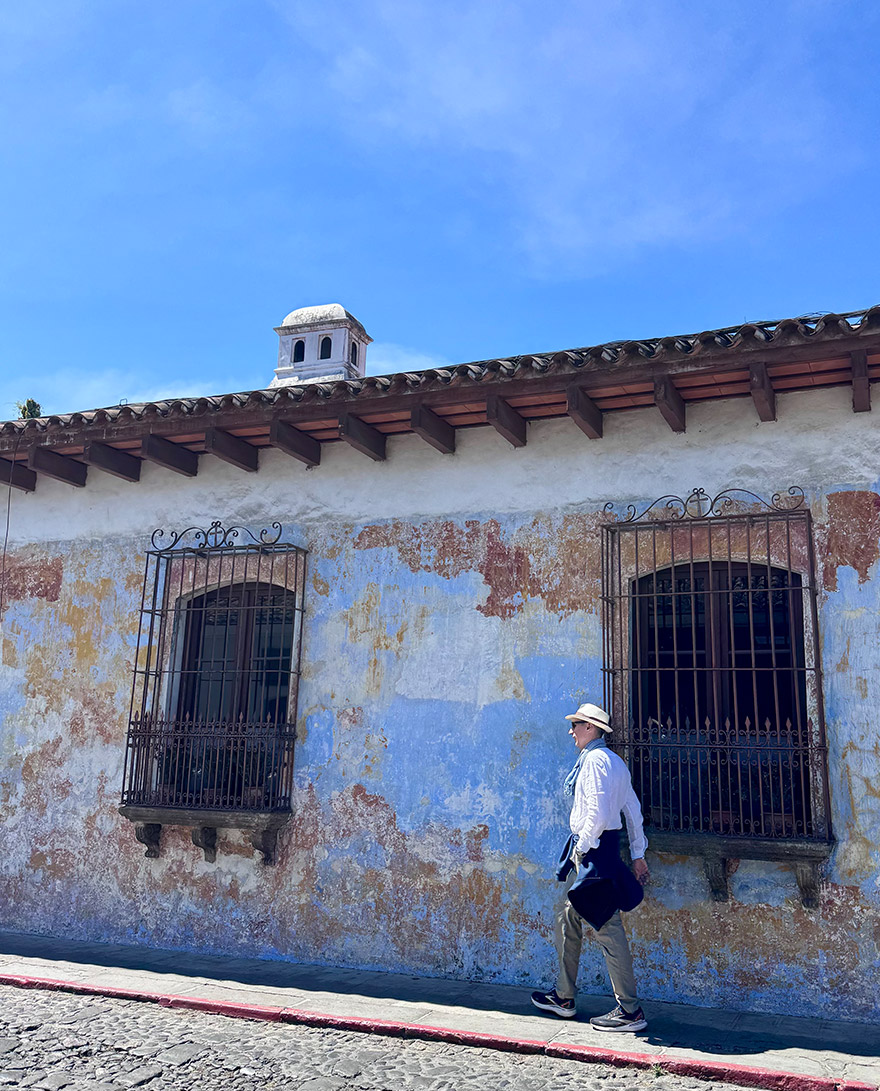
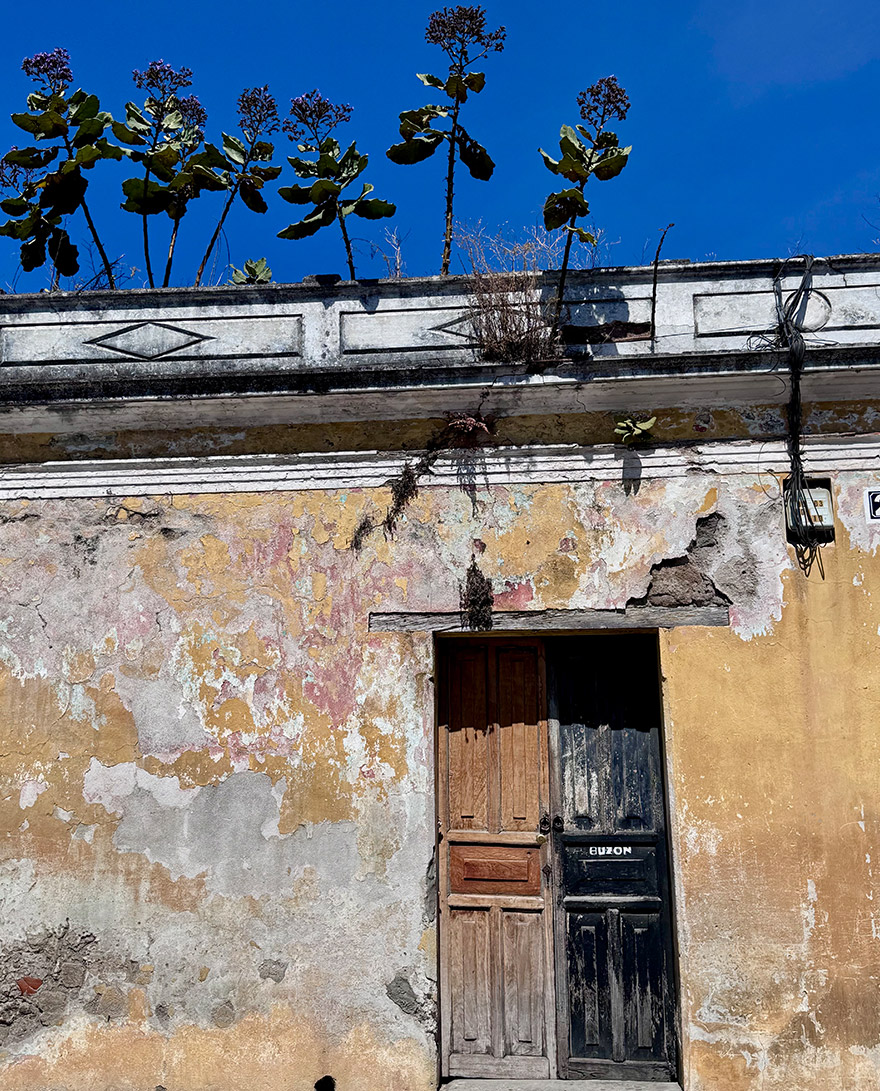
Antigua packs an incredible amount into a small, walkable city. You’re never far from a crumbling church façade, a courtyard hidden behind a heavy wooden door, or a street corner that suddenly opens to a volcano view. The city’s palette is part of the magic too: custard yellows, deep reds and soft pastels, all slightly weathered in a way that makes it feel lived-in rather than polished.
It’s also one of those places where the history is genuinely visible. Antigua was founded in 1543 in a lush valley, surrounded by hills and three volcanoes, and for two centuries it was the seat of Spanish power in Central America. That status brought grand religious buildings and monasteries, built to signal the influence of crown and church.
But Antigua’s beauty comes with a dramatic backstory. Earthquakes in 1717 and 1773 left much of the city in ruin, and the cost and risk of rebuilding in a seismically active basin eventually pushed the capital to relocate in 1776 to what is now Guatemala City. The old capital became “Antigua” — the old city — and today those atmospheric ruins are part of what makes it so compelling.
Stay
SAN RAFAEL – small, authentic, central
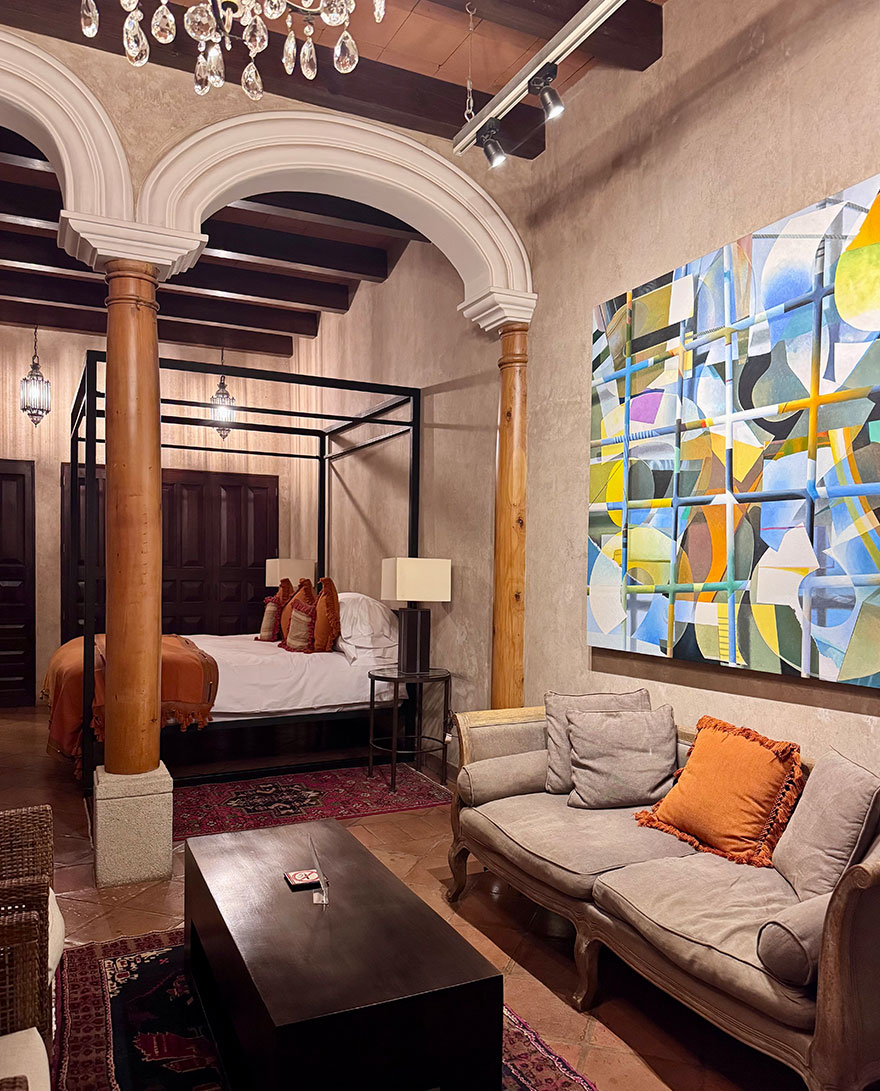
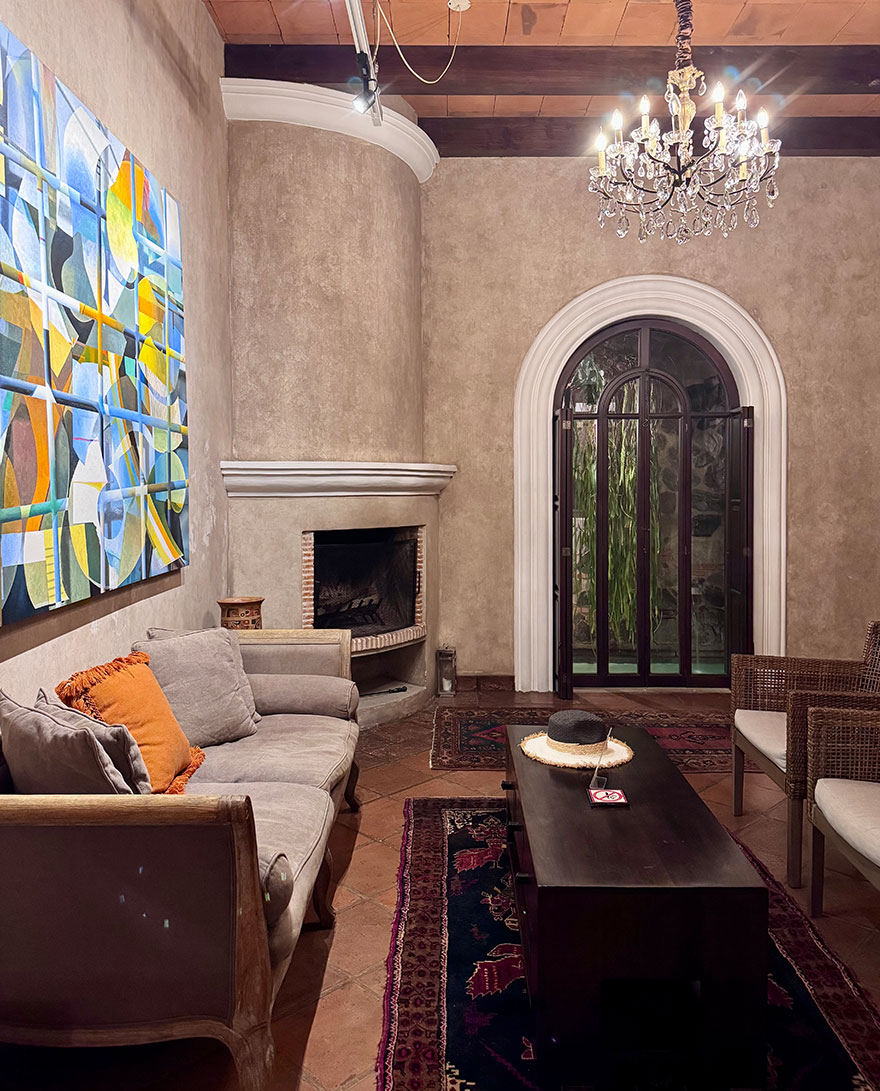
We chose to stay at the San Rafael as it looked authentic and was also centrally located. It’s a meticulously preserved colonial house that blends old-world charm with modern amenities. The hotel exhibits works by contemporary international and Guatemalan artists, as well as museum-quality antiques. It’s right next to the Arco de Santa Catalina and walking distance from the sights, and also lots of coffee shops and restaurants.
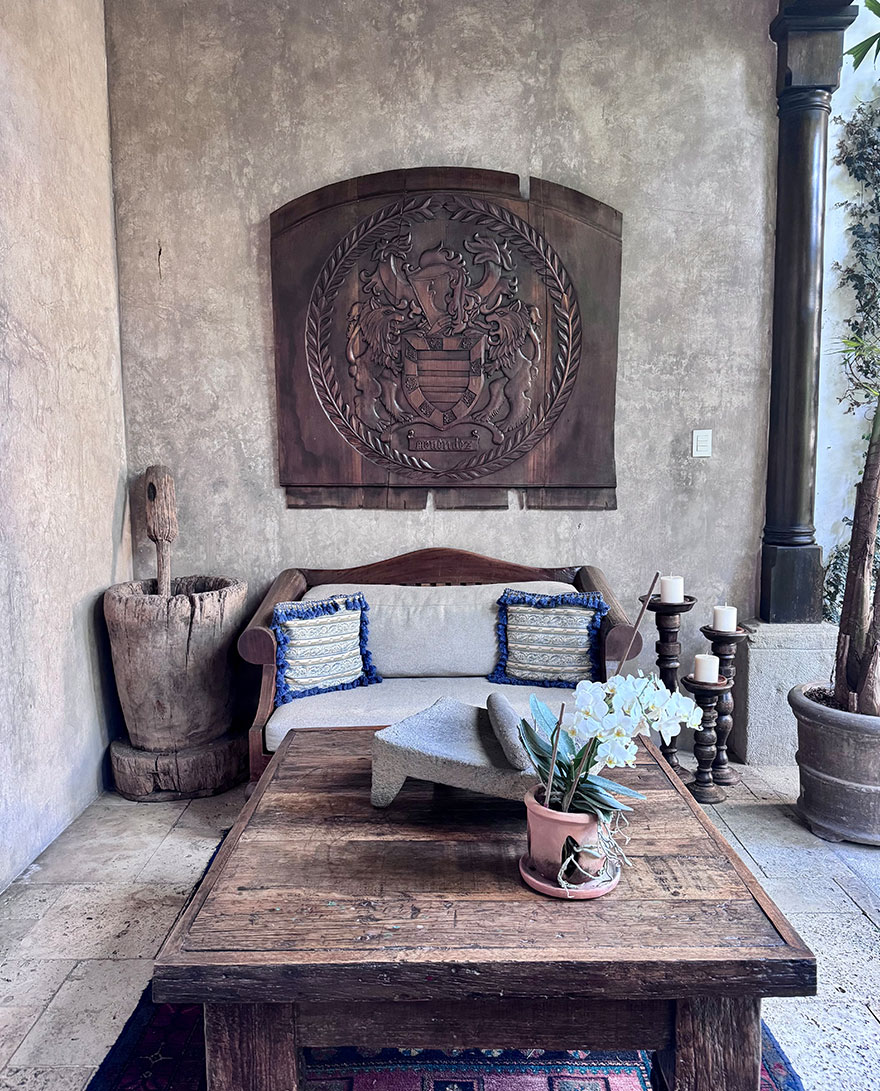
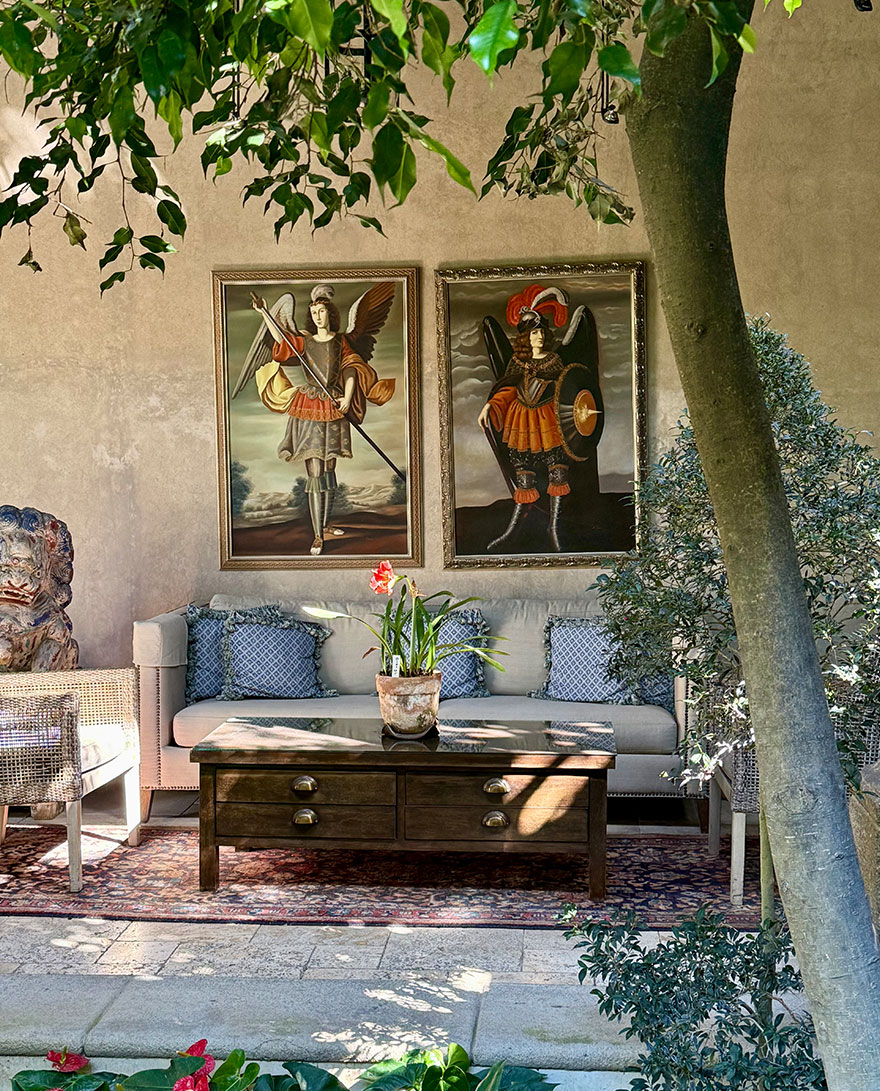
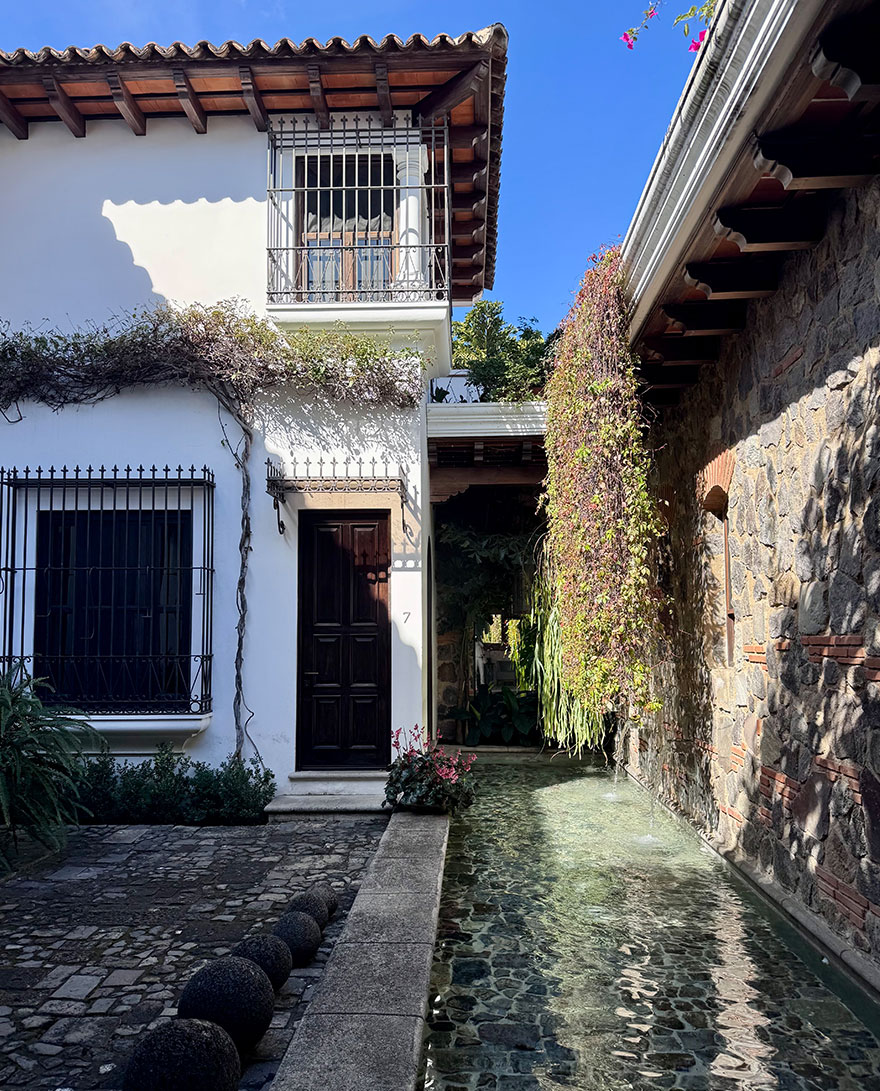
Like many places in Antigua, it’s unassuming from the outside. However, step inside, and there are two lush courtyard gardens. These were lovely spots for breakfast and chilling out after a day of seeing the city.
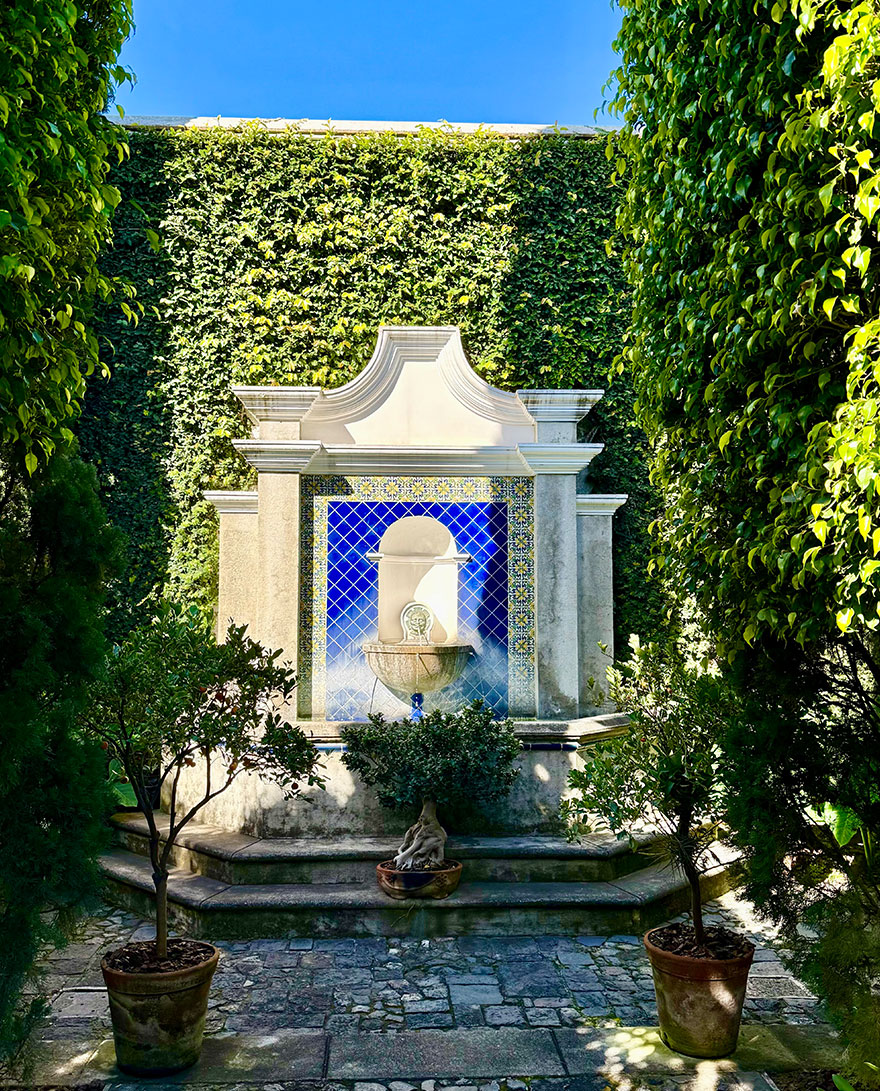
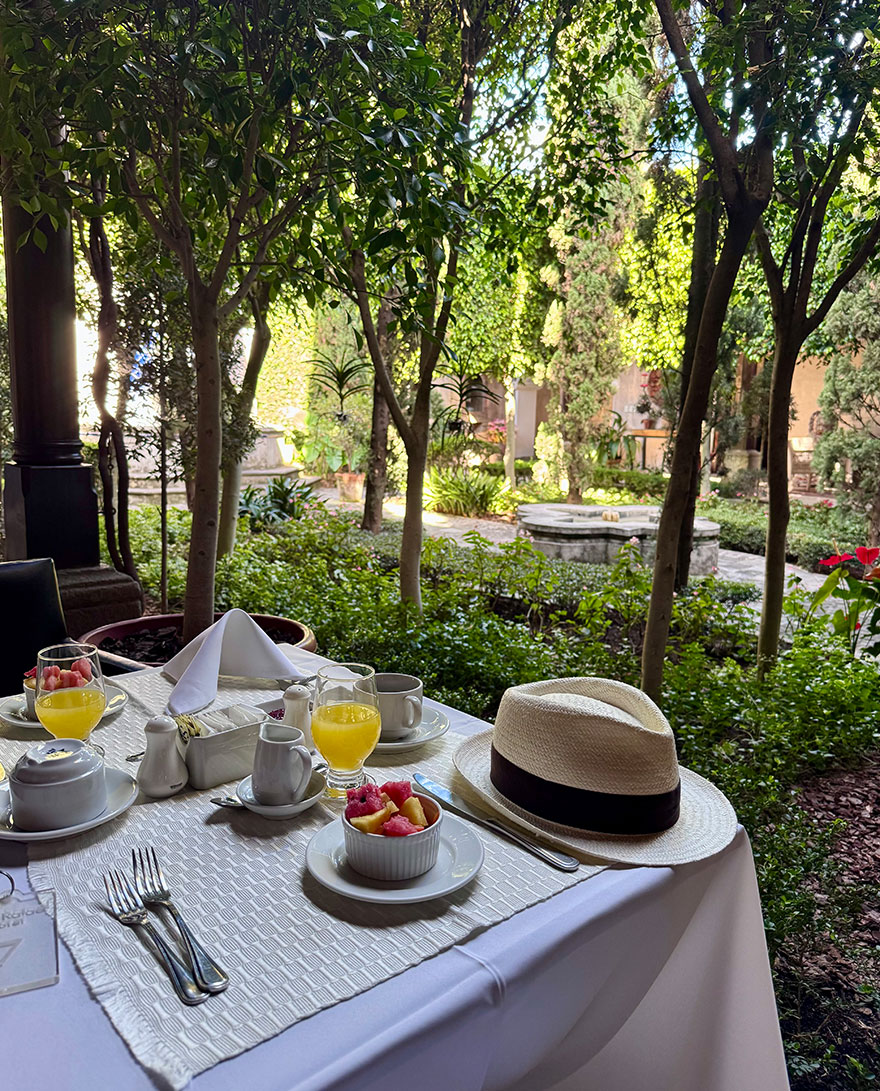
With only seven rooms and suites, it feels intimate and private. Rooms are comfortable rather than showy, with calm colours and the sense of really being in Antigua. We stayed in Santa Rosa, a King Premier Suite featuring Moorish detailing, windows facing the courtyard and a sitting area. Outside there was a pretty water feature. Inside tip: during our trip, it got chilly at night, so ask the hotel to light the log fire to warm you up!
VILLA BOKEH – luxurious, quieter, out of town
We did look at Villa Bokéh, but decided in favour of the smaller and more central San Rafael. This is the more “treat yourself” option: a Relais & Châteaux property, out of town, with a bigger sense of space and a more overtly luxurious feel.
The setting is very different to San Rafael — more resort-like, with a turquoise outdoor pool, sweeping garden paths.
Dine
Antigua is small, but the food scene is seriously big, and everything is walkable. You can wander the cobbled streets, pop into a bar, then be at your dinner table minutes later!
CLIOS
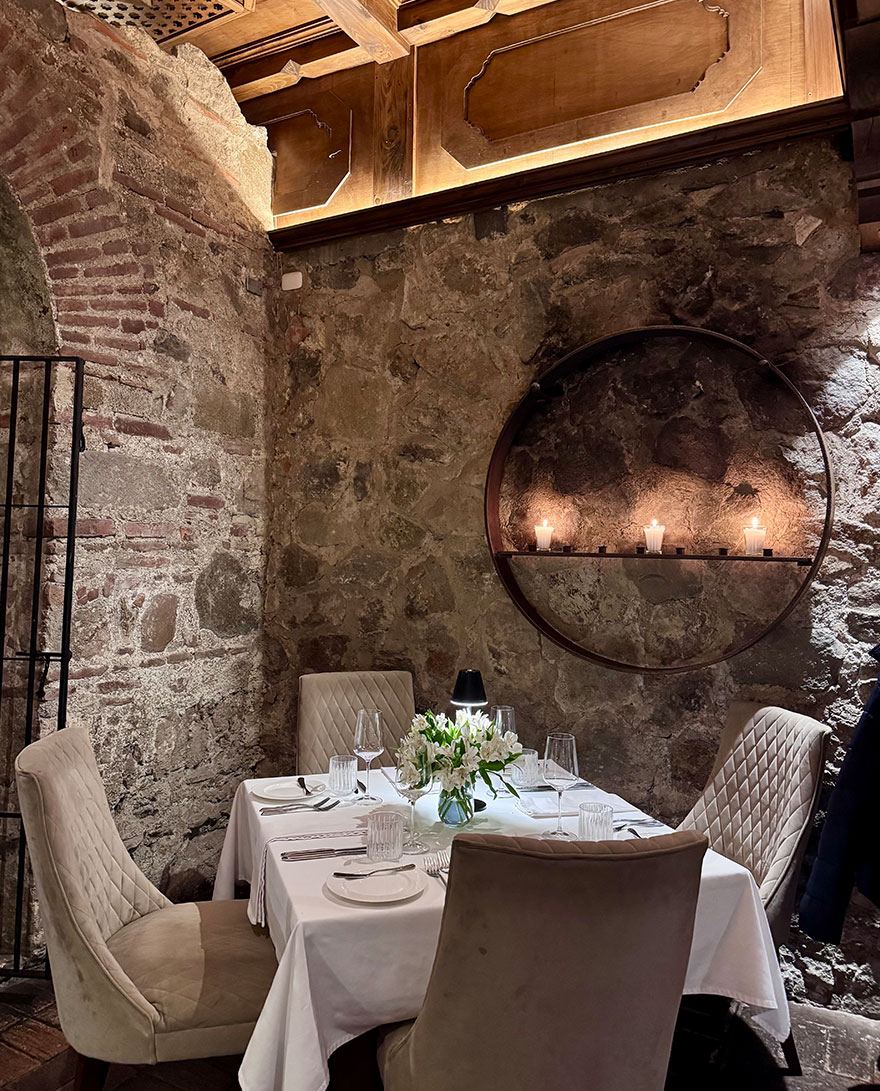
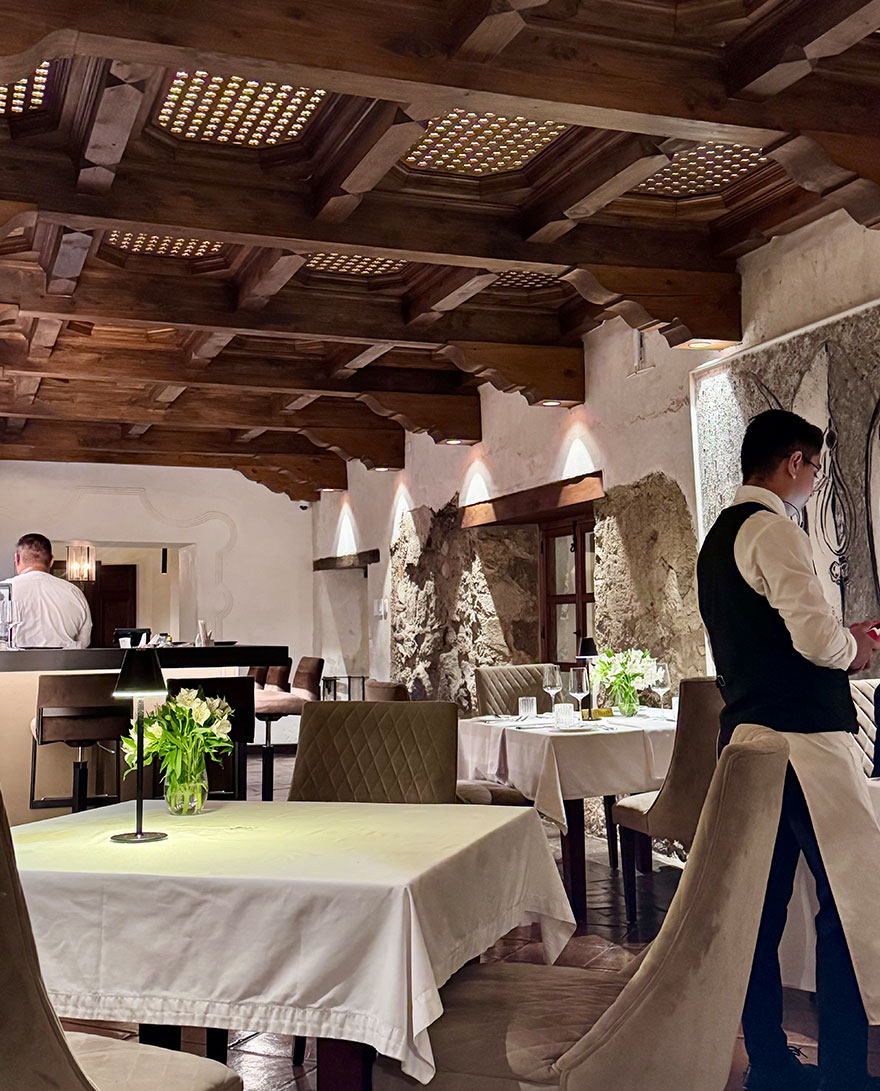
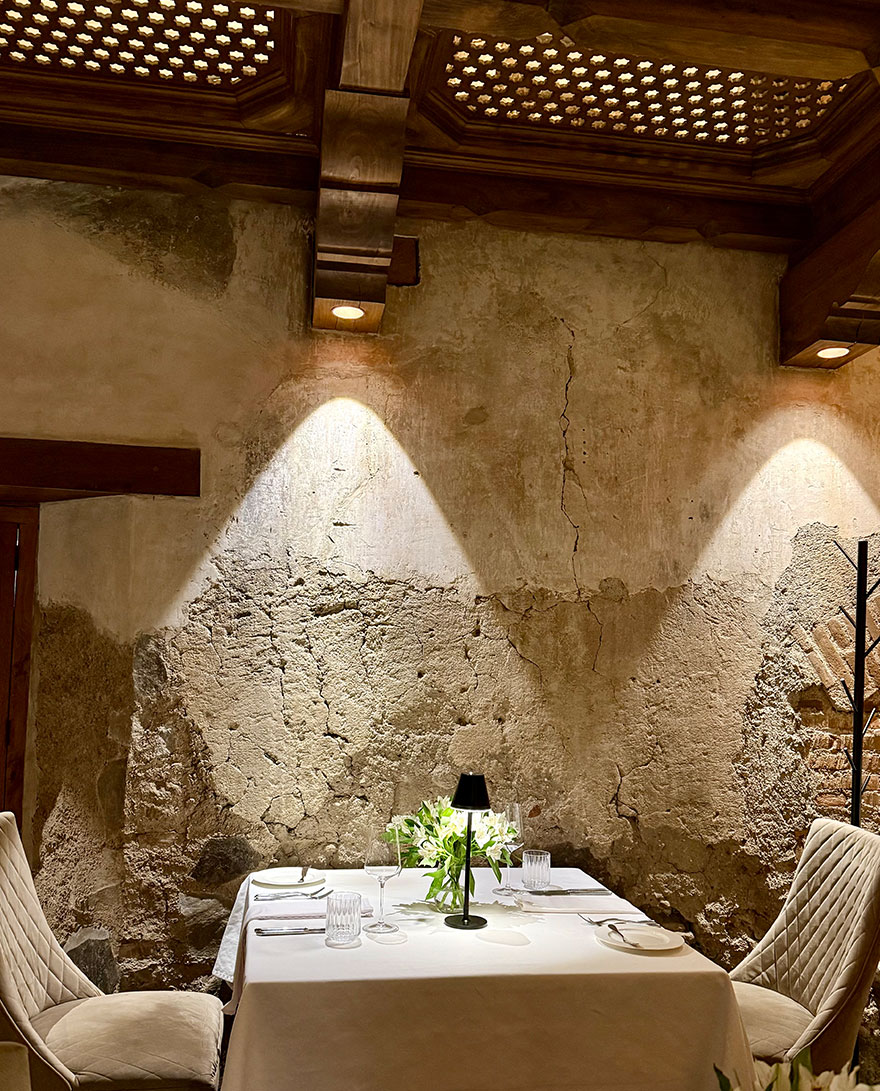
Clios is where we had dinner on our first night. It’s a family-run, quietly confident fine dining restaurant. We loved the interior, with a chic interior design added to an authentic building with weathered walls. The service was polished without being stiff. The menu combined international dishes with Central American ingredients with a local twist. We had a citron sea bass cooked à la plancha, which was simple in the best way: excellent produce, properly cooked, and beautifully balanced.
They also have an outdoor patio that’s more informal, with things pizzas and burgers that looked very tempting for an easy lunch or casual dinner.
NANIK
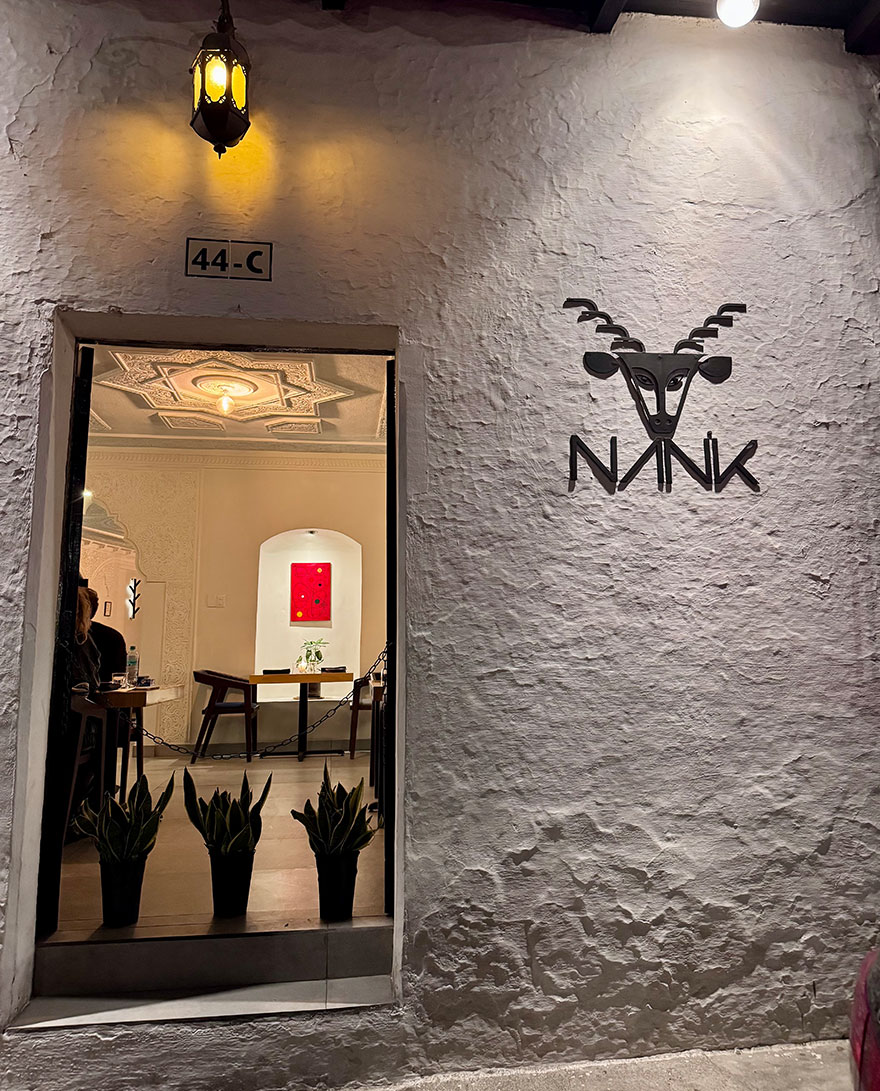
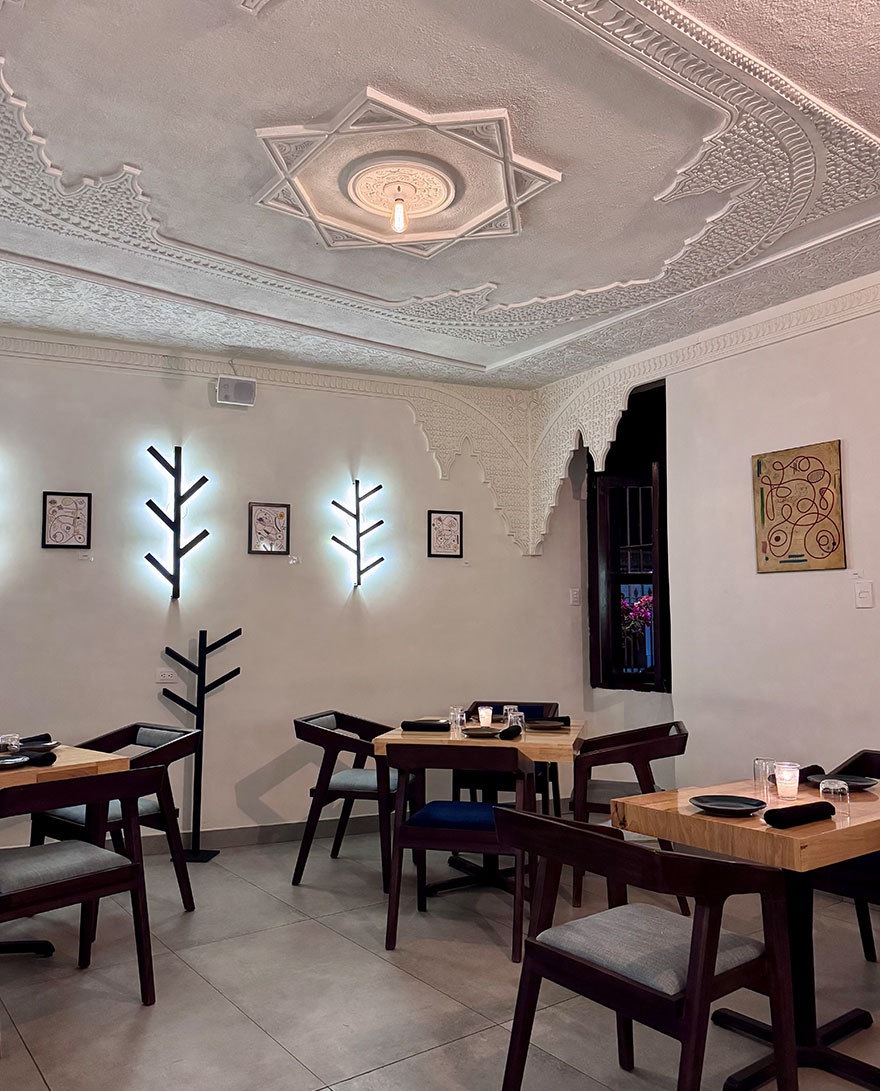
Nanik is a highly creative restaurant that you wouldn’t automatically expect to find in Antigua. It was featured in a Conde Naste Traveller article on the Guatemala food scene. “Nanik” is the Mayan word for abundance, and the name fits: Guatemalan ingredients and microclimates are the whole point here. Chef Fernando Solís talks about cooking shaped by the country’s lakes, oceans and farms, and you feel that on your plate. It’s a place for curious eating: squash blossom tamales and lots of playful experiments with maize. And all this for a fraction of the price for the same sort of dining experience in London.
HECTOR’S BISTRO
Hector’s is a lively, busy casual dining option. The menu focuses on European and international dishes, with plenty of fresh, seasonal produce and a good mix of vegetarian and meat options. We had a lovely pizza there on a night when we fancied something unfancy. One practical note: they don’t take reservations, so go early or be prepared to wait a little.
Dine – lunch
BARRIGA LLENA
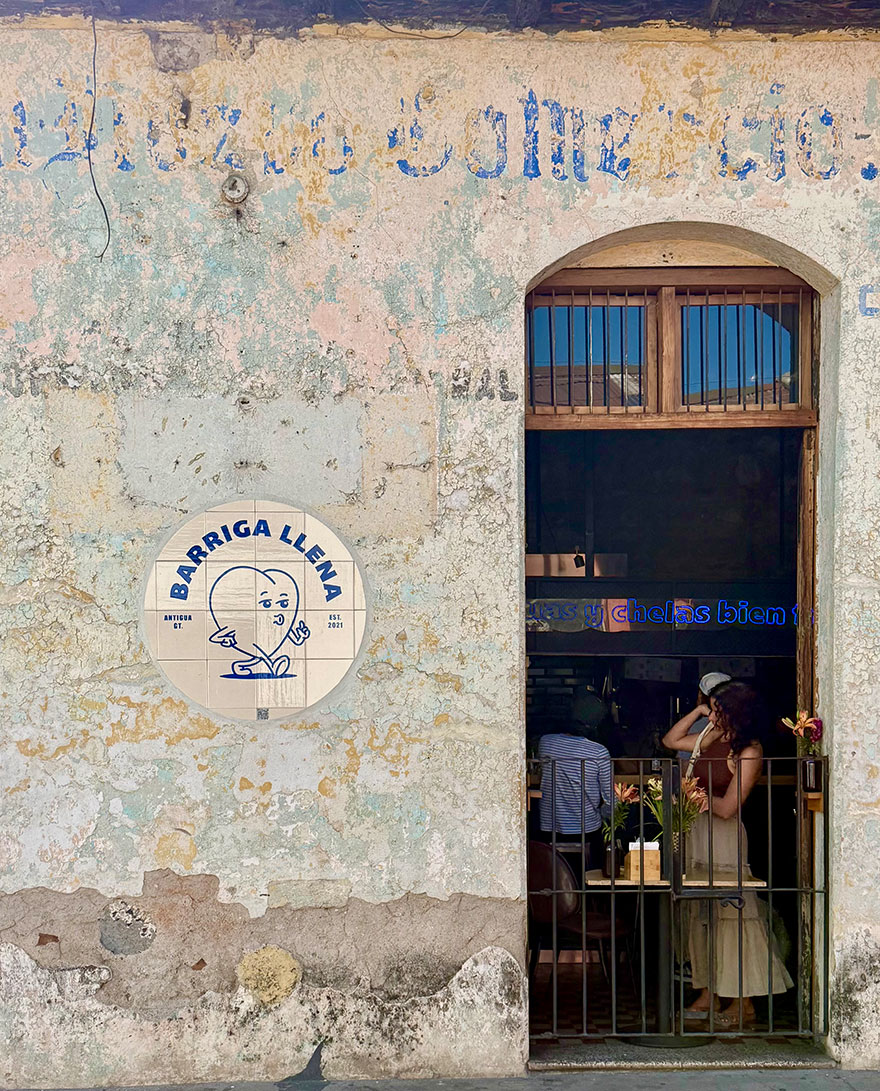
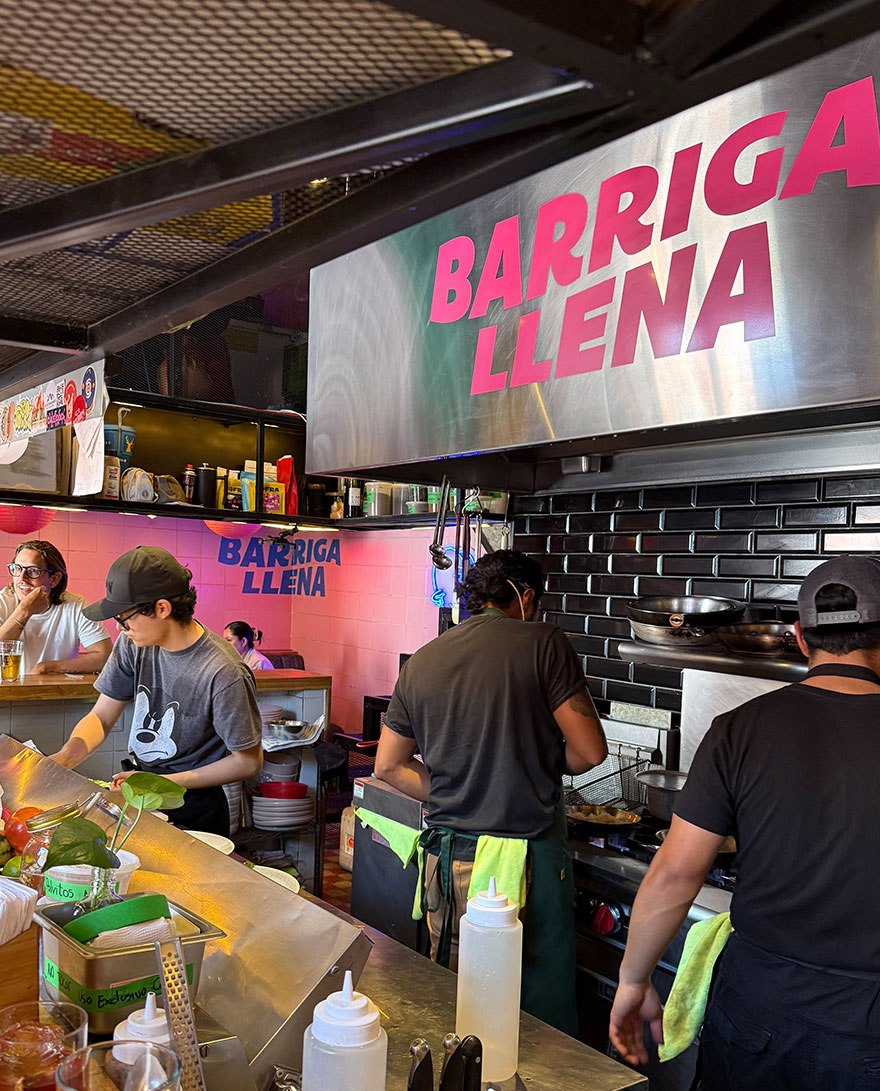
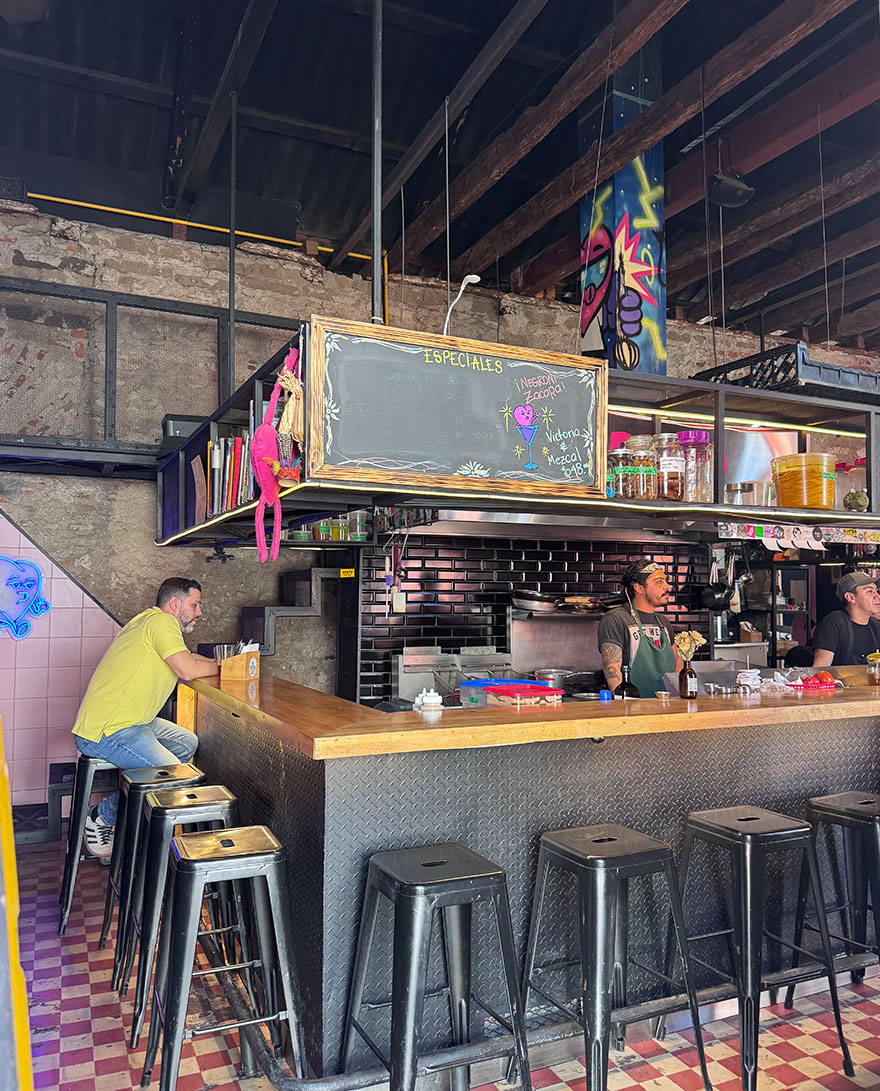
Barriga Llena is fun, informal, and perfect for a low-key lunch or an easy dinner. It’s a hole-in-the-wall style spot with walk-ins only and has a buzzy, casual feel. The pork dumplings are legendary: slathered with pickled veg and chimichurri. They’re also famous for their fried chicken. We recommend sitting at the bar to see the chefs in action and get the full experience.
RINCONCITO ANTIGUENO
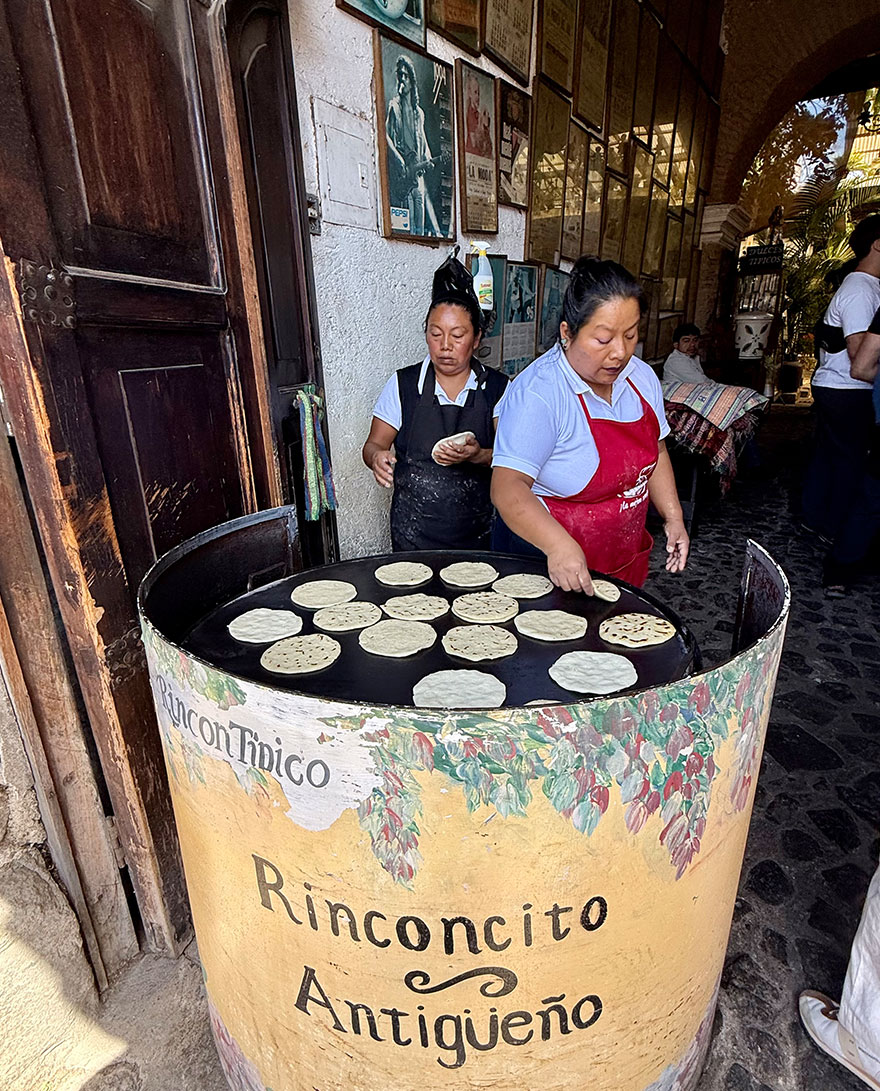
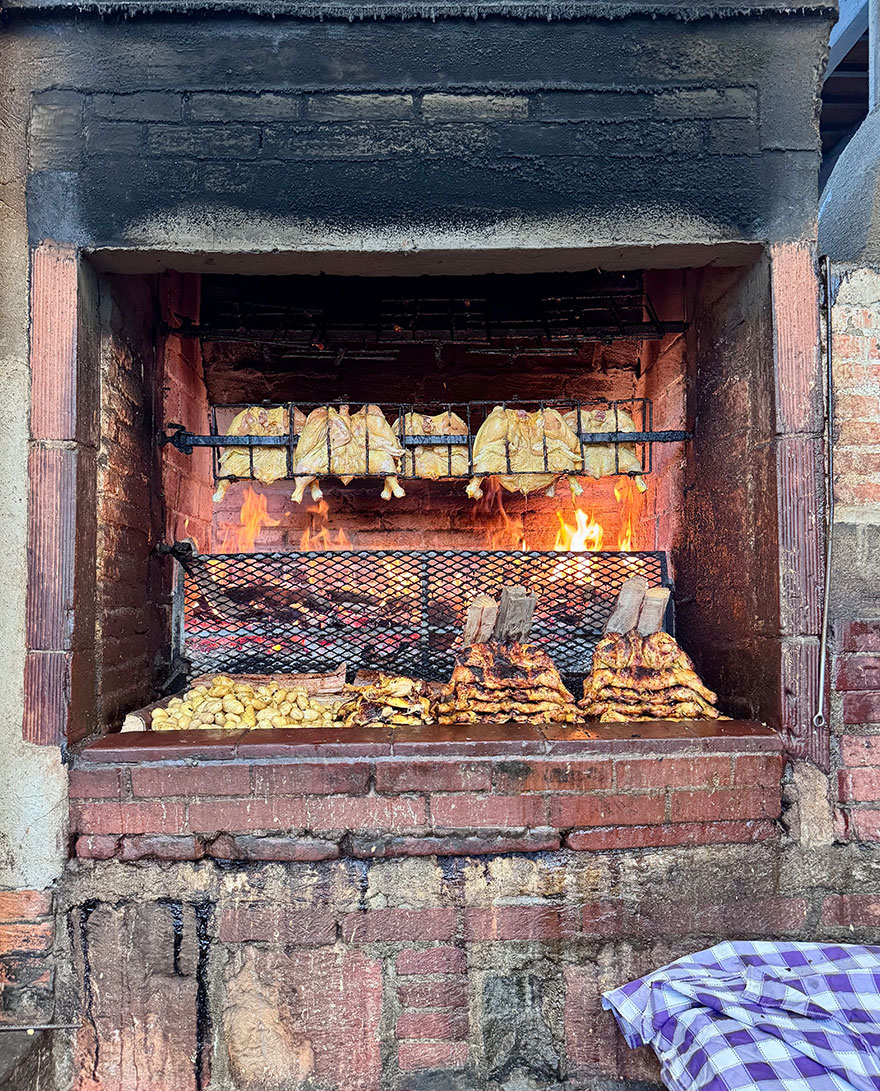
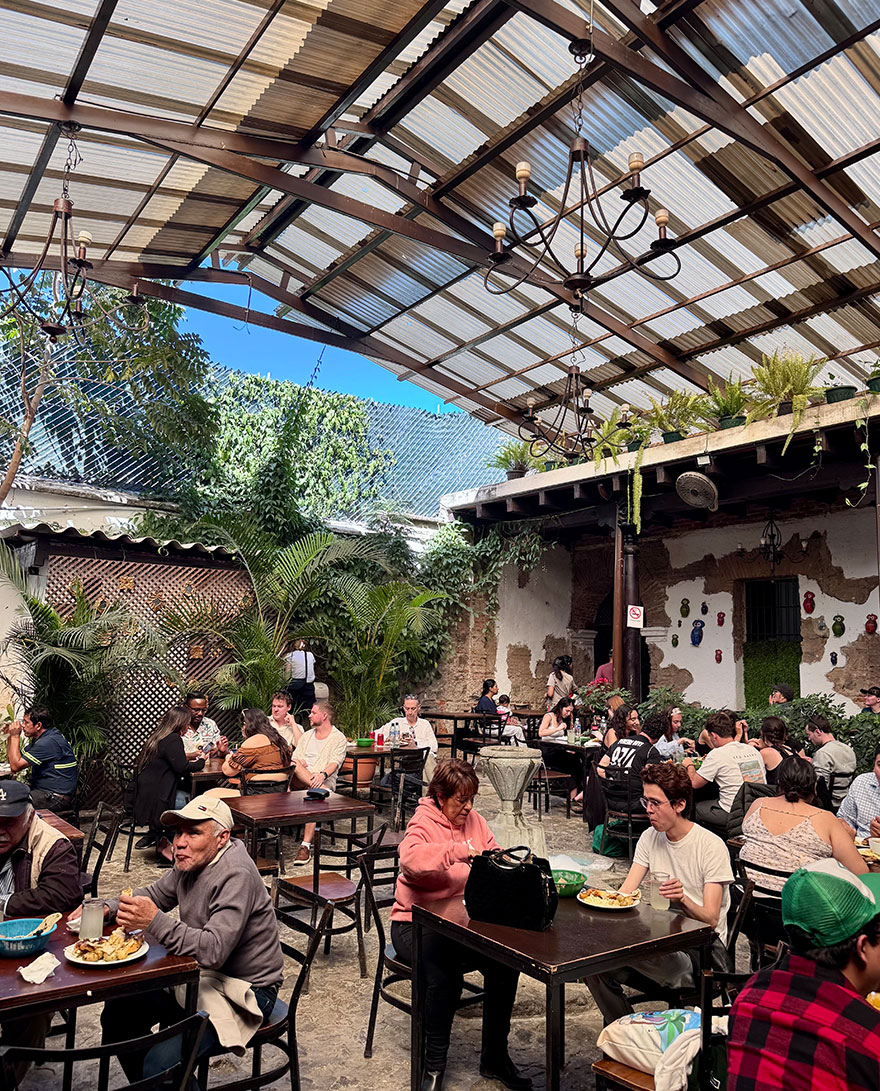
Rinconcito Antigueno is the kind of local place we always hope to find: simple, busy, and genuinely good. They do rotisserie chicken cooked in front of you and tortillas handmade by ladies right by the entrance. You queue up (it goes fast) seat yourself in central courtyard then go up to place your order.
Cafés
Coffee is big business in Guatemala. It was introduced in the 1850s, and today it’s a huge part of the agricultural economy, involving a large part of the population. In Antigua, that translates into dozens of genuinely good coffee shops: from slick, design-led spaces to tiny holes-in-the-wall.
LA PARADA
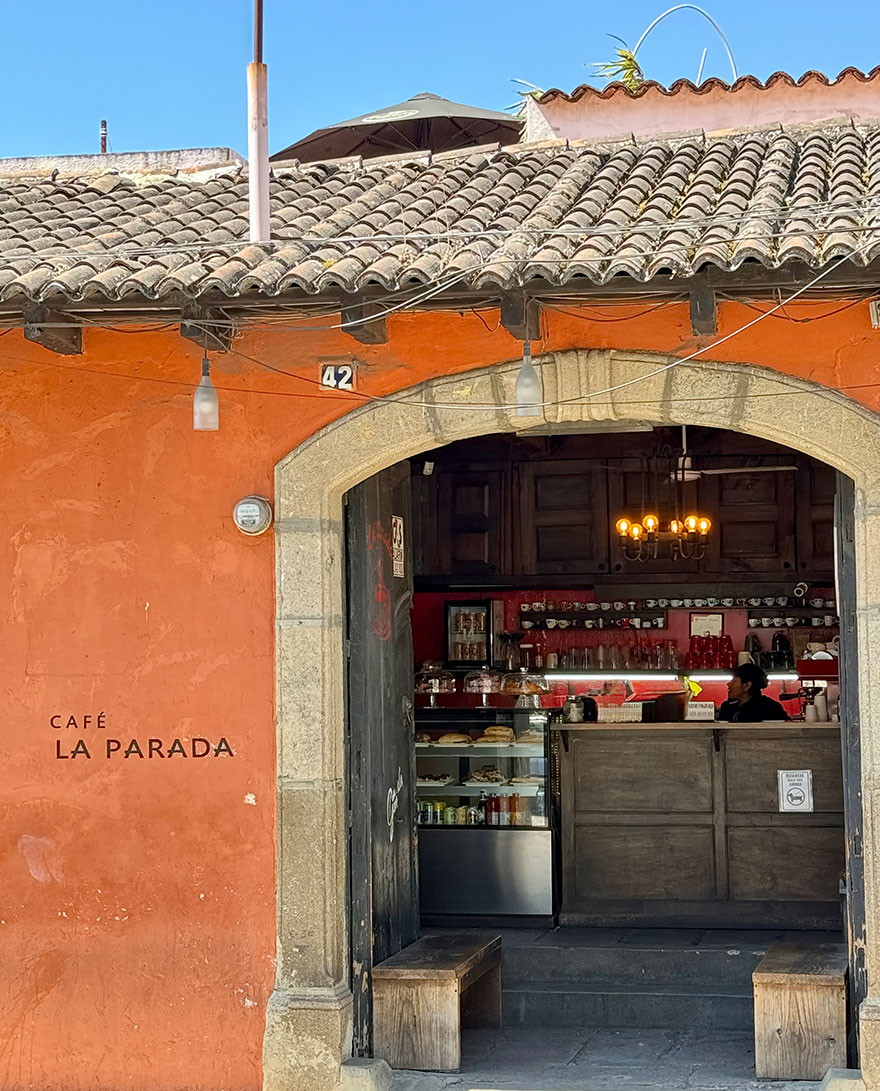
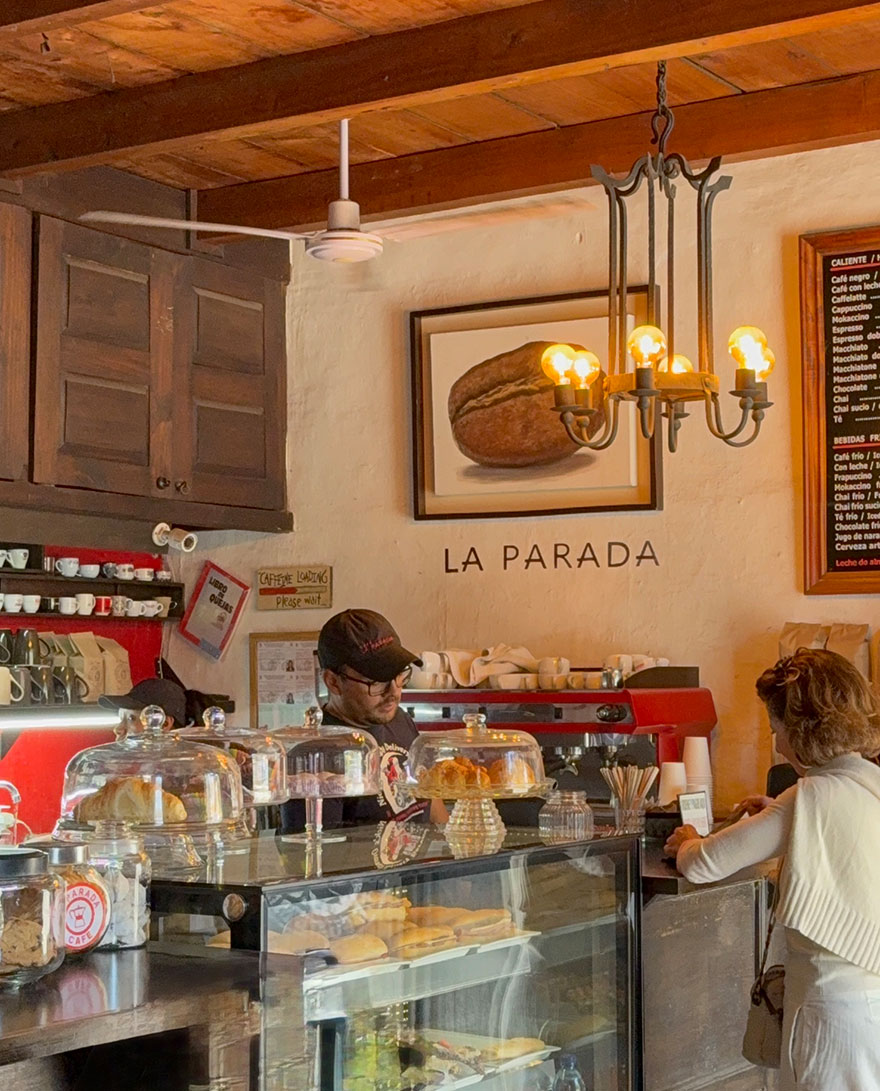
La Parada was recommended to us by locals, and it’s a great little stop, especially for the view: sitting with a coffee, looking out towards El Merced, watching Antigua life unfold in front of you.
12 ONZAS
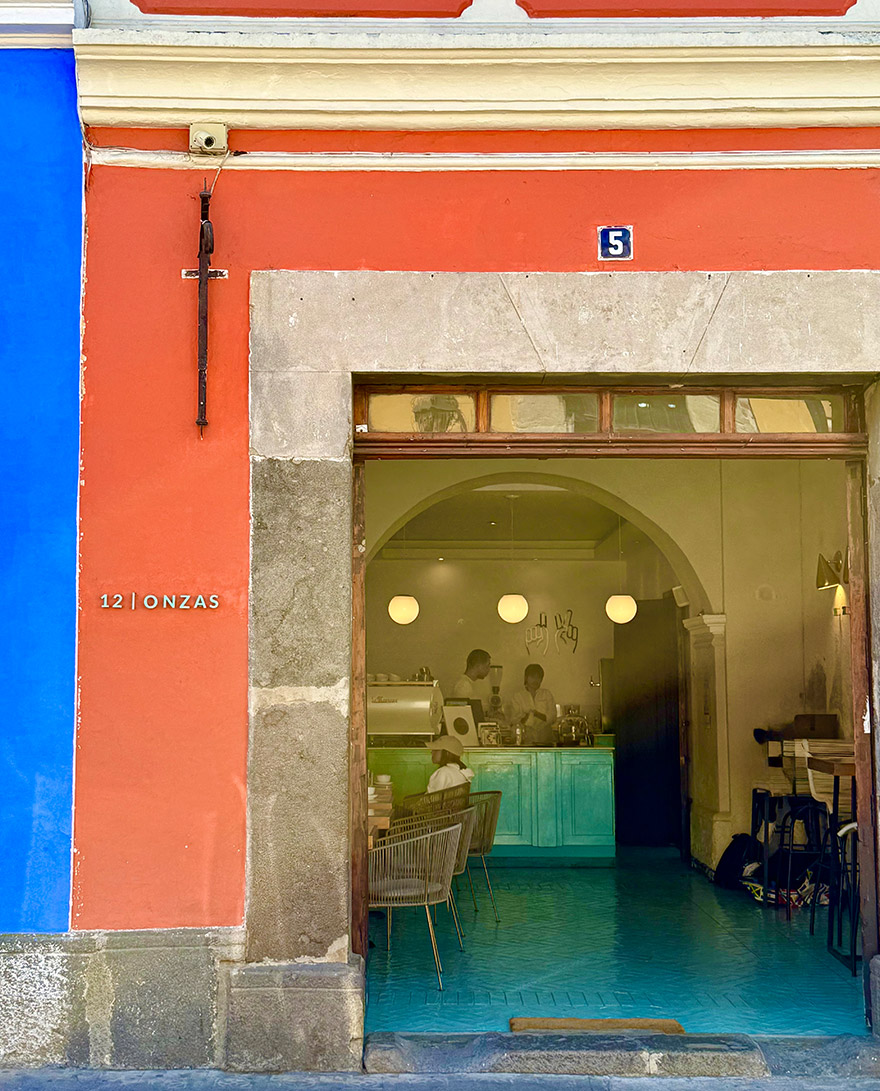
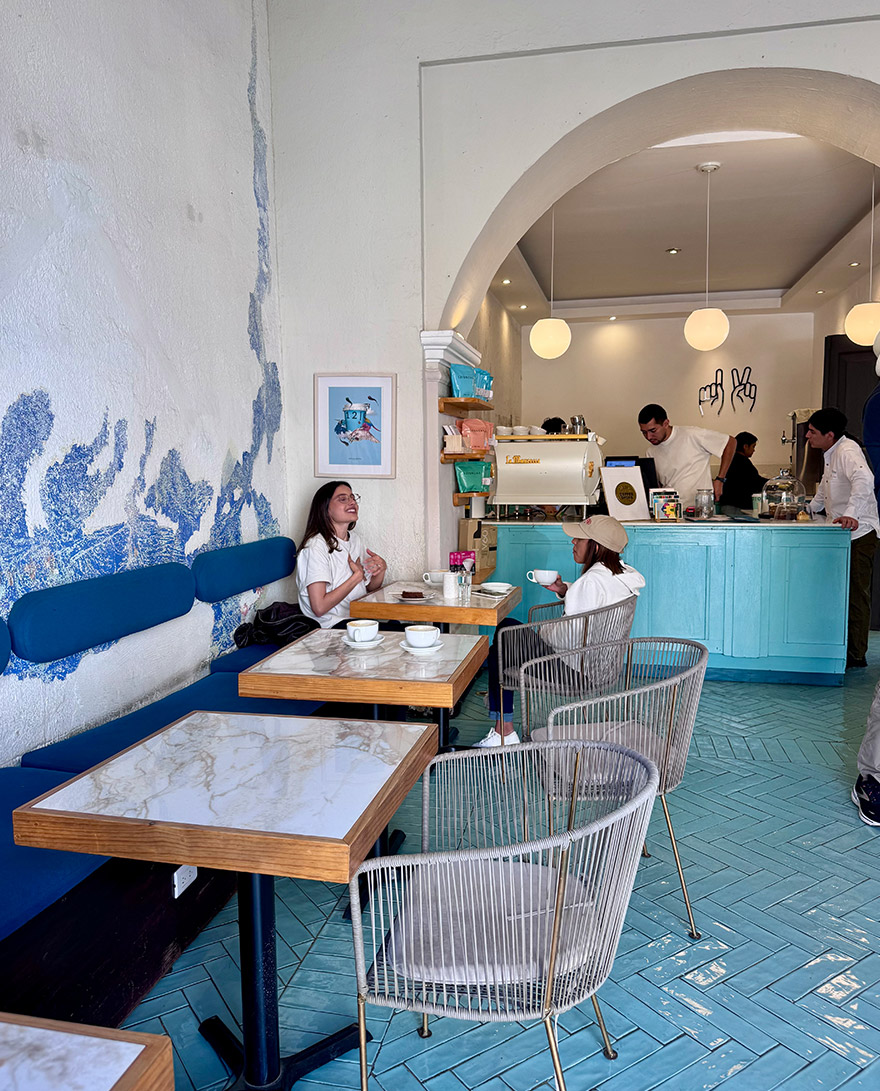
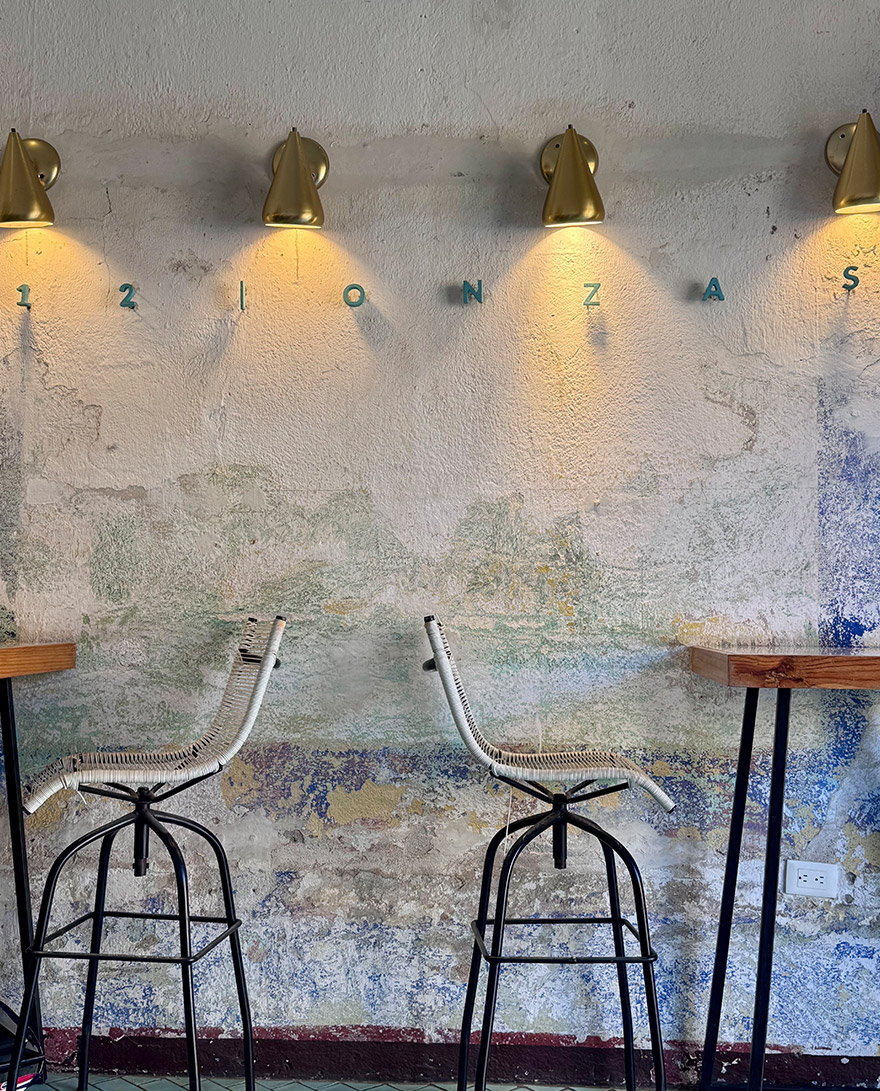
Named after the 12-ounce serving size, 12 Onzas’ award-winning baristas using coffee from their nearby family finca. The front space is stylish in duck egg blue with the beautifully aged walls we loved in Antigua. At the back, there is an open-air courtyard.
ONCE ONCE
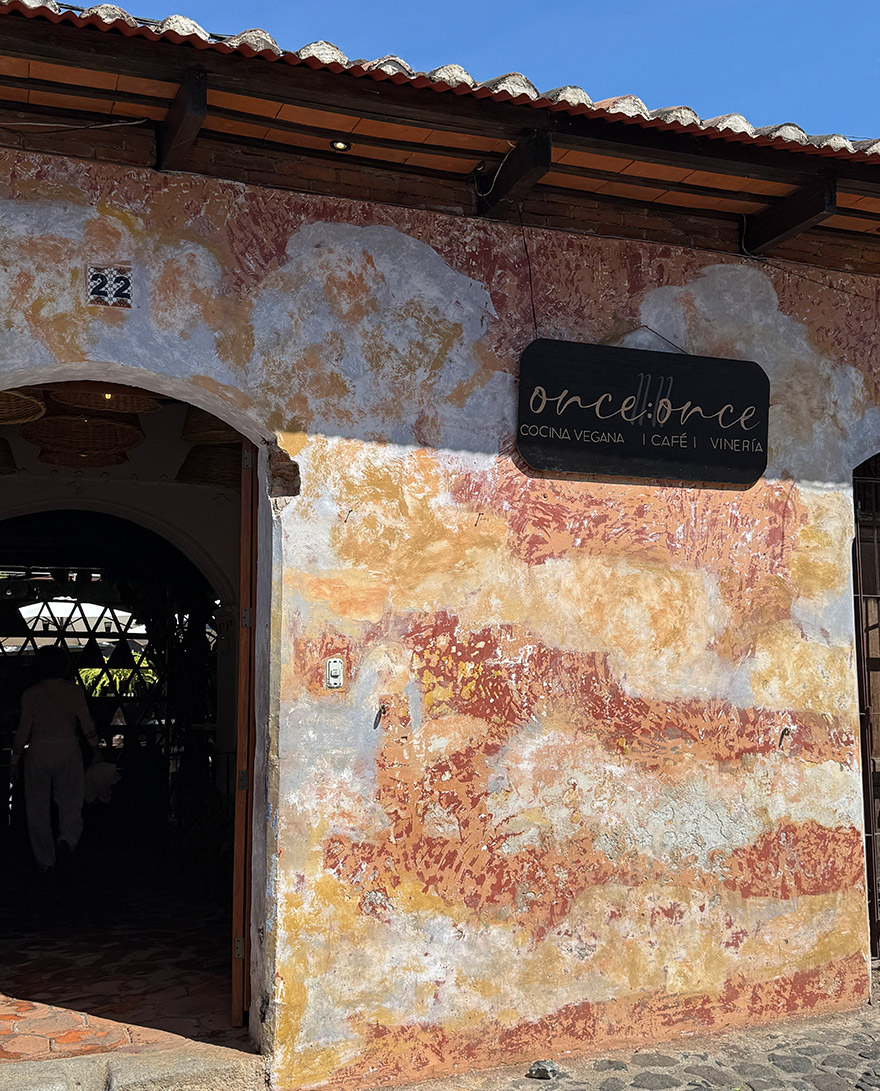
Once Once is a stylish vegan restaurant with a leafy patio garden. The menu does Asian and Mexican fusion with plenty of flair. You’ll find it at the back of Wicho & Charlie’s, and it’s worth reserving, especially for weekend lunches and dinners.
ALEGRIA
Allegria was the favourite “cool space” for our daughters in Antigua. It has a hip, independent vibe, with artisan products for sale and art on the walls.
Do
CITY WALKING TOUR
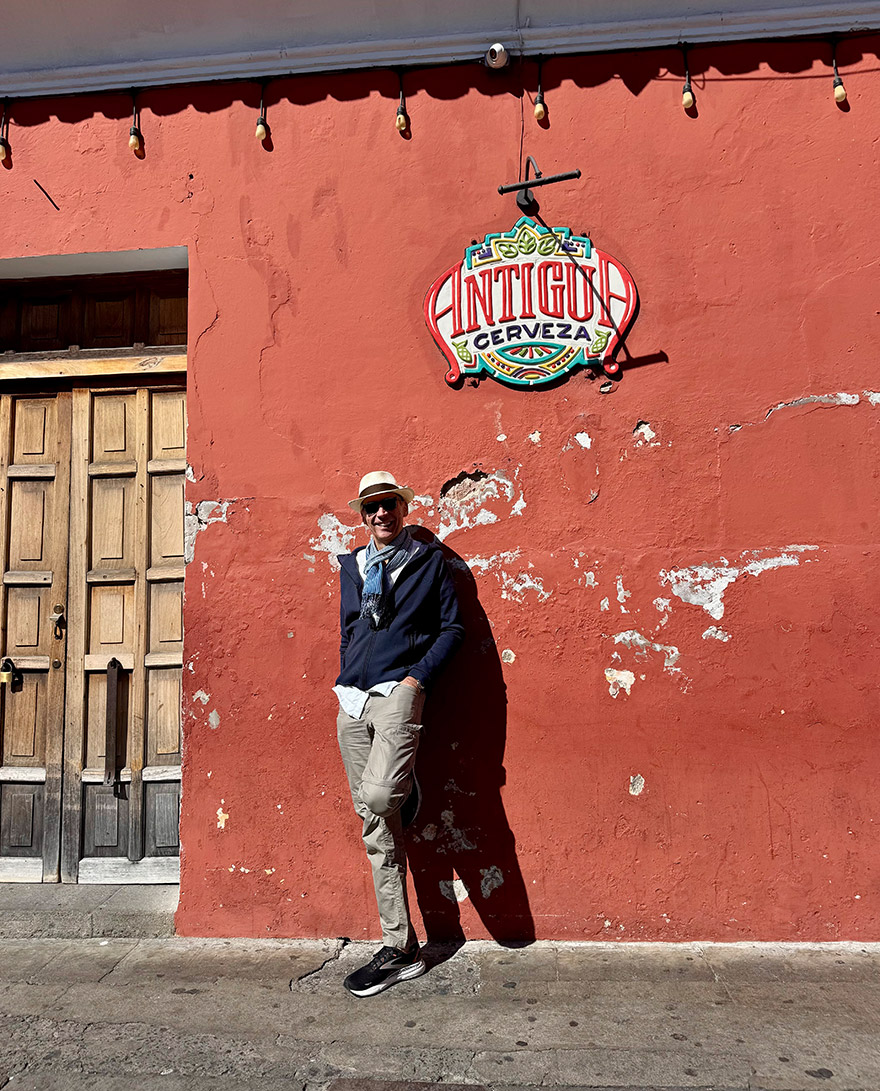
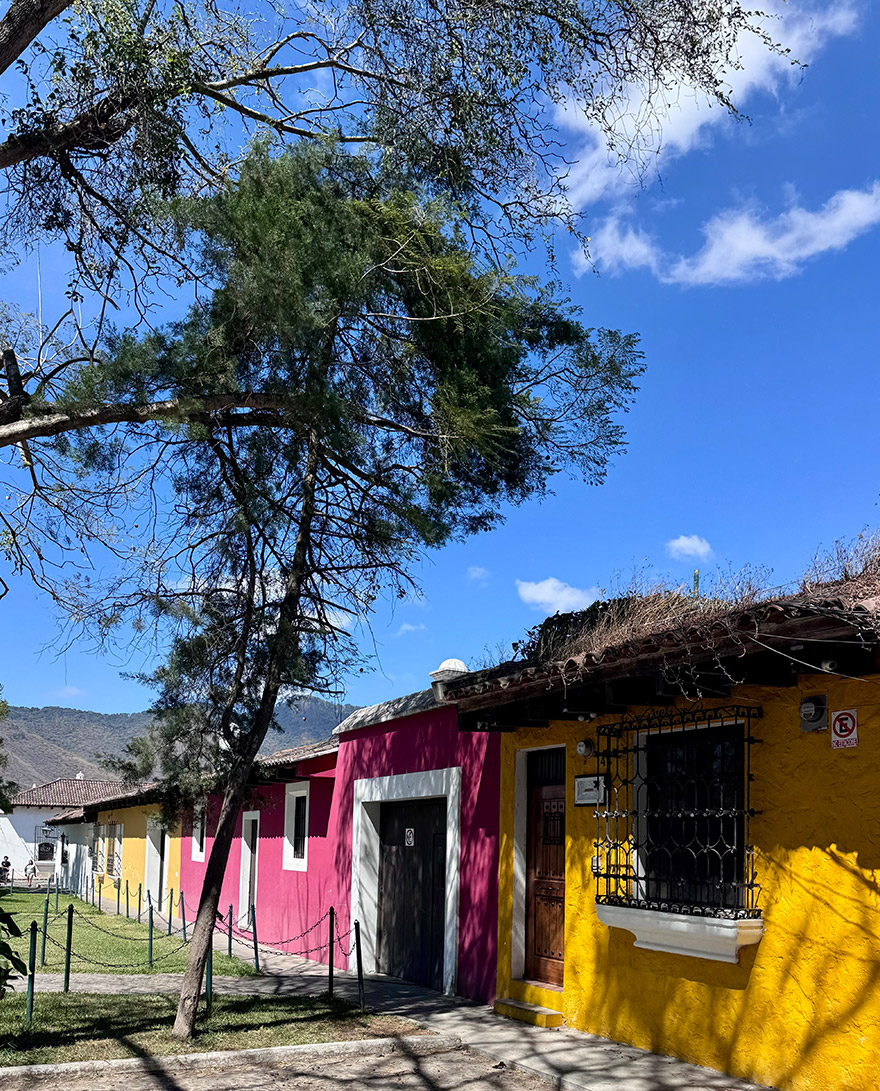
There’s so much to see in Antigua, but because it’s compact, we managed to do the following in a single day (also getting in 20,000 steps of exercise!). Part of the attraction as you wander the cobbled streets is the incredible collection of colourful buildings that are a visual feast. It’s one of the lovliest cities we’ve visited on our travels.
Arcos de Santa Catalina
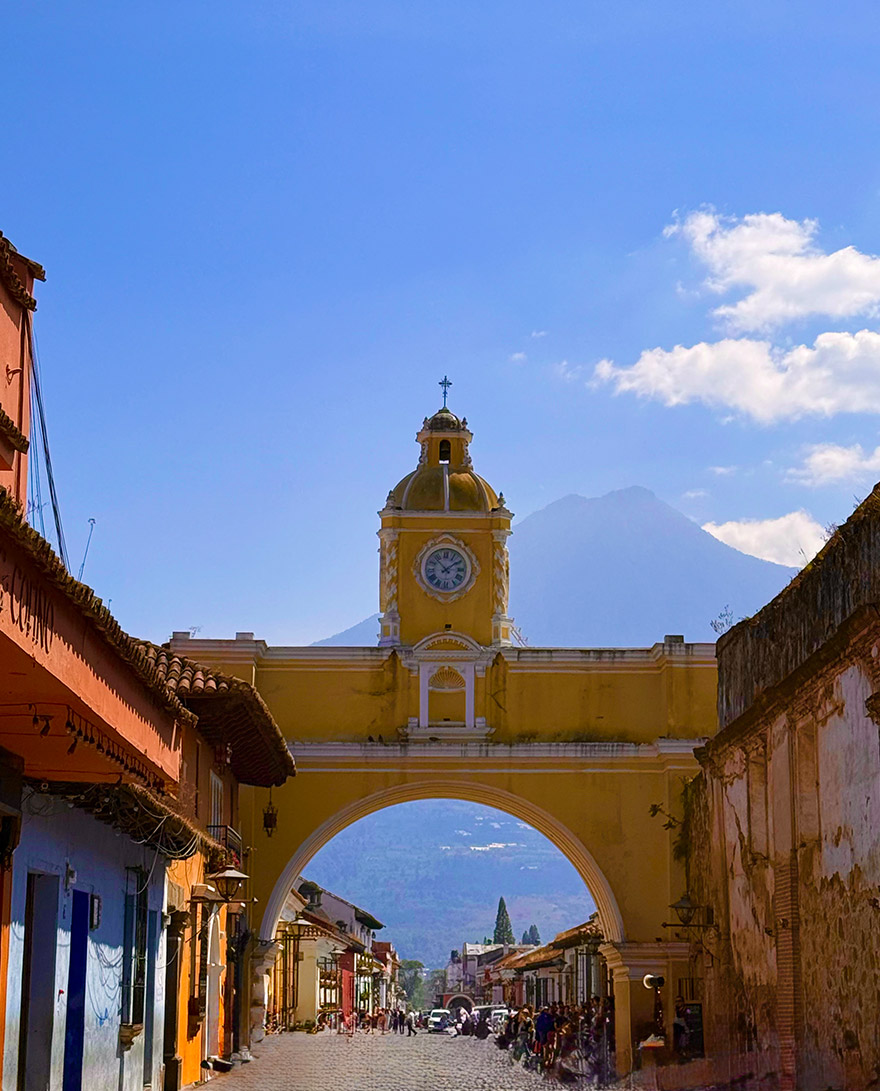
The start of our walking tour is Arcos de Santa Catalina (right next to the San Rafael hotel, if you decide to stay there). This pale yellow arch is Antigua’s most photographed landmark, with volcanoes framed behind. Built in the 17th century as part of the Convento de las Capuchinas, it allowed cloistered nuns to pass between convent and church without being seen by the public. Today it’s the city’s symbol, and it’s worth seeing early morning before the crowds arrive.
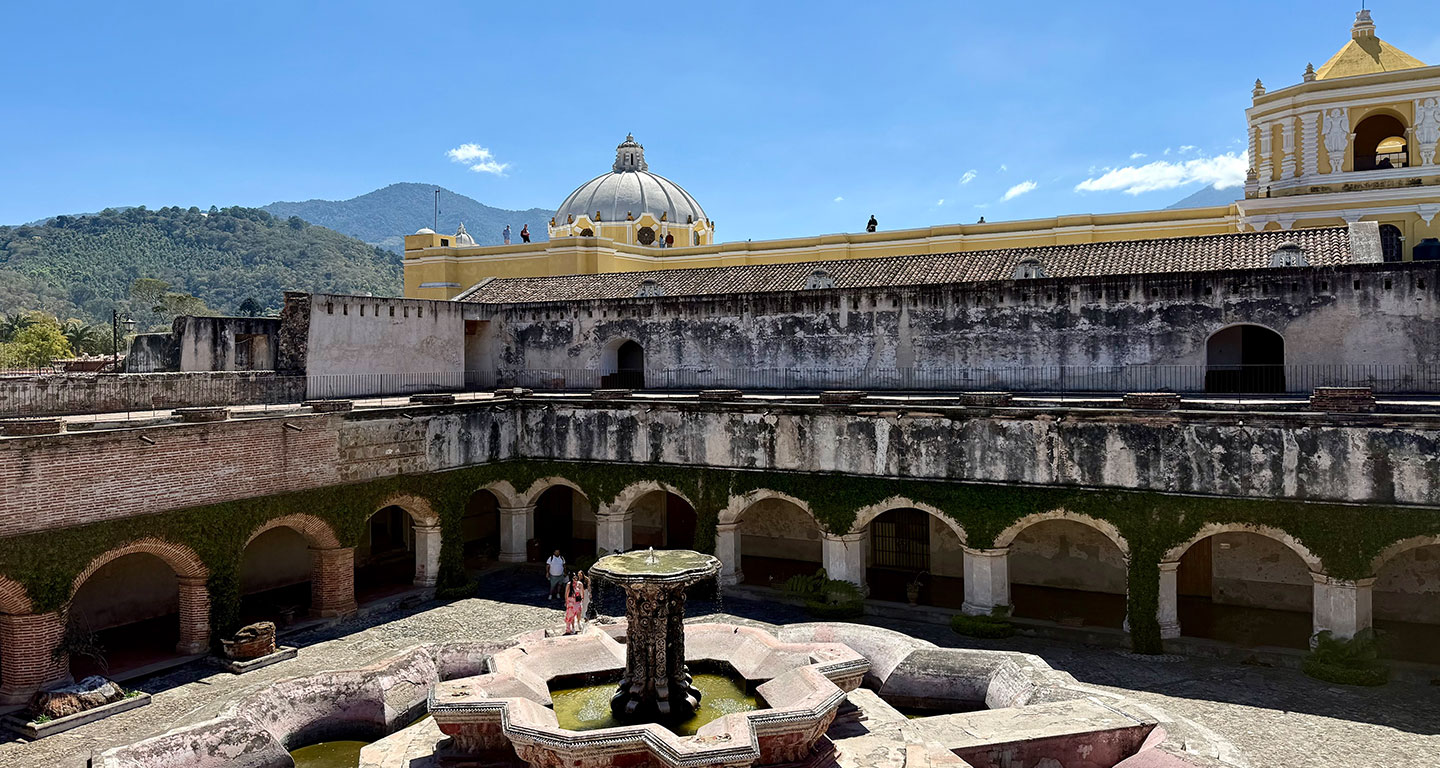
Rooftop of la Merced
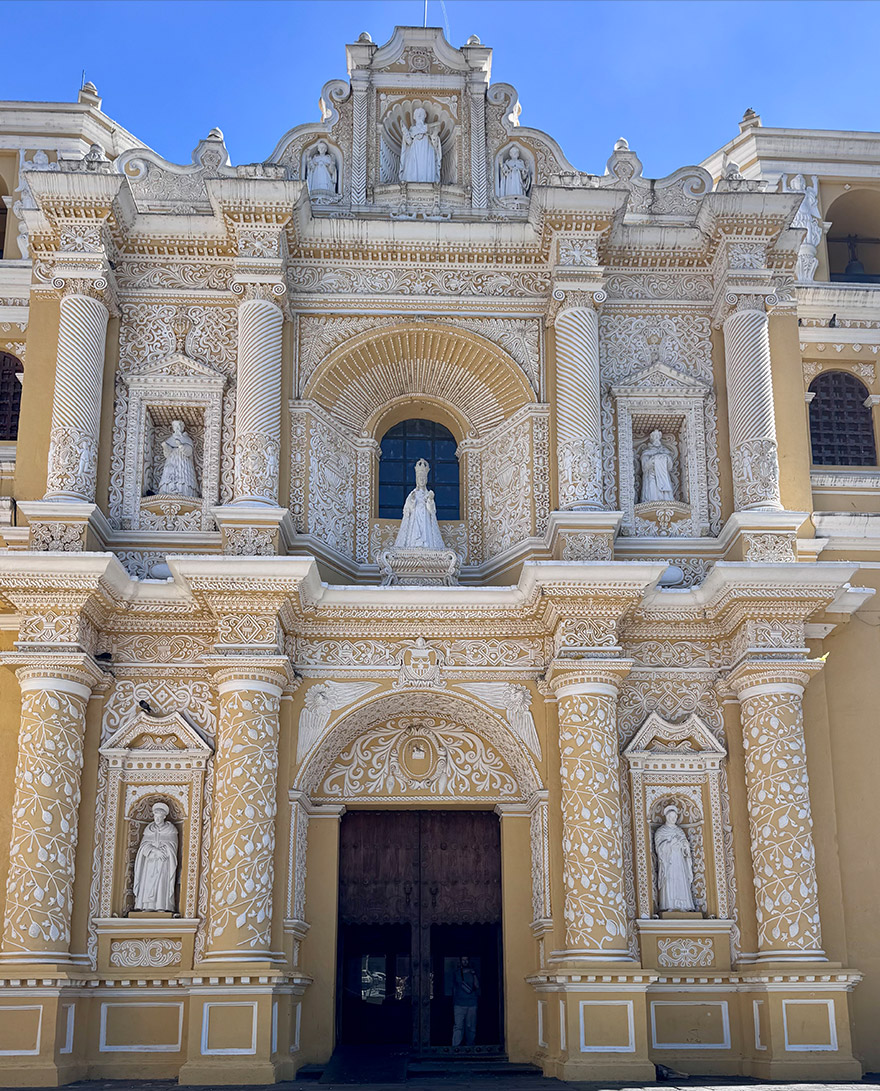
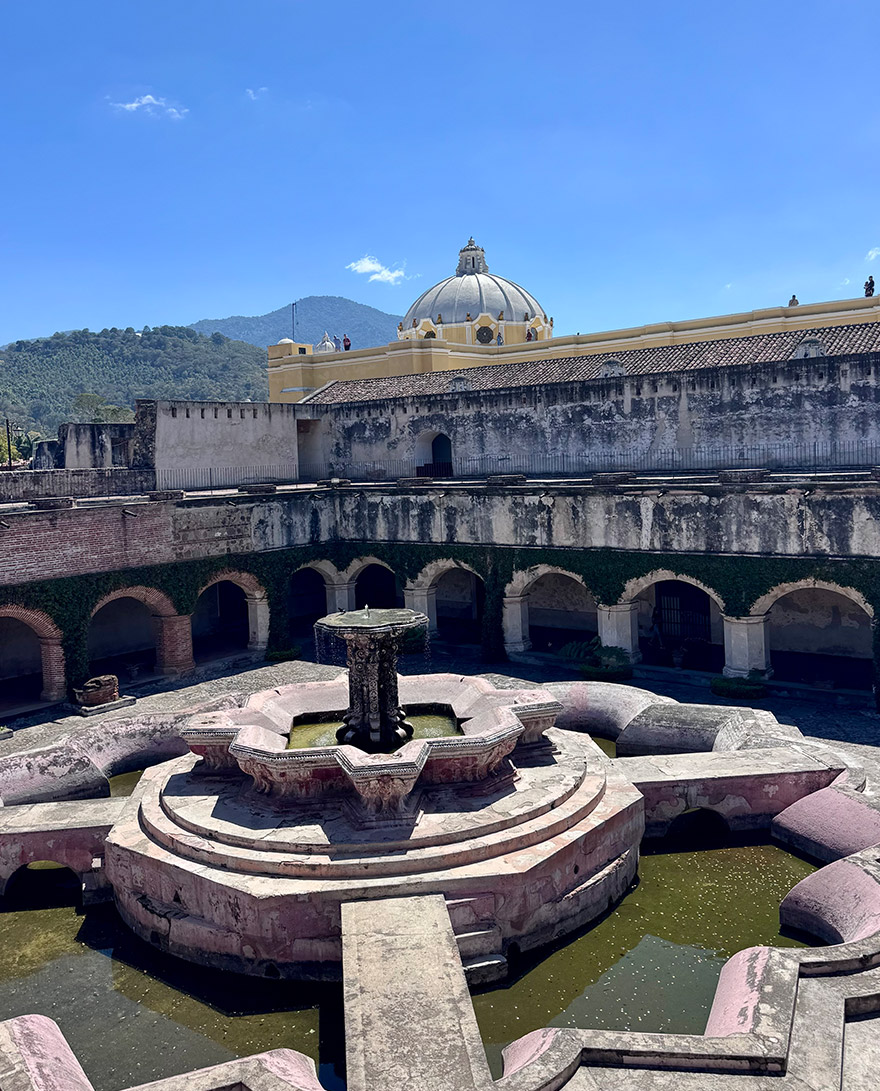
A short walk north takes you to Iglesia de la Merced, a stunning 18th-century baroque church. On the outside, it has an ornate yellow-and-white façade and intricate stucco work. Stop off after your visit for a coffee at Café La Parada (see Cafés section).
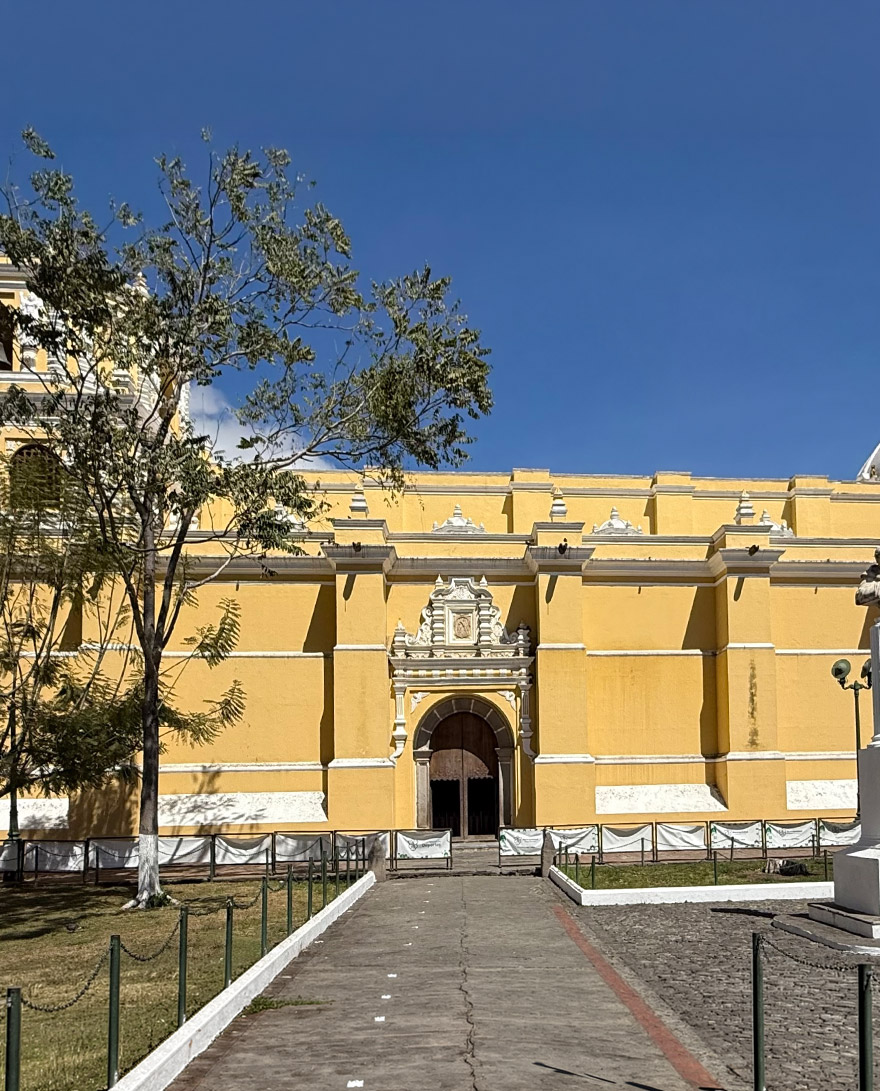
There are plenty of viewpoints in Antigua, but the rooftop of La Merced is the one you really shouldn’t miss. It has stunning views volcanoes, church domes and Antigua’s low-slung grid of colour.
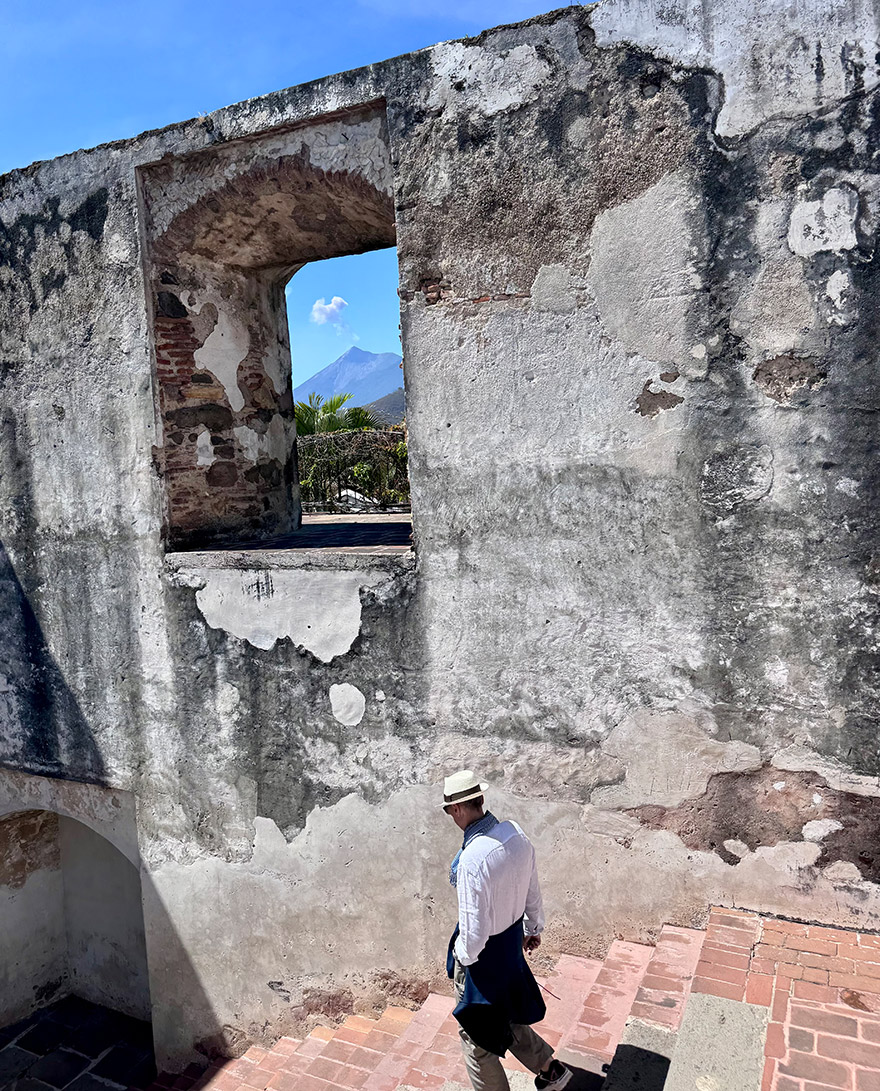
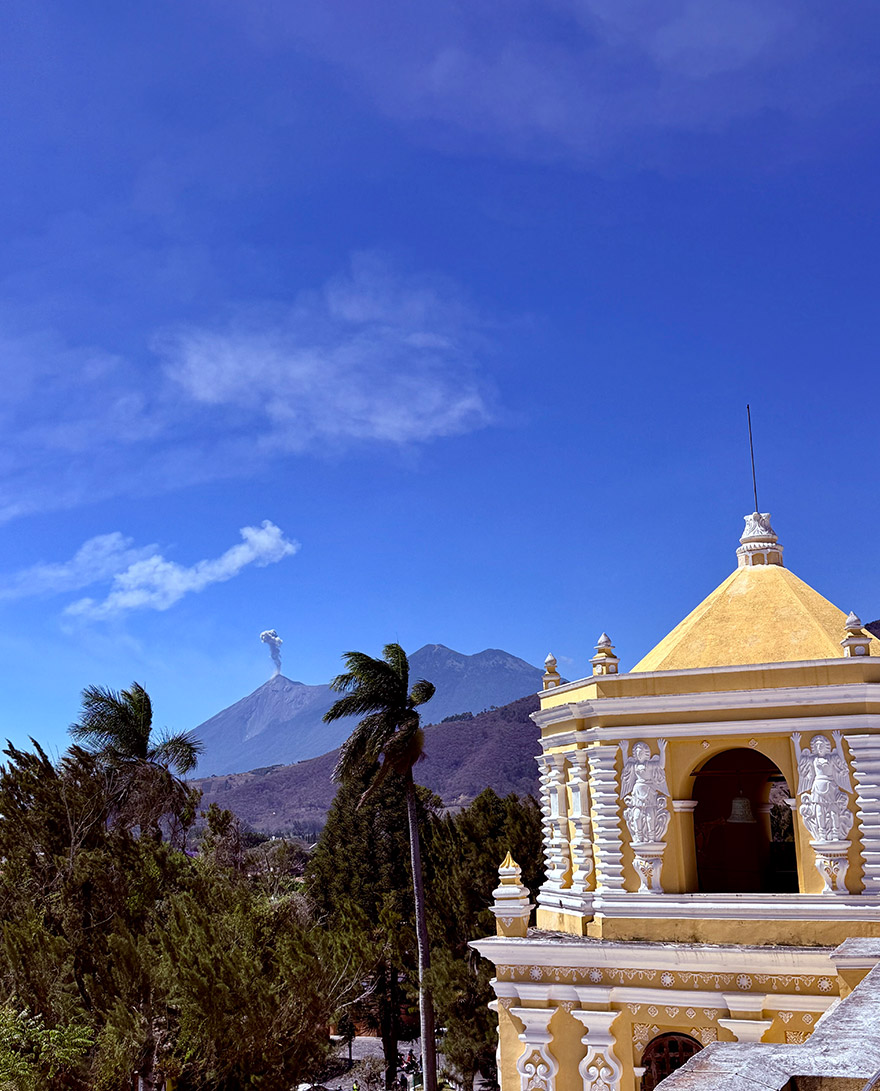
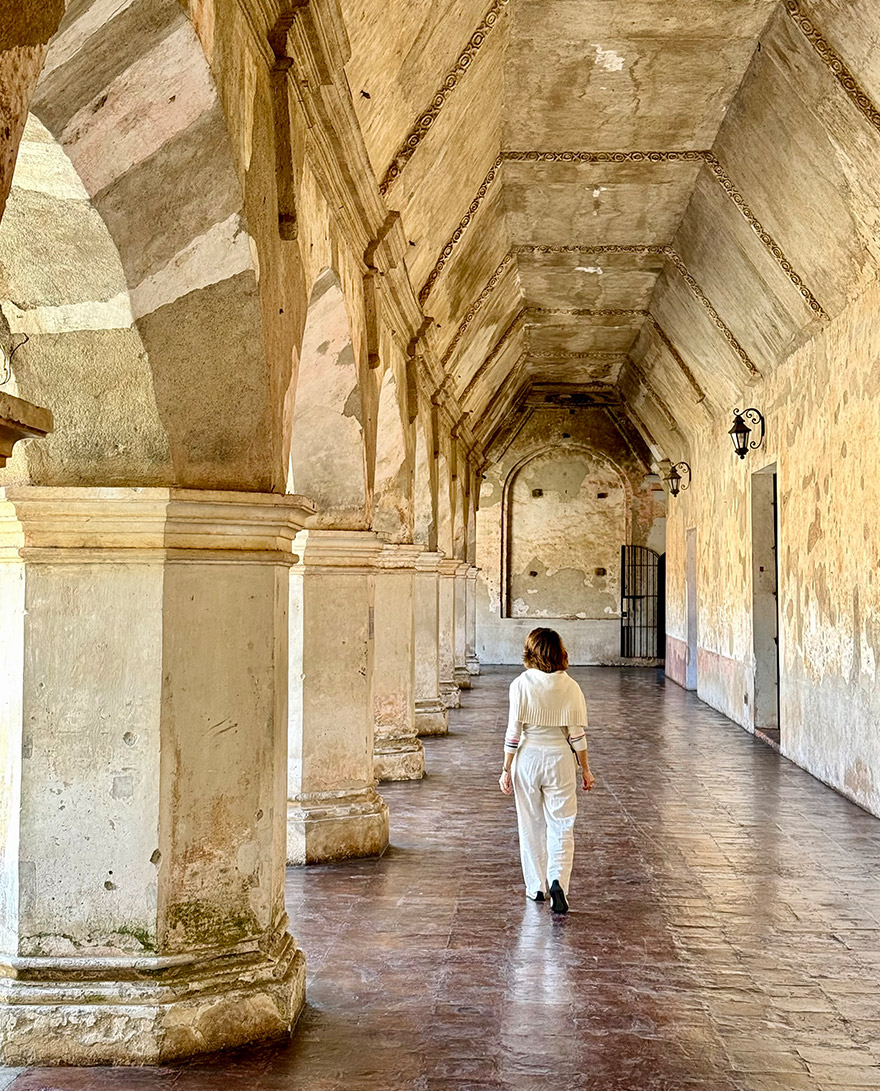
Your ticket also takes you through the beautiful remnants of the old convent, destroyed in the 1773 earthquake.
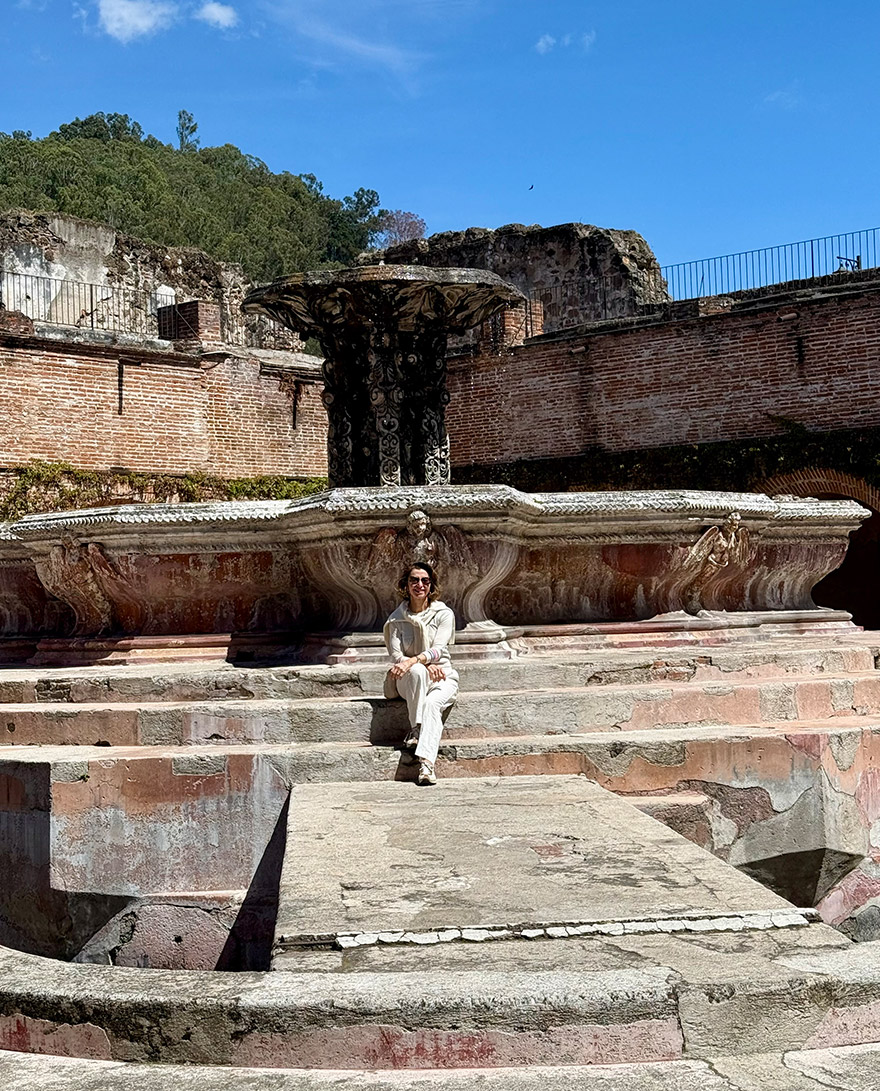
Mercado Central
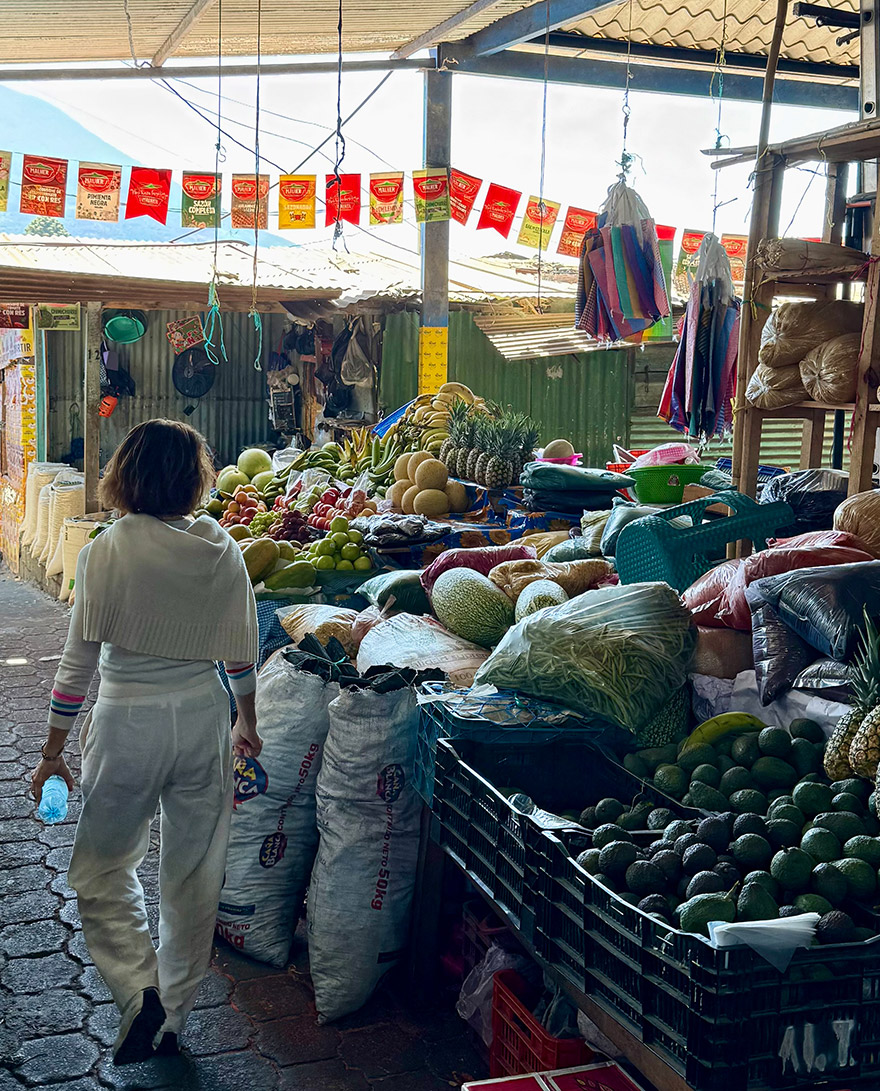
Head west to Antigua’s Mercado Central, which is a lively, slightly chaotic immersion into daily life. You’ll find piles of avocados, papayas and mangoes, textiles, flowers, toiletries, toys, and a wonderfully random mix of everything else. The adjoining handicrafts market is more souvenir-focused, but still worth a quick wander.
Colegio Compañía de Jesús
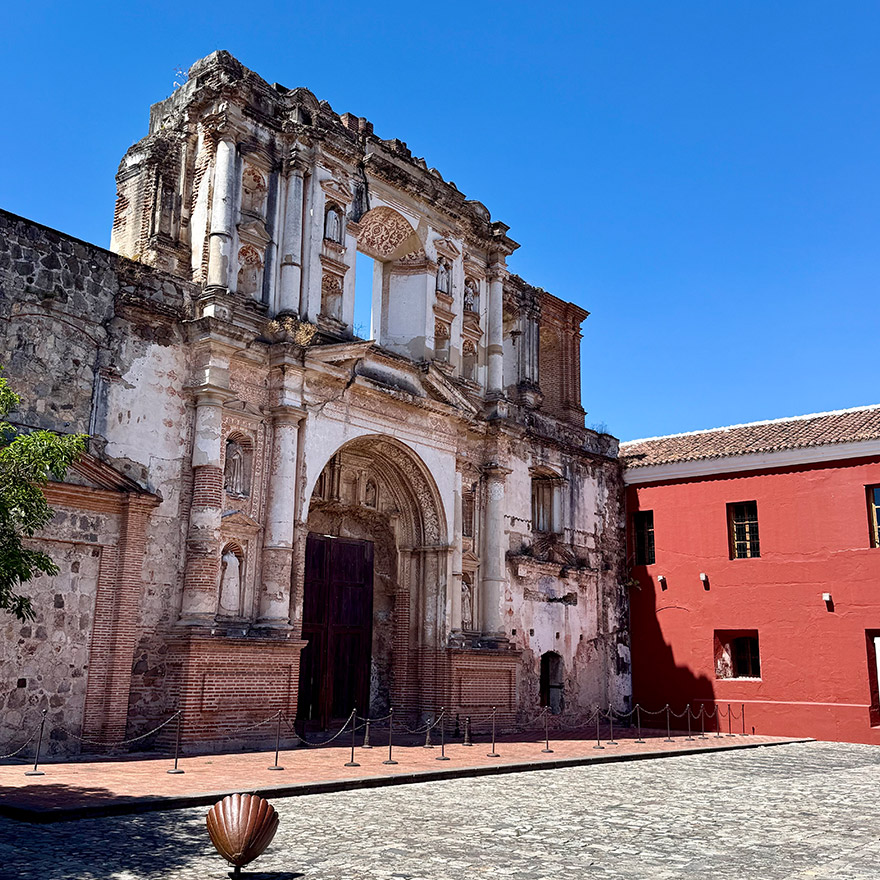
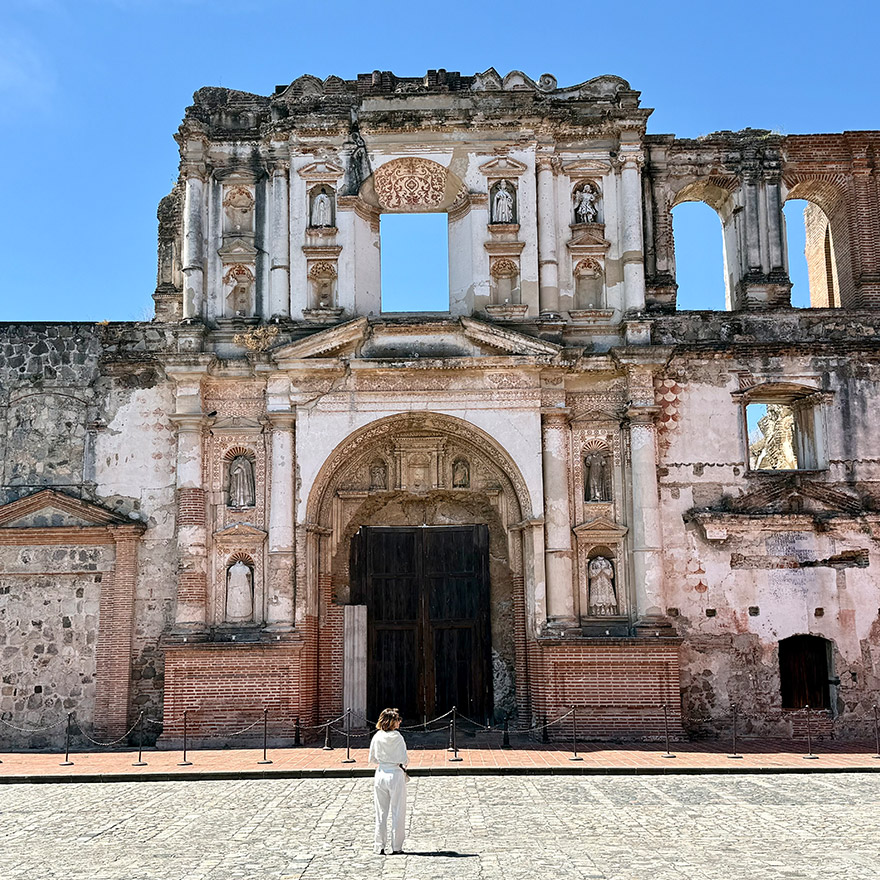
We now walk east towards Parque Central, which is the heart of the city. On the way, stop to admire the remains of Colegio de la Compañía de Jesús. This Jesuit college and church are another reminder of how grand Antigua once was. Today, it’s a shell of stone and arches, but it’s still striking
Parque Central
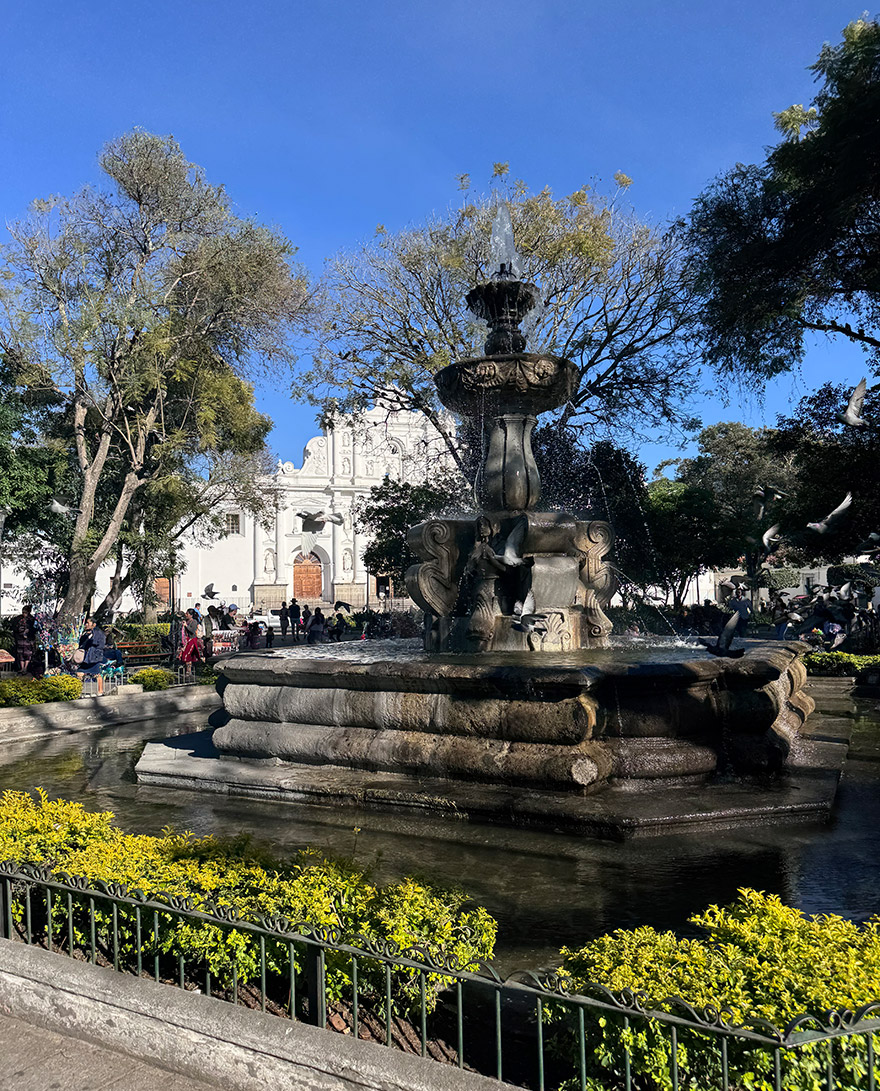
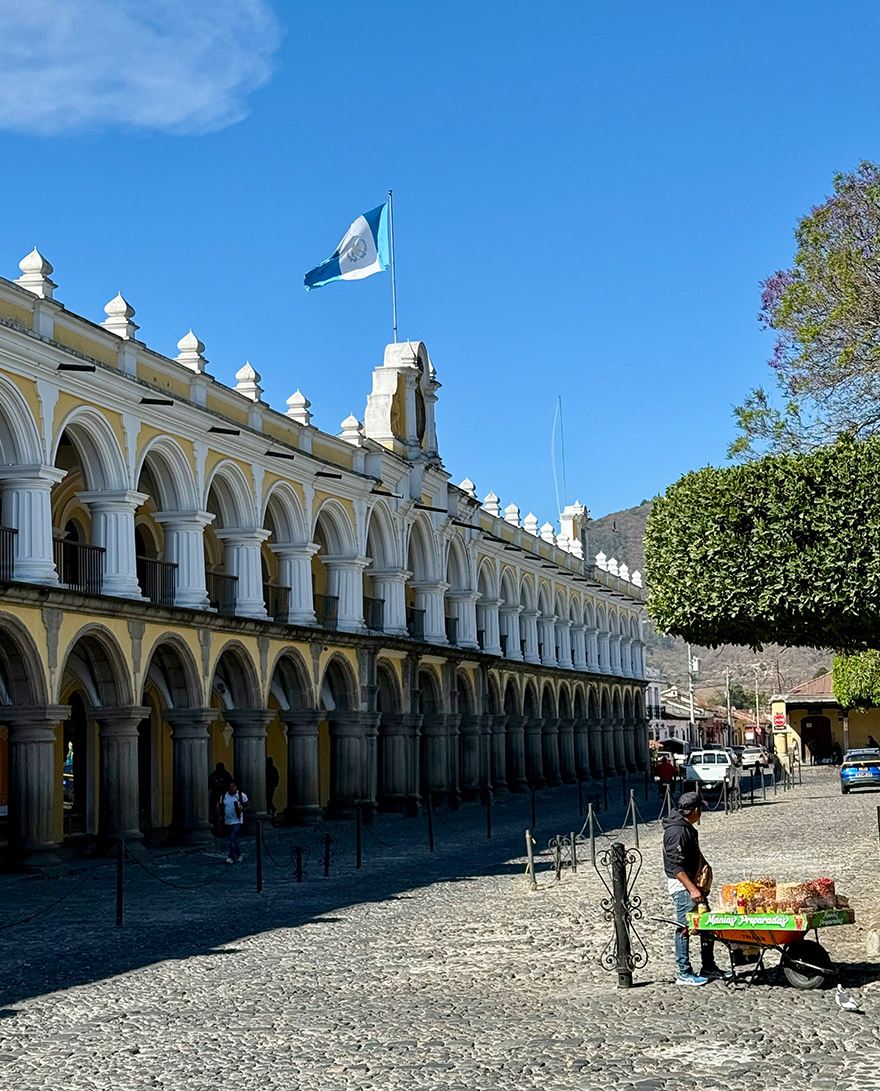
Parque Central is the city’s beating heart — leafy, busy and framed by handsome colonial buildings, including the grand Real Palacio de los Capitanes Generales (below right). This is where Antigua life plays out: women in woven skirts selling snacks, tuk-tuks zipping by, shoeshiners at work and families gathering around the fountain. It’s also a perfect orientation point, with cafés, museums and the cathedral all within a few minutes’ walk.
San José Cathedral
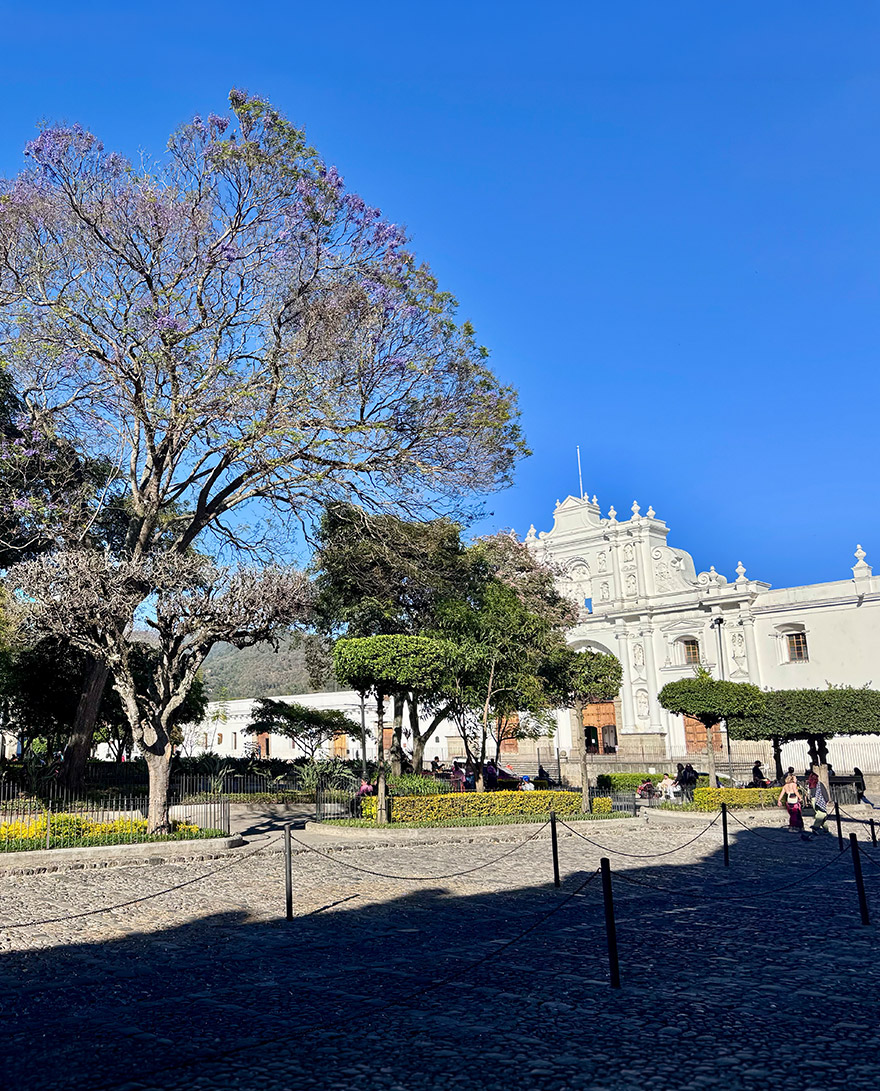
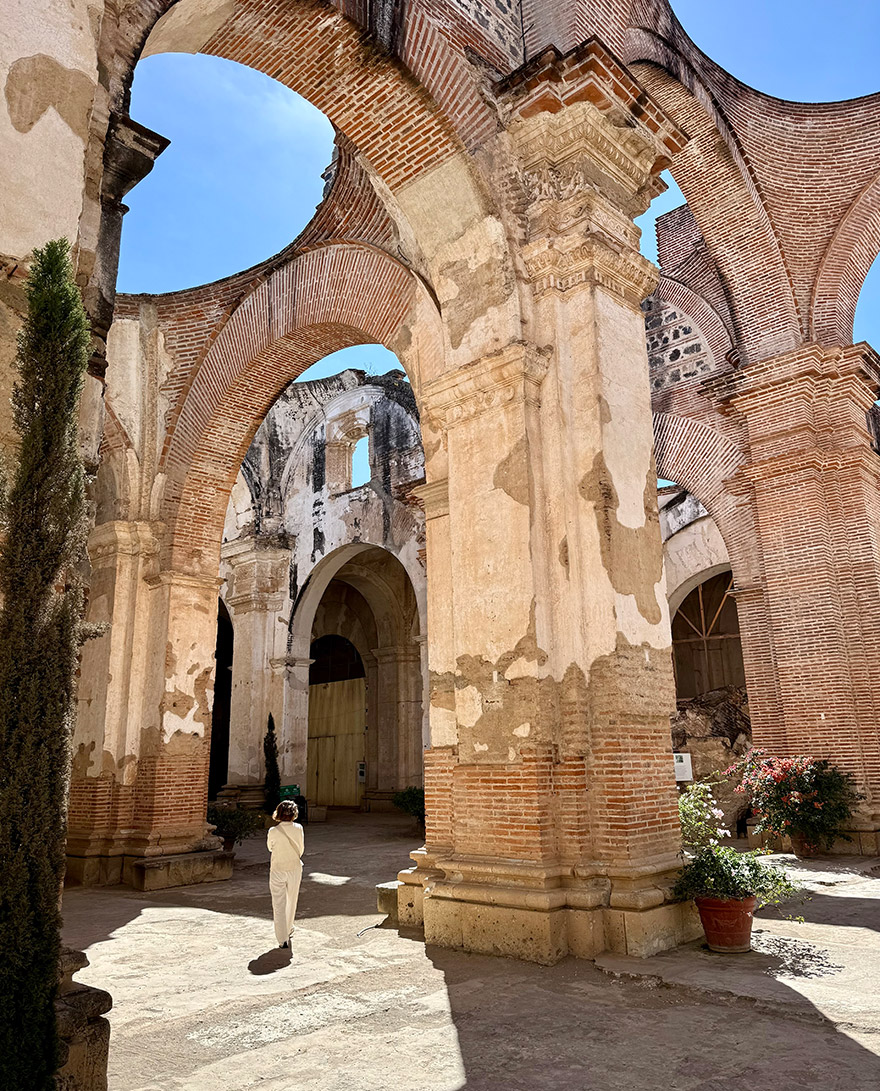
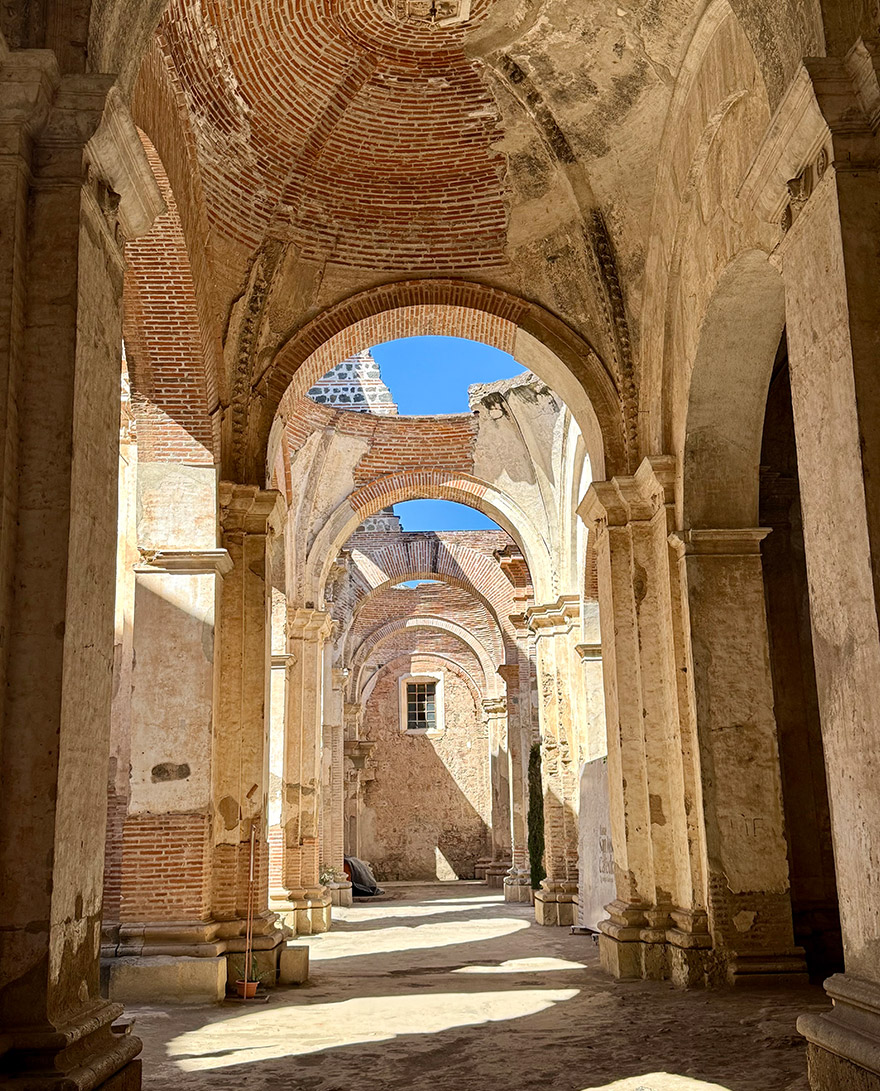
Sitting right by Parque Central, the cathedral is part working church, part historic monument. The first church on this site dates back to c.1541, but after the initial structure was demolished in 1669. The cathedral was rebuilt and consecrated in 1680, and by 1743, it had grown into one of the largest churches in Central America. However, another earthquake in 1773 changed everything, heavily damaging the building.
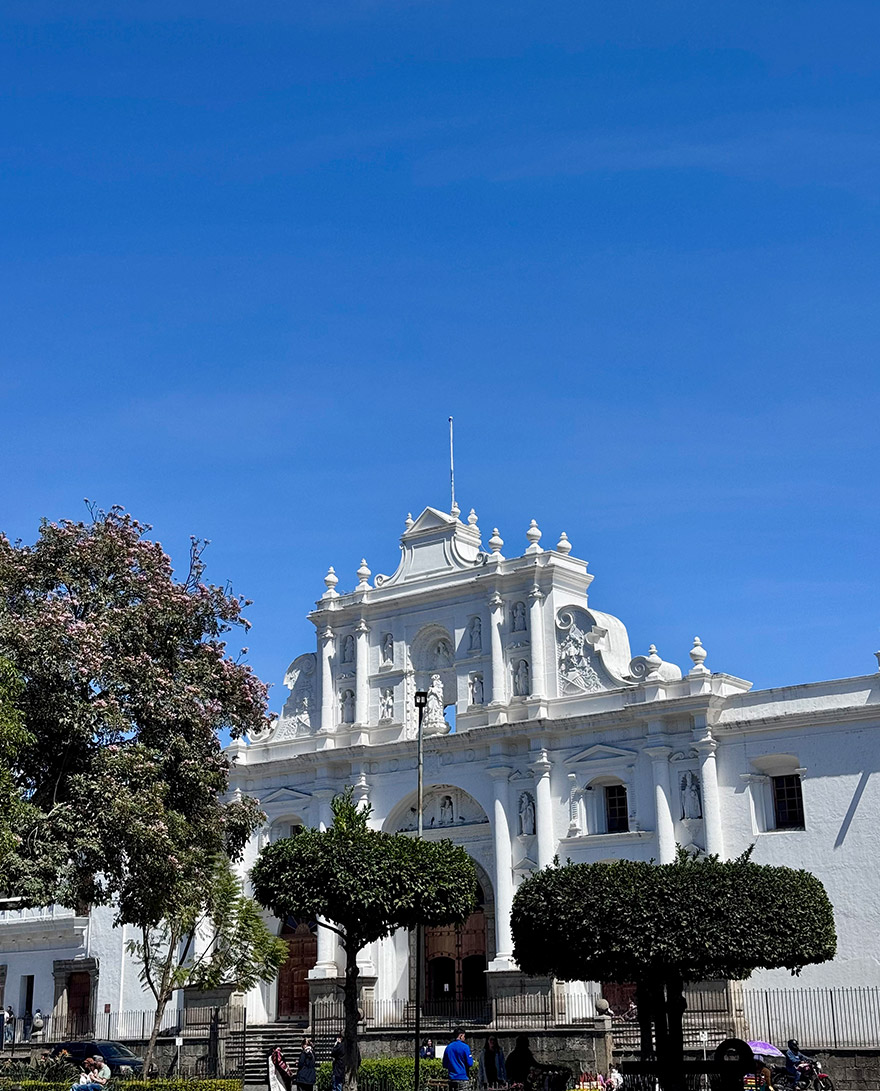
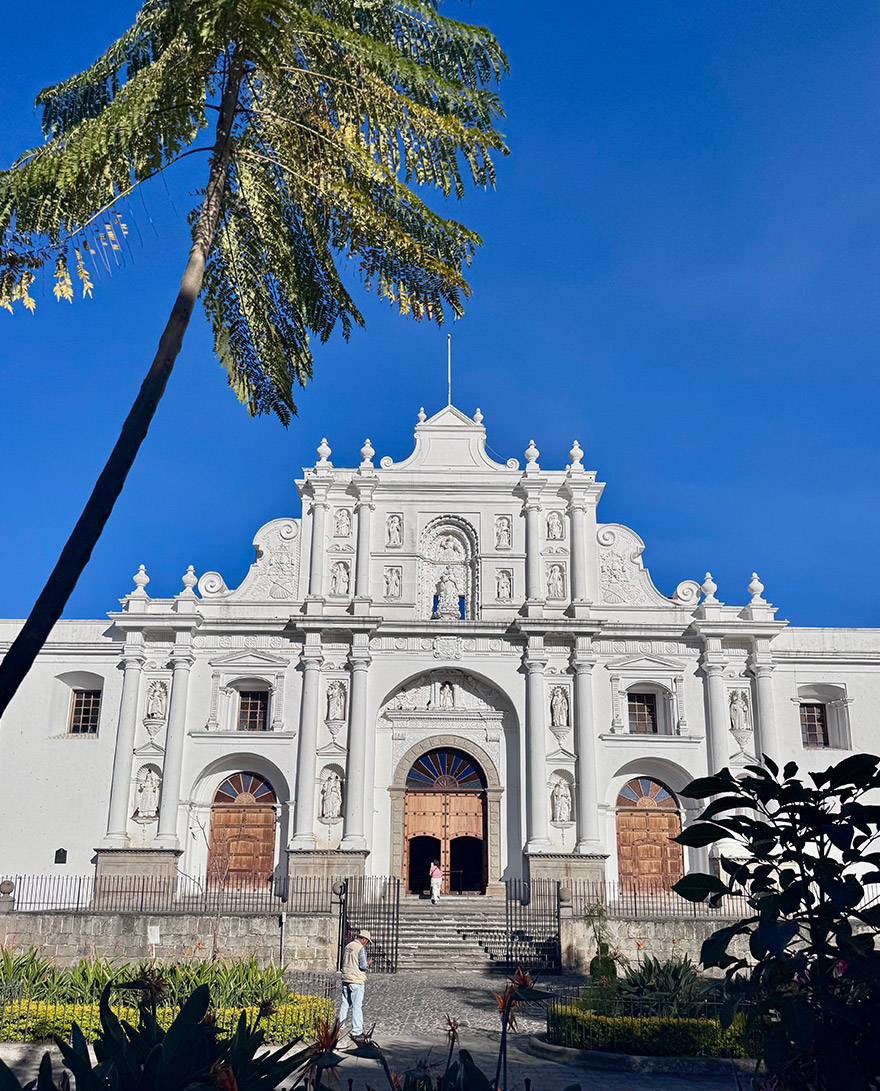
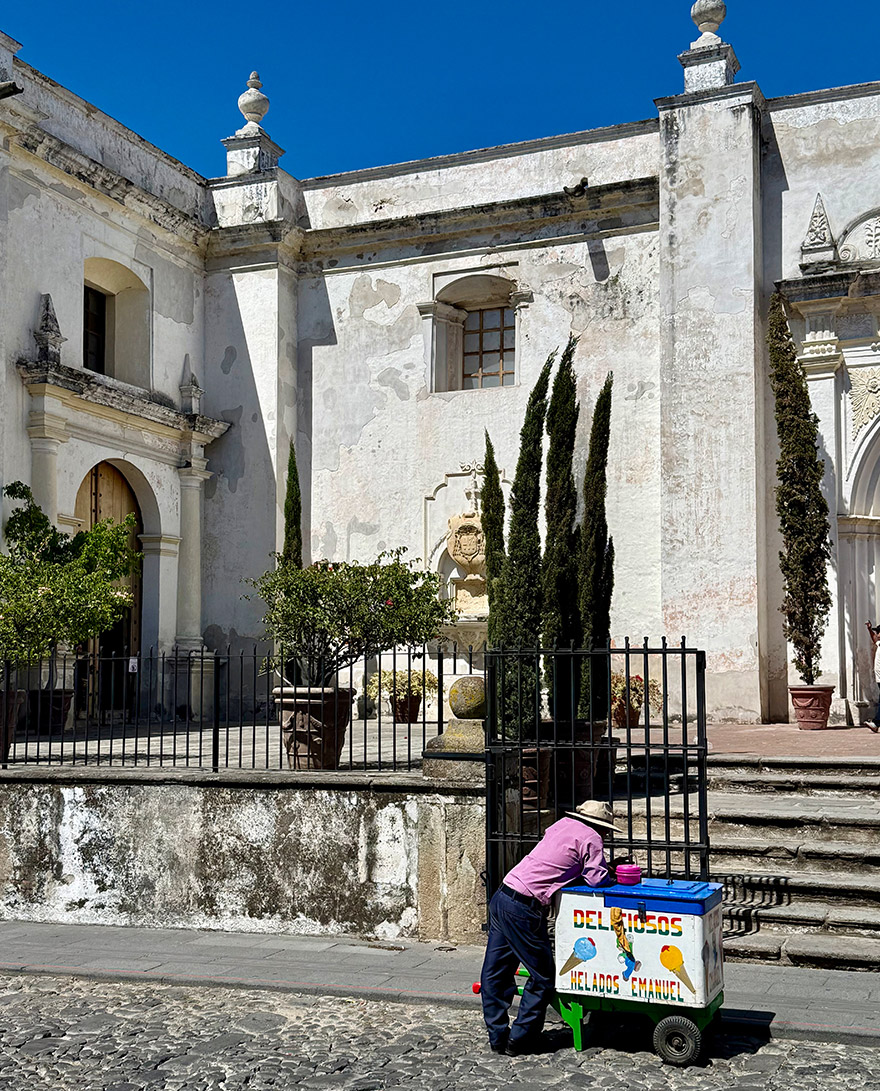
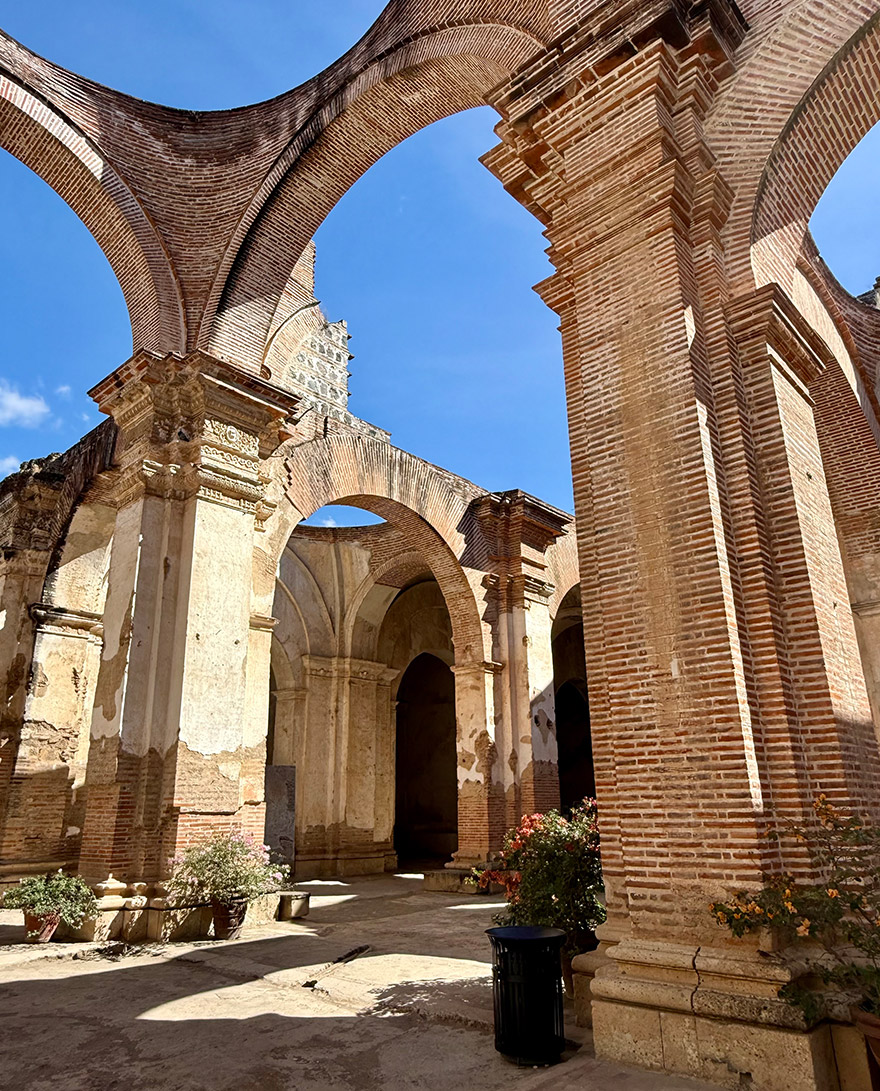
Today, there is a striking contrast between the grand, restored and formal exterior and the earthquake-damaged interior. The most striking moment is looking up and seeing where the domed cupolas once closed the space into a continuous ceiling. After the 1773 Guatemala earthquake, sections of the roof and dome collapsed, and in those breaks, the sky became part of the architecture.
Santa Clara Convent
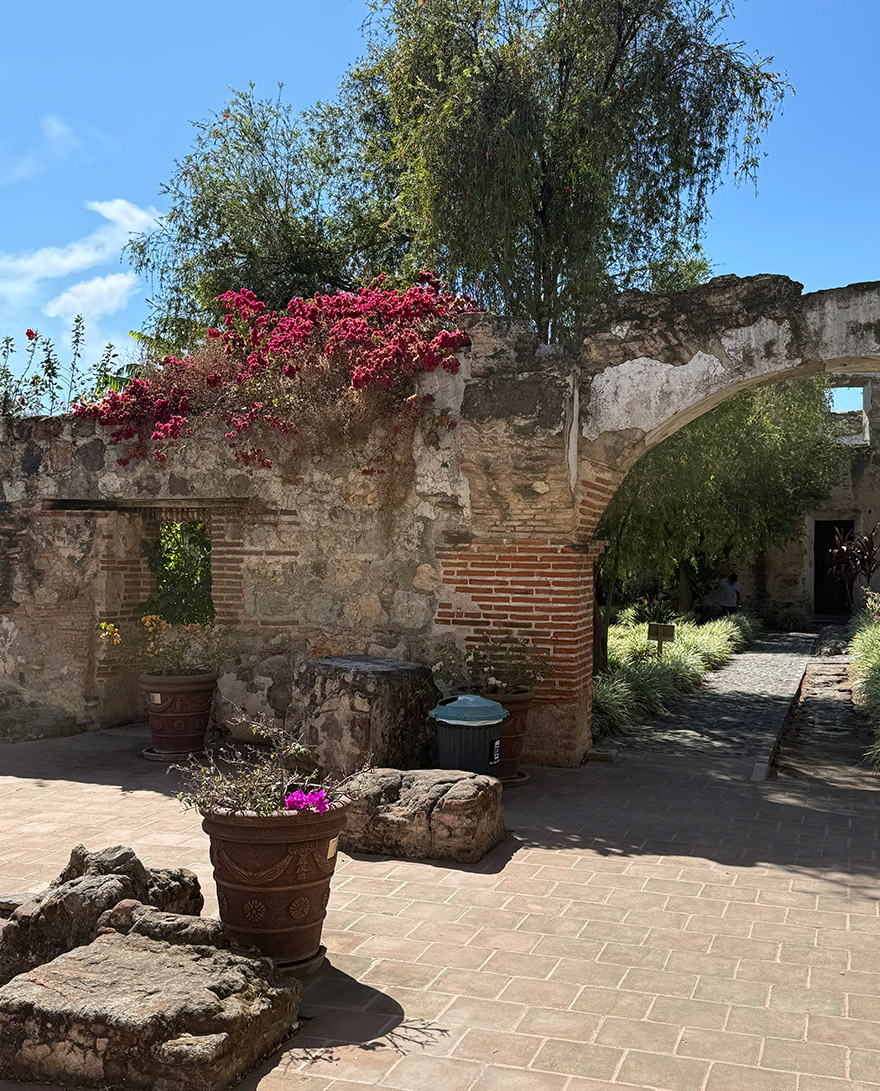
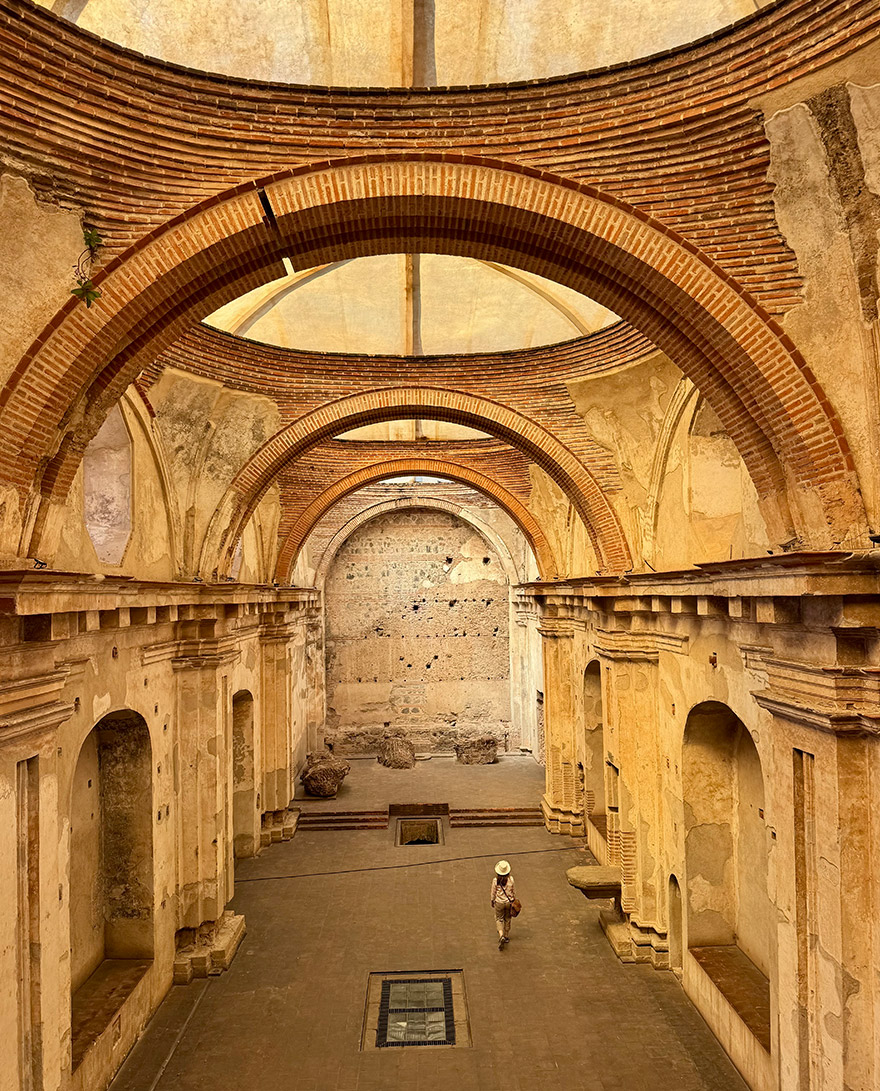
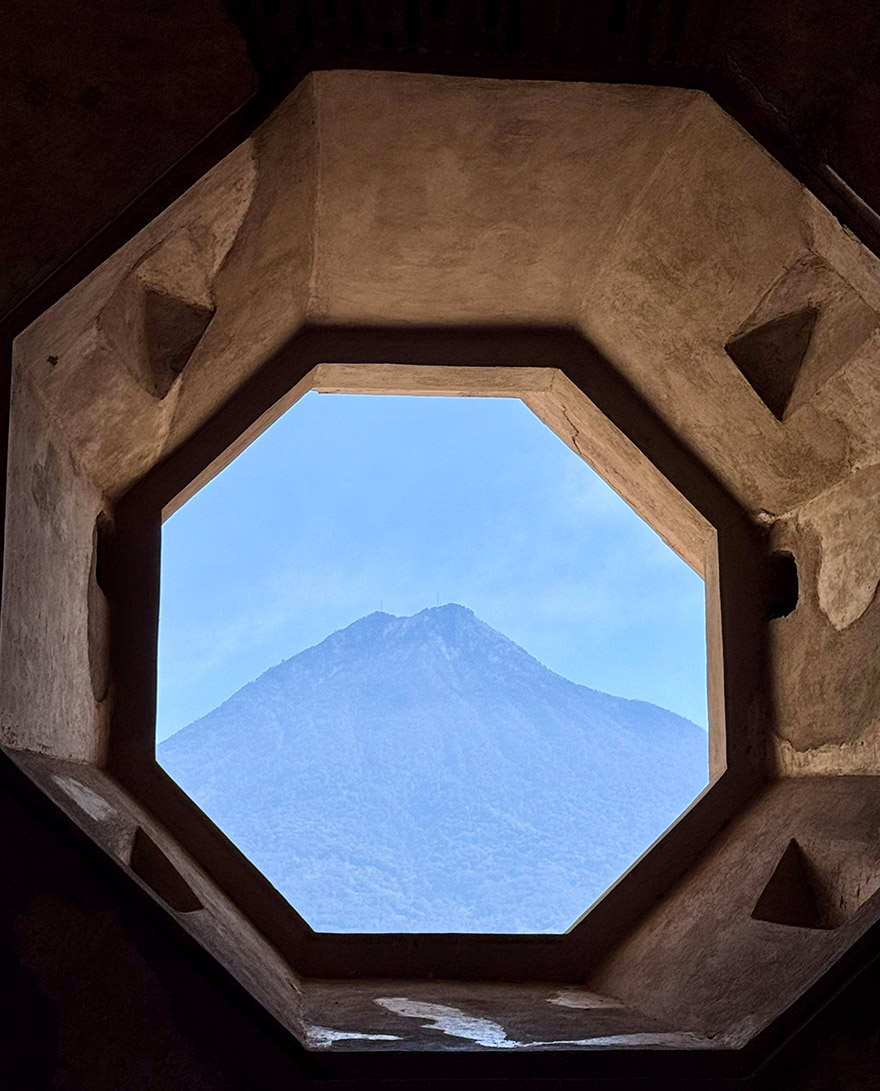
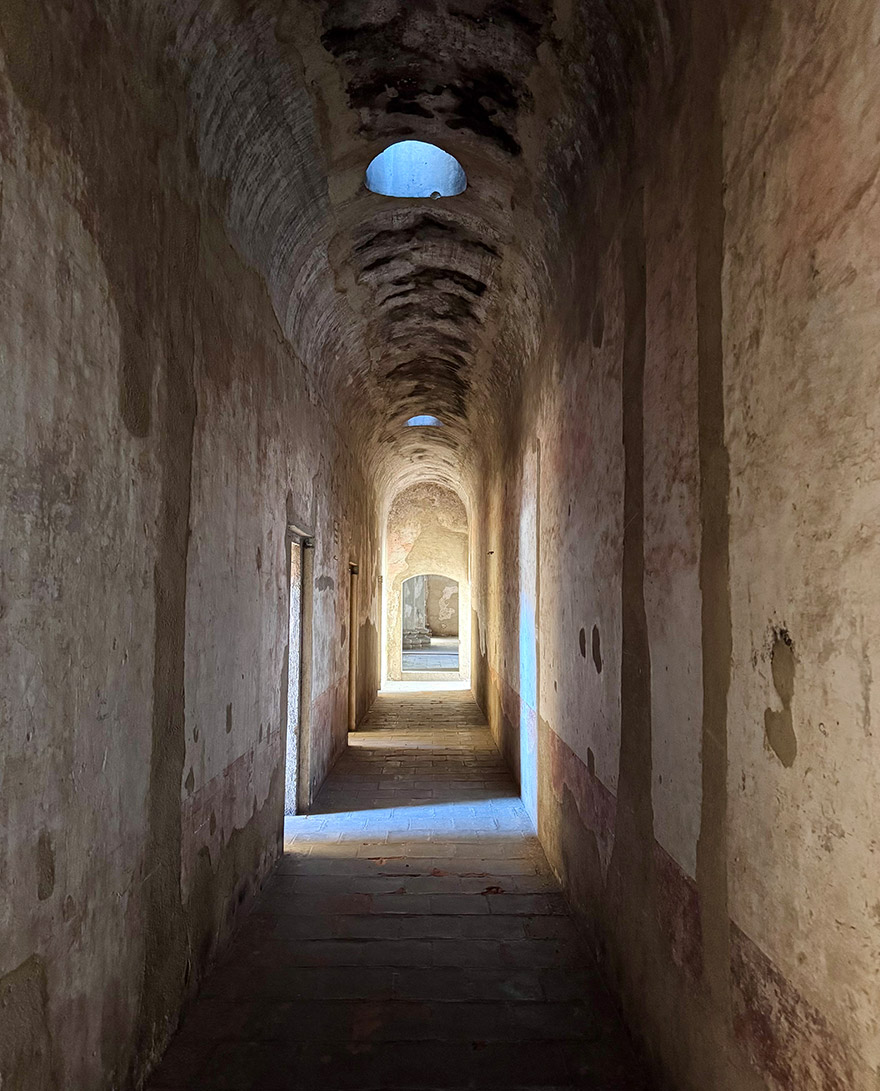
Next stop is Santa Clara Convent, one of Antigua’s most atmospheric ruins, which is a short walk southeast from Parque Centrale. Built for nuns of the Order of Saint Clare, its high walls and cloistered layout were designed for strict enclosure. Earthquakes left it in ruin, but the scale and elegance remain — arched corridors, open courtyards, and a softness to the light that makes it feel almost serene. There are also beautifully maintained gardens to wander through.
Dominican Monastery
Head north to our final stop: the Dominican Monastery ruins around the Casa Santo Domingo hotel. Stone walls, fallen arches, and unexpected corners sit alongside gardens and museum spaces, making it feel like a living part of the city rather than a sealed-off monument.
VILLAGE TOURS
We took a day trip to nearby villages to see a different side of Guatemala – more rural, traditional and connected to craft.
A highlight was visiting La Familia del Café in Ciudad Vieja. Seeing the coffee process was interesting, but the best part was sitting down with Mr Freddy, the patriarch. We heard about how the family business has evolved and how hard the work is (seven days a week) to harvest and process the beans.
We also visited a weaving cooperative in San Antonio, watching women use back-strap looms to create intricate, brilliantly coloured textiles.
Drink
CAFÉ NO SÉ
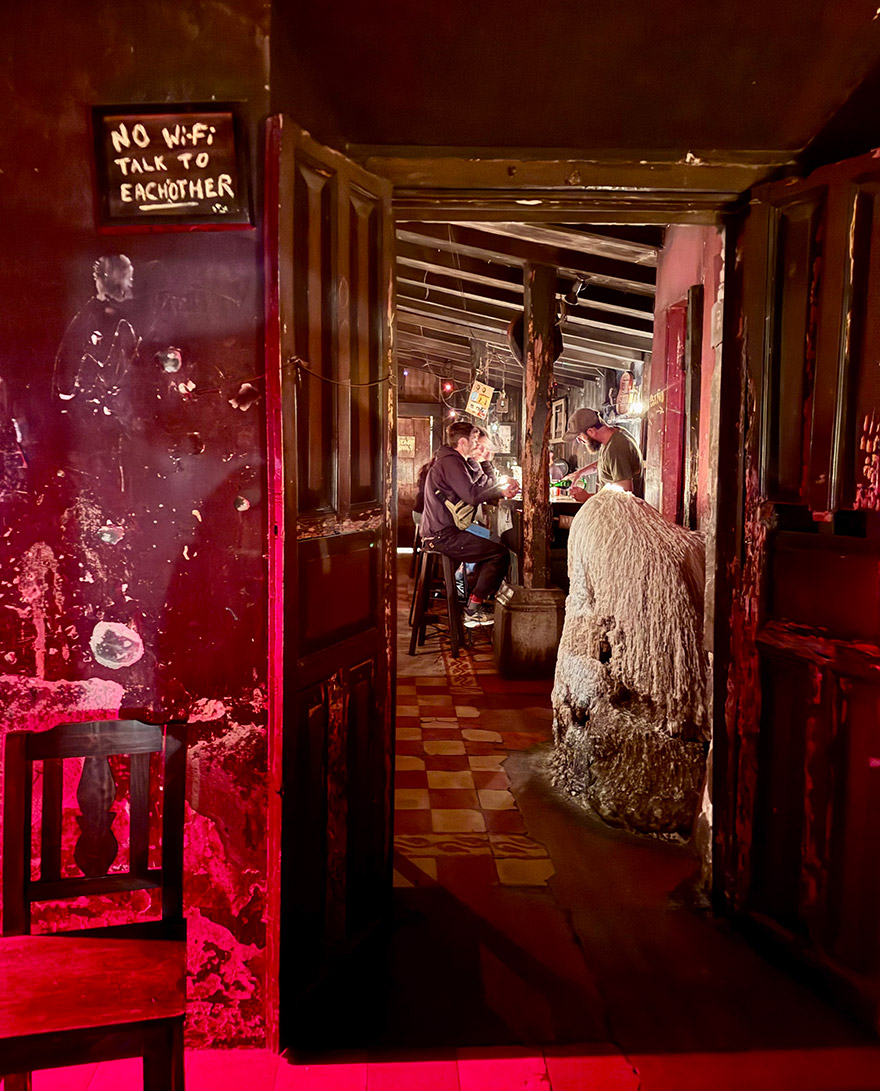
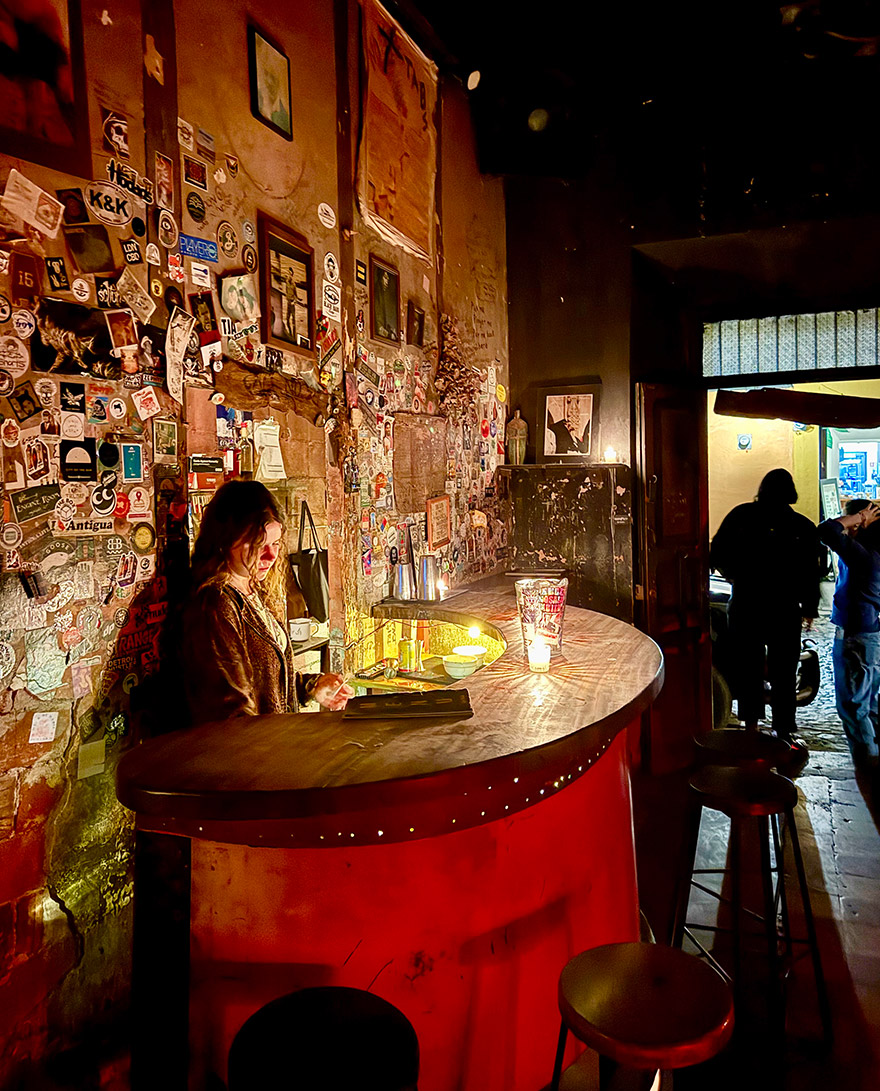
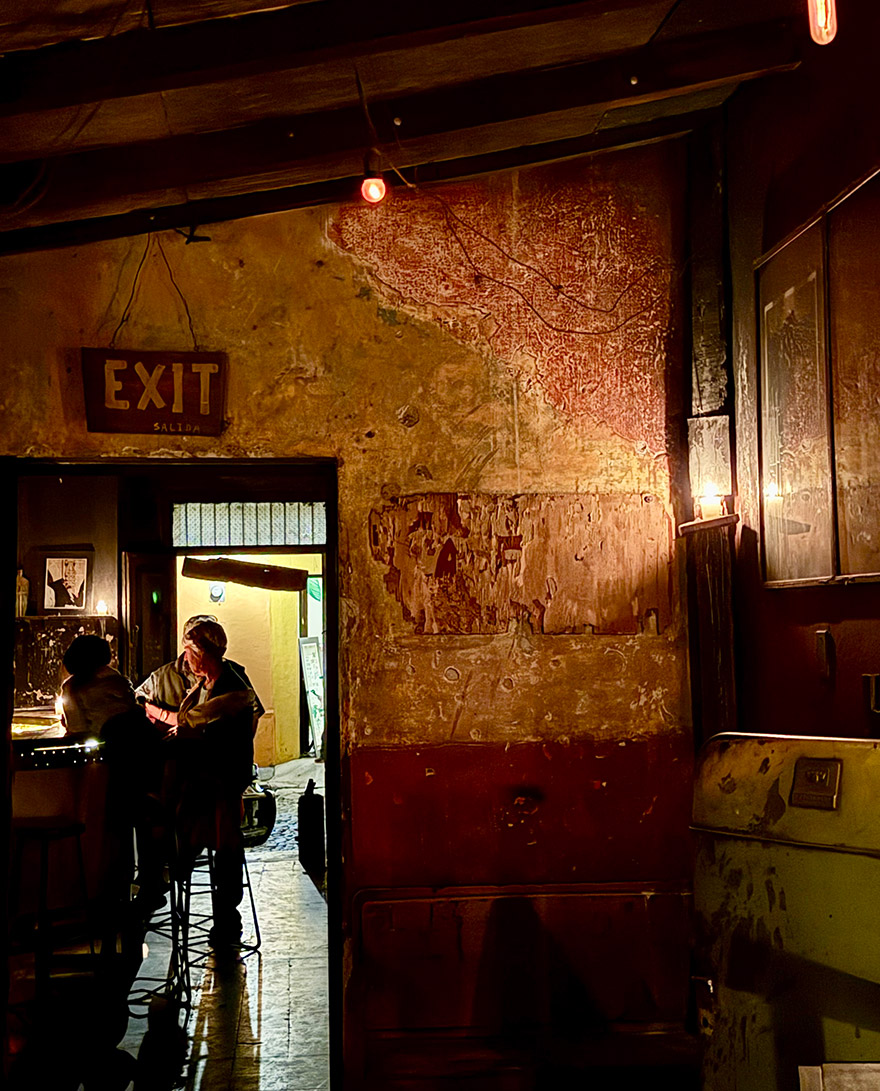
Café No Sé is boho, candlelit and a little bit chaotic in a good way. You duck through small doorways into different rooms and end up at the bar sampling mezcal (including the bar’s on-brand called Ilegal Mezcal).
AQUA ROOFTOP
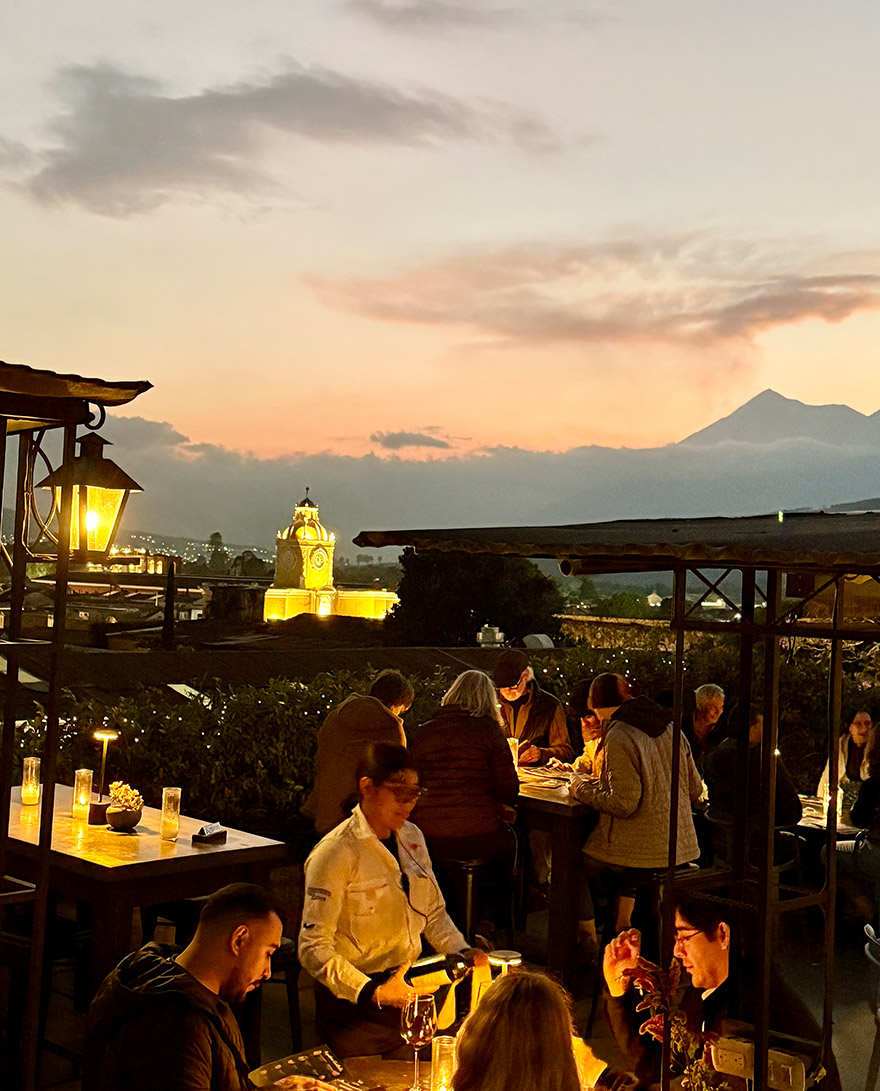
Aqua Rooftop Bar has a terrace for wide-open views of the surrounding volcanoes and a good list of cocktails, craft beers and international wines. The vibe is a relaxed hangout rather than a flashy lounge. Downstairs, they run pool days with cabanas and sun loungers.
ULEW
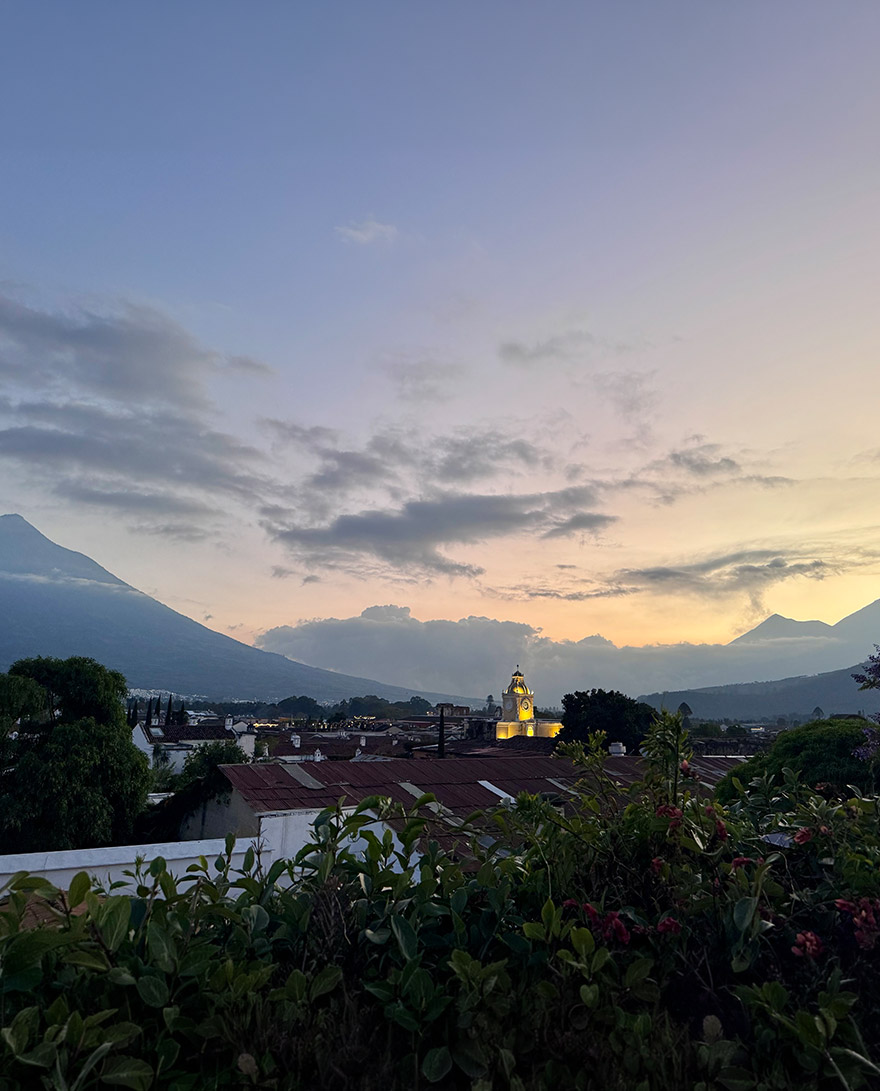
Ulew is a speakeasy you enter via a red telephone box tucked inside Antigua Brewing Company, and then you’re in a dark, intimate space where the cocktails are made to order based on what you like.
Shop
NIM P’OT
Nim Po’t is a pick-and-mix extravaganza of woven pieces, masks, pottery and souvenirs right by the arch.
EAST SIDE
Walk east from Parque Central, and you’ll find a little cluster of cool, design-led businesses.
Indigo sells gorgeous artisanal textiles from cooperatives across Guatemala, with a focus on craftsmanship and natural dyes. If you want something special (blankets, rugs, wall hangings) that feels elevated but still rooted in local tradition, this is a strong bet.
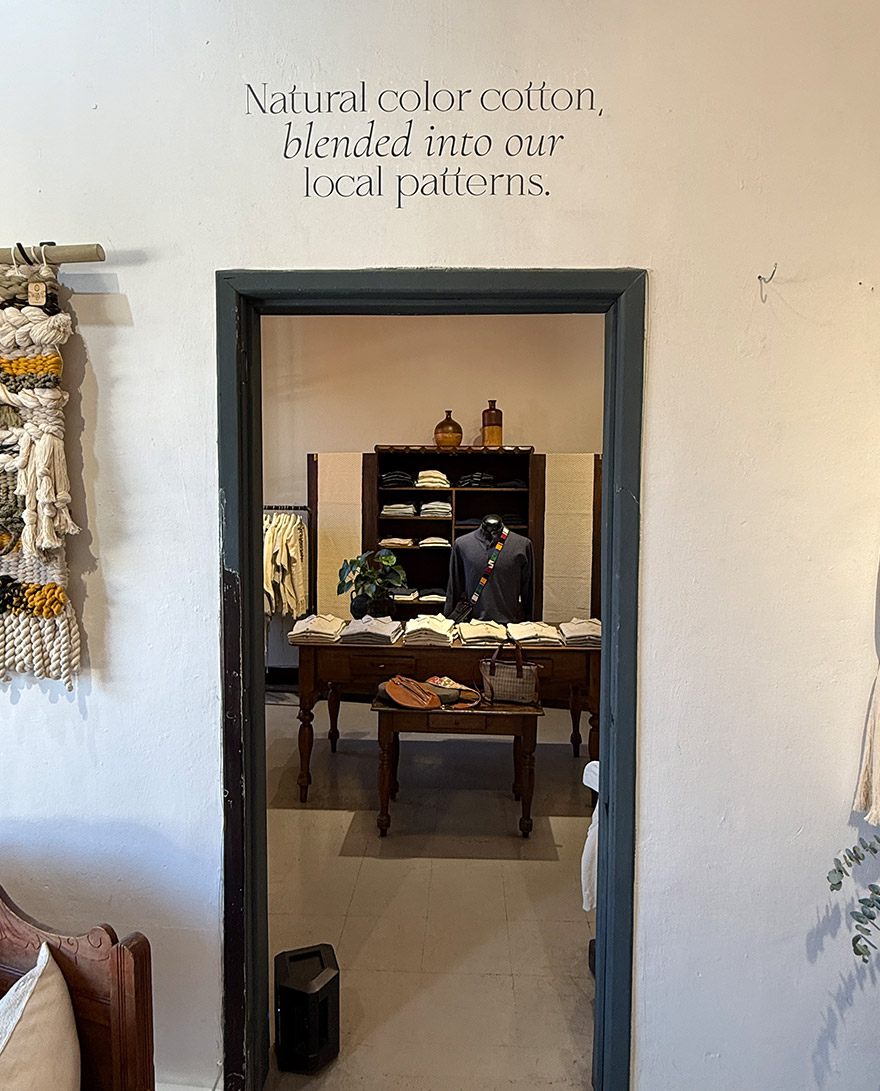
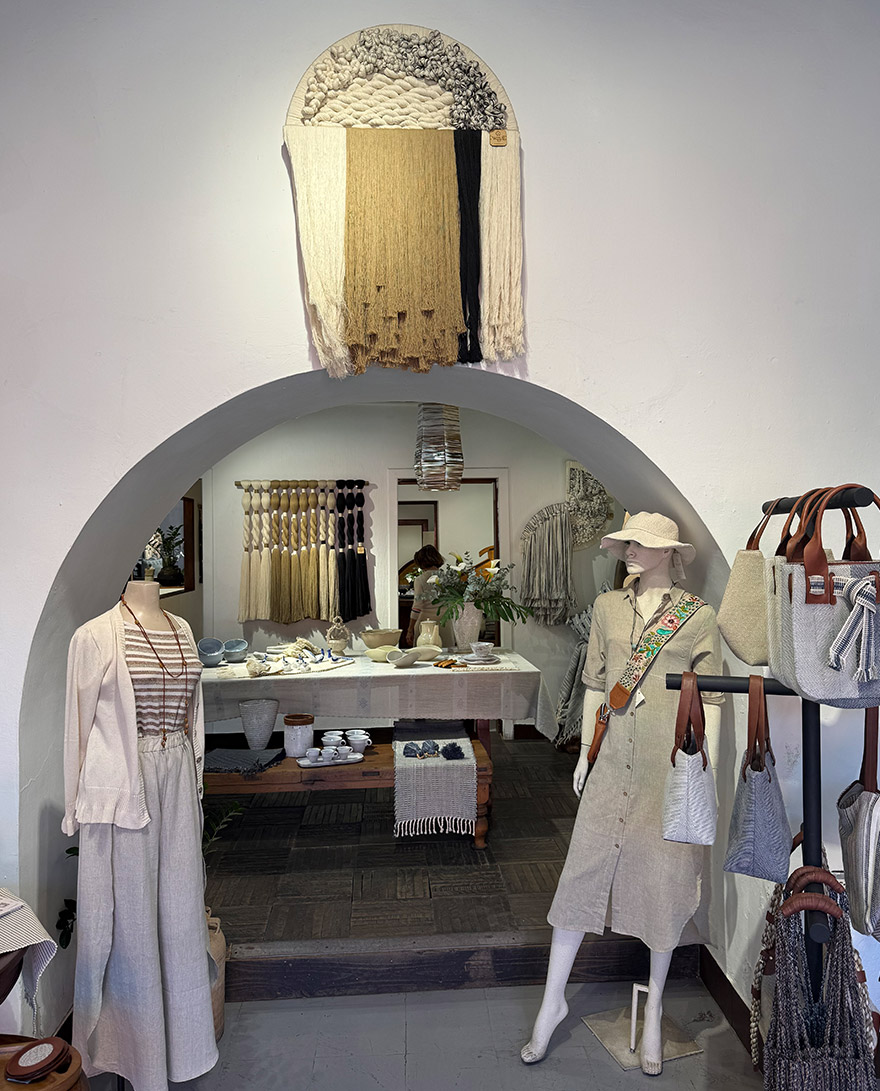
Wakami is a concept store focused on ethical fashion and empowerment through work opportunities for women in rural communities. It’s a great place for bracelets, bags and well-made pieces that feel genuinely wearable.
Casa Vch is modern and minimalist — part gallery, part jewellery brand, part design studio, with a vintage shop (Taraba) inside.
Acatenango Hike - Guatemala
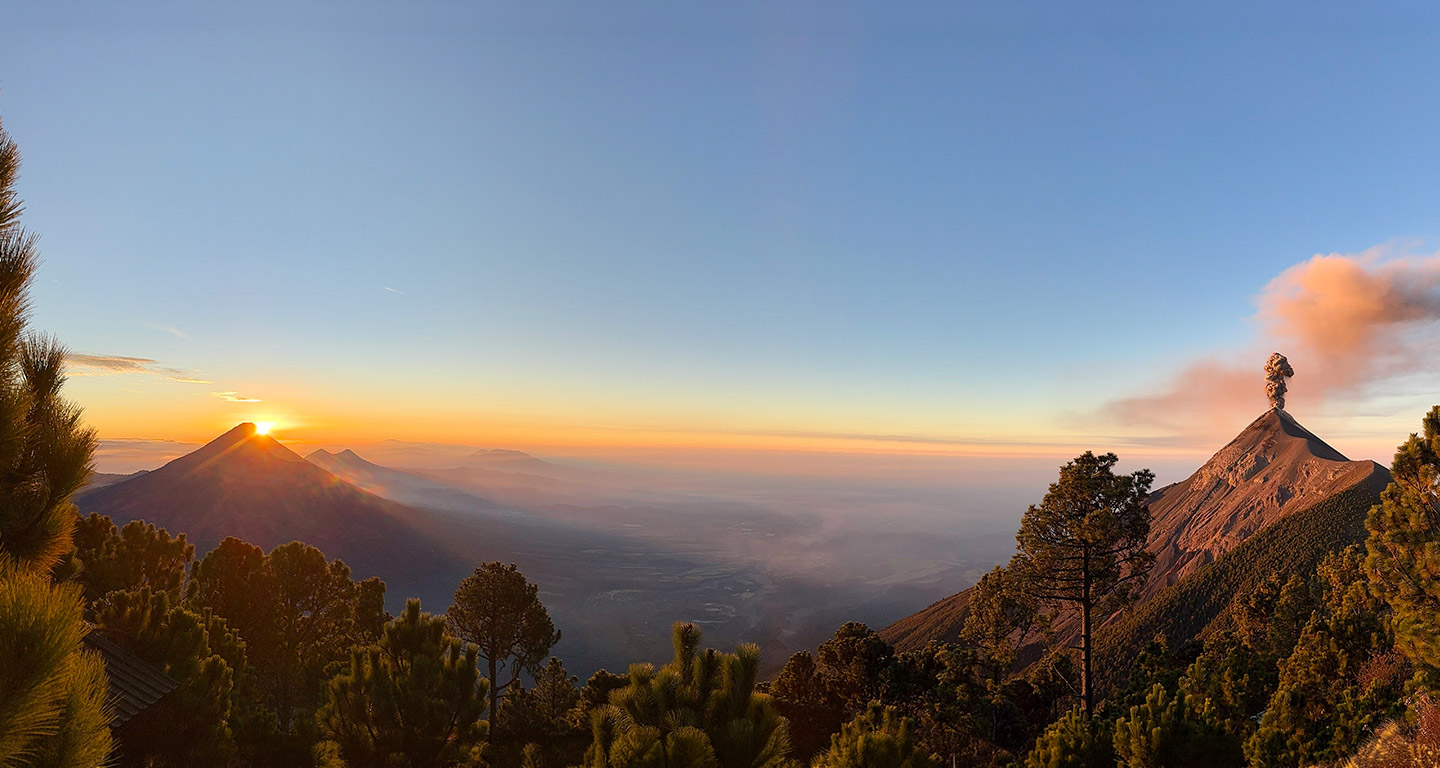
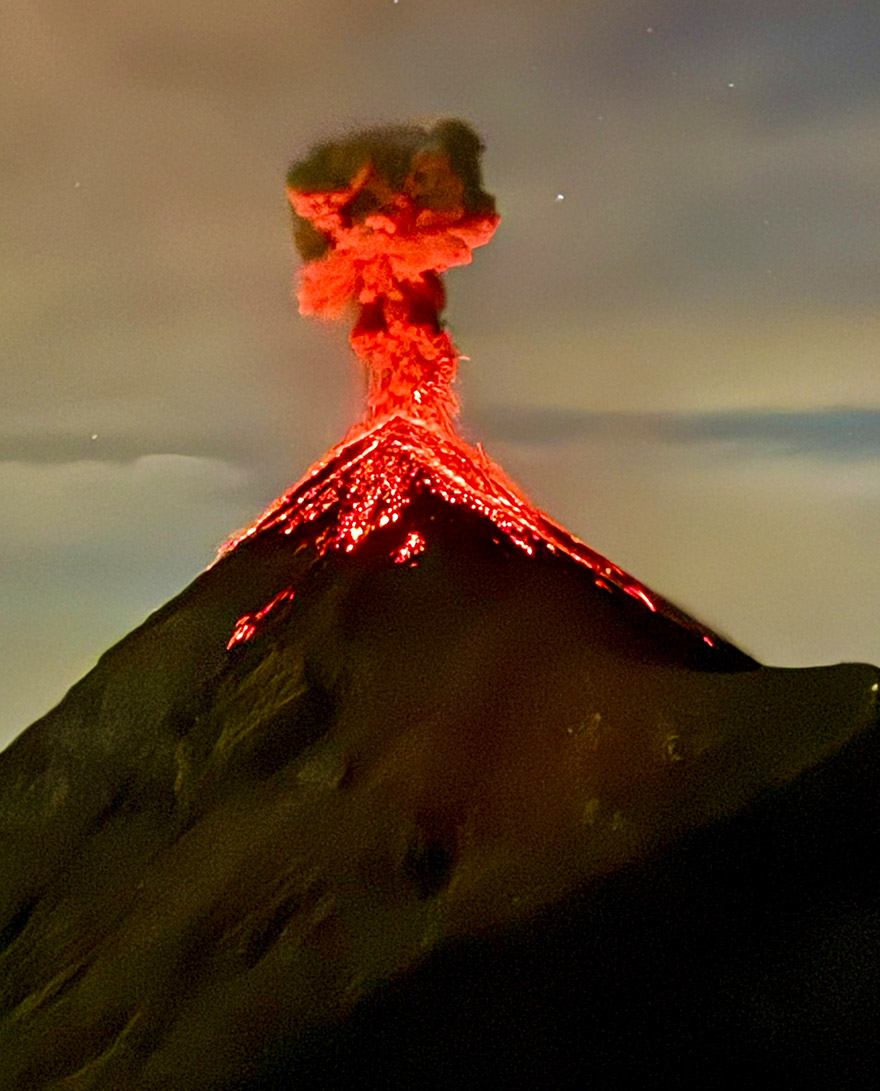
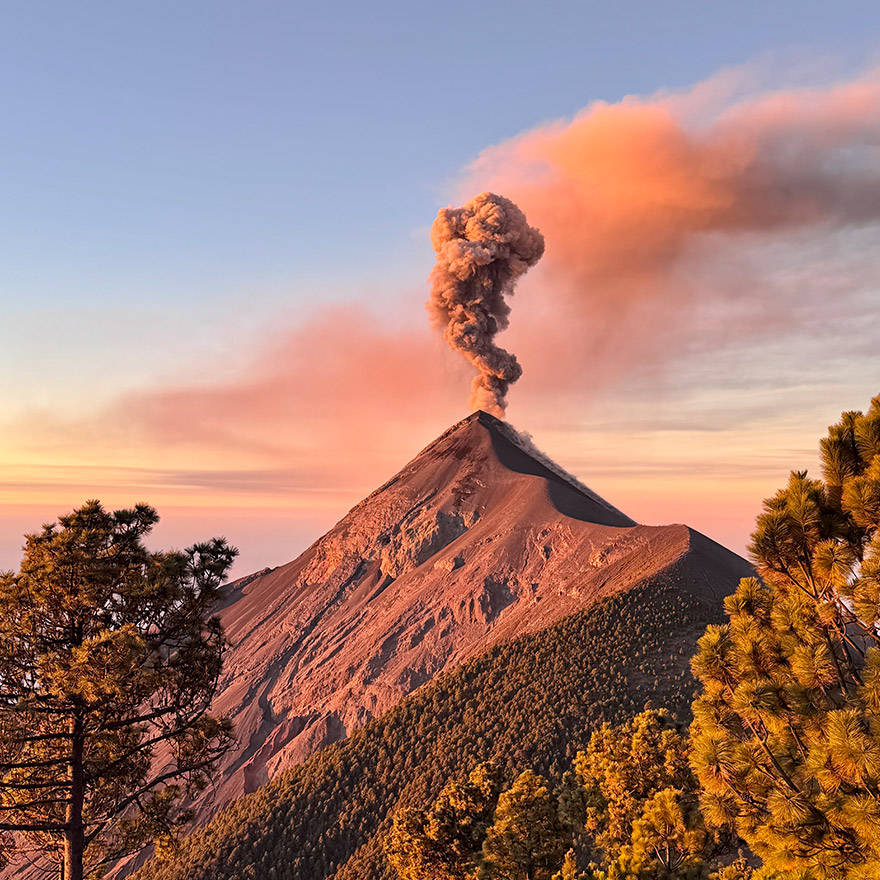
It’s hard to overstate how unforgettable the Acatenango volcano hike is. Acatenango’s 3,976-metre summit sits next to Volcán de Fuego, one of Central America’s most active volcanoes. You hike up to a basecamp to spend a night watching Fuego’s eruptions across the valley.
It is, without exaggeration, one of the most memorable experiences we’ve had in decades of travelling! It’s also one of the hardest things we’ve ever done. The hike up involves a solid five hours of uphill slog. But if you’re fit and have the time in your itinerary, Acatenango is definitely worth doing.
WHAT TO EXPECT
Early morning (around 7.30am): meet for briefing, collect kit, breakfast, then drive to the trailhead (about an hour).
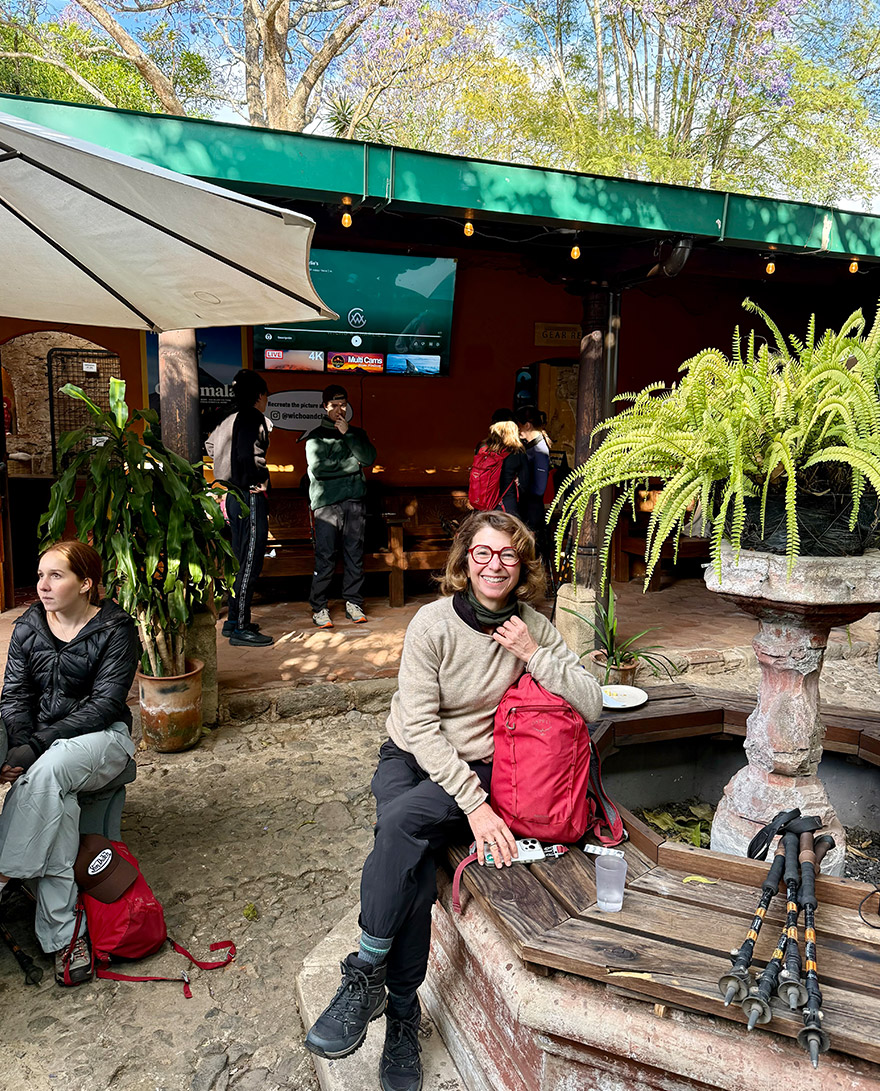
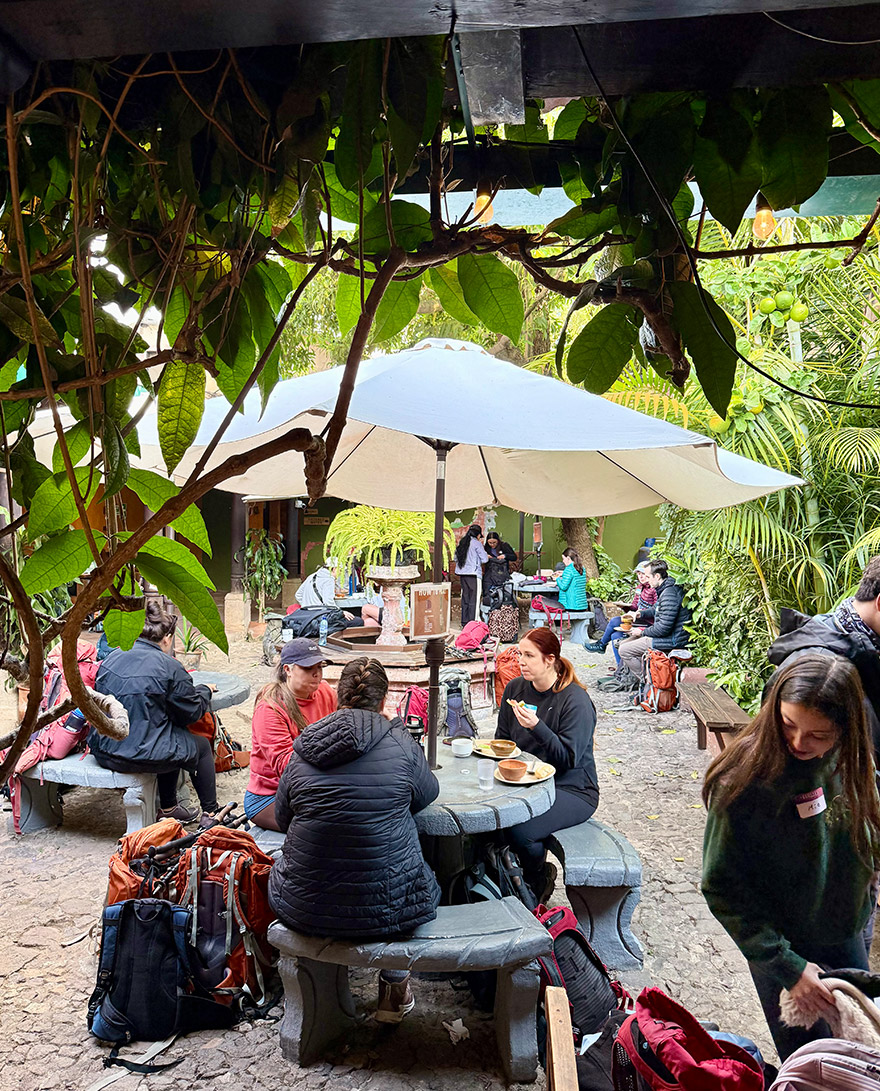
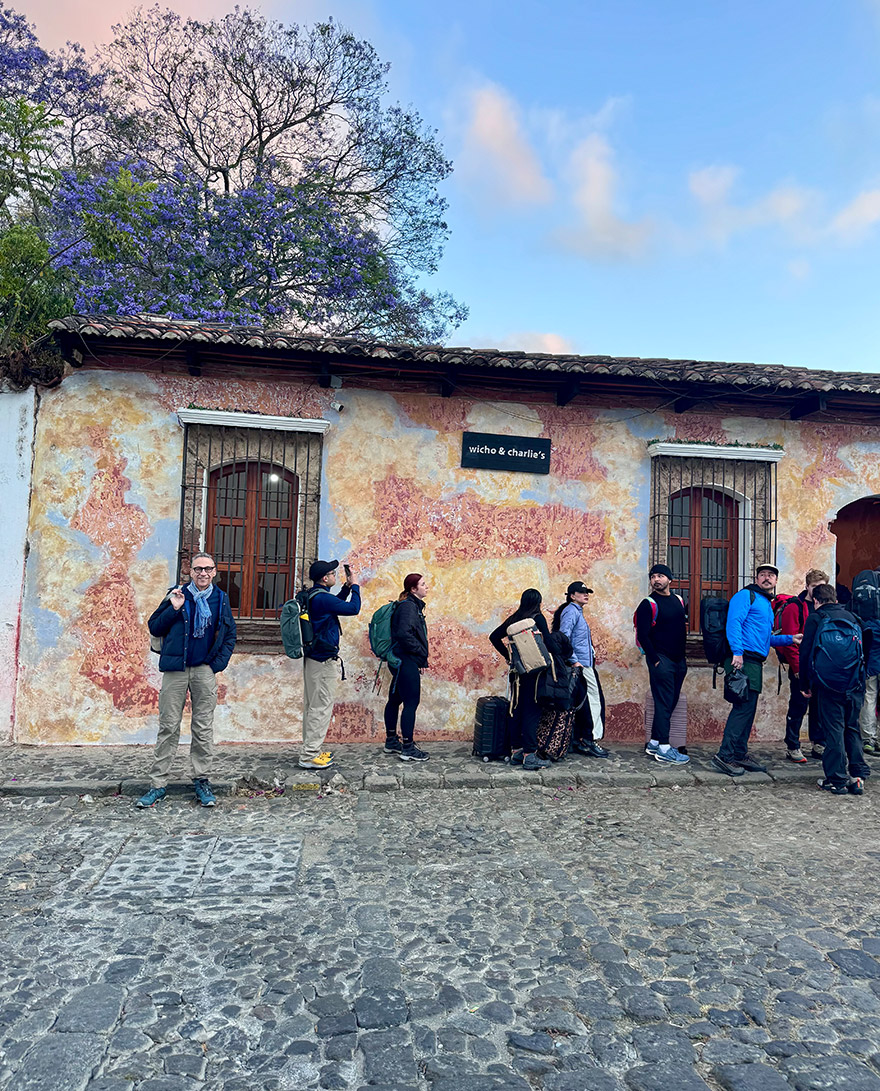
Mid-morning: start hiking. Up. And up. And up! Frequent breaks, snacks and encouragement as the landscape opens out.
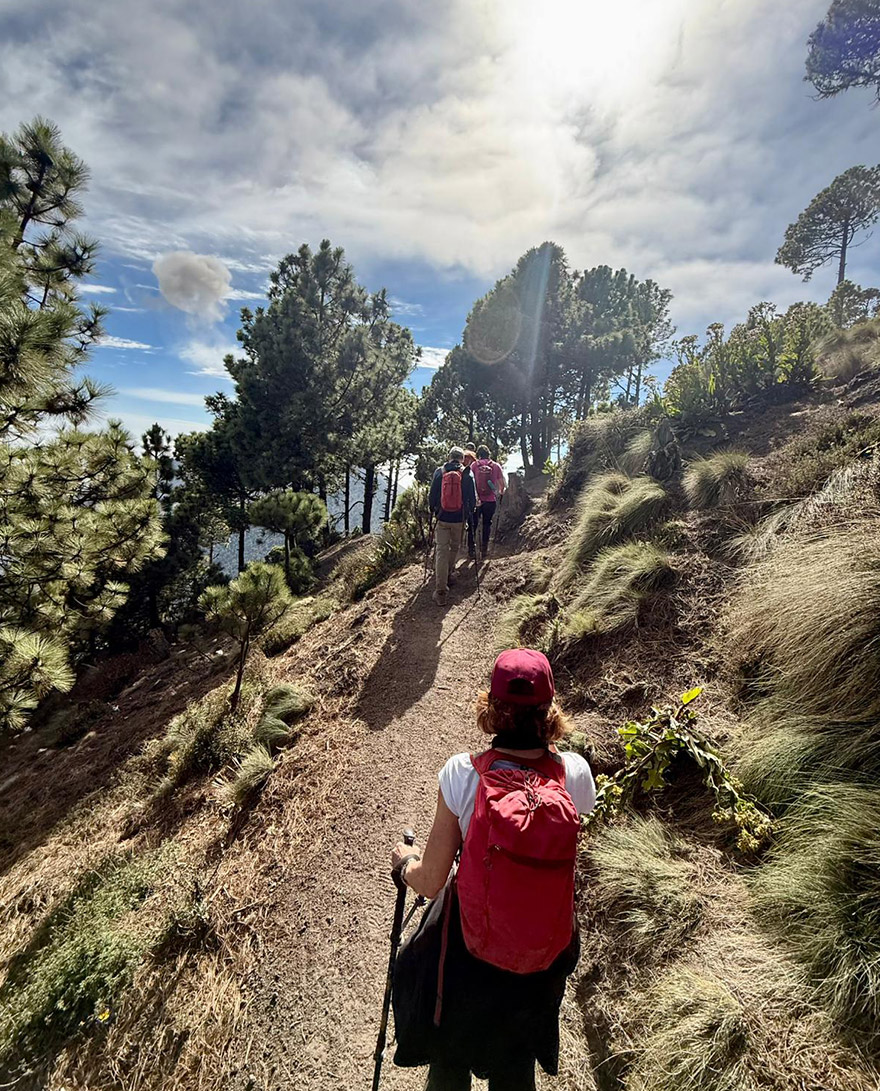
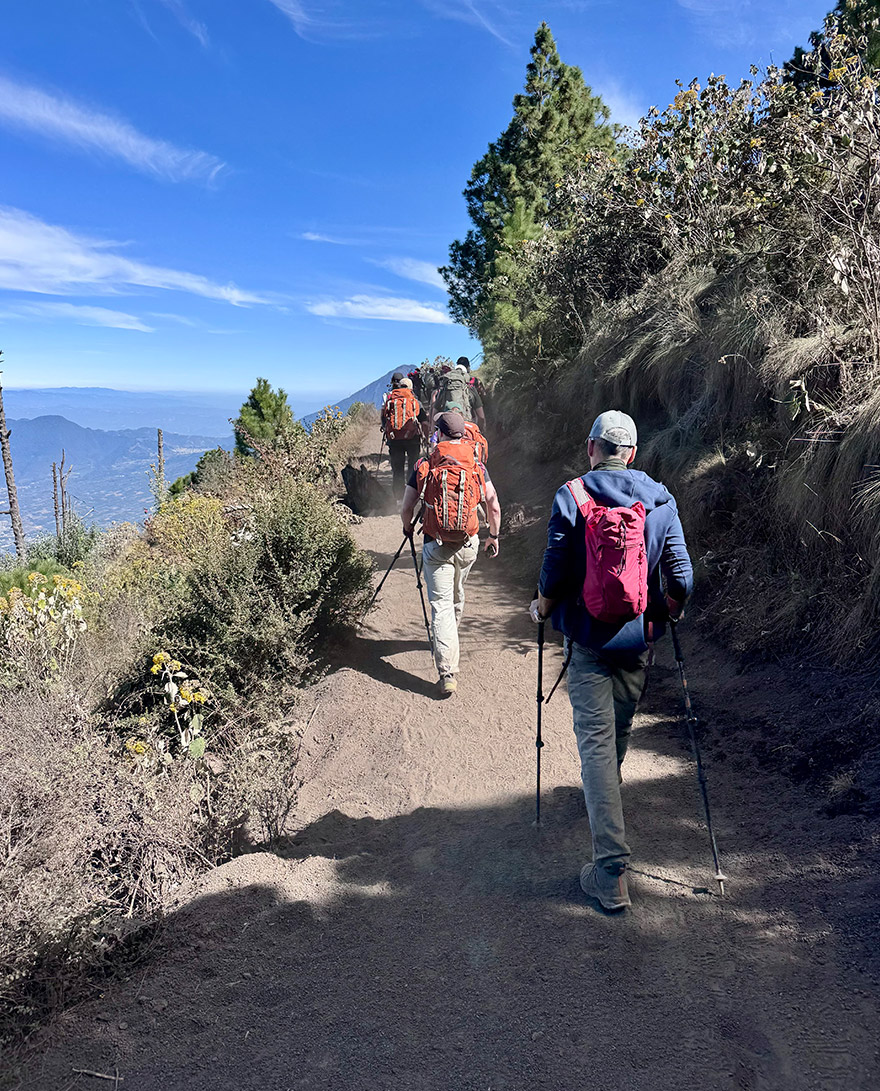
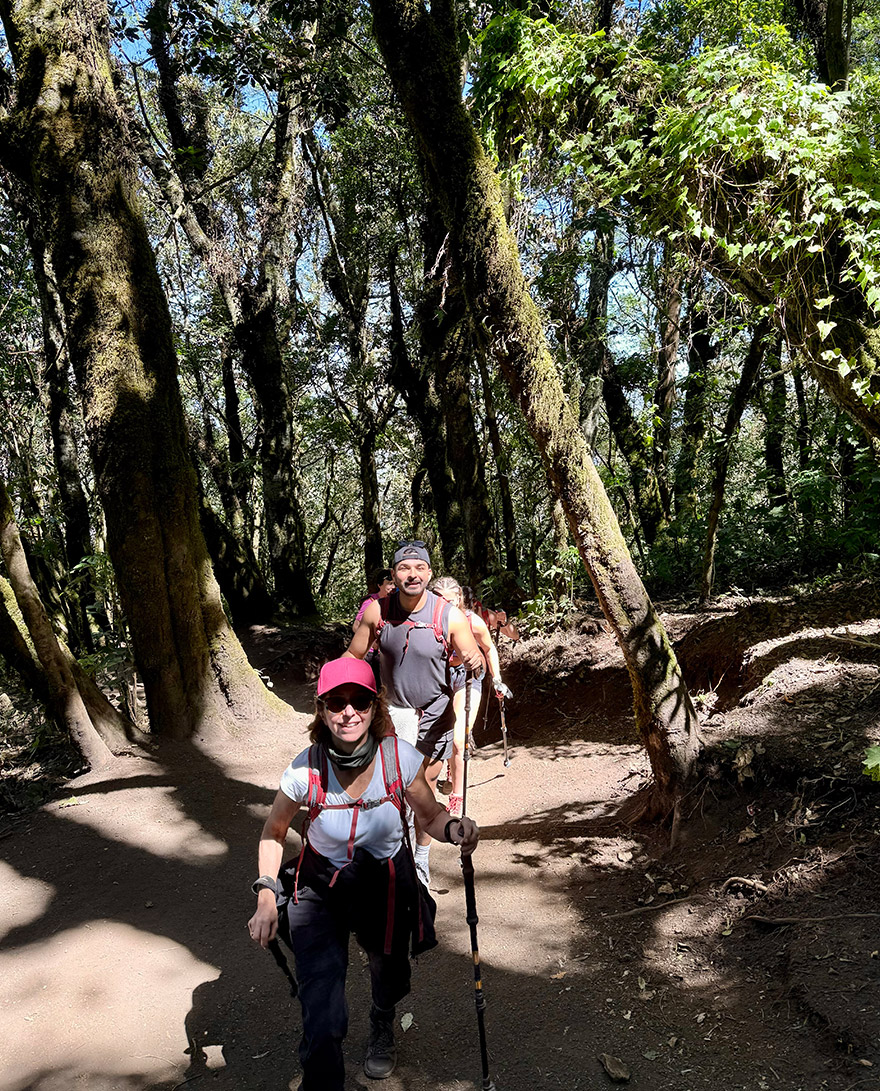
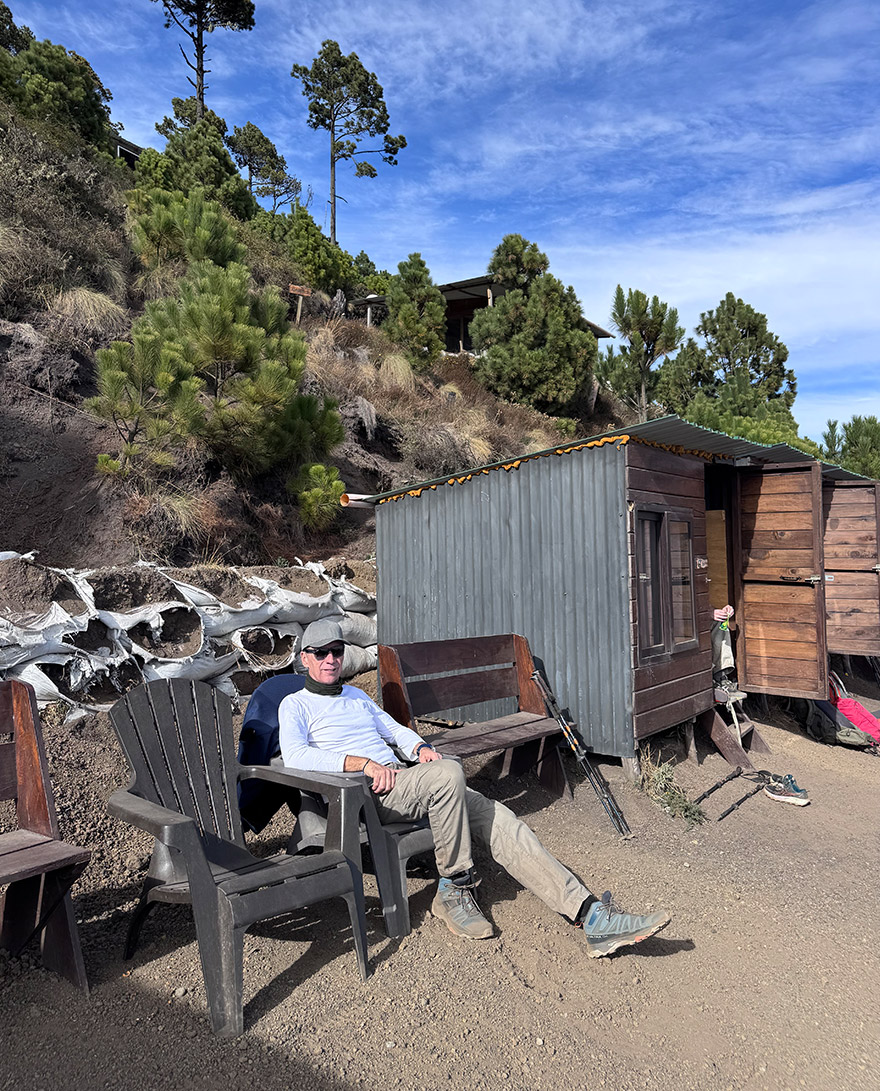
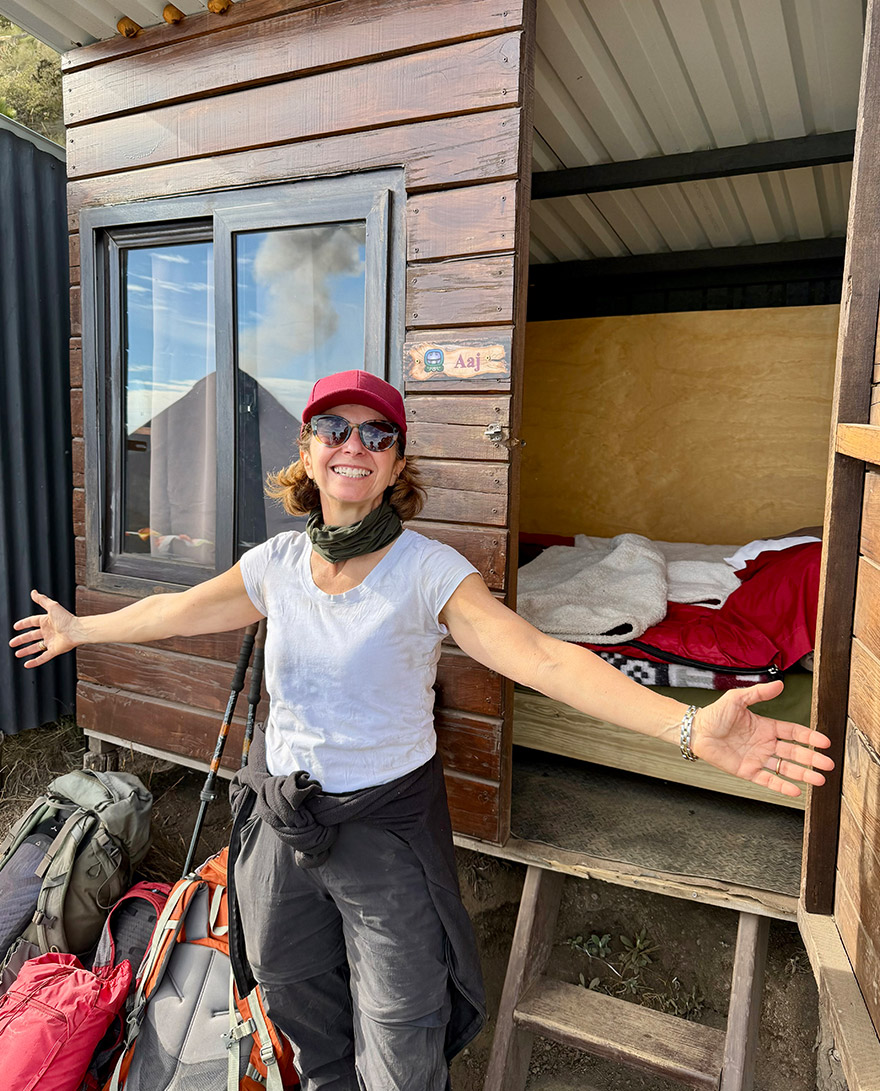
Around 4pm: arrive at base camp and settle into your cabin. Not luxury, but the view (below right) is everything!
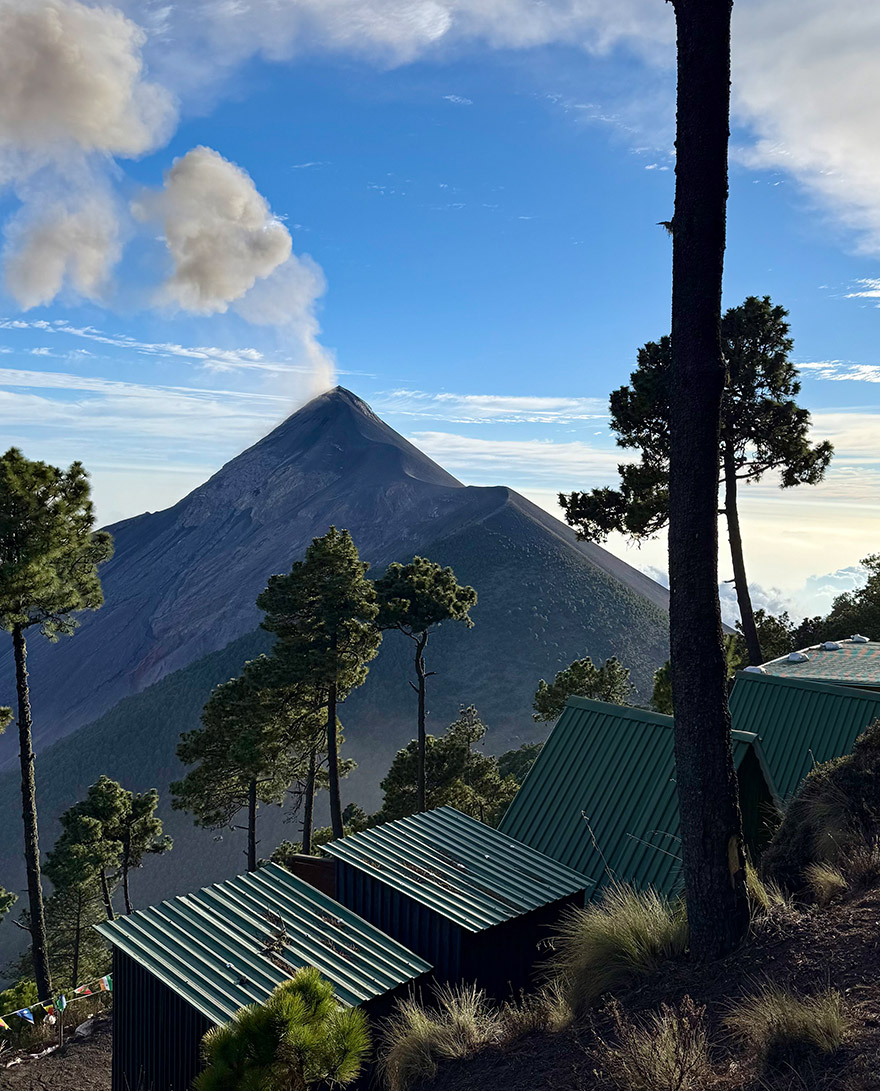
Sunset: the “Fuego show” begins — smoke at first….
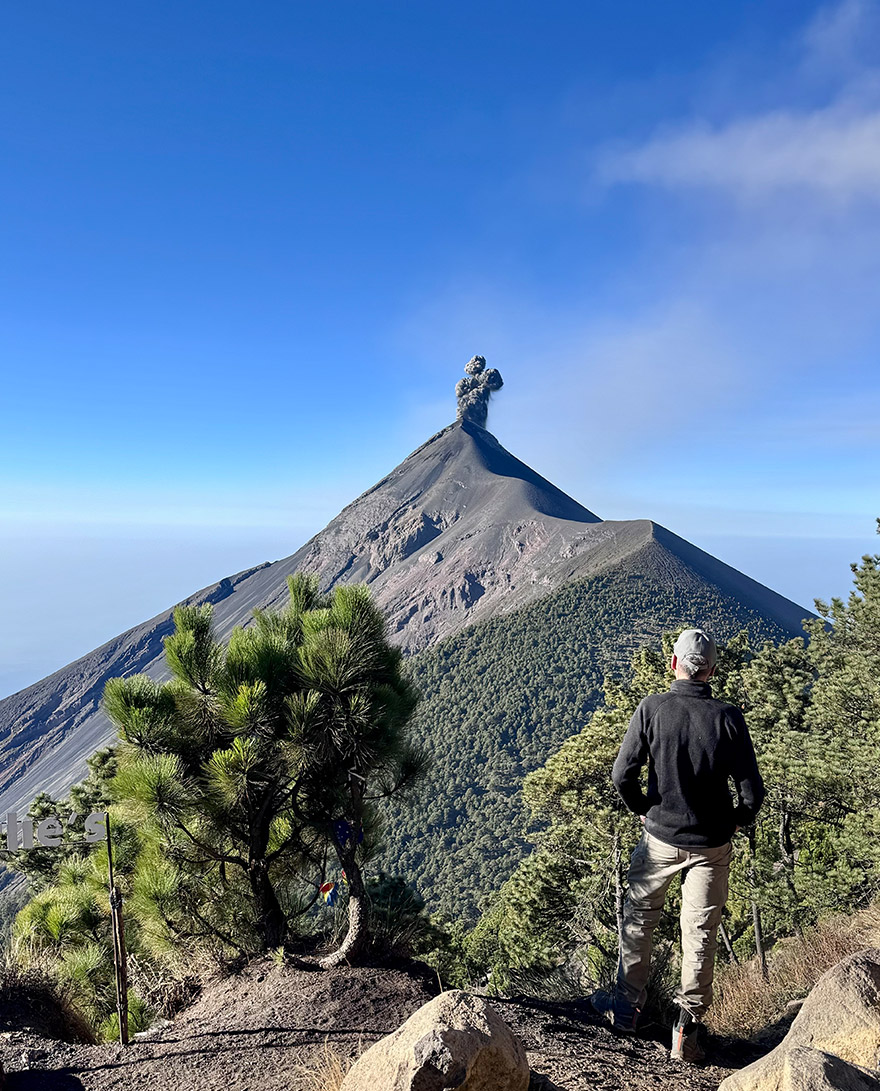
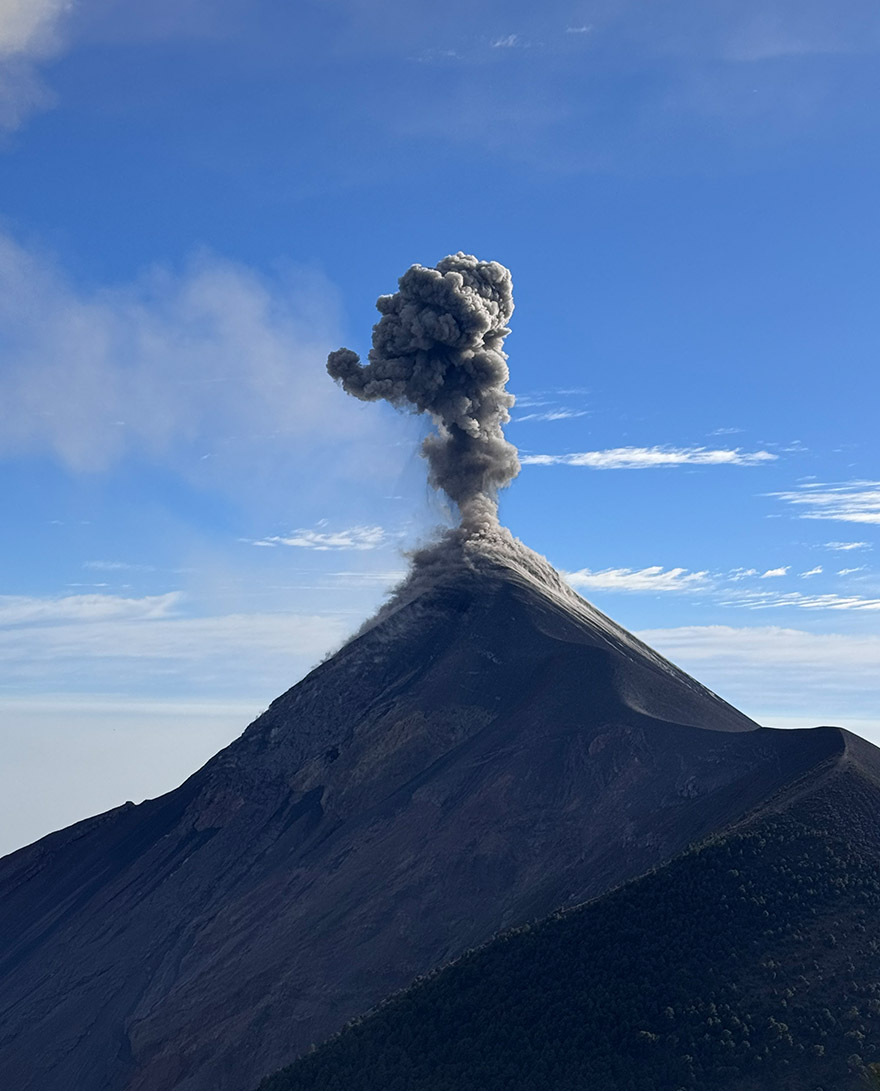
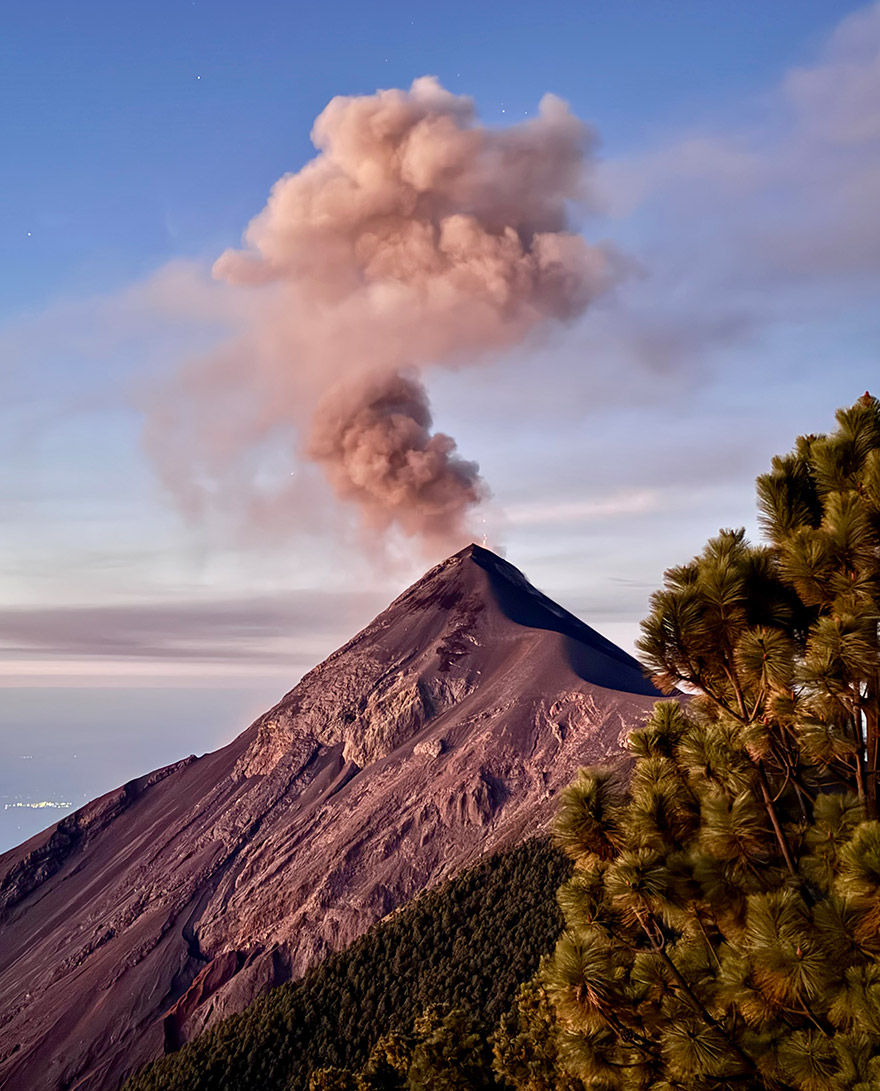
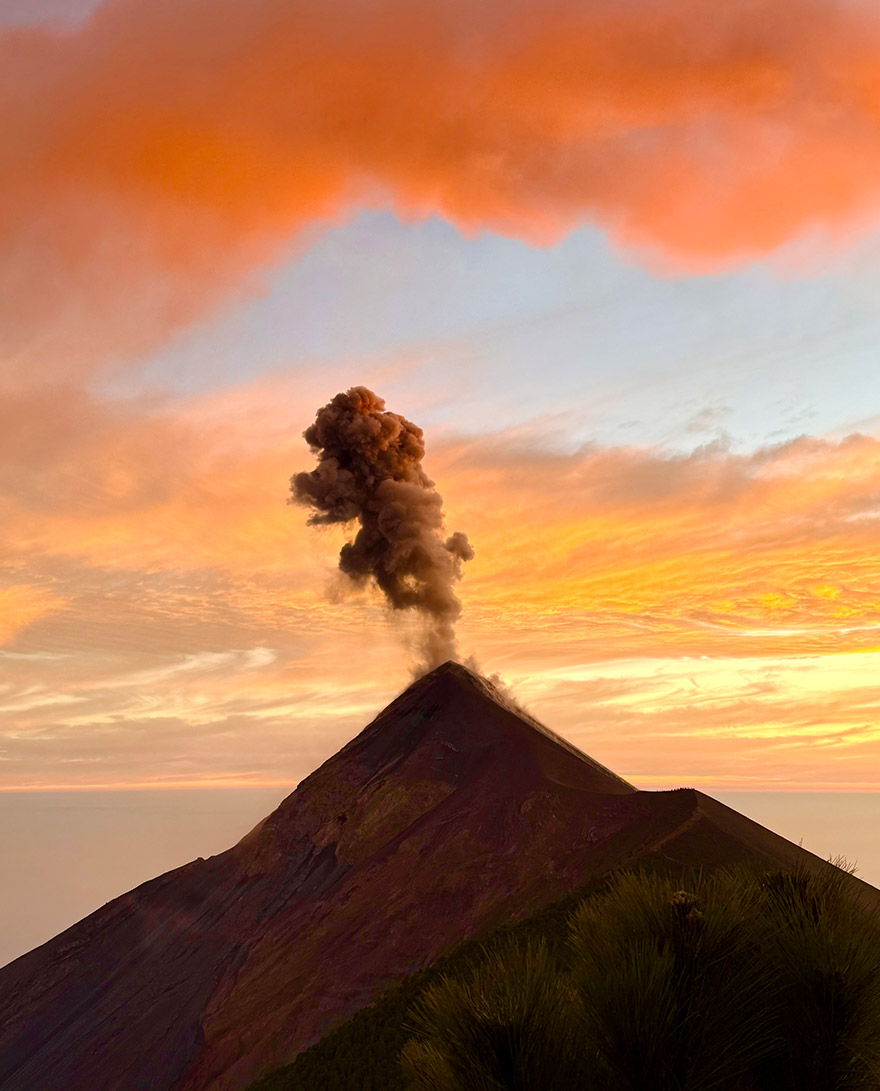
… as it gets dark, suddenly, eruptions spewing out glowing lava can be seen clearly in the darkness. Click on the image below right to see a video. Late evening: try to sleep a bit: you’ll be buzzing, cold and keen not to miss any amazing eruptions!
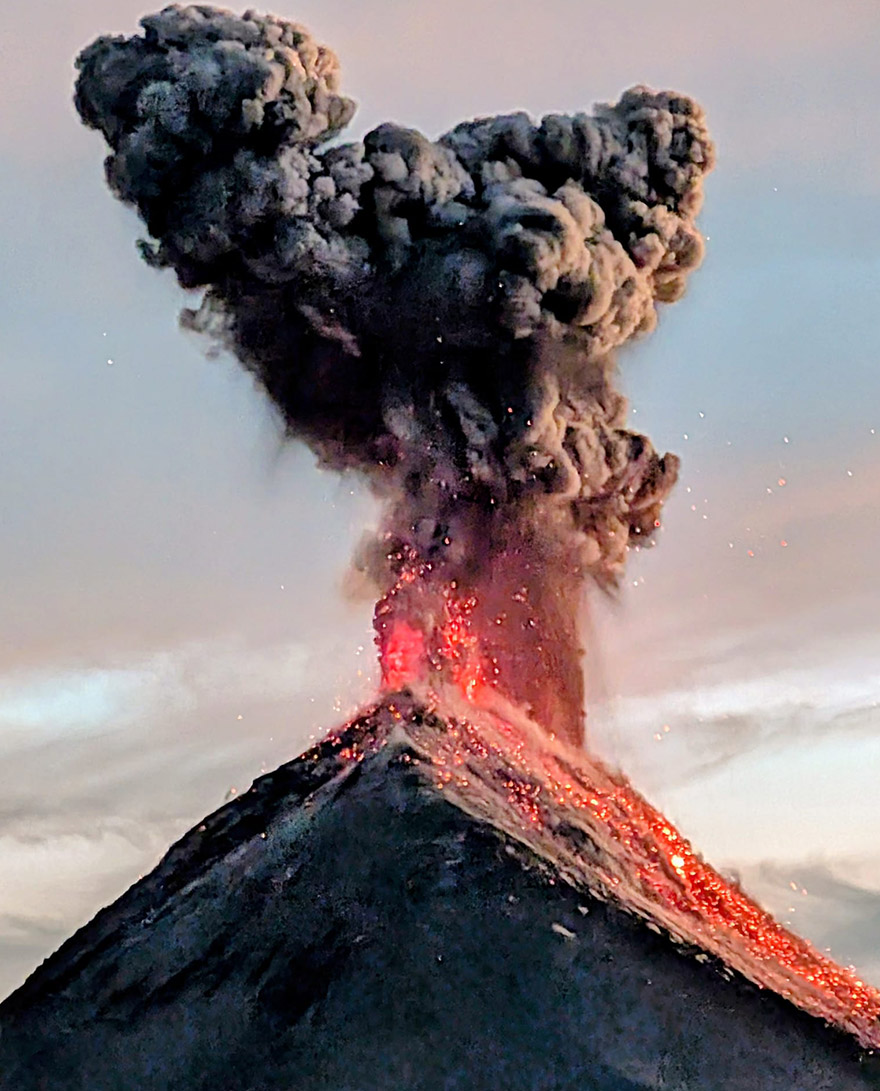
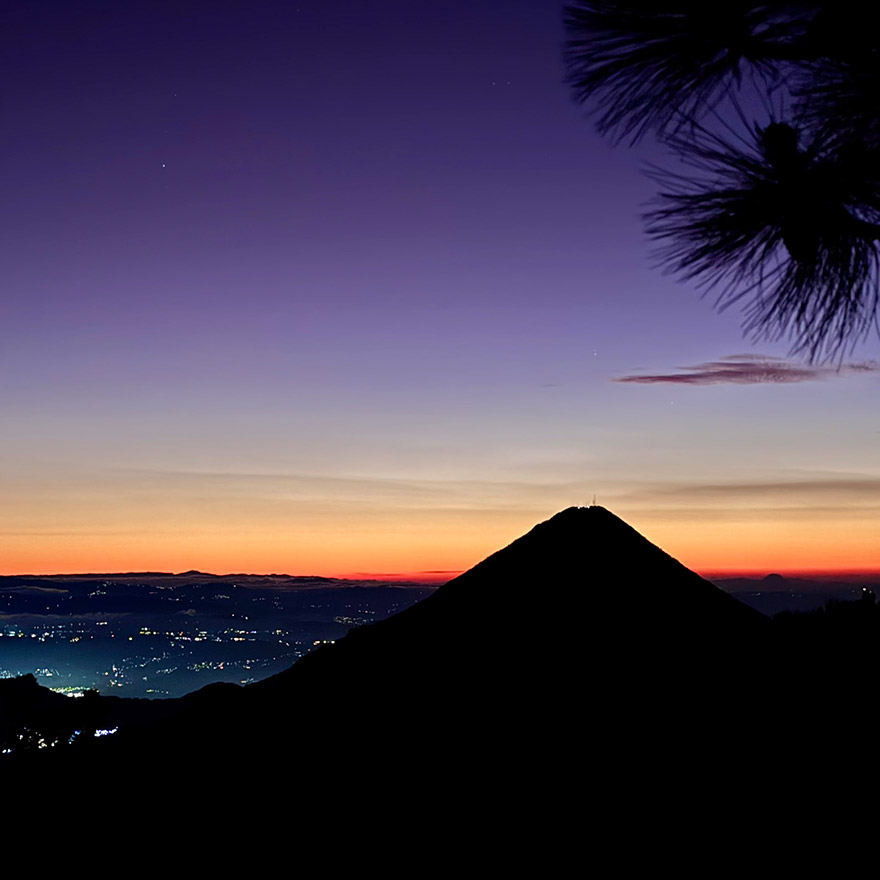
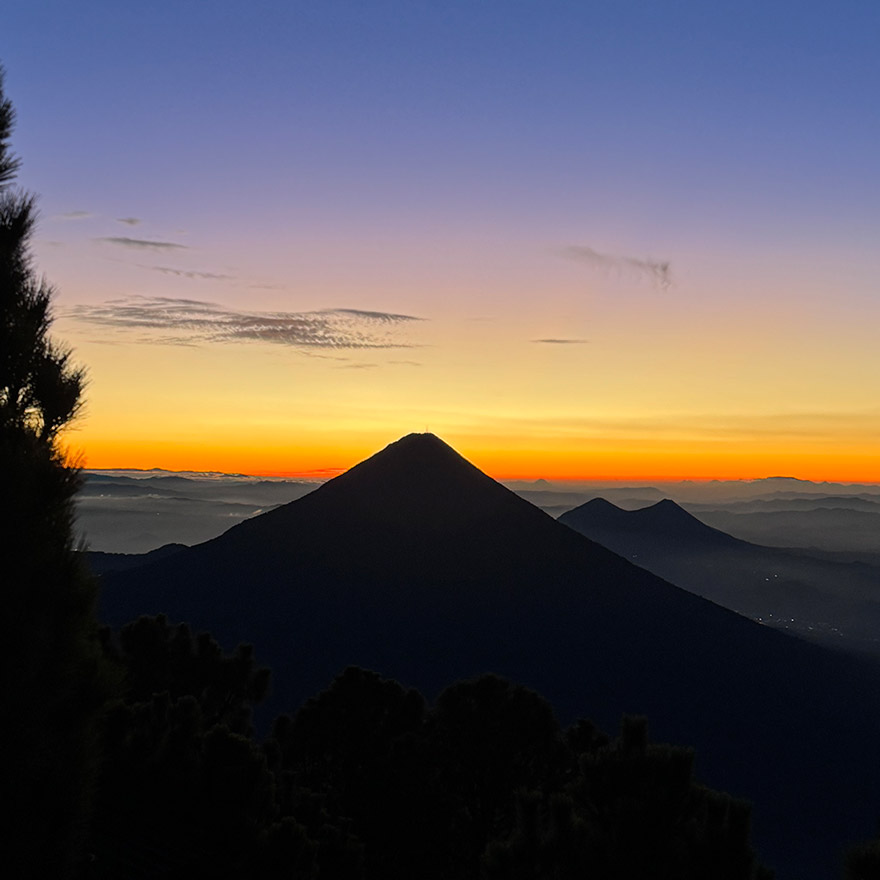
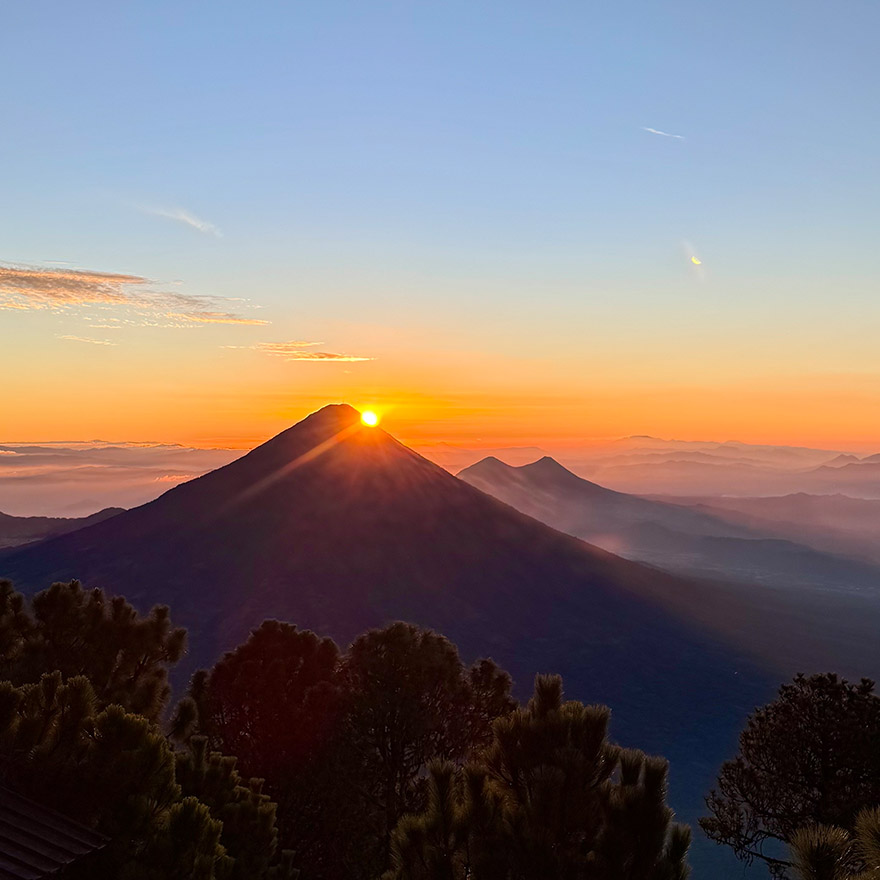
4am: summit push for sunrise if you’re doing it. We stayed at basecamp and watched the amazing sunrise from there.
8.00–8.30am: start the descent, which is busy, slippery and hard on the knees and thighs, especially if, like us, you’re 30 years older than most of your fellow hikers!
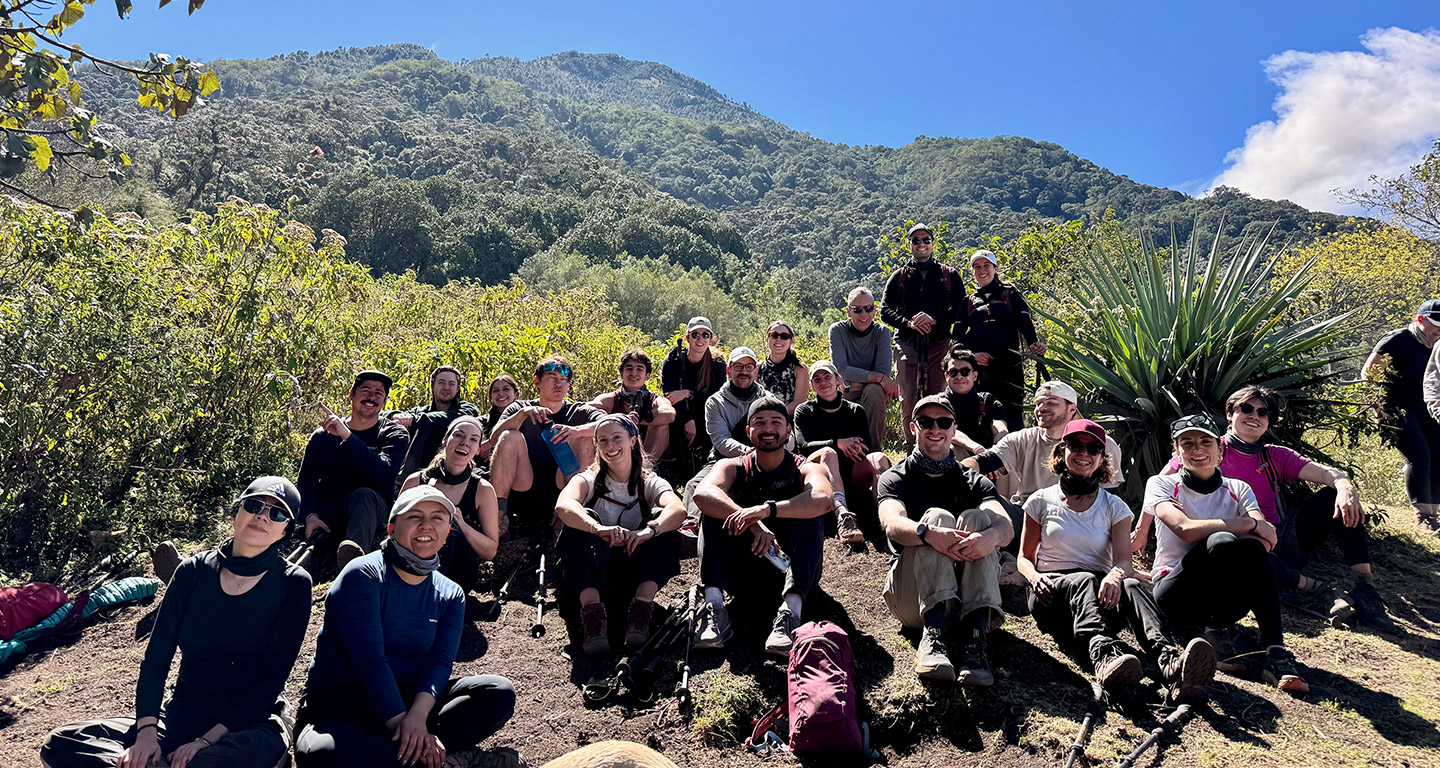
Midday: arrive back down feeling elated and happy at what you’ve seen and done. Below you see us with our group of fellow climbers. Then drive to Antigua.
WHAT TO WEAR & TAKE
We did the hike with one of the more expensive companies, Wincho & Charlie’s, and they were excellent: lots of kit included, more available to hire, great guides and cabins with an incredible view of Fuego. It felt well organised and as comfortable as this kind of adventure can be!
Wicho & Charlie’s provide lots of basics (hat, scarf, headlamp) and gear to hire (water, big rucksack, warm outer jacket). We paid to have our bag carried for the final section and had zero regrets!
Bring your own hiking boots and socks, thermal leggings and top (for the summit, not the climb), snack bars, energy drinks, cap, and sunglasses.
Lake Atitlán – Guatemala
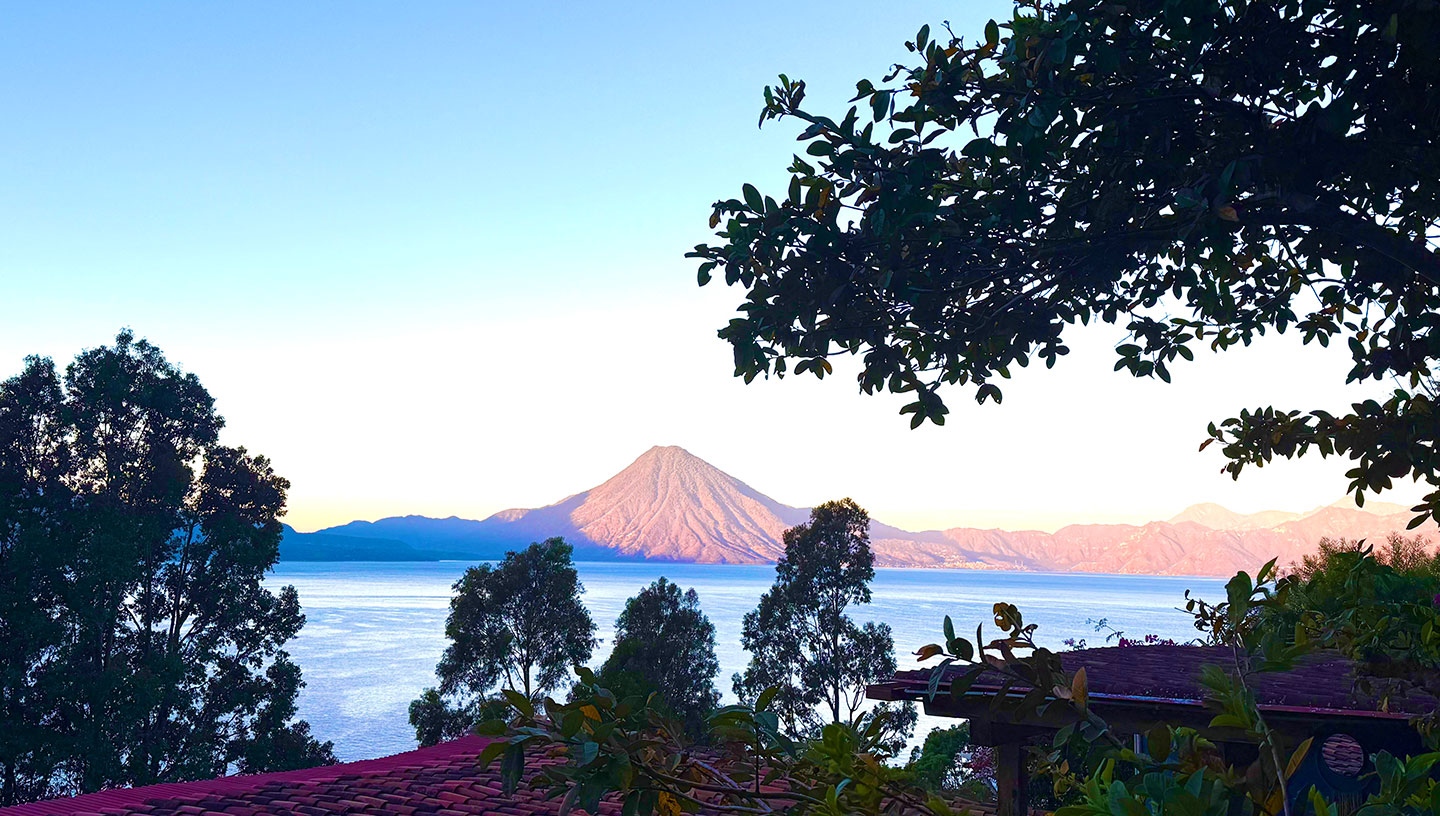
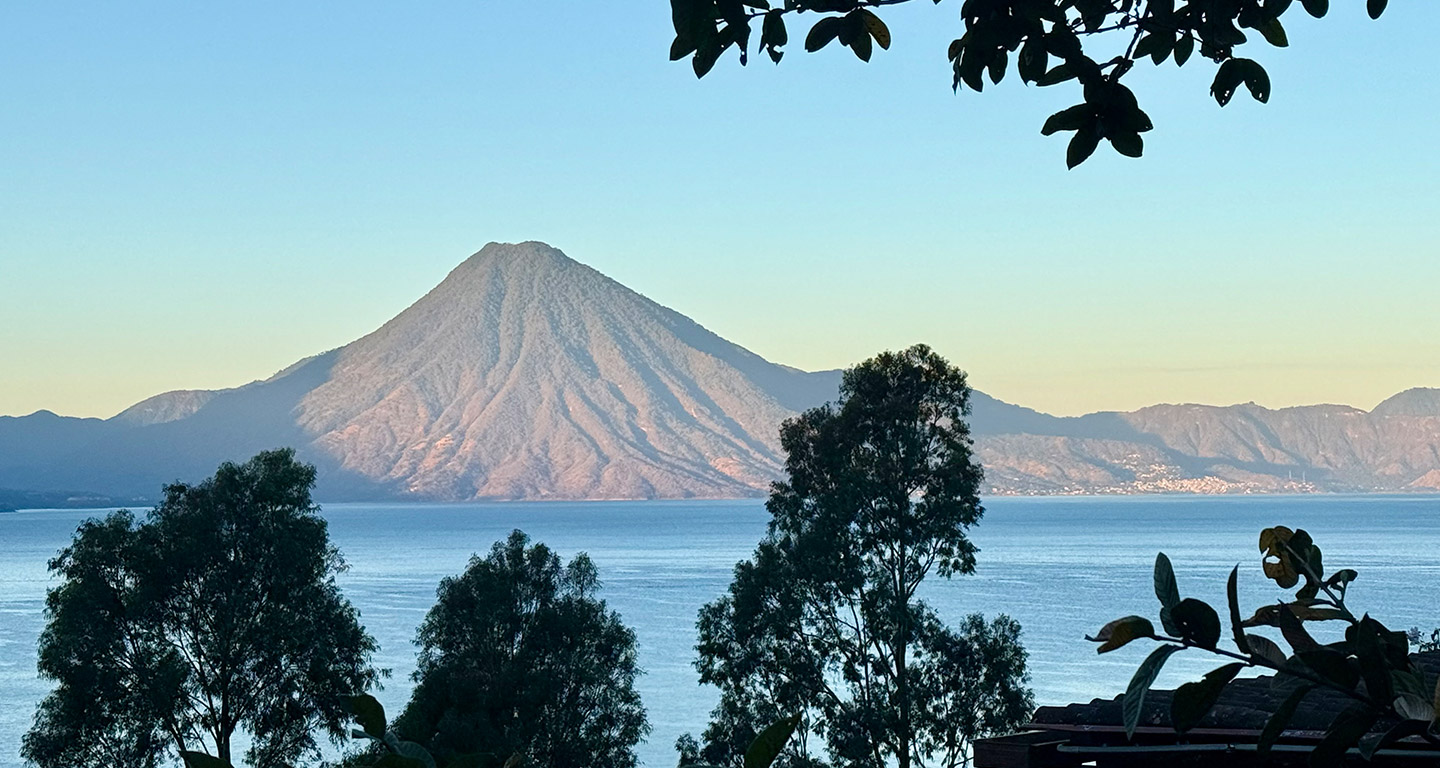
Formed thousands of years ago in the crater of a volcanic eruption, Lake Atitlán is ringed by three volcanoes – San Pedro, Atitlán and Tolimán. It’s a landscape that changes mood constantly: still and golden in the morning, misty and dramatic later in the day and almost eerie under moonlight. The lake also holds deep spiritual significance for the indigenous Maya communities who live along its shores, which adds another layer to the atmosphere.
Stay
CASA PALOPO
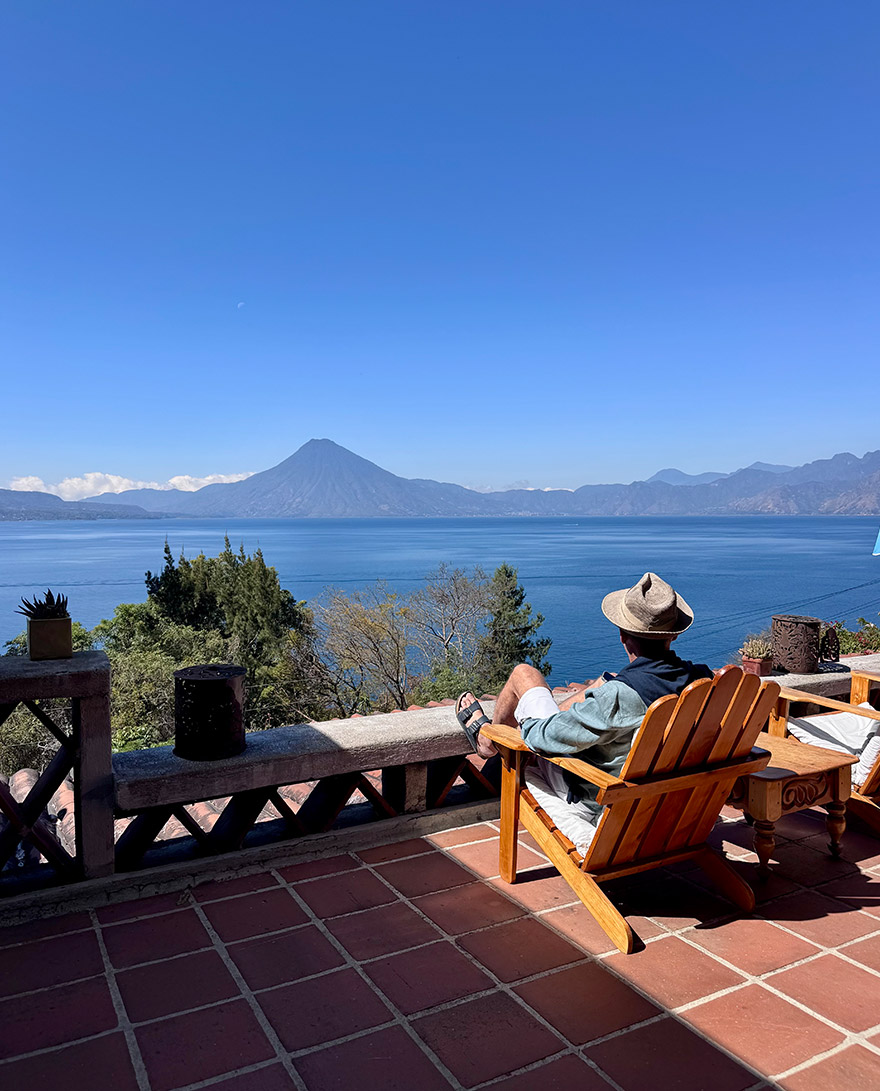
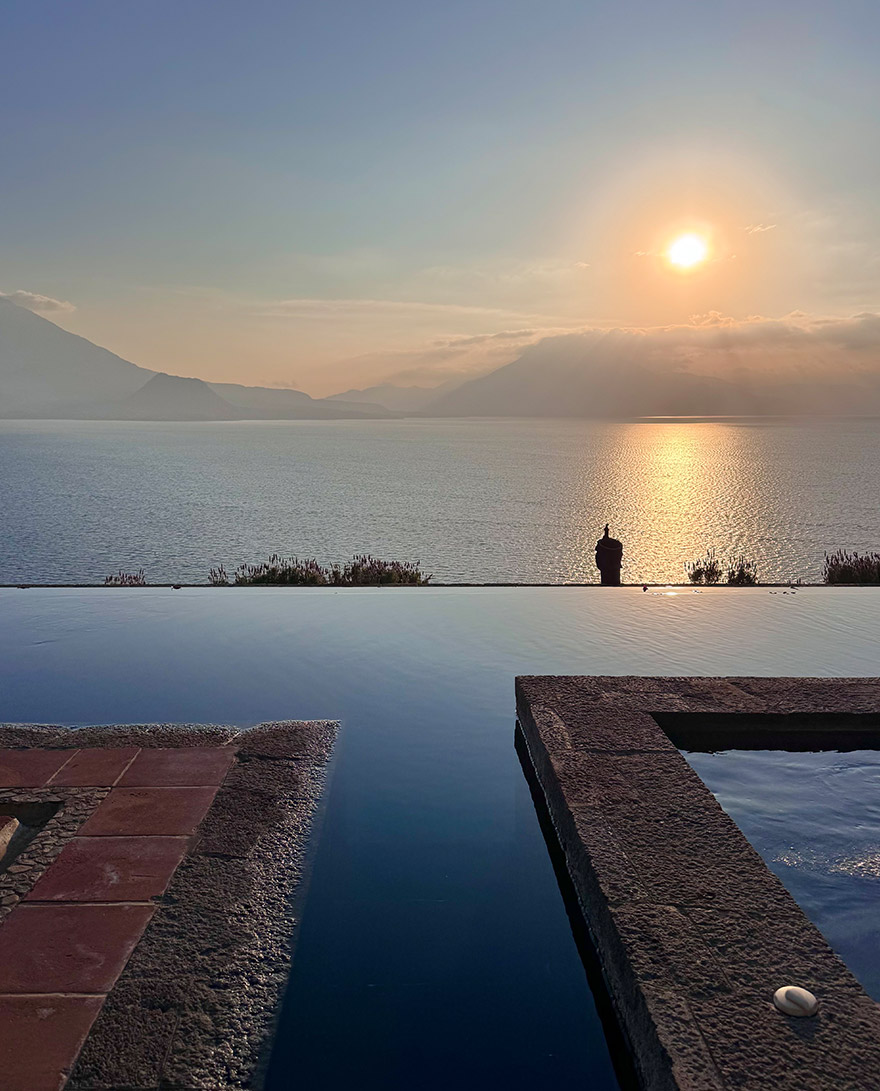
We spent three nights at Casa Palopó and loved it. The setting is the headline: a beautiful perch above the lake with sweeping views of volcanoes and water that constantly change with the light. It feels peaceful and slightly removed, which is exactly what we wanted after Antigua’s buzz – but you’re still close enough to the villages to explore easily by boat. The hotel is a Relais Chateaux property, and this showed in the attentive and efficient service, always delivered with warmth and a smile.
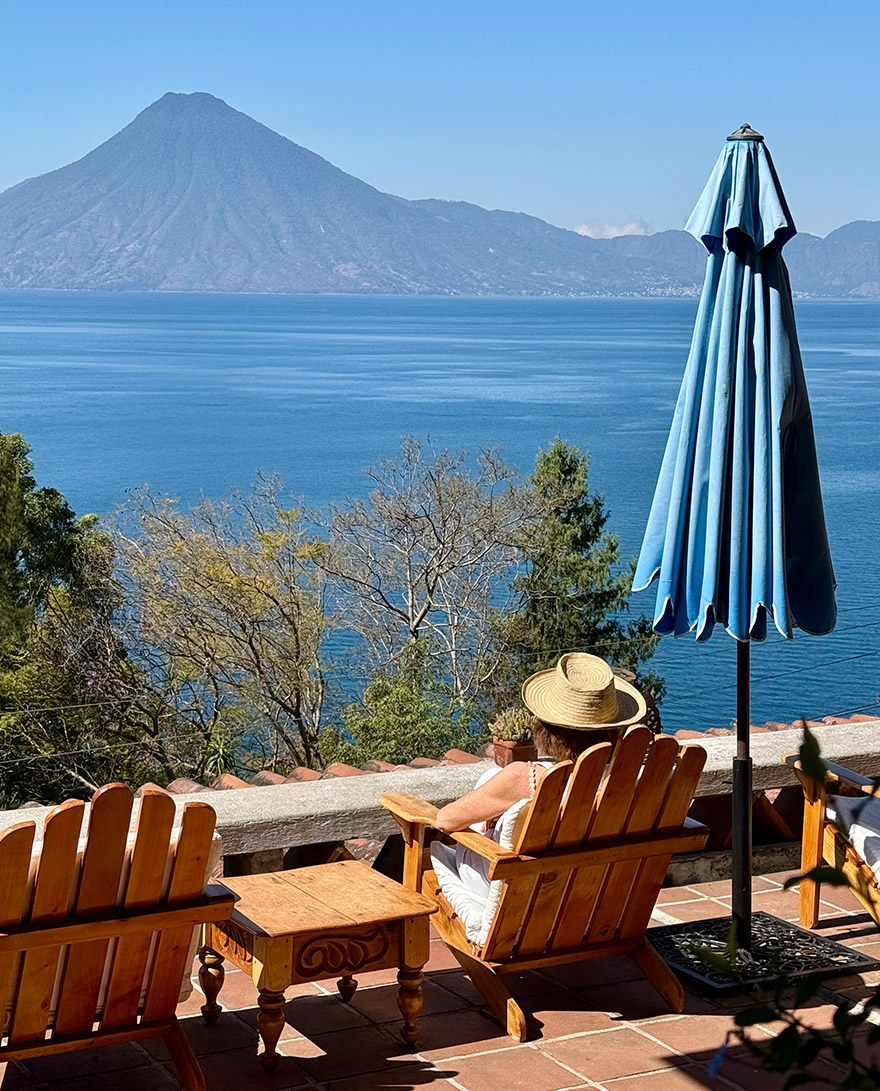
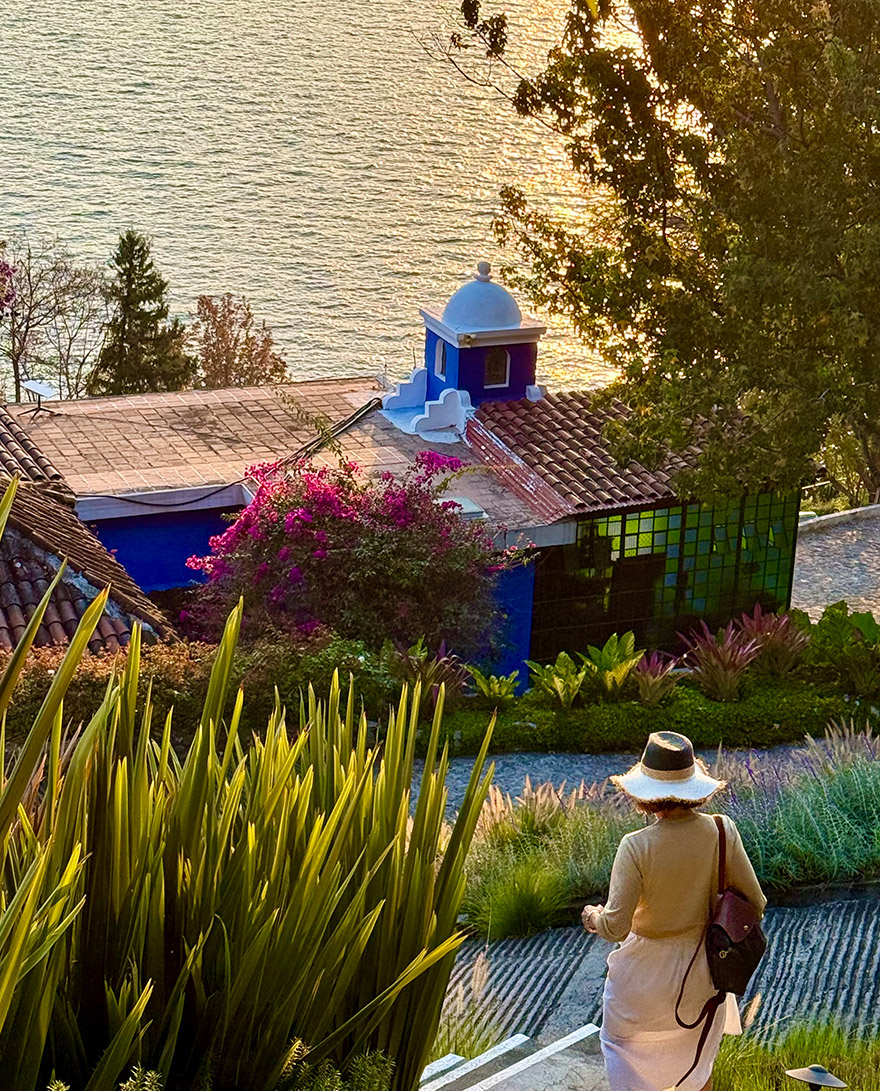
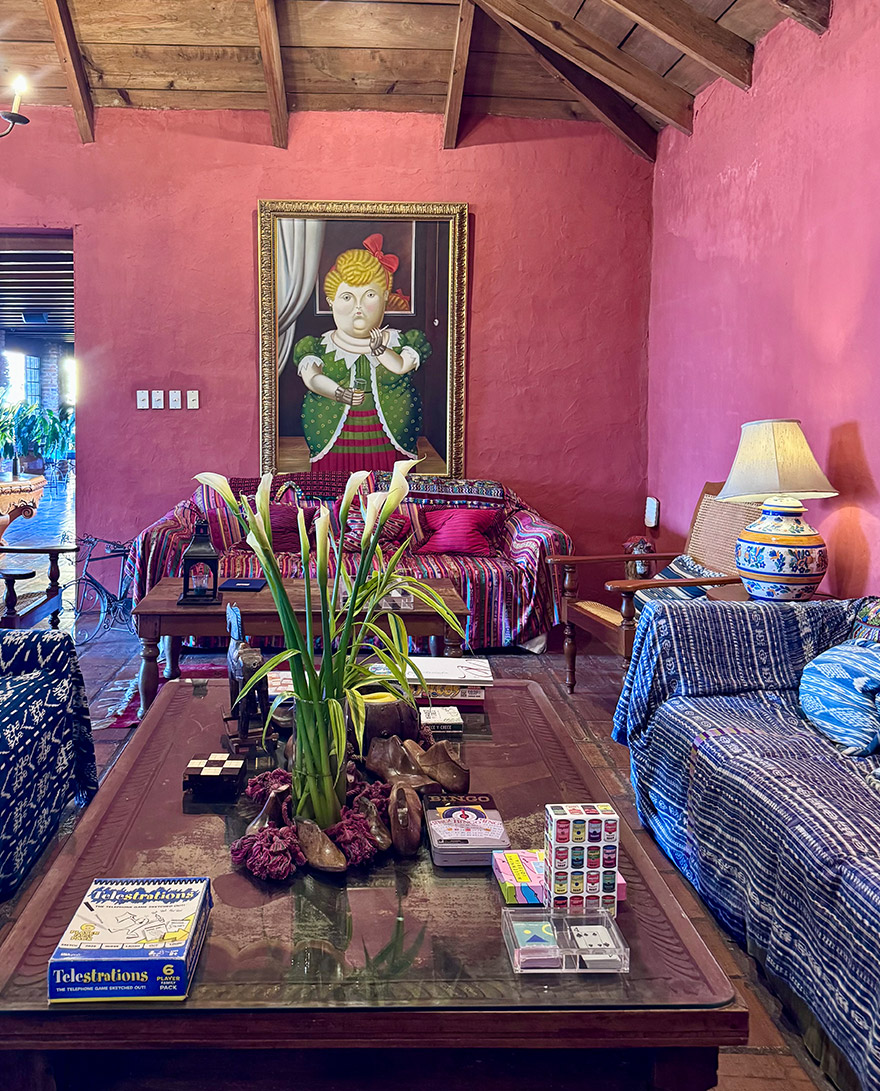
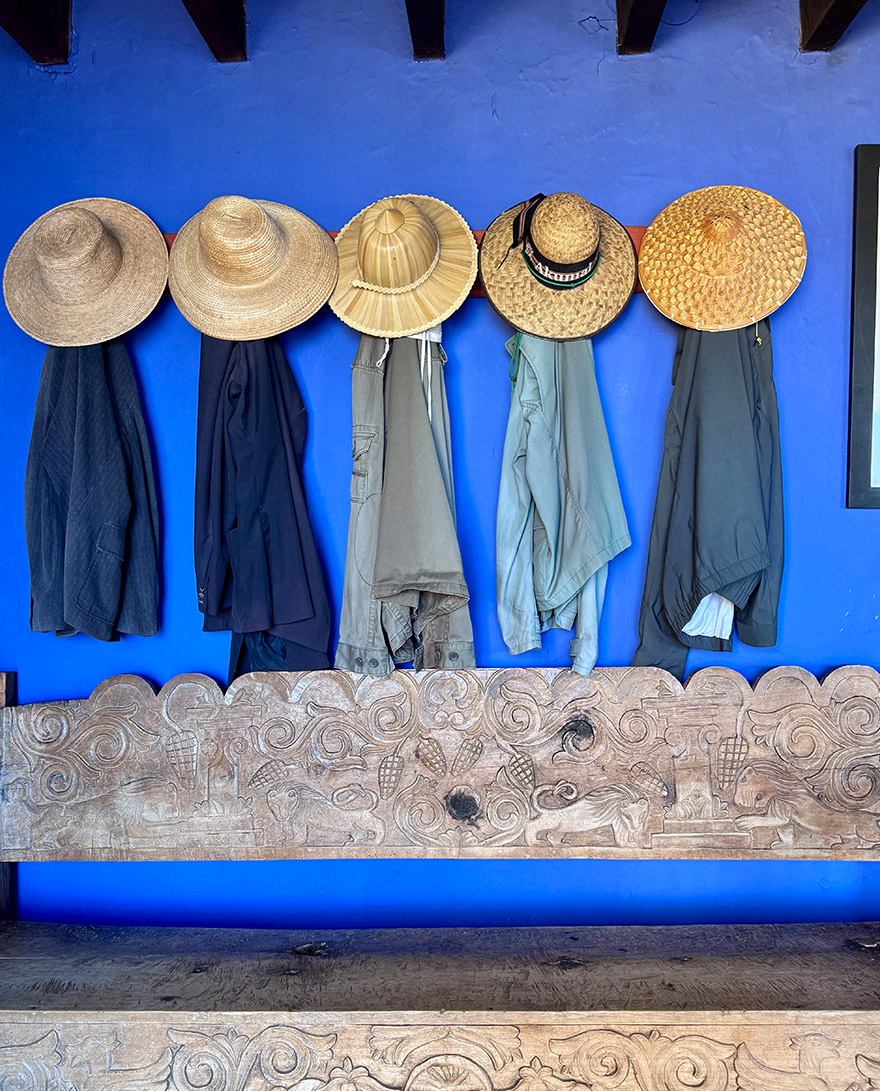
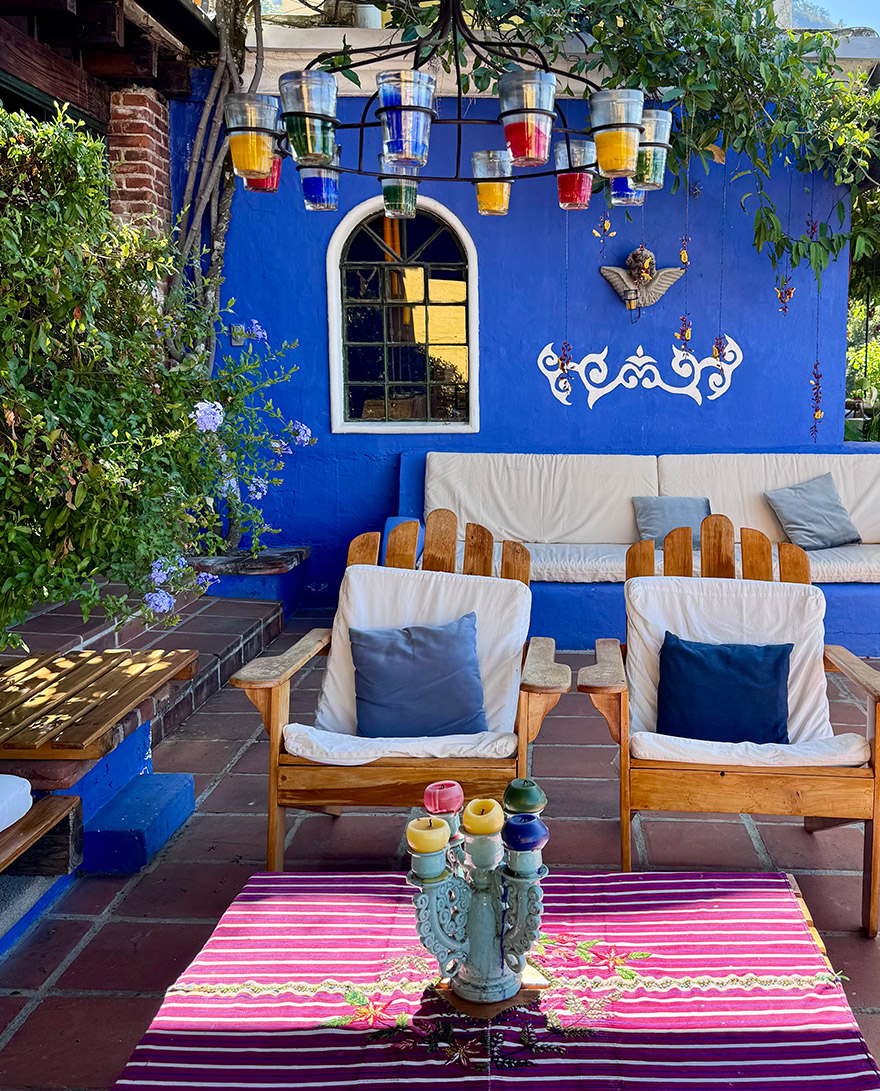
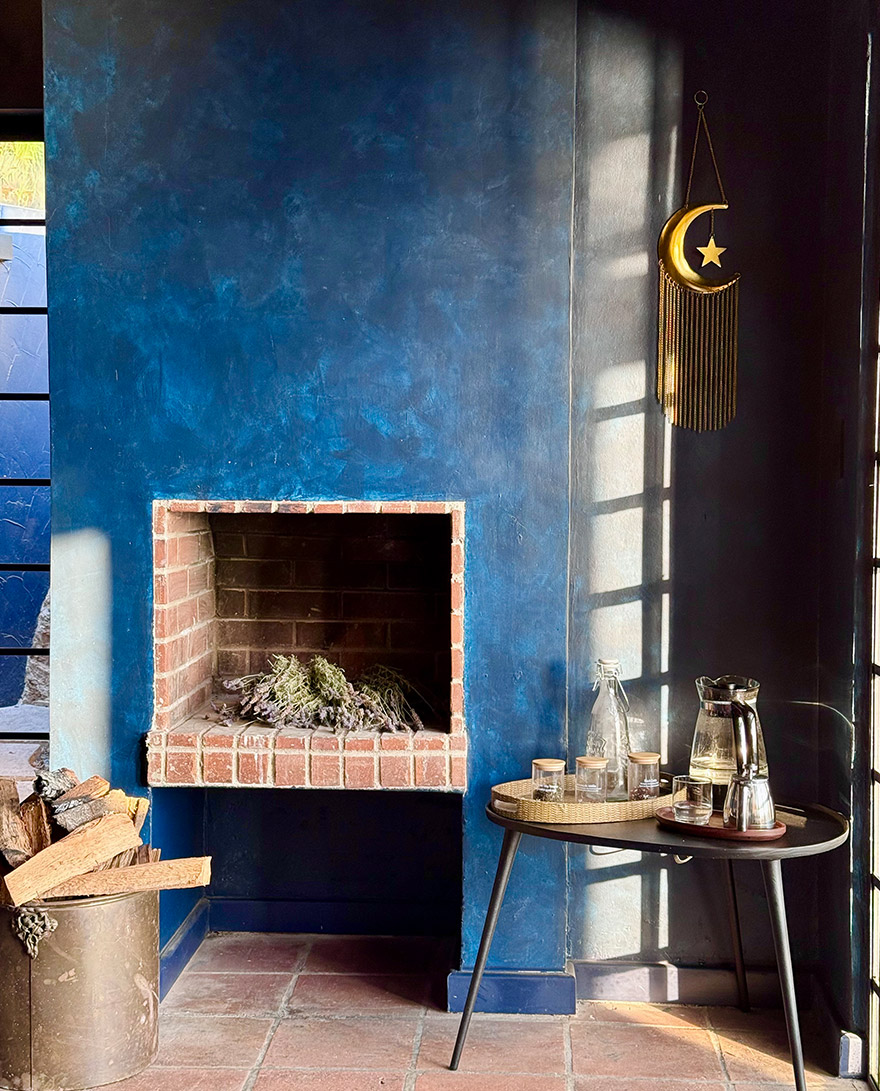
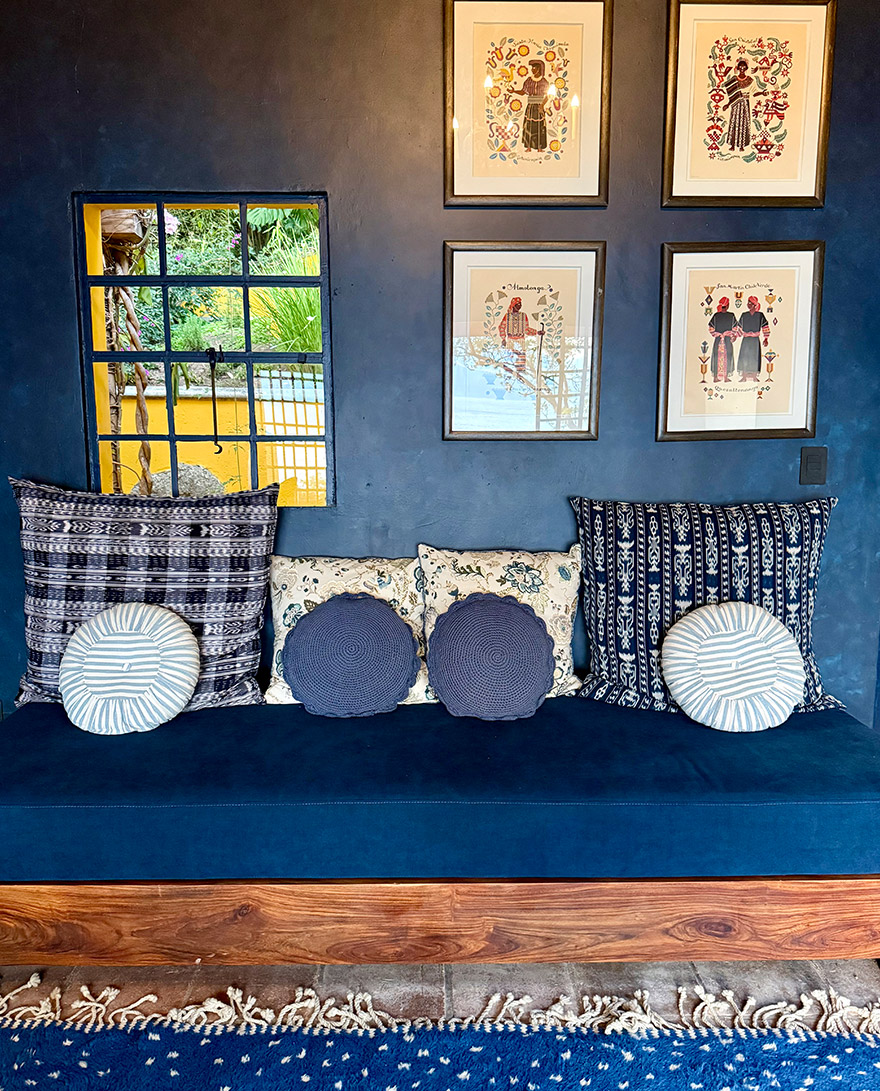
The design is colourful and characterful, with strong Guatemalan identity rather than generic “boutique hotel” styling. Interiors showcase Guatemalan craftsmanship – rich woods, woven textiles and vibrant accents.
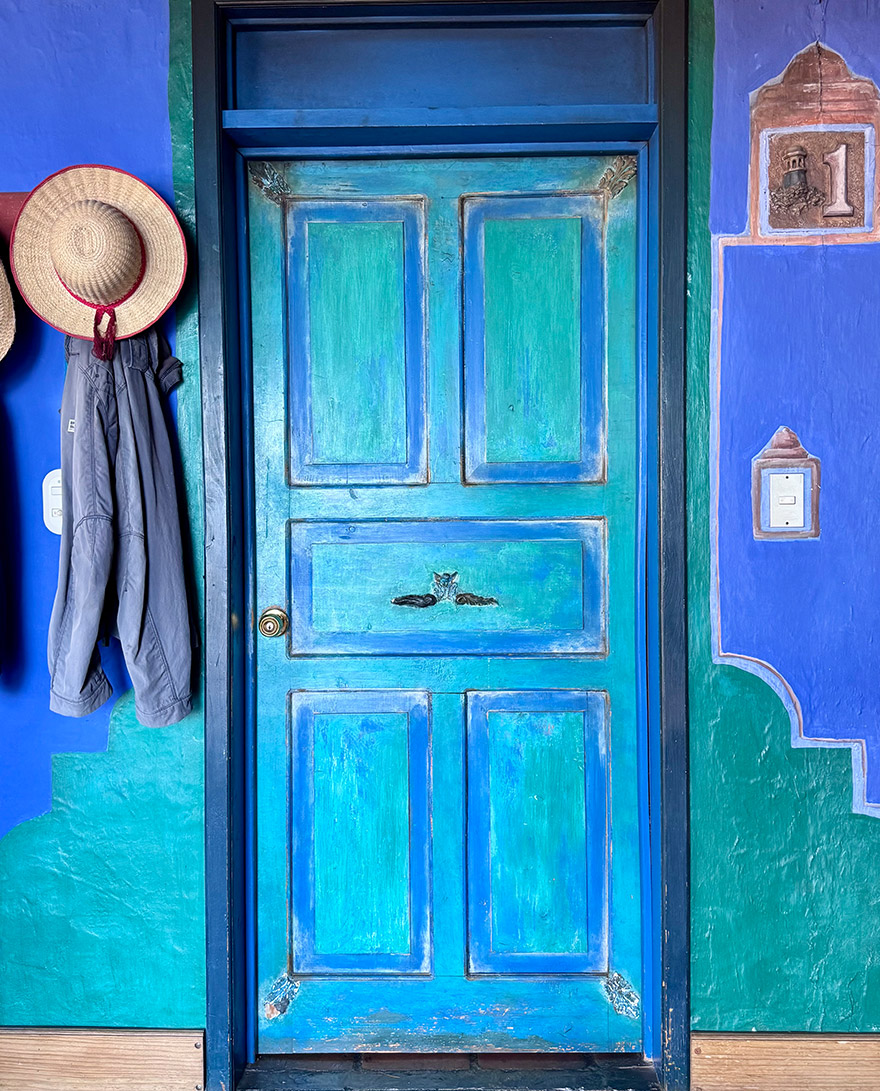
There are terraces to sip a cocktail on and corners to sit with a book or a coffee.
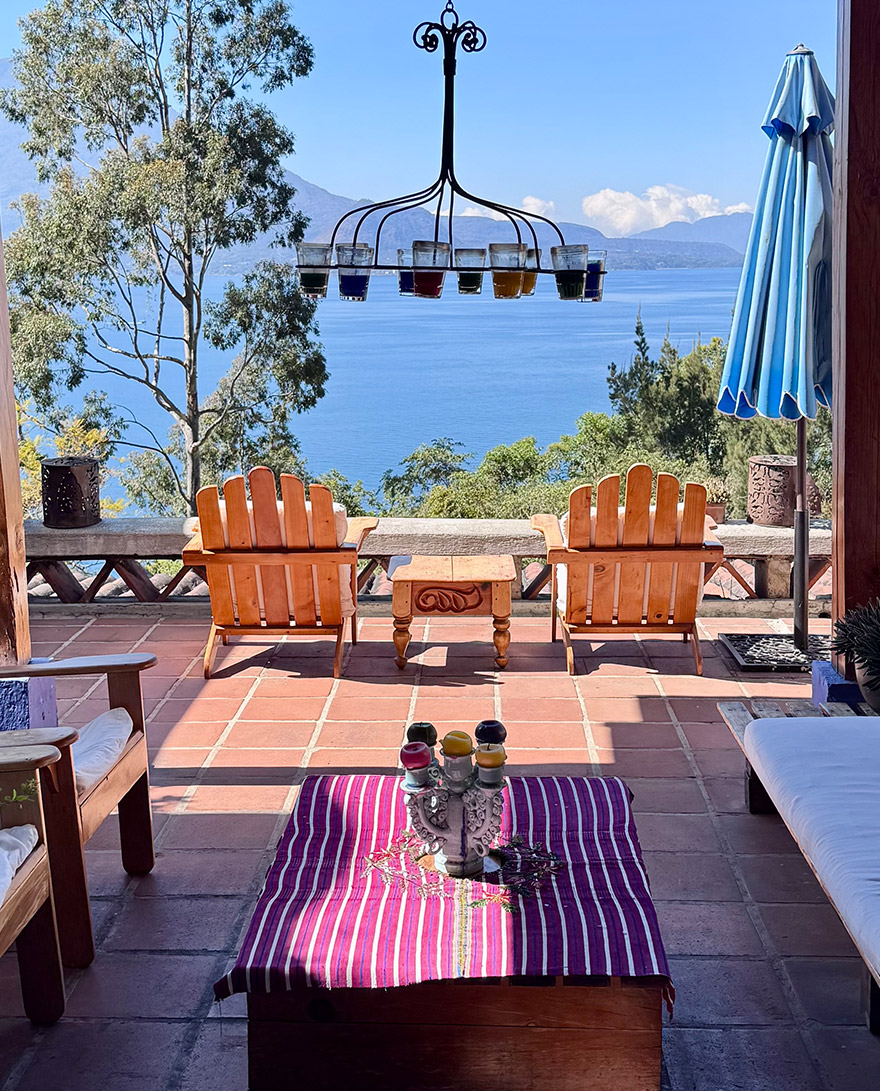
Rooms feel comfortable and calm, with a good balance of boutique charm and practical comfort. We went for one of the higher category rooms to get a stunning lake view.
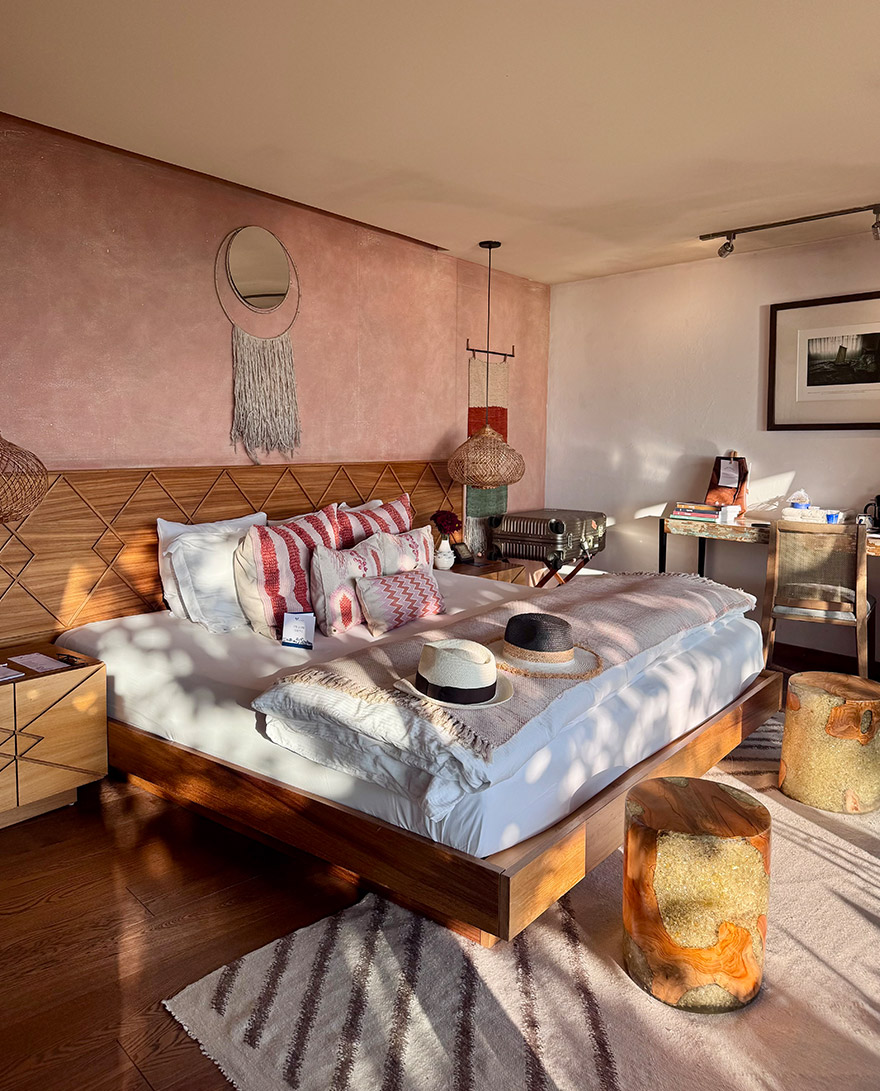
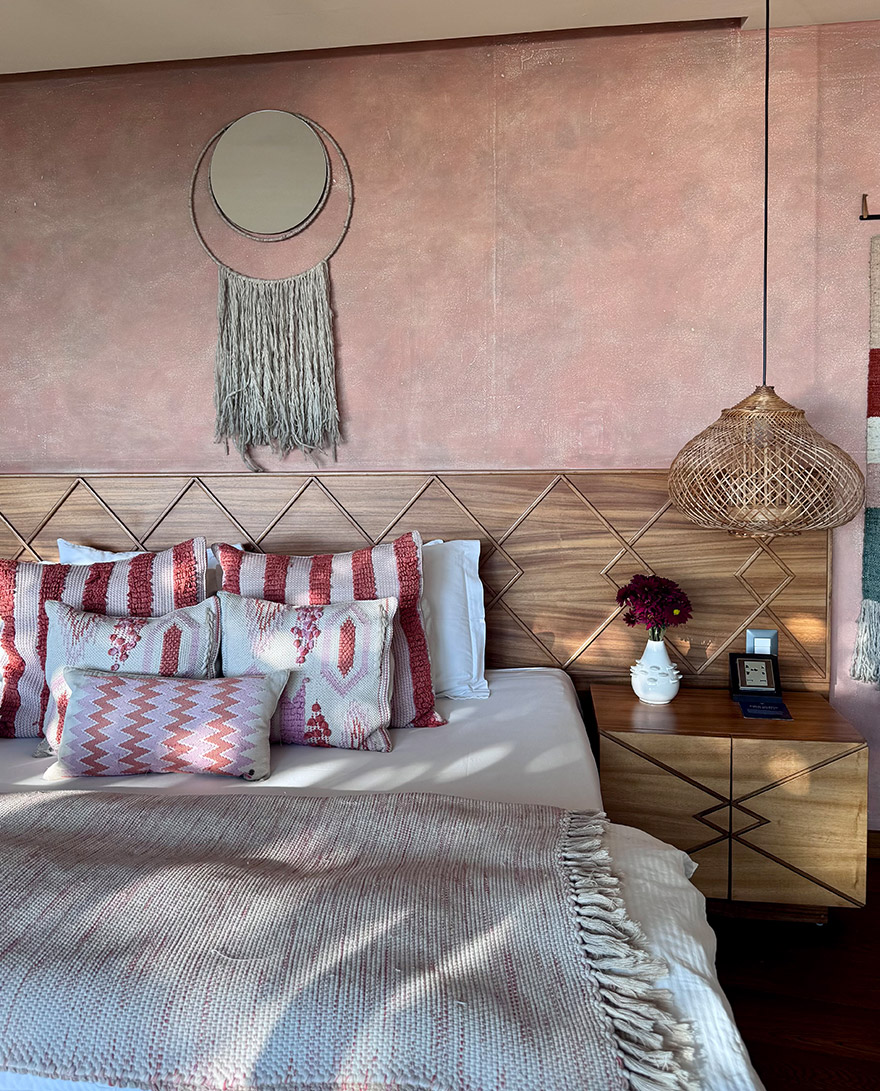
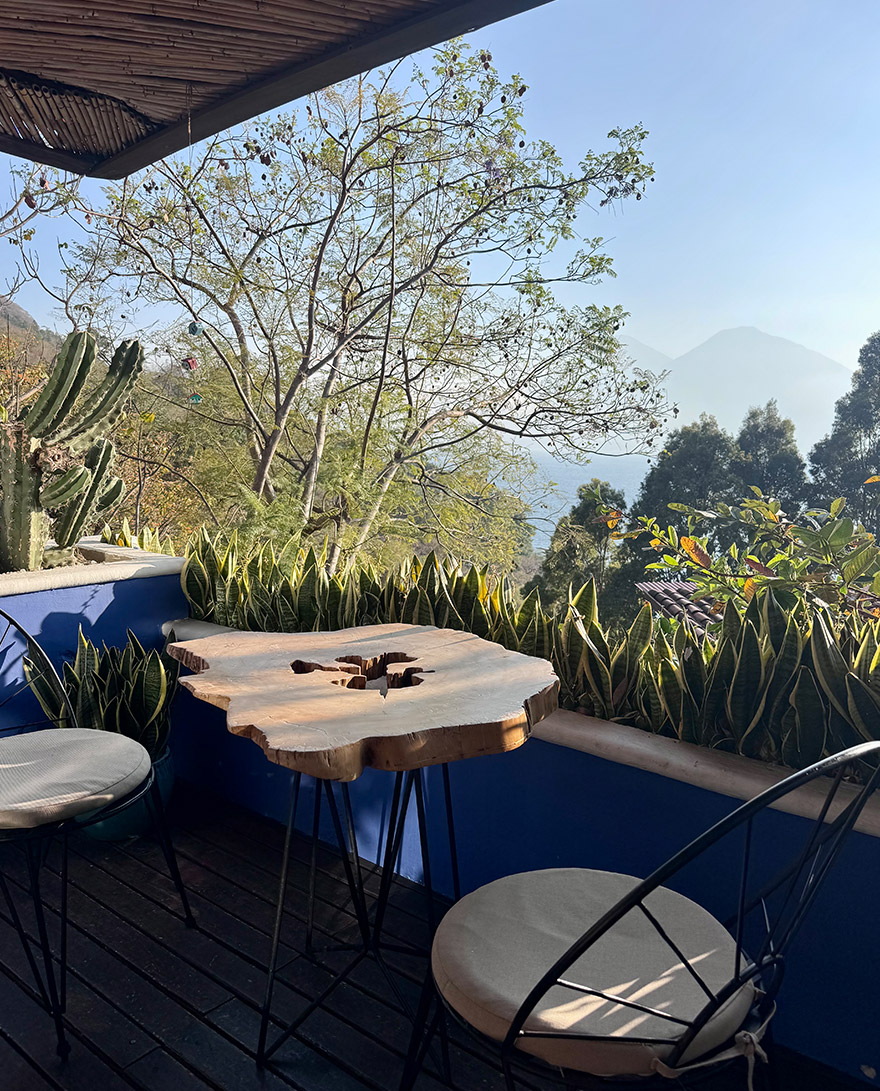
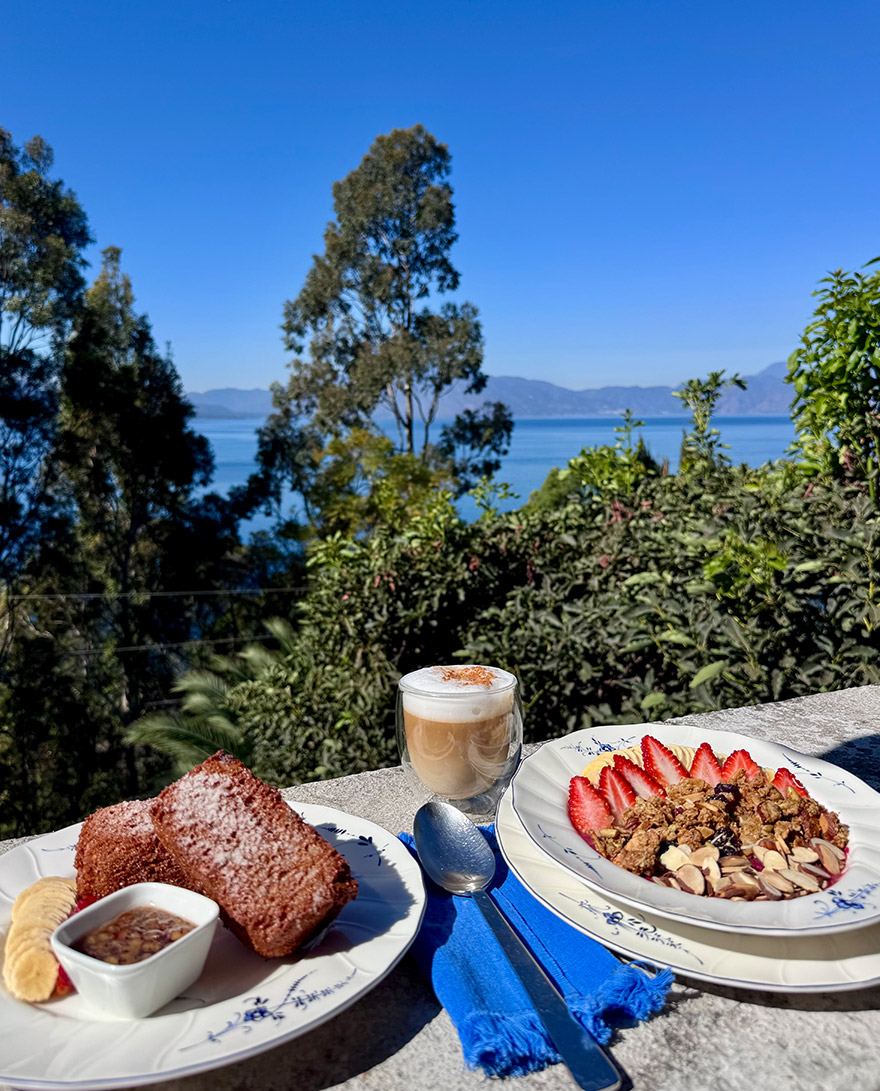
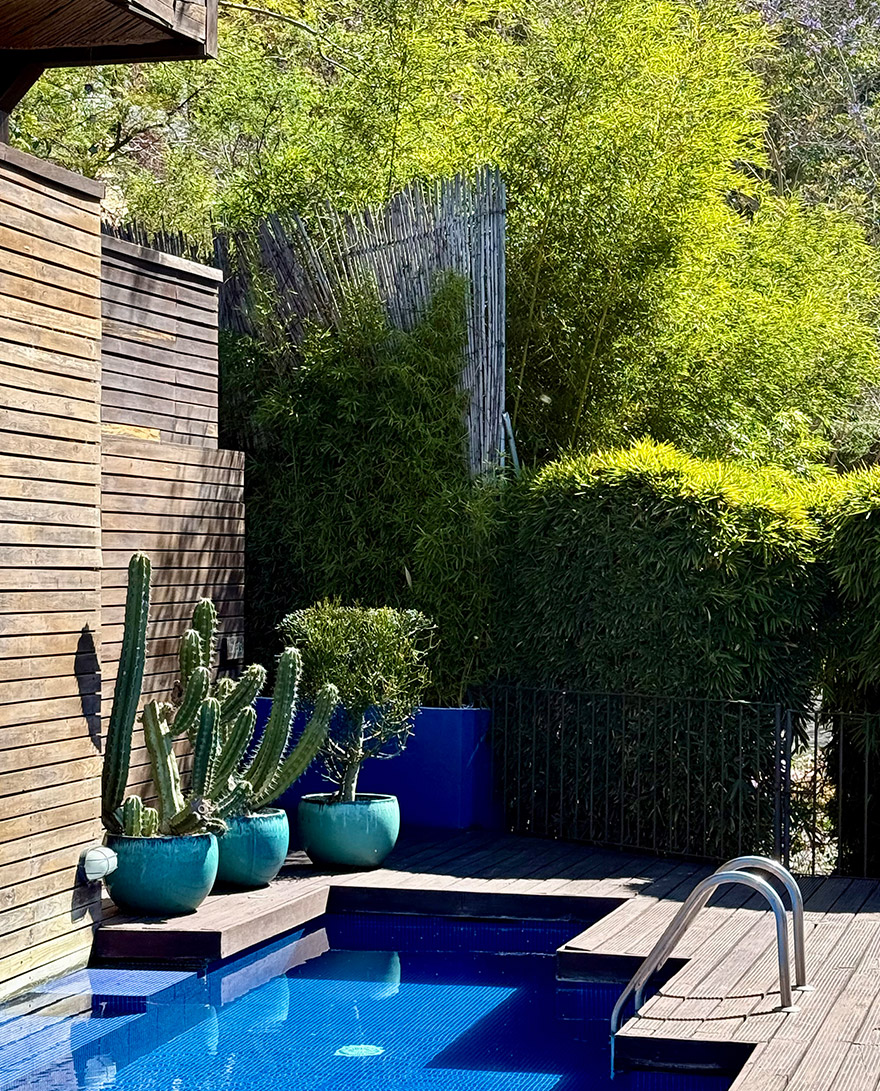
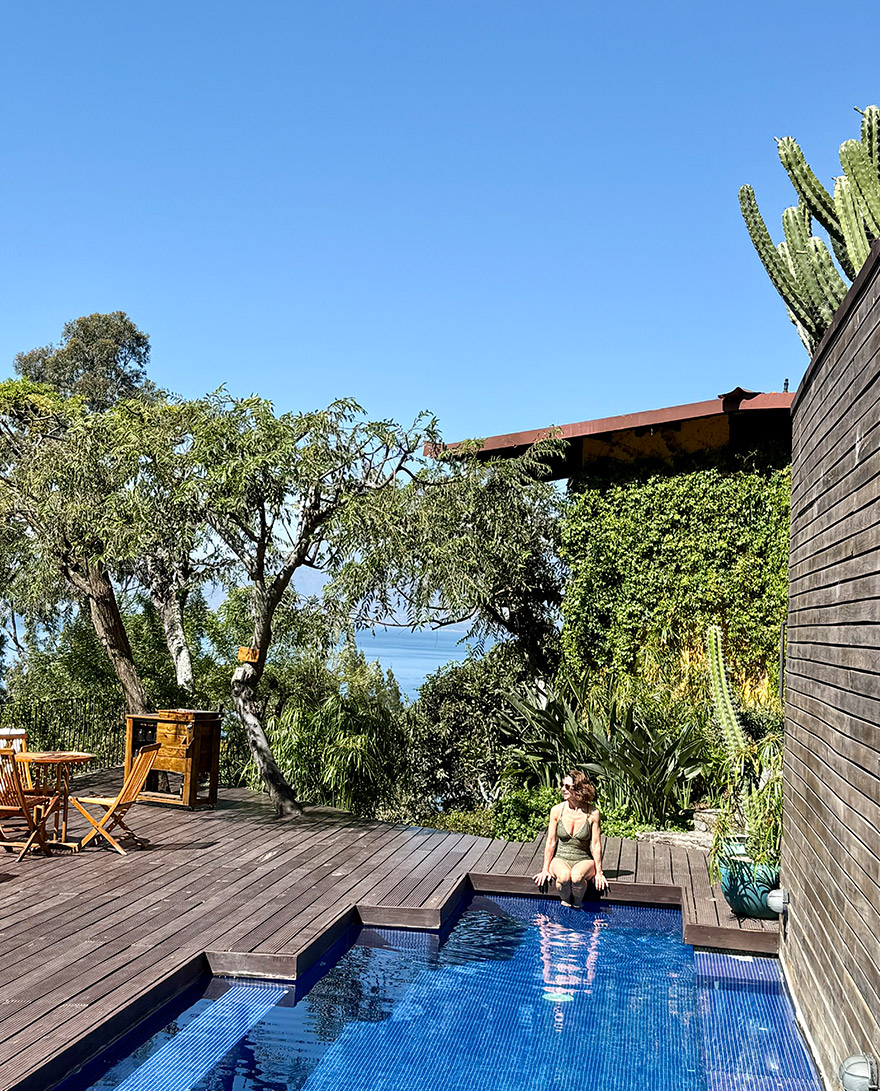
There are two pools: one at the main hotel, and another higher up at the villa (below right) – the one with the truly show-stopping views down across the lake and volcanoes.
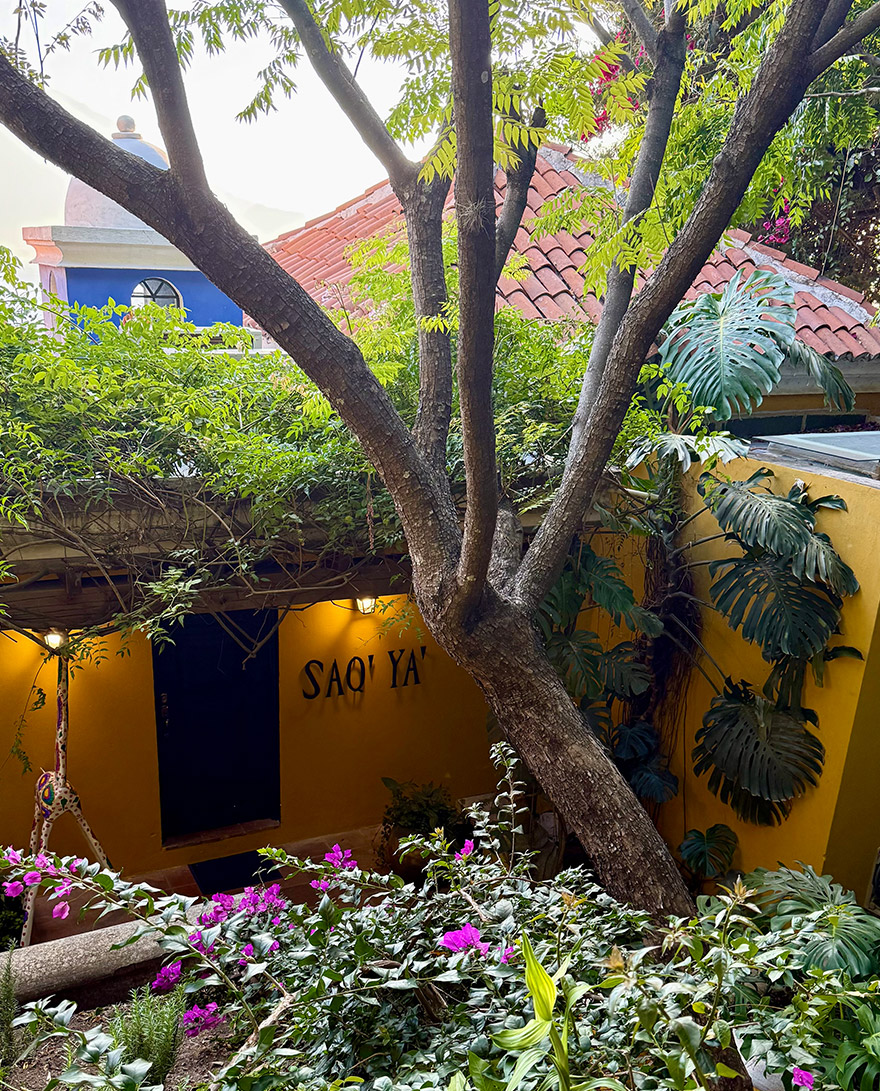
Saq’Ya’ is Casa Palopó’s small spa and the perfect place to unwind after a day of village-hopping by boat. Rituals are inspired by the lake’s elements, and the views from the relaxation area are stunning.
Dine
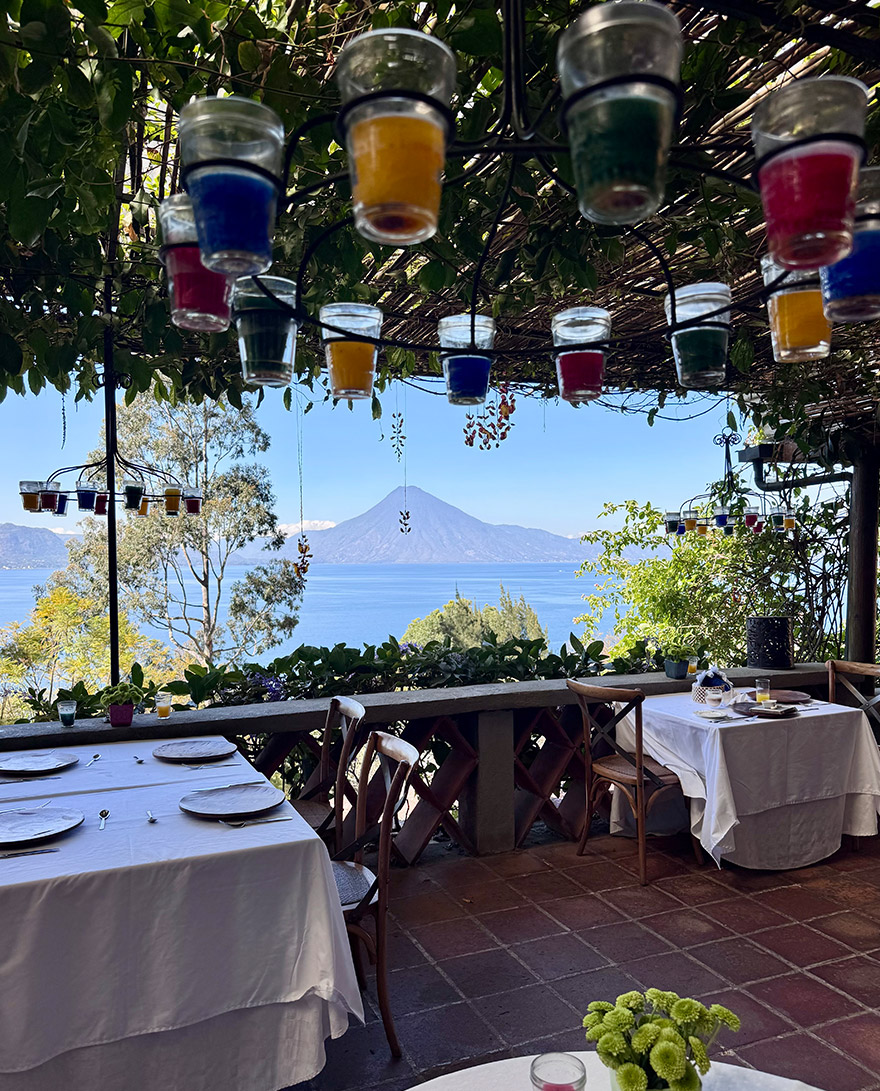
Casa Palopó has two very different (and very complementary) dining set-ups. 6.8 is the more formal option — the “proper dinner” room when you want a slower evening and a smarter table setting. This is also where you start the day with a lovely breakfast, including the most indulgent French Toast we have ever tried!
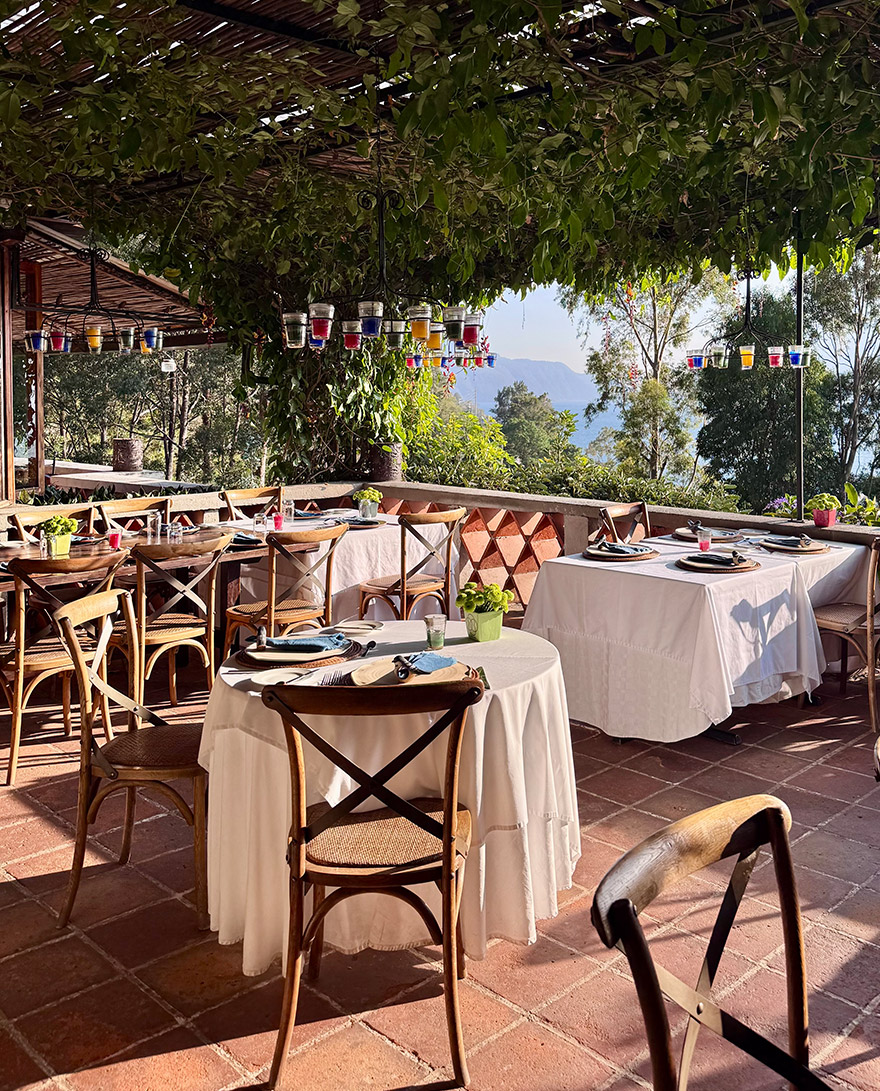
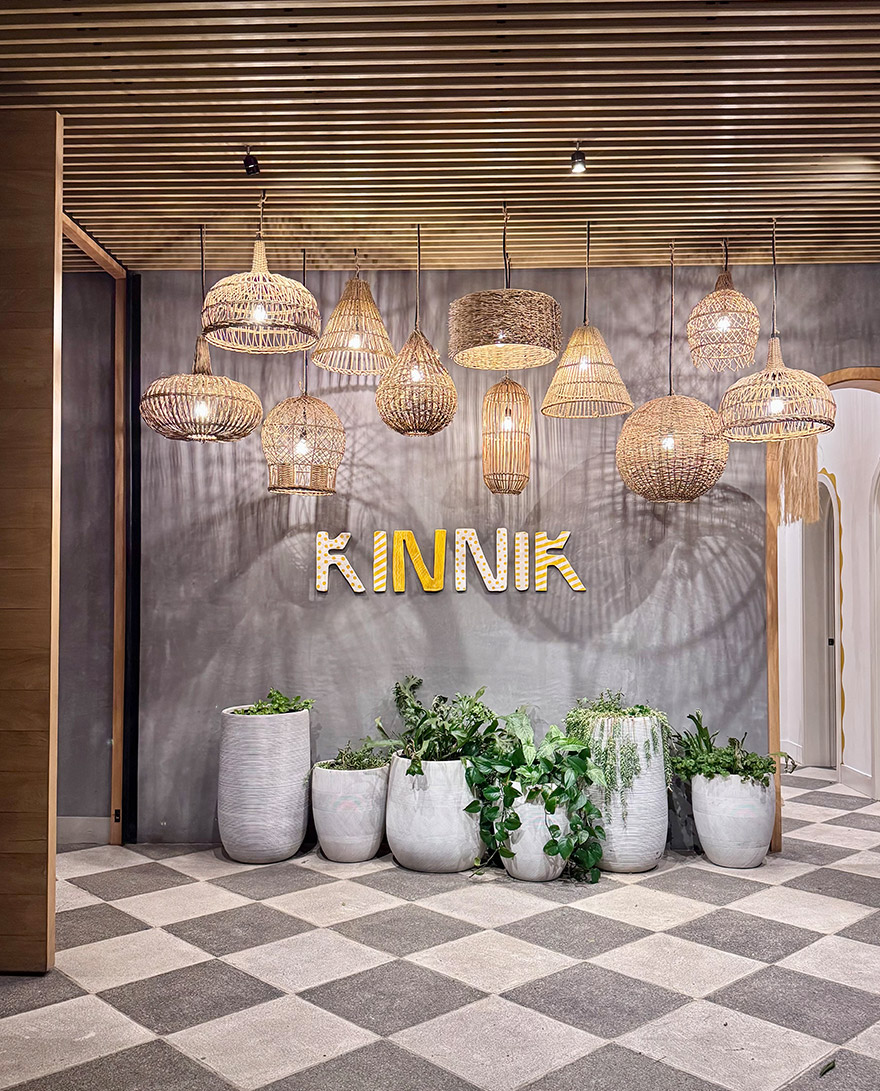
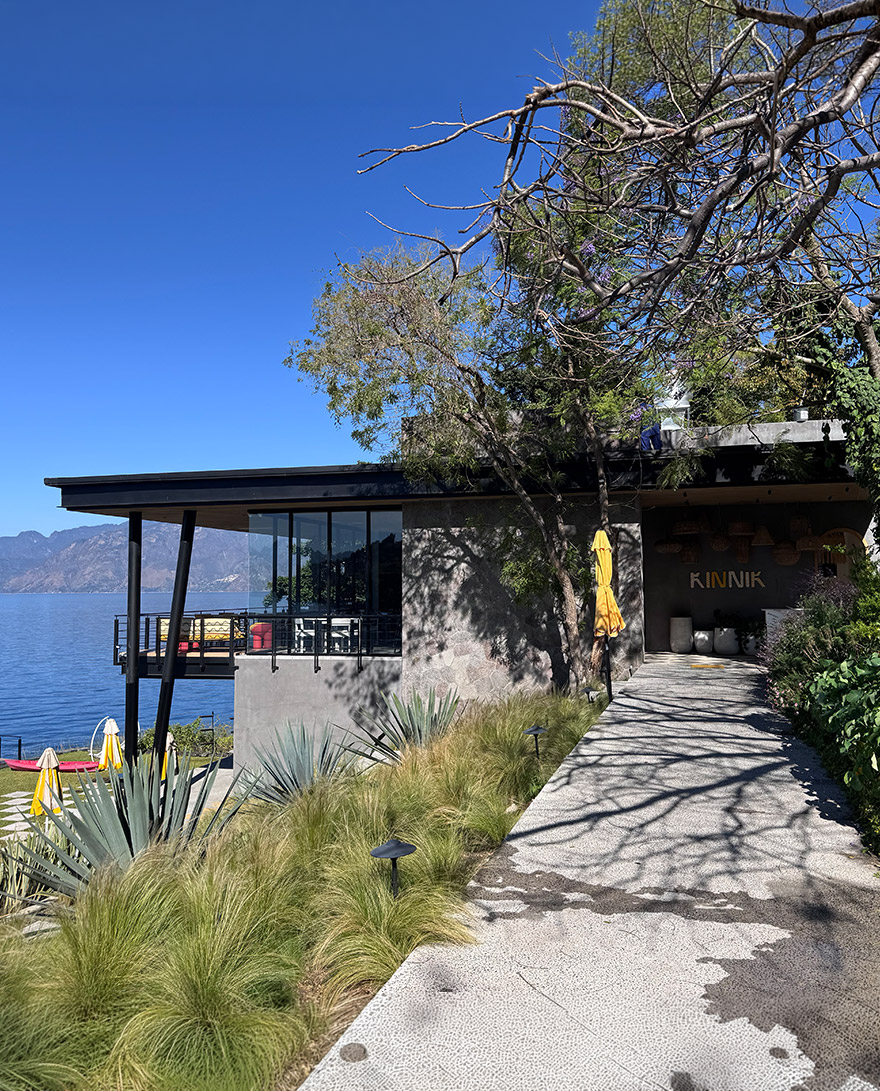
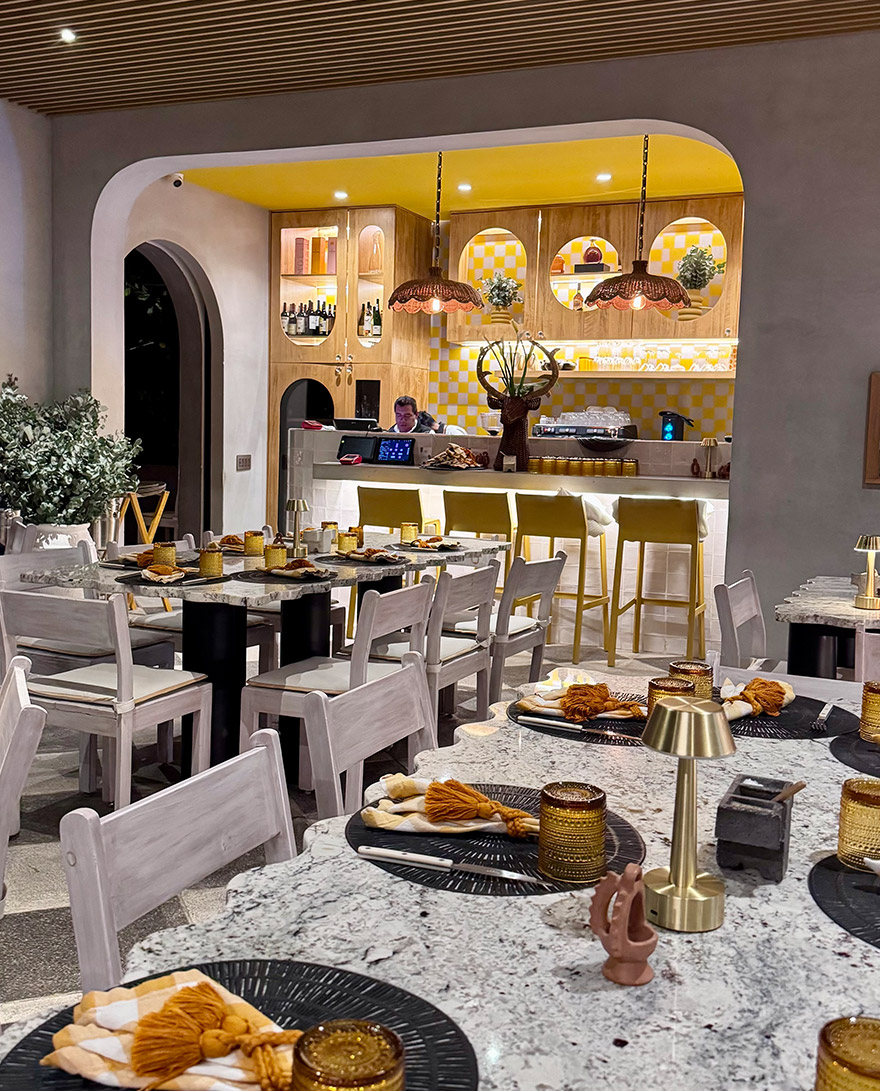
Then there’s Kinnik, right down by the lake: contemporary, sociable, and built around open-fire cooking.
Do
TOUR THE LAKESIDE VILLAGES
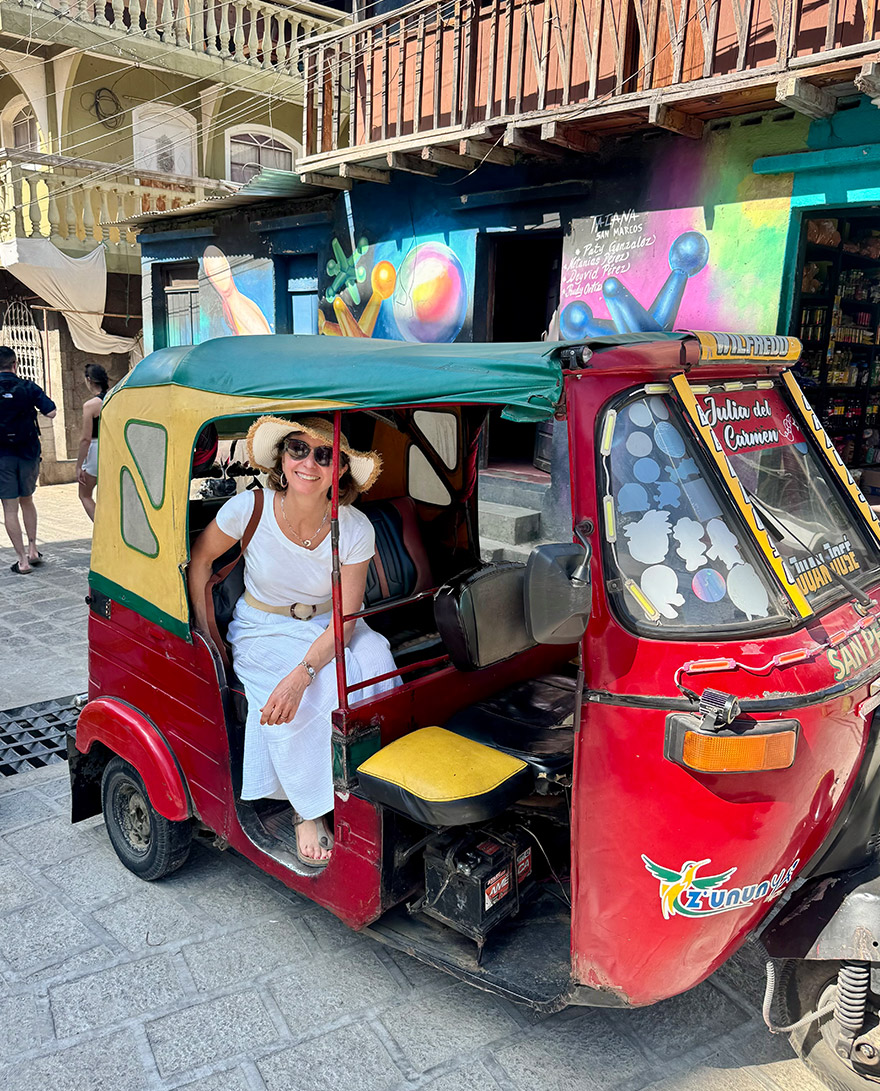
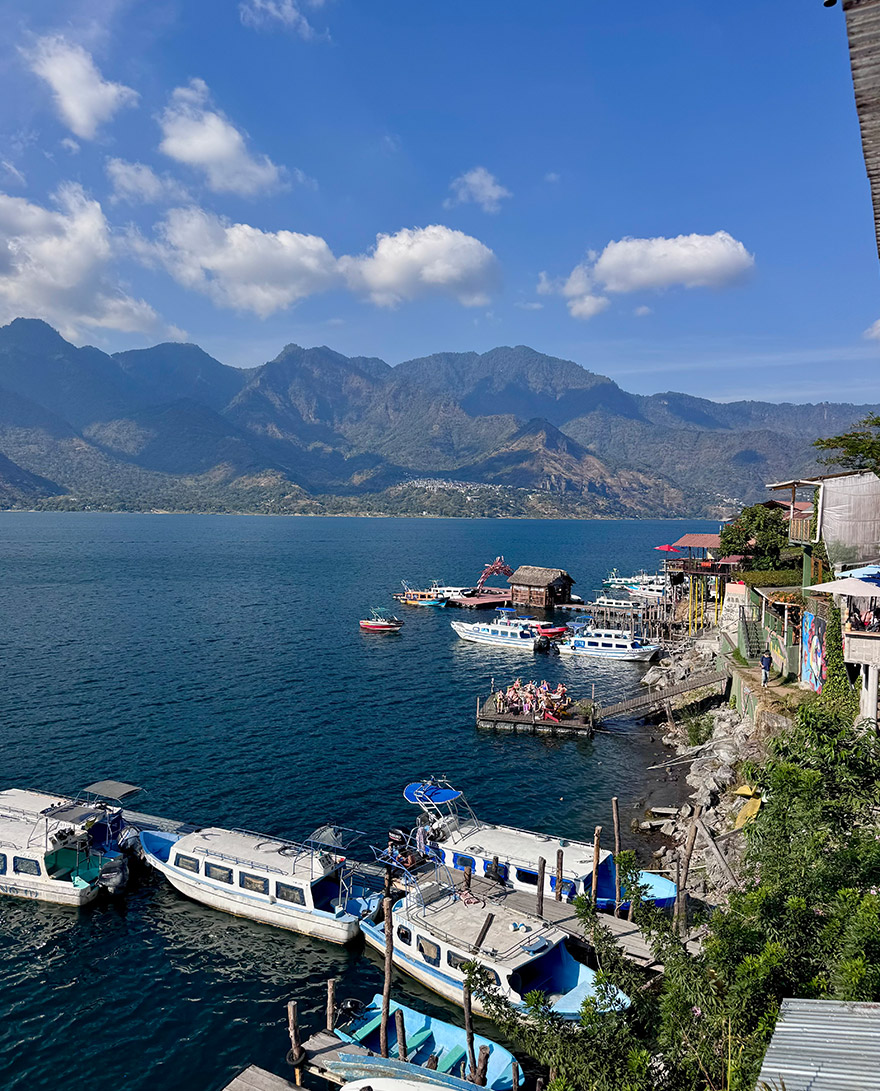
Village-hopping is the main activity at Atitlán, and because there’s no single road circling the lake, boats are the way to do it. Local boats run frequently and cheaply. You hop on, pay in cash, and step off at the next dock. It’s simple, slightly chaotic at times and a great way to see different sides of the shoreline in a single day. The other fun mode of transport is zipping from village to village in a tuk-tuk.
San Marcos La Laguna – the boho village
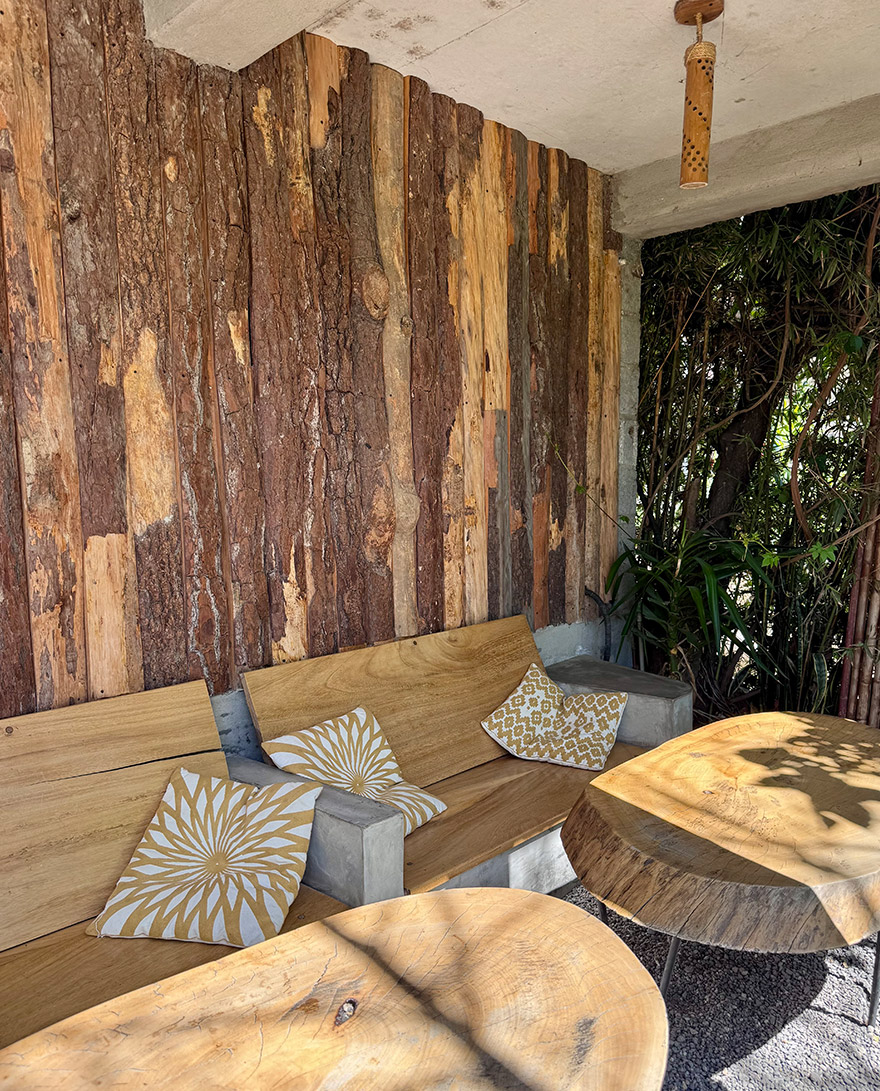
San Marcos is the lake’s spiritual hub — yoga, sound baths, cacao ceremonies, breathwork, ecstatic dance — the whole thing. It started as a hippy refuge in the 1970s, and while it’s still the place for seekers, it’s also become increasingly bougie, with higher-end hotels in the hills and wellness retreats by the water.
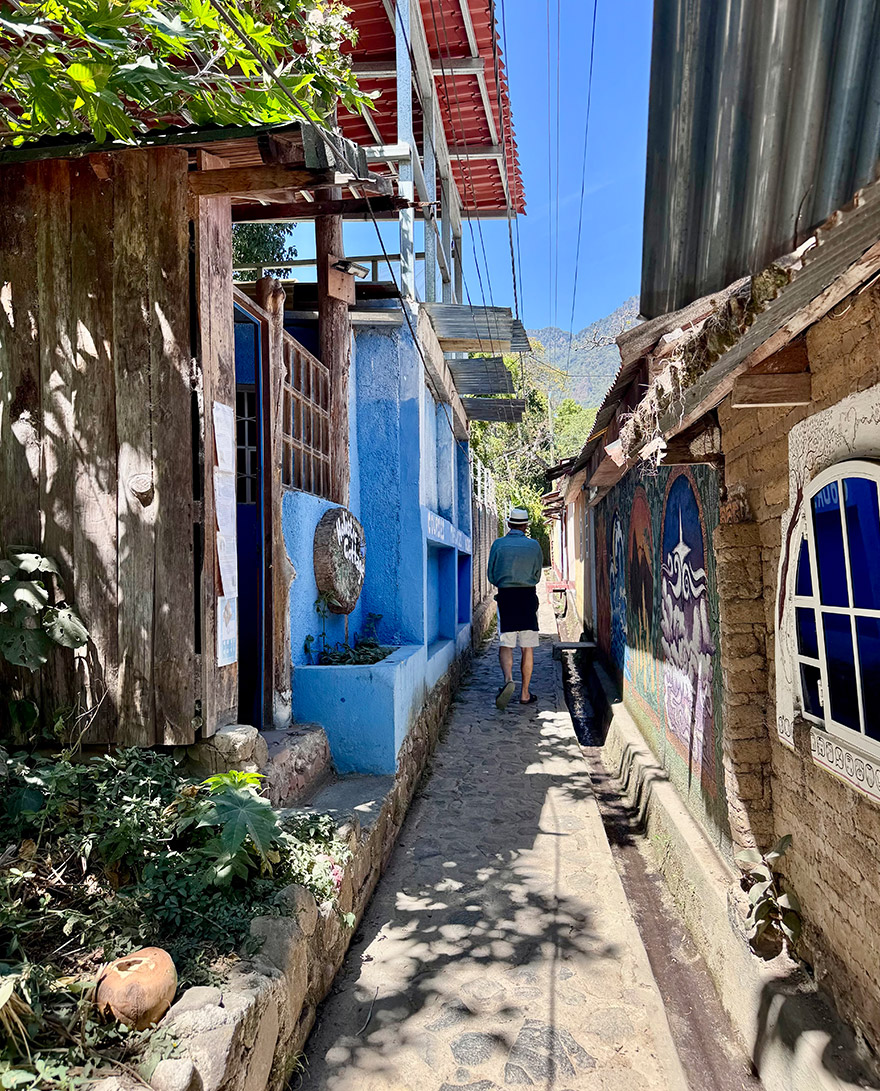
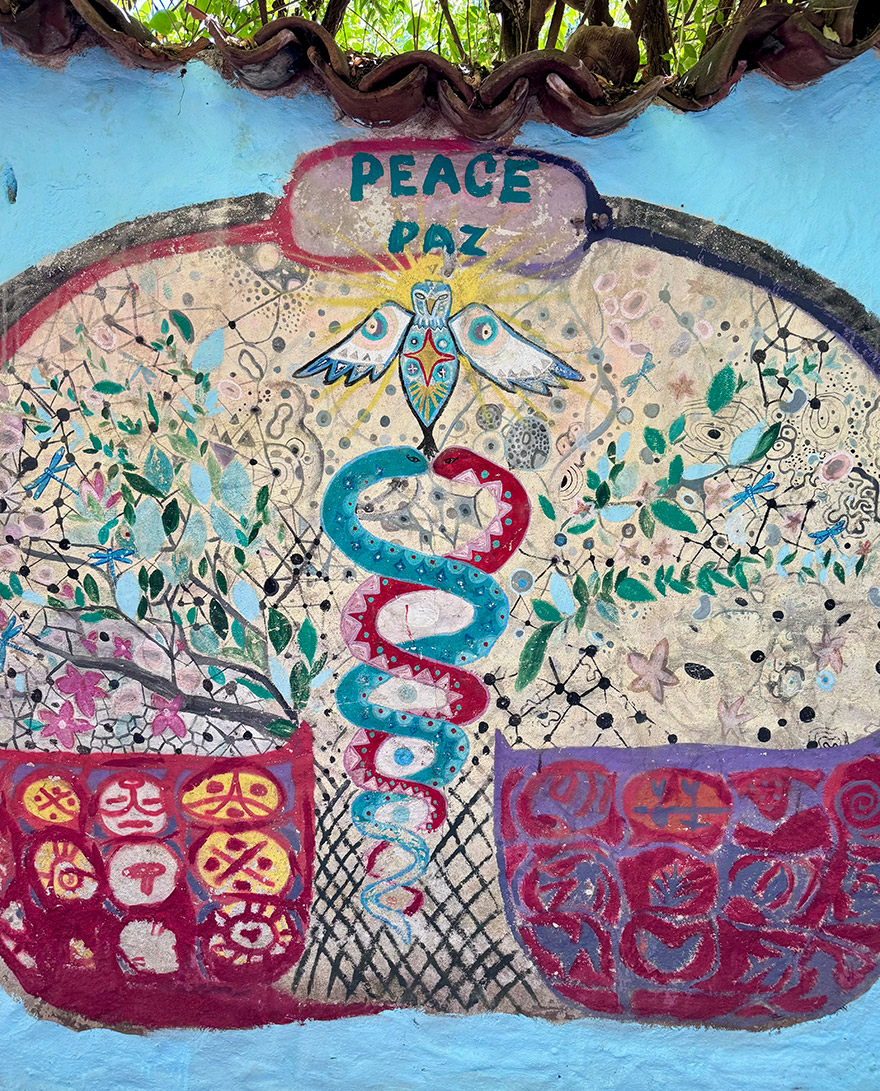
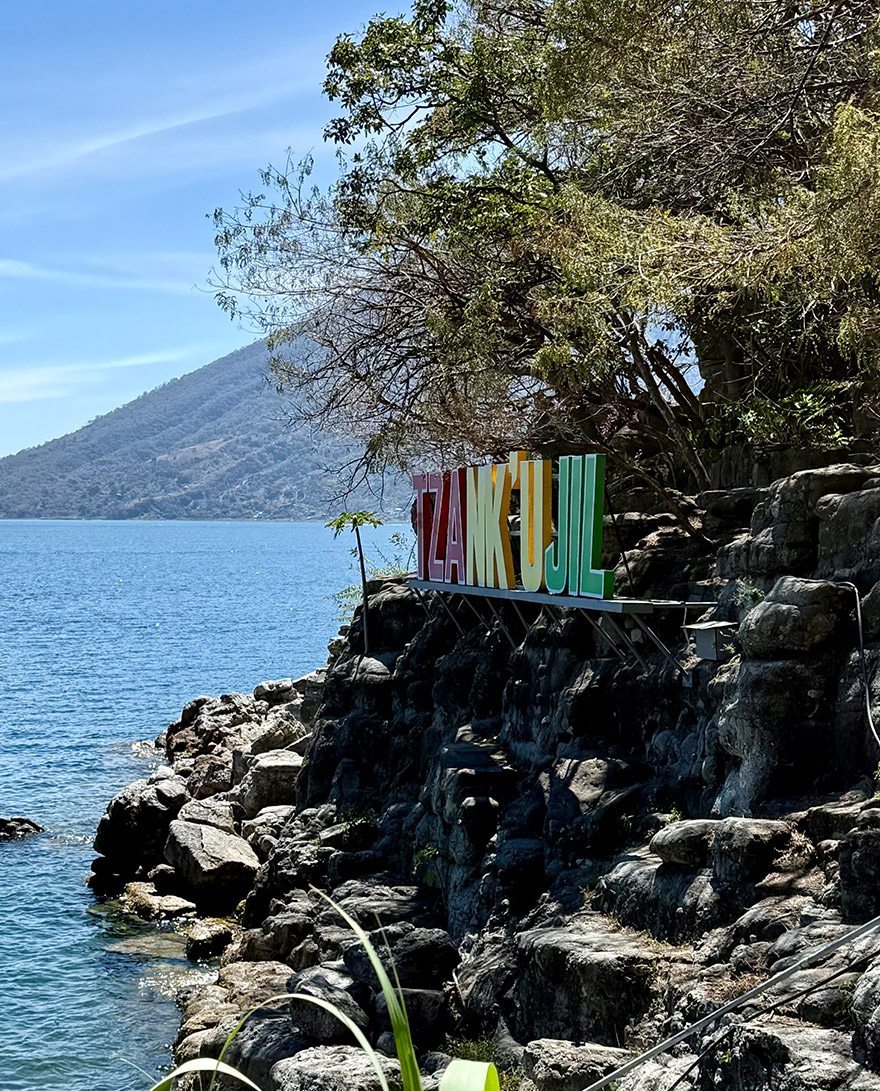
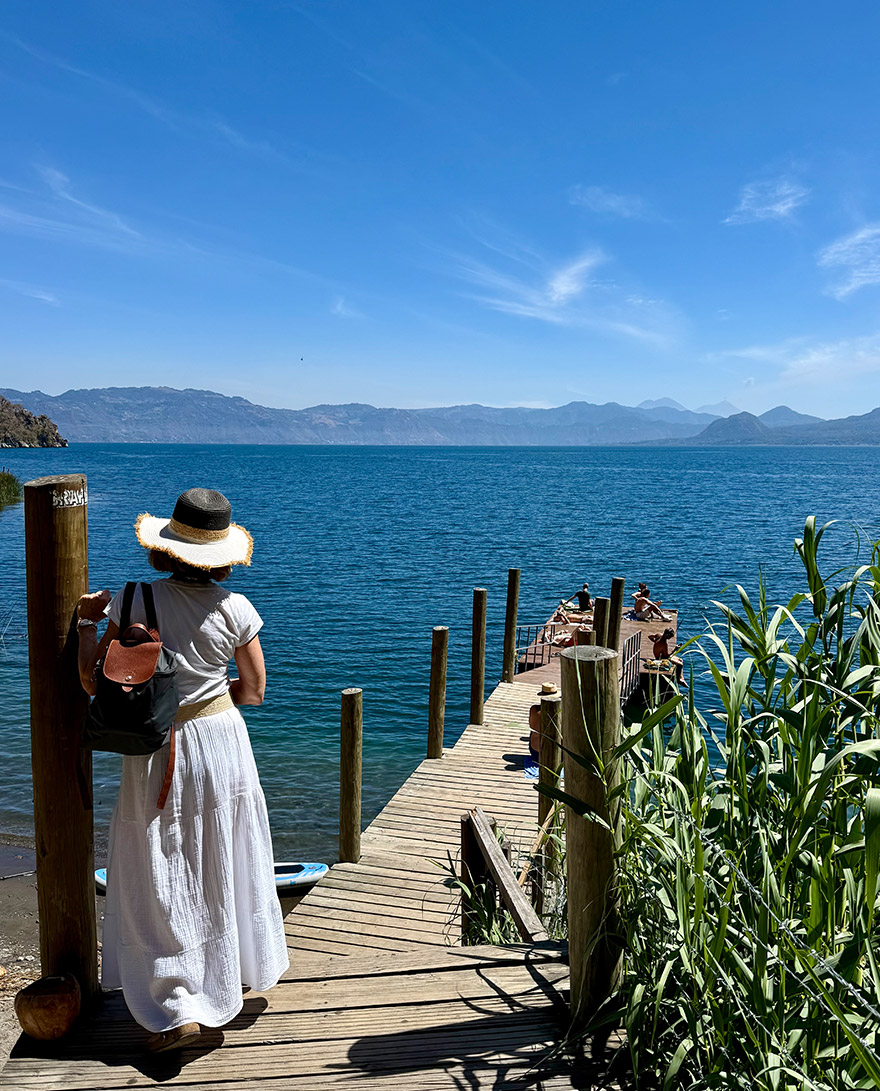
Cerro Tzankujil is the key stop here: a small sacred nature reserve with short jungle trails, viewpoints, and altar points where ancestral ceremonies still take place. There’s also a pontoon area by the rocks for sunbathing and jumping into the lake.
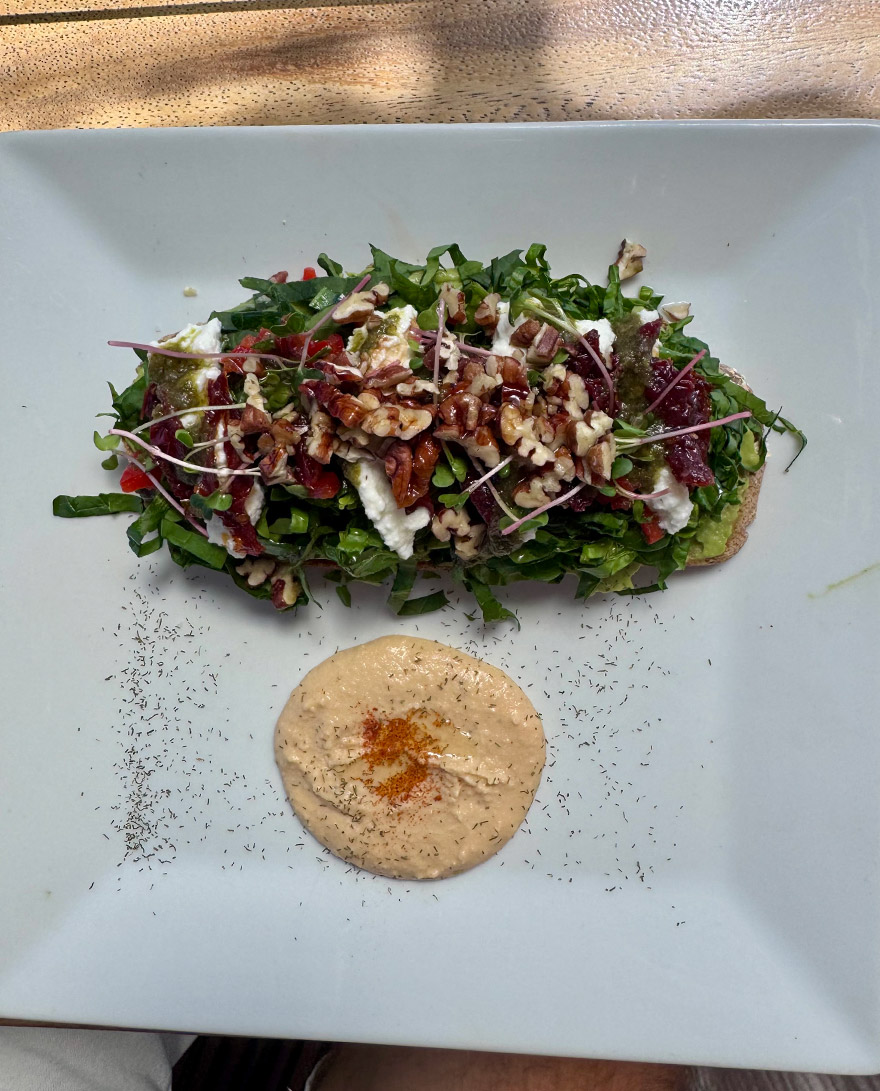
We had a lovely lunch at Maltiox Café – a relaxed spot that suits San Marcos perfectly: casual, nourishing, and the kind of place where you end up staying longer than planned.
San Juan La Laguna – the arty village
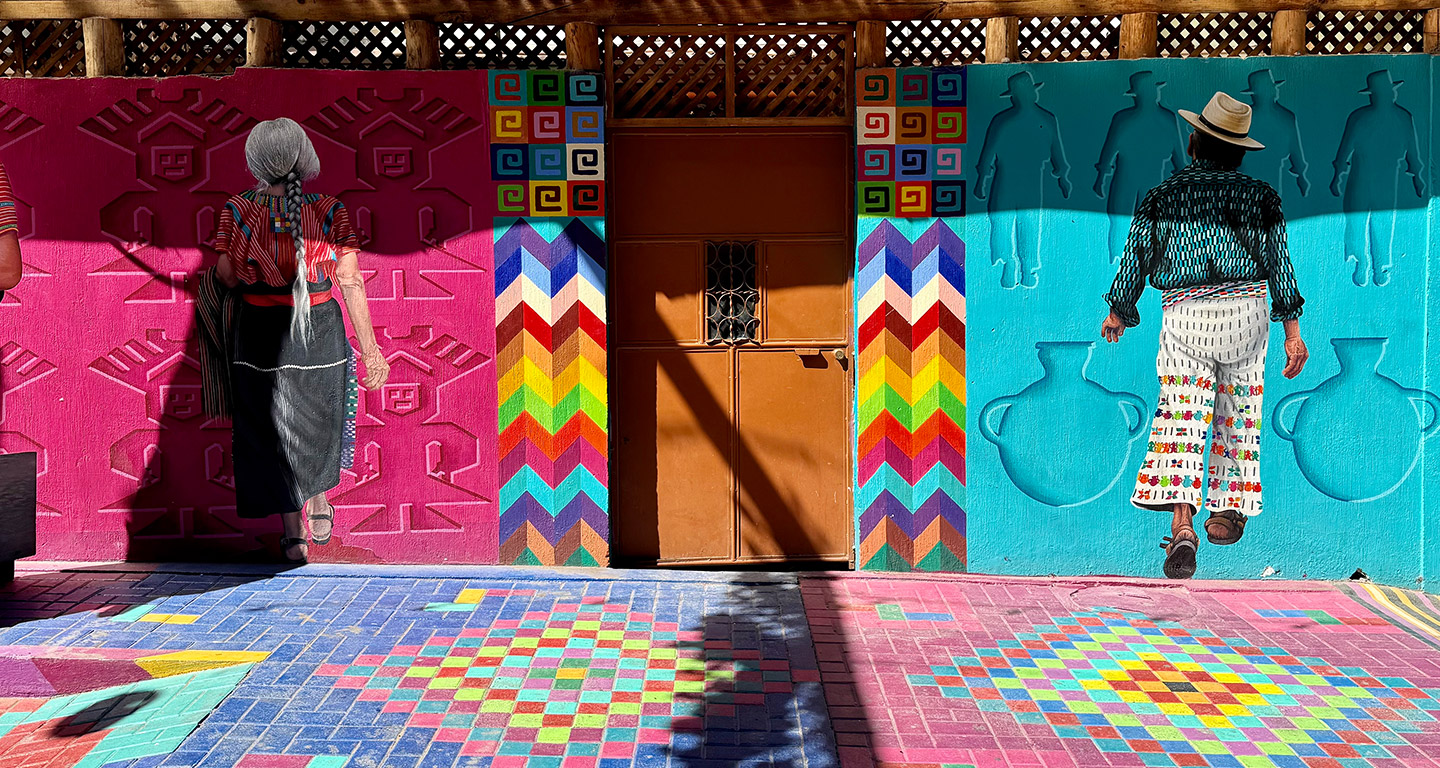
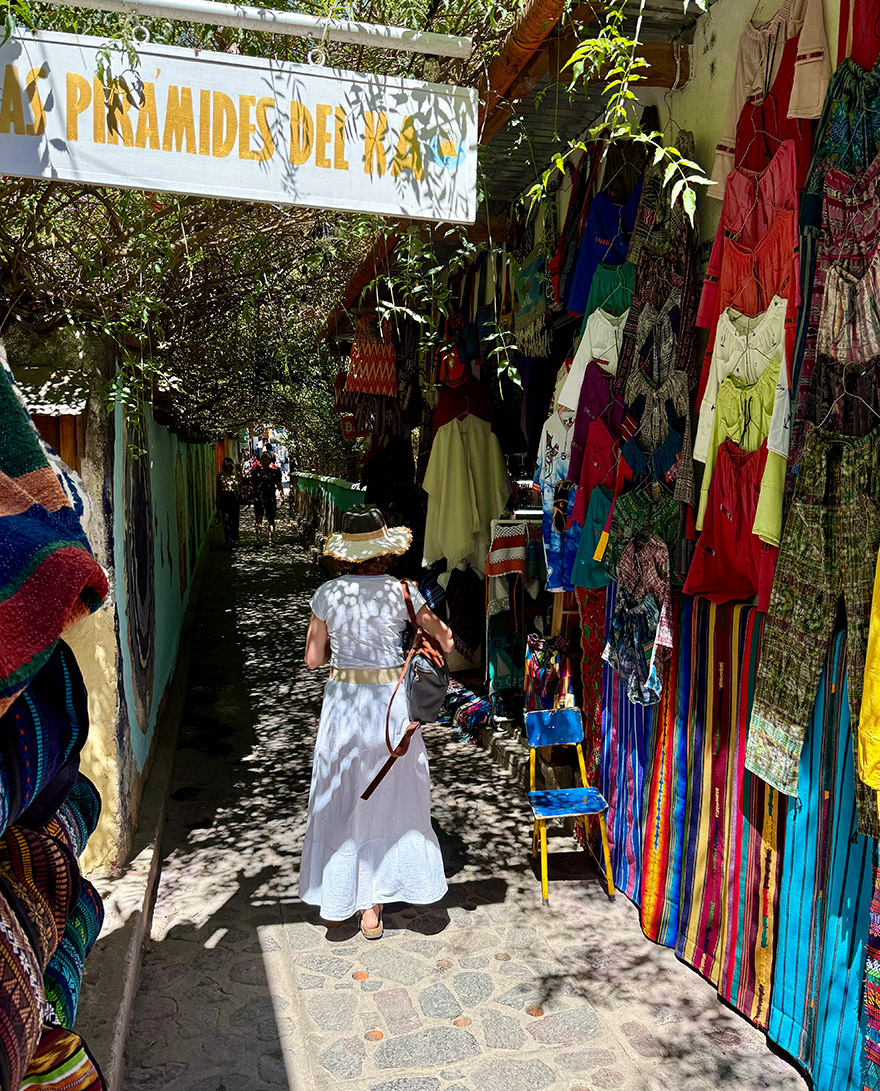
San Juan is known for Mayan heritage and street art. Umbrella Street (“La Calle de las Sombrillas”) is colourful and fun, but we found it a bit touristy.
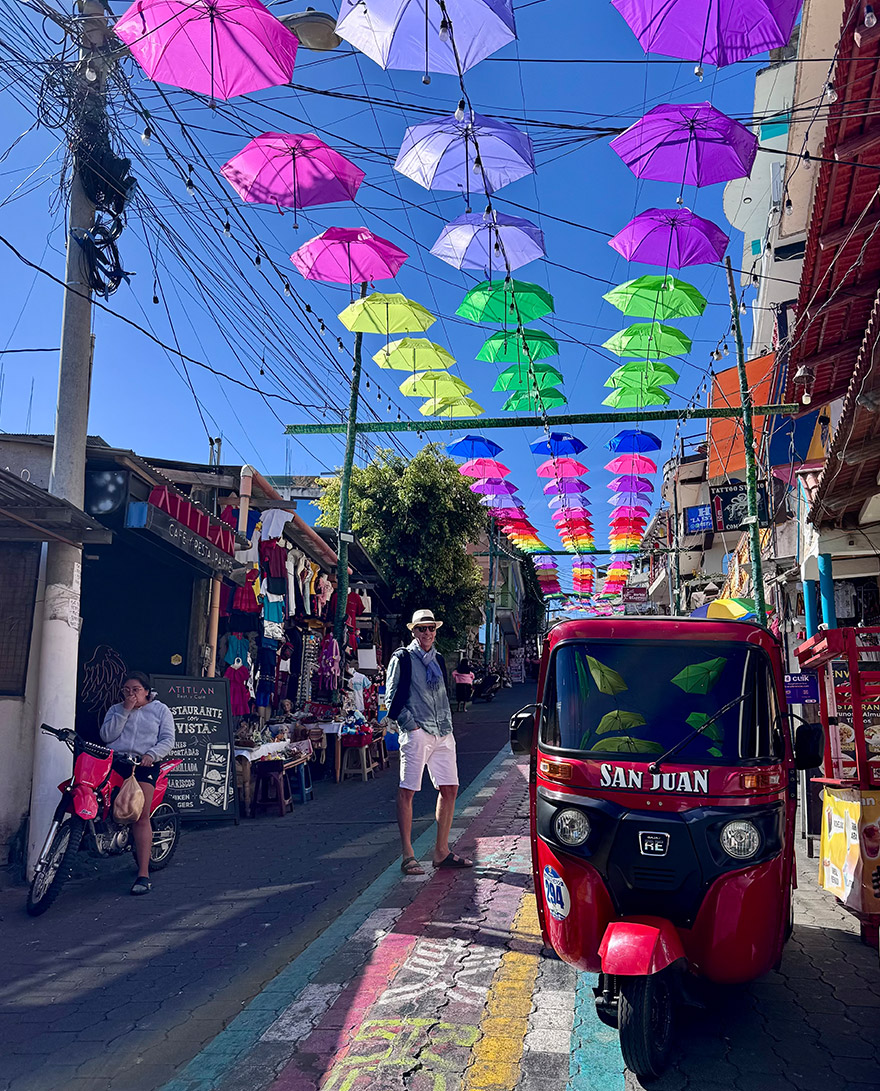
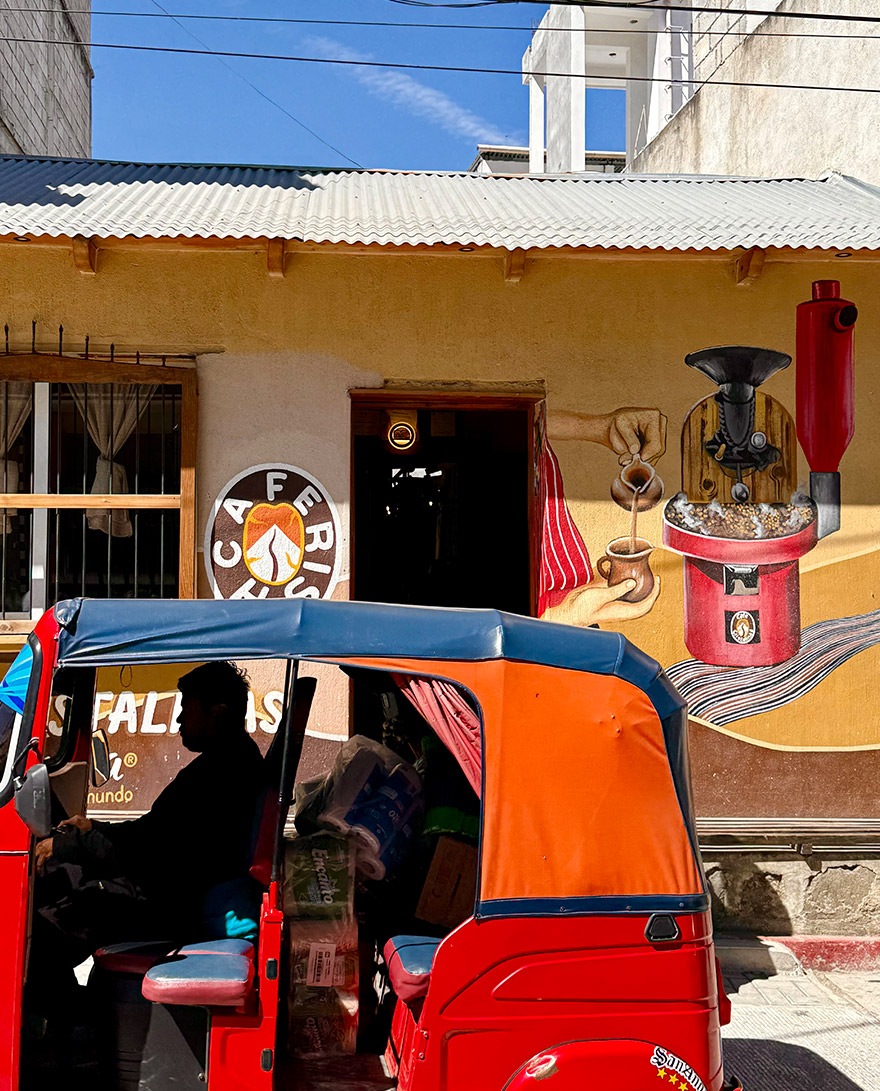
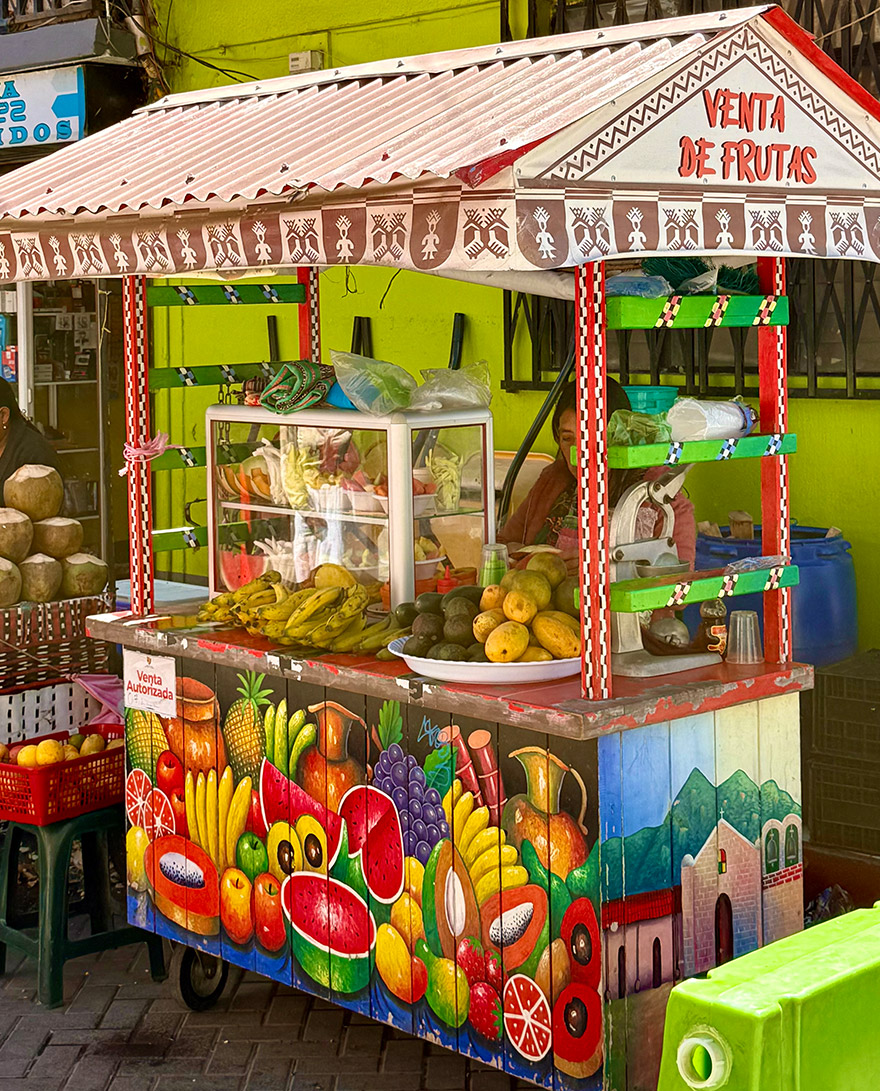
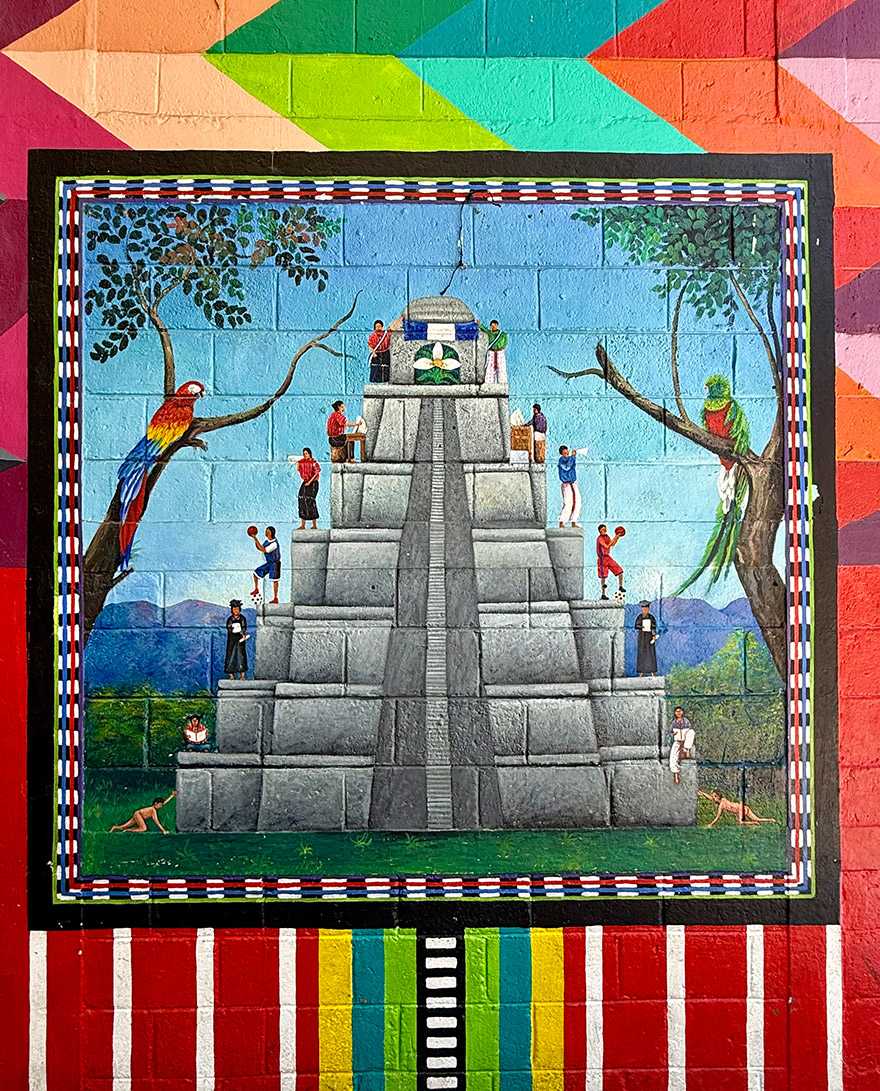
Much more interesting was “Calle de los Sombreros”, where murals feel more local, and the whole village infrastructure becomes part of the gallery – painted benches, bright corners, and public spaces that look like they’ve been designed to make people smile.
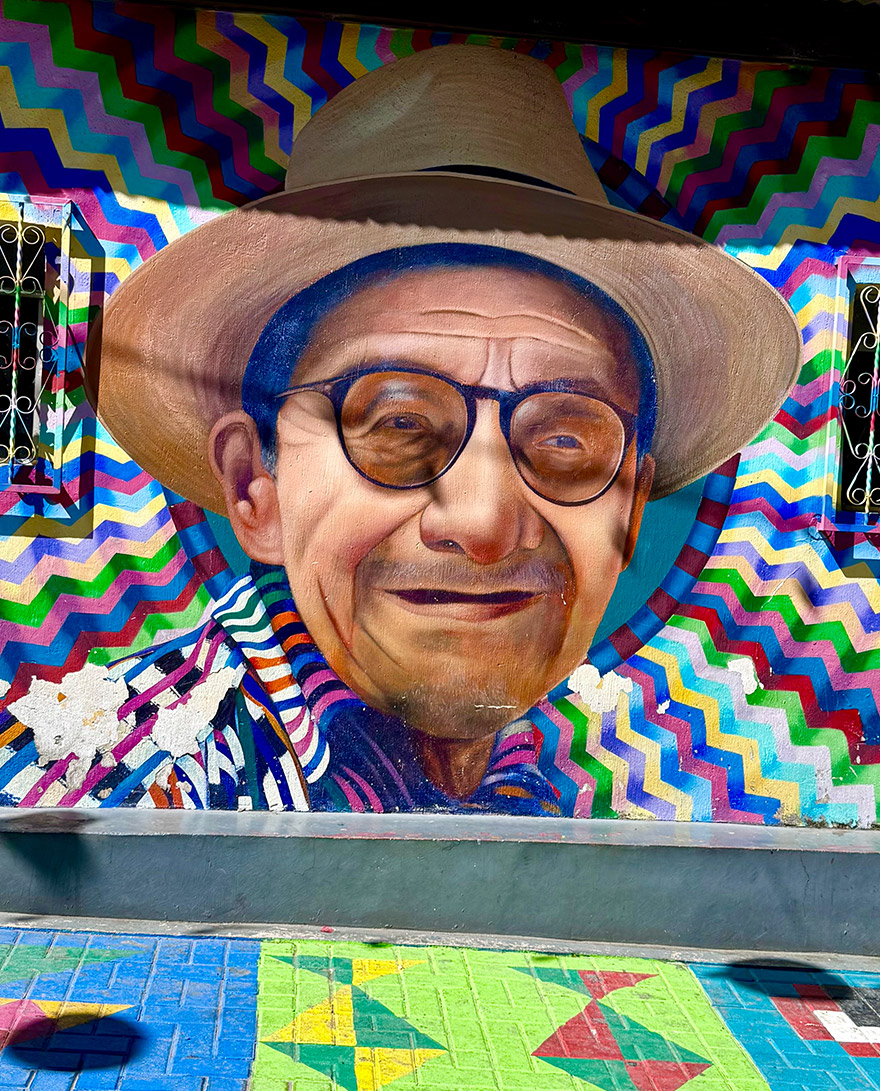
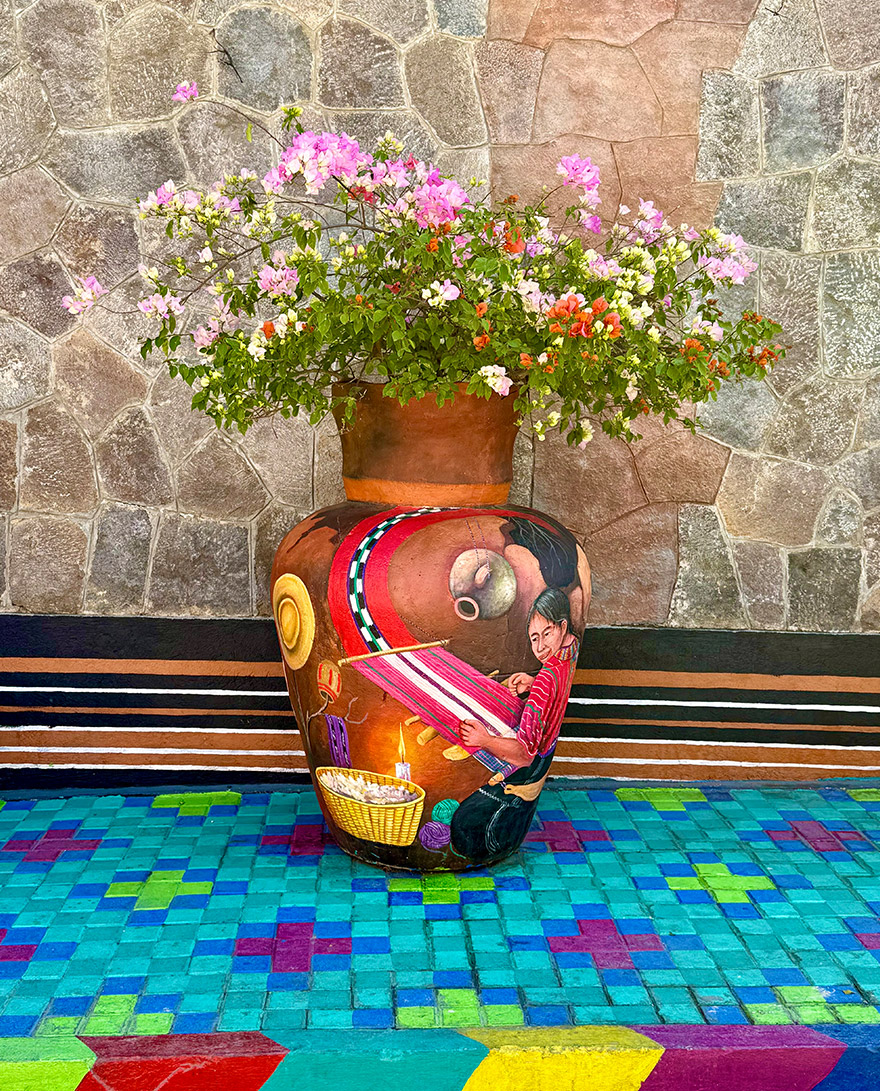
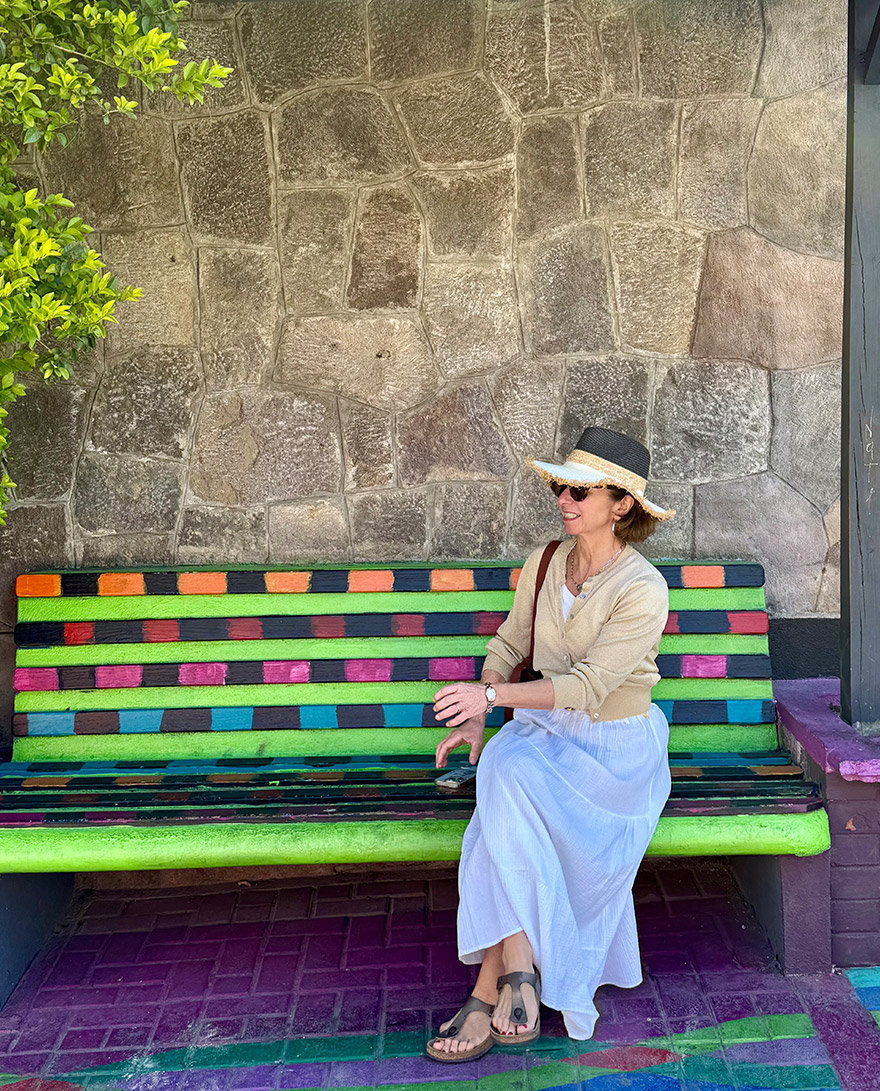
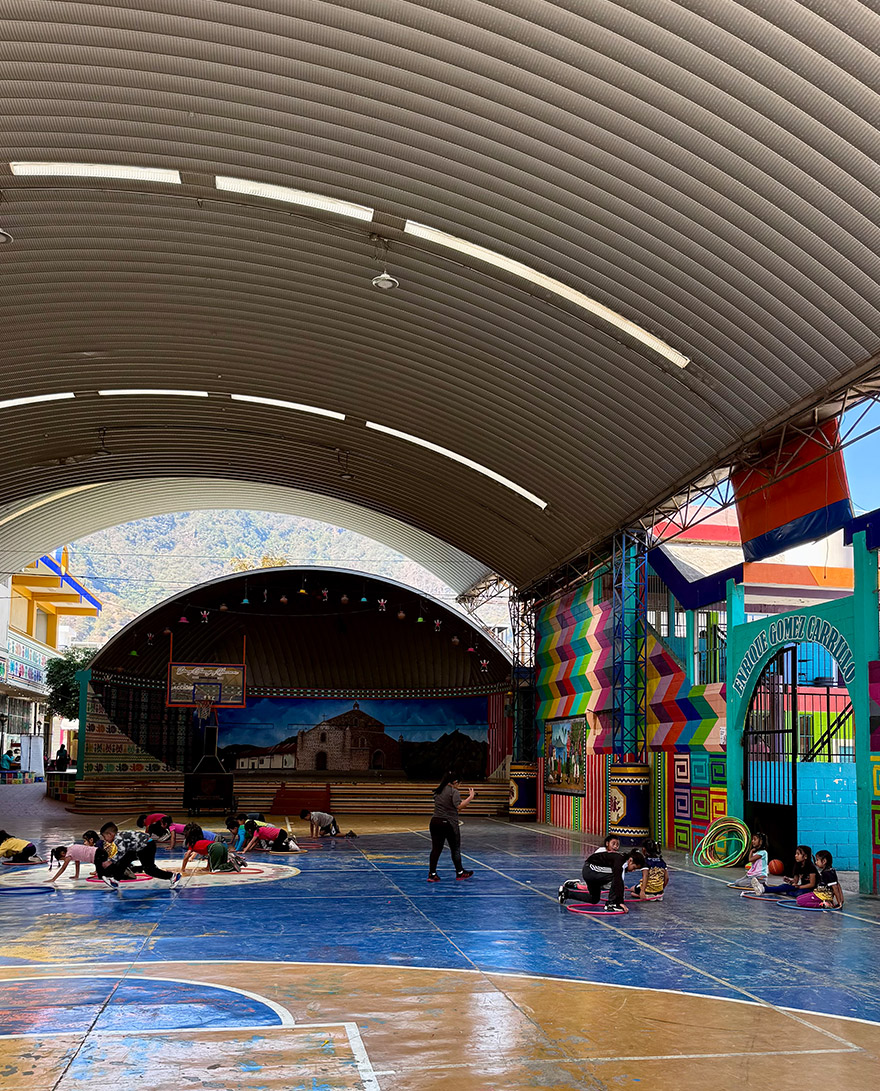
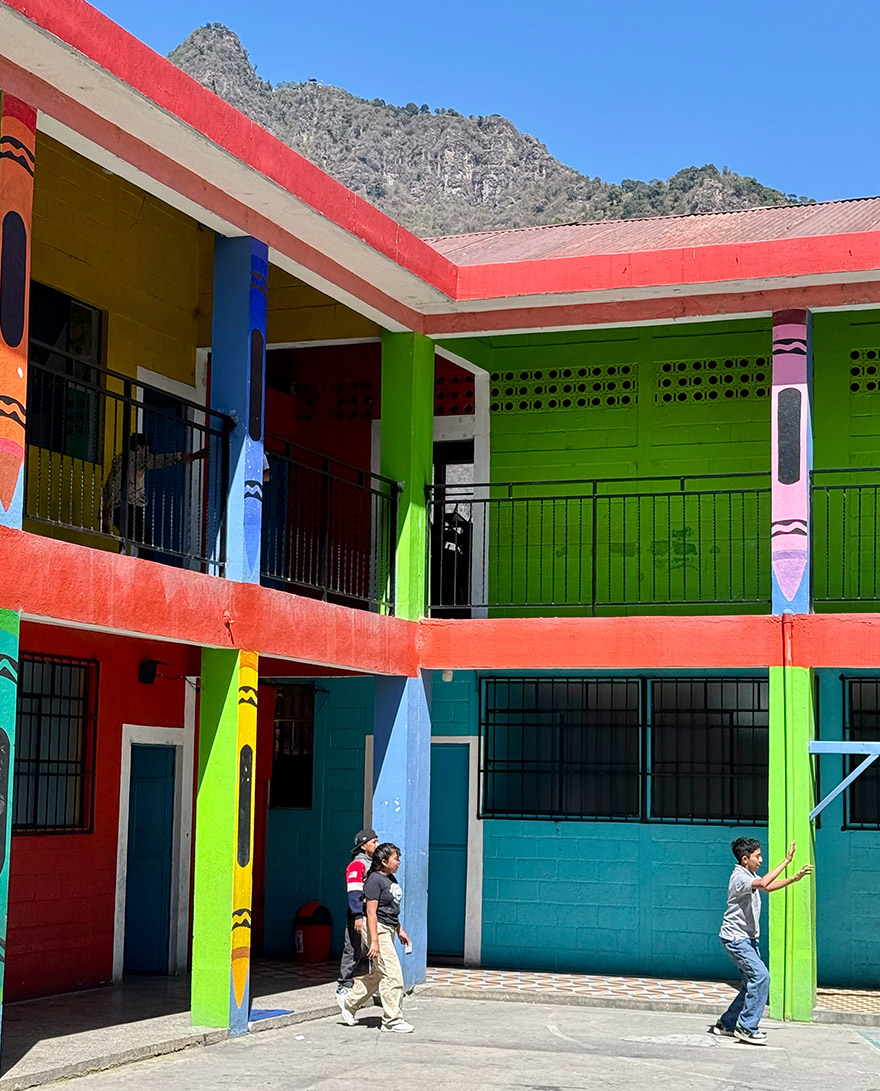
A highlight for us was the Municipal centre: the basketball court and school area are brilliantly painted, and we spent a good hour just wandering around, taking it all in.
San Pedro – the lively village
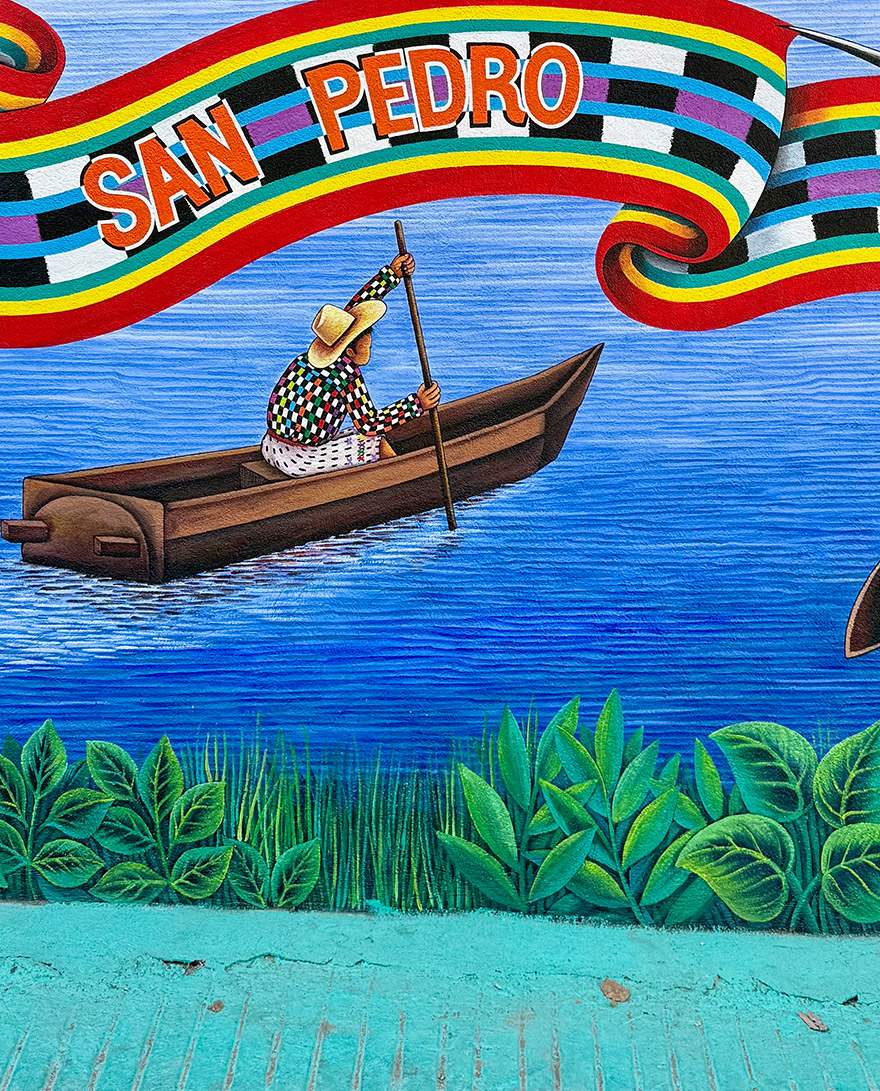
San Pedro trends younger, noisier and cheaper – it has a reputation as the party town – but it’s also pretty, with lush mountains rising behind and little pockets of calm by the water. It’s also a popular base for learning Spanish, which gives it an interesting mix of travellers.
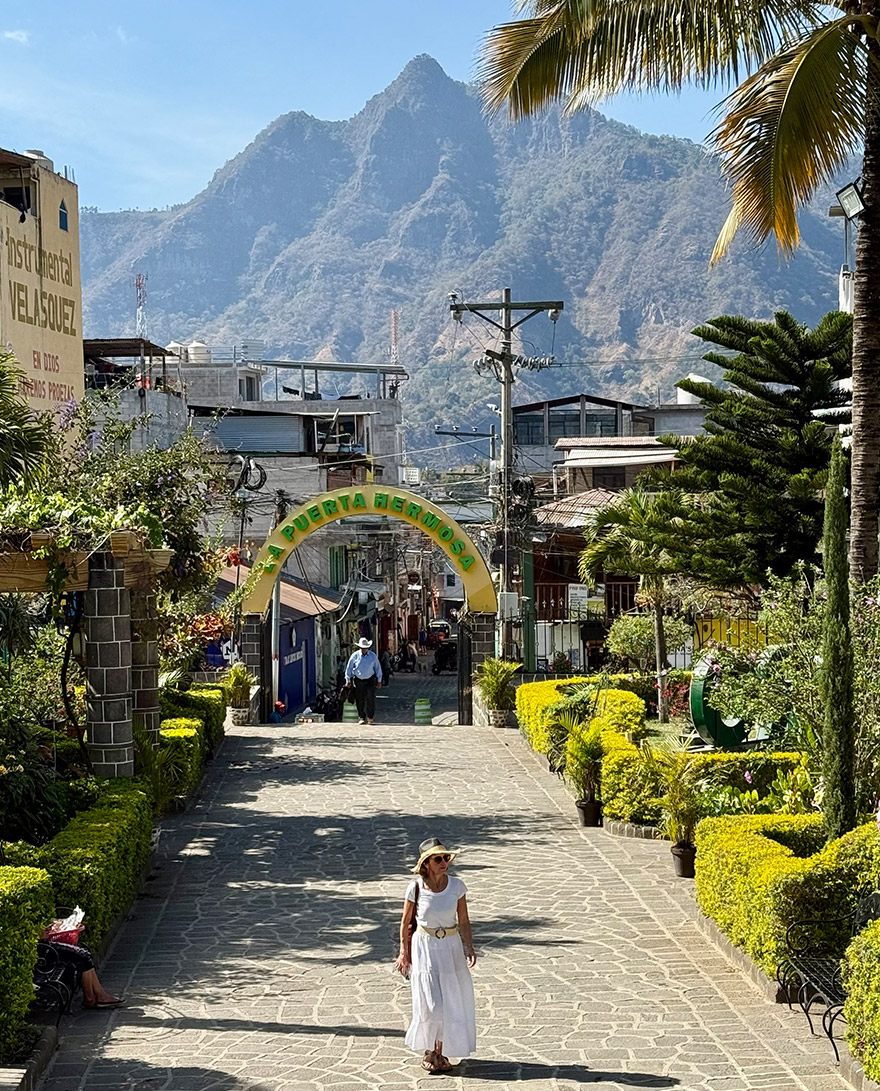
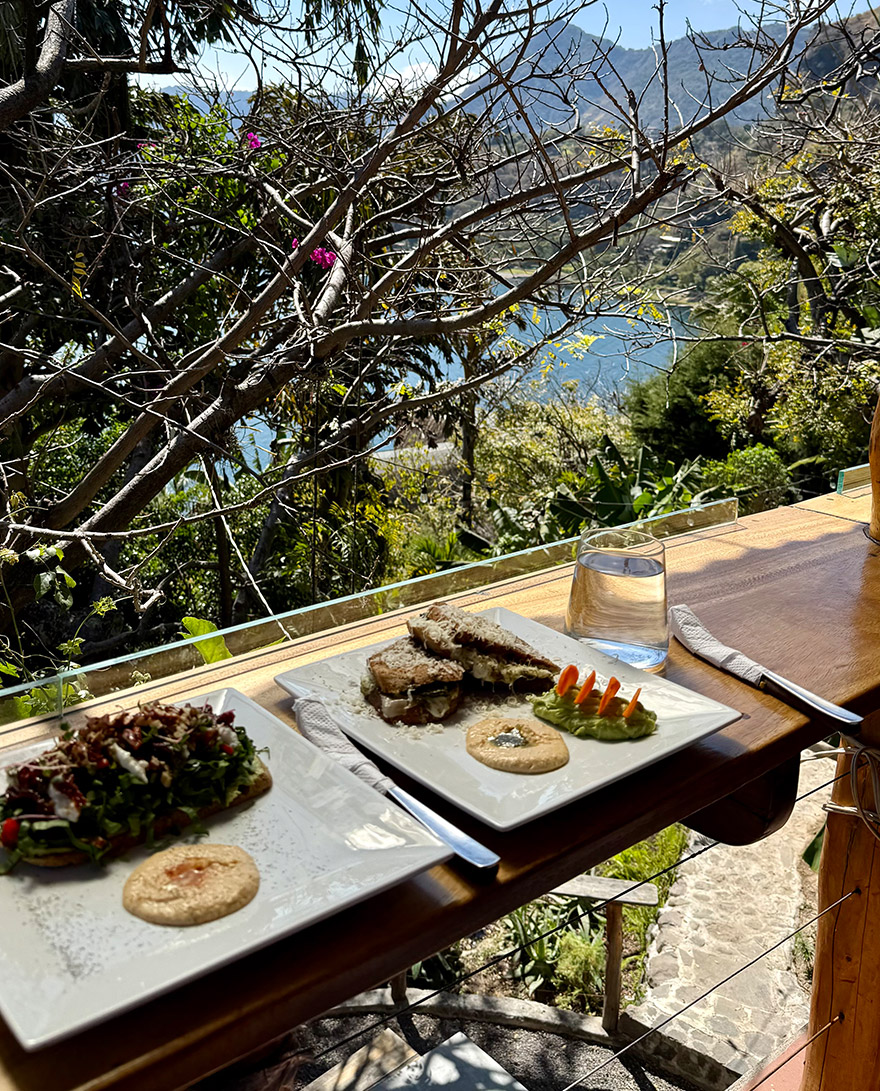
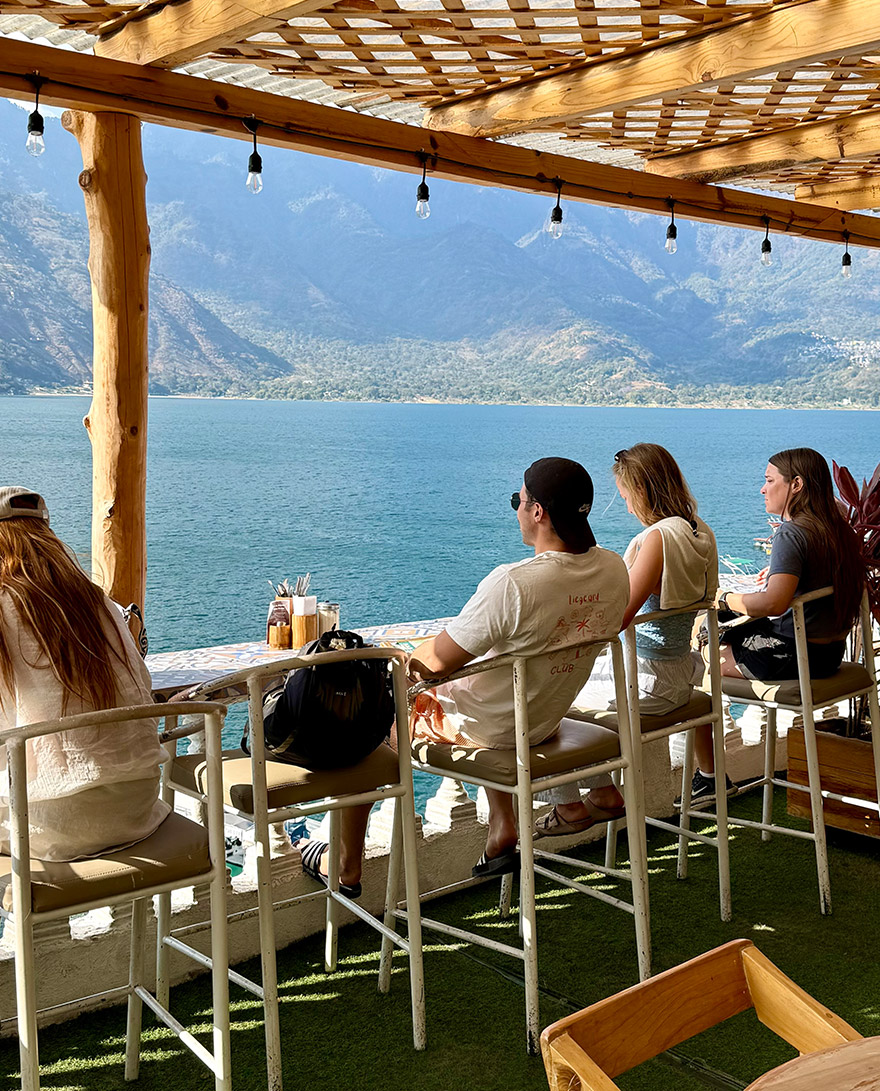
Sababa has one of the nicest terraces in town and a great view, especially for breakfast or lunch (see below). Sublime is more of a lively bar-restaurant set-up with Adirondack chairs, a firepit, pool tables, a stage for live music, and a dock on the water that’s perfect for a drink.
Petén – Guatemala
The Petén region feels like you’ve gone deep into another Guatemala: dense jungle, big skies, and an atmosphere that’s equal parts adventure and calm. It’s the gateway to some of the country’s most extraordinary Maya sites, and even when you’re not at a ruin, there’s something about the setting – birds, heat, and that thick green landscape – that makes everything feel more intense.
Stay
LAS LAGUNAS
Las Lagunas was our first Petén hotel. The setting is beautiful – jungle overlooking the Quexil Lagoon – and the lodge has a private reserve where you can spot wildlife (especially birds and monkeys). We were also impressed by the contemporary lounge and dining room, which makes the most of the lagoon views and feels like a calm, modern base.
That said, we found our cabin a bit impersonal and lacking in local colour. But the biggest issue was waking up to find building work right in front of the pool, exactly where we’d planned to spend a day relaxing! So, we packed up and moved to the other hotel we’d been considering — and it turned out to be a great decision.
LA LANCHA
La Lancha (part of the Coppola Hideaways family) was the Petén stay we really loved. Hidden in the rainforest on the shores of Lake Petén Itzá, it’s small, intimate, and feels like a proper escape – back-to-nature, but with a level of comfort that makes it easy to settle in. The team were friendly, smiley and efficient – the kind of service that makes you feel at home rather than “checked in”.
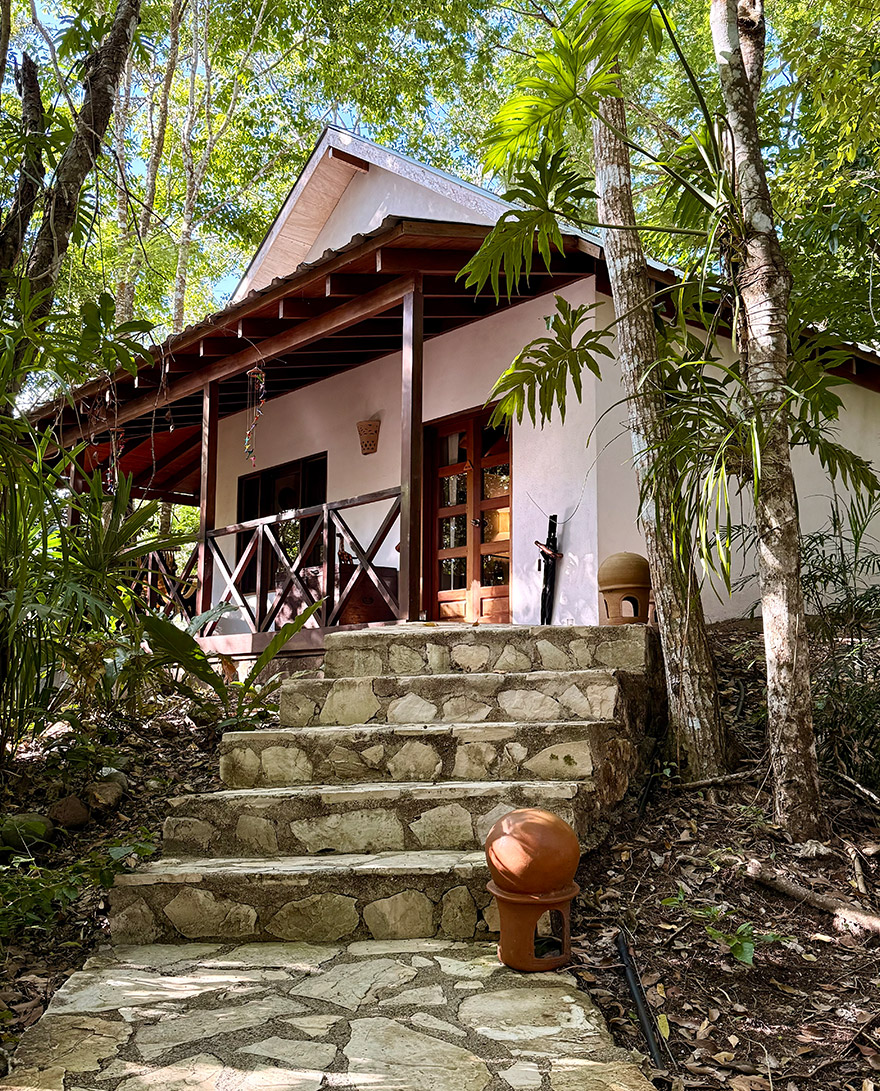
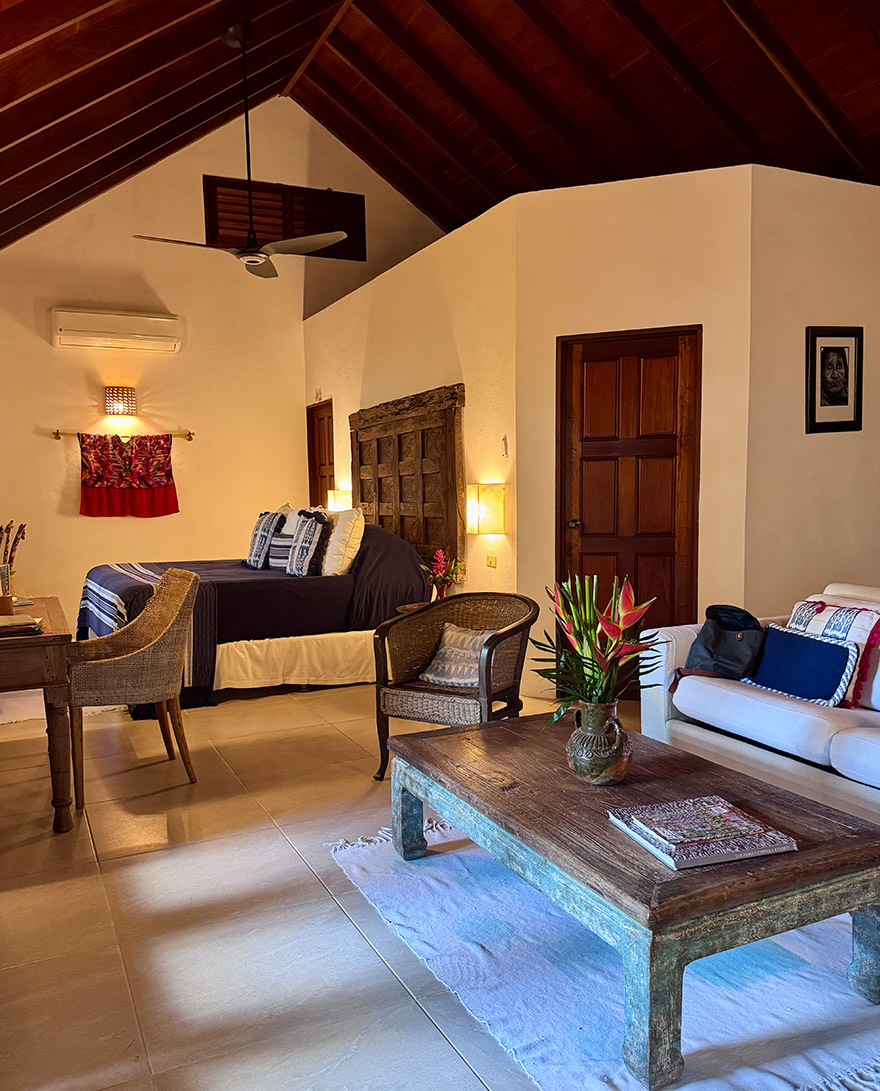
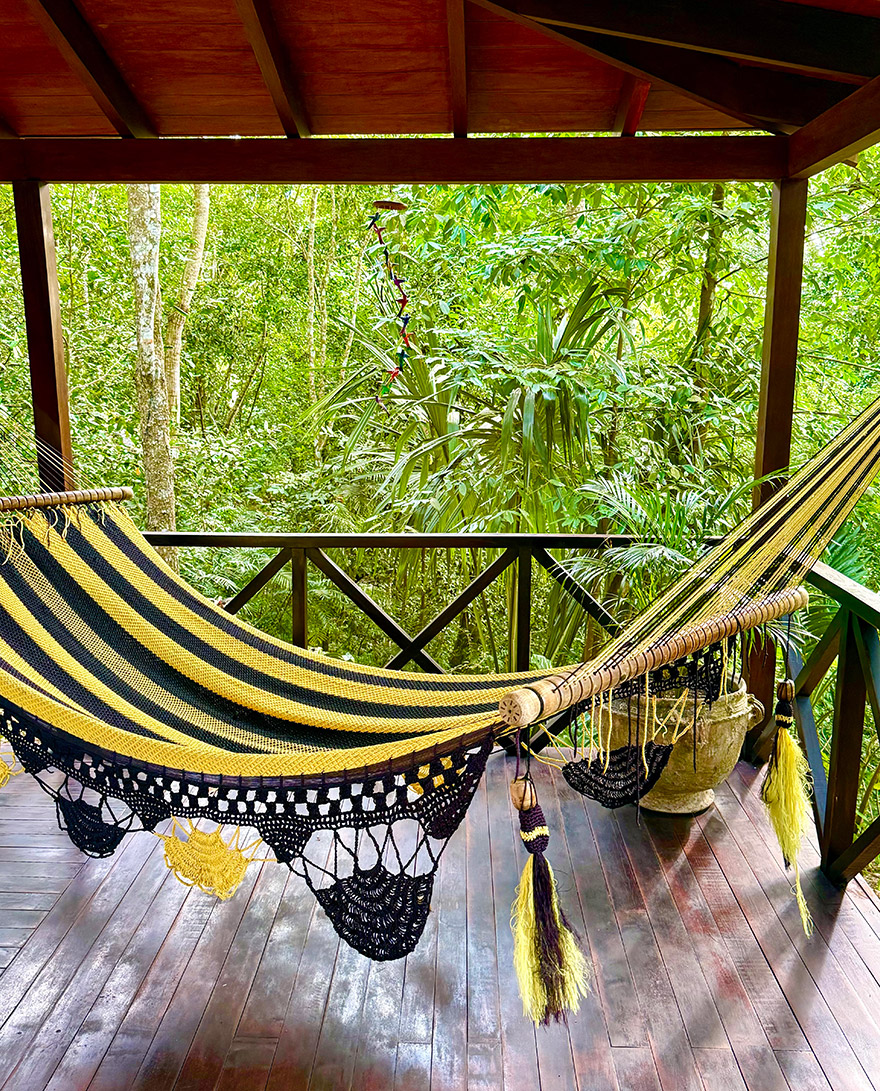
You stay in one of a handful of thatched casitas tucked into the hillside above the lake. Interiors feel genuinely Guatemalan, with textiles and carefully chosen antiques that add warmth and local identity.
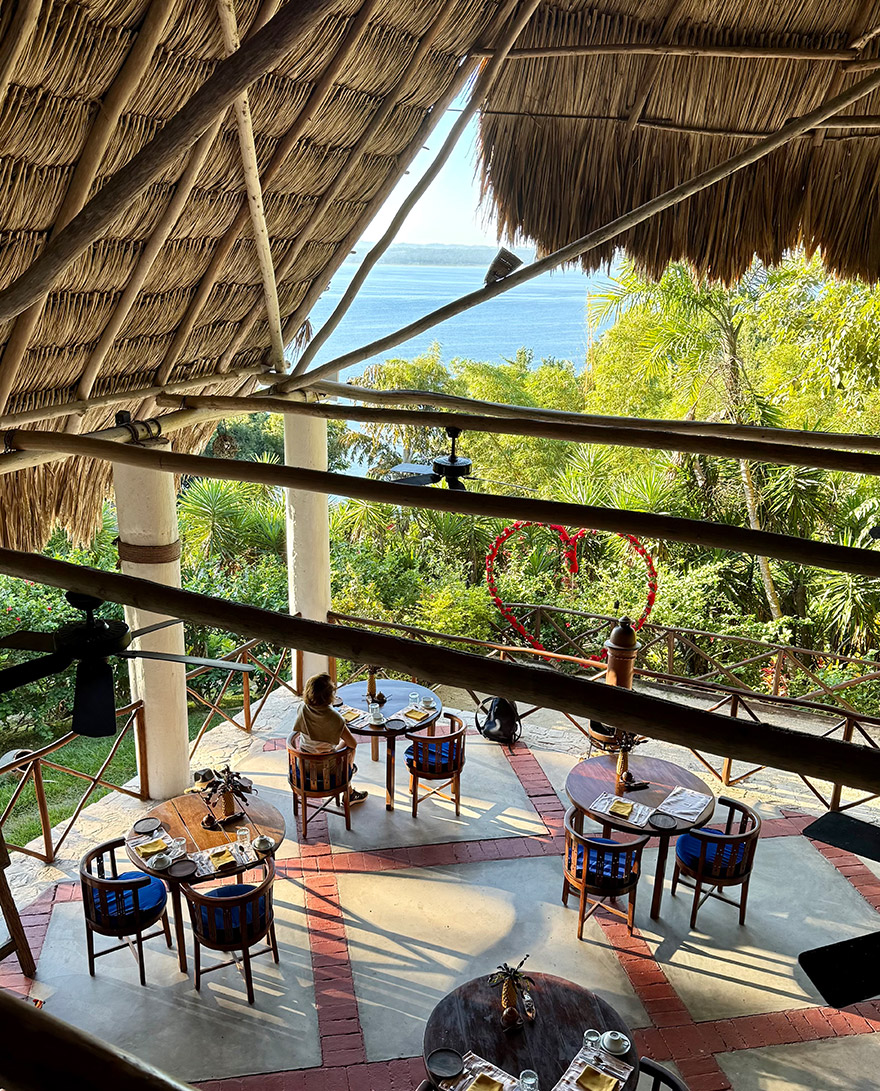
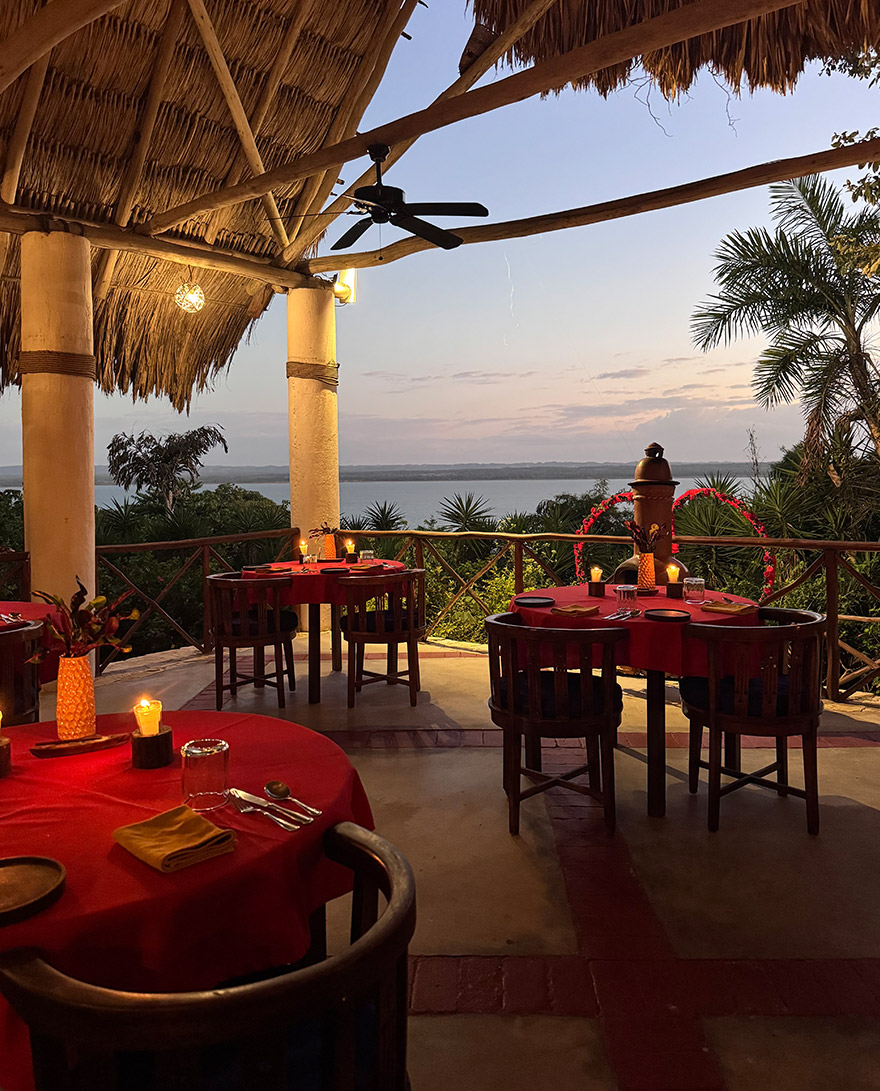
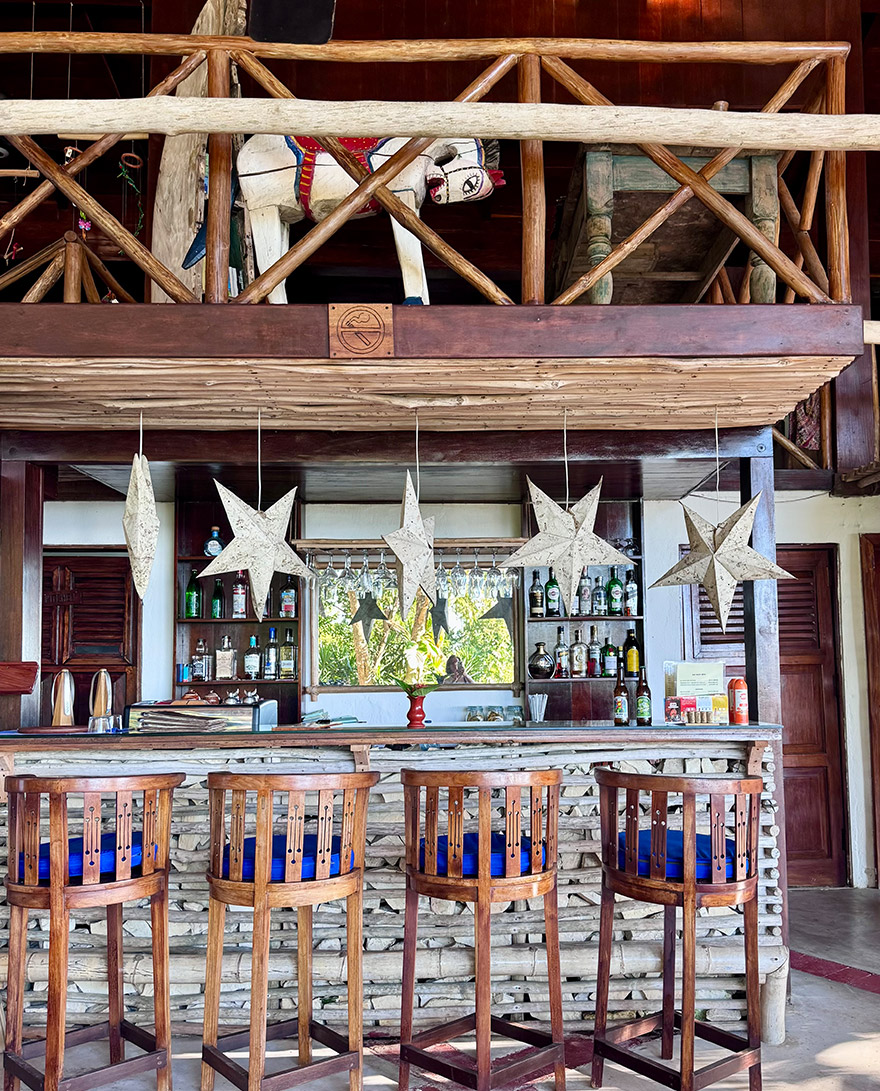
The open-air restaurant at La Lancha has a lovely, elevated position looking out over the rainforest canopy and Lake Petén Itzá beyond — especially atmospheric at sunset when the light drops behind the trees. The menu focuses on local Guatemalan dishes and regional ingredients, cooked with care and given a few thoughtful, creative touches.
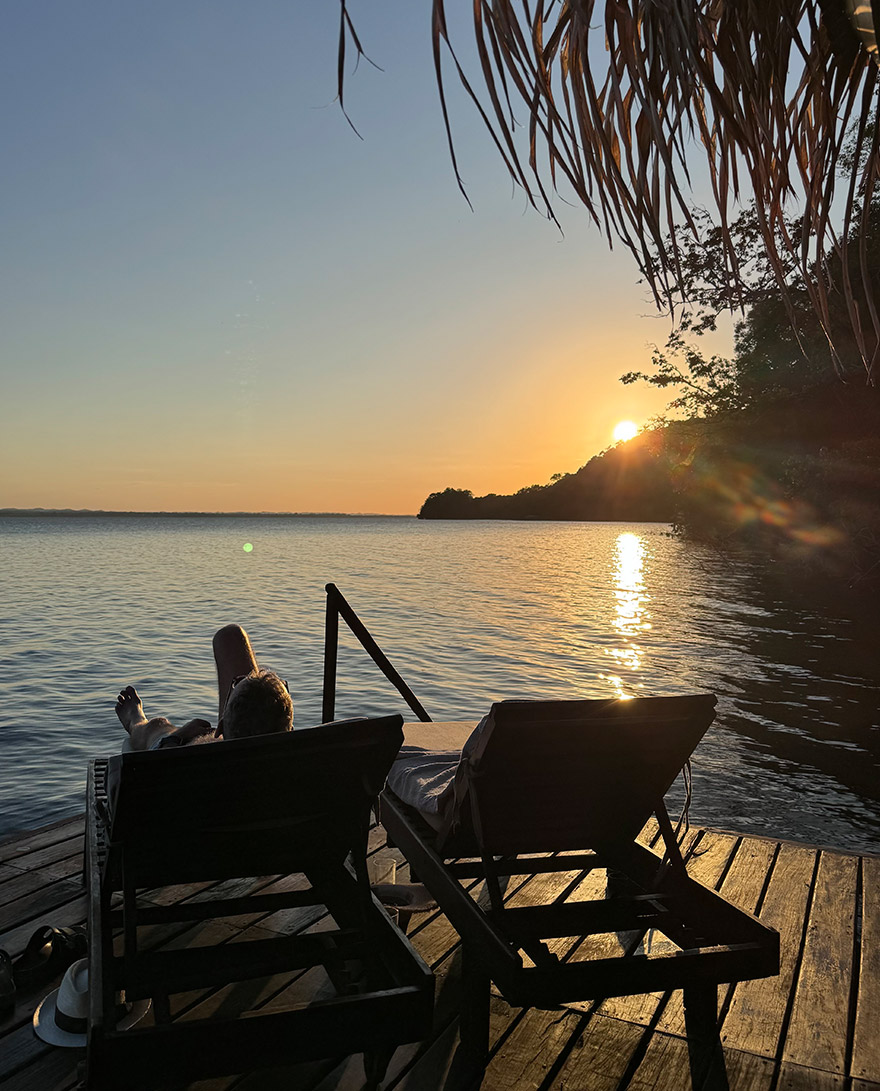
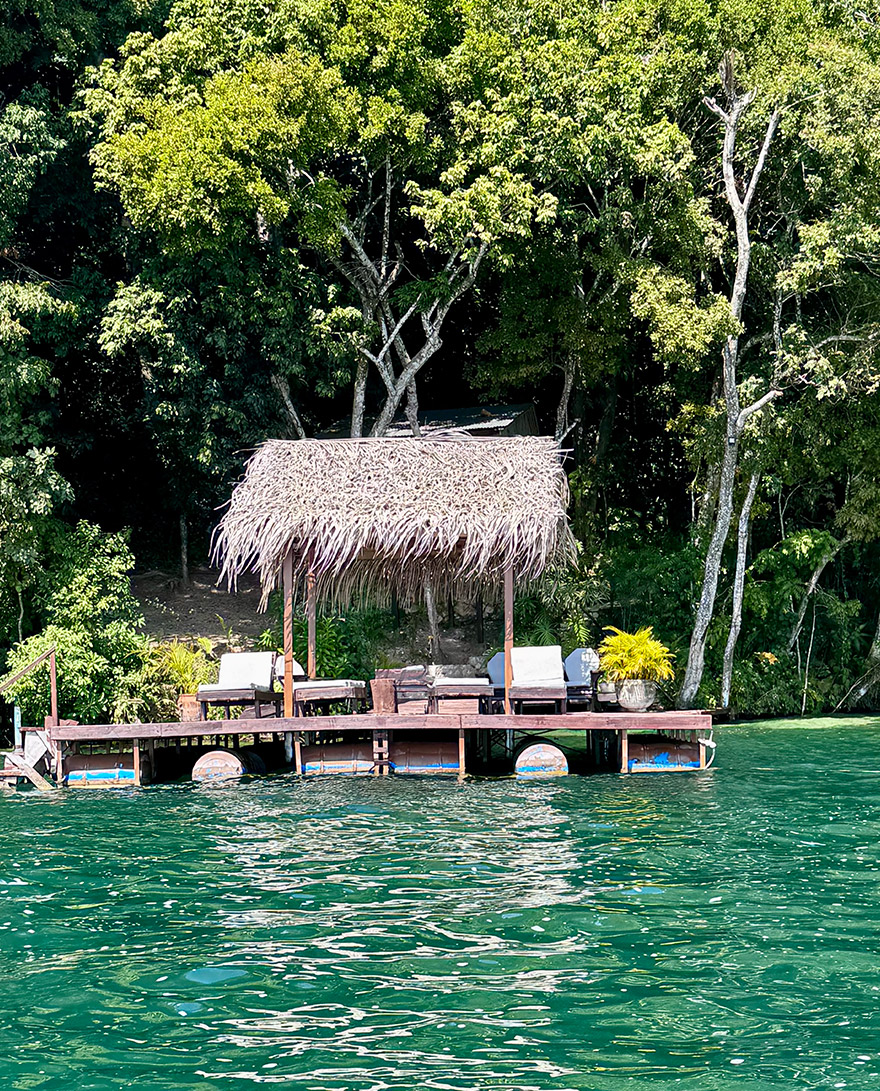
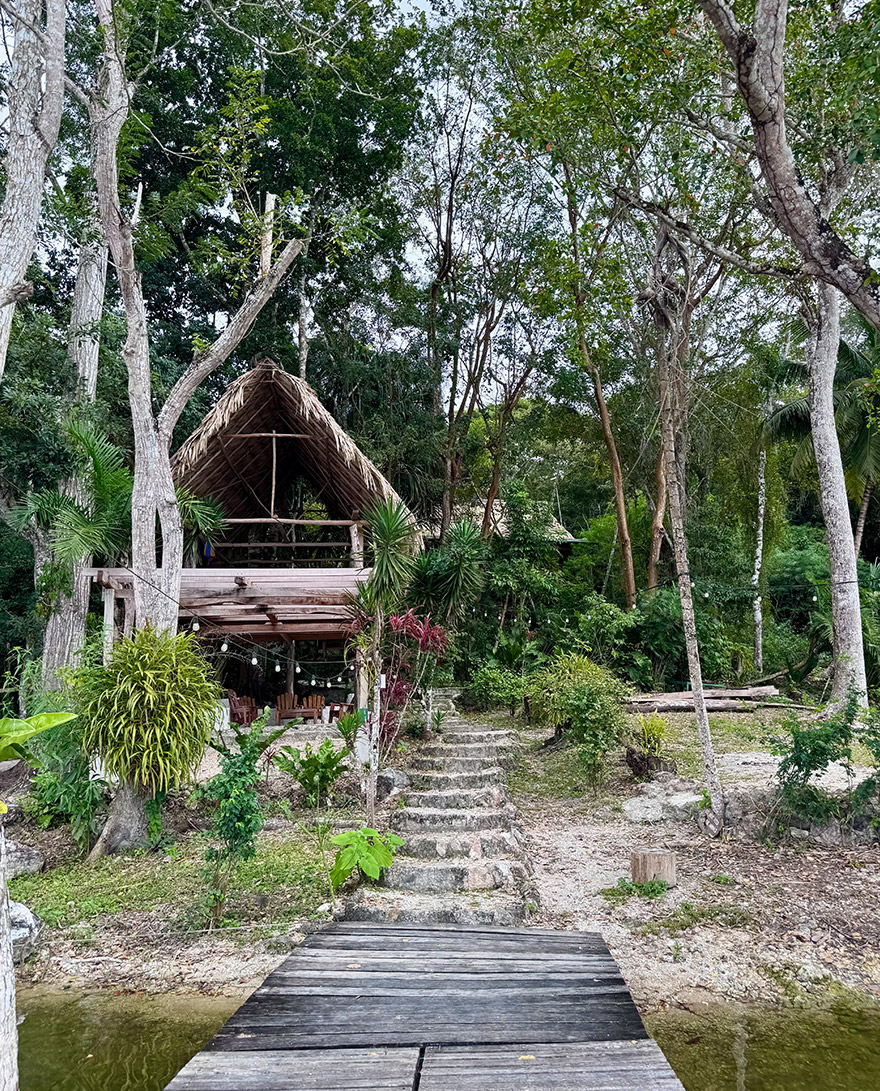
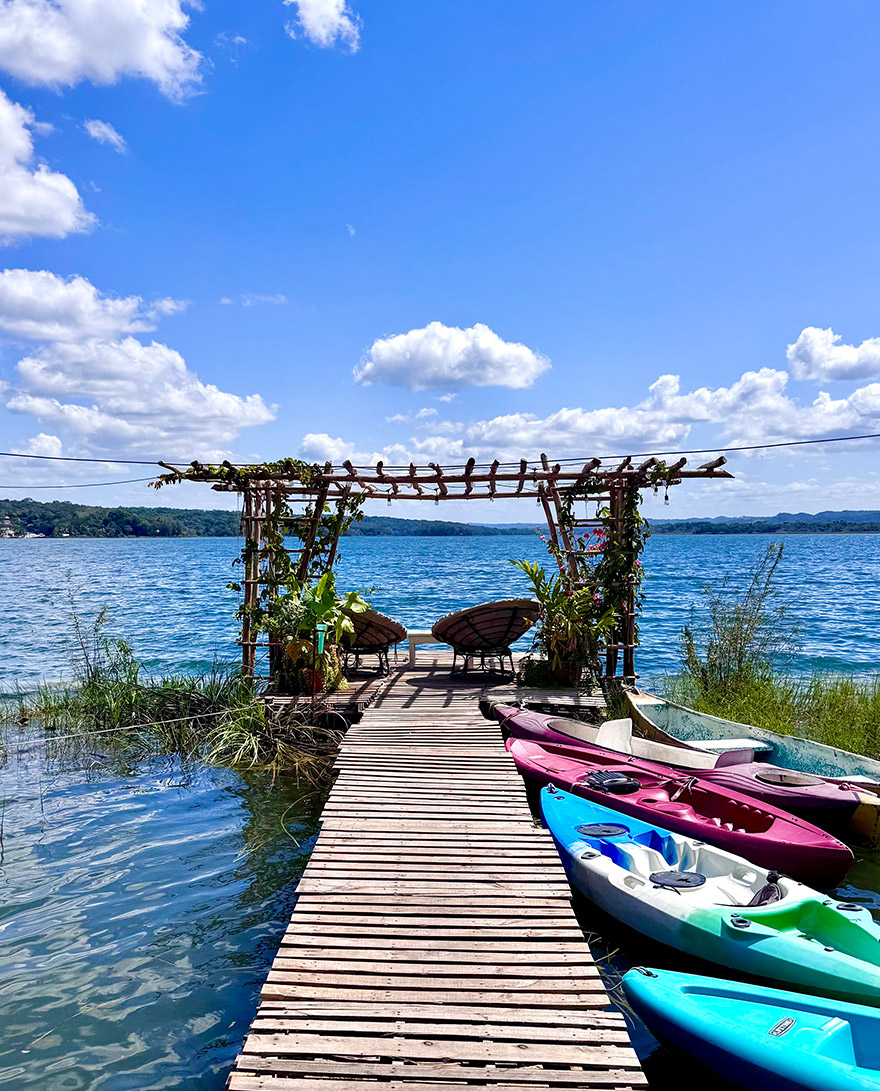
One of our favourite spots was the private dock: you can walk down through the greenery or take the little cable car, then sit right over the water. It was a lovely place for sunbathing or enjoying sunset drinks as the light fades over the lake.
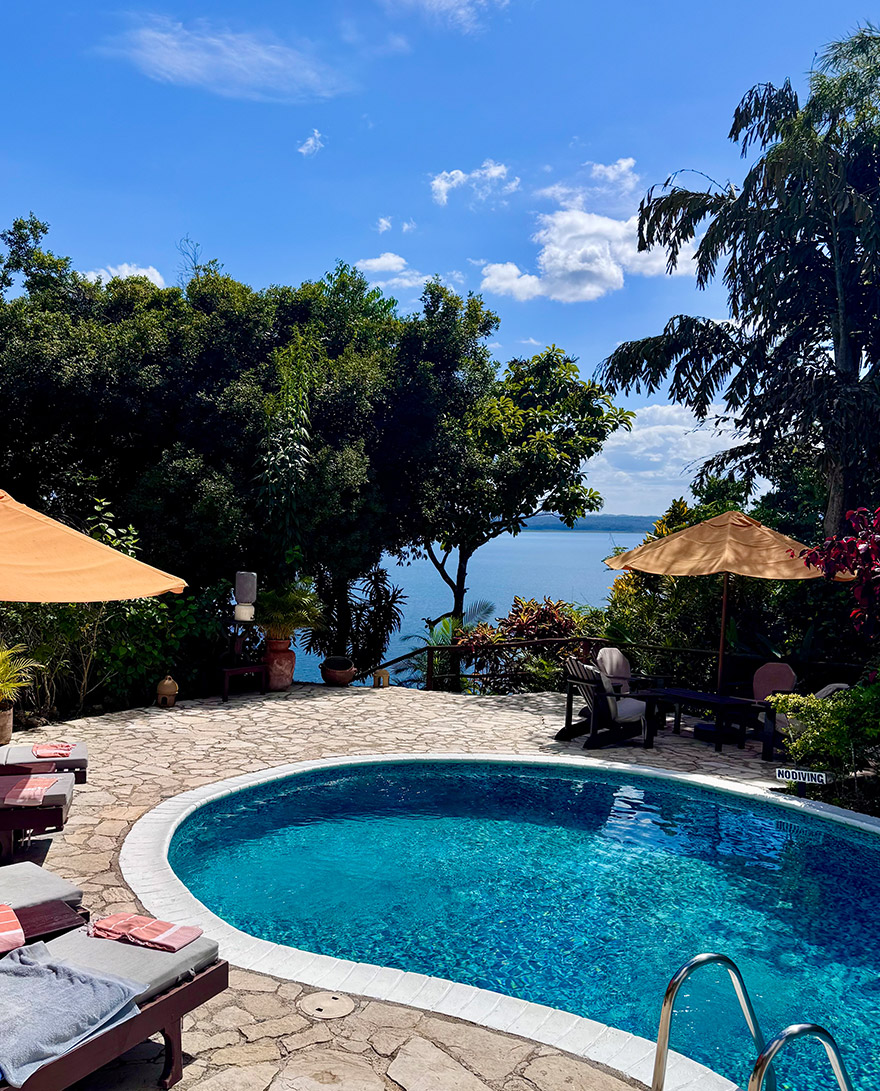
There’s also a small hillside pool framed by tropical plants and views, perfect for a cool-off after exploring.
YAXHA
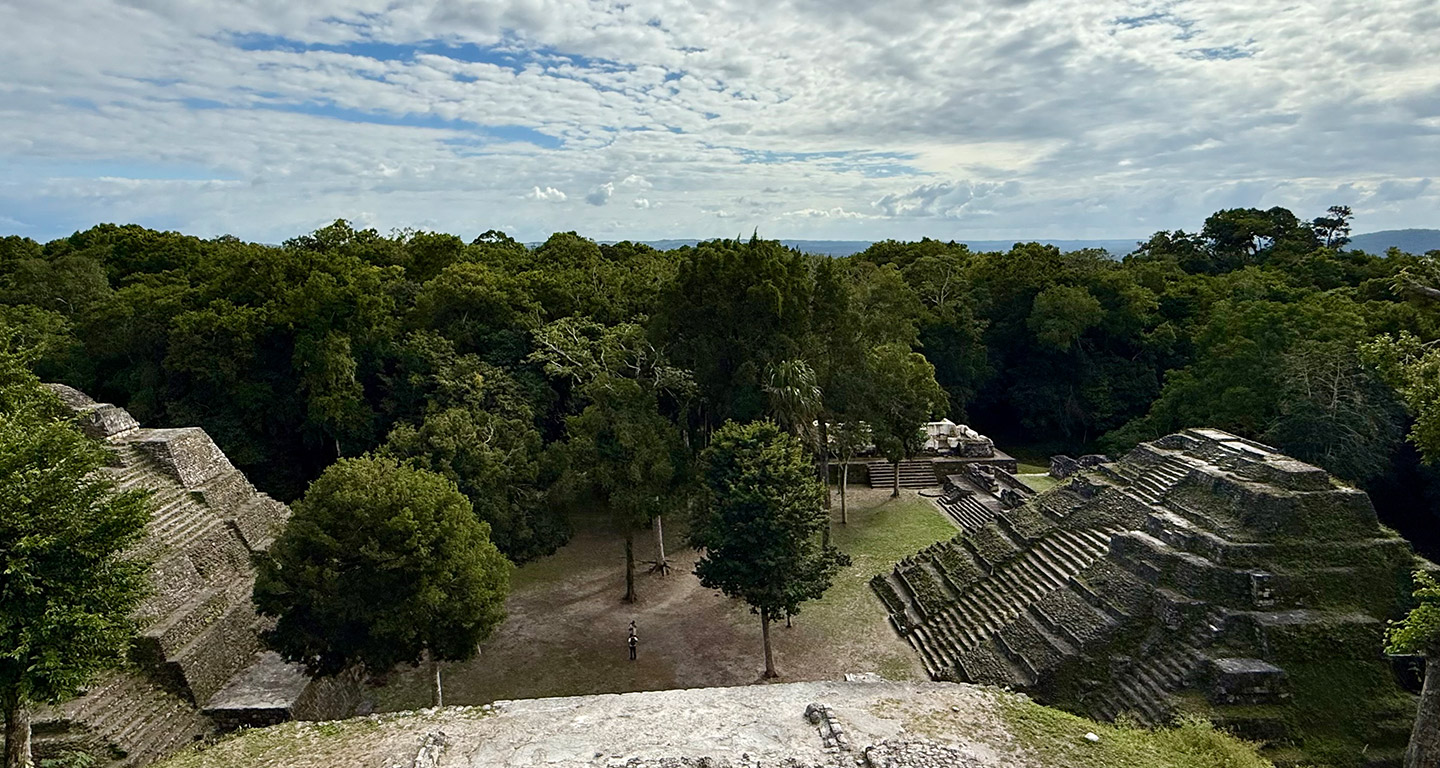
Yaxhá needs a full day if you combine it with Topoxté. It’s less famous than Tikal, and the temples are less visually impressive. However, it’s much quieter, and so you can look around with barely anyone around you. You are also able to climb temples with wide rainforest views.
TOPOXTE
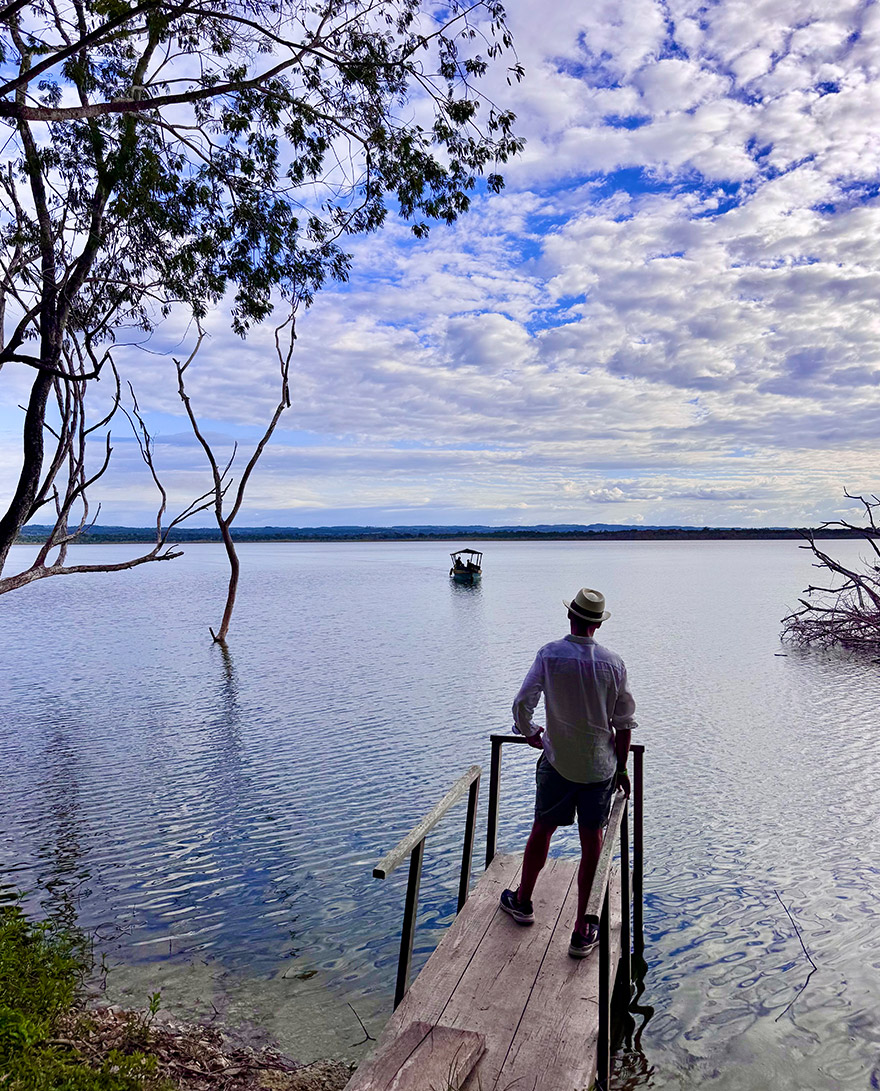
Topoxté is small but memorable because you reach it by boat, and arriving by water makes it feel like a discovery. Island ruins emerge from the jungle in full Indiana Jones mode. We had lunch and came back to finish the day with a sundowners at a rustic restaurant by the lake.
TIKAL
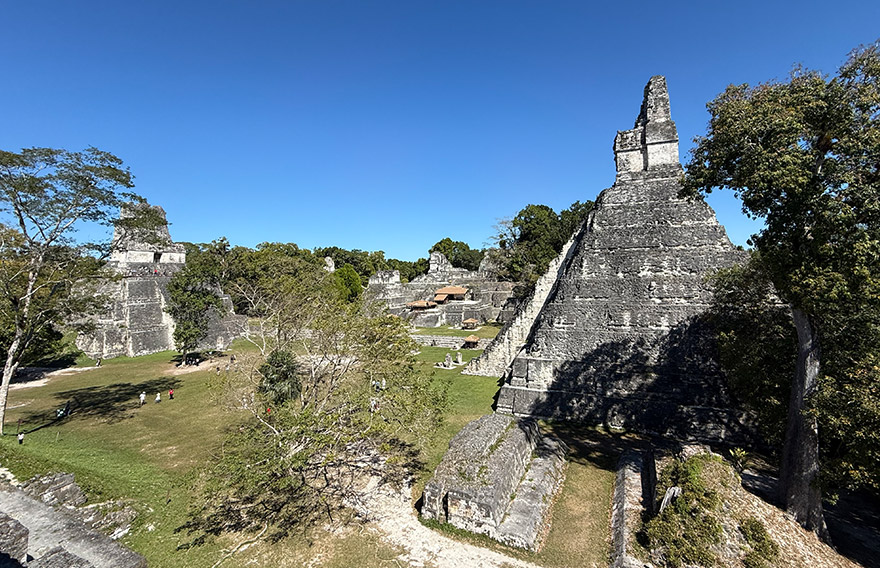
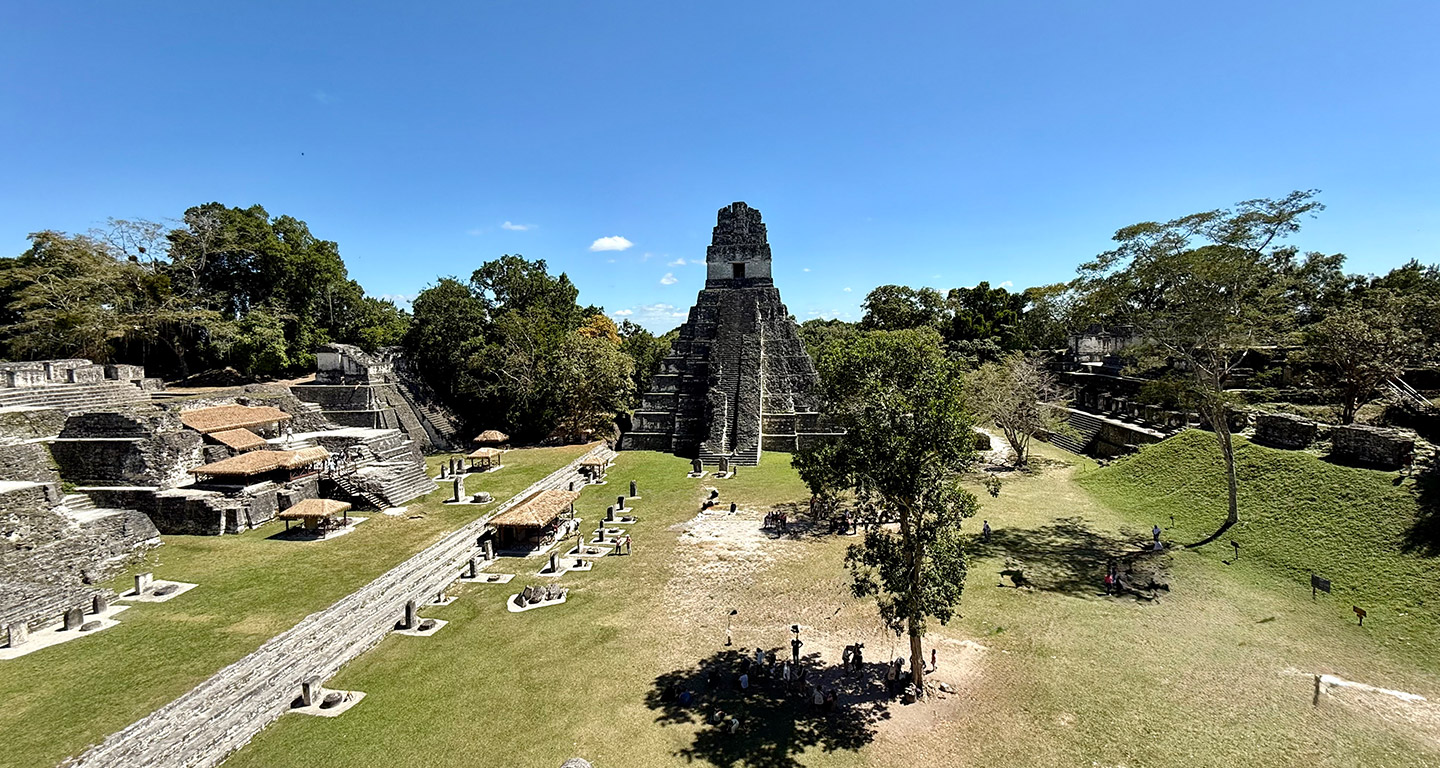
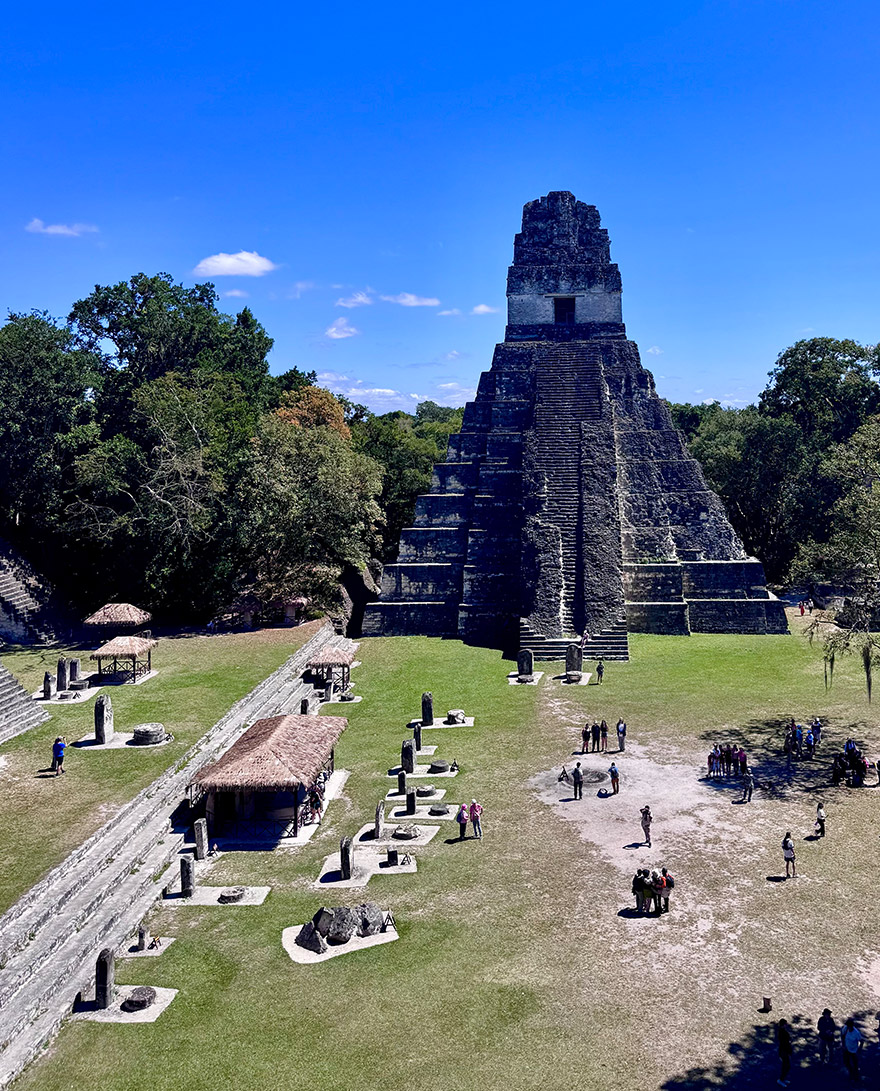
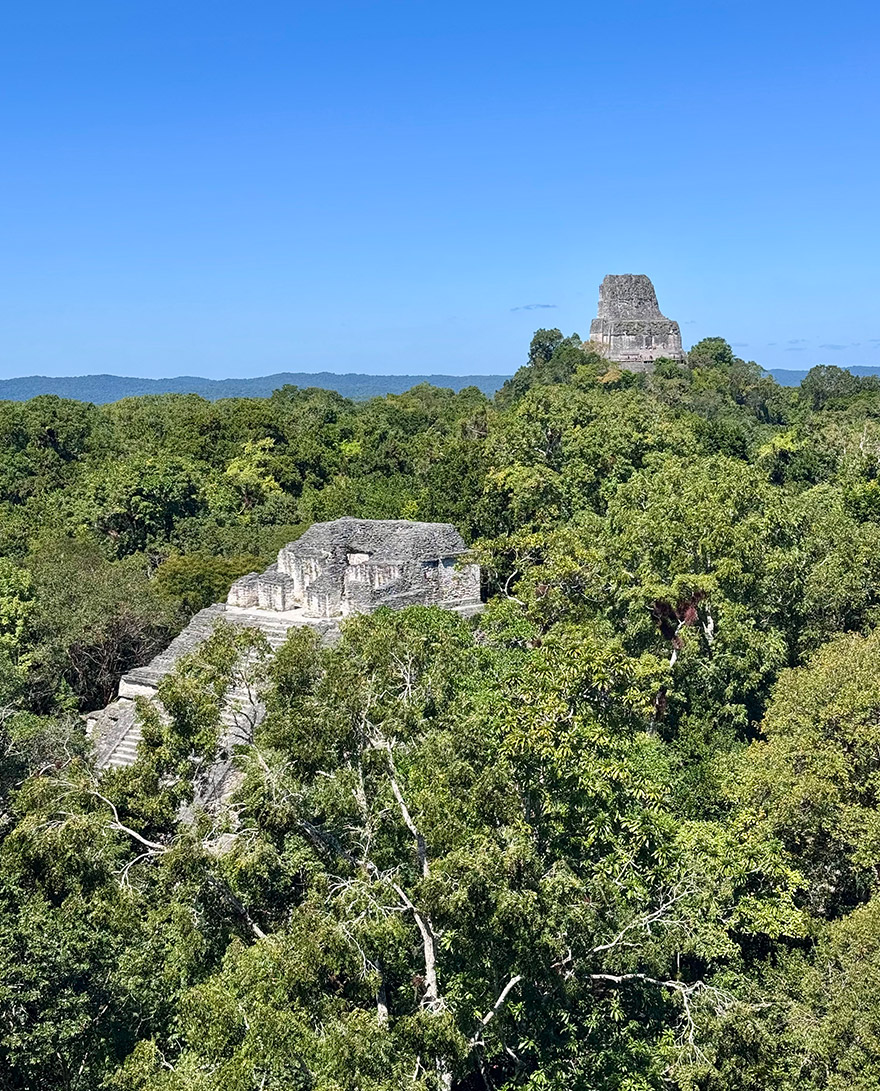
Tikal is one of the most impressive and evocative Maya temple complexes in the world. Five monolithic temples pierce the jungle canopy (Temple IV is almost 70 metres high). Wandering through plazas and ball courts, it’s easy to imagine how powerful this city once was — at its peak, the population reached close to 100,000.
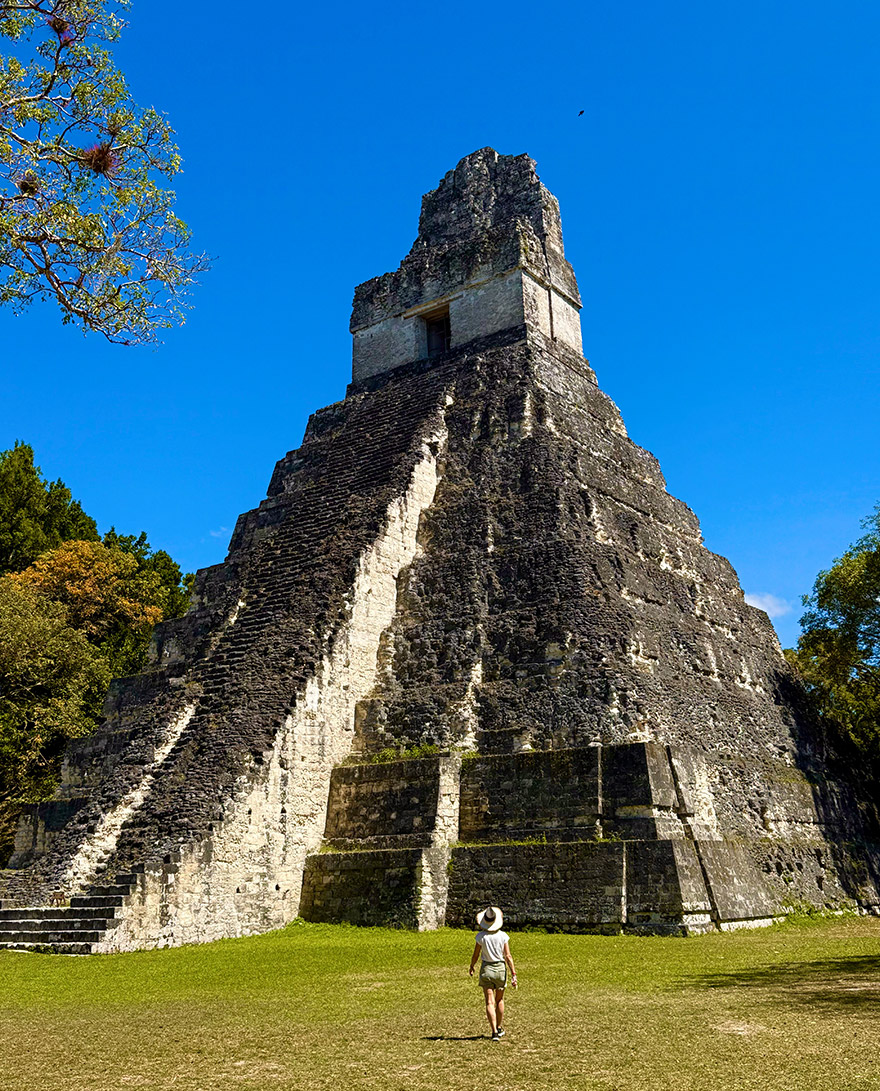
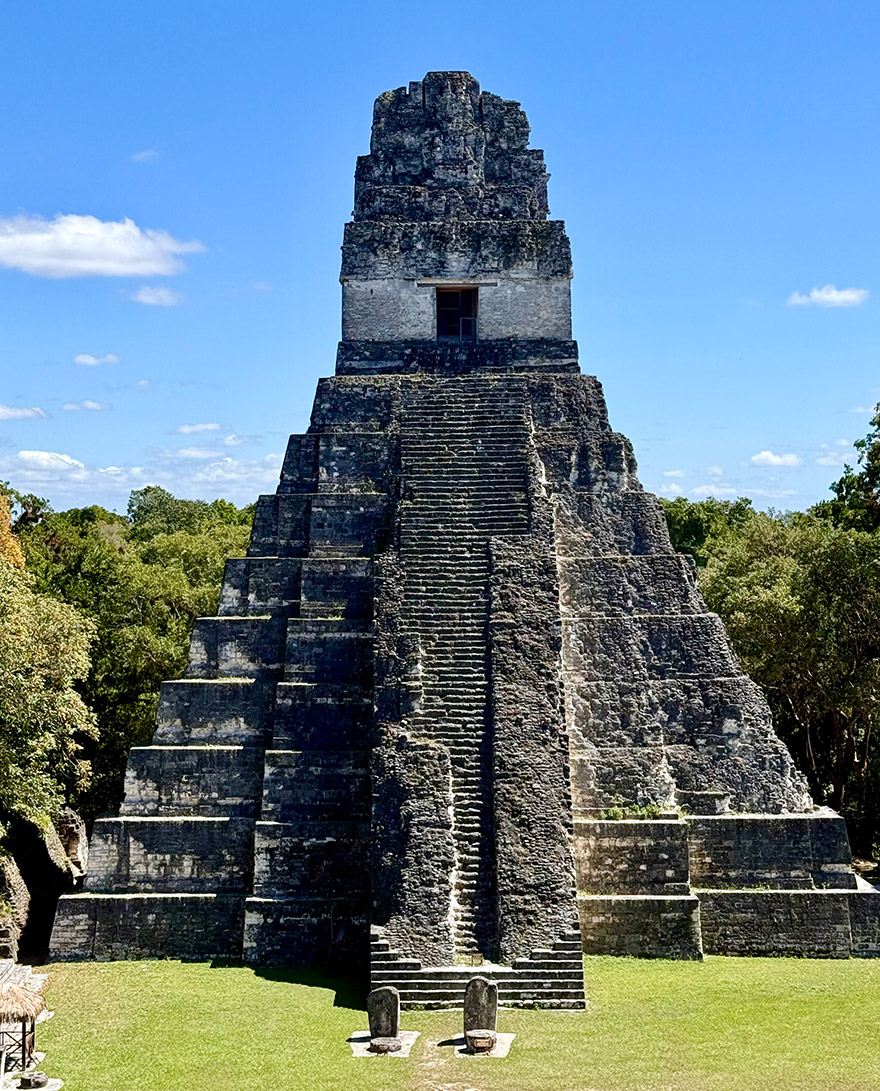
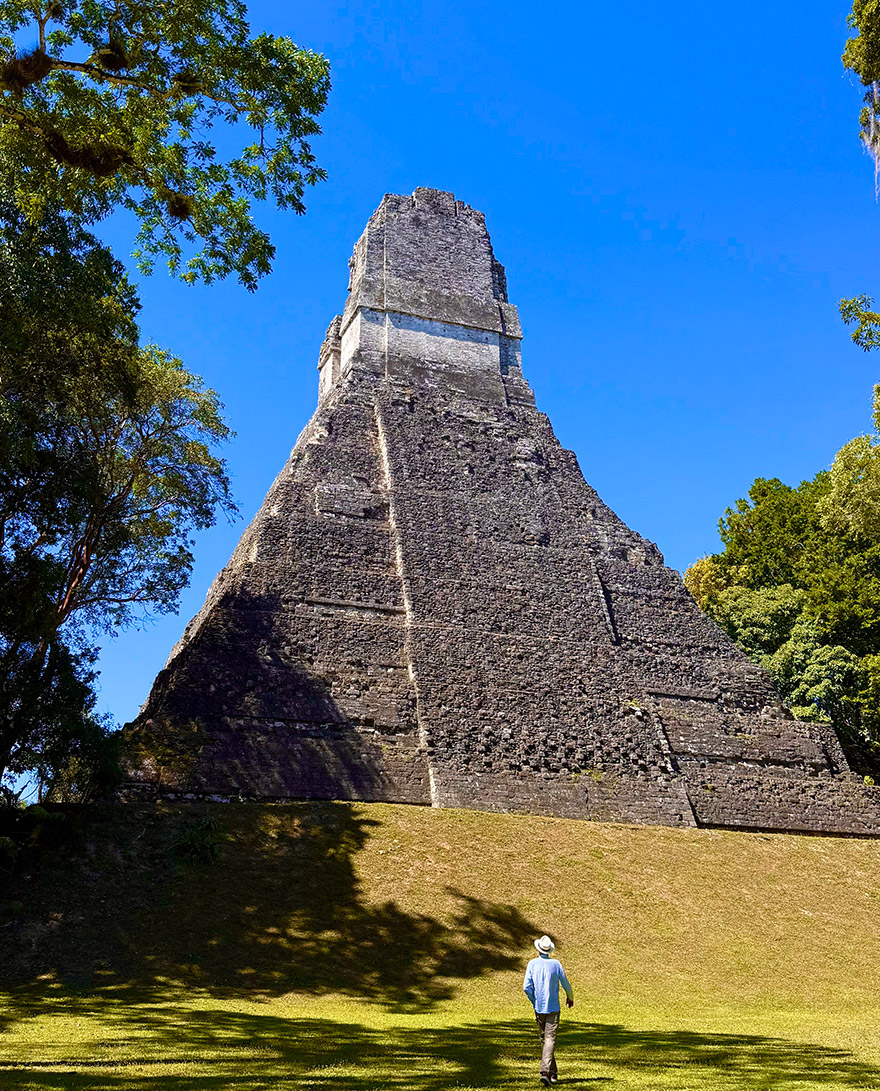
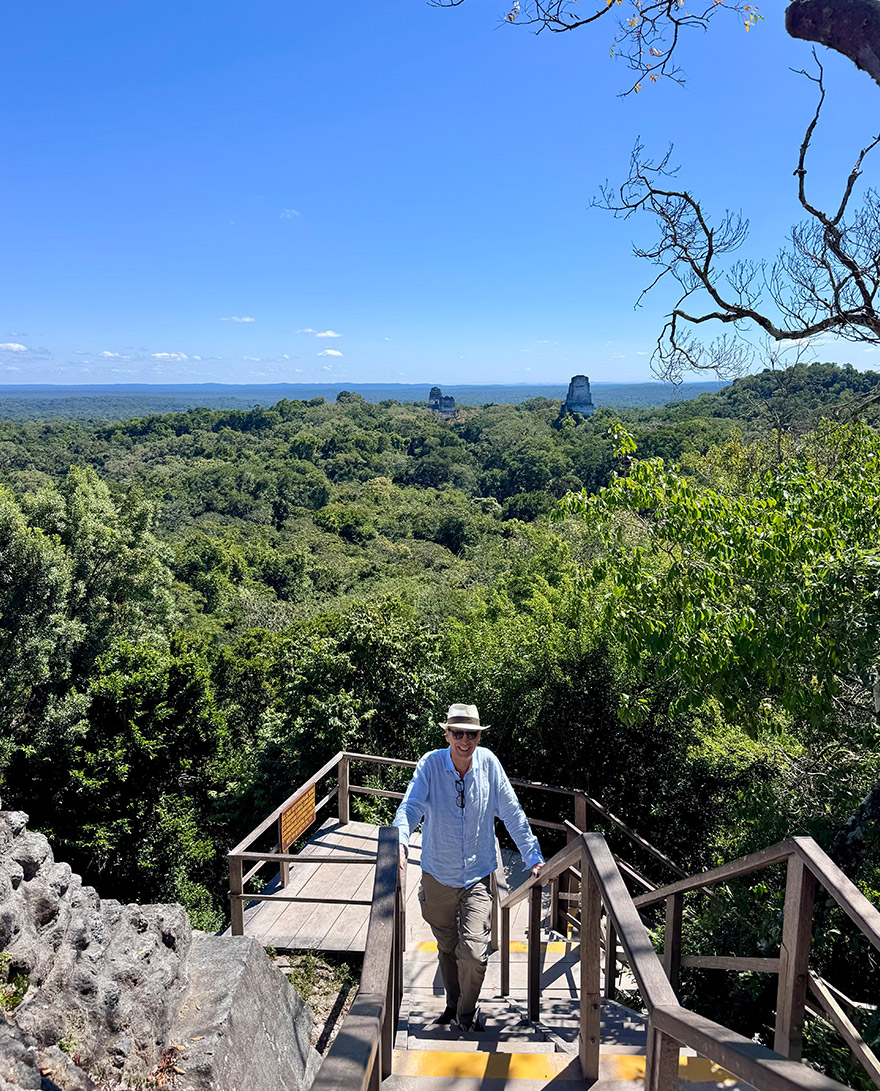
The setting adds so much. You wander through an unspoiled jungle inside Tikal National Park, with the silence broken by howler monkeys. There is a constant sense of something monumental hidden behind the next line of trees. You are allowed to climb some of the temples, giving you a panoramic view of the tree canopy with ruins poking through. It’s justifiably one of the great archaeological wonders of the Americas.
FLORES
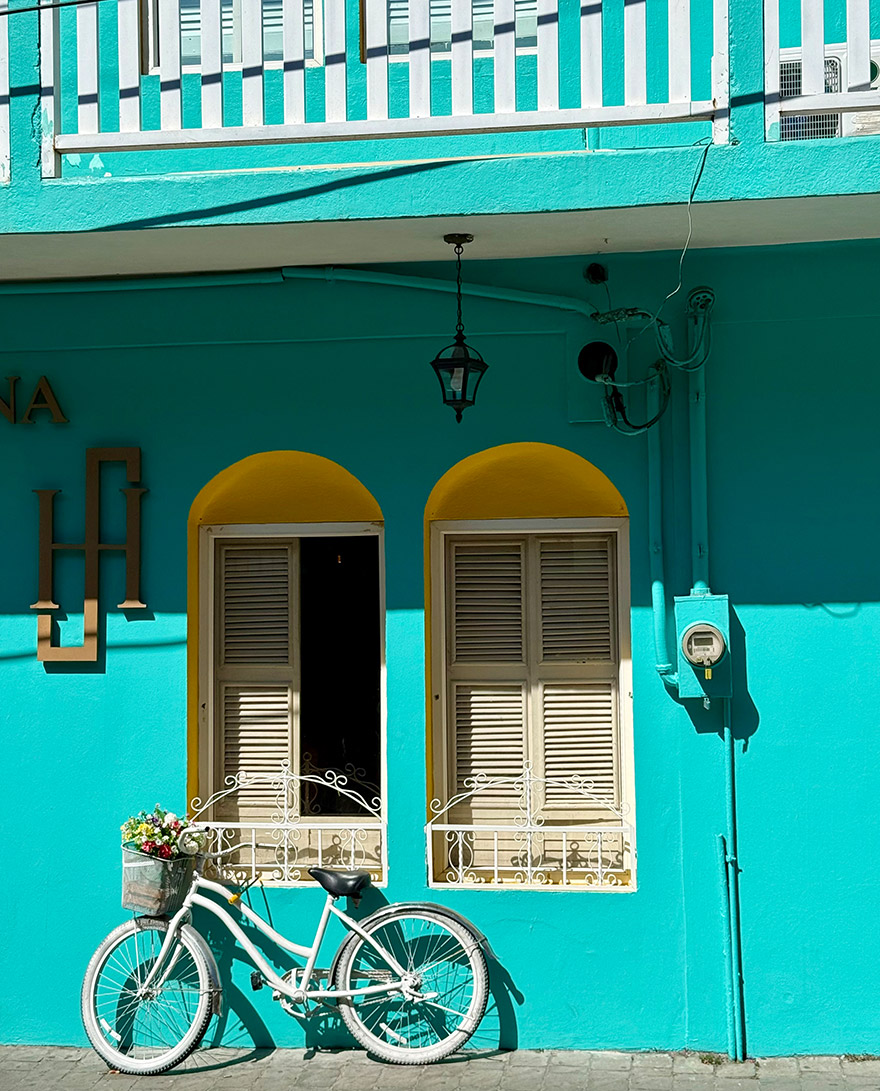
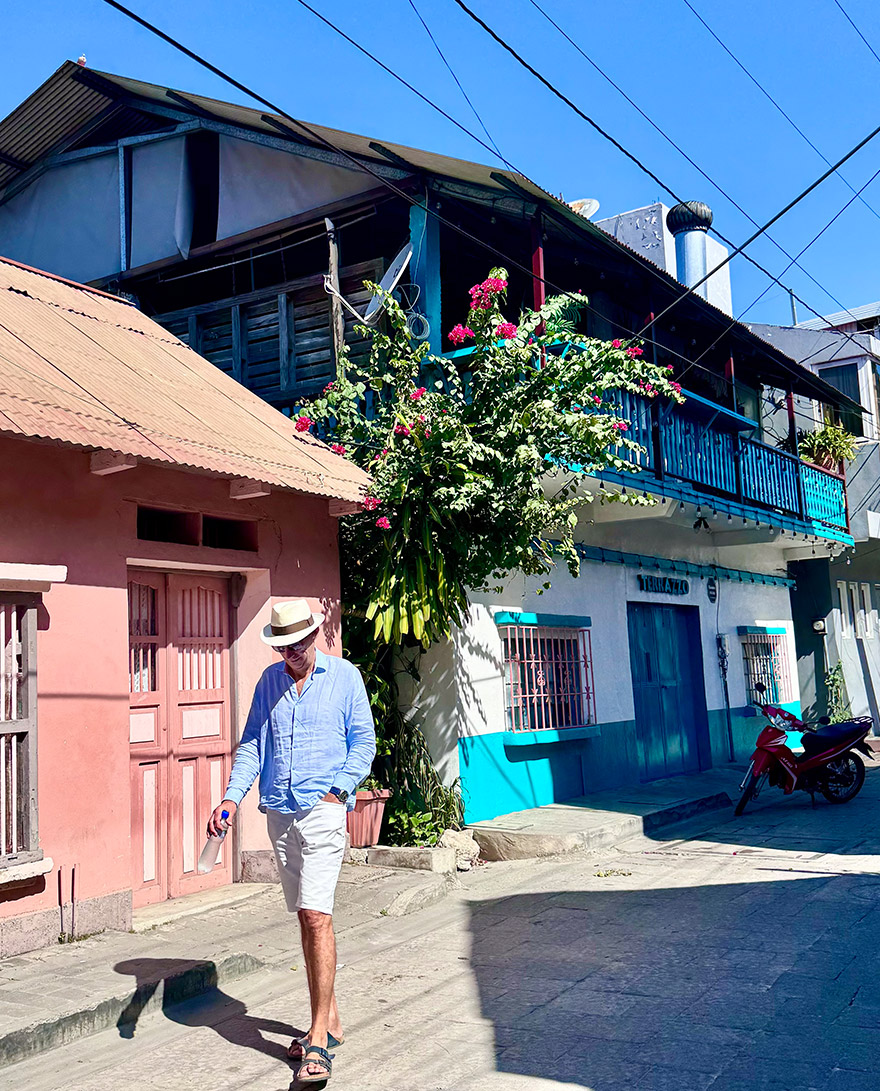
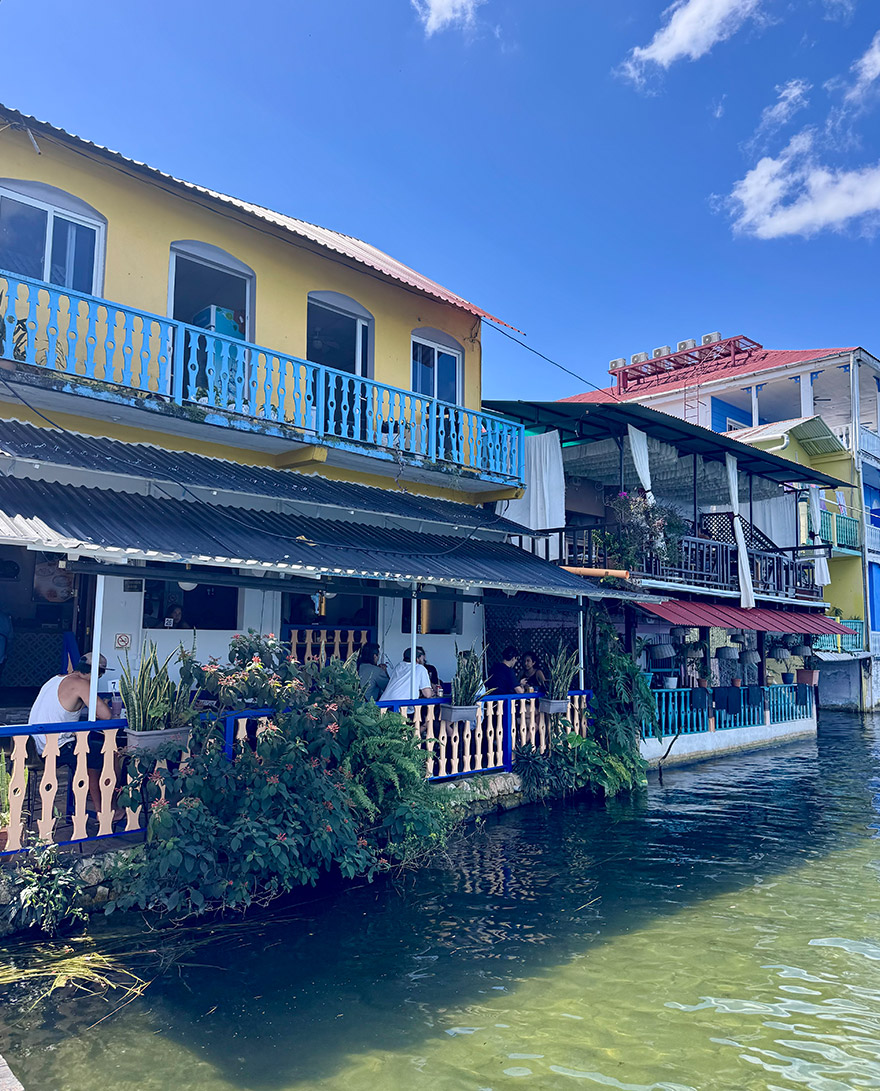
Flores is a lovely, colourful little island town and arriving by boat across Lake Petén Itzá felt like a mini outing in itself. We spent our first hour wandering around the outer Calle de 15 Septiembre. There is a whole collection of pretty pastel houses in pink, lemon and turquoise.
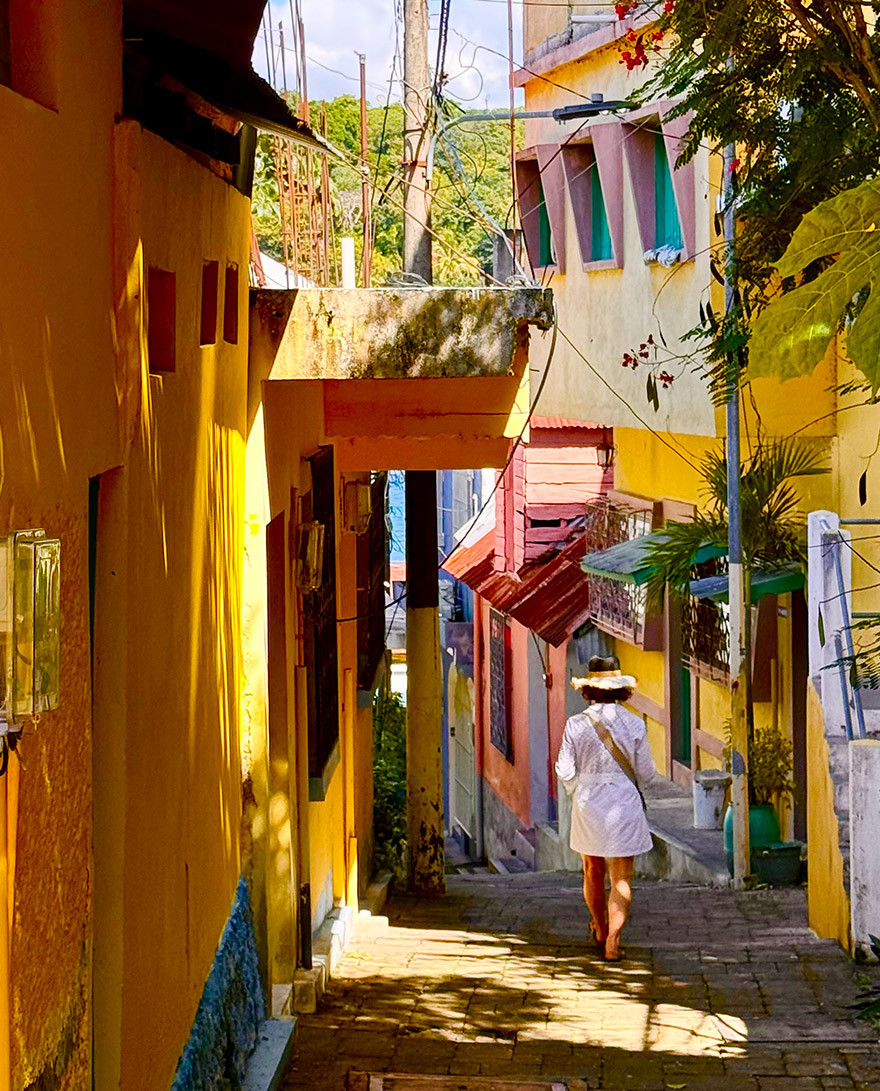
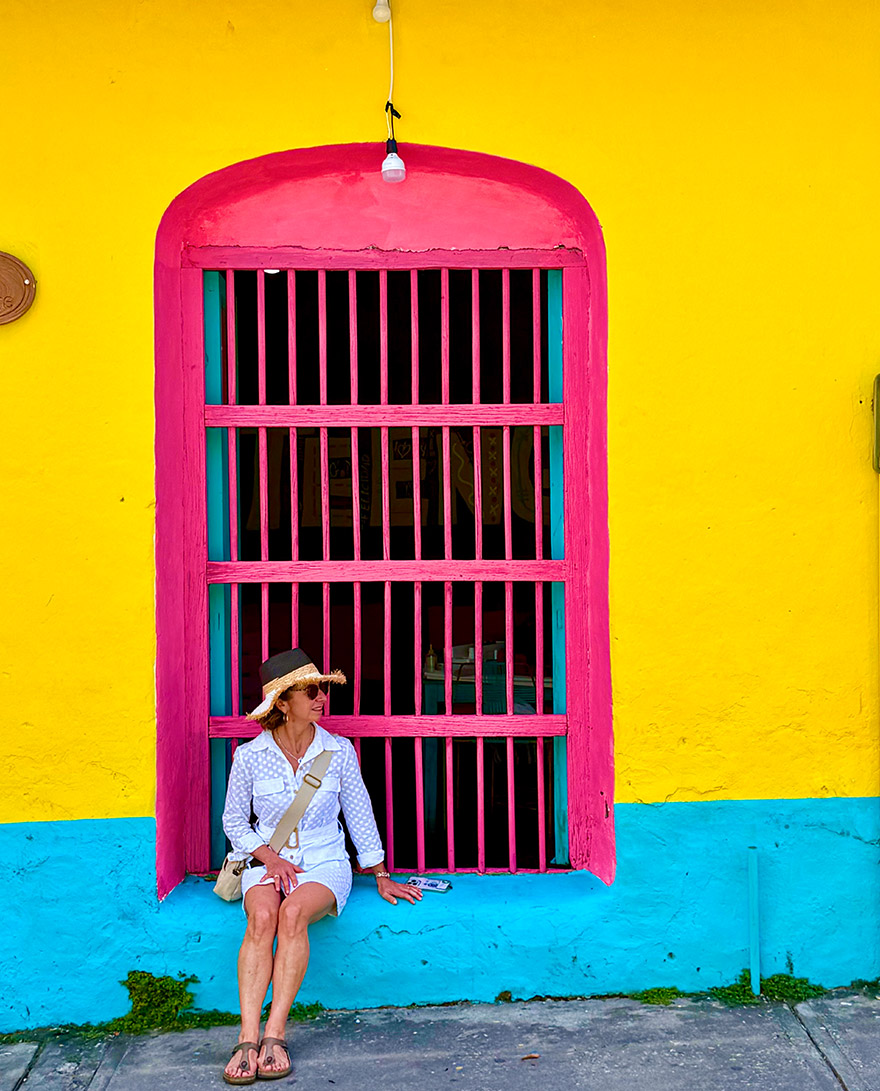
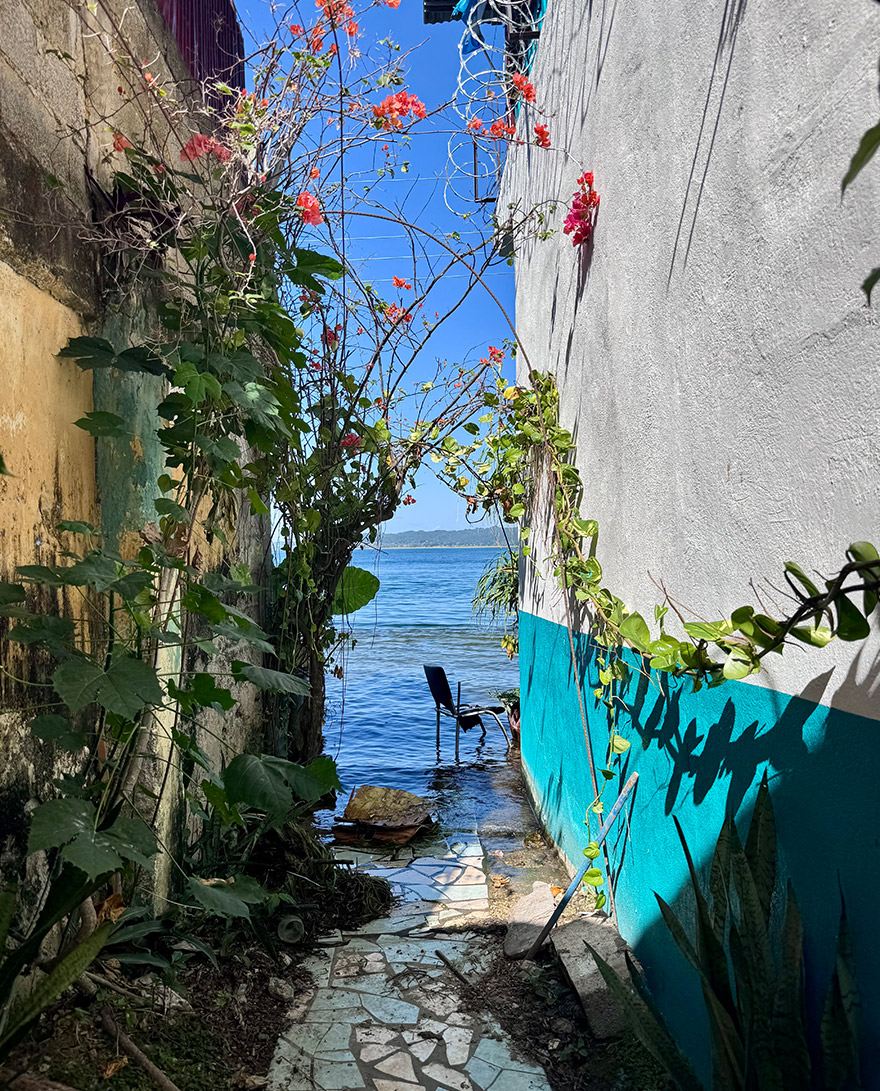
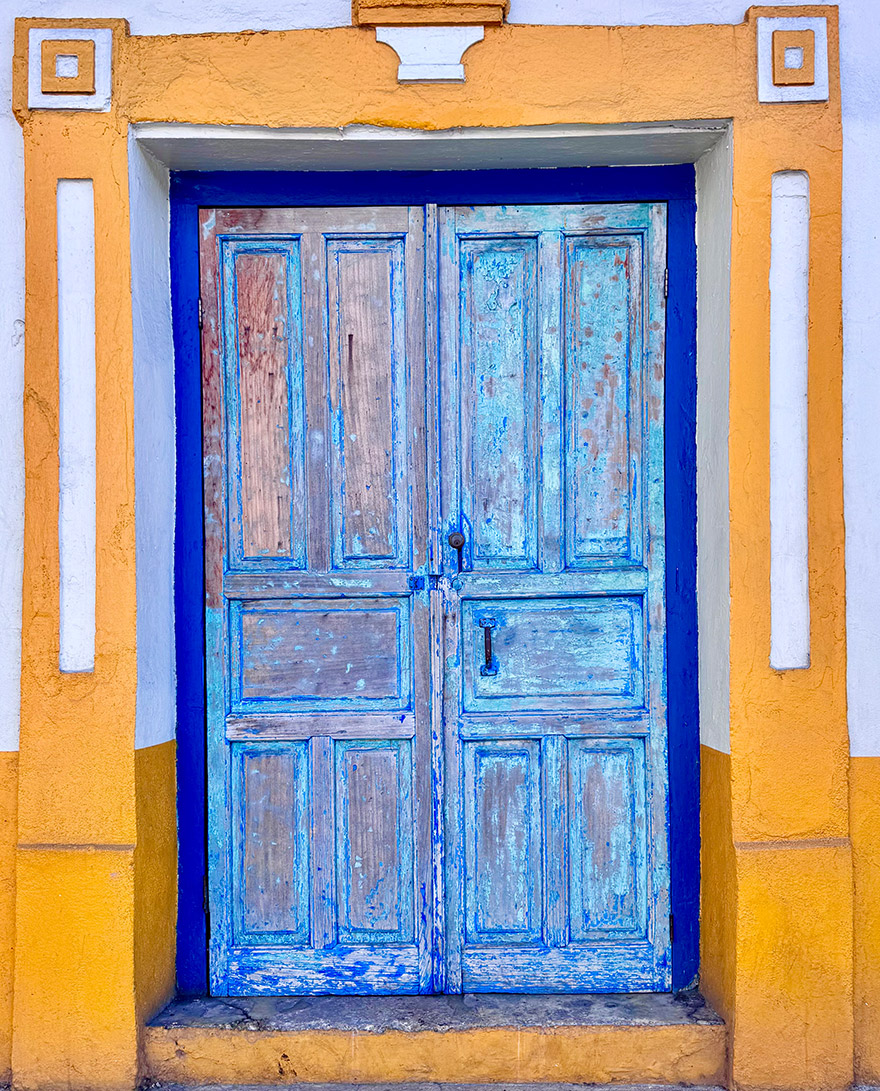
We then crossed into the smaller inner streets, which are less polished but also less busy. Head away from the waterfront loop, and you’ll find quieter, more lived-in cobbled streets where Flores feels less like a postcard and more like a working little island town. The charm here is in the details: faded paint, open doorways, kids playing, and the ice cream man on his rounds!
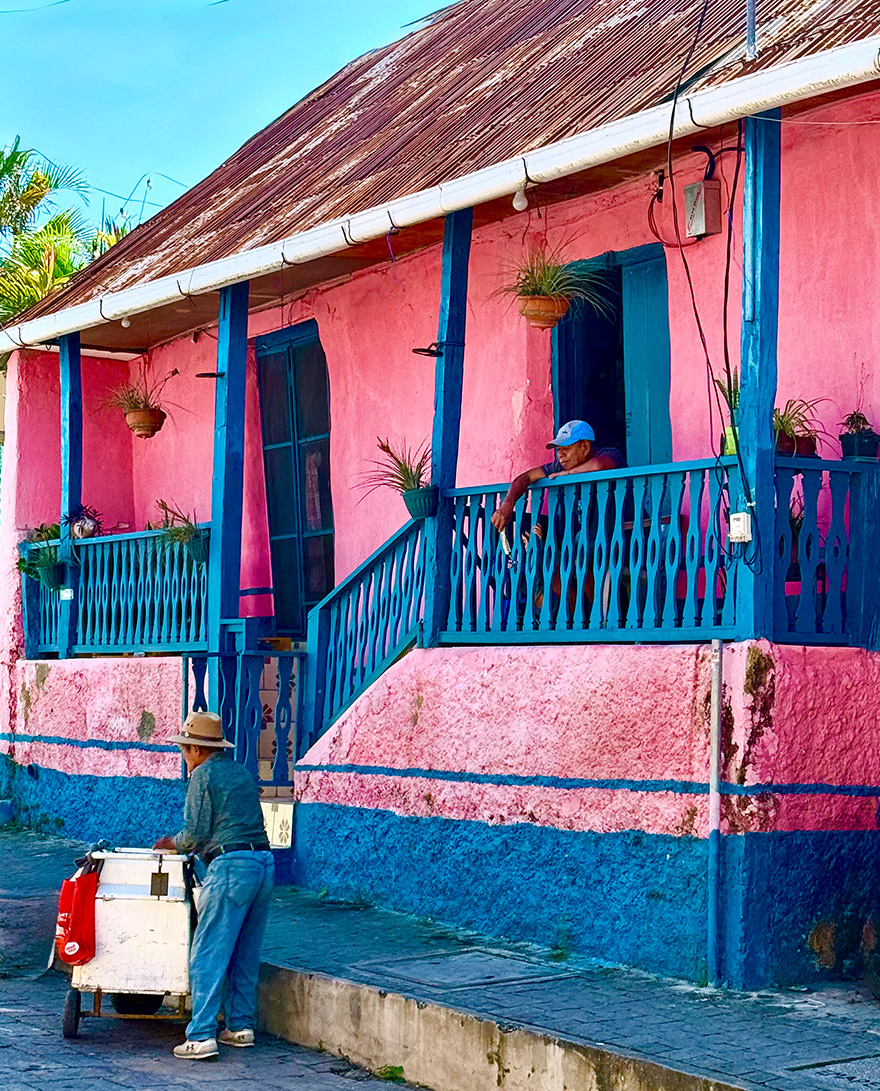
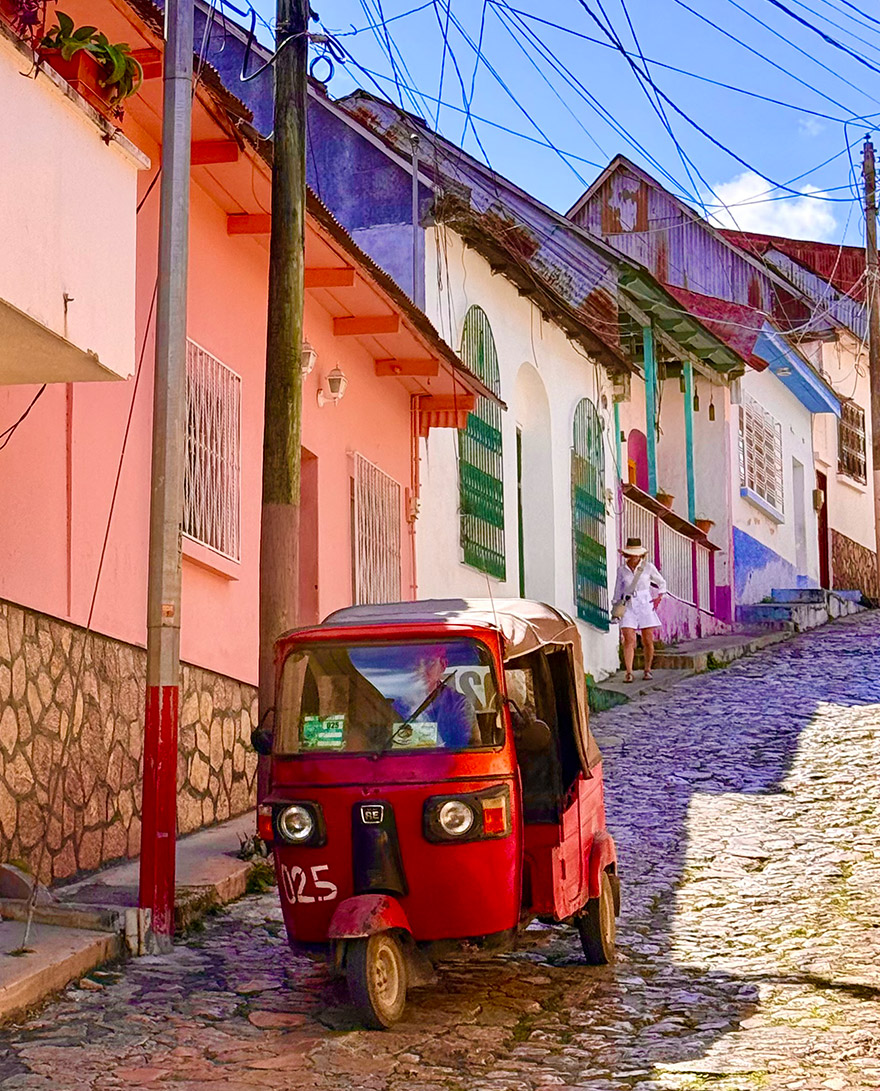
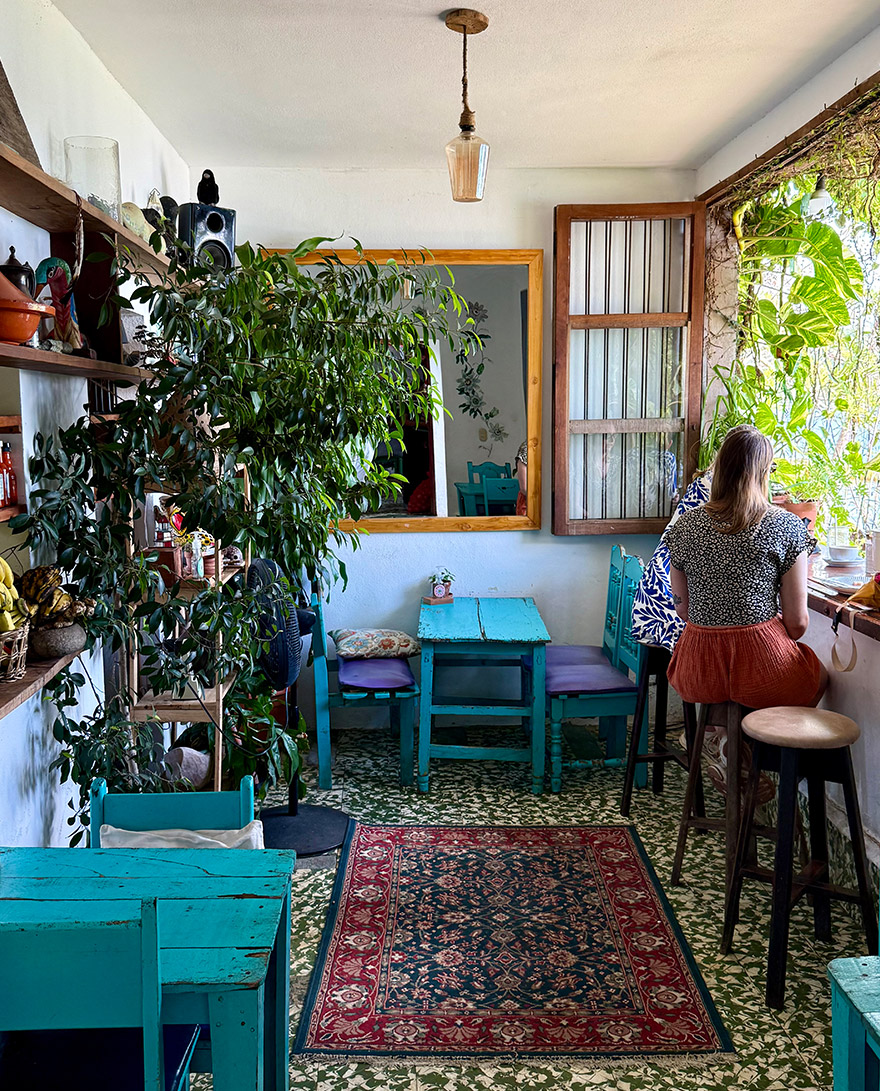
Maracuya is a lovely stop to pause for an iced coffee. If you can, grab a table upstairs: you get a better breeze, more space, and a great vantage point for watching boats come and go.
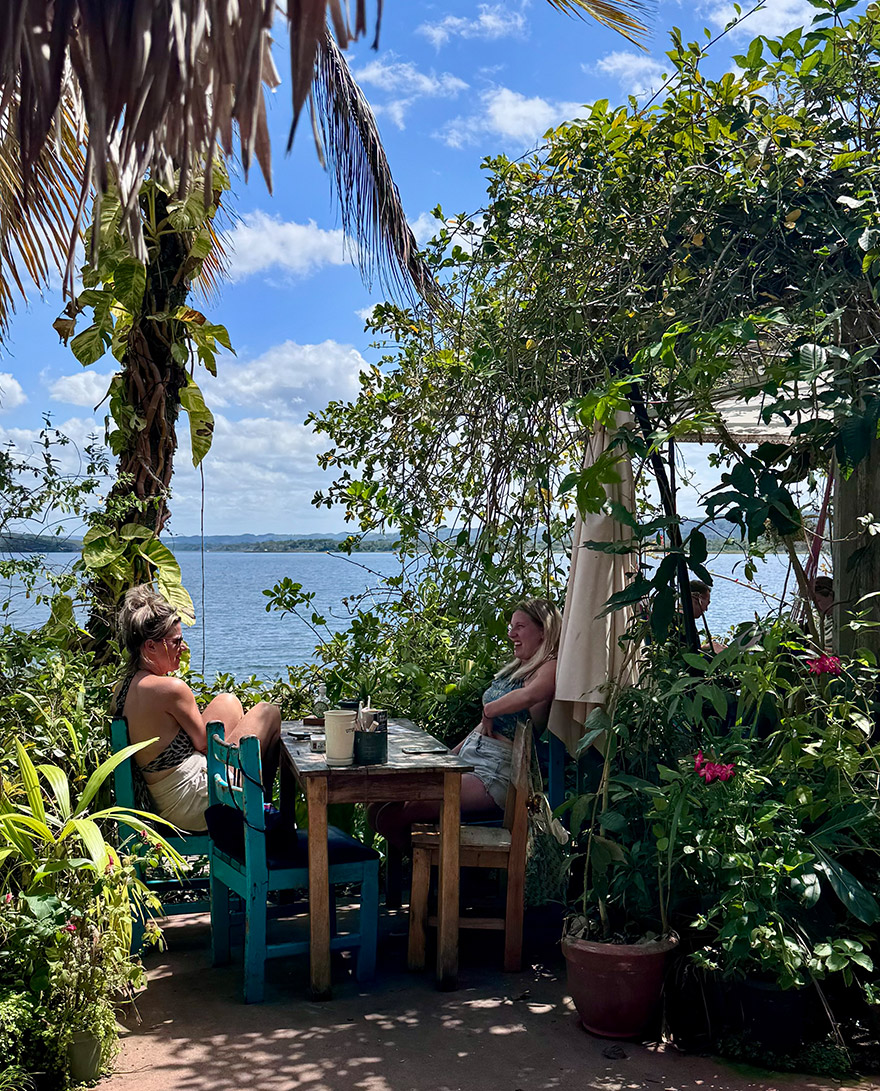
We finished with brunch on the terrace at Maple y Tocino, another nice little café overlooking the lake. The menu is strong on generous brunch plates: think properly stacked pancakes, eggs done every which way, fresh juices and coffee. Grab a terrace table, settle in, and enjoy a well-executed brunch with one of the best lake views in town.
Mountain Pine Ridge – Belize
Crossing into Belize, the landscape shifts again. Jungle gives way to pine forest as you climb into Mountain Pine Ridge, with waterfalls, caves, swimming holes and big, open scenery that feels completely different to Guatemala’s colonial cities and lake towns.
Stay
GAÏA RIVERLODGE
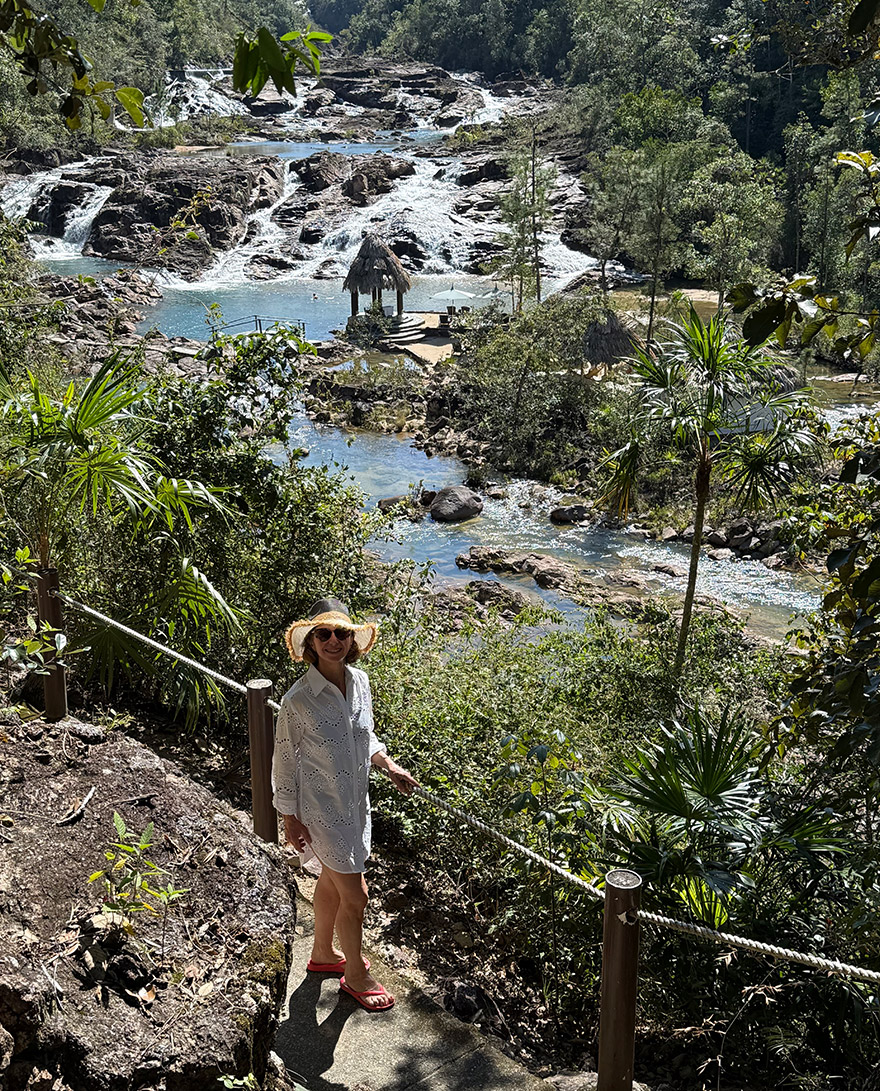
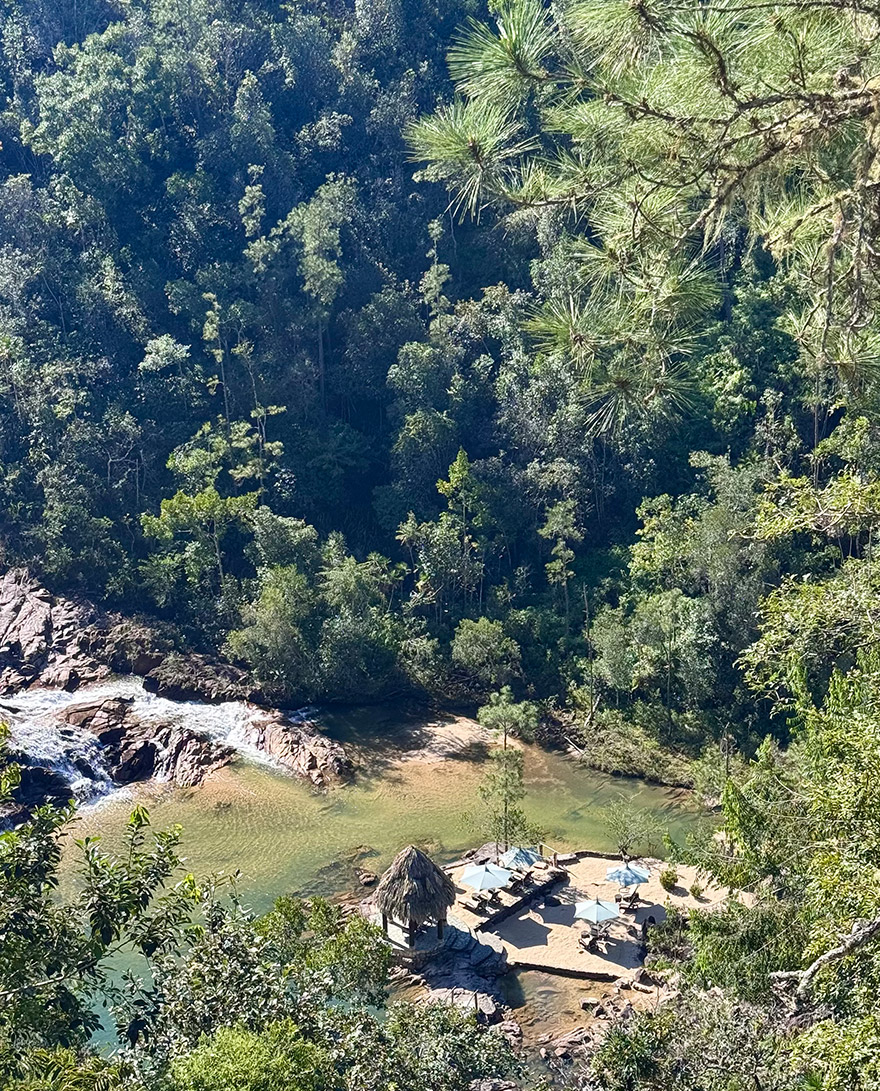
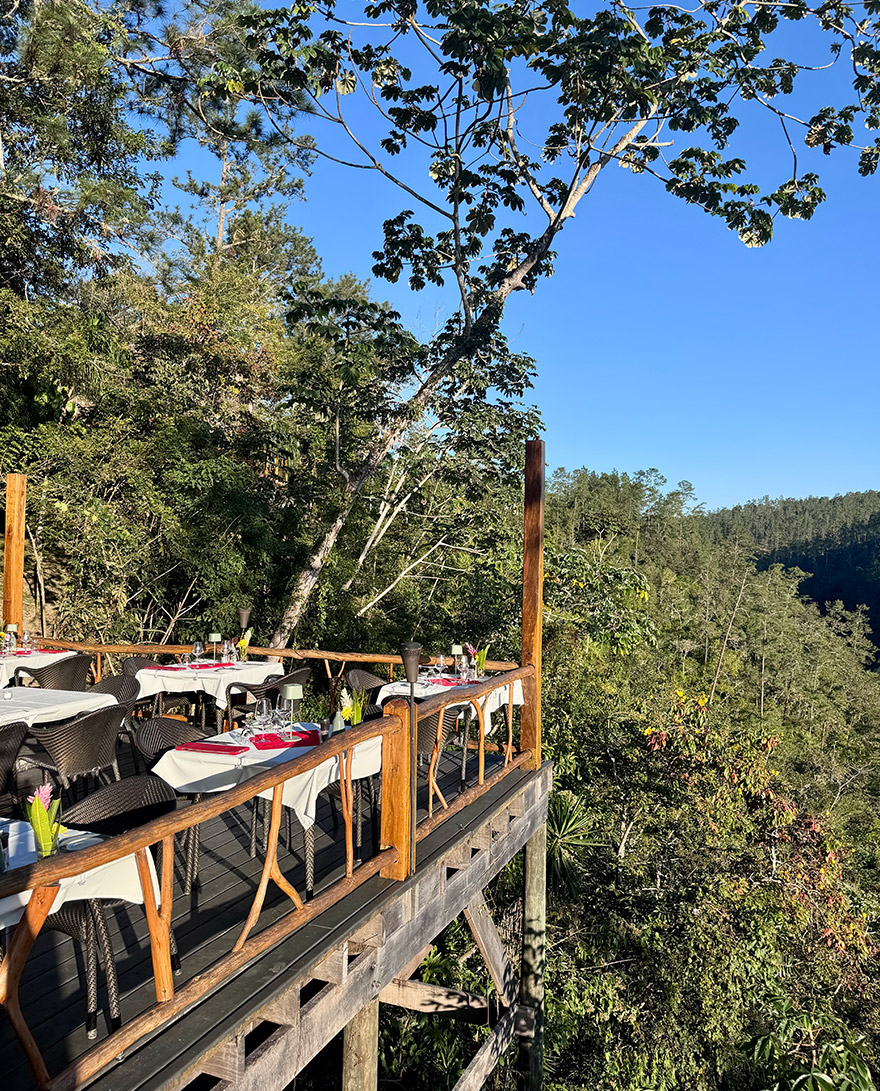
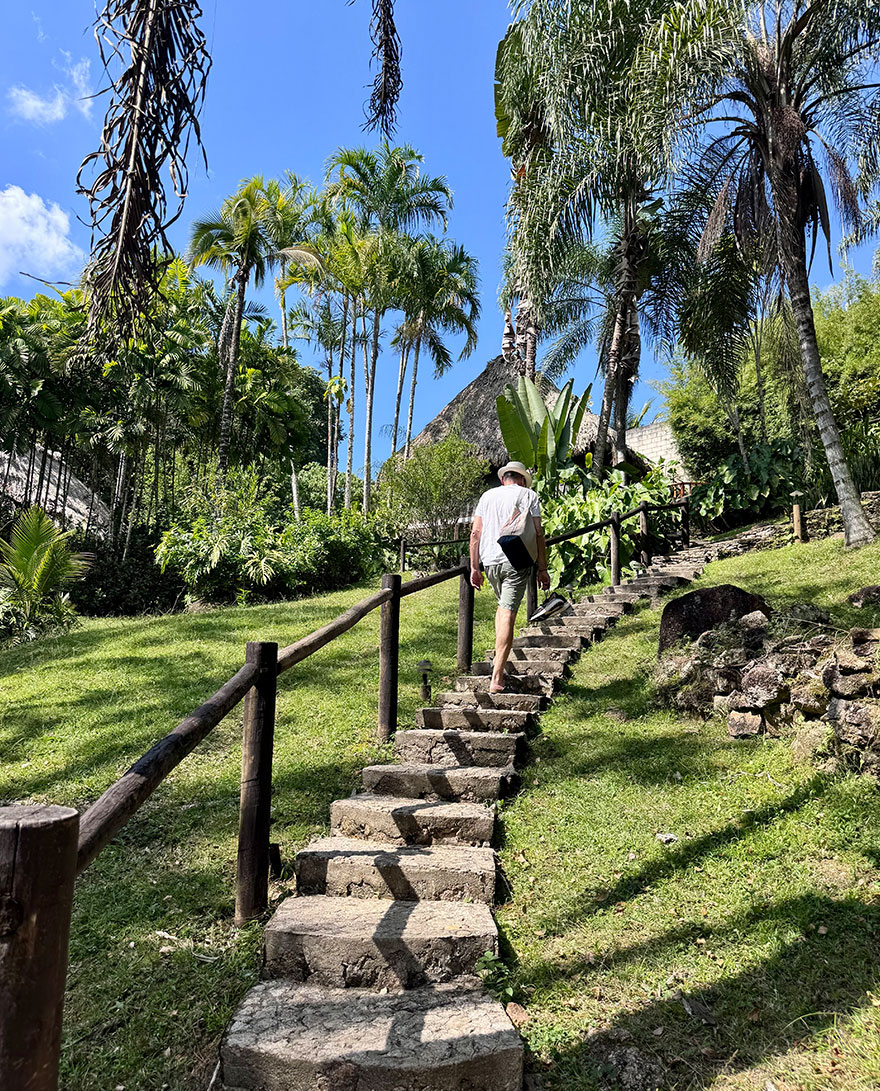
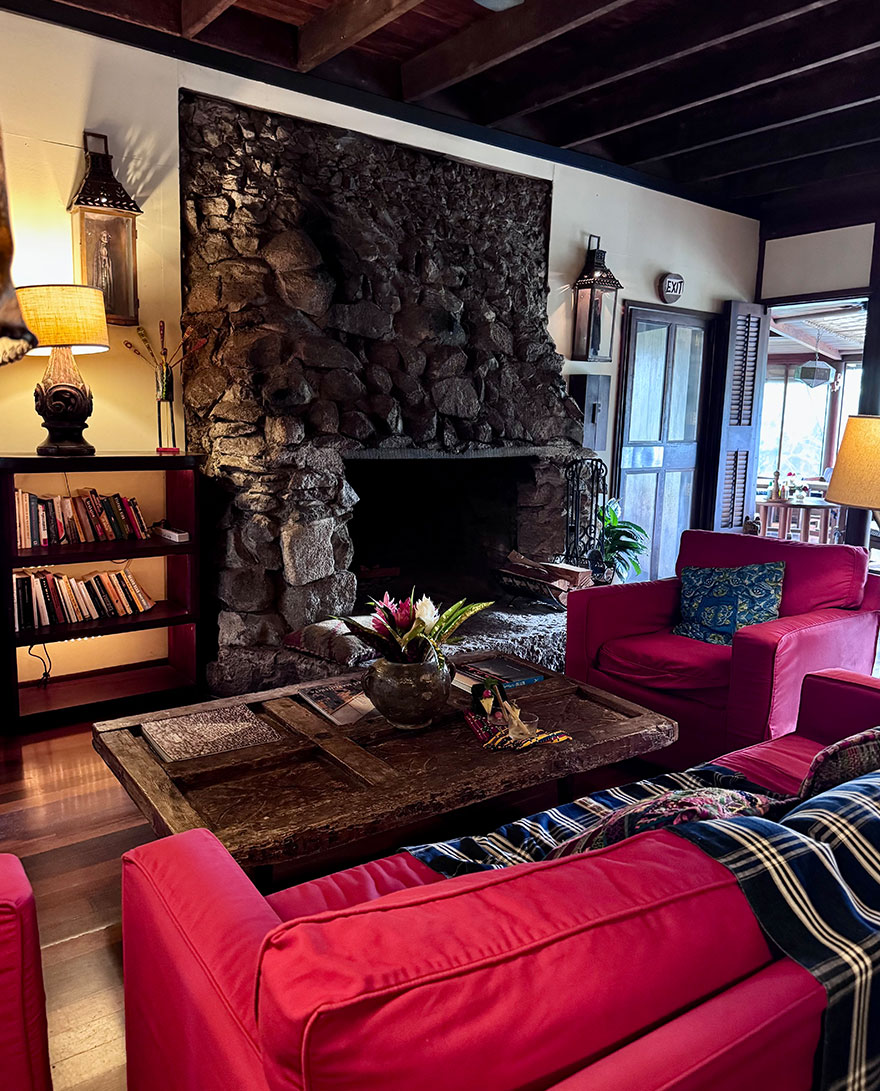
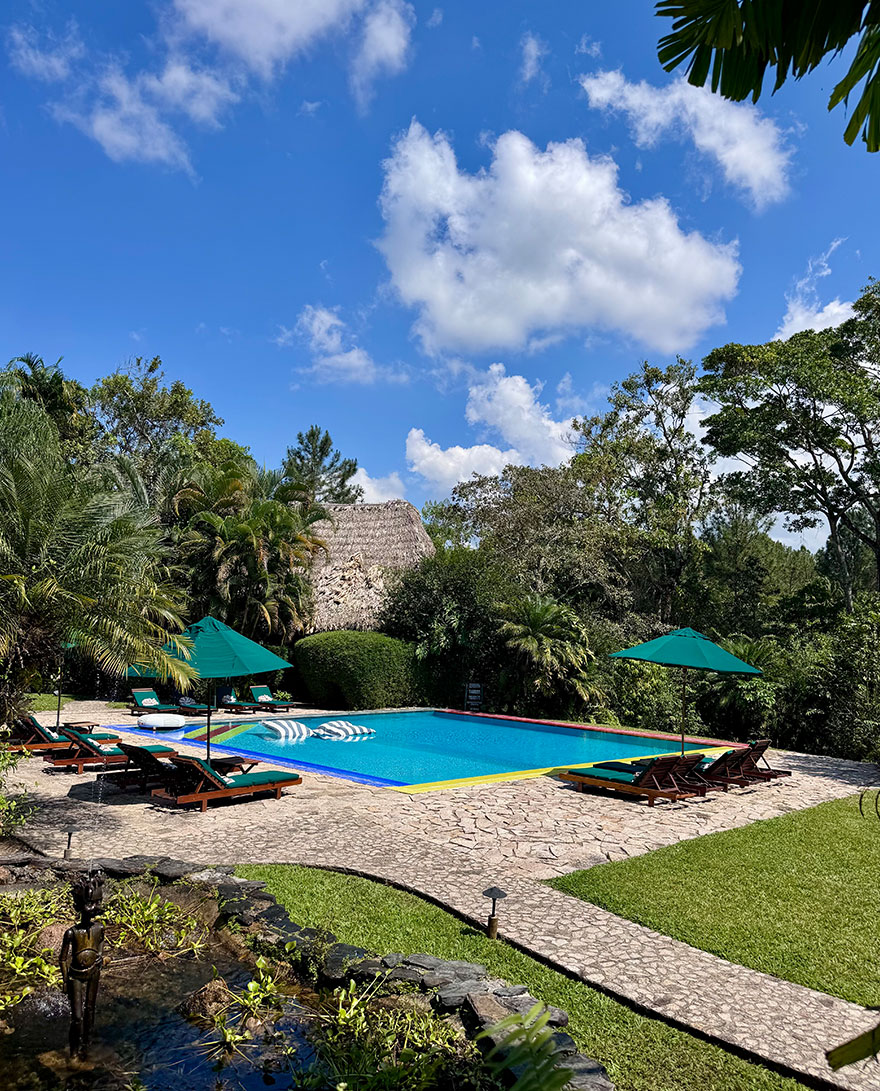
Gaïa is set high in the Mountain Pine Ridge forest reserve, perched near the Five Sisters waterfalls, surrounded by trees and the sound of rushing water. It’s the kind of place where you’re properly in nature, while still being looked after beautifully. The common areas are colourful and contemporary, with terraces that are made for sundowners after a day out exploring. The lovely gardens are all manicured and looked after perfectly.
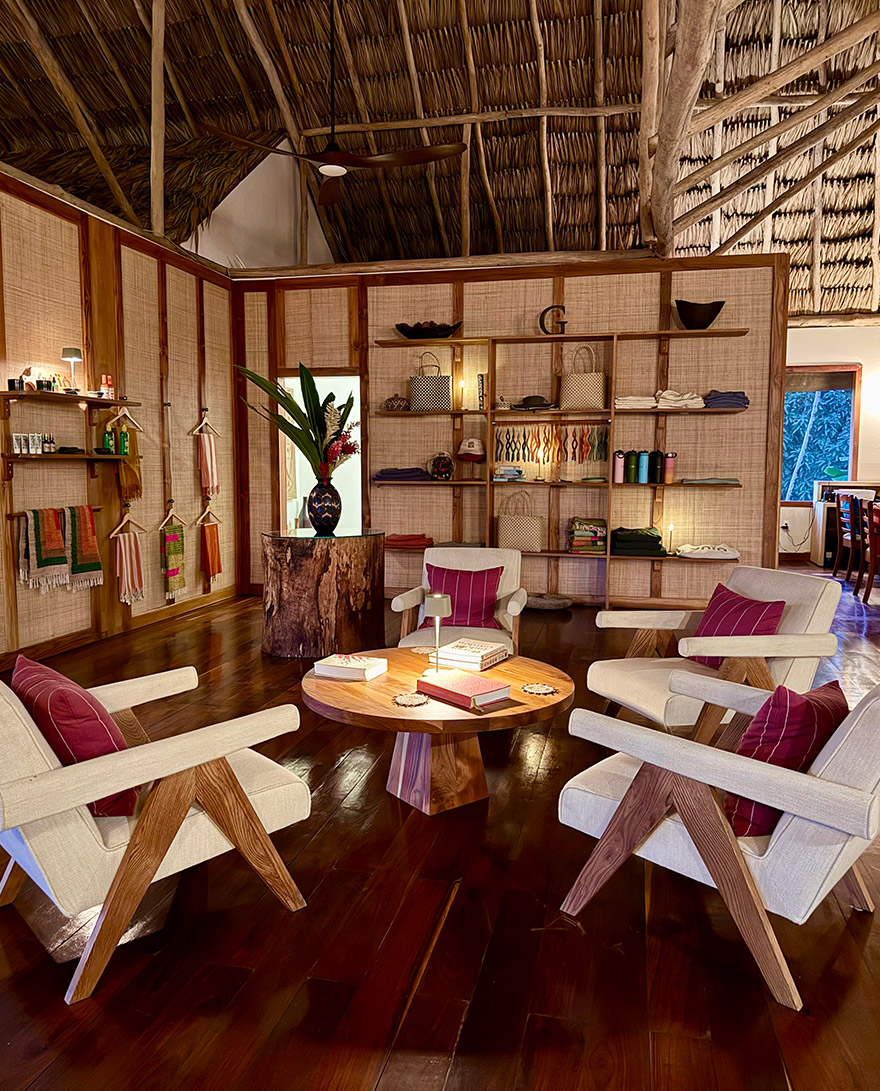
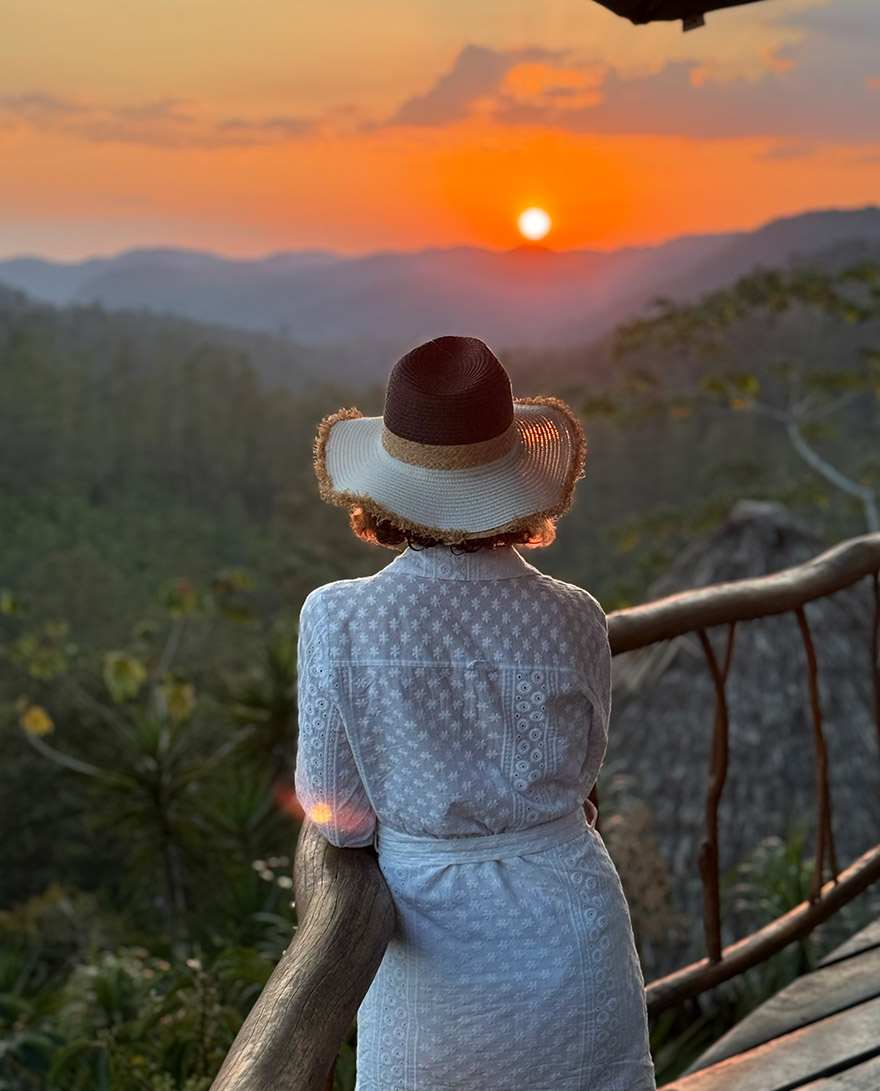
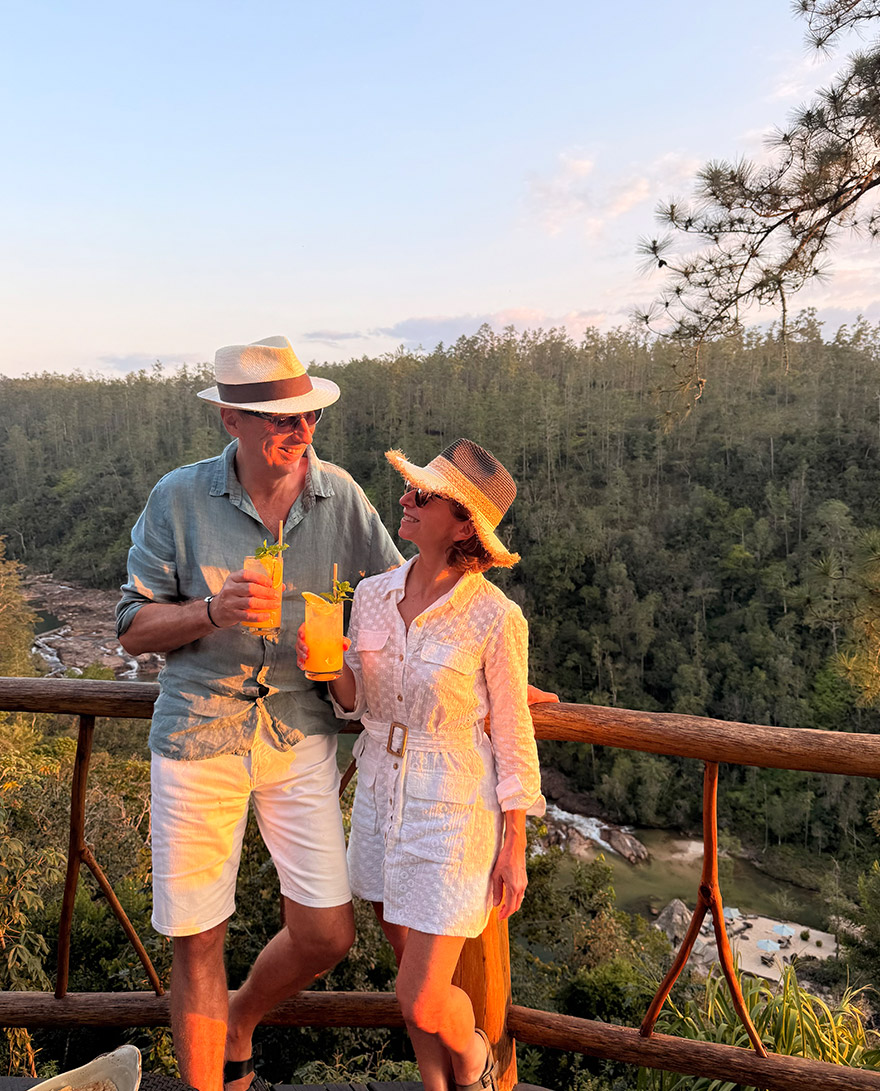
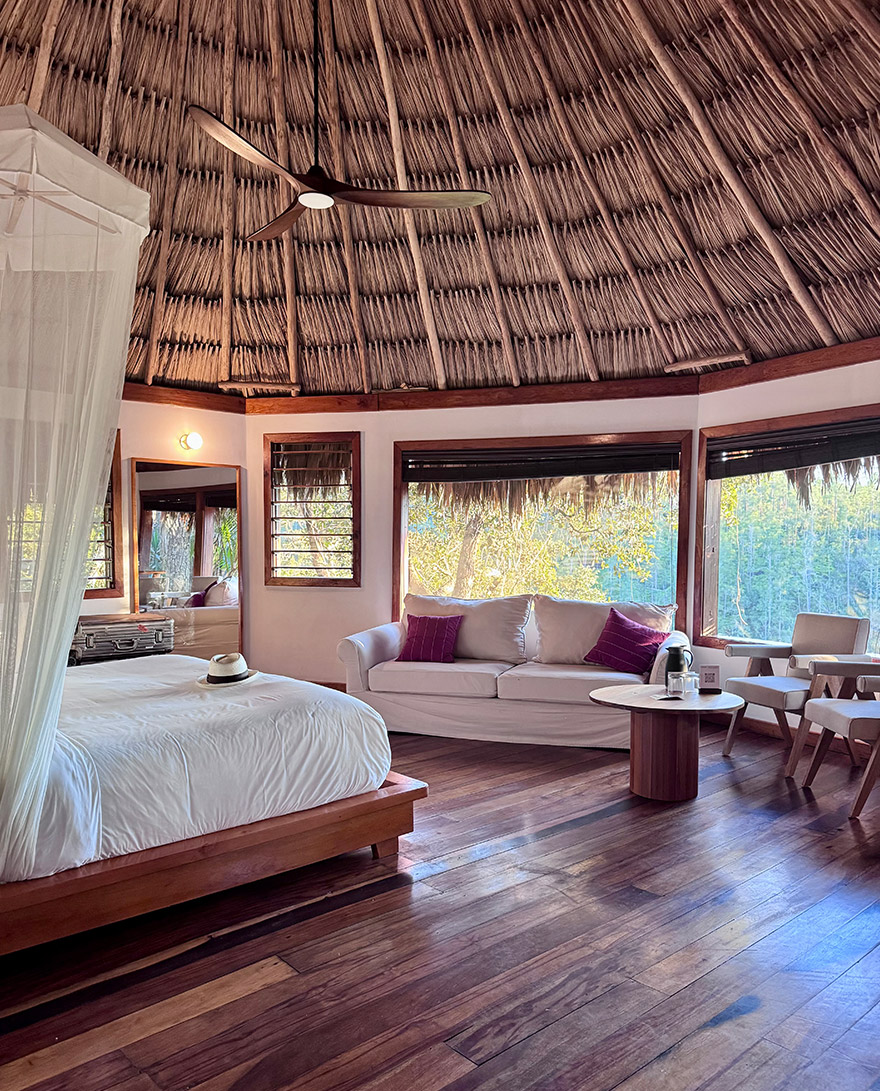
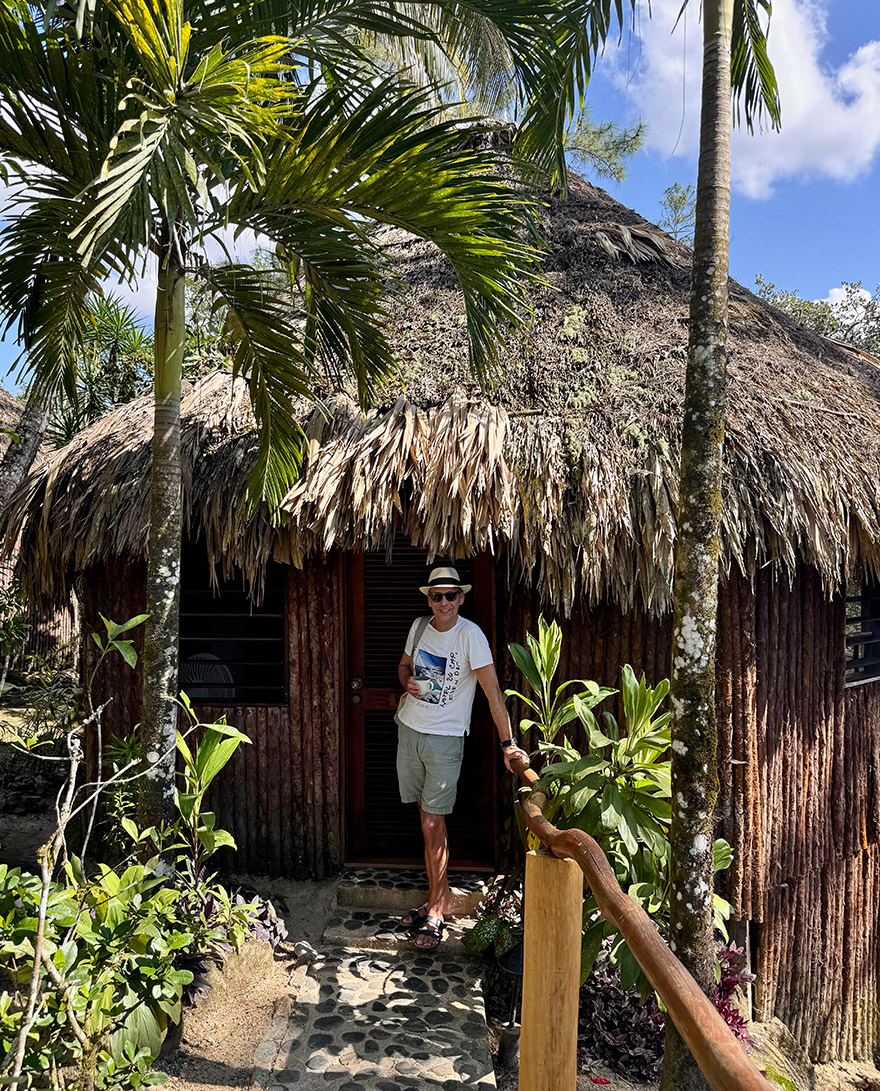
This beautiful boutique property has only 18 thatched-roof casitas. They are spaced out so you have a real sense of privacy. We chose a Waterfall Suite and the views from the room and the terrace looking down to the river were stunning.
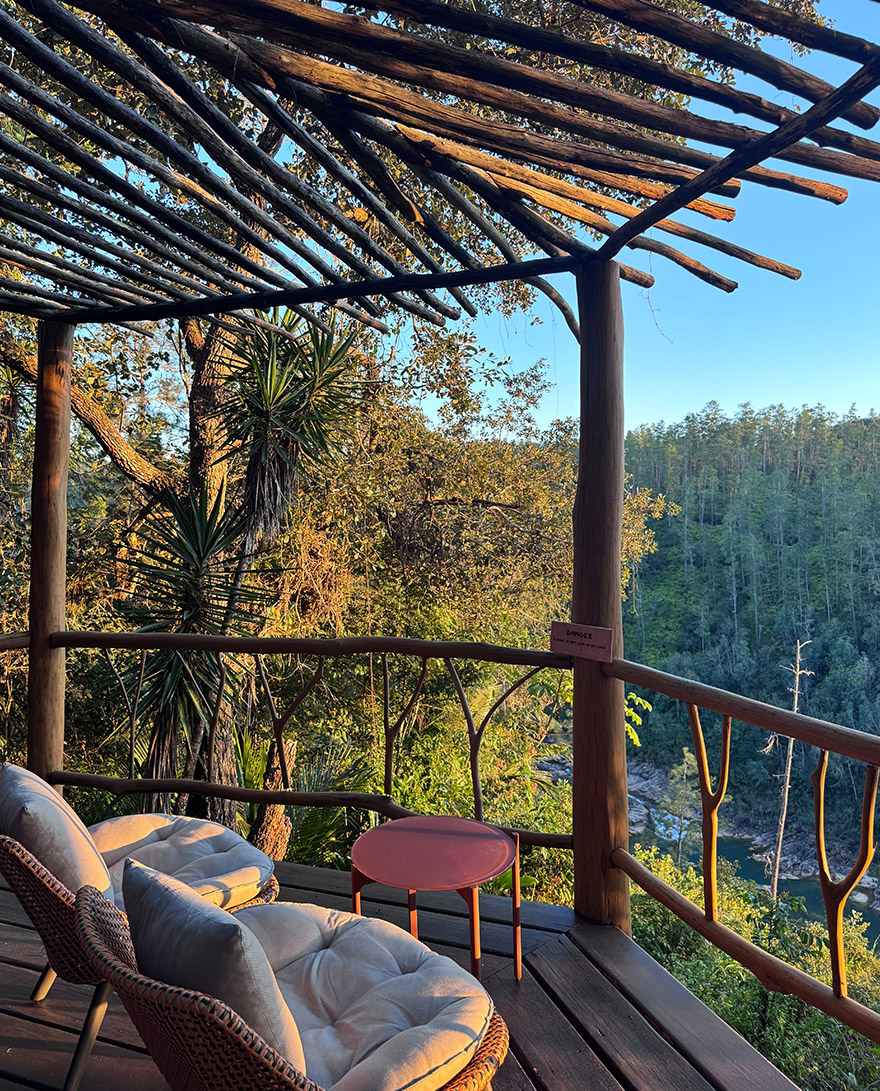
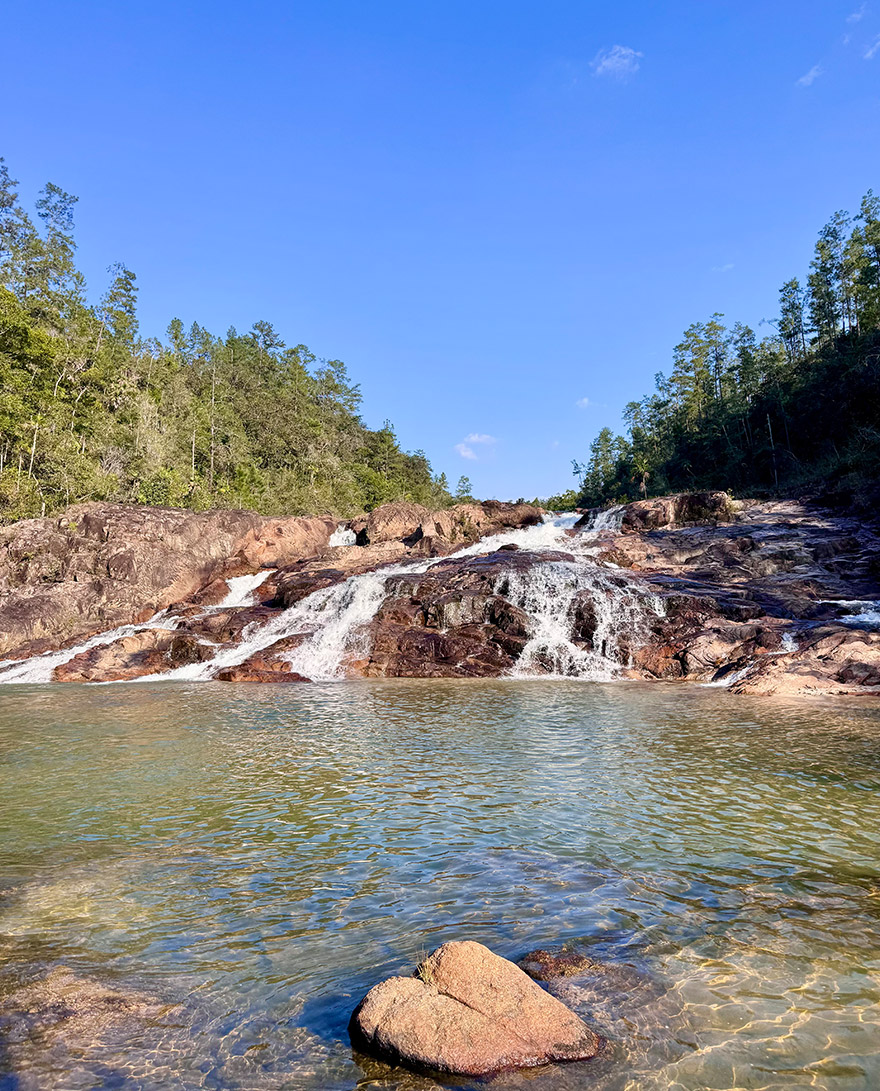
The best “facility” here is the river itself. You take a jungle path (or the lodge’s fun funicular) down to the water, then swim beneath the falls in natural pools. It’s also a magical spot for sundowners. And where the little treatment room is for a massage, serenaded by the sounds of nature!
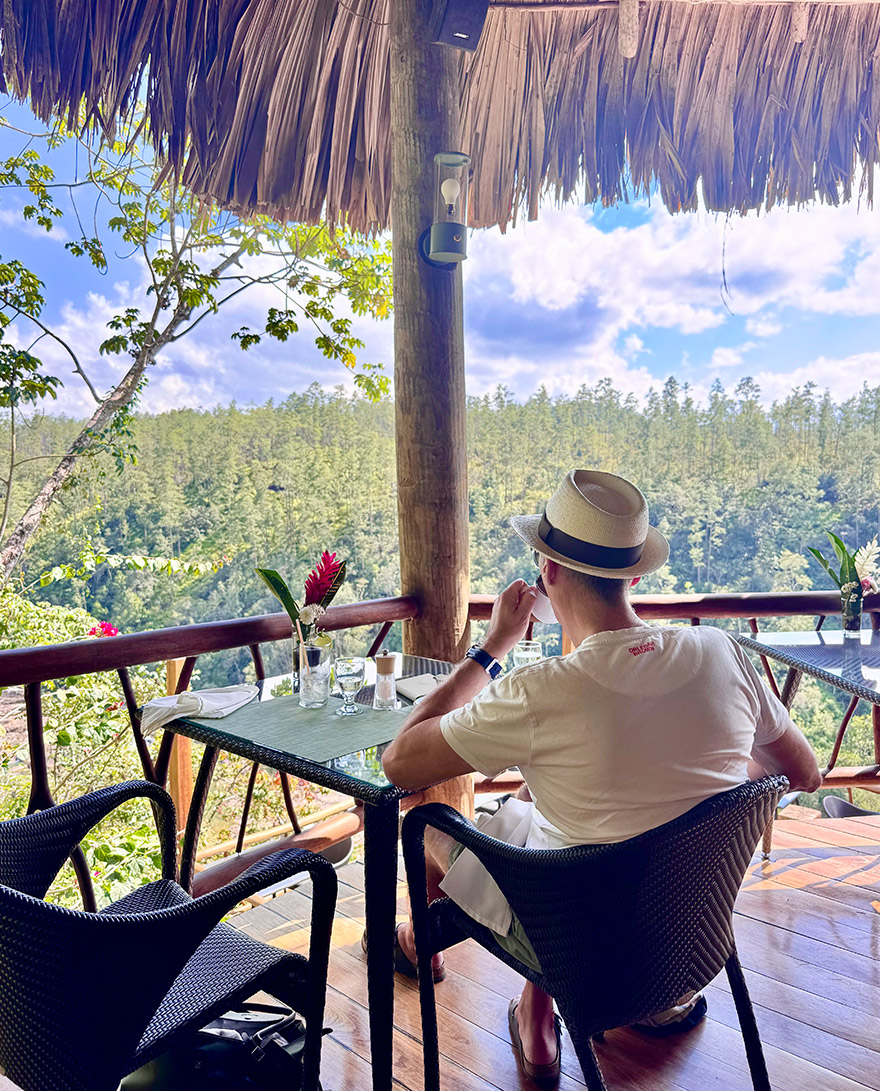
The open-air restaurant overlooking the water was a real highlight – genuinely some of the best food of our whole trip. Fresh salads, chicken and fish dishes, with local recipes delivered with contemporary flair. Everything was colourful and full of flavour. The service that matched the setting: warm, friendly, and quietly efficient.
BLANCANEAUX LODGE
We also looked at Blancaneaux Lodge (another Coppola Hideaways property, and sister hotel to La Lancha). It’s more rustic and “classic jungle lodge” in feel than Gaïa, with 20 villas and cabanas dotted along the Privasson River. It has a strong sense of atmosphere with sounds of the waterfalls and jungle. However, we chose Gaïa for the views and the combination of boutique scale and polished comfort.
Do
BIG ROCK WATERFALL
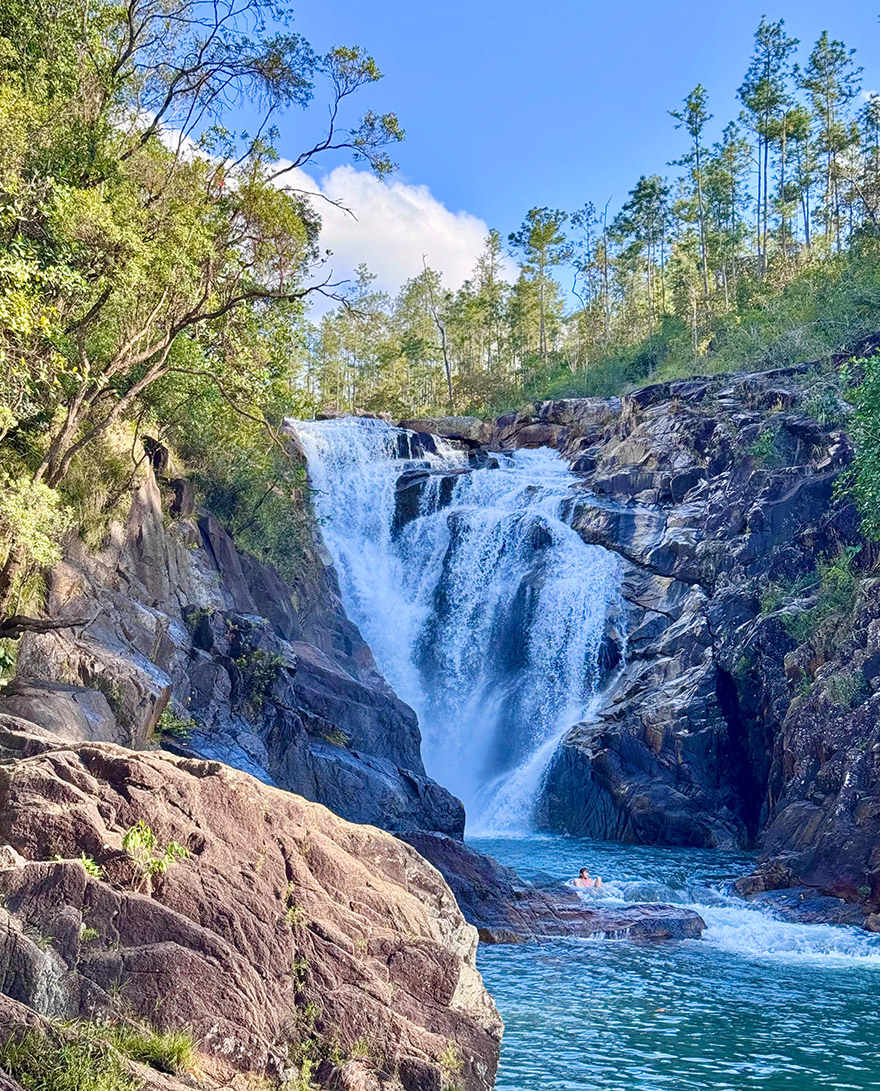
Big Rock Falls is a great half-day outing: a manageable walk through the forest, then a powerful cascade with a wide swimming area at the bottom. It’s the sort of place where you arrive planning “a quick look” and end up staying for ages – swimming, sunning on rocks, and watching people leap in.
ACTUN TUNICHAL MUKNAL (ATM) CAVES
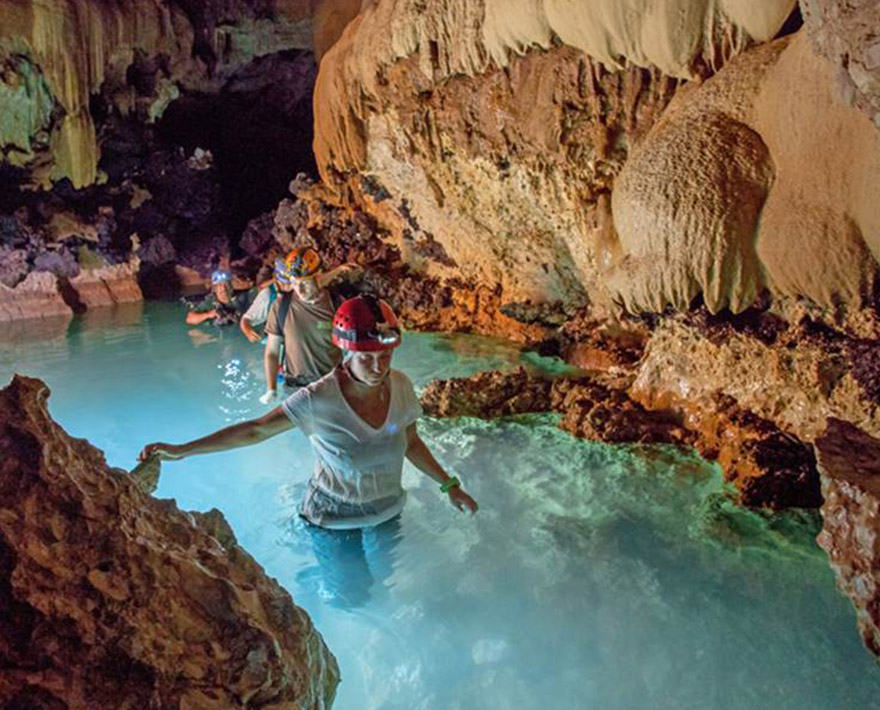
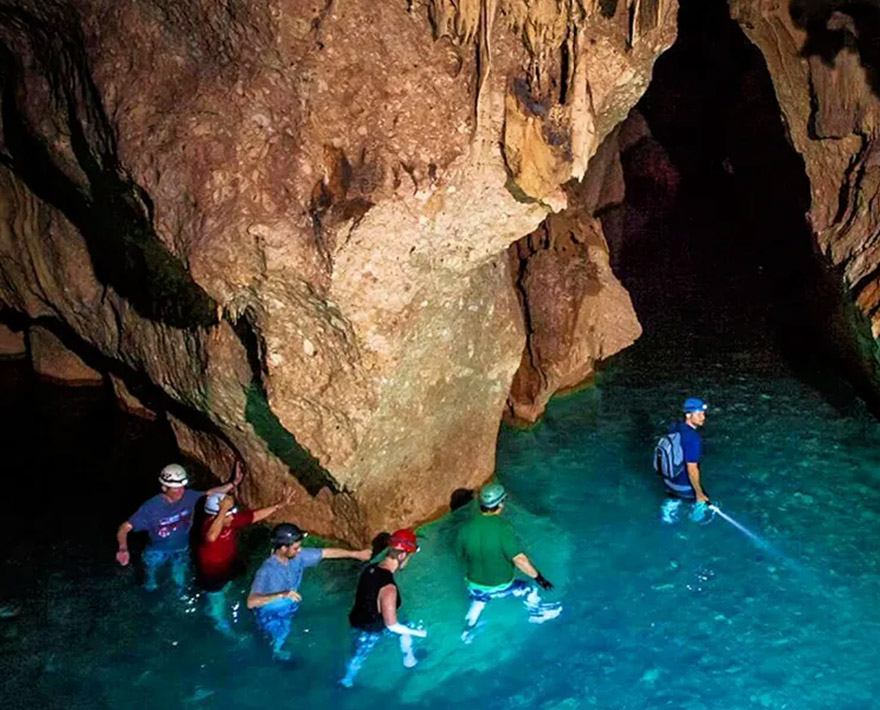
ATM is physically demanding and not for the claustrophobic: tight corridors, scrambling over rocks, wading through water, and two sections where you need to swim (including right at the entrance). There’s also a 30–45 minute hike with river crossings to reach the cave. But it is absolutely worth it.
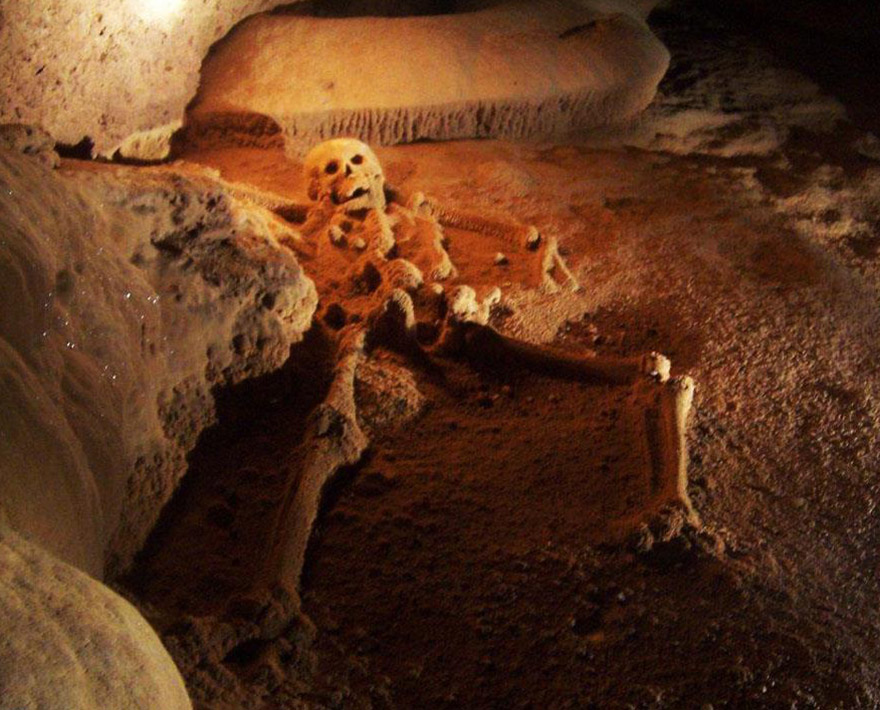
Inside, the scale and beauty are astonishing — vast chambers, stalactites and stalagmites that have taken tens of thousands of years to form. The Maya history includes 1,400 artefacts that have been discovered here. The cave was likely seen as a gateway to the underworld, with human remains (including the entire skeleton of the famous “Crystal Maiden”) making the spiritual significance very real.
A few practical facts: you must go with a licensed guide; dress like you’re hiking (sturdy closed-toe shoes); you will get soaked. So, bring a change of clothes and a towel. Cameras and phones aren’t allowed to protect the artefacts.
Ambergris Caye – Belize
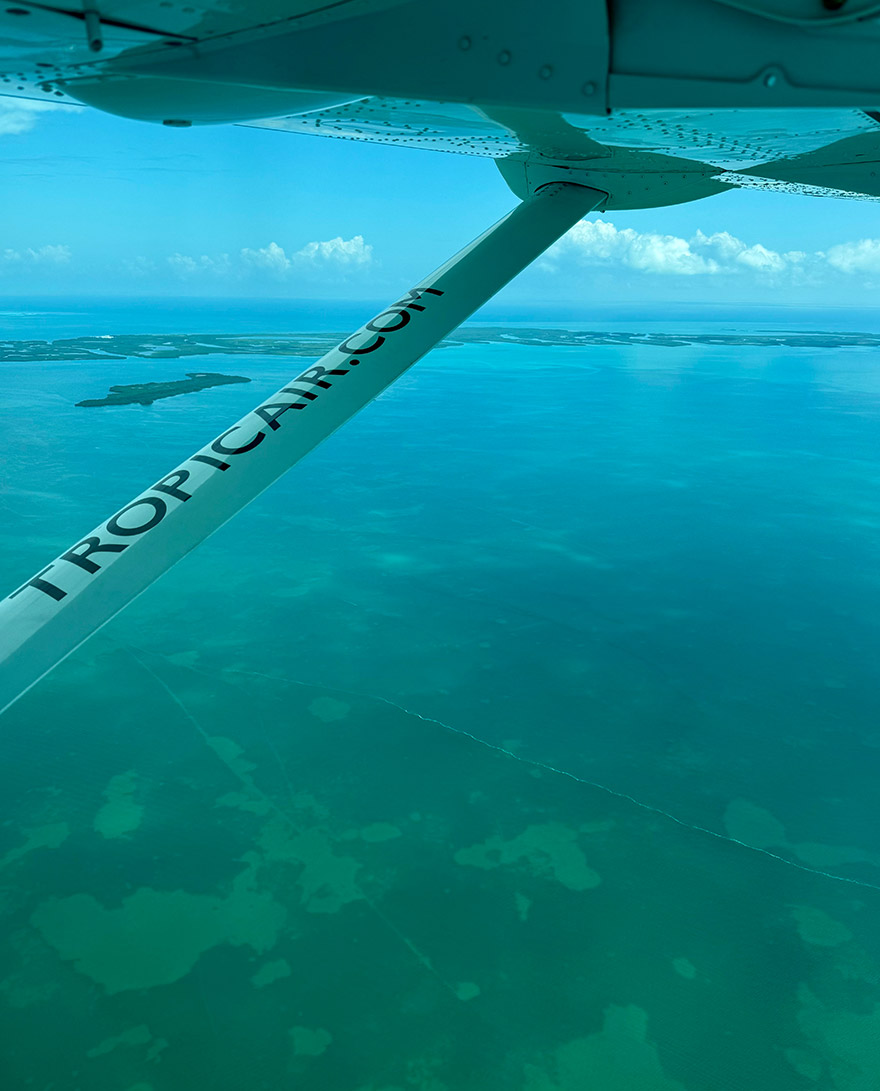
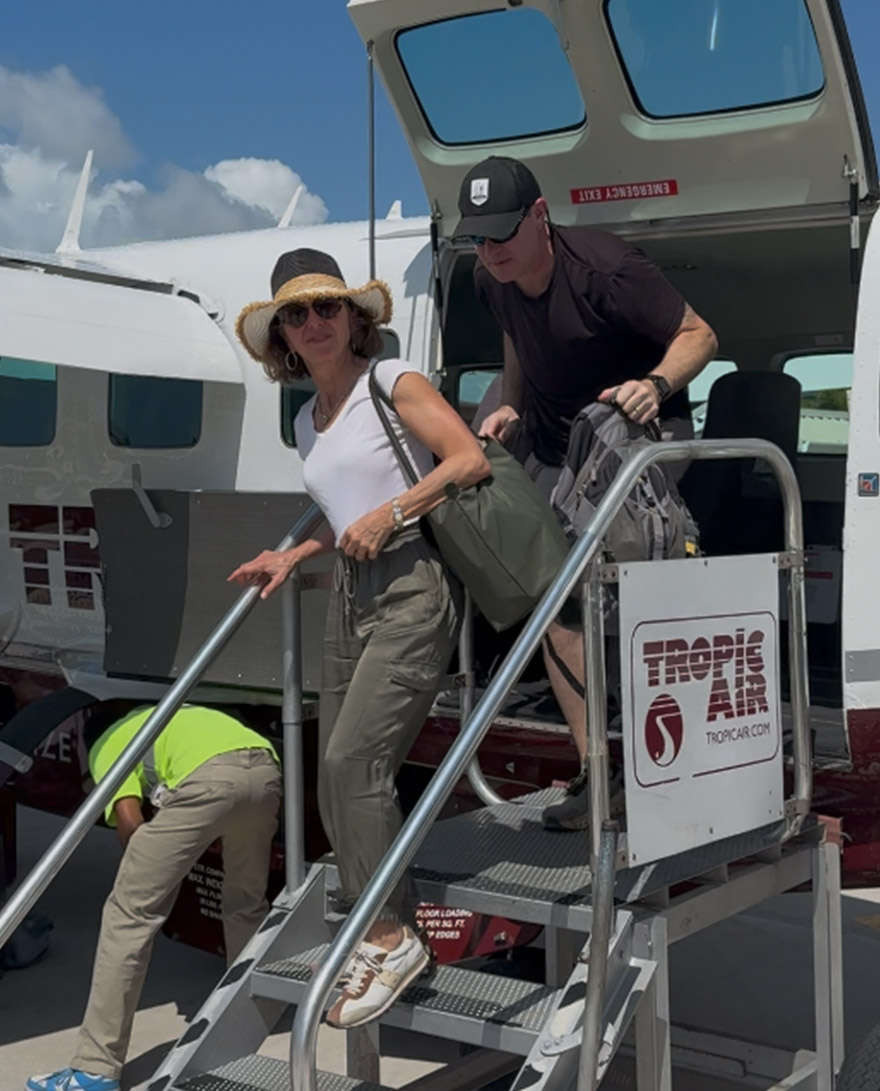
We finished on Ambergris Caye for some proper beachside downtime. We drove a couple of hours to Belize City, then took a quick local flight on a little plane to San Pedro. This was an adventure in itself, with stunning views of the ocean below.
Ambergris is the biggest island in Belize, long and thin, with mangroves inland and the Belize Barrier Reef just offshore, which is perfect for snorkelling and diving.
Stay
MATACHICA
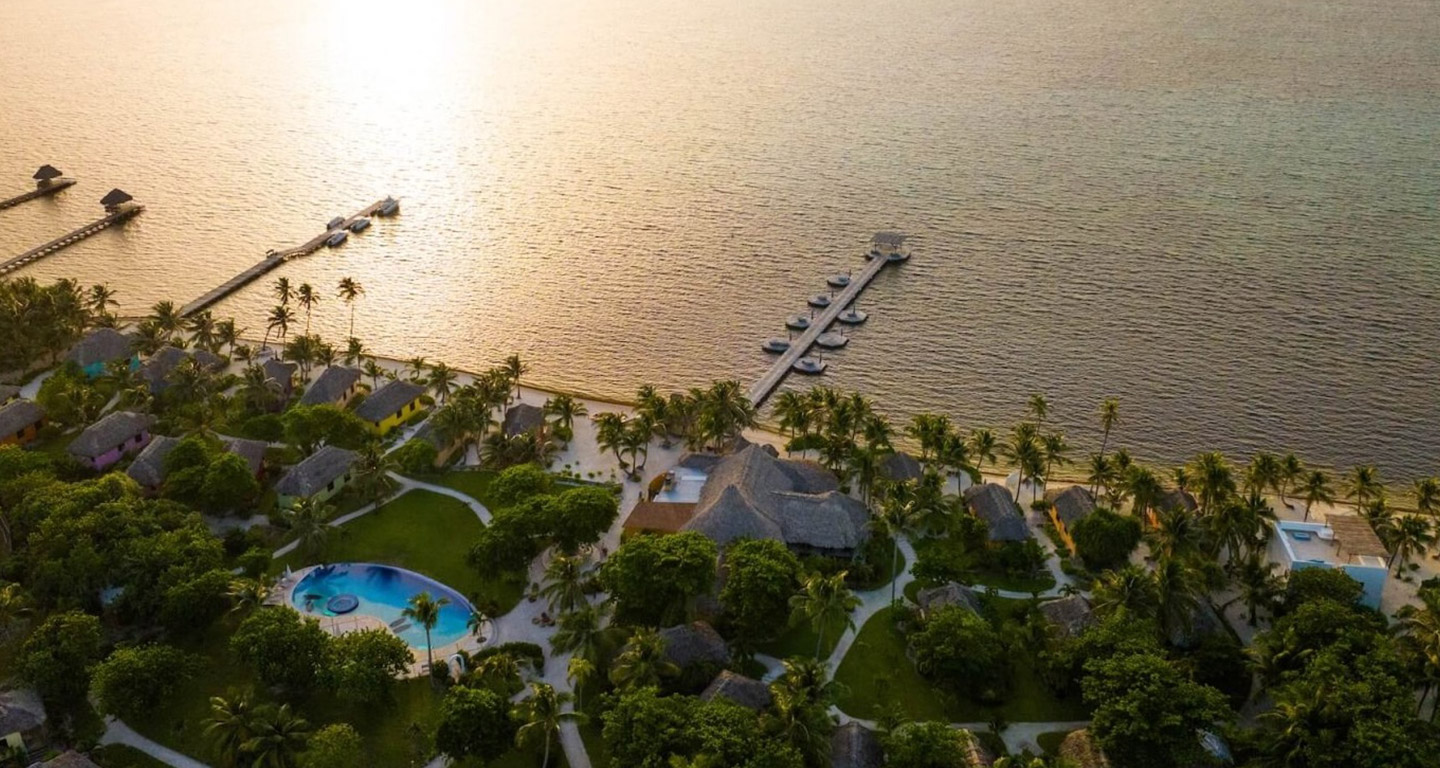
Matachica is a speedboat ride away from San Pedro’s bustle, and this location was one reason we chose it. After a busy trip, we were happy to be somewhere calm and secluded. The resort has a colourful, contemporary Caribbean style that feels light and bright.
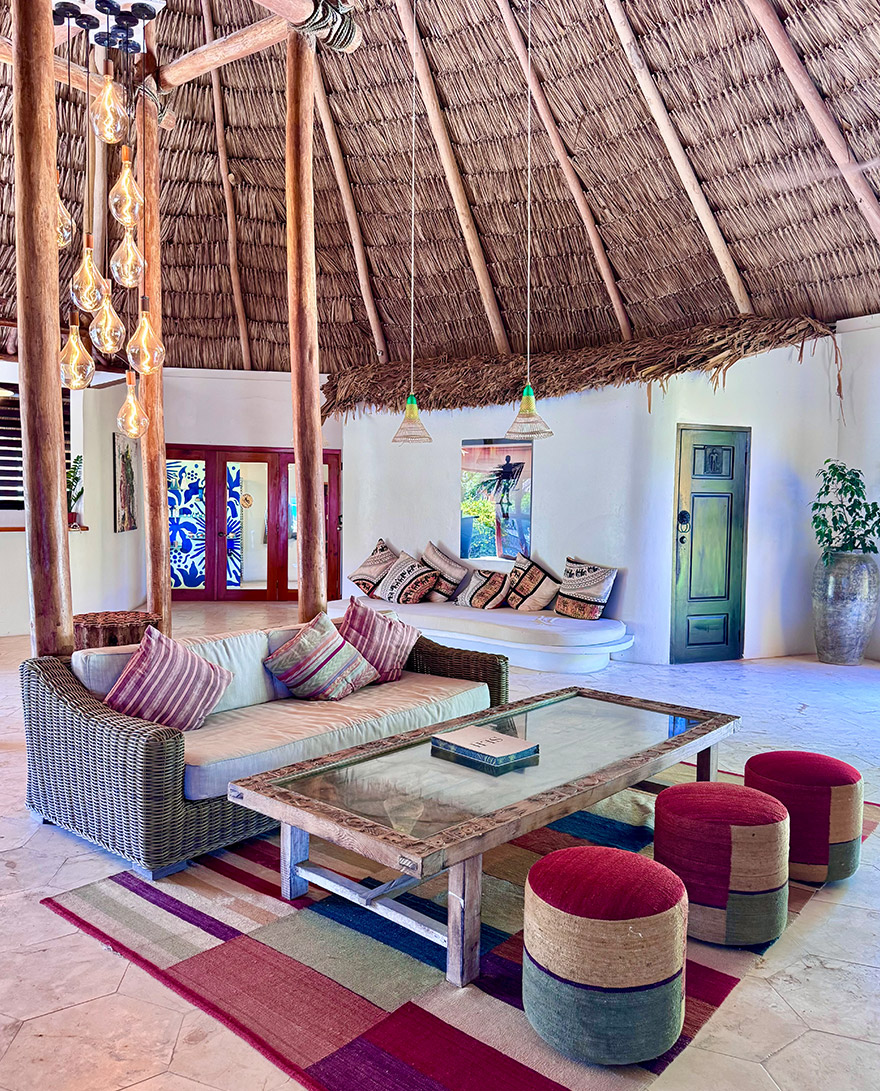
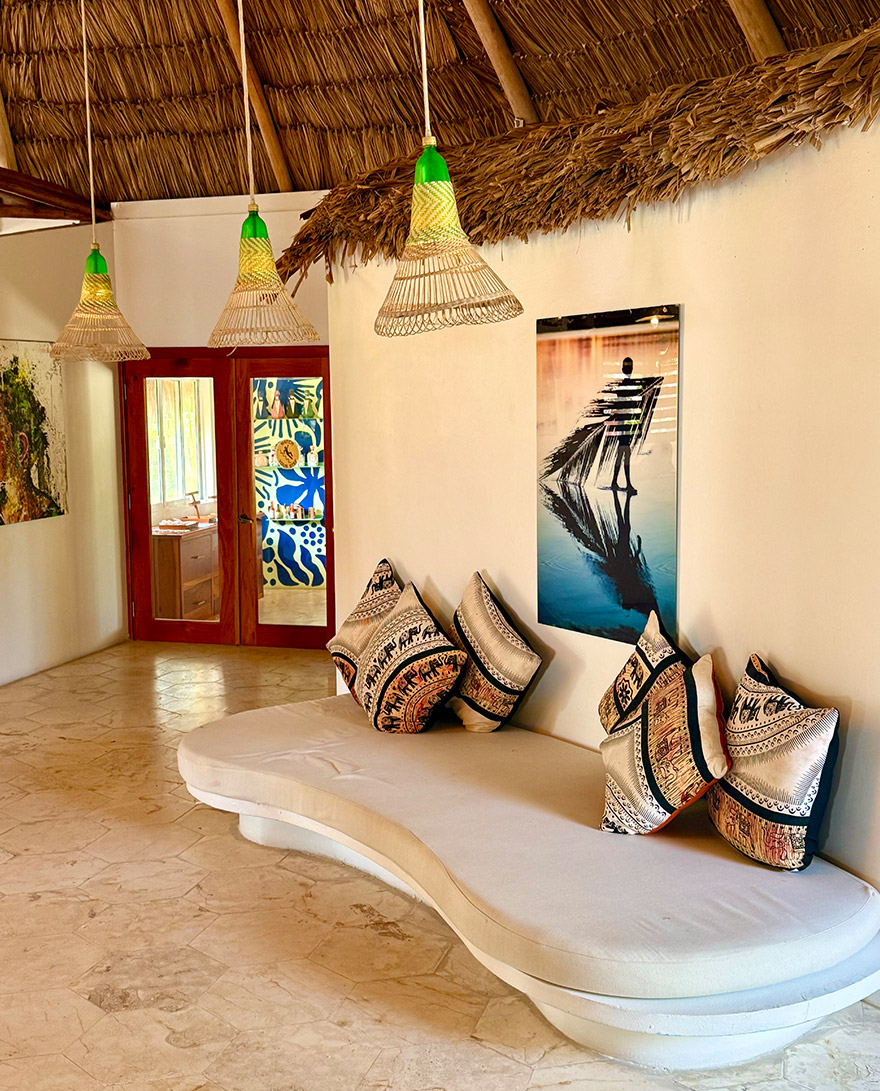
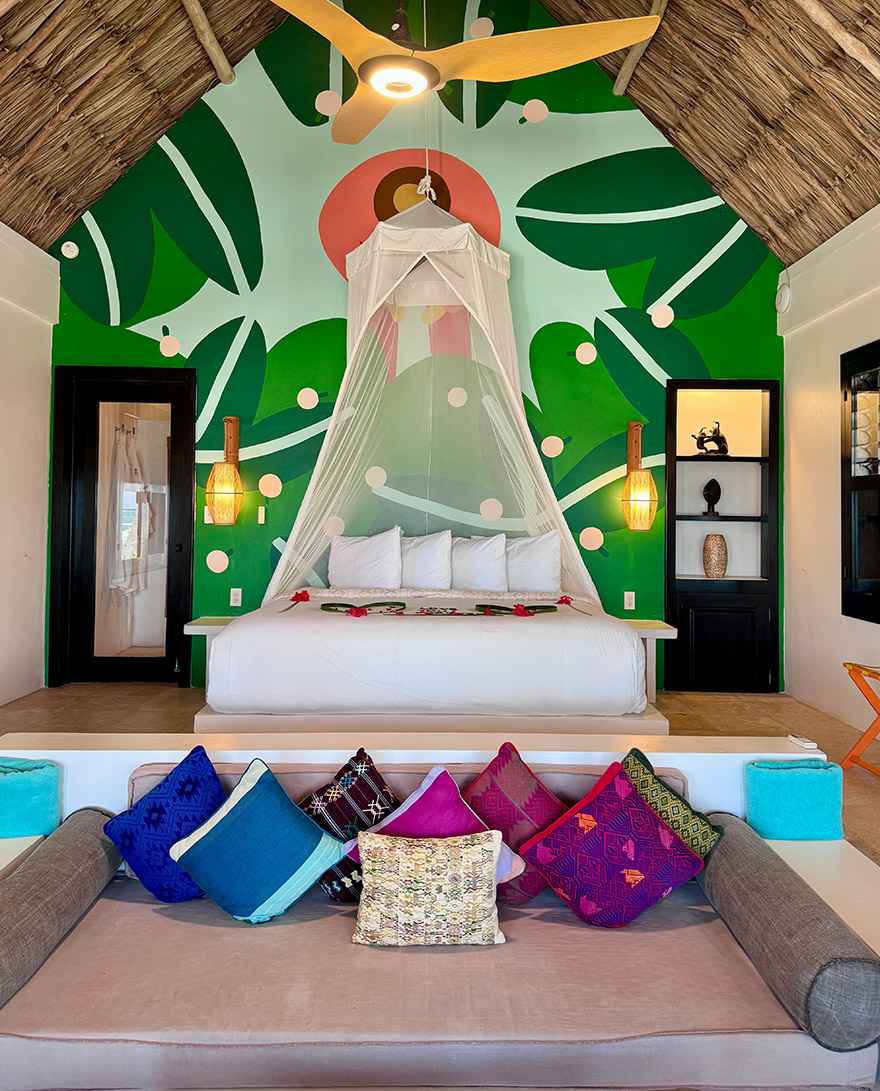
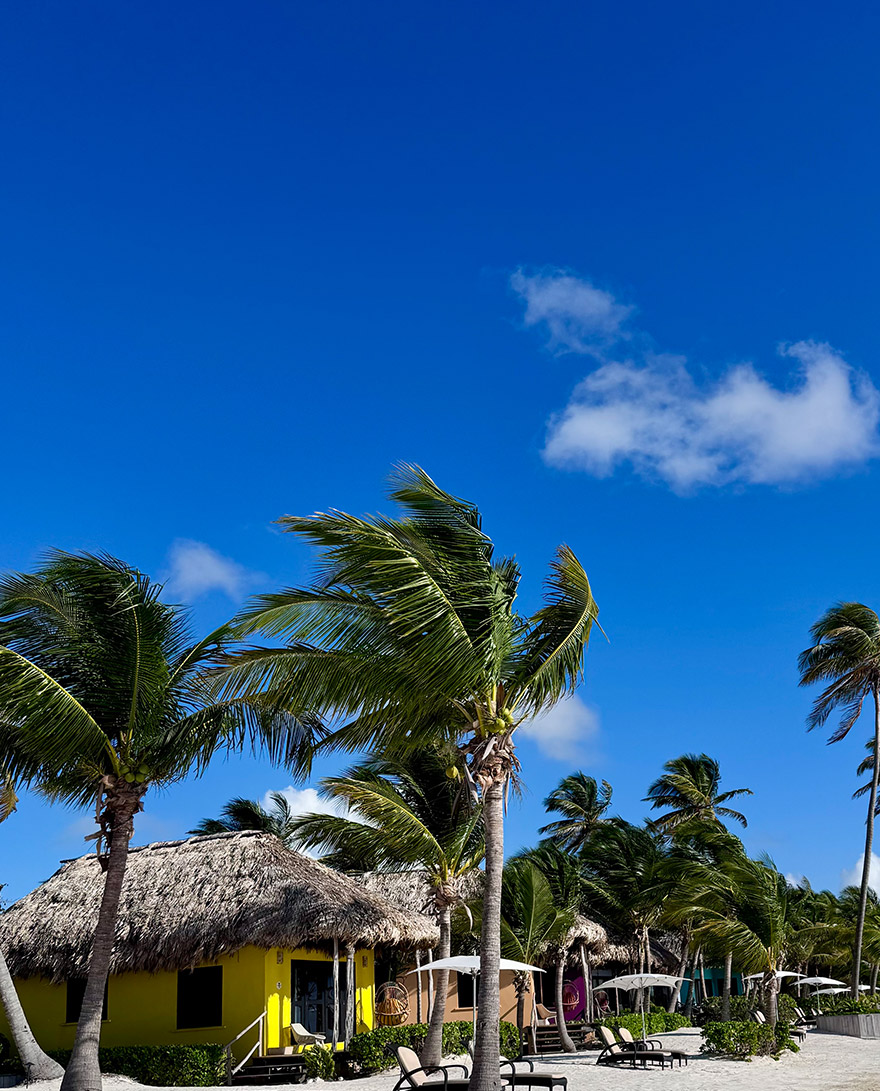
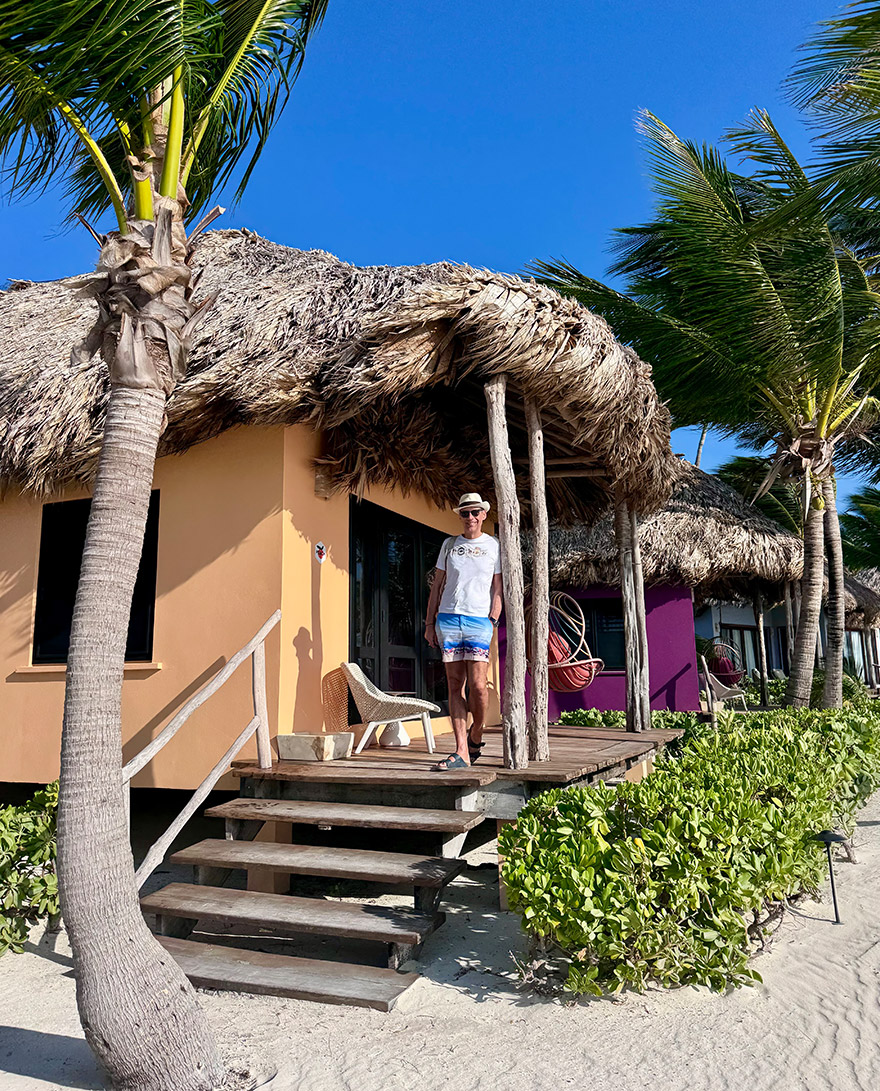
The individual casitas are colourful, thatched, and dotted along the beach and in the gardens. We went for one of the higher category beachfront ones, that allow you to step straight from bed to terrace to beach. Interiors are bright, breezy and colourful.
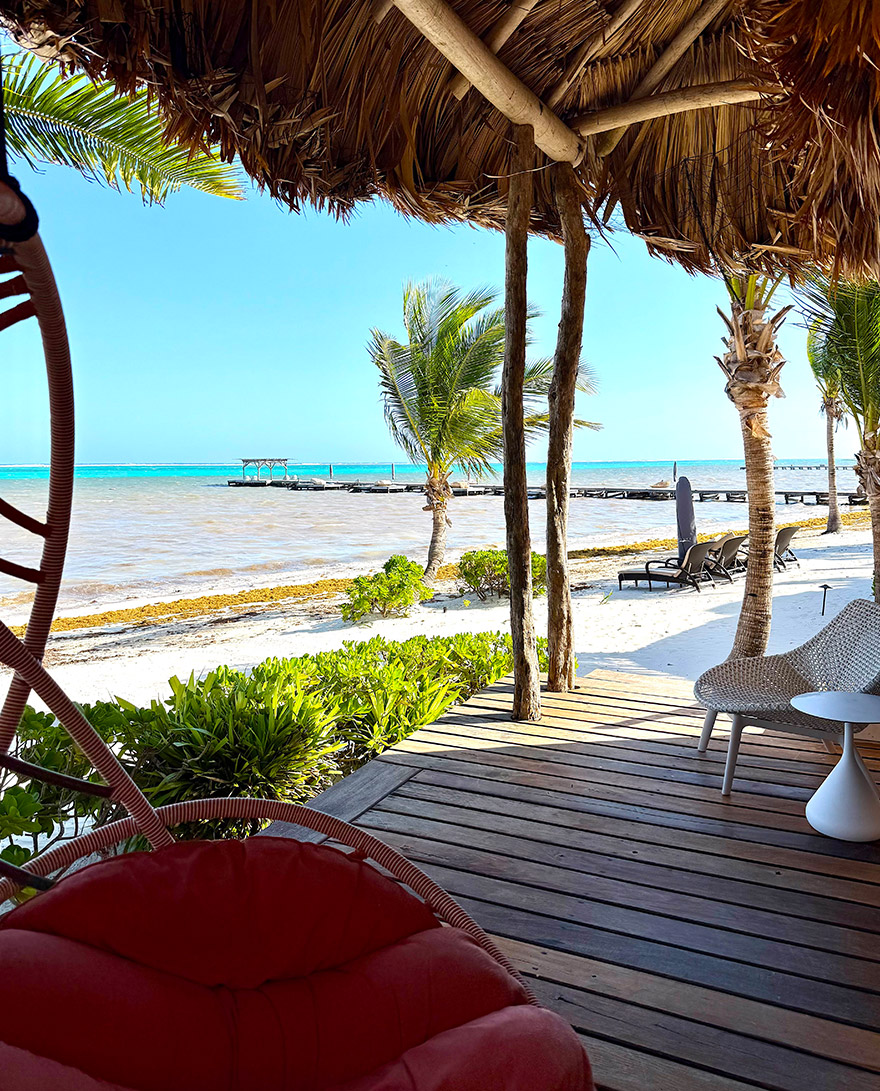
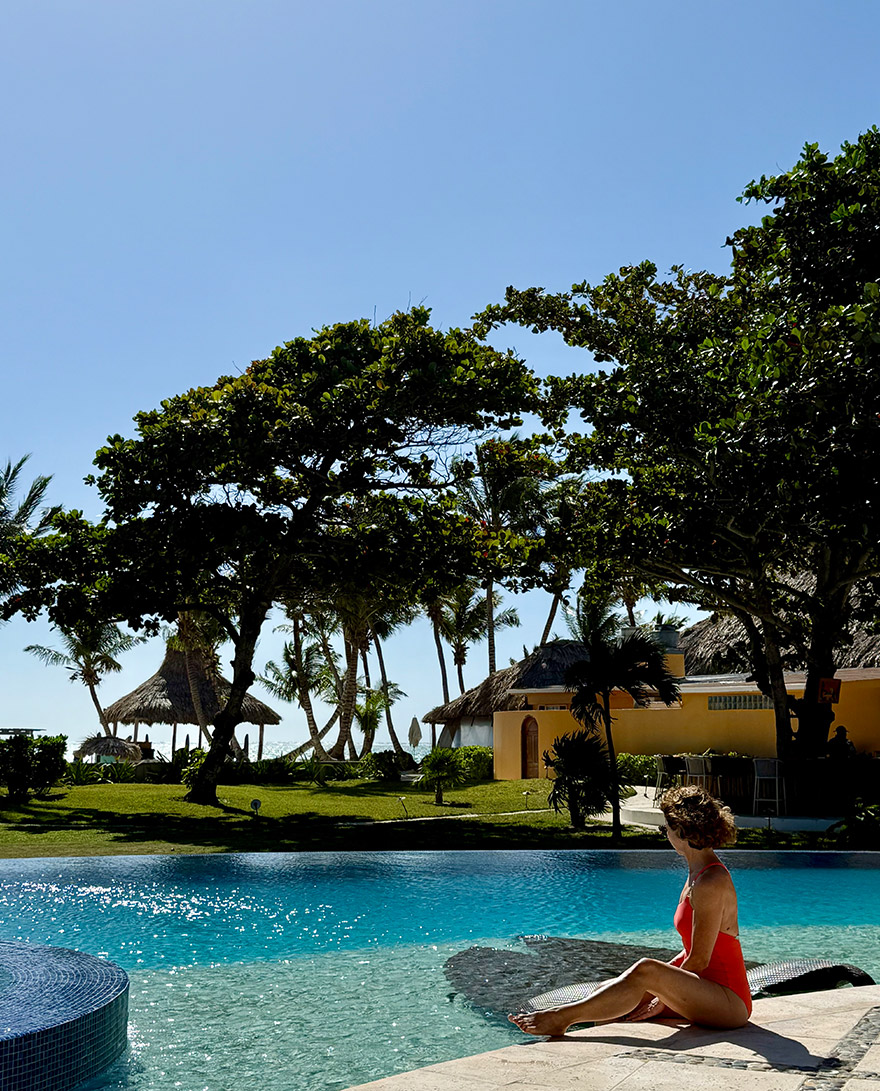
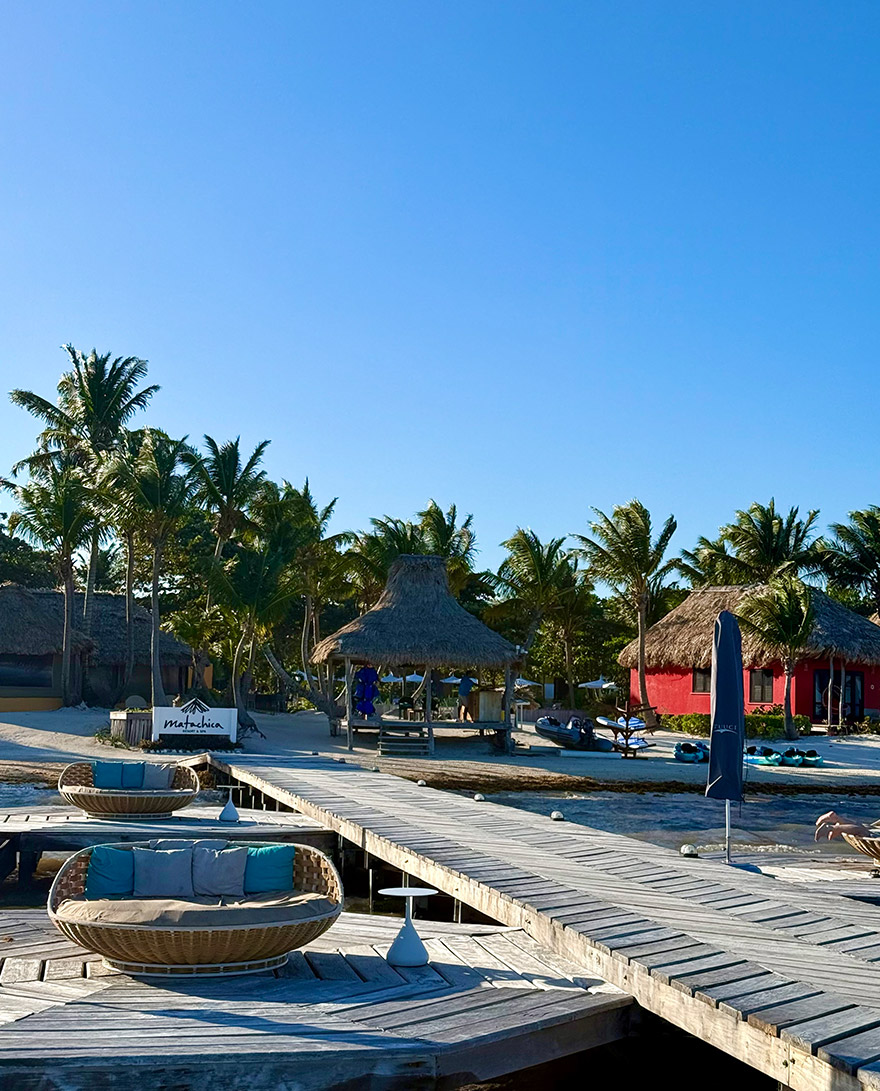
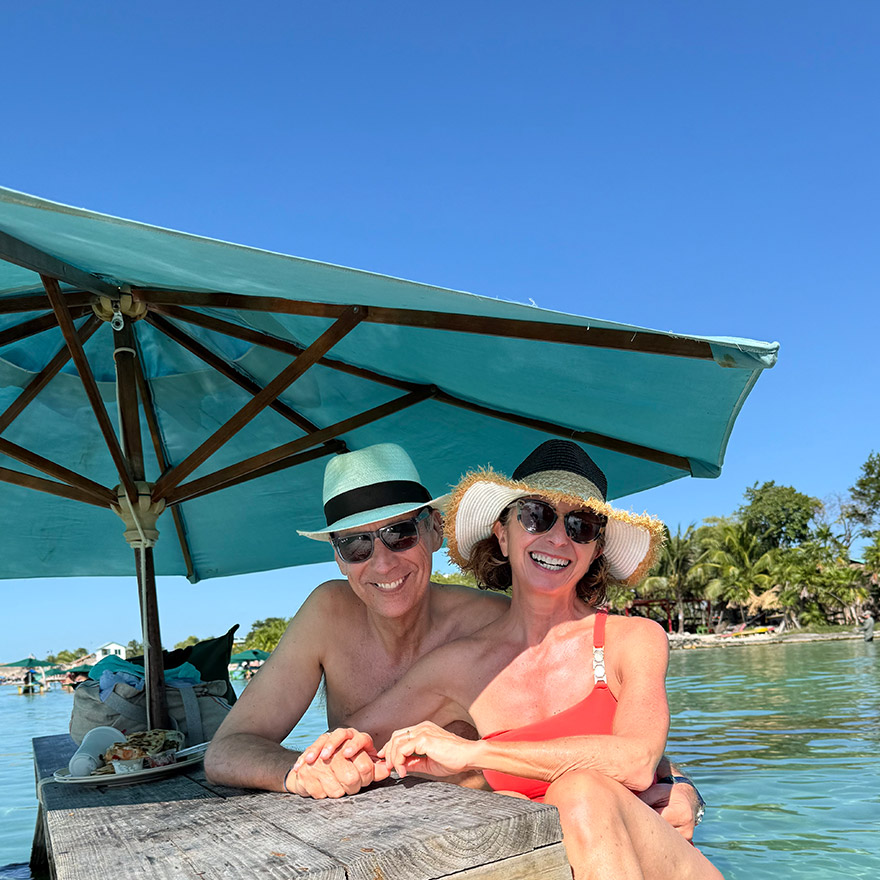
The long wooden pier is one of the standout features: oversized circular daybeds sit right above the Caribbean, and it’s where we spent a lot of time — reading, chatting, and watching the light change. There is also a lovely pool with views of the sea in the distance. The resort is adult-only and so quiet and calm. Also, given the extensive size of the resort and the limited number of rooms, it never felt busy even though it was full.
Dining is a real strength here, with Mambo Restaurant offering two dining options. One side is the fine dining restaurant, with more sophisticated dishes. The ambience is still relaxed and chilled. There’s lots of fresh seafood and local produce, such as local snapper with salsa fresca/ There’s also a more casual option, with delicious, expertly delivered pizzas and burgers. The bread and pastries are all made on site each morning and got the Anne-Marie seal of approval. No mean feat for a Caribbean hotel, given she comes from Paris and has very high standards!
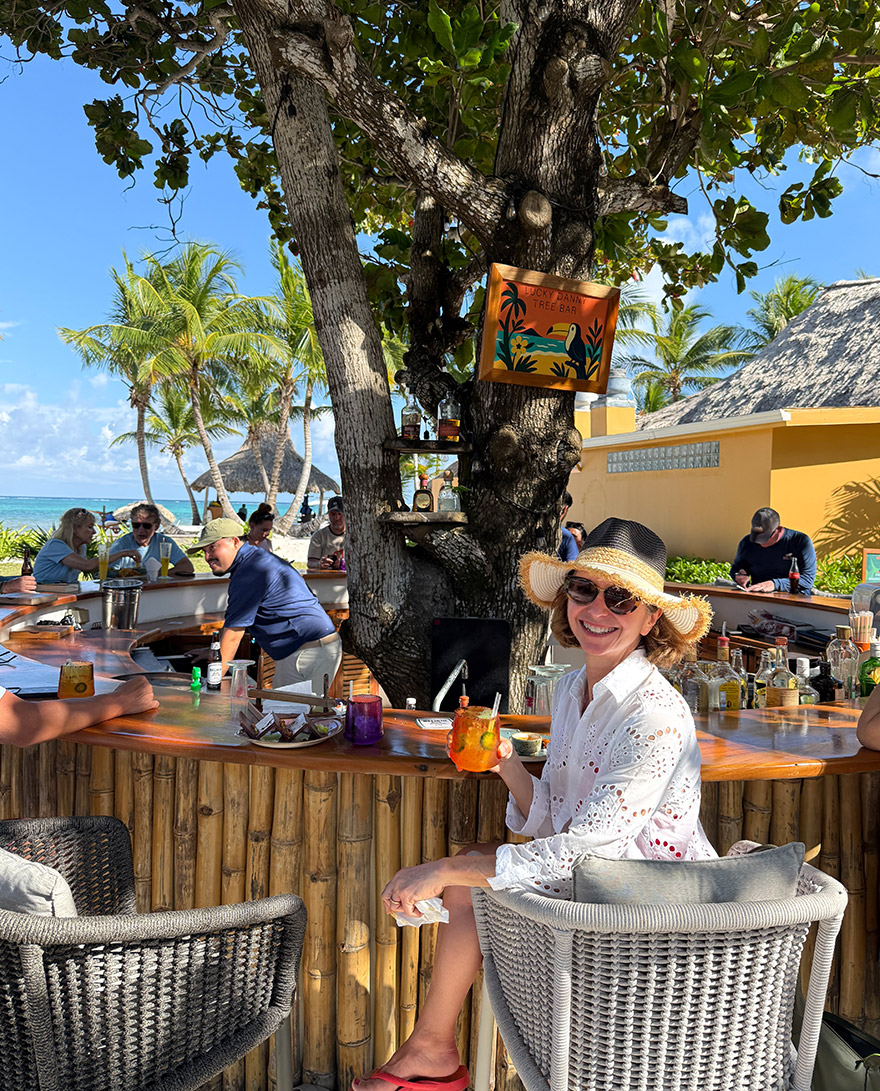
Danny’s Tree Bar by the pool is lively and fun, especially if you time your stay to include Taco Tuesday: special-price tacos, 2-for-1 margaritas, and live music!
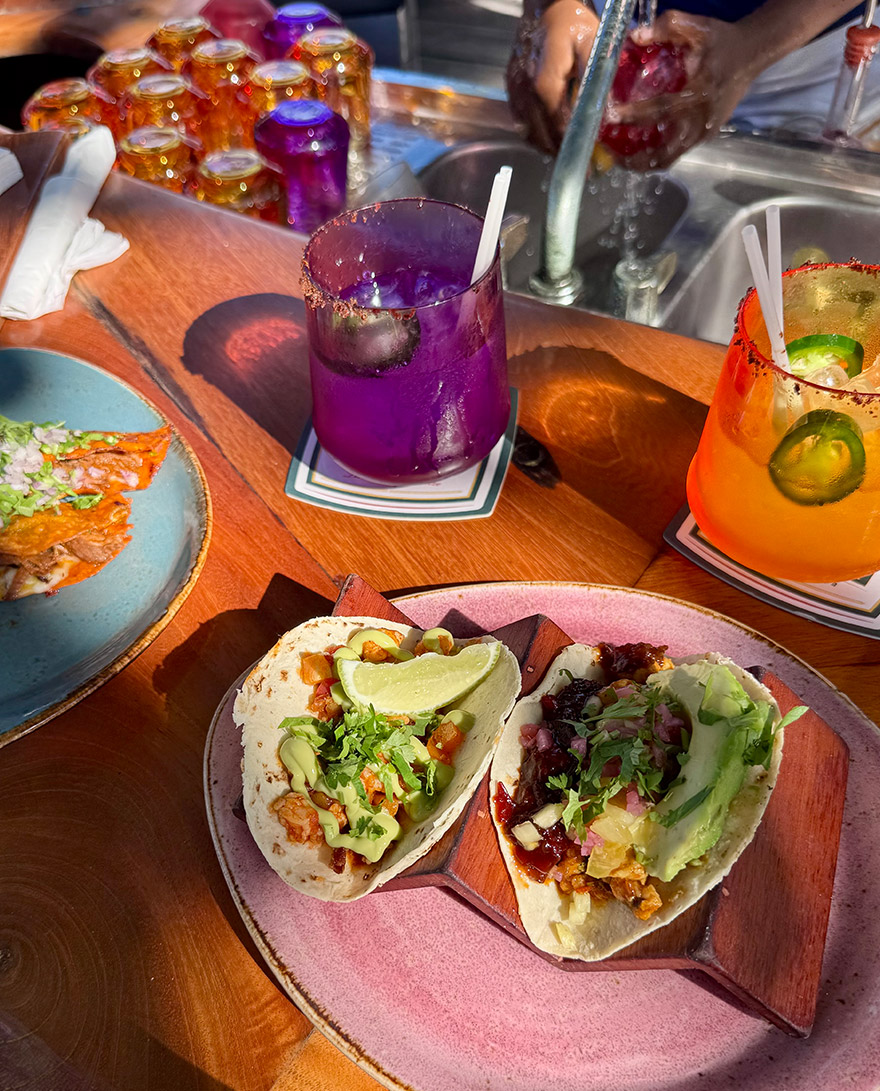
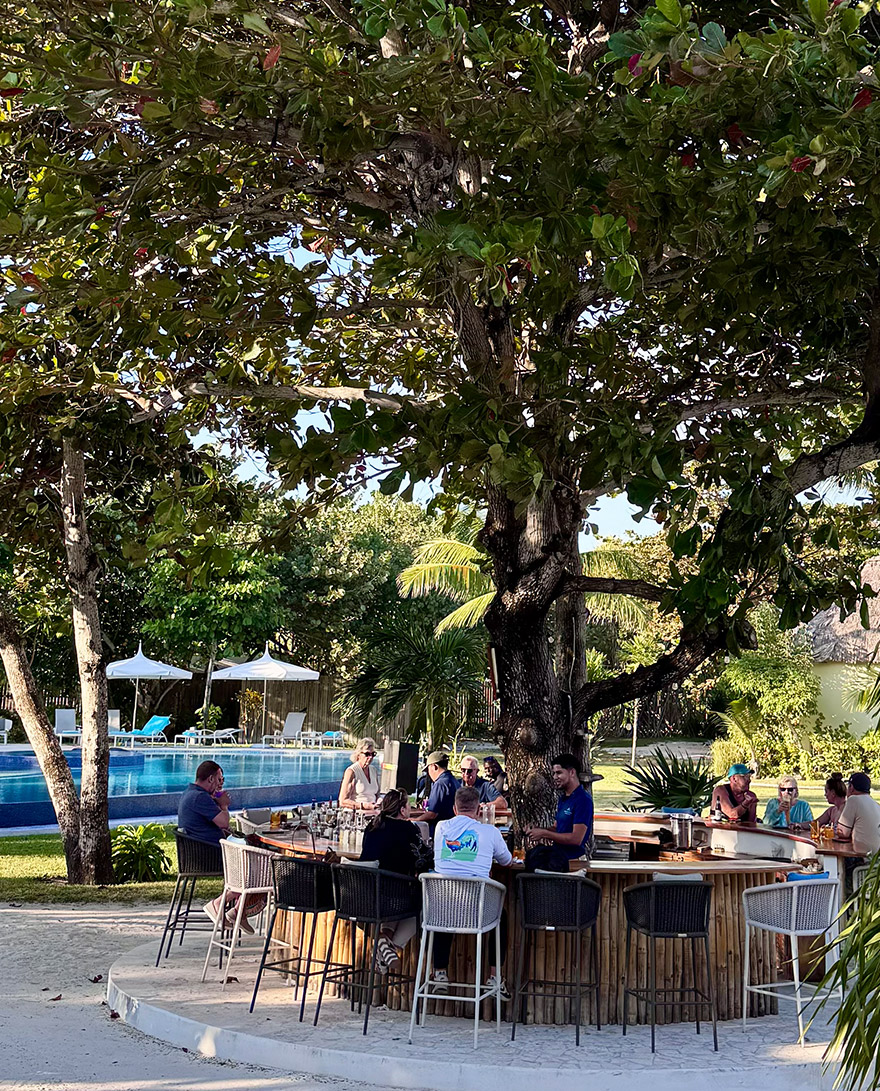
One practical note: like other parts of Belize (and Mexico too), the coastline can get lots of seaweed washing up on the shore, making the water look brown. We knew this going in, so we spent our time by the pool and on the pier daybeds.
VICTORIA HOUSE
Victoria House was the other option we considered. It has an older-school, long-established feel with 42 thatched casitas, colonial-style plantation rooms and beachfront villas. There’s a dive centre, a spa and the Admiral Nelson Bar is known for sundowners overlooking the waves. We chose Matachica because it felt more secluded and more contemporary in style, but Victoria House is a good pick if you want something closer to San Pedro with a more traditional resort set-up.
Do
SNORKEL TRIP and CAYE CAULKER
This was one of our favourite days. You head out by boat to snorkel first at Hol Chan Marine Reserve, with a well preserved reef being home to hundreds of colourful fish. You then head on to Shark Ray Alley, swimming alongside nurse sharks and rays – quite an adrenaline hit!
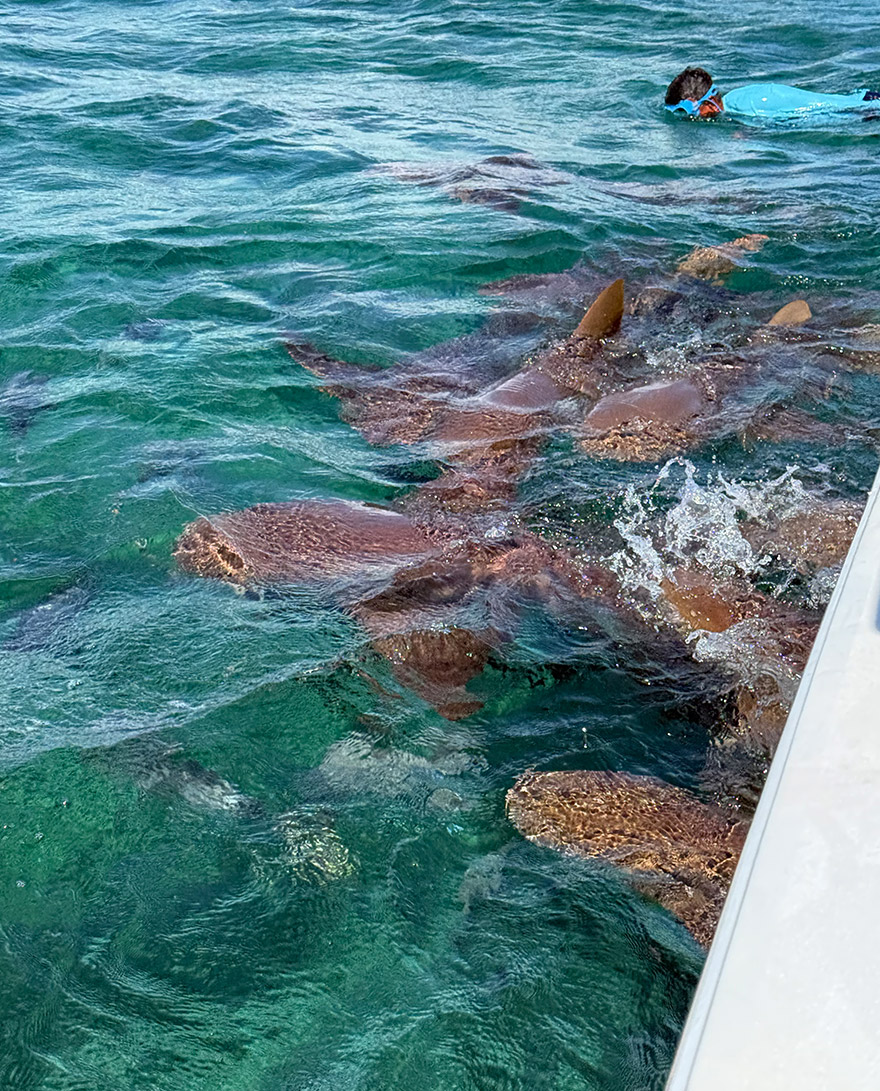
After that, we continued on to Caye Caulker. We wandered the main street of colourful pastel buildings and small stalls.
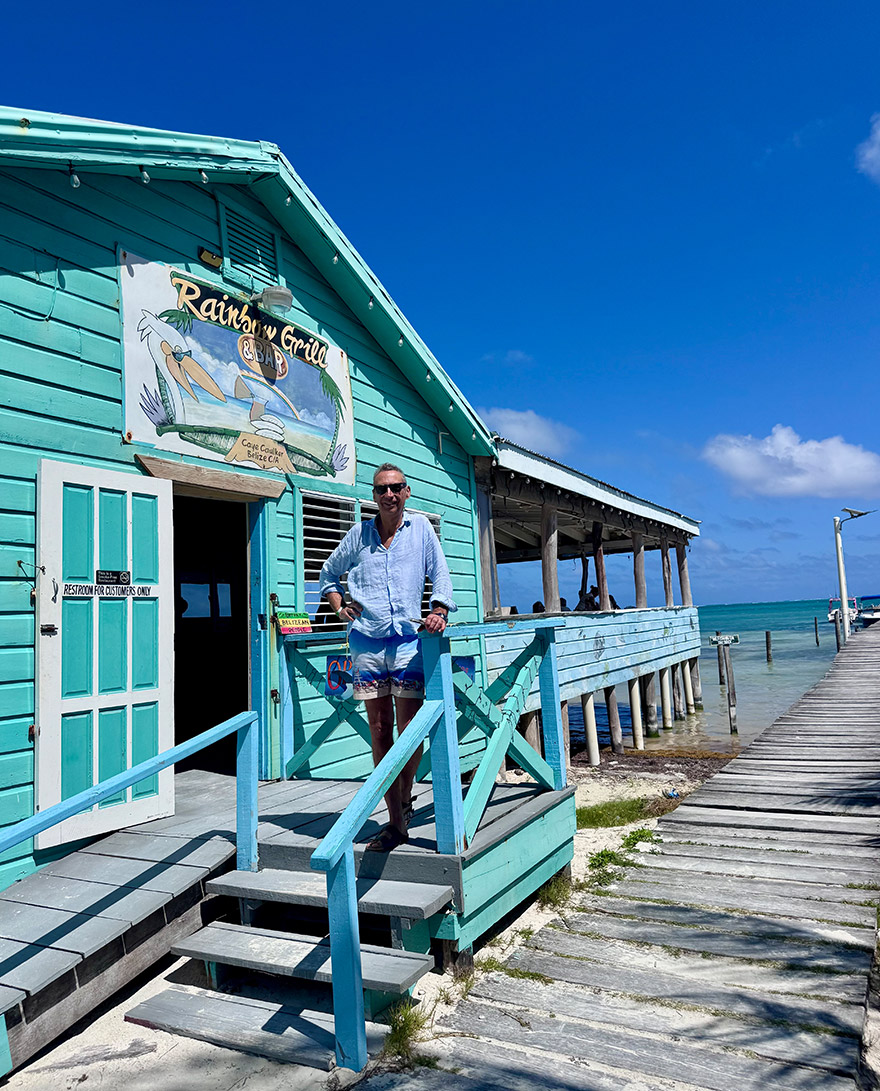
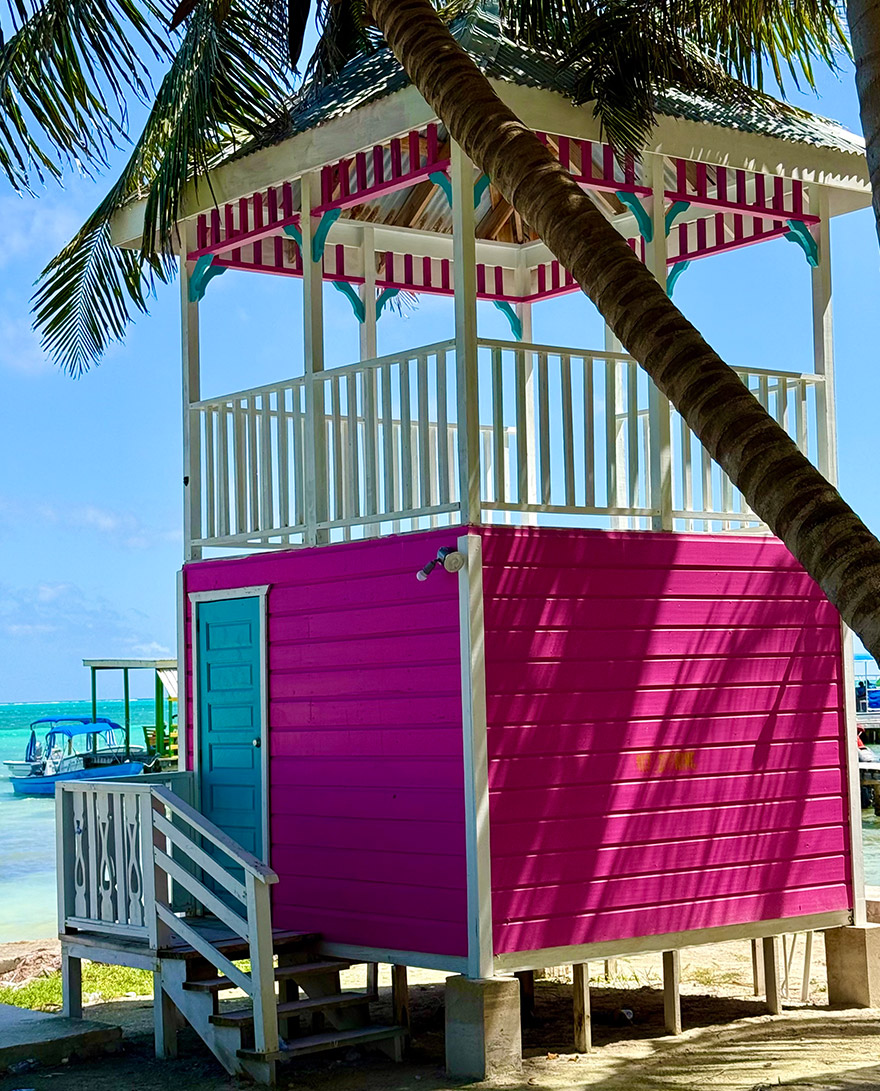
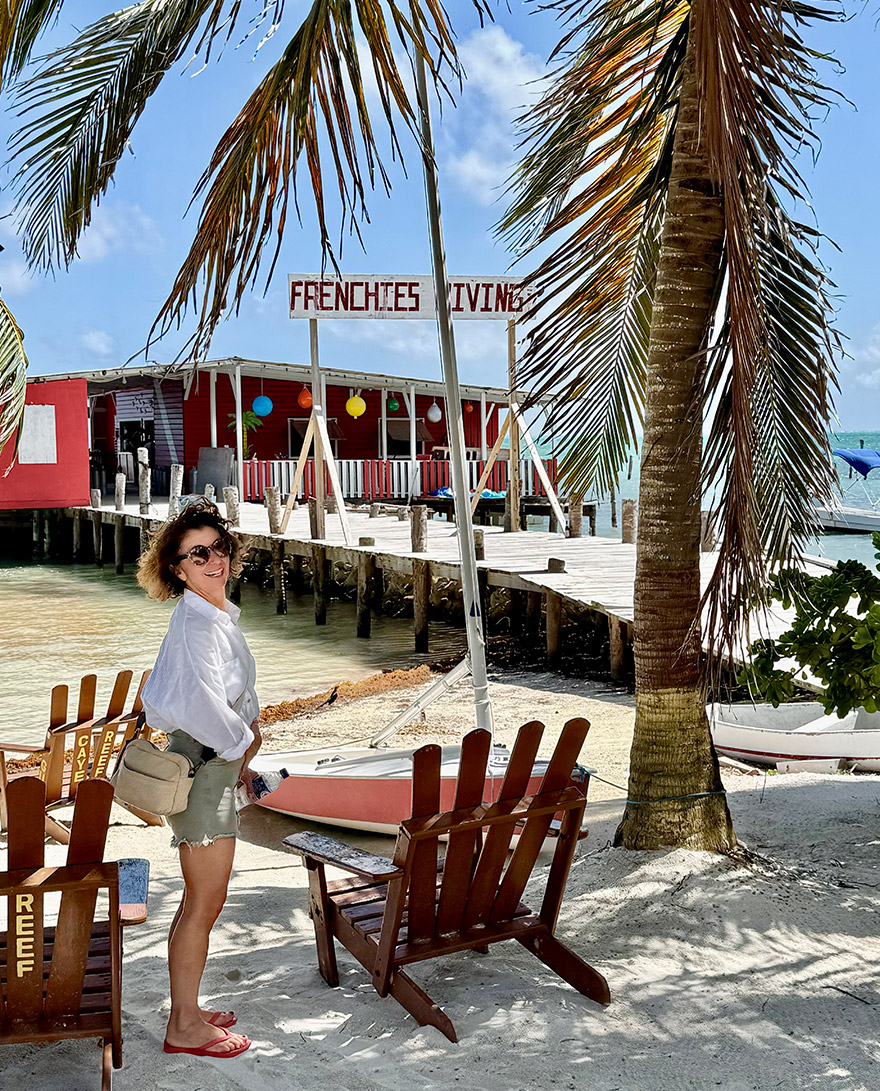
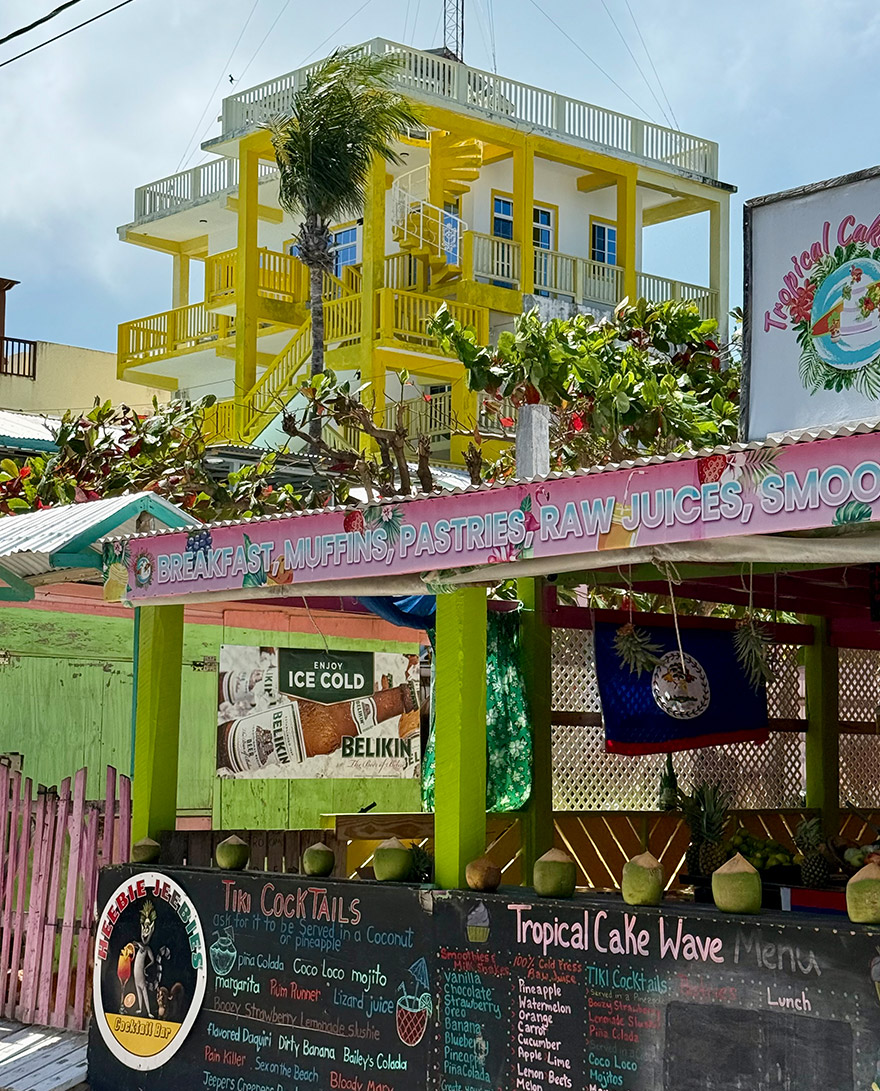
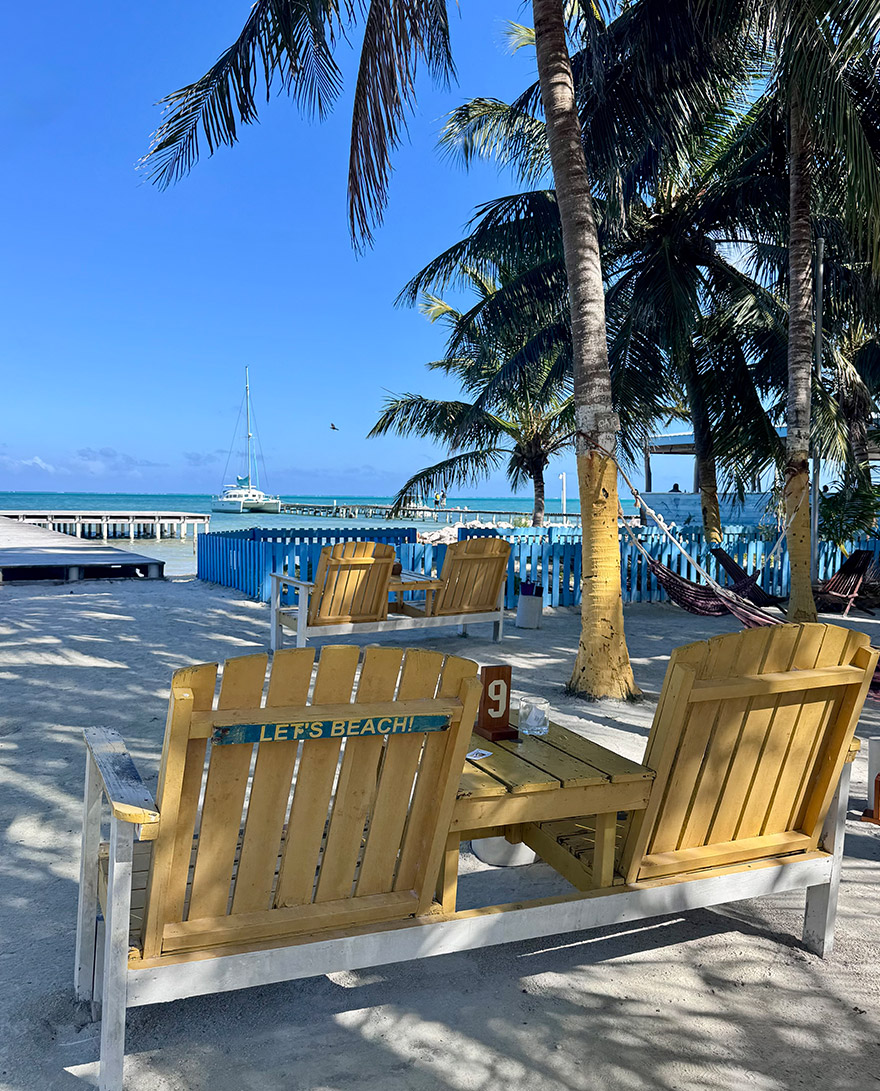
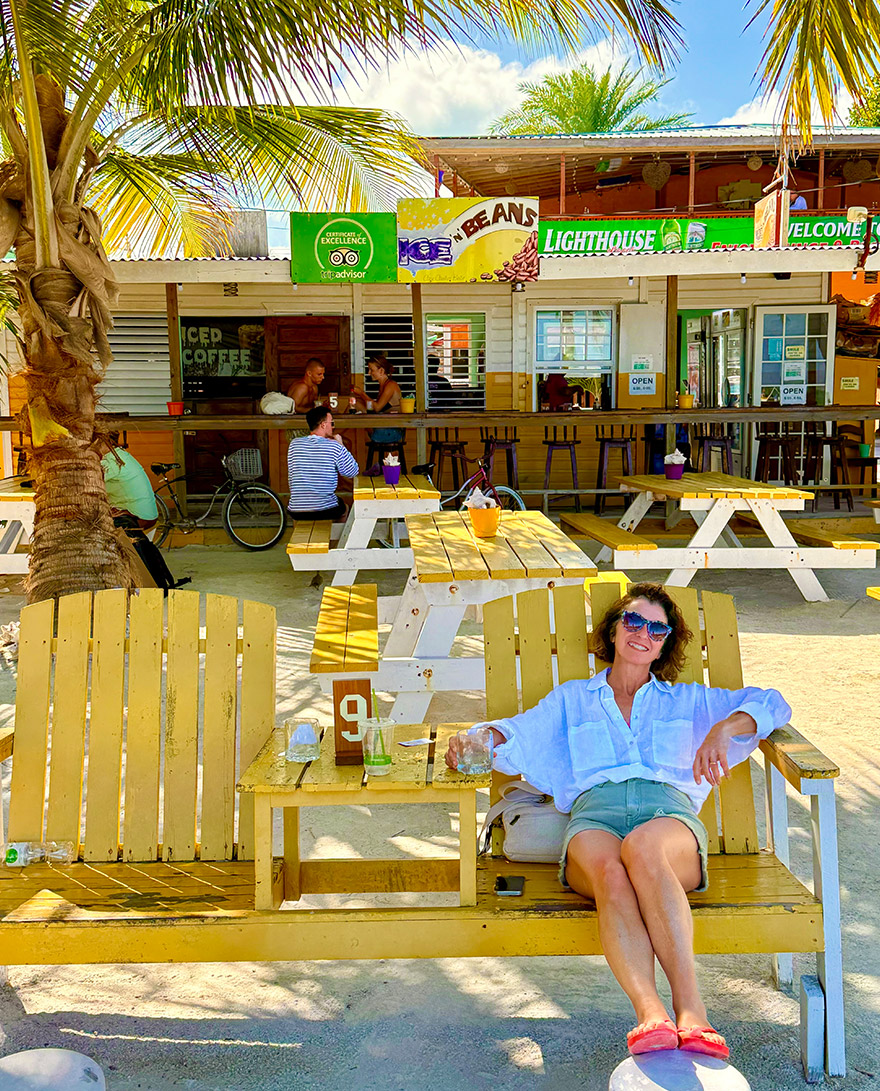
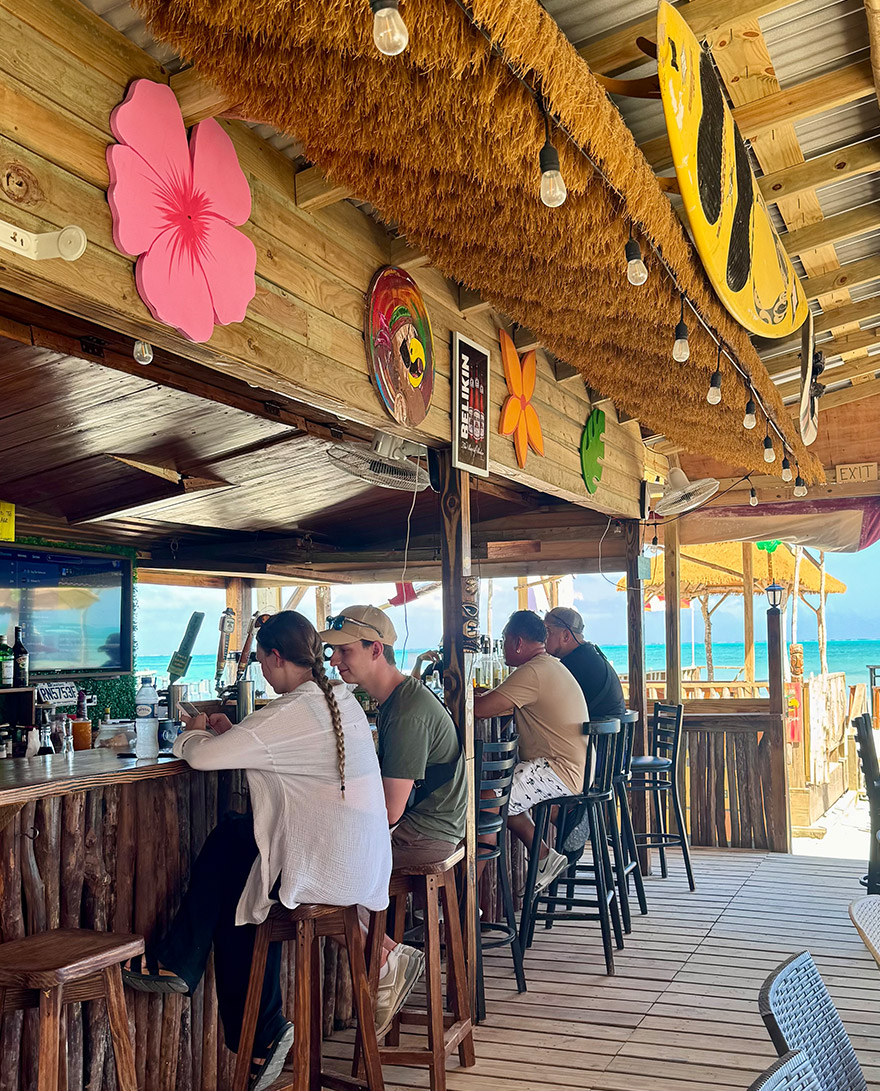
We stopped at Ice N Beans for an iced coffee from a colourful little shack right by the water (below left and middle). We then had lunch at Parrot Head Tiki Bar for ocean views and an easy Caribbean vibe (below right).
SECRET BEACH
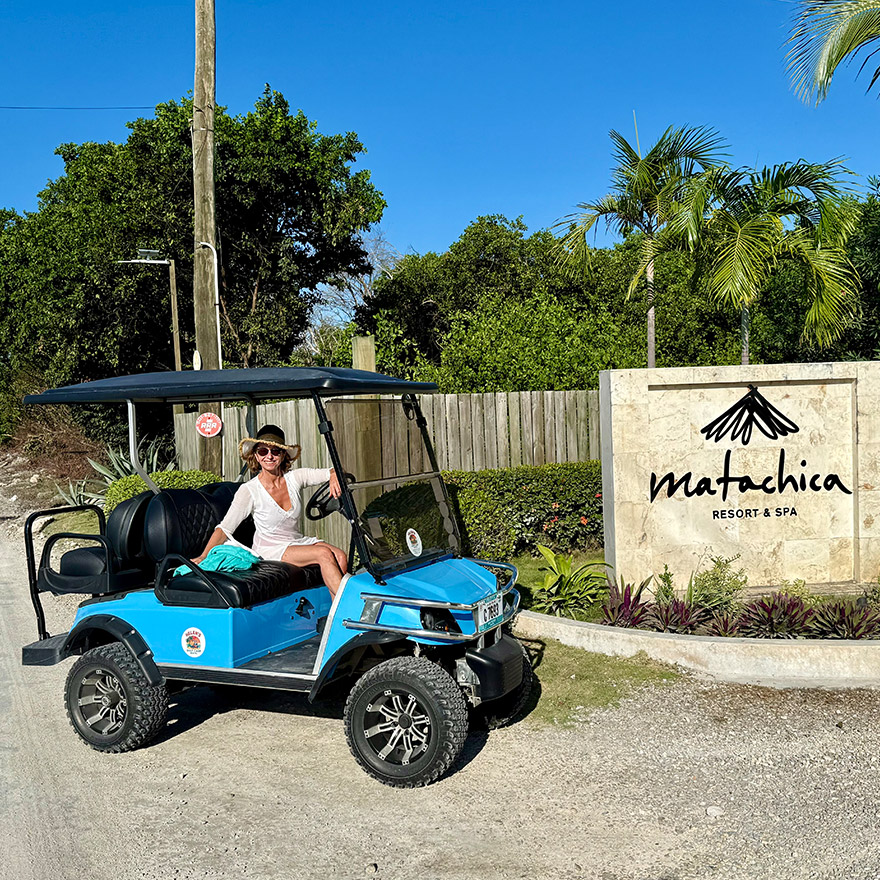
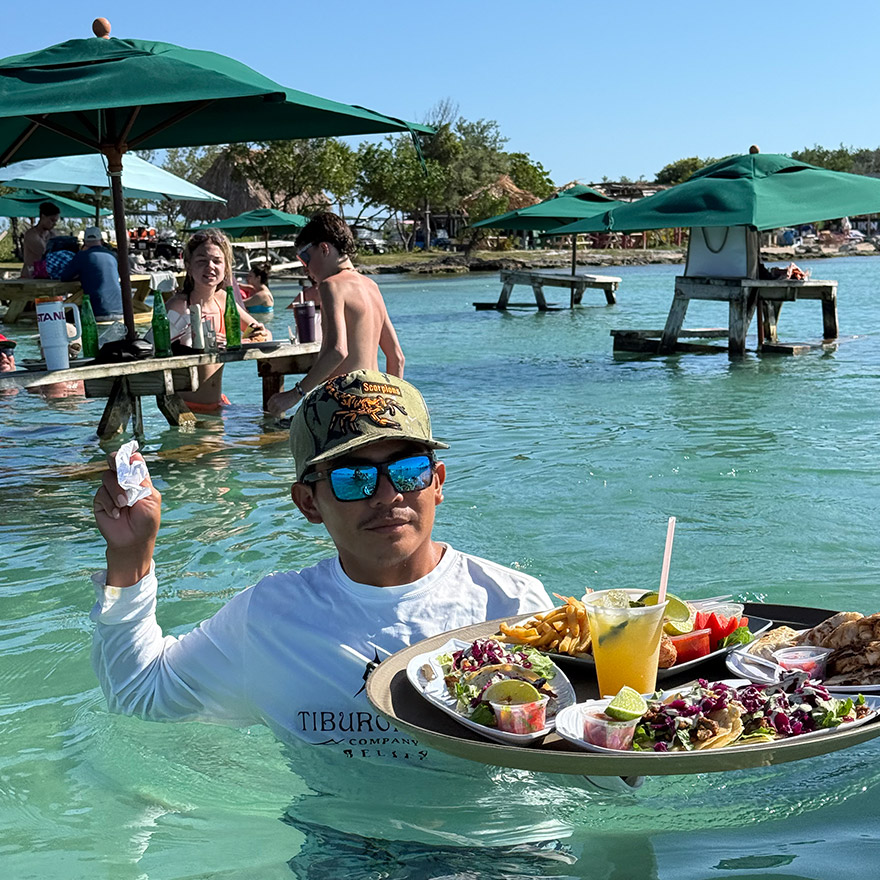
We hired a golf buggy, the main mode of transport on the Caye, and drove 30” to this spot. There is a line of lively little bars with tables in the sea that you wade out to, cold drinks, music, and a holiday mood that feels very Belize.
Note: the golf buggies are not always reliable, and our first one broke down! Ask around when you arrive, and go with a company that’s well recommended locally.
Why a trip to Guatemala & Belize?
A trip to Guatemala and Belize gives you an amazing amount of variety in a relatively short time and is up there as one of our all-time favourite trips. You get Antigua’s colour, history and food scene in a city you can explore on foot. You add one of the world’s most memorable hikes on Acatenango, watching an active volcano erupt in the dark. Then you slow down at Lake Atitlán, where village life, craft and scenery feel genuinely special. In Petén, you step into the jungle for Maya sites that are as dramatic as they are moving. And in Belize, you switch gears again — waterfalls and caves in the pine forest, then a final few days by the sea, with snorkelling that’s world-class and island life that’s easy and relaxed. It’s adventurous, cultural, and still has plenty of comfort — exactly the kind of trip that stays with you.